How Bad Is Your Favorite Making You Feel?
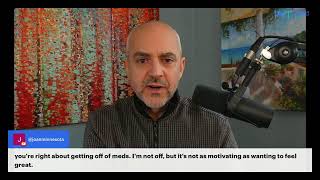
Jim Katsoulis argues that favorite foods hurt more emotionally than physically. After eating them, guilt and shame hit within seconds, and tracking these feelings for a week reveals the real cost. Lasting weight change comes from mindset and emotional awareness, not diet tricks.
Chapters
Hey everyone, welcome to today's Program Yourself Thin podcast. Today we're talking about how bad are your favorite foods making you feel. This is actually kind of an end-around to dealing with your weight, and it kind of starts with a question that most people never consider. And even if they heard it and considered it, they'd probably— huh, how bad do my favorite foods make me feel? They make me feel great. They don't make me feel bad at all. They do the opposite. But is that true? Um, let's look at it. Let's think about it, because we're not just talking about how it feels to eat them. I know that part's fun. I'm not talking about that. And I'm not just talking about the weight it puts on you. That's probably what you thought I was going with this, right? No, I'm not going to talk about that. Um, let me tell you why real quick. The reason is that if we just focus on your favorite foods and the weight they put on you, you may cognitively understand that connection, but it's not going to make a big difference in how you eat. It hasn't so far. And there's a reason for this. And it's actually something that's called recency bias or future discounting. Uh, and they're both kind of related. And what that means is that we can eat it now and we really enjoy it and we know we enjoy it and it tastes good and all the rest of it. Um, but then on top of it, the negative consequence of the weight doesn't show up until somewhere in the future. And so our brain says, well, we'll eat it now and then tomorrow we'll start working out and it won't even matter. And so when things are in the future and especially if they're uncertain, we can talk ourselves out of it. Um, we're not gonna connect to it. Thinking that I shouldn't eat my ice cream because I'm going to gain weight, that's not going to be enough to stop you from eating it, most likely. So I ask you again, how bad is your favorite food making you feel? And I want you to notice that you probably are kind of stumped right now. You're like, I don't, I don't know what you mean. It doesn't make me feel bad. I feel good. I like eating it. It tastes good. Okay, but I'm gonna prove to you that it's making you feel bad. But I do wanna first point out that you can't access that. And this is one of the reasons why you're struggling with your weight, because you have been trained through our culture to disconnect the negative consequence that comes from your favorite foods. Now, to tap into that negative consequence, we have to realize that it's not the physical one. That one you've almost developed a tolerance to. So, you know, you could eat a gallon of ice cream and you might I feel fine. You may— you don't, but you feel fine. So we're not going to pay attention to the physical effect of it. What we're going to focus in on is the mental and emotional effect of eating your favorite food when you want to lose weight. So let's set the scene. You want to lose weight. You've been wanting to lose weight for decades, but you really want to lose weight now. It's starting to get nice out. You know, you start to think of the summer, you start to think clothes you want to wear, places you want to go, how you want to look, how you want to feel, all the rest of it. And you say, you know what, I want to start eating better, I want to start losing weight, I want to start, you know, going down this path. That night you say, you know what, I got to have some ice cream. I have a shitty day, stressful, I'm gonna have some ice cream. Okay, you eat the ice cream. Now, 6 seconds after you take that last bite, 6 seconds after you take the last bite of the ice cream that you're going to eat, what are you saying to yourself? What are you saying to yourself in your mind? Are you saying things like, great job, nice, all right, we're going to do it, this is us, this is— we're on our way? Or are you saying, you blew it again, Jesus Christ, you said you want to lose weight and look what you're doing now, this is what you always do, you always screw it up, you say you want to do this but you're not even serious, you're always messing it up, you're always doing the wrong thing. Which one, which one of those things are you saying to yourself more? Directly after you finish your favorite food when you want to lose weight? Now let's go into the emotions. What emotions do you feel after you— 6 seconds after you finish your favorite food when you want to lose weight? Do you feel inspired, excited, motivated, ready to take on the world? Or do you feel frustrated, annoyed, ashamed, guilty, angry? Which one do you feel? And this is how you figure out how bad your favorite foods are making you feel, not how you feel physically, because how you feel physically, you have trained yourself to kind of distract yourself from it, to not pay attention to it. Because most of the time after you finish your favorite food, you're probably looking at a screen, whether it's a TV, a phone, a computer, a tablet. You might be reading, you might be doing something that basically makes you not think about how you feel. So again, if you want to add a little extra to it, fine, eat your favorite food and then pay attention how you feel as well. A lot of times you know, you feel heavy, you feel tired, you feel lethargic. Okay. But the main things I want you to focus on, if you do this for a week, it's absolutely mind-blowing. If you, after you finish your favorite food, what you thought was your favorite food anyways, what do you say to yourself and what do you feel? And what you're going to start to notice is that this consequence phase, right? So in Program Yourself Thin, we talk about 3 phases of eating. Anticipation, consumption, consequence. And in this culture, we've been conditioned to focus on the anticipation and consumption of the food. And then basically we put up this denial wall and we don't pay attention to the consequence. Again, we have a vague connection to it's related to our weight, but that's a very general kind of feeling. It's not, it's not specific. And so if you start paying attention to the 6 seconds after you finish eating, let's just say for the next 24 hours, What are you saying to yourself directly because of you eating your favorite foods? And what are you experiencing emotionally? What are you feeling emotionally because of your favorite food? And what you're going to probably notice is you're feeling a lot of pain. A lot of pain. So that's kind of the short answer of it all, right? How bad are your favorite foods making you feel? Pretty bad. If we can— I know they taste good. I'm not, I'm not disputing that. I know it's exciting to look forward to them and to eat them. I'm not, I'm not taking that away from you. I know that's true. What I'm asking you to do is start to have a more accurate sense of the bigger picture, the full equation of what it's costing you as well. I think that's only fair, isn't it? And so what you do this week is don't even stop yourself from eating your favorite foods. Go ahead and eat them and use that energy you would have put into trying to stop yourself and instead use it to pay attention to what do I say to myself and what do I feel emotionally for the next 24 hours. And if you do this, you're going to realize that you don't feel very good. Your favorite foods that you thought were the source of so much pleasure are actually the source of so much pain. And when you zoom out and look at it, you're going to realize that those foods you thought were your favorite, most pleasurable foods are actually one of the biggest sources of pain in your life. If you're someone who wants to lose weight. And once you start to look at it this way, it changes the way that you think about food. It changes the neural associations so that you see the fuller picture. And this alone can go so far towards helping you be able to choose the foods and make the decisions that move you in the direction you want to go in. All right. If you want help with this process, click the link in my bio or go to programyourselfthin.com and go get the free hypnosis session that I made for you. Uh, it's called The New Thin Me, and it's literally designed to help you clarify what your goal weight is, connect to it, and feel motivated, um, and pulled towards it. And again, you can get that by clicking the link in my bio, uh, or if you're over in Facebook land, I will put this link in the chat window and you can go get this. It is available. And I hope you're all having a great day. And if you have any questions, feel free to ask them. I am here to answer any questions, all right, that you may have. Let's see here. What's up, Cornbread? Cornbread says, can your body get used to fasting, and should you change it up? Um, I'm not a fasting expert, and I know fasting, I would say, is one of the top 2, 3 strategies people are relying on these days. I use a form of fasting, so I'm not against it. I'm against kind of the fasting mindset, which really is just a subset of the dieting mindset. So that being said, can your body get used to fasting? I assume what that means is that, like, does it metabolically adapt to it and then you're not going to lose any more weight? I'm going to imagine that's what you mean by that. But to, to that point, and this is where I think dieting does us a disservice because we get so fixated on the hacks and the tricks and the tactics that we kind of lose sight of the bigger picture, you know? And again, there's a time and a place for tactics and tricks and strategies for sure. But I think the bigger picture's more important. So, you know, I don't even know how to answer that, you know, because do you have to mix it up? I don't like mixing things up. So I will say this, you know, if you like mixing things up, maybe that would work better for you. For me, it wouldn't, because I really build my success around routine. And I find personally, for me, the less I mix things up with my schedule and my eating, the way better results I get. Because when you mix things up, there's a cognitive price to pay, right? When you learn something and do it, you start to go into an autopilot mode with it. It'd be like, for example, let's just say brushing your teeth, right? You say, okay, does my body get used to brushing my teeth with my left— whatever hand you use, I use my left hand. Um, does my body get used to brushing my teeth with my left hand? Well, yeah, of course, of course it does. You know, should I mix it up? Sure. For what? Why? What's it going to do? You know, I don't know. It depends what your motivations are, but is it going to cost me cognitively? Yeah, absolutely. If all of a sudden you start brushing your teeth with your hand, it's a huge cognitive load to take on. And I think that's something we always have to consider. And I think very few dieters do. Not your fault, you know what I mean? We've been conditioned and trained really to approach weight loss completely cognitively. And if you look at literally any diet, and this is where every diet's the same, this is what unites every single diet from vegan to carnivore, is that they all require a tremendous, tremendous cognitive energy and the cognitive load of any diet. Because everyone starts on a Monday, everyone starts at 100%. And again, it doesn't matter what the specifics of the plan are. It is cognitively so taxing and overwhelming that it's almost inevitable that you're going to opt out of it at some point. So the idea of switching up fasting, you know what, from 12 hours to 16, from 16 to 24, from 24 to 4 days, you know, I don't know exactly what you mean with the switch up, but, um, me personally, and I do, like I said, I do a thing, I call it nighttime fasting. I started it 30 years ago, so I just kind of created it organically. Um, but how it shows up pretty much every day of my life now is that I basically stop eating somewhere between 6 and 7, and I'll start eating the next day, 7, 8. Those are ballparks, but those are pretty consistent. I mean, I would say 95% of the days of the year, that's my— that's what I'm doing. And I feel like there's a lot of power in the structure and the consistency of that. And I, and I really build everything I do around structure and consistency and habit, because what it does is it reduces cognitive load. I don't have to think about it. I just do it. On autopilot or near autopilot. So don't know if that helps, but those are just some thoughts on that. Yeah, Cornbread says yes. So yeah, exactly the idea. I mean, the way you're thinking about fasting almost reminds me of like muscle building, right? So if you're doing muscle building, you got to switch things up because your muscles get used to that exercise and they won't grow as quickly if you continue to do that. So you have to switch them up, keep them guessing. But again, muscle building is a big cognitive load, physical load added to it as well. So switching up the fasting, I'm not an expert at it, so I'm sure there's some science on it that would answer it more directly than I could. But regardless of what the science says, I think it always has to be weighed against the cognitive load, you know. So if they say, yeah, okay, because here's, here's where I think it could go, and I bet it exists. You could have like a fasting protocol I bet that— I bet someone does this and they have some scientific reason why, but they'd be like, Monday you fast for 24 hours, Tuesday you fast, uh, 12 hours, Wednesday you fast for 18 hours, Thursday you fast for 6 hours, Friday you fast for, you know, 21 hours. And it's like, you know, so every day is different and everything. And it's like, again, whatever physical benefits you may get from that, I think would be wiped out way more by the cognitive load of having to carry that plan around in your head. There we go. OG, yikes, that's some weird stuff to write in the chat. I get weird stuff written in here before, but that's some weird stuff, OG. I don't know what the hell you're talking about. Uh, Wonderful Mood Boost says, have you tried combining a scent to a thought for motivation and association? That's a great idea. Yeah, I think anytime you use scent in a strategic way, it's a good one because your, your scent olfactory is wired differently than all the other senses. It pretty much goes directly into your brain and kind of bypasses the thinking part of your brain. So it tends to elicit things very directly. So I think using scent in strategic ways is always smart. So yeah. Have I done that? Um, yeah, I mean, one way I used to do it a lot is I would burn incense when I was going to do yoga. And so the, the smell of incense just, you know, got associated with that state, you know, kind of prepared me. So that was a big one that I used to use. I really used it much anymore. Um, as I started reading, you know, I don't know if it's the greatest to breathe that stuff in. So I kind of took a break from scents, but I think it's a great, great strategy. Definitely being used. Uh, what's up, Regina? How's it going over there? And YouTube land. What's up, Jane? Jane says, Yahoo, I finally had one non-sugar day yesterday. It wasn't a perfect day in terms of my other food choices, but it was so satisfying to go to bed last night and know I had finally done it. Um, yeah, that's great, Jane. Congrats. Um, I think having a non-sugar day is great in the sense that it proves that you can do something. I don't know how valuable it'll be in terms of a long-term strategy unless you want to live a life where you never eat sugar. Um, and again, don't let— I'm not saying that to discourage you. I, I think it's great that you proved that you could do something that you were unsure of, I guess, that you knew you could do but you hadn't proved it to yourself. So you did it, and I think that's wonderful, um, that you proved that to yourself. So let yourself remember that you can do big, big things sometimes. Um, yeah, if anyone has any questions, feel free to ask them. Usually here Monday through Fridays to answer questions, uh, talk about weight loss, and it doesn't matter, you know, diets, eating plans, strategies. I think my, my best value is, is probably mindset-wise, you know. So if you're struggling with things, I think that's probably where I can help you more, um, than other areas. But I, you know, I've helped people with every diet possible because again, no matter what diet you're on at the end of the day, it pretty much comes back down to mindset anyways. And Program Yourself, then we follow the goal weight pyramid and you could see here at the bottom of it is mindset, right? And I think that's pretty much the one, the one thing that's probably missing from most people's weight loss more than anything else. I think most people have a pretty good sense of the strategies in terms of like the nutrition and the, the philosophies behind that. But I think it's the mindset piece that most people are kind of, you know, out to sea with. They have just no idea. Not really your fault, you know what I mean? Like, if you've never been taught something, you can't be expected to know and understand it. But I think that it helps to understand how to influence your mindset in this area. Because it's at the core of everything— your motivation, your behavior, what you do, all the rest of it. But yeah, but if you've got questions, feel free to ask them. I don't know, maybe just kind of a— it's funny, life is so relative because like last week especially, it was like the first week— geez, was that 2 weeks ago? I don't know. Last week it felt warmer. It was warmer last week, and all of a sudden it's cold again. It's like, it's like almost worse. When you get a little bit of warmth in the middle, but it won't last long. But also it's kind of— yeah, it's kind of gray, kind of cold, a little windy. It's out there. I don't know, people recovering from, uh, St. Patrick's Day. Uh, Jane says suggestions on improving sleep. Oh yeah, and Jane, you're in the program, so remember in the bonus section there's a whole program I put together called Sleep at Will. I would definitely recommend listening to that. I talk a lot about sleep. Sleep's one of my journeys as well. I was a terrible sleeper and I became a much, much better sleeper. And that has really led me to believe that sleeping really is a skill, you know, and you may be bad at it, but you can get better at it by practicing certain things. And so what are the main things I would focus on? I think number one, and knowing you a little bit, Jane, I would say number one by a mile is relaxing. Being able to relax yourself intentionally. And so instead of just getting into bed, you know, watching TV or screen and then straight to bed with your brain all kind of worked up and your body tense, uh, is take a little bit of time and, uh, a second, take a little bit of time and relax. I mean, even a minute or— whoa, Jesus, my phone just flipped up there. Uh, even a minute or two of relaxation, uh, can really have a profound effect on your sleep. Um, so relaxing your body, and even if you don't do it before you get into bed, once you get into bed, taking a few minutes to kind of start at your toes and work your way up, um, relax, relax, relax, relax. You can do tense and release. That's another way to relax, um, while you're in bed. That can be helpful. Um, but you may notice that a lot of people get into bed and they're very, very tense and they wonder why they can't fall asleep. So that's a huge one. Uh, another huge one, I think is not eating before— not eating too soon before bed so that, you know, when you're— when you get into bed, you know, ideally, ideally you want like 3, 4 hours. But again, everything's relative. So if you used to eat right until bedtime, you know, half an hour is good, an hour, you know, work it, work it up. But the more time you kind of put between the last you eat and when you go to bed, I feel like that's another one that really helps a lot of people out. Um, don't drink too much water before bed. That helps not waking up. Um, and then meditation, I think, is wonderful too, because it helps you to quiet your mind down. And I think if you can quiet your mind and your body down, your sleeping is going to improve tremendously. And that, that's really— if I had to really talk about my secret, um, weapon, it was that. It was that I learned how to relax my body and my mind pretty much at will, and that allowed me to get way better at falling asleep and staying asleep. Yeah. Um, Jane says, I often feel tired during the day and then have a nap. I think that probably messes me up. Um, I don't think so. I mean, the science on that, you know, basically— and I don't know what time you go to bed, but if you go to bed somewhere around like 10, 11 o'clock or later, uh, as long as you don't take a nap after 5 o'clock, you should be good, you know. So just remember that. And, uh, I, I kind of a 5 o'clock cutoff time, you know. Um, we got a lot of Christians in the chat over on TikTok today. One of them doesn't want any women here, and the other one just preaching the gospel. Um, what's up, Josh? Josh says, I like to pair each eating event with walking, usually after. I've heard that walking before or after eating helps to regulate blood sugar. Yeah, I think that's a great strategy. I think that's a great one. I don't think you can go wrong with that. I definitely think walking helps with digestion. I think walking, in my opinion, is the best exercise there is. Other things are great too, but I think that's just like, that's a good one. And, you know, you're associating, you know, again, I think that's so smart because I think it does help with digestion. I think that, you know, you're, you are in a weird way, you're more connected to your body, so you're more aware of what you ate and how it's affecting you and if it's good or bad. To move forward with it. Um, so I think that's a great one. Um, two notable weight loss walking advocates on YouTube are Half of Carla and Six Miles Till Supper. Oh cool, yeah. And I think walking, in my opinion, I mean, that's the number one exercise I suggest for people, um, for weight loss. I think it's the best one, you know. So yeah, I've never heard of Half of Carla and Six Miles Till Supper, but there you go, folks. If you— and I know a lot of my clients, uh, you know build around the walking as well. So that's kind of cool. I always— that's one of my goals. I know, I know, I know Joe's listening. Don's here. I always wanted to do— I, I had it everything. Walk Yourself Thin was my program, and I was going to do like walking hypnosis sessions while you walk that do it. And I went to go record it, and I realized I've got the muscle memory of doing hypnosis sessions for when you're sitting with your eyes closed. And it was very weird. I don't know, like I really hit a wall and I didn't push myself through it. So maybe that's something I'll kind of follow through with because I know it's a great idea. And I know, um, listening to hypnosis sessions while you're walking would be tremendously useful. So, um, I'm thinking about that too. But yeah, there's two other channels that people might want to check out. Um, Vale says, tips for the home cooks that are in charge of meal planning, cooking daily for the family. I struggle with temptation, snacking, taste testing while cooking opens up my appetite. Even if I wasn't hungry. Um, yeah, yeah, no, I get that. And that's, that's a real challenge for sure. Um, I think it's interesting. I mean, you just kind of said something opens up my appetite, even if I wasn't hungry. Um, I would question that, you know, I bet you've been saying that for a long time and I'm not saying it's not true to some degree, but I think when you say it that way, it makes it seem like, well, even if I'm not hungry, I eat everything. And that may be true, but it's gotta be a factor. I mean, you, you, you know, on average, if you're really hungry and you're cooking, you're, you're probably gonna eat quite a bit more than if you're feeling pretty satisfied and nourished. So I would question that belief cuz I think it's probably holding you back a little bit just off the start. Um, but, but yeah, what are some tips? I mean, if you cook, if you do the cooking, um, one is strategically again, I would. Nourish myself and make sure I wasn't cooking when I was really hungry. That'd be number one. Ideally, I wouldn't want to be too tired. Okay. So that, that being that I would work to optimize the process and routine of cooking for my family. So I wouldn't want it to be stressful. So I would, I would attempt to— and again, this is all— please understand, I like to make a distinction between best practices and the best practices that you're able to do. Okay. And I find this important when it comes to dieting because I think it's easy to say like the what you should do. But, you know, the reality of day to day when you got to make, you know, food for the family and you have kids to pick up and you got work and you got all this stuff going on, you know, sometimes we can't always, you know, live up to the high level we want to. So please have a little grace for yourself as well. All right. That being said, though, I think the more you could make the cooking process shift the whole dynamic of it a bit. Here's what I mean. Be a bit more prepared. Um, choose meals that are easier to cook on stressful days. Um, put some music on so you're kind of in a more calm, relaxed mood while you're doing it. It's funny, I mean, like a minute you're getting ready to cook and you take a minute and you take 30 seconds and just close your eyes and relax, do a couple breaths, ground yourself. And again, I don't know what your schedule is, so I don't know if like you're working and then coming home and doing— I don't know if you're home all day and then you're cooking, whatever. But it's like if you almost start to make a starting line, because I can almost guarantee you right now what's happening is your day is bleeding into your dinner and it's like you're doing whatever you're doing now, cooking, and you're probably bringing that frenetic energy into the cooking. I'm guessing this, so maybe that's true, maybe it's not. But you can start to kind of make a line, a dividing line between what you're doing and then cooking. And one way it could be Putting some music on that's kind of relaxing or enjoyable to you, that kind of, you know, elicits the state you want to be in while you're cooking. There's also how do you want to cook, right? Again, a lot of times we don't really ask this question. We just assume, well, cooking— I gotta cook, I gotta prepare for the family. So you don't have to be breathless while you do it. You can ground yourself, calm down, relax. How do you want to prepare it? How do you— how much do you want to taste? How do you want to eat while you do it? What are some ways you could make that happen? So start asking some more solution-oriented questions about how you could do it exactly the way you want. What would be the ideal way for you to prepare the foods? Get an idea in your mind of how you want to behave, how you want to do it. That can be helpful. Um, and then kind of take it from there. So hopefully that helps you. And then again, try some of those things, then come back and give me more specifics. I'm happy to continue to coach you folks. I mean, you know, it is hard. People will ask a question and it's like, I'll give the best I can, but, but again, I can only give as good an answer as the information I get, you know. And so, and, and by the way, on top of that, a lot of times finding solutions really is a, is a process of trial and error as well. But yeah, go test those things out and see if they help. What's up, Rhonda? Rhonda says, instead of going on a diet, instead of going on a diet mentality, you've helped me have the goal in mind instead of moving toward living at my goal weight. Can you please elaborate on how to choose the goal weight? Is it related to BMI, the weight that felt great 30 years ago, or or is just eating with healthy habits and see where the body goes? Thank you. That's a great question, Rhonda. I actually, I literally created a goal weight quiz for this exact reason that I think what Rhonda's asking here really highlights the fact that most people have no idea how to choose their goal weight. You've never learned how to choose your goal weight. Your goal weight has been given to you. It's been given to you by a BMI chart, by a doctor, by a magazine, by a parent, by a friend. How did you choose your goal weight, folks? You know, very few people have a real congruent, um, reason for why they've chosen the goal weight they've chosen. And I think this to me is the foundation of the whole process, because if you don't have an extremely clear, grounded reason for why you want to weigh what you want to weigh, you're never going to be able to tap into your full motivation ability. So how do you find that? Well, again, it's a whole quiz I kind of take you through, but I will say this. That to understand the best goal weight for yourself, you've got to look at two sides of the equation. So on one side, there's the number probably that you typically think in, and that's probably come from a BMI chart, primarily doctor, something like that. So there's, there's the number on one side, but the other side that everyone always forgets about is how it feels to live the life you have to live in order to be at that weight. That's the big mistake a lot of people make because they get fixated on the numbers. I don't care what I got to do. I just want to get that number. But that's bullshit because whatever number you get to, if you don't enjoy the way you're living and eating to achieve it, you're almost always going to put the weight back on. And I think it's shocking that people never notice this because I mean, people have gotten to their goal weight. So if the goal weight was the most important thing, the thing that is more important than above all else, then why do 85 to 95% of dieters that lose weight put it back on? There's got to be something else going on, doesn't there? Based on that statistic. And so I think when you're looking at your goal weight and program yourself thin, being thin is just a term we use for being at your goal weight, whatever your goal weight is. I couldn't tell you that, but your goal weight is the weight that gives you the best quality of life. And so we're taking into account both sides of that equation— what weight you want to be, what size you want to be— on those pieces of it, which is where you've been probably most your life. But then looking at the other side, how does it feel to live this way in order to achieve this weight? And I will tell you, a lot of times when people look at it that way, a lot of times where they end up is they say, actually, I'm going to increase my goal weight. And I think that's a very important thing to recognize because the number on the scale is not the thing that defines the quality of life. You could love the number on the scale, but if you hate the way you have to live and eat in order to achieve it, you're gonna sabotage it. Learn Thoughts says that's a crazy statistic— 90% gain it back and 30% more. Um, oh, 30% more? I didn't even know that one. I'm not surprised by that. But yeah, 90%, and I'm being generous by giving you 85%. I, I— the number I, I historically hear is 95% of dieters that lose weight put it back on. I'm give— I'm being generous by saying there's another 10% somewhere there. Okay, whatever, but but, um, and that's what makes everything I'm saying to you different, is that I'm— everything I'm sharing with you is not things I've learned from dieters who have lost weight. It's learned from people who have lost weight and kept it off for at least 2 years. So back to what Rhonda was saying, the shift between focusing on losing weight and living at your goal weight is profound. And everything I'm sharing with you is about how to live at your goal weight. But you're only going to live at your goal weight if you enjoy the way you're living. Does that make sense? And I know dieters always push back on that and say, no, it's not true, Jim, just tell me what to do and I want to do it. Well, That doesn't make sense. If that was true, you wouldn't have a weight issue. You know what to do. You all know what to do to some degree. Deep— you don't want to fucking do it. I mean, it's not rocket science. Don't, don't confuse yourself, you know. So anyways, when it comes to the, the goal weight, it's a process. Um, so I don't know if you're in the program. It's in the program, and I actually had given a free program away where I actually literally just gave you the goal weight quiz. Um, but if you shoot me an email, Rhonda, shoot me an email at jim@programyourselfthin.com. I'll shoot you over to the goal weight quiz. and it'll help you kind of figure that out. I take you through a process. All right. Um, because I think most people, they, they're, the goal weight they're chasing is bullshit. It's not even their number. And you know that because why do you want to be that weight? And as soon as you say, so I look better, that's how I know it's not real. And again, I, my goal, I want to look better too. So that's part of it. But, but there's gotta be a lot more depth to it. It's gotta be about your quality of life. I think if your goal weight isn't directly tied to your quality of life, I think you're hamstringing yourself personally. Yeah, uh, Rhonda says, wow, yes, there are deep questions to consider to live with the quality of life and not just the number. Yeah, exactly, Rhonda, right? And so even just knowing that, I think it starts to walk you down a different path. And I think that's how you make the number your own, you know. Goal— like, looking at our weight as a number is so new, you know. And this one, try to say to people the number doesn't even mean anything to you. And then you say, what, Jim? Yes, it does. This number— I want to be this weight, right? It's like, I know, like, you've given it meaning. I get that. But it doesn't intrinsically naturally have meaning. You're— you're the pounds on the scale, the kilograms on the scale. It doesn't intrinsically have any meaning to you. And to prove that point, it would be like if tomorrow, um, you know, the medical establishment comes, you know what, from now on we're not measuring weight in pounds, we're We're going to measure it in square inches of skin. And we want everyone to be between 30 and 40 square inches of skin. Like, notice how that means nothing to you, right? You'll, you'll make it mean something over time, but it doesn't intrinsically mean anything to you compared to, um, I want to be at my weight so that I can feel comfortable in my body. I want to have energy. I want to be able to have flexibility and mobility, and I want to emotionally be more grounded and calm and inspired and happy and energized and excited about life and, and look good and feel sexy and be motivated and all this other stuff. Those things mean things to you. So you should build your weight, your goal weight around those things. It's going to mean a lot more, which is going to allow you to have a much bigger motivation engine driving the process, as opposed to having some arbitrary concept of 40 square inches of skin. I want, I just want to have 40 square inches of skin. How do I get 40 square? How do I get to 40 square inches of skin, Jim? Notice how that means nothing to you, right? That's what weight means to you subconsciously. There's no intrinsic meaning to it. Again, you've learned to— you know, I'm not saying it doesn't mean anything, you understand it, but it doesn't mean anything to you in a deep, deep way that you need it to. That makes sense. Uh, what's up, Gene? Gene says, I've only come— just come across your page and love its content. With help from a psychologist, I've lost 10 kilograms. All via fundamental mindset change, investing in the long haul, making small changes, and not dieting at all. Life-changing. That's great, Jean. I'm proud of you, and great job taking action to work with someone as well. Um, again, it's the mindset. It's always the mindset. Your weight really is a reflection of your mindset, if you want to know the truth. And so again, most people try and break that apart and just change their body without changing their mind, but I think you're going to find that it's a It doesn't work too well. Um, Will says, yes, exactly right, work goes right into cooking, no break in between. Thank you for the tips, I need to slow down. Yeah, exactly, Vale. And I'm not saying that's the full answer, Vale, you understand what I'm saying? That— please understand that too, that it's not like you're just gonna like put a break in there for a minute and everything instantly changes, but it's the beginning of a process because you haven't done that. You, you've gone right into cooking with that same work mindset, and it's just because there's no— even, even like the break is— can all— to some degree is almost arbitrary. Like even if you didn't— if you took 30 seconds to sit down, relax for a second, put some music on, even if it's just a mental break, okay, work's over, oh, now I'm back home. Do you know what I mean? Like that alone opens the door because all day long you just want to go home, probably at least, right? It's like a lot of times we're at work, I just want to get the fuck at home. I just want to be home. I just want to be in my home. It's like now you're at home and now you're— you know what I mean? Now you're not even appreciating it. So sometimes making that kind of even psychological line like, oh, now I'm back, now I'm home, it kind of opens the door for you to appreciate being home. It's like, oh, now I'm in my beautiful kitchen, and now I got this wonderful food I get to prepare for these wonderful people I love, you know. So again, it's kind of the gratitude piece that we kind of work on in the program. But that alone can start to change the whole feel of the cooking piece. And, um, and again, it's not about it flipping like a switch, everything's perfect now, but it might be the beginning of you feeling grounded on a different foundation where you start to feel more in control, you start to be more aware, you start to see things more clearly. And again, that becomes the, the process forward. Uh, I knew Jody was there. I'd love your walking tape. I know, I know, I gotta, I'm gonna do it. I always say this, I gotta do it. I've got so many other things in front of it though. Oh my God, there's so many things. There's always so many things to work on. The walking tape. I know, I know, the hypnosis sessions with the book, right? Wouldn't we want that more first? Maybe I'll combine those two. Maybe, maybe I'll do that. Maybe I'll do a walking version of the book. And the book we're referring to here is, uh, The Tao of Living at Your Goal Weight. This is my book. My book. This one's mine. It's all about living at your goal weight, not just getting there. Who gives a shit? Who wants to get their goal weight for a week and then lose it? It's almost worse. I'll tell you the truth. It's worse, I swear. It's worse. Just like I was talking about the weather, you know, it's almost worse that it was warm for a couple days. I wish it was just cold the whole time. I was used to it. All of a sudden it's like warm. Oh, that's springtime. Nope, it's winter. Back to winter. I go, it's cold, that breeze. But, um, yeah, losing the weight just to put it back on is so destructive. Is— oh, it's the worst, you know. Yeah, I gotta do the audio version of the book first. I'm gonna do it, Jody. I'm telling you, I really am. I, I haven't closed a bunch of loops this week. The thing is, I got so many loops. I am literally— I'm not— I think we all are, right? Everyone's that way at this point. But I'm the— I'm like, you ever see the guy? I don't know, you start on some show, but you spin 50 plates on a stick at a time, you know? That's what— that's what my life feels like. But I took a couple of them down this week. But yes, I got those in my mind, Jody. I'm gonna do them someday. What's up, Sheila? Sheila says, for me, getting off of blood pressure medicine. All right, but that's not enough. I'm just, I'm telling you, that's a great one. It's a good one. It's better than just number on a scale. Okay. But getting off of blood pressure medicine will be motivating and exciting for about a week or two. And then you'll forget all that you were even on blood pressure medicine. So we need something to motivate us that keeps on going. Okay. And so another way to frame that shield, because yes, getting off of blood pressure medicine can be one piece of it. Awesome. Okay. But what I want you to do is. Feel strong, feel healthy, feel energized, um, feel good about yourself, to feel momentum, to feel empowered, to feel, um, happy with your body, to feel, you know, like you're— you took control of your blood pressure and now you've got it mastered. You know what I mean? Like, take it— don't be afraid to take that extra step up, you know, as well. Yeah. What's up, Jackie? Jackie says that makes sense. Good, good. That's my goals, for things to make to make sense. Yeah, and Sheila says rethinking is working. Yes, rethinking really does work, folks. And I get it, I know, I know, it's like, I don't know, the diet industry's conditioned us so much, it's like it has nothing to do with your thinking, it just has to do with your willpower. Just force it out there. Where do you think your willpower comes from? You know, willpower is a whole interesting thing as well. But, um, Jackie says, can you show your book again and where I can order it? Yeah, here's the book. Oh, Jackie, that— you should definitely get this book, Jackie. I can't say where to order it yet. I will at the end because if I say it, TikTok will restrict me. So I say it at the end. I'm not going to say it now, but, um, yeah, I'll give you a hint. It's where— it's a big— what do they call it? The river. I'll say it at the end, but you know. I don't think— what would happen, actually? You know what, you know, I haven't done— let me try something real quick. I haven't searched like just on Google to see what comes up. I never even looked this up. Oh, there you go. Yeah. Oh, there you go. You can just literally— oh, that's kind of cool. I haven't even done that. That's pretty cool. That's pretty good. Okay, I got you. Gemini's got a pretty good overview, I'd say. I would say that's pretty accurate just on a quick glance. Pretty cool. Gemini is better at selling this book than I am. What's this shit? Sorry. All right. Oh, I gotta get that off of there. All right, anyways, I haven't looked that up before. Okay, yeah, you could Google search and figure out where anyways, but Um, yeah, Jackie, exactly. Um, but yeah, anyways, this book here, it's really interesting. What makes it so different is it's not just like information. Um, it is 40— it's 40 chapters. Each chapter is a page or two. Um, but each chapter is a hypnotic story. And so this book is different in the sense that it's meant to be read, and as you read it, you're creating changes. You know what I mean? And I think that's what makes a difference. Not just more information. Hey, do this, do this, do this. It's none of that. It's really, it's meant to kind of impact you deeply in how you think in very fundamental ways about your weight and a lot of different ones. And it simultaneously, it takes you down through the entire Program Yourself Thin system and you don't even realize it. But, but that, that, and you don't have to know anything about Program Yourself Thin, but, but it takes you through the whole system as well. And so, yeah, Jack, you, you, I think you'd love the book. I, I definitely think you should get it and it's, I got— everyone's got different financial realities, but, but it's, it's relative peanuts. I mean, it's literally like, like $9. Um, all right, Rhonda. Rhonda said I ordered the book and it's coming today. Nice. Yeah, excited to get a Transforming Mindset. Yeah, you're gonna love it, Rhonda. Yeah, any, anyone that's here regularly I think is, um, you know, gonna enjoy the book. It's just all this stuff put in a better format. Uh, what's up, Joan? Yeah, too many balls in the air. Yes, yes. Oh, for sure. That's my goal. I, I will say though, I have really been, um, I've been, I've been actively— because it's hard, you know, like when you have a lot of balls in the air. Maybe I, I know everyone here can relate to this. I swear, 2026, like every single person is just up to here with life. It feels like, right? It just feels like we're constantly on the go, constantly with a million things to do. That's what it seems like. And, um, I think the hardest part is when you're in that mode, to be able to take a step back and, you know, take some of the balls down, take some of the plates down. And it's hard to get yourself to be able to do that, but if you can do that, it makes it— there's less things to spin afterwards. So yes, I've been in that mode and, uh, making some pretty good headway. And Joan follows up by saying, you're right about getting off the meds. I'm not off, but it's not as motivating as wanting to feel great. Yeah, exactly, because again, it's, um, there's a thing called hedonic adaptation. So You know, it's like when you get a new car, you know, for the first few months it's your new car, you can't believe it, so amazing. Eventually it just becomes your car though, you know. And so again, getting off the meds is really exciting and can be part of it, but it won't be enough because after you get off of them, again, like I say, a week, 2 weeks, a month, whatever, you'll forget you were even on them. And so it won't have the same motivation quality, you know, after you're off of them. All right, so again, we want to add more to it, but that's the reason why. What's up, Shell? Shell says, saw my doctor today, down 67 pounds. Journey started July 2024. Great job, Shell. That's great. I love that so much for two big reasons. One, that's a significant accomplishment, so that's wonderful. And the fact that you've been at it for almost two years now, great job, because whatever you're doing must resonate with you for you to have stuck with it that long. So great job, Shell. Keep that up. Uh, all right everyone, we get out of here. I gotta go. Um, go work on taking some of those balls down so I can put more balls up and get more recordings done. Um, uh, yeah, so if you're not in my world, go click the link in my bio, go get the free hypnosis session I give you. Uh, it's completely free and I give you a bunch of other stuff too. Uh, I'm here every Monday through Friday, usually around noon Eastern, so if any questions, pop on and ask them. Um, and if you can't make the live, uh, it's a podcast, so you can also um, you look up Program Yourself on any podcast platform and, uh, it'll pop up and you can listen whenever you want. And then again, this book, it's at Amazon. It's at Amazon at the moment. So yes, if you go to Amazon, you can get this. I think it's $9.99 for the physical book, uh, $2.99 for the Kindle version. Uh, I would definitely encourage you to kick the extra, you know, $6 in and get the physical version. Uh, it's just got a nice energy to it. You'll have it in your house. It'll just be more impactful, I think. So anyways, Thank you so much, everyone. Have a super duper day, and we'll talk soon. Bye.
More from Jim



Weight Loss Visualization: Wake Up in Your Dream Size #programyourselfthin #weightlosshypnosis



What If You Pretended to Be Thin for One Hour? #programyourselfthin #weightlosshypnosis




