How To Get Good At Eating Moderately
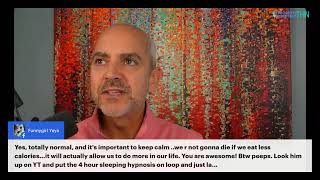
Jim Katsoulis explains moderate eating as a learnable skill, not willpower. Start with mindset and lifestyle basics like sleep and stress management, then use in-meal tactics like slowing down and portion control. He covers emotional eating, night eating strategies, and notes that GLP-1 drugs average about 16 months of weight loss before people regain.
Questions this video answers
Over 6,000 private weight-loss sessions.
About 16 months of weight loss on average (speaker's claim).
November 6, 2025.
Chapters
Everyone, welcome to today's program Yourself Thin Podcast. Today we're talking about how to get good at eating moderately. And this is something I really want to draw your attention to, because I find a lot of people never even consider this option. Right? Because again, you have learned through dieting to be all or nothing, right? You approach everything with this all or nothing mindset. You're either going to be perfect or you're not going to think about your eating at all and just do what you do. But eating moderately is a skill that you can develop, and you may suck at it. Okay? I'm not going to argue that, right? You may be terrible at it right now. You may say, well, I can't eat them out. If I start eating, I eat all of it. I get it, okay? But you can get better at it. There's lots of things you might suck at, but if you practice them, you can get better at them. And I find that a lot of people don't really approach it this way. They just kind of approach it and say, well, can I do it or not? Well, you know, how many things can you just do naturally automatically? Not. Not very many. So I sit down at a piano. You never played or practiced before. You're not going to be able to play very well. But if you start taking lessons and you put the time in and practice, you're going to get better at it, right? And so we have to remember it's the same thing with eating moderately. It's a skill. It's something you develop. And that's what I want to talk to you about here, is how to make that happen. Right? So the first step is, what I've shared with you is really your mindset. Appreciating and expecting that you can get better at it, even if you're not so good at it right now and never have been. Okay? So the first step is mindset that it's even possible that you can get better at eating more moderately. Now, the next step is to come up with the strategies to actually do that. And this is where you end up spending a lot more of your time. This is where the skill comes from. And so some of the strategies of eating more moderately actually happen outside of the eating part of it. Okay? So what I'm saying is when it comes to eating moderately, the first thing you're paying attention to is preparing yourself to be able to eat moderately. Right? So what's that mean? It means don't get yourself too hungry. For example, don't get yourself too tired, too dehydrated. Too stressed. When you're in these states, it's very difficult to eat moderately, you see. So eating moderately, a lot of the work's done ahead of time. It's done throughout your life, throughout your day. And as you start to feel more calm, more relaxed, as you start to nourish yourself more stably, what happens is you set yourself up to have a much greater chance of being able to eat moderately. So that's kind of the preliminaries, the getting ready for it. The next piece of eating moderately is how you're actually eating, okay? And so what this practice becomes is when you eat, you start to ritualize. Let me take a deep breath first. Let me check in with myself. Let me ground myself, calm myself, center myself.
Okay? Now I'm going to start eating. That alone is going to increase your ability to eat moderately. Because when you are more in the moment, centered, grounded, you think different, you feel different, you behave different, and it's a lot easier to eat moderately, to eat enough and then stop when, when you're satisfied, okay? But if we go into the eating and we're half distracted and we're stressed out and we're all worked up, it's going to be a lot harder to get ourselves to stop, right? So again, how we do it is going to matter. There are the foods that we're eating, right? Those are going to contribute to our ability to eat moderately. So if I have a big bowl of M&M's, and I love M&M's, well, it's going to be a lot harder with that big open bowl that I see constantly, all day to not keep eating them, okay? And so we want to start using strategies of what we're eating and how we're eating it, right? So again, maybe you like M M's, maybe you go and get a small bag of them, you take half and put them in your hand and put them somewhere else. Again, I'm not saying that strategy is going to work for you, but you start thinking about strategies that could work for you, right? That's the process of improving is you do something, you make a mistake, you reflect on it, figure out how you could do it better next time and do it better next time, and just on and on and on. The other thing is starting to choose different foods, right? When you eat ultra processed foods, you're going to find it's typically harder to eat moderately than when you're eating healthier, whole, more natural foods, right? That's another thing that helps you to eat More moderately the way that you eat, right? You could. You could practice putting your fork down in between bites. You could practice, you know, having you speak. If you're sitting with someone and eating with someone, you have speaking with them between bites, you can start to add in these granular details of how you're going to behave while you're eating that nudge you in the direction of eating moderately. And then after you finish eating, you can reflect on how you did. And if you did great, then you reflect on it. How did I do that? How did it feel? If you didn't do great, you overate and you didn't eat moderately. Say, okay, what happened there? What was going on? How was my hunger? How was my energy? What was my mood? Did I ground myself? What was I eating? Was I eating foods that set me up for success? How was I eating? You know what I mean? So we reflect on all the things we just talked about, and you recognize which things you did, which things you didn't, and you improve and optimize on them. Now, if you keep doing this day after day, what happens is your ability to eat moderately greatly improves, right? And now all of a sudden, you have a skill set that you've installed into yourself. You have an ability now that you did not have before. And this ability is fundamental to helping you change your weight comfortably. Because one of the easiest ways in the world to shift your weight comfortably is to eat more moderately, to eat the food you're eating even, but eat less of them. And there are so many ways to eat more moderately that feel very comfortable, because now you're not missing out on food. You can eat whatever you want. You start to believe in yourself. You start to trust yourself, and you start to develop the ability and the skill to actually eat these foods moderately and then stop. And there's almost nothing that feels better than being able to do that. And again, if you approach it with a strategic mindset, you're almost guaranteed success over time and again. It doesn't happen instantly, but if you consistently work on it, you will get better at it. And if you do get better at eating moderately, it fundamentally supports you reducing your weight. So I hope this helps you out. If you want to go deeper into this whole concept and you want some support and actually being able to eat moderately, click the link in my bio or go to programyourself then.com and go get the free hypnosis session that I made for you. It's called the New Thin Me. It's a kickstart session. It is designed to motivate and get you all excited to start taking action, to actually start losing weight. So go check that out. It's completely free. And there is a training for you as well in there. So if you have any questions, feel free to ask them. I am here to answer your questions. I like to start by yapping away about something for a little bit. But I am here for you. So whatever questions you may have or challenges or struggles you may be facing, share them and let's see if I can help you, you know, might be able to me 1e says I eat omad and I'm still in school. Doing you recommend eating at school or after school? I'm eat omad and I'm still school. Do you recommend eating at school or after school?
Well, I, I. Okay, so my simple answer will be whichever one feels better for you. And there's a lot of wisdom in that statement, okay? Because right off the bat, most of the time when people want to lose weight, they really just disconnect from themselves and they just say, tell me what to do and I'll do it. You know, it brings me back. Dan Kennedy used to always say this, that people are walking, dieters are especially doing this, but dieters are walking around with their umbilical cords in their hands, looking for some place to plug it in, tell me what to do, you know, and so you can't do that anymore. You've got to participate in this process. So if you want to eat omad, which one meal a day? For those who may not know, if you want to eat one meal a day and you're in school, I would suggest for a couple days, eat during school. For a couple days, eat after school. Notice which one feels more comfortable and sustainable for you. Again, everyone's got a different body. So, I mean, I could give you an answer for what might work for me, but you're not me. So what? What's the point? So I would try them both out for a few days in a row and then notice which one feels more comfortable to you. And I also want to open you up to the possibility that neither of them will feel comfortable to you, because one meal a day, I'm not. Hey, whatever works for you. Right? The golden rule of program yourself then is whatever. There's no right or wrong. Whatever works for you is the way. Okay, so there's no right or wrong, there's only what works for you. So I'm not gonna sit here and tell you which one to do. If one works better than the Other you figure that out. I will say a lot of people I know do not stick with one meal a day because it's unpleasant, it's uncomfortable, it's difficult, and you do not need to eat one meal a day in order to manage your weight. Just want you to know that. So again, I think with dieting, sometimes we metaphorically, we're trying to fit square pegs into round holes. We're trying to force ourselves to do things that aren't really a good fit for us. So again, one meal a day may be a great fit for you and it may not. And so, you know, alternatives exist that might be more comfortable too. So I'm just going to throw those out there. So, you know, eating, eating your one meal and splitting it into eating some of it in school and some of it after school is an alternative. Right? So again, get flexible and base what you're going to do not just on how much weight you're going to lose, but also on how it feels to follow that plan. And if it feels really intense and extreme to follow your diet or your plan, cut the shit because you ain't going to keep it up. What's the point? What is the point of losing weight for a little while only to put it back on? So hopefully that helps you out and I wish you the best with that and school. One meal a day. I would not want to not be eating all day if I was in school though, I can tell you that. Because I want to power my brain, you know, so the last thing in the world I would be doing personally. Now again, it's my metabolism too, and I know how I operate. But I would not want to just skip eating all day long and then try and thrive through school. So anyways, Annette says need help so bad. Well, Annette, if you got a specific question, ask it because I'm here to help you. What's up, Jen? Jen says I've been struggling a bit in the evenings. I eat well all day and try to spread my calories through the day, but the evenings I have not been eating the best. Any suggestions to help with night eating? Yeah, I mean, nighting is my specialty. That was my personal challenge that I first started dealing with to lose the weight. And obviously I would say it's the number one habit. That's my opinion. And I've done over 6,000 private weight loss sessions at this point. But yes, I believe that night eating is really one of the bigger challenges.
So, okay, I got a couple different ideas for you. And again, I want to be Clear. The frustrating part of my approach, I suppose, is that I'm not just going to give you, tell you one thing to do, right. Because I don't believe in that. I think that everyone has to figure out what works for them. Okay. So instead of just telling you what to do, I like to kind of get you thinking about the process that you can go through to figure out what's going to work best for you. Hope that makes sense. So I eat well all day and try to spread my calories through the day. I think you're onto something there. Okay. So I think that that's a smart move, right? So you have a sense of how many calories you want to eat and you kind of spread them out through the day. And I think that's a good starting point. Here's what I would suggest first though, and this may sound strange, but I want to, again with dieting, we just want to get to the calorie level and just make everything happen all at once. But, and program yourself. Then we're looking for long term success. So if I was in your situation, Jen, and I was eating well during the day and I had the day locked in pretty good, and then at night my eating wasn't the best, I would look at what not, not the best means. Right. So I'd want to know specifically when I say I'm not eating the best, what does that mean? Does that mean I'm eating a pint of ice cream, I'm a bag of chips, I'm eating a cookie? I don't know what that means. You do. And so the first thing I want to do is figure out what that is. So for example, I'm just going to throw out an example and it doesn't matter what the example is, but I just want to use it to prove a point. Let's just say at night not eating the best means I eat a pint of ice cream. And it may sound like a lot, but it's a half a pint of ice cream, doesn't matter. And so instead of just thinking your only option is to not eat at night, another option I would bring into it again and program yourself. Then we have the three R's. Reduce, replace, remove. And I think what you've been trying to do, Jen, is just remove. That's what most dieters do. Just remember, just try and remove the problem. And that's one option, but it's also the hardest option. So another option you have are these other two. And these are probably where I would start. You Know. Cause it sounds like your day calories are really doing pretty well. And so what I would do is I'd probably aim straight at the nighttime eating and especially I would be focusing on replacing and reducing. And they're just what they sound like. So replacing is again, I don't know what not eating the best is. Let's just say it's I'm eating ice cream at night. So replacing could be a lower calorie ice cream, it could be having yogurt, it could be having some fruit. Again, it depends how you know there's a spectrum of replacements and how healthy and all the rest of it is with you. But that's one thing I would, I would play around with. The other thing is reducing, right? So again, if you eat half a pint of ice cream, you could eat a quarter of a pint of ice cream. You know what I mean? And so on. And so that's another way to start improving on the nighttime eating. That's not just removing it because I think that's probably what you've been doing. That's what most people try to do is just not eat at night, which is a heavy ask. It's a big cognitive load to just change that nighttime behavior. And again, at certain times when you're really focused, motivated and have the energy and time, you can do it. But sometimes it might feel a little overwhelming. So that's probably where I would focus is start to play around with the nighttime eating and I just want to change it. So for me, I think in phases. So I'm not just trying to stop it because that's a heavy ask. What I'm looking to do is just change up my nighttime routine. And that's one other thing you could do here it's a little bit Outside of those three Rs is one other thing you could do is for the next week, let's say whatever you're going to eat at night, right? You say, well, I'm not gonna anything tonight. Okay, great. But if you do end up eating tonight, if you say, you know, it gets to be 8 o' clock and say I gotta eat something, you can eat something but you can't eat it where you normally eat it. Because I'm gonna guess the nighttime eating is probably happening on the sofa, watching TV on the sofa or scrolling on the phone or something like that, I'm going to guess. So what I would suggest is if you're going to eat something at night, you can still eat the food, but you have to eat it at the kitchen table. That's another great strategy because it disconnects the sitting on the sofa, relaxing, watching tv, with the eating. And trust me, it's all linked together. Okay. So I like to think in phases. And so that's another thing you could do is you could say, I can have that food, but if I'm going to eat that food, I've got to eat at the kitchen table with no devices. And it's very interesting doing something like that because all of a sudden you've stripped away a lot of the ritual and routine of it. That has nothing to do with the food. And now you're really shining a light on just the food piece of it. And most likely you'll find that the food is not as enjoyable, and you eat it that way and you'll resist it a little bit. I promise you, it's not as easy as it sounds. You'll resist like, no, I want to sit on the sofa and eat it. And so I would play with that first. You know, get used to doing that. And. But I would take it in little pieces. Jen. Right. There's no rush. We're not looking to how quickly can you get rid of the nighttime thing. We're looking to how long can you get rid of the nighttime thing? And this is the exact process I used over 30 years ago. And, you know, it took me probably, I don't know, six months. I. I wish I kept better attention to that, but maybe, maybe six months to get a really handle on my nighttime eating. But here I am 30, over 30 years later, and I don't eat at night. You know what I mean? So, again, it's kind of slow and steady wins the race when it comes to this. So don't be in a rush with it.
Approach it in a way that's relatively comfortable, that you can keep approaching it every night and just make little changes. Little changes. Play around with that. Yeah. So check that out, Jen. Yeah. See if that helps you out. Lori says, I've never felt better making healthy choices and not striving for perfection. Hey, nice job. Great job, Lori. Glad. Glad that's happening. That's what, that's what I like to hear, and that's what I do get to hear a lot of. To be honest, a lot of my clients, that's what we're hearing foreign.
It's.
It's all about. Again, I was trying to make that point that when it comes to weight loss, you. You really have to look beyond just the weight loss. Dieting has conditioned us to only care about how fast we can lose weight. But you've got to step out of that paradigm because that paradigm makes you only think about how fast you can lose weight. And the only way to lose weight fast is do extreme things. So you have been conditioned your entire life to think about weight loss in this. This sprint way. Okay? It's very, like a lot of anxiety in there. The tension and stress and all this energy in there. Relax. There's no. There's no rush. There really isn't. I mean, and I say that it's the dieting paradox, that of. That dieters who have been trying to lose weight for 30 years are in this constant state of rush, but they've been trying for 30 years to lose the weight. You know what I mean? So you would think if someone's been working on something for 30 years, they have a little more patience. But again, it's a very paradoxical thing of dieting. And so I know it's not the easiest thing, but you can do it. And if you start to approach your weight from a place of calm, grounded, centeredness, just everything starts to change. You just instantly see things differently. It doesn't instantly change everything, but you start to see things differently, think differently, and that sets you on a completely different path to start really creating.
Ways of being, you know, ways of thinking, living, and eating that allow you to get to your goal and stay there. So that's awesome, Larry. Keep it up. What's up? Hey, hey, hey, hey. I like that. It's like. What's that? That's a little. I don't know what the hell he is with a chicken. I don't know if you all know that. Moana.
I love Moana. It's one of my favorite movies ever. But, yeah, they got hey, hey, the chicken. I don't know that anything to do with. Hey. I don't know. Absolutely cannot be a bystander in your own recovery. We all have and it in us to change. Agreed? Agreed. Hey, hey. I love that. Yes. And you can't be a bystander. You know what I mean? And that's what I think a lot of dieters. I know, it's weird. I know. I know you're not a bystander. I know you put a lot of work in to do the diet, so please understand that. But the bystander part of your weight loss is that you're not really engaging with what to do. Right. Dieting. The entire weight loss industry, as far as I can tell, is basically telling you what to do. Right? Everything about weight loss, it's always someone or some plan telling you what to do. Eat this, don't eat this, eat. When you know all these rules. And that bleeds right into the exercise thing. Exercise this way, do this, all this. So you're constantly being told what to do, but you're never shown how to get yourself to do it. And you're never shown how to think or figure out and do the things that really work for you. And I think that's a huge core problem with weight loss, is that you're trying to take these extreme plans and then do them immediately, perfectly. And it's very difficult. So again, I think the much smarter approach is to relax. And again, 1% better a day. As the program yourself then philosophy is 1% better a day. Every day we get a little better at something. Little comfortable, manageable, sustainable. Repeat it tomorrow, repeat it the next day. And again, that 1% over 1% is magical. It reminds me the saying, most people overestimate how much weight they can lose in a month and underestimate how much weight they can lose in a year. And so that 1% on 1% is magical because at the end of the year, you're not 365% better. You're over 3,000% better because each percent improves on the percent improvement before it and it grows exponentially. So again, it's the real secret to creating the change that you're looking to. And dieting is conditioned to do the exact opposite. Where, nevermind 1% better a day, when you're dieting, you're getting 100% better in a day, right? Because you start every single diet you do, you start on the first day 100% perfect, and you expect to maintain that 100 perfection until you reach your goal weight. And as soon as you make a mistake, it's like catastrophic to you, you know? So again, we need to relax and calm down and.
Approach this fundamentally for just from a different headspace and from a different way of being and feeling. And it's magical. It really is. You know what's up, Gail? Gail says I am 10 milligrams on Manjaro. I am stalled on a plateau for the past five months. I'm on it for 10 months. I only have about 50 more pounds to lose, but I would love to lose it already. I don't know what else to do.
Yeah, Gail, I, I.
I don't want to be the bearer of bad news here. I, I don't think a lot of people know this, that with the GLP1s in studies that they've done on these people are getting weight loss for an average of about 16 months. So people will lose weight for about 16 months and then that's it, that the weight loss stops. And again, I, I, I, I talk about this all the time. I, I, it's interesting because where we're going to get to, we're, we're kind of, we're approaching that 16 month period coming up. It, it's, I would say it's right now, it's about starting and over the next five, six months you're going to get a lot of the population that's been using these is going to hit that 16 month mark. And I think about this a lot because I think it's going to be very interesting. I don't think people know about it and I think it's going to create another perspective on these medicines because A, there's going to be a lot of obese people. That's it, that's the weight loss you've lost and that's all you're going to lose on this. Okay. And so now you're going to be on this medicine forever and you're going to be obese, but you got to be on this. And so honestly, Gail, I don't know. I mean, when I hear you've been on this for 10 months and the past five months you haven't lost any weight, I, you know, that might just be where you're at, you know. And again, because when I say 16 months, you know, I have to understand, right? Statistics apply to the population, not the person. So you might be a person who hit 10 months of weight loss.
So I would talk to your doctor, obviously. But you know, I just to give you a little bit of background that that is in the ballpark in my mind, right? Like 6 months, 16 months, 10 months, they're in the ballpark. And so you know, with, with the Manjaro, that may be that, you know, so I don't know. Yeah, talk to your doctor and see what you can do. But again, this is a challenge of the GLP1s and no one's talking about this one yet because it's just not in the consciousness public because people don't even know about this. A lot of people even on it, even people on the GLP ones don't understand they're only get 16 months of weight loss. And so Gail, you may be one of those people that just got 10 months of weight loss and.
And I don't know. So I don't know what you do from there. You. I don't know what you do. You get a higher dose, perhaps, if that helps. And it may not, because you've been on it for 10 months. I don't know, you know, but this is the challenge. This is a real piece of the GLP1 that we're going to start hearing more and more about and I don't know, we'll see. We will see. The other piece of the GLP ones, in my opinion, is that if you're going to want to live that way, you know, it very much reminds me of when people were doing.
The. The antidepressants. And while it would help people, you know, get them out, some people, right, Some people would help their depression go down, but it helped all their emotions go down, you know, so, yeah, they felt less depressed. They also felt less happy. And. And so there's a little bit of that going on. The GLP1, the way the GLP1s work is they make you feel full, they. They kick, they activate your. Your aversion system, you know, and so that's why you have to. The dose in the beginning, got to measure it, because if you do too much, you start feeling really nauseous. But really what's happening is they're, they're taking the nausea when it's dialed up too much, you feel like you're gonna be sick, it's too unpleasant, so they dial it down just a little bit less than that, which is to say that to be on these medicines, a lot of times you feel full, you feel just, just a little bit below nauseous. You know, that's your reality, that's your day to day. That's how you feel most of the time. That's why you don't eat, right? Because when you feel that way, you don't want to eat a lot, right? So for me, that's another piece of the GLP ones. I think about a lot that when people's weight loss stops, is that how they're going to want to live their lives? Because I know, like, when people are losing weight, they don't give a. What they're doing. They don't care. They don't care that they don't enjoy food. You know what I mean? People died all the time. They don't care about anything as long as the scale is going down. I say this all the time, that people on diets usually trade the pleasure and excitement of the food for the pleasure and excitement of the scale going down. You know, well, the same thing happens with GLP1s. I mean, you feel shitty, you know, you feel full all the time, all this stuff there, you know, and so you start feeling that way. But the scale's going to look so excited, whatever. But what happens when you hit that goal and you stop losing weight? Like the weight loss stops and now you've got a lifetime of feeling just below nauseous and full because you're never going to enjoy food the way you did when you're really hungry and feeling good. So your enjoyment of food is going to go down. Now it's great when you're losing weight, you don't care. I get it. But I'm really curious and we're going to hit a lot of these people are going to start hitting that plateau coming up because a lot of the population that are on GLP1s are going to be hitting that 60 month mark and now they're going to hit that plateau. And now we're going to see if the weight. When the weight loss stops and you can't look forward and the excitement, that weight loss disappears. Now you're just at the weight and now you know the food to look forward to. Now you don't really enjoy food like you did. You're still paying this money out there. You're still injecting yourself. I don't know. We will see. We will see.
Karen says how does your program help with anxiety eating? If I mistake, if I make a mistake, I forgot, for example, I forgot to hold a student's hand going down the steps. She almost fell. My guilt overwhelms me. So I just eat about 1200 calories in one sitting for lunch. I'm not hungry at the time, but it's my go to when anxious. That's a great question, Karen. I really appreciate that actually.
So, yeah, I mean that, that whole concept is fundamental to program yourself then, right? Because what you're describing is fundamental to everyone now. It comes in different flavors, right? So for you, you know, you're a teacher and you didn't hold a kid, a kid almost fell and you got angst. So, you know, a lot of us aren't teachers, so it's not. The specifics are different, but the fundamental process is the same and it can be different emotions, you know what I mean? So I all of a sudden felt guilty, right? So for, for Karen, she felt guilty. Someone might feel depressed or angry or frustrated or lonely or hopeless. So it doesn't matter what the emotion is. Um, but a lot of times when it comes to emotional eating, something triggers us to feel an emotion, right? So let's just say for Karen, you know, she didn't hold the hand. Now she feels guilty and scared and nervous, probably, right? There's other things there too. But so something happens and we feel an emotion. And a lot of times we'll say, my emotional eating is the problem, right? So we'll say I have to stop emotional eating. Karen might say, I have to stop stress eating. I have to stop guilt eating. Okay? But that's not the real answer. That's a symptom of a deeper problem. The deeper problem for everyone, regardless of what the emotion is, is that most people have never learned how to manage their emotions genuinely. So that if all of a sudden you feel this overwhelming guilt, you have no ability within yourself psychologically, mostly physiologically, partly, but you have no ability to manage that guilt genuinely.
Other than food. So if you look at it, Karen, when you feel that overwhelming guilt and. And we look at all the options you have available to you for you to deal with it, you're going to realize you have no options except for eating. And all of a sudden, you realize eating and overeating especially becomes your best strategy for reducing the guilt that you're feeling.
So the issue isn't the.
Guilt eating. The issue is that you don't have better strategies to manage that guilt. Okay, so.
The first thing is, right, I. I was just saying. So how would we deal with that and program yourself then? So if that happened to you, Karen, and you were in program yourself, then I was working with you. First thing I want to do is I'd want to change the way I was thinking about it, right? Because your movie, you went through that in real time, and it was scary in real time because you almost thought she was going to fall and you got really scared. Now it's almost like a traumatic event. And it's like you had this peak physiological. You know what I mean? You felt this intense fear and worry and scare all acutely in a moment, but then she didn't fall. Okay, but your brain doesn't let go. It doesn't focus on that part and focus on that moment. You were terrified that she could have fallen and how bad you would have felt. So the first thing I would do is I would calm my body down. Because I know that when you're feeling guilty and you're feeling stress, it's not just guilt, it's stress. You felt acutely stressed when that happened. Karen says. Correct. So you felt acutely stressed, right? So the first thing I want to do is I want you to realize you have no, almost no ability probably naturally.
To bring that whole thing down, to relax your body, to breathe, to ground yourself physiologically, that's what we do first. The next thing we do is psychologically, okay, now the good news, Karen, is she didn't fall. Okay, so what I want to do is I want to replay that my mind calmly relax, breathing more deeply. I want to play it through my mind and I want to just slow things down. I want to imagine it knowing what I know now. So I'm kind of going back in time knowing that she didn't fall. And I'm imagining that scenario and I'm imagining where I should have grabbed her hand. I didn't. And then she almost fell, but she didn't. And I stay grounded in this calm and this relaxation. And now what I'm going to do, one of the key program yourself in techniques is the redo technique. So what I would do is I go back in my mind, calm myself, relax myself, and I would replay that memory in my mind. But this time here, I would imagine myself holding the student's hand. I would imagine myself holding their hand and walking them down the stairs and everything was fine. I'd go play and read, loop it again, imagine holding their hand, walking downstairs, everything was fine. Because what I want to do, I made a mistake, I forgot to hold their hand. So what I want to do is not beat myself up, making myself feel bad. I want to reinforce that from now on. I want to make sure I grab these kids hand. That's what I want to do. And so I'm focusing on the solution and what I want to do rather than replaying the horror movie that almost happened over and over again in my mind and staying looped in that stress and that guilt. But again, what this does is this requires some sense of how your mind works. And again, most people have just never learned how their mind works, so they're at the mercy of it. So something like this happens and you have no natural, genuine ability to manage it. And so you run to the food because your best strategy, so the answer is not to remove the strategy. So you just overwhelm with guilt. It's to figure out more effective ways for you to genuinely manage your mind and your emotions. And especially in times when you're triggered, you know, when things like this happen. So that's how we would have dealt with it. And program yourself then hopefully that's helpful to you. Okay? And again, let it go. And Learn from it and mistakes happen. But we use those to become better versions of ourselves. Janie says, Lost 47, happy maintenance. And beans are good. Substitute part time instead of meat. Eat lots of vegetables, fruit and nuts. Yes. Janie, thank you for sharing that. I appreciate that. Yeah. 47 pounds. Wonderful. You know, that's super. And I love that strategy. Beans are a great substitute for meat. Okay. So again, you have to completely get rid of meat. But if you start adding beans, then great strategy. Beans are wonderful to eat. Don't worry about Lectins. That's goofy stuff. They're not going to hurt you.
But yeah, if you have any other questions, feel free to ask them. Karen says I fell off during Halloween and I was scared to step on a scale. But I went back on track next day, weight stayed the same. So relieved. Karen, thank you. I'm glad you said that too, because that brings up something I like to talk about, which is I like weighing myself more, especially when if I'm losing weight, I'm actively losing weight. But I think this is a great example of why it's good to weigh yourself. Okay. Because let's just say get off track for a week or two. Right? And in your mind, I call it Schrodinger's scale. Right. Any of those, you know, any philosophy people out there, you might know Schrodinger's Cat. And long story short, there's a box with a cat in it. We don't know if the cat's alive or dead until we open the box. Right? So before that box is opened, it's got both potentials, Right. That cat could be alive, it could be dead. We don't know. And while that box is closed, both potentials are possible. Once we open the box, we know which one it is. I call it Schrodinger Scale because when we, oh, I got a week off, two weeks off when I got a little off track. Now in our mind, a lot of times, oh my God, probably put 10 pounds on, I probably put 15 pounds on. And I see more often than not people way over exaggerate or estimate what they think they gained. And in their mind they're thinking, I'll put ten pounds on. And what happens is by thinking that ten pounds, they start to get really discouraged and demoralized. And I call Schrodinger's Cat because I can't tell you the number of times people have said something like that to me. Oh, I put ten pounds on. I said, let's just step on the scale and let's let's look at reality and see where we're at and they come back. I didn't gain any weight. What the hell? You know, and so. And then sometimes they did, you know, sometimes people come back, oh my God. I put five pounds on. Not ten. I put five pounds on. But me. I want to be rooted in reality and I want to have the mental muscle and ability to manage that reality. So, you know, if the scale is going up, I want to have the ability to take that data in, use it to help me get back on track quickly. And so I'm a big fan of using the scale, you know, as a data point, obviously. But I also use the scale as a way to practice managing my emotions and become more build up kind of emotional muscle, you know, to deal with the scale. So.
Yeah, but great job, Karen. I'm glad you got on the scale. I'm glad you're back on track. Nice job. That's what we're always doing. Always getting back on track.
I get back on track. I've been eating candy for two weeks now.
And.
I'm ready almost. What's up? Gaming. Gaby says I lost 17 pounds. I'm exercising and I'm eating very. I'm eating every two to three hours. But I wake up at midnight with extreme.
The hunter wake me up. I'm not sure what that means. Well, I can't really understand that. Sorry. The hunter wake make me up on the. I'm not sure what all that means.
Let's see what's up. Uzo USO says it seems like food controls me. I think about food while eating. While eating. I think about my next meal. I want to be thin so bad for my birthday in June, but I just can't seem to control myself. Yeah, I mean, again, I mean to some degree we're talking kind of the food noise thing. And so, I mean, geez, you know, it's just. It's just so much this. I reference back a lot and program yourself. Then we really follow the goal. Weight pyramid. Right. So mindset, lifestyle eating. And you know, I find most people when it comes to their weight loss, they've done about this much of the pyramid. Right. This is the eating part they've done. Don't eat carbs. Just eat one meal a day. That's about as much as they've done. So when people tell me like, oh, food noise, I don't know how to deal with it. Well, yeah, no, no, you don't know how to deal with food noise. You've never learned any of this stuff, you know what I mean? Like, you're flying blind. So, you know, people, all I think about is food and all the rest of it. I can't answer that because it's like, I, you know, again, the mindset, we break down to six categories. Lifestyle, ache, habits, eating. Break down three phases. So, and then we have a whole other section of how to run your mind. So, you know, people say, like, like, it's like, if I never, I don't know how to be a carpenter. And I see a car, I meet a carpenter. I said, tell me how to be a carpenter. Expecting they're gonna like, tell me all the. Right, okay, okay, sit down, young one. And they take me all the way through all the things I need to be a carpenter, right? Well, obviously not. So go, go find an apprentice. Do you know what I mean? Like, there's levels of advice, and so sometimes, like, if all the food seems like it's controlling me, you know, I, I can't just sit and say, oh, we'll just do this. You know what I mean? That'd be silly. You know, you got a big challenge ahead of you if that's your situation. And, you know, again, I don't know, I don't know how you figure it out. I only know my way. You know what I mean? Like, I, I, that's all I know. But again, there's a lot of components that go into the fact that all you can think about is food. Food noise has multiple components affecting it. Some of it's your mindset, some of your lifestyle, some of your eating, you know, so you need a holistic, comprehensive strategy to deal with that. That's a big issue if all you think about is food. So make sure you go and get my hypnosis session and watch the training I made. And again, I got the, the free section of the Circle app that's going to be coming. I'm still dialing in.
The show that happened last week, but we got it, we got it good now. So anyways, that'll be coming. Julie. What's up, Julie? Julie says eating one or two pieces of dark chocolate at night, big difference from before. Yeah, yeah, exactly. And I know Julie does that. I've done the same thing where. Oh, God. The eating at night. Well, I, I pretty much cut, cut it out. But I still eat dessert afterwards. And that really holds me over. But there's more things than just that. I mean, again, that's why I don't like to just give, like, again, diet in the dieting world. You just want, like, the simple answer. It was, tell me what to do. And it's like, I wish. I wish it was that simple. If it was, I would tell you. I wouldn't. I wouldn't gate. Hold the information. If I had some, you know, if I had some magical information, I would just tell it to you. But it's. It's just, it's. Again, I bring the carpenter with a piano. Wow, look at how you play piano. It's amazing. Tell me how to play piano. You know, I mean, it's. What? No, you have to. You have to commit to it. You have to practice. And weight loss is no different, you know, So I just want to put that point out there, you know, because I don't think we think of it that way. I think most dieters just approach weight loss, first of all, thinking they know everything, and then they think I just need to get myself to do it. And it's like, well, no, no, that, that's not, that's not it. You know, you. You need to practice it and learn it. And I don't. No one approaches weight loss that way, in my opinion. I never see it. I don't see people approaching their weight. Like, I need to practice it. I need to practice thinking like a thin, healthy person. I need to practice living like a thin, healthy person. I need to practice eating like a thin, healthy person. And I think that's. That's the way to think of it because, you know, like, I play guitar and it's like, it's just so similar to me because even with guitar, I start out terrible, everyone starts out terrible, and. But I just keep practicing. You get better and better, you know, and you just keep growing and evolving with it. And, you know, some days I'm better playing and some days I'm worse, you know, and it's the same thing with my eating. Some days eating is better, some days it's worse. But I just keep approaching it, and in my mind, I don't think I'm going to be perfect every day. I think diets just set you up for so much failure. But one of the ideas that they do that does sabotage you is that you have this idea that you're going to start eating healthy and then that's just how you're going to eat forever. And there's no real space for mistakes or bad days or whatever. But I promise you, they're going to happen, you know, and so the diets don't leave you with any strategy to have for how to deal with reality. You know, they're really, they're fairy tales and fantasies and you go and try and do them and they don't work, and then you blame yourself for it. So anyways.
What'S up, tj? TJ says, what are your thoughts on fasting? I know it works, but hard to do. I start off well, but give up by the late afternoon and end up snacking later in the day. Well, you pretty much just summarize my thoughts on it, so. Yeah, I concur. I concur. I second you know that.
You know, and again, I go back to the golden rule of program yourself then is there's no right or wrong. There's only what works for you. So I know some people just absolutely thrive fasting. So to them I say fasting is great, but my thoughts for them is, hey, great, keep, keep fasting. But for you, tj, I say, no, fasting's not great. Okay? And I'm in the boat with you. I, I am the same way. I hate fasting. I've done long term fasts, I've done multi day fasts. I hate them. I find them stressful as they approach, I find them stressful as I'm doing them, and then I find myself obsessed with food long after the fast ends, so I don't do them anymore. Now, that being said, I do what I call nighttime fasting. And I separate that from intermittent fasting because again, just like all the diets, they become so rigid and firm that if I say I'm an intermittent faster, and then I say I only do it for 13, 14 hours, and then I get the intermittent fasting mafia after me. So I call it nighttime fasting. And you know what? I came up with it long before intermittent fasting anyways. And I came up with it organically. How? Because I used to eat right up until bedtime. And I said, I need to create a bigger window here. I want to create a bigger window between. I want to go to bed when I stop eating. And so I started an hour, two hours, three hours. And I kind of slowly and systematically figure out what works best for me. And what worked best for me is I stop eating six to seven, you know, somewhere in that ballpark. And I ate the next day seven to eight, somewhere around there. And doing that was absolutely amazing. One of the best things I've ever done. Okay? But I did not, right on day one, say, okay, 16 hours, no eating, you know, and so what I've seen, you know, the flip side of intermittent fasting, and I know it Works for some people. Everything works for some people. 7 billion people in the world, right? Everything's going to work for someone, right? Question is, does it work for you? And so I don't fast longer because if I don't eat by 8, 9 o', clock, I don't feel good. I don't like how I feel. It gets hard. I start thinking about food, and then I get to 12 and I'm starving. And I see this all the time. I think intermittent fasting for as many people as it works. There's more people that become binge eaters because of it. Because what are you doing? You're not eating, you're not eating, you're not eating, you're not eating. And by the time you finally get to eat, you're just like an animal, out of control, you know? And so to you, tj, that's very common, what's happening? That's one of the most common things dieters do, because you wake up in the morning, typically with the lowest level of hunger and the highest level of willpower. And that if you don't eat all day, it starts to cross right around 2:00', clock, where your willpower is down here now, and your hunger's up here. And so I hear all the time people saying, everything's going great for breakfast and lunch and then dinner, afternoon dinner, everything's falling apart. I said, okay, well, what are you eating for breakfast and lunch? Nothing. Well, what would you like to eat over here? Oh, nothing. That's not. You gotta eat something. So it's not a real plan. And so people get themselves so hungry, so depleted, that by the time the afternoon comes, they go overboard with it. That was probably one of the most common patterns I see with dieters. So, again, strategically, what I would suggest is that I would start experimenting with a really healthy, nourishing breakfast. Because let's talk about where you're at. Great job. You're now, no, you cannot eat breakfast. You know you can do it, but to me, I want to. Now, if I know I cannot eat breakfast, then it's going to be a lot easier for me to eat something super duper healthy and nutritious on breakfast, because I don't even eat breakfast right. So now I've overcome the missing things and now I can focus on my energy. I'm going to eat breakfast whenever that might be for you, but I'm going to make it as healthy as a nourishing as possible. And I think if you did that, tj, that would be very interesting to See where you went from there, you eat something really healthy, nourishing, low calorie dense, right. So there's not a lot of calories in it. And what you might notice is that, you know, for a relatively small amount of calories, you can really nourish yourself and feel good and feel satisfied, you know, until the early afternoon perhaps. You know what I mean? So again, there's a lot of ways to approach things, but we need to get more flexible and creative. And of course dieting prevents you from doing that. Dieting just trained you to basically do what you're told, but that doesn't work well, as I think we could all agree, dieting clearly doesn't work well. So. Yeah.
But if you have any other questions, feel free to ask them anything you're dealing with. Happy to help you out.
Sub Elena Lanya says, I find myself. Well, actually, let's follow up with TJ because I see TJ here. So TJ says, thank you so much. Totally agree. That's exactly what happens to me. I'll start making those adjustments. Yeah, great, tj. And again, you know, program yourself. Then it's really just like fundamentally different from dieting because dieting again, you're okay, here's the plan. Do it perfectly and program yourself. Then like, there really is no plan like that, you know. So you start day one listening to a five minute hypnosis session and focusing on maybe your first meal of the day and your worst kind of highest calorie eating habit that happens daily or weekly. We start there, you know, so we're not trying to change everything all at once. We're trying to strategically approach this. And so I think for you, tj, in program yourself, then a lot of what we want to do with the eating piece of it, when it comes to the eating part of the puzzle is that we want to structure our eating. And so you've already started structuring your eating with the fasting to some degree, but now I would suggest playing around with structuring it by really eating the healthiest, nourishing first meal of the day you possibly can. And then let that start to be your foundation and build from there. And I think you'll find that not only you get better results, but you get results that are set up and built to last a lot longer than the whole fasting white knuckle roller coaster ride that you've been on.
Lena says, I find myself stopping to eat with my body before my mind tells me. And I think, ah, that's what healthy people do. When they are satisfied, you just stop automatically. I'm still down to 11 pounds. Been going up and down three to four pounds, but definitely not into food like I used to be. I love it because it makes me feel like I'm taking care of myself. Do I have a long ways to go, but it will happen. I also find myself bringing food with me when I'm out of the house running errands and such, so I don't eat crap. Then when I don't bring food, I find myself wanting to go home and eat healthy foods I have there. It's a great feeling. Thank you, Elena. That's awesome. Elena's in the program. Okay, so again, this is what we learned to do. Calm the fuck down. You know what I mean? And we start being strategic. We start to strategically improve our reality. You know what I mean? So I love that. Everything you said, Elaine, I love so much. I love that you're down 11 pounds comfortably. The three to four pounds going up and down, that's completely normal. Our weight is always fluctuating. Okay. This is what you learn. If you weigh yourself regularly, you will notice your body just fluctuates naturally. And so we're. When program yourself in, we want to understand our weight's always fluctuating, going up and down. And 3, 4 pounds is pretty normal. I would say that's a pretty average range. But your weight's going to kind of fluctuate three to four pounds. But we're looking for the trend line to go down. It's very important to understand this because dieters think it's just a straight line down. And so as soon as they hit a little weight gain, they freak out. But program self, Denmark. I was trying to remind you that there's always this up and down thing going on. It never stops. Your weight's always going like this, no matter what. Now, this might be 3 or 4 pounds for some people, might be 6 or 7 pounds, some people might be 1 or 2 pounds. Everyone has different fluctuations, but everyone fluctuates. And so if you're fluctuating three to four pounds regularly, it's important for you to recognize, Elena, though, that it's still trending down. So you're. This is Elaine, right? So this is the 3 or 4 pounds it's fluctuating, but this is the 11 pounds that she's down now. And that'll continue as you keep improving your strategies. Like, again, bringing food with you when you go on errands. That's. That's how. What a wonderful upgrade. And a relatively small one. It's not, it's a huge deal, but. But again, it's not completely giving up all carbs or giving up all sugar, eating a thousand calories. It's not to that level of extreme. Right. It's relatively comfortable to start bringing healthier foods when you, when you go on errands. That's it. So that's a great strategy. And then the idea that again, in the program, we have a lot of, we do a lot of hypnosis and kind of inner work to kind of ground ourselves. And that leads you to when she says, I find myself stopping to eat with my body before my mind tells me, yes. As you quiet your body down, as you quiet your mind down, as you improve that communication between the two, it absolutely starts to show up in your reading where you're just more in tune with your body, more in tune with what you're reading. And you tend to naturally kind of ease off when you're finished and you're done, you're good. You know, that's a very common thing that happens. And so we want to support and encourage that process. Right. Because when it happens, it's an easier way to lose weight than trying to consciously control everything.
What's up, Molly? Molly says, no one knows by looking at me that my mind is constantly dealing with food noise. Grew up in a house of non stop eating and talking about food. I'm trying to reset my mind around food, but hard. After over a century of making food diaries and healthy grocery lists, it's almost who I am. Yes. Even though I also think and practice life as a thin person, I basically am one. Just one with extreme food noise. Yeah, I get it, Molly. I totally get that. And again, Program Yourself is really built for, for that because we're not just measuring success by the scale or what your weight is. We're really looking at how does it feel to live this reality, how does it feel to live at this weight? You know, and so in Program Yourself, then it's not enough to just be at a weight. We really want to be the best version of us possible. And for a lot of people, that means living at your goal weight comfortably as easily as you possibly can. And so again, to do that, though, you need to learn and know and understand how to run your mind, how to run your lifestyle, and how to run your reading, which is to say, how to think, live and eat like a thin, healthy person. And so for Molly, the big part is the mindset piece. And I get it, you're Right on the money. So again, so to you, Molly, and you kind of imply, you kind of hinted at this, but in, in the Mindset piece, the second thing we cover is the self image, right? Just what you, you said you've been tracking your food as a dieter for so long that it's become who you are, it's become your identity. And a lot of people here can relate to that, right? Your identity has become the overeater, the dieter, the person who struggles with weight. That. That's become your identity. And that's a big thing we got to shift because you're never going to be able to live at your goal weight if you constantly think of yourself as an overweight person. Now, Molly's a little different. Molly's got a slightly different thing here where Molly thinks she has to be obsessed with all this food in order to maintain her goal weight. That happens too. It's almost like a superstition, like the idea of like, who the hell would I be if I was just at peace with food, who would I be? And that's true for a lot of you. You know, I say this all the time, that if you woke up tomorrow morning at your goal weight, right? You think, oh man, that's be amazing. That's great. Sign me up. It is great in a lot of ways. But also recognize what you gonna think about all day long, what you gonna focus on. Think about that, right? If all of a sudden you were just at peace with food, naturally making good decisions at your goal weight and it was just flowing, you're just doing it, what would you spend your time thinking about? Because right now I find I know Molly. I can already tell, Molly, I can already tell from what you wrote and how much you wrote that you're a person who thinks a lot. And that's program self to build for, right? That's why I say I get on here just as much to let people know this, this program probably ain't for you. If you're not an overthinker, if you're not like kind of on the perfectionist scale, if you're not an overachiever, an action taker, program yourself is absolutely not for you. You know, I already know Molly is. I can tell because I can, I can just sense it. I've been doing this for over 20 years professionally. So. So, so for Molly, she got so much mental energy and it's all wrapped up in just thinking about all this food stuff from the perspective of being anxious and being nervous and because that's how dieters think about stuff. So a big part for me, Molly, if I was working with you, is I would want you to start to explore what it would feel like to be at peace with food, to be relaxed, to be calm. And if you were, if you could trust yourself and rely on yourself to naturally and comfortably maintain your goal weight, what would you do with your time and your energy, your mental focus?
That's an important question to answer and I think that that answer will be very interesting. And yeah, be interested to see what you thought to that says yes, totally normal. And it's important to keep calm. We are not going to die. If we eat less calories, it will actually allow us to do more in our life. You're awesome. By the way, peeps. Look him up on YouTube and put on the four hour sleeping hypnosis on loop and just lay in bed and relax. You'll notice something in a few days. Thank you, Elena. Yes, that those sessions are great. So yeah, if you go to YouTube, I always wonder, like some people tell me there's ads in them and some people tell me they're not. But again, good news in the Circle app is I'm going to have those, those sessions available to you with no ads and they'll be there for you. So yes, but that is a great thing to do if you struggle to fall asleep or relax. My hypnosis sessions are very, very helpful for that. That is true. Cool. We got everyone here. All right, 120. Perfect time for my salad. Ready to eat. All right everyone, thank you so much. I really appreciate your comments and questions. They really good ones today. I really appreciate it. If you are not in my world, please click the link in my bio or go to program yourself then dot com, go get the free hypnosis session I give you. Go listen to it. It's a kickstart session called the New Thin Me and it'll really help you out. And if you like listening to this, I'm here every Monday through Friday, usually around noon Eastern. So if you have any questions want some support, please pop on here. Ask any questions you have. Let me, let me try and help you out best I can. And if you like listening to this, but you can't make the lives, you can listen at any time through the podcast and you can go to any podcast platform search program yourself then and it'll pop up and you can list whatever you want. So. All right everyone have a super duper day and we'll talk soon. Bye.
More from Jim



Weight Loss Visualization: Wake Up in Your Dream Size #programyourselfthin #weightlosshypnosis



What If You Pretended to Be Thin for One Hour? #programyourselfthin #weightlosshypnosis




