How To Get Started Losing Weight
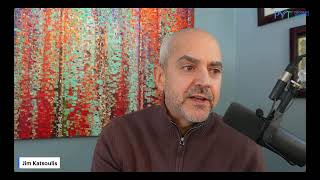
Jim Katsoulis explains how to start losing weight sustainably: calm yourself first, then shift from wanting to lose weight fast to imagining yourself living at your goal weight. He teaches the Goal Weight Pyramid (mindset, lifestyle, eating) and uses 60-second mental rehearsal and daily hypnosis to build the habits that stick.
Questions this video answers
Jim Katsoulis
Goal Weight Pyramid: mindset → lifestyle → eating
About 6,000 private sessions
40 chapters
144 pages
Chapters
Hi, everyone. Welcome to today's program. Yourself, then podcast. Today we're talking about how to get started, losing weight. How do you get started? I get asked this question all the time, and I'm not surprised because most people that want to lose weight feel overwhelmed and confused about, what am I supposed to do? You know, it seems so overwhelming. It seems like so much to change and to do that, you can start to feel like, I don't even know where to get started. Okay, good news is that if you relax and calm down first. So I guess that's the first place to get started, right? And this is where you get started consistently. So it's not just getting started as in this is the starting point of the whole journey. This is the starting point of the day, of the hour, is to relax and calm down. Okay? Ground yourself, take a deep breath, kind of center yourself, and from this place, you're able to think a lot more clearly. So I suppose this is where you get started from psychologically, mindset wise is relax and ground yourself. Right? And now when you think about what you're looking to do, it's not just about losing weight. This is very important to understand. So I guess the next step to getting started once you've kind of relaxed and kind of grounded yourself, is to identify what the real goal is. And this is going to be a shift for you, I hope, because the real goal is not to lose weight and get to your goal weight. The real goal is to live at your goal weight. And if you can make this your real goal, it makes the rest of the process easier, and it makes knowing what to do next a lot easier. It makes knowing how to get started with the weight loss a lot easier. So you're making it hard because you're setting your goal to be, I want to lose weight as fast as possible. Well, the second we put that as fast as possible on there, we stress ourselves out and we start to only consider extreme plans again. It's kind of like the difference between what kind of career do I want to do in my life versus I need to make $50,000 immediately. They have a totally different energy to them, and that energy causes you to think totally different. So when we ground ourselves, calm down, and realize our goal is not just to lose weight as quick as possible, that this frenetic, crazy, how do I lose the weight? No, calm yourself down, realize the real goal. Yes, you're going to lose weight in order to get to your real goal of your goal weight and then to live there. But the weight Loss piece is really just a phase. So we're not going to focus on the phase as being the whole goal, because it's not. And to prove it, you've all lost weight. You've lost weight before, and then put it back on. Are you happy you lost weight or are you upset that you put it back on? Okay, so losing the weight is not enough. The real goal is to live at your goal weight. So again, to re go over these steps, first thing you do in order to lose weight, calm yourself down, ground yourself, relax, take a breath. And now what's your goal? Are you going to focus on how to lose weight as fast as possible, or is your goal to live at your goal weight for the rest of your life? And hopefully, if your goal is to live at your goal weight for the rest of your life, then we need to create skills. You need to develop skills that are going to allow you to live at your goal weight for the rest of your life. And so we start to break this down into pieces. So instead of just completely changing your reading in one day, forcing yourself to eat differently, we start to break down what it's going to take to become a thin, healthy person. And I would suggest that that path is going to include thinking, changing your thoughts and your mindset so that you're able to think like a thin, healthy person, changing your lifestyle so that you start to live like a thin, healthy person, and changing the way that you eat and what you eat so that you eat like a thin and healthy person. And this becomes a process that's much more like college where or some training or certification program you may have done, where it's broken down into sections, and you learn this, and then you learn this, and then you learn this, then you learn this, and we start to systematically and strategically start to develop skills that give us the abilities we want. And to put it a different context, say you want to learn how to play golf. Well, you can't just become a great golfer tomorrow. You can't just say, okay, tomorrow's Monday. I'm going to start swinging the clubs perfectly. You've got to break it down. This week I'm going to focus on my drives. This week here, I'm going to focus on my short game and so on. But what happens is you break down the hole into smaller pieces. Then you systematically and strategically work on those pieces until you develop that skill. And once you have that skill, then you can move on to the next one, and that new skill builds on top of the old skill and so on. And this is the way you start to get to the ultimate goal of not just losing weight, but living at your goal weight. So I hope you consider this because this can change the process right from the start, right from the beginning. So it doesn't feel like this frenetic race against time where you're stressing yourself out and don't know what to do and so unclear. And instead you ground yourself and calm down. You start to see your challenges for what they are. You start to build around your strengths, minimize your weaknesses, and you start to systematically and consistently move in the direction you want to go in. So you start develop the skills that give you the reality that you want to have. So if you want to go deeper into this way of thinking, this concept, click the link in my bio. If you're on TikTok, you can click the my picture up there. Go click the link in my bio and go get the free hypnosis session I give you. I got a bunch of free stuff for you. So it's not just the hypnosis session. I got a three steps to living in your goal weight training. That's free. The goal weight quiz to help you identify the right goal weight for you. That's free. The program yourself, then method report that shows you how to use the whole program yourself, then method you can start using it tonight and access to gym AI. So you can literally talk to me basically and let my. My AI clone kind of help you achieve the results you deserve and that you're capable of. And if you're over in Facebook, YouTube, Instagram land, I'm going to put the link right into the comments section and again, you can just go here and this is free. I often say no one gives you more free stuff than me. And go sign up at this link and I'll prove it to you. What's up, Nadia? Nadi says, love your videos. Thank you. I appreciate you saying that. Thanks for watching them. Love making the videos for you all, love sharing this message, getting the the word out that there's a better way to manage your weight than dieting. This book's also out. Let me flip the old mirrored thing and I got it now. All right, there it is. So this book is out as well. Again, if you're looking for a quick, easy, accessible way to understand everything I'm saying to you, this book describes it and 40 chapters. Each chapter is a page or two. Each chapter is a hypnotic story. So it's not just information. It's meant to be an experience that changes you as you read it. People are loving it, too, so you can go check that out as well. Allison. Oh, I didn't get my morning email. Oh, no. Allison, set up. Make a support ticket if you can't find the support desk. It's all over the place. But if you can't do that, you can send. Send me an email at gym program yourself, then.com and I'll get that straightened out for you. Not sure why that would have happened, but things happen. So we'll get that set up for you, though. All right. Nadia says your talk helped to take my diet and body to a whole new level. All right, well, that's what I'm here for. I want to help you all get way better results than you've been getting in a much more effective and easier way. That's my goal for you all, and that's why I'm here every day. And I am here every day. I'm here every Monday through Friday, usually around noon Eastern, to literally answer your questions and talk to you all. I will be. I was kind of mentioning this the other day, but I'm coming up pretty quick here. I am going to begin working with you for free if you choose to. I'm going to offer literal free coaching with me. It will be recorded. It will be for the podcast. So, you know, you probably. This isn't for you shy people, I suppose, but if you're someone who enjoys the podcast and the material, if you would like to work directly with me, let me help you, you know, through some challenge you may be having in order to help other people. So get to watch that. That's going to be happening soon. I'll have more information for that next week. So. Yeah. Anyways, that's something to keep in mind, too. Jane says, I've been reading your book every night once I get into bed. Love it. All right, Jane, that's awesome. That's what it was meant for. I wrote this book very, very specifically to be a book that you read regularly. That's the point of it. So certainly it's almost impossible not to just go through it. Once you start, it's very hard to stop, I will tell you that. But once you've gone through the whole thing, or even before, the real purpose of this book, in my opinion, and what I wrote it for is for you to just, whenever you choose to, you can just open up literally any chapter, read it, and it's going to help you. So that's how it's designed. So certainly you can go through it linearly. But it's also, each chapter stands on its own. So that's very intentional. And of course, as you read this, you will have your favorite chapters. That's been the funnest part, I would say, is people have been telling me their favorite chapters and, and I had my favorite chapters and I think about them all the time. That's the funny part. But it's really cool hearing other people tell me what their favorite chapters are and, and it's emotional. I'm like, again, this is written to be. Listen, I'm a hypnotist, okay? I'm, I've been doing hypnosis for over 30 years. I'm one of the highest paid hypnotists on the planet. I tell you this not to impress you, but to impress upon you that I know what I'm doing. I'm one of the outliers in the hypnosis world who really has had the opportunity to do over 6,000 private weight loss sessions, you know, to be able to be compensated for my hypnosis sessions very, very well. And I put all that into this book. So, you know, I wasn't surprised when people, you know, tell me about some of their favorite chapters and they get emotional about it. It was meant to be that way, you know. So again, this, I think, is a great, great introduction to program yourself then in the whole system and certainly a great reinforcement if you're in the program. I think this is wonderful to have as well. So, yes, I'm glad you're reading every night. What's up, Novi? Novi says the smaller pieces thing is smart. I can be crushing 90 of everything and feel like I'm failing because I didn't do one tiny part. Then if that one part doesn't work, the negative voice starts making me feel like a total failure. Novi. Yes. Yes, okay, exactly. That, I think, is one of the biggest things that you can realize, Novi, because once you can see that for what it is, you're going to start to see that that process is one of the main things that's sabotaged you in the past and can potentially sabotage you in the future. So you've got to be aware of that. I think again, in, in program yourself, then program yourself then is not for, for everyone. I, I make this very clear. You know, just as an example. It's a college course. I think it's a college course for living at your goal weight. This is the goal weight blueprint we go through. It's 144 pages. You know, you're filling out. I mean, you know, it's for people that are overthinkers, action takers, usually perfectionists. And so my client, and I'm in that ballpark. And so my clients. One thing I've learned about us is that yes, we can do 90% of the stuff perfectly, not do one thing. And our brain focuses on that. Novi, what that's from partly is a thing called the negativity bias. It's a cognitive bias we all have, and overthinkers have it extra. I. But what ends up happening is evolutionarily, it was more important to remember where the lion was than where the beautiful flower was. And so evolutionarily, having negativity bias is typically associated with a higher survival rate. So most of us, you know, they've gotten this far. Our ancestors were very aware of the negative stuff. So negative things are much more impactful to us than positive things. I could tell you that as a, as a content creator, I can have a hundred. I'll get. No, you know what, let me make it real specific and real recent. And this is a funny story anyways. But so I got this book out now, right? And it's. I was going through the reviews and we got, last I checked, there were 70 reviews so far, right? And 69 of them were five stars. I looked at all, they said, oh, well, one of them's a one star. Well, you know, I couldn't click fast enough to get that one star. The funny thing was the review is glowing. It's amazing. The person just accidentally, I think, hit one star instead of five stars. But, but, but, of course, right? I, I don't Forget the, the 69 good reviews. Forget those. There's the one. I went right to it. And it's just like that. So our brains are more impacted by the negative stuff than the positive stuff. Negative stuff sticks more than the positive things. So you can't change that Novi. Like, that's never going to change. You're never going to be someone who can rewire your brain and then be more impacted by positive things than negative things. That's never going to change. But what we're looking to do in the program is to recognize kind of the ways that we're wired, the biases that we have, and then we learn to mitigate them, strategize to deal with them. And so for you, this is part of that realizing that for the rest of your life, Novi, you will do a lot of good things, you'll do a couple negative things, and your brain will get fixated on the negative things. And your internal dialogue will try and get you to quit or make you feel like a failure. So that will always go on the secret. And this is really important because I always say with my clients, I have the most negative voice in the world in my head, and it's first on the scene. So the second I make a mistake or don't do something right, that voice is, I told you, that has not changed one bit in 30 years. I do something wrong, that thing's right on the scene. The difference is, Novi, that I have developed a, what I call a coach voice in my head. So the negative voice gets there and starts chirping and starts making me feel bad. The difference now is that I know that happens. I'm aware of it, I'm ready for it, and I usually kind of relax. And the coach voice comes, says, wait, relax. You've been doing this good. This good, this good. That's something we want to work on. That's not how we want to behave there. We can make that better. But let's zoom out a little bit, look at the big picture. You're doing great. What, what. The improvements you made are amazing. And so that's the process I run that helps me with that, Novi. So you're in the right place. And I think that that is a, a process and a dynamic that most of us in the program for sure run. And I think most people do as well. Oh, Fear says, what's the name of the podcast? The podcast is Program Yourself then same thing as the the program. This is all Program Yourself then is the. Is the. The program and the method for. For how I help people live at their goal weight. You can kind of see, see up there, the old little logo? You can see that. So, yes, and that. That is a podcast. I always say that because if you can't make the lives, you can go look for the podcast and then you can listen to them anytime you want. And I know a lot of people do that, and it was cool yesterday. I don't know what was going on yesterday, but everyone's kind of sharing their wins, and that was pretty fun to hear. But a lot of people just listening to the podcast and, you know, using the free hypnosis stuff and the things I give them are getting results just from that, you know, that's how I think powerful this approach is, you know, when you have a real strategy and a real way to change your mindset, which really just means thinking differently about things, you know, that's all. Let's make it simple. But when you start to change the way you think about food yourself, your goals, of what you're looking to achieve. When you change those things, that's how you get the results you're really looking for. And if you're a dieter, that's not how you've been approaching it. Most dieters aren't trying to change their thoughts and their thinking. They're trying to force themselves to just do the right thing. And it's this process, like most dieters. Understand what I mean, when it feels like you're fighting against yourself, right, it feels like there's a rebellious part that you're always fighting against. Well, dieting has set you up to think about weight loss that way. And it really does encourage this, this kind of battle, this tug of war inside of you where nothing really changes. So program yourself then is a lot different because we take a strategic approach to changing your weight by following the goal weight pyramid. And as you can see, the first level of it, the most important level is mindset, then lifestyle, then eating. And so we strategically change those things so that you, at the core, at the fundamental level, start doing the right stuff. See, as a dieter, you always assume that your success is going to depend on how much you can fight and stop yourself from doing the things you want to do. And in program yourself then, we instead are looking to reprogram our subconscious minds, our thoughts, our feelings, our behaviors, so that we naturally and automatically do the things that keep us at our goal weight. And I think the best way I could explain it is the healthiest habit most people have is they're brushing their teeth, right? That's probably the healthiest habit you have. You developed it as a child and now you just do it on autopilot. And now, because you took the time to develop that habit when you were a kid, your teeth reflect that behavior. On autopilot, you're not thinking about your tooth health very much. You can just know if you have a good toothbrushing habit and if you have a flossing habit, even better, or water picking or whatever habit, even better. But your toothbrushing, flossing, teeth, cleaning habit is the thing that is directly the main impact influencer on your tooth health. But if it's all working properly, it's all running on autopilot pretty much, right? You just, you get up and next thing you know, you're brushing your teeth and you don't remember if you brush your teeth, but you brushed them, right? The night comes and you don't remember flossing or brushing your teeth. But you did it, and it's become automatic. This is the most powerful part of your brain. And we're never really taught how to use it effectively. And that's what we do in program yourself then is we start developing. God damn it. Makes me so crazy that most people, they got one habit, They've. They got one healthy habit they've learned in their life. Brushing their teeth. That's about it, right? For most people. That's the one daily healthy habit that the majority of people have. But you can add a lot. I've got like 15 of those going. It's, oh, my God, 15 habits. They run on autopilot. I do them automatically. I don't have to think about a lot of. I don't have to think about how much water I drink. I got it all automated. I know I just drink enough water. I. I mean, I track it a little bit. You know, how much like you track your toothbrush, and you're kind of aware of where you're at, but most of it's running just automatically. That's how my water habit is. That's how my sleeping habit is. That's how my meditation habit is. That's how my breakfast habit is. That's how my, you know, walking habit is, and on and on. And so most of the things I'm doing to stay at my goal weight are running on near autopilot. So when I say the goal of programming yourself, then is not just to lose weight, it's to learn how to live at your goal weight for the rest of your life on your autopilot. This is what I mean. We're focusing on learning the specific skills and habits that do a lot of the heavy lifting, whereas opposed to dieting, where dieting you're doing the heavy lifting, you have to consciously be in control and aware and monitoring yourself all the time. That's dieting. And it's very tiring. And you can only do it for so long, typically, and then you kind of just. It's too much. You're not built to live your life consciously making decisions all day long. It's estimated to make over 200 food decisions a day. So you're just not built that way. So we're built to be on pretty much autopilot. Problem is, your autopilot has been influenced by the food industry, by the culture, by the diet industry. And so you got a lot of unhelpful habits going on. But once you learn how to use your mind, you can install habits that support you and that eventually Begin to run fairly automatically. No. Victoria says, hearing you in mind now, making better activity and food choices and feel super proud of myself for these. This fuels me to continue this way. Oh. Hearing you in my head now. Yes, yes. And again, that. That is. That is my purpose in life. I'm a hypnotist. My job is to have you hear my voice in your head with the messages. I'm saying. That's what I do. Make no bones about it. Okay? I am here to help influence you. Now again, you say, well, my. I don't know if I feel comfortable with that. Well, what do you think an advertisement's doing? When you watch ads, what do you think's happening? Do you not think that's hypnosis? You know, do you not think when you hear ads that you're thinking about those ads on some level? Of course you are. You know, we're being hypnotized constantly all day long. You're not. It's important to understand that there's not a person alive who hasn't not been hypnotized. We have hypnotic brains, so it's impossible not to go in and out of hypnosis all day long. And more importantly is that our brain runs in a hypnotic way, which is to say that most of your behaviors run on autopilot. Most of what you're going to do today you already decided and have done before, and you're just going to do it naturally and automatically without having to think about it much. Let's be honest. Most of your reading today is just going to happen automatically. It's Friday. You got your Friday eating routine. You're going to eat like you do on most Fridays, unless it's some weird outlier Friday. You know, tomorrow's Saturday. You're gonna eat like you typically do on a Saturday. Sunday. Sunday. You're gonna eat like you typically do on Sunday. Except if you live on the east coast, you may have a huge snowstorm coming Sunday, so you might eat like you do in a snowstorm. So. You know what I mean, though? What I'm saying is most of your behavior is kind of happening on autopilot. Most it's running on autopilot. And that is how your weight's being controlled. Most of it's run on autopilot. Most of your eating's run on autopilot. So. So when you go on a diet, what you're trying to do is you're trying to take control of that process and trying to consciously say, no, no more autopilot. I'm Going to make every single decision consciously. No, you're not. Not for long. And this is the reason, biggest reason why you can't stick to a diet is because you're trying to do it consciously. You're trying to force yourself to act in a new way. You can do it for a little while and then you run out of energy and you go back to what you always do. You go back to your default settings. So in my opinion, we have to change the default settings. That's the secret to getting the results you want. But if you have any questions, feel free to ask them. Any weight loss questions are welcome. I don't care what weight loss plan you may be using to try and lose weight. If you're struggling or have any issues or challenges with it, ask a question about it. Let me throw some suggestions your way. You got nothing to lose. It's not gonna cost you anything. And what I say to you may change the way you think about it, may be helpful. So feel free to ask any questions if you have them. Vicki says, through pyt, I've added the word living at my goal weight range. Yes. Yes. So I'm no longer fixated on a number. Thank you, Vicki, for reminding me of that. Yes. And program yourself then. We think in the concept of a range because your weight's constantly fluctuating. You're a living human, breathing human being, and so you're constantly in a state of flux, you know, and so it's natural for our weight to go up and down. And I think if people just pin it to one number, the second it goes up a little bit, you know, they're terrified, and the second goes down, they're too excited, you know what I mean? Like, so we have to think in a range. In my opinion, if you want to keep your sanity, I think focusing on just one single number is just, it's insane. You know, it's like your bank account, I mean, your bank account fluctuates. You can't just keep your bank account at one single number. You pay bills, you got money coming in, and it's just there's a range, it fluctuates. And so if you can take that goal weight number from one number to a range, I think that's a very healthy, helpful mindset shift. You know, Novi says if your mind wanders during the hypnosis, is mouthing along good to keep focus or will it mess with the hypno benefit? No, I think mouthing along would be great. I. I think anything. I'm a big believer in that kind of like the learning, the science of learning. A lot of times they'll talk about learning in different modalities. And so the most obvious example that is like, I don't know, when you're taking notes, if you're reading a book and you're taking notes, if you hand write the notes, it's going in another modality, right? So instead of just visually taking the information in with words, you're also now in a motor, sensory sort of way, taking the information in as well. And if you speak the words, you're taking the information another way. So again, I think mouthing the words would be great. Your mind wandering during the hypnosis is normal, natural and almost desired. Mind wandering is, is literally almost like part of being in hypnosis to some degree. Hypnosis and meditation are different. You know, if your mind wanders during meditation, you bring it back to center. If your mind wanders in hypnosis, it does not matter as long as what you ever reminder wanders to is, is allowing you to stay in a more relaxed, calm state. Because what's going on is, is you calm down and relax. And even if your mind wanders, those words that I'm saying are still going into your, your head, you know, you're still getting them. But I think mouthing the words, I would, I would definitely play around with that and I would expect that it would be beneficial is what I would assume and think, you know. But yeah, if anyone's got any questions, feel free to ask them questions about hypnosis, even if you want. Although I don't want this to be a hypnosis live, but, but if it's anything about weight loss, oh yeah, I'm happy to answer these questions as best as I can. I know as we get into, as we get into the end of January, sometimes it could be a little bit of a slump too, you know, like they always say that. They always say one of the most depressing times a year is, is literally this week, you know, you know that because the excitement of the holidays is over, you know, I mean, it's just a little bit of a letdown for a lot of people. They say, you know, usually when, when the bills start coming in from Christmas, they start arriving, you know, this week here, you know, you smack dab in the middle of winter, right? So especially if you're on the east coast, you get the snowstorm coming depending on how you feel about snow. So if you're feeling a little bit down or discouraged, please understand that, that it's understandable, you know what I mean? Like, I think it's important to see how we're doing within the context of the situation we're in. And I think a lot of my clients, I remind them of this, this time of year that although January, you know, we overlay this New Year, New Me bullshit on it. It's really, I think December and January, really, in nature, they're the slowest times a year, you know, so if you feel a little, little down, if you feel a little low, if you feel a little worn out, I think it's understandable. You know, again, I think in nature, December and January are times of rest. So, you know, and again, depending on where you live, you know. So for me, in New England, you know, January, it's one of the darkest months of the year, right? It's one of the coldest months of the year. You know, there. There's. There's environmental factors that are there. And so if I feel a little more down, a little more tired, a little whatever, I can see why, right in my mind. And maybe you can say this is a limiting belief if you want to. But in my mind, if I feel a little more down in January than I do in June, I can see why in June, it's light all day, the weather's beautiful, I'm playing basketball, I'm out playing my dogs, I'm mowing the lawn, I'm outside, I'm working my garden. I'm doing all sorts of stuff that just kind of lead me to be in a better mood. And then the winter comes, I do less of those things. So is it. Is that so crazy? You know, But I think sometimes, and I know this for a fact, because this is what I've learned From doing over 6,000 private coaching sessions, is that people really miss a lot of times the reasons why they feel the way they feel. And they're just in their head saying, oh, my God, I feel like shit. What's wrong with me? You know, I should feel better. It's January, and I promised I was going to get New Year, New me, and here I am. I'm feeling kind of tired and worn out, you know, and they miss all these other factors. And I think it dooms you because it gets you in this headspace, that you should feel great no matter what. Well, I don't know. I definitely. And I feel I'm happy. I like January, but January is definitely. If I had to look at the whole year, I would say January is a little bit of. A little bit of a. More of a down month for me than other months typically. And, you know, and I'll tell you what, it's validated. I got a solar. I got my solar panels put in and it's been interesting while you can watch, like, the production of it, you know, and it ain't a lot of production right now, but I looked at like the year in Massachusetts, the year of, like, solar production for. For people, and January is like the lowest. I think actually November was the lowest month, but January is right there, you know, And I was like, I think sometimes, you know, we're so separated from nature a lot of times that we're just like, oh, I should just feel great all year round. Well, you're not always going to feel great. You know, we're human beings. And I think that when it gets colder, when it's darker out, when you're not outside as much, you know, when you're not doing as many things out in the world and all this stuff, yeah, you might, you might feel a little bit lower. That's not the end of the world. But I think identifying and understanding, I think, is the first step to being able to kind of manage it more effectively. But I just share that with you because that's one of the best things I would say at coaching that that really brings me the most peace, is helping people. You know, one of the best ways to help people feel better is for them to realize the situation they're in. I have found that people a lot of times just completely ignore the reality they live in, you know, and just expect that they should always feel great. And I think that realizing that there's real effects from the situation you're in and impacts of it are important. But. Yeah, but anyways. Yeah. If you have any questions, feel free to ask them. Jane says, do you think it is best to start with the most difficult part of the weight loss journey or start with something easier? Oh, that's an easy question for me. I would absolutely say start with the easy thing. I think you've already tried doing the most difficult part. Everyone, all of you have already tried the most difficult part. Dieting is the most difficult. Dieting is literally the most difficult way to lose weight possible and intentionally so. Because most of you, and this is how, you know, you think like a dieter, because subconsciously you associate the best plan with the most extreme plan, because you associate the most extreme plan with the fastest results. And that's what you care about. About most. And so I believe that once you start shifting your focus from the fastest weight loss possible to the longest lasting weight loss possible. One of the very first things that happens is you. Almost naturally, you start to focus on the small easy wins. And so in my world, what I like to think is that you want to do the small, easy things so that you can do the big things. You got to do the small things first before you can do the big things. I believe. And so I think that I, I just think that's a fundamental shift in thinking from how most people approach this. I know it's for a fact. You know what I mean? So anyways, yes, start with the easiest thing. And. And again. So. But here we go, right? Why don't. Why won't you start with the easiest thing? And I'm not talking just to you, Jane, but I'm talking to all of you. If you're not in programming yourself, then let's. Let' dive into this for one second. How come you. I'm saying start with the easiest thing, and I can hear the voice in your head saying, ah, that's smallest thing. What am I going to do? I'll never get results. I'll never get results if I start with the smallest thing. I starved myself last month and I hardly lost any weight. What's going to happen if I do the easiest thing? That's what you're thinking. I already know it. But this is why. This is why you're stuck in this, this never ending hamster wheel, okay? It's the small things that allow you to do the big things. You don't believe this. So you think that just any given Monday you can just jump into an extreme plan. Any, any money. Just. You're up to here with life, right? You're just stressed to the gills. You're just kind of barely making it through each and every day, and yet you think tomorrow's Monday and I'm gonna jump into a plan where I have to count every single calorie I eat. I'm gonna jump into a plan. Tomorrow I completely change my eating and eat totally different from tomorrow on. No, you're not. It's overwhelming, okay? So what I would suggest is going to get you much better results is how about tomorrow, Monday, you start focusing on drinking some more water. You're probably dehydrated. Let's get some more water in your body so that you feel better and so you think clearer. Let's start focusing on getting some more sleep. Let's get another half hour to an hour extra sleep for the next week. Two weeks. And let's see how you feel. And from doing that you may start to think more clearly, have more energy, naturally, choose better foods. Right. Just from that. What if you start working on eating an apple every afternoon and you start adding these habits and so they start to come natural, automatic. You know, it's, it's, it's the path, I promise you. Right. Jane says yes, giving up sugar seems impossible while drinking more water is much easier. I'm trying to make sure I stop eating at 7:00pm um, okay, Jane. Well, great. I think that's a great goal. And I think, yes, drinking water is much easier. That's what I would pass on. I would have, want to have an intention that I consume less sugar. I want to dial down my sugar consumption. You can have that as a general goal, drink more water and then focus on not eating after 7pm But I would give myself a couple options. I would have plan A as I stop now. Again, this is part of my the program yourself then all or something strategy. This is one of the core things that makes program yourself then so different from dieting is that dieters follow an all or nothing mentality and program yourself then we have an all or something mentality. So Jane here wants to stop eating at 7 o'. Clock. So right now she's got an all or nothing mentality. I either stop eating at 7 o' clock or I eat after 7 o' clock and I eat everything. I eat the wrong stuff. Okay? So what I want to do is I want to give myself a plan A as I stop eating at 7 o'. Clock. That's my ultimate goal. I stop eating no food after seven. But then I have a plan B. If I'm gonna eat something after seven, I wanna make sure that it's a piece of fruit or a vegetable. So something whole, natural, good like that. And then I have a plan C. If I don't want the fruit, I've got, you know, air, pop, popcorn. I've got these options here. You see what I mean? So what I'm doing is I'm giving myself a couple options. And most dieters will not wanna do that because they think if I'm not perfect, I'm not gonna get fast results. So I'm not gonna do that. But of course, this easier approach, I hope, as I say it, it seems superior and obvious that that's going to be a much better way to go about that. I hope it seems that way and if not, we can argue about it. What's up, Julie? Julie says thank you. Need tips. What's tips. Is TIPS an acronym for something? I see it all capitals, or are you just saying, I just need tips to help me lose weight? Because you all don't need tips. The last thing in the world you all need is tips. That's a big diet or mistake. You think you're one tip away from changing everything. You're not. You're one system away from changing everything, and you're nowhere close to having a system. This is the big problem that diets have taught you, and this is the way diets are marketed. Diets are marketing, period. And diets know that they're marketing to people that are overwhelmed and exhausted. And so they have to make their weight loss plan seem as simple as possible. And so if you look at every single diet you've known in your life, one thing you'll notice is they're always built around the one thing. Every diet's built around the one tactic, whether it's counting your points, tracking your calories, stop eating carbs, stop eating sugar, don't eat for 16 hours, it doesn't matter. Take your pick. It's always built around one tactic. And they do this because one tactic, cognitively, it's easy to understand conceptually, like, oh, yeah, I'll just stop eating carbs, right? But the flip side of stop eating carbs for most people is, is I have to completely learn how to eat in a new way. Well, that sounds a lot harder. Okay. And the truth is, you're never one tip away from transforming and living at your goal weight for the rest of your life. You need a holistic, comprehensive system. So looking for tips is that is the trap for the dieter. Because you think you're one tip, one hack, one diet away from success, and you're not. I believe you need a comprehensive, holistic system that's basically going to allow you to think like a thin, healthy person. Mindset, lifestyle eating, think like a thin, healthy person, live like a thin, healthy person, and eat like a thin, healthy person. So that's what I think you need. So if that's the TIPS you meant, I. I don't think tips would really help you. I think tips hurt you because again, you think in very almost simplistic ways. And the reality is, if you're going to change your weight long term, you're going to need to fundamentally change how you think, how you live and how you eat. And I don't see any, any way around that. Again, I'm not talking about you can, you can hack your way to weight loss. No doubt. I'm talking about staying and living at your goal weight. I don't think there's any hacks to it. And this is why 85 to 95% of dieters that lose the weight that are successful put it back on. I think this is right at the core because they don't have a comprehensive holistic system. They have a hack that they're able to force themselves do for a little while and not long. Yes, yes. Novi. Novi says racking up easy wins at the beginning is great for mental confidence too. Going into the hard stuff. Yes, absolutely. And to be honest, even the hard stuff, there should not be hard stuff. There should be hard stuff that you break down into smaller, easier pieces. Okay, so we're not just going to change your reading that. What? What? Change your reading that. That's such an. Statement. Because that just, there's so much to that. That's like, I'm just gonna learn to play guitar well. Okay. But it's a, there's a lot there, you know what I mean? So it's important that we recognize that. And I think diets have consistently trained us to underestimate what we need to do to change our weight. And, and I, I. You couldn't convince me otherwise. I don't think. What's up, Carmel? How's it going? Joe says how much is it to do with just attitude? I mean, it's a lot to do with attitude, but I think attitude is a symptom of a deeper problem, if that makes sense. I don't think you're just going to change your attitude, folks. You, I don't even know how you would just change your attitude. I don't even know what that would mean. I do believe that if you, you know, in a strategic way transformed your mindset, I think you will naturally change your, your attitude, if that makes sense. So I think it has a lot to do with attitude, but I don't think you can just change your attitude. I don't. I think that's one of those things, again, that most people don't have a real understanding how their mind works, and they just, they minimize and oversimplify things that are challenging and hard and changing your attitude. I dare any of you to just change your attitude about something. You can't change your attitude about something. You can change how you think about something and that changes your attitude about. About it. So I, But I do think that matters a lot too. But again, for me, I think that, you know, your mindset is the number one thing. That's why I put at the bottom of the pyramid here. And we break mindset down into some different categories and go through it, but it has the net effect of changing your attitude. So again, to me, the attitude is an effect, not a cause. So your. Your attitude is an effect. It's a reflection of what your mindset is, and I think it's very important. Jane says, I have an alarm on my phone for seven, but I give myself grace about half an hour. Great. Catherine says, how do you feel about fasting one meal a day? Well, you know, any specific questions I get asked like this, I always preface it by saying, the golden rule of program yourself then is that there is no right or wrong. There's only what works for you. You know, at the end of the day, you need to create a one size fits one plan for you. And that's why in program yourself then, the reason this goal weight blueprint that you get in the program is 144 pages is because you have to fill it out with your strategies. I can't just tell you what to do. And again, I think this is another core issue with diets, is that diets are built to be sold to the masses. And so they have to say, hey, you want to lose weight? All of you, everyone, you all want to lose weight. You have to. All the way it's going to work for all of you is you have to stop eating carbs. Oh, you all want to lose weight. The way all of you have to do it is you have to stop eating for 16 hours. You all want to lose weight. The only way to do it is you all you, you. For you all, you have to eat one meal a day. You know, so. So I hate this because it makes us not human. As soon as you dive into a diet again, metaphorically, it's like trying to fit a peg into a square hole. It just doesn't work, you know? So I think you need to figure out what works for you. So if you love eating one meal a day, right, you say, oh, I heard this omad thing, one meal a day. Let me try it. And you try it and you're like, holy shit, this is amazing. And then you think about doing it tomorrow, and you're like, I can't wait to just eat one meal a day tomorrow. And then you think to yourself, man, I love this so much. I only want to eat one meal a day for the rest of my life. I love this. Then eat one meal a day. That's the perfect plan for you. But if you're like most People, you're gonna try to do one meal a day, and you're gonna find yourself getting obsessed with food because you're constantly thinking about eating. Cause you're hungry all the time. And then in that case, I said, that's probably not a good strategy for you. It would not be a good strategy for me. I've. I've played around with it. I do not like it. Okay? And so the same thing goes for fasting, same thing goes for keto. Same thing goes for anything. Is you gotta say, does this resonate with me? Does this work for me? Okay. And so I think at this point, you know, what we have to understand is that the diet industry, it runs in. In, there's fads, right? So right now, you know, intermittent fasting is big. One meal a day is just a little bit to the left of that. Oh, protein out your ears is big. So, you know, there's a lot of things that are popular right now, and for some people, it's a great fit. For some people, it's not. If it fits you and everything's working. And I don't mean just weight loss, but I mean, if you're. If you're following it and you're losing weight and you enjoy doing it, then I think, great. But if you do it and you're losing weight and you hate it, I don't know what you. You're just delaying the inevitable. So to me, I would rather use that time to figure out what works for me. What works for me. And I think if you bring that attitude into this, you're going to end up in a fundamentally different place a year from now where you have a plan that's built for you. I always tell you, like, I've been at my goal weight for 30 years now, dropped 50 pounds, and I've transformed my mindset, lifestyle, and eating. And now it is very easy for me to live my goal weight. But the other side of it is that it's also easy for me and to imagine my future living at this goal weight. Because I love the way that I am living. I love the way that I'm eating. It fits me like a glove because I took the time to figure out what really works for me. But now I have my system now. I tweak it and optimize. I make little changes here and there, but the core of it was built for me, so it's a lot easier to stick with it. I hope that makes sense. Most of you, let's be honest, when you've tried to lose Weight, it absolutely does not fit you. You force yourself to do it. You fight yourself, you try and trick yourself to do it, and eventually it goes away because you hate doing it. So to me, it's like whether you lose weight quickly or not to me is the worst measurement of whether it's a good or a bad weight loss program. To me, the main thing you should be focusing on is how does it feel to live this way? Does this fit with who I am? Does this fit my lifestyle? Does this feel like something that I would want to keep up long term? And if you can say yes, I think you're in a special place. But most people are going to say no, and they have no idea what to do that could be long term. So, you know, that's my feeling on it. So is fasting good or bad? Well, it depends. It depends on you, you know, But I think if you go that way, you can't help but succeed. I really believe that. Carmel says I live chapter 39 of your book. It really. Oh, I loved chapter 39 of your book. It really resonated with me about a dancer in the rehearsal. Yes, I love that one, too. I. I love so many of the chapters. I mean, again, I got to write this book, and I get to spend so much time with those chapters. I got to mold them and sculpt them, each and every word. You know what I mean? Like. Like, again, I am a hypnotist. So a lot of times when I was writing these chapters, I'm in my mind. I'm. I know I'm going to be reading this. I'm going to be saying this as a hypnotist. So I want each and every word is the rhythm of it, the. The impact of the word to hit perfectly. And I love chapter 39, the rehearsal. See how long this. Sometimes I'll read these. If they're short chapters, I do forget how long this one is. I'll read it. Okay. Rehearsal, practicing, success. Chapter 39. A dancer does not wait for the performance to learn her steps. She practices them over and over, slowly at first, then faster, until the music carries her and the movement feels like joy. That is what rehearsal is for. It's how you teach your mind and body to succeed ahead of time. Not by worrying about what might go wrong, not by fearing the hard moments ahead, but by imagining yourself meeting them the way you want to be strong, calm, confident. The person who eats with ease, moves with energy, and feels at home in their own skin. Think of a challenge you know is coming. The Party table full of snacks. The late night kitchen. The moment you usually slip. Now imagine handling it fully connected to your strengths. Feeling calm, feeling confident. Sail through the moment. Make the choice you want to make. Walk away proud. Feel the glow of getting it right. Run it again. Run it through again and again. Each time you do, your brain lays down a deeper path until it feels like less like trying and more like simply being yourself. Rehearsal is not pretending, it's becoming. And then when the moment comes, you won't have to force it. The music will play and you'll know the steps. I, I love that chapter. I love this book. Each chapter is just like that. If you like that, there's a lot more of that in this book. And again, you can read that chapter 10 different times and get something different out of it. And that's hopefully the goal. Thank you, Carmel for reminding me of that. I love that chapter. It's one of my favorites. And again, what that chapter is about though too, just let me, let me reflect here. This book is a layered book and what that means is that chapter is about the rehearsal technique. So Program Yourself then is really the program Yourself then method, which is the core of the program revolves around a 60 second mental rehearsal technique. It's the redo rehearsal technique. You do this at night, takes 60 seconds. This is how you program your mind. And so half of it's redoing things that you did, you know something during the day differently. But the other half's rehearsal, imagining how you want tomorrow to go so that you start thinking yourself the way you want to be consistently day after day after day after day. Every night you're thinking about yourself the way you want to be the next day. That wires your brain to be the person you want to be in a very soft, easy, comfortable way. So that chapter goes along with the technique. And again, if you opt in, if you, if you're in TikTok, you click my little picture up there and then go to my bio. There's a link there. Go get that hypnosis session. If you're over on Facebook, you can scroll up and go to the link I put in there. But what's going to happen is you're going to get a hypnosis session, but you're also going to get a bunch of other stuff. And one of the things you're going to get is the program yourself then method report where I literally give you a short report about how to use the redo rehearsal technique. I just show you how to use it. It's the Core of the program. I give it to you for free. And if you have the book, read that report, practice it, and then read chapter 39 and chapter 38, the reader and rehearsal technique chapters. But see, they go together. Do you see what I'm saying? So it's like you learn the technique in a logical way, you practice it, but then you read the book and you get kind of a hypnotic understanding of it. So it's pretty cool stuff for people to like, that sort of thing. Jody says, when's the audiobook coming? The audiobook's coming soon. I mean, we're talking probably a couple weeks. Should be ready to go. So Ophir says, can you put a link to the book? Yeah, I can actually watch this. And this is funny because I can't say where the book's from because I don't want to get banned by TikTok, who actually, just so everyone knows, because this seemed kind of quiet in the news, I was a little surprised by this. But TikTok is officially no longer that Chinese company. It is officially now an American company. And, yeah, we'll see. We'll see how that goes if there's any changes as we move forward. But, yeah, I'm gonna put this link right into the. If you're on Facebook or Instagram or whatever, I'll put this link right in the comments. There it goes. So if you do want to get this book again, it is only. It's 9.99 for the physical version, it's 299 for the digital version. So you can go check that out if you'd like to. Yeah. A2. Shea says fasting doesn't work for me. Fasting doesn't work for a lot of people. Okay, so fasting doesn't. See, this is what I mean. The diets that if you've tried. I mean, it could be any diets, but let's just say most recently you tried fasting and it didn't work for you. But did you say to yourself, oh, fasting doesn't work for me. I'm going to find a better way that does work for me? Or did you say, oh, my God, I can't even do that. I can't even fast. Susie did it and she lost 30 pounds, and I can't even fast a day? Well, so what? It's just not your path. It's not your. Your strategy. And. Or it might be your strategy. You're just not good at it yet. You need to practice it. Right? But, yeah, after one meal, I could not get satisfied. A lot of people feel that way, me included. What I found is when me personally, when I experimented with the 16 hours of fasting, by the time I got to lunch I was really hungry. And then I had a hard time not overeating during my eating window. And so for me personally, eating three meals a day, eating within an hour when I wake up, that's how I manage my hunger most effectively. And I'm able to eat the best. So again, there is no right or wrong. There's only what works for you. And if you can really adopt that mindset, I think it sets you up to really create a real rock solid plan for yourself. Carmel says I keep reading that chapter, so amazing. Yes, yes, Carmel, I appreciate you saying that. I have found a lot of people do that. I did the same thing. I had my favorite chapters. But yeah, I've had a lot of people say that, that you get kind of hooked on certain chapters. You just keep rereading them. And that's the point. Because listen, in program yourself then, for example, one piece of the program is that for eight weeks you, every day you get a five minute hypnosis session, excuse me, with a different weight loss mantra in it. So at the end of eight weeks you've gotten eight 57, five minute hypnosis sessions, 57 different mantras in each one. Well, what happens in 57 sessions? You know, some are really going to resonate. Some really, you know, aren't going to resonate as strongly. But the ones that really resonate people, I noticed that they kind of list them over again. This is the same thing. You're going to read this book. There's 40 chapters. You know, some chapters are really going to resonate with you and you're going to find yourself and you won't be able to explain it. You'll just, you'll just, you'll just really gravitate to that chapter, those chapters, and you'll read them. You'll read them, you'll read them and you'll go deep into them. And that's the goal of this. There's going to be chapters in here that just really resonate with you and they're going to shift in a fundamental way how you think about weight. That's my goal. If you read this book in three chapters, resonate at a deep level with you, then we've done the work, you've changed, you think differently in a comfortable way. I can't stress that enough. It's the comfortable way piece that's most important and it's the main thing that's been missing from your weight loss experience. It hasn't been comfortable, it hasn't been easy. No, don't bullshit yourself. If it's easy and comfortable, it maintains, it sustains. You can't trick yourself and say, oh, no, it's the best I've ever felt. I love this. I love doing intermittent fasting and you haven't done it in six months. You know what I mean? No, that you do what you love. Okay. I love how I eat. I eat the same way every week because I love it. And I've been doing this for 30 years. So that's the real litmus test. You know, Lisa says, so we get to keep TikTok. That's. You know, I think that depends on how you define TikTok. I, I will say, as someone who's been using TikTok every single day for over three years, that it's not the same app it was now. Again, you wouldn't expect that. But it's different. And it honestly, it changed last year. I think they changed some of the code personally, you know, whatever. But, yeah, so. So in a. On a technical sense, we have to keep it and I'll keep it. You know what I mean? So I like TikTok. It's been a great avenue for me to get this message out and to connect with people. So. So I love it. I, I do believe that, that some of the best parts of it don't function exactly the same way, but I'm optimistic and hopeful that things will just keep getting better with it, but at least we get to have it. So. Yes, but, but it is. It is. You know. I see, Vicki. Exactly. So. So it is. It is what it is. Right? It is what it is. Everything's good and bad. Yeah. Yeah. Lisa's. Yeah, agreed. I'm still addicted to it. Yes, it's. It's a very addictive app. Right, again, short form content is, Is a very addictive substance for sure. All right, everyone, I'm going to get out of here again. If you're not in my world, please click the link in my bio. If you're in Tick tock, go up to my picture. Click it. You'll see the bio link in my bio. If you're on Facebook, I'll actually put the link in one more time. This, this will give you. If you follow this link, it'll let you go get the free hypnosis session that I'm giving you. And I'm giving you more than the free hypnosis. Session. That's just one piece that I give you a couple other things to help you lose weight. If you want to lose weight, I would definitely suggest you go check it out. And. And yeah, you got nothing to lose, you know, except the weight. And. Yeah. So anyways, there's that stuff. And if you like this, I'm here every Monday through Friday, so if you have any questions, I'm here to help you. And I don't care what the questions are. I'm literally. This is my mission in life. I'm here to help you. I will literally coach you right on these, Right on these calls. Happy to do it. And if you can't make the lives and you like listening to this, it is a podcast, and you go on any podcast platform. They're uploaded every day and you can search program yourself. Then it'll pop up. You can listen anytime you want. All right? And remember, this book is available now. This book is a game changer. Just read the reviews. 75 star reviews. And they're awesome reviews. They're not just five stars. People wrote really nice, nice things about this book, and that makes me so happy. Go get the book and see if they're. If they're right or not. All right? And again, you can get 2.99. You get the Kindle version. 9.99, you get the physical version. I suggest getting the physical version because this book's just got energy in it. I don't know what it is. It just feels nice. It. It's nice to hold. Put it in your. Your bathroom, next to your bed, on the coffee table. Pick it up and read it randomly. You'll be better off. All right. What's up, Christina? Working on your list. Nice. Work on that this weekend, but, Christina, work on that list in a good mood, okay? Get yourself in a good mood, relax, take a hot bath, and then work on the list. Have fun with. It's a fun list. It's a fun list. It's not. You're not doing math homework, okay? It's a fun list, all right? So enjoy it and have fun with it. What's up, Irene? Greetings from Greece. All right, fellow Greek brethren. Yes. Nice to. Nice to see you. Yes. Josh says. I love how you remind everyone to calm down and relax. Yes. That's my main job in life, I think. Right. Is. Is. And I, I, it's for myself. By the way, the first one I hired that hired myself for that job is to. Is for myself to remind myself to calm down and relax. I am by nature, a tweaky kind of tuned up person. I would say and I would say my entire journey for over 30 years at the very core of it has been Jim, relax, relax Jim, relax, Jim, calm down, relax, relax. That is my main message to myself for over 30 years. I am sure that it'll be the main message to myself for the next hundred years because I, I consistently remind myself to calm down and relax. I think most of us do. So in that sense have a nice calm, relaxing weekend, all of you. Enjoy the snow if that's what's going to happen to you. But, but have a nice relaxing weekend. You deserve it to yourself. It's the end of January, so, so you know, take a step back, relax, rejuvenate and we'll pick it up next week. All right everyone have a super weekend. We'll talk soon. Bye.
More from Jim



Weight Loss Visualization: Wake Up in Your Dream Size #programyourselfthin #weightlosshypnosis



What If You Pretended to Be Thin for One Hour? #programyourselfthin #weightlosshypnosis




