How To Stick To A Weight Loss Plan
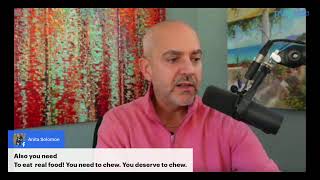
Jim Katsoulis argues that lasting weight loss comes from sustainable habits, not extreme diets. He contrasts a sprint approach that burns out with a marathon approach of modest, consistent changes that become automatic. The key is staying in the gray zone of partial compliance and building behaviors like brushing teeth, not relying on willpower alone.
Chapters
Everyone, welcome to today's program, Yourself Thin podcast. Today we're talking about How to stick to a weight loss plan. And it's easier than you think, although it is going to require something from you. And that thing is patience. Okay? Because the easiest way to stick to a weight loss plan is to not make it so overwhelming. Now, if you don't make it so overwhelming, though, the flip side is that you're probably not going to lose weight as quickly as you could with a more overwhelming extreme plan. but you will be able to stick with it a lot easier. And ultimately it's how long you're able to stay with it. That's really going to give you the results that you're looking for. You're not looking for the fastest results possible as the main goal. I know you think that, I know you think that losing weight as fast as you can is the, is the main thing you want to do, but I want you to take a step back and reflect on two goals. One goal is that you lose weight as quick as you possibly can and get to your goal weight. The other goal is that you lose the weight and get to your goal weight, but then you're able to live there long-term on near autopilot. I want to give you this choice, and if you choose the fastest weight loss possible, then I can't help you because you already know how to do that. Just stop eating. And you'll lose weight as quick as possible. But if you're interested in actually living at your goal weight long term, then I can help you. And this is the beginning of actually being able to stick to your plan, is to change the way that you're thinking about it. Because if all you care about is getting to your goal weight, metaphorically, it's kind of like you're trying to run a sprint. You're trying to get there as fast as you possibly can. And the problem with that mindset in the real world is that a sprint requires perfection. You know, sprinting is literally a race of perfection. If you— someone trips a little bit out the gate, they're going to lose the race. I mean, you need to be absolutely perfect every step of the way. And, uh, and so for that reason, you need to kind of rearticulate this, reconceptualize this right from the beginning, that just getting to the goal weight as fast as you can really isn't the goal. Because it's really not the goal. Again, you want to live at your goal weight, but B, that if you make that the only goal or the main goal, the only way you can get there is with the most extreme, overwhelming, least sustainable strategies possible. And that is the core reason why you haven't been able to stick to your weight loss plan simply is because every time you go into it, you try and change everything all at once instantly. You go from not focusing or concentrating on your eating to all of a sudden not eating any carbs, tracking every single calorie, you know, counting every point, only eating for 8 hours. You do these drastic things and, you know, you can do it for a little bit and then it starts to feel overwhelming. Well, there's a reason for that because it's overwhelming. And so the easiest, most obvious way to stick to a plan better is to make the plan more sustainable and manageable right from the beginning. Don't allow yourself to get swept up in the impatience and the, the only thing that matters is getting to the goal, because that's not the only thing that matters. And that is one of the primary things that's caused you to repeat the same failure cycle over and over and over and over again. Again, coming out the gate strong and then eventually fading. And that's what every single dieter experiences, even when they succeed. It's estimated 85 to 95% of dieters that even succeed, that are successful getting to their goal weight, put the weight back on. So again, it's the same pattern regardless of outcome, right? Most people, again, they're going to start their diet and, you know, burn out before they ever get to their goal. But even the people that get to their goal end up having the same destiny of returning back to their original weight. And so much of this comes right from the beginning of how we're thinking about the process. And if we think all that matters is getting to the goal as fast as we can, the only strategies we ever really consider are overwhelming extreme ones. And so once we step out of that paradigm of focusing on fast weight loss as being the number one thing, we start to focus on living at our goal weight. And right off the bat, living at our goal weight is a different energy. It's a different goal, and it requires different strategies. And all of a sudden, you start developing strategies, accumulating solutions that are built for the long term. And part of being built for the long term is that they're not overwhelming. So instead of trying to change all of our eating at once, we approach it more strategically in ways that we're going to develop our habits. We're going to develop a new way of thinking, a new way of behaving that kind of flows out of us, that gets us and keeps us at our goal weight. We want to rely on the part of our brain that runs our automatic behaviors. In the same way that you've trained yourself to brush your teeth every day to take care of your teeth. You can begin to eat and live and think in a way that keeps you at your goal weight. And this approach is much different and it makes it a lot easier to stick to the plan because, again, we're not being so overwhelmed. We're not relying on our 100% ability to make the right choice each and every day. We start to rely on our automated behaviors, our natural thinking patterns and way of living. So I hope you give this some thought because this really is, to me, ground zero of how long you're going to be able to stick to a plan. And the more you kind of get a handle on this and the longer you're able to stick to a plan, your success is virtually guaranteed when you can stick to a plan. Because once you stick to a plan, then you can start to optimize it and tweak it and evolve it so that it works for you. To not only get better results in your weight and have your weight go exactly where you want it to go, but to get those results in a way that really resonates with you and feels comfortable and almost feels natural and flowing out of you. That's the real secret to not just getting to your goal weight, but living there on near autopilot. And that's what you truly want. So give this some thought. And if you want to go deeper into it, uh, click the link in my bio, go get the free hypnosis session. If you are over in Facebook or YouTube land, I will put this link in the chat window and you can go get it there. You see this? And I was distracted halfway through there because I saw over on TikTok got restricted already. I don't know what I said. I guess when you say weight loss plan, that just triggers the algo. So very interesting. I don't know. Usually I have to speak about specific things Um, so this is a new one to me. But anyways, yeah, if you have any questions, feel free to ask them. I am here every Monday through Friday, usually around noon Eastern, between noon and 12:30, I'd say, uh, to answer any questions you may have. Any weight loss questions are welcome. Again, I do this to, uh, to support you all. This is a mission in life for me, and this is just one way that I help you all out. Um, but I will say too, just on that note, is that if you have not signed up for the hypnosis session you should do it because one of the things I just released is my PYT Daily program, which is completely free. And, you know, once you opt in, you'll get the option to sign in for that. But because I can't just send it to you, it's too much. I don't want to be spamming people that don't want that. But if you— if that's something you're interested in, it's completely free. And basically every day I just send you an email, something to support you, help you out, keep you focused. And that is just my gift to you. So go check that out. Um, what's up, Joyce? Joyce says, I look forward to listening. Very good. Jane says, this feels more like a shuffle than a sprint, but I'm still moving forward. That's okay, Jane. Um, I think it's so true. I think that, you know, again, well, the— to me, the counterpoint to the sprint is a marathon, and it's a never-ending marathon. And shuffling forward consistently over a year is way more impactful than sprinting for 10 days out of the year. Does that make sense? You get way further shuffling consistently than you do sprinting sporadically, occasionally. And it really just comes down to math, honestly. Again, you know, my background's in investments, so, you know, I kind of do think in terms of like return on investment, long-term, you know, investing numbers, compounding interest, the— this type of thinking. And, you know, so that's absolutely a paradigm in my mind. I should do a lesson on that. The, the investing of the investing mindset of weight loss, you know, because what, what dieting does, dieting is like a get-rich-quick scheme and program yourself then is like, I don't wanna sound ridiculous. It's not a Warren Buffett level investing. I don't wanna be so ridiculous, but, but it is long-term. And investing, if you know anything about investing, the magic of it happens over time. And compound interest, Einstein said it's one of the most powerful forces in the universe. And the idea of compound interest in my experience is that, you know, you can learn about compounding interest and the logic of it makes sense to you, but you don't really get excited about doing it now because the idea of putting money away that you can't, you know, not using it now and putting it to the side. And getting what seems like in the short term is a relatively small return really shows up to do amazing things over time. It's the— it's when you get into the 10+ years, 20+ years, that's where that small compounding process really starts to show up. And so I bring that same mindset into dealing with your weight and your health. And I don't just focus on what's the fastest results now. You know, if you look at money that way, That's how people end up robbing banks and doing robberies, right? It's like when you get so obsessed, I need to make money right now, it just kind of veers you towards illegal stuff almost. Because again, there's a natural order to things. And I think that with weight, with dieting, you've been conditioned to just focus on the short term. How can I get fast, instant results? But again, just like with money, if your only focus with money is just on how can I make money today, this week, It focuses you on certain ways to make money, and a lot of them are illegal, right? Because you can't make— you can't have Warren Buffett wealth this month, right? It's just, it doesn't work that way. We're not gonna have Warren Buffett wealth anyways, all right? But you see, I'm saying like, he's thinking long term. It's a long-term mindset. And a lot of times the real results you're looking for show up further down the line. Now, I know you're impatient. We're all impatient. But we've gotta recognize that there's a natural order to things. Just like farming, if you're gonna plant the seed, you can't expect to pick the fruit next week. There's just a natural order to things. And it's the same thing with your weight. But the problem is you never get that message consistently. You're constantly getting this dieting bullshit in your head, which is shrinking your timeframe and forcing you to only be able to think about weight loss in very, very short-term timeframes. And, uh, That to me is the original sin of dieting and the dieting mindset. And so when you do start thinking longer term, that's really what the results you're looking for even exist anyways. You cannot get— when you really step into what your goal is, and most people do not do this, most people have a very vague, general idea of what their weight loss goal is. It might be a weight they've been saying to themselves for 30 years. It might be a weight they weighed when they were 18 years old. When they got married, when they lost weight on Weight Watchers 40 years ago. And a lot of people kind of carry a weight around that they just kind of say, but they don't really step into it and think, what's this going to be like to actually live? And I think when you start to do that, you start to realize that what you're looking for is more than just the number on the scale, more than just being able to wear the clothes you want. You want to be able to move comfortably, have flexibility, strength, mobility. Comfort in your body. You want to be able to have stamina, energy, to be able to do things you want to do in life. You want to be able to have clarity of thought, the ability to focus and pay attention, the ability to take action. You want to feel good. You want to feel light. You want to feel energized. You want to feel hungry, ready to go. There's so much more that you want than just a number on a scale, just a size of clothes. Those things are great too, but we want to add more stuff to it. And when you start to realize the full picture of what you really want, it's impossible to achieve that this month, this year. You need many years. It needs to become a way of life, and there's no way around that. It's just like if you wanted to play a musical instrument at a high level. No, you cannot play at a high level this month. You cannot play at a really high level this year. No, you can't. There's just a natural timeframe to it. And I think a big part of really mastering your weight begins with internalizing this idea that the idea you've been sold for weight loss is a bunch of bullshit by the diet industry. And the real path of weight loss is much more like the path of college. College says, hey, if you want to learn this stuff and get these degrees, you've got to commit 2, 4, 6, 8, 10 years to it. And there's no, there's no alternative. There is no shortcut. And it's the same thing with the weight. And when you start to internalize that, which may be a little difficult at first, I get that. But once you really understand that there is no other path forward, because even your weight loss impatience, right? Once you get to your goal weight, how long would you like to stay there for? I hear you say forever. So if you want to stay at your goal weight forever, This is a never-ending process. There is no reality, and dieting will sell you this kind of implicitly, this idea that, that when you diet, you get to your goal weight, now you're done. Done, hmm? You know, it's like saying, I mastered a musical instrument, I don't play anymore. Well, yeah, you stop playing, your mastery goes down. And it's the same thing with your weight. You need to maintain your weight forever if you want to live at your goal weight. And so we need to get this forever paradigm into our mind because that's what you want. I know you want to live at your goal weight forever. So let's start to build around that idea. Let's get a timeframe in our mind, kind of like think about your weight the way you think about your teeth. At what point are you going to stop brushing your teeth? Do you have an age in your mind? Do you have a time in your mind where you stop brushing your teeth? Well, of course not. You're going to do it forever. The age you get to, you stop showering? Of course not. Doesn't make any sense. So that's a forever plan. But when you think about your weight, think about it. You have some idea in your mind that you're gonna— at some point you're gonna start a plan and then you're gonna die and get your goal weight. And then what? Then what, go back to what you did? That's why 85 to 95% of dieters that lose the weight put it back on, because you're set up for failure before you even start, because you're always thinking about weight loss as a temporary short-term thing. And that's not really accurate to what your true goal is. Your true goal is to live at your goal weight, and you want to live there for the rest of your life, every day for the rest of your life. Wouldn't it be great to be at your goal weight in a way that felt comfortable and natural? So shuffling's fine. You shuffle for— Jane, you shuffle for 3 years, you're going to be in a fundamentally different spot than if you diet 10 times over the next 3 years. It's the shuffling, it's the consistency of the shuffling that works the magic more than anything else. Yeah, Jane says you look fuzzy on here today. I do look clear as hell to me, but yeah, you never know. Everyone's got kind of different— I'll tell you, this day and age, man, everyone's got a different device they're, they're looking at and everything's different every place. That says Chinese proverb: be not afraid of growing slowly, be only afraid of standing still. You're teaching us how. Thank you. Thanks, Deb. I love that. I I love that proverb. I haven't heard of that one. Be not afraid of growing slowly. Be only afraid of standing still. I love that so much. That's just another way to say it. You know, it's the idea again, and dieting is an all or nothing strategy, right? You're either doing everything perfectly or you're doing nothing at all. You're doing your diet 100% or you're doing nothing. And you just flip-flop between those two and you stay in the same spot because really you're not all or nothing. You're nothing or all. You're nothing like. 85% of the time and all 15% of the time, right? Um, so Program Yourself Thin is built around the concept of being all or something. And the idea is that, yeah, we can still have our all times 15% of the time, but the real change is going to happen slowly over time when we go from being nothing or 0% up to a consistent 15%, 20% all the time. You see? So we start to raise the floor that way. So we never allow these moments where we say, ah, forget it, I can't, I'm not even I can't even think about that. Again, we're going to waver. Sometimes we're focusing on more and doing more, and sometimes we're doing less, focusing on less. That's just the being a human being. But we always seek to raise the bottom. Even when you're off track, you're still drinking water. Even when you're off track, you're still monitoring your sleep. You're still eating your fruit or healthy stuff sometimes, you know. And we start to get comfortable living in the gray space. And that gray space is what allows us to shuffle consistently. And again, you're still going to have your all times. You're still going to have times when life starts to work and you're fired up and motivated. That's it. I'm going to do this. And you get real motivated and take a lot of action. Great. Knock yourself out. Do that. Those are great things. But you have to also prepare for the times, which is going to be a majority of the time when you can't be all, when you can't be perfect. And that's, again, part of that dieting mindset that's— it's deeper within that one— is this idea that I don't have time to think about a diet. And so what are you doing? You're not doing anything, you know. And then you say, okay, time to diet. And what happens is, you know, you diet for a couple weeks and you're not thinking about it all for a couple months. And those numbers do not work well. They don't work well at all. Just to see what my restrictions are. I see these. Oh, disordered eating and body image. That's so crazy. Risky weight management. That's so crazy. I didn't even say anything, you know, that came right— what was I— the lesson I did, how to stick to a weight loss plan. Well, whatever, I could talk about my book. Because I could never talk about my book because, uh, TikTok will restrict you for that too. But I do have a book I wrote, so you can go buy it at Amazon. I can't restrict me. That's funny. Anita, what's up Anita? It says, enjoy making mistakes since I've become involved in your podcast, learning so much from them. Thanks, Jim. Yeah, absolutely. Again, the mistakes aren't a big deal. We always learn more from our mistakes than our successes. If we allow ourselves to. And in Program Yourself Then, we really orient around your mistakes. I think that's one of the main things that makes it so different than dieting. Dieting— every time you start a diet, the goal is to be 100% perfect for as long as you can, right? It feels like an endurance test. And then once you make a mistake, it's catastrophic and you're done. Um, but Program Yourself Then, I know you're making mistakes. Let's start by looking at some of the mistakes you're making and start to focus on them and learn from them. And once you do that, um, not only do you learn a lot and you learn better ways to deal with your mistakes and, you know, kind of resolve them and avoid them, um, but simultaneously you start to fear the mistakes less. You're not so worried about making mistakes. Dieters are so anxious. People that are actually dieting, it's like they're walking a tightrope and they're so anxious subconsciously for the mistake they're going to make. And they know they're going to make a mistake because You know, you're a human being, you can't be perfect. And so there's always a mistake just lurking, waiting for you, always and forever. And so dieters again create this narrative that they need to be perfect until they get to their goal weight, no mistakes allowed. Um, and in Program Yourself Thin, we acknowledge mistakes are going to happen. We expect them, we're ready for them. We got a plan to learn from them and get right back on track. And I don't know how that's not a million times better, but, uh, yeah, I appreciate you saying that, Anita, because I agree. What's up, Heidi? Heidi says, I'm learning to say no to myself where bad food choices are concerned, even if it's only once a day. Um, yeah, but again, I'm gonna, I'm gonna kind of play a little bit of devil's advocate here. I think saying no to food is great. Obviously you have to be able to say no to certain foods in order to get control of your weight, obviously. Um, but I also want you to realize that dieting has conditioned us to really just focus on the no. Dieting is all built around what you don't want. You don't want to be overweight. You don't want to be out of control. You don't want to eat the ice cream, the wrong foods. You don't want to eat too many calories. It's always about what you don't want. I don't want to look this way in pictures. I don't want to wear this size clothes. I don't want to be this big. I don't want that to be my weight. And everything around dieting is built around what you don't want. And this is a big problem because, and this is why I know dieting is a psychological operation, because you, your mind, your subconscious mind, which is really running the show, doesn't understand negatives. So I tell you, don't think about a banana. What are you thinking about? A banana. And so when we look at dieting through this lens, it's always subconsciously focusing you on exactly what you don't want. Your overweight self, your out-of-control self, dessert foods, carbs, pizza, all this other stuff. And it's obsessively focused on that. So while saying no to foods is obviously a crucial piece of mastering your weight, I would suggest that you also balance it out with saying yes to something else. And I think that's a nice one-two punch where you can say no to certain foods during the day, but also when you do that, say yes to your health, your happiness, your goal weight, your energy, your feelings, your attention span, you know, all these other things. Because you're, you know, every time we say no to certain foods, we're saying yes to something else. So be aware of that. And that's a nice kind of way to bring even more motivation into the process. All right. Um, what's up, Cherry? Cherry says, I just realized that I make promises to myself and I break them, but to other people I keep my promises. It was very eye-opening. Not sure if this is a diet mentality where who gives a care? Just thought it was interesting how I never noticed before. Now with my reflecting, I saw that. Great job, Cherry. And again, so much of programming yourself then, and I think real genuine personal improvement is being able to understand yourself, reflecting on who you are and how you think typically, how you operate, what your habits and patterns are. And beginning to evolve and change them in a way that serves you better, right? So, um, yeah, I love that, Cherry. Keep that up too. Um, and that's a common one too. We— now, by the way, just by nature, we have to hold up our promises to other people more than the promises to ourselves because we make way more promises to ourselves, right? So, so again, don't, don't feel bad about that. That's a It's always going to be that way. But once you realize that, you can start to utilize that to move you forward too. So for example, maybe you make a promise to a friend that you'll go walking with them certain times, right? Maybe you'll show up for that more. Maybe you'll make a promise to a friend that you'll, you know, get together and cook something healthy. You know what I mean? And work on that. So utilize that thing you learned about yourself, Cherry, and ask that that thing about you, how can I use that to move myself forward with my weight in a way that works for me? But great job reflecting. Great job realizing things. I need to— yep. All or nothing at all. No, no, no. Yeah, it's no good, right? Nothing at all is not where you want to be. You always want some forward movement. And I can't tell you how important that is because perception is reality. And if we get into the modes where We feel like we're not doing anything at all. It's so destructive and it's such a difficult spot to get out of. Um, I'm not a physics person or a science person, but I know a little bit about physics and, uh, what is one of them, right? I know it's probably the laws of thermodynamics or physics. I don't know, but, um, an object at rest tends to stay in rest, right? So if we go to nothing mode, it's a lot harder once we're there to get going again. As opposed to if we can always at least keep some forward movement and momentum, we don't become an object at rest. We might become an object that gets really slow sometimes, might be shuffling along, but there's still some forward energy. And, and that difference to me really compounds over time, uh, so that if at least— like, like for me, I'm never not in the game. I have good and bad days of eating, okay, all the time, constantly. Every week is constantly, but I am always in the game. I'm always drinking my water. I'm always focused on my sleep. I'm always meditating every day. I'm, and again, not a lot. It doesn't have to be a lot. I want to overwhelm you. Sometimes my meditation might be 2 minutes. You know, so it's like I have, I have variations in what I can do. I have options. So, you know, normal time I meditate up here, uh, at a time when I'm kind of a little bit tired, I might meditate here. The time when I'm really stressed for time and I got nothing going on, I might Meditate this much, but every day I'm kind of showing up for it and I have that in a lot of different ways. And what happens is it always gives me some sense of forward movement. I never, I'm never at the point where I'm just like, feel like I've stopped or I'm stuck. And, and again, I, I just, that, that to me is one of the most important pieces of success. And I think dieting sets you up for the opposite. Where are you doing all, then I'm doing nothing. Again, it teaches you to do that, to go to nothing mode, and that nothing mode has a lot of inertia to it, right? It's got a lot of gravity to it. It's hard to escape it. And, um, that is how getting off track for a couple days turns into being off track for a couple months, that whole thing. And so when you train yourself from the beginning to be able to always move forward, some days moving faster, some days moving slow. But that's the option. We move fast, we move slow, but we're always moving. And in dieting, we move faster, we don't move at all. And, and that to me, fundamental. And it says you make less mistakes when you are calm and acknowledge when it happens. No punishment when mistakes happen, just learning from these mistakes. It's always a win. Yes, Anita. Yes. And again, in the program, one of the, the mantras we have is that I'm winning, uh, I'm winning or learning. And, and that's a good summary of exactly that. Um, boy, when you take the, the energy, when you take the energy out of the mistakes, it is profound. Again, I, you, you don't even realize how much subconscious energy you have in your mistakes until you start a diet and you feel it, right? You could just feel, that's why you don't start the diet because as soon as you start the diet, Again, it's literally like an endurance test and you're just waiting for the mistake to happen. Subconsciously, you feel it like you try and ignore it, but it's always right there that you're just waiting, waiting for that mistake and wondering how long you can keep this up. Tell me that's not the deeper levels of what's going on in you when you're dieting. And this is why you avoid it before it happens, why you dread it while you're doing it, and why you regret when you've stopped doing it. It's the same thing over and over. So yeah, gotta change how we think about that. What's up, X? How's it going? Hello, Jim. I realize I gain weight from food additives and stabilizers and sauces from store-bought. I eliminate them and I feel much better. Yeah, there's just a truth to that. Uh, Ultra-Processed People, great book if you haven't read it. You know, if you don't know much about food, um, Salt, Sugar, Fat's a great book. The End of Overeating. Ultra-Processed People, The Dorito Effect. These books are amazing. And they— yes, if you're eating a lot of processed food, it's— these are substances you're eating and these substances have an impact on you. So we don't tend to look at it that way, but you ought to— that the substances of processed food have a huge impact on your system, how you function as a human. In so many ways. And yes, if you're struggling with your weight, I would hope that one piece of your system to succeed is reducing processed foods and increasing whole natural foods. Um, Sherry says, LOL, had I found this out a few months ago, I would have been down the spiral, but this time I was just like, wow, that's interesting, I need to look at that. Look at something small I can do to win. Not all or nothing. I hear you in my head. All or something. Thank you for all you do. Thank you, Jerry. I appreciate that. Yeah, that's so perfect, Jerry. And that's what we're talking about. And again, that's just a good example that your success really is a reflection of your mindset shifts. And I think that's another good way to perceive all of this, that again, dieting just focuses you on your external behavior. And so dieting is really this idea that you're going to use your willpower to force yourself to behave in a different way. And after you force yourself to behave this way, your weight will start to go down, and then you'll be happy and live, live the rest of your life that way. But that's just not how it works. Your behaviors flow out of your thinking and your environment. And so if you're really going to change your weight, you've got to change your thinking. That's the primary thing, because you can't just fight against yourself forever. And so the real shift to becoming a thin, healthy person, to living as a thin, healthy person, is to change the way that you think. And as you change how you think, you change how you behave. And as you change how you behave, you change your weight and the results you're getting. So great job, Cherry. Proud of you. Nice job. All right, everyone, we get out of here. I got a lot of stuff to do. I'm going to go do it. And, uh, oh, there's Jane. I'll talk about this real quick. Jane said, I drink a protein drink each morning, but it does have a lot of additives, so I probably shouldn't drink them, but they are quick and easy and I don't really like most breakfast foods. Um, yeah, Jane, great awareness. I would absolutely reflect on that because I personally would never start my day with just a protein drink. Um, protein is the— is the it girl, the it boy, right? Right now, um, protein's having a moment, as the kids like to say. And, you know, listen, protein is obviously important, you know, in the scheme of things, but it's being overstated now. And it's everything's protein now, right? Because the idea, the subtle message, the implicit message is that the more protein you eat, the easier it is to lose weight. That's bullshit. That's bullshit. It's a factor. Okay. But it's a bunch of bullshit. And what I wouldn't like about a protein drink is there's no fiber in it. So again, if most of you would trade your protein focus for a fiber focus, you'd get way better weight loss results. But yeah, I would never, ever drink a protein drink in the morning because if I drank a protein drink in the morning, I'd be hungry a couple hours later. Really hungry because there's nothing in there that's really sustaining you. Protein sustains you, don't get me wrong, but it's not the only thing. I would much rather— that's what I would focus on, Jane. And again, you, you choose to focus, focus on it when it's the right time. But at some point, I would hope that you would, uh, all you need is one or two breakfast foods, you know. So I don't really like most breakfast foods, you know. What's that mean? Breakfast is just a name. It's just an association. You can eat whatever food you want for breakfast. But I would definitely, if it was me, And I would look at breakfast quick because I always say you want to focus on your highest calorie habit first, and then you want to focus on breakfast or whatever your first meal of the day is, because that becomes the foundation for your day. Right. I think every day you're building a house with your nutrition. And I think of whatever your first meal of the day is as the foundational level. And I think of a protein drink as the foundational level. Is like trying to build the foundation on wet concrete or quicksand. I don't consider that a stable foundation personally. On top of the additives, it's probably got a decent amount of sugar in it. But between the additives, the sugar, the lack of fiber, the lack of nutrients, genuine whole nutrients, I would never start my day with a protein drink for that reason. So I would work to make your breakfast more satisfying. And the way I would go about that is I would look to— I would explore too. Again, there's no rush with this, but when you say, I don't really like most breakfast foods, that is a blanket statement that's preventing you from finding the couple breakfast foods that you do like, and that could potentially change the whole game for you. So I would not accept that I really don't like most breakfast foods as meaning anything. And I would start to seek out what is a breakfast that would satisfy me more than the protein shake. And the first step is just to make it one day. You don't have to make it from now on. The first phase is just experimenting. Let me try. Let me reflect on it. Let me think about it. Let me look into it. Let me try something. Maybe try oatmeal. You don't like oatmeal? Okay, maybe try eggs. You don't like eggs? Maybe try, you know, I don't know. Again, I'm gonna leave it up to you. Me personally, I have Ezekiel toast, which is sprouted bread, so it's a complete protein. There's no flour in it. It's one of the healthier— it's probably the healthiest bread you can eat, you know, if you want to call it bread. So I will have a slice of Ezekiel toast, natural peanut butter, apple, natural peanut butter. So I'm putting fiber, protein, good nutrients into my body. To start my day. And that to me is a much more solid foundation than a protein drink. I'm not putting any additives in my body. I'm not putting any sugar in my body. I'm not starting my day with liquid. Again, liquid in general is not a good thing to really consume your calories with. Your body doesn't have a good sense of measuring calories liquid-wise, right? Think about nature. You weren't drinking calories. What, what, what calories were you drinking in nature? You didn't drink milk all the— you know what I mean? Milk's for babies in nature. So it's like, what, what calories were you drinking? So again, we don't have, we don't have a good sense. So a lot of times what and how that presents itself is that we can drink calories, but we don't get the satiety from it. We don't get the satisfaction from it that we do from food, because when you're eating food, chewing food, that whole process, your body has a much greater sense of measuring what you're taking in calorically, macronutrient-wise, through the chewing to the swallowing to it being in your stomach and stretching it to going into your gut and intestines and being absorbed. That whole process is much different than when you drink your calories. Your body has not evolved to drink calories. So that is why I would never, ever rely on— I used to do smoothies. I used to drink smoothies. These were homemade smoothies. So it would be a carrot, an apple, kale, berries. What else? Banana. I might put that in there. I did those for a while, but that's a different thing. And at the end of the day, I decided I wanted a salad instead of that because it was more natural too. But in general, that, that's almost not even drinking your calories. It's almost souplifying it. So that's a little bit different, you know, but that's about as close to liquid as I would ever get to consider it anything I would build around. Um, where do you get Ezekiel bread? Uh, you're up in Canada, so I don't know where you get it up there. It is— well, it's pretty much everywhere here in America now. Um, It's sprouted bread, so I'm sure there's other probably options as well, um, if you look for sprouted bread, uh, but Ezekiel to me is the best. And yeah, it's in the freezer because it is— it's like living— it's just, it's a more— it's a less refined product, so it doesn't last as long as like Wonder Bread would. Okay, so it's usually sold frozen and, uh, Yeah, it's, it's just something else. And as someone who's eaten toast their whole life, it's been fascinating to go from like Wonder Bread with Jif to Ezekiel with natural peanut butter. I can tell you they are worlds apart. They are, they're two totally different things. They have nothing to do with each other practically. Um, totally different. And what they do though is they give you a stable foundation to build on. Um, and it says also you need to eat real food. Yes, you need to chew. You deserve to chew. Yeah, I agree, Danita. I'm glad you mentioned that. I think even the chewing— I mean, again, eating real food— we simplify eating and we just— because— and that's another piece of the whole diet industry is the diet industry is a branch of the food processing industry, and they just want you to think in terms of calories. Because if you just think about calories, you're not thinking about process versus natural food. You're not thinking about processed foods basically being predigested for you. Just so you know, processed food fiber does not process well. So fiber is probably the number one thing that's been taken out of food over the last 100 years. If I had to pick one thing, I'd say it's that. And so, you know, when you take the fiber out of food, It's the difference between an apple and applesauce, right? It's just that there's less fiber in one, it's less chew, less whatever. So you can eat, you can eat the applesauce a lot quicker. There's no fiber in it. So again, the process of eating, and even taking another level, that a lot of times we'll consider food like an apple is a food matrix, right? Like if you think about food like information, get all weird. Have you ever seen The Matrix? It's a literal comparison that like, yeah, on one level you're looking at an apple, you know, this thing, but on some other weird-ass level, it's like code, right? It's like there's this information that's going in your body and it starts with the— it starts with looking at it, obviously smelling it, but then it really begins when you start chewing it. And chewing an apple is completely different than, you know, eating a apple granola bar, right? Right. They're just two totally different things. One's super processed and one's natural. And so again, that whole process, the more you move it over to natural, the more you move it over to real food, there are lots of different processes that are impacted by that, that support you managing your, your goal weight. And again, the chewing is just the start of it. There's tons of processes that start to kind of activate when you eat real food. That support you. And when you eat processed food, you bypass a lot of those. And that's a huge part of why you don't get the satiety and satisfaction from food, from processed foods that you do from real foods. And so once you start to make that shift into more real foods, it almost always supports better eating ultimately. And they've done studies on that over and over again where they have had They did a study where they just had people eat natural foods and they didn't give them any calories to count or any tracking to do. But they were watching what they did versus the dieters and the people. They were eating whole natural food. I know I can't remember, blank on the number. I think it was 300 calories a day less they were eating. It was 300 or 500 calories a day less that the people eating natural food with no guidelines, no restrictions, they could eat as much as they wanted to, but it was whole natural foods. And they tended to naturally eat, you know, 300 to 500 calories is a considerable less amount. That's considerable weight loss, especially if it's just automatic and natural and easy. So again, eating more whole natural foods is almost always going to support you in managing your weight. So keep that in mind. But all right, I'm going to get out of here again. Thank you so much, everyone. If you're not in my world, please click the link in my bio or go to this link I'm going to put in the comments for you if you haven't gotten this yet. Go get my free hypnosis session, get on my email list. Uh, I give you a bunch of free stuff. Go check it out. If you like this, I'm here every Monday through Friday, usually around noon Eastern. Um, happy to answer any questions that you have. And, um, what else? Well, I see, yeah, Jane asked, how does it compare to sourdough? Um, Ezekiel is better than sourdough because Ezekiel is a whole protein and it is kind of sprouted, so it, it's probably a slower absorption. Sourdough is better than regular bread, but Ezekiel is a whole step above, right? And, and I love sourdough bread too. But the big difference is, you know, sourdough as well is, is a lot harder to not— well, it's got a lot of flour in it, and flour is typically an addictive substance for most humans. So a lot of times with Ezekiel, it's a lot less triggering to overeat than sourdough is. So I would say there's that benefit too. So, um, all right everyone, have a super duper day and we'll talk soon. Bye!
More from Jim



Weight Loss Visualization: Wake Up in Your Dream Size #programyourselfthin #weightlosshypnosis



What If You Pretended to Be Thin for One Hour? #programyourselfthin #weightlosshypnosis




