https://www.youtube.com/watch?v=LmAQd_0TTrc
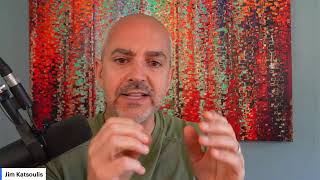
This is a YouTube video titled "Falling In Love With Healthy Food" created on July 1, 2025. The content likely focuses on topics related to healthy eating or nutrition. There is no indication of multiple speakers or a conversation involving Jim Katsoulis.
It. Hey, everyone. Welcome to today's program Yourself thin podcast. Today we're talking about falling in love with healthy food. This is really a part how to get healthier part love story all mixed together in one. So, you know, listen, if you're like most people, you want to eat healthier, right? Just never mind even the weight piece, you just want to eat healthier. And it's a struggle, right? It's easier to eat unhealthy stuff than it is to eat healthy stuff simply because the foods that you really love eating and you overeat are processed, engineered to be that way, right? They're literally engineered to be as addictive as possible. There's nonstop marketing getting us to think about them constantly. We have the entire culture reinforcing those messages. So it's a bit of a trap. And it's physical to mental to emotional. I mean, it's everything that's kind of trapping us and eating unhealthy stuff. And really, I don't want to say nudging, it's way past nudging. But we're constantly being nudged to eat unhealthy stuff and rarely nudged to eat healthy things. So when we want to eat healthier, it's not going to be enough to say, I got to eat healthier. That's not going to do it. Because what's truly dictating how much healthier, unhealthy food you eat really is the story that you tell yourself about these foods. Okay? So, for example, if you're like, I love my cookies, I love my ice cream, I love my pizza, right? We have these strong feelings for it. We think about it a certain way. We crave it, desire it, all that stuff there. And then on the other hand, I say, oh, I got to get myself to eat healthier stuff. I really got to eat more vegetables and fruits, and I got to get myself to do it, right? So underneath both of those ideas, there's a ton of information, and it's subconscious information. And so, again, a lot of these ideas have been implanted in our mind through the advertisements and the foods that we eat. And we very rarely have anyone advertising healthy foods to us. So subconsciously is where the problem starts. Because the way we think about unhealthy stuff, it's extremely appealing. The way we think about healthy food is extremely unappealing. So we need to go to a deeper level. If we're really going to get ourselves to eat more healthy foods, we've got to go down to the subconscious level and start to reframe the way we think about food in general. So the first thing I want to do is get you to think really in a black or white kind of way, where you start to see food. Now, again, quick disclaimer. This isn't about judgment. So you may find that you're pretty much eating mostly processed food. Fine. Whatever we're doing, we're doing, we have to acknowledge it, accept that it's okay. We're not piling on top of ourselves to do this. Okay? But the first distinction I would suggest you start making with the food you eat is, is it food or is it food stuff? If it's food, it is something that was grown in a form that you understand, right? And, you know, you can eat fruits, vegetables, greens, beans, whole grains. These are foods. Meat, these are foods. You, you see them, you know what they are. They're natural. They're regular food, the type that we've been eating for millions of years on this planet. On the other hand, we have food stuff. And this is really any food that has been processed with extra ingredients or ingredients that have been manipulated in a dramatic way. Okay? Now, I make this distinction because, you know, literally, you could cut up an apple, and that can be considered processed, right? So if you're eating natural applesauce, I would still consider that food even though it's been processed. All right? So we're talking about the preservatives, the emulsifiers, the flavorings, the reconstitution of the different ingredients. We're talking about food stuff. Anything that's been dramatically manipulated. Right. We'll kind of just use that basic definition for now. And so the first thing I'd suggest is you start getting a sense of, where are you at with this? And don't be embarrassed by this. I mean, when I first started this, I was primarily in the foodstuff category. No big deal. But what we want to start doing is first get a sense, where am I at, what percentage of the food I eat in a given day, a given week, how much of it is food stuff, how much of it's actually food? And you're going to be shocked because you're probably going to find that a small percentage of it is food, and the majority of it is food stuff. Okay, so that's the first step, though, because you got to know where you're starting from. You got to get a sense of where you're at first before you can improve it. But so, okay, so now we have a sense of where you're at. And now, again, we want to fall in love with healthy food. Right? So it's not just how do I get myself to eat more healthy food. That idea carries within it the implicit idea that you're going to have to force yourself to do it because you don't like it. So I'm reframing it at a deeper level by saying how to fall in love with healthy food. Because if you did fall in love with healthy food, if you truly, absolutely loved it, wouldn't it be easier to eat more of it? Of course, right? Because now all of a sudden, your brain and your body start working for you and they start driving you towards those foods because you think about a certain way that's creating craving, desire for them. And then naturally you're going to start to seek them out and eat them more. And that becomes this whole, you know, kind of machine that pushes you forward. So how do you fall in love with healthy food? There's a bunch of ways, I'm sure, but I will give you a couple of mine. And again, don't get caught up on the specifics of what I say, because I'm talking on two levels. There's the specifics of what I'm going to tell you to do, but then there's the. The experience that creates for you. Okay? So the first thing I'm going to say, what I would suggest, especially this time of year, here's an example of what I mean. To fall in love with healthy food is right around now, in a lot of areas, they're harvesting food, right? So we just, in New England, we just had strawberry picking season. It just ended last week. Okay? So two, three weeks we had strawberries, fresh strawberries all over the place. Right before that we had asparagus. What's coming next is blueberries. And so one of the things you can do is you can start to tap into the food that's actually being grown around you and seek it out. Literally right now, right after this is over, search, pick your own, what town you live in, pick your own, the area you live in, see what comes up. It might be other stuff that I didn't mention, but here is one of the most powerful ways to truly fall in love with healthy food. Because when you go and commit a half hour to picking strawberries, blueberries, asparagus, it does not matter what it is. Well, I suppose some of the sweeter, more amazing fruit, it's better, right? Because you get to reinforce it. But what happens is you start to create a new narrative about food. That's what's so Powerful, like pick your own or another alternatives become part of. They call it a farm share, csa, community support, agriculture. So there's different ways to get closer to the food that's being made. So you got to seek out farms, pick your own places, things like this. And then you go and you interact with them. And I'm telling you, a half hour of picking your own fruit and eating it fresh off the vine is I think it's the most powerful message you can give. Your body and brain, your body, our human bodies for millions of years have been picking something and eating it. And I think there's something magical about that. And I think when you. Again, that's just one example of it going to a farm stand, going to, you know, food that was just picked up today, yesterday. It's got a freshness to it that you may have forgotten about your body may have forgotten about what it feels like to put fresh energy into your body, just picked food into your body. There's something magical about it and it doesn't take a lot of doing that for your body and brain to start. It literally feels like you wake, you're waking up and all of a sudden it starts to change the narrative. It's, it becomes very appealing. Eating a fresh picked ripe strawberry, it is unbelievable. Same with blueberries and apples and all this stuff. Fresh picked food, it's just, it communicates to your body on a level that goes beyond the intellect. And you know, there's a concept of a food matrix. You know, food, especially these natural foods, I'm talking about apples, strawberries, these are works of art. I mean, they've evolved into this beautiful little package and they call it a food matrix because it's got the enzymes and it's got the vitamins, it's got everything. It's this perfect little package. And when you eat it again, it's communicating to you on multiple levels. I know I'm sounding weird here, but I promise you if you do it, you'll see what I mean. You'll all of a sudden go from a theoretical concept of energy to an actual concept of energy. The most pure energy on the planet practically where you pick a food, eat it and you can feel that energy. It's beyond calories, it's beyond macronutrients. It gets into something deeper. And I think that this is how you start to fall in love with real foods. It's not hard. It's not hard at all. And I think when you start doing this more, you start now, again. It's not about only Eating healthy food, you understand it's about enjoying the foods that you're eating. It's getting some strawberries and eating them and just truly enjoying that moment and everything it involves. And again, if you go out and pick it, if you go out to the farm, buy it, you're outside, you see where it's growing, there's something, something happens and I, I don't know what it is, but it just, it really, it changes you in a sense. And I, I don't mean to sound dramatic or, or you know, woo woo or weird, but it's really true. It is really true. And if you don't have access to these things, it's almost like you make it a point because it's that powerful, you know, and when you start to think about this food with more context, you give it more meaning. It, it means more to your body. And that's what happens when you start eating whole natural foods. You awaken parts of yourself that have been dormant most of your life because you don't need them. Again, if we're eating mostly processed foods, we don't have to develop the ability to recognize, you know, the smell, smells of food to develop that awareness, the food matrixes and all the rest of it. So again, my big, and there's a lot of other ways to do it than this, but this is my big challenge to you, is this week here, for the next couple of weeks, really seek out, pick your own farm stands, co ops, fresh food. That's as close as you can get from being picked to when you can eat it. Let that be a challenge for you for the next couple weeks. And I think you'll very quickly start to develop a very clear distinction between what food is and what food stuff is. And I think you'll very clearly desire and crave the energy and the feelings you get from eating real genuine food. And then it's not too far until you genuinely fall head over heels in love with real food. So I hope this helps you out. And if you want some support in doing this, click the link in my bio or go to programyourself then.com get the free hypnosis session I give you. Watch the video I made for you. Got the Circle app getting ready. That was gonna be last week, but it's, it's right around there. So this week, at some point, the Circle app's gonna open up to community app for program yourself. Then people and my clients are in there. But even if you're not a client, there's a free area now so I'm literally putting a free program in them for you. So that'll be available for you too, but, but for now anyways, go, go sign up, put your name in the email and I will give you information about that. What's up, Heather? Heather says, just as well they don't weigh you on the way out from strawberry picking. Yeah, I know. I'm not gonna lie. I, I, I'll put a couple in my mouth. It's hard not to. Man, they are good. I will tell you. I mean, I could talk about these strawberries all day. And it's funny. I did this with apples. Apples was the first thing I ever picked my own with. And yeah, I don't know, it's magical. But yeah, eat a couple on the other way there. That is true. And I hope everyone's having a nice day. If you have any questions about weight loss, feel free to ask them. Anything is welcome. What brandishampu do you use? Bar of soap. I will tell you, that's the best part of my hair is. It's just, it's a one. We got a one solution system going on, you know, so bar so pretty much gets the job done. Anyways, everyone, a nice weekend. I don't miss anything here. And yeah, here we are. I know this is a funny week, though. I don't know. So I don't know if people are even. I find it funny there's certain weeks when people don't really want to think about weight. But I don't know, like this. This year has been so weird. Again. I always get. I've been this for a long time, so I started those patterns, but this year's general weird one, so no rules. I don't know if it's the JLP ones or the state of the Union or what, but anyways, yeah. If you got any questions about weight, feel free to ask them. Worried about the barbecue coming up? Maybe I'll put a barbecue. I've done, actually, I did a training. I got a barbecue hypnosis session I made to kind of help you go to the barbecues and cookouts and stay, you know, stay grounded. Not to be perfect right now to go to cookout and, you know, be a goofball who doesn't eat any potato chips. But to be able to eat potato chips and stay somewhat in control, you know, I'll be doing that. Yeah. Right. Julie? Yeah. Julia said, should I fly to the islands to get fresh mango and pineapple? I mean, to be honest, like, to be completely honest, I, I know you're joking. A little bit probably, maybe, maybe you're not, but yeah, absolutely. Like I guarantee in my life I will absolutely, like, I don't know, what would you call that? Like, you know, I guess what they call food tourism. Right? So there'll be food tourism, but the food I'll be touring to see will be like, like literally fresh mangoes and pineapples from the source. It is crazy. It doesn't take much. It is, is really one of the most. I don't know, I, I just find it odd. I have, you know, I share this with you all the time. Again, this is what makes me excited about program yourself. Thin as a philosophy is, it's always evolving, it never stops and which is really important. And program yourself. Then we take your weight loss and rapid and personal development because the weight as a goal in of itself is never enough. You know, we need more motivation than that. And the, the other side of it, of that approach that's so important is that it never ends, right? You, you can always improve, you can always get better. And I am fascinated by this. I. It's fascinating to me to see how my eating keeps improving. It's in ways I never would have imagined. And one example of that, I mean if we zoom out over 10 years, because maybe 10 years ago I think we got a CSA, which is a farm share. Basically you go to a local farm and you give them some money and for the next 20 weeks or whatever, you go there once a week and you get a bunch of stuff, whatever's they're harvesting that week. And that was fun. Like 10 years ago we did it and it was great. It felt a little overwhelming. And so then we didn't do it for a while. Last year we did it and last year was a different place. And it was amazing. I mean it was amazing. The food is incredible. It was closer. It was just, it was a. It worked out better. They also pick your own so we could go and you know, again throughout the season we're picking strawberries, peas, blueberries, tomatoes, cucumbers, I forget what else. There's a lot of stuff to pick and I'd never done that before. I had picked apples like I said, and maybe blueberries. But when I started picking more and more of the food and I started eating more and more of the fresh food, I had never eaten that much like fresh grown food in my life as I did last year. And so it's just another level and it's exciting and so I'm back in it this year. We started up again a couple weeks ago, and it's just. It's just next level. It's so far beyond counting calories, though. Do you understand what I'm saying? Like, it's not. What I'm saying about the food is. It's a completely different paradigm because I think I've done this where it's like, oh, I gotta eat healthier. I want to eat healthier, but I gotta eat healthier. And I did it, you know, I mean, I got lots of benefits, and that was great. But as I start to really interface with just like high quality, like, fresh from the farm food, it's just like. It goes way beyond just the intellect. I mean, my body is like waking up. It feels like. Not to get all dramatic on you, but it feels that way, so. And it makes everything else easier because I want to eat that way, you know, don't get me wrong, I still don't eat too sometimes, so. So again, it's not either or. It's not. It's not all or nothing. It's all or something. But the more like fresh, whole foods you put in there. And then you never know too. Like. Like, again, you. You. You know, if you try 10, you go pick your own two or three things and you go to a farm stand a couple times, you try 10 different things. You know, like, again, just the natural law of averages is two of those things are going to be. You're gonna love, you know, six of those things are gonna be fine. Two of those things you're not gonna like at all, you know, but the two things you really like are gonna be like, they're really gonna push you forward, you know, and all of a sudden, it's something you really like, that's healthy, that you really enjoy, and that starts to rewire you subconsciously a bit in very helpful ways. Yeah. Julie says your new favorites. Yeah. Oh, fresh mango and pineapple. That's literally Julie. Julie is saying that to me. That's new. New idea downloaded in my brain, new goal. So, yes, absolutely. I would love to fly to the island to get some fresh tropical fruit. That would be awesome. It says I have a new mantra. If undecided with regards to nourishment, what would Jim do? You do have an impact. Well, thank you, Heather. I appreciate that. Yes. It's funny you say that. We. We do in the program. One of the core mantras is what would the thin me do? And that's really modeled. I remember years ago they did what would Jesus do? It's modeled after that. But there's a lot of wisdom in that concept. And, you know, part of the idea of, like, what would Jesus do? What are we doing? We ask that question. We're. We're. We're elevating our kind of perspective or our mindset up, and we're looking at things through kind of a more enlightened mindset. Right. Different mindset. And I think that process is so helpful. So I do the same thing where I'm constantly. What would the healthy me do? What would the healthy do? I mean, that, to be honest, at the end of the day, program yourself, then that's basically. Program yourself, then it is basically creating, designing the ideal. You. You want to be, like, getting a sense of who you want to be conceptually. Who do I want to be? What's the best version of me? How do I want to live? Who do I want to be in my life? And then it goes to where. How do we become that now? You know, so programming yourself, then, is all about what to do and how to get yourself to do it and then the support to make it happen. And I say this to you all because again, this week is it. I. I know I said this last week, but I. I got a little bit behind on some stuff, and I wanted to give people some time. And I know it's kind of a weird time with the holiday, but until Sunday, next Sunday, you can still get program yourself then. 300 bucks. That's. That's it. It is changing up to 500. It will never be sold at 300 again. I'm letting you know that. So you got a couple days to think about it and decide. Over those couple days, I'm also going to get you into the free circle community. So keep an eye on your inbox for that. That'll probably be out probably Wednesday is what I'm thinking. It's pretty close to being all set, but I just want to get a couple other things fixed out. But, yeah, so that's a great mantra, though. Yeah. What would Jim do? I get it, right? I get it because I'm, you know, listen, I'm an avatar, and I say this all the time. I mean, I'm here to be supportive, so absolutely, you know, put that up on me. You know, what would Jim do? And it's a way to kind of elevate your thinking. You know, what. What proceeds or what you know is better than even that is, again, taking some time to think about what the best version of you and what would the best version of you. That's a better question, you know, but it takes a little more work on it. But yeah, asking, kind of looking at things through my eyes again, it's the same effect, you know, what's up, Lori? Laurie says I've cut out processed foods and sugars and it feels as if now I want healthier foods. It feels like my brain is thinking differently now. And it's been eight weeks. Yeah. Great job, Lori. Yeah, absolutely. Your brain literally does change. Again, the science of processed foods is absolutely fascinating. It's a, it would be shocking for most of you. It was shocking for me. But yeah, as you start to reduce the sugar and the processed foods. Yeah. Your taste buds change. And your taste buds are changeable, by the way. Your taste buds. You know, it's like if you ever had the experience where you've been in the car listening to the radio and your favorite song comes on, you turn it up and you're, you're jamming out to you loving it, right? And then, then you get out of the car and you go inside and the next day you get in the car and the, the radio is really loud, like, what the hell, right? You ever had that experience? Well, what happened? I mean, when you were in the car the first day, your ears adjusted to the volume, your state, the mood you were in, you know, impacted how you, you know, responded to that, that volume as well. So our sense organs are constantly adjusting to the world. And so if you're eating a lot of high processed, high sugared, high hyper palatable addictive foods, your taste buds calibrate to that. And what ends up happening, by the way, is that the more processed foods you eat, the more your tongue gets calibrated to process flavors and taste and it finds those flavors and tastes appealing, and it finds natural flavors boring and bland. So that is another reason why it's a really good idea to the more healthy whole foods you put in your diet, the better. I mean, again, there's a number of reasons, but that's again, another one, because it does calibrate your taste buds. And when your taste buds are calibrated to natural flavors, as you can imagine, it's way easier to eat more healthy food. So again, this is why I was talking today about falling in love with healthy food. Not just forcing yourself to eat it, but to genuinely fall in love with it. And that's why I was suggesting that pick your own as an example, right? Because again, it's not just the food. Listen, the processed food is addictive, as hyper palatable and engineered as it Is still requires nonstop advertising. You know, so again, even the most addictive hyper palatable foods on the planet still require obsessive non stop marketing to sell them. So, you know, you've got to market healthy foods to yourself too and just say, oh, I gotta eat them, I gotta force myself, I gotta do it. That's not the way to do it. You gotta tell yourself a little story. And again, you, you do that. Going and picking your own is, is in essence, it's a story. You know what I mean? It's a new conceptual understanding of what you're doing. You get a bigger holistic sense of your place in the world when you pick a strawberry. I know that sounds dramatic, but it's not because I mean, it's literally growing out of the ground and you're eating this thing that tastes amazing and it just feels amazing when you eat it. And so it's, it's again, that food is telling your body a different story. You know, the story of processed food really is the story of trickery. You know, the process of story of processed food is like going into, you know, an old western set town. You know, when they shoot the movies and they made a western set and it was all just the fronts of the buildings, right? That's kind of like processed food is, it's a, it's an illusion. It's trickery. Through flavoring and packaging, they distract you and misdirect you. And basically what you're eating is real low quality ingredients. You know, you're eating wheat, soy, corn, meat, you know, sugars, processed, you know, ingredients, emulsifiers, just all this other stuff. But because it tastes a certain way, it tricks your brain. Your brain doesn't realize it. But when you start eating whole natural foods, that's why I say it's not about like, oh, from now on, I can only eat whole natural foods. Just start eating more of them. Because if you start eating more of them, we always learn through contrast. So it's not about just stopping eating the bad stuff, keep eating the bad, but start eating some healthy stuff more regularly. And what happens is it gives your brain and body the ability to recognize the difference between the two and to really appreciate what the healthy foods do for you. So what's up, Carrie? Carrie says going to Barbados in two weeks. I'm so looking forward to all the fresh fruit. Yeah, that's awesome. Oh yeah, that's going to be great. Yeah, and really enjoy the fruit. Like make that a central part of your, your focus. Junice says if I'm Saying that. Right. Do you have any tips on self trust? I struggle with disappointment after failing on my weight journey. I mean, you know, again, I, I appreciate the question you're asking, but I think it's the wrong one. And what I mean by that is that I don't think most of you, I don't think your issue is self trust and doubting yourself. I don't think you should trust yourself. I don't. I think you should absolutely doubt what, what you're doing because it's not working. It's never going to work. So a lot of you feel like you doubt yourself. Listen, dieters, the dieters I work with now, you have to understand. Let me just set the frame a little bit. The people I work with are overthinkers. They're type A ish type people. They're perfectionists, they're action takers, they're smart, they, they study things, they, they've done a lot of diets, they, they take a lot of action. And when they don't get the results, when they don't get the weight loss results that they think they should, they blame themselves. Right? So the problem is you can't stick to a plan. You keep failing on your weight journey. Right? And that's, I, I read that in your question. Again, this is, this is my life and this is what, I help people this every day. So, yeah, it's like, do you have any tips on self trust? I keep failing on my weight journey. No, you do not keep failing on your weight journey. You keep doing the same thing. That doesn't work. So again, if I talk to June about the specific plans you've tried, the specific disappointments of failings of your weight journey, I'm going to hear a bunch of stories about D diets you've tried, you tried keto, you tried intermittent fasting, you tried counting your calories, you tried all this different stuff and it didn't work. And you blame yourself because you blame yourself for not having the willpower and the control to stick to the plan. But that's a bunch of. Let me explain why. At the end of the day, it doesn't matter what diet you do. It doesn't matter if you pick, it doesn't matter if you pick keto. Intermittent fasting, Weight Watchers, Mediterranean diet. Pick any diet you want. The thing, the problem, the main problem is the mindset you approach it with, you know, because it doesn't matter what diet you pick, the same process plays out. You do it intensely, perfectly for a little while and Then you stop doing it completely. Then a lot of time goes by, you start doing it for a little while, then you stop doing it completely. And you have followed this pattern probably 10, 20, 30s of times at least. And you blame yourself for never sticking to it. But it's really a strategic issue. The idea that you're going to start whatever diet is you're going to do, you're going to jump into it 100%, Monday's going to show up and you're going to be 100% no carbs, you're going to track every calorie coming in. You're not going to eat till 12, 1 o' clock. You're only going to eat this many calories. You know, whatever it is, you're going to do it perfectly starting on day one. And you do it perfectly on day one, maybe for a couple more days, maybe a couple more weeks, and then you can't keep it up and you go right back to what you always did. So it's really, you shouldn't trust yourself if you're going to keep doing that because it's never going to work. So the trust, the not trusting is totally appropriate. The problem is don't put the not trusting yourself. Stop trusting the diets. Stop trusting this approach that you're going to just 100% start on Monday and just lose all the weight. It's, you're never going to be able to make that happen. You need a different way to approach this, one that's really built for the long term. Diets are not built for the long term, they're built for the short term. They're built for losing weight quickly. So, you know, again, do I have any tips on self trust? Yeah, stop dieting. You're never going to trust yourself with a diet, folks. None of you are ever going to trust yourself with a diet. No, you're not. And if you do now, fine, you'll diet and you'll lose some weight and then you'll put it back on and then you won't trust yourself with a diet. How many people you all know that lost weight on a diet long term? And I know it's not very many people, if any, so yeah, you should not. Again, the lack of trust is totally appropriate. Where you're pinning the lack of trust on ease to shift from you to the diet. Stop fucking dieting. Okay, so what's an alternative? Program yourself then is an alternative. So I mean, if you're even remotely serious, go click the link in my bio or go to program yourself. Then.com go get the free hypnosis session. I can even watch the training I made. So program yourself then as an alternative to dieting. You know, you start the first day now with a meal plan. You started with a five minute hypnosis session. So every day for eight weeks you get a five minute hypnosis session. In the morning, a different one with a weight loss mantra in it. So you start every day relaxed, calm, good stuff going in your head. That alone starts nudging you to make better choices throughout the day. Then at night you listen to your 10 minute session. Each week you get one of those, you listen to that one repeatedly. That's a 10 minute one built around a core weight loss mantra. So you start bookending your day with these powerful hypnosis sessions. So that alone starts to relax you, calm you down, think more clearly, think, think more like a thin healthy person. Then you fill out your goal weight blueprints, right? So in Program Yourself then we follow the goal weight pyramid mindset, lifestyle eating. And so the blueprint, the blueprints just go in more detail with those categories and you go through the questions and you create your own customized plan. How to think like a thin healthy person, how to live like a thin healthy person, how to eat like a thin healthy person, custom designed for you. So now you have your specific plan and then finally you learn the Program yourself thin technique, which is how to program your own mind. It's a 60 second self hypnosis exercise, easy, simple, and it allows you to practice being the person you want to be so that you can become that person. There's no pressure, there's no overwhelm, there's no deprivation. The intensity of dieting we intentionally avoid because that intensity of dieting that you're so addicted to is the thing that stops you from being able to stick to your plan. And when you become more strategic about your weight, now again, the goal is different too. With dieting, the goal is losing weight, getting to your goal weight. With Program Yourself then the goal is living at your goal weight for the rest of your life on your autopilot. So programming yourself then is all about maintaining living at your goal weight for the rest of your life. Dieting is about doing the craziest shit you can to lose weight as fast as possible and to kind of wrap it all up. I'll put it this way here. And this is why you shouldn't blame yourself for not trusting a diet mentality. Because the core reason the diets are not working is because metaphorically, it's like you're in a marathon, right? You've signed up, you're at the beginning starting line for the Boston Marathon. You're getting ready to start running it. They got. The guy's got the gun in the air to get ready to shoot it off. But you, what are you? You're different because you know how you're going to run this marathon. You're going to run it like a sprinter. So the gun goes off and you take off as fast as you can. 100, 100. And you're cooking everyone. You're way in first place for the first quarter mile, then you completely pass out and can't complete the race. And so that, in essence, is a dieter mindset and why it's never going to work. You, as a dieter, are basically a sprinter in a marathon. And a sprinter in a marathon is never going to win. They're going to think they're winning in the beginning, and they're always going to lose. They are always going to run out of steam and quit. And this is what you find with dieting. It's not built for the long term, it's built for the short term. So Laurie says, how do you pick a goal weight? Do you aim for a weight in the normal range, or is it better to set smaller goals, like £15 at a time? That's a great question. Lori and I actually just created a goal weight quiz because this is. This question is so important and people are so bad at it. Not no fault of their own. Because to be honest, folks, you've never learned how to choose your goal weight. Your goal weight's been chosen for you. Just because you look at a chart and figure out what the number is does not mean you're choosing a goal weight. Does that make sense? Does that make sense? That's not choosing a number. That's not choosing a goal. When you look at a chart and say, how tall am I okay with this wire should be? That's not choosing a goal weight. That's just identifying the goal weight that's been chosen for you. So choosing a goal weight is a little bit of art and science, right? So, again, I'm not. I don't. I'm not against the BMI chart. It's not a. It's not a perfect chart by any means, so let it be known. But I think, as a. As a point of data, I'll take it into account, you know, but there's a lot of other things I'm taking into account, too. Primarily, the most important question of all is your goal weight should be the weight that gives you the best quality of life. It's that simple. Now, figuring out what weight gives you the best quality life takes a little more thought and effort. Okay? But the goal weight quiz I put together for you all will help you do that. And that's going to be. I'm going to put that right in the circle. I'm literally. I put a free program together for you all. I think I'm gonna call it the Spark Program. I think it's literally just designed to get you fired up. It's gonna have a hypnosis session, and it's gonna have a training in it. It's gonna have the goal weight quiz in it. I'm going to put a training I did last week about how to feel proud. I just think that's so important. I'm just going to give that to you for free for a little bit. I'll put that in there. But again, I'm so excited because this is really kind of the next phase I've been alluding to over the last probably year. You got to do things in order. But anyways, so, yeah, so I don't know. Picking a goal weight. The short and sweet of it is choose a weight that gives you the best quality of life. I will tell you this. Most people don't choose the weight that gives them the best quality of life. So here you go. Here's a little lesson for you. Most people pick a weight that they're not willing to live at. Okay, what do I mean by that? Most people, when they choose a goal weight, are picking a weight they weighed when they were 20, when they got married, when they lost the most weight on a diet when they were 18. You know what I mean? Like, they're choosing a weight that they've had forever. And in order for them to live at that weight, in order for you to live at any weight that you want to live at, you've got to eat and live a certain way, too, right? So we can't just pick a number as if it lives in a vacuum. You've got to eat and live a certain way in order to achieve that number and stay there. And most people I see are choosing numbers that are. That would require a way of eating and living that they're not willing to do. That's probably you right now, folks. If you're overweight, that's you. You would like to weigh this. In a magical world, you would love to weigh this, but you're not willing to eat and do the. Let me put it this way. You want to lose weight, but you want to keep eating and living the way you're eating more. That probably describes you right now if you're overweight and you're struggling with it. And so, you know, when we think about the goal weight, we can't just look at the physical, aesthetic piece of it. We've got to look at the mental, emotional piece. So if the goal weight you pick requires you to eat carrots and celery and drink water all day, every day to live at that weight, you can say, well, I really want to be that weight, but that quality of life sucks. And you're not going to want to live that way day in and day out. That weight's not going to overcome the negativity, negative parts of living that way for you, and so you won't do it. This is why, folks, you're all overweight right now, because the way you think you have to lose weight seems so extreme and overwhelming that you've just quit. It doesn't have to be that way, but, you know, that's just kind of how you approach it. Most likely. Julie says Weight Watchers did open my mind to liking healthier foods like veggies and fruit, but counting points isn't realistic forever. Yeah, I lasted, like, four years at the lower weight. Well, that's a great job. That's a long time. But again, Julie, you know, I mean, you're just on your path to, you know, permanently figuring out here. Julie's in the program. So, again, I get a lot of people that have been in Weight Watchers, a number of them. But again, there's a big difference between losing weight and living at your goal weight. They're two totally different focuses. So, yeah, Gina says this leads to losing my discipline and going back to old habits. Yeah, well, hopefully what I said will help you out, at least as a starting point. Plus, I always think of excuses when I don't work out or eat unhealthy. Yeah, everyone does. But again, you all, you've never learned how to think like a thin, healthy person. You know, you're constantly conditioned to think like an overweight person who diets to lose weight. And it doesn't work for anyone. Maggie says a small percentage keep it off. Yeah, it's a tiny percentage of dieters that keep it off. It's estimated 95 to 98% of dieters that lose weight. Put it back on. I've said the highest number I've seen with that is 80, 84%. But somewhere between 84 and 98% of people that lose weight on a diet put it back on. So those numbers are not too good. But again, programming yourself then is, you know, this program started over 30 years ago when I wanted to lose weight. I was 50 pounds heavier than I am now, and I wanted to lose weight. But I was just so fortunate because I had learned about hypnosis and neuro linguistic programming. Neuro linguistic programming, a huge component as role modeling. And so that was so profound to me because what I started to do is I began to look for people that lost weight and kept it off. And I began to talk to them, interview them, find out what their secrets were. And very quickly. It was so amazing, the difference between a dieter and, and someone who's actually lost the weight and kept it off for a couple years, they, they just think completely different. It was almost shocking how different it was. And so the more of those people I began to speak with, I started to notice patterns. You know, there was mindset patterns of how they thought, how they approach things in terms of how they approached and thought of their food, how they thought about exercising and moving, how they thought about their lifestyle, when, then again, there was a different way of how they were living. And ultimately there was a huge difference in how they were eating. But the biggest difference that powered all of it was the mindset, their mindsets so completely different than the dieters that I knew. They just thought and talked and spoke about things completely different. And it became very obvious why people struggle to lose weight on diets after speaking with them. But yeah, a very small percentage of dieters keep it off. And the ones that do, it's almost just pure luck. I mean, no one ever explains how to become that person. You know, I love squash, says Jim. You changed my life. I wasn't that overweight, but I lost £20, 140 to 120. Wow. The happiest and healthy has ever been. All right, I love squash. I'm gonna screenshot that. That's great. Nice job. Proud of you. £20 is great. And again, I wasn't that overweight most of the time. I know people don't believe me this, I, no one ever believes me when I say this. So whatever, I'm just gonna say it. But it's like I've, I've been doing this for over 20 years professionally, and now again, it's the type of people I work with, the people I work with are perfectionist minded type, aish. Overthinkers like that. So that being Said I would say I'm going to pick a number here, but around 30% of the clients I've worked with have probably started working with me within 15, 20 pounds of their goal weight. So a lot of the people I work with, it's not. It's not a dramatic amount of weight they want to lose. It's that they are always struggling with this 10, 15, 20 pounds for a while. But again, they get so much satisfaction out of it, you know, And I think that, you know, it's really important that we can touch our motivation, but great job. Yeah. I love squash. Yeah. Someone said, is that the vegetable or the sport? I don't know. Yeah. What do you love with squash? Do you love the squash? The. The sport of the vegetable? I like squash. Could. I love squash? Maybe I could love the game. Great job. I love squash. Proud of you. Keep it up. Secret psychology says I love your. Where'd they go? I love your content. So simple and so true. Thank you. I appreciate that. Yeah. That's what I try and do. I try and keep it as simple and clear as I can. You know, I often say, you know, living at your goal weight is really not rocket science. Like, I really mean that. And I back that up by saying I'm not a rocket scientist. So I like. I like simple concepts. I think those are the best ones. I appreciate you saying that. And I. That's what I'm trying to do here. See, Teagut says I'm trying, but I would like a cookie and a beer. Lol. Help. Yeah, I get it. Right. So it's like, you know, the first thing is, I don't know, I always think back to Newton's law of physics. There for every action is an equal and opposite reaction. So one thing I can tell you about food dieting in general is that a lot of times now, I got to take a step back real quick here. You have to understand that dieting, the way you all think about losing weight, is through dieting, right? You have a diet mindset that's been installed and implanted into your brain by the diet companies. Now, you have to understand that the diet companies are a branch of the food companies. Weight Watchers was owned by Heinz. Jenny Craig was owned by Nestle Atkins Food Products, owned by the same company on Cinnabon and Onion's Pretzels. Slim Fast, owned by the same company, owns Ben and Jerry's ice cream. So these companies do not, their heart, want you to get control of your weight, eat healthy forever and be happy, because it's going to hurt their diet business, and it's going to hurt their food business. So there's no intention or goal for them to want you to live the rest of your lives a thin, healthy person. That being said, so now when you look at how dieters approach food, what ends up happening is every action is an equal, opposite reaction. Diets, most diets you've tried, they pick a food and they obsess you on them. So you say, okay, I'm gonna go on a diet. Oh, no more cookies and beer. No more cookies and beer. Now, this goes. This, this right here goes against one of the primary rules of how your brain works. And one of the primary rules of how your brain works is it does not understand negatives. If I tell you right, get all your willpower together and don't think about what I'm about to say. I'm going to say something. I want you to not think about it. Okay, don't think about a banana. Don't think about a banana. Don't think about a banana. Right? What you're thinking about a banana. So every diet you go on is not thinking about a macro or a food or eating or whatever. And so that fixating on it actually increases the cravings and desire for it. So what I would say it's hard to just answer that question. Like when a dieter is just in the throes of a cookie beer craving, it's hard to just give you a simple answer, because that moment is really the fruit of a deeper plant. And that deeper plant is your diet mindset. Your diet mindset. As soon as you think about losing weight and you're trying, especially once you start trying, you start getting obsessed with the exact things you're trying to eat less of. And that's because the diets fixate and focus you on the exact thing you're trying to, you know, dial down or eliminate. And so psychologically, it's a terrible strategy. Dieting is a terrible strategy, folks. I don't know. I'm not just making this up. I've been doing this for over 30 years personally and over 20 years professionally. Dieting is a scam. It's bullshit. It's never going to work for you to keep the weight off. It does help to get the weight off, right? Diets are built for getting weight off, not keeping it off. And so, you know, the only, the only legitimate chance I see of anyone actually being able to live with their goal weight is to have a more holistic, comprehensive approach to doing this. And I think you're gonna need to change your mindset, your lifestyle, and your reading. And I think if you do that strategically, you're well on your way to living at your goal weight. But I think if you don't do those things, I think you're just winging it and you're just trying to eat better. And how has that worked in the past? It doesn't fucking work. And it's not because you're a weak willed, no self control person. It's because it's a dipshit strategy. Dieting is an absolute dipshit strategy taught to you by food companies so that you struggle, quit, and go back to eating their foods. So I don't know if y' all buy into that, but that's my take on things. I do not believe that diets are ever going to help you lose weight. You're not. You're not one diet away from mastering your weight. Tori, how's it going? It says, hi, Jim. How does hypnosis play a part in this? Hypnosis plays an enormous part. The primary part, though, and there's a ton of hypnosis sessions in the program. But the most important part that hypnosis plays and program yourself then is that it gives you an explanation conceptually of how your brain actually works. Let's get to the core problem here, folks. The core ultimate problem you have is that you want to lose weight. And you know to lose weight, you need to stop eating so many calories, stop eating the unhealthy stuff and eat more healthy stuff and do some other things. So long story short is you need to change your behavior. Just make it real simple. Because you put me in charge of your behavior, I'll make you lose weight, I put you in gym jail, and I control your calories. I'll make you lose weight. I don't give a what you think. I don't care whatever you say or do or metabolism, any of that stuff, I will make you lose weight. Okay? But you don't live in Jim's jail. You live in the real world where you get to make your own decisions. And so the truth of the matter is that you all have never learned how to influence your behaviors. And the core, the biggest issue we all have is that we want to do something or we want to stop doing something. We want to eat healthier or we want to stop eating so unhealthy, but we don't know how to get ourselves to do it. That in a nutshell, is it right? Because you could start today. Okay, Today I Want to lose weight? It's the first day of my dad. I'm going to do great. An hour later, you could be eating a bunch of donuts. So how does that happen? Okay, here's where the hypnosis comes in. Hypnosis is a concept that says you have a conscious mind and a subconscious mind. So the conscious part of your mind logic anatomically is your prefrontal cortex. It's about 10% of your brain. It's the newest part of your brain evolutionarily. This is the logical, rational part of your brain. It's the part of you that knows you should lose weight, knows why you should lose weight, knows what you should do to lose weight, and tries to get you to do it. So your prefrontal cortex, where your analytical abilities are, where your willpower is at. Okay, so this is the part of you that figures out what to do, plans it all out, and then tries to get you to do it. It's about 10% of your brain. The rest of your brain will call your subconscious mind. And this is the part of your brain that runs all your habitual thoughts, feelings and behaviors. Now, here's what's interesting. This part of your brain is not logical and rational like the prefrontal cortex. If it was, you would feel like Dr. Spock or you would be like a cyborg. You would say, I want to lose weight, so I'm going to eat healthy and good food today. And so imagine you were a cyborg. We just typed that in, what you're going to eat all day. And then you would just eat whatever you're programmed to eat. You would just do it. So if you were this purely logical being, that's what you would do. That's how you would operate. But you are not a logical being. You are not a logical being. You are a subconscious oriented creature who has the ability to recognize what you're doing logically. So most of you are out of control with your behaviors. You want to eat better, but you can't get yourself to do it. But then you obsess on it, trying to analyze it, trying to understand it, trying to get yourself to do it. And it never works because you're not influencing the more important, powerful part of your brain, this subconscious mind we're talking about. It's the part of you that runs all your learned thoughts, feelings and behaviors, Your ability to read, write, use a computer mouse, drive a car, ride a bike, and on and on and on. These things that you can do. Now on complete autopilot, you could not Ride a bike for 50 years, get on a bike and just ride it. How's that possible? Subconscious mind. So listen, all of your eating behaviors have been programmed into. Have you noticed your eating patterns run on. There's a routine there. So dieting says, take this little 10% part of your brain and use it to fight against this 90% part. How's that working out for you? Let me put it differently. Metaphorically. Let's think about a cruise ship. The conscious mind's like the captain, the subconscious minds like the crew. Now you need both of these pieces for the ship to run appropriately. You need the captain to set the direction, manage, give direction, and you need the crew to carry it out. If the crew said, if the captain says, get out of here, Chrome, and do this all myself, well, how long is that going to last? You're going to overwhelm yourself. You can't keep up with it. And if the crew says, get out of here, you do it, then there's no guidance. Okay? So the sweet spot is a relationship. Good communication between the captain and the crew. And that's what we do in Program Yourself then, is we use your conscious mind. It's very powerful, but it's not built to run your behaviors. You make over 200 food decisions a day. You don't have the mental energy, you don't have the horsepower to make all those decisions consciously. You're busy living your life. So with Program Yourself then, hypnosis as a concept is the central piece of it, that we're using our conscious mind to reprogram our subconscious mind so that we naturally and automatically do the things that keep us, that get us to our goal weight and keep us there. So, for example, you know, instead of thinking like, you're going to wake up today, today's Monday, right? So you wake up on a Monday and you just make everything perfect. All your decisions are great, right? Because you're intentionally making all of them. I'm going to do this. Right decision, right decision, right decision. But you get burnt out and you go, what, Back to your automatic decisions. You're always going to revert back to your automatic decisions. So listen, the healthiest habit you ever installed into yourself in your life is probably your toothbrushing habit, right? When you were a kid, you practiced doing it in the morning, at night, when you went to bed, and now you just do it automatically, right? So your toothbrushing habit is a semi automated behavior that keeps your teeth clean. Imagine your life without your toothbrushing habit, right? So how'd you do it though. Well, you intentionally strategically program that behavior into your life. So now you do it. It's such an elegant thing too now, right? Because it's not even just about the time. So for example, you don't just get up and brush your teeth at seven in the morning because maybe you slept in late and so now you slept till 9 o' clock. Guess what? Now you brush your teeth at nine o' clock. Because it's, it's right, it's in the routine of the day. So it's flexible. So again, this is an elegant thing to look at as a role model for what you want to do, how you want to approach your weight loss and living at your goal weight. So again, we have mindset habits, lifestyle habits, eating habits, but we want to install these in subconscious mind so they run pretty much on autopilot. That's the secret. Because eventually you get to a place where again, just like you're brushing your teeth, you know, you're aware of it a little bit, but it's like 80, 90% of that behavior is just running on autopilot. You get up, you looking for the toothbrush, you just do it automatically. You get ready to go to bed. You're brushing your teeth before you get in bed. You don't even realize you're doing it half the time because you're basically in a trance. We're always in trances. So the idea that you're going to never be in a trance and just consciously make choices for the rest of your life bears no. Why would you ever think that was going to work? Your brain is not built that way. It's overwhelming to your brain. So program yourself then. We strategically reprogram your subconscious mind so you think, live and eat like the person who you want to be. And with it's with an eye on autopilot. That's why my goal, my promise to you and program yourself then is not that you lose weight, that you've got to upgrade your goal. Your goal cannot be you want to lose weight. Your goal really ought to be upgraded to I want to lose weight and then get to my goal weight and live the rest of my life at my goal weight on near autopilot, it's a much higher goal. And once you set that higher goal, you have the chance to actually make it happen. And then that's what program yourself then is. And so we use hypnosis sessions that you listen to. I think they're basically commercials. Listen folks, you've all experienced hypnosis. Every single ad you see is hypnosis, all right? They're trying to convince you of something. And so that's what the hypnosis sessions feel like. They feel like guided meditations. You're aware of where you are, what's going on, but you're just hearing positive stuff and you're relaxing. The big part of the program that really changes you is the program yourself, then technique. Because never mind the hypnosis. The most important opinion, most thing in my opinion, is the self hypnosis. I think we are all our own best or worst Tipton tips, because we are all in our own heads, chattering all day and night long. And that is defining so much of our reality. And yet we've never learned how to influence that. So program yourself. Then again, there is a kind of, I think of like, there's a support system of hypnosis throughout the program. But one of the main things you learn how to do is to run your own mind. What are you saying to yourself? How are you saying it? How are you making you feel? How are you responding to mistakes? How are you getting yourself back on track? How do you motivate yourself? How do you influence habits? How do you deal with emotions? How do you think like a thin, healthy person? How do you maintain? How do you deal with stress? Right? So these are all things we go through in the program. Once you have programs in your subconscious mind of how to respond to these different things, it starts to become much more automated. And now you have the chance and ability to actually live at your goal weight, not just get there. And a lot of it's right through, directly through understanding hypnosis and using it. DJ says, how do you mentally get over the failed diet mistakes of the past and hit the reset button so I can start fresh again. Okay, again, that question is so great, and I love the way you framed it. You don't get over the failed diet mistakes, folks. You're never going to get over the failed diet mistakes. You're always going to fail with the diets. I, I'm not going to you, because you know, what you hear 100 of the time in the diet world is just, come on, just dust off and get back on the horse with the diets. No, do not. Unless you love failing. If you love failing, do that. So what's the alternative? Stop dieting. That's how you get over the mistakes of the failed diets in the past. Stop dieting. Start looking at all the failed diet mistakes of the past and say, jesus, this doesn't work. What a Stupid approach. What a dumb approach to try and change all my eating at once. I always say, metaphorically, the way you all approach dieting, it's like if you wanted to learn to play the piano, you've never played before. But the only thing you've ever learned about playing the piano is you have to play eight hours a day if you want to be good, right? You gotta play eight hours a day. That's how. If you're serious, that's how you're gonna do it. And that's all you ever learned your whole life. That's how you play the piano. That's what it's like. And you go and you said, play the piano the first day, force yourself to do it, right? And you wake up the next day, your fingers are all cramped up. You hate the piano. You can't even imagine sitting there. More it. Forget it, right? But that's what's happening with weight loss. You've been conditioned your entire life to how do you lose weight? Dieting, surgery, injection, primarily dieting, though, and dieting is the dumbest approach ever. It's never going to work. It's always going to be a failed mistake. So the mistake of dieting is starting a diet, because the second you start it, you know where it's going to end. Especially at this point, if you're in your 40s, 50s, 60s, holy. You already know it doesn't work. That's your subconscious mind saying, cut the. Please stop diet and cut it out. Please stop it. And you keep not listening to it and fighting against it. So again, the way to stop the diet, get past the diet mistakes of the past, is to stop dieting. That's my best suggestion to you. What's your opinion on exercising before or after a meal? I don't have much opinion on that. I'm not. That's not really my expertise. So my biggest suggestion would be test them both out and see how you feel. You know, are you someone that exercises better after a meal or before a meal? And so just experiment and see, because in terms of like, good Lord, if we're talking about, like, you know, muscle gains, I think that's another thing of our reality. You know, we can listen to these people that are, you know, maybe professional bodybuilders who are fasting and doing stuff, and it's like they might do fasted workouts and it's like they're on a level we're probably not on. You know, for most of us, you know, whatever feels best for you is probably the way to go. D.J. says, Understood. Well, how do you get over feeling like a failure because it didn't work? Just take yourself right out of that mindset, dj. You know? I know, I know. Okay, I'll explain it more. Okay. It's like this, right? Let me put it this way. I believe diets are basically just get rich quick schemes, right? We don't look at it that way as a whole category of failure. We just, we. Because diets, this is my main message to you folks. The reason I'm here every day, Monday through Friday for free is because of. I swear, the thing that gets me more than anything is people that actually lose weight on a diet and then put it back on. It's so demoralizing and destructive. It's just so hard to deal with that, to put so much time and effort into something, get some results, and then they all go away. It's. It's just. It's awful. So my message to you is that if you think of diets like a get rich quick scheme, like, imagine. Imagine we lived in a reality where it's like when we talk about like, like making money, there was no idea of like, going to school, getting training, getting good at something, going, getting in a job, getting good at it, developing skill, you know, being more valuable for your business or your company or whatever, and then earning more income. Imagine that didn't exist as a concept. And the only way you could make money, the only thing you ever learned your whole life was get rich quick schemes, right? And so if all you did for the last, like 10 years was get rich quick schemes, and you come up to me and you say, jim, how do I mentally get over the failed quick get rich quick scheme mistakes I've made in the past? How do I get over. I got such a. I got such a. I don't know where my motivation is. I don't know how to get restarted again with the get rich quick scheme. I've tried 50 of them. None of them worked. I don't know how. I don't know how to get myself back on track with a get rich quick scheme. Do you have any advice to me? I feel like such a failure because I've tried every get rich quick scheme possible and none of them are working for me. I feel like such a failure and I don't know what to do, and I'm having so much trouble. I just saw my cousin just started a new get rich quick scheme. And you know, he's, he's telling about it. I want to, I want to get Excited, I want to do it, but I'm just having such a hard time getting committed to it because I keep thinking all the failures, my get rich quick schemes, Please help me get the right mindset. You see that? You see what I'm saying? Like, there is no mindset for that. The fucking. It doesn't work. It's a scam. It's bullshit. The quicker you stop thinking about get rich quick schemes, the, the closer you are to getting to the real solution. But it's hard for us to see that because our entire lives we're literally living inside this get rich quick scheme that we call diets. And we can't see it for what it is because we have nothing to compare it to. Literally nothing to compare it to. This is literally why I'm here every day Monday through Friday. This is literally why I put the free section together. Like I give more free stuff away than anyone. And this is why, because I feel so sad that people that are so smart and successful and hardworking and intelligent are trapped in this diet mindset. So what's the alternative? That you approach your weight like you would the piano in the real world? And you wouldn't start learning the piano playing eight hours a day? You would say, that's ridiculous. What are you doing with your diet right Monday? Here we are. I mean, keto's the most ridiculous thing of all of it. What are you gonna start on a Monday and you're just gonna Nadia carb. You know, like that's so overwhelming. Do you understand that? You know how overwhelming is? Completely change your diet in one day. So, okay, so what's the alternative? The alternative starts slow. Program yourself then. Because I get this all the times, oh my God, am I gonna start with a meal plan? No, no, no. You start with a five minute session in the morning, the 10 minute session at night. If you want to. That's what I'd suggest. Then you start going through the blueprints and then strategically in the blueprints, part of again, there's a lot in there, but I'll give you an example. What I mean, eating wise, that we do it strategically. You, you, this is, and this is the funniest part because I know my clients are super fucking strategic. My clients are super smart, overthinkers, type A, perfectionist. All the other areas of lives, they're thriving, succeeding professionally, personally, all these things that they're doing great. There's always weight. Like I don't understand and they tortured by this, you know. But then look how you approach your Weight. It's not strategic. A strategic approach. A strategic approach to weight loss looks like this, that I'm gonna start doing something simple and comfortable. I can keep up my five minute session. The more I can commit to that and I know it's going to relax me, calm me down and it's going to just get me, set me on a different foundation for the day. And I think that alone is going to start supporting me. Great. But I'm motivated. I want to do more. Great. Let's pick your worst food. Let's pick your, your highest calorie habit. So let's say, for example, we're not gonna change all of your behavior all at once. Huh? We're gonna say, what's your highest calorie habit? Oh, I snack at night. Every night I snack and I, you know, eat in front of the tv. Great, let's focus on that. And then we use the three R's. Reduce, replace, remove. So we have alternative, we have options. It's not a fucking all or nothing. This all or nothing mentality of dieting is complete bullshit. Program yourself into all or something. You want to, you want to do all, you want to go all in, great, knock yourself out. But when you get tired and exhausted and you, you can't do that, then do something. Let's have an alternative plan as well. So we're always doing something and I always say, like, program yourself then is built around the 1% better a day philosophy. And I know, I know my clients. Again, it's always a double edged sword. Being a perfectionist and overthinker, being this action oriented person is a double edged sword because yeah, you take lots of action, you want to do lots of stuff perfectly. And so the idea of doing things slowly or smallly is very unappealing to you. I say the 1% better a day philosophy and Bob, that's too slow. I want 100% better a day philosophy. Right. But what you don't know probably is that 1% better a day over a year is not 365% better. It's 3659% better because it keeps improving on the previous improvements and it's comfortable, it's built for the long term. So again, if I wanted to learn to play the piano, I would never sit there for eight hours. I know that I would hate the piano at the end. I burned myself out in that first eight hour session. I would start small. I would start with 10 minutes, 15 minutes. Once I got comfortable with that and I got it kind of Integrated into my day, maybe I'd crank it up to 20 minutes. Yeah, but aren't you gonna learn? What are you doing? Because again, the big question is, what's your rush to lose the weight? You know what I mean? Like, you've been sold this rush, and the irony is that you've been in a rush to lose weight for 30 years. You know, but anything that's not a rush, anything that you're not going to lose weight instantly with. Notice how quickly you feel? No. Well, forget that then. You just dismiss it. The second you think you're not gonna lose weight instantly, you just dismiss it. You're trapped in this diet mindset. I'm letting you know this. So again, the real answer to get past your weight loss woes and your diet failure memories is to stop dieting. See, I'm never gonna diet again. Doesn't work. And there you go. Now you have to worry about dieting memories because you're not going to diet anymore. Again, you do not want your brain to forget all your dieting failures. Your brain's trying to tell you something really important. Stop dieting. You know, hopefully, like, oh, stop doing the get rich quick schemes. They don't work. Can we start putting our time and energy into something that does work? Can we build a real foundation? Can we build a real business, a real body that we want to live in? Can we cut this with the. The quick fixes, the shortcuts, the hacks? You cannot hack your way to living at your goal weight. That would be like saying you're going to hack your way to a PhD. You're either going to put the time and the energy in and do it right, or you're not. And most people aren't. I'm. I'm aware of that. Program yourself is not for most people. Anyways, to be honest. That's why I do this for free. Because I can just tell you I don't even. Most people don't want my program because why? Because it takes work. I. I think of my pro program yourself in as basically like a college course for living at your goal weight. I know most people can't get themselves motivated to do that because they just want instant results. They're so trapped in the diet brain rod of instant results that anything that might take a little longer is completely unappealing to them. But that in and of itself is the mind trap that you're stuck in. And so again, I'm here every day, and we'll continue to be here every day to try and break you out of that. But there is no magical solution where I could tell you a mindset trick that would make a get rich quick scheme work. And there's no mindset trick. I know that make a diet work. So D.J. says, Great explanation. I get it. Thank you. You're welcome. You do. Thank you for the free stuff. I just found you two days ago and my mindset's already better. Thank you. Yeah, you're welcome. Dj. So super. Yeah. So if you're in my world, make sure you go get the hypnosis session. I'm telling you, it's going to be. You can wait if you want to until I get the circle app going. But I don't know why you would. But the circle app, this is so exciting to me and I've. I've had it for a while, but it's gonna. And if you're a client already in the program, first of all, you got Lumi. Now I got Mate. I'm gonna send the post out today about it, but Lumi is awesome. Lumi becomes your program guide. This is so cool. This is so cool. It's an AI agent, basically, right? And so what happens is it knows everything in the program. So I will tell you, I have a lot of material. I have created more trainings about weight than probably anyone on the planet. I. I gotta be up there, I swear to you. I mean, I have hundreds and hundreds and hundreds of slides of trainings I've done over the years. I am obsessed with weight and helping people live at their goal weight. And so one of the issues is, I mean, it could be overwhelming, right? So, but, but the beauty now is. And already it all the program that's in there, this AI agent knows all of it, every word of it. And so now the beauty of this is that you can go to this program, you can ask it questions, anything you want. How do I deal with late night snacking? How do I get back on track? Whatever you want to ask it. And it'll reference information from the program and give it to you right away. So this is a game changer. And this is an addition to Jim AI. There's a thing called Jim AI, which is literally a clone of me that when you want to do deeper work, you can go and have conversations with that. It's literally like talking with me. But the. The program AI is amazing because there's so much in the program and this is going to help you really explore it and utilize it. So that's exciting. And there's a version of it Even for free. So I'm super excited to get you all into the Circle app. Like I said, that's going to happen this week, and that's where a lot of my attention is going to be going for a while now is really getting that in there. It's really cool. And so I'm excited to kind of take it to the next level. And so if you're already in the program, go check out the Lumi app. You can go to the, you can go to the messages where messages come and you'll see it right at the top. It'll say Lumi. Click on it. Ask it a question. There's some questions that even get you started, right? So there's even some suggested questions just to get going. But go check it out. It's a great way to explore the program and see everything that's in there. So anyways, all right, I gotta get out of here. So if anyone's got a question, feel free to ask it. Oops. Yes. Yes, Tori. Yes. So it's behavior based. Yes, folks, your, your weight is all behavior based. By the way, let it be known your weight is primarily controlled by your behavior, right? Did not your genetics or your insulin resistance or your Hashimoto's? I, I've helped people in all, every one of those things, I've helped them lose weight. So your weight is primarily a reflection of your behavior, Your regular repeated behavior. Just so you know, what do you think about weight loss injections? I don't really think about them too much. I mean, like, again, you have to understand that life's relative, right? So it's like I, I get the appeal of weight loss injections. And I think for a lot of people, it's probably the best chance they'll ever have of getting some control over their weight. So as I was just saying, program yourself then. Unfortunately, it's just not for everyone, you know, it really isn't. You have to be the type of person that can take action, likes going through trainings, likes learning these types of things. So a lot of people just don't want to do that or can't, whatever. So, so for those people, I think injections are probably your best bet because diets, diets don't work. Diets are never going to work. Diets are not meant to work. I don't know what to tell you. So the injections are probably your next best bet. But you have to understand my perspective. For people that do work with program yourself, then the overthinkers, the action takers, the perfectionists for these people that have the time, the energy and the resources to invest and program yourself, then program yourself. Thin is light years ahead of injections. So you understand what I'm saying? So it's like I'm working with people. I myself have lost 50 pounds. What I do is a million times superior to injections. My clients that lose weight and keep it off with program yourself, then it's a million times superior to injections. So there's no question about that. Why? Because you're not injecting anything in your body, B, you're saving all that money. But most importantly, the way we're doing it. Program yourself then, is you're shifting your mindset, your lifestyle and your eating so that you have a plan custom built around you that allows you to be the best version of yourself possible, to live the highest quality of life. So again, as I say, program yourself then takes weight loss and wraps it into personal development. So it really is weight loss through personal development. And personal development is always going to trump just injecting yourself and eating less because you're not hungry, you know, and that's. Now, the second thing with the injections is I think the injections, we're probably thinking of them out as good as we're gonna think about them. We'll see. You know, but one thing to know about the injections is when they've trialed these injections, people on average got about 16 months of weight loss. And then it flatlines, it stops. And then you have to stay on the injections forever to maintain that weight loss. So for a lot of people, and it's coming up, I, I've figured this out, it's gonna be starting right around September to December, you're gonna start to notice it because that's, you know, people have been on the medicine, they started around last year in bulk, but you're going to start to notice. What's going to happen is the next phase of the glp, one thing is going to be all the people that have been on it and that start to hit six, 16 months. Hold on a second. They're going to hit 16 months and then their weight loss is going to stall. And for people that have been morbidly obese or very obese, that are still overweight or still obese, they're not going to get any more weight loss with it. And I don't know. I don't know if people are going to want to stay on this forever if they're not at their goal weight. So I don't we will see. We will see and then we'll see what the long term implications are. But again, I'm fine with the injections. Compared to dieting, I think it's better. I think it's better than surgery. So, you know, that's my opinion on it. But it's, it's a, in my world, it's a distant second to program yourself then. If program yourself then works the way I promise it does, how, how could it not be superior? You know what I mean? You're creating a plan that again is custom made for you. You have forever. It not only helps you live at your goal weight, but helps you transform into the person you want to be. So how would that not be superior, you know, to just injecting yourself? So. Yeah, but I appreciate the question because I know a lot of people thinking about that, so. All right, everyone. So thank you so much. I appreciate all your comments and questions. I really appreciate it. Oh, you're welcome, Anna, if you're not in my world yet, please click the link in my bio. Go get the hypnosis session I give you because I give you a bunch of stuff and that's just how to get into my world. The community apps coming this week. So you'll be able to get into a community. There's a free version of it. Okay. So I think you're, you're going to love it because you're going to be able to. I'm going to be able to put a bunch of stuff that I put in there. I'm going to really be able to help you a lot more. It's that simple. My clients, you're already in there. Go check out Lumi, go check out the. There's going to be new stuff. I put a new bonus section too, by the way. So I'm putting all that stuff in there. And so keep an eye on that because I'm putting more and more and more in there as we move forward. But it's been redesigned, so go check that out. And then, you know, if you like this, I'm here every Monday through Friday use around noon Eastern to help answer your questions. And I'm happy to answer any questions you may have. If you missed this and you like listening to it, you can get it as a podcast. Look up program yourself then and you'll see it and you can listen to that. So. All right, everyone have a super duper day and we'll talk soon. Bye.
More from Jim



Weight Loss Visualization: Wake Up in Your Dream Size #programyourselfthin #weightlosshypnosis



What If You Pretended to Be Thin for One Hour? #programyourselfthin #weightlosshypnosis




