Imagining Yourself Thin and Healthy
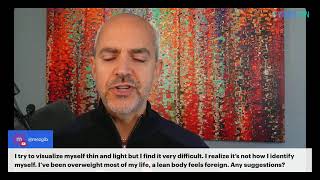
Jim Katsoulis explains how imagining yourself as a thin, healthy person reprograms habits and reduces internal conflict around food. He covers practical triggers like candy and holidays, the short and long-term consequences of eating choices, and offers a free hypnosis session called New Thin Me.
Chapters
It.
Everyone, welcome to today's program Yourself Thin Podcast. Today we're talking about imagining yourself thin and healthy. I believe that if you really want to lose weight long term.
And short term, I think it's really helpful to start thinking about yourself differently. Now, if you're overweight, part of the reason, the primary reason, in my opinion, is that you think yourself as an overweight person, right? And the way we think about ourselves leads to how we feel, and how we feel leads to how we behave. And obviously, how we behave over time leads to our weight. And so I think one of the first things you want to do when you want to change your weight is to change your mindset, change how you're thinking. And it's easy and hard, right? It's hard because it takes longer than you think it's going to, but it's easy because it's not that hard to think different thoughts, not really. And so the goal is not just to force yourself to eat different, act different, but to start thinking differently, to start thinking about yourself differently. And so if you were a person who is thin and healthy, what would that be like? Now, I know at first some people say, oh, my God, I haven't been thin and healthy in 30 years. I have no idea. I've got no idea. If I knew, I would do it. Fair enough. But there have been times in your life, and it may not been a bunch of times, but I know there have been times in your life when you've made good food choices, when you have chosen to eat the right food and said no to the unhealthy food, and you were able to do it relatively easily. I know there have been times in your life when you kind of been in the flow, and it's like these good choices almost just flow out of you naturally. It's not a struggle. It just kind of feels like who you are right now. Again, I'm not saying that lasted as long as you wanted it to, but I know everyone's had that experience at least somewhere. And if you start to focus on that, it starts to remind you that losing weight is not a lot of times so much about learning to become someone brand new, but a lot of times it's about remembering who you are at your core. It's kind of reconnecting to your best self. Right? We all have strengths and weaknesses, and dieting tends to train us to focus on our weaknesses and think we have to fix them all in order to lose the weight and get to our goal. But. But the other side's more true. I think that if you start to build around your strengths and I know you've got them, when you start to identify your strengths and you start to build around them, it's completely different process. And again, it's not so much about becoming some new version of you as it is expanding the best parts of you, expanding and growing your strengths, building on them. And so if you start to think of yourself when you're calm, when you're grounded, when you're centered, when you're feeling more peaceful.
When you have more perspective on things, when you realize why you want to lose weight and why it's so important to you, so you're connected to your motivation, when you're just, you know, more centered and able to see things more clearly and realize that I want to make this good food choice because I want the results of it long term. I want to become this version of myself who lives in alignment with my values and my goals. And the more you start to think of yourself this way, the more you start to define yourself this way, the more you start to become it. Because truly, literally, the more you start to think of yourself as the person you want to be, you are literally building up the neural connections and ultimately networks that turn you into that person.
And this is the part of weight loss that I think most people just overlook or ignore. And they think what's going to change them is the weight loss. But 95% of dieters that lose weight put the weight back on. So just losing weight does not mean that you transform, right? We, we need to understand that and we need to look at the bigger picture that what we're looking to do here is to first start imagining ourselves as the person we want to be, to imagine yourself as a thin, healthy version of you. And the more you start to think of this, the more normal it starts to feel, the more you start to train your mind and body how to behave like that, how to think like that, how to feel like that, and you start to behave that way naturally. And as you start to lose the weight, you're excited about it, but you're not surprised because you expected it, because this is how you start to think of yourself. And as you continue to walk down this path of transformation, you realize that so much of it is happening inside your mind in the ways that you're thinking about little things, big things, all things, they start to change. And you start to see the world as the best version of you. You start to think of yourselves a thin, healthy person. Now, let's do this because one of the easiest ways in the world to imagine yourself as a thin, healthy person is to allow your imagination to imagine waking up tomorrow morning at your goal weight. It's a nice time frame, right? Because tomorrow's not that far. And you expect to know what you're going to do tomorrow morning when you wake up. But. But the one little difference you're going to make is that you're going to see yourself and imagine yourself at your goal weight as that version of you. And if you take a moment and imagine waking up tomorrow morning in bed and you're at your goal weight, this is just for fun. So just let your mind do it. Notice how that would feel. How do you imagine breathing? How does it feel to lay in bed as this version of you at your goal weight? You could feel your body with your hands. How's it feel? You can imagine yourself hopping out of bed and getting dressed in that body. How do the clothes fit? How does it feel to get dressed in them? How do you feel as you're getting dressed in them? And now, once you're finished, you imagine moving through your day as this version of you. And you can notice the little things, how it feels to move differently. Maybe as you imagine yourself walking, you know, up, down stairs, you feel more energy, and you're not. You're not drained, you're not fatigued. How does it feel to move in this body? And then imagine moving through your day tomorrow, whatever day you imagine tomorrow, imagine moving through it in this body as this version of you. What people say to you, how it feels to move through the day, to do your work or whatever it is you're doing in this body as this version of you. Energized, grounded, calm.
Notice how that feels. Notice how you hold yourself, how you breathe, how you think, what you focus on, what you eat, how you behave. And the more you begin to imagine yourself this way, the more you train your mind to begin to act this way. This is a fundamental part of transforming your weight. Because what most people are doing is they're not doing this, and they're just trying to force themselves to act different. And it creates this. This tension in you, right? There's this battle between these two parts of you. And so the solution to that is to start working on the inner piece of imagining yourself as the person you want to be. And if you want to go deeper into that process, click the link in my bio and go get the free hypnosis session I give you. It's called the New Thin Me. It's a kickstart session. And it's literally designed to help you step into your goal weight, into your dream body, and start to connect into the motivation excitement of doing that so that you bring that motivation with you, you know, into your life. So go check that out. It's completely free. And I made a training for you as well. You can listen to that. And if you have any questions, feel free to ask them. Any weight loss questions are welcome. It doesn't just have to be about hypnosis or mindset. So Beyond Beauty Studios is very true. Yes, it is so much. It comes down, I mean, in program yourself, then we always follow the goal weight pyramid. And as you can see, the bottom level indicating the most important piece is mindset. And I believe that you know, your mindset, what you believe, what you think about yourself, what you say to yourself inside your head, all of these things are just fundamental, you know, to what your weight is going to be. And it's important to remember that. Right? But yeah, any questions, feel free to ask them. I know people are right before.
Man here right before Halloween. I. Hey, listen, I started eating candy too this weekend. So it's like, it's the same thing for me. You know, one of my candy strategies for Halloween is to put off the candy pretty much as long as I can, you know, So I waited this week and I'm like, I want to eat candy this week, you know, and so it is funny a difference. My kids are getting older now, so there's not really that candy as much anymore.
So I will, I will eat the candy for like a week or two and then I'll be done with it and I'll get rid of it all. But I'm very aware when I do it, it's so interesting with the candy because it's so crazy to me just how quickly it just comes in. You just think about it all the time. It's funny. I mean, you can be careful of that stuff. Good Lord. Talk about.
Talk about addictive substances. These candies, Good lord.
They'Re intense. But. Yes, but any questions, feel free to ask him. Oh, look at that. I see what's happening.
Oh, I see.
Wondering a little bit of a technical issue over there on Facebook.
Oh, well, not restreaming it there. What's up, Jim? Jen says hi, Jim. Hope you're well. I bought candy I don't like. Then give the rest to an organization that sends to overseas troops. That's a good one. Yeah. Buying the candy you don't like. That's A smart move, I would say. That's. That's the good one. I get candy I do like, and I, I. Luckily I like less and less candy, I will say, but I get the candy I like and I, I eat it. I don't. I don't know. I, I. For me, it's. It's just part of the whole thing. I like interfacing with it. You know, I'm very aware of the candy and how that kind of hits me. And so, yeah, it's kind of interesting. I learn a lot from when I eat the candy. I think the most fascinating thing for me, what I pay attention to is just how quickly, like those cravings, they're just there, you know, it's like that with the candy, with, with unhealthy food. You know, things that they're built to be addictive. Right. We all know that. And they are, you know, and so that's a good strategy. Jen, though, I like that. Yeah. Candy I don't like. I've done that before. It is funny buying it, though. It's the hard part, right? Because you always want to get the candy you like to eat because you're buying it to eat it. That's what I do.
I didn't buy any candy I didn't like. So funny. But I like some more than others. It is a little much, I will say. I don't eat much candy, and it is like, when I start eating it, that. That's probably one of the most interesting things to me is that when I do start eating it, I notice, like, all the little subtle things of it. And one of them is like, I was. I was kind of sniffling more and my throat was hurting a little bit at night, and little stuff like that, you know, it kind of just goes in. I remember eating that so much. I used to eat so much candy, you know, and it's like I used to always have the sniffles, and I don't know, I just always had effects from that. I never really associated to the candy, though. But anyways, so, yeah, it's kind of interesting like that. But I hope you all have some sense of control over the candy this year, because I know the candy, you know, the candy leads to Thanksgiving, Thanksgiving leads to Christmas. Next thing, I spent three months overeating. You know, that's what you got to watch out for.
You know, one thing just kind of leads into the next. So it's important, I think, to recognize what some of the triggers are that can kind of nudge you into the wrong. The Wrong direction and be prepared for them. And I think, you know, if you're aware of them and you're prepared for them, I think that's, you know, that's the starting point anyways, you know, but anyways, yeah, if you got any questions, feel free to ask them. This might be a quiet group. I know we're missing out on Facebook today, so. Yeah, for whatever reason, we're not streaming to Facebook. I don't know why.
Bookworm. Bookworm says I get aches and pains when I eat anything with sugar. Yeah, for sure. Again, sugar's inflammatory. I was noticing, yeah, I'm sniffling a little bit more with the candy.
Yeah, yeah, it pains. I mean the sugar, it's, it's an inflammatory substance, you know, so I could see that. I've noticed like I was a couple years ago, I'd been eating more can, but my fingers are starting to hurt. I don't know, like, you know, we don't, a lot of times we don't think of our body as a system, you know, and it's like even eating the sugar it just creates a systemic effect, you know, that's not necessarily good effects, you know, like my fingers hurt more, you know what I mean? The joints hurt more is more inflammation. It's just the whole thing. So it's. Yeah, it's one of those things to be careful of but be aware of. Again, I, I find paying attention to the candy for me is helpful ultimately because like I said, because I don't eat a lot of candy. When I do eat it, all of a sudden I'm just more aware of what the effects are, the subtleties. And so I redefine candy quite a bit, you know, because I'm, I know it, it tastes okay and all, but it's a little heavy handed. I will say that.
Bookworm says it lasts for days. That sucks. Yeah. If you get aches and pains when you eat sugar and it lasts for days, you know, again that becomes that focus on, that becomes a focus on the consequence and program yourself. Then when I talk about the three phases of eating, right, there's anticipation, consumption, consequence and the consequences. The phase most people have conditioned and trained not to focus on when it comes to the food. We really are just dazzled by the looking forward to and the eating of the food and we don't really pay attention to the consequence that you know, almost immediately follows, you know, six seconds after you take your last bite. But, but yeah, that's an intense consequence. Right. If you get aches and pains for days afterwards. That's a big one. I mean, for me. One of the big things I noticed, I talk about this all the time. A big moment for me. I remember.
I started doing yoga at night. This is way back in the day. I used to be 50 pounds heavier, and I lost 50 pounds. Changed my whole lifestyle up. But for years and years and years, I always ate at night. I finished dinner, wait about an hour, and then I basically just snack and eat all night. And so changing that was one of my first focuses. And one of the things I ended up doing along that was I started doing yoga at night. And I remember one night I was doing yoga, my stomach was killing me, and I was like, what the hell's going on with me? I don't, I don't know what's wrong. And then I was like, I remember it. I'm like, oh, my God. Maybe that's the, the meatball grinder I had. And I had a large meatball grinder that night for dinner a few hours earlier. And I was like, oh, that never bothers me. I was like, wait, maybe it does if I just never realized it. Because usually what I do is I go and watch.
Maybe I go and watch TV and I distract myself so I don't notice it, you know, and that was really a big moment for me because I realized how shitty I felt when I ate that way. But I also realized I'd never really noticed it because I was distracting myself. So paying attention to how I felt after I finished eating has been fundamentally one of the biggest shifts, one of the biggest things that shifted my eating. Because again, I have really in my mind, I define the food primarily by the consequence. And I'm not talking about the consequence of being overweight. I'm talking about the short term consequence of feeling uncomfortable. And so, you know, through enough conditioning, that's primarily how, you know that, that pops right in my head. When I'm making food decisions. I'm thinking about how I'm going to feel, you know, half hour, hour from now, you know, when I'm done eating. And that helps me make a lot, much better decisions. You know.
Jen says, I had a brownie my mom made last night and then crashed. Not worth it. Oh, yeah, for sure. Yeah. I mean, some things too, like something about my mom. My mom loves decadent things, but some, sometimes I lead a decadent thing and I'm just like, I'm out of commission. So, yeah, I'm definitely, I'm so aware of that. And I don't like that Feeling it's not worth it. I. I don't care what people say. I. I just don't find it worth it to just way overdo it with the.
With the sugar, the sweets, or the decadence. For me, you know, it's just too much.
MCW says I can't make Tylenol fast enough to have sugar. Yeah, that's interesting. Yeah. Right? It's. Yeah, it's affecting you strong, so. Yeah. And everyone's got their things, you know, for me, like, I. I've never been the. The biggest, although I. I eat tons of. It's so funny I say that. I think that's the. Funny I always say, like, I never really was a big sugar person, because I know people that ate way more sugar than I did. You know, I was more of a bread person, but I still ate tons of sugar. I would. I would start. First of all, I'd have sugar in my peanut butter. I have sugar on my cereal. I usually would have, like, a muffin donut right after breakfast. There was sugar in that. I'd have my lunch. I'd have cookies or brownie for dessert after lunch. I'd usually, in the afternoon, get a candy bar or some kind of candy for lunch and maybe a soda. Then I'd have dinner. And then after dinner, I'd have dessert. And then I might eat sugar. It's like. It's funny to me to look at that and be like, I didn't eat that much sugar. That's so funny. It was tons of sugar. And I never even thought about. I used to go to the dentist when I was a kid. Every single time I went to the dentist. I had cavities, you know, I haven't have a cavity in my teeth in years and years and years now. Anyways, it's just funny what we do sometimes. It just never think about it. You know what I mean? Like, it's just so funny. Which I think is. Again, it's. It's the core of everything I'm talking about here because we normalize the things, you know, and the idea that I would say is, oh, that's not even that much sugar. There's tons of sugar. I don't need anything like that now. And my sugar really, you know, this week's different because it's Halloween candy around. But my typical sugar consumption is. Is really low, you know, but that's been a process. I've worked that. I've weaned it down, I've turned it down, you know, But I think it's Important, you know, if you really want to be able to get a handle on your weight and your health. I think, you know, sugar for most people, something you're gonna have to figure out how to manage, you know, moderate, because otherwise, it just, it's too powerful for most people. It's gonna, you know, I mean, it's gonna keep nudging you, Overeating and so struggling when you don't need to, you know. All right, I'm gonna get out of here. I got a late start today, and I want to go eat. Actually, speaking of eating, I am hungry. Sugar makes me hungrier too. There's another one. But I am gonna go eat a big, giant salad, and I'm really looking forward to the salad, which I will tell you this too. And I don't think people talk about this enough. Healthy food's addicting too. I will tell you. I'm as addicted to my salad as I am to the candy. I, I, I love my salad every day. It makes me so happy, I can't even. Can't even take it. That's good. Let me answer a quick question before we get out of here. I try to visualize myself thin and light, but I find it very difficult. I realize it's not how I identify myself. I've been overweight most of my life. A lean body feels foreign. Any suggestions? Yes, this is.
I. I work with this constantly. Right. As you can imagine, a lot of my clients have not been at their goal weight ever or in a very, very, very long time. So it's very, very normal for people to say, well, I want to visualize myself being thin and healthy, but I don't know how to do it. Right, Fair enough. You literally don't know how to do it. Okay, so that's a starting point. So what I would suggest to you is that you want to shift your focus a little bit, because what you're doing, and you've said it right in the word, is I try to visualize. Right. And so you're trying to visually picture yourself being thin and healthy, and you don't have a visual picture for that. Now, the truth is, you don't really have a clear visual picture yourself overweight either, because we don't tend to think of ourselves in a reflective, visual way. We don't have a lot of neural connection for that. Right. We didn't evolve in an environment where there was mirrors and reflections and pictures of us all the time. So most of us have a very low ability to visually imagine visually what we look like. Overweight than whatever, okay? So the real secret is to not focus on what you're going to look like when you're thin and healthy and light and all that stuff. And it's to imagine what you're going to think and feel like when you're those things. And we leave the visual piece to the side. I know that sounds strange, but it's a real important distinction. It's going to help you a lot because visually you're really struggling because you can't make a visual image in your mind of what you're going to look like and stopping you. But let me ask you this, mez. If you start to focus, I'm going to throw out some ideas that probably are aligned with you being thin and healthy. If you are more relaxed, more calm, more grounded, feeling more centered, more at peace.
Happier, more hydrated, more well rested.
More nourished, more satisfied, more emotionally balanced, these are the qualities that are aligned with being at your goal weight. And typically for most people, those are easier sensations and ideas to connect to and imagine than visually picturing yourself at the weight you want to be. So what I would suggest, mez, is that you start in. Well, first off, off the bat, let's. Let's put visualize to the side and replace it with imagine. There's a difference there, right? Because visual is about visualizing what you're seeing. Okay? Imagining is a more robust. It's got visual, too, but it's also got what we say to ourselves, what we feel, how we think. And so instead of visually trying to see yourself as a thin person, start to imagine yourself as the calm, grounded, centered, healthy, motivated person who naturally makes better choices. And what you're primarily looking at is your physical relaxation. So align your body, right? We don't want to be slouched, right? Kind of align yourself, activate your muscles, comfortably. Relax your shoulders, your chest, your stomach, your face. Begin to breathe more deeply.
Does that make you feel healthier? Make you feel more grounded? Okay, now think about a situation in your life where you'd like to make a better food decision. Maybe at breakfast you'd like to make a healthier thing. Maybe at lunch you'd like to choose something that's better for you. Maybe at dinner you'd like to say no to the extra helping. Think of yourself in one of those situations. And now imagine yourself in that situation, that situation, being relaxed, calm, grounded, centered, aware of your goals. You know, you're kind of separating yourself a little bit from the tension and the stress of the moment, right? Because a Lot of times it drives our eating behaviors. We're just kind of wrapped up in the moment doing what we did it. And so we take a step back there, give ourselves a little bit of a buffer, calm ourselves down, ground ourselves. And now imagine yourself in a scenario where you want to make a good food choice. Making that good food choice. If you felt more relaxed, more calm, more grounded, if you were more connected to what your goals are and why you want to achieve them in terms of your weight. And this is the secret to thinking yourselves a thin, healthy person. Not just to visually imagine yourself. What you will look like, that's not going to be enough. So that helps. Jen says it is hard. I've been at goal almost a year and still have to remind myself I'm thin and healthy. In my mind's eye, I'm not always. Yeah, exactly. Same here. I've been doing this for 30 years. So that's why I joke about the candy. I mean, like, I can get on that kick real quick, you know. So again, I was trying to remind you all, you never get rid of. Okay, let me put it this way. You all have a mean voice in your head. You all have an overweight voice in your head. You're never going to get rid of those voices. They, they never go away. You learn to manage them more effectively. Hope that makes sense, you know, so again, Jen, that's not a weird thing, you know, I mean, that's just normal. And so it's not a big deal either, you know, as long as you recognize that and realize that you need to remind yourself, you know, of how can I do that? How can I step into that reality more fully? And again, the big difference is to step in it physiologically.
See, a lot of times I get mez gib. I guarantee you when you're trying to imagine yourself, then you're just like, okay, let me, let me see if I can do this. I, I and just your mind just blank. Right? There's nowhere for you to go. It's just a blank thing. I don't know what I look like. Right. We don't want to do that. What would you feel like when you make good decisions in life? You see what I mean? Because a lot of times we think about the end result of being at our goal weight, but we want to connect to the moment to moment decisions we make that get us to our goal weight. So it's not about the end result of being at our goal weight, it's about the moment to moment situations we find ourselves in. Where we want to make the good decisions. And what we want to do is we want to practice making those decisions from a position of power. Grounded, calm, centered, focused, motivated. And the more you think of yourself that way, the easier becomes. All right, everyone, I'm going to get out of here. Thanks so much. I apologize to Facebook for missing. We had a little technical issue today, so we can get popped out there, but that's okay. If you're not my world, make sure you click the link in my bio. Go get the free hypnosis session I give you. And I also got a training for you that I made for you I give you. It's completely free, all free. And if you like listening to this, I'm usually here Monday through Friday around noon Eastern. Feel free to ask whatever questions you want. I'm happy to help you. And if you can't make the live and you want to listen to this, it's also a podcast search program yourself, then on any podcast platform, it'll pop up. So, all right, everyone, have a super duper day and we'll talk soon. Bye.
More from Jim



Weight Loss Visualization: Wake Up in Your Dream Size #programyourselfthin #weightlosshypnosis



What If You Pretended to Be Thin for One Hour? #programyourselfthin #weightlosshypnosis




