Improving Your Relationship With Food
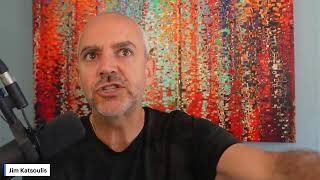
Jim Katsoulis (Program Yourself) explains how to improve your relationship with food by prioritizing nourishment and using food primarily as fuel while allowing occasional enjoyment. He argues that emotional eating and diet culture undermine long-term weight management, and promotes a systematic mindset-and-lifestyle approach (customized strategies, rehearsal/self-hypnosis, and support) over short-term diets.
Questions this video answers
A 60-second self-hypnosis exercise used to program the mind.
Every Monday through Friday, usually around noon to 12:30 Eastern.
Chapters
Hey everyone. Welcome to today's program yourself Thin podcast. Today we're talking about improving your relationship with food. Food. This obviously is at the core of getting control of your weight, is you want to improve the relationship you have with food so that it feels soft, easy, breezy, comfortable, enjoyable. Like a fun, light, fulfilling, happy relationship, right? We don't want this, you know, all these toxic traits, you know, where we get obsessed with things and we're not treated right, we're mean to ourselves, we don't want that, right? The goal we're really aiming for is to have this, this nice, comfortable, kind of give and take relationship with food. That's kind of where we want to start with. And the main way that we get there is always by realizing that you want to use food primarily for fuel and not to manage your emotions. That's kind of like the core strategy to improve your relationship with food is that right now, one of the reasons you probably don't have the healthiest relationship with food is, is that you are using it emotionally. You're using it to deal with stress, anxiety, tension, depression, sadness, loneliness, whatever it may be. And you're using the food to kind of distract you from that and be the bright spot in your life. And because you're using it emotionally, the main focus isn't to nourish your body, you see. So right off the bat, the relationship's kind of in the wrong spot. But when you start to put the relationship in the proper context, that the purpose of food in life is primarily to power your body, to fuel your body, right? We lose sight of this.
But it's like, again, you can still enjoy food, by the way, this isn't an all or nothing thing. You just could never enjoy food again. I'm not saying that, but what I'm saying is that the primary relationship that you have with food should be grounded and steeped in you fueling your body, right? Because everything in your life, I mean everything that matters to you, your energy, your thinking, your emotions, how your body feels, your physical comfort, all of these things are rooted in what you're consistently putting into your mouth. And it's very easy this day and age to eat a lot of food and a lot of calories and not get a lot of nourishment and nutrition in those calories. It's very easy to eat a lot of processed food that doesn't have what your body truly desires and craves. We've lived on this earth for millions of years eating foods that on a very deep level, power us Fuel us in a very healthy, natural way. And in the last 50 years, that food has been turned on its head, and now we have access to almost unlimited foods that really do not have the nutritional quality that our bodies truly need. So this is the starting point. To really start to improve the relationship with food is to realize that your primary relationship with food is for fuel and then to occasionally use it for fun. And when you start to look at food this way, it's transformative, because it's not about always saying no to the food. That's not the purpose here. The point is to start saying yes to the foods that really nourish you and give you the nutrition you need. Because when you start to nourish yourself and give yourself the nutrition you need, every cell of your being starts operating differently. You start thinking more clearly, your gut starts working more appropriately. Everything in your body just starts to improve, and it makes it easier, easier to make healthier and better choices in your life. All right, as opposed to when you're eating a lot of bullshit, you feel exhausted, you feel tired, you brain fog, you know your body doesn't feel good, you're sore, you're uncomfortable. This is the quality of your life. So again, there's nothing wrong with enjoying food just purely as fun and entertainment sometimes, obviously. But you've got to balance this out and you've got to make the primary relationship about fuel, about fueling your body, because that's what food is meant to do, you know, so it's like, you know, once we start looking at it this way, this is what we start working towards. This is the direction we want to go in, where we have this healthier and healthier and healthier relationship with food. That, again, doesn't mean that we never choose the fun foods, but that it's really steeped and grounded in nourishing our body so that we feel good. And once you start doing this, it starts to reveal how in the past, you've been using food to manage your emotions. So the other piece of kind of bringing healthier foods into your life and really cementing those in is to also start to realize that when you have certain emotions, big emotions, loneliness, upset, anger, stress, whatever kind of big trigger emotions you may experience in your life, you want to learn how to genuinely deal with those. If we're not going to use food for it, we're going to deal with it genuinely. And so now when you get stressed, maybe instead of going to the food, you go for a walk or you call a friend, or you do something Interesting. And goes the same with all the emotions, whatever emotions you're feeling, how do you want to feel instead in those situations? What are better ways to deal with those emotions that does not involve food? And the more you start thinking about this, the more you genuinely start dealing with your emotions on this level. And you don't require the food now. And so now you have a situation where you eat primarily to nourish yourself and fuel your body. You're able to deal with your emotions in life in a genuine way. And. And you have space in your life to eat foods that are really fun, just for pure fun and enjoyment as well. And when you balance all these pieces out, the relationship you have with food is much better. And it's much easier to manage your weight this way, as opposed to what most people do, which again, is they kind of go to these extremes. And the extremes, again, the extremes never work. But again, the way the extremes are built of just completely cutting out the fun foods and just focusing on healthy foods, that's not a healthy relationship. It's not balanced. And so again, a healthy relationship in a lot of ways requires some balance, some flexibility, and that's what you want to bring into your relationship with food. And everything I've said here is kind of a starting point to make that happen. And once you have that down, though, this is how you transform from the inside out into a thin, healthy person, is you start to change the way you perceive food and you start to change the relationship you have with it over time so that eventually you start to think about food primarily as fuel. You deal with your emotions genuinely, and then you enjoy food for fun. When you enjoy food for fun, and you enjoy it genuinely for fun too, by the way. No shame, no guilt. You pick the food you want to eat and you eat it all right? So take this into your mind and really consider this because again, most likely you have this real love hate relationship with food. And again, it would be classically defined as kind of this toxic relationship that's not the ideal one you want. And so when you start thinking about this ideal relationship with food, think about some of the things have been said here. If you want some support making this happen, go click the link in my bio or go to program yourself. Then I give you a free hypnosis session called the New Thin Me. It'll help you take more control of your weight, your health, your happiness in a way you probably have never thought of. So go check that out and if you have any questions, feel free to ask them. Happy to Answer them. And I am here every Monday through Friday answering your questions, working to help you all out, get your weight under control. What's up, Chalanga? Chalanga says every day I do better from the day I hear you. That's great. Yeah, that happens. That just sounds smug or egotistical. But that's, that's my life. That's what I do. I talk and people get healthier and lose weight. That's pretty much my life. But that's awesome. Chilling. A nice job. Keep it up. Yeah, it's fun, especially we start stacking. It was cool. I saw today someone wrote they're in my Thrive program, which is the program after the program if you want to stay kind of in the mix. And she was just celebrating her one year anniversary of it and still maintaining her goal weight. So that was awesome. So shout out to Linda. Linda, great job, nice job. But yeah, that's what happens. And again with program yourself, then, what I always really try and point out and focus on is that when you make maintenance the goal, when you make maintenance the focus, it's a completely different paradigm, a completely different mindset than the weight loss one. Okay. Because dieting is all about losing weight. You know, getting to your goal weight and program yourself then is all about living at your goal weight long term. And there are two completely different focuses that require two completely different strategies. And so as you start to think differently about your goal here, it really does set you up to succeed because you just think about it differently. And when you think about it differently, you really are kind of set up to get much better results. Which brings me kind of the big point, that the reason most people are struggling with their weight is they've never learned how to manage.
You know, the other pieces of the process. Right? So it's like when it comes to weight loss, all you've been given is meal plans and diet philosophies and workout programs. And in essence, basically all you've been. All that's happened is you've been told what to do when it comes to weight loss. Your entire life, you're just told what to do. Eat this, don't eat this, do this. Exercise. You're told what to do, but no one ever shows you how to get yourself to do it. No one ever showed you how to start shifting your mindset so that you start thinking yourself as a thin, healthy person. No one showed you how to deal with the voices in your head. Yes, you've got voices in your head. They're called your internal dialogue. You're talking to yourself all day and night. And what you're saying to yourself and how you're talking to yourself has a huge impact on your behaviors and obviously has a huge impact on your results. But if you don't know how to change the way you think, if you don't know how to change the way you're talking to yourself, how are you really going to be able to change your behavior?
Because if you don't know how to change how you're talking to yourself, then that means you don't know how to change what you're feeling. And if you don't know how to change what you're feeling, you're going to rely on the food because your mind is never going to choose to feel like shit if it knows that, well, if I just eat some cookies, I'll feel better. So it's never your weight success really is never about your ability to stop the things you like to do. It's really about finding better ways to do things that meet the needs you have in a way that also allow you to live at your goal weight. So I hope that makes sense. And again, when you start to realize that and you break things down into these different components, it just becomes manageable, you know? And I know a lot of people with weight, they get to this point where they're so just completely apathetic. And it makes sense because again, your whole life, you have tried diets and workouts and you tried doing the things the experts tell you to do. And at best, you can do it for a little while, you get some results, and you can't keep it up. That's always the same problem for weight loss for people is that you can't keep it up. And if you can't keep it up.
Well, that sucks, obviously, right? You've lost weight, and then you put it back on, and you've probably done a couple times. And once you've lost weight and then put it back on a couple times, your brain starts saying, oh, what's the point? What's the point? And so that's where a lot of people come to work with me are at, right? They think about weight loss all day long, but they can't get themselves to actually, like, do the stuff that makes them lose weight, you know? And so again, it's that that perpetual state of apathy where you're always thinking, I want to lose weight, I want to lose weight. But deep down, you don't believe it's possible because you've tried it, you've Lost weight, you put it back on. So you get to the point, you say, forget it, I give up. I quit. And that's where people get to, why wouldn't you? Because if you don't believe something's going to work, you're not going to put a lot of time and effort into making it work. Does that make sense? Right. So I always think, like, the real secret to getting control of your weight, it's not just believing it, by the way. Well, I got to believe my. I got to believe in myself. Well, you're not just going to magically believe in yourself. Something needs to change for you to believe in yourself. And what I believe that thing is, is I believe you need to have a real, systematic approach that makes sense to you, a systematic approach that gives you the solutions that you truly need to not only lose weight, but to live at your goal weight. And those solutions are more based around your mindset and your lifestyle than they are a diet or a workout plan. And you never have learned how to shift your mindset genuinely into that of a thin, healthy person. And so you wonder why you struggle, you wonder why you keep, you know, struggling with the weight. But when you look at your mindset, it's crystal clear. You've got the mindset of an overweight person. You have no clue or idea how to think like a thin, healthy person. You've never learned that. You've learned how to think like a dieter, you know how to think like an overweight person, but you've never learned how to think like a thin, healthy person. And if you've never learned to think like a thin, healthy person, how would you ever live like a thin, healthy person? That, to me, is the question. And that's why diets never work and diets do not work. Again, they may work for a little while to help you lose weight, but diets officially do not help you lose weight long term. We've had diets for a hundred years. There's not one diet that rises to the top that's very effective at keeping weight off long term. Not one. So, again, there's no diet coming down the pike that's gonna help you, because they never give you what you truly need, which is, how do you change your mindset? And that's kind of the missing piece of most diets over and over and over again, you know. So again, don't keep doing that, though, because it's like, that's why you're not motivated to lose weight anymore. Because the only way you know to lose weight is diet. And you don't believe in the diets. So now you get in the situation where it's like you wanna lose weight, but you don't believe in dieting, so you don't really take any action because you don't believe it's going to work anyways. So again, you need a much, a much deeper understanding of how to change. It's a little more work, but it's like, at least it's work that makes sense.
Lana says, what's the best way to change our mindset and the way we think? I think the best way to change your mindset and how you think. Okay, so now we're talking. I'm going to explain program yourself thing because obviously that's my program. That's what I think is the best way. But let me explain what I mean. I think there's two parts to changing your mindset and how you think. I think there's two parts. I think you need to know what to do more clearly. Okay? So I think right now you literally don't even know what to do. You have some vague idea that you should stop eating carbs or you should stop eating for 16 hours or you should reduce your calories. You've got some vague broad strokes of what you should do to lose weight, but you don't have the granular detail of how to think, live and eat to be a thin, healthy person for the rest of your life. Okay? So the first step is coming up with better strategy, knowing what to do in a more clear way. Right? That's step number one. So in programming yourself, then we got the goal weight blueprint. And I take you through questions to help you answer and create a thin, healthy mindset. Lifestyle and eating. And all those questions are built around you, building the mindset, lifestyle and eating that works best for you. Because every single person is unique and different. Everyone's got a different situation, everyone's starting from a different place. So there is no one size fits all solution that I've ever seen. So again, to me, the first step is having better strategies of what to do. I mean, look at your strategies, folks. Don't, don't get upset when I say this, but your, your strategies are so inadequate. They're just not. What, what's your strategy to lose weight? What are you going to do? You're going to count points? You're going to track your calories? You're going to stop eating for 16 hours? You're going to make healthier decisions? You're gonna what? Stop eating dessert Portion control. You don't mean these are, don't get me wrong, like they're all helpful. Like I'm, I'm not. They're all great ideas. When they're all used together with mindset, lifestyle and eating, they're all great. But just like one of those things is what? You're just going to control portions? Well, how are you gonna deal with your emotions? How are you gonna deal with your stress? How are you gonna introduce healthier food? How are you going to change your habits? How are you going to change your thinking patterns? How are you going to believe in yourself? How are you going to motivate yourself? So who gives a about your portion control? It's not going to matter what your strategy is. It doesn't matter if you're going to portion control. Stop eating carbs, stop eating for 16 hours. It doesn't matter what your strategy is because you have no idea how to change your thoughts, your emotions. You have no idea how to change your behaviors. No, you don't. Well, I'm just going to do it. That's willpower. So you're just going to use willpower to just always make the right decision, Right? So why haven't done that yet? If that's, if that's available to you, if there's an option available to you that you can just use willpower, just make the right choices from now on. Why haven't you just already done that?
And when you start answering that question now we get into my world because your thinking changes, you can't control it. Your feelings change and you can't control it. Your motivation disappears and you have no idea how to get it back. And these are the same problems that keep showing up. So it doesn't matter what diet strategy you pick. Go through another fucking hundred of them and you're always going to come back to the same problems that your motivation disappears, your emotions take over, your thinking, you know, sabotages you.
So the first step is knowing what to do that's right for you, okay? Having better strategy and plans for you, okay? The other piece is that you need to know how to get yourself to do it. So once you have real good ideas that work for you, they're custom made like a glove, fit you like a glove. You want customized bespoke strategies for you and your lifestyle. Once you got those, you need to have the ability to get yourself to do them. And so program yourself. Then there's the program yourself, then technique, the rehearsal technique. And Basically it's a 60 second self hypnosis. Exercise you use to program your mind. So to me, it's like the best way to change your mindset and how you think is to first kind of sit down, strategically start to understand your situation, your challenges, your strengths, and start to strategically build a plan that works for you. And the other side is to be able to influence your mind and program yourself so that you do those things consistently. And then I think the third piece that's really crucial too is having support system in place to help support, nurture you through those steps. And that, to me, is the way that you truly transform your mindset and get the results you're looking for. But hopefully you recognize that's a much, much, much bigger process than just like a diet. You know.
Again, dieting is, you know, conceptually dieting is like easy to understand and simplistic, but in practicality, diets don't give you again, the, the, the information you really need. And the information you really need is how do you change your mindset? How do you influence how you think, how you feel and how you behave? And at the end of the day, let's be honest, you, you don't know. You, you don't have a good system. You don't have a strategy to influence how you think, feel and behave that you can rely on. The only thing you got is willpower. And that willpower comes and goes. Your motivation comes and goes, and you have no idea how to influence it to come back when it leaves. And so again, once you learn this stuff, though, it's not that hard. I always say, I use the example because I was thinking this today, I was like, you know, when it comes to life, like get rich quick schemes, we see them for what they are, right? So it's like you have a get rich quick scheme and subconsciously you compare get rich quick schemes to traditional ways of making money, right? So get rich quick schemes are always preying upon your impatience and your desire to just get quick results. Just like dieting, by the way. And, but you can see a get rich quick scheme within context because again, we also, it's, it's the most normal thing is that people, you know, they go to school or go to training or they create some way to create value for some in some way, and then they're compensated for it. Okay? And so we have these two and we can compare them. I was thinking schools like this, right? You've kind of like the traditional college where you're going to go to that, and then you have like, you know, things that, that you know, you get a weekend certificate. You know what I mean? And again, we can understand them within context because they're related to each other when it comes to weight loss. There's literally no concept of how to shift your weight in an intentional, strategic, practical way that works. You have no reference point. I was, I was. This really got valid. I was watching the Biggest Loser thing on Netflix. They did a documentary on it, and it made me realize that the reason that show could succeed is just because people have literally. It's a complete and total vacuum. You literally have no sense in your mind for what it's like to lose weight in a traditional, practical, strategic, rational way that gets results. You have no sense of that. The only thing, and I was realizing this because dieting, literally dieting, it all happened at the same time. Mass media, dieting and food all changed about 50 years ago in dramatic ways, okay? And they all happen at the same time. And so what that led to is that as all this food starts coming into our lives that we're struggling with, and as obesity numbers start rising and weight issue, weight starts going up, what happens is diets blow up because diets blow up, because mass media blew up.
Diets came from women's magazines initially. I mean, that's where again, there was diets ahead of that. But the real diets as we know them today, they really came through women's magazines. Women's magazines didn't really exist on a. On a big level until about 50, 60 years ago. And then the diet started getting promoting there. And that led to diet culture. And what I'm trying to say is this, that it's kind of like diet culture got there before traditional weight loss could in a way, because we don't even have any reference point for traditional weight loss in the context we live in now. We think of our grandparents or someone else, they lived in a different world than we did. We live in a fucking alien world with all this food around us. We have never in the history of humans have lived in this environment with this much processed, hyper palatable, hyper addictive food around us constantly. And so we have no reference point for how to deal with it. And what fills in that void is diets. And so you've got dieting your entire life has been the primary way you think about losing weight. And you have no reference point for a traditional, rational approach to changing and shifting your weight. And if you did, it would look like college. It would look like something you did for a year, two, three years to figure out master and then have that ability for life, that's what it would look like. That's why I see my clients day after day after day, is that when they stick with the program, they work it and they go through it as if they were in college. They always get better results, always, because it's a systemized process. And so that's why my point is this, that you know, even if you have no mechanical ability and you go to mechanic school, you're going to come out a mechanic if you do the work and put the time in. You've got no numerical ability, you're no good with numbers. I don't give a shit. You go sign up for an accounting program, do all the work, go through it, and you're going to come out an accountant. May not be the best accountant, but you're going to come out an accountant. And the same goes true for pretty much anything. You could have no aptitude in the beginning. If you do the work and go through a systematic program, you come out the other side with abilities.
And when it comes to weight loss, you've got none of that. And you know that because you've been trying to lose weight for 20, 30, 40 years and you know as little about losing weight now as you did before you started your first diet. You're kept in this perpetual state of uncertainty, this perpetual state of not knowing, of waiting and hoping for some magical thing to come down the pipeline that works instead of just putting the work in, in a strategic, systematic way to learn and influence all the things that impact your weight. And when you approach it this way, again, it's just common sense. When you strategically work on your mindset and when you strategically work on implementing a healthier lifestyle and you strategically creating eating plan built around you, customized to your wants, likes, lifestyle and all the rest of it, you're going to get way better results than doing some dumbass crash diet for the week, a month, two months, and then quitting. You know, and again. But, but I know in your mind you can't even think about weight this way. You're so conditioned to think about weight loss like a dieter and you think about it, again, I'm going to go 100% think about it, right? It's so obvious. Again, get rich quick scheme. That's what a diet is. Because every time you do a diet you're jumping into it 100%. You always jump into it on Monday. A hundred percent, doing whatever you're doing 100% perfectly. And the plan is that you're going to it 100% perfectly. Until you get to your goal weight, there's no room for error. You're just going to be perfect starting tomorrow and then you're just going to do it until you lose the weight. How many times has that worked? The times it's worked, how long are we able to keep it going for? It's not built for long term success. Now let's look at the alternative program yourself. Then we start real basic and simple. We look to get better at 1% better every day. Just like college. You don't go into college and like, you know, just sit there and just study for 10 hours a day. You start learning things and then you build on it. That's how real learning and transformation and change happens. And again, dieting has sold you a bunch of bullshit for a hundred years. And it's just get rich quick schemes. That's all it is. And again, I get out here every day just to kind of give that context, to give that counterpoint to dieting, to show you that there is a logical, rational way to diet, manage your weight, that handles your mindset, that handles your lifestyle, that handles your reading. I mean, people are so flummoxed to how to lose weight. I'm not saying what I. And by the way, like, I'm not saying like what program yourself didn't just this easy thing. It's some magic fix. It's not, it's like college. College ain't some magic fix. College. You, if you're going to go to college, if you were going to college or some training program that was, you know, kind of longer term, what do you do? You, you, you evaluate things. Is this worth it? Is this worth the investment of time, money, energy? Am I going to do it? Is this worth it? And then you do it. You sign up, yes or no, right? And then you do, you sign up, then you go and you do the work, right? And you end up at the end of it with a whole body of knowledge and skill within you. Now have you ever done that with weight? Have you ever learned how to run your mindset? What do you do? The most basic things about weight you've never learned how to deal with. How do you deal with your emotions? What's your plan to deal with emotions? What are you, how, how are you going to deal with your sabotaging thoughts? How are you going to deal with the negative voice in your head? Oh, you're just going to ignore it. Oh, you're just going to do the right thing anyways, huh? What's that mean? So when you start looking at it this way, it starts to reveal real quick what your deficiencies are. And that's a good thing, by the way, because once you realize what your deficiencies are, you can correct them. The worst thing to do is to not realize your deficiencies and think that, you know, to not realize you have these deficiencies and that require this solution and instead not recognize them and do this thing that has nothing to do with these deficiencies. And that's what you're doing with the dieting. You just keep repeating the dieting bullshit. Because what's dieting bullshit? It's basically just, okay, here's a philosophy. It doesn't matter what it is. Don't eat carbs, don't eat for 16 hours, eat a thousand calories, count every point, whatever. It doesn't matter what it is. Because no matter what plan you think of weight loss wise, you're jumping at 100% expecting to do it perfect and it just doesn't work. You know, you got to have room for mistakes and you got to have the ability to again, kind of manage the soft skills, I guess is another way to put it, of weight loss. Yeah. All right. More questions people ask them. If not, we get out of here. I gotta get out anyways. Actually a lot get some stuff done here. So. All right, everyone, if you're, you know, I'm here every Monday through Friday, so if you have any questions, feel free to pop in here and ask them. Usually around noon eastern, noon to 12:30 eastern, somewhere in that range. So any questions you have, feel free to ask them. If you like this. And you missed the live, it's also a podcast and you can go search program yourself then and it's on all the podcast platforms and you can get a free hypnosis session if you click the link in my bio or go to program yourself, then there's a free hypnosis session waiting for you. I made a training for you. I made a bunch of free stuff for you. So go check that out and yeah, have a super day and we'll talk soon.
More from Jim



Weight Loss Visualization: Wake Up in Your Dream Size #programyourselfthin #weightlosshypnosis



What If You Pretended to Be Thin for One Hour? #programyourselfthin #weightlosshypnosis




