Losing Weight One Change At A Time
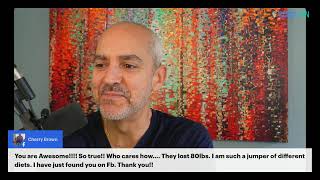
Jim Katsoulis explains why tackling one eating habit at a time works better than overhauling your diet all at once. He focuses on reframing the problem, identifying your highest-calorie habit, and building sustainable changes through mindset work instead of short-term dieting tactics.
Chapters
It.
Hey, everyone. Welcome to today's program Yourself then podcast. Today we're talking about losing weight one change at a time, which really goes against what most dieters are going to do when they want to lose weight, which most dieters are going to try and make all the changes at once, right? If anytime you have started a diet, you've started changing everything on day one, right? You're going to start eating perfect, you're going to go walk more, you're going to exercise, you're going to do your yoga, you're going to meditate, listen to, calm, you do everything, right? And when I say it like that, hopefully it's dawning on you that's overwhelming, right? It's really difficult to change everything in your life all at once. And I know you're in a rush, right, and you're impatient, and so I get the urge to want to do that. But the alternative to that, which I think is going to serve you much better, is when you approach your weight loss one change at a time, where you strategically start to look at one thing and work on changing that so that you don't overwhelm yourself. And the secret here is that we're not looking at this like a dieter, right? So dieters are going to look at their behavior and think they're going to force themselves to act in a new way, right? They're going to change everything. And they're consciously making this up. No, I'm not going to do that. I'm going to do this, I'm going to do that. And they're consciously, actively making decisions to do something constantly, okay? So it's very draining because your mind is not built to make decisions, conscious, logical decisions all day long. Most of your behavior, most of your thoughts are just running on autopilot. You're just kind of doing what you did. And this is how humans operate. And so when all of a sudden you take something that's automated and you start to consciously do it all, it's very tiring to prove the point. You know, if one day you woke up and decided you're going to brush your teeth with your other hand, use your phone with your other hand, use your computer mouse with your other hand. Technically, you could do it, but it would take lots and lots of mental energy to do that with your other hand. You'd have to think about every little thing you're doing, whereas when you do it with your normal hand, it's just all automatic. Okay? So this is one of the things you really have to understand that when you want to create change, the diet industry has conditioned you and taught you to overwhelm yourself. And it's almost guaranteed that you're going to fail because you're trying to change too many things at once and you basically burn out and you can't keep it up. So the alternative is to start by being more strategic. And again, I think the best place to start, when we talk about changing things, one, you know, losing weight, one change at a time, is that you focus and become aware of what is your highest calorie habit. So what habit do you have that shows up daily or weekly that is causing the most calories to come into your body? And it might be slightly snacking at night, it might be overeating at dinner, grazing during the day. Whatever it may be, we want to start to recognize what that behavior is and then go to work on it. Okay? And the big difference here is that we're not just going to stop the behavior. We're going to look for ways to transform it that are set up to run automatically in the future. Okay? So again, the diet industry has taught you that the answer to everything is just willpower. You're just going to fight against it, you're just going to stop it. You're going to, you know, be aware and fight against yourself. But we're looking for is better strategies. And so a lot of times when it comes to making one change at a time, we're deep diving into that challenge. Right? So again, for example, if you want to stop snacking at night, which was my big one, right when I first started, I wanted to stop eating at night, right? Every single night, seven nights a week, I would finish dinner, wait an hour or two, and then I'd start eating. And I'd basically eat almost until bedtime snacking. And so it took me months of paying attention to this, trying different things, different strategies, really working on training my mind to do something else at night. And it took months. Now, I know you don't even mean, oh, I don't have time for that. Right? But the difference here is this, that that was over 30 years ago, that I spent those months figuring out how to manage my evening snacking. And I put all my energy into that. Okay? Now, I did other stuff, too. I don't want to make it sound like you only have to do one thing, but I'm saying one main thing, okay? And so I spent months figuring that out. Now here I am 30 years later, and I just don't snack at night. And I haven't for 30 years. So don't you think that was a worthwhile investment of months of time in order to get 30 years so far of genuinely leaving that behavior behind? You see, this is what I'm talking about. And it's a complete flip flop of the diet mindset, because diet mindset really is set up for you to temporarily change your behavior, all of it. And then you go back to what you always did. Now what do you go always go back to? That's the interesting question, right? Because when you go on a diet, you're consciously following this new plan, and at some point that plan fades away. And what do you do? You go back to what you always do. You go back to your automatic routines and behaviors. And so once you start to realize this, you start to recognize your, your mind and body are built to run on habits, on routine. And so if you start to look at these habits and routines and start to look at them like I'm going to spend the time with them to transform them so that I have a new behavior and routine in that situation, that's going to bring me towards my goal weight. And when you start approaching it this way, it's much more strategic and you invest your energy in a much more useful way. So instead of just burning out over a week or a month or a couple months, you start to genuinely transform your behavior in a fundamental way. Because if you take your worst eating habit, whatever it may be, if you imagine that that disappeared from your life naturally, comfortably, how much easier would it be for you to manage your weight? I'm not saying it fixes everything, but when I got rid of my nighttime snacking, that was a huge shift in my behavior. That was a huge reduction in my calories, and so it set me up for so much more success. Because guess what? As soon as I figured that out, then I moved on to the next habit, then the next habit, then the next habit. But it's a different paradigm. I wasn't trying to change everything at once, because I know that's impossible. I was setting myself up for the long game. I was setting myself up for ultimate success, which wasn't just the fastest weight loss ever. It was for long term success of living at my goal weight. And that's what I want for you. All right, so give this some thought and start to approach your weight, this just one change at a time mindset and see what happens. You know, again, just test it out. You don't have to believe me, but test it out and see how much better it is. And if you want some support with this way of approaching things, click the link in my bio or go to program yourself in dot com. Go get the free hypnosis session I made for. It's called the New Thin Me and start listening to it. And I also made you a training. You can go check out a bunch of good strategies and ideas in there as well. And it's all free. Okay. And yeah, if you have any questions, feel free to ask them. I see.
Wangari says, watching from Seattle. I'm really struggling with weight.
Again, most of you all, just a little clarification. Most of you aren't struggling with weight.
You'Re not struggling with weight, you're struggling with the eating. And that's an important distinction to make. Don't. I'm not being a wise guy here. I think that's an important distinction to make because technically you can't control your weight, right? If you really think about it, you can't lose weight today. How do you, how do you actually lose weight? You can't, you can't lose weight. It's, it's a weird, it's semantically ill formed, as we say in the, in the NLP world. And so you can't lose weight, you can eat less calories, right? You can move more, right? So, so over here you have your behavior, what you can actually do, you can change your reading and, and over time through some magical process you have no control over, your weight can go down. So I know, I know it sounds like I'm nitpicking, but it actually, it's a very important distinction because for Wangari, if they say, well, I'm really struggling with my weight, you're going to continue to struggle if you frame it that way. Because again, it's not that you're struggling with the weight because you're not really in control of the weight, you're in control of the eating. So you'd be actually more accurate to say, I'm struggling with the eating. Now, even that's not too helpful. But it gets us on the right path because now I can say, okay, specifically, what are the biggest struggles you have with eating? Do you see what I'm saying? So we're drilling down once again, you know, like, like, again, I was just talking about losing weight one change at a time. So much of the work I do with my clients is about drilling down into their challenges because the diet industry, again, has taught you to think that you're just going to change everything all at once, to think real big, know what I mean, think real vague and start to, what you have to start doing is you have to start to drill down because these behaviors are very specific. They're happening in very specific contexts. You're thinking in certain ways in those situations. I don't get into this too much, but you're going into trances basically in these different situations, and you need to understand them first in order to wake yourself up from them. I hope that makes sense. You know, so for Wangari, if you start making that more specific to eating and specifically eating now, you're going to start to feel more control. Any of you that feel like you're struggling with weight, notice how it just feels hopeless when you say it that way, right? Because, oh, I'm struggling with weight. It's such a big concept and idea that your brain can't really understand it and it kind of opts out. So every time you think to yourself, I'm really struggling my weight, it feels hopeless when you start saying, I'm struggling with my eating, specifically that eating habit there is one of my worst ones. Now you start to feel a sense of hope because you're starting to define the problem more accurately, more specifically, more granularly. So hope that helps. Yeah. Molly says, I appreciate the reframing mindsets. Yes, me too. I, I, I, if at the end of the day, I think what I do with my clients more than anything else is to help them reframe. And that's certainly what I've done with myself as well. I think re being able to reframe situations in life is one of the most valuable and important things to do. Because what happens for most people is the frames that you think in are usually given to you. Okay, so, for example, when it comes to weight loss, you think about weight loss like a dieter because your entire life you have been trained, conditioned to think like a dieter. And so you naturally now when you think about weight loss, you think about it like a dieter. And the diets, again, the diets are not your friends, folks. All the diets are. The diet industry is a branch of the food processing industry. Like legitimately, Weight Watchers was owned by Heinz. Jenny Craig was owned by Nestle Atkins Food Products is owned by the same company, owns onions, pretzels and Cinnabon Slim Fast owned by the same company that owns Ben and Jerry's ice cream. So these companies that run these diets do not want you to wake up and all of a sudden just start eating whole natural foods, not eat processed foods, and then live your goal weight forever. That's not how diets make money. That's not how food companies make money. And they're one in the same. So you have to understand that most of the things that have been put into your head about weight loss are. And so a lot of the framing you have around weight loss, almost all of it. And I mean that literally from, from your goal. I'm sitting here telling you as a dieter, your goal is wrong, because I know your goal is you just want to lose weight, Right? But that's not really your goal. Your goal is not just to lose weight. You've lost weight before and put the weight back on. Is that. Was that your goal? You happy you achieved your goal? No, that's not your goal. Your goal is to live at your goal weight for the rest of your life on near autopilot. That distinction is everything. And so I'm telling you, as a dieter, the way you frame almost everything about weight loss is ass backwards.
So there's that. What's up, Joe? Joe's from Trinidad and Tobago. Nice. It's nice and warm there. Although it's beautiful where I am, although it is. It's just about to turn into, like that. There's like a shitty part of spring and kind of a shitty part of fall. I like it all, but. But it's like. It's like when the leaves kind of start. They're like, the colors are gone, the leaves are falling off, starting to get cold, start to get darker. That's kind of where I headed, which I was in the Caribbean, to be honest.
And anyways, yeah, if you have any questions, feel free to ask them. I am here to answer your questions and help reframe things for you. Yes. That is so much of what I'm doing here, and that's why I get here every day, is to help you, you good people that want to lose weight, think about it more effectively, let's put it that way.
Sasha says, I used to do fasting and was amazing. Now I'm pregnant and I'm suffering.
Yeah, well, you know, I mean, that. That gets to the point that I have this conversation with people all the time that, you know, again, you're. The diet industry has conditioned you to think of your weight loss like it's a destination, like you're just gonna get to your goal weight, and then it's done, done and done. Right. And that's just not true because you're alive, you know, you're a human being. And so things are always changing. You know, what you do to lose weight when you're not pregnant is different than what you do when you are pregnant. And what you do to lose weight when you're not pregnant before you have a kid is a lot different than what you do to lose weight after you're not pregnant anymore, but you have a kid. And what you do to lose weight when you have one kid is different than what you do when you lose weight to and have two kids. So situations in life impact what you're going to be able to do. And the diet industry, again, it doesn't do this because the diet industry is very rigid. And so I can't tell you the number of people I see, smart people, too, by the way. Smart, successful people I work with. And it's like you see them trying to use, oh, I did Weight Watchers when I was 20 years old and lost £40. Well, you know what I mean? You've tried it 50 more times. It hasn't worked. So sometimes we got to evolve what we're doing to work better with the situation we're in now. And I wish people would hear this because I find people struggling so hard because they keep trying the same plan over and over again, but it just. It ain't the right fit anymore. You know, things change. What do you want? And so I would say to you, Sasha, that you need to upgrade what you did to lose weight. You know, Know, now, again, when you're pregnant, it's a different story. I mean, obviously. You know what I mean? So weight loss, again, you want to be healthy and you don't want to put too much weight on, but at the same time, you know that that might not be a good strategy when you're pregnant. Okay. And it might not work for you once you have the kid, because once you have the kid, you got years of being tired, and so will you be able to fast when you're tired and raising a baby? I don't know. If you're not, it's no source of shame, I hope. Okay? There's no big deal. And. And so you might just need to have more gentle, nurturing ways to manage your calories than fasting is, you know? So, again, it's great that fasting worked for you in that situation, but you're in a new situation now. And you're going to be in a new situation once the baby's born and you got a newborn, okay? So think to yourself, how can you. How can you adjust what you're doing to your current reality? All right.
Some people that know that people get very fixed Right. Because what worked once, you know, we just said, how could it not work again? And we just keep trying the same thing over and over. And I don't know, it's just such a common thing.
Lindsay says I'm stuck in the extremes over restricting or overeating. Any tips for how to find balance? Yeah, absolutely, absolutely. First thing I would suggest again, please get in my world. If you're not, click the link in my bio. Just click my little picture up at the top and go get the hypnosis session I give you. Watch the training I made you. It's like 20 minutes long. And that will help you give you kind of a new understanding of how to approach your weight. Right. That's the first thing, because you are stuck in extremes and the main thing you need to change.
Is your mindset. Okay. What I'm showing you here is what we refer to as the goal weight pyramid. So in program yourself, then one of the main parts of the program is this goal weight blueprint. Okay? And we follow through the program, the goal weight pyramid mindset lifestyle eating. So we strategically approach all three of these areas. And so for you, Lindsay, first thing I'm approaching is your mindset. Okay? Because the over restricting comes probably from a huge impatience with results. You just want to lose weight quick and so you way over restrict. But that just sets you up to overeat. So it's great that you're aware of that pattern. Okay? So great job. You're in a better spot. And so the real difference is to. Now again, I could sit here and tell you, oh, hey, don't over restrict. I'm sure you've already had that thought, Lindsay. So again, I work with very smart people. So I'm here to tell you folks that if you're struggling with your weight, most likely it's not because there's something wrong with you. It's because the plan you're following is completely and woefully inadequate. Again, back to our goal weight pyramid. I always make this point that most people when they approach their weight do about that much of the pyramid. Okay? That's the eating. This is, hey, stop over restricting and stop overeating. Hey, make sure you fast, fast 16 hours a day. Stop eating carbs. Right? That's about how much people do when it comes to really managing your weight. So you're not doing all this stuff. Right. No one's managing their mindset strategically. I know this. Again, people know other mindset. I know my mindset's important. I know my lifestyle is important. But be honest, you have no idea how to really change those things, you know? So in program yourself, then mindset, we break it down to motivation, self image, habits, emotion, thinking, and maintenance. We break it down and you again, that's what this workbook is. It's literally your blueprint. You're filling this out because this becomes your customized roadmap for how to think, how to live, and how to eat like a thin, healthy person. Okay? And again, the diet, Diet industry has just taught you to do this much. They say, oh, hey, just stop eating carbs. That's going to be enough. What about your mindset? What if you got a diet or mindset, you just want fast results. That's all you care about. You know what I mean? Like, again, we've got to change all this stuff, in my opinion. You know what I mean? You're obviously free to. To disagree, but I think all this stuff's important, you know? And so I would say for you, Lindsay, that again, the all or nothing mindset you're trapped in, because that's what it is. It's all or nothing. You, you're the type, probably, if you're going to lose weight, you're going to do it right. You're going to change everything all at once. You do that, you get too hungry, you can't control it. You overeat now, you feel like a failure, you quit, you get upset, you get, you know, you take a step back, you get remotivated, you come in, you change everything. Do it for a little while, feel deprived. You know, it's just this repeating cycle. And so the secret is to not. Not focus on the overeating part of that equation. But to start with, not over restricting. So, but again, I would strongly recommend, if you're serious, that you go get that hypnosis session I give you.
Because that's going to help you.
What's up, Claudia? Claudia says updates. I didn't want to lose weight this two weeks, but I don't want this feeling to last more than.
Not sure what. Not sure, Claudia, what that means, but I didn't want to lose weight this two weeks, which is fine and normal too, by the way. It's fine to take little breaks and realize sometimes you're not in the weight loss mode, which is totally fine too. What's up, Karen from Australia? All right. I got a lot of Australian people, a lot of Australia, England, Canada, United States. I'd say those are the big four, but. And we got Caribbean today, so that's pretty fun too. Molly says do you think weighing yourself every day is wise or not? How do you feel about intermittent fasting and bulletproof coffee mornings? I think weighing yourself, if you're looking, if you're actively wanting to lose weight, I think weighing yourself every day is wonderful. I think it's great. I think weighing yourself once a week is cruel. I think it's a cruel thing to do because your. Your weight goes up and down, it fluctuates. And I think that.
Not understanding those fluctuations is just cruel. Again, you could step on the scale on Monday, and for whatever reason, you're just two pounds down than you were the day before, okay? And then you step on the scale the following Monday, and you ate some salt the day before, and you're two pounds heavier, you know, and so all of a sudden it looks like you lost no weight or put some weight on, and it's just not accurate, you know? So to me, I want more data points. Now, I know that we get to the second part with that, that people say, well, if I step on the scale, I'm completely fall apart and I'm completely triggered. Well, that's number reason number two, why I want to step on the scale regularly, because I want to finish, figure that out. The scale is a tool. I mean, ideally, we want to think of the scale like the speedometer of your car. You're not terrified to look at the speedometer, your car, you look at it and then you slow down or you speed up. Okay? So it's just a data point. And I know you've got all this emotion to it, but the emotion really isn't about the scale. It's what the scale reveals. And what the scale reveals for most people is that you really have no idea how to manage your weight. Let's be honest, you know, and that's what the scale does. It makes you feel powerless. It makes you feel frustrated. Because I, again, as a dieter, everything lives and dies by the scale. You know, the only reason you're even doing this, to watch the scale go down. So if you put two weeks in, the scale doesn't move. It's what. What am I doing here? You know, and so you don't have a real robust plan for what you're doing. And so the scale really, you know, is. Is a different. Feels different. Okay? So again, I think weighing every day for most people is great. Now, that being said, again, the golden rule of program yourself then is there is no right or wrong. There's only what works for you. So if you absolutely despise the Scale, then don't use it. Okay? But I personally use the scale every day when I was losing weight. And I suggest it because I think it's just more information, and I think it helps you. It's exposure therapy to some degree, and it helps you just kind of normalize and learn how to be grounded and calm with the scale and what the fluctuations in your weight. It helps you understand your body more. It helps reinforce your commitment to what you're doing. So I love the scale, but again, that's my opinion. And those are the reasons why intermittent fasting is fine. It's just a technique, you know, Again, program yourself then. I just want to point this out. There's. This is where dieting is really screwing you all, is that it's just telling you what to do, right? So it's like this idea that I'm gonna sit, I'm gonna show up in your life one day. I'm gonna say, oh, you know what? Don't eat for 16 hours. Okay, great. Again, don't eat for 16 hours in this context is basically this. You know what I mean? We didn't customize an eating plan around you. We didn't talk about what you're eating when you're doing. We didn't talk about how to get yourself to do it. We didn't talk about managing your hunger. We didn't talk about awareness structure, any of that stuff. We certainly didn't talk about any lifestyle stuff, and we certainly didn't talk about any mindset stuff. You're just supposed to be the same person who struggled with weight for last 30 years, but now I told you not to eat for 16 hours. So now you wake up tomorrow and just don't eat for 16 hours. What the. What is that? What does that mean? You know what I mean? Like, I think it's so crazy, this idea that you think the only thing between you and losing the weight is that you just need one more tactic, you know? So again, I use a form of intermittent fasting. I call it nighttime fasting. I. I've been doing this for over 30 years before there was an intermittent fasting, which is. I'm not trying to sound cool about that, but what I am saying is that I came upon it pretty organically, naturally. So it means something different to me than it does to a person now who approaches the intermittent fasting like a dieter. And the big difference is that as a dieter, you always jump in everything. One hundred and so when you start your intermittent fasting, you 100%, 16 hours, starting tomorrow forever, right? And it's like, yeah, you can do it for a couple days because you're excited. And then it gets harder and harder. So again, for me, I never go to 16 hours. You don't have to go to 16 hours. There's nothing magical about those last two hours. It makes me crazy with that whole thing. And I think a lot of people stress themselves out by trying to get to 16 hours when 13 or 14 hours would serve them really well, but whatever. So I, I usually don't eat for 13, 14 hours a day, but I worked up to that and now it's very comfortable for me and that's what I stick with. But I think most dieters. Again, oh, the 16 hours. I'm just gonna start 16 hours tomorrow. Okay, well, let me know how long that goes for you. And the vast majority of people are going to do it for a little while because for the vast majority of people, intermittent fasting is really just a binge eating exercise. You know, it's just like a way to train yourself to binge eat because you get so hungry by the time that the gates open, you can eat. You just, you're too hungry and you overeat. So I, I'm not against interment fasting. It's a fine tactic, but it's not a complete holistic strategy. I think you need a complete holistic strategy to manage your weight and, you know, so the idea that you're just gonna do one tact, I don't think is going to work. And bulletproof coffee. I, I don't know. I, I don't, I, I don't think there's any hacks like that. You know, I'd much rather put my energy into eating more whole natural foods than, you know, in any, any trickery stuff. And I don't really agree with his nutritional philosophies as well, so. But, but that's just my opinion. So again, take it or leave it. That's just me. What's up, Jane? Jane says, watching from UK, 71 years old. Keep losing and gaining the same 7lbs on Manjaro for over a year. Yeah, interesting. So how much have you, what's your experience over the last year been? I'm curious about that. Losing and gaining the last seven pounds on Joe for over a year. You know, one thing again, it's important to understand about the GLP1s is you're gonna get about 16 months of weight loss with those. Okay. And then it stops. So that is an important thing to understand because I don't think people know that yet. So get those seven pounds off quick. Anyways. So, yeah, I mean, that happens, you know, but on the same hand, there is always fluctuations, but you want to make those fluctuations smaller. So I don't know if you're seven pounds away from your goal weight here, you know, as well. But yeah, great job anyways. And yeah, keep it up. What's up, Deanna? Deanna's there. Semantics are important. It's so interesting. Yes, semantics are super important because again, semantics are the computer code of your brain, you know, and. And specifics matter a lot. So again, people that say it's just semantics, whap, you know, I mean, give them the. The smack, because that's crazy talk. You know, Semantics are everything. Now. I'm a hypnotist, you know, but there's a huge difference in words. You know, if I sit here and say, I'm so tired. I don't want to feel tired and exhausted and frustrated and depressed anymore, okay, That's a different thing than if I say, you know what, I want to start to feel more energized and optimistic and hopeful and grounded and calm. You have two totally different experiences from those different words I used, okay? Even though technically they're kind of saying the same thing, in reality they're saying completely different things. They're completely different experiences. So semantics matter so much. Sandy says, how long can a plateau last? Asking for a friend plateau. You know, again, a plateau can last as long as the calories you're eating are the same. So most of the time, Most of the time when people hit a plateau, it's because their. Their calorie consumption has leveled off. Let it be known, sometimes you will reduce your calories and you will hit a plateau. And I, again, I'm just a ballparking. It's different for each person. But I usually give a plateau about a month, and I'll sit with a plateau for a month. Because sometimes you can reduce calories, hit a plateau, and then all of a sudden, without changing anything, you start losing weight again. That happens. But if I, if I'm in a plateau for a month now, I'm going to start looking at my calorie consumption and say, okay, where can I dial it down a little bit? So, yeah, your plateau will last as long as your calorie consumption is plateaued. See, this is why I say it's very important that you all recognize cause and effect. Stop saying, I keep gaining weight or I can't lose weight. You, you don't gain or Lose weight. You understand the weight loss, the weight gain or loss is, is something that happens based on what you eat. Your point of power, your locus of control when it comes to your weight and is on the eating. So stay focused on the eating and let your language reflect that. Don't say, oh, I, I gained 10 pounds. You didn't gain 10 pounds. You started eating more food. That led to 10 pound gain and weight loss. But again, the 10 pound gain makes you feel powerless because it's a level removed. It's a reflection of your eating. I hope this makes sense. And so we want to talk like, well, I didn't gain weight. I started eating more calories. I didn't lose weight. I reduced my calorie consumption because that's a level closer that. That's the level you can impact and affect. And so when we get into plateaus, like I said, you have to give it again. I'm picking a month. That's what I like to use. But you want to give yourself a period of time to see if your body kind of readjusts and you start losing weight again. But if your time period, whatever it may be, mine's a month. If a month goes by and you don't. Now I'm looking at the calorie consumption. I'm saying, where can I dial it down? And I've done that all the way down to my goal weight. I watch my clients do that. So that's usually why there's a plateau. So the plateau is going to last as long as your calorie consumption remains the same. Does that make sense?
Yeah.
What's up, Joe? Joe says, I lost 100 pounds, but I'm mentally struggling to lose the last 50 pounds. Yeah, Joe, great job. Right? Great job dropping the 100 pounds. Don't be in a rush, okay? I don't. I would love to know your time frame. Right. What's your time frame? You lost £100. How long has it taken you? How long you been doing this? Okay, that's what I want to know. Because we need to have context. This is what I'm saying. Like, I hope, I hope you get that out of what I'm saying. So much of weight loss, we remove the context. And this happens all the time because people think, oh, my friend lost this much weight doing this. I'm gonna do that. Well, they're a different person than you. They live a totally different life than you. You know, we have to really customize everything for ourselves. So I would want to know, Joe, and is how long it took you to drop the 100 pounds, because that will let me know a lot. And that will set me up for any advice I'd give you about how to deal with the last 50. But I will tell you one thing that's for sure is that I think weight loss, one way you can kind of consider it is it's like Mount Everest. I always talk about ascending it, but I realized the other day I should talk about descending. It's more appropriate to weight loss. But if you look at Mount Everest, you can't just, you can't just climb down Mount Everest. Once you get to the top, you can't just walk down the bottom of it. You have to walk down to the next base camp and acclimate to it, then walk down to the next one, then the next one. Okay. And I think weight loss is very similar to this because when you drop a hundred pounds, that is a substantial. That's a substantial amount of weight to lose. Okay, so you said two years. Joe said it's been two years, £100. I think that's great. That's a nice rate of weight loss.
50 pounds, 50 pounds a year is, is, it's. I would say it's a little accelerated. Right. That's on the fast end, in my opinion, but I think that's great. And to maintain that over two years, it's what an accomplishment. And so I would, though, give myself time to enjoy that 100 pound weight loss and to normalize to it. And I wouldn't be in a rush for the next 50 again. Remember, £100 ago, you would have been over the moon to be 100 pounds lighter. Okay? So enjoy what you've accomplished so far. This isn't a rush. Let's just do this one time. And I find people, because they're in such a rush, they're always forcing themselves, always pushing themselves. They end up burning themselves out. And so I would say to you, Joe, that's completely normal. I don't think you're struggling so much to lose last 50 pounds. It's that a lot of times the last 50 pounds takes longer, you know, to do it. Yeah, it took two. Took two years, but now I have cravings. Yeah, no, I get that. And so, oh, boy, there's just so much to it, you know, Again, you know, here's the thing, and it's true, is that you.
When you lose weight, and especially a significant amount of weight, 100 pounds is very significant. And to lose 150 pounds is obviously even more significant. If you're just going to focus on calories, calorie restriction, your weight, your size. If that's like all you're focused on, I think you're going to have a hard time. That's what I think. Okay. Because so much of what's driving you is the excitement of losing weight. Most dieters will trade the excitement and pleasure of the food for the excitement and pleasure of the scale going down. And so as the scale stops going down for a little while, because we hit plateaus, of course we do, right. Our motivation starts to wane and the cravings start to come up. Because when the again, and this happens too, by the way. But Joe, this is really just a, this is a preview of what's hap. What's awaiting you at your goal weight.
Now, there's, there's biological reasons why you have more cravings when people lose weight. There are biological reasons why you start to feel hungry, where you start to have more cravings. There's no question about it. But part of it's psychological too, because now all of a sudden, you've given up the excitement of the scale going down or it's gong, you got your goal weight. And you have to ask yourself, where is my motivation coming from? Now you know, because I think, and again, this is why I go back to this goal weight pyramid. The mindset piece is so important and especially the motivation piece. So I think, you know, the motivation is really important because for a lot of people, what kicks off their motivation when they lose weight initially is watching that scale go down. Because the idea is, listen, people, what happens is you think, once I get that goal, it's gonna be unbelievable. Everything's gonna be amazing, everything's gonna be incredible and it is better. But not everything's amazing. I hate to tell you this, I'm not here to bum you all out, but you need to hear this because you already know it deep down that you get to your goal weight. There's a thing called hedonic adaptation. Because people say to me, oh, when I get to my goal weight, I won't need motivation. I'll be so excited and happy to be at my goal weight, I'll just be fired up. Well, I hate to say this, but no, you won't, because a, you're going to get to your goal weight and you're still going to find you don't like about your body and, and you're going to normalize to it. You've got to understand that. I know you don't want to hear this, but this is one of those uncomfortable truths you got to hear because it's one of the core things that's preventing you from being able to live at your goal weight. Okay? So we need bigger motivation than just the scale going down. And Joe just said that's true. Okay? And so I know, I know this because when the scale stops going down now, all of a sudden, what are you focusing on?
That's why we need to take our weight loss and rapid and personal development, in my opinion, and program yourself. Then that's what we do. This really primarily is not about just weight loss. It's about becoming the person you want to be. And so for me, even though my weight's been virtually the same for 30 years, there's been a couple little blips, but basically it's been the same weight. But why am I as motivated today at my goal weight for 30 years as I was when I started this whole journey? Why am I still as motivated? That's the secret. That's what I want you all to know. That's why we start with mindset. The first thing we do is motivation.
Motivation. Do you know how to motivate yourself? Do you know how to feel like you run through walls to. To eat the way you want to because you're so fired up? Because that's how I feel.
And it's because I created the right motivation. So again, Joe, you need to. I would strongly suggest. I'm going to put this in the link. I see you're on Facebook. I'm going to put this link in here. Please go get the hypnosis session I made for you for free. And watch the training, though, especially the training. I think it's really going to be important for you.
And so for you Facebook people, there is the link. Go, go get that. Okay. Get in my world. But that's the big thing for you, Joe. You need to come up with a motivation that's going to last beyond your weight loss. Something that's going to drive you and keep you going even when.
You would plateau, right. That that's what you want. That's when you become unstoppable. All right, but great job and keep it up.
Sherry says, how do you advise is the way to go? I think the way to go with. With your weight is to realize first off that the goal is not to lose weight, it's to live at your goal weight. That that distinction is crucial because if we just think about weight loss, we think about short term strategies, right? Because, oh, it's just about losing weight. Well, it. I'll just do whatever I can to lose the weight, but the more extreme it is, the less sustainable it is. So you need to make clear your focus that it's not just about losing weight. It's about living there forever. And if you're going to live your goal away forever, you've got to do it in a way that's relatively comfortable for you, you know, but it's completely different mindset. So I think that's the. The beginning of the truth is to change the way you're approaching this.
Bookworm says. Hi, Jim. My notifications aren't working for when your sessions come on daily.
That is weird. Yeah, there's some weird things happening. I don't know, but I will say I'm going to fix a lot of those. And one of the big things that's going to be happening. And again, if you're not in my world, please go get the hypnosis session because that puts you on my email list. And one other thing coming down the pike within the next couple weeks here is there's going to be. I have a circle app for my clients, which kind of a community app. And I'm going to have a whole free section. So again, I'm going to help you out even more. I got a bunch of stuff for you, all free. And one of the things that's going to start to be in there is it's going to give you notifications for when I'm about to go live. So go check that out and that'll fix that.
So, yeah, if you have any questions, feel free to ask them.
And I am here. Tick tock.
Bramley says, what's up, Bramley? Bramley says, should you weigh yourself after a holiday or give it a week of normality first? Okay, here's a great question again. I'm going to give you my take on it. Understand, there's no right or wrong. There's only what works for you. But let me give you a take that maybe you don't think of very regularly is that. I know, okay, you, you go on vacation, you get holidays, whatever. You get off track. You eat more food, right? And now you feel. You feel you're probably heavier. Okay. And so now there's this fear of stepping on the scale because you're scared to face the number, right? You're. You're scared. Oh, my God. I put 10 pounds on. Okay, so there's a couple issues here. The first one, I call it. I call it Schrodinger Scale. All right, for you Philosophy people out there, if you've heard of Schrodinger's cat, long story short, there's a cat in the box. We don't know if it's alive or dead. So before we look at it, it's both. Okay? So before we look in that box, that cat's both dead and alive. We don't know until we open the box up. Okay? So I call it Schrodinger scale. Because we have a weekend or a week or vacation, whatever, we're overeating, we feel heavier, and now it's Schrodinger scale. Oh, did I put £10 on? Did I put £20 on? Did I put £5 on? You know, and a lot of times your brain's going to overestimate it. It's going to, oh, I put ten pounds on. Oh my God. And it's freaking you out and you're stressed out. Oh my God. Okay, so again, for me personally, because I'm so focused on my mindset, I do not want that going on in my head. I just want to know the truth and I'll deal with it. And most often I will say, most the time, for me, when I step on that scale, it's less than I thought most of the time. Now, sometimes it can be a little more, oh, shit, okay, you know, But I want to be a person who can look at reality and handle it. So for me personally, I'm going to step on the scale for that. Reasonable. I think it settles my mind a bit and maybe I'll be disappointed and I'd rather just deal the disappointment and have the facts in front of me. That's how I like to operate. Now the other side though is that that's like an easy win, right? Because if you have been eating more and your weight goes up, right? So let's just say go on vacation, right? You go on vacation or you go on a holiday and you've been eating more and your weight went up. Well, now you're going back in your normal routine. Guess what, your weight's gonna come back down. So it's like, yeah, maybe it went up five pounds, but you're gonna see over the next week it's gonna come right back down. That's what people don't realize. And it makes you very superstitious. Again, you have to understand dieters, the less information, the less data you have in your head, the more space you create for yourself to think the worst case stuff, to freak yourself out, to become superstitious, to believe bullshit. So for me, it's so much of this work is really being able to manage our mindset and our emotions so we can stay in reality. Because don't you think when you're in reality, looking at reality genuinely, that you're going to be able to make more informed, better decisions, you know, and, and even just the practice of being able to manage your emotions so you don't freak out, oh, my God, I put 20 pounds on and you freak out, feel like you're never going to lose the weight. Now again, your mind plays crazy tricks on you, especially on a holiday. So for me personally, I want to step on the scale and just black and white, okay, there, that's where I am. And that experience in and of itself is very enlightening because you start to understand your mind, you start to understand how your mind is wrong so much and you stopped believing it so much, which is a huge part of really, I think, gaining control of your.
Your, your weight as well. You know, what's up, Judy? Judy says in order for me to lose weight, I can't go over a thousand calories a day. If I want to lose weight, could my metabolism be this slow? I'm 65 years old. I feel like that's very little food to live on. Yeah, that's very little food to live on. And so in order for me to lose weight, I can't go over a thousand calories a day. I just. The first thing that kind of gets me about that, I don't love the certainty in that, you know, I just don't know. People say this stuff to me all the time. Most people have very little real understanding of how to achieve weight loss because they've only tried to lose weight through dieting mindsets. And so they've done drastic stuff and things that don't really last or work well for them. So.
I just don't know. Again, you know, I just can't stress this enough and is in Program yourself then we follow the goal. Weight pyramids. There's so much more here to work with, which is intimidating for some people. So again, program yourself then isn't for most people. It's really for overthinkers, perfectionist action takers, you know, people that like to read and, you know, consume a lot of information. But if that's your type of person, this is. We go through all this stuff, you know what I mean? And so you start to understand just the eating section alone. You start to create a real customized strategy and plan for yourself, you know, and the idea that you're just Going to cut your calories down to a thousand. That's just so, that's like, just like, that's one thing you can do. And it's not a good strategy because it feels really low and it doesn't feel good for you. Judy. Right. That's why you don't like it. And so is that the only way you can lose weight? I don't know. You know, first of all, I don't know what those thousand calories are. You know what I mean? Like what are those thousand calories? Are you eating more healthy, whole natural foods? Are you, are you just cutting the same processed food calories you eat down to a thousand? How's your lifestyle? How's your sleep? How long do you usually reduce your calories for? Right? Because again, when we talk about losing weight, a lot of times we're talking about how quickly I can lose weight. So if you stick with a plan where you dial your calories down comfortably a lot of times, you can lose weight in a much more comfortable way than you would on a diet. So hope that helps out. But nice job taking action.
What's up, Karen? How's it going?
Because it says, is this okay? Don't know what you mean.
Bookworm says okay, great, thanks. If I check out your websites daily. Yeah, I want the book. I know the book's good. Karen, you can get the book. Just order it. Yeah. Are you. Karen, you're in the Circle app? I. Karen, you keep trying to email me and I, I don't get it. I don't know what's going on. Email me one more time or write to me through Tick Tock. I don't know what's happening. But again, I'll get you the Circle app thing. I gotta email it. I've been a little lazy, I'm not gonna lie. And it's, I've been busy too, but I've been a little lazy with this because I'm still kind of dial figuring out that the mailing thing. So just kind of a little extra thing. But anyways, I want to get you in the Circle app, so just shoot me another email. I don't understand what the problem is. Jim at Program Yourself then dot com. Yeah, I. But you know what I'll do? You know what I'm gonna do today? Okay, this is what I'm gonna do. I'm gonna send out an email to the, to the program yourself thing. Customers with the Circle app link into it. Okay. And then I'll do that too. And then I'll look for Your email as well. So what's up? XX says, hello, Jim. I stopped weighing foods for a while now and eat when I'm hungry instead of intermittent fasting and I feel less stressed and start losing a pound. Thank you so much, Jim. Yeah, you're welcome. X I'm not surprised. Again, intermittent fasting, I'm not against it because again, there's 8 billion people on the planet, right? Things are going to work for some people and not work for others, right? That's just how it goes. I think the big problem with dieting is this idea that what works for one person is going to work for everyone, you know? So again, intermittent fasting. Oh God, it's a bunch of. I, I, I might, I. Listen, don't get mad at me. I know you lost 50 pounds on it or your sister did or whatever.
Great, great for them, okay? But I think for most people, they try and intermittent fast and it's such a drastic shift to their lifestyle that they can do it for a little while and they can't stick with it. Have you noticed that pattern with pretty much every diet? Okay. But the intermittent fasting, again, it's not good or bad. It depends on how your experience with it is. I know some people, intermittent fast, it's the greatest thing in the world and they love it. They lose weight and they want to do it forever and great, okay? But a lot more people intermittent fast and they feel really hungry and stressed out and, and as soon as they can start to eat, they're overeating and it feels weird and off balance, it's, you're not weird if that's how you feel. That's the normal reaction to intermittent fasting. And again, it's the biggest part of that, is that you're jumping in intermittent fasting instantly, right? You're, you're jumping into 16 hours and not eating because tomorrow's Monday. And so now you're just gonna. From now on, I'm not gonna eat for 16 hours. And it gets progressively harder as you keep doing it. And you know, again, it's just one of those things. It's just dieting in general. God, I hate dieting so much. I can't take her. I can't wait to write my books. I'm working on them, folks, please understand. I'm working on this book and I want to get it done because I got the next book and then the third book's my big one, my swan song maybe, I don't know, but it's like I can't wait to Write the third book, because that's. That's the one, the mic drop one. And it's gonna get into all this. But, God, do I hate diets. I hate dieting so much. I, I think of dieting as a psychological operation. It is one of the biggest psychological operations that's ever happened in human history, literally, that they have been able to condition an entire population of people. To think about weight loss as through dieting is just. It's literally what I dedicate my life to fixing. So, you know what I mean? Like, it's literally for me, the most upset, upsetting thing in the world. Now, again, for me, my father died at 54 of a heart attack. I, I take weight very seriously because for me, it's life and death. And so I, My hatred for diets is big because this is so serious to me. And I find diets absolutely just sabotaging people. It is a sabotaging mindset. It's a, It's a virus meme. It's. I don't know how to say it any clearer. Dieting. The whole concept of dieting has been installed into all of our brains by the food companies. I, I just can't stress anymore. And it bleeds into the medical establishment. So when you hear about weight loss now, all you hear, because again, it's just.
It'S the food companies, the diets, and the medical industry. And I love medic, I love medicine, and I love science and doctors, okay? But again, you get all these.
All these.
Profit motivations influencing what you think about weight loss. And so on one side you get dieting is how you lose weight. On the other side, you start to get messages from the pharmaceutical industry that you can't lose weight on your own. Your body fights every pound of it. You'll never lose the weight on your own unless you inject yourself. And you never get to hear, okay, well, what about the people that lost the weight and kept it off?
What about them? Didn't they have metabolic adaptation?
Didn't they have hedonic issues with food? Didn't they have homeostatic issues biologically with food that the only way to fix is with injections? How did the people that lose weight and kept it off to it?
Anyone ever asking that question? You know, well, I asked that question. I asked it 30 years ago, and I began looking for people that lost weight and kept it off, and I began talking to them. And because I understood nlp, which is the science of role modeling, I began to model their beliefs, not just what they did. I Modeled their beliefs. I talked to them about what created the change in them, what shifted in them, how they get motivated, how they maintain that motivation. And usually what happens is you. The answer you hear over and over again is they thought about things differently. They changed the way they think about it. They didn't think like dieters. Their motivations were deeper and bigger than dieters. Their.
Their modifications in their lifestyle were much bigger than just changing calories, you know, and they revealed everything I needed to know, you know, and, and that's what program yourself is built on is success. People that successfully lost weight and kept it off. And again, that's why I don't just give you a eating plan. I don't give you an eating pyramid. There's no eating plan. I don't give you an eating plan. You create your own eating plan. Because guess what? You a unique person, you're living a one of a kind life. So who gives a what I tell you to eat? What if you don't like what I tell you to eat? Oh, I don't care. I'll do it anyways. No, you won't. No, you won't. Stop saying that. Dieters, dieters are like, oh, just tell me what to do and I'll do it. How dare you, how dare you say that to me. Could you be any less self aware? I, I'm not trying to be rude. I'm. I'm trying to snap you out of it. Because on the other side of getting snapped out of it is successful. But the first thing you got to do, dad, is you got to snap the out of your trance. You are in a diet trance. You need to wake up. I mean that. I am a hypnotist, folks. I thought I was going to help people by hypnotizing them. Turns out I have to help people by waking them up out of the hypnosis they're already in. You're in a hypnotic trance, the hypnotic trance of a dieter. You think like a dieter, like a dieter automaton. And you say things like, just tell me what to do and I'll do it. Oh, you lost £80. How'd you do it? Who gives a how they did it? What, what if they told you? What does that mean for you? How many times have you been told to do something to lose weight? And how many times did you actually do it long term? The problem isn't knowing what to do. The problem is you don't know how to get yourself to do it long term because you never learn this. You've Never. Not only do you not learn this stuff, you've never even thinking that. You've never even heard of this. Oh, I've never heard of mindset, lifestyle, Jim. Yeah, you've heard of mindset and lifestyle, but it almost means nothing to you. Because if I had you define lifestyle to me or define mindset, go ahead, go ahead, define it to me. And you're not going to. I know you're not going to. Because I've been studying this stuff for 30, over 30 years. I had to come up my own thing. I don't know anyone else who defines mindset this way. Is it possible? I suppose anything's possible, but I've never seen anyone define mindset as motivation, self image, habits, emotion, thinking and maintenance. I've never, never heard that. I've never heard anyone say that stuff. So you say, oh, that's Jim, that's a bunch of. Maybe it is. I don't know. Okay? My clients don't think so. I certainly don't think so. But what do you think? You know what I mean? As you, as you struggle with your weight, as you get frustrated, you get more and more apathetic, do you not think mindset matters? Do you not think being able to motivate yourself matters.
Every day? Can I motivate myself? I know you don't know how to motivate yourself because you never learned how to motivate yourself. Let's be honest.
Don't you think it'd be valuable if you know how to motivate yourself.
And Invincible Sing, what's up? It's Sing says, have you heard about the studies conducted on eggs that consumption of more than seven eggs a week was linked to diabetes, which are point of view on this? I have not heard that. I've not heard the diabetes link. I have heard, you know, I hear different stuff about eggs. I don't know what to believe. I, when I hear things that are a little confusing, me personally, I tend to believe the, the worst case scenario kind of. So me personally, I could eat eggs every single day. I do eat like, I pretty much eat like egg whites, hard boiled egg whites pretty much every day. I eat eggs and egg yolks on the weekends and I can eat egg yolks every single day. Like, I love eggs, okay? But you know, my father died of a heart attack. I have high cholesterol genetically and so, you know, I'm just gonna, I'm gonna not eat eggs. That's me. You know what I mean? So again, I could be totally wrong on it. They might not do anything, but I'm just like, better safe than sorry, I guess. You know, that's why I go at it. In terms of diabetes, I've not heard that.
More than seven eggs a week. I wouldn't eat more than seven egg yolks a week anyways. So whatever they link it to, you know what I mean? I. I, like, believe the seven eggs. I don't want to eat more than seven eggs if it's because of diabetes. I don't know. But, you know, again, I've seen recommendations of not eating more than four egg yolks a week, and I. I tend to live by that, you know, so Santia says so. Right. Thank you, Santina. Cherry Brown says you're awesome. So true. Who cares how they lost £80? I'm such a jumper of different diets. I've just found you on Facebook. Thank you. Well, great chair. I appreciate you saying that. And make sure if you didn't see the link go, you can scroll up cherry on there and go get the hypnosis session I made for you. Go watch the training I made for you because, yeah, the jumping of diets. You know, listen, there's basically two dieters. There's the dieter who's constantly jumping from diet to diet to diet to diet to diet to diet, and then there's the dieter who keeps trying the same diet over and over and over again because they lost, you know, 50 pounds 30 years ago on it. So either way, it's a failure strategy, just because obviously, if you keep jumping from thing to thing, you're not really working it. And if you keep trying something that hasn't worked for you a bunch of times, what are the chances it's going to work for you now? Very, very slim. Now, to both of those dieters, I say the same thing, that you've got so much wisdom and knowledge and experience that you could utilize if you just do it properly. Again, with program yourself, then it's built to take all of your experience and to utilize it effectively so that we can look back at your history of weight loss and identify the times when you were most motivated, when you were thinking the most congruently, when you had the best habits and most influence on them, when you were able to handle your emotions and felt the best emotionally, when you were thinking, you know, the most optimistically and flowing the most, when you were able to maintain your behaviors and your thoughts and everything else the longest. Right. And so we. And then we look in the lifestyle and then the eating stuff to really Create a plan for you, but it's really based on your own experience. You know, what's worked for you and when you can start to look at yourself and model yourself. What worked for me and how can I use that moving forward and get more of that, the better? You know what I mean? So great job. Cherry kind of popping into my world. Pay attention to it because it'll. It'll help you reveal a lot of the. That's probably going on in your head. Because if you're jumping from diet to diet. I know, I know your mindset, and it's. God, it's very tiring. It's so exhausting.
Jumping from diet to diet, always searching for another diet. And it's such a waste of time, too. I mean, you only got so much time in life, and so you really want to pick something and really work on it. You know, I'm 30 years into working on my strategies and my plans. You know, 30 years I've been optimizing my mindset, lifestyle, and eating, and I just, I keep building on what I've done before. It's not much different than, like, I've been playing guitar for 30 years. I just keep getting better and better and better. You know what I mean? That's what happens when you keep working on stuff. It's called mastery. And so you all start. Need to stop thinking about weight loss and start thinking about weight mastery. You need to be a master of your weight. And the only way I know how to do that is to master your mindset, your lifestyle and your reading and just keep on working, keep optimizing, keep tweaking, keep making them better. That's how you just keep getting better and better and better results. And you do it in easier and easier ways. Now.
Sing says, so we can eat four whole eggs and one or two egg whites, but keep it under seven. So we are much far away from any risk. Eggs are full of micro macros. Can call it a superfood. Agreed. And again, I know people have different opinions on the eggs. You can eat egg whites all day, every day. Okay, so the egg whites are not the issue. It's the yolks. And so again, I find that science to be a bit confusing. The people I listen to tend to fall more to the veganish side of things. So I, I just, I tend to listen to them just because again, between it being okay or not, I'm gonna just assume it's not because again, I. I'm concerned about my heart. You know, my dad died of a heart attack. At 54, when that runs in your family, it's. It's right there, you know? So again, for me, I would prefer I keep the eggs, to be honest. I've cut the eggs even down from four to two yolks a week. Is that extreme? It could be. You know what I mean? So again, please don't listen to me without that. I'm not a nutritionist, I'm not a dietitian, but that's. That's just what. Where I'm at with it. So that's very anecdotal. So again, I don't really like sharing anecdotal stuff. I like to keep kind of general things that I know and use with my clients. But that's just my thoughts on eggs, so. And again, I've heard people argue with me, dispute what I'm saying, and they may be right, you know? So I suggest you all go and do your own research and make your own decisions based on your situation. All right.
Forgot I got a meeting coming up. All right. Claudia likes that, so. You're the best. Thank you so much, Clyde. I appreciate that. So, all right, everyone, if you are not in. If you're not in my world, please click the link in my bio or go to program yourself. Then go get the free hypnosis session I made for you. Watch the training that I made for you, and get in my world. I got some cool stuff coming. It's all free. Go check it out. And if you like this, I'm here every Monday through Friday, usually around noon Eastern. And.
If you can't make the live, it's also a podcast, so you can search program yourself then on the podcast platforms and you can go listen to it. And, yeah, you can listen anytime you want. So what's up, Vicki? How's it going? Hey, Julie. All right, how's it going? Everyone's here, so. All right, I'm out of here. So we'll talk soon and have a great day. Bye.
More from Jim



Weight Loss Visualization: Wake Up in Your Dream Size #programyourselfthin #weightlosshypnosis



What If You Pretended to Be Thin for One Hour? #programyourselfthin #weightlosshypnosis




