Mastering Food Cravings Without Willpower
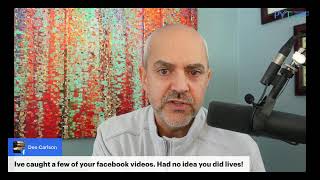
In this live podcast episode Jim Katsoulis explains how to control food cravings without relying on willpower by focusing on two core levers: hunger management and mood management. He argues that willpower collapses when hunger is extreme or emotions are heightened, so the solution is to keep hunger at a moderate, manageable level and to stay emotionally calm and grounded. He recommends eating whole, natural, high‑fiber foods that provide volume and nutrient density, which promote satiety with fewer calories. For mood, he promotes mindfulness, calmness, and a grounded mental state that creates a buffer against emotional eating. Throughout the talk he critiques traditional diet approaches that depend on willpower, deprivation, and short‑term fixes, and he introduces his “Program Yourself Then” system – a goal‑weight pyramid consisting of mindset, lifestyle, and eating skills, identity shifting, and daily skill practice. He emphasizes the importance of internal motivation, pleasure‑based eating, and long‑term skill development over quick fixes. The episode also includes numerous listener interactions, promotion of a free hypnosis session (“New Thin Me”), discussion of specific challenges such as menopause, and a description of his book “The Dow of Living at Your Goal Weight,” which integrates hypnosis stories into each chapter. The overall message is that sustainable weight control comes from re‑programming subconscious habits and thinking like a thin, healthy person rather than fighting diet rules with willpower.
Chapters
Everyone, welcome to today's program Yourself then podcast. Today we're talking about mastering food cravings without willpower. And that really comes down to two main things. I would say number one is managing your hunger. So if you're going to be able to manage your cravings without relying on willpower, the first thing you got to recognize is that you've got to manage your hunger. I don't care who you are, if, if I get you really hungry, you're not going to be able to manage your cravings. Your cravings are gonna just explode and you're gonna give in to them. That's how that goes. So you've got to be able to manage your hunger. And the sweet spot we're aiming for if you want to lose weight is, yeah, you're gonna feel a little hungry, right? When you reduce your calorie consumption from levels you have normalized to, yeah, you're gonna feel a sense of hunger. Obviously, the secret is not to feel too much hunger. When you over restrict, you get yourself so hungry you cannot control your behavior. Ultimately, you might be able to do it for a little while, I'll give you that. But eventually you're gonna overeat, you're gonna lose control. So managing your hunger is one of the most important things you can do. And I would say in terms of managing your hunger, some of the key things to focus on is eating whole natural foods. Because whole natural foods give you some really important pieces of the puzzle to manage your hunger. Number one, they take up a lot of space, which is a big part of what makes you feel full and manages your hunger. But they don't have as much calories in them. So eating whole natural foods full of fiber is one of the easiest ways to reduce calories while still feeling full. It's satisfied. The next thing is that when you're eating whole natural foods, you're getting a higher nutrient density and nutrient variety into your body. And so you're giving your body what it truly needs and craves, and you're satisfying those cravings at a very core level. So again, the more whole natural foods you eat in the forms of fruits, vegetables, greens, grains, beans, all these types of things, the more of them you eat, typically, the more satisfied you're going to feel. And again, the sweet spot is to feel satisfied, maybe a little bit hungry. That's the sweet spot, because that's where you can stay in control long term. You don't need to get obsessed with what you're doing because you just feel good and you tend to make better choices out of there. So the first thing to dealing with your cravings without willpower is to manage your hunger more effectively. The second thing is to manage your moods more effectively, more genuinely, because your moods trigger so much of your cravings. You've probably experienced this that you know, you're calm and relaxed and everything's fine, you're not thinking about food, and all of a sudden you get some bad news or you're going to fight with someone you care about, and now all of a sudden you just want to eat the whole, you know, eat the entire pantry. So your moods have an enormous impact on how you experience your cravings and the cravings you experience. And so if we want to go to a core level, you really, really want to start to practice managing your moods in a more genuine way. So what does that look like? There's kind of two sides to this as well. One is what you do to prevent getting overwhelmed by emotions, and the other one is what do you do once you are overwhelmed by emotions? Because that's going to happen sometimes. So the good news is both solutions, in my opinion, kind of stem from the same thing, which is mindfulness, calmness, groundedness, being more relaxed. And so the more you start to practice and develop and work on being more calm, physiologically, mentally, emotionally, that calm, centered, grounded space, the more you kind of practice being there, the more it supports you from going into really intense emotional states. You have a bigger buffer zone, right? And you kind of stay in this more calm, relaxed place. And if you do blast through that buffer zone and get into a peak kind of negative or peak emotional state that usually triggers you to overeat, you have a much greater ability to kind of bring yourself back down, reground yourself. And it's so important, right? Because again, you know, in your life, when you're calm and grounded, the food cravings you experience, the choices you make, they're much more in alignment with what your goals are. And when all of a sudden you get really upset or you get really peak emotional, it can be positive too, by the way, right? It could be a peak celebration mode, and that can trigger the overeating. So it goes both ways even. But either way, when you start to get good at kind of living in that more grounded, calm, quiet, centered space, you tend to experience less food cravings, and you tend to be able to make much better food choices moving forward. And if you do get triggered into a peak state, you have a much greater ability to kind of bring yourself back down into that Calm place where you're able to make those better choices. So keep this in mind because both of these, these strategies I share with you of managing your hunger, managing your emotions, these are strategies that are much deeper than just relying on willpower. Because the other piece, just to kind of drive this point home is if you get really hungry, if you get in a really peak negative state mood, your willpower disappears anyways. Have you not experienced this? When you get really upset or when you get really hungry, what happens to your willpower? So again, it's fine to sit here when we're calm and say, oh, yeah, I'm going to use willpower to fight against everything. But when you really reflect on the experience of going into those peak states of being really hungry in a real deep mood, you'll notice that your willpower just disappears anyways. So it's not to be relied on in those situations. And what I'm talking about here is a much more strategic, grounded approach to get you the results you want long term. It's much more realistic, I would say as well. So if you want to go deeper into this concept of being grounded and calm, click the link in my bio and go get the free hypnosis session I made for you. It's called the newfin Me. It's a kickstart session and it's designed to help you connect to the goal weight that you want to live at. And it's a very inspiring session. You know, that's why I made it that way. And not only is it inspiring, but it does exactly what we've been talking about in this training here, that it allows you to step into that more calm, grounded space and to operate from it. And I think that's really the core thing we're doing to change our weight is to change our mindset in the space that we live in. And when we live in a more calm, grounded space, it's just more natural and easier to make the choices that give us the weight and the body and the health that we want. All right, so I hope this helps you out. Go grab that session. If you're on TikTok, you can click my picture up on the top left and go get it. If you're over in Facebook, YouTube, Instagram land, I'll put the link in here now. Yeah, go grab that hypnosis session. What's up, Victoria? Victoria says yep. If I'm agitated state, I'm quicker to say effort. I'll just eat that cookie, of course. Right, exactly. Victoria. I mean, who. This is what I mean, you know, I talk about, I call it the holding your breath test. I find holding your breath to be fascinating because every time I play around with it, like, I'll start and I'll hold my breath. And I always start off so irrationally confident. I'm like, oh, this is easy. I'm gonna be holding my breath. I'm gonna be holding my breath for minutes. I'm like, I don't know if I'm ever gonna need to breathe again. And we get so irrational. And I feel like dieting's like that. You know what I mean? Like, you think about it like, okay, Monday, I'm gonna start. I'm just gonna be perfect, you know, Then you start starting it, and you're just irrationally confident. But very quickly, just like holding your breath, it starts dawning on you very quickly, you start panicking, you know, and time starts getting exponentially quicker. So you have to take that breath. And dieting feels the same way. So don't be tricked by that false sense of confidence in the beginning of your diet or that false sense of confidence that you feel before you've started the diet. That's the worst one. This idea that, that, oh, yeah, this Monday's going to show up. Oh, yeah, next Monday I'm going to start. Why? Because you tell yourself this story that, yeah, Monday's going to show up. I'm going to have this just unlimited amount of willpower. So starting Monday, I'm never going to make a bad choice again. And, and it's just not true, it's not accurate. You're gonna make a bad choice. You, you don't have unlimited willpower, you know, and again, dieters, right? So, by the way, so I was just talking about managing your, you know, managing your cravings without willpower by managing your hunger and managing your moods. But let me ask you, when you start a diet, how are you impacting your hunger and moods the first week of your diet? How is your hunger and your moods? I bet you're really hungry, and I bet you're in a shit mood when you start your diet. So once again, dieting has set you up to do the exact worst thing you can do, which is to get yourself really hungry and really in a bad mood. Those are the two weight loss saboteurs of all time. And that's what dieting is, an express lane to. Oh, my God, it's so crazy. You know? So, yes, if we're in an agitated state, yes, we're way more likely to say it. I don't care. I mean, who hasn't been there? Were you, were you calm and grounded and connected to your goals when you said it? I don't care. No, right. You were pissed. You were. You just had enough. You're sick of it. You were exhausted. You were overwhelmed. You were tired of it. That's the state you were in when you said it, you know? So again, managing your state, it's like, I don't know, I talk about this all the time and it's like, I hope that seems obvious, but if you have any questions, feel free to ask them. I am here for you. So Christina says they just had 5 ounces of cod. Nice. I had a fish sandwich last night. It was so good. Black and fish sandwich. Oh, man, I've had a fish sandwich in a while. I used to be the fish sandwich master. I swear I had a fish sandwich. It's a little bit further back in the day when I ate a lot more fried fish sandwiches, but I, I fried fish sandwiches across New England, but I kind of eased off on that. But anyways, yeah, last night's black and fish sandwich was so good. So that was good. But yeah, if you have any questions, feel free to ask them. Any questions are welcome. I help people because even if you're doing diets, I know I'm talking a lot of about diets, but listen, you know, it's kind of like hate the diet or love the diet. Wait, no, hate the diet. Love the dieter is kind of the philosophy I work under. I, I don't like diets. I. But if you're doing a diet and would like some help or suggestions with it, I'm happy to help you because again, it's very easy for me to, whatever diet you're doing, bring some of the insights from the program yourself thin world into what you're doing. And most likely they'll, you know, at the very least, they'll give you a different perspective on things and program yourself thin. Kind of, I think a simplistic way to kind of understand program yourself. Then there's the goal weight blueprint that we use in the program. But the main kind of philosophy of the program is the goal Weight pyramid. Right. Again, the whole program is about being at your goal weight. And so instead of just me giving you a meal plan and expecting that you're going to be able to just follow it perfectly, which I don't, I don't know, I mean, is, how can that be? How can you just expect that? You just need a plan. Writing down what you need to do, and you're just going to do it at this point. You know, if you've been trying to lose weight for decades and that's been your plan and it hasn't worked, why would it work now? You know, Anyways, so we program yourself, then we follow this goalway pyramid where we have mindset, lifestyle and eating. So in the program, we're looking to, in a strategic way, learn to think, live, eat like a thin, healthy person. Right? And so it's a, it's a much more robust, comprehensive system than what most diets are, where most diets are just telling you eat this way, which is fine. I mean, of course, knowing what to eat is a part of the process. But how can you're thinking how, how you're thinking about things, how you talk to yourself, how could that not be part of the process? Can someone tell me that? I ask this question every day. Is there anyone, how in the world could you possibly change your weight long term if you don't deal with what you're thinking in your head? Like, I'm just gonna ask this direct because no diet gives you any legitimate, realistic mindset advice. There's not one out there. And so what they're all basically doing, what the entire weight loss industry doing is, in a nutshell, is they're telling you what to do. They're either telling you what to eat and how to eat, or they're telling you how to work out. That's it. And then it's up to you, with your same brain that's been part of the problem the whole time, to take that, that, that's that way of being, and then force yourself to do it. And so regardless of what the plan you followed in your life has been, that the process looks the same from the outside. The, that you'll do it for a little while and then you stop doing it and go back to what you normally do. Right? Like we're trying to explain this in the simplistic way possible. You, you step into the diet, do it for a little while because it takes lots of focus and energy and concentration, and you do it for a little while and then you stop doing it and you go back to normal. And that little while might be a couple days, a couple weeks, a couple months, maybe a couple years even sometimes, but then you go back to what you normally do and you put the weight back on, and it's the same story over and over and over again. And no matter what diet you try, it's always the same thing, same experience. And so if I could give you nothing else other than this today, what if you took a step back and said, well, what's the common thing there? I've tried lots of different diets, so it can't just be the diets. What's the similar factor in all those situations? It's you. It's your brain. It's how you think about it, is it not? So I think that if you start focusing on that and you start improving that piece of it, that's where you start to get the results you're really looking for, okay? You're never going to find them in another diet, because the diets leave the main problem alone. You know what I mean? It's kind of like. It's like if your car. If you. If you blow a gasket and you change the tires, it ain't the problem. That's not the problem. It's nice to have new tires, you know, but the main problem is not being addressed. And with your weight, you've never even learned how to address your mindset. I ask this every day. You can't even tell me the name of a program or a person. That's well known. That's. That's going to teach you how to think like a thin, healthy person. It's going to show you have the mindset of a thin, healthy person. You can't even name a program, I bet, or a person. And that's crazy considering how important it is. Unless you think it's not important. How could you think that? How could you possibly think it's not important? You know, what you think? What do you think stops you? Is it not. Is. Has not every one of your weight loss attempts ended with the phrase it, I can't do this anymore? Like, do you not think that's your mindset? Anyways, what's up, Joyce? Joyce says I've had a much better understanding of my weight loss journey since listening to you and thank you. Well, thank you, Joyce. I appreciate you saying that. And that's what I'm here for. Again, this is my mission in life, is to help as many people as possible live at their goal weight. And I'm here every Monday through Friday to serve that mission and talk to you all for free, to help you as best I can. And I can help you. This is what I do, okay? I'm one of the best in the world at helping people live at their goal weight. I literally wrote the book on living at your goal weight. That's my name. And this is just a. This is Just an overview of the book. Right. So again, I got a different take on it. But so I appreciate you saying that, Joyce, and I'm happy for you because once you start to understand your weight in a more accurate way, guess what? Now you now have the ability to get better results. Does that make sense? So, great job, Joyce. Keep listening. And I appreciate you saying that. Carol says, I listened to a recording in which you described writing with prompts to help you move toward your goal weight. Would you elaborate on that? I want to try it. Um, yeah, well, writing with prompts, I mean, in, in essence, in my opinion, I mean, this, this whole book here, and this is part of the program though, so I want to make this clear. This is part of the program. Yourself then system is the goal weight blueprint. It's one of the main three parts of the program. But this is 144 page blueprint. It's literal. It's. It's meant for you to fill it out because it's a literal customized blueprint roadmap to getting to your goal weight and then living there. That's customized to you. And so, in essence, this, this whole book is prompts for you to figure out. Now, again, we go through. I was just showing you the goal weight pyramid here. Right? So we start. Let's just say we start with mindset, right? It's the most important part. So we start with motivation. The big question, do you know how to motivate yourself? Do you know how to get yourself really motivated to lose weight? Do you know how to. Probably not. And so this part here, we got a whole chapter that ask you specific questions to help you identify what truly motivates you. Okay? And you fill that out now. You got it. The next section, self image, right? Your identity. Big struggle for a lot of dieters because deep down you believe you're an overweight person. You believe you're an overeater addicted to food. Well, if you keep believing that, how are you ever going to live as a thin, healthy person? So a huge part of transformation is identity shifting. You have to start thinking about yourself differently, defining yourself differently, having a different self image, operating out of a different self image. And so we go through that process of helping you design that new self image. And it takes a while to make it internal and start believing it and operating out of it. But it starts by defining it. Who do you want to be? Who's the best? You. What are your strengths? What does your life look like when you live out of those strengths and on and on. You know, so, so those are kind of the prompts, you know what I mean, that we kind of go through. That's a good question though. I saw a tick tock question. There it is. User 83823 says, Yep, we really. Right. We really know what to do, but we don't. Yeah, exactly. I mean again, knowing I always say this, that, that, and this is such a crucial piece of, of understanding because it explains why you've struggled so much. But knowing something and being able to do it are two totally different things. You could, you could have never played a piano. You read a book on how to play a piano. You, and you have an idea of how to play it, but you have no ability to sit at the piano and play me a song. They're two totally different things. You could, you've never played golf before. You read a book on how to swing a golf club. Okay, well, you got some ideas about how to do it. You can't go and hit, you know, 300 yard drives now. You know what I mean? And so, yeah, you can read a diet book and you can understand the philosophy and you could agree with it and believe in it and all the rest of it. It doesn't mean you can live like that, doesn't mean you can just eat like that. Most of your behavior, most of your life is run on autopilot because of your subconscious programming. You're not built to be this mindful, aware person consciously making decisions all day long. You make over 200 food decisions a day. Almost all of them are made subconsciously without your awareness. That's how humans operate. And so, yeah, that's why we could know something and not be able to do it. And I think that's the big that. That to me is the cardinal sin of dieting is that they just tell you what to do, but they never show you how to get yourself to do it consistently. And so what happens is you get people that try and force themselves to do it for a little while and then run out of steam and again just go back to what they always do, you know, and that's what most people do. What's up, Kent? Ken, 16 months in and I still ask myself, what would the thing me do every day? Yeah, exactly, me too. Now Kent's in the program. See, Now Kent is 16 months and he's super successful with it because we're working on developing the skills of being a thin, healthy person. And what happens when you focus on skills every day? What happens when you focus on developing skills for 16 months. Imagine that you've never worked on. You've Never had a 16 month consistently working on developing the skills that keep you thin and healthy. Never in your life have you done that. That concept and idea doesn't even exist in your mind until I just said it. Probably. But here's Kent, 16 months in and again, 16 months of working on all this. And I know Kent, not only is it his goal weight, but he feels better. He's a better version of himself. He's living life on a higher level because he understands to run his mind. He's got the mindset, lifestyle, and eating strategies that support him to live a better life. So that's awesome, Ken. And I love that. Yeah, I, I, I asked the same question to myself. I'm constantly operating out of that. What's up, Carlos? Carlos says, love listening to your thoughts. You have helped me to lose £20 in two months. All right, Carlos, nice job. Proud of you. Little screenshot of that. That's my, that's, that's my, My goal for the year is to take I literally. I probably have up to thousands at this point, but I have so many testim that I just have sitting in a folder of mine. I've got to put them out somewhere. I'm going to do it. This is the year. But that's awesome, Carlos. That's great. Keep listening. And again, I'm sure you have it already, but make sure you get the free hypnosis session I give you it. Real important. Mari, how's it going? Hi. I joined your program Yourself Then program in November. The mindset of living now and every day forever at my goal weight has been key. I'm more aware of triggers and work than them into my life, adjusting at each meal. So, yes, that's awesome. Mary or Mari. Excuse me if I'm saying your name wrong, but yeah. Well, great. I'm glad you're in the program. And I get, I bet, too. And I love the people that joined in November because they got to go through the holidays, you know, with this program. And the beauty of program yourself then is it's built for your life. Right. Diets are not. Diets are just like this. You basically stop living your life. The diet, you know, and that's why you, you think of diets as a temporary thing, but in program Yourself then we went through the holidays and we might have put a couple pounds on, you know, but that's okay, you know, because we're okay with the ebbs and flows of life and most likely, you know, going through the holidays in this program, you're just more calm, relaxed, and enjoy the holidays more than you have in a long time. And you probably either lost weight or only put a couple pounds on and got right back on it again. So that's awesome, Ari. Yes. And the idea of operating out of your goal weight, self, that's pretty much the whole premise of program yourself thin is that most dieters, they start and they're like, okay, I'm overweight, I'm going to lose weight, and then I'll be a thin person and program yourself thin. We start literally day one. I give you the free self hypnosis session, the new thin me. I give that to you for free because that's how we start the whole program, by you clarifying in your mind, what is the goal? What do you want to look like, what do you want to feel like? Who do you want to be in your life? What do you want to weigh? What kind of health do you want to have? How do you want to feel? Right? What do you want? Let's get clear on that and then let's connect to it. Let's start realizing how amazing it feels to be the person you want to be. Who's the best version of you when you're connected to your strengths and operating on them? How do you act, how do you think, how do you feel, how do you behave? What kind of results do you get? How does that feel? How does that help other areas of your life? So we start with the goal now because it's inspiring and motivating. It feels good and we use that energy to drive us forward. See, dieters are just, they're, they're whipping themselves, right? Talk about the carrot and the stick, right? You can either you can whip yourself with a stick or you can kind of chase the carrot. I mean, they both have their place. But I think weight loss has been overwhelmingly stick based on. Right. And so if you're a dieter, most likely now, you are just in your head, beating the shit out of yourself 24 hours a day, trying to get yourself motivated, and you're wondering why it's not working, because it's miserable. So again, listen to that hypnosis session I give you and try a different way. Just see it. It's 10 minutes and you'll feel it. You'll feel more relaxed than you felt in a long time. You'll have a clearer idea in your mind of the goal that you want to achieve and you'll feel connected to it. You'll feel inspired. You'll feel motivated. You haven't felt that in forever. You know, it's not rocket science. It's just that you've never learned how to do it this way. So that's awesome. Yeah. So we operate out of what we want. We start from the with the end in mind. 7 Habits of Highly effective people. We start with the end in mind and we step into who we want to be now. We experience it now. And we use that as motivation moving forward. This works so well. This is what every food ad does to you folks. What are they doing? They're showing you the experience of eating the food. So you experience it now and it motivates you to go get the food. It's just basic advertising. It's not. It's. Oh, hypnosis. Hypno. Listen, every single ad you see is hypnosis. It's not some magical mystical thing. It's something that is basic psychology that they never teach you because then they can't control you with it, and so they give you dumb diet instead. And listen, every diet you know of. I'm gonna say every diet. But all the big diets you are subconsciously referencing are all owned by big food companies. The diet industry is just a branch of the food processing industry. Weight Watchers was owned by Heinz. Jenny Craig was owned by Nestle Atkins Food Products owned by the Same company owns an Pretzels and Cinnabon SlimFast owned by the same company that owns Ben and Jerry's ice cream. These companies don't give a shit about your weight or your health, what you're eating. They just want to take your money when you want to try and lose some weight, fill your head with rocks while you're there, and then send you back on your way to eat the shit that you've always been eating. They have no. No genuine desire to help you out. And I'm the 100% polar opposite of that. I have a complete desire to help you out, which is why I'm here every single day talking to you and helping to move you forward. So that's great. Mary Joy says I got your book. All right, well, thank you. Yes. This book is something else. Right? The dow of living your goal weight. I love this book. It's 40 chapters. Each chapter is a page or two. Each one is a hypnotic story. So this book does take you through the program yourself then system in a real easy and accessible way, but it's just. It's designed to change you as you read it. You know, very, very powerful. Cheryl says, do you have Any tips on thinking like you're a thin person? A few prompts to motivate. That's a great question. Yeah. So, like, I was just saying it, but I definitely would listen to the hypnosis session, but yeah, I guess, because what I was exactly. That you put yourself into, you know. Okay, so. So what, what Kent was just referring to a minute ago is what would the thin me do? Right. So this is one of the core mantras of program yourself then. There's eight core mantras of program yourself then. And one of them is what would the thin me do? And that question is modeled on, I don't know, it was maybe 20 years ago, is real popular. But there were people who say, what would Jesus do? Right. And the idea of that question is that when you asked it, you'd kind of elevate your thinking to a higher level. Right. Obviously, say, oh, what would Jesus think about that? How I would, you know, and you kind of elevate yourself to look at things that way. Okay. And so when, when we do that, we're always in a state, you know, we're all multiple personalities. And so the questions we ask dictate so much of how we're thinking about things. And so when we start to ask, what would the thin me, what would the thin and healthy me do in this situation? When you start to think from that perspective, you start to act from that perspective. And so most of you dieters just ignore the inside piece of it. And it's one of your biggest mistakes. And so when you start to influence what you're thinking, again, program yourself then is an inside out approach to transformation and change. Inside out. We start with the thoughts, we end with the weight. And in between is the behaviors, right? Yeah, that's what we're doing, is we're operating out of that place. What would the thin and healthy me do now? Again, you have to have a sense. What's the thin and healthy me? It's not just a visual thing of what you look like. That's another big mistake people make. The real secret to connecting to your goal, of who you want to be is to tap into the feelings. How would it feel to be at your goal weight? What would that freedom feel like, that energy, that health, that happiness, that sense of pride, that sense of success, that sense of momentum? If you were at your goal weight in a way that was comfortable and easy and felt good, how would that help other areas of your life? How would it help your relationships if you had more energy, felt better about yourself, had more Patience felt successful, felt like you were thriving. How would it help your work? How would it help whatever is important in your life? How would it help if you were operating from this higher level physically, mentally, and emotionally? You know, so that's the secret. It's not just a visual thing. It's not just always imagining yourself in a bathing suit. That's the weakest form of motivation, and it's the main one that the diet industry pushes on you. But the real secret is to go inside and really connect to what it's like to be the person who you want to be. That's where the real motivation is. So those are kind of general prompts that's more of a guidance than specific questions, but it's a good start. But again, if you make sure you get the hypnosis session I give you, because I take you in a lot more detail with it. Nutrafit. How's it going? Hello, weight loss expert. It's the menopause stages that challenge weight loss. Yeah, I mean, listen. Now, first of all, let me just take a step back. I've been doing this professionally for over 20 years, and I will let you know that 98 of my clients have been menopausal women. So I just want to start there. That. No, I know I'm not a woman. I know I haven't gone through menopause. I know that. But at the same time, my entire career has been built around those women, and they've been in some phase of menopause before, after, during, whatever. And so, yes, that's absolutely a real thing. It's a. It's a challenge for most women. It's a physical reality that you have to address and deal with. No doubt. But most people have to deal with certain physical realities. Okay. So I've dealt with type 2 diabetics, insulin resistance people, Hashimoto, thyroid issues, PCOS, all of it. Okay. And all of these people, when they start reducing calories over time, start losing weight. So menopause is no, in no way a lifetime sentence of being overweight. And if you don't believe that, you can go look at the Japanese women who maintain the same BMI their entire lives. They go through menopause, too. Okay, so what's usually more at stake? And again, let me just restate it one more time. There are absolutely physiological shifts and changes that may slow weight loss down when you go into menopause. Potentially, even when that's the case, you can still lose weight. You may not lose it as quickly, but you can absolutely still Lose weight. If you reduce your average calorie consumption over time, even if you're menopausal, your weight's going to start to go down. So we need to start from that place because if we don't, we kind of leave ourselves a little escape. Shoot. Where when things get a little tough or we get a little slow, we say, oh, it's menopause. I'm never going to lose weight. And I just. That's just not true. Okay, so yes, it is a real challenge. But at the end of the day, ultimately, even if you're menopausal, if you get yourself, if you get yourself to get good at thinking, living and eating like a thin, healthy person and running your mind, even if you're menopausal, you're still going to have much greater control over your weight. User823 says, how do you access your hypnosis? Great question. If you're on TikTok, just go click the picture of me up on the top left and click the link in my bio. It'll bring you right to the opt in page. It takes you 30 seconds to sign up for that and then you'll receive the hypnosis session a minute after that and you get going with it. It's completely free, you know, and if you've ever experienced hypnosis, you really owe it to yourself to experience it. And no better person than me because I'm one of the highest paid hypnotists on the planet, you know, so you might as well start at the top. Ken says, what would that then me then help me do. Helps me feel proud of my food decisions. That feeling now gives me pleasure than food. Agreed? Agreed. Yeah, see? And program yourself then. The irony with a lot of people don't realize is most dieters look to restrict pleasure, reduce pleasure in order to lose weight and program yourself. Then we look to maximize and increase pleasure in order to lose weight. That may not make sense to you, but. But that's what we're doing and, and it works a lot better as you can imagine, right? Because when something's truly pleasurable and you get more and more pleasure out of, the more you do it, the more you want to do it. It's not rocket science, but the diet industry has taught you that in order to lose weight, you need to feel less pleasure and deprive yourself and restrict. And so at this point, if you're like most dieters, you associate weight loss with pain and deprivation and suffering and less pleasure. But in program yourself, then we're doing the opposite. We're experiencing more pleasure right from day one, too. Even before a pound comes off, we already start to feel more relaxed, calm, better, proud, happy, excited, all these wonderful things. And then we feel that way. And that's what's driving our choices and our forward momentum to our goal weight. So that makes sense. What's up, tabby cat? Tabby cat says, I refuse to let menopause define my weight challenge. Yes, but attainable down 66. I love that tabby cat. Screenshot time. So proud of you. And that's what I mean again. And I just want to say it again because I know I need to repeat myself. I. Menopause, obviously, is real, and there can be challenges with your weight attached to it, primarily being that it might be slower than it used to be. That's the big challenge, typically. And it sucks, you know, but listen, you know, I think most people overlook this, that weight loss is inconsistent and unpredictable in the short term, and people can lose wildly different rates of speed. And, you know, if you don't believe that, go look at some metabolic lab studies where they put a group of people into a metabolic lab and track their calories and give them the same calories and same calories out for all of them, and they lose drastically different amounts of weight over the same time period. And I think people need to really internalize that because I think a lot of people sabotage themselves because they're always measuring against other people. You can't. You're a one of a kind person. Your journey is your own, your timeframe's your own. So don't measure against other people, all right? Because it's a guaranteed way to start to feel worse. Right? Comparison is the thief of joy, as they say. It certainly is when you compare your weight loss to other people. So, yes, when you're menopausal, there is a good chance that it might be slower than it was, slower than what other people experience. Who gives a shit? Who cares how fast or slow it is? See, when you're obsessed with weight loss, you mostly care about how fast or slowly you're losing it. But when you're obsessed with living at your goal weight, you don't give a shit. Because if it takes me three months to lose the weight, three years to lose the weight, I don't give a shit. I just want to get to my goal weight and stay there. I hope that makes sense. But most dieters are trying to rush the process, and when it's not going as fast as they want, that's One of the main things that kicks them off the plan, they get discouraged, you know, but if you start to look at it as a forward path where each and every day you get a little bit better again, that's where, like, 10, 16 months from now, you're in a completely different spot than you've ever been in your life. Because as a dieter, you've never spent 16 months consistently working on your weight. Most likely, maybe once, you know, but. But even then, you didn't develop skills. You just got. You were on a streak. You were on a long streak. There's a difference between being on a streak and genuinely internalizing and getting good at something. Hope that makes sense. What's up, Sherry? Sherry says hi, Jim. Working on optimization right now. I have focused on breakfast. I find that eating my apple first before coffee and oatmeal or toast helps with satiety. Grateful for that focus. Yeah, that's super, Sherry. And that's what I mean. Sherry's on the program, so it's really. It's a strategic approach on how to change your weight. And so we break things down into kind of different components and we optimize them, you know, So, I mean, again, she's just doing what we do in the program. So the eating. The eating part of the pyramid here, awareness, structure, optimization, that's it. We cycle through those. We become more and more aware as we walk the path. We structure things more and more, so it's just easier and more natural and automatic. And then we optimize the whole process, so it's as easy and enjoyable as we can possibly make it. But if you take that approach into it, that's. You've never done that with dieting. You've never once done that with dieting. Dieting, you're trying to just jump into it one day and do it perfectly. It's a completely different process. It's like. It's like as a diet, you're like a parrot, you know, okay, so the parrot can say the words. That's fine. It doesn't know what the hell it means. It's just saying sounds. The parrot's not talking to you. It's just making noises that sound like words. You know that, right? And so as a dieter, you're not. You're not becoming a thin, healthy person. As a dieter, you're just pretending to be a thin person for a little while. And you're not even pretending to be a thin person, you're pretending to be a dieter. It's a whole different thing. But it's a different thing when you learn to develop the skills. You know, I look at weight loss, or I don't really even call it weight loss because the weight loss is just a phase, you know, on our way to getting to our goal weight. The real goal is to, is to live at our goal weight. I think of living at your goal weight as like playing the piano. And if you decided if you truly, genuinely wanted to play the piano, what would you do? You get a book, you get a program, you'd hire a teacher and you'd start learning pieces of the piano. You learn chords, you learn scales, and you'd learn the octaves, you'd learn some melodies, you'd learn a couple rhythms, you'd learn some right hand practices, you'd learn, some left hand practices, you'd learn. You'd break it down into little things and you'd get good at them and you'd practice them. And what would happen over time as you did that is you would practice something, practice something. It would start to be automatic. The more you practiced it, the more automatic it would become. And as it became automatic, that would free up space for you to practice something new on top of what you've now learned to be automatic. And so a year, two years, three years later from now, you're practicing more advanced things. But all that advanced work is on top of all the things that you've programmed into your muscle memory, your subconscious mind, the things you've made automated, now these things are on top of it. And what we would say someone who's a good piano player is just someone who has more and more subconscious program of how to play the piano. They know how to do the chords automatically, they know where the scales are automatically. You know, they don't have to think about it as much, and so they're able to play at a higher level. Do you think of your weight like that? Do you, do you break your weight down into mindset lifestyle, eating, how to run your mind? Do you break your weight down into that? Do you think of the skills you need to develop to be a thin, healthy person. The skills of being hydrated properly, the skills of being relaxed appropriately, the skills of getting the proper amount of sleep, the skills of nourishing yourself on autopilot. So all these things kind of just happen automatically. I drink the same amount of water every day. Every day. I drink one and a half to two of these every single day. How do I do it? I do it on autopilot at this point. I mean, you know what it feels like, it feels like brushing my teeth. Right. You all brush your teeth. And it's mostly an autopilot process. You just do it when you do it. And that's how my water is. That's how my hydration. That's how my. My relaxation is. That's my yoga is. That's how my meditation is. That's how my nourishment is. These are all skills that I've programmed into myself, so I pretty much do most of them just kind of on autopilot. So all my subconscious programming is driving me towards my goal weight. All of your subconscious programming right now, if you're overweight is driving you to be overweight. And when you go on a diet, what you're trying to do is you're trying to fight against that subconscious programming, but that's never going to last long. Your brain's not built to work that way. So the secret. You're never gonna. Oh, you're never gonna be able to fight and win against your subconscious mind. So the alternative is to program your subconscious mind to do the things you wanted to do to bring in the direction you want to go in. Hope that. Hope that makes sense. D says, I've caught a few of your Facebook videos. Had no idea you did lives. Yes, I do do lives. I do live every single day. And you're absolutely right that I, you know, hey, listen, I do a lot of stuff. I got so much going on. I'm really kind of. I'm in a constriction phase in my business where I'm cutting out things so I can focus on a few core things really well. But you did hit the nail on the head of. One of the most ridiculous things about me is that I do a live every single day, Monday through Friday, and I never really promote it to my email list. My people. It is a little bit of a secret. It's stupid, but I'm gonna fix that. But, yes, I'm here every Monday through Friday, usually around noon Eastern, to help you all out. I do this every. I've been doing this for over three years. And every one of these is a podcast. So if you missed the live, you can listen to the podcast if you choose to. And the podcast is called Program yourself then. And we are on. What number are we on? Just to give you an idea. 690. 690 of these. All right, so it's been over three years that I've been doing this. I do this every day. Okay. And I do this. This is my. My service to You. My mission in life is help as many people as possible with their goal weight. And so I do this to help you live as long as you can and have the best quality of life you can possibly have. And I'm happy to help you move forward in any way that I can. So anyways, glad you're here and glad you know that I do lives now. And yes, that is my plan to get the word out on those three years. I never promote the lives. It's. I don't know. But again, you know, I, I say that to you and I, I say that to you in efforts of really just showing you that when you getting better at stuff is a process. You know what I mean? And dieting doesn't, doesn't honor that. Dieting sells you this idea that tomorrow you can just change absolutely everything all at once. And it's been my experience in virtually every area of my life that pro that the change in getting better at things is a jiggity jaggedy. It's not a straight line of success, you know, it's ups and downs and plateaus and, and you just have to keep going. But it's like, that's what I mean. So I share this with you that, you know, I know how to market, I know how to do stuff. But it's just one of those things I just let slip through the cracks for three years. It's silly like on one hand, but I'm, I'm highlighting my silliness because we all do silly shit that we can't explain. But I don't beat myself up about it. I laugh about it, realize it's kind of how things work and, and you know, work to get it better, you know. What's up, Lori? Lori 2.0 is happy with her weight, is pain free. I asked myself, what does Lori 2.0 do? She's thin and healthy. She's my buddy. No more struggle. I love that Lori. Yeah, again, Lori's in the program, right? So it's like. And you always see it, you see on these lives, right? There's, there's people that are in the program and not in the program. And the people in the program speak totally different, you know, and that, that's the beginning of transformation. Speaking differently. You've got to change the way you think about your weight, weight loss, eating, your lifestyle, all the rest of it. Super job, Lori. That, that is, that's awesome. And I love that you wrote that in and said that. So that's super so. And again, you know, I mean like that's that inside reference point. It's not just, she didn't say, oh, Lori, 2.0 is just X amount of pounds or 2 is thin. There's more to it. You know what I mean? What does she do? Right. And again, there's a visual aspect too. Thin and healthy as well. But there's what does she do? How does she act? Right. What does she think? What does she feel? There's a much deeper sense of who you're going to be beyond just visual on what you're going to look like. And I think that's really important. All right, I got to get out of here again. If you are not in my world, make sure you go click the link. In my bio, someone says, how do I reverse sleep apnea? I don't know how you reverse it, but I will say absolutely. One of the things almost guaranteed to help it is losing weight. You know, getting down to your goal weight or close to it very often has a positive impact on sleep apnea issues. Okay, not always because nothing's 100, but a lot of times. So, yeah, if you're not in my world, make sure you get in my world by go and get the free hypnosis session I give you. You can click the little picture of me up on the top left. If you're on TikTok, bring you right to the click the link in my bio. Go get it takes 30 seconds. If you are on Facebook or any place over there, I'll put the link in here again. So you can get this, but you can go and it's completely free. And I give you a couple other gifts as well. But the hypnosis sessions kind of the main thing to get you started. 10 minutes, you get to experience it. I think you'll like it. Yeah, and it's free. Go check it out. And if you like this, I'm here every Monday through Friday, usually around noon Eastern. Pop on any questions you have. I'm happy to help you out and move you forward as best I can. And if you can't make the lives, it's also a podcast. You can go to any podcast platform, start programming yourself then, and you can listen to it anytime you like. A lot of people done that and a lot of people are losing weight doing just that. All right. And then finally, I do have a book out. The dow of living at your goal weight. This book, I promise you, I guarantee you. Now, I knew this before, but now it's been validated. We got over 76, five star reviews over on the place people buy books. I'm not going to say because I don't want to get restricted on TikTok even though I'm finishing up. But you can get this book if you want to. I will guarantee you this is the best book on living at your goal weight that you will ever read. Okay? This, I believe, is the best weight loss book you'll ever read. The most mindset, the most focus on soft skills of living at your goal weight that you'll ever read. And it's life changing because each chapter is a hypnosis session. So this book changes you as you read it. All right, so go check this book out. You can get the Kindle book version for like $2.99. The physical version is only 10 bucks. So this is, you know, something and a half. So check that out. And other than that, all right, have a super duper day and we'll talk soon. Bye.
More from Jim



Weight Loss Visualization: Wake Up in Your Dream Size #programyourselfthin #weightlosshypnosis



What If You Pretended to Be Thin for One Hour? #programyourselfthin #weightlosshypnosis




