Moderation Almost Always Beats Abstinence
Jim Katsoulis argues that moderation, practiced as a skill, beats total abstinence for lasting weight loss. He walks through mindset shifts and behavior change techniques like awareness and small progressive steps, then applies them to Thanksgiving. The conversation covers GLP-1 drugs, intermittent fasting, and how habits actually change.
Chapters
It's.
Foreign.
Welcome to today's program Yourself Thin Podcast. Today we're talking about moderation almost always beats abstinence when it comes to weight loss. And unfortunately, most people think they need to abstain from foods completely in order to lose weight. But if you zoom out a little bit on your weight loss efforts, you'll probably find that that hasn't worked well for you. That, yes, if you stop eating fattening food, sugar, carbs, whatever thing you pick, if you completely abstain from it, yeah, you might lose weight for a little while, but you're not going to stick to it. That's the key thing. And I think at some point you got to be honest with yourself, because if you've been trying to lose weight for years or decades and what you've been doing hasn't worked, it's probably a good time to try something different. And I think one of the main things you can do differently is to cut the shit with the abstaining completely, the cold turkey, the completely cutting things out, and start to work on moderation. Now, I know I can already hear you, right, because most people say, well, I can't moderate. If I eat one cook, I eat the whole bag. And while this may be true right now, if you work on moderating, if you get good at moderating, you can improve at it. Because moderation is a skill. And just because you can't do it just when you want to right now doesn't mean you can't develop the skill. I mean, if you sit at a piano, if you've never played piano, you sit the piano, you can't play the piano. But if you start taking lessons and practicing, you'll be able to. So just because you can't do it at first doesn't mean you can't do it, just means you don't know how yet. And moderation, I find to be the same thing, that as you practice moderation, how do you practice moderation? Well, you practice it strategically and mindset wise, right? You need to develop the right mindset. You need to develop the right strategy that let you become better at moderating your food, at being able to have less of the foods you love. Right? That's kind of the idea. And I will take that all day long. I will all day long take having less of the foods I love and being able to be at the weight I want to live at than either eating all the foods I love and being out of control of my weight or not eating any of the foods I love and being in control of my weight. So I will take the moderation option all day long. And I find that most people will because it's the most comfortable, grounded, centered way to live your life, you know, and moderate what you're doing. Because if you try and abstain again, and this is what dieting has taught you, what most likely will happen is you will be able to abstain for a little while. You will completely skip the cookies, ice cream, pizza, carbs, whatever, whatever it may be for a little while. And then at some point you will start again and you will go right back to the same amount you always ate. Remember, you don't need to abstain anyways. Right? Weight loss is not about completely shutting down certain foods. It's about reducing your average calorie consumption to the level that it brings you to your goal weight. And you can do that by consuming the foods you love. Of course, you have to consume them differently. But again, most people are going to feel a lot more comfortable when they dial down their favorite foods as opposed to completely cut them out and never eat them again. So as Thanksgiving approaches, I hope you keep this message in mind. You can go into Thanksgiving and eat your favorite foods and still stay on track with your weight. And the way you do that is you, you consume those foods differently. You go in there with a different intention, that I'm going to go in more calm, grounded, and make better food choices, but I'm still going to enjoy the foods I eat. And I think if you play around with that mindset and that approach over Thanksgiving, I think you'll be shocked, you know, because it's not that hard to eat better. It's hard to eat perfect. It's hard to be out of control with your reading, but it's not that hard to eat better. And that's what I'm talking about. So I hope this helps you out. And if you want some more support with thinking this way in order to accomplish this, click the link in my bio and go get the free hypnosis session I made for you called the New Thin Me. And it's designed to kickstart your weight loss, your motivation, your excitement about your goal weight, getting excited about it and getting there. So go check that out. There's also a free training. I'm also giving away a thriving during Thanksgiving training and hypnosis session. So if you sign up today, I'll be sending another email out about that training. Again, the training is five minutes long. The hypnosis session is 10 minutes long. And if you listen and watch those two things before Thanksgiving and use it. I think you'll be surprised how much easier it is to eat well even during Thanksgiving, which is literally an overeating holiday. But again, when you have the right things going through your mind and the right strategies, what you can do is pretty impressive and amazing. So I hope that helps you out. If you have any questions, feel free to ask them. Any questions are welcome. Any weight loss questions. It could be about Thanksgiving, be about diets, struggles, things that have worked. Anything you want to mention, that's what I'm here for. My mission is to help as many people as possible live at their goal weight. And I know a lot of people don't really want to think about weight loss during the Thanksgiving especially. But that's why I like, I like talking about this during Thanksgiving because it's a perfect opportunity to really reinforce a realistic approach to, to.
Your weight. And I think that this is a good litmus test because there's going to be a lot of people that are going to break their diets this week and be off track until January 1st. You do not want to be one of them. You know, even if you get off track on Thursday or for this weekend, you can get right back on track again. That's the most important thing you can do.
Stone July says. How can I sign up? You can sign up if you go to program yourself then dot com. There is a link right in the navigation to go get the free hypnosis session. And I'm going to put this. I don't know if you'll get this, that you're over at Instagram land there. Well, actually I can add this here, hold on a second. I'll put the link right in the page for you.
And those of you in Facebook land will get this. Whoops.
Trouble typing today. I'm freezing. I was outside. It's outside for a little while at a turkey giveaway. A Patriot turkey giveaway. Very nice program they run. So here you go. Did you get that? Hey, there it is. Yeah. So you can go click that if you like. Rob says you do an excellent job. Thanks. Well, you're welcome, Rob. Thank you. Appreciate that. But yes, it's a good time to go get that free hypnosis session because as I said, I, I'm giving away that Thanksgiving training as well. Thriving during Thanksgiving. And again, you know, one of the main things I like, I know people want to think who the. Who wants to diet on Thanksgiving? You know, like, like, I just can't think of too many worse things to do. Than that.
You know, who wants to diet during Thanksgiving? And you don't have to. Right? Again, Thanksgiving is about moderating. It's about enjoying yourself, obviously, giving thanks and gratitude. But for most people, it's about enjoying the food too, but enjoying the food moderately. That's where the sweet spot is. The sweet spot is not in stuffing yourself silly. And I think it's an opportunity to.
I just, again, I just think Thanksgiving is such a great opportunity to practice a different approach to your weight and to do it on Thanksgiving. I know, it's like a. Makes your brain hurt. You know what I mean? He's like, what Thanksgiving? I'm not talking about losing weight on Thanksgiving, you know, I'm talking about enjoying yourself on Thanksgiving and get right back on track.
You know, it's just ideas you don't normally think of. Again, dieters, y' all been conditioned to think in a very ineffective way. I'll put it that way. Jody says, awesome hypnosis session. Thank you, Jody. Yes, that is a great hypnosis session. And again, I give that to you all for free, along with the five minute training, you know, and it's, it's good stuff. I mean, it's just, I always say, like, if you get a chance to practice some of this stuff on Thanksgiving, why not? It's free. And, and you can see how this approach, I think it just really shines because it's one day. So you can really kind of see how it works because a lot of you are assuming Thanksgiving's coming and you're already assuming you're going to eat yourself silly. So that's the program. You're already programming yourself. I always make this point that with programming yourself, then you're always programming yourself. So when I, when I program yourself, then when I show you how to program your mind technically, I'm not showing you, like, I'm not teaching you how to program your mind. You already know how to program your mind. You're already doing it. You've already been doing your whole life. The difference is that I'll point out how you're doing it so you can change up the way you're programming your mind. Because you're always going to program yourself. You're always talking to yourself, thinking a certain way, reinforcing certain things that lead you to behave a certain way. And when it comes to Thanksgiving, a lot of you are already presupposing and rehearsing and imagining you're going to eat yourself silly on Thursday, you know, and so you're going to go into that situation. It's a place you probably been to people you know you're going to be with. Overeating you've already done, and you're already anticipating and imagining you do the exact same thing on Thursday. And so that becomes the pre programming that when Thursday shows up, you're kind of already in that flow, right? You're already kind of prepared and ready to go to overeat. And so the first step to changing how you eat on Thanksgiving is, is to change the way you think about it. And you can start to imagine yourself Thanksgiving. What would make it even better? How could I enjoy my Thanksgiving even more? And a lot of times the answer to that question is to eat differently. Enjoy your family, enjoy the friends, enjoy the people and things you're going to do that day, enjoy the food, but also don't stuff yourself silly. And that's a sweet spot for a lot of people, but a lot of people never really consider that because we get caught up in the. The Thanksgiving trance of just eating so much, you know, that we can barely move. And I get it, I get the joke of it all, and I get it's funny, but does it really feel that good? I don't know. Again, it's a relative term. Because, listen, if you struggle with weight and struggle with eating, you've normalized to being full, you've normalized to overeating.
So that's a thing in and of itself. But I can tell you once you start paying attention between when you overeat and when you eat just the right amount, that eating just the right amount feels so good. And in my opinion, is the real secret to getting the most pleasure out of food. I think what happens is in our culture, we have been conditioned our entire lives to associate pleasure with food, with quantity. So if we want more pleasure out of food, we have to eat more. And that's how we think of it. And so the idea that we're going to eat less feels like less pleasure. And the idea that we're gonna eat as much as possible seems like the maximum amount of pleasure. But that's not true. It's not true because when you eat the maximum amount, you feel like shit. Yes, you do. Physically, mentally, and emotionally, you feel like shit. Stomach hurts, can't move, you're tired, lethargic, you're upset with yourself, you feel frustrated, you feel heavy, you feel stuck. This is the truth of it. And when you eat moderately, you feel lighter, happier, healthier, more energized, and on and on and on. So again, That's a fundamental part of programming yourself then, to realize that way overeating is not pleasurable. No, it's not. No, it's not. And you're not going to bullshit me that it is. It's not. You think it is because you've been conditioned to only think about the eating part and not the consequence part. But the second you start to pay attention to the consequences of your eating decisions, it's very sobering. It's very sobering. And one of the first things you'll realize is, holy shit, I've been thinking incorrectly. I've been thinking eating as much as possible is the most pleasure I can have. It's not true. The most pleasure I can have is to enjoy the foods I like and to eat them moderately. That's the sweet spot, Carmen says, Love this approach. Have tried literally every other approach in diet. This one seems much more long term. Yes, Carmen, it is much more long term. I'm glad you said that. Because the biggest thing that separates Program Yourself Then from diets is our focus on what our goal is. And so every single diet and weight loss program you've all ever done is always about losing weight and getting to your goal weight. Getting there. Program Yourself Then, is about living at your goal weight. And those are two totally different things. Let it be known because of this that for most people, most dieters, they're going to give up the excitement and pleasure of the food. They're going to trade for the excitement and pleasure of the scale going down. But the same problem exists that as soon as the scale stops going down, you get to your goal weight. Now, where are you getting your pleasure and excitement from? This is the big question that dieters have no answer for. And I believe it's the core reason why 95% of dieters that lose weight put it back on. Because they never figure out how to feel excited and motivated without all the food and without the scale going down. And that's a core part of Program Yourself things. We take the weight loss, we wrap it in personal development for exactly this reason that we need to have our motivation attached to something bigger than just the weight. And this is why I, in front of you Today, more than 30 years ago, I lost over £50. And I'm as excited and motivated and focused on this process for myself now as I was when I was losing weight. And the reason is because I think of this process primarily as one of me becoming the best version of myself. And so a lot of my eating choices, they're not just about what weight I'm going to be at. They're about what makes me feel the best, what energizes me, what makes me feel the happiest, the healthiest, the most motivated, the most momentum, and on and on and on. And so I'm fired up and motivated because every day I keep getting better and improving and growing and evolving and it's a never ending path and it's really interesting and exciting for me. And there's always new things to achieve and new excitements to uncover and unlock. So it's always fresh and new when you frame it this way. Whereas most people make it just about weight and just about getting to their goal weight. So yes, welcome, Carmen. And again, if you're, if you're new here, make sure you go click that link and go get the hypnosis session I give you again this week. I'm giving you a free thriving at Thanksgiving training. It's five minutes long. It's five minutes. I. Is it five minutes? How am I giving you so much good information in five minutes? That's what I'm wondering.
This is true. I'm gonna look this up. It might be 10 minutes, might be 10 minutes, but either way, it's just good information. And I think what I like about the Thanksgiving one is it just gets you thinking, let's see.
How long is this thing? No, it's five minutes. Wow. I'm getting good in my old age. Yeah. Five minutes. That's a good training because that's got everything in it. Wow, look at that.
Let me think of something else. Oh, guess I didn't do that.
Yeah, so go, go check that out.
Because yeah, if you like this approach at all, go test out for Thanksgiving because I love that too. Because not only you get to use the, the technique and just see how it and all, but the other thing is that you get to realize that you can even eat better on Thanksgiving. And you know, it doesn't matter. You can stuff yourself silly on Thanksgiving or eat great. It doesn't make a difference. Thanksgiving is not what's controlling your weight. However, it can be a real feather in your cap if you go into Thanksgiving and you make good, relatively good food choices. Notice the keyword relatively. You're not going to eat better on Thanksgiving than you eat today. Okay. But again, we want to compare how we eat Thanksgiving this year versus how we've eaten in the past. And we want to improve it. You know, anything's better. Yeah. And the session's 10 minutes. Yes. Jodi said that the hypnosis session is 10 minutes, and the. The video training's five minutes.
That's a. That's a fast video. I'm not gonna lie. Cause I. I go through a lot. There's a. There's a number of slides in there. So I must have. I must have just flown through that training. But anyways, the key part is in that training is I show you how to use the program yourself then method to program your mind to have a great Thanksgiving. And so it's a nice way to just kind of practice it. So check it out. What's up, Jenny? He says, thank you so much. You're welcome. You're welcome. That's what I'm here for. Again, this is a mission in life for me. Those of you that don't know. My father passed away of a heart attack when he was 54. So for me, weight is a much bigger thing than just how you look in your clothes. It really is life and death. How long you'll be alive, your quality of life while you're here. And so for me, this really is a mission.
Bookworm says the hypnosis before going to bed didn't work. Dreamt of marshmallows. My pillow was gone.
Sometimes you gotta listen a couple times and remember too. And I make. I think this is important, that the hypnosis is very powerful. There's no question. But.
The hypnosis really is a supplement. I want that to be crystal clear. Something I learned early in my hypnosis career is that sometimes people would look at me like I was going to put a magical spell on them. And while hypnosis can seem magical, it's not magic. I can't just make people totally different just by hypnotizing them. That's not. That's not real. Okay. So hypnosis is extremely powerful to reinforce ideas and put ideas in your mind and begin to shift the way you're thinking, feeling, and behaving. But at the end of the day, ultimately in the program yourself then world, the core technique is the program yourself thin method, which is really revolves around the reader rehearsal technique. And so this is a technique you use yourself. It's a mental rehearsal technique you use at night to program your mind. And it's you doing it because at the end of the day, you're the one that has to run your own mind. I think that's the most important piece of you getting control over your weight is getting control over your mind. And the program yourself then method is built around the redo rehearsal technique to give you that power and the hypnosis sessions really reinforce a lot of that. So again, in the program there are, I believe there's over 80 hypnosis sessions that you get access to over the eight weeks. Well, you get lifetime access to them but, but over the eight weeks they're kind of dripped out sequentially. So each day you get a five minute new five minute one. Each week you get a new ten minute nighttime one. And listening to those, you know, again there's good and bad sessions, you know, what can you do? And when I say good and bad sessions for you, right. Some of those sessions are going to hit harder, resonate more than others, you know. So again, I think that's an important point to remember though, because I have the number one hypnosis program on the planet for weight loss. It's not even, there's not even a second place.
Let it be known. I know all the hypnosis programs and I could. They're clowny, they're fine. I love my, my colleagues, I appreciate them trying to do what they're doing, but it's just nothing. There's nothing like this. There's no other. I've never seen any other eight week hypnosis program where you get a, you know, a new session and five minute one every morning you listen to and a ten minute one at night where you're bookending your day. I've never seen anyone bookend, you know, have this bookend approach like program yourself then does. And on top of that there's a hypnosis library with over 25 sessions in it. So the library alone is more than you'll ever get with any other hypnosis for weight loss program I've ever seen. But that's not, that's just an extra in this program. So I know what I'm talking about when it comes to hypnosis and weight loss. And I can tell you that a lot of times hypnosis on its own is not going to do the trick. You know, it certainly helps. It almost always helps because it's going to relax you, calm you down and you're getting good ideas put in your mind. But long term, you have got to learn how to run your own mind. It's absolutely crucial and I don't see any way around that unless you're just really lucky. So keep listening to sessions.
It's so much spam. I get so much spam calls and.
Through different apps. It drives me crazy. I don't know if you'll get that says yes, the hypnosis is great. Loving your daily email info as well. Good dreaming of marshmallows. Yeah, I got weird dreams. I like that. I will. That's something. I always say that with the hypnosis sessions. People ask me that a lot of times. They'll listen to them at night before they go to bed or as they're going to bed. Do they still work? You know, absolutely. Because again, if you, if you were dead asleep and I go and put a hypnosis session on next to you, it's not gonna do anything. Okay. But if you're listening to a session while you fall asleep, I think it's magical because you're passing through this hypnagogic state where your imagination is really going wild. And I think it's a wonderful time to hear positive suggestions because you could bring them right into a dream and they may impact you more.
So, Mel, Melancholy, how's it going? Melancholy says, my family is quite hedonistic about food. It's almost rapturous for them and I just don't get it. I have trouble because my thing is not the food but the numbing it gives. I have to see everyone on Thursday and I'm not looking forward to it. I'm sorry to hear of that. Melancholy. I know there's a number of people out there too. You know, we get the positive side of holidays sometimes, but for a lot of people there's also kind of a downside.
People you're going to be with or people that you no longer can be with, you know. So I understand that the holidays can be a double edged sword for a lot of people.
I think you're on the right path though, Melancholy, by kind of reflecting on it, you know. And again, in program yourself then we follow the goal weight pyramid and it really starts with the mindset and moves up into eating. But the number one thing with eating is awareness. And so for you, Melancholy, I think you're right on that right path of becoming aware and paying attention to how your family.
What your family's relationship with food is, you know, and noticing that the hedonistic nature of it, you know what I mean? Like, like this, this, this obsession with it, right? As you pay attention to it sometimes in some ways that can be curative because it starts to illuminate some of the challenges you might be dealing with by either saying, oh, I have that or I don't really have that. It's more about numbing for me. But either way you're developing awareness. And we want to develop awareness initially because we use that awareness to kind of drive us towards the solution, you know. So my big question, or I guess I would say to you, Melancholy, I'm going to assume you're already signed up for the hypnosis session. I know you must because you're here regularly. So I know you've gotten the hypnosis session. Already got my email list. If you haven't, you should. But anyways, I made a Thanksgiving training and a hypnosis session, but I would definitely watch that training, listen to the session. It's about 15 minutes, but it will address a lot of the things you're kind of dealing with and right to the point of I have to save it on Thursday, I'm not looking forward to it. Even in that situation. We talk about that even, because that's a common thing. A lot of people, you know, again, there might be certain family members you don't want to be around. You know, it's like you can love people and not want to be around them. So I get it. But the big question is not to, in your mind, keep imagining the worst case scenario because that's what we tend to do, right? So it's not unusual. Maybe. The last Thanksgivings are typically stressful. Let's just say, for example, there's a lot of, you know, combativeness and anger and just issues, whatever, it doesn't matter. It's got different situations. But Thanksgiving, you don't really love it. People there trigger you all this situation, whatever. And so if that's the way it's kind of been, what happens is your mind reflects and remembers how it has been in the past and that projects on the Thursday and says it's going to be this way Thursday. And so now what happens as we move closer to Thursday? Well, we feel stressed now because we're thinking about Thanksgiving, we're thinking about stressful. It's going to be a tense. It's going to be with all parts we don't like. And so even now, a couple days, as it approaches, we're stressed. Stress, stress, stress, stress. Imagine ourselves overeating, overeating, overeating. And so we're programming ourselves. We're literally imagining Thanksgiving being stressed and overeating. Thanksgiving comes and what do you know, it's stressed and overeating. So I understand there are real issues. Okay, so I'm not saying you're just going to ignore and pretend like everything's just going to be great. What I'm saying though is say you've got, you know, that relative who needles you let's just say. And so instead of just assuming that that relative is going to needle you and you're going to get upset and then eat everything in sight, take a step back and say, okay, I know there's this relative kind of needles me and annoys me and triggers me. How can I deal with it more effectively? That's the cornerstone of the whole approach, is to give yourself that little bit of space to say, wait a second, I'm a, I'm a full grown human here with a full grown human brain. How do I want to handle this, this stressful situation, how do I want to handle this? You know what I mean? Even your family, how do I want to handle it? What's the best case scenario for me handling this situation? I don't want to deal with you See, so we're acknowledging it. We're acknowledging. We're not pretending. We're not saying, oh God, oh no, no, we're not. We're not living in, you know, the misery, projected misery of it, remember in the past now much it sucked. And projecting the future. We don't want to do that. Okay? We want to start asking questions, how can I handle this situation the most effective way possible? And what that is, That's a solution oriented question. We're focusing on a solution to it. What could be a challenging situation? We'll acknowledge that there's challenging situations and then we're going to ask the magic question, how do I want to deal with that? What's the best way for me to deal with that? And that's the question most people never answer because before they ever get close to that question, they've already got sucked into the drama of the scenario. And so a lot of you are dealing with that too. You got kind of dramatic, triggering unpleasant situations you're heading to on Thursday and you're, you're dreading it the whole time. That's where you want to stop. Acknowledge the challenges, but then ask the magic question, how can I deal with that more effectively? And if you think that way for the three, four, five week days before Thanksgiving, how can I handle that person the best? How can I do this the best? How can I eat the best? How can I do this best? How can I make it easy? How can I make it enjoyable? If you keep asking questions like that, you reveal new strategies, new approaches, a new mindset. It's life changing. It frees you out of the prison. You see, this is such a good example of understanding that we all live in our own little mental prisons. When it comes to weight loss, you all live in a diet prison that was put there by the diet industry, you know, but you can escape it quickly by thinking differently. That's the beauty, right?
Melancholy says, what I love about you is how you deliver such powerful truth with kindness. Thank you for that. You're so helpful. You're welcome and I appreciate you saying that and that's nice to hear and I like to think that that is something I'm okay at. You know, again, I've done a over 6,000 private weight loss sessions. So, you know, you do things you do, a lot of you tend to get better at, you know. So I appreciate you saying that and I wish you the best for that too, Melancholy. And I hope you really take what I said to heart and I really hope you go and get the training and the hypnosis session, folks. I'm giving it all to you for free, okay? Just click the link in my bio or go to program yourself, then get the free hypnosis session. Take you 10 seconds to sign up for that. And then for the next couple days today I'm going to send it. Tomorrow I'll send it. Probably Thursday morning, I'll send it, I'll send you a link right to this training. It's free. It's a five minute video training I made for you. Again, I'm, I'm racking my brain for how I got so much training put into five minutes. But okay, it's really good stuff. And then there's a 10 minute hypnosis session you can listen to test it out. Yeah.
But yeah, if you're all worried about Thanksgiving at all, you should definitely test it out because you get to see firsthand how it works.
But if you have any questions from Jenny says hi, 62 year old woman. Semaglutide peptides have changed my whole life on every level, body, mind and spirit. Great. Super duper.
I am definitely like, you know, what am I gonna say? I, I'm not a huge fan of the GLP1s, you know what I mean? But I respect their power and I think that they're another option for a lot of people, you know. So I know you hear a lot of glory stories about those medicines right now and I have people in the program that are on them, they're using them. So I, I'm, I'm here to be supportive at all times, but I just want to push back a little bit because hey, listen, it's a program yourselves, my podcast. So I'm talking about natural holistic Ways to change your weight. And so that being said, I'm going to give a counterpoint to when I hear glory stories. And so I appreciate you Jenny. I appreciate your story and your experience. I love that. But for the people, because I know weight loss so well that I know people that are struggling to lose weight will hear a thing like that. And, and again, Jenny, I have no reason to believe that Jenny is not a real person who, who they are. But I've been doing this for a while too. And I also get bullshitters as well. I have no reason to not believe Jenny that, that the GLP1s have completely changed her whole life. And everything.
That being said though is even if you said here, so I've been doing keto and then I've lost 50 pounds, has changed my whole life. I've come, I push back the same way that because I always want to make a counterpoint to this that again, I have nothing against GLP1s. However, when you see some glory story about it, you have to understand there's a context there, you know, and so yes, for a lot of people have been struggling with their weight forever to do the semaglutide, it feels amazing. For the first time in their lives, they're not thinking about food constantly. Okay? And the diet, the pharmaceutical industry would make you think that that's the only way in the world to change food noise, to change the way you're eating, to change your weight. And that is not true. That is not true. You have to understand the entire population, the way they're trying to lose weight is dieting. So dieting without question is a established failure. It does not work. They've studied it for over 100 years. Dieting does not work. But the only way people ever try and lose weight is dieting or surgery and now or the semi glutide. And so dieting doesn't work. We know that. But that's the only way people have ever tried to lose weight. When is the last time.
That you all even heard about approaching your weight with a mindset, lifestyle eating based approach? And the answer I already know is never. And so I respect that. The semaglutide was so, so life changing for you. But at the same time there are downsides to it. The downsides being the obvious ones. I think that you have to stay on it forever or else the weight comes back that you know, you haven't transformed the inside out. You know, you have to take this medicine forever. It's expensive, it may be inconvenient and at the end of the day you didn't really learn any of this stuff. So I say as a counterpoint to that that everything has costs. Everything. And as I was saying yesterday, program yourself then has costs. The costs are that it takes effort and energy and work to learn all this and to do it. This is the blueprint. You go through 144 page blueprint. So yes, that's work, that's effort. Program yourself is not for everyone. It is for people that are overachiever, perfectionist, action taking people. But that's the cost there. But again, to put a program yourself in success story against a GLP1 success story. Program yourself didn't smoke some every single time because it's an inside out transformation where you're truly learning how to think, live and eat like a thin healthy person way that really resonates with you for the rest of your life. So I say that just to give a little bit more context, you know, but, but good for you, Jenny. I'm happy for you and I hope, I wish you continued success with it.
Jude says your way is too complicated. That's fair too. That's totally fair. I get that and I think that's true. And I don't even try, I'm not trying to hide that. And I, you know, part of the reason I do this too, I mean I really do it for.
This is a mission for me. You know what I mean? But I know for a fact program yourself that isn't for everyone. I know this for an absolute fact and that's why I say I'm not against GLP1s. I think GLP1s for, for someone who doesn't want to put the time, effort or energy into this. Right then I think GLP1s are your best bet. I think the GLP1s are better than the surgery for sure. So, you know, again, I see things within context and I'm not, I, I've got my opinions on it, but who cares? You know what I mean? There's a lot of people in the world. So yes, my way is too complicated for a lot of people. It absolutely is. I would not disagree with that. I think it's a certain type of person that thrives and program yourself then. And I make that very clear from the beginning. I never sell this as just like, you know, you know, magical success. You know, I make it very clear what you're getting and what's going on there. So I appreciate that. Jude. What's up, Sherry? Sherry says that's so true. How can I get the most pleasure out of the food is so much deeper and so much more helpful. It's changed how I celebrate, for sure. Yeah. And Sherry's in the coaching program, so we were talking about that. It was fun to see you use that firsthand in real world things. I mean, Sherry used that during her birthday when she went out to eat for her birthday. And it's a very powerful strategy. How can I get the most pleasure out of food is such a magical question. Because most people just assume the answer to that is deed as much as you can and it's not true. And once you realize that, internalize it, it is quite, quite a transformation. So I appreciate you sharing that, Sherry. Kathleen says, what is your view on intermittent fasting? Blocking six to eight hours a day to eat.
Again? You know, it's one of those things, the golden rule of program yourself then is there's no right or wrong, there's only what works for you. And so I've met enough people that have thrived on intermittent fasting to know that if you love intermittent fasting, if you love only eating for six to eight hours a day and you look forward to it and you love it and you're feeling great, you're getting great results, then knock yourself out and do it. Program yourself then is really about figuring out a way that you can live with long term so that you can stay at your goal weight forever. And so that being said, most people that I've dealt with now, you have to understand, I've got a different point of view because I got the people that intermittent fasting was not the right answer for. Right. So I got kind of a certain view on it. But I think for a majority of people, intermittent fasting is too extreme, it's too intense, and they jump into it too fast. And so from what I see for most intermittent fasters that I work with now, it's the people that didn't work for is that they tried.
They tried intermittent fasting. And what ended up happening is the last three hours of the fasting, they would start getting obsessed with food. They were starving, they were hungry, they were stopping themselves from eating. So when the window started, then they were overeating. And so in a weird way, intermittent fasting, if it works for you, great. But if it doesn't work for you very quickly, can start to become a training ground for binge eating. So watch out for that too. And I think the big issue I have with intermittent fasting now, I intermittent fast, I don't Call it that because I figured this out a long time ago. I call it nighttime fasting. I don't fast for the magical 16 hours, which is bullshit anyways. We usually stop eating around 6, 7 at night, start eating around 7 o' clock the next day. So I get about 13 hours maybe. But I organically, naturally came upon that over 30 years ago and I built up to it. So I started saying I used to eat pretty much right up until bed. And I said, okay, let me make that a bigger timeframe, so I'll stop eating earlier before I go to bed. And I made that time bigger and bigger until eventually I stopped eating around 6, 7 o' clock at night and go to bed. And so. But I worked up to it. And that's the magic when people diet. And again, you have to understand, we'll use this as an example. The problem with dieting is not the diet itself. The reason all the diets fail. Every diet, by the way, every diet fails. There's not even one outlier. There's not one diet that rises to the top as being effective. Isn't that a crazy idea? A hundred years of dying? There's not one diet that stands out as the best. You could make an argument for Weight Watchers, and it's simply because they have a social component too, by the way, because Weight Watchers philosophy of diet is nothing. It's goofy. You're basically just counting points with fancy colors and you're making it like a game more. But there's no there there. The thing about Weight Watchers is the social component. And so you can make an argument that's the most effective diet ever, but there's no effective diet. If you think there is, please write it in the comments. Tell me the effective diet if you, if you think there is one. There is not. Okay. And so, you know, the problem with dieting though, is not the specific philosophy of it, right? So the reason Keto sucks, vegetarian sucks, vegan sucks, you know, south beach sucks, Weight Watcher sucks as a diet. If we're talking about diets, the reason they all suck equally is because of your diet or mindset. So it's not the philosophy of what they're telling you. You might have Carnivore saying just eat meat. You have a vegan saying just eat vegetables. They're both equally bad as a diet, because as a dieter, you're gonna jump into each of them 100% on day one, right? And so if you're gonna do Carnivore, you're gonna just eat Meat starting day one. That's it. You're gonna do vegan. You're just gonna eat vegan food from day one. That's it. There's the core problem of dieting is you're going to jump into it 100%. And so people do intermittent fasting. Of course, they can't ramp up. They got to dive right into it. And I can even hear, you know, even six to eight hours. So now we're going to go from eating, you know, 12 hours a day to eating six hours a day, which is a 50% reduction. That's extreme. That's very overwhelming to the system. It's a huge shift in shock to how you live. And so I think that's a core reason why most people can't stick to it and won't don't stick to it. So, again, the process of intermittent fasting, I think, is wonderful. I think giving your body a break from eating for an extended period of time, I think is one of the greatest gifts you can give your body. Approaching intermittent fasting as a dieter, I think is terrible. And it's not going to work. You will do it, you will get sick of it, and you will stop doing it. That. That's most likely the path that awaits you if you attempt that. That's the path that awaits most people. Now there are some people that do it and they thrive with it and love it and great, good for them. So go test it out. If you love it, stick with it. If you don't love it, realize it doesn't work for most people anyways and consider everything I said and move forward with it. Karen says true. I've been dieting since I was in junior high. Now at 60, I'm finally eating like a thin person. I've lost 30 pounds since June 2024. Fifteen more to goal weight. That's so awesome, Karen, proud of you. I'm so proud of you. And I love hearing these stories. That's. The majority of my clients are between the ages of 55 and 65. I would say if I did narrow it down, most of them, almost all of them, are between 45 and 70. But I love. It's my favorite thing. I live for this. People that have been struggling for literally decades, most of their lives. That your story? Unfortunately, Karen, is so common. I can't tell you the number of women I've worked with that have started dieting when they were in junior high. I can't even tell you how many started when they were 12 years old. Their mom would bring them to Weight Watchers, you know, and. But those are the people that, those are the people I do this for. I telling you, because it's the people that they never give up. You know, they're willing to put the work in, but they've just never been shown the right way to do it. And it's so exciting to me to watch people that have been at this for 50 years failing all of a sudden get a handle on things and really start the transformation. So I appreciate you sharing that, Karen. Thank you. You.
Cash fed says, how do you eat like that? Do you work out? I'm not sure what you mean. How do I eat? Like what? The way I, the way I'm able to eat, the way I eat at my goal weight, is through practice. I practiced and I know that's a weird concept when it comes to weight loss and eating. The idea of practicing seems strange because dieting teaches you that you already know what to do. You just need to get yourself to do it. Just force yourself. I don't ascribe to that at all. And I think it takes practice working out. I work out now very little. I mean, I do push ups and stuff, but I have not worked out consistently for over 30 years. I've not dieted once over in 30 years and I've stayed at my goal weight the entire time. So you don't need either one of those. You don't need diets or workouts.
As I lost all my weight very aggressively and not. And now I have an ed. Do you have any advice?
Yeah, I mean, that, that happens, you know, I mean, my advice is that I'm focused on the long term, so I don't give a shit about short term weight loss at all. I'm not impressed by someone losing £50 in a month. And the whole diet world is. And it's not your fault. You've been conditioned your entire life to really measure the weight loss, plan on how fast you lose the weight. So you've been conditioned to really focus on the short term weight loss as opposed to long term success. And that's the core part of the mindset problem. You need to shift your perspective because there's no end. You know what I mean? There's no rush. Jesus Christ, what's your rush? You know, there's nowhere. It's like if you're gonna brush your teeth and it's like, I'm just gonna brush my teeth so good tonight, I don't have to brush them again. That feels weird in that context. Right. But your weight's the same way. How long do you want to live at your goal weight for? Right. And I know you want to live there forever. So this is a forever marathon. And so realize that, accept it, and then move forward with that knowledge that this isn't about how fast I can lose the weight, it's about how long I can lose the weight for, you know, and you can only lose weight long term if you are able to do what you're doing. Long term, if you hate what you're doing, you're not going to stick with it, you know. So my advice is to start thinking longer term. And that cures a lot of stuff. What's up, Vicki? I think he loves these perspectives.
Oh, you like color my shirt? Yeah, It's a nice one, right? It's so soft too. This is a comfortable, comfortable. It's good too. I told you I was outside, it was cold. So I'm that cold out. It's only. It's 44 degrees and I'm feeling like it's freezing. But anyways, so Mario, Mario says, I've noticed the more I care about losing weight, the more obsessed with food I am. It's so weird. Not unusual. Not, not unusual at all. Getting obsessed with losing weight absolutely triggers a counteractive, a counterintuitive response. I've noticed that. Paradoxical. That's why I'm programming yourself then. I do everything I can to make the weight loss secondary. The more you focus and fixate on the weight, the harder time you're going to have. Almost guaranteed. I've got something poking me with this shirt and I'm about to freak out. I never have that, like the seam of my T shirts lately. It's like someone has implanted like a dog hair in every seam of my T shirt.
He's driving me insane. I literally threw a shirt out the other day. It was like a new shirt too. I liked it, but I was like, I've tried now six times. I washed it. I couldn't get rid of this thing. Look at it. Look at the light. Couldn't find it. So forget. I'm getting rid of this shirt. Now all of a sudden, this shirt's doing it. Turning for. It's me. What's up, Christy? Christy says, see my sister in law in a GLP1 and she hasn't changed her nutrition at all. She's eating candy and drinking alcohol. But she's skinny. What happens when she goes off? She's learning nothing for me. I'd rather prefer to work with My mind. I get it, Christine, again, I'm not judging anyone. Everyone gets their own path. And. And I. I'm happy for anyone, any path they're walking. But those are real questions. A lot of people on the GL1. It's an easy way. I get it, I get it. Everyone loves easy stuff. Obviously. I understand that. I think we're going to find the GLP1s are not as easy as we thought they were. You know, part of that is just the history of weight loss. You know what I mean? Come on, we've seen this so many times. This stuff's different. No doubt about it. GLP1's different, but it's not a perfect thing. And I always say this, that the GLP1s, right now, at this moment in time in history, this is the best you're going to think about the GLP1s because they don't have the full effects of them yet. You know what I mean? And so the. The negative stuff is coming. The first big negative thing of GLP1s is that you get 16 months of weight loss. That's not well put out there, okay? But all the studies, all the different GLP1s have shown 16 months on average of weight loss. And then that's that. Now you have to stand GLP1s forever to maintain what you've lost. Now, for most people, that may not make a difference, but if you're starting at a high weight, 16 months of weight loss may not be enough to get you to your goal weight. And so that's tough, you know, I mean, like, so there's a number of people that start obese, end up obese, and now they have to be on a GLP1 forever to. In order to maintain an obese level. Okay? That's one thing. Second thing is we don't know what the subtle other effects of GLP1s are. We don't know. But the big one that I always think about with the GLP one is that I get, like, when people are losing weight, they don't give a shit, okay? So people go on GLP1s and they start to feel kind of nauseous. They dial it down. All of a sudden they're just below nauseous. But you always feel full. So think about this. We've all been there, right? So imagine when you feel full and you're not nauseous, but you're like, you're not hungry at all. And the idea of food, you're just like, okay, now imagine feeling that way all the time. Now, let's imagine your life and you're going to go on vacation. You got to go to a fancy restaurant for a birthday dinner. You're going to have your. Your aunt's going to make her special meal that she makes. So now you're looking at a life where you never really enjoy food. How much do you enjoy food when you're full? So this is something I think about a lot because I think a lot of people use food emotionally, good and bad, okay? But I think it's a core part of being a human now. I think people. It's so new. People don't give a fuck. I don't care. I don't care about my aunt's pie. Who gives a shit? I'm losing weight. I get it. Right again. We will give up the pleasure and excitement of the food for the pleasure, excitement of the scale going down. I get that. But at some point, you're going to get to a place where the scale stops going down, okay? And so now the excitement of losing weight leaves. Now, I know what you think. You say, jim, I'm going to be at my goal weight. I'm going to be so happy and excited every day that I'm at my goal weight, that that's going to be the motivation. If that was true, then why did 95% of dieters that lose weight put the weight back on?
And I will tell you that that is an illusion. That's not true. There's a thing called hedonic adaptation. You've experienced it with your car. You got your car in the first month, it was like, oh, my God, my new car. It was amazing. Eventually became your car. You moved into your new place. Oh, my God, I moved. I'm in a new place. Eventually became a place you lived. We normalize. And so people are going to normalize to their new weight. And now they're going to live this life where they never get to look forward to really enjoying food the way they used to. That's my big concern. We'll see what happens because we're getting to that point. We are right about now hitting that. That magical point where a lot of people are at 16 months. And so we're starting. The real phase in my mind is where we get to the point I want to talk to people that be on GLP1 at their goal weight for a year, two years. Those are the people I want to talk to and I want to see, you know, because you have to. There's a cost to everything. There's Nothing. Nothing is free. And so some Jude says, well, your shit seems complicated. I'll take that. I bear that. Okay. But GLP1, we can't just make it. See, it's not a miracle. It's miracle like, I'll give you that. But it's not a perfect solution because you're walking around feeling full. You're walking around, all of a sudden you have no food noise, but you have no food enjoyment like you used to. That's good for weight loss. Granted, that's a different quality of life. That's a different way of going through life. And I don't think people have really thought about this yet. And we will see. We will see. I know. With Program yourself, then we have to deal with this. I went away a couple months ago, you know, when my birthday went to a big fancy Italian dinner. It was amazing. Recently, I just started making sourdough. It's amazing. So I enjoy food, if I would say, as much, but I think I enjoy it more. I enjoy food as much, if not more than I ever have. And I'm at my goal weight. I think that's important. If you care about food. People say, oh, Jim, I can never do. You do. I love food too much. Bullshit. I love food. I love food. But I love being on my goal weight, too. I found the sweet spot. That's where I live. GLP1s. I don't know. I am. So I'm curious about this. And don't tell me if you're currently losing weight on GLP1. I don't want to hear you say I love it doesn't matter to me. I don't. I don't want to hear that again. You have to understand, I'm not. I'm not being a jerk to GLP1 people. Back to I don't give a shit about fast weight loss. Program Yourself then is built on the backs of people that have lost weight and kept it off for at least two years. That's the big difference. Over 30 years ago, I began studying those people, people that had lost weight and kept it off. Those are the people I got obsessed with because I'm obsessed with living at your goal weight, not getting there. So the same things with GLP1 is going to be a maintenance. I know it sounds strange. Maintenance is going to be an issue with GLP1s. We will see. Because once you stop losing weight, that injection, that money, that feeling is going to take front and center stage. Right now it's second stage because you're just focused on the weight loss. So I don't know. You know, that's real stuff. And we'll figure it out. But we got to take into account.
Taja says you can do it side by side, even if you're on GLP1, as you do need a philosophical attitude to food, which is what you have. So together works best. Yes, I agree, Taja, a thousand percent. And I respect the people in, in my program that are on GLP1s learning this way. I, I think that's smart. I think that sets you up for success. I got again, I want people to everything natural, but I get it. I, I am not anti medicine at all. And so I think it's a smart move to do GLP1s if you're going to do them and to do a mindset component as well. Because the GLP1 is not changing your mindset. It's lowering your food noise. It's lowering your hunger. That's it. You know, it's not teaching how to eat different. It's not teaching how to run your mind. It's not teaching how to become a better version of yourself. It's not teaching you how to deal with your habits, deal with your emotions. It's not doing that stuff. And I think that's important stuff.
Let's see here.
Yep. John says patience is also key. Absolutely. Patience is absolutely key. Rebecca says if I'm in a steep calorie deficit, do I need a maintenance break? I'm 200 pounds overweight.
I mean, honestly, if you're doing steep calorie deficits, I think you need all. You're gonna need all kinds of breaks. I hate. I don't. Probably the wrong person asked this question. I just, I, I was just describing this today. I, I'll describe it with a brand new metaphor for you.
I was speaking with someone who just had a big surgery and belly surgery on top of it. All right. Colon surgery. And so it's been months of their hunger being off. Okay. And so I said this is metaphorically the same thing dieters do, because you can think of your hunger like a pendulum. Okay. And if we do a steep calorie deficit, it's kind of like we're holding about, oh, steep, steep, steep. Big calorie deficit, big calorie deficit. At some point, that. And now because you built up so much energy, now it goes up like this. So steep calorie deficits to me are like this. Getting a surgery and having your hunger be all weird for a little while. Your hunger's like this. Okay. Because you weren't hungry at all for months, and now all of a sudden, your hunger's coming back and now you're gonna be extra hungry. Everything's relative. So if you're gonna do a steep calorie deficit, you're. You're all excited now because you're losing weight, probably, but then at some point, you're gonna start to feel the effects of that steep calorie deficit, and it's going to break. And now you're going to go on this other side and your hunger is going to go wild. So I don't know how to deal with that other than me. And program yourself then. We're looking to avoid this pendulum swing, and we're looking to create this pendulum swing. Let's reduce 10 to 20% of your calories now. We're staying in this little manageable level. I think as soon as you start over restricting, it leads to overeating at some point. I've never seen an alternative. I personally never experienced an alternative to that. So to me, when I want to lose weight, I'm looking to 10 to 20% it. I'm looking to stay under the radar. So, yeah, I'm sure you'll need a maintenance break at some point. You're probably feeling. I don't know how long you've been in a steep calorie deficit, Rebecca, but you're probably starting to feel this builds up tension the longer we stay up here. Right. So steep calorie. This is 10% calorie deficit, 20% calorie deficit. 30, 40, 50, 60, 70% calorie deficit. And you're building up all this pressure, and at some point it just feels really hard to do. And if now we're over here, maybe that won't be the case. I hope it's not, but I don't. It just seems like you're. You're setting that up. That's my thought on that.
Working.
Merl says I cannot restrict.
I mean, people say that all the time. And I don't know what you mean by restrict. You know, could you restrict 10% of your calories you typically eat? Yeah. You could. Could you restrict 20%? Yeah, absolutely. I can't restrict. You can restrict. Right. First of all, you're probably thinking restriction. It's way too much. Right? That's probably what you mean specifically.
So, you know, that's how I'd look at that.
Line. It says the price of GLP1 every month. For live. Yeah. For life. Yeah. I agreed. And I will tell you one other thing about GLP1s, if you don't know, because we're in the very beginning of it. And I know for a lot of people, one thing they're anxious about with the GLP1s is the price of them and that it can be taken away. You know what I mean? Somehow. And I will tell you, the price is not stabilized at all. Because what's going on, I know this. I'm a town meeting member, so I get to hear what's going on in the town here. One fascinating thing that happened is over this last year, 2024.
Health insurance went up 40%. 40% in our district, okay? So for all our town employees, teachers, we pay a health insurance for them. Health Insurance went up 40% in a year. You know, the primary cause of that increase was the weight loss medications. Okay? So they were very liberal in prescribing these. This is what they do. They get you hooked on stuff, okay? But now we looked at that, we said, we can't. We can't afford it. We can't pay that. So now we go back to the insurance company. You can't cover those anymore.
So I. I got a feeling you're going to see a lot more of this, because insurance companies, I mean, they're skyrocketing for a number of reasons, but this is a big driver, is these weight loss medications, they're very expensive. And so I think, you know, if you're on them and you're. They're being supported insurance wise, you know, if you don't have, you know, type 2 diabetes, if you're doing this purely for weight issues and you don't have, you know, medical reasons underneath it. I don't know, you know, I mean, the writing's on the wall that it's. It's very expensive to cover these. So I don't know. We will see.
Sue says, I've started to really plan my three meals a day, no snacks, and one sweet thing after lunch, and really focused on feeling satisfied until next meal and going for a walk daily. At least I feel I will succeed. Well, sue, so you must be in the program or you just listen a lot. That's. That's our whole plan. That's our whole program. That's wonderful. And again, the one thing I want to share with you, Sue, I'm glad you feel like you will succeed. I think that's wonderful. And the other thing I want you to remember, though, is that this is a practice. You're figuring it out. The key thing for you, sue, is to realize that you don't know, you're not sure exactly how to eat. That really works for you. You're figuring it out. And I think that's a big distinction for people because I think a lot of dieters think they know everything they're supposed to do and then they get in the mode of just trying to force themselves to do it when the reality is that you have to figure out what you're doing, what really works for you. So great job, Sue. Super proud of you. That is a wonderful strategy and approach. Lucy says stopping maybe. Yes. Being bigger than my belly has helped. Smaller portions has helped so much. Yes. Smaller portions is really part of the way to go. Right. Portion control, obviously, but the way you're practicing and developing your ability to portion control more effectively is the key. Okay. Do it strategically and you'll be shocked at how much better you can get at it. You know.
He says they're expensive like other name brand pharmaceuticals. Because of Big Pharma. Yeah, absolutely. I mean, it's an expensive medicine. You know what I mean? Like it's, it's complex, it's expensive, it's branded. So it's not there are going to be any generics of it anytime soon. It's a whole thing. But it's expensive and the insurance industry is going to correct for that. They're not going to pay for it unless people are going to pay for it. And like I said, I'm just giving you on the ground stuff. The second we heard that 40% increase and we dove into it, that was cut it off. We can't. Can't pay for it. You can't pay 40% for that. And so he cut it right off. So again, this is going to happen across the country to some degree. So I know there are people worried about their supply of GLP1 and the cost of it. And I think that's a legit fear. You know.
Mary says, my friend lost £100 on GLP1. Has to stay on it and take an anti nausea med to eat. Yes, there you go. So again, losing £100 is really good for you. Okay. So that's why I'm not against GLP1s. You're not going to hear me say, don't do it. Okay, I'm going to give you context because I think everything's contextual, but that's the main point. Has to take an anti nausea medication to eat.
That's what I'm talking about. So again, we have not gotten to the point and people don't think this one anyways. But we haven't gotten to the point with the GLP1s where we're getting a, a big population of them who are taking them to lose weight specifically. Right. Because remember, GLP1s were designed for diabetics, type 2 diabetics. And it had the effect that it helped people lose weight across the board. But they haven't done large scale trials of people just using it for weight loss. This is a real time trial happening in real time. And I think one of the big issues is going to be the quality of life people are left with. I don't know if people are going to want to go through their lives feeling right on the edge of nausea forever. I don't think if they want to go through life and they can't celebrate and enjoy cake the way they did, or an Italian meal or pizza or whatever your favorite food is. I don't know. I don't know. I could be wrong. Maybe, maybe he won't give a. And that's fine too. You know, I'm not sitting here saying one's right or the other, but I'm just trying to bring up a, a conversation about geopolitans. You don't normally hear that perspective. And I think it's worth being considered.
Uzo says, how can my brother can eat everything and not gain weight. We literally eat the same and I'm obese. I hate to say it, Uzo, but I, I bet you literally don't eat the same. I, I hear that every single. I, I can't think of a person I've ever worked with who didn't think that they ate the same as someone else. Then it's not fair. And by the end of us working together, they realize no, they, they ate more. So I, I just. Is it impossible? I guess nothing's impossible, but it's extremely unlikely that you and your brother are eating the same amount and you're obese and he's at his normal weight. I, I would, I would bet a million dollars that's not the case. Just so you know, you don't literally eat the same. Stop telling yourself that because it's blinding you to how you're, where and when you're eating more than him. And by the way.
Because I think this is an important conversation, because most dieters walk around with some story like this. I wish I was thin or my friend. They eat whatever they want. They don't gain any weight. That's one of the most toxic, disempowering, sabotaging beliefs and ideas you can have, and it's not true. If it was true, then GLP1s wouldn't be effective. Folks, GLP1s do not magically change your metabolism so that you're eating the same. And then now you're just losing weight. They cause it so that you feel kind of nauseous right below nauseous and full. And so you just don't eat as much. And so your consumption goes down and your weight goes down. Your weight always goes down when you consume less food.
You know, So.
I would change that real quick. Uzo, you literally do not eat the same.
That's a tough pill to swallow. I've had to deliver this pill to many people, but again, that's why I take the no bullshit oath. I'm not going to bullshit you. And I will tell you difficult things sometimes, and I know that's a difficult thing once in a while, but to me, it's not. It's not a mean thing or. I'm not trying to call you a liar. It's just the way our brains work. Our brain is constantly deleting, distorting, and generalizing information. Deleting is one of the big ones. And so I don't, I don't for a second think you're lying. You. I don't think you think you're lying to me at all. I truly believe uo that you believe you eat the exact same as your brother. I believe that. But I'm here to say that it's almost guaranteed that you do not eat the same as your brother. You're eating more than your brother.
And to me, I would rather recognize that and see that and then be able to correct it than walk through life with the mistaken belief that, well, I'm eating the same and I'm just way overweight. I have never seen that to be the case.
Unless there's some real physical thing maybe that's going on. But I. The vast majority of people I see, oh, I don't know, I don't eat any more than them. And then once they start paying attention, they realize, no, they do eat more than them. You know, which again, is a wonder. That's the best case scenario because then you can fix it. So.
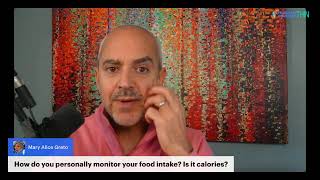
Mary says, how do you personally monitor your food intake as a calories? No, I personally, the way I use and the way I, I suggest people do it is, is I'm gonna use the word. I don't. I want to make clear. I'm not talking about intuitive eating. I want to make that Crystal clear. But I am going to use the word intuitive. Okay. From a whole separate angle. I. I personally like to eat intuitively. What's that mean? I think if you start focusing on how you eat first. Right. So the first step in program yourself, then we have the eating section of the pyramid, and the very first part is awareness. So the first step is to understand your current eating patterns. We all have eating patterns that we follow over week to week, pretty much. And what I want to do is I want to notice those patterns. Then I will look at those patterns and I will start optimizing them. So let's just say, well, I will give you my own personal example. I used to eat breakfast, snack, lunch snack, dinner snack. Okay. And so what I did is I started, I became aware of that and I said, I'm going to work on eliminating, reducing, and then eliminating the nighttime snacking. And so I began to work on reducing and eliminating nighttime snacking. Then I go and work on snacking between lunch and dinner, then work on cutting dinner down a little bit. And so I began to approach it that way. I never tracked calories. I tracked behavior, I tracked patterns. And so I think the best is probably combining those two, where you start to notice your patterns and then you track calories for a week or two just to get a sense of what the calorie loads are of what you're eating, just to clarify what you think, the calories, where they're coming from and to validate that. And then I would go into the idea, though, of building it around your patterns. So that's kind of how I do it. Jody says not covering the GLP1 at my job too, except for diabetes. Yeah, I mean, I think that's very quickly going to be passed right down the thing. So if you are on a GLP1 non diabetic prescription. Yeah, it's. I don't know. I would not feel very positive about the, you know, moving forward. I would imagine there's a very good chance that insurance is not going to cover that. Okay. Is what I've seen. So I wish the best for you. But. But again, there's one more thing to take into account.
Cash Fed says. Did you ever change what you were eating? Oh, yeah, I absolutely transformed what I eat. I completely. I changed what I eat, how I eat, when I eat.
Yes. I changed all that over time though, too. I didn't change it all in one day. Again, the problem with dieting, you can't change your whole. You can't change something as big as eating Just in one day. It's. It's like. It would be great if you could, but you can't. I mean, you can for a little while and then you go back to what you always do. But again, if you're looking to make a real long term change in your eating, you've got to approach it systematically, strategically, you know, so.
All right, there we go. Good, we got through all the questions. I'm gonna get out of here. If you're not in my world, please make sure you go click the link in my bio, click the little picture of me, and then go to my. That link in my bio. If you're on TikTok, click the link I posted in Instagram or Facebook or YouTube. If you're. If you're there, go get the free hypnosis session I give you. Because not only you get the free hypnosis, that's called the New Thin Me. It's a ten minute kickstart session. You also get a training. I gave you three steps to master your weight. But this week as well, I'm giving you a Thanksgiving Thriving during Thanksgiving Training. It's five minutes long. Give you some really good strategies real quick. And there's a hypnosis session to go with it. Okay, so go check that out. It's all free. I was sending the link out to the Thanksgiving stuff this afternoon, tomorrow and Thursday, but if you're on my list, you'll get that. Okay, so go do that. If you are. If you like this, I'm here every Monday through Friday, usually around noon Eastern. If you want any questions, please get on here and ask them. I'm happy to help you out. And if you like listening to this and you can't make the live, you can go to any podcast platform and search program yourself. Then it'll pop up and then you can listen to it anytime you like. All right, so have a super duper day and we will talk soon. Bye, everyone.
More from Jim



Weight Loss Visualization: Wake Up in Your Dream Size #programyourselfthin #weightlosshypnosis



What If You Pretended to Be Thin for One Hour? #programyourselfthin #weightlosshypnosis




