Optimizing My Bread Eating
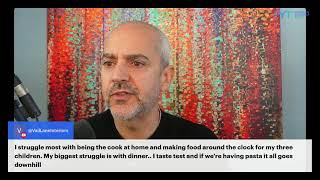
Jim Katsoulis bakes sourdough while maintaining his weight by staying aware, weighing daily, and cutting calories elsewhere. He ditches all-or-nothing thinking for an "all-or-something" approach that lets him enjoy bread fresh from the oven without derailing long-term maintenance.
Questions this video answers
Book releases January 1; offered free on Amazon Kindle January 1–5 (first five days).
He lost over 50 pounds (over 30 years ago) and has kept it off for about 30 years.
He does live sessions Monday–Friday around noon Eastern.
Chapters
Foreign.
Welcome to today's Program Yourself Thin podcast. Today we're talking about optimizing my bread eating routine. I, over the last couple weeks, have gotten into sourdough bread making. And sourdough bread is probably one of my top three favorite things on the planet. And that was before I started making it myself. So what I realized, I've never really had fresh baked sourdough in my life. And so, as you can imagine, that makes even a thousand times more enjoyable. Thousand times more addictive, maybe. So I wanted to talk about how I approach this new arrival in my life because I. I think that it'll give you kind of a specific context for a lot of the kind of general ideas I talk about. Right? And so the first general idea I want to talk about, that I talk about all the time, is the concept of all or something. Right. As opposed to all or nothing. Right. So one of the biggest distinctions with program yourself then is that we're all or something, not all or nothing. Dieters are all or nothing. Right. They're either doing everything perfect or they're not doing anything at all. And program yourself then. We're always in the game. Sometimes we're really doing everything, hitting it hard, and sometimes we're kind of coasting a bit because life's gone wacky and crazy. Okay. But having that mindset of all or something sets you up for a lot of things. But one thing specifically is my situation where all of a sudden there's sourdough bread in my life and I need to manage it because if I'm all or nothing, I'm probably just going to opt out. Oh, my God, I'm eating sourdough bread, I can't stop eating it and oh my God, I'm gonna gain £50 and. And I'll be right down that road. But I don't do that. Okay. Because I've been doing this long enough to know that really managing your weight is about managing the small things. Okay. Because as you go through life, and again, I need to make this other distinction too, that we talk about all the time, is that we program yourself, then the goal is living at your goal weight, not just getting to your goal weight. Right. When you look at a diet, diets are just about getting to your goal weight. So you're going to do whatever plan you have to do extreme to get to your goal weight. But there's no real concept of how you're going to move past that. Right? There's just the vague idea I'm going to do this thing get to my goal weight and then I'll figure the rest out. Okay? And so what that approach does is it completely makes you under prepared for even if you do get to your goal weight, how to actually live there. Because, yeah, okay, best case scenario, you can be really strict with yourself and lose weight, right? You can be so fixated and fired up and motivated to lose weight that you do your keto plan perfect, or you're tracking your calories perfect, or your intermittent fasting per whatever it may be, okay? But once you get to your goal weight, the timeline expands, right? So while it may take you months or even a year or two to lose the weight, the goal is to live at that weight for. For years and years and decades and for the rest of your life. Okay? So as soon as we start to expand that timeline into years and decades, you've got to accept the idea that you cannot be perfectly following your diet for decades. It just doesn't work that way. Life comes at you, good things happen, bad things happen, and your eating is going to be affected. So one of the big ways that diets fail you is that they're so rigid and you have to do it to the letter or not to it at all. And so it doesn't really leave the flexibility and space to adjust when different things in your life shift. And so, okay, so we go back to the bread, right? So all of a sudden sourdough bread comes into my life and it's all of a sudden this issue right now, okay? You say, well, I could just not make sourdough bread, okay? That's not where I'm at right now. It's really fun. I enjoy it. I don't know why. I don't know why I like it. My brother did it. I saw. That's cool. I've enjoyed doing it. It's kind of fun. It's a nice little hobby. Certainly tastes good. It's fun to give the bread away to people. People love it. It's fun. Okay? I like it. So what I'm doing is, I know I like it. I know it's also, I don't say it's a challenge, but it is. How do I manage the bread now, right? Because I have a system for how I live at my goal weight that I really, again, I've been following for over 30 years, but I'm always tweaking and optimizing and refining it. But before the bread, I got a clear cut plan of how to eat so I can live at my goal weight. I'll of A sudden, there's loaves of bread dropped into my eating pattern, okay? So they need to be accounted for. But before I get into the specific strategies I use, again, what I'm kind of talking about here is the mindset piece first, because the strategies don't matter if you don't have the proper mindset. And so my mindset at this point is, let's say it's been three weeks of making bread, and I have made a lot of bread, okay? And I plan to make a lot more. Now, again, I know that this is something I've got to keep an eye on if I am serious about my weight, and I am. So what I will do is I will have this all or something mentality. So I have the ability when the bread comes in that now I know I'm eating the bread. I know it's more than I typically eat, throw my eating off a little bit. And so now my expectations have changed. I might put a couple pounds on, you know, during this. And I make this. This thing here to kind of say it's a disorienting time because now all of a sudden figuring out how to. How to. What's the word? Integrate bread into my life now, right? Because typically I have clean and pleasure days. Clean days are kind of Monday through Friday. Pleasure days are on the weekend. And all of a sudden, in part of my clean days is I don't really eat much flour. I haven't eaten flour Monday through Friday, very rarely, for a long time, okay? And so now all of a sudden, I got flour and I got bread in my life, right? So how do you deal with it is a big shift. But the first thing is I'm grounded. I'm calm. I'm relaxed about it, okay? I'm not freaking out. I might put a couple pounds on as I learn to figure out how to integrate this. But that's okay because I know I'm going to integrate it and I'm okay with the process. So I'm grounded in being calm, centered, relaxed. That allows me to be rational and strategic with how I want to deal with the bread, right? That's the first thing. And that's a huge distinction because a lot of times we start to know we're eating more and we start freaking out. Oh, my God, I'll put 20 pounds, I'm put 50 pounds, I'll be 100 pounds heavier by the end of the year. And we start freaking ourselves out. We start saying negative things to ourselves. We start expecting the things we don't want and that encouraged them, nudges them to happen. Okay. So first thing is I'm grounded and calm. I've gone through this with a bunch of things anyways, you know, I know that living at my goal weight, this is the path that there are going to be different things that happen. Sometimes it's a, you know, sourdough bread falling into my life. Sometimes it's something unpleasant, a loss of a loved one, work stress, relationship stress, financial stress, celebrations. Right. There's all sorts of things that can throw you off, and so you need to be able to manage them. And so I want you to realize that with dieting, you never learn how to do that. Okay. So I'm giving this as an example, just to give you, like a real clear cut example of how to kind of approach this. So with the bread, I'm aware that I'm increasing. I'm eating flour, I'm eating more bread where I didn't eat it before. And so I'm very aware of this. I'm grounded and calm. And so now I start to activate some of the strategies. And so I realize I'm in a new phase. It's a little disorienting. So I know I'm not going to come out with the perfect plan yet. And so in this first part, I stay extra grounded and calm. I start weighing myself though more. I want to see what exactly bread's going to do to me. Okay. So one of the first things I started doing once I started eating more bread, I'm going to go back to weighing myself every day. Now, I used to weigh myself every day when I wanted to lose weight. Okay. Because I think that's a good strategy. You don't like it, you don't have to do it. Okay. But for me, I use the scale. The scale for me is very much like the speedometer of your car. It's just a data point. And so I don't have much emotion involved with the scale because I know how to.
Oh, one of the best ones. And hold on one second. Everything's dead here. All right, sorry, everyone. In tick tock land, you couldn't hear any of that. And it was really good. Okay. So weighing myself, weighing myself with the bread. So when it comes to weighing myself again, when I was losing weight, I weigh myself every day. And now I look at the, the scale kind of like the speedometer of my car. It's just a data point. And so right when I started eating more bread, I start getting on the scale just so I have a clear cut idea of what I'm doing. This helps me manage the negative voice in my head because without weighing myself every day, my brain is going to over exaggerate the negative effects. It's going to say things like, oh, I'm 20 pounds, I'm going to put 50 pounds on by the end of the year. I'm going 80 pounds on eating all this bread. I want to combat that, right? I can't stop it, but I can combat it. And I combat it by getting on the scale all the time now. And I get on the scale, and I'm also recognizing that the scale may go up a little bit because I'm eating more bread. I'm okay with that. Again, I keep grounding myself in calm, centered, rational, logical energy. And so as I move forward, what I'm looking to do mainly is I'm looking at this scale. I'm going to see what I do. Because my goal now is how can I eat as much sourdough bread as I want and weigh what I want to weigh? That's my big question now, right? Because I love eating it. It's literally one of the best things in the world. However, I love living in my goal weight more, right? And so that's another piece of the mindset puzzle, is that I recognize. And there's also an awareness piece. Let's start with awareness, then we'll get back to motivation. So my awareness when the bread comes in, I'm very aware of it because I have a structured way of eating when the bread comes in. I know that's new. And so I'm very aware of when I'm eating the bread because I don't typically eat at those times. I don't typically eat bread there, so I'm aware of it. And so my awareness has always been high with this here. I'm aware when I'm doing it, I start weighing myself, so I'm aware of what the actual impact on my weight's gonna be. I also know from weighing myself regularly, it usually takes about two weeks for the results to really show up. Right? So I'm right kind of in that space now where I'll probably start to see my weight go up a little bit, potentially. Okay. Now I don't know for sure because other strategies I include. And this is why I say all our. Something is so important because I'm not freaking out. I'm not throwing in the towel because I'm eating sourdough bread and I shouldn't eat that. I'm not saying that I'm Saying, how can I manage this in the best way possible? And while I'm eating more bread, I start activating small something strategies, okay? Because I'm not being perfect in my mind, eating sourdough bread, that's not my ideal plan in an ideal world. I'm not eating bread during the week, okay? So it's weird little thing here, but I'm still involved in the process. And so what I do as I'm eating more sourdough bread is I'm making little cuts in other places. I'm using less peanut butter on my toast. I'm not putting peanut butter on my banana anymore. I'm. I'm making little strategic cuts in other places, okay. In order to make up for some of the extra bread I know I'm eating. But that you will not be able to do if you're in this all or nothing mindset. Because that all or nothing mindset, again, you just quit. You're just, you know, very emotional. You can't see things clearly, and it's hard to appreciate the value of small little shifts you make. Okay? So staying calm and grounded and aware of what's going on sets you up to be able to use the strategy of kind of slowly cutting other things down. So I don't know where. I don't know where this bread thing is going to lead to, but I'm already well prepared for it, right? So again, I'm aware of how much I'm eating when I'm eating it. I've started to activate strategies to cut calories in other places to kind of mitigate the bread thing. And as I go through this, I'm figuring out what's the right amount of bread for me to eat. Where's the sweet spot? Right? Because I'm not going to eat so much bread that all of a sudden I put a bunch of weight on. That's. That's not where my goals are. So again, my. I reinforce my motivation. Yes, I want to live at my goal weight, and it's always way more important than any bread I could ever taste. And so I keep that in line. But now I'm in the phase of figuring out how can I strategically eat more bread and weigh what I want to weigh. But I'm in that position right now. And so I just, I share this with you because I think it's such a different approach than dieters typically have, because dieters are so, so all or nothing. Either this big move or not on or off. And I believe that the real game of living your Goal weight is dealing with these little things in real time in a calm, relaxed way, as strategically as you possibly can. So I hope that this helps you out. And again, it's. It's really the idea that we're going to.
Be calm, grounded, and approach what impacts our weight strategically. All right? And if you want some support in this approach to dealing with your weight, click the link in my bio, get the free hypnosis session. And again, I got a training coming for. I got a bunch of cool stuff coming. So go check that out and it'll help you out. Okay? So go check that out. You can click the link in my bio or if you're on Facebook land, you can go to program yourself. Then I'll put the link in there for you.
Oops.
There it is. Yeah, go check that out. And I do have a new book coming out, so you will get that free.
As well. Oh, I see what I did.
What a weird thing. Hold on one second. I just. Hold on.
Oh, I wonder.
I'm sorry for the audio. Audio sounds kind of shitty today because. Come on.
All right, there we go.
Sorry. It's making me nuts, though. These things were dead as a doornail. These little audio things were dead because the thing was unplugged and anyways, gotta crack a few eggs to make an omelette, right? I'm. I'm upgrading some things and in the meantime, other things get loosened up and screwed up.
Anyways, so. Yeah, make sure you get on my list though, because I got. Yeah, I got a book coming out. It's gonna come out January 1st. I'm giving it away for free for the first five days of January. So if you're on my email list, I will let you know about it, remind you, go get it. You'll be able to get it off Amazon Kindle free. Okay. So I really wanted to get it. I was just reading it today. I was reading the final draft. So I'm finally. Oh, my God. Right? I will tell. You know, people always say, oh, the last £10, last £5. It's like that with everything in life, you know, I swear it took me like two months to get this book written and together, and it's taken me a month to get the. The formatting done. It's like. It doesn't seem like it should take that long. But anyways, it's finally. The book cover is finished. The draft is finally finished and formatted, and it will be officially completed next week, probably by Wednesday. And that's exciting. But anyways, reading through it it's really good. I'm giving away for free January 1st to the 5th. I can't wait for y' all to get it. I think you're gonna love it. I certainly love it. I think it's really good. So I don't care what you say. I really do. I was thinking today, I don't give a. I think this is so great. I think it's a really good book. So I, I, of course I want you all to love it, but I really, I think it's good. L says, I like the hero keto bread. Okay. I've never had keto bread. I do. Typically I eat Ezekiel bread. And I'm not going to lie, I'm pretty. I'm like, I'm not anti flour, but I'm certainly aware of flour and I moderate it in my diet. There's no question about it. Because my biggest challenge, I haven't mentioned this with the bread thing. My biggest challenge, food wise, is bread. Bread, okay? I could eat a loaf of sourdough bread like it was snack and I feel fine. I love it. You know, pizza, bread, sandwiches. I mean, I could eat bread all day, every day, and I did for a long period of time.
So bread, for me is a big thing I focus on. So this souro thing is more than. You know what I mean? Like, it's, it's. For me anyways, it's a big challenge. And so I, I like sharing that with you because again, the diet industry makes it seem like you're gonna get to your goal weight, then you just live there forever, you know, but it's not, it's a. It's like surfing. I use the metaphor of surfing. It's like surfing always have to adjust, right? The waves always changing. And that's very much like living at your goal weights. Like, you're always adjusting to things, you know, that's what I mean. Like financial stresses, celebrations, parties, vacations, holidays, losing a job, bills, you know, I mean, like all these things are constantly going on. New foods, new snacks. You know what I mean? So it's, there's always things you have to deal with. So it's this, this active process. And I think dieting makes you think, like it's just a static process where I follow the static plan. I'm just going to follow perfectly, I'm going to follow forever. And it's not real. You know, it doesn't set you up for real life. So that's why I'm. I was thinking, I was excited to talk about this today. But, yeah, I've never tried the keto bread says that. Yeah, Zico bread. Toasted is okay. Toasted. Yeah, it's okay. Toasted. I. I agree. And they've made it better over the years. I've been eating it for a long time, and they've definitely made it better. But Ezekiel bread, like, not toasted, is not something I like to eat at all. So I toast it. Mama says, wow, Fascinating. So glad you're going through the sourdough bread thing so we can learn from you how to think about it without the diet or mindset. Yeah, I thought you'd like that because again, we just don't hear that a lot. And I think a lot of people, they just kind of opt out. Right? Because again, most people don't really understand moderation is a skill set. You know, you can get really good at moderating. You know, you got to get the right mindset and the right strategies. But moderation is a skill, and when you practice at it, it's a skill. For me, I am not nervous in the least, folks, that I'm going to get put £50 on from sourdough because I eat it too much. Like, I have zero, zero worry that that's going to happen. And so I have zero worry it's going to happen because I'm. I have my eyes open about it the entire time. I've got a very specific goal that I want to see. How much sourdough can I eat and stay at my goal weight. That's what I'm focused and obsessed on now. And I'm weighing myself every day. Dude, I'm paying attention. What I mean, I did that. I'm putting all this stuff together, but it's all in service of how can I eat as much sourdough as I can and stay at my goal weight and stay as healthy and happy as I want to be, too? Because that's one thing I'm taking into account is I look okay. Flour. I am. I'm not going to replace and eat a bunch of flour and then get rid of a bunch of nutrients. I'm not going to do that either, you know, so again, I share this with you because you never get this perspective. You know, dieting and weight loss in America is like 99.9%, all or nothing thinking, and I fucking hate it. I think it's the. It's the. It's the sabotaging thing, and no one even sees it. And so I talk about it every day. But I thought the bread thing gives it more Context and makes it more valuable. Mama says I'm an amazing baker. Sourdough pretzels, English muffins, everything. I had to stop baking completely because I thought I was an addict. I felt compa compelled to eat the food, so I chose abstinence. And that's fair, Mom. I, I, I respect that I may end up there too. You know what I mean? So, again, let it be known I think I'm really good at moderation. I may find that this sourdough thing's too big for me, too. I'm, I'm not. Hey, you know, my number one goal is, is my, my ultimate goal is I want to weigh what I want to weigh. And so that is far above my love of bread, and it's far above my, you know, ego saying, oh, I'm moderation master. If I turns out I can't moderate bread, I will cut it out and abstain. I will stop this hobby and find a new one. Okay? So I want you to hear this in my voice. However, I am pretty confident that I'm going to figure out how to be able to bake sourdough things moderately so I can still maintain my weight. And part of that strategy, because I really just enjoy doing it, which is kind of funny. And that might pass too. It might just be a little phase. I don't know. We'll see. But a huge part of what I've been thinking about is I just like doing it. And it's like I've been thinking in my head, like, giving it away. And so I got a bunch of bags so I can put loves in there and give them away to people. And so that's another part of the strategy. I have a lot of strategies. I'm not going to go through all of them with you. Bore you. But even part of the strategy, how can I bake and maintain my weight? Is getting rid of it. You know, I already recognize having that around is an issue. I'll give you one more. Let me share this one with you because I think this is one of my favorites, and I think it's a counterintuitive one, and I know it works for other things, so I feel confident it's going to work here. One thing I do also, because I live in an all or something mindset, and because I understand the true value of pleasure and the real definition of pleasure, I don't beat myself up for eating the sourdough bread again. Most dieters are going to eat sourdough bread and they're going to start beating Themselves up and now they're in. They're not even in the game anymore. I'm going to eat sourdough bread and want to enjoy it as much as I possibly can. And that's what I've been doing. And by approaching it that way already in a couple of weeks, what I've learned is that that bread an hour out of the oven for about an hour or two, that's the magic time. That particular bread is infinitely more enjoyable than the bread the next day. Okay. That being said, the next day, if the bread's there, I'm more likely to eat it. I see it, I'm thinking about it, I might eat it. Okay. So that's why I'm starting to get rid of the bread. Okay. And I'm starting to focus on how can I get the most enjoyment possible out of sourdough. Well, I know it's that hour or two, right? So for example, I'll make a special of tomorrow. Get my brother come up. A bunch of people come up. I'm going to make a special loaf. We will all eat it. There's when we eat it. So I'm a couple pieces of bread, but I won't eat the rest of it because I it all be gone. So these are the strategies that make the difference. And I know Dieter, no, you can't do that. You can't have now two, three pieces of bread. You can't do that. You can't do that, you know, and. And I'm here to prove them all wrong because they're wrong. Okay? They. They, your controlling your weight is a game of inches, you know, and so anyways, but we will see. I will report on this again. You will hear me talk about it more. I will let you know again, this is a journey. This is kind of the opening of. I want to kind of let you know about it, but I will keep you up to date on it because I want you to see. I've done this hundreds of times with other things, so that's why I'm so confident. All right, So I, I have no doubt in my mind that I will handle this one way or the other, but I want to take you through it because you'll be able to see in real time how I deal with something like that. And a lot of the things I do are probably different than what you would have assumed I'm going to imagine, you know. So I hope it helps you.
Yeah. Lynn says yeah, half my, half my problem. Sourdough puts the weight on me. Yeah. And again it may put the weight on me. I will see. And again, I know it'll take a couple weeks and we'll just see, but. But I will adjust that. That's the thing, you know, I mean, so if I can eat bread.
I could eat bread once a week, then that's what I will do. But I will make it the best, most enjoyable bread possible.
And sorry about the sound issue in the beginning. TikTok.
Judith says, I started to put half a loaf of the Jason Sourdough in the freezer because I find that I love it too much. You can't beat yourself up reading too much of something. You just have to, as you say, cut down. Yeah, exactly. And the beating yourself up again, people think that's a good strategy. It's not. Beating yourself up is a shitty strategy because it puts you in a problem mode, you know, beating yourself. Oh, you. You bad person, you shouldn't have done that. Oh, here you go again. You thought you were doing good and now look at you now. You don't even care. You're not gonna do. No way. I'm not doing any of that to myself. What's that all about? No way. You know, I might be able to acknowledge, yeah, I like the sourdough bread. I'm a little caught up in it right now. I know that I'm in the beginning of it, though, so I know it's a little bit of a disorienting time. I think people don't do, see, you know, dieters, because dieters approach their weight loss purely on this logical idea that if I know what to do, I should do what I know. Well, yeah, I know. I shouldn't eat any flour. Sure. You know what I mean? And let me put that knowledge and fact up against the. The genuine visceral pleasure of eating fresh sourdough bread. You know, I mean, again, dieters live in this world. Well, I shouldn't. I shouldn't do that. I shouldn't do that. I know better than. I shouldn't do that. Meanwhile, while they're doing it, I shouldn't be eating this cookie. I know I shouldn't eat these cookies. Got sugar and calories in it, puts the weight on. And that's a dieter's problem in a nutshell, and is that you keep doing the thing you know you shouldn't, but you don't know how to actually change your behavior.
So beating yourself up is not effective. Agreed, Judith. And you'll notice I'm not beating myself up about it at all. There's no beating Myself up. There's me managing, handling it. I think of myself in program yourself Then. A big part of program yourself then is managing the. The voices in your head. Right? We all talk to ourselves, right? We call it an internal dialogue. And it's probably the number one thing influencing your weight ultimately. Okay? But unfortunately, most people have never learned how to have a positive, supportive, encouraging self dialogue. What you've done is you've internalized probably your most harsh or critical parent. You've internalized that into your own mind. And now you speak to yourself in that voice. And so you have this very parental, disciplinary, and authoritarian voice, always chirping at you. I do, too, but I've developed a coach voice. And so. You jerk, you shouldn't eat that sourdough. You put 50 pounds of Lou, what you doing? You said, don't be fl. I have that voice. It's right there. But what happens is as soon as that voice kicks in, I start to feel the effects of it. The other voice comes and say, calm down, relax. Just sour. We're going to figure this. We're going to manage this like we've managed everything else. Okay, calm down, you. Because that voice.
You know, there's that feeling.
When you make a mistake. You know, I don't have that. I mean, I do. Again, I do have it, but I've trained myself to feel that and let it go. Okay, come on, we're gonna figure this out. Again, I do reinforce my motivation at first. I wanna weigh what I want to weigh. I want to be the person I want to be. I'm not gonna throw all away because of sourdough. I'm gonna figure out the sweet spot. You know, that that's where my North Star. Now think about that question, think about that way of being and then think about how you've handled your challenges with foods. Have you calmly, groundedly, centeredly asked how you can manage the foods that you've struggled with in a more effective way? So you can weigh what you want to weigh for the rest of your life. Have you ever asked that question or thought about it that way? And I know you haven't because you've never learned how to think like a thin, healthy person. You've learned how to think like a dieter your whole life. And so dieting. I can't eat sourdough bread. Sourdough packs the pounds on. No offense, Lena, but. But again, that's the normal response that most people will have, you know, and so I can't eat sourdough. Oh, my God. If I If I look at a loaf of sourdough, I'm 10 pounds heavier. That's not true. That's not true. That's a hypnotic suggestion that you think and experience is true, but it's not true. You can't look at a loaf of sourdough and put weight on. You could look at a loaf of sourdough and start craving it and desire and eat the whole loaf, and then that puts weight on. So we have to be very specific with our words if you want to be able to manage your mindset and ultimately your weight. So.
I Connick says, have you had a weight loss journey or do you just give the advice? Yeah, no. Over 30 pounds ago, 30 pounds ago, over 30 years ago, I was 50 pounds heavier than I am now. So I. I dropped over £50 over 30 years ago now. And the main thing, though, I want you to focus on is I've kept it off. You know, that that's my big focus. And I think that's what separates Program yourself then and what I'm talking about from virtually every single diet on the planet is that the diets in weight loss, just in general, the weight loss industry, is really about getting to your goal weight, right? And. And dieting especially, is these extreme, overwhelming plans and ways to try and get to your goal weight.
But the big problem with the diets, everyone knows this, but we kind of gloss over it, is that no one can stay at their goal weight. It's estimated that 95% of dieters that lose weight, the successful dieters, 95% of the successful dieters, put the weight back on. So that's the big problem with dieting, is it's not built to last. And it's obvious why, when you really reflect on it. No shit, right? Because dieting, let's be honest, right, Even you, right, all you think about is losing the weight. You just want to lose the weight and just get to your goal weight. That's all you think about. Out. You treat the maintenance as an afterthought. And I can understand why you'd think that, right? It's normal to think like, well, once I get there, I'll. I'll figure it out. I'm gonna be so excited. I'll just stay there. But again, I go back to the statistic that 95 of dieters put the weight back on. You are probably one of those people. You have probably lost the weight at some point in your life and then put it back on. And so it may sound strange because you think of it, dieting Dieting is one of the biggest psychological operations in history. Meaning it's a propaganda campaign. Dieting is a propaganda campaign done by the food industry. The dieting industry is a branch of the food processing industry. Weight Watchers was owned by Heinz. Jenny Craig was owned by Nestle Atkins Food Products, owned by the same company owns onions, pretzels of Cinnabon. Slimfast owned by the same company owns Ben and Jerry's ice cream. The dieting industry is a propaganda industry for the food processing industry. And they teach you how to diet. Table keep you stuck. These companies don't want you to not eat their foods and be thin and healthy and happy for the rest of your life. Dieting is a recurring business model. It's brilliant in its evilness, but it's, it's dieting doesn't work. We all know this, but we just keep trying to diet because that's the only thing people know. So dieting doesn't work and there's a lot of reasons why. But one of the big reasons is that you just think of it as a two phase process. You think, well, first I'm going to do this extreme thing to lose the weight and, and then I'm going to bring my calories back up and I'm living my maintenance weight. Meanwhile, 95% of people never do that. It's not a good strategy. So in program yourself then we have a one phase plan where we just start living at our goal weight. What's that mean? If you think about calories, right, your weight is a reflection of your average calorie consumption, right? So your weight's an average. Your weight's not usually again out. Outside of outlier extreme experiences, your weight basically hovers around the same weight. It might go up a couple pounds a year or over, whatever, but basically it's kind of at a certain point. And it's at a certain point because your eating is pretty regulated. You eat the same volume of food pretty much every day, certainly every week. And that's why your weight stays pretty much the same. So when people diet, they tend to drastically cut 50 to 70% of their calories out. So they start losing weight quickly. And then once they get to their goal weight, they say, okay, now I'm going to bring my calories back up. And this is where everyone fails. Everyone 95%. That, that's everyone statistically. So I'm programming yourself then starting from the same place instead of doing this drastic cut which is really hard and really reduces the chances of your success, instead what we do is we'll cut 10, 15, maybe 20% of your calories out, then let your weight come down, and then you cut another 10, 15%, let the weight come down, and this is the process until you reach your goal weight. We're not doing this crazy. It doesn't work, folks. Look, you want to argue with me, let's argue. I'll argue about this all day long, you know, so.
Anyways. But yeah, that's my journey. Well, I could talk about my journey for a million in a million other ways, but that's, that's the big, big picture of it.
Lana says the thing with sourdough is it needs to be tended to regularly. So it needs to be used regularly. So you're eating it regularly. It is delicious. It's probably better for you than white bread from the store, but it will put the weight on me quickly. It's still car. Yeah, agreed. Agreed. Yeah. And you know, yeah, I like cooking every day. So again, I'm already in my mind thinking about how I'm going to distribute this, you know, because I just enjoy doing it, like at this point anyways, it's good for me. I'm a routine guy. If my wife, like, if it's. If it's a hobby that is like a routine thing and sourdough is. Right. You have to feed the sourdough starter, then use it, whatever. I. So it's very routine. So. So I am, I'm very good at routine. I would say I am a routine master of the ages. So it does fit in my thing. But again, what I'm doing with part of that routine is I am already my mind planning on how I'm going to give these loaves and these products away, you know, and that's going to feel really good. So. And that's going to be the nice spot. Again, I will eat some of it, absolutely. But I will give a lot of it away, you know.
Some Sherry. Sherry says, I really appreciate your advice to not beat myself up. It was my MO for most of my life. Looking at it from your perspective helps me to be positive and solution oriented. Thanks for that. Yeah, you're welcome, Sherry. It's always a pleasure working with Sherry. You're very. You're so coachable, Sherry. So it is such a pleasure to be able to move you forward so easily, relatively. You know what I mean? So. So you're just such a quick learner. But yes, most my clients, if I say virtually all my clients, are usually perfectionist and overthinkers and those types of people. Tend to beat themselves up a lot. And so it's a fundamental part of the process for most of my clients that we have to learn how to manage the beating ourselves up piece. You know.
Alana says, yeah, I'm very black and white, which is why I'm here. Yeah, I get it. The black and white thing, it's not your fault, by the way. Please, please understand. You know, there's really two big reasons why you're black and white. Number one is that you're biologically wired to be black and white, right? So you're. The main organizing principle of your brain is to conserve energy. And so to think black and white conserves a lot of energy. To think in all the gray areas uses up a lot of energy. So right off the bat, your wiring really nudges you towards just black or white thinking. That being said, dieting on top of that neural wiring really drives it home because dieting is a very black or white way of thinking, you know, and so you combine those two things and it's no wonder, you know, that you're a black and white thinker. But again, you know, that's why I'm here every day. It's not that you can't be an all or something thinker, you absolutely can. But you need to kind of learn about it, understand it, and then practice being that way. But to me, it's fundamental. Fundamental. I don't know how you would ever succeed. A, I don't think you're going to succeed if you're all or nothing. A, and then B, it's virtually impossible to maintain being an all or nothing thinker because you just cannot be perfect forever, you know, I mean, a long enough timeline, you're going to make a mistake. And so in Program yourself then, it's not about being perfect to get results. It's about being able to get back on track quickly when you make a mistake. And that's really the core of the program, really is the program yourself then technique. I'm so excited, folks. I got the report, it's done. I got the COVID made, I got a report coming out, which again, it's going to be free. And I'm literally just going to show you how to use the program yourself then technique, the reader rehearsal technique. I'm just going to give it to you and I'm going to show you it's the core of the program. And so I'll kind of give you kind of an overview of how that works. And I'm going to be giving that away for Free. So again, go get on my email list. I'll be sending that next week. I should have that. I might have it before then, but I don't think so. I think next week I'll have it completely finished. But yeah, it's, it's going to be right there for you. I'll show you how to do it. But anyways, one of the core of the program is the redo technique where we go back over the day, pick something we wish we acted a little different and fix it, make it better. That's how you program yourself and get back on track and learn from your mistakes. And then we use the rehearsal technique to program ourselves, do the right stuff for tomorrow. But I again, I got that report coming to explain how to do the process. Walk you right through it. It's free. It's the main part of the system. The other part of the system really is the hypnosis sessions and then this here, the goal weight blueprint. But the program yourself then method really revolves around the redo rehearsal technique. And I just wrote the report up where you'll get that. So that's gonna, that's already done and free and ready to go next week. For people that are in the program I'm going to be making, that's going to be an entire book. I was thinking I might get it done in December. I don't know. I've got a lot of it ready to go. It's basically again, please understand if you're in the program, you have the trainings, you can go and watch and learn all that stuff. But I'm going to take all those trainings and put them into this book. Okay. But for right now, for new people and people are in the program, you'll get kind of report which is a quick overview of how to use the reader rehearsal technique. Just, just right there. So that is coming and there'll be more depth to that coming further down the line, but just, just kind of letting you know what's coming down the line. Lena says you're so right about the parent. Yeah. Again, transactional analysis. If you don't know about it, it's really, really a valuable paradigm to understand in order to make sense of your mind and how you talk and think to yourself. You know, again, I find it fascinating as a hypnotist, we are all our own best or worst hypnotist because we're always up in our head talking, you know, guess especially the overthinkers that I work with. We're constantly talking to ourselves and You've never learned how to manage that talk. You've never learned how to manage the voices you think in. And so what most people do, because we have a negativity bias, is we tend to make one of the primary voices in our head the critical parent. And so we have this. And again, it's not saying your parents a bad parent, please understand. But it becomes kind of the most authoritarian, disciplinarian version of that parent, and then it's exaggerated on top of it, and that becomes the main voice in our head that we talk to ourselves with. And so no wonder you can't stick to anything the second you make a mistake that. See? See, I told you we weren't going to do it. See? Oh, look, you did it again. Failed again. See? And it's just like, oh, my goodness. You know? You know what I mean? Like, how are you going to succeed with that kind of voice? If you. If you take that situation, you took that voice in your head and put it on the outside and had someone, like, talk to you like that, you'd realize how ridiculous it was. But you don't realize that voice is there because you've never learned about it, you know?
So, hold on. There we go. So it's one of those things, though, that's. That's there, and it's so important, but you've never learned about it. And it's wreaking havoc because you can't even see it, you know? So anyways, Lana says I lost 100 pounds and gained every ounce back. Yep, Elena. That. I'm here for you. I say this every day. You are literally the person I do this for. I'm here every Monday through Friday, and I do this as a mission, because for me, my mission in life is to help as many people as possible live at their goal weight. For me, this is real serious. You know, my father died of a heart attack at 54. I was nine years old. And there's no question, that was part of the beginning of me being here right now. So people that are actually willing to put the work in and can lose 100 pounds and then put it back on. I am. I'm here for you because. Oh, I see. Yeah, right. And then Lena says, down 60 pounds and frankly, scared. I appreciate you saying that, Elena, because that's exactly right. You know, one of the most destructive things that can happen to a person with their weight is when you actually lose a bunch of weight and then you put it back on. That's one of the most dangerous things that can happen to you because subconsciously what happens is you start to associate success with failure now. And that's where most dieters end up eventually. And it becomes just an inescapable pit of apathy, right? Because you lose £100 and put it back on once, twice, three times. What ends up happening is you go, I'm going to do it again. And even if you're, oh, I lost ten pounds, there's a voice and you say, so what? You're just going to put it back on. And that's why you're scared, you know. But again, Lena, the reason you're scared is because you don't know how to live at your goal weight. And you know that more than ever now. And so the weight loss isn't enough. We need to know how to live at our goal weight, which again in program yourself, then we really build it around the goal weight pyramid mindset, lifestyle eating. You need to be able to think, live and eat like a thin, healthy person. And so, and I always say this, that like most people have like an overweight mindset, right? So, so again, your mindset is which, what you'd naturally do. We kind of one core mindset. You're either at your, you have a goal weight mindset or you have an overweight mindset and you just look at your weight are have you been overweight or have you been at your goal weight? It's real simple, easy thing to figure out, okay? So if you've been overweight for a while, you have an overweight mindset, that's that, okay? And you naturally and automatically do the things you need to do to be overweight. It's very easy for you just live your life and you're overweight. And so what ends up happening is you've got your overweight mindset and then you diet sometimes. Now dieting is not a mindset. Please understand, dieting is not a mindset in itself because you can't diet forever. Dieting is actually an anti mindset. Let me explain what I mean. Dieting is basically you say, I'm going to go against everything I think, right? So now you're in a diet and you say, no, I'm not going to have those cookies. No, I'm not going to eat that pizza, no, I'm not going to eat those chips. But it's not a mindset in of itself. And so the big difference, I believe, between losing weight and then putting it back on and struggling that forever is the realization that the big problem you have is not that you can't lose weight. You've proven you can lose weight. The problem is you have never learned how to think like a thin and healthy person. You know how to think like an overweight person, and you know how kind of override that as a dieter for a little while, but you have no sense in your mind of how to live, how to think, live, eat like a thin, healthy person. You have no idea how to do that, and that's why you're scared. And until you learn that, I think you're going to continue to be scared because, again, weight loss. Let me. Let me show you the point, Lena. The big issue all dieters have to contend with is, is that most dieters will trade the pleasure and the excitement of the food for the pleasure and the excitement of the weight loss. And so it's not time to lose weight. And now what's driving them is that scale going down. And as long as the scale keeps going down, they're still excited and motivated and ready to go. But eventually you reach your goal weight. Now, where do you get your excitement and pleasure from? Can't go back to the food. You're gonna put the weight back on. And you can't keep dieting and losing weight because obvious. Okay, so where are you going to get your pleasure and excitement from now? I know you think, oh, I'm just going to get to my goal. I'll be so happy and so excited. I'll just stay there forever. That's not what happens. If you understand your brain at all, you understand you have a hedonic system which adapts to that new reality, and you normalize to it. And yeah, for a little while, the weight loss is exciting. Oh, my God, you look amazing. Oh, you feel great. And it's all new and it's all exciting, but eventually you normalize to it. And it's great being thin and healthy and all the rest of it, but then you still got work stress, you got relationship bullshit, you still got bills to pay, you still got other stuff. And now you don't have your food to kind of distract you, make you feel better. You don't have the weight loss going down to make you excited and look forward to. And I think this is a real issue that people need to resolve if they have any chance at all of living at their goal weight. And I think dieters never even get close to figuring that part out.
What's up, Peggy? Peggy says I have great memories of my grandma making homemade bread and eating it while still warm. Yum. Yeah, super good. When it's still warm, it's fun. It's just fun to do, too. I will say, like, I'm in the point now where I'm impressed. I'm. It's the same. I will tell you. It's the same thing. Like, even when I play guitar, sometimes I'll play songs, but holy. I can't believe I can do this. And so the bread's just like that. I cannot believe I can make this bread at my house. Like, it's nuts to me. I'm still in that phase.
I'm also interested in how you handle sourdough and Christmas cookies at the same time. What additional strategies do you think you might use when you have both? I think, Peggy, I think, first of all, I think I will eat less cookies this year. I've already started to notice that part of what's happened when I've eaten more bread. Now, again, I always pit things against each other. That's the beauty. If you can stay aware when you're not being perfect, when you can go into something mode.
You can do strategies like this, where I will eat more bread. But now it's easier for me to say, no, I don't want the croissant. No, I'm not gonna have the muffin. So now, again, I'm not perfect. Sometimes I will have those things. But I have found that when I'm eating more bread, I'm enjoying the hell out of it. It has been easier for me to say no to certain other things. I've eaten definitely less desserts over the last couple of weeks. And it's easier me say no, I'm not going to do that. I'm going to. I'm not going to skip it, whatever. So when the Christmas cookies come, I will absolutely. Because again, I always put things against it. I like cookies. I like the bread more. That's just how I am right now. Someone else might be different, but I will tell myself, and I'm going to do a lesson on this next week. I'm going to talk about it. Because I was thinking this last night. A big part of what I do is I negotiate with myself. But I negotiate in good faith. I'm not saying, like, I'm not doing the dieting negotiation bullshit. I'm not doing that. I'm genuinely saying to myself, I want to enjoy food as much as I possibly can and weigh what I want to weigh. And so I'm always putting things on hierarchies, right? And so for me, I enjoy the bread more than the cookies. Now Part of that, I enjoy the flavors of both of them. Similarly, I really love cookies. I like the bread a little bit more, but then psychologically I like the bread more than the cookies because at least I'm not eating sugar. So I feel better about that. And so I put in my. For me now, again, it might be different for you, and so you would adjust this. Please understand this. But for me personally, I know myself and so I know that I like the bread more, you know, for a couple reasons. And so I would prefer to eat the bread over the cookies. And so that I can almost guarantee you now, we will see. And I will let you know. I believe that's going to help me to eat less cookies than I did last year. So that's, that's what I think. But I'll let you know. Lena says I lost it with healthy carb cycling, but then started working out, got hungry. Yep. Stopped caring about carb cycling, gained it all right back. Working out makes me absolutely ravenous. I'm glad you said that, Lena, because that's why I don't recommend, I rarely recommend that people I work with should start by exercising and working out. Now again, I think walking, riding a bike, doing activity I think is wonderful. I think when you start working out for most of my clients now, you got to understand, most of my clients haven't worked out in a long time. Okay. So if you haven't worked out in years, please don't start your weight loss by starting to work out hard. It's never going to work again. When you start working out a you get. It takes a ton of energy to get yourself to do it and that's less energy. You have to influence your reading. You get sore and that drives you towards the food more. You get hungrier because you're using energy and your body wants to replenish. And then there's the licensing effect where you're like, oh, I burned a bunch of calories so I can have that muffin, you know, and that doesn't work out well. So, you know, most of the time for me, I reckon to my clients, take that energy you would put into working out and put it into dialing your reading in. You know, I think you're getting better results by controlling what goes in your mouth than working out. There's a great saying that you can out train a bad diet and mathematically and statistically, you know, it's just very true. So you're better off, in my opinion, spending that time dedicating it to this. Your mindset Lifestyle and eating and not, not the working out initially. And again, I, I love working out. I think muscle resistance training is great. Cardio is great. All this stuff's great. I love it. But again, I'm saying, me personally, though, I will tell you, I, I've lost over 50 pounds and maintained it for over 30 years. In those 30 years, I haven't dieted once and I haven't consistently exercised sized in any way. So I exercise the last like eight months. I've started to do kind of more resistance training because I'm getting older and it's important for other reasons. But you absolutely do not need to work out to lose weight. And a lot of times I think it has an opposite effect, you know?
Yeah. Peggy says, would a homeless shelter take your surplus? Well, that's a great question, Peggy. Actually, one of the strategies I'm going to do is because I've talked about this, right, What I've been making is sourdough loaves, and they're huge. And so I'm not gonna cut them and then bring them someplace kind of weird, you know. So what I'm gonna do is I just got baguettes makers. So I'm gonna make baguettes. And part of what I'm gonna do is make those baguettes and give them to I, I, actually, I'm the president of the board now, kind of still internalize that, but I, I, I'm on the board of a nonprofit in town and we have a food pantry. And so one of the things I'm going to do is make baguette breads and bring them down there so people have fresh baked baguette breads with them. It won't be a lot, but whatever, it'll be some of them. So that's one thing I'm definitely going to do. And then I'll give them away to friends and different people I know. So I'm figuring that out now, though I don't have it figured out and I'm figuring it out, but, but that's a big part of my strategy is going to be I will give 50% of the bread I make away, you know, and that's going to do a lot, a lot of the heavy lifting. And then I will refine the rest of it. How I work that.
What's up? Melancholy. Melancholy says I'm in no hurry this time. I'm enjoying the time I get alone with my progress before other people notice and make it their business. I want to lose about £75, but the first 20 are all mine. That's wonderful, Melancholy. I love that attitude. I would reframe one little thing. I would reframe. I, I, this is my suggestion, folks. Take it or leave it. But I would suggest that you stop defining your goal in terms of.
Stop defining your goal in terms of how much weight you want to lose. Right? So I get it. That's part of it. Right? So it's like, instead of saying I want to lose 75 pounds, though, I would want to work on saying I want to be X amount of pounds. So whatever you minus £75 is, I would say I want to weigh that amount of weight. I want to be that version of me. I want to live at X amount of pounds. That's how I want to live. That's who I want to be. That's what I want to make my reality as it rhymes. So that's a little tweak I would do.
Shereen says, yeah, please send some starter. I know the starter thing they got my brother. My brother was a big part of that. He got me going. So I had a lot of success right from the beginning because I could kind of help out with them. That, that made it fun. But I like taking care of, I just like stuff like that. Like, I got fish. I don't know. Like, I'm a big, I'm really good with the kind of routine stuff. It, it soothes my soul. I know for some people it sound like misery, but for me, I kind of like having routines. It, it's very soothing for me.
Judy says, do you believe in tracking your daily intake of food? I, I don't believe in anything 100%. The golden rule of program yourself then is there's no right or wrong. There's only what works for you. So if you've been tracking your food for five years and you're at your goal weight and you love it and it's going great, then I say do it great. Great for you. But if you try tracking everything you eat and it starts to feel tedious and terrible, I say it's not good for you. And that's the experience most people have. So I do think that tracking your calories for a week or two just to get a sense of where your calories come from is really valuable. I think tracking your calories forever sounds tedious and terrible to me. I would never want to do it. So that's my thoughts on that. Melancholy says, my hope is to learn how to not let comments and opinions shake me again. Weight is a private struggle fought publicly and it sucks. Yeah. True story. I. Everyone's got bad habits and weight is really unique that it shows to the world and it's unfair and it sucks. And I agree with that. So, yeah, as much as you can, keep it yourself. Keep it yourself. Right?
Yeah. So Jill. Jill says, I did that three times. Geez, Jill. Well, I'm proud of you for listening to me because you're still in the game. Okay? So make sure anyone that's lost weight and put it back on, please, please get my hypnosis session and get in my world, please. I promise you, if you have the ability to lose weight once, twice, three times, and you put it back on, you've got so much valuable wisdom that you can tap into and use. Because I always say with program yourself, then we learn and grow from all the experiences we've had, the successes and the failures. We learn and grow from them and we use them to achieve the results we want as we move into the future. And I think that's so crucial. And I think you're in a good position. I know it sounds weird because you're always beating yourself up about putting the weight back on, but when you learn how to use it properly, it. It's just different, you know?
Says, I'm getting the book. I love the mindset aspect of your work. That's awesome. Yeah, you're all going to want the book. I'm telling you, this book is really good. I hope. I don't know, it's just funny. It's a funny thing, like how good I think it is and to see what the world thinks of it. I think it's great, though. So definitely get on my email list. I'm giving away for free January 1st through the 5th, so make sure you go check that out.
Oh, am I muted? I'm still muted over here on Tick Tock Land. No wonder. Okay, well.
That'S so weird.
Oh, well, sorry. So Tick tock. I'm just showing up muted. That's kind of weird. Screwy. Sorry. Tick tock.
I wonder why the subscribers were going down to nothing. That was freaking me out, though.
What's up, Mari? Mari says I eat like a thin, healthy person. Now I get it. But I imagine I'll be weighing myself monitoring forever. I don't ever want to gain the weight against. You're so motivating, Jim. Thanks, Mari. Yeah, it's. Mari's in the program, so I know, I know you're doing awesome, so that makes me so happy. But I imagine I'll be weighing myself monitoring Forever? That's a good question. I don't weigh myself every day. You know, eventually you get to the point, you know, I'm just going to turn off.
Tick tock. It's freaking me out now. This is weird, though. I've never. I never worked this way. So I'm gonna. I gotta keep looking at the camera here.
So. Great job, Mari. So are you gonna weigh yourself forever? Like, I, when I was actively losing weight, I was weighing myself every day. And then eventually I maintain my weight for a long time and I didn't need to weigh myself every day, you know, because I. Again, you understand, you're in the program, so you start structuring everything. So you really start monitoring your. Your eating and your structure. And if it stays the same, your weight's pretty much going to stay the same, you know, so eventually you're gonna get to the point, we don't need to weigh yourself so much. That being said, now you're still going to be monitoring your reading to some degree. You know, hopefully you're gonna do the reader rehearsal technique forever. And that's just going to help you be aware of what you're doing, what your behavior is, you know, and you'll do that forever because things are always kind of changing, but you'll. You'll start coasting more. I'll say, okay, but great job. Nice work moving forward with that.
Lana says, I was so exhausted mentally after losing that weight, I just stopped even caring. You're right about trading the excitement for food for weight loss than having no pleasure when you reach your goal weight. I appreciate you saying that, that Lena, because a lot of people don't realize that or they don't acknowledge that. And I think it's one of the fundamental reasons why people put the weight back on. So I appreciate you saying that. Healthy habit says I traded the pleasure and excitement of the food for the pleasure and excitement of hobbies I really love, like writing books, selling vintage jewelry, and now making my own jewelry to sell. All right. Yes, yes. Jim's program completely changed my life in a super positive way. Yes, absolutely. And yeah, you're a superstar. It's. I love that strategy so much. The idea. Rachel's such an interesting story because she got in the program and she really, again, took this stuff to heart. And so she traded the time she used to eat for time when she would write. And she's written books now. She's wrote down she's making jewelry. Just a super success story and a real great role model. Rachel, you know what I Mean, you really, I think you really tapped on some great strategies in a real profound way. So that is very good advice. I will tell you, Rachel's very successful and she's been extremely successful because the hobby thing is crucial. That's actually in here.
Make sure if you're in the program, go check this. The weight loss blueprint. In this book, I actually added two bonus lifestyle habits, and one of them is hobbies because I found it to be so valuable that if you can start to add hobbies into your life that truly fulfill you and make you happy, it's transformative. You know, Rachel's a wonderful, wonderful example of that. You know, for sure. And take a screenshot of that, because.
Rachel's a superstar.
Yeah. And what the other thing Rachel says, you know, I'm gonna get that one too, because I see Rachel Sundays, and I'm 59, so I appreciate you saying that too, because I know sometimes we can have the limiting beliefs that, you know, as we get older, nothing's going to change. So I really appreciate you saying that. But yeah, Rachel's saying I maintained a now 19 pound weight loss through death in the family, my wedding, my daughter's wedding, and my new hobbies. Right. So, I mean, what an accomplishment because again, weight loss is great, but maintaining the weight loss through real life is. That's the real thing we're after. And so super role model, that Rachel. I appreciate you sharing that. Elena says I love lots of sourdough recipes over on Lana Bakes. Oh, Lana. Okay, you ain't joking. I'm calling you Lana, but I think it's Elena. I apologize for that little shout out for your.
Your thing. Let me see. I'm gonna go check that out.
I'm gonna go put that now because I'll never remember it. Elena Bakes blog spot. I'm gonna check that out because I love the recipes now.
I never baked anything. I baked cookies last year a couple times. It's funny. My secret life. I'm like. I'm like Batman. I got my secret life.
During day I slim people down and at night I picking them up.
All right, a lot of banks. There it is. Oh, a lot of Elena. That's a beautiful sourdough. I could see it. Oh, man. Sourdough biscuits. All right, all right, I'll, I'll, I'll leave the rest when he wants to see. I'm not going to torture you all. Thanks for sharing that, though. Yeah. Then it says, I'm right there with you wanting to enjoy everything. But my reality is If I eat more than 10 grams of carbs per meal, I won't lose weight. With carb cycling, I can have up to 40 grams per meal but have to keep fat below 5 grams. And that's no fun. I don't count calories at all.
Yeah. I will tell you, Lena, you know, nutrition is a very complex thing. And I think, I think me personally, and I don't know you and you know yourself, and you seem like you're pretty smart and paid a lot of attention to this stuff. I think you probably have some limiting beliefs about carbs. Now I say that, don't get mad at me because I think that a lot of times we think of our body as it is at the beginning of the process or throughout the weight issues. But if you can start to add more whole foods into your diet. Right. So those are carbs. Right. So I think a lot of people, I get worried with the carb phobic people because a lot of times people, when they're so fixated on carbs.
More often than not, they intentionally or unintentionally start to eliminate fruits and vegetables and grains from their diet. And I have found that sometimes that carb phobic thing is really scary. Because listen, folks, the healthiest diets on the planet, the healthiest people in the world, historically, without question, there's not even any debate to this. The healthiest populations on planet Earth in the modern world consists of high carb, low protein diets.
Let me say that one more time because I know for some people, they can't believe that's possible. The healthiest societies in the modern world, without question, are high carb, low protein diets. You can go look at the blue zones and what they're eating is a lot of whole natural fruits, vegetables and grains, small amounts of protein, small amounts relatively of fat, small amounts of sugar, all that. So a lot of times when people get into the carb thing, they're getting into the carb thing, but they're doing that within the context of a standard American diet. So they have a lot of processed foods, a lot of fat, a lot of saturated fat, a lot of protein, and they get fixated on carbs in that context. And I think the core of a good eating strategy now, again, whatever works for you, knock yourself out. But I think what sets you up for the easiest weight maintenance is to start to create a diet that's primarily whole natural foods. And when you start doing that, it affects your microbiome and you start to transform to some degree in a Different version of yourself. And when that microbiome and body that's primarily whole natural foods consumes carbs like sourdough bread, it's different reaction. I'm just gonna leave that there.
Shereen says, random thought. After all this time, I realized I don't like birthday cake. I have only eaten because it was there this past week. It was my birthday, my first without a cake. But I want the song. Nice job in a Blot the candles. Good for you, Shereen. Right again. That's what we're doing. We're paying attention to the subtleties so that I'm so proud of you for that. That's wonderful. And that's so much of the process is realizing the things you thought you loved so much. Really, they're okay. They're not the greatest thing in the world. So that's wonderful.
Jill says, last time I lost weight, I made a point of measuring my success by asking myself at the end of the day or on the spot that I behave and make choices like someone who weighs 155 pounds. My happy weight. Yeah, that's super. I think that's wonderful, Joe. That's so much what you do and program yourself then so much of program yourself then program yourself then. So much different than diets because it's an inside out approach where dieting is all about changing what you're doing on the outside so that you change on the inside. In programming yourself then we start by thinking about who we want to be. And it's not just about weight either, because in program yourself then we take the weight and we wrap it in personal development. So it's a little trick we do, but it's very important. It's really in program yourself then the real goal is not to just weigh what you want to weigh. It's to be who you want to be. It's to live the life you want to live. It's to be the version of yourself you want to be. And one aspect of that is that you're going to weigh a certain amount. But this is a very important contextual shift, is that we make the weight secondary to being the person you want to be. That's a very important piece of the puzzle. And I think what you're doing, Jill, is great, I think because in program yourself then what we look to do right from the very first day is to start, who am I at my goal weight? How do I think? How do I talk to myself? How do I respond around food? How do I act? How do I behave? And we get obsessed with that until it becomes our reality. So I think that's a great, great strategy, Jill.
Yep. Yeah, Shereen, exactly. Those whole natural foods are high in fiber. The key. Yes, agreed, agreed, agreed. And that, that's the subtext of what I was saying with the whole natural foods is that your natural fiber intake is so much higher and that's where the magic comes from, in my opinion. I think high fiber is the secret. High natural fiber, not, not more Metamucil. Not that that won't help, but I'm talking about fiber. And whole natural foods, I think is the secret to the easiest weight maintenance you can achieve.
What's up, Christy? Chris? I'll take one. I'm not too far. That's funny. I know. I'm gonna give those away. It's fun. I can't wait to. I'm excited to give away to the, the food pantry though, because it's the bread I'm making is straight fire. I mean, it's really good. It's really good. What's up, Vicki? He says, I love the PYT framework with its built in flexibility and continual self reassessment. That's why I switched. Yes. And Vicky's a pro too. She was a lifetime Weight Watchers member and found program yourself then and now, you know, uses that. You use both. Right. Again, program yourself then is not about like, oh, just do this. Program yourself then is about pull from all the different plans what works and discard what doesn't in service of creating a one size fits one plan for you. So, yeah, you're a superstar with that Biggie. What's up, Kirsty? Kirsty says, I've lost over 34 pounds. I've recently been holiday and managed to maintain my weight. I have another ten pounds to go to reach my target weight, but I'm lacking motivation to get into a calorie deficit diet. I get that, Kirsty. You know, I would suggest listening to some of the podcasts I did this week, you know, specifically about dealing with the holidays. You know, I, I, congratulations by. First of all, congratulations. Dropping 34 pounds and maintaining it is a big accomplishment. So nice job. Celebrate that. Acknowledge it. That being said, December may not be the best time to try and get fired up and get refocused and do that now. Again, I don't know what your December looks like, but if you got parties or events or holiday stuff and eating and all the rest of that stuff going on, December may not be the month to really focus on losing that last ten pounds and it might be the month to focus on maintaining and then enjoy yourself and then kick off in January. But again, motivation's a big part, so I will recognize and acknowledge that that's why I'm. Program yourself, then. When it comes to mindset, the very first thing we do in the mindset part is motivation. Because ironically, motivation is the most important part of the process of weight loss. And yet you dieters have never learned how to motivate yourself, right? You have no control over your motivation. You're either motivated and you don't know why, or you're not motivated, you don't know how to fix it. So that's another piece of the puzzle, Kirsty. But again, make sure you get the. Click the link, I put them in the comments. Make sure you go get that hypnosis session. Because another thing I've done, I have a thing called the Weight Loss Motivation Challenge that I give away sometimes. So, you know, get on my list and I'll probably give that away at some point. That might help you out. Jill says have been catching up on your library of vids. This is the first time making it to a live. Thank you so much for all this. You're welcome, Jill. Yeah, the lives are awesome. And remember, these lives are recorded and uploaded as podcasts as well. So I do these lives every Monday through Fridays around noon Eastern. But if you can't make them, you want to listen to them, go. You can go to any podcast platform, search program yourself, then you can listen to whenever you want. All right, so keep that, keep that in mind. Lena says I think a lot of it is genetics, too. I have 8 out of 10 obesity genesis and mux up my already defunct methylation system.
Good Lord. See, there you go. See, I. I knew you. You knew what you're talking about, right? But mitochondria burn ketones like jet fuel.
Yeah, that's a lot of fancy words. So. So again, I'm not going to argue with that stuff, right? I am not a scientist and I'm not a nutritionist, and I don't pretend that I am. So, again, I think genetics definitely play a part, no question about it. But even with genetics, I do think that ultimately the diet, because I've seen people, you. You could have those genetics, Lena, and you could take those genetics and be like, I've got to eat low carbs. And again, what I'd love to know is what your. On average, typical day, typical week, what percentage of your food is whole, natural fruits, vegetables, whole grains.
I'd want to Know that regardless of your genetics, because I think a lot of times people will get genetic reports and they will interpret it as, I can't eat carbs. And they will throw. It's kind of. To me, it's like throwing the baby out with the bathwater that I can't eat carbs. So I have to get rid of carbs. And I'm not gonna eat fruit and vegetables. Too many carbs. Now, again, you seem to know yourself well, so I'm not sitting here questioning that, but I would. I would. I would. I would ask that question because if. Yeah, I think it's important. What's up, Vail? Veil says I struggle most with being the cook at home and making food around the clock for my three children. My biggest struggle is with dinner. I taste test and we're having pasta. It all goes downhill. Fair enough, Val. I totally get that. That's why in Program Yourself, then what we do is we kind of work on one habit at a time. You know, with dieting, you change everything instantly in one day. With Program Yourself, then we strategically take things on one, two things at a time. So for you, you know, you would start to focus on your dinner and especially the taste testing, and we would focus on that again in Program Yourself, then we'd use a reader rehearsal technique to do it. So, again, Vale, please, you know, make sure you sign up on my email list because I'm gonna have a special report next week. It's going to show you how to do the redo technique. I'm giving it for free. Okay. And if you start redo rehearsing the technique based on your dinner tasting, within a couple weeks, you'll. You'll have a handle on it, and then you can start to focus on the next thing. One other thing I'll tell you, though, is a lot of times where the problem shows up is not where the problem was created. And so sometimes, you know, taste testing at dinner and, you know, influencing that is harder if you haven't eaten right during the day or if you're exhausted or if you, you know, haven't taken care of yourself. So, anyways.
Vicky says, for me, at this stage, I find Weight Watchers helpful for the social component. And the meetings I go to on Sundays. Yeah, again, that's the best part of Weight Watchers. Everyone knows that the plans, you know, again, it's just. It's just there's nothing really special about the Weight Watchers plan. It's the social piece that. That's definitely the most valuable piece of weight watchers. So, yeah, it's a smart move. And so. All right, I'm gonna get out of here, everyone. I hope you all enjoyed this. Thank you so much for your comments and questions. I really appreciated it. If you're not in my world, please click the link in my bio. Go get the free hypnosis session. If you.
Are not in my world, make sure you do that again. You're going to want to get in there. And if you like this, I'm here Monday through Fridays around noon Eastern. And if you like to listen to it whenever you want, it's also a podcast called Program Yourself Then, and you can look that up and listen anytime you like. Have a great super duper weekend and we will talk soon. Bye, everyone.
More from Jim



Weight Loss Visualization: Wake Up in Your Dream Size #programyourselfthin #weightlosshypnosis



What If You Pretended to Be Thin for One Hour? #programyourselfthin #weightlosshypnosis




