Practicing Losing Weight
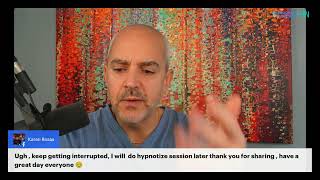
Jim Katsoulis argues weight loss is a skill you practice, not an all-or-nothing goal. He compares it to learning an instrument: focus on one hard situation at a time, like eating out or evening snacking. His Program Yourself Thin system uses daily hypnosis sessions, a 144-page blueprint, and coaching to build what he calls the three pillars: mindset, lifestyle, and eating.
Questions this video answers
Over 20 years.
About 30 years.
Eight weeks total; mornings include a 5-minute hypnosis session and nights include a 10-minute session each week (one nightly session per week repeated for that week).
144 pages.
$25,000.
Chapters
Hey, everyone. Welcome to today's program yourself thin podcast. Today we're talking about practicing losing weight. A concept and a phrase you don't usually hear. Because most people are walking around thinking that they already know what to do. They just need to get themselves to do it. Practice. What's this practice you talk about? Right. Do it or I don't. All or nothing. Right. And I think this is why most people struggle to lose weight, because there is no room to practice. There's no room to get better. You're just expecting that you're just going to be great right out the gate. And that's rarely, rarely how it works. So one of the biggest kind of psychological mindset shifts you can make with your weight loss is recognizing that you need to practice this and having a practice routine in order to lose weight in order to become the thin healthy person you want to be. Because when you start to think about practicing, you start to frame your weight loss more as a behavioral process. And let me put it in a different context to really drive the point home. If you wanted to learn how to play guitar, you wouldn't just read a book on guitar and then pick it up and start playing. You would pick the guitar up and you would start to slowly practice things that would allow you to start playing. And so the knowledge is a nice component of it, but really, what's going to dictate your ability to play that guitar is how much practice you put into it, not how much you read, not how much you learn about it. Okay. But literally how much time you spend fiddling around and making it work. And this applies to pretty much everything. If you want to draw, same thing. You can't just read books about drawing and expect you're going to draw. You have to sit down and you have to practice it. Drawing, painting, writing, sports, musical instruments, pretty much everything. Anything you want to get better at, you're going to need to learn to practice it. You're going to have to practice it to get better at it. Now, when it comes to weight loss, people think, well, all I need to do is just have the plan, and if you give me the diet plan, you tell me what to do, then I'll do it.
And they may do it for a couple days or a couple weeks or a couple months even, sometimes. But most of the time what happens is they'll try and force themselves to do it, and then they can't keep it up anymore. It's too overwhelming, takes too much work, too much effort. They quit. So when you start thinking about practicing, you go into it with that mindset, and it's so transformative right from the beginning, because if you went into playing the piano and you said, that's it, I'm just going to do it, and you just jump into it as if you're going to do it perfectly on day one, you're going to overwhelm yourself, you're going to frustrate yourself, and you're going to quit. But if you approach it knowing that it's a process of practicing, you tend to approach it differently, more slowly, in a way that doesn't overwhelm you. Because you understand this isn't about how fast you can do it. It's about the strategy in your practice routine of how you're going to get better at it. And if you start looking at your weight this way, it really opens up a lot of areas for you to focus on that you've probably been overlooking. And we can start to look at our habits and we can start to approach them strategically, systematically. We can start to practice making better food decisions. And we can specifically focus on the food decisions that are our biggest challenge. Like making better food decisions when we go out to eat, making better food choices at night when we're watching tv. We focus on the areas that are going to give us the biggest return on investment. And we recognize that our behavior change. Yes, knowing what to do is a piece of it. But the biggest piece of our behavioral change is practicing thinking, feeling, and responding in a new way. And that genuinely just takes effort. Again, you can read a book about how to swing a golf club, and you may know all the mechanics in your mind, but converting those knowledge of mechanics into actual mechanics is through a practice, a process where you suck at it and you're doing it wrong. But you keep self correcting, you keep making smaller and smaller corrections to what you're doing, and you get better and better. Well, the same thing can happen with your weight. If you start to break down the eating behaviors that are controlling your weight and you start practicing on getting better at them in the situations that you find yourself in, you're going to start to improve on them, you know, but what you've been doing is you think you're just going to change everything all at once. And again, you're overwhelming yourself. And most importantly, you're not giving yourself the space, the time to actually improve and get better at the things that are going to move the needle forward for you. Right? Because you just think you know how to do it. You just got to force yourself to do it. But forcing yourself to do something and actually being able to do it subconsciously, automatically are two totally different things. And when you put the focus on practicing in order to automate and make it natural and just flow out of you, the whole process changes. And what happens is a. It's less overwhelming. But more importantly, as you start to build on top of your previous learnings, just like you would with all these other things I was talking about, musical instruments, drawing, sports, any of these things, any of these skills that you've ever done when you start to practice, that if you start to keep practicing and building up on top of your previous practices. And so over a couple weeks, over a couple months, what happens is your skill set improves and you get more and more able to do the things naturally that will make you good at it, whatever it is that you want to practice on. So, again, this idea of practicing is so fundamental and it's so core. To program yourself then, because program yourself then. The core thing you're doing is imagining yourself being the person you want to be. And you're doing this through a technique you use every night where you're imagining yourself as the person you want to be. And we're kind of going back in time, we go forward in time. But what it does is it gives you a space every night where you get to practice being the person you want to be. And this is how you get good at things. And you know this is true because this is what you do. And everything that matters to you and everything in your life you've gotten good at. It was never just a matter of being told what to do and you just doing it. It was always a process of practicing. And it's no different with weight loss. And so if you want to figure out and understand this process of practicing, click the link in my bio or go to program yourself. Then go get the free hypnosis session that I made for you and find a new way. You know, there's a better way to approach your weight than what you've been doing. I guarantee it. And again, it won't cost you anything. It's completely free. So go check that out. And if you have any questions, feel free to ask them. Any weight loss questions are welcome. And I have been doing this professionally for over 20 years, so I think that sometimes I'm able to give you some insight that may help you. And more importantly, well, what's more important than being helped, but in addition is not only will it help you, but it's also kind of Nice sometimes to get a different angle on things, you know, Good Lord, when it comes to weight loss, talk about hearing the same for your entire life, right? You just never get new information. All you get is just rehashed diet strategies, you know what I mean? But you never, ever get the real stuff that makes the difference, which is really mostly mindset based. I will let you know that, that the majority of what would change your weight more than anything else is if you could get a handle on your mindset. And it's the one area that diets never, ever address. And as far as I can tell, there's not a lot of great information about mindset for how to live as a thin healthy person. I've been looking for it for 30 years. So if you have resources for how to be a thin healthy person, how to create the mindset of a thin healthy person, please share it with me. I, I'm always, always open, but I just don't see it, you know? And so again, I am here in an attempt to fill that gap, you know, and, and hopefully put some good mindset.
Information for how to control your weight into the world. That is my goal, that is my motivation for being here. Again, I'm here every Monday through Friday in order to share this information. Remo, what's up, Remo? Remo says I reached my lost weight goals, but still going, okay, so you reached your goal weight, but you're still going, well, all right, but that, that happens and that's a trap. I will tell you a lot of times, not always you're free to do what you want, obviously. But sometimes I see dieters that keep going with the past, their goal weight because they're terrified that the second they stop trying to lose weight, they're going to put all the weight back on. And this is again, a symptom of having an all or nothing mindset, right, where dieters kind of know how to either go all in on a diet or not do it at all. And that's why I believe 95, it's estimated 95% of dieters that lose weight put it back on. And I'm a big believer that a huge cause of that statistic is that dieting is really all about getting to your goal weight and not about living there. Right? It's all about the process of losing weight, getting to your goal weight. And you have to understand that the process of getting to your goal weight is completely different than the process of living at your goal weight. They're not the same at all. I know like, dieters just never think about this. I know they just put it out of their mind. I'll figure it out when I get there. But you don't, you know, and again, you have to understand the process of losing weight and the process of living your goal weight. They're two completely different concepts, two totally different things. And I think a lot of dieters just conflate them and say, well, if I can lose weight, I'll just keep it all, I'll keep the weight off. But really, when you look at your maintenance plan, you're going to realize there is no there there. And I find a lot of people, when they're losing weight, if they're successful and they start getting to their goal weight, almost without exception, I find a lot of people, as they get close to their goal weight, dieters are freaking out. They're freaking out because they, again, they know how to lose weight, but they do not know how to keep it off, you know, so be careful of that. Yep. And Remo says, yes. I mean, I going to put it back on. Yeah, I'm afraid I'm going to put it back on. Exactly. So this is what I mean. So that's probably a big reason why you're going to go past your goal weight, because you're going to try and stay in diet mode for as long as you can. I will tell you part of it and there's a lot to it, and I hope you go get my hypnosis session. I got so much free stuff coming, I'm finally getting to the point. I know I've been talking this for a couple months, so bear with me, but you'll see, it's all going to be worth it, I promise you. The book's almost done, it's almost ready to go, and now I'm able to focus a lot more on some other things I want to do. And one of those main things is having a lot more free resources for you. So again, you should go and get that hypnosis session. Get, get on my email list to get those things. But.
Yes, this idea of dieters getting to their goal weight, they're being scared they're going to put it back on. And one of the big reasons for that is most dieters give up the, the pleasure and excitement of food for the pleasure and excitement of the scale going down. That's what most dieters shift their motivation from. Right. So they're focused, you know, before they're struggling with weight, they're focused on food, food noise, they're thinking about that all the time, can't control it. Then all of a sudden they get fired up. They said, I'm going to lose weight. Now the scale becomes the main focus and watching it go down, and that's where you get your excitement and pleasure from. But the problem remains that once you get to your goal weight, where's the pleasure and the excitement in your life going to come from then? Because it can't be the scale, because at some point the scale just stops, okay? And so then you can't go back to the food or you can put the weight back on. So what are you going to focus on? And I find this is the core issue for most dieters, why they put the weight back on motivationally. And so in program yourself, then this is why we take the weight loss rapid and personal development. Because right from the beginning, we're making this process about more than just weight, more than just about the number on the scale. It's about being the best version of you that you can possibly be. And we do that because that's an ongoing motivator. Right? I sit in front of you more than 30 years into my journey. I've been at the same weight for 30 years. I'm as motivated today as I've been when I was losing weight, simply because the goal hasn't changed for me. You know what I mean? The goal is still to be this best version of me and to achieve it in the most enjoyable, comfortable way possible. So I'm always tweaking, I'm always optimizing. You know, I'm always watching what I'm doing. And so that keeps me motivated, engaged and excited because I keep having new insights, I keep achieving new goals, I keep refining more strategy, I keep optimizing what I'm doing. And so that keeps me fired up and motivated. Even though my weight's been the same for 30 years, I'm still fired up and motivated because I'm still getting better. I still have things to look forward to. I'm still improving, I'm still growing, I'm still achieving new goals. And I will be this way till my last breath on earth. I'll be this way for the next hundred years. So that is such a fundamental part of the process that dieting just completely ignores. And you just think, well, when I get there, I'll just figure it out.
You can't let that happen. Unless you like gaining, you know, losing weight and then gaining it, you know what I mean? You've got to figure out what is your motivation going to Be once you get to your goal weight, a lot of people don't have that. Right. What's up? XX says hello Jim. Since I stopped eating deep fried foods, I feel less bloaty and less hungry. Yes, that'll happen for sure. Deep fried foods. Yeah. You know, I think, I always think of it in this way that, that what you eat has an after effect. We know this to some degree. But I always think of it like, like if I eat sugar, I'm basically putting cravings on layaway. Like if I eat a candy bar, I know I'm going to have sugar cravings within the next four hours. Say, you know, I'm going to increase my cravings, increase my hunger. And I find that if you start to look at your foods with this, through this lens, it becomes very obvious quickly which foods, you know, kind of satisfy you and nourish you and which ones just kind of, you know.
Crank up your cravings and your hunger and your appetite. So be careful that Don says you're helping me so much. Thank you. You're welcome. Thanks for listening. I'm glad I can help. That's what I'm here for. Always like to hear that though. So yeah, if you all any questions, feel free to ask them.
Oops. Tick tock. Questions are the hardest ones to navigate.
Especially. I'm trying to relax my thumb. I think I, I irritated a tendon, I guess in my thumb too much use. So I'm trying not to use it as much. It's not as easy as you think.
Bookworm says. Jim, do you have a private practice as well? Yeah, I do, I do private coaching a bit. I'm definitely, I, I've been dialing that down over the last couple years. I do less private coaching like one on one. I, I do group coaching is really where most people go now. I mean to be honest, to work with me privately is a big investment. It's $25,000 to work with me. So you know that that's not most people anyways. But again, even beyond that, I just, I've dedicated more of my time now to putting people into my group coaching and then, you know, serving them through the program as well and obviously here. But yes, I did run a private practice. Well, I mean, I guess I still technically run a private practice but I started off with an office doing private stuff, moved into groups, continue to do private things over the years. Some years more than others. You know, I focus, kind of go back and forth for years between coaching and the program and now I'd Say I'm kind of swinging back towards the program, focusing on that and promoting that more.
Just time wise. I'm just able to help more people that way. And I think that's been good. Yeah, that has been good. Actually. It's, it's funny, I'm. I'm working. I've been doing Program Yourself then. I always want to find this. I did look for it a couple weeks ago. It's another thing I do. I pulled like a muscle. I swear to you, it's, it is deep down in the middle of my spine. It just comes up here. Anyways.
I've been doing Program Yourself thin for over 20 years. It's so funny because I got, I gotta find like the first flyer ever made. So I had my first hypnosis office. I was always focused on, always focused on weight loss. That was always my, my main focus. But I did general hypnosis too for a while, which was a lot of fun for sure. But so from the time I opened my office, I pretty much had Program Yourself then. And I should show you that the, the flyer I made for that. It's so funny, I couldn't find it, but I will find it at some point. But I've been doing Program Yourself then for over 20 years at this point. And I was saying this over the last couple of days because I do the Program Yourself then philosophy of really focusing on the long term I think is so valuable. And I use that really in every area of my life. I really more focused on the long term, the long game than on the short game. And I apply that even my work. And I can tell you with Program Yourself then, like this is one of those, those years where I'm really feeling the benefits of that approach. You know, it's been an extremely.
Productive year for me and I cannot even imagine next year. I mean next year is going to be absolutely off the charts. So yes, the long game is, is where to go. And it's exciting too. You know what I mean? Like, it's just exciting, the long game. I tried to tell you all about the weight loss because weight loss is a long game because your goal isn't to lose weight, it's to live at your goal weight. So how long you want to live at your goal weight for a couple months or for the rest of your life. Right. And the answer is obvious. But I say that to you as kind of a experiment for you to recognize how you think about your weight loss in very short term timeframes because you just think about losing weight you have been programmed to think about weight loss as a very short timeframe, thinking about getting there. You don't know how to think about weight loss as a long term, forever thing. There's not even a concept that in your mind. Most likely because we've been all conditioned by diets forever. Yeah. Anyways.
What'S up, Ginny? Jenny says my mother first put me on a diet when I was 6 years old and not even pudgy. When I look at those photos now and I'm now in my 50s, that's a lifetime of ups and downs literally to overcome. Yeah, I get that, Ginny, but I'll say to you, because that's not even an unusual situation in my, in my world, you know, unfortunately, that I've heard that plenty of times. I've worked with a ton of clients where that's been their situation. It's really not that unusual, as sad as that may sound.
So, yeah, it's a lifetime of ups and downs to overcome. But I like to reframe that. And the way I reframe that is that it's also a lifetime of experience. It's a lifetime of experience of trying different things, getting to understand yourself, recognizing a lot of what doesn't work. Which puts you in a position to know more quickly what does work. Once you start focusing on solutions and you have a real genuine strategy to manage your weight, you know, program yourself then is really built around the idea of practicing being at your goal weight. Right. So the program yourself thin technique is a 60 second mental rehearsal technique you use at night to program your mind to be the thin, healthy version of you. Right. That's the core of the program. But beyond that, there's also this goal weight blueprint.
144 pages. This is a literal roadmap for you to fill out based on your lifestyle, your preferences, your, your reality. That is really a roadmap to get you to your goal and keep you there. And it's based on three categories, mindset, lifestyle and eating. And we deep dive in each one of those. So specifically you get a plan how to run those. And I know Ginny, and I know this because I've done this for a long time. I know Ginny, who's been in and out of diets for over 40 years, that in all your 40 years of doing things, you've never approached your weight loss with this. You've never learned a 60 second mental rehearsal technique used at night to program being the thin, healthy you into your mind. You've never done any of Those things. And so to you, Ginny, I say, I know it's frustrating the path you've been on, but I do believe that it sets you up to realize now clearly what doesn't work and now be much more open to what does work outside of diets. And so, again, I strongly suggest, if you haven't let me put that link in, I forgot to put this in here. But if you're not in my world, go get this hypnosis session and.
Experience a different way.
There it is.
So, yeah, so he says, did you decide on a cover?
Not exactly. I. I did not decide on a cover yet, but I'm getting closer.
There we go.
I got them down to two. Two covers. I think I know which one I'm gonna pick. I'm. I think. And, you know, I will say, let me just take a moment to talk about this for a second. One of the things about our brain, we got kind of two sides to our brain. And one way to explain it is that one side kind of takes care of the action, and the other one creates a story about the action we took. So they have done some fascinating experiments where they work with people that they call them split brain patients. And what that means is a lot of them were epileptic. And they would cut this corpus callosum. That's what it's called. It's the part of the brain that connects the two sides, and they would sever that to help, you know, mitigate the.
Epilepsy symptoms. And so they would do very interesting experiments with these people because their brains, their sides of their brains wouldn't talk to each other. So ingenious experiments. What they would do is they would sit them basically in front of a board so one eye would see one thing, one I would see another. And they would show the eye. Know your eyes are. This eye connects to this brain, and this eye connects to this part of your brain, this side. And so they would show the part of your brain that takes care of the action.
Like, they would show like, snow and like a shovel. And like, the person was sad would shovel the snow. And then I'm. I'm totally screwing up the. The whole. The whole study. Long story short is they would show the part of the brain that takes the action, something, and it would start to imply that it was gonna do that thing. And then the narrative part just creates some crazy story about why it chose that. So, anyways, this is all a long, rambling thing to say that I believe in my heart that I've already chosen the COVID But I don't think my conscious mind knows which one I've chosen yet, if that makes any sense.
Maybe I'm just full of too. I don't know. But I think I'm Pretty sure I'm 90. Sure I know which cover I'm gonna pick.
And I can't wait because tomorrow's the deadline. Thank God they give you deadlines. Thank God for deadlines. So anyways, though, I can't wait to. I can't wait to have it. I'm pretty sure I know which one I'm picking and it does make me sad because the other cover I love so much.
But anyways, I will let you know. And I can't wait for y' all to get this book. I cannot wait. It's so exciting. It's coming. So true. I gotta. Today I'm gonna start the process of hiring the internal designer for it and getting that going. It's not going to take long. It's going to be an easy book to design me. Thanks, but. And then once that's ready to go, the COVID is going to be ready and yeah, we're ready to go. First book in the tank. So I can't wait. So, yes, you'll see the COVID soon. And I almost did, you know, I almost sent out the last two covers. I house, I was almost sent another poll out and I'm like, I'm not going to do this because I think I already decided and I don't want to waste anyone's time. But anyways, all the feedback I did get was absolutely valuable. I will say that I had a ton of people respond to that poll and I really, really appreciate everyone who did because that was very valuable in.
In. In choosing that. The book. And it's very validating, I would say. And it was very close. I gotta say that the two book covers are extremely close in.
I don't know, I was thinking to myself too, I might just. Tomorrow when it comes time to pick, I might choose the other one. Oh, I just don't know. Jenny says. Amazing. Thank you. You're welcome, Ginny. Good. Yeah. Don't give up, Ginny. Remember, as long as you learn that the key message too, if you've tried a ton of diets and you're kind of feeling discouraged, is the main thing I would say to you is, is please just do something different. Don't do another diet. Whatever you do, stop dieting. Look for another way. And again, I'm hopefully I'm at least one way that's different. What's up, Lois? Lois says, reached my first goal under 150. My mom's ring fits again. It's been eight years. Your program is great. Thank you, Lois. I appreciate you saying that.
Yeah, that's great. Loses join the program. Nice job. That's super. Yeah, keep going. Whatever your ultimate goal is, keep it up. Can you do half in each cover?
Half in each cover?
What does that mean? Do like, half the books in one cover and half on the other.
That's kind of interesting. I will tell you one thing about this book that I did see. People, when they were talking about the covers, a few people mentioned that it was like, gender wise, it was kind of ambiguous. But I will let you know the way this book is written. It is completely written in the female gender for four females. Her, she, her. So all my guy. My guy. Clients and customers.
Tough. I think about this all the time because I'm like, I remember growing up forever and everything was in, you know, he. Him pretty much. You know what I mean? And so I wrote this book. I mean, listen, 80, 85, 90 of my clients are women. A. You know, and so, But. But whatever. So, you know, for the women, I hope you don't care and for the guys that care ts, you know, but maybe I'll write another version of the book that has a different. I don't think I'm gonna do that, but I could write another version with the other cover for guys. I don't know. I'm not gonna do that because I'm. My motto this year is to keep things simple. I am a person who gets everything complicated and adds too much complexity. Everything. So I'm not doing that. But guys, I. I thought this right in the book. Guys that want to read the book. Because I read the book a million times and I read it in. In the female pronouns. And I. I love it. I love it. And I like that. It's. It's just a little different. And I. I like it. I don't give a. And plus, most of my clients are women. And you deserve to have a book that's completely written for women. So there it is.
I like to fancy myself a bit of a feminist to some degree. I'm working on it and I'm on that journey, and it's been a great journey. My daughter and my wife have helped me, and I proudly, proudly do that. So this, I really has nothing to do with that, I guess. But this is one of my clients. Yes. Philip. Thank you. Philip says simple as best. Thank you. I need to hear that message, the more simple I could things in my life, the better. Philip says, just had to buy a smaller wedding ring. Down 52 pounds so far. Thanks for your great content, Philip. That's amazing. Nice job. That is super. Yeah, that's the downside, all right? Sometimes you gotta. You gotta replenish, you gotta get new clothes, you got to get your ring resized. Right? So sometimes, you know the good. The good downsides, right? But. But that's a great job, Phillip. So keep it up. That's super.
Well, up here in your success stories, Tamley says tips on binging on sugar. Okay. Tips on binging on sugar. Yes, I have lots of tips on binging on sugar. Or more importantly, how to have more control over sugar. Right? So that's the first question is, or the first comment I would make is that we don't want to fixate on what we don't want to do. And that's where we usually start, right? So I want to stop binging on sugar. But our subconscious mind doesn't understand negatives. So again, if I tell you, don't think about a banana, you're thinking about a banana. If I tell you, don't think about binging on sugar, you're thinking about binging on sugar. Okay? So we start with, I want to stop binging on sugar. One of the first things we're gonna do and program yourself, then is flip it over to a positive. Well, what do you wanna do? Right? And so that may be, I wanna have more control over sugar. I wanna eat sugar more moderately. I wanna completely cut sugar out. I wanna only eat sugar on the weekends, whatever it may be, that instantly puts it into a version your brain can understand more. And it tends to make you more specific, you know, about what your goal is. Because the idea of, like, tips on binging on sugar, I mean. And again, I mean, like, obviously, I know you don't want tips to binge on sugar. I know what you mean. Right. You mean that you want tips on how to not binge on sugar, but with your subconscious mind, you need to be extremely literal. So again, I've converted your tips on binging on sugar, I've converted into, I want tips on not binging on sugar. But then I'm going to convert that again into something my subconscious mind will understand, which will be something like, I want to have more control over sugar. I want to only eat sugar on the week. You see what I'm saying? So now I'm getting more specific about what I actually. What kind of relationship How I want to interact and how I want to consume sugar. I hope that makes sense. So that's my big tip on that. That's what I would suggest. And again, then we go back to practicing it, you know, and that's the key thing here, right? It's like you can know, I don't want to eat sugar, I only want sugar on the weekends. You can say that, you can know all the reasons why, but to think that and then be able to go to actually doing it is the game. And it's the game you never have learned. You've never learned how to practice being the person you want to be. You just think you're going to jump into being that magical, perfect person on Monday.
And then as soon you know, and that's what you always do. And how can I describe every dieter, right? In a nutshell. But, like, you start Monday expecting you're going to be perfect. Whatever plan you're following, you do it perfectly for a couple days or a couple weeks. You make a mistake, you're not perfect, so you quit. And now you go back to nothing. And that pattern is probably what you have done hundreds of times in your life. Perfect, then nothing. Nothing, then perfect, perfect, then nothing. And it's this flip flop back and forth. And if you're honest, most of the time you're probably doing nothing. So again, it's not about learning more stuff, it's about practicing more, being the person you want to be. And ideally, this sounds crazy to you maybe, but. But honestly, the best way to practice is by learning from your mistakes. Your mistakes really are so valuable because they let you know what you need to practice. And so if you're like, well, I was eating great all day and then the afternoon came and I ate a whole bag of chips. Great, let's figure out what's going on there. You know, I mean, dieters freak out. And then, oh, I screwed up and I was doing so good and now I failed. But I look at it like a starting point. Okay, great, you're doing great up until here. Now let's see what's going on there and let's make it better. How can you be the person you want to be at that moment? Right? I mean, I don't know. I hope it sounds obvious when I say it, because isn't that a better strategy than what? What is your strategy? And you're gonna find there is no strategy. You have no strategy when it comes to losing weight. You just expect I'm gonna wake up as a whole different person. I'm gonna wake up because tomorrow's Monday. I'm just gonna wake up as a perfect eater. Even though you have a lifetime of not being a perfect eater. So I don't understand with dieters how you expect that you're just going to wake up tomorrow as this person you want to be and how you fucking think you don't have to practice. I don't understand. It's. I don't see the difference between a dieter thinking they're going to wake up on Monday as a perfect dieter or as a thin, healthy person. I see no difference between. That is me. I've never played the piano and tomorrow's Monday and I really want to play the piano, so I'm going to be a piano player tomorrow. What? No, you're not. Got to practice. It's always practice. How much practice have you put into it? Because again, just trying to be perfect is not practice. It's just winging it, hoping it works. You know, it's just, it's a. A wish and a dream. I love wishing and dreaming too. But I'm not going to put the most important things in my life. I'm not going to let rely on that.
Yeah. If you only got any other questions free to ask them. I do pride myself and hopefully giving you a different perspective on a lot of the weight issues you may be struggling with.
Yeah. But even the sugar, I mean. And again, I just give you kind of a quick, quick one. But.
Perhaps that'll bring the book to Amazon. Yes, this book will absolutely be in. At. In Amazon by Christmas. It'll be in there by Thanksgiving, I believe.
Which doesn't mean a lot. I don't know. I don't. You know, I've never published a book like this, so I'm kind of, you know, figuring out what's going. But I'm pretty sure I've taken care of all the preliminaries, so I'm, you know, I just never know until it's officially done. But, but again.
I've talked to people at everything, so I'm assuming it'll be in there by Thanksgiving, you know, I hope so. I want everyone to have it. Yeah, I'm curious. Yeah.
I don't know. I'll only listen to people that like it. I'm joking, but I don't know. I think it's so good. I've read through it so many times. But you could use the other cover choice for your future books as well. You know, I thought that bookworm. And it's like. But Then like, I know the next book coming and it's just, it's not the right vibe. You know what I mean? So it's like these two books are the perfect covers for this book's vibe. And I, I literally thought that though, because I was like, I was like, I could write a book like this about something else. I'm like, nope, I'm not doing that, Jim. I'm not gonna make decisions that way just because you like a. But I thought the same thing because I do really like it. That's the thing I will say I'm pretty happy with how I've gone through the process. You know, I have used one thing I've learned. I tell my daughter, my son this all the time because they're in school. But one thing I learned neuroscientifically that I think about all the time, and I think it's really interesting, is that your brain, right? So it's like if you learn some information today because they've done these studies where they'll scan your brain, they'll use FMRI machine and they'll see, like if you learn something new, they can kind of see where the information is right in your brain. And then if you go to sleep and you come in the next day and they scan your brain again and they make you think about the same thing, they can see the information's moved, right? They can see that it's moved. And basically, in a very simplistic way, it kind of goes from short term to long term memory, let's just put it that way. And this happens when you're sleeping. So they've done the same thing where they have someone learn in the morning and they learn in the afternoon. It doesn't move. But once, once you sleep, sleep does something magical. And there's part of that process where it pushes things from short term into long term memory. And so even with this book design process I've been going through, I've been looking at the books every single day because I absolutely utilize my subconscious mind very strategically in my life. And so I'm not looking to logically figure out which cover I want. I really am relying on my subconscious kind of intuitions. Now. I also relied on the poll. I really appreciate all my customers that went and gave me feedback on that. So that, that was helpful too. But I would be really, what I'm relying on is a lot of my subconscious kind of intuitions and associations and feelings I have when I see these covers. And then I will look at the covers. I'LL you know, and then I'll see the next day if I feel the same way. And so some of these covers I'm looking at, I've been looking at them every day for probably going on six, seven days now. And I'm looking for any shifts. Which one do I still like? Which one I got a little bit. So I'm really paying attention very much to the subtle little gut reactions to it. And so I really do live my life around my subconscious mind. It is very fundamental to how I live my life in a lot of ways, strategically. So I don't know how I got there, but.
I told you that.
Family says, thank me. Restarting. Oh, that's me restarting every Monday. Yeah, I get it, Tamley, but. But you gotta. You gotta resist that, you know, all of you do. You can't start and stop. I mean, start and stop's not a success strategy for anything practically. I'm sure there's something. But what are you going to get good at it? That you start and then you stop? You know, something you do for. I play the piano. I play for two days usually, and then I won't play for three or four months, you know, then I'll play for a week, and then I won't play for a year, you know, I'll play for two weeks, then I won't play for three months, you know, I mean, like, that's not a strategy for success, but that's what a lot of dieters are doing. So, again, the restarting Monday is happening because you're usually overwhelming yourself on Monday, right? Because everyone with. With dieters, you're always all or nothing. And so on that Monday, you're diving into all land, right? They're gonna. I'm gonna change all of my eating, all of my eating. No more snacking, no more sugar, I'm gonna count every calorie, I'm gonna go to the gym, I'm gonna do all this stuff. And it's so overwhelming that eventually you quit, because when you're overwhelmed, you eventually just quit until you can't take it anymore. And so, again, the secret to that is not to expect that some Monday you're going to wake up magically with just some superhuman amount of willpower that's going to allow you to do that. Instead, we want to come back and we want to be more strategic with what we're doing, and we want to make it more manageable and comfortable, something that we're able to keep up and sustain. And when you start to change up the process. I did this yesterday. Right? Was that. What did we talk about yesterday? Yeah. Right. Yeah. So if you get a chance, Tamley, I would strongly recommend. And again, you can get all the old. This is a podcast, right. So if you go to any podcast platform and start program yourself, then I put these up every day. And the one we did yesterday was how to stick to your weight loss plan. So I. I'd strongly recommend that, Tamley. You may like that because it talks. Exactly. And go get the hypnosis session. I would suggest that.
Yeah. Bookworm says, fantastic. I'll be buying the book. That's awesome. I think you all are gonna love the book, and it's gonna be. It's gonna be very. I don't. I mean, I don't even know. I never buy books, to be honest. That's not true. I. I always get my books from the library first, pretty much. You know, I have an amazing library system. I will say that It's. It's amazing. We literally get, like, state access to all libraries, so it's really cool. So it's very rarely that I can't find a book that I want, but usually what I do is I get the library book, and then if it's good, then I'll go buy it, you know, But. But anyways, the. The book is. It's gonna be under $10. I know that. And I. I think it's gonna be worth its weight in gold. I think it's so good. So I can't wait for y' all to check it out.
Suggest exactly when you learn something before falling asleep, your subconscious will manifest deep. Yes, agreed, agreed. And that's why we program yourself then. That's why we do the. The program yourself then techniques again right before you go to bed. Pretty much that's kind of the best time. And it's directly because of that a lot of magical things happen. You know, it says, really enjoy your hypnosis programs. Well, thank you, Lois. Appreciate you saying that. It sounds like they're working because you're already getting your ring resized. Always getting down. Nice job. Stanley says, yes, that's me. I'm an all or nothing when it comes to weight loss. Yeah, pretty much everyone's all or nothing, you know? And again, don't. Don't take that personally. It's no one's fault. I mean, you've been conditioned to be all or nothing thinker with weight loss by the diet industry. Folks. We have all been conditioned by the diet industry. I mean, the diet industry has been you know, running hot and heavy for over 50 years. And we have just been soaking in it. You know, it's crazy. And it's one of the greatest psychological operations that's ever gone on is the diet industry's hold on weight loss thinking. Because, you know, I always say this, that dieting is basically a get rich quick scheme for weight loss. You know, but in the context of money, you recognize what a scam get rich quick schemes are because you have get rich quick schemes over here and you have like traditional making money over here where you, you go to school or somehow you create some value that you get compensated for traditional way making money and then you have to get rich quick scheme. And so within that context, you realize this is bullshit when it comes to weight loss. You don't have any legitimate way to think about weight loss.
Doesn't even exist. And the reason why is because dieting and the obesity epidemic were started at the same time. And they were started for a lot of the same reasons. A lot of it had to do with mass media. This all started right in the mid-70s, early 80s is when the obesity epidemic started and dieting really started. Yeah, true story. And so they're both interrelated because the diets are a branch of the food processing industry, right? Weight Watchers was owned by Heinz. Danny Craig was owned by Nestle Atkins Food Products, owned by the same company, owns onions, pretzels and Cinnabon. Slim Fast, owned by the same company, owns Ben and Jerry's ice cream. So these food companies literally bought the diets. And they give you these diets as, you know, ways to lose weight. But in reality, they condition your mind to be overweight forever. And a big part of that conditioning, one big key piece of it, is to make you think like an all or nothing person. You can't be all or nothing in life with things that are important. You're going to be an all or nothing parent, you're going to be an all or nothing employee, you're going to be an all or nothing partner. You can't. That's not going to lead to good relationships. Right? You got to be all or something. And that's what we are in program yourself, then we're all or something. And that's one of the initial kind of mindset shifts that we, we seek to kind of, you know, help you create in the program. Because it's not about how perfect you can do things, it's about how consistently you can do some things. That's what's going to dictate way more of your results ultimately. And to drive that point home, one of my favorite quotes is that most people overestimate how much weight they can lose in a month and underestimate how much weight they can lose in a year. And so the diet industry has conditioned you to focus on how much weight you can lose in a month. And it's a losing strategy. And it's so prevalent though, that now we just have people that can't even think about weight in a long term way. They've literally taken away the. If you didn't know any better, you would listen to the most learned people about weight and you would come away saying, there's no way to change my weight. It's impossible. The only way to change my weight is through injections. And that's bullshit because my entire career has been studying people that have lost weight and kept it off for at least two years. They're out there and when you begin to speak to them, you start to realize they're all saying the same story. There's always differences. Some specifics are different, but the core strategies are always the same. And it always comes back to this pyramid that they've changed their mindset, their lifestyles, and their eating at a fundamental level. And so programming yourself thin is really about systematizing this transformation that I see over and over again with all these people and sharing it with you, you know, so you can do it. So.
You'Re welcome for the tips. That's what I'm here for.
And he says I'll buy, definitely. That's awesome. Thank you. Yeah, you're gonna love the book. I cannot wait. This book.
This book is meant to be read many times, you know, it's modeled after. I gotta bring this book down. I have it up in my, my where I do yoga, but I should bring it down here to show you. This book that, that I'm releasing is. It was modeled after the Dao de Jing, which is, if you know Taoism, it's kind of a Chinese eastern philosophy. And it was just very impactful for me in life. And, and one of the main ways I read it was the Dao de Jing. And I always had this, the most beautiful version. It was, I don't know if it was translated or illustrated by Jane English. I do know her name is on it. But it's kind of a big book and it's, it's kind of a photo book, you know, but, but anyways, the Dao de Jing is kind of written in poetic form, you know, and so you know, I'd read like one or two of those every night, you know, for years. And so I always love that style of book because it was just so accessible, you know, I mean, like, I could just. I could just dive into one chapter and it could just, you know, just spend a lot of time thinking about it and sometimes a couple chapters or whatever. So I always loved that. And I would reread them over and over and over again. And so that really inspired me. Like, honestly, I was working. I got another book that's going to come out probably in the spring. It's a much bigger book. But I was working on that book, and all of a sudden, like, out of nowhere, I had this idea to write like a kind of a much lighter, simpler version of it, you know, that was built on the kind of the dao de jing. So you just read it multiple times and just read certain things over and over again that really resonated with you. And so that's what inspired me. And so in two months, I wrote the entire book, you know, and it's based on the whole program yourself then system. So what it does is it takes all the components of, like, the mindset, lifestyle, eating, and then there's transformation. So those are the four parts of program yourself then strategically, is that we have. We. You learn how to shift your mindset, your lifestyle, and your eating. And then I teach you a whole system for how to transform yourself, which really comes down to how to run your mind. And so that's the program yourself in system. And this book, basically, it goes over all those components in a really easy, accessible way, because all the. All the chapters, they're hypnotic stories. Again, if you know daoism. I know it's kind of a rare thing, but. But if you know the dao de jing, it's kind of written in that style. Stories, hypnotic stories, metaphors, you know, and analogies, just ways to kind of understand concepts that are really easy and accessible and that impact your subconscious mind. So my goal was that as you read this book, these ideas and stories stick with you. They're, you know, kind of like Trojan horses. So what I'm doing is I'm kind of telling you stories because I want these ideas and this philosophy of how to master your weight to go in really easily. And it's the kind of book I. I could see you, I imagine you, like, at night, maybe before you go to bed, you read a little bit like a chapter or two. You know what I mean? You just keep cycling through it and just doing that is gonna be so powerful because it's all the core lessons of the program put in this book. So anyways, I'm so excited about it. I think it's awesome. You know, that remains to be seen until other people see it. But I am such a big fan of it and I've read in two months, I've read this book 600 times. I've gone through it so many times. So that's a funny thing too. It's like, when is it? When's enough's enough. I look at it like this. I knew enough was enough. I started getting the covers designed once I went through the whole book. I went through it one time and I didn't make any changes. So I said, okay, we're good, you know, so again, I don't want to get caught up on this forever. I could tweak this book probably for another year, I feel like, you know, so I want to get. The main idea is down. I think it's really good. And then the other book, that's much more of a. An in depth explanation of program yourself then that'll probably be coming in the springtime. But this one here again, I just love it. I love how it works and I think, I think you're all going to love it and I think it's going to help you. I just think, I think it's amazing. So anyways, I hope you do too.
Says my body is relaxed when I follow your video. Can you be hypnotized? Thanks. From Philippines. Oh, you're welcome. Yeah, that's. That's one of the main things of hypnosis that I think a lot of people overlook is that, yes, the words you're receiving, the suggestions are impactful and powerful, for sure. But at least half the benefit you get from hypnosis sessions is the relaxation you experience. You know, every single hypnosis session. And certainly my hypnosis approach is that every hypnosis session I do uses the same induction. It's just a relaxation induction. Because what happens is. So part of my program yourself then is that it's eight weeks of hypnosis. So every morning you get a five minute hypnosis session and every night you get a ten minute hypnosis session. So every morning the hypnosis session is different for eight weeks. So you get literally eight weeks of different hypnosis sessions in the morning, five minutes each to start your day. At night each week you get one. So you're listening to the same session each night for the week. And then when the new week starts, you listen to the new one. And that reinforces these core mantras in. But each session uses the same induction and is built around a weight loss mantra. And so they're designed to install, like, then healthy mindset into your body and to teach you and train you and allow you to practice being a more relaxed, calm person. And it gives you the kind of keys of the kingdom there. It allows you to learn how to do it. I often tell my clients that it's kind of the Karate Kid approach, right? Where remember Karate Kid? He's painting and washing cars and waxing. And turns out he's all mad, what the hell? I want to learn martial arts. Turned out he did. He did learn martial arts. He didn't realize it. He was waxing. No, he was blocking. And so I think of. I think of this like that, right? Because people say, oh, I don't know if I can relax without the sessions. You can. Because, listen, every time you've been listening to hypnosis sessions, every time you listen to them, what do you do? You relax your shoulders, your chest, your stomach. You take a deep breath in. You let it out. You relax your face, relax your jaw. You turn your attention inwards. You start to become more aware of what's going on inside of you. You increase your ability to relax your body, to breathe more deeply, to calm yourself, right? So every day you're doing that multiple times, and it starts to become a skill set so that all of a sudden you realize you're in traffic and you get stressed, but you can relax. You're standing in line, you can relax. You're at work and your boss is being a jerk, you can relax. And I think fundamentally, that's one of the most important skills and abilities that you need to master your weight. I think you've got to get good at relaxing because the more stressed and anxious you are, you know, Come on. You know what I mean? Like, I don't give a. I've been in my goal way for over 30 years. You get me really stressed and intense and anxious. My eating is going to. Going to follow. You know what I mean? So we have to recognize that it's not just about knowing what to eat. It's about being in the right state of mind, in the right position to actually follow that advice for ourselves, you know? And I think being able to relax is a key part of being able to do that.
Ananya says, my family gave me so much trauma. My childhood is full of pain now. Whenever I feel unloved, ignored unworthy by people. I start overeating. I get that and I appreciate you sharing that because I think a lot of people.
A lot of people experience that, you know, and again, just, just on a bigger level in this culture, we've all been conditioned to use food as our main emotional management strategy. Thanks, Sweet Quest. We've all been conditioned to use food to celebrate. When we feel down, when we feel up, we're always going to food. I mean, we've all been exposed to tens of millions of food ads in our lives, folks. Think about that. You know, again, it's just, it really is the story of our generation in a way. It really is. Right? Because it is at this point, arguably, depending on what day you look it up, weight related issues are the number one cause of preventable death. And one of the main reasons people are dying from their weight is because they can't stop eating. And one of the main reasons they can't stop eating is because there's non stop food ads in our lives constantly conditioning us to eat food. Don't think that's not a huge part of this. I mean, you are seeing thousands of food ads every day. You have to understand, walking into the grocery store and seeing the bags of the chips is food ads. You understand? Like it's not just the ad on your phone or your tv, those are ads too. But it's the packaging, it's the, when you drive by a place and see their logo. I mean, all of this stuff is influencing people to overeat, you know, and so I get it, Ananya, and what, what you're saying there, again, it's so such a big part of programming yourself then. And pretty much something everyone's gonna have to deal with at some point is how do I manage my emotions genuinely without food? How do I deal with the childhood trauma? How do I feel when I'm unloved, when I'm ignored? How do I deal with that genuinely to get to where I want to be? Because the food doesn't help you feel better, it just distracts you, you know, which, which I guess shows us feeling better in the moment, right? So we're feeling unloved and we go to the food. And so during that time when we're eating, it feels like it feels better because we're distracted now we're not focusing on being unloved, we're focusing on eating. So that feels to us like it's feel better. But then the second we finished eating, now we feel unloved and we feel frustrated with how we ate, you know. So again, emotional eating, I think, is. Is fundamentally one of the core issues everyone's going to have to deal with if you want to manage your weight, but you can. And again, in program yourself, then we spend a whole section on it, the mindset section. Emotions. How do you. How do you deal with the emotions? How do you genuinely feel the emotions you want to feel and deal with the shitty emotions you don't want to feel? How do you genuinely deal with that without food? And I don't know what strategies you all have, but in program yourself, then we literally go through that because it's such a fundamental piece of the puzzle. So, yeah, my heart goes out to you. I know what you're dealing with there, and I wish you the best with dealing with some of that. Kathleen says, what's the name of the book? The name of the book is the dao of living at your goal weight. And I realized. I'll tell you a funny story I'm going to post in the comments just so you can see it written out, because that makes it.
The D living at your goal weight. So I realized I might have made a mistake the other day when I was driving with my mom, and she goes, oh, I'm so excited about your book. What's the name of it again? And I realized in my hesitation to answer that question that I may have made a mistake because I was like, it's. I was like, I'm gonna say this word. And she doesn't know what it means. She doesn't know this word. And I realize a lot of people don't know this word, but I had to do it because it does mean a lot to me. It's not going to be my. My main book. I had to qualify this book too, you know, she was so excited. And then all of a sudden, she hears me. Heaven and Han. It's simply because she does not know it. It's a Dao. T, A, O. Taoism. And it sounds like D. Right, I get it. But it's kind of pronounced Taoism, not Taoism. Okay, so it's confusing right off the bat. Second off, no one knows about this philosophy. However, it's such a crucial philosophy and part of program yourself then, because it's. It. Dao. Dao stands for the way. The way. And so it's. So the book's so important. I don't give a shit if my mom doesn't understand what the word is.
Because it means too much. And what it means is dao and daoism. Is kind of a way of being. And it's hard to explain, I'm not going to lie. It's, it's. You have to kind of read it and you kind of get it between the lines, if that makes any sense to you. But to me, it's really important because it's not about the literal meanings. A lot of times it's the gist of things. And I think when it comes to weight loss, this is fundamental to my approach to helping people live at their goal weight, is that I can't just tell you what to do. You know what I mean? Like, I can't tell you this is why diets don't work, right? Just me telling you what to do. You ain't me. You know what I mean? You got your own life, your own preferences, your own lifestyle. So the dao is really. It has more meaning imbued in it, and it'll come through when you read the book. So you don't have to know what dao means at all to read the book and like it, okay? But once you understand what dao is and you read the book, you're going to understand there's a deeper meaning to it as well for those of you who want to seek it out. And daoism really is a way of approaching things psychologically at first, like how do you think about things, how do you approach things? And the thing I like about it so much is that it's the. More it's the subtleties, which I love. So. So just when it comes to weight loss, it's not the hard skills of being told how many calories to eat or what macros to eat or what when to eat. It's not that stuff. It's really about the soft skills. It's the subtlety of living at your goal weight. That's what Taoism means to me. And it's the subtle piece that's rarely talked about that makes all the difference, right? And you can apply that to pretty much anything, right? You know, in your own life, you've learned things and there's being told what to do, and then there's the reality of actually learning it and being knowing it, right? And so to me, the Dow is the way of living at your goal weight, the way of it, the subtleties of it. And that's what the whole book's written for. And again, that's what makes it accessible because it's not a weighty, meaty thing. The next book coming is going to be that book, right? And which I know For a lot of you. Again, because I get a lot of. I get a lot of overthinkers in my program. Right? So us overthinkers, you know, we want all that. Give me all that. Right. It's coming. Okay. But this book you're gonna love too. But it's just, it's a lot more accessible, it's more whimsical, it's breezier and it just serves a different purpose. So again, they both serve an important purpose, but the Dow piece of it is much more of that. That kind of soft skill, vagueish justice, but important piece that rarely gets talked about. So.
Karen, Karen says, ugh, keep getting interrupted. I will do hypnotized session later. Thank you for sharing. Have a great day, everyone. Yep. Sucks when you get interrupted. That is the thing with a hypnosis session. When you're going to listen to it, make sure you know you won't be interrupted because it's hard to go into hypnosis or follow along if you're worried about being interrupted or are being interrupted. So, yes, watch out for that.
Family says. So is the Program Yourself then available on a book through Amazon? I'm new here. Sorry, no. Program Yourself then is an online program and so no, it is not a book. We do have a book that's available to customers, which is this Goalway Blueprint. Right. You get this automatically with the program. It comes in a PDF, but if you want a physical version, you're able to do that. Got a bunch of these going out this week. Okay. But we have some new ones come in, so. But no, the program is its own thing. And so this book coming out will be on Amazon available for everyone within the next couple weeks. So. Yes, it's very exciting.
Yes. Tao. Tao. Do we order it ahead of time? No, I don't know. I got. I don't know. That is like, that's a timeline I'm not positive on yet. Is like what the timeline is between me basically uploading it to Amazon and when it's available. I don't know what that timeline is. I saw some people say a couple days. I don't know though, you know. So like I said, the covers, tomorrow I pick the final cover. I'll get that final, you know, art sent to me probably by the end of the week. And then this week here, I'm hiring an internal book designer and it's a pretty straightforward book. So I don't think that's going to be take very long. So like, again, I'm kind of hopeful that Maybe I'll have the whole thing uploaded to Amazon by next week. That's probably kind of ambitious, but. So I'm thinking about a good week or two, but everything's pretty much done with it. Just a couple little tweaks and then that stuff. But I don't. Yeah. So I don't think you can order it ahead of time until it's. It's actually up in there and then I'll do it.
Says, thank you. I found your video. I will incorporate this with my three days fasting. Oh, yikes. Three days of fasting.
Whatever works for you. But.
Three day fasting. I did three day fasting before. Did I ever do. Yeah, I did three days. I hated it. I hated fasting three days so much.
But if it works for you, good job, wackadoto. And hopefully that the. The session helps you great too. All right, let me get out of here and thank you so much, everyone. Yeah. Because emotions are huge in managing weight. Yes, absolutely. Definitely. All right. Yeah. If you're new to my world here, if you, if you never. If you're not part of my world, go click the link in my bio and go get the free hypnosis session. I think that's probably one of the best things that you could do, you know, if you never experienced hypnosis, go check it out. It's a 10 minute session designed to kickstart your. Your weight loss, your motivation, your excitement to do this. And it's free, you know, and I got a training I made for you. So again, click the link in my bio or go to programyourself then.com and go get that. And then if you like this, I'm here every Monday through Friday. If you have any weight loss questions, feel free to pop on and ask them. I'm happy to answer them. And if you like listening to this and you can't make it to the lives, it's also a podcast, so you can search program yourself then on any podcast platform and you can listen to this whenever you like. So there it is. All right, everyone have a super day and we'll talk soon. Bye.
More from Jim



Weight Loss Visualization: Wake Up in Your Dream Size #programyourselfthin #weightlosshypnosis



What If You Pretended to Be Thin for One Hour? #programyourselfthin #weightlosshypnosis




