Program Yourself Thin Live 4-23-26
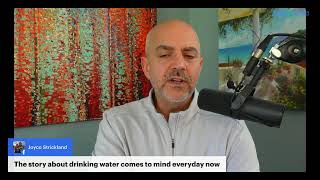
Jim Katsoulis argues excess weight comes from subconscious eating habits, not willpower failure. He teaches hypnosis and identity shifts to reprogram these automatic patterns, and introduces tools like his free hypnosis session "The New Thin Me" and AI support to help people lose weight on autopilot.
Chapters
Everyone, welcome to today's program, Yourself Thin podcast. Today we're talking about the programming that is keeping you overweight. The programming— what I mean by that is the subconscious programming in your mind that's keeping you overweight. The program that runs automatically. How much you eat, how fast you eat, when you eat, where you eat, what you eat, how much of it you eat. All of these things are programs that have been installed into your mind, um, usually without your permission or knowledge, and are now currently running, and they are controlling your weight. And they do this on autopilot. That's the secret to understand here. It does— it takes very little effort to run these programs, just like It doesn't take much effort to brush your teeth. You brush your teeth pretty much on autopilot. You just do it. Some part of you just manages that for you. Uh, if all of a sudden you want to get on a bike and ride it, you just know how to do it. You don't have to think about it. You just know how to do it. When you want to use your computer mouse, when you want to read or write something, you don't have to think about it. You just do it. That's a subconscious program that you have installed into your mind that you now run automatically. Without having to think about it. And you have these when it comes to your weight. And if you're overweight, I call this your overweight programming. You are programmed to be overweight. And how it feels to you is that when you're not dieting, when you're just living your life, doing what you normally do, you're overweight. To put it another way, when you're just being normal, not dieting, not doing some crazy exercise routine, not focusing on losing weight, your normal is overweight. That's what feels most natural and automatic for you. And it is because there has been overweight program installed into your subconscious mind in your life so that now you naturally crave foods that make you overweight. You eat the amounts of them that make you overweight. You don't feel satisfied until you eat enough of them that make you overweight. And so if you buy into this concept and this idea, what you have done your entire life to lose weight is to fight against these programs. Now, when you understand your mind as a hypnotist does, you understand you have a conscious mind and a subconscious mind. The conscious part of your mind is the logical, rational part of your brain. It's your prefrontal cortex. And this is the part of your mind that knows what you should do, um, to lose weight, why you should lose weight. And it's the part that tries to get you to do it. And the subconscious part of your mind is the part of your mind that really runs the show, because your subconscious mind runs all of your habitual thoughts, feelings, and behaviors. And these are the things that are truly controlling your weight, because it doesn't take effort. Again, it takes no effort effort for you to brush your teeth. It takes no effort for you to drive a car anymore, to ride a bike, to read, to write, because you've learned how to do these. And now these things are programs in your subconscious mind that run automatically. Now you compare that to willpower energy, and you can experience by this by imagining that you brush your teeth with your other hand tonight, uh, use your computer mouse with your other hand. You can do it, but it takes a lot of effort. That's your conscious mind forcing you or guiding you to do it. And it's a lot more tiring. Brush your teeth with the other hand and you're going to notice that your energy gets zapped because it takes a lot of thought and concentration compared to using your normal hand. So trying to lose weight by fighting against your programming is a fool's errand. It never brings you anywhere new. Instead, what happens is you fight against your programs for a little while until you tire out, and then you go back to just doing your programs. And this is what you found over and over and over again in your life, is that you have fought against your programming for a couple days, a couple weeks, sometimes a couple months, but eventually you always go back to normal, which is being overweight. So the solution is not to fight against these programs forever. It is to reprogram yourself to do the things that keep you at your goal weight. And when you reprogram yourself, you end up being able to live at your goal weight in a much more comfortable, easy way because you have built your solution around your subconscious mind so that you are subconsciously, automatically, and naturally making the right food choices as easily as you remember to brush your teeth each morning when you wake up. It just becomes something you naturally do so that when you start making new food choices of how much you eat, what you eat, when you eat, where you eat in a new way, it starts to run automatically and your goal weight kind of emerges from these behaviors. And next thing you know, you have an ability to influence your weight at a much higher level than you ever did. And it's simply because you began working with your mind rather than fighting against it. And I urge you to take this path because not only is it a lot more effective, it's also a lot more comfortable and enjoyable. And if you want to start playing around with this idea and this path of actually programming your subconscious mind to create the weight you want to live at, click the link in my bio or go to programyourselfthin.com and go get the free hypnosis session that I made for you. It is called The New Thin Me, and it is designed to kickstart your weight loss so that you can experience this different way, and it is completely free. So go check that out. If you're on TikTok, you can click the picture of me in the top left and go see it. If you are in Facebook or YouTube, I'll put the link in the chat window here. There we go. There it is. There it is. Yeah, go check that out. It is free. And not only do I give you the hypnosis session, I give you a bunch of free stuff. Uh, go check it out. It will help you. And if you have any questions, feel free to ask them. Any questions are welcome. I help people every day here. It doesn't matter what weight loss plan you might be doing. I can almost guarantee you that I will have some insights or strategies for you that can help you out. And that's my goal. What's up, Marta? Oh, hey, Vicki. How's it going? Yep. You're on YouTube. All right. Yes, yes. YouTube's nice. Yeah, the video is probably better, I would imagine. And yeah, it was pretty good. Marta. Marta says, I'm very aware of my true self that never intended to get so deep into using food for emotional regulation. Now it feels like a split personality. They have back and forth conversations and arguments. But it's amazing— but it's amazing how my subconscious tries to come up with an excuse to turn to food. A lot of self-care and awareness. Yeah, that's amazing. Um, that's so funny. Yeah, good for you, Marta. And again, in, in Program Yourself Thin, the way we approach our weight is really by increasing our awareness. That's always step number one, is increasing our awareness. Change this mirror, um, so that you can see things that have been there the whole time. And if you could see them, you can fix them. But a lot of people don't see them. So yeah, Marta, I agree with that. And on top of that, I believe that we're all multiple personalities. Oops. And we can have one part of us that says one thing and then another part can pop up and say something else. That doesn't make you crazy. That makes you a normal human being. And most people have these, you know, these different personalities within their head. And so don't fight that and don't resist it because you think that that makes you crazy. It doesn't. We all have different personalities, so we can all feel like split personalities at points, right? I mean, we have kind of like the, you know, we got one of the common ones is nighttime. I always joke this was from Jerry Seinfeld. He used to talk about this, but nighttime, uh, Jim and daytime Jim, right? And daytime Jim wants to eat healthy and be on, right? Nighttime Jim, you know, doesn't care as much. So a lot of you have probably experienced that, and it's real. As a hypnotist, I think it's very helpful to think of yourself as multiple personalities because I think it's the most accurate way to understand yourself, uh, because otherwise you're gonna make yourself go crazy because you're gonna think you're the same person all the time. And you're going to wonder, how the hell could I be sitting here eating a pint of ice cream when just an hour ago I was fixated on losing weight? How does that happen? Now, the average person isn't going to have any explanation for that. And so they're going to internalize that they're just a bad person or they have no idea how that happens. But me, I personally understand it in a different way. I think we're cued by a lot of environmental factors. That's one big part of it. So you'll start to notice that a lot of times when you go into your different personalities, there are certain things that are triggering that. It could be your hunger. It could be your mood. It could be a time of day or week that's happening. It could be a place. It could be a person or a lack of people. You're all alone now. But there can be any number of triggers to go into a certain personality. And Again, I think the most accurate way to understand ourselves is that we literally go into different personalities of ourselves. And the big problem for you is that you could be in diet healthy mode all day. Then you get home after work and flip into overeater mode. And that's really what's happening. And so we can't keep thinking that we're the same person in both situations. We have to program ourselves to be a different version of ourselves In the evening context, being at home after work, we have to show up as a different version of ourselves. We have to activate a different trance in that environment, if you will. And I think this is a much more fruitful approach to changing your behavior, uh, as opposed to thinking that you're always just the same person. You're not. Your willpower is totally different throughout the day. Your thinking's totally different. Your energy levels are totally different. Your hunger's totally different. Your blood sugar's totally different. Your biochemistry is totally different. They're just— it's so many factors. And so the idea that we're always the same, I think, is such a limiting thought, and I think it's completely inaccurate. So yeah, proud of you. Proud of you, Marta. I think you're on the right path reflecting on those things. Um, Books, Dogs, and Coffee says, I listen to your replays every day. So helpful. Thanks for all that you do. Thank you. I appreciate that. Um, yeah, I do this every day, folks. If you don't know, every weekday I'm here Monday through Friday, usually around noon Eastern, even when my voice sounds crazy. Uh, I've got the craziest head cold, but I will say I keep feeling better and better. So I feel like it sounds worse or as bad as it has, but I do feel better. There's definitely pressure is going down and I'm on the mend. Uh, but hopefully this is the, the, the dark before the dawn, and I hope next week I just get back to sounding normal. It is hard to be someone who relies on your voice who has a sick week where your voice sounds all weird. So anyways, but thank you for listening. I appreciate it. Yes. See here. So Jackie, Jackie says, I'm upset that even after talking with you on here yesterday, I ended up overeating last night, which unfortunately is a usual occurrence, and my stomach hurts, not feeling well today. I don't know what to do. I read your book and listened to you, et cetera. But in the moment evenings, I keep going back to old habits. Yeah. Well, Jackie, it's exactly what I just said. Let's call her Podcast Jackie. Let's call her, yeah, let's just call her PYT Jackie for a second. Okay. So Jackie, when you're listening to this podcast, when you're reading my book, you know, when you listen to my hypnosis session, you're kind of in, PYT Jackie mode, right? You're focused, you're motivated, you're clear, you're ready, you're calm, you're ready to go, you're winning, you're making good decisions. But then at night, you ain't PYT Jackie, right? You're Snacky Jackie. Let's call her Snacky Jackie. So all of a sudden nighttime comes, and again, I bet if you start paying attention to this, Jackie, uh, you're gonna notice it's a very specific pattern of Uh, it probably fires off right around a specific time at night, right around like a werewolf. You turn into Snacky Jackie. It's like all day long you're focused, you're motivated, making decisions, and all of a sudden, you know, 9 o'clock rolls around, um, you're getting ready to watch your favorite show, you sit in your favorite seat, and, uh, Snacky Jackie, you know, he comes out, you know, and, uh, starts snacking. So I don't mean to make light of it, but I, I think it is funny in the sense that It's so predictable and it's so obvious in a certain way. So don't get so upset. Don't worry about this, Jackie. It's completely normal. I have met no one that just hears this stuff. It makes sense. And all of a sudden their behaviors just change. Behavior change takes a little while. And you've probably been snacky Jackie at night for decades. And to just all of a sudden think you're just going to stop doing that because you heard something that makes a lot of sense. You've been listening to me for a couple of months, you read a book, whatever. It's just going to take longer than that. I don't know. Sorry. So, um, but the first step is recognizing what's going on when you turn into Snacky Jackie. What's your mood? What's your hunger? Who's there? Who's not there? Um, what are you looking for? What's going on? And though, on top of all answering those things is recognizing that a lot of getting out of the habit of snacking at night is going to rely upon your connecting to the negative consequences that happen after you snack. So stop beating yourself up and stop wondering so much about how you did it or why you did it, and instead focus on how shitty you felt, how your sleeping was messed up, how you're tired today, how your stomach hurt, and start to think about the food that you eat at night, not through just what it tastes like and what it feels like to eat it, but to start look through it and see what the consequences that is waiting for you is going to be. Not the consequence of weight that's weeks away, the consequence of what it does to you physically, mentally, and emotionally. How it hurts your stomach, how it makes you feel bad about yourself, how it lowers your energy, how it ruins your sleep, how it makes you tired tomorrow, how it makes you perform at a lower level, how it makes you frustrated, how it makes you annoyed with yourself, how it makes you feel hopeless, all those things. So that eventually when the nighttime comes— now again, I don't know if you're in the program either, Jackie. I don't— I feel like you're not. Um, again, in the program, we— that's what we use the redo rehearsal technique for. Um, we need to reprogram ourselves based on our behaviors. That includes the mistakes especially. So we use the mistakes and really spin them into gold, um, by reminding ourselves that when tonight comes and I turn into Snacky Jackie, I don't want to just think about how good those snacks are going to taste. I want to think about what the consequence right on the other side of that snack is. The consequence that starts 5 seconds after I take the last bite. What is awaiting me? And the clearer you get on that, the easier it's going to be for you to just not even want that because you want to feel good. So I hope that makes sense. Don't get frustrated though. You're just going through the process. Um, it always takes longer than we think it's going to take. And you should get in the program if you're not in the program. What's up, Karen? Karen says, replying to Marta, well said. I experienced the same thing. Good, good. Yeah, it's good when you can all kind of hear yourselves. Yeah, that part's like a child. Yes, absolutely, Marta. You know, a big part of Program Yourself Then as well is a bit of transactional analysis. And transactional analysis was kind of a '70s philosophy where there was the child, parent, and adult. Concept. It's really interesting. But in Program Yourself, then that is kind of embedded in the whole idea because a lot of times what you all, you dieters, are stuck in is the dynamic of the child and parent. So you have a child part of you that just wants to eat what you want to eat. And then you have a, what they would call a pig parent, kind of a mean parent voice in your head. No, don't do that. You, you're bad. You know, that's why you're wrong and that's why you're bad and that's why you're overweight and that's why you're never going to change. So a lot of times dieters are stuck in this dynamic where they have this overbearing parent voice kind of pointing a finger and berating and making the kid feel bad. And then the kid in you rebels against that by eating bullshit. And you're stuck in that dynamic. So a big part of Program Yourself Thin is we're looking to develop and create an adult voice because we were all a child and we all have a parent. a parent figure in our lives, but not all of us had an adult figure. Not all of us had a happy, healthy, adult, supportive, encouraging way to look at things. And so we never internalized that. So a big part of Program Yourself then is developing that warm, encouraging, supportive adult voice to guide us through the process. And it's a huge difference with that adult voice compared to the child or the, the, the parent voice. It's a totally different dynamic. So yes, absolutely, Marta. It absolutely is like a child. Marta says, I have a lot of compassion for that child personality that I didn't know what else to do other than find solitude in food. Yeah, there you go, Marta. That's wonderful. Yeah. And as you start to appreciate that, it absolutely will a lot of times help you to recognize that there's a part of you making decisions that really is like a little child. In you. And I think when you start to frame it that way, uh, it can be helpful, you know, because you start to have compassion for yourself, Marta, instead of always beating yourself up. So I think that's great. Nice job. Oh, my sneezy nose. My nose sounds so stuffed. Anyways, you have any questions, feel free to ask them. TikTok, I am live. Um, HR15 says alcohol is my enemy in the evening. Um, the thing is, alcohol is not really the enemy. Okay. It's important. I think that we don't frame our, our vices or bad habits as enemies because every behavior has a positive intention. In the evening, you're drinking alcohol for a positive intention in that moment. I understand it has a negative consequence overall. I get that. But in the moment, in the evening, when you're deciding to use alcohol, it's because you believe you're going to get something positive out of it. Relaxation, calm, numbness, distraction, relief, whatever. It's serving a positive intention in the evening. So it is helpful to stop calling it an enemy because the part of you that's compelling you to use the alcohol at night is associated and thinks of it as a positive. And so it's important to see it that way because once you realize what you're using the alcohol for, let's just say relief, right? Say you're, you're stressed out all day. You drink some alcohol so that you can feel some relief from the stress of thinking about things all day. Okay. And so you use it for stress relief. Let's just say, as soon as you recognize what you're using it for, then you can ask the magic question. What are some other ways that I could relieve stress that don't involve alcohol, that don't involve food? And now you set your brain to go find other solutions. So again, I would suggest and push back a little bit that the alcohol is not really the enemy. The food's not really the enemy. And that, that approach to it really isn't helpful. What I've seen work way more is when you recognize the positive intention it's doing for you, honor that, and then go to work on finding better ways to achieve that positive intention that actually support your other goals in life. Um, Y2K says, should I be going to bed starving? Oh no, you should never be starving, folks. You should never get yourself to the starving level unless you want to binge. Uh, the only thing I've seen, uh, that I've seen starving good for is to train you how to binge eat, if you consider that to be good, you know. And I don't. So no, I would not suggest going to bed starving. I would not suggest starving at any point during the day. The week, the month, the year, ever. I don't think starving— if you can avoid it, um, you should not be starving. Now, being mildly hungry, that, that I think is a, is a good spot to aim at. Being comfortably hungry, I think, is fine to be comfortable with. Okay, but being starving, I think, is just gonna, um, trigger a lot of other problems. Char says thank you. Yeah, you're welcome. So Jane, Jane said last evening after a good day of eating clean and playing pickleball and then dance class, I decided to end my happy day with a hot fudge sundae. Daytime Jane was replaced by nighttime Jane. That's okay, you know, that's the licensing effect most likely, Jane, right? So remember the licensing effect when we do something good, moral, and virtuous And then we follow it up by doing something not that good, moral, and virtuous. So, um, you know, again, the, the, I would, I would take that all day long, Jane, because I don't, I'm not, I'm not judging my day entirely by what I eat or don't eat at night. I'm going to judge my day as a whole. And I would absolutely, um, you know, suffer the effects of a hot fudge sundae. Uh, to, you know, when I had a great day of eating clean, playing pickleball, and then had dance class. Okay. So I think, I think all those things are great. And now you go to work on the hot fudge sundae, but you have a nice— to me, the bigger point of yesterday is the main story of yesterday is not the hot fudge sundae. It's all the great things you did during the day. Cause I bet you felt great. So what? So you felt great and then you had a hot fudge sundae. Who gives a shit? You have a much stronger foundation. If you can start doing those things consistently during the day. We'll get, we'll get a handle on the hot fudge sundae. Anytime you start doing some really— listen, folks, and I know this doesn't make sense to you, but again, we have to recognize that our brains don't make sense the way we thought they do. If our brains work the way we thought they did, no one would really have weight issues. But most people honestly don't really know how their brains work. So the way I look at that, Jane, is that you did something good You did something kind of new. I know you've done these different things, but you put them all together. So you had this magical day where you did all this good stuff. You're eating clean, you're playing pickleball, you're doing dance class. Holy shit, what a day. Anytime we do something new that's really good, a new level of goodness, it's very usual to follow it up by hot fudge sundae or a level of badness. It's just very normal. So to me, I look at that and I don't give a shit about the hot fudge sundae. I care about the day you had. And that you unlock kind of a new level of what a day could be for you. And so I would focus more on working to replicate that, the same things, or adding more to it and having more of that. And then simultaneously, as you move forward, working on— obviously, you know, you want to have a hot fudge sundae every night after that, okay? But, um, to me, the more important thing is the good stuff you did rather than the hot fudge sundae. Uh, Karen said, this is exactly what I've been struggling with and working on recently as I've gotten close to, close to my goal weight. I'm trying to dial in the things that are holding me back, and one of them is I have a different personality in the evening. Really working hard to find alternative ways to comfort myself without using food, beginning at about 4 PM until after dinner. Um, yeah, that's great. Um, yeah, I mean, it's just that, that's so common. And again, dieting, you never use that language or that, that concept, but I think it's very helpful to recognize that, um, we have different personalities. I, I, again, in hypnosis, this isn't even unusual. I mean, this is how we see the world. And doesn't explain things better? Doesn't explain how you are a bit better? Are you not a different person in the morning than you are in the evening? I mean, fundamentally, if you really pay attention to it, it's almost jaw-dropping. I have, and it's just like, I can't believe how different I am. I can't believe I'm the same person expressing myself so differently. But you You are, you know, so you're right on the money, Karen, and you got the right focus. And so as you keep focusing on that, you'll, uh, you'll keep moving forward. Uh, what's up, Nina? Nina says, hi, I was on holidays for 2 weeks. I never, I never stopped listening to the mantras. I enjoyed family, coffee with friends, the mountains, et cetera. I lost 1 pound, but what is really important is that I'm really loving my body enough to ask myself if what I'm eating is good for my body. Is it emotional eating? No matter what's going on, I listen to your audios day and night. Being in the program makes a huge difference. Thanks, Nina. I appreciate you saying that. That's so awesome. I'm gonna take a screenshot of that because, again, I mean, it really doesn't matter if you, um, what the hell is that all about? If you go on vacation and lose some weight, that's cool. But if you go on vacation and put a couple pounds on, that's cool too. They're both irrelevant. But the more important thing, Nina, is, is what you're saying. It's the way you went through the vacation, how you fundamentally are just thinking differently. And you've internalized this support system of programming yourself then into your reality. So that's wonderful. Um, and I forget where you're at, Nina. I don't know if you're in the Thrive program, but you might like that if you're done with the regular program. And what made me think of that is, um, maybe you are too, because I, you like, um, what did you say? Oh, I'm really loving my body enough to ask myself if what I'm eating is good for my body or is it emotional eating? And that reminded me one of the sessions in the Thrive program this week was food or mood. And, um, a lot of people have been telling me they love that session. So anyways, that's something to consider if you're not in that program. But, um, yeah. What's up, Jody? How's it going? I haven't seen you in the last 2 weeks. I was just thinking about you this morning. Um, Jody says, Vicki, I love YouTube. If you get busy, you can pause the video and it will pick right up where you left off. Oh yeah. Okay. So that's another good reason to use YouTube. Um, yeah, I think YouTube's probably got the best video interface, right? TikTok is what TikTok is. And Um, Facebook's fine, but yeah, YouTube's probably the most— the nicest stream, I would imagine. Um, but as I said, you know, one of the things I'll be doing— I'll probably wait till next week, my voice gets a little normal— but one of the things I'm going to be doing on TikTok is doing like, uh, live— I don't know, I guess live coaching, uh, where you'll be able to get on and you'll request to speak and I'll literally be able to talk to you. Um, you don't have to get on video either, it's just audio. Um, but I'll be on video and then I'll be able to talk to you. So that's something I'm going to be kind of playing around with next week. So, um, that'll only be on TikTok though. Can't read that name, but it says, does GHK-CU affect Botox metabolism? I don't, I don't know any of that stuff. But yeah, it'll be fun to be able to speak with you all live and help you through things. So that'll be cool. We're going to test it out and see how it goes, but that might be cool. And then with that as well, if, um, if things, you know, if there's good clips or something that's helpful, I will kind of clip them down and post them, uh, on the media site. So, you know, you should see that either way, even if you make the lives or when they're on. I don't know when they'll be yet exactly. Um, Nina says, how was your surgery? I was sending you lots of positive prayer thoughts and prayers. Um, I'm not sure. I didn't have surgery. I had surgery last year, so maybe you heard something from a little while ago. I had surgery, shoulder surgery last year, and that's going wonderful. I will tell you that my shoulder is as good as new. It's amazing. So glad I did that. Holy crap, what an improvement in my lifestyle having that shoulder fixed. I struggled with that for 4 years. Um, Marta says, what's been really helping me lately is to respond to the true hunger. I was so fixed on having 3 meals a day and weighing and measuring everything I still have food that I prefer to eat, which is better for me, but I do not ignore hunger that allows me to stop when I'm eating and I'm becoming full, because I know the minute true hunger comes back, I will never ignore it and I will feed myself. Yeah, that's great, Marta. Uh, again, I can't stress that enough. Again, dieting really trains you to fight against your hunger, and in Program Yourself Thin, we really work to manage our hunger. And anything that you're going to be able to manage effectively in life, you're going to be able to— you need to have some sensitivity to it. So we can't just ignore it. We can't just fight against it. We need to embrace it, understand it, work with it. That's what you want to do with your hunger. Your hunger is not your enemy, folks. Your hunger is your best friend. It's letting you know when your body needs things. If you listen to your hunger, it's one of the best guides you can have in this process. So fighting against it really, uh, doesn't make a lot of sense, you know. But for those of you that don't know too, this is my book. Dive Living at Your Goal Weight, it's available. Um, Vale says, I used to binge when in a trance. I now got to a point where I pause before the binge, gives me a moment to make a choice, but I still choose the binge. What can I do in that moment of choice? Well, great job. Again, it's a process, so the first step is awareness, right? So nice job. Um, again, Vale, I don't remember if you're in the program or not. If you were in the program, we would use the redo technique on that, okay? And that would be the core technique you would use to make a new decision. Uh, because again, awareness is first, recognizing the behavior, the pattern, um, being able to stop in front of it, that's wonderful too. Uh, but again, the redo technique and the rehearsal technique is really how we program in the new response, the new behavior to flow from that. Um, so without the redo rehearsal technique, uh, I don't know, I, you kind of just fight against yourself, I guess. I, I don't know. Imagine yourself making the response you want, I guess I'll keep it as simple as I can. That's what I would suggest there. Um, if you're in the program, use the reader rehearsal technique. Um, what's up, Rhonda? Rhonda says, I love the concepts you said about thinking about how you're going to feel at your goal weight. I've been doing this and I'm doing it down a size, not weighing anymore, just going by clothes. This really works. Uh, thank you, Rhonda. Yeah, I'm glad you appreciate it. I'm glad you're using it. Yes, when you think about yourself at the weight you want to be, you shift your identity. Remember dieting, you're never shifting your identity. Dieting always keeps you stuck in the identity of being an overweight person. But when you diet, you're just fighting against your identity. You're not changing it. With Program Yourself Then, the first step we do, and again, this is the free hypnosis session I give you all. If you go to my bio in TikTok, um, go click the link and go get the free hypnosis session because the very first session works to shift your identity into that of a thin, healthy person. The session's called The New Thin Me, and what we're looking to do is shift your identity into that of a thin, healthy person. And once you do that, you start to naturally make better choices and decisions. It really grounds the work you're doing, and it's very, very helpful. So yeah, I appreciate you sharing that, Rhonda, because yeah, it works, right? Uh, Nina said, I would like to get in that program. Where do I sign up? The Thriving. Um, Nina, if you send me— shoot me an email at jim@programyourselfthin.com, and I will send you a link. because yeah, I think, I think you'll really like it, um, if you're not already in it. But yeah, if you got any weight loss questions, feel free to ask them. Let me take a swing at it. Maybe I can help you. I've been doing this professionally for over 20 years, uh, so I may have some insights that could help move you forward with your weight. Um, Star says, hey, it's been 2 weeks since I cut off all junk foods, but I still have a lot of cravings. Help. Um, yeah, I mean, 2 weeks is nothing. Sorry. Congratulations though, right? 2 weeks is something. Don't get me wrong, it's not nothing. Um, 2 weeks is great, but 2 weeks is 2 weeks. There's 52 weeks in just a year. Okay, so you got to start to, um, shift your, your time frame a little bit. But that's hard to do when you completely cut things off. You know, abstinence really has the opposite effect as well, that it really— abstinence causes you to experience time distortion. So if you cut all junk food off, 2 weeks is going to feel like 2 years and you're going to be counting things down. And if the scale doesn't move dramatically and it almost can't move dramatically enough, you're going to feel tremendous cravings and disappointment and frustration. This isn't working fast enough. So me personally, I'm much more on the side typically of reducing, reducing junk food as opposed to completely cutting it off. I'm going to program yourself. Then we have the 3 Rs. Of weight loss. We have reduce, replace, and remove. Now, dieting just teaches you remove. Cut it out. No sugar, no carbs, no sweets, no junk food. Yeah, well, that's the fastest way to trigger your cravings. The fastest way I'll get you obsessed with junk food is to tell you you can't have any more junk food. No more junk food. That's the best way for me to really get you obsessed with junk food. So to me, I would go by a scientific study, uh, that's out there where they talk about the most powerful phrase a person can use when they want to reduce the amount of, uh, desserts, junk food, fast food, sweets, carbs, whatever food they choose. The best way to reduce it is to start using the phrase, I'll have it later. I'll have it later. They tested this. It was an elegant study. And I'll have it later is not abstinence. I'll have it later is knowing you're going to have it, but putting it somewhere in the future and looking forward to it and using the looking forward to it as one more way that you can avoid it today. So instead of being so thrilled that you got— you white-knuckled through 2 weeks of no junk food, I would much rather reduce my junk food by 50%. In a much more comfortable way. Because I'm not— I don't give a shit about 2 weeks because I know 2 weeks doesn't matter. I'm thinking about 52 weeks, 104 weeks, 156 weeks. That's what I'm thinking about. And I think the cravings are a direct result of the abstinence. And I think the, the more abstinence, the more cravings you're all going to experience. Let me know how that goes. So that's my suggestion. I'm cutting it off for health reasons, by the way. Yeah, no, I get it. But I mean, again, you know, because this is the delusion we all live under, is that, you know, the 2 weeks when you cut it out completely, as if that's going to be sustainable. You know, raise your hand, folks, if you've ever given up sugar, desserts, carbs, junk food, fast food forever and never eaten it again. Please, someone let me know. Someone let me know. Anyone, just say me. I, I, whatever it is, you stop. Have any of you, any of you here, we got like about 100 people total, uh, you know, have any, has any single person here stopped eating sugar, sweets, desserts, carbs, fast food, junk food? Has any, any single person stopped eating those things completely? And if you write yes, if you say what you've stopped eating, tell me how long it's been. Let's see, has any— has it worked for anyone ever? So if it doesn't work, then we have to go to the next best thing, which is to reduce. And I know for a lot of people, reducing just doesn't have the same oomph to it as quitting completely, but quitting some things completely is a fucking illusion. You're not gonna— you're not gonna never eat junk food again. No, you're not. No, you're not. You won't eat junk food for a couple weeks. You're gonna not ever eat carbs again. You're gonna never eat sugar again. No, you're not. So cut the shit because you're jerking yourself around with things that aren't possible practically. I mean, it's technically possible, but not in the realm of reality. And I just want to point out, not one single person has said that they've ever quit anything long-term for good. Think about that. Not one single person, not one of you has ever quit any of those things for good. So at one point, are you going to cut this shit and stop trying to quit things for good? You see what I mean? You know, it's like this, this fairy tale that you're going to be able to quit eating sweets, junk food, fast food, carbs for good is what's trapping you being overweight. You understand? You're allowing the perfect to be the enemy of the great. You, you're not going to give those things up forever. And so what's the plan B then? So what do I do then, Jim? What do I do? You reduce them. You consume less sugar, less desserts, less junk food, less fast food. Not none, not no. Oh, that makes sense. There's some big wisdom there. Um, what's up, Michelle? Michelle says, I joined your PYT program last week, started, am, and am on a cruise after day 3. I don't have Wi-Fi to do it daily. I'm going to pick it back up when I get home. I'm happy to say that just those 3 days has influenced my choices. Of course, I'm enjoying myself beverage and some food choices, but I have made more better choices than I ever have. Like beet salad and ensalada. Never would I have thought I would have ordered that. It was actually amazing. I'm so excited that I'm living at my goal weight, even though that's 50 pounds still. Biggest helper, your AI guy. I've actually— real conversations can say anything, and it's given me great advice. Yeah, Michelle, I'm so proud of you. Great job for taking action. I'm so happy you're in the program, and I'm so proud of you. I want to point this out, folks, because you might be missing this. The biggest thing Michelle said is she joined the program 3 days before she went on a cruise. This is, this is what I'm trying to tell you. I said this yesterday in a different way because I said Program Yourself Thin is the only weight loss people program start— people start on a Friday, on Christmas. It's the only program I've ever seen people start on those days. Why? Because it's not a miserable program. So I'm so proud of you, Michelle. Great job taking action. And I'm really proud of you for recognizing the little changes. That is the secret to success, um, is really celebrating and appreciating the little changes that are happening along the way. So the fact that you really appreciated that you ordered a salad, nice job. Okay. That's a big deal because that's what you're going to do. You're just going to keep doing more and more things like that until eventually it just becomes the way you are. And next thing you know, you're 50 pounds lighter. And living at that weight comfortably and easily. So super proud of you. And yes, Jim AI, that, that guy is pretty good. Jim AI is a part of my program so that you're not— you always have 24/7 access to me, in essence. I'm telling you, this AI is trained, um, on me, and it's just about to get a huge upgrade, probably next week, maybe the week after. Um, but it's awesome already. And yeah, you can talk to it about whatever you want. It's really, really amazing. Um, it's, it's really steeped in everything that I know. It's, it's, it's amazing. You can literally talk to it. It's like talking to me. So great job using the tools, Michelle. I'm proud of you. And, uh, yeah, as soon as you get back to cruise, um, and even put a couple pounds on, who cares? You're in a place now where you're coming right back and you'll land right in the PYT nest, right, as soon as you get back. So good job. Um, Amira says there are certain foods I just can't kick, for example, buttercream cake. How do I embrace an identity where it doesn't have this hold on me? Yeah, I mean, you don't have to kick it. You don't have to kick buttercream cake. You probably can't kick buttercream cake because you absolutely love it. Great. In Program Yourself Thin, we build our entire eating plans around the foods that we love the most, not the healthiest foods, the foods we love the most. So what I would say to you, Amira, I build my whole weight, weight mastery plan and eating plan around buttercream cake. Because buttercream cake is probably the food that gives you the most pleasure. Now, I'm not saying you're eating buttercream cake every day for, for dinner. What I'm saying is that you eat buttercream cake once a week and enjoy the shit out of it, but eat the other days in a way that allow you to really enjoy the buttercream cake. So if you eat really well most of the week and you allow yourself to have buttercream cake in a moderated way, That's how you get both sides working for each other. That's the secret. In Program Yourself Then, we have pleasure and clean days, and they work together strategically. So stop trying to fight and get rid of buttercream cake. Your brain says, no, I like buttercream cake. It's amazing. So let's honor that and build around that. And it says, of course, I can't have it if I'm stuffing my face by the end of the day. I forget what that was in reference to. Uh, Michelle continued, I did. I stopped all sugar for over 2 years. And then when I emotionally caved and turned to sugar, my best friend, I crashed hard and had to see a doctor. Guess what? Sugar is really bad for you. I learned I have to have surgery things. I have to now. I have natural sugar things. Um, yeah, but again, Michelle, no offense, but no, you didn't. 2 years isn't, isn't permanently stopping something. It's a long time. I'll give you that. Okay. I will give you that. 2 years is a long time. But I'm talking about for good, you know. So again, great job quitting it for 2 years, but, but that's not permanent. And so again, you know, now listen, everyone's got their own situation. So some people may have to abstain from sugar because they're kind of outliers, but the average person, most people are going to be better served by moderating sugar than completely eliminating it because it's very rare that people completely eliminate things. from their diet, especially their favorite things. Uh, Vicky says, that makes so much sense. That's why I'm able to manage and I live at my goal range. Yes. Um, yeah, Vicky says, I can't kick ice cream gelato, but I'm eating less of it most of the time. Vicky, you don't want to kick ice cream gelato. That's why you can't. Again, can't kick something really, I think, is inaccurate. I think it's that you don't want to kick it because you like eating it. And I think we should all honor that and build around that and eat less of it to live at the goal weight we want. But I'm telling you, getting rid of your favorite food is the fastest way to sabotage yourself and quit your weight loss plan. Um, yeah, Nina says, yes, I use Gym AI, it's amazing, it was such a big help during my holidays. Yeah, Gym AI is the shit. So for those of you in the program, use it, it's there, it's all over the place, it's really going to help you. Um, it really is one of the most powerful pieces of the program. There's a lot of powerful parts of the program, but that is a huge one. Um, and it's gonna be better, and I will let you know when it is. Charlene says, changing my pattern of eating has helped me. The food I eat on a regular basis, I've tweaked. Yeah, there you go. Yes, it's the pattern of eating. That's what you need to change, folks. Your patterns of eating, your eating programs, whichever way we want to say it. That's what's controlling your weight. You have subconscious patterns of eating that run automatically, just like you brush your teeth automatically. You didn't come out the womb brushing your teeth. You had to learn it and you installed it as a program so you don't need to decide it anymore. You just do it. Just like riding a bike, just like using a computer mouse, just like reading and writing. You did not know how to do these and now you do them on autopilot. Well, guess what? Your eating patterns are the exact same thing. And if you're overweight, you have overweight eating programs. So it's not enough to fight against them. You have to change them. You have to program in new eating behaviors that run on autopilot. That's how you not only get to your goal weight, but you get to your goal weight and able— are able to stay there because you have learned to do it on autopilot. You've done it in a strategic, systematic way that is easy to do and easier to maintain. Hope that makes sense. Um, Lori says, hi, I just got on. How do we get to Gym AI? Um, yeah, well, if you're in the program, it's all over the place, right? So if you're in the program, you can go into the Circle app and you go into, um, Program Yourself in System. There's all the links to the program there, and Gym AI is in there. Um, you can go into the members area. Gym AI has its own, uh, little, little— what do you call it— tab. Uh, you could go to the the members area and look at the quick start roadmap guide. Um, go through that and it'll give you the links there. Right. So, um, all of those things. Oh, I got you, Vicki. I was being facetious. Got you. Yeah. I get all worked up and I am not able to recognize sarcasm sometimes. Uh, Jane says it's funny because I feel embarrassed to talk to Jim AI if I have not followed his advice. So I avoid him. Yeah. Okay. Jane, I appreciate you saying that. Do not be embarrassed for Jim AI. Jim AI is the most understanding, nonjudgmental, supportive, encouraging presence that you could pretty much speak to. It is 100% in your corner. It doesn't judge you. It only wants to help you. And to be honest, that's me. You know, when I'm coaching people, I feel the same way. And I just naturally do that on top of it. But I'm very much like that. I've done over 6,000 private weight loss sessions. And, uh, I find that being hyper non-judgmental, boy, that is one of the most valuable things you can do as a coach. You know, if you can't do anything else, that alone is helpful to people. So yeah, Jane, that, that shame though, if you didn't hear yesterday, Jane, if you didn't get to listen to the podcast yesterday, please listen to it. It was about replacing shame with curiosity. Okay, so it's not embarrassment, it's shame. All right, so go listen to that podcast. I say it's 10 minutes and, um, go check it out. All right, um, hey Funny Girl Yaya, how's it going? My girl Yaya says, hi, is there an update? I think I am still on the old one if applicable. Um, yeah, well, that, that's the only one. So that, that Jim AI is the only Jim AI Um, and it has been updated by the way, 2 times already in big ways. Um, but there's a huge kind of update coming to it. Um, over the next 2 weeks, I'd say I've said that before, but I got sick. What do you want? You know, the timeline got pushed a little bit, but it'll be updated and it'll be the same spot. It'll just be updated and operating differently. And I, I will let you all know as well. If you're in the program, I'll let you know when that happens. Um, and what some of the changes are. So it's pretty exciting. Um, Lori says, program yourself then. I have your book but not the program. Thanks for the info. Yeah, you're welcome, you're welcome. Yeah, Jim AI is in the program. Um, it is one of those things I wish I could just, you know, give to the world for free, but it costs me a lot of money when I do that, so it's only for my clients now in the program. Um, maybe someday I'll be able to offer some other lower price version of it or something. Um, yeah, Jane says, true, it's shame. Yeah, exactly, Jane. So, so again, that's a huge thing for you, Jane, that you're going to be working through. So please listen to the podcast yesterday because it's directly going to help you with that. And then hopefully after you listen to that, you go and use Gym AI. Um, because boy, if you could break through that pattern— you see, Jane, and I want to use this as an example of what I'm talking about with you specifically. Why I don't give a shit about times you eat a box of candy bars or a bag of eggs or a hot fudge sundae. I don't give a shit about those specific things. I look at the patterns underneath them, and I notice you changing lots of your patterns, becoming aware of your patterns, changing them. Um, and moving forward with the patterns. And I know when the patterns move forward, the behaviors on top of them start to change too. And so for you, just one more kind of pattern is that if you screw up or don't do what you said you're going to do, you feel shame and you shut down and you don't pay attention to it. You go into ignore mode, denial mode, and that is really hurting you because you're super smart, but it's preventing you from looking at and seeing the problems and coming up with solutions to them. And so Gym AI can be kind of that bridge to practice, not just finding better solutions, but also internalizing your mistakes or what you didn't do in a different way so that it doesn't generate shame. It generates curiosity, and you get curious about why you did what you did. That, that alone, Jane, would probably move you toward your goal weight as much as anything else. Right. Jane says, is the— is it the podcast of yesterday's live? Um, yeah. And if you go, I mean, there's a million ways to listen to this all. So you can pick, if you go to Facebook, it's a little trickier because of the way they put things, but you could go to my Facebook page, Program Yourself Thin, scroll down and you'll see it from yesterday. You could go to any podcast platform. You could go to Google and search Program Yourself Thin podcast and Apple and Spotify will show up first. And you could go listen to yesterday's, um, cause I used the first 5 minutes. I make its own podcast and then there's the full live. You can listen to either one. The first 5 minutes is the lesson. But yeah, go check that out because it's really, really important. It's so important I should just make a lesson out of it, um, actually. Yeah, if anyone's got any questions, feel free to ask. Um, 107. I might get out of here actually. You know what? Whoops. Shit. Um, Charlene followed up and said, I always allow some of my favorites but find it hard to eat a smaller portion. Yeah, sure. It's definitely harder to dial your portions down. There's no question about it. So it does take practice, effort, all the rest of it. But again, so does not eating any of your favorite foods. That's what I'm trying to say to you all. You all live in the fantasy land that just completely getting rid of your favorite foods is going to be the magical answer. It's not. The longer you're away from your favorite foods, the higher the pressure develops. Okay, so I found the sweet spot is to work on dialing down smaller portions. Yeah, that takes work too, but so does not eating your favorite food ever again. You see what I mean? They both take work. And I would suggest that working on eating smaller portions is less work and a lot easier than eating none of your favorite food. I don't know if that makes sense to you all, but I would never try. And the fastest way to get me to eat bullshit is to say I could never eat The bullshit I like. User 934 says, how do I find your book? This is the book. Um, this is the book I wrote. This book is something else, I gotta tell you. If you've never read this book, um, it's really amazing. People have said it's the best weight loss book they've ever read. Um, and I believe it. I believe it because it's really unique. Uh, and the reason it's so unique is that it's 40 chapters. Each chapter is a page or two, but each chapter is a hypnotic story. It's a literal hypnotic story in here. And so you read it and without you even realizing, you're just reading a fun story and your brain is starting to change the way it thinks, the way it processes food, eating habits, the weight that you're carrying around. And it starts to naturally support you making better choices and decisions. And it's just comfortable. It's easy. This book is designed to be read many, many, many times. You can just randomly open it up. Read a chapter. This one, Lifestyle: The Energy That Powers Everything. And you could just read this. Again, we're talking about— that's how long it is. That's it, right? That takes you 30 seconds, a minute. And it's fun little story. And what happens is these little stories stick in your mind because that's how your brain works. You know, your brain works through story. So yeah, I could have written a book that tells you what to do like every other weight loss book on the planet. You really think that that's going to help you? How many weight loss books have you read? How many podcasts have you listened to? How many times have you been told to do something and you actually did it for the rest of your life? And the answer is probably zero. The information is not enough. It's how the information is absorbed into your mind. And most weight loss information in your life has not been absorbed into your mind. It sits right here in your prefrontal cortex so that you could tell me all the things you should do. You could tell me all the reasons you should do it, but your ability to actually do it consistently is not very good. And that's because you don't know how to allow that information to absorb into the deeper parts of your mind that actually run your thoughts, feelings, and behaviors, and ultimately control your weight. And once you do, it's a game changer. And this book is a real easy way, um, to make that happen. And you can get this book at Amazon. That's where it is. You can get the Kindle version or the, the live physical version. And I really suggest you get the live physical version. It is just better to hold it. Um, yeah, Joyce, there's Joyce. Joyce says the story about drinking water comes to mind every day now. Yeah, I think of these stories every day. I got to reread it too. I spent so long writing it and just so absorbed in it, I kind of took a break from it, but I'm kind of missing it a little. I'm gonna come back to it. It's just, I love it. Yeah, so the water. So I read that chapter with my— it's not even a page and a half. All right, the water, the flow of life. Let's just read it. The plant on her counter looked tired. Its leaves drooped, color faded. The soil was dry and cracked. She got a cup of water and poured it in. The soil darkened, tiny bubbles rose. Slowly the leaves began to lift, their color deepening to a dark green, and suddenly it looked alive again. She smiled, realizing she was in the same situation. Her body had felt heavy, her thoughts dull. She'd been reaching for food, for caffeine, for energy that was getting harder and harder to find. But what she really needed was water. She filled a glass and drank. Her body relaxed, her mind cleared. What felt like hunger was only thirst. What felt like fatigue was just dehydration. With water, everything began to flow again. Her energy lifted, her focus returned, her body felt light and clear. This is the wisdom of water. It doesn't force, it flows. It wakes the body, it clears the mind, it brings everything back into balance. Without it, you fade. With it, you return to life. So as you hear those words, it's not the same shit of, hey, drink 8 glasses of water a day. How could hearing that again make any difference in your life? Do you think the 1,650th time you hear it is going to be more important than any other times you heard it? You need to hear this information differently. And when you deliver it in stories, it hooks into your mind in a unique way that stays with you, that starts to emerge at the right time. So it guides your behaviors, your thoughts, your feelings, and ultimately your weight. So yeah, go check that book out. Because it's over at Amazon. Yeah, Christina says the book's awesome, the stories are so powerful I find myself thinking of them without realizing it. Yeah, yeah, absolutely. And it's designed to be that way. It's designed to stick in your mind very intentionally. That's how it's written. So, um, yeah. Go check it out and find it, stick it in your mind. It's cheap, $2.99 for the Kindle and I think it's $9.99 for the physical book. Um, all right, I'm gonna get out of here though. Again, if you're not in my world, please click the link in my bio or go to programyourselfin. If you're on Facebook or YouTube, I'll put the link in the chat. There it is. Uh, go get that hypnosis session because it ain't just a hypnosis session. I also give you a training, I give you, uh, daily emails if you want. I give you all sorts of stuff. It's all free. Go check it out. It'll help you master your weight. If you like this, I'm here every Monday through Friday, usually around noon Eastern, to answer your questions. If you can't make the live and you like listening to this, it's also a podcast that you can listen to on any podcast platform. Just search Program Yourself. Then, you know, the replays are also up on YouTube and Facebook as well, so that you can listen to them anytime you like, anytime you want. And Again, this book is available. And so if you're looking for something to read that's completely different than anything you've ever read, because again, notice the Tao of Living at Your Goal Weight, the focus is living at your goal weight, something you may not have paid a lot of attention to in your life because you've been so obsessed and fixated on losing weight that you forgot that the real goal is not just to lose weight. The real goal is to live at that weight for the rest of your life on near autopilot. And that is the goal. That's really worth committing to, because that's the one that's going to make you the happiest, healthiest, uh, like to live the longest and best life possible for yourself, most likely. So, all right everyone, have a super duper day. Thank you for questions and comments, I appreciate them. Have a super day and we'll talk tomorrow. Bye.
More from Jim



Weight Loss Visualization: Wake Up in Your Dream Size #programyourselfthin #weightlosshypnosis



What If You Pretended to Be Thin for One Hour? #programyourselfthin #weightlosshypnosis




