Program Yourself Thin Live 4-28-26
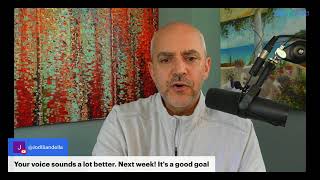
Jim Katsoulis, a hypnotist and weight-loss coach, argues that excess weight and overeating often protect us from emotional pain or trauma. He says conventional diets fail because they fight our automatic eating circuitry, and real change requires reprogramming the subconscious mind through hypnosis and mental habits, not willpower.
Chapters
Hey everyone, welcome to today's program, Yourself Thin Podcast, where we're talking about The protective qualities of your weight and food. It's kind of a different way to approach it, but can be really, really valuable because most people I've ever worked with that have a weight issue and are struggling to get it down are using their weight and the food in general as protection in their lives. And if you approach it this way, you may find things that you have not noticed before And that will allow you to resolve them and hopefully move forward. So let me give you a couple examples of how this can show up, um, with weight in general, kind of the higher level of it. Um, a lot of times, and this almost seems more, more like women, but, but in general it can happen to anyone, but I'll give you an example. Um, that tends to affect women more is that at some point in their lives, there may have been some form of assault, uh, on them. And now they decided to use the weight and being extra— being overweight to protect themselves from attention from men, or to protect themselves from, um, assaults. You know, they may have made that decision or that connection somewhere in their, their mind. And so now they're actually using the weight for a positive purpose in their own subconscious mind. They're using it for protection. Uh, and if you start to look at your weight this way, there's almost always some positive thing it's doing for you. Uh, it could be avoiding intimacy in a relationship. You may use that as an excuse for it. It may be protecting you from being intimate outside of a relationship. You know, again, there's a lot of ways it can show up, but it's hard to see a lot of times directly. You have to kind of look for it because it's very easy to miss it for whatever reason. I've noticed this working with clients that some of the positive reasons you may want to be overweight, um, almost be blind to, right? But once you recognize that, once you realize, you know, if this applies to you— it doesn't necessarily mean it does— but if you are using being overweight for protection in your life, then it's something you've got to deal with. Certainly if you want to lose weight, you're going to have to deal with this piece. And the way you typically deal with it is once you see it, right? So first you have to become aware of it. And if you are using the weight for protection in areas of your life, the first step is to acknowledge it. But the next step is to say, what can I use for protection? That's not my weight. And this is really kind of a profound question that a lot of times you might never ask. Right? Um, it, it may be, again, if, if 30 years ago Something happened to you, and in that moment you decided, I'm going to, you know, put weight on so I never have to deal with this again. Um, that can be a deep-seated belief and protection you're using. And so the solution to it a lot of times is, how can I protect myself now, knowing what I know now, without needing the weight to do it for me? And that question can bring you in a direction where you really discover, um, aspects of the weight that may otherwise have eluded you, right? And again, at the end of the day, if you do, if you are using the weight for protection, it's almost guaranteed that you're never going to let go of that weight if you feel like letting go of that weight is going to put you in danger. And again, if you don't realize that's what's going on, you'll have all these other reasons that you may blame for it. Okay. When in reality, at the very core of it is this issue. So that's one thing to keep in mind. Now, the other thing in terms of the food in general is the food's a little more, um, shorter timeframe typically. And the food as a protective mechanism a lot of times really becomes about your emotions, right? So that if you start to feel unpleasant emotions, undesired emotions, using food as a distraction and as a pain reliever, because food does have pain-relieving qualities to it, especially hyperaddictive sugary foods, if you're using it to protect you from your emotions, it's serving a positive purpose. And things that serve us positive purposes, things that are working for us to help us to avoid pain, we don't give up easily. So again, this is just an example of going deeper below the weight to other factors that you may be missing. Because sometimes they're counterintuitive, right? It may seem strange that you would want to be overweight, but if deep down you feel like being overweight is keeping you safe, is keeping you in a better mood, um, maintaining your stability and sanity, then you're going to keep the weight. You're going to keep the food in your life. And so this becomes an example of the weight is a symptom of a deeper problem, and the weight's not going to resolve itself until the deeper problem is fixed. And resolved itself. So this is kind of your cue to explore and think about that. What are potentially— and that's the best way to kind of go at it initially, if you're not aware of it already, is to ask yourself, potentially, in a bizarro world, what could the weight be doing for me? How could the weight be serving me and helping me that I may have missed? And that question magically can really help you become much more aware of what's really going on And again, once you recognize what's truly going on, if this is impacting you, then you can go to work on resolving it and fixing it for good. And that, I think you're going to notice, is one of the biggest shifts you can make with your weight. You know, that's far different than just trying to follow another diet. It's really going to the heart of the issue and looking to get some resolution there. So I hope this helps you out. And if you want to go deeper into this whole way of approaching your weight, Click the link in my bio or go to programyourselfthin.com and go get the free hypnosis session I made for you. It's called The New Thin Me, and it is designed to help you clarify and connect to your goal weight and move you in that direction comfortably and easily. And that's free again over through my bio or at programyourselfthin.com. And if you are— I'd like to put the link in here. So if you're over on Facebook or YouTube, I'll put the link in for you. And if you have any questions, feel free to ask them. I know TikTok, you can just click on the picture of me and it'll bring you to my bio, and then you'll see the link. There you go. But if you're over in Facebook or YouTube, you can just click the link directly. And again, I don't even just give you— I don't just give you a hypnosis session, I give you lots of stuff. So go check that out to find out what the other things are. Um, but yeah, if you have any questions, feel free to ask them. I'm here to help you as best I can. I've been doing this for over 20 years, and I think that at the very least I'll be able to offer you a different perspective on your weight. And you never know, sometimes when you see things differently, that can lead to the biggest, um, the biggest leaps a lot of times. What's up, Jane? Jane says, I did my blueprint of what I am eating and was horrified to see how often I eat junk food each day. I do not have an underlying trauma, but I definitely use food to relax and feel good. Yeah, but Jane, I'm proud of you. That's such a huge realization. And now you understand more. And that's the nature of the program. Now, Jane's in the program, but, you know, you hear me say this all the time, that awareness is the most important piece. And so Jane's a very smart person. And so it's probably shocking to realize how much junk food you're eating. And that is just a description. And this affects almost everyone I've ever worked with, is that if you're struggling with your weight, there's almost guaranteed a level of denial there. Not always. There's a few people that doesn't, but the majority of people that are struggling with your weight, part of that process is being in denial about what you're eating, how much you're consuming, when you're consuming, what your patterns are. So I'm really proud of you, Jane, for doing that. And I know it can feel— when you first become aware of it, can feel like you kind of get punched in the gut. But what I want you to realize is you now can see things clearly, whereas before you couldn't. And what that lack of clarity does, Jane, is it leads you to create stories in your mind about what's wrong with you that aren't really relevant or true. So now that you can see things more clearly, you're much more directly dealing with the issue. Whereas before, we kind of get into our own stories. Because listen, I would say this is almost the default for most dieters is, I don't understand, I don't even eat that bad. I don't, I don't understand. All of a sudden the weight came on. I don't understand why my weight's gone up. I've been eating fine. I was doing fine. Yeah, you were doing fine. And then you start eating more. Your weight always goes up because you eat more calories. You know, unless you're on some extreme medication, you know what I mean? I'm obviously not talking about that. I'm talking about the general person whose weight just all of a sudden goes up. Your weight didn't go up. You started eating more calories. You start consuming more calories. The weight is pretty accurate description of where you're eating at, folks. But again, what most people do is they go into diet mode and they say pay super attention to what they're eating for a week or a month or 2 months. But that's not what's controlling your weight. It's what you eat consistently over the year, over the decade. That's what's controlling your weight. And so awareness is so crucial to develop. So I'm proud of you, Jane, for, for doing that and realizing it. Nice job. Uh, Amy says, thanks for your encouragement and wise words. I think about something you've shared every time I eat. That's awesome, Amy. I appreciate you saying that. And that's literally why I'm here. Again, this is a mission for me in my life is to help as many people as possible. Live at their goal weight. Because again, for me, this is life and death. My father died, uh, at 54 of a heart attack, and his weight was absolutely a contributing factor. His lifestyle and his eating, absolutely contributing factors. And so, um, the reason I do this and I'm so passionate about it is because to me it's life and death. I want you all to be alive here for as long as you can be, and I want you to have the best quality of life while you're here. And what a lot of that comes down to is really your mindset, how you think about food, how you think about your weight. Um, you know, all of this stuff. So it makes me happy when I hear people say that, because that is my purpose. I want to get inside your heads. I want to help you think differently. There's no question about it. I am a hypnotist by trade, an NLP trainer. I am speaking in such a way to hopefully, uh, get inside your head in a positive way. You know, commercials are always getting our heads in a negative way. So I am doing my little part here to kind of counteract that and to give you a source of information and a source of internal dialogue inside your head even that supports and helps you make the better decisions. And again, when it works well, it works comfortably, you know. So I always think the best change is the change that happens comfortably, kind of in the background on near autopilot. So that's one of the reasons why with dieting, I'm really not a big fan of kind of the white-knuckling, the white-knuckle, you know, restriction, willpower-based model of change. I don't see a lot of proof that that is effective and helpful when it comes to changing weight. So I have found that what works better is when you figure out a way that's relatively comfortable That, that's what I think the secret is. User 109 says, you're doing amazing work, Jim. Thank you, I appreciate you saying that. Every day getting better, that's the goal here. So if anyone has any questions, feel free to ask them. Any weight loss questions are welcome. I obviously have my own approach, but I work with people that have done everything. I work with keto people, carnivore people, vegan people, Mediterranean All of them, everyone. And, um, again, how I can help everyone is that at the end of the day, no matter what approach you end up deciding to use, your mindset is going to be the foundational piece of all of it, right? So again, in Program Yourself Thin, we follow the goal weight pyramid, right? And you see on the bottom there, mindset. Mindset's the bottom level. It supports the rest of the levels. Lifestyle's underneath. Eating, and then there's eating, right? And so when we approach weight in a holistic, comprehensive way, you tend to get much better results. I guess that doesn't sound surprising when I put it that way. But yeah, usually a comprehensive, strategic, holistic plan is going to beat, you know, just wild— one wild tactic, which is what diets always are. Diets are always one wild tactic, folks. It's one wild tactic at a time. Cutting all the carbs out of your diet, that's a wild tactic. That's a wild tactic, right? Not eating for 16 hours. It's not as wild, but it's still a pretty wild tactic for most people to all of a sudden go to not eating for 16 hours. It's pretty overwhelming and intense for most people. Okay. And I'm not disputing that one. I think there's some good benefits you get out of giving yourself a break from eating every day. But going and jumping straight into 16 hours, I think, is completely unnecessary and overwhelming for most people. Tracking every calorie is an extreme tactic. It's a wild tactic to count every single calorie you're going to put in your mouth. You eat on autopilot, just like— it'd be like trying to count how many breaths you took today. You know, your brain ain't up for that job. Your brain's not built to count every breath you take because you're built to breathe on autopilot. Well, you're never going to believe it, but you're built to eat on autopilot too. So much so that evolution has literally created, given us two brains that are disconnected from each other. You have your, your big brain and you have your belly brain, and your belly brain evolutionarily has been created so that even when, you know, things are going crazy up here and this is getting absorbed, you still have the intelligence to digest food and eat because it's so important. So this idea that you're going to consciously take over your eating has about as much chance of success as you consciously taking over your breathing, which is to say that it's not going to be very much success you're going to have because your brain's not designed to consciously control your eating. I don't know if that sounds crazy to you or not, but yeah. And that's why you struggle with diets, because you're trying to consciously take control of something that's meant to be automatic, which is why Program Yourself Thin is about programming your mind to automatically do the things that get you and then keep you at your goal weight. Whereas dieting is about micromanaging every little decision you make so you can control your weight. But the control is an illusion because you can't stay consciously in control of these things. You're not built for that. Um, Janice says, I was always thin. The largest I was was size 12. Now I eat until I'm bloated. I eat things I don't like. I went to therapy, useless. Help. Um, yeah, I mean, therapy rarely is going to help you with your weight because therapy is not a holistic strategic approach to managing your weight. It can absolutely identify certain factors in the past that have contributed to your behaviors now. But again, at the end of the day, you know, we can do therapy for why you are scared of the piano and playing it, and we can resolve your fear of the piano, but that doesn't mean you know how to play the piano now. You now have to dedicate time and energy to learning the piano. So again, therapy is really— it's— it would be appealing to think that there's just some psychological, therapeutic, traumatic blocks you have that are keeping you overweight. But that's very rare. Not to say they can't be there and they're contributing, but I do believe that that's really overstated. The idea that you're going to go to therapy and magically you're going to know how to live at your goal weight. Is a rare thing. Okay. So again, I think the secret is to learn, to learn, to follow a system that allows you to take control of not just your eating, but to take control of your mindset, your lifestyle, and your eating in a way that is the most comfortable and natural for you. So again, Janice, very important not to take your, your therapy experience and to fold that into more proof of why you're screwed up and you can't lose weight. I would take your therapy experience and realize that therapy's here and managing your weight's over here. They're not the same thing. They're mildly related sometimes. But again, at the end of the day, in therapy, you did not learn how to create a thin, healthy mindset. You didn't learn how to create a thin, healthy lifestyle. You didn't learn how to create a thin, healthy eating pattern. And most importantly, you never learned how to run your own brain and to program it so it does all those things automatically. So yeah, my help, I would say go get the hypnosis session I made for you and watch the training I made. That, that would be my, the best way I could help you. Show up on these calls. I'm here every day, Monday through Friday, um, usually around noon Eastern. Um, I was a little bit late today. I was a little hour late, but I'm usually around noon Eastern. And if you can't make the lives, it's also a podcast and you can Listen to that anytime you like. But again, if you listen to this, I think it'll start to kind of illuminate a new path forward for you. All right. But great job taking action too. I just want to, I want to acknowledge that, that going to therapy and using, you know, doing that work, that's not wasted work. It's valuable work. But please don't confuse the therapeutic work with, again, learning how to live like a thin, healthy person. They're two totally different things. Um, Jane says, I need to replace these foods with more fruit and veggies. It was also difficult to see how infrequently I eat veggies and fruit. Yeah, that's great. Again, congratulations, Jane, because, you know, think about now you know that. Now you see that clearly with your own eyes. Two weeks ago when we were talking, you didn't see it clearly. Two weeks ago you didn't see it clearly, so you told yourself, geez, I don't understand, I'm never gonna be able to lose weight, I don't even eat that bad. That's what all of you are saying if you're struggling with your weight. Most of you are saying, I don't get it, I don't even eat that bad, I don't understand. Boy, it must be my metabolism because I'm not even eating any worse than I did. I'm not any worse than I did when I was 30, but I'm 40 pounds heavier now. Must be metabolism. No, it's not your metabolism. It's that you eat more than you did and you have no fucking clue because we don't consciously— we're not consciously aware of all the food we're eating. We're consciously unaware. Most of the time. You make over 200 food decisions a day. Most of those are happening subconsciously outside of your awareness. So again, I say this, I always talk about awareness, and people that, that aren't familiar with my work, they push back on that because they think they're aware. Most of you think you're aware because you're aware of what you're aware of, and you're not aware of what you're unaware of. And I can tell you, doing this for over 20 years professionally, that most people are extremely unaware of some of the most obvious and basic things. Smart, intelligent people. As I say, it's— I'm one of the highest paid hypnotists on the planet. It's $25 grand to work with me. So you got to imagine who is forking over that kind of money. I'll let you know, it's usually entrepreneurs, people that are successful professionally. They got successful because they're very, very intelligent. They have a lot of follow-through. They're very smart. The weight issue is not an intelligence issue. It's an awareness issue primarily. And most smart people, oddly, are very good at being unaware of things. So I want you all to know that because that's always the first step is developing awareness. And Jane's kind of proving that with what she's saying. And so once you see honestly, clearly how much junk food you're eating and Bonus step, the lack of veggies and fruit you're eating. You step into the real world, Jane, and I'm proud of you for doing that because it's not easy. It's easier to live in our denials because our denials are there to kind of bubble wrap our reality so it doesn't feel too uncomfortable to us. So again, the hard part of awareness isn't being aware. It's the discomfort that the awareness brings with it. That's the hard part. That's why we stay unaware. Because it's protecting us, right? So I was just talking about the protective qualities of your weight and food, but your denial has protective qualities as well, you know. So again, Jane, it's a big deal to step outside of that denial and to see what you're eating more clearly. Okay, so, so again, that's a big, big step. And I just want to point out that you consistently are making big steps forward. And sometimes you got to do kind of the base work before the big work shows up. You got to lay the boring-ass foundation, you got to dig a hole, and you you know, build the foundation. That's pretty boring compared to building a beautiful house. Okay, and that's kind of what you're doing, James. Uh, User 109 says, single best thing to do, say, when you overeat before you give in and fall off the wagon completely? Um, that's a great question, but honestly, it's kind of the wrong question. And it's a wrong question because it's implying that that moment right before, right before you actually start eating or binging That moment right before is where the answer lies. And I would say that's not true. I would say the answer really lies the 8 hours previous to that. So I want you to start thinking more holistically. I want you to zoom out and see the bigger picture because a lot of times where the problem shows up is not where the problem was created. So let me give an example. Classic diet move. I'm not going to eat breakfast or lunch because I want to cut my calories as low as possible. Uh, then the afternoon comes and you're starving. So in that moment, you haven't eaten all day long. You've been working hard all day using energy. Um, not eating, not replenishing the energy. You get to 4 or 5 o'clock and you're ready to binge. You're, you're panicking practically. You're so hungry. Well, there's nothing to say in that moment. You know what I mean? Like, what am I going to say? Oh, nothing tastes as good as thin and healthy feels. Who gives a shit? Every cell of your body is screaming for nutrition. That, that's not going to work. So in this situation, I would say zoom out, look at the big picture instead of just a mantra to say. And again, mantras are valuable and helpful, no question about it. But almost always, right the second before a binge or an overeating episode, there's bigger things going on than mantras are going to fix. And the number one thing is that you're way hungry. I would say the number one trigger for most people's binging and overeating is that they over-restricted. Right before it. And so the over-restriction, like clockwork, leads to overeating. So that's the first thing to watch. And so if your pattern is triggered by over-restricting or under-eating, then the solution is not a mantra. It is to nourish yourself more consistently throughout the day so that when you end up at 5 o'clock, you're, you're nourished, you're energized, you're grounded. Okay. The other big thing to look at is your emotions. So again, if you are in the pits of despair a second before you start bingeing or overeating, you know, there really aren't a lot of mantras that are going to pull you out of that. So again, we want to start to recognize how does that pattern run? What triggers the pits of despair? What triggers the loneliness, the sadness, the anger, the frustration, whatever emotions it is for you that kind of lead you to overeat? What triggers those earlier in the day? Usually there's a slow build of it, you know. So again, that, that's more the piece of it there, um, than any one phrase is going to fix. And once you have that, then again, phrases absolutely are helpful. Um, what phrase specifically, it just depends on the person. In Program Yourself Thin, I mean, just the, the morning sessions and the weekly sessions total, there are about, let me think here, like 75 hypnosis sessions, Most of them are the 5 Minute Morning ones, but each one has a different weight loss mantra in it. And what I've learned, um, over the years is that people always resonate with different ones. So I can't just give you a mantra that'll work because I don't know you enough. You know what I mean? And, um, but again, that, that's not the main issue. It's something that'll help you. Um, but the bigger issue is what's going on before the binge, what's going on the previous 4, 8 hours before the binge and overeating, what's happening there. That's where the real information is. J Boogie Nights, get that money, Jim, right? Uh, Russ says, honestly, I don't get the hate on calorie counting. It made me more aware of how much I'm eating. Um, I mean, I don't hate calorie counting as an exercise. The, the hate for calorie counting I can explain to you is now you may not mind it. That's great, right? The golden rule of program yourself, then there's no right or wrong. There's only what works for you. Okay. So there are some people out there that love calorie counting. Okay. You're probably not it, folks. Like most people are not because it's kind of an abnormal, weird way to interact with food. But some people just have a brain that just really fits. Okay. So great job, Ross. I'm happy that it worked for you. But for most people, the reason they hate it is because, again, the way the diet industry works, they always frame things that this is what you have to do. And that's one of my biggest frustrations with the diet world is that every diet and everyone selling it, it's always like, this is what you got to do. You want to lose weight? You've got to cut carbs. You want to lose weight? You've got to stop eating for 16 hours. You want to lose weight? You've got to count your calories. And you don't have to do any of those things necessarily. Right? You have to do the things that work for you, the things you can do consistently. So again, if you're like Russ and counting calories works for you, great. It's really valuable. And that's why I say counting your calories, at least for a little bit of time, is really valuable because it does clarify your consumption. And there's a good chance if you're overweight, you are way underestimating the calories you're consuming. And so tracking calories for a couple of weeks can be really eye-opening. But the idea that you are going to track and measure calories for the rest of your life is, for a lot of people, it's, it's unappealing enough that they just aren't going to do it. And there's nothing wrong with that. You do not need to count calories to manage your weight. You do not. It is helpful in some ways, but it ends up being tedious for most. And so I think that's where the hate for it comes from, is because, again, the diet industry tells you you have to do it. You do not. And a lot of people struggle to do it. And so then it makes them feel like a failure. And don't feel like a failure. It's, it's, it's for most people, it's a tedious, unpleasant process. And because it's tedious and unpleasant, it doesn't work because when something's tedious and unpleasant, it creates stress hormones in you and you tend to overeat any of the calories you save from calorie counting. So that's my thoughts on that. But, you know, again, whatever works for you is really the path you all ought to follow. You know, we got to figure out what works for us, each and every one of us. Something's going to work different for us, most likely. That's why I wrote this book, The Tao of Living at Your Goal Weight, because it's about figuring out that the Tao is a word that means the way, the way of living at your goal weight. And so the Tao, the way, is the way that works for you. You know, we want to figure out a way of managing our weight that kind of flows out of us, you know. And again, I would suggest you break it down into pieces so that you have a mindset, a lifestyle, and eating of a thin, healthy person. And so, you know, my life's dedicated to being thin and healthy. I dedicate my life like, well, obviously I teach this stuff, but even just personally, I've dedicated my life to thinking, living, and eating like a thin, healthy person. But that dedication, I think of as kind of my dao, my way. It's my way of being. I remember Gandhi said that one time where he's like, they asked him about his religion. He goes, my religion, to understand my religion, you'd have to live with me for a couple of weeks. My religion is how I live, how I get up in the morning, what I do first thing, how I go through my day, when I go to bed, what I do. You know what I mean? Like, like it's, it's the subtleties of how you're living. Is really a huge part of your weight. And so again, dieting doesn't teach you this. Dieting makes you think you're going to micromanage your weight down. Um, and again, you can do it for a little while, but the big issue with diets is that they don't last. And they don't last because they're overwhelming for most people. No. So Marta, Marta says, I asked myself, what is stopping me from losing weight? I always struggled and pushed through diets and calorie counting. It's hard for me to believe I can achieve calorie deficit needed to lose weight and the entire process being natural and instinctual. Um, yeah, of course it's hard for you to believe, Marta, but, um, you know, but here's the other thing too, Marta. I always struggled and pushed through diets and calorie counting. Uh, no, you didn't. You did for a little while and then you stopped. You know what I mean? You should say, I always started struggling and pushing through my diets and calorie counting until I couldn't keep it up anymore and I quit. That, that language is very important to add because you're, you're the way you're writing that, you're making it sound like the only way I've ever lost weight is to, you know, struggle and push through diets and calorie counting. No, that's not true, because that implies that people say that all the time. The only way I can lose weight is when I'm really over-restrict. Well, that's not losing weight. That's losing weight for a little while. That's not living at your goal weight. So a more accurate way to say it, Marta, is that I haven't figured out how to live at my goal weight yet. See, but what you're saying is you're saying, well, the only thing that works for me is when I struggle and push through diets and calorie counting. And you're, you're saying that as if that's worked for you. And I don't disagree that it's worked for you for a little bit, but is that your goal? Do you want things to work a little bit, or do you want them to work for the rest of your life? So you should frame it as saying, right now, I haven't figured out how to control my weight. I don't know how to control my weight. I know how to do it for a little while, but I have not figured out how to do it long term. And now all of a sudden we've got an even playing field. And now you can consider the diets, the calorie counting, the strict things, but you can also consider more natural ways and what I'm talking about here. On an even playing field. But when we go into that conversation, well, I don't know, the only thing that works for me is over-restriction and being really, really counting every single calorie that goes in. People say that to me all the time, but that's bullshit. That worked for you for this long. Is that working? Is that what we're considering working? Because you lost weight for a month? Who gives a shit? I don't consider losing weight for a month or two a success. I don't consider losing weight for a year success. Not really. My definition of success is when you start getting past 2 years. That's when I start the clock. I've been in my goal weight for over 30 years. I haven't dieted or calorie counted or struggled or stressed at all. I've consistently put effort into what I do. It's no different. I've been playing guitar for 30 years. It's, it's very, very similar. I just keep developing and building upon my skills one step at a time. Yeah, Martha said yes, I hate the whole process. Yeah, Martha says I agree, I haven't figured out how to control my weight. I feel like crying but also feel relieved. That's okay, Martha, crying is not a bad thing. I would rather have you feel, um, like crying and grieve the reality of the situation Grieve the lost years to dieting. Grieve the fact that here you are all these years later and you still haven't figured this out. I know it's upsetting, folks. I get that. But wouldn't you rather grieve all the wasted time and effort in diets and bullshit so that you could get to a new place and hopefully be able to start a new path for yourself rather than living in the sunk cost of, well, I've done this for 30 years. Uh, uh, I just got to push harder. Folks, the diet's never going to work for you because diets were never built to keep you at your goal weight. Diets aren't your friends. Diets are something that were created by the food industry. The diet industry is just a branch of the food industry. Would you trust Oreo cookies to come up with a diet that's going to help you not eat Oreo cookies forever? Would you? Would you trust Ben Jerry's to come up with a, a diet where there's no more ice cream in it? That doesn't make any sense. They're businesses. Weight Watchers was owned by Heinz. Jenny Craig was owned by Nestlé. Atkins Food Products, owned by the same company, owns Onions Pretzels, Carvel, and Cinnabon. SlimFast, owned by the same company, owns Ben Jerry's ice cream. These companies aren't trying to give you methods that are going to allow you to be thin, healthy, and happy for the rest of your life and eat less of their products. They're going to give you a strategy to lose weight that keeps you stuck and ends you right back at their products, eating just as much of it as you ever were going to. If not more. So I get it. And Marta, I get it. Marta says, I feel totally lost and helpless. Hopeless. I get that. And that's what happens. But I would rather feel totally lost and helpless and hopeless about my weight than to start another diet that I've tried 30 times and hasn't worked for me. I know it's uncomfortable to feel lost and hopeless, and I know it's a scary place to be. I acknowledge that. But at least it's fresh territory. I would take feeling lost and hopeless all day long over the false comfort of feeling like, okay, well, I got my keto plan. Okay, well, today's Tuesday. No, this wasn't the week, but next Monday I'm going to start my keto plan. Oh, you know why? Because next month, May, you know what, new month, May Monday, I'm going to start my keto plan on Monday. I would way rather you feel hopeless and lost. Than this fake false comfort that there's some fucking diet just waiting for you on some Monday to start. That's going to be the answer to all your prayers. Cause that's bullshit. That's not true. There's no diet out there waiting for you folks. You know, all the diets and the diets aren't the problem. It's the mindset behind it because this is ideal. Well, oh, I know what to do now. I'm just going to start doing my thing. I'm just going to force myself to do the thing I don't like to do. It's Monday, it's the first Monday of the month, time to start doing something I hate doing. That's what you're saying to yourself subconsciously, and you wonder why you can't stick to it when it's pretty obvious you don't want to do something miserable, even if you lose weight. So what's the alternative? You find a better way forward. I'm— I said, now I'm mad, crazy emotions. I get it, Marta, I totally get it. But again, being lost and hopeless is not the worst thing in the world. I know it's, it feels unpleasant. I get it, but it's going to pass, you know, and hopefully it'll bring you to a new place because it's a relatively new emotion. Um, the diet isn't going to help you. And of course, I think you should get my program, you know, then I have all the answers in the world, you know, and you can put all that energy into, you know, again, systematically transforming your mindset, your lifestyle, and your eating. I mean, folks, when is the last time you approached your weight with this approach? This is about 50% of the program yourself, then approach this, this here. This is knowing what to do. This is, this is my goal weight blueprint in the program that I take you through. Okay. This is figuring out what you need to do. This is figuring out how you need to think, how you need to live, how you need to eat to get to your goal weight and stay there. Okay. The other 50% of the program is figuring out how to run your own mind so that you actually do those things. So I think you need both of those things in order to, um, really genuinely move yourself forward. I don't, I don't know, that's a crazy idea, but that's what I would suggest. Jane says, my pattern is that I will have one small sweet thing and then that leads me to think, what the fuck, I'll just continue to eat like this, like that. The day is ruined. Yeah, Jane, that's called the what the hell effect. If you go research what the hell effect for dieters It's pretty insightful, and I think a lot of you will recognize that pattern in yourself. The what the hell effect is unique to dieters. And again, it's part of that all-or-nothing mindset that the diet industry has installed into you all. Folks, you've been programmed to be overweight. You've been programmed to be overweight by the food industry and the diet industry. They're one and the same. And you now are automatically overweight. Hear what I'm saying, please. You are literally programmed to be overweight. How do you know this? Because when you're just living your life, not counting calories or trying to force yourself to act different, when you're just living your life, you are overweight. You eat in an overweight way. You think in an overweight way. You live in an overweight way and you're overweight. That's your normal. That's what's normal to you. And then you try and do all this shit to try and diet and change yourself for a little while. And it changes for a little while. And then what happens? What happens? You always go back to what? You always go back to what? Being normal. You go back to your normal. Your normal's overweight. So how do you change this? Fighting against it's never going to change it. Reprogramming your subconscious mind does change it. And so again, I sit in front of you. I've lost 50 pounds and kept it off for over 30 years, but there's been no dieting. There's been no exercising hardly. What I've done is I have learned how to think differently, how to live differently, and how to eat differently in a way that keeps me at my goal weight in the most comfortable, enjoyable way possible. Is it still work? Yeah, sure. Of course. I still have to manage things. I'm still, you know, engaged, thinking about things, always improving and optimizing. But most of it, I'm kind of riding the wave of all the work I've previously done. It's no different than, um, in a small way, like your toothbrushing, right? You didn't, you didn't come out of the womb knowing how to brush your teeth. Your parents installed that into you. And now here you are 40 years later. And every time you wake up in the morning, next thing you know, you're brushing your teeth. You don't even realize you're doing it because that's a program that got installed into you. And you've got tons of programs that were installed into you folks. Reading, writing, driving a car, using a computer mouse. Using your phone, brushing your teeth, how you drink, how you eat. All of these things have been programmed into you. And now you just do them on autopilot, but we've all been programmed by the food industry. We've seen tens of millions of food ads in our lives. We're constantly being triggered to think about overeating foods. We've been inundated with diet thoughts and programming. So anytime we think about managing our weight, we think like a dieter automatically. And we approach it like a dieter and you get dieter results, which is that you lose weight for a little while at best, and then you always put it back on because you always go back to fucking normal. You're always going to go back to normal. You're always going to go back to your programming. I could drop your ass in China. You'll learn how to speak Chinese. 40 years later, I'll bring you back to America and you'll speak English. You can't get rid of old wiring. You can wire over it, though. And that's something you all are not doing. And it's why you keep just— you feel like you're on this hamster wheel. Right? You keep trying stuff, but nothing changes. We need to go deeper. We need to go to the subconscious mind and start to reprogram it and change it. Um, Jess says, what about the cravings when you drive by a restaurant? Yeah, that's legit. And that's an example of Pavlovian association. That's what's driving a lot of your behavior is environmental cues that you're not even aware of. Pavlov's dogs, right? You show him the food, salivate, and you play, ring a bell at the same time. It associates the bell with the food. And eventually all you need to do is ring a bell and it salivates as if it were looking at food. This is called a conditioned response. And so when you drive by your restaurant, you elicit a state of hunger and craving because you're in your mind eating the food you ate there last time. And that's what's happening to most of you 24 hours a day in this environment. You're constantly being triggered to think about food. You want to talk about the real reasons for food noise? That's a big part of it. Yeah, Chelliep says, I read my book daily. This is the book Chell's talking about. This book's awesome. Again, I, I don't know, folks, you know, it's like, I don't know, it's sometimes— I get it, like, I get it. I've been doing this for a long time, and I understand dieting You know, it's just, it's another level of it. Dieting is typically this really cheap response to try and change something major in your life. You know, most diets, maybe you'll get a book, maybe you'll watch a podcast, maybe you'll watch a video, and then you just try and do it. And so most people, the amount of investment they make in their weight is relatively small. Most of the time, most people, but you know, if you, you have to take this seriously, that's why I think a program yourself thin. As like a college course for mastering your weight for the rest of your life. You know, there's an investment with that. You know, I gotta give you a bunch of shit for free, but you know, this book is about the least— the smallest investment you can make in your weight. This book right now, I mean, it's $9.99, which is— I know, I listen, like I said, it's $25 grand to work with me privately. I've been selling high-end coaching for, for years and years. And so, you know, one part of me has a mindset of like, when people are really serious, they invest big money and they show up big for what they want to do. If you went to college, I bet you showed up for that, right? That was a big-ass investment. You made sure you're going to get your value out of it. So, you know, again, another whole aspect of your weight is that you've also been conditioned to way undervalue your, your health and your weight and the impact it has on you. But this would be about the smallest investment you could make in your body and weight. But that's awesome that you read that every day. It's like that, it's meant to be read every day. BAH says, how is the audiobook coming along? I love the book, I would love to listen in the car. The audiobook is coming along good now because literally 2 weeks ago I was talking about— I was doing a group call and I was like, how's my voice sound? Like, it sound all right? Because I wasn't feeling good. And it was so funny. The next day I woke up and I was like, my voice has been screwball for like 2 weeks straight, but it's finally getting back to normal and I'm feeling so good. So yes, this is— I'm going to say next week I will be working on this. That's what I believe. And so again, once I get working on it, I got everything set up to record it. I just got to do it. And my voice is getting back to normal now. So give me another 2 weeks. Hold me to that too. 2 weeks though, I believe I should have the audiobook. I want to get that for you all. Earthrocker says, yeah, tomorrow for sure, right? Always tomorrow. Jesse says, any advice for temptations? Um, yeah, I mean, but it's, it's not— there's not like one thing I can tell you about temptations because temptations is a relative term. So think about whatever temptations you're thinking about. If I said I'll give you a million dollars if you don't eat that tempting food, would you struggle to eat it or would you not eat it? It'd be easy, right? If I said, you know, if you eat that tempting food, the person you love the most in life is going to disappear from your life forever. Would you eat that food or not? You wouldn't eat that food. So again, the idea of temptations is a relative concept depending on your mindset and your motivation. And most people have very low motivation with weight. Most of you weigh what you want to weigh. To be as blunt as I can be, you weigh what you want to weigh. Subconsciously, you think you're really motivated to lose weight and you're not. That's one of the first things you need to become aware of. And so if you want to change your weight, most of the time people have to change their motivation, become more motivated. So it's hard to talk about temptations in a general sense because we usually have to start— that's why in Program Yourself Thin, when it comes to mindset, the first level we deal with— what's the first thing you see over here? Motivation. Motivation is the very first thing we deal with. All right. Um, Shelly says, I'm very slow and steadily losing weight. I am not dieting. I'm eating mindfully, some days not, but I'm all or something, listening to you, weighing every day, reading your book. Chell, yep, great job. And that, that's the path forward. That's the path why Chell will be here next year, um, and at their goal weight or closer to it, right? In a way that feels sustainable. That's, that's wonderful. Um, yeah, Martha says, oh, thank you, I have the book right now. Yeah, keep reading the book, Martha, you know. And at some point, if the book resonates with you, invest in the program, right? I want to believe there's something out there that works. I get it, I get it. Um, I can understand that. Luis says, one thing you once said got stuck in my mind. I lost 4 kilograms already. You said, imagine you have a choice: eat the meal or wake up with your dream weight tomorrow. I won't wake up with my dream weight, but I'm a step closer every day. That's beautiful, Luis. Yeah, exactly. I love that video. That's one of my favorite things that I, I tell you, the, the magic weight loss genie question. Yes, that's a good one. Um, Jane says, if people think this is just another diet and are hoping for quick results, they'll be disappointed. This It's a slow, gradual, thoughtful process that will take a long time and work, but it is not the kind of work that diets promote. Yeah, absolutely. And I have no problem admitting that this is not the fastest weight loss. The fastest weight loss is almost always the shortest lasting weight loss. And I've never seen any— I've never seen any contradiction to that. I've never ever seen a plan that provides fast weight loss that lasts, that's not medically or surgically You know, assisted. Um, I've never seen it. So I think just like anything else, there's no, there's no instant way to learn the guitar or the piano. There's no instant way to learn a language. There's no instant way to become an amazing artist. It's, it's a, it's an obvious, evident process that you have to have patience to move through. And again, dieting has conditioned you since you were born to look at how fast can I lose the weight? But that how fast can I lose the weight mindset is literally the anchor that keeps you trapped in being overweight. You're so obsessed with losing the weight quickly that you don't consider real strategies. As I say, diets are just get-rich-quick schemes for weight, and get-rich-quick schemes don't work. But the difference is that when it comes to get-rich-quick schemes, we can compare it against the traditional way of earning income, which is that you go and develop a skill or you, you create some value to the world and you're compensated for it, right? So we look at get-rich-quick schemes within that context and realize they're a bunch of bullshit. When it comes to weight, you have no legitimate plan that's put in front of you. The only thing you've been given in your life to lose weight is dieting, and now surgery, and then medication. You've never learned how to transform your mindset, your lifestyle, and your eating in a strategic way to take control of your weight once and forever. So it's a longer process, I have no doubt about it, but it's, it's a solid process. Jane's a great example of that. If you're here regularly, you You know, you see Jane, you can see her diet mind slowly eroding away. And, you know, you see the, the knee-jerk initial responses, but again, with Program Yourself Thin, there's always a solid place to land. You always land on solid ground. And that's, to be completely honest, I'm not picking on you, Marta, but that's the difference. Um, for Marta, you know, she ends up realizing diets don't work and feels lost and hopeless. Um, Jane gets frustrated and lands on PYT each time. That, that's the big difference is that we keep— PYT is solid ground. Program Yourself Thin is solid ground. Like college is solid ground. You go to college, you have good and bad classes, good and bad tests. You're lost sometimes, you got it sometimes, but you always have the solid support of the college environment. You've got the professors, the classrooms, the buildings, the campus. There's support there. When you're dieting, what support do you have? You have none. You have you do it until you're not doing it, you know. Jody, Jody says your voice sounds a lot better next week. It's a good goal. Yes, it is. It's top of the list. I've got, I've got recording to do, so I'm in recording mode next week. And, uh, my voice is sounding good. I'm appreciating it now. Again, you, you know, absence makes the heart grow fonder. Having my voice gone for the last 2 weeks, uh, makes me appreciate it even more. And, uh, I'm still— it's not 100%. I can feel it's about 84%. You know, but by next week I believe I'll be as close to 100 as I'm going to get, and we'll get going on it. Uh, User 109 says, I love that you teach about maintaining your goal weight and how to live there. Yes, thank you. I'm glad you appreciate that distinction. I don't give a shit about your weight loss, folks. I care about you living at your goal weight. Remember, you don't care about your weight loss either. You've all lost weight and put it back on, and you're really upset about that. You're not happy that you lost the weight at one point, you're upset that you put it back on. And the reason you keep putting it back on is you all have never learned how to live at your goal weight. You've never learned how to live at your goal weight, not even once. And living at your goal weight and losing weight as fast as possible are two completely different things. And once you start to learn how to live at your goal weight, again, it's a process with a solid foundation under it. I'm not saying it's always the easiest. Please understand, college isn't always the easiest, okay? But it's solid ground that you build on top of. You know, and that's the difference, because that's what leads you to be somewhere completely different a month from now, 2 months from now, 6 months from now, a year from now, 2 years from now, 3 years from now, all the rest of it. All right, uh, what's up, Sweet Quest? Says, I need your course on all ideas written form as well as the program. This book is after you lose weight. Um, I need your course on all ideas written form as well. Um, yeah, well, the program's got a lot of written stuff in it, and that, that there are more books coming. I got some other things I gotta take care of first, but there actually is a lot of written material in the program as well now. But this book's not for when you're at your goal weight. Please understand this, okay? This book is for getting to your goal weight and then living there. To me, they're one and the same. To me, I make no distinction between getting to your goal weight and living at your goal weight. I have clients that are, you know, morbidly obese, and I consider us in the same situation. We both wake up each morning and we're gonna live our day. And so I don't look at it as, I've lost the weight, now I do something different. To me, there's no distinction, 'cause every day, whether you're 100 pounds overweight or whether you're right at your goal weight, you are working on optimizing your mindset, your lifestyle, and your eating, and how to run your mind. And so regardless of where you are in the process, we always have the same focus, right? And that book is absolutely for getting to your goal weight as well. As living there, but to me they're one and the same. So, all right, I am going to get out of here. So thank you so much everyone, these are great calls. I'm happy you're all here. I know I got a little bit of a late start, so, uh, glad, uh, that we can do that. Vicki says, looking good, sounding good. Thank you, thank you. Um, I see User 109 says, can you talk about plateaus? I love your philosophy, uh, that it's a good thing in the journey. Yeah, plateaus are absolutely a good thing in the journey because that's when you practice your maintenance again. Program Yourself Thin, we start with maintenance. If you look at the mindset section, which is the first part you go through, the last part of that section is maintenance. We start with maintenance because this whole process is about living at your goal weight, not doing some magical shenanigans to get to your goal weight and then have to figure out how to stay there. That doesn't work well, okay? So it's really important that we honor and acknowledge plateaus because the plateaus typically are you kind of reorganizing, around a new weight, around a new lifestyle, a new way of thinking, a new way of eating. And sometimes we need to kind of acclimate to things before we can move forward. I think of plateaus as like base camps during the hike, uh, of Mount Everest, right? You can't go from the bottom of Everest to the top of Everest because you need to acclimate to the oxygen levels. And so we have base camps along the way where you stay for a little while and acclimate. And I think of plateaus as that, you know, and, um, again, all in service of moving forward to the, to top of the mountain, metaphorically. So, all right everyone, thank you so much. Again, if you're not in my world, please go click the link in my bio, um, go get the free hypnosis session I give you, watch the training I made you. I always have new and free things coming out to help you. I'm here to help you out and move forward with your weight. Um, if you like this, I'm here every Monday through Friday, usually around noon Eastern, um, to answer any questions you have. Uh, here again to do that. Uh, if you can't make the live, it's also a podcast. You can search any podcast platform, uh, search Program Yourself, then it'll pop up. You can listen anytime you want. And yeah, there is this book if you're, if you're interested in, uh, checking this book out. This is probably, um, like I said, the easiest way you could start to think about your weight differently is that book. So go check it out on Amazon. And, um, yeah, have a super day. We'll talk soon. Bye.
More from Jim



Weight Loss Visualization: Wake Up in Your Dream Size #programyourselfthin #weightlosshypnosis



What If You Pretended to Be Thin for One Hour? #programyourselfthin #weightlosshypnosis




