Program Yourself Thin Live 5-1-26
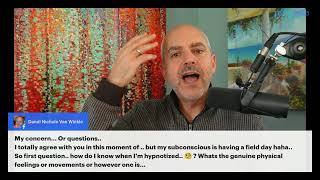
Jim Katsoulis argues for "starting anew" at natural milestones and an "all-or-something" approach instead of all-or-nothing dieting. He offers a hypnosis-based program with daily 5-minute sessions, lifetime access, and a book called The Tao of Living at Your Goal Weight, emphasizing listening to hunger cues and choosing whole foods over ultra-processed ones.
Chapters
Hey everyone, welcome to today's program, Yourself Thin Podcast. Today we are talking about Starting anew. This is such an important concept because I think if you're ever going to succeed with your weight, you're going to have to master starting anew. Now, you've been starting anew your whole weight loss career. Okay. What we're going to do differently is we're going to start anew a lot more. So I bring this message to you on the first day of the month, right? It's May 1st here, and it's another opportunity to start anew because a new month, a new week, a new year, a new home, a new job, a new child, a new marriage, new divorce, whatever is new, a lot of times tends to have psychological momentum, psychological energy, and it can feel like the start of something. And we want to really utilize that as often as we can. So It kind of comes back to the concept of resolutions. You know, I know a lot of people are kind of sour on the idea that you're going to set a New Year's resolution. But really, if you take a step back and think about why, it's because I'm going to set a New Year's resolution and then I'm not going to be doing it a month from now. Well, okay, fair enough. Maybe that's true. So set a February 1st resolution to set a new week resolution every week. Don't stop setting resolutions because one resolution a year hasn't worked for you. Start setting way more resolutions, because again, if we zoom out and look at a year where you do that compared to a year where you do it at the beginning of the year, potentially, which do you think is going to serve you better? Because each kind of forward momentum, even if it only lasts for a little while, if you start consistently doing it, you start to realize, oh my goodness, 4 times a month, each week I started at the beginning of the month, I had extra motivation. And you start to have all these opportunities to start over again. And you realize that now, statistically, because you kept starting over 4 or 5 times this month, 12, 20 times this year, that you have statistically improved your performance dramatically. And I think this speaks directly to the concept of not trying to be perfect, not being all or nothing, being all or something instead. Acknowledging we're going to make mistakes and building around those. We know we're going to make mistakes, no big deal. So when the mistake comes, we're not destroyed, where it's not catastrophic. We just eat it like a snack and move on. And one of the ways to do that is to keep starting anew any opportunity you get. May 1st, great. Doesn't mean you have to jump into a perfect eating plan, but, Missy, you know what, May, I'm gonna drink more water. Let me start drinking water. I'm going to make May my healthiest month. Let me start today. I don't have to be perfect with my eating. Let me make sure I'm going to go eat an apple. It doesn't have to be big stuff. Again, if you can consistently get yourself to do little things over and over and over again, if you consistently start anew each week, each month, each year, each new situation, what do you think is going to happen? It's not about when you stop it. It's about how many times you start over again. And that's always, in my opinion, the secret to mastering your weight. It's not about being perfect. It's about how quickly can you get back on track? How fast can you get back on track when you make a mistake? That, to me, is the number one thing that's going to dictate your weight long term. So don't feel destroyed when you fall off track or you're not perfect. Use it as an opportunity to start again. And eventually, when you start thinking this way and you practice it more, Um, because you start celebrating and utilizing any situation you can, then what starts happening as well is you practice starting anew so that again, you make a mistake and there's no special thing going on, but you're just used to starting again. So you make a mistake the next day, wake up, you start anew. This is the path to success. And I hope it makes sense to you because not only is it more effective, but it's a lot more comfortable because now we don't have to live under the fear and the stress and the strain of making a mistake. We know we're going to make mistakes sometimes. That's okay. We do what we can to avoid them, but we know we're going to make them sometimes too. And we get really masterful at getting right back on track when we do. That's the secret. All right. So keep this in mind. And if you want to go deeper into this way of thinking, click the link in my bio or go to programyourselfthin.com. Go get the free hypnosis session I made for you. It's called The New Thin Me. It's completely free. It's going to help you kickstart your weight loss. By clarifying and connecting you to what your goal weight actually is. And you're going to feel this magnetic pull towards your goal, which most likely is going to show up with you making better food choices naturally and easily. So go check it out. It's completely free. And again, you go to programyourselfthin.com or click the link in my bio. If you are on Facebook or YouTube, I will pop a little link in the comments section. If you're on TikTok, you can just click my picture up on the top left there and that brings you right to my bio. So yeah, but I hope you're all having a nice, uh, May 1st. May 1st, May is officially here, and I am— I'm excited. I'm telling you, it is absolutely gorgeous out where I am. It is the perfect spring day. Is it perfect? It's perfect, maybe 10 more degrees, but, but I'm, I'm not complaining. It's, it's beautiful weather. It is so nice out. It's Friday. Things are going good. So you're all having a nice Friday too, a nice start of the month. Um, DG says, thoughts on wet— oh, on water fasting. Uh, yeah, my thoughts on water fasting is that it's goofy. I think water fasting is the goofiest weight loss technique I know of. Yes, yes, goofiest. I should give out goofy awards for, for weight loss methods, and if I did, Water fasting for weight loss would be number one goofy award. Why do I say that? Because you can water fast and you will lose some weight, and at some point you're going to have to eat, and that's when the trouble is going to happen. So I'm not a big fan of it because I'm not a big fan of temporary weight loss methods. So if it's a method that's not— I can't do consistently, I'm not going to put my time and effort into it. So I only dedicate my time and effort to long-term sustainable strategies, eating more fruit, eating a healthier breakfast, drinking more water, having salads for lunch, improving the vegetable, you know, count on my dinners. You know, those are the things I'm going to work on my clean days, my pleasure days, optimizing them so that I can really automate them so I don't have to think about it all the time. Water fasting to me is just like dropping a bomb in the middle of your— and again, you know, if you're just going to try and, what, 2 weeks, 3 weeks to try and lose as much weight as possible, you're just setting yourself up for failure because you're going to be all fired up and excited when you lose the weight. And then as soon as you start eating again and the weight goes back up, you're gonna be devastated. And so I think it gives you— it ruins your relationship with food. It starts— because as soon as you start water fasting, you get obsessed with food, you get really hungry, You start starving. All you do is think about food, and eventually you're gonna go back to eating food, and most likely you're gonna go back to overeating it because you, you've, again, I always think of like when you do water fasting, it's almost like trying to hold a ball, an inflated ball underwater, right? And the further down you push it, you can kind of do it as long as you're really focused and strong. But at some point you get bored of it, you get tired of it, you get, you know, you can't keep it up and the ball pops back outta the water. And that's what I think of water fasting as, uh, temporarily, is that it ultimately, uh, is harmful. I don't even think it's just neutral. I think it's actually harmful for your relationship with food, for your hunger, for your habits, for your energy, for your mindset. I, I see very little benefit of it for weight loss. Now, for spiritual reasons or other reasons you may wanna do it, that's a different story. But in order to try and lose weight, I think it's silly. Because I think it's a temporary illusion that ultimately creates more damage than good. Those are my thoughts on water fasting. DG says, is it better to restrict so I can see progress fast and get motivated, or do it slowly? Yeah, same, same kind of, same kind of answer as before. If you over-restrict, you're going to overeat, folks. That's pretty much how that's going to work. So again, Restricting, you know, most people when they say restricting, they really kind of mean over-restricting because restricting 10% of what you typically— that word doesn't seem to match up with a 10% reduction in calories, right? Restriction is usually kind of associated with a deeper reduction in calories. I think that's my implicit bias to restrict. So yeah, I— in Program Yourself Thin, we manage our hunger. So we never get ourselves too hungry because if you get too hungry, it's almost guaranteed that you're going to overeat at some point in the near future. So I think it makes a lot more sense to manage your hunger, to dial it down kind of slowly, to exist and live in the mild hunger stage. I think that's the sweet spot for weight management because I think if you're mildly hungry, you can deal with it. There's strategies we can use to deal with that that are effective. But if you're really hungry, um, you know, your body's going to win, folks. Your entire body and brain are dedicated to eating food. So the idea that you're going to just not eat and starve yourself to lose weight is silly. It's never going to work long-term. Your body's always going to fight back against that. And then it becomes again, this, this battle with yourself. That's not the path you want. Okay. You want a path that's— that you want the most comfortable, easiest, enjoyable path that you can create for yourself. That's the secret to mastering your weight. All right. And slowly— doing it slowly, by the way, is, is really a relative term because people tend to think like Program Yourself Thin's a slower weight loss process. And I would agree the first 6 months, if we're looking at the first 6 months, then yeah, I think a keto plan, you would achieve more weight loss in the first 3, 6 months than Program Yourself Thin perhaps. But Fast and slow is a relative term. So going back to the water fasting question, if you water fast for a month and you lose 25 pounds, and then the next month you start eating, and then over the next 2 months you gain that 25 pounds back, was that fast weight loss or was that no weight loss? It depends, right? If you look at the first month, it was, oh my shit, that, that's a fast weight loss. That's 25 pounds. But if we look at the next 3 months, we look at the first 3 months. Oh, well, you didn't, you didn't lose any weight. Okay. That's how you have to start looking at this. And so in Program Yourself, then, um, the initial first 3 months of weight loss may be a little bit slower because we're not just instituting a dramatic extreme plan that's overwhelming to you. We're looking to create a way that works for you. And so yes, that takes a little more time and we're not rushing it. We're not overwhelming ourselves with drastic calorie cuts. Or, you know, 16 hours without eating or whatever extreme shit you usually try and do. We make it more comfortable right from the beginning because, again, we're looking to build a long-term plan, not just to try and lose weight for a little while. So I think that's a much better strategy. But that's me. Yeah. DG says, I'm struggling with all-or-nothing mentality. Yeah, of course you are. All you dieters are struggling with, with all-or-nothing mentality. It's not a judgment, it's just a fact. And it's an important one to see because that all-or-nothing mentality that you dieters have is really fundamental to your struggles. It is really one of the core things that is causing you to struggle with your weight is the all-or-nothing mentality, because that all-or-nothing mentality, when you zoom out on it and you look at your whole weight loss career, it's always the same pattern that you do everything perfectly for a couple days or weeks, sometimes a couple months, and then you do nothing for months, years, and decades. And so the math is completely off there. And that's one of the biggest reasons why you're struggling with your weight is because, again, you're really not all or nothing. You're nothing or all, most dieters. And that's a mathematical kind of reality that's not going to work for you ever. So in Program Yourself Thin, we practice being all or something. All or something. We're always in the game, you know, sometimes at a high level and sometimes at a lower level. Okay. But we're always in the game. And so we get rid of the nothing periods. That's the secret to your weight success that you've never explored. Because every time you try and lose weight, you try and jump up to the all range and you try and stay perfect for as long as you can. Then you go back to doing nothing and program yourself. Then fine, you want to go to the all range, knock yourself out. But if you're not able to be at the all range, we are not going back to nothing. We will go back to something. And that's the difference is raising the nothing to something and the something to more something and the more something to more something. You know what I mean? That, that's what we're looking to do. And we're looking to make the something automated too. That's the foundation we build on. And eventually what ends up happening is you're mostly doing something. It's mostly happening automatically and it's really controlling what your weight is more than this. I don't want to count every calorie. I'm not going to track every little thing I do. No, you're not. Not for long. You're not built to track every calorie. You're not built to fight against your hunger. You're not built for that, folks. I don't want to tell you, you know, you got to work with the body and the mind and the systems that you have. And dieting teaches you not to do that. It teaches you to fight against them. But again, dieting is not your friend, folks. Dieting exists to make you overweight. Dieting exists to contribute to your overeating problems. Dieting is just a branch of the food processing industry. All the big diets are owned by food companies. Weight Watchers was owned by Heinz. Jenny Craig was owned by Nestlé. Uh, Atkins Food Products is owned by the same company owns Annie Ann's pretzels, Carvel ice cream, and Cinnabon. SlimFast, owned by the same company owns Ben Jerry's ice cream. These companies do not want you to have control of your eating so that you're thin, healthy, and happy, and not eating their foods. So the diet industry is literally just a branch of the food processing industry, and it serves its own part. It's wolves in sheep's clothing. It's a Trojan horse for bad ideas. Most of you people that want to lose weight, that are struggling with it, are dieters, and you exist within a diet prison. It's a mental prison you can't see, but but you're literally in a diet prison, and one of the biggest bars in that prison is this all-or-nothing mindset. What's up, Wes? Wes says, down 11 pounds since February, just gotta stick to it. Um, yeah, well, nice job. I mean, down 11 pounds since February is great. Just gotta stick to it doesn't fill me with a lot of confidence for you. Okay, so don't just gotta stick to it. You're never just gonna stick to it, folks. You're not just going to stick to it because that implies that you're just going to use willpower to do something you don't really like to do. And that's not how your life works. That's not how your brain works. So instead of saying, I just got to stick to it, I'd be saying, and I'm working on making it more automatic. I'm working on optimizing everything I've done to lose 11 pounds. I'm working on optimizing it. What does that mean? It means that you're making what you've done to lose 11 pounds more effective. And most importantly, easier, easier. That's the secret. It's not enough to just think you're going to stick with, with something because you're going to force yourself to do it with willpower. We need to make the process so easy and automatic that we pretty much just do it, you know, on autopilot. Okay, so good job dropping 11 pounds. I would take a look at the mindset of trying to stick to it, um, a little more closely. Users 934 says, I bought your book and I'm finding it valuable. Thank you. You're welcome. Yes, thank you for mentioning that. Um, the book that they are referring to is this book here, The Tao of Living at Your Goal Weight. Again, probably the easiest way to really tap into everything I'm talking about here, right? This book's something else. So again, uh, 40 chapters. Each chapter is a page or two. Each chapter is a hypnotic story designed to change the way the way that you think so that you start to behave like a thin, healthy, happy person naturally and automatically. So that book's available, go check it out. And also the free hypnosis session's available if you click the link in my bio. But I'm glad, glad you're enjoying the book. Um, Wes says, I love it, enjoy working out as it is 6 times a week, just had to clean up diet and not drink as much. Yeah, super job, Wes. Uh, what's up, Jane? Jane said, I added one more day of eating clean to my life yesterday. I like the idea of starting fresh all the time. Yes, very good, Jane. Congrats. I, I, you know, that makes what, 3 days this week? 2 and a half, 2 and 3 quarters days this week, Jane. That's pretty good. You see what I mean? If you can start— zoom out, Jane. Zoom out a little bit. Don't just get caught. You know, they always— there's a saying, right? We can't read the pill bottle from inside the bottle. You can't see your patterns when you're just within each day. So zoom out a little bit, zoom up from your life. Look at this last week. Look at the week before, the weeks before that, and notice that this week it sounds like if you added 2, 3 days of clean eating, that's like a 40% increase in success. That's a 40% more clean days than you had last week, perhaps. And the big thing I want you to realize is those clean days just kind of flowed. Probably it wasn't a white-knuckle willpower affair because that doesn't seem to work well for you. So it's like the, the clean days just kind of flowed this week. And if you can start to recognize that fact, celebrate it, and then learn from it— what happened? What'd you do? What were some of the little things that may have contributed to that day kind of flowing? And then asking the question, how can I have more of these? So great job. Yeah, Jane says, yep, it's been better this week. Yeah, there you go. That's what we're looking for. And it's been statistically significantly better, Jane, right? Statistically significant. Because again, 3— think about this, folks. If I'm gonna— I'm gonna minimize it because I know Jane said 2 clean days, and then she had another clean day, then the night got away from her a little bit. But in my mind, let's just say that's 2 and a half, even though it's probably closer to 2 and 3/4. But even 2.5 days out of a week, right? 2.5 out of 7, we're talking about, you know, approximately, you know, get a 40% improvement. That's pretty good. That's pretty good. So that's what you want to build on. And again, this is all about building on success, Jane. So that, that's— so, Jane, that's part of the big challenge too for you, right? That's a— that's A lot of the work we're doing here is we're creating kind of a new mindset. And so what— one of the ways to kind of contribute to building that mindset is to start focusing on your success that you achieved this week, not the mistakes you made, right? But the successes you achieved and how you did it and recognizing that, oh my God, it wasn't that hard. Wow, that felt really good. I like that. I can do this again. I'm gonna do it some more. Right? And that's what we're building on until it eventually just feels like that's just the natural way you think. Marta says, I'm rehearsing tonight's dinner, cocktails and dancing, going between having one drink or not. Sometimes it leads to palpitations. I want to enjoy my night but do it smart. For now, I decide to have one Cosmo and sipping slowly over dinner. That sounds like a great plan, Marta. And remember, Marta, there's no pressure here, right? You have a sense of what would be the best plan, right? That's your idea. You're kind of imagining how it would go. Okay, cool. Then you go and you do it, or you don't, whatever. And then we reflect on it, learn from it, and make a better choice moving forward the next time. That's it. We just keep doing that over and over and over and over and over. And we use the redo rehearsal technique to really run that process. So, Marta, you're already doing better than you were 4 days ago thinking about the dinner. And you've been thinking about the dinner the way you want it to go. Think about that alone, folks. Let's talk about this for a second, because Marta I forget it was Monday or Tuesday, said, I got this dinner coming up on Friday and I'm kind of anxious about it. Can any of you relate to that? And you ever had that situation where you got something coming up and you're freaking out? Well, why is that a problem? Because before it even arrives, let's say Monday, before it even arrives, you're already imagining it in your mind. You're rehearsing it is the language we use in the program. You're already rehearsing it. Worrying is just rehearsing, but it's rehearsing it the way you don't want it to go. And this is what most people do. They rehearse the upcoming dinner going the way the past dinners have gone. And this is where most of you find yourself trapped, is that you can't break free of what you did. Your brain naturally projects— you do what you did, so your brain naturally says, oh, I went to this restaurant last time and I overate here, I'm going this week, I'm going to overeat again. Program Yourself then says, whoa, no, no, let's break right there. That's where we want to draw the line. Yes, that happened in the past, we know that. Now again, a lot of times we'll do the redo technique on that, but let's forget that for now. This moment is this moment. Here's the line. How do I want Friday to go? And so for Marta, it's not even what happens on Friday to me is the most important thing. It's now Friday. So we're talking 4 days of her imagining how she wants it to go. So I bet, Marta, this week you felt a lot less stress and anxiety because you're imagining how you want Friday to go rather than imagining how you don't want it to go and feeling all the stress and worry of it as it approaches. So right off the bat, in my opinion, you've already won because you've had a week that's had a lot less stress and anxiety in it because you're imagining how you want Friday to go. And now Friday's here and tonight will come and you'll see how it goes. It either goes really well or you just eat everything in sight. It doesn't matter. We will redo it, make it exactly the way we want it to go, and we move forward. So great job, great job, Marta. Funny Girl Yaya says, slow and steady wins the race. Time gives us time to learn how our bodies work best for us. No stress, no mess. Yes, absolutely. Um, Funny Girl Yaya says, I went down 1.0 on my A1C and I've lost 25 pounds as of today. My diabetes doctor asked me how I did it. I told her slowly cutting processed food and eating more whole foods. She gave me a happy face on my paper. Nice job. I Funny Girl Yaya is a superstar, right? She's in the program and she's just killing it. I love it. Look at that. I'm proud of you. Take a little screenshot of that. Super proud of you. Nice job. Funny Girl Yaya says, I decided that last night for dinner I want to treat myself with ice cream. I had a child-sized cup and was so satisfied and moved on. This morning had my normal breakfast and moving right along to make better food decisions. There it is, right? There it is. Funny Girl's in the program using all this stuff to drop 25 pounds and to do it comfortably. Y'all hear that? That's the secret. It's not the 25 pounds off, and that's impressive, right? The drop in the 1 point on that 1 AC, that's impressive. But what's more impressive in my opinion is that she's given herself time. She is still eating ice cream. She's still enjoying ice cream, maybe enjoying ice cream more than she ever has while she drops the 25 pounds. No stress, no mess, connected to her body, figuring out what works best for it. Do you hear this, folks? It's not enough just to lose weight fast. You've got— most dieters, they have one checkbox in their criteria list. It's how fast will I lose weight? Well, you'll lose 20 pounds a week, but, but yeah, it's the most painful thing in the world. Okay, sign me up. You've got to stop thinking short term, right? That only works when you think in a time frame that's this big. And as soon as you extend the time frame of whatever you're going to do to lose weight, it really reveals how miserable the process is. What do you do, water fast forever? You can't. Keto forever? Stop it, folks. No, the reason you're not keto still is because you don't like it. It doesn't feel good, doesn't work in your life really. So once you figure out a way that really works for you, that's what it sounds like. Yeah, I decided last night for dinner I want to treat myself with ice cream. I had ice cream that night too. You know what's, you know, it's very similar to us. I got the kid size too. Do I feel like a dipshit when I go to an ice cream thing and order the kiddie cup? Yeah, I do. I do a little bit. I don't love it. I wish it was a different name. I don't like ordering a kiddie cup, but I don't want a lot of ice cream. I genuinely don't. And I, I, I love ice cream. I've eaten a lot of it in my life, but I've paid attention to it and I've found the sweet spot is really like, like a kid size for me. I don't know, like maybe I look like a kid now. Maybe, I don't know, maybe look at me differently. I'm almost embarrassed to say it. I don't know why. I think that's part of the conditioning, but it's the sweet spot because I'm telling you so often with dessert, especially so much less can be pretty fulfilling, you know. And I think they've really trained us to be so out of touch with our bodies that we think we need so much to feel satisfied. So great job, Funny Girl. Yeah, I'm super proud of you. And just keep moving on, keep moving on. And I love how you're explaining to your doctor how to do it. I always love that. I, I love that with my Program Yourself Thin clients, how they train and teach the doctors, their doctors, how to do it. I've done that for years. Doctors have no idea how to help you lose weight. Doctors don't know anything more about managing your weight than you do. They don't learn that. So it's always fascinating for my, my clients to teach them how to do it. So that's awesome. Keep it up. Uh, oh, Jane says, I've been tracking, uh, keeping track of what I eat too. Yeah, that'll help too, Jane, right? Again, awareness, awareness. That's the first step. So Jane, you're doing great. I just want you to know that. And Jane, I just want to point out too, because, you know, that's the, the curse of knowledge. The curse of success is it just feels like, oh, well, it's just always been this way. No, you've been struggling the last couple of weeks and this week's been a significant improvement. And it's been a significant improvement without needing a shit ton of willpower and stress. You've been flowing more and your success is coming out of you being more grounded, more calm, more aware, out of feeling better. I just want to reinforce that for you. What's up, Sanjita? How's it going? Um, Pat Cup says, please catch us newbies up to date. What is eating clean? Um, eating clean is really simple. It's just basically eating whole natural foods. It's real simple. I always say, you know, never mind your macronutrient distinctions and designations and paradigm of how to see food. Um, the best designation you can have with food is real simple. It's binary. Is it food or is it foodstuff? So whole natural foods that, that are, you know, come out of the ground, come off a tree. These are food and foodstuff is really anything that's been processed. And you can go from light processing to ultra-processing. So eating clean, in my opinion, is really just whole natural foods. It's kind of, again, it's a spectrum, right? A spectrum. But I think on one side of the spectrum is kind of whole natural foods. The other side of the spectrum is ultra-processed foods. And so eating clean is, is kind of like, this is the clean side. You know, it's, it's from here over, basically all this stuff. And, um, and then one other way to put it is that eating clean is really the intention with eating clean and program yourself thin is that you're eating to nourish your body. That's the primary goal. We eat for pleasure too, but that's a different core motivation. So most of the time. Ideally, our food choices are really built around the, the bullseye of I want to nourish my body, I want to give it what it needs. Um, and then, you know, the other times are really more about enjoying the food, you know, more on the fun side of things. Uh, Marta said, I had different plans for lunch today but got hungry before going grocery shopping. I don't want to ignore my hunger cues, so now I'm having soups and sandwich at Panera all by myself. Yeah, great job, Marta. And I think that's smart too. Always, again, And again, you're just— you just started the program, so you're really in primarily awareness mode. It's not about change all your behavior instantly mode. Please understand that, Marta. So Friday, today, this week, kind of approaching it, and even today is really about understanding what leads to what and recognizing the role your hunger plays is really important. And so, yes, stopping at Panera and getting something to eat so that you don't walk into this situation tonight starving is really smart. That's a smart, smart option. Um, having an apple an hour before you go, drinking some water, you know, half hour before you go, other good options potentially. So great job. Yeah, Funny Girl says thank you. You're welcome, Funny Girl. Yeah, great job doing, doing the work, right? Nice job. Danielle says I finally stopped binging and my biggest fear is giving in and other people influencing it. Um, yeah, I get that. But again, that's the fear you have when you stop yourself through willpower, right? So again, for Danielle, there's this, there's this subconscious program of binging that exists in her, right? So she doesn't have to be thinking about it. She can just be living her life and all of a sudden get triggered a certain way or be around certain people that influence her, and next thing you know, she's binging. Well, the way I would describe that is these people or these situations trigger her binging program and then she just does it automatically. So what she's doing now, it sounds like, is she's using her willpower to fight against that program when it gets activated. So again, this is the typical diet approach. Um, and I'm glad it's kind of working for you now, but I would want to be going into creating another program that gets activated when I'm around these people. And I would want that program to be my calm motivated program where I'm, when I'm around these people and they do the things that used to influence me to binge instead, now they do it and it influences me to bring my attention into my body and relax, to take a deep breath and ground myself, to kind of center myself and reconnect to who I want to be and how I want to behave. I hope that makes sense, you know, because I think you're doing a lot of good work. But again, we want to go to that deeper level so that we're not just fighting against the program, but we're installing a new program to run automatically, ultimately. Now, at first it takes a little while, you know, a little bit of conscious effort to install the program, but again, it's designed to run automatically at some point. And it starts by saying, instead of worrying— because what you're doing right now, I can hear it is your worrying. Worrying is just rehearsing what you don't want to happen. You're imagining, you're rehearsing being around these people, them saying something, and you binging. I wouldn't want to do that. I would want to imagine being around these people, imagine them saying the thing they say that influences me, and then seeing me respond— not just seeing, but imagining me respond the way I want to. So they say their thing, or they do their thing, or all of a sudden I feel that trigger, but now it's— instead of running to the food, I'm running into myself. Calm, motivated. Where do I want to go from here? I don't want to binge. I don't like that. I don't like how that ends up. What's the new behavior I want to do? I'll drink my water. I'll eat my salad. I'll eat my healthy food. I'll eat moderately. Whatever the behavior that flows out of you being calm and motivated is, is probably how I'd suggest I'd approach it. Georgia says joined TOPS. Joined TOPS, a nonprofit organization that deals with weight loss. Join TOPS. Oh yeah, TOPS. Yeah, yeah, nonprofit organization that deals with weight loss and keeping your gain off. Um, keeping your gain off, that's kind of a weird way to frame it, but how's that going? Carol says good advice. Thank you. Vanessa says, I have eaten pizza and ice cream my entire journey. Slow and steady. Time has become my ally. Hey, oh, Vanessa, thank you. Yes. Everyone listen to Vanessa. Vanessa's speaking the truth here. Yes. Yes. I've eaten pizza and ice cream my entire journey. Yes. Thank you. Please. And program yourself then. Your favorite foods are the very bullseye center of the meal plan that you create for yourself that you build around. We start with your favorite foods. We put them right at the center of the meal plan so you know you're going to have them. You can look forward to them. You get good at eating them. And never in your journey do you have to feel any deprivation for foods that you can't eat. So again, Vanessa just proves that, yes, time has become my ally too. That's just— that is a comment that's full of knowledge and wisdom. Thank you, Vanessa. I appreciate you sharing that. Um, Marta says, I had an interesting dinner yesterday. I had made a great salad and I knew that it was probably a bit much for me. It was so delicious and I kept on eating beyond full, didn't want this to end. I'm working now on smaller portions as I'm having for lunch now. If I'm still hungry after, I can have some more. I need so much less food than I think. Even healthy food can be too much. Yeah, Marta, great, great awareness. So this is what I mean, Marta. Marta, it makes me so happy to hear you say that. I can hear in the whole tone of how you're writing already Marta's been in the program, I think, for 3 or 4 days here, but already I can hear the shift in how you're talking. You're paying attention to what's going on instead of judging yourself, instead of beating yourself up. You're recognizing things. You're not beating yourself up for eating the healthy food. You're recognizing that you can even eat unhealthy food. You can even eat healthy food too much. That awareness is going to serve you a lot better than beating yourself up with them. Super proud of you, Marta. You're doing great. That's great realization. Um, DLT says, I lost 16 pounds. Your videos are an inspiration and really help. Thank you. Yes, the 16 pounds were over 7 months, so I followed the program slowly. Yes, yes, I love that. I'm gonna screenshot that because I love to hear that, because I know there's some people out there that just heard 16 pounds over 7 months. Fuck that, that's 2 pounds a month. Nah. I don't want that. That's not fast enough for me. While they sit there, haven't lost any weight in the last 24 months. You ever notice that one? Ever notice people haven't lost any weight in the last year? What would hear something like that? That's too slow. Too slow. Not too slow at all. Because what that implies as well is that, that, that 16 pounds you dropped, you're, you're normalizing to being 16 pounds lighter now. That's what that time means. We always have to go through a normalization acclimation period, folks. When you're losing weight, you're becoming a new version of yourself. So there needs to be some kind of psychological opportunity to kind of catch up to your physical reality. So that's why doing it slower almost always serves you better long term. I'll put it more bluntly. I've never seen a plan that is good at losing weight fast and long term. I've never seen it because the fastest weight loss is the most extreme weight loss and the most extreme weight loss is the most difficult to sustain. Pretty simple, pretty simple fact of weight loss. So the slower you lose weight, typically the longer it lasts because doing it slower allows you time to normalize to your new behaviors. And it also implies that you're not overwhelming yourself because it's difficult to sustain things that are overwhelming, folks. So again, I don't know how much weight DLT is looking to drop until they get to their goal weight, but now you're 16 pounds down over 7 months. Another, another 7 months from now, you're 32 pounds down. 32 pounds down. You know what I mean? There's losing weight quickly and still feeling like you're an overweight person. You're still a little disoriented. And there's a totally difference being 30 pounds down over a year and a half. You're gonna be very happy that you did that 7 more months from now, 7 months after that, you know. And again, wherever your goal weight is, that, that's the way to get there. Great job. Um, Sanjita says, Jim, I went out, out last night, had a big bowl of chips and Coke and some biscuits late at night, uh, felt horrible, but started my exercise and daily routine plan for today morning. Sanjita, great job. Yeah, we're all gonna have nights like that. It's not the end of the world, folks. Please relax, relax. Please relax, you dieters. Jesus Christ, the mistakes are catastrophic for you all. Any little slip-up is just catastrophic. You can't play that game, it's too stressful. You can't walk the diet tightrope, it's just— it doesn't work, and it's just such a miserable way to live. So again, that may not have been how Sanjita wanted to eat last night or act last night, but it happened, and now you move forward today and just get right back on track. That is the secret. Great job. Funny Girl Yaya says, guys, I have to say, Jim's 4-hour sleep hypnosis has really helped me with food noise. That in turn helps me make better decisions. Yes, yes, absolutely. Um, you can get those 4-hour sessions on YouTube. I apologize that they have ads in them. It's annoying, almost as annoying as that yard work noise next door, but that's okay. Yeah, well, thank you, Funny Girl. Yeah, that's a great session. Thank you. Um, Jane says, one of my new habits is that I get a large mug of hot water while I watch you. That's a great habit. Nice job. Nice job, Jane. Anita says, your approach takes patience, not running out of patience, but you must be prepared for this. Not stressed, happy, but I must accept results take longer. Of course I'm happy, not upset, and life is good. Yeah, of course, Anita. Um, results do take longer. There's a thing called the planning fallacy. It's a cognitive bias that we're all born with. Um, we all want everything to go faster, and when we think about the path, we always think it's going to be faster than it is. Because when we tend to think about weight loss, we think about the best case scenario and dieting builds on top of this cognitive bias and says, well, if you're perfect, you'll be 20 pounds lighter next month at this time. And that big number excites us, but rarely does the best case scenario unfold. And so we really have to hope for the best and plan for the worst. And that's really what Program Yourself Thin does. And, um, yeah, I mean, patience is just a crucial part to it, just simply because some things in life just take longer. The problem is you've been sold a bunch of bullshit your whole life from the diet industry, which is always conditioning you to think about rapid weight loss and has conditioned the timeframe you think about weight loss in. So you think about weight loss in terms of days, weeks, and months, when in reality you ought to be thinking about in terms of years. You should be approaching your weight like you did college. You know, if you went to college or if you take any big training programs in your life that took a while, that's a much more accurate time paradigm to think in for your weight. Than the idea that you're going to rush it. You just can't. There's no— and there's no point in rushing it. Stop trying to find hacks. Diet industry is all about finding hacks and shortcuts and outsmarting the system. Just do the work. Just do the work. You're going to be so much happier you did. You're going to end up in a place in a shorter period of time because you all have been looking for hacks for decades. It ain't faster. Just do the fucking work and be done with it. That's why we say in Program Yourself Thin, we're going to lose the weight one more time. That's it. Once. So I'll see your fast weight loss where you lose a bunch of weight in an unsustainable way, and we'll lose weight a little slower, but we're going to do it one last time. Isn't that more appealing? Good Lord. How are you going to keep being a gullible person who's just going to keep falling for the dieting bullshit? There is no fast weight loss that lasts. If there is, we'd all know about it. There's literally no fast weight loss that lasts. Tell me. Tell me one. There's not one, not a single one. Even if you get surgery or injections, you still got to stick with it. You still have to do more and more stuff as you do it. Anita said yes, but I rushed through college too. Fair enough. Fair enough. But even though, even though you rushed through it, I mean, again, the scale of time is so different, right? Because even if you rush through college, what did you finish it in? 3 years, 3 and a half years. You know what I mean? Like, it's still the timescale so different. And that's so fundamental to our mindset. That. I, I can't even overstate it. Um, it's just, it's just that way. Uh, yeah, Vanessa says, thanks Jim, listening to you has helped me shift my mindset a ton. Appreciate you. Well, thank you, Vanessa. Yeah, well, I, I'm glad you've been listening because it's showing, right? And what you're saying, I can hear it. Great, great stuff. And again, you keep thinking like that, you just keep getting better and better and better results. Because it's not just about the weight loss. And Program Yourself, then we take the weight and wrap it in personal development. So really, this is a personal development program. And the beauty of that is that it never ends. You get to your goal weight and then the fun really just begins. You know, it's staying at your goal weight in the most elegant, amazing way. That's what we're really chasing, being the best version of ourselves possible. That's what we're really after. The weight's just a milepost along the way, just a milepost along the way we pass. But it's not just about a number on a scale. It's about the person we want to be. What's the best version of you? Well, the best version of you is not just a number on a scale or what you— what size you are on the outside. The best version of you is how you're living, the relationships you have, the adventures you go on, the successes you, you experience in your life. That's what it's about. And again, the weight's just a small component of that. So nice job, Vanessa. Ocean Fun says, is the program on a podcast? Um, no, the program is a program, but I give you a bunch of free stuff as well. So the easiest way to kind of learn about the program is go click the link in my bio, um, go get that free hypnosis session. And once you're in my world, I give you a training for free. Uh, I give you a bunch of stuff for free as well. Um, and along the way you can learn about the program more if you like to, but this podcast is something I do every day as well. So, um, this is my mission in life. So it's my mission to help as many people as possible live at their goal weight. So I'm here every Monday through Friday, usually around noon Eastern, um, to help you all out. I'm literally happy to, to coach and guide you along. And again, please understand, I'm not just some, some schmo who just gets on here and talks. I'm literally one of the highest paid hypnotists on the planet. It's $25,000 to work with me privately. So, you know, I, I know a lot. I've been doing this professionally for over 20 years. I've done over 6,000 private weight loss sessions. Uh, I created Program Yourself Thin over 20 years ago. I've been refining and optimizing it. This is what I do. And, uh, there aren't a lot of me. So again, take advantage of it. I am literally happy to help you move through whatever challenges you're having. My goal is to kind of wake you up that there's a better way to manage your weight than dieting, certainly better than injections or surgery. And I share that with you here every single day. So Claudia says, hi Jim, how are you doing? Later, when you have time, please read my message here on TikTok. Okay. Yeah, I will. Um, to be honest, I've kind of— I'm a little behind on my social media messages, so I sometimes miss those. I'm glad you reminded me. I will go check that out and I will get back to you. And Curveball— hey, Curveball says, oh my God, I missed you so much. I'm on a journey now. My house had a fire and I gained 30 pounds stress. Oh yikes. Um, yeah, Curveball, geez, sorry, sorry to hear about your house. Holy cow, that's awful. That's a lot of stress. All right, so listen, I always say in life there's reasons and excuses. Um, when your house has a big fire in it, that, that's a, that's a reason. That's not an excuse that you're just using. Okay. Um, and it's evidence that when we hit really difficult periods of life, sometimes it can be easy to fall into the food. Okay. So there's no shame in that. There's no judgment. This, this happens sometimes. I told you, you know, uh, 14 years ago I put 25 pounds on, um, in less than 6 months. And again, it was just a super stressful period of time in my life. Um, we moved into a house that we completely redid every surface of. Um, had a— my baby, you know, I had my second kid who was not a good sleeper. Um, running a business, you know, just so much stress all of a sudden. And I got caught up in the food for a little while. So again, I'm not ashamed of it, right? Doesn't mean what I'm talking about, it doesn't work. You know, that's just— that's— you're a human being. We're allowed to make mistakes. We're allowed to get caught up in things. Okay. But what I want you to do is I want you to be supportive and encouraging with yourself to get yourself to guide yourself back on track rather than trying to whip yourself, you know, back on track. And a lot of times, you know, in the program we talk about maintenance and there's a specific section in there of dealing with times of stress and sometimes times of stress, like when your house, you know, a huge fire in your house or you lose a job or you're getting divorced or when you have these really big things in life happen to you, sometimes that's not the time to make your main focus be weight loss. Sorry to say, weight loss can't always be the number one thing in your life. Come on, we're human beings. There's way more important things sometimes, a lot of the times. So, um, during those times of stress, put the weight loss on the back burner, but make your main focus, how can I manage this stress more effectively? You know, take time to do the things that kind of nourish you and replenish you, and recognize that it's also a very difficult situation, you know. And so the goal becomes, how can I navigate this challenging time as effectively as possible, you know? And once I do that, then I'll get my weight back on track. All right. And what's up, Dandy? Dandy says, happy Friday. They made movies about Fridays. I'm ready for this mind control per se. I'm going to sign up, and I really appreciate the two payment plan options. Uh, this will be to me, for me, for the mother I am. I'm ready for the inner voices, and I absolutely love your analogy shared yesterday about the child and parent within us. I'll contact you in two weeks from now to do so. Great job, Dandy. I can't wait to see you in the program. Um, oh, and then I said, I felt maybe I can answer something. Uh, Danny says, my concern or questions, I totally agree with you in this moment of, but my subconscious is having a field day. Uh, so first question, how do I know when I'm hypnotized? Uh, what's the genuine physical feelings or movements of however one is hypnotized? Two, will I have access to the first day, for example, or day after day before again with the sessions? And I asked during these two months, can I just listen to you duplicate times, multiple times? And how is that effective or ineffective? Okay, thanks. I totally appreciate it. Yeah, great questions. So let me talk about those. Um, first one's hypnosis. Um, how do I know when I'm hypnotized? I get this all the time. I'm a hypnotist, right? I've been doing hypnosis professionally for over 20 years. So yeah, everyone asks that. How do I know when I'm hypnotized? Well, good news, folks. You all know when you're hypnotized because you've all been hypnotized. You're all hypnotized every single day. And one of the most common ways that you're hypnotized is when you're watching a very engrossing movie or TV show that you love. That's hypnosis. So what's it feel like? Well, it feels like physiologically you're usually pretty relaxed. You know, you're kind of passively relaxed, sitting there absorbing whatever it is you're watching. And what's really going on is you're imagining in your mind what you're seeing up on the screen, right? So you're imagining you're in that scenario. So you're watching a movie and you're imagining you're in that scenario and you're actually having to some degree the experiences that you would have if you were in that scenario. So if you're watching a horror movie, you're literally tense and nervous and scared. If you're watching a comedy, you're laughing and you feel lighter and you have happy chemicals going through your body. You watch a drama and you might start to feel sad and you start to have sad chemicals moving through your body. Now, this is amazing. You could watch sports on TV and you're literally releasing adrenaline. So what's this mean? This means that your body's relaxed and calm and your mind is actively imagining the scenario and the imagination that you're going through is creating actual physiological results in you. This is amazing. Okay. So you've already been in hypnosis. Hypnosis is a natural state of mind when we relax our mind and kind of step into our imagination. You pass through a hypnotic state every night when you go to bed. You know that experience of feeling like you're falling? You know how it actually feels like you're falling sometimes? Well, that's your hypnotic mind. That's when, as your conscious, logical, rational mind starts to recede and your imagination mind starts to come to the forefront, and now you literally have the sensation of falling and it feels real. That's hypnosis. And so you don't have to go into some deep state of trance for hypnosis to be effective. It's really the combination of relaxing your body and mind and allowing your imagination to think about the things that are going to support you. Because as you imagine these things, you literally create the neural connections that make them a reality. And so again, it's not about a deep state of going into some sonambulistic trance where you're just at the mercy of some, you know, hypnotist. It's about being relaxed and calm and just kind of allowing your imagination to lead. And you do this every time you watch a good movie or TV show you like, right? So it feels the exact same way, but instead of a movie or a TV show you're watching, you're listening to my voice. And so we're not using visual stimuli. We're just using the auditory from the movies or the shows. And if you ever listen to an audiobook, there's a very good example. That is an experience of hypnosis. Because a lot of times you're pretty relaxed physiologically and you're allowing your imagination to be led By what's being said, and you're visualizing in your mind, your visual cortex is lighting up with the scenario that's being described. And so you're literally creating and lighting up the neural connections of what's being talked about. Now, the big difference with my hypnosis sessions compared to the TV you watch is that everything I'm saying to you is to help you get control of your thoughts, feelings, and behaviors so that you can take control of your weight. Whereas everything you're watching in TV pretty much is there to get you to overeat and to be out of control. So that's the hypnosis piece. Um, what's the genuine physical feelings or movements when one is hypnotized? A lot of times it's just kind of a physiological relaxation. I would say that that's pretty, pretty standard. Um, physiologically you're relaxed and you're calm. Um, and you're, you're more receptive and open, kind of like when you fall asleep when you're watching a sh— you don't typically only get if you're watching an anxiety-inducing show that that's a little different. But, um, usually when you're watching a TV or a movie, you're pretty relaxed, you're pretty open. So it feels like that, it's very similar. Um, and then finally, yeah, in terms of the program itself, you have lifetime access to the full program. And not only do you have lifetime access to everything in the program forever that you can listen to as much as you want, but you, when you sign up, every day for 60 days, every morning you get a 5-minute hypnosis session. It's always a different one with a different built around a different weight loss mantra. And so every day you get that email bringing you to that link, reminding you of it, reinforcing it. Um, but you can go through that as many times as you want. So you can finish the program and then, um, you can go through it again and go through it again, go through it again. So you're able to go through it as many times as you like, because repetition is crucial, uh, for reprogramming and how hypnosis works. So I hope those answer your questions. Yeah, Kerbal says thank you, I'll stay compassionate myself. Yes, yes, work on the compassion, especially during this time, because the compassion is going to be the most effective way getting back to the weight you want to be at, right? As opposed to beating yourself up. And again, sorry to hear about your house, and I, I hope you kind of manage this, this phase of your life and move on the next one as quickly and effectively as possible. Uh, all right, I'm gonna get out of here. Thank you so much. As usual, you, you all are so awesome. I appreciate it. Um, very grateful for all of you. It's a joy to be able to come here and speak with you every day. Uh, if you are not in my world, please click the link in my bio. Um, you can click the link if you're in TikTok, the top left hand. If you are over in Facebook or YouTube, you can click this link I just put in the chat window. Uh, go check it out, go check it out. Um, And, uh, that'll work for you. What's up, Vicki? How's it going? Uh, if you like this, I'm here every Monday through Friday, usually around noon Eastern, to help you any way I can. So come and ask your questions. Let me help you. Let me coach you, uh, as best I can. Uh, and if you can't make the live and you like listening to this, it is a podcast too. So you can search Program Yourself in any podcast platform, and, uh, you can listen anytime you like, right? And that can be helpful. A lot of people doing that. So do that. And then finally, this book's available. So if you're looking for kind of a quick and easy way to kind of access what we're talking about here, The DAO of Living at Your Goal Weight, and kind of the guide at the moment for how to live at your goal weight. So go check that out. It's available on Amazon in Kindle version and physical version. Go check it out. So, all right, everyone, have a super duper weekend, and we'll talk soon. Bye!
More from Jim



Weight Loss Visualization: Wake Up in Your Dream Size #programyourselfthin #weightlosshypnosis



What If You Pretended to Be Thin for One Hour? #programyourselfthin #weightlosshypnosis




