Program Yourself Thin Live 5-12-26
Jim Katsoulis argues weight loss is about cutting calories, not exercise, which drains willpower and triggers overeating. He explains how nightly routines create sugar cravings and offers habit restructuring and hypnosis to reprogram your mind toward sustainable eating.
Chapters
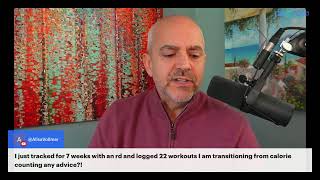
Everyone, welcome to today's Program Yourself Thin podcast. Today we are talking about the fact that you don't need to exercise to lose weight. And not only do you not need to exercise, we don't need to do a lot of the things that you probably think you need to do to lose weight, right? But exercise, we're going to focus on now because I think a lot of people just assume they need to eat better and exercise to lose weight. And if we take a step back from that idea, that kind of implies that you have to do a real lot to lose weight. And that's not true. Well, at least not all at once. And so a lot of people, because they believe they need to exercise in order to lose weight, that just becomes more pressure and stress and strain on them. In order to be successful. And what ends up happening is all that pressure and stress and strain prevents them from being successful. So I see this so often that the way people think that they need to manage their weight is to really push themselves to the extreme. And if you believe that and you believe you have to lose weight or you have to exercise, it almost becomes a guaranteed failure. Because when you start exercising and you believe that the harder you go, the faster you're going to get results. This is a great recipe to injure yourself, overwhelm yourself, you know, get off track real fast because it's almost no faster way to get off track than to get sore, to get hurt, to be hungrier, which are all things that working out does to you. Now, there's good things about exercising and working out as well. Please understand, I think exercising is great for a lot of reasons. But for losing weight initially, not so much. Okay. Because at the end of the day, ultimately your weight and your weight loss is achieved through dialing down your calorie consumption. Okay. So you turn the calories down over time that you're bringing to your body and you're going to lose weight. You don't need to exercise. Okay. Because again, the idea of exercising is that, well, you're going to burn more calories. And you're going to cut calories, you're going to lose weight as fast as possible. And on paper, that sounds great. But the reality is that when you start exercising— and again, I'm going to assume most people are kind of starting to exercise on their weight loss plans from about zero. They haven't been exercising and now they're going to start exercising. And so, yes, there's lots of benefits of exercising, but there are also some things that are probably going to happen that might make it harder to lose weight. And again, what some of those things are is, first of all, if you're going to start exercising, you're going to have to use a lot of willpower to get yourself to do it. Right. So it takes a lot of focus, energy, and willpower to get yourself to even get in the gym or get into an exercise program. That's the first thing, first cost. Next thing is you're going to be sore, right? You're going to work out more. You're going to be sore because your body's moving, doing all this stuff, building muscle, all these different things. And when your body gets sore, Um, or when you get sore, you tend to get grumpier. You tend to want to eat more food. Uh, next thing is your body needs to repair itself. And in order to repair itself, it needs to use glucose and energy. And so it uses that already depleted level of glucose because you've cut your food down as well. And so now your body is saying, I need more energy to repair myself. So now your hunger goes up because you're burning more calories, but But your hunger goes up because your body wants to replenish those calories and to rebuild anything that may have been torn or, or injured during the working out in the first place. And then the final thing is that you get the licensing effect factor, which is that pretty much when humans do something good, moral, and virtuous, they tend to follow it up by doing something less moral and virtuous. And it's not just because you used up the willpower to get yourself to do the good thing. It is also literally a psychological process where you start to kind of overestimate how much good stuff you did and you tend to underestimate what the bad stuff is. The classic is someone goes to the gym, they work out and they say, well, I burned 500 calories so I can have that 200-calorie muffin. When in reality, you know, they burned 200 calories and the muffin was 500 calories. So this licensing effect is so profound and so impactful. Um, but it's also kind of subtle and easy to miss. But these are big things that happen if you are going to start exercising to manage your weight. So my suggestion would be to exercise if you want to, right? And if you're already exercising, then you can ignore this. But if you want to start losing weight and you have not been exercising, please understand that you can probably be more successful if you focus all of that energy on your eating. Now, if you want to go for walks or play a sport or do some exercising just because you just want to, then go ahead. But if it's about weight loss, you're probably going to be better served if you use that energy to change your eating and really build your weight management around controlling what and how much you eat, because that's going to be a much better longer-term strategy. It's the strategy I chose. Now, again, everyone chooses their own strategy, but some of the benefits— A, I hated working out, so I didn't, I didn't have to overcome that or force myself to do it. And I didn't have all those other negatives. But the biggest thing is that 30 years later, there's been times when I've hurt myself. I had a broken foot, my shoulder surgery, different injuries along the way. But anytime those injuries happen, because I wasn't reliant on exercising to manage my weight, when injuries came or I got sick or whatever happened, I didn't get off track really, or not as much, I should say, because I wasn't dependent on the exercising. So I, when I got injured, it wasn't like I stopped exercising and put a bunch of weight on. Um, when I got injured, I just kept eating the way that I always eat that controls my weight, and my weight pretty much stayed the same. And I think when you imagine your life over the next 10, 20, 30 years, the idea that you're gonna be able to exercise at a level 10 consistently throughout that time is probably pretty low. I, you know, it's up to you. Everyone's different. Um, but a lot of people don't have the desire, the motivation, or the ability to exercise at a really, really high level for the rest of their life so they can manage their weight. And I think that path is a much more stressful path for a bunch of reasons when it comes to your weight than really fixating and focusing on the eating piece of it and getting that dialed in. So that's my suggestion to you. And again, it's not only anecdotal through my experience I've worked with, I've done over 6,000 private weight loss sessions, been doing this over 20 years, and I've consistently watched women in all phases of menopause lose weight without exercising. So it is absolutely doable. And for a lot of people, it's the right solution. And I share this with you so that you can let yourself off the hook and stop trying to get yourself to do something like exercising if you don't want to. So, all right, everyone, if you want to go deeper into this way of thinking, click the link in my bio and get the free hypnosis session I made for you. It's called The New Thin Me, and it will support this way of approaching your weight. And of course, you can still exercise. But you don't have to. And again, when you get your mind right, your lifestyle right, you're eating right, that's the best way to control your weight. And I give you that free hypnosis session to kind of get you kickstarted with that. Just click the link in my bio or go to programyourselfthin.com and go get that. And yeah, if you have any questions, feel free to ask them. I am here to help you all out with your weight loss as best I can. Been doing this for a while, and I do think that sometimes I'm able to give you a different perspective you may not have thought and, uh, that can be helpful. And if you're on Facebook or YouTube, I'm going to put the link right in the chat window. If you're at TikTok, you just click my picture over on the top left. But yeah, if you have any questions, feel free to ask them. Yeah, hope you're having a nice day. Again, another beautiful day. Uh, Kaspar says lifelong exercise or what? Um, again, I mean, like, it sounds great, lifelong exercise. Who would argue with that? I mean, I, I think it's great. So, um, I think exercising for the rest of your life is ideal, but I don't really work in the land of the ideal in Program Yourself Then. I live in the land of the most likely or the reality. So again, I know lifelong exercise sounds great, and if you can do it, I think great, you know, you're better off. Um, but I just find there's a lot of people that really put off their weight loss because they don't want to start exercising or they hate exercising. I can't tell you how many times I've met people that are putting off losing weight because they're waiting to get themselves really fired up to start their exercise plan. So yeah, if you get yourself to exercise, exercise great for a million reasons, but for the beginning of weight loss, a lot of times it becomes almost it's unhelpful. I know that sounds like a strange thing to say, but, um, that's my experience when you kind of, you know, weigh it all together, right? Uh, Ken says, after 6 months of dialing in my eating, I use the same rehearse, redo techniques to start exercising. Yeah, absolutely, Ken. Yes, very much, very much. Now I don't even think about it. Yeah, again, Ken's in the program, and so again, Ken programmed in exercising I did the same thing. Um, I have not, I've managed my, I lost 50 pounds over 30 years ago and I've managed, I've maintained the same weight, um, without exercising. I have not exercised. I'm active and I'm like an active person, but I haven't gone to a gym or done cardio or done any consistent exercising in 30 years really. Um, last year I started implementing kind of like a pushup and kind of bodyweight squat routine. But yeah, exactly, Ken. I did the exact same thing. I program it in. And same thing here. I don't have to think about it anymore. I do it Monday through Friday. Um, you know, sometimes things come up or whatever, but the vast majority of the time I do it. And again, I programmed it in and made it work for me. So I'm glad you shared that, Ken, because that's another great, um, way to approach that. Uh, what's up, Mandy? Mandy says, why do the sugar cravings start at night? Well, you know, the sugar cravings. Let's think about this because I think this is interesting. Is it sugar cravings? You think it's sugar cravings and you think it's because of sugar. And that's partly true. But I think the way bigger thing that's driving our behaviors is the subconscious associations we have. So. We have two parts of our brain. We have a conscious mind and a subconscious mind. The conscious part of our brain is very logical and rational. This is the part of you that knows why you should lose weight, what you should do to lose weight, and tries to get you to do it. This is where your willpower is at. Then you have your subconscious mind, and your subconscious mind is the part that actually runs your weight because it runs all your habitual thoughts, feelings, and behaviors. And the interesting part is this part of your mind is not logical and rational. This part of your mind is very Pavlovian. It just links things together. And so why do the sugar cravings start at night? I think of that more as because you have a night routine that your sugar consumption is part of. Okay. So for example, if for the last 3 years, every night at 8:30, you sit down and watch your favorite show and eat Ben Jerry's ice cream. You know, we don't want to say, well, why, why do I get this ice cream craving at 8:30? Well, you've trained yourself. Does that make sense? You know, and, and I think understanding this to me is the secret to being able to master your weight because most people approach their weight just logically. I know what to do and I got a plan and I'm going to stop myself from doing, you know, eating ice cream at night or eating sugar at night. Okay, great. Let's see how it goes tonight when the actual time shows up. We're all multiple personalities. So Mandy's probably doesn't give a shit about sugar in the morning, not even thinking about it. But then when night comes, you have conditioned yourself to consume. And again, you're not eating sugar, you're eating sugar within a product. And that's, that's important to recognize too. Um, and so you just link it together. This is why for, for me, my my first thing that I really dealt with now, because I look at everything as habits, I look at everything as habitual patterns. So for me, when I was 50, over 50 pounds heavier, I looked at my kind of how I ate daily and weekly and I said, where is the highest calorie habit? Where am I bringing the most calories in consistently? It was an easy answer. It was my nighttime eating. I would finish dinner, wait about an hour, and then literally 7 nights a week, every night, I would start grazing, snacking, eating throughout the night, easily putting 500, 700 to 1,200 calories every night into my body easily. Okay. Now what happened though, is that I would watch TV. And so back then it was crazy, like how different my mindset was. Cause a lot of my mindset was wrapped up in what's the day, what shows are on tonight? What am I going to eat watching them? And that was a lot of my thinking. And so what happened is subconsciously I linked up 8:30 at night with snacking and grazing and whatever foods I would eat. Okay. And so it's beyond just sugar. And again, I'm not saying that there's not a sugar craving component because sugar does have an impact on us, but it's a bigger thing that, you know, if you're honest with yourself, Mandy, you're going to bed tonight and tomorrow you pretty much know you're going to have some sugar probably at night. You already know it. Again, this is the programming piece of things that if we're really honest with ourselves, we do what we did, you know, because even the sugar that you— the sugar cravings you have, it's not sugar cravings, it's specific dessert treat sweet cravings. So you're not craving sugar, you're not craving going over the sugar bowl and eating a spoonful of sugar. You're craving ice cream, you're craving cookies, you're craving candy bar, you know what I mean? It's a specific thing. Or things, and you are— you have them associated with that time, um, sitting on that sofa, watching that show, being alone or with someone else probably. And all of these things are linked together. And so if you don't do it, it feels weird. I'll give you an example. Let me show you an example. I think this is a funny one, um, because I could ask you, Mandy, I could say, are you left or right thumb? And you'd say, I don't know. But let me ask you this. Clasp your hands together, right? Interlace your fingers together and everyone can try this. Okay. If you interlace your fingers together, which thumb's on top? Oh, mine's my right one. So I'm right-thumbed. Okay. I don't give a shit which thumb I am. I didn't know which thumb I am, whatever. Okay. But this is what I did. But now what I want you to do is I want to take your fingers apart and clasp them back the other way. So the other thumb's on top. And notice how that feels weird. Feels weird right now. You don't give a shit. You never have thought about which thumb's on top. You probably have never thought about this in your life, but one feels right and normal. One feels weird and unusual. And so when you go and try and change your night routine, you say, oh, that's it. I want to lose weight. I'm going to go on a diet. And the nighttime comes, you're thinking, oh, it's this physiological sugar going down and now I'm having cravings for it. And that is a piece of it. But the way bigger piece is that your subconscious mind says, okay, if everything's going to go normal, 8:30 is going to come. I'm going to sit on the sofa, watch my show, and eat my ice cream. You see? And all that's linked together. And so to not do it feels weird, you know? And there's even more stacked on top of that, but, but that's the general idea. So we would want to program ourselves to do something different at night, you know, give ourselves a little bit of space, a little, our body a little bit of space to you know, kind of work the sugar out. Um, but yeah, that's, uh, that's kind of my thoughts on that. Um, what's up, Alenia? Hi, funny girl. Yeah, a different name now, right? Alenia, you are so right. I am still not able to walk due to my accident January 1st, and I am losing weight. There will come a time where I will be able to exercise because I will actually feel good and I'll enjoy it. Okay, everyone hear that? So Alenia's in the program, but do you see what I'm talking about? You, you as a dieter, you're really— you have to understand, diets are not there to help you. They're not there to help you manage your weight. They're there to keep you overweight. And the exercising piece of it is just as guilty of it because the way that we're shown and taught to exercise to lose weight is ridiculous. It's too much. And so again, I appreciate you sharing that, Alaina, because yeah, when you get the mindset right, the lifestyle right, the eating right, you can get hurt, you can stop exercising and still manage your weight. And that to me is the ultimate, um, spot to be in. That's where you want to be. Um, again, exercise for all the good reasons, but don't need it to manage your weight. That's what I think is the best strategy. Um, really master your eating. That's the best way to master your weight, in my opinion. So thanks for sharing that. Um, yeah, and Elena falls up. Sugar cravings I find when I watch TV at night and those food commercials get those cravings going. What I've been doing is 2 squares of 85% dark chocolate and I don't get the sugar cravings any longer. It's pretty awesome. It's helped me, me and my diabetes go down from 7.9 to 6.9. Elena, you're just killing it. Look at you. Then he says, I have the chocolate after my lunch. In my mind, that's it. Had my sweet for the day. Yeah, again, and that may sound crazy to a lot of you that that's possible, but again, when you, when you learn how to run your mind and you have a real strategic holistic strategy for how to manage your weight, This is what's possible, you know, and that's what I try to share this with you every day. Um, at the very least, I just want to give you hope that there are ways to manage your weight outside of fucking dieting. Dieting again is, is not there for your benefit. Dieting is there for your harm. Dieting is there to program you to be an overweight person so you keep eating food and making money for the food processing industry. The diet industry is just a branch of the food processing industry. It's not there to help you manage your weight. So it's possible to manage your weight comfortably, enjoyably, in ways you never imagined possible. So thank you. I'm gonna screenshot that because that— I really appreciate you sharing that, Alanya. Both of those things, really. And again, it's always nice hearing real people and what, what's going on for them, you know. But yeah, you get your diabetes down. Congrats, dude. Right? What a, what a job. But I love that. But then there's the confidence too. I mean, because imagine, imagine you all like, imagine you got sick or hurt, you got an accident, right? Imagine you got an accident, now you're out of commission, you can't work out the way you did, and you just manage your weight. Your weight just stays where you want it because you manage your eating. That's what we're talking about. That kind of confidence, that kind of certainty, that kind of mastery. That's what's possible when you approach this with the right mindset and the right plan. But yeah, if you have any questions, feel free to ask. Many questions are welcome. Are you from Greece? I am not from Greece, but I— my ancestors are from Greece, some of them. But I personally am not from Greece, from good old US of A. Born and bred. What's up, Jane? Jane said, I am not obsessed with losing weight, I'm obsessed with thinking about what I will eat each day. Um, yeah, I think that's a better thing personally. Um, you know, but, but I'd add one more obsession in there, that I'd get obsessed with feeling as good as I possibly could. What's the best quality of life I can live? Who's the best Jane possible? What What's the best version of my life? How good can I feel? Those are the things you really want to get obsessed with. Um, but I'm obsessed with what I eat in a healthy way. You know, I think that people think obsession's always bad, um, but I'm obsessed with health, which is kind of my little loophole, right? Because if you get obsessed with health— not a health nut, because I think health nuts, I don't consider that the healthiest personally. I think if you sacrifice, you know, relationships and You know, time with people and things like that, that's probably not the highest level of quality of life. So for me, I'm obsessed with health, but like holistic health, I'm obsessed with it. So I know people like to, oh, you're a health nut. I don't want to be that way. I'm not a health nut. I think I'm obsessed with how good can my quality of life be. We're going to argue about that. Who wouldn't want that? Who doesn't want the best quality of life possible? So I think if you add that to Jane, the quality of life above all else, I think You'll, you'll be able to ride your abilities. Let me back this up, right? Because I just want to understand if you're new here, um, my clients almost without exception are overthinkers, uh, action takers, perfectionists. Um, they think a lot. And so it's important. I think to understand that, uh, I don't know where I was going with that. I don't remember what I was going to say. Yeah, I was talking about quality of life. I don't remember, but I see Jane followed up and said, I feel so great when I play pickleball. I played 2 different times yesterday, but today my body aches. Yeah, that'll happen. I maybe went a little hard, but whatever. That's kind of the fun. That's the fun part because I'll, I'll, man, I'll take pickleball, 2 games of pickleball all day long. compared to 2 hours on a treadmill, you know. So I think you're smart. We've talked about that, Jane. There's a huge difference emotionally and psychologically between doing an activity or a sport and doing just like a movement. And so I think that, that's a little hack as well. But again, if you make the, if you make your North Star the highest quality of life, the best version of me, that's kind of what I was getting at before. I work with very smart, usually women, but I work with very, very intelligent, smart successful people. Um, and it's not enough to just want to lose weight. I know no one believes me with that, right? No one ever believes me that the weight loss isn't enough. I don't know why people don't believe me, because if you're like most dieters, you're sitting here listening to this and you have been obsessed with your weight loss for decades now and it hasn't happened, you know. So, but again, you're not You're not obsessed with weight loss, you're obsessed with looking better. And that's usually not enough motivation for people. So we got to make the goal bigger. Like, what we're looking to achieve, I think, has to be more than just looking better. It's, ah, it's bullshit, Jim. Okay, well then great, then just want to look better and enjoy whatever results you get. I don't know, but if you've been trying to look better for 30 years and it hasn't worked, why, why would you argue against that? Right. I don't think about this first. I want you to really think about this for a second. If you've really wanted to look better for 20 years, however long you've been struggling, however long you've been struggling with your weight, that entire time, I bet your main motivation is that you just want to lose the weight and look better. Right. And so if it's been 10, 20, 30 years of you obsessively focusing on wanting to look better and it hasn't worked. What's the plan moving forward for you? What's the plan? What, what would it be? That no, one day I'm really going to want to look better. What, when you're 55, you're going to be more motivated to look better than when you were 25? Huh? What sense does that make? Doesn't make any sense. So I know dieters arguing this all the time. No, Jim, you don't know. I really— that's what they always say to me. No, Jim, you don't know. I really want to lose weight. Well, didn't you really want to lose weight last year? Yeah. What happened? You didn't really want to lose weight. That's the big deal. I say this to people all the time. They get mad. But what am I going to do? I take the no bullshit oath. I got to say things that make people mad sometimes, and that's what I got to do. I'm not going to bullshit you. You don't believe me? Want to argue about it? I'm happy to argue about it. I'll debate it all day long. I think most people weigh what they want to weigh. Subconsciously, and that your weight is a real clear reflection of your motivation level. Yeah, I'm saying if you're overweight, you probably aren't that motivated to lose weight, most likely. And you think you are though. You think you're motivated at a level 10, but you're probably really motivated like a level 6. That's why you're not losing weight. There's other reasons too. You don't have a good plan. You have no plan. That's a big part of the process, but that's part of why you're not motivated. I always said, if I told you, hey, you know what, I actually, I found out a way way, if you, uh, you can fly, um, all you have to do is kind of hold your arm at a certain angle and then flap them as hard as you can. How hard are you going to try and flap them? You'd love to fly. I know you'd love to fly, right? How hard you gonna flap them? I just told you how to do it. You're not gonna flap them very hard because you don't believe me. So, you know, that's a piece of it too. You don't even believe you can lose weight, and so your motivation's lower. But on top of that The reason you want to lose weight is so superficial that it's not giving you the motivation necessary to get the results you want as well. Both are true. But at the end of the day, we get to the core hard cold truth that if you're overweight, it is primarily, most likely, because you don't have enough motivation. You don't really want to lose weight as much as you think you do. And if you don't agree with that, that's cool. Let me know, talk it out, talk it out. Uh, Mandy says, intermittent fasting better for you? Sometimes I try it, but then it makes me eat to excess when I break my fast, so thinking it's counterproductive. Uh, Mandy, yeah, I think you're right on the right path there. I think intermittent fasting is a great way to develop a binge eating, um, issue. I think it literally just sets you up for it. You know, I can't think of any better way. If I wanted to train someone to be a binge eater, I would literally do that. I would have them restrict, restrict, restrict, restrict, restrict, restrict, eat. Okay, time to restrict again. Restrict, restrict. Now eat. Yeah, I know it works for some people, but it doesn't work for a whole lot more. And you're not unusual that you experience that, Mandy. That's very common. I would say that's the predominant experience most of my clients have had, is that for them, um, and now of course Intermittent fasting. I like it. I do it, but I do 12 to 13 hours and I worked up to those. There's nothing magical that happens at hour 16. That is a bunch of bullshit. And you all are white-knuckling yourselves for the last couple hours of intermittent fasting, and it's causing more stress and strain and overeating. And it's no wonder it's not working. Again, I'm not blaming you. You're doing what you were told to do. Um, but there's no one answer to your weight. There's no one little tactic or trick you're going to use that's going to master your weight. Not keto, not intermittent fasting, not counting calories. Um, none of it. You need a holistic, comprehensive approach to mastering your weight and program yourself. Then, just to give you context, a fuller context to this, is we follow the goal weight pyramid. So it's not just calories. It's not just calories. Calories are important. We pay attention to calories. But we, we have a holistic approach to this. We change our mindset, lifestyle, and eating. We learn how to think, live, and eat like a thin, healthy person. Think, live, and eat. Dieting is about this much of the pyramid. See that tiny, tiny little point? That's the eating. That's dieting. Tell me what to eat. You're not doing any of this stuff, but this is what you need to work on to really change your weight and live there. You know, you need more than just that. So yeah, intermittent fasting, um, again, for me is one of the greatest things I ever did, was give my body a break every, every day, every night, um, from eating. But again, I did it naturally. I started doing this 30 years ago before there was intermittent fasting, and I just made a bigger and bigger window between when I stopped eating, when I went to bed. And so now I usually stop eating 6, 7 o'clock at night, and then I'll start eating the next day 7, 8 o'clock. So 12, 13, 14 hours, somewhere in that ballpark. And that's comfortable for me. For me, I've experimented with all the different stuff. I've gone till 12 noon. I don't like it. I didn't— I never liked it. It felt stressful. It was strain. It was a strain. I didn't like it. And so I didn't use that. Again, in Program Yourself Then, we build the plan around who we are. Now, for some people, they'll intermittent fast and it's like the angels sing and it's amazing. It's the answer they were looking for. Great. I respect that. Again, everything's built around you. In my worldview, I think what's going to work, whatever— the only thing that even has a chance is things that kind of resonate with you. And I think that a lot of people, for intermittent fasting, that experience is very common, that as soon as the eating window opens up, you're so hungry that you can't control your eating. And that's not good for me. Jane says same goes for dancing. Yeah, pickleball and dancing. Again, their movements and their there's just more involved with it. That's always in my mind— dancing, pickleball, martial arts, uh, you know, sports— all of those things are a way better option than just like going in the gym and, you know, trying to be an automaton moving your body. Um, Jane says, even though I have high blood pressure, sleep apnea, and 2 knee replacements, somehow this doesn't always motivate me enough. Um, yeah, Jane, because those things kind of all suck. So it's like It's hard sometimes to get motivated by what we're not going to have anymore. Do you understand? So folks, we could have sleep apnea, high blood pressure, bad knees, and we could say, geez, if I just lose the weight, those things would be better. That may not be enough motivation for you because your brain is thinking, oh, I'm going to live a life where I don't have these things. It's hard to get motivated by not having things. Does that make sense? I don't know if you all get what I'm saying here. Oh, but I got sleep apnea and I won't have sleep apnea anymore. That's not that motivating. So what is more motivating is what you're going to get, Jane. And that's what we do so much in Program Yourself Thin is about describing what you actually want. If you all are honest with yourself, your whole weight loss mindset is built around what you're not going to have right from the start, because it's all about losing weight. We're overweight and we want to lose it. We don't want to be overweight anymore. I want to lose the weight. I don't want it here in my body anymore. I don't want it. I want it gone. No more overweight. But none of that has to do with what you're going to have. And this is very important because the way your subconscious mind works, it's very literal. There's a huge difference between saying, I want to lose weight versus I want to be thin, healthy, and happy. They're two totally different things. So for you, Jane, you, you can— that's part of your plan. The pain piece is part of it. I want, I want these painful things in my life gone. That's motivating. But what really motivates us ultimately, day to day to day to day, is pleasure. This is what is at the core of your weight issues, is that the pleasure of the food is so strong that you're struggling with that. So why don't you think that the pleasure of your goal wouldn't be just as strong? So instead of focusing on all the negative effects of the weight and how you'll be so happy without them, and again, you do that, we keep that too. But we really steep our mind in all the pleasure we're going to get. So Jane, what you can do now, and this is the beauty of what you've been doing, is you last week you had like 3 clean eating days, but it's not about clean eating days. That's not the lesson you pull from those days, Jane. It's how you felt mentally, emotionally, physically during those days. It's how you slept. It's your moods during those days. It's how you felt about yourself. It's the momentum you experienced. That's what you're looking for. What drives me is not the absence of negative things. What drives me is I want to have energy. I want to be alive. I want to go on adventures. I want to be the best dad I can be. I want to be the best husband I can be. I want to be the best coach I can be. I want to run a successful business. I want to do cool things. I want to play guitar. I want to read. I want to come up with new ideas. I want to. Go to cool places. I could just keep— I could literally be going for hours and hours and hours, all the things I want. And at the core of every one of those is my health, my happiness, and my weight being right where I want it to be. You know, so I'm, I'm pulled towards my goal because I'm obsessed with all the great things I'm going to get and experience in my life because of it. This is how motivation works moment to moment. This is why the food's hard, because you're constantly being triggered to think about the food. And you imagine it and you anticipate pleasure. And so the craving, the desire for it starts to build. That's how it happens. So, so yeah, Mandy kind of started this whole thing off by saying, um, what about my sugar cravings? Well, the sugar cravings, another component that, Mandy, because you know you're going to do it at night, is all day long you're looking forward to that subconsciously. Yeah, I can't wait to sit on my sofa and eat my, my candy. I can't wait to sit on my sofa and eat my ice cream. I can't wait. And so all day long you're imagining the pleasure that you're going to get out of that experience. And so it has this pull to it. But the pull happens because you've been programming it in your mind. You've been imagining it, thinking about it. Okay. And so we want to do the same thing, but we want to do it with us. What's the best version of you, folks? This is so important because again, you don't even know what the best version of yourself is because you never think about this. So I can say all these things to you, but it's kind of like, it's a, it's a weak muscle. If I say, give me, give me, What's your goal? Why do you want to manage your weight? What would be the best part of living at your goal weight? You're going to struggle. You're going to say things like, oh, I won't have— my knees won't hurt anymore. I won't feel bad about myself. I won't have to wear the big clothes. You're going to talk about what you won't have to do. You're going to struggle. I guarantee it. Every one of you here, if I ask you why you want to lose weight, why you want to be at your goal weight, you're going to struggle to say what you're going to get. You're going to find that it's easy for you to say, well, I won't have this and I won't do that and I won't that and I won't. It's all about what you're not going to have and not what you're going to have. And that is a fundamental mindset problem that needs to be corrected. All right. Jane says, I try to keep focused on these health issues so I can sleep better and be healthier, but it doesn't always motivate me. Yeah, exactly. Because again, we're going to take the— your knees hurt and there's the potential possibility that your knees won't hurt. Versus the pleasure of the ice cream, the pleasure of the Cadbury eggs. So where it's, it's 7 o'clock at night. And on one hand, we have the potential future benefit of our knees not hurting versus the instant, immediate, guaranteed pleasure of the Cadbury eggs. So yeah, that, that, that little shitty potential thing in the future is not even close to this. So that's why it's not always going to motivate you. You know, um, Jane says, I think the difficulty of weight loss is that it's so gradual that it doesn't inspire me enough. Yeah, well, that's part of it. Yeah, which is why so many of us go on diets. Yeah, I get that, Jane, but you have to recognize that's, that's a— it's a thought you have, it's a belief you have. Okay, you've acknowledged it, but now what are you going to do with it? So let's just, let's just state it in a more obvious way. Um, weight loss is so slow Okay, weight loss is so slow. That's a fact. What are you going to do about it? Well, I'm going to get so frustrated about it. I'm going to be so sad that it's so slow that I'm going to do something that, that doesn't work. I'm going to— I'm so, I'm so impatient. Weight loss is slow and I'm so impatient that I'm going to do an unsustainable diet so that I can lose weight quickly for a week and then put it all back on and feel frustrated 2 weeks from now is a more accurate way to say it. And once we say it, I think it forces us to kind of deal with that. Okay. There's things in life that move slower than we want. No one wanted to go to college for 4 years to get a degree. I mean, unless you love partying, but no one really likes to party in that last year as much. It's a hard year, right? But no one wants to. I don't know. I remember I used to work in restaurants and you'd go to the restaurant and you have to train for like however long. Who the hell wants to train? I just want to make money. Come on. You know? Retirement, investments. You know, it's like, oh my God, I gotta wait. I gotta wait 20 years. I don't want to wait 20 years. I want, I want the money tomorrow. Yeah, well, no shit. You know, so it's like, that's just not the reality we live in. I want tomatoes tomorrow. I just planted the seed today. I want to pick the tomatoes tomorrow. Yeah, I know we all don't want that, but you can't have it. That's not, that's not reality. So what are you going to do? What are you going to do? Because you've been in the same loop, Jane, forever. Oh my God, it's so slow. It's so gradual. It feels so slow. I need to do something extreme. Extreme to make it go quick. It's not quick. It's not quick, folks. Fast weight loss is ironically the slowest weight loss because you all have done fast weight loss more times than you can count in your life. Are you at your goal weight? Another way to put it is, is fast weight loss fast weight loss or no weight loss? If I do some extreme shit and lose 25 pounds in a month that I can't sustain and put 25 pounds back on over the next 2 months, Was that fast weight loss or no weight loss? It's— and again, I'm not trying to convince you of anything. I'm just pointing out reality. There's not— I can't convince you of reality. We're all breathing oxygen. Okay, we're going to argue that weight loss goes slower than you want it to. 100% of the time, it always goes slower than you want it to, guaranteed. So what do you do about that? What are you going to do about it? You got kind of two options, right? Either, no, it's too, it's too slow this way. I'm going to speed it up. How are you going to speed it up? I'm going to do the thing that I've done the last 6 times that worked well for the week or 2 weeks, and then I couldn't keep it up and I put all the weight back on. That's what I'm going to do. Great. Go ahead and do that. Great. You know, or I'm going to change the way I think about this. I'm going to stop thinking about measuring my weight in weeks and months and start measuring my weight in years and decades. Most people overestimate how much weight they can lose in a month and underestimate how much weight they can lose in a year. And that is, again, it's not— I don't blame any of you folks. Listen, we've all been conditioned our entire lives at this point. Everywhere, every single person on this here, on this stream, has been conditioned since they were born to think like a dieter. So I'm not blaming you, I'm just pointing it out. But you have been conditioned to think like a dieter, and so now when you think about weight loss, you think in time frames of days, weeks, and months. And that's not up for the job. What would happen if you thought about college in terms of days, weeks, and months? Like you were just under the delusion that you could get your college degree in a couple months if you worked really hard. That, that's basically where you're at with your weight. You've got a mismatch between how weight works and behavioral change works and how quickly you think you can do it because diets your entire life have said how quickly you can lose the weight. But it's a trap, folks, because the goal isn't even to lose weight. You don't even want to lose weight. That's not your main goal. The fuck? You've all lost weight before and then put it back on. Are you glad you lost weight or you upset that you put it back on? So the goal is not to lose weight. The goal is to live at your goal weight. That's why I wrote a book. I had to write a book called Living at Your Goal Weight, Living at Your Goal Weight, because no one ever pays attention to this because people always just want to lose the weight. Well, what are you going to do once you lose the weight? I'll figure it out then. What do you do about the maintenance? I'll figure it out. Why would you say that? Have you ever figured it out? Have you ever figured it out? So, you know, a lot of change starts by just having your limiting beliefs or your mistaken beliefs exposed and blown up, to be honest. And that's part of what I like to do here. You know, because you all, a lot of times if you're a Dieter, you live in this dieting prison. It's a fun house. It's a screwball. Um, that's how it is though. So I think it is. I guess, is that how it is? I wouldn't be that— I mean, I'm pretty confident, but not so confident that I know everything. So maybe I'm wrong. I don't know. What's up, Marston? Marston says, I lost 7 kilograms in 3 weeks. Your videos have been a big inspiration. Um, well, congrats. That's a lot of weight. That's a lot of weight. So, you know, again, you've done some extreme stuff to do that. Great job taking action. But also recognize that that, that rate of weight loss is, is probably a little bit unsustainable. So just prepare yourself, right? Again, it's a phase, you know, and I don't know where you're starting from, but nice job taking action. But again, you especially, make sure you hear what I'm saying, that it's about living at your goal weight, not just losing it. Because everyone here has lost a lot of weight. The problem is they haven't been able to keep it off, because losing weight and living at your goal weight are two totally different things. Um, Kim James says, I'm reading your book now and I love it so much. Thank you, thank you. Yes, people are loving this book, and I don't blame them. This book's really good, I gotta tell you. People say it's the best weight book they've ever read. And you know, well, of course I think that, I wrote it. But You know, for, for good reason though. This book is so unique when it comes to your weight. I mean, obviously right off the bat, Living at Your Goal Weight, it's different than every other weight loss book because it's not just about losing weight, it's about living there. And that changes the entire process. And that's very important because at this point, losing weight is paralyzing to you because you associate pain to losing weight, because you associate having to do extreme, hard, difficult things to lose weight. And so you avoid it subconsciously, right? Don't you find it odd that you think about weight loss 24 hours a day, but you never really do anything to make it happen? That's the goal of the diet industry, because the diet industry is owned by the food processing industry. They don't want you to lose weight. They want you to feel apathetic, which is where a lot of you feel. So this book kind of changes this. It's 40 chapters. Each chapter is a page, 2 pages, um, and each chapter is a hypnotic story. That's what makes it so unique. Is it's not me just giving you a bunch of, you know, information about what to do like every other diet book on the planet. It's stories that change the way you think because our brain naturally loves stories. So the stories are kind of like the Trojan horse, and the messages and ideas that help you think like a thin, healthy person are embedded in the stories. But it's done that way specifically because that's how you think. You think— we all think in stories. That's why when you watch commercial, there's stories. We think in stories. We're impacted by stories. That's what this is. But the difference is these stories are there to help you, okay? Whereas most, most stories are there to, um, well, commercials anyways, they're there to get you to overeat, right? But yeah, thanks for getting the book and thanks for reading it. Uh, what's up, Alicia? Alicia says, how do I manage while I'm taking steroids for other health problems? Yeah, that's a challenge, right? You might be hungrier. You know, it might affect your sleep. It might affect your energy levels. So, listen, you know, there are realities of life that can really impact our weight, you know. And before it impacts our weight, it impacts our eating, our lifestyle. Then it impacts our weight. And so what I'd want to know, Alicia, is specifically what impacts have the steroids have had on you? Okay. And so I ask this because I think just in general it's a great strategy that whatever your challenge is, is get more specific, drill down into it. So if I hear, how do I manage while I'm taking steroids, I can assume what that means. I've worked with people that have been on steroids, I can assume it, but I'm not going to do that. I want to know specifically for Alicia, how have the steroids impacted you directly, specifically? And once I get those specifics, then we can start to come up with a, um, strategy, um, you know what I mean, to deal with it. Okay, um, Intuitive Bestie says, okay, buy on your website. No, this actually is on, uh, Amazon. So this is on Amazon and, uh, it's cheap as all get-out. I made it cheap because I want as many people to get it as possible. The Kindle version is $2.99, the physical version is $9.99. I'd suggest getting that. This book feels really good and it's nice just to have it in your house, be able to pick it up, read it. Because it's designed that way. You can open up to any chapter, read a chapter, and you get something out of it. Um, you can certainly read it front to back as well, but it's designed to really be something that you can open up, um, at any time, any place, and get something valuable out of it. Um, and he says, you're so right, I like the idea of looking at the pleasure to motivate things. Yeah, you're welcome, Andy. Again, motivation is a huge part of programming yourself then, because most of you, as important as motivation is, you've never learned how to Uh, you've never learned how to really manage your motivation. You know, that's why in Program Yourself Thin, again, the mindset's the most important piece and the very first thing we focus on. I don't know if you can't read it because it's so fucking blurry. Why isn't it focusing? Well, anyways, it says motivation there. What is up with this camera? Maybe autofocus is somehow turned off. Anyways, it doesn't matter. It's motivation, but there's a science of motivation is my point. You know, most of you with the motivation, you're just winging it. Yeah, I'm not going to convince you of that. You either, you're either getting the results you want or you're not. What part does your motivation play? A big part, right? Um, and so if I ask you, where'd you learn, where'd you learn how to manage your motivation? Well, you know what answer I'm expecting to hear? Uh, none. No one's really learned how to manage their motivation. Very few people. But imagine you knew how to manage your motivation in an effective way. Don't you think that'd be powerful and helpful? Um, User 411 says, what inspired you to write the book? Um, what inspired me to write this book is I was actually in the process of writing another book that was, um, a much bigger book. And so listen, I will tell you one thing, Program Yourself Thin, I always think it was like a college course. It's like a college course for mastering your weight. It's It's robust. And so I know that this program really is for people that are overthinkers, um, people that can really like intake a lot of information. And so I wanted to make just a simple, breezy, light, easy breezy book as well. And I, I was struck with inspiration last September to write this book. And, uh, that's what inspired me. So in reality, the 40 chapters actually take you through the entire program yourself and system. But it does it in a really easy, accessible way. So again, each chapter is a page or two. So it's really simple, easy way to just kind of interface with these ideas and concepts. But at the same time, it's taking you through the whole system. So it's not just random stuff. It's very much structured and thought out. It's, it reflects the system directly. Um, but it's a way to kind of experience it. That's really light and easy. And one chapter at a time, you're getting benefit. Okay, Jane says, you're right, I'm an impatient person. Yeah, Jane, but again, there's nothing— it's not good or bad. I mean, just is. You're impatient. Okay, great. But recognize that about yourself, Jane, and change it as much as you want to or can, and internalize that and move from that awareness as well. Okay. So if you're, you're impatient, you know, part of it is kind of relaxing, calming down. Okay. Um, but, but the bigger part is coming up with better mental programming. Okay. Impatient is a relative term anyways. You know, I don't know if you went to college, but if you, you were probably impatient in college too, but in college we have a framework. This is going to take 4 years or 2 years or 6 years or whatever the, you know, whatever your situation was, but. That framing has a lot to do with it. So a big part for you, Jane, is redefining this process. And one of the big parts I would mention, Jane, is that to really get out of the weight loss mindset is I always love to ask the question, how long do you guys want to be at your goal weight? Right? So I know you all want to lose weight. I know that already. My question to you is, how long do you want to keep the weight off for? And I can hear you all say forever. So you have to recognize that most of you have this conflicting belief. On one hand, you want to be thin and healthy forever. On the other hand, the idea of dieting forever is absolutely terrifying. So, you know, we have to recognize that my goal is to be the healthiest, happiest Jane I can possibly be for the rest of my life. And I want to be healthy and happy and vibrant and alive and doing good stuff every breath of my life if I can be. That's my goal. And I like framing it that way because at what point do you want to stop doing that? Let me ask you, when do you all— when you all plan to stop brushing your teeth? When you get to 70? When you get to 80? Well, you know what I mean? Like, that question doesn't make sense to you because with toothbrushing, your time frame is forever. That's how this should be because this is the fundamental— we're— it's not just our weight, you understand? Because with Program Yourself Thin Again, we're managing our mindset, our lifestyle, and our eating. See, now it focuses. That's weird. Um, we're, we're managing all these. This is what allows us to have the best quality of life. Yeah, it helps us manage our weight too. So that's a piece of it, but this is how we be the person we want to be. This is how we live the life we want to live is mastering all these things. So at what point do you not want to live the life you want to live? At what point do you want to feel like shit? At what point do you want to be, um, tired and dehydrated and sluggish? So, so impatience— there is no time frame here. It's just forever. I have no time frame in my mind. I just see myself getting better and better and better and better and better, more refined, more optimized, tweak, improve. That, that's what I think. It just keeps getting better. And so there is no time frame with that. It's just like my work. I mean, my work, I just work until they drag me off, you know what I mean? It just keeps getting better. That's where my focus is. And it's, it's a— I think it's a fun way to live. And I mean, you obviously, you get the benefits as well, but it's just a fun, compelling way to live as well, day to day. A lot of meaning there. What's up, Louise? Louise says the weight has been accumulating over years. It can't vanish within months. I'm down 4 kilos today. I bought jeans a whole size smaller, my first medium-sized blouse since years. Uh, super proud of you, Louise. That's so fun, right? And good for you, because again, not only do you get the fun of that, right, these days show up and that's— it's fun to celebrate. But, um, the other piece is really just the peacefulness in her mindset, you know, that you can see like, okay, yeah, geez, you know, I've been putting this weight on for, for years, decades, and now I'm going to live at my goal weight for decades. No rush. I'm going to enjoy the process. We enjoy each step. Each day, get a little bit better. You know, when you have that mindset, listen, time passes. You all been trying to lose weight for decades. This is not where you thought you were going to be 20 years from now. So why would you think you'd be any— if you keep doing the same thing, why do you think you'd be anywhere different 20 years from now though? You got to do something different. I think there's something different is to think, live, and eat differently in a way that really works for you, right? Um, Jane said, if I had a chair to paint, I would spray paint it rather than sand and hand paint it. That's fair, Jane, but that's a chair, you know. This body, there's— there is no option for that, you know. If your body was that chair, which would you do, Jane? Do you see what I mean? That's actually— I'm really glad you said that because that, that works for a chair, Jane. But if that was your body, which one would you prefer? You just want to spray paint and make it look good? Knowing it's just all crumbly on the inside? Or do you want to do it right and feel good and feel as good as you possibly can? That's a great exam. I'm really glad you wrote that, Jane. And I want you to replace chair with you and your body. Now, which one's more appealing? At least says, I am puffy, gained weight. Okay, so this is Alicia, who, who started taking steroids, says specifically, I am puffy, gained weight, cholesterol is elevated, blood pressure is elevated. Um, titrating down on the steroids, trying to get off them. Okay. So, you know, again, Alicia, part of it, sometimes in life we just kind of have to accept and exist with negative situations. Okay. So what I say to you, Alicia, is that, you know, you had some health issue. Luckily there was some sort of solution to it in the form of steroids, um, for that health issue, but it had negative effects in other areas of your life. Okay. But now you're starting to dial them down a bit and you're going to move back into where you were. Okay. So we look at this as a phase, right? It was a challenging phase, but you dealt with the acute issue at hand and now you're moving back into a better place because you've dealt with the acute issue and now the steroids are working down and now you're moving back into where you want to be. All right. So pull your brain out of where you've been, because when I think of that question now, I'm seeing and Alicia, who's stuck thinking that they're smack dab in the middle of the steroids and there's no— nowhere to go with it, when it sounds more like you're at the end of it and that that may move it forward. Alicia follows up: In the world of mind-body medicine for the treatment of chronic pain and illnesses, the idea of intention is very important in healing. And if we look at obesity as a chronic, it makes sense to look at intention. A great deal of your conversation mimics the conversation of some of the professionals in the world of mind-body medicine. Um, yeah, Dispenza and, um, I don't know, Schubiner. Um, yeah, I, I gotta be honest, I have never listened to— I, I think Joe Dispenza writes books too. I've heard many people have mentioned that what we talk about, there are similarities. And, um, what I have seen of him, I have liked. I, I've never really listened to a lot of what he says, to be completely honest. I don't really know why. Um, But all I can say is that my casual exposure to him is, yes, I agree with a lot of the things he says. I can't say everything. I don't really know his full-on, um, you know, philosophies and stuff. But yeah, and intention does matter. I think intentions very matter. I think we would explain it a little differently because I come at everything as a hypnotist and psychologically. Um, and I think that a lot of times those psychological understandings I think explain a lot of the physical stuff more effectively. So I don't— sometimes— and now again, I, I'm, I know a very little bit about Joe Dispenza, but I don't like, I don't like when things get— I, I don't, I don't know. Oh, just, just believe it'll happen. It'll happen. Like, law of manifestation really grinds my gears. It really rubs me wrong. Now there's some things that I do like, but the overall idea that you can just, you know, think about what you want and get it. I would never ever prescribe to anyone, certainly not with their weight. And that's why, you know, listen, Program Yourself Then really has two main components to it. There's the mental programming piece where we're imagining ourselves as the person we want to be. So there's aspects of that, but the bigger— I wouldn't say bigger, but, but another huge part of the program is the blueprints, right? Where this is your literal plan. This is your blueprint for how you, you what's going to work best for you are going to make this happen. And we put them both together so that we're programming our mind to do the things that we strategically figured out are going to work best for us. So I just want to make that clear too. But yes, I, um, I'll have to look up, uh, Schubiner. I should look up Joe Dispenza, listen to him a little more. Might learn some cool things because people have said that. So I appreciate you sharing that. Uh, what's up, Rhonda? Rhonda says, I'm eating 3 healthy meals with no snacking. The scale has not moved in a month. Is it time to adjust what I eat and start a walking program? Could you please summarize the steps to do it if weight is not releasing? Yeah, great job, Rhonda. Super proud of you. Okay. I think that— I think that's great that you have stabilized your eating, right? So I'm eating 3 healthy meals with no snacking, and you've been doing it for a month. So that's, that's wonderful. You've made a lot of changes. But really, the way I look at it is not so much that what's going to happen is I'm going to do this for a month and get the results I want. But I'm going to do this for a month and set kind of a baseline. Okay. So now you have a baseline, Rhonda. I would say, you know, even another week or two, you might still start dropping some weight. You know, a month's not— but a month, you know, you start getting a little impatient. Okay. But what you can do, what I would do, you know, walking's fine. Um, but yeah, adjust what I eat, right? So I would look at the healthy meals. Healthy meals can be a real tricky word because I don't know what they are exactly, but sometimes we say healthy meals, um, but you can eat healthy meals and still gain weight, right? Because it's not about just the health of the meals. It really does weight-wise come down to the calories. So the good news is you've stabilized your eating. And so now look at the typical meals you eat and ask, out of the typical meals I eat day in and day out, where would be the easiest place to cut out 10% of my calories, my daily calories? Where would be the easiest way to cut out 10%? So I'm going to ask you to figure that out, kind of estimate it, look at your typical eating and think about where you could cut that out. Add walking if you want to. That's probably how I'd approach it. Jane said, I did go to university, and when I went back to do a post, um, bachelorette— is that how you say that? Baccalaureate? Baccalaureate. Jane's from Canada, so maybe they have different words up at college time up there. But baccalaureate, I've heard that word, but I don't know what it means in terms of a degree. A friend said she thought it would be smart. Oh, I would start it and not finish it. This made me really mad, and I thought, screw you, I'll do this. And I did it. Yeah. Okay, Jane. So that's another piece of your psychology to put into this, that you love proving people wrong. So I would absolutely use that here too. That's a huge motivator for me. You know how motivated I was to lose weight this way? Because no one was supporting it. And, uh, so, you know, Jane, what I would suggest is you start to adopt the personality that dieting's for dipshits. No offense, dieters, okay? But dieting's for dipshits. I'm not going to do that. But really master your weight and don't just master your weight, Jane, improve your whole quality of life. Make everything better. And you're on the path to doing that, by the way, even if you don't realize it. But so that everyone that's seen you struggle in the past with dieting can now see you thriving. Imagine running into your old trainer, you know, next year at this time, and you're right where you want to be, and you're doing it in a way that really feels good for you. That might be another— just one more piece of motivation for you in this process. Um, Alicia said, yeah, both are talking about brain rewiring. Yeah, super. I love brain rewiring. I can't get enough of that, so I'll check them out. Um, Alicia says, I found it. Uh, I was eating very healthy meals, but they were very calorie dense. I loved walnuts and could eat 2,000 calories of the walnuts a day and not have eaten a meal. Oh yeah, I appreciate you saying that too, because the nuts are the— I think nuts are the biggest sneakiest calories that come in our diet. So watch out for nuts. Um, but there you go, Alicia. And again, that might have been a natural reaction to getting the steroids. You know, your hunger starts cranking up. Um, and if you had to stay on the steroids, we would talk about it differently. We would say, okay, recognize what you're doing. Um, definitely look into calorie density of foods that you're eating so that you can continue to eat the same amount of food, volume of food, but reduce the calories. But again, it sounds like the, the steroids are going down and you're going to step back into a life where it sounds like you kind of had it dialed in pretty well. So again, recognize you were in a phase that was challenging, you're moving through it back into where you were, and stay focused on that. And that might be the path forward for you, um, that'll serve you best. All right. Kim James says, right, brushing our teeth is effortless. You're teaching us how to live at our great goal weight effortlessly. Yes, exactly, exactly. Um, that's the goal. It's not enough just to lose weight, folks, I'll tell you that. You know, dieters think just, you know, their only criteria is losing weight. Did you lose weight? How fast you lose it? But to me, it's like, that's only part of the equation. The other part is, how did it feel to lose the weight? How did it feel to follow that plan? Because if it was miserable, if it was white-knuckle the whole time, if you hated it, then what's the point? You know, you're gonna stop. So yes, we need it to be effortless. Um, and that's a great— yeah, examples. We want it to be like brushing our teeth. We want a lot of our habits just feel like that. Oh, okay, it's a 4-year degree in undergraduate level. Yeah, so it's like a bachelor's degree. Yeah, baccalaureate. Yeah, I didn't know that. Um, Alyssa said, I just tracked for 7 weeks with an RD and logged 22 workouts. I am transitioning from calorie counting. Any advice? Um, yeah, Alyssa, great job. Okay, nice job taking action. Again, I want to celebrate that because I want you to remember that, all right? When you have a clear plan, when you have the right support, you're able to do things that you otherwise wouldn't be able to do. All right, but then there's the transition, and that's the challenge, because when we have people cheering us on and, you know, that we're accountable to and all the rest of it, we can do outlier stuff, you know. So the real question is, what's sustainable moving forward? Um, calorie counting traditionally, again, is a short-term thing. What we rely on, Program Yourself, then, is our kind of eating habits. So creating habits of how to eat, um, you know, a category of foods and meals that are within your calorie— the word— range. Um, so you don't have to count calories forever, but you know, like, okay, this amount of this food is right in my calorie range. So I would move over towards automaticity. Um, your structures, your habits, not consciously having to measure every little thing, but instead start to come up with routines that this breakfast is 300 calories, and that's what I eat Monday through Friday. These lunches are 500 calories, and these are my options for lunch. You know what I mean? Start moving into a more, um, habitual sort of mode. Okay. Oh, it's an add-on to a bachelor degree. Okay, learn a lot here. All right everyone, I gotta get out of here. Uh, thanks so much for listening. Thanks for your questions, your comments. Appreciate them all. Uh, if you're not in my world, please click the link in my bio or go to programyourselfin and go get the free hypnosis session I give you. It is a kickstart session called The New Fit Me, designed to get you fired up and start helping you get you on the weight loss path. And if you like this, I'm here every Monday through Friday, usually around noon Eastern. And if you can't make the lives, it's also a podcast. So go to any podcast platform, search Program Yourself, then it'll show up. You can listen anytime you want. And this book's available. Go check it out if you're interested in changing your weight forever and living at your goal weight. The Tao of Living at Your Goal Weight's available at Amazon. Um, it is pretty inexpensive as well. So, um, yes, uh, thank you very much everyone. Have a super duper day and we'll talk soon. Bye.
More from Jim



Weight Loss Visualization: Wake Up in Your Dream Size #programyourselfthin #weightlosshypnosis



What If You Pretended to Be Thin for One Hour? #programyourselfthin #weightlosshypnosis




