Program Yourself Thin Live 5-13-26
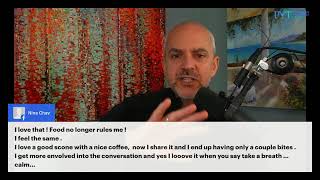
Jim Katsoulis explains why focusing on what you don't want backfires when losing weight, and how shifting to a positive, desire-based mindset works better. He outlines the Program Yourself Thin system: the Goal-Weight Pyramid, mental reprogramming, and 1% daily improvement. Restrictive diets fail; moderation, flexibility, and calmness sustain weight loss.
Chapters
Hey everyone, welcome to today's program, Your Self Thin podcast. Today we are talking about asking for what you want. This in itself is kind of an art, because most people, when it comes to weight loss, actually are really focused on asking for what they don't want. Recognize if this is true in yourself. When you think about weight loss, are you thinking about what you're going to achieve? The clothes you're going to wear, the body you're going to live in, how you're going to feel, how you're going to think, how you're going to eat, how you're going to be? Or do you think about what you're not going to be. You're not going to be overweight anymore. You're not going to be eating the food you eat. You're not going to be feeling the way you feel all the time. You're not going to look the way you look, right? So most likely your mindset, your subconscious mind especially, is fixated on what you don't want. And this makes a lot of sense. Please understand, this is certainly not a judgment. It's almost always an observation that exists within people, and for good reason, because you are living a lot of times with what you don't want, right? You look in the mirror, you see what you don't want to see. You look at the size clothes, is not the size you want to wear. You see the foods that you're eating and you know you don't want to eat them. So it makes a lot of sense that we're more aware of the things we don't want, but that leads to us subconsciously focusing on what we don't want. And this is a big issue because the way your subconscious mind works is different than how your conscious mind works. So you have two parts of your brain, your conscious and your subconscious mind. The conscious part of your brain is logical and rational. This is where you understand what it means to not want to be overweight, to not want to overeat. You understand it logically, but the part of your brain that actually runs your behaviors does not think that way. It is not logical in the same way. It runs all your habitual thoughts, feelings, and behaviors. But something really important to understand here is that it's very associative. And how this shows up for you is that your subconscious mind does not understand negatives. So I can say I don't want to be overweight and I can understand that consciously, logically, but subconsciously I'm literally imagining myself overweight. And I will give you one final point just to bring this home is if I ask you to get your willpower together and don't think about what I'm about to say, see if you're able to do it. Okay. Do not think about a banana. Don't think about a banana. Don't think about a banana. Stop thinking about a banana. Now, every time I say that phrase, even though I'm logically saying don't think about it, You subconsciously are thinking about it because you need to make sense of the word. So what's going on with your weight loss is that you are fixated subconsciously on all the things you don't want. And this is literally making it harder for you to manage your weight, because when it comes to thinking about yourself, when you're subconsciously focused on the overweight, unhappy, out-of-control version of you, You create more of that because you start to wire together these thoughts, these ideas. It starts to become automatic. This is the primary way you think of yourself, and you do it automatically. And this is because the only way you really think about yourself is what you don't want to be. You're constantly saying, I don't want to be this way, I want to lose weight. It's the same way to say it, right? And so you're always fixated on what you don't want. But what happens when you start focusing on what you do want? Now, the first thing I want you to remember is is that this is going to take a little bit of effort because your muscles, your, your thinking about what you want muscles are probably very weak. You've never developed them in any consistent strategic way. So it starts by saying what you want. And instead of just saying, right, we'll see, we'll see the difference, right? I want to lose weight. I have to think of myself being overweight and then imagine that weight coming off. What I want to do is I want to talk about myself and my goal weight. What do I want? Well, yes, I would like to weigh X amount of pounds. Let's start there. Fine. But I also want to feel more energized. I want to feel better in my body. I want to be happier with my choices in life. I want to become the person who gets the results that they want and lives in those results. I want to take action. I want my improved health and energy and focus and happiness to help me in my relationships and my work and my personal development. I want to be the type of person that can make a mistake, absorb it, and get right back on track. I want to eat healthy, natural foods so that I feel alive and energized and proud of myself. Uh, I want to get good sleep and I want to be hydrated. I want to operate at a high level so I can really squeeze as much juice out of life as I possibly can. And I could literally go on for hours here. Okay. But once you can start to articulate what you want, it starts to create its own magnetic pull. Subconsciously. And that's what we're looking for because right now, unfortunately, the subconscious pull for most of you is this pull towards overeating. Because if you don't intentionally create that pull, it will be created for you by the culture, specifically the advertising. And so it's pulling your subconscious right now is the food, um, is the image of you being overweight and you not wanting to be that, which is not a strong pull at all. Um, but again, the food is a strong pull. And so what we want to do is we want to start balancing that out by intentionally saying, what do I want? What specifically do I want in detail, physically, mentally, emotionally, spiritually in my life? What do I want? How do I want to eat? What do I want to eat? Enough of what you don't want to eat. We already know that you've been focusing on that for decades. What do you want to eat? I want to start eating more fruits. I want to start nourishing my body with more vegetables. I want to put more micronutrients into this body so I can really hum and fire on all cylinders. I want the clarity of thought that, um, fresh, whole, natural foods gives me in my mind. I want to feel energized and light from these foods. I want them to nourish me at a deep level. You hear the difference in the language from most typical dieting approaches, because most dieting is focused on what you have to stop doing. You have to stop eating carbs. You have to stop eating for 16 hours. You have to count every calorie. That you eat. So we're always focusing on what we're not going to do, and it becomes tiring, you know, and it— and it's not very motivating. So when you start articulating what you actually want in vivid detail, it starts to create its own magnetic pull. And boy, it fundamentally changes the experience of changing your weight, because now subconsciously you feel pulled towards your goal rather than always trying to push yourself towards your goal. And that's one of the biggest shifts you can make in terms of your motivation and ultimately in terms of your results. So if you want to go deeper in this way of thinking, then please click the link in my bio. Go get the free hypnosis session I give you. It's called The New Thin Me, and it is my gift to you so you can experience what this approach actually feels like. And I think you're going to find that changing your behaviors can be much easier and much more comfortable than you've ever imagined. So go check that out. Again, you can click the link in my bio or go to programyourselfthen.com. And if you're on TikTok, you can click the picture of me up in the top left. And if you are on Facebook or YouTube, you can click this link I'm about to put in there. There it is. All right. And if you have any questions, feel free to ask them. I'm happy to help you all out on this beautiful Wednesday. Beautiful rainy Wednesday, but I don't mind. I don't mind the rain, I will tell you that, because we had a nice couple days, so I'm good with it. And it's warm now, getting warm again. I was like that. But yeah, if you have any weight loss questions, feel free to ask them. Any weight loss questions are welcome. I help people using any kind of plan that they are on. I help people with any sort of methodology they're doing— keto, intermittent fasting, counting calories, uh, Mediterranean diet, vegetarian diet. What's up, Kim? Kim says, okay, you're in Idaho. All right, it's windy. Yeah, I don't really know much about the weather in Idaho. You don't hear about a lot of the weather in Idaho. You hear a lot about potatoes where I'm at, but it's how it is, right, in these states. I don't know, Massachusetts, I don't know. What do people know about Massachusetts agriculturally? We'll keep it that way. But, uh, yeah, it's kind of beautiful out. It's nice. It was a cold winter, and, uh, boy oh boy, it really kind of took it out of me a little bit. I would say that this winter, this winter hit, kind of hit hard, um, for a number of reasons, to be honest. But, uh, yeah, so feel myself getting back on track. I do feel myself getting back on track, actually. I was sick for a couple weeks there too, so I'm feeling good. Oh man. I hate being sick, but I always am such a fan of the phase between being sick and then starting to feel better again. I, that's one of my favorite things in life because it helps you really appreciate what you got. Right. What do they say? You don't, don't know what you got until it's gone. Right. And so it is so true. Like when you're feeling good, you really have a tendency to kind of overlook it. And, uh, I don't know, not really appreciate it. So it is, I don't mind when I get sick a little bit. A little bit. Oh, that was 2 weeks, kind of a spring cold, which kind of sucked, but feel good now. Although over on Facebook and YouTube, I'm looking— it's kind of dark, right? It is dark. It's a dark day out, so I feel like my camera is not auto-lighting, and, uh, so I look kind of dark over there, but I guess a little mood lighting. What's up, Nina? Nina said, do you hear much about the weather in Alberta, Canada? No, it's cold. Is it cold? But that's what everyone thinks, right? I mean, it's— I, I mean, that's kind of cliché, but I guess, right, if, if someone's below you, you think it's warmer. If they're above you, you think it's colder. But really, how much colder can it get where I'm— I don't know. It is colder. I know it's colder up there. Uh, but no, I do not hear a lot about the specifics of, uh, the weather in Alberta. How is it up there? Don't tell me it's like 90 degrees and sunny. I'm gonna break my brain, but it could be. Although I will tell you, I go up to Montreal and, uh, it's funny. Last time I went to Montreal, it was so hot. It was like too hot to even walk around. It was like, it was crazy. So that was kind of funny. It's funny driving like 4 or 5 hours north and it's like roasting hot. Uh, what's up, Vicki? How's it going? Happy Hump Day. Yes, Wednesday, right? It is Wednesday, isn't it? I'm losing track of the days. Got my daughter back from college. So, uh, it's surreal, but it's fun. Definitely fun. See here, what's Gail saying? Gail's saying, why am I craving carbs and sugar? Um, well, I mean, you're probably craving carbs and sugar because you eat carbs and sugar. You know, it's funny, it's like I used to work with a lot with smokers, and one of the main reframes I would use, because a lot of smokers would think like, oh, when I quit smoking when I quit smoking, that's when all the cigarettes come. So quitting smoking leads to more cravings, right? That's what we start to think. Um, and we can think the same thing with the food. We can start thinking that, um, we can start to think that, oh, it's, it's the— when I eat cleaner, when I stop eating the carbs and the sugar, then I start craving more. And we start associating on a subconscious level that stopping the things is what's causing the craving, when in reality those are the things that are causing the craving in the first place. It's the cigarette that causes the craving, not the stopping it, if that makes sense, right? Um, because again, you can have a cigarette, it can feel in the moment acutely like it's relieving the craving, but what it's really doing is just starting the timer on a new craving. And it's the same thing with the food. So yeah, why you're craving, craving carbs and sugar is because you've probably been eating carbs and sugar. And so, you know, if you just tried stopping them, you know, yeah, you're going to crave them more. Which again is one more reason why dieting doesn't work. And they know this is because this drastic removal of some of the most triggering foods in your diet is such a dramatic impact on your nervous system. And so again, you all know this, when you start your diets, that first— that, that's like the best way to like just crank your cravings up to max level. Your diets are the best way to crank your cravings up to outer space. And usually we crank them up so high we can't control our behavior. So, you know, that would be my suggestion, that the reason you're craving carbs and sugar is because you've been eating carbs and sugar. So you say, well, what's the answer, Jim? Well, the answer is you dial them down, but you dial them down methodically. Instead of going from 100% overeating carbs and sugar to 0% because it's Monday and wondering why you're craving them so hard, you you start dialing them down 10-15% comfortably. The easiest carbs and sugar to dial down, start there, get comfortable with that. Then the next easiest ones, dial those down, get comfortable with that, and so on, you know, till you hit a, uh, the acceptable level. Um, Melinda says, is the MTHFR gene causing me to hold on to my weight? Well, I've never heard of that gene, but, um, I doubt it. There's very— I've seen almost zero situation where weight is unable to be released. Um, certainly menopause is not a reason why you would hold on to the weight. Um, sometimes medicines can do that. Genes. Let's see here, see what this is all about. MTHFR is the function— the enzyme converts 5-10-something, big word, 5, another big word, crucial for DNA connect— creation. Well, I don't know. I don't know anything about that gene. I've never heard it before, but I'm seeing nothing in the initial look that has anything to do with weight. And, um, I, in my travels, have never seen a— I've never seen an identified genetic factor that guarantees you're going to be overweight, that prevents you from dropping weight. I've never seen it. Does it exist? Sure, but that's a little bit outside my pay grade. Uh, but I'd be scared to believe that stuff anyways because I think that has the potential to be a strong limiting belief. So again, one thing— remember this— one thing the GLP-1s have taught us is that people that are considered really like it's virtually impossible for them to lose weight Now, why do we lose weight, folks, right? You have to make this distinction. There's the— if I lower your calories— because this is what happens, people confuse these two things and it's very damaging. They'll say, I can't lose weight no matter what I do, it must be because of this reason, this reason, this reason. But there's a difference between whether you reduce your calories and don't lose weight long term— not, not a week, not a month, I'm talking about the next year— if you reduce 30% of your calories, you're not going to lose weight. That— I've never seen a reason for that. I've seen one or two, they're extreme outlier things. But if you reduce your calories by 30% over the next year, I've never seen a gene that would prevent you from losing weight when you did that. Now there's genes that might make it easier for you to overeat, and then you're not reducing calories, but I've never seen someone who actually um, reduces it, that, that doesn't lose weight. Linda says, I have to take methylfolated B12. Folic acid isn't processed. Yeah, I don't know. I don't know if that's going to help a gene thing anyways. But, um, what's up, Jane? Jane says, an update on my evening out for dinner at my friend's house last evening. I would say it was a success. All right, she served guacamole with chips, white wine, halibut with rice and asparagus. And then a dense flourless chocolate cake. I ate too many chips and guac, but other than that, I ate reasonably. So a success. All right, Jane, I'm proud of you. I'm so happy for you, um, for so many reasons. I think, uh, I think you did great. Okay, so nice job. Again, when you go into a place calm, relaxed, prepared, um, when you kind of rehearse your success ahead of time, that sets you up for success. And again, here's what I want you to recognize, Jane, that we, we evaluate different situations based on their uniqueness. So this, um, situation with your friend is something new and unusual, so it really is kind of an outlier thing unless you end up deciding to have dinner with her every week. Um, but if it was just kind of a one-off thing and you may not have dinner with her again for a year, then it's really not a main factor anyways. But what is a main factor is that you look forward to something happening, you kind of prepared for it, you thought about it the way you wanted to go, and you did pretty well. And so if this was a recurring thing, what— because that's what I'm most interested in, is your recurring patterns, things that are happening weekly or even every other week, um, social occasions, things like that. So if you start to use this process there, then it becomes even more powerful because you prepare for it, you rehearse, you think about it, then you do it, but then you look back and you optimize it. So again, if this— just, just imagine for a moment that this became every an every week thing, you would be much more effective at next week's because you would have learned from yesterday's and you would have brought those enhanced optimized strategies and mindset into the next week, you see. And so, so that's a great kind of microcosm of what we're doing here is that we're not really expecting perfection. We're preparing ourselves to perform at our best. But then as soon as it's over, we're kind of reflecting on it, learning from it. And preparing for the next challenge or situation. It's very much, I mean, it's very much like sports. I, I, I have to tell you that this is very much a sport philosophy, right? In football, they spend the week preparing for the game on Sunday, and then as soon as the game's over, they're reviewing game film to learn from it, improve, and get ready for the next Sunday. So that is very fundamentally a piece of what we're doing in Program Yourself Then. Is that we're looking at each situation kind of like we want to perform at our highest level. But again, just like sports, just because you prepare, just because you want to perform at a high level doesn't mean you're going to. Sometimes you do, sometimes you just don't for a number of reasons. So we accept that sometimes we show up at a high level, sometimes we show up at a lower level, but we're always running the same process of preparing, learning, getting ready for the next time over and over and over and over and over and over and over again. And when you start to approach it that way, The beauty we— advantage we have over sports is that we do it all year round, that we can do it for the rest of our lives. And the amount of improvement you can make with that approach is just gobsmacking. And most dieters never ever approach their weight loss like that because most people that diet approach it— if we go back to the football game, you approach it like it's the playoffs. You approach each Sunday like it's the playoffs. And so if you play on Sunday and you lose, you say, what's the point? Ah, forget it. And then, you know, you might— 3 months go by and they say, okay, I got another playoff game coming up. And I play a game and, oh, I did good. Okay, well, I get to play the next week now. And you play, then you lose, and then you don't learn anything from it and you quit, you know. So again, we want to have that idea that it's like a never-ending season of football, that, that's kind of— or whatever sport you may like. I like football because I like the idea that you prepare for the week for that day that team, everything else. Then as soon as that's over, you learn from the game. You take all that learning, download it, and then use it for the next week's preparation. So I think that metaphor is really valuable. But if you apply that to your weight and how you eat, it is so powerful. And so great job, Jane. I'm proud of you for a number of reasons, and I hope you feel good about it. Not just how you ate, but how you went into it, how you learned, how you integrated the program into it. Wonderful. Wonderful job. Whoops, shit. This is— I saw someone. There it is. Jen says, I have Hashimoto's and, uh, HEDS. It's impossible to lose weight. Um, HEDS, I don't know what that is. Um, Hashimoto's does not make it impossible to lose weight. I've worked with people with Hashimoto's and they've lost weight. So I would say that's, that's, uh, I don't know what HEDS is. Let me look that one up real quick. That's not one of the ones I've heard. Um, but what's that? Let's see. Hypermobile Ehlers-Danlos syndrome. Um, I've never heard of that one. Generalized joint hypermobility. Um, so it's like an arthritis. Okay, so, okay, so I guess what you're saying is because you have Hashimoto's and you have, um, discomfort and trouble moving, that you can't lose weight. Um, I, I would push back on that and say that that's not true. Again, you know, like, like, yeah, you probably can't exercise the weight off in your situation Um, but you could almost— if I, if I threw you in gym jail and I dial your calories down over time, you don't think your weight would go down? So it's impossible to lose weight? I don't know, it might feel impossible for you because you can't do it the way you think you should, like, because you can't really move much. Um, and maybe you've struggled to change your eating, but if I could actually, you know, wave a magic wand or pop you in a gym jail and dial your calories down, you don't think your weight would go down? People think this all the time. So, you know, I, I push back against this because that can be a very, very core limiting belief that will really prevent any success. Because if you don't believe something's going to work, you're never going to give it very much effort. I use this example all the time. If I tell you that I found actually a new way, if you turn your arm a certain way and flap them a certain way, you can actually fly. Like, you're never going to try that hard because you don't believe me. So it's like, deep down, if you believe because you have Hashimoto's and there's heads, um, that you can't— it's impossible to lose weight— you'll never really, um, give it a full effort, first of all. Um, and then there's a bunch of other problems too. If you live in that paradigm, um, it will make it impossible, you know. But I can't see any reason why that would make it— why it would be impossible. Might be hard, might be difficult, might be challenging, but impossible is really strong language that I would— I've never seen that. I, I can't understand that. Uh, what's up, Mandy? Manny says hi from the UK. All right, UK. I bought your book last night on Amazon, can't wait to read it. All right, Mandy, nice. Yes, the book Mandy's talking about is The Tao of Living at Your Goal Weight. It is my book, and this is what it looks like, man. This is, this is the book. I'm telling you folks, if you, if you're looking for a book that will help you change your weight for the rest of your life, this is it. This is it. And on Amazon, less than $10 for the physical version, less than $4— no, less than $3 for the Kindle version. So go check that out. Um, yeah, Mandy, I can't wait till you get it. Good job taking action too. You found this, you found something that might help you, you took action. Smart move, Mandy, right? I'm not surprised. I have a lot of clients from the UK. I always say, yeah, US is obviously number one. Um, most of my clients come from the US, but then it's kind of like a, a 3-4-way tie between Canada, UK, Australia. Um, did I say 4-way? I meant 3-way. Maybe, maybe Ireland too. I get a lot of Ireland. Um, but great job taking action. Proud of you, Mandy. I think you're gonna love it. So nice. Uh, what's up, Jody? Jody said, I was excited to hear you started the audiobook. I vote for hypnosis on the lantern. All right, yeah, that's, that, that's the next one, is the hypnosis sessions for the book chapters. That, that's a little bit of a stretch goal, so I want to do that, but you never know. Things for me happen real quick and I've got— I'm just close to closing a gigantic loop. And once that's done, oh my goodness, I can't wait. It's a loop I've been working on for literally 2 and a half years. And so for that to close, it's going to feel— to be honest, it's not just that loop. There's other things that I'm kind of finishing up too. But I'm— it's a big— it's a level jump for me. Like once I finish this thing, it is going to be a lot of work closed up and finished, and that will free up a lot of energy. And, uh, we will see what that goes into. I know it certainly will go into a new book, um, and I am going to channel some of that into more hypnosis sessions. So that's the plan. So yes, the Lantern, Jody, consider it done. When it'll be done, that's another question. But, but I promise you, Jody, I will do the Lantern. Just for you. Michelle says, I love the hypnosis library and the daily morning, night, short hypnosis. I think, is this working? Then I find myself actually ordering healthy choices, and lately I hear in my head, dinner and done, as I'm contemplating snacking. Michelle, wonderful job taking action. I'm proud of you getting in the program. I'm proud of you actually using the program, and it's fun when it starts working, right? Because again, it's not a stressful, challenging, difficult thing. It's something that starts to just flow out of you. So that's really cool. Yeah, and dinner and done, I gotta say, I hear that as probably a top 5, um, session in the program. People reference that one all the time, um, so that's awesome. Great job, Michelle. Keep listening, keep listening. That's super good. I really like the analogy of the football. Good. Yeah, analogies are everything. All right, Jen follows up and says, I only eat dinner because my digestion is slow, slow from the HEDS. Um, yeah, but only eating dinner might be part of the problem, you know. Only eating dinner might be causing you a bunch of stress. I say— I, I tell you this, I, I say this— let me just say this a little bit, just give you a little bit of context that I'm not just some, some dipshit that got on a social media and just started talking, okay? Um, I guess technically I kind of am in one sense, but, but hear me, hear me out. My background— I've been doing this Personally for over 30 years. So I, I dropped 50 pounds over 30 years ago with this method that I talk about. Um, and I've kept it off for over 30 years, but I was so blown away by the results that I got that I really, you know, it took me about 10 years or so, but, but I got certified and I started, I've been doing this professionally for over 20 years now. And during that 20 years, I've done over 6,000 private weight loss sessions and 95% of my clients are women, usually in some form or some phase of menopause. Okay. Uh, so I want to be clear that I'm not just saying shit out of nowhere. I'm saying things out of experience, at least my experience. So take it or leave it. Um, but I find that a lot of the women that I work with that are in the ballpark age of 45 to 75, let's just say that's the vast majority of them. I would say that one of the main things you all ought to start paying attention to and managing that you actually have been inflaming this whole time is your stress levels. I find that is almost always an issue with my clients, is that their stress levels are way too high. And so, so much of Program Yourself then is about calming you down. Um, and the program Calm Is Your Superpower, right? I, I think calm is, is all of our superpowers. I think it makes us better, more intelligent, higher functioning versions of ourselves in every situation, virtually, you know, except for acute fight or flight type things, you know, and then, then whatever. But outside of those in your life, I believe that the more calm you can be, the more calm you operate out of, the better your life's going to go. And that's in obvious and subtle ways all combined. So I would say with you, Jen, I bet eating only dinner is probably stressful. It's probably extra stressful because you're not getting any weight loss on top of it. And, um, I know it may not make logical sense that eating more often would help you lose weight, but I have seen that regularly. People trying to do one meal a day, people trying to intermittent fast, that once they let that go, they realize how stressful it was to try and do that. They start living an eating plan that fits them better and works better for them. Helps them remain more calm and grounded and relaxed, and that's where they're able to start getting the results they want. So just an idea, you know. And again, but one thing I would say to you, Jen, is you, you speak— again, we say impossible— you kind of speak with a certainty that I think is preventing you from seeing potential possible other options that may or may not work. But, um, Once we feel certainly that it's impossible to lose weight, that's one of the most defeating feelings we can have, right? Because you just feel like, what's the point? It doesn't matter what I do. But it does matter what you do. You know, it matters a lot what you do. And I think that I personally have never worked with someone who consistently has worked on it who has not lost weight. I've just never seen it. Is it possible that there's something that prevents someone? I suppose, but I've never seen it, you know. Um, so Vale Vale says, what are your thoughts on Overeaters Anonymous and the idea of abstinence from certain foods? I couldn't lessen my craving for Diet Coke and had to give it up completely. Same for coffee. Um, I— my golden rule of Program Yourself Then is that there is no right or wrong, there's only what works for you. And I think that's the most evolved way of thinking about this because there are people that do Overeaters Anonymous and Food Anonymous that are thriving. Like, they started doing that and it was like, holy shit, this is the answer. Amazing. They love following it. They're getting great results. That's what works for them. So to that person, what am I going to say? Oh, you shouldn't do that. I would never say that. So if it works for you, great. Okay. That being said, I don't think it works for most people. I now— again, I'm biased because I get a steady stream of people coming from Overeaters Anonymous Bright Lines, honestly, um, as Bright Lines is just, you know, FA, Food Anonymous, um, Overeaters Anonymous. It's just, it's just the same thing packaged a bit differently. I like the packaging. I, I think Susan Peirce Thompson is awesome. I'm a huge fan. I think she's brilliant. I love her, her work on the mind. Um, I don't agree with that strategy. It's not the strategy for me. And again, she, she preaches abstinence, and I don't think abstinence with food As a first attempt is really what I would suggest. Now, are there situations where people are absolutely like addicted with certain types of foods? Yeah, it seems so, but it seems way more outlier than people think. And that's based on, I can't tell you the number of people I've had that, that have come from Bright Lines who have taken that quiz and scored a 10 on the addictive scale, where when they've started working the program, they realize they're not addicted to food. And that's one of my favorite things to work with on people because when you feel addicted to food, a lot of times you have to follow these really strict rules. And I just, I have found more often than not, it's not necessary. So again, I would never say 100%, but I, I'm not a big fan of abstinence for food personally. Um, because again, with substances you can abstain and never consume them. Food, you're always going to eat. And so it's a little bit different. So I'm a much bigger. I put much more focus on moderation. Now I know people say, well, I can't moderate. Yeah, but you've never practiced moderation either. You've never had a strategic structured plan to moderate either. So, you know, what have you done to try and moderate? What, you just try to eat better? What the fuck? That doesn't mean anything. That's like saying I've never played basketball before, but I'm gonna try and shoot it perfect. Yeah, who cares? You need to practice, you need to learn. And, you know, so moderation is a skill and Program Yourself teaches you how to actively use that skill in a very detailed way. And so if you could moderate your food more effectively, wouldn't you prefer that? Program Yourself then takes your favorite food, the food that gives you the most pleasure, and puts it at the very core center of your whole meal plan and structure so that every week, you know, you can have the food you love the most and you're going to eat it in the most pleasurable way possible. That's what we start. That's the foundation of our whole Wait, eating plan, you know, and then the eating plan is really designed around what works for you. But I find the abstinence is such a stressful, rigid way to try and live. I, I'm not a fan of it. Um, if it works for you, great. If you've tried and it didn't work for you, then it's never going to work for you. I can pretty much tell you it's always going to feel like a struggle and there's better ways. Program Yourself Thin is way better, my opinion. Now, will there be certain things you just can't be around? Yeah, okay, fine. But is it all sugar? I doubt it. Is it certain, you know, types of sugars? Like certain Ben Jerry's ice creams that you can't have in the house, or just you've tried a million times, you can't find them? Don't put those in your house. But I have found more often than not, it's not just sugar for most people. It's a specific type of sugar. It's a specific type of Ben Jerry's ice cream. It's, you know, specific cookies or whatever. And so if maybe you have to get those out of the— out of your life most of the time, okay, but you may not need to get all sugar out. And so, and maybe you do, but I would rather play around with that first. You know, I'm always looking in order to manage my weight. This is what I always say. I know where I want to live at my goal weight, but the other side of it is I want to be able to eat as much as I possibly can to be at that weight. You know, so I'm not looking to just restrict down to the lowest levels. I'm looking to be able to eat as much as I possibly can and live at the weight I want to live at. So I'm not a fan of, um, I don't like Overeaters Anonymous, Food Anonymous, and I genuinely, I don't like Bright Lines. I don't like the effect it has on people. Now, again, I'm biased because I see the people it didn't work for, but boy, it really does a number on people. I think it creates a very negative relationship with food, right? I think it creates a very negative kind of self-image that you're addicted and you can't control yourself. And I have seen that while that may feel true in the moment, it's not because you're addicted as much as it is that you don't know how to run your mind. You don't know how to strategically plan your eating and your lifestyle so that you're able to eat foods more moderately. So that, that's just what I think. And again, people are free to agree or disagree. But yeah, if you have any questions, feel free to ask them. Oh, there's Baja. I saw Baja. Yes, I was thinking about you, Baja. I'm just answering that. And Baja is just one of my favorites, um, for so many reasons. But one of the big ones is that I, I love Baja's story so much because she kind of came out of that world of, uh, FA. And to be honest, the mindset is— it's just, it's such a— I don't say it's broken, I don't mean it that way, but it's such a— God, it's such a punitive and, and kind of like strict and rigid mindset. And I don't know, I just don't like it. It's an— it's a It can be a very unpleasant way to live. Like I said, for some people it just, it fits like a glove and it's fine for them. And if that's you, then, then do that. Okay. But for a lot of people, it just, you feel the weight of it, the heaviness emotionally, right? Because what you're doing with that is you're putting so much pressure not to make a mistake. It's, it's, it's almost literally the opposite of program yourself. Then all of those approaches, it's like you make the mistakes so big and you like, you keep feeding the fear of making a mistake. And I don't like that. Okay, so in Program Yourself Then, um, it's much more about we're going to make mistakes and we're okay with it. We don't mind making mistakes and we have a strategy. The core of the whole program is being able to look at the mistake you made and learn and grow from it and get back on track quickly. But the other part of it is that we take as much of the pressure out of making a mistake out as possible. You're going to make mistakes. Again, it's almost back to the sports thinking where whatever sport, if you ever played a sport at all, you can have the intention to do great. But then there's the reality of how you actually perform. Every basketball shot I've ever taken, I wanted to make, right? The desire never changes, but things change sometimes. Oh, my arm's in a little too much. I get a wrong slip of the ball, whatever. I didn't push enough, whatever. There's always little adjustments to be made, you know, or there's things to remodel. Oh, that felt perfect. Oh, what was going on there? You know, constantly, it's constantly that. And I think, you know, the way you eat should be the same type of thing. That instead of putting so much pressure on each meal, which literally, ironically tends to cause you to overeat or make the wrong food choice. So it's like I'd much rather just, just relax, calm down. Let's work on how you can trust yourself, how you can naturally make good decisions, how you can make a mistake and just bounce back from and be okay with it. And I think all of those Bright Lines, Overeaters Anonymous, F.A., they all build up the mistake to be so big that I think it has all sorts of negative psychological effects. Even if you're successful, you know what I mean? You're just living under the weight of this fear that you're going to make a mistake and then everything's going to fall apart like a house of cards. Oh, it makes my stomach hurt just even thinking or talking about it. So anyways, Baja is, I, she's so amazing because I'm not even watching her behaviors change, but her mindset has changed so much. And I love when she tells me about the mistakes she made, you know, it's just, that's the part I love the most because she makes mistakes. She's grounded. She's calm. She's fine with it. And then she learns from it and keeps moving. And I think, you know, that's what's moving her towards a goal. And she's losing weight, by the way. You know, all this shit that was put in her head that she can't, you know, ever eat sugar or ever eat carbs or ever do this or ever do that— well, she's doing them all. So what do you say, folks? She's doing them and she's losing weight. So what do you say? She's interfacing with these things, eating them more moderately, eating— how about this? How about this? She, she could have a fucking cake. She told me she had a cake, ate some of the cake, and then put the rest in there. I think it was a cake. It was something like that. She ate some of the cake, put it in there, and she ended up throwing the rest of it out. What do you say to that, Food Addicts Anonymous? What do you say to that, Overeaters Anonymous? What do you say to that, Bright Line people? Can you even imagine that happening? You can't even imagine that's a reality. Baja's doing that regularly now, and she's done it a number of times. That's just one example I'm talking about. And though my food addict and Overeaters Anonymous, Bright Line people know exactly what I'm talking about. You can't even imagine that was possible. 'Cause they always drill in your head that if you make a mistake, that's it. 'Cause they're always reinforcing the mistake. 'Cause it's the fear of the mistake that's driving the whole process, isn't it? It's always fear of the mistake and the repercussions that are coming. And I think that has a lot of negative psychological effects personally. So I say no thank you to that. But Diet Coke might be different. You know, Diet Coke I'd say get rid of anyways, you know, Vale, just to back out of that. 'Cause I wouldn't wanna drink Diet Coke because I think there's no benefit to it, and I think it makes your weight loss journey exponentially harder drinking Diet Coke. So I think it makes it actually harder to drink regular Coke too, folks. So I, I would absolutely— that would be a focus for me to kind of work that down. You know, I, I got— I don't know if Dawn's here, but Dawn's in the program, and she will still occasionally have, um, Cokes, but she's, she's engineered them and moderated them down so she can still be at her goal weight and still have, you know, occasional Cokes in her life. Um, but you know, and as a general rule, if you can get those out of the equation, you're going to be better off. But if you really love them, then let's, let's weave them in too. So that's my, that's kind of my thoughts there. Uh, Jen says, I'm 48, don't know about menopause because I had surgery about that. Oh, okay, Jen. Um, yeah, well, I get it, Jen. I mean, again, you, you've got, you've got the, the, this— what am I just saying? The, the cards are stacked against you, Jen. Okay, so I want you to I want to agree with that part. I think, you know, all of us have strengths and weaknesses within ourselves and within our situation that we're dealing with. Okay. And so you, Jen, absolutely have it harder than I have it in order to manage your weight. I want to— I want to validate that part. But I also want you to stop short of the idea that it's impossible for you to lose weight. I would love for you to just kind of crack— keep the door cracked on that, because I promise you, and again, this is just from a literal over 20 years of experience. So many people, almost virtually everyone. Listen, I'm a hypnotist by trade and a coach. People don't start their weight loss journey with me. They end it with me. I hope that makes sense, right? No one starts with the hypnotist, with the Program Yourself Thin program. They end up there after they've tried all the diets. Okay, so, Jen, if I can just convince you of anything, just keep the door cracked that it is possible. You just have to do it a different way. Just to give you an example of what I mean, too. Program Yourself Thin is really built around the goal weight pyramid. So this is the heart of what we're doing. So we have to know what to do and we have to know how to get ourselves to do it. How to get ourselves to do is the Program Yourself Thin technique. But this is the— what we're going to do, what we do to live at our goal weight right here. So we change our mindset strategically, our lifestyle, and our eating. And I would say for you, Jen, the biggest shift that would probably make the biggest difference in your weight Um, certainly mindset, but in a physical sense, it's actually the lifestyle piece that would probably make a bigger difference for you than anything. Um, if I had to guess, there's Baja. Yeah, Baja Bright Lines, right? Uh, yeah. Yeah, about just killing it is a super success story. Oh yeah, mindset, anally retentive. Yes, yes, I, I agree, right? And, and a lot of, a lot of my clients do flirt with Bright Lines because we have very similar clientele, which is that we get primarily women that are overthinkers, okay? And I think that, you know, Susan's super smart. I just think she's brilliant, um, and I think she attracts a lot of smart intelligent, action-oriented women, the same, same as I do. And I think though, unfortunately, what I don't like— and but again, everyone gets to choose their path, and I'm glad she's there because I think that path's perfect for a lot of people, but I, I think it's not perfect for most people, okay? Um, is what I think. But, uh, I think what happens is, yes, Bright Lines is you fill up your head with following rules and saying— being scared of the rules and scared of making a mistake. I think that's what people use their mindset with. So again, we get, we get, I, I, my clients are shit. If you're here listening to this for more than a minute or two, you're probably an overthinker, right? And, and again, I'm talking fast. I'm talking in different levels about all this stuff. So I think Bright Lines kind of fills all that up. Let, let's gimme a different metaphor. It's like you got a supercomputer in your mind, right? So if you're watching this and you're like, uh, you know, overthinking, um, action-oriented, intelligent. A person, uh, you know, maybe you go to college, maybe you educate yourself, you listen to a lot of podcasts, you absorb a lot of information. Um, so you have like the supercomputer, but Bright Lines is gonna put lots and lots of rules and fear of breaking those rules into your computer. Okay. And you're gonna chug away on those and that's the pro— program you're gonna run. Program Yourself Then is gonna fill up that computer with programs about what you wanna do, how you wanna feel, who you wanna be. So it's weight loss wrapped in personal development. So we fill up all that active brain power with who do you want to be? How do you want to behave? How do you want to run your mind? It's all very, very, very solution-oriented. And it's much more, I would say, kind of optimistic because we know we're going to make mistakes and we're okay with that. And so there's way less pressure and tension about making a mistake. And I think that's a fundamental difference. Yeah, yeah, there it is. Yeah, Baja says chocolate cake with white frosting, my favorite. Threw the rest of it away as it got stale. Food no longer rules me. I'm gonna actually screenshot that because that is like— that's the real deal, you know. I talk about program yourself then all the time, but, but that's like how it actually shows up in your life, and I want you to realize this. Right. So again, um, someone who is steeped in, you know, FA rigidity and rules and fear, again, and mindset, right? Because in that world, in FA world, never could you have had your favorite chocolate cake with white frosting. So never mind chocolate cake with white frosting because you may not like that, okay? Imagine one of your favorite desserts ever being in your house fresh and you eat some of it and the rest goes stale. Like, you know what I mean? Like, in FA, that's not possible. In FA, that, that— in FA, that concept does not exist. In Bright Lines, that doesn't exist. It's impossible, so it doesn't exist. But it does exist. Baja just did it, and she's done it a bunch of times with different things. You know how fucking empowering that is? By the way, can I just remind you all how fucking empowering it is to be in Food Addicts for, for decades and believe all this bullshit and then be able to step out of it, get your favorite dessert, eat some of it, and the rest goes stale? You know how empowering that is? So I love that. That's so great because that's such a real— that's like how it really shows up in life, you know. So awesome. That's why I love doing this, because again, you know, like, again, I live a world that most people don't really get to see, because for most people, weight loss is this, this white-knuckle, stressful, miserable, tense thing. And in my world, it's not, you know. It's, it's because again, we, we start by relaxing, calming down. That's the core thing we do. And then we approach the eating and the lifestyle and the weight stuff. Calm, calm, calm the fuck down. You're all too stressed anyways. We're all too stressed. 2026 in America, huh? You don't think you're stressed? You don't think you're stressed? You don't think that stress is affecting your weight? You don't think it's the primary thing in your life that's affecting your eating? Really? How could you not think that the stress is literally the number one thing affecting— it's more important than your mindset, I swear. Right, imagine I could push a button in you and just make you 10 times more calm. Genuinely calm. Think about what calm is. Relax your shoulders, your chest, your stomach. Take a breath. Oh, I feel some of that calm in your body. Once you feel this, you kind of activate a whole nother way of thinking. This alone really is just so powerful. Yeah, Baja follows it up. Yep, food is no longer my source of entertainment. I don't binge anymore. Again, in FA, that's impossible. In Bright Lines, that's impossible because in Bright Lines, she would have crossed a bright line by having some cake with white frosting. And what happens when you cross a bright line? I don't know, you know, it's like— so again, I'm not arguing that model, like, whatever, if you want to believe it, but I just want you to realize there's other ways too, other ways. Uh, Nina said, I've had a cold, so I've been having soups with too much salt. I think my weight has been the same for the last week. I'm going to cut down the salt. Sugary things are not a problem for me. Um, great job, Nina. Again, that's what it's all about— awareness, right? Um, yeah, the salt's been going up, the weight's been going up a little bit. Um, you recognize it, you readjust, you understand the cold had an issue with it, the soups triggered the— that's brilliant. That's what we're looking to do. Again, program yourself in so much. Again, once we kind of have calm, the next thing we really focus in on is awareness, you know, developing awareness of what we're eating and why. And so Nina just, just, again, she's in the program. She just proved, she just showed you, she just, uh, displayed that by literally saying, I had a cold, so I was gonna need to eat more soup that has higher salt in it, you know, and, and realizing what that does to the weight and, um, getting ready to cut that down. So again, not freaking out that the weight, you know, stayed the same or doesn't move or whatever, recognizing cause and effect, what led to what, and then enacting a strategic plan to move forward. Um, yeah, Jane says the football metaphor is powerful. Yeah, I like that football. I've never used that one before, which is kind of crazy. That's why I love doing these. I love coaching too, but, but both of these things for me are so exciting. It's kind of like my favorite band. My favorite band is Phish. Um, they're like a jam band, right? So it's like, they're so fun though. I've been watching them for like 30 years, but they're so fun to watch because, you know, they kind of have their songs, but they always got kind of jam parts, right? And so you just never know you're gonna get— it's always kind of fresh. And I gotta tell you, that's why I love doing this, because you just never know, like, when a good idea, um, you know, kind of comes out, you know, either from me or from someone here. And it's, it's really exciting though. It's always kind of fresh. That's why I love doing these. Uh, Michelle says, yes, I love the, the take, take it like college. Yep, from that aspect, I feel good about my progress. Yeah, exactly, Michelle, right? Time frames are so important, folks. And again, that's one of the main things dieting's done to you to make you fail, is they have shrunk your time frame into ridiculously short time frames. Again, most people think about their weight in terms of days, weeks, and months, um, and the reality is you got to be thinking about in terms of, uh, months, years, and decades, and forever, you know, because of course you want to live at your goal weight forever, right? Uh, Biggie says, yep, football is like life— highs and lows and peaks and valleys. Yeah, absolutely. Yeah, the football metaphor is really, um, I think I, I operate out of that, I guess, subconsciously. Uh, I'm the biggest football fan in the world, but I, but I'm a fan, I like it, and, uh I just think there's a lot to learn there. And I was fortunate because I was here for the Belichick-Brady— you know, I'm in New England, so, um, that dynasty, I really learned a lot from them, to be honest, watching how they operated, because obviously they were super successful. Success leaves clues, and I have learned a lot from them, um, as well. Mandy says, what does DAO stand for on the book? Um, the DAO— DAO is actually short for Taoism. And so one of the most impactful books in my life was the Tao Te Ching, and it's, um, kind of the main book of Taoism. Which is more of a philosophy, a kind of a life that really impacted me. Again, it impacts a lot of the program in my life view. But basically the Tao piece of this is the way, right? So loosely translated, Tao is the way, but it's more than that because it's kind of like the way of flowing, right? So a lot of times with weight loss, dieting is kind of like it's not flowing. It's very like, like rigid, right? And it's strict and it's white-knuckly and you're trying to force yourself and fight against yourself. DOW is meant to be this kind of in-the-flow way of accomplishing something. So it's not enough just to live at your goal weight. It's like, how can you live at your goal weight in a way that just kind of flows out of you naturally? In order to make that happen, you have to kind of shift your paradigm. You have to shift the way you think about weight loss, because how dieting teaches you to think about weight loss is that you're going to focus on your behaviors on the outside and you're going to change them. You're gonna force yourself to eat less. You're gonna force yourself to lower the calories or stop eating carbs or stop eating between, you know, until noon. And what I want you to do is I want you to change from the inside out. So instead of changing the behaviors first, we're gonna start to change our mindset first. Now we change the eating too. Um, but it's really Program Yourself Thin's an inside-out approach to change. So I'm not just gonna tell you what to do. This book doesn't just tell you what to do. This book gives you 40 stories. So this, this book's 40 chapters. Each chapter is a page or two, but each chapter is a hypnotic story. And the goal is that, yes, there's information about what to do in here, but it is couched within stories that go right inside your mind because your mind is wired to understand and really love stories. And that's how you learn best. And so that's what these are all about. That's why this book's so powerful, because you can open up to any chapter at all and there's value there. And so this book can certainly be read from front to back, but it can also be read— just open up this page one day, another day you open that page, another day you open up this page. You're always going to get something out of it because everything is aimed at a certain thought pattern that's impacting your eating and your weight. But again, I want you to be able to do it in a way that kind of flows. That flows out of you. Like, um, we could call it out as a reference point, the Tao of tooth— the Tao of brushing your teeth, right? Most of you have that, right? You just naturally brush your teeth in the morning and at night, right? You don't really think about it. It's just something you naturally do now. It's part of who you are. And it's so part of who you are, you don't think like, oh, once I get to 70, I'm going to stop brushing my teeth. There is no deadline. It's just something you've integrated as part of you. And so now you wake up and you're naturally just brushing your teeth. You didn't think about it. You're getting ready to go to bed. Next thing you're brushing your teeth before you go to bed. You didn't think about it. You just did it. That's kind of the Tao. It just flows out of who you are. And that's the goal. Um, Mandy says, I had hypnosis to lose weight. I'm afraid it didn't work for me. Not sure why. Um, yeah, I hate to say this. I love my hypnosis colleagues. I don't mean to throw any of them under the bus, but, um, I will tell you as someone who has the number one hypnosis program on the planet for weight loss, Without exception, there's no question about it. There's no program like mine. It's an 8-week program that's just incredible. There's nothing even close to it. Not Paul McKenna, not Marisa Peer. That shit is like kindergarten. And even having the most powerful hypnosis program on the planet, I'm not sure it's enough to live at your goal weight. So I certainly, again, I released this a little over a year ago just by itself, which I hesitatingly did. Um, and I got good feedback. People, it was helping people. But I just feel like it's not a complete solution because I don't think I can do this for you folks. Unfortunately, I think when it comes to managing your weight, it's something that you have to participate in. You have to figure out what to do for you. That's why we have the blueprint, right? This blueprint is part of the program, right? And so it is the Goal Weight Blueprint. There's 144 pages of taking you through the exact roadmap, mindset, lifestyle, and eating-wise to get to your goal weight and stay there for you, because everyone's going to have a slightly different way of doing it because everyone's a little different. So again, this takes you through the process where you figure out how to think, live, and eat like a thin, healthy person so you can be the best version of yourself, right? So there's knowing what to do, and then there's learning how to run your own mind. And that's the program yourself, then technique I teach you which is really, I guess you call it a self-hypnosis technique, a visualization technique, a mental rehearsal technique, whatever words you want to use. It's you taking control of your mind. It's a 60-second technique you use at night, and that gives you the ability to start to run your own mind. And so I truly believe that you have to participate. You have to learn this stuff, figure it out, and use it if you're going to get the results you want. I don't think there's any any just like magic pills, and hypnosis would be a magic pill. I, I wish that just listening to the sessions would just change you for good, but the evidence does not support that. However, if you put the time and energy into actually learning this material and using it, the evidence overwhelmingly suggests that you're going to change your weight, and you're going to change it in a way that really resonates with you and, um, is sustainable. Christine Ann says, I'm on day 10 and I think things are starting to sink in. All right, nice, Christine. Yes, day 10 is nice because that's, that's a good chunk of time, right? That's when you're going to start to notice things. So again, ground yourself in your relaxation, ground yourself in your calm, use the redo rehearsal technique and just keep getting 1% better every day. That's one of the biggest difference about program yourself then versus dieting. Dieting is built around the idea that you're going to get 100% better in one day, right? You're going to start Monday 100% perfect. And just maintain that until you get to your goal weight. Program Yourself Thin knows you're going to make mistakes, and we're okay with that. But we want to get 1% better every day. But 1% better every day over a year is not 365% better. It's 3,600% better because it keeps compounding on the percentage improvements before that. So 1% better every day is the real strategy to changing your weight. And it all rests upon this quote that most people overestimate how much weight they can lose in a month. And way underestimate how much weight they can lose in a year. So great job, Christine. Keep that up and let that work keep compounding. So Paula, Paula says, 'Calm is my superpower. I know that now. Not so long ago, I certainly wasn't calm, though I would have told you I was.' Yes, yes, Paula. Um, this is very true for Paula. Yes, again, another superstar that— oh my God, if you saw how she went through the last year, you would just be in awe. It's, it's been amazing. Um, and it's been a real treat to be a part of that. But yes, calm is absolutely her superpower. And yes, she would have bullshitted you and said she was calm a little over a year ago, not intentionally lying, but just genuinely lying to herself. Oh, I'm calm, I'm fine. Um, we all do that as a self-protective measure. But you know, if you're really honest with yourself, there's a really good chance that you're not calm. There's a really good chance that you're stressed to the gills, that you're chronically stressed. Not a judgment. I, I think we're all very, very, very susceptible to that. And if you're not actively managing it in some way, I don't know how you wouldn't be stressed to the gills in this day and age. I, I mean, and I'm talking to my people here, so I'm not talking about— I'm talking about my people, my overthinking ambitious, action-oriented, perfectionist people, right? I bet you're stressed to the gills if you're not actively managing it. And that stress again is, is, is increasing your degree of difficulty tremendously. And if you calm down and begin to ground yourself in that, um, it, A, removes a lot of problems and it connects you to a lot of solutions. Is the best way I can put it. And you're a good example of that, Paula. Michelle says, you did a Q&A and there was a cookie involved in the conversation. It made so much sense that they were focusing so much on not having the cookie that, uh, that's all they thought about. I applied that to my cookie and I've been able to let it go knowing I can have it if I wanted, and it's easier now not to think about it. I want to be a thinner person in a year from now, in 5 and 10 and 20 years from now. Powerful Q&A, thanks. Yeah, Michelle, all right. Yes, Michelle's talking about the Q&A in the program again. Man, my program, it's so good. I got to start letting people know about it more because it's just so incredible. But one piece of the program that comes with it is every, every Tuesday we have a live Q&A where you can literally get on there and ask me questions directly. If you can't make it, you can email the questions in, but it lets me, me directly help you. And it's one of my favorite things to do because, again, to work with me privately at this point is $25,000. I know it's a lot, but it's just, it's a time issue. but I'm able to really help you directly through the program with these live Q&As. And so yeah, I appreciate you saying that, Michelle. I'm glad that was so helpful for you and able to use it and apply it to your own situation. Nice work. All right, um, Jane says, I just looked up Bright Lines. It looks horrible to me, far too restrictive. I would fail badly. Um, yeah, it's super restrictive. And again, I get her case, you know what I mean? Um, so, so it's, it's not me saying don't do it. It's me saying do it, but recognize the pros and the cons of it and that there are other options that if you feel like you're food addict, there are other approaches to it. That's all I'm saying. Um, so yeah, but it's very strict, and I'm not a big fan of strict personally. Uh, Nina said, I love that food no longer rules me. I feel the same. I love a good scone with a nice coffee. Now I share it, and I end up having only a couple bites. I get more involved into the conversation. And yes, I love it when you say take a breath, calm down. By the way, I used to take a sleeping pill every night for years, and now I've been sleeping with your audios. No pills one month now. Wow, Nina. Super proud of you and super happy for you because that's just one of those side effects that are so important, okay, that people experience in Program Yourself Then. Um, it is— hold on a second. Oops, I want to screenshot this real quick. Uh, yeah, so it's not just about weight loss, folks. It's about quality of life, and your sleep is fundamental to your quality of life. So That is a huge improvement, Nina. I'm super proud of you. And again, that quality of sleep is going to be better than with a sleeping pill, and that's going to contribute to your ability to live at your goal weight as well. But that strategy is just so elegant, Nina. Again, a textbook perfect strategy, um, that's right in line with what we're talking about in Program Yourself Thin. It's making the scone— Nina's getting more pleasure out of the scone than she did before, because before she might eat the whole scone and be uncomfortable with her weight and feel stressed from— because she did that and kind of beat herself up, all the rest of it. And then feel like next time, I can't get the scone. If I get this going, I'll eat the whole thing. And it becomes this all-or-nothing thinking pattern. Very tense, very stressful. And even when you're succeeding, you're just waiting for yourself to fail. That's what I'm trying to say with dieters, you know. I know if we go beyond just what the scale says, how are we going to consider it a success? Um, how are we going to consider a success just because your weight dropped but you're stressed to the max following this plan? You feel deprived, you feel bored, you're miserable eating this way. How is that considered a success just because the scale went lower? You know, and program yourself, then the scale going lower alone is not enough of a success. We need to feel better, we need to behave better, we need to be a better version of ourselves. That, that's the real goal. And that's a perfect example of it because now she's sleeping better, and that's just one more example of things getting, uh, improving. All right, let me get out of here. Thank you everyone so much as usual. And this one was especially good because I had— I really appreciate people, um, sharing their success with me. Obviously I love hearing about it. I can't, I can't get enough of it. It's just the, the thing that powers me and keeps me going. So thank you so much for sharing your stories, folks. I really appreciate it. Um, and if you like this, I'm here every Monday through Friday, uh, usually around noon Eastern. Um, and, uh I'm here to help you all out, right? So again, whatever questions you may have, please get on and ask them. I, I'm here to help you for free. I just want to help you move forward, and I think I can. I think I can point things out to you that you may not have thought about, um, that have the potential to really move you forward quickly. All right? And I'm happy to do it. Um, and if you can't make the lives though, uh, it's also a podcast. So you can go to any podcast platform and search Program Yourself Then, uh, and go get that. If you're not in my world, if you're not on my email list, um, click the link in my bio or go to Program Yourself Then. If you're on Facebook or YouTube, I'll pop it into the comments here. Um, go sign up for that hypnosis session. Again, once you're on my list, um, I give you a bunch of free stuff. And, uh, again, it's all free, so it's designed to help you move forward. So what do you got to lose here, you know? And then, uh, finally, this book's available. So if you want to get this, it's available over at Amazon. My book, uh, great book. So check it out. All right, everyone, have a super duper day, and we'll talk soon. Bye, everyone.
More from Jim



Weight Loss Visualization: Wake Up in Your Dream Size #programyourselfthin #weightlosshypnosis



What If You Pretended to Be Thin for One Hour? #programyourselfthin #weightlosshypnosis




