Program Yourself Thin Live 5-18-26
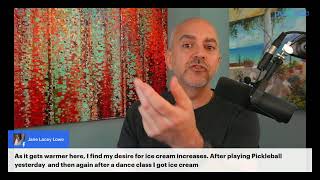
Jim Katsoulis argues that all-or-nothing thinking destroys diets, and proposes an all-or-something approach where small actions keep you going after a slip. Mistakes become feedback, not reasons to quit. He addresses how holidays, illness, and emotional triggers derail people, and recommends tracking data like sleep and glucose to stay aware.
Chapters
Hey everyone, welcome to today's program, Yourself Thin podcast. Today we're talking about when you get off track. This is probably the most important phase of your weight loss is when you get off track. And we can get off track in big ways and small ways, doesn't matter. Getting off track, we're just going to keep that general category and what to do when that happens. Because this is the thing that dooms most dieters, is that they start off strong, everything's going great for a little while, and then they make a mistake. And, you know, we never completely fall off track. We make a mistake and then give up, typically. So Being able to manage when you get off track in whatever way, you know, that you tend to get off track and whatever that may mean to you, being able to get off track and then back on track quickly is probably the number one skill you need to develop in order to manage your weight. And until you figure that out, you're always going to struggle because you can't be perfect. And that's the first thing I want you to understand is that dieting has conditioned you your whole life to think that you can just be perfect, that Monday can show up and you can just start your plan, follow it perfectly, and continue that until you get to your goal weight. And that's just not true. That's not accurate. What's going to happen is you're going to make mistakes along the way. You're going to make mistakes once you get to your goal weight. You're going to make mistakes after you've been at your goal weight for a long time. Mistakes happen. It's not a big deal. And making mistakes and getting off track are just a part of the process. And so Dealing with it begins by reframing it, thinking about it differently. Don't make the mistakes your enemy. You can certainly want to reduce mistakes as much as possible, obviously. But when they happen, and they're going to happen, relax. We want to treat that mistake as a teacher, as something that's going to feed back to us what we need to improve. And so instead of freaking out, we just recognize this. And we get right back on track. And getting back on track is another interesting thing because a lot of times when people start their diet, they start it being perfect. Right. Again, that all-or-nothing mindset. We're going to go from doing nothing to all do— doing everything perfectly. And that really comes back to bite us when we get off track, because when we get off track, if the only options we have are all or nothing, Once we make a mistake, we've kind of got that option. Then we go back to doing nothing, or now I got to get myself back to being perfect. Those are two wildly opposite ends of the spectrum. So realize that getting back on track can also involve small gradient type things. So you don't have to be perfect with your reading per se, but you might still continue drinking your water, or you might still, you know, again, you're still going to do your meditation or your breathwork or your relaxation or whatever it is that you're going to continue. Doing so that at least you're doing something, at least you're in the game somewhat. Because most of the time, again, when people do the dieting thing, it's all or nothing. And the second the mistake comes, that's it, you know, they're completely off track. So when the mistake comes for you, see it as just an opportunity to improve and get better and to realize a weakness or something you need to learn. That's the first piece. We don't freak out. We're ready for it. We're prepared. And once the mistake shows up, we ask the question, where do I go from here? Can I get back to where I was before with that same level of intensity? Maybe not. And that's okay. And if not, then it becomes, okay, what's something smaller I can do? Maybe I'll continue to focus on a piece of fruit. I'll continue to, you know, make my lunches healthier. I'll continue to drink my water, break it down into smaller pieces so that you're at least doing something. Again, this in Program Yourself Then, we talk about being all or something. Not all or nothing, all or something, and riding that something to our success. And so that's how we do it technically, is we find smaller things we can do to stay on track and to get on track. It doesn't have to be the perfection, all or nothing mindset that most dieters have. So give this some thought and really focus on this, because when you remove the stress of making a mistake and you start to improve and be able to get back on track quickly, What happens is you really start to minimize the damage that mistakes can do. And this is really one of the core pieces you got to figure out, because again, if you look at your weight loss history, what you're going to notice is a history of making a little mistake and then completely getting blown off course. And usually people start their diet, do it for a little while, make a mistake, stop, and then they stop for months or sometimes years before they get back on track again for a little while. You know what I mean? That, that pattern repeats. So instead we want to— fine, get back on track intensely, 100%. But if you feel like you can't maintain that, realize you have other options beyond just stopping. And if you can remember that, your chances of success go way, way up. So give this some thought. If you want to go deeper into this way of approaching it, uh, click the link in my bio or go to programyourselfthin.com and go get the free hypnosis session that I made for you. Uh, it's called The New Thin Me, and it is available for you for free. So go check that out. Uh, if you're in Facebook or YouTube, I will put that link in the chat window. But I strongly suggest you go get this hypnosis session. It is a really good one and it's free, and I give you a bunch of other stuff as well. So it'll kind of get you at least exposed to this different way of approaching all of this so that it's not just uh, dieting to try and change your weight. But yeah, and if you have any questions, feel free to ask them. Yeah, put that question in the comments. But I hope you're all having a nice day. New start of the week. What is it, May 18th? Uh, next week will be a vacation too, right? Here in America anyways, we've got Memorial Day. I'm for it. It's so beautiful out. It is just like dream time over here in New England. I will say it is the absolute perfect weather, and, uh, that brings its own thing, you know. You got to watch out for that too. Again, I mean, when you're managing your weight, you really have to pay attention to a lot of the subtleties. And one of the biggest things that— it really shouldn't be a subtlety, but it really is outside of the awareness of a lot of people— is the seasons and what they bring with them. And so You know, I think, I think a lot of people are probably a little more tuned into the idea, like winter, for example, depending on where you live, can be colder, darker, harder just in general than other parts of the year. And so start to notice, does that impact my eating? It can. It's not a crazy thing. If it does, you wouldn't— it wouldn't be unusual, but you need to recognize that, right? Again, we always start with awareness. We start with awareness. Of what the challenges are, of what our strengths are and how we can handle it. And then we make a plan moving forward, you know, the best way possible. But it all starts with awareness. And so as we kind of enter into it— again, I'm speaking kind of America-centric here— but as we move into the end of May, Memorial Day weekend sometimes kind of kicks off that whole summer mode. And summer mode for different people can mean different things, but It might be, you know, old neurology and associations of summertime means I drink more beer and eat more hot dogs. I don't know, you know. And so sometimes the new season can bring new challenges with it because it kind of triggers and activates old programming. Okay. And I share this with you because I find a lot of dieters that'll be confused with how they were doing so well. You know, I was doing so great for the last 3 months and, and then all of a sudden I kind of feel like I fell off track. And there can be a lot of reasons for this happening, obviously, but one of the big ones that I find most people miss is a seasonal one, you know, and it can show up any season. It's just, it's unique to each person. There's generalities, okay? So like, you know, the holidays and the New Year, and there are certain ones that, that impact more people. But, um, again, depending on your history and who you are and all the rest of it, I'm going into summer, my trigger stuff going into fall, my trigger stuff, winter, spring, whatever. And that can be a factor. But if you recognize it and work on kind of resolving it, it's amazing how much you can resolve it. Okay, but we got to recognize it first because I find a lot of dieters typically, if they're impacted by that, don't see it. And then they start wondering what's wrong with them when in reality it might just be, again, old program that got kind of activated and you need to deal with it. Right. Mimi says, thank you for helping us. Thank you for the awareness. More power. Yes. Thank you, Mimi. Thanks for listening. Uh, yeah, and that's part of what I do to get out here. I would say, you know, I'm here every Monday through Friday, uh, and I get out here and do this because I'm looking to kind of increase the awareness of the average person to be able to look at their weight in a different way. You know, I'm not gonna tell you, will this work for you or not? I don't know. I, I can't tell you that. You know, that's up for you to decide. But I think you'll very quickly realize that what I'm talking about is a much different approach to thinking about your weight. And I think, you know, when you're in a situation where what you've been doing for 10, 20, 30, 40 years hasn't worked, I think the next step is to find a different approach, think about things differently, get a different fresh perspective on it. And that's what I'm attempting to do here for you all. So thanks for listening, Mimi. Uh, what's up, Carol? Carol says, I've been following you for a short while and find everything you say very useful. However, I had birthday cake for breakfast and dinner today as it's my birthday. Back to normal tomorrow. Yeah, no, however, that's, that's fine. Again, there's going to be outlier days, folks. This is what I talk about this probably more than anything else, because dieting sets you up to think that you need to be perfect every single day. And again, dieting is not your friend. Dieting is literally created by the food processing industry to keep you overweight and out of control. But you don't need to be perfect. You want to eat cake all day on your birthday? Go ahead. That doesn't matter a shit. About your weight over the year. You know, eating cake all day might put a little bit of extra weight on you for a couple of days maybe, but it's temporary. It doesn't matter. So it's not really the acute things we do. It's not that the outlier unusual things, the birthday that comes once a year, the Thanksgiving dinner, those are not the things that are impacting your weight. It is the routine behaviors. It's the— it's what you typically eat for breakfast. It's what you typically eat for dinner that I'm much more interested in. And has a much bigger impact on your weight. But happy birthday, enjoy it. And yes, you're right, tomorrow back to normal. But again, life in humans need variation. And so again, dieting doesn't really honor this. It wants you to fight against it. But I suggest that you honor your desire to want to have different days in your life and to celebrate your birthday perhaps and go and celebrate it. Don't stuff yourself silly so you feel like shit, but eat your cake, enjoy it, have a nice day. And, um, yeah, tomorrow a new day begins. So hope you enjoy that, Carol. What's up, Sue? Sue says, hi Jim, I'm— I still feel like I have to be very disciplined in participating in your program. I'm much more calmer but find weight doesn't drop unless I eat restrictive. Um, well, no, you know, Sue, I mean, it's still— you're still kind of new in the program, you know what I mean? Like, like pretty new, you know? So just relax. I mean, this is a learning process. The fact that you find yourself much calmer is really the important piece because that's what we're going to build on. And so you may find at this point here you feel like you need to be more restrictive, but that's just at this moment. So on top of the calm, if you start asking the question, how can I make my eating more comfortable, um, and easier so that I'm also moving towards the weight I want to go to, you start to focus your brain on that and you start to come up with new ideas, um, new solutions, new, new opportunities. Because you realize right now— and again, I find it interesting— doesn't drop unless I eat restrictive. I'm curious to know what that means. I'm going to assume it means when I drastically cut calories is what I'm hearing, because restrictive can kind of mean two things in my world. One is that you drastically restrict the calories. That's restrictive. Restrictive is restricting calories at a very deep level. Or restrictive can feel like I've lowered my calorie consumption, but it feels very restrictive. Do you understand the difference there? So, and again, I'm just throwing numbers out. These numbers don't really mean much other than just, just add some context to what I'm saying. But super restrictive can mean like I'm trying to get under 1,000 calories. Okay. Or it can feel like I usually eat 3,000 calories. I'm trying to get down to 2,000, but it feels restrictive to me. So I would want to know which one of those you mean more. Because if you're saying, um, my— I find my weight doesn't drop unless I eat restrictive, um, I'd want to dig into that. Because if you think you need to drastically cut the calories, I don't believe that. And I'm not sure exactly how long you've been at it. I think you're relatively new. So that's what I would be— that would be my general feedback. And let me know if you're still here. Let me know some of the details that I asked. Uh, what's up, Cherry? Cherry says hello from Arkansas. All right, Arkansas, nice. Just got off vacation. I gained 3 but down 2 after a few days. Thanks to you, I don't stress about it. It's such a great feeling. So thank you so much, Cherry. Nice job. That's wonderful. Um, I'm proud of you. And that is really one of the best things, I swear, of program yourself then is exactly that, that you can go on vacation, you can, um, you know, have special occasions, you can have your holidays, you can enjoy yourself like a normal human being, and you can get back on track quickly and undo any extra weight you might have put on for that little bit of time comes right off. I— this is a normal thing for my clients, and this is a great example though of what it's— the difference between, um, the difference between dieting and Program Yourself Thin is summarized, I think, right there. Um, dieters again are going to go into their vacations or their holidays or their cruises freaking out and wondering how they're going to white-knuckle themselves through it and not give in to the food. And program yourself. Then we're going into that situation really focusing on eating moderately, eating what we want, enjoying ourselves, but working on doing it in a more moderate way. And if we put a couple pounds on during that time, that's okay because we're gonna get back to our normal routine when we get home, and that will come off and we'll be right back there. And that little blip of putting a little bit of weight on for a little bit, you know, for, for a lot of clients is worth it to be able to eat and live the way they want to live, um, on the holiday or the vacation. And again, you don't have to do that, but I find for most of my clients that's a nice balance, that they'll, they'll, they'll accept a couple pounds temporarily to be able to eat the way they want to and eat more moderately, you know. So that's a great job, Terry. Keep it up. I'm glad you're back, and now you're on the fun part, and now it gets to go down again. Hello, ST, how's it going over in TikTok land? Hey, what's up, Jane? You know, the big question. Jane says, my parents really valued beauty and being thin. My sisters and I were very slim most of our lives, but now I see that we all are— we are all overweight. I always feel like I have to fight against these values and that people should like me for who I am. Uh, now I have a former boyfriend who is basically saying the same things my mom would say, and it makes me feel ashamed. But also, I think Well, screw you, I will do what I want with my body. However, this attitude is not helping me get to where I want to be with my weight. Maybe you will say I'm just making excuses. Oh, Jane, I would never say that. Um, would I never say that? No, I guess maybe sometimes people are making excuses, but I rarely say that because I make a huge distinction between reasons and excuses. And I find a lot of times my clients are in the perfectionist land, dieting land, and they always veer— everything goes over excuses to them. So nothing's allowed to be a real reason why we do stuff or think stuff or feel stuff. And so I rarely say excuses. I almost always go the other side. I think there's almost always a reason why we do what we do. I mean, Jane, you're a smart, intelligent, you know, nice person as far as I can tell. Um, so the, the fact that this is impacting you, I don't think you're just saying this as an excuse because you're a lazy person who just wants to have an excuse and not do the work. I see you doing the work constantly, and this is part of it though. And, um, this is the work. If we say it's just an excuse, what do you do? If something's just an excuse, that's really code word for just willpower yourself through it, right? Excuses a lot of times, oh, just do it. That's just excuse bullshit. I think these are real reasons, Jane, and I would spend this week and maybe a couple weeks reflecting on these because you're right. This is absolutely programming that you received in your life that's impacting you now as an adult. And it's a very common one, especially with women, and especially women who are overthinkers, perfectionists, competitive, competitive women especially. What ends up happening is if you grew up in a, in an environment where you had someone telling you, really hyping on what you look like, when you're a smart, successful, intelligent woman as well, they become two messages you're getting. And that, that battle you, you were referencing, Jane, is very, very common. I've seen in my clients because one part of them growing up said, fuck you, I'm, I'm more than my weight. I'm a real living person here who deserves to be seen for me, not my weight. And if you grew up in a situation where you had someone telling you, no, your main value is your— is how you look, A lot of women that I work with, that creates this subconscious incongruency where part of them is like, oh yeah, your value depends on what you look like, and other parts says, fuck that, I'm more— I'm more than just what I look like. And these two parts can battle themselves right till the end of time, and you never get your weight under control. So great job, Jane, becoming aware of that. That's always the first step. Now that you're aware of it, now I think you're going to find the road to a solution's really not that difficult, not that long. Um, because you've got a lot of the pieces here because what you have is incongruency. Part of you believes you are measured by what you look like, and that's partly true. Okay. And part of you knows that you're worth more than what you look like. Right. So there's two parts of you that kind of believe different things. So what you want to do is you kind of want to have like a meeting with them. Um, let them talk to each other, hash it out, if you will, metaphorically. And even now we had the boyfriend in, right? So the boyfriend would give you comments about how you look. And so part of you says, fuck you. And part of you says, oh yeah, I got to get my— I got to lose weight. Women can relate to this. This is a common one. Okay. So what do you do with this? You know, you have to figure out what you want to do. This is— this work here to me is about you internalizing what is your goal. You as a grown woman— this applies to men too to some degree, but, but a lot less. This just really doesn't seem— I, I've never really seen this a lot with men. Okay, it's definitely much more culturally with women. And so the first thing you do is, what do I want? What do I want? What do I want my weight to be? What do I value? I think you've got to set kind of a ground level of what you want. Yeah, okay, your parents told you this. Okay, yeah, the ex-boyfriend said this. Okay, some friends said this. Fine. They all said that. Fine. Anyone can say whatever they want. It's up to you to decide what do I want? What do I want away? Okay. And that's the starting point. And from there, we kind of re-describe the goal. And this is so important, Jamie, because you're really giving, you're putting a spotlight on why motivation is so important to figure out. And most people do not have the motivation figured out. And I'm saying that. I'm talking to Jane here, and Jane is someone who seemingly is very motivated on the surface. I mean, she's been in the program now, um, she's, she's, you know, interacting with it constantly. She's on these all the time talking about stuff. She gets on the coaching call, the Q&A call. So you're putting the work in on the surface, but deep down your weight motivation is conflicted. It's a tug of war. Part of you really values the weight and thinks it really important for you, and part of you says, fuck it, I'm more than that, my weight shouldn't be important. and you're having this tug of war back and forth and you're incongruent. You've got two sides pulling in opposite directions. And so you're not really getting anywhere. So we got to get congruent. And so we want to say, okay, where do I want to be? What do I want my weight to be? Not what my mom said, not what my dad said, not what my ex-boyfriend said. What do I want my weight to be? Well, I don't know. How do I decide that? Well, which weight gives you the best quality of life? What kind of life do you want to lead? Who do you want to be? What kind of people do you want to have around you? What do you want to hear people saying to you? You know, you get real clear about what the goal is. Okay. Yeah. Jane says you hit the nail on the head, Jim. Thank you. Yeah, you're welcome. That's what I do. This is a common one. And by the way, this is why in Program Yourself Thin, again, we follow the goal weight pyramid. You go to mindset and what's the first thing you see there? It's motivation. So I would strongly recommend, Jane, that you go to the motivation section of your blueprint and relook at your answers and get even clearer. And I would suggest at this point, please go and watch the training that goes with it. There's like a half hour, 45-minute training where I deep dive into motivation. It might be a little even longer. That's one of the longer lessons because it's so important. But I talk about intrinsic, extrinsic. It'll talk about a lot of these stuff. Go watch that. And if you can get it watched before tomorrow, then get on the Tuesday Q&A call and ask some more questions. But Jane, this is exactly why Program Yourself In is so different than other programs, because you are now— you become aware of something deeper, and now you're going to work on resolving it. So it's not— and so instead of having two horses pulling in opposite directions, you get all your horses going in the same direction, and that's going to feel totally different for you, Jane. So great job. And again, that's working the program, is become aware of these things. So nice job. Um, someone asked me something in in French and I can't read it, but it looks like— I wonder what it says. So, Paracel, if you can ask that in, uh, in English, I appreciate that. Um, there's Sue. Sue says, yes, drastic calories. Yesterday I had a salad with chickpeas and tuna lettuce wraps for supper, but if I don't eat foods like that, my weight just goes up every day. Um, fiber is key, but a hard change. Example, hamburger and side salad versus large chickpea salad. I feel the hamburger is too many calories. Okay, so Sue, Sue, listen, relax. You got to ground yourself. You're flip-flopping between the extremes. I know it doesn't feel like that. I know it doesn't feel like that, but I promise you, you are, because you're giving yourself two polar opposites. Either I eat normal or I drastically reduce calories, and there's no way in between. Nothing in between will work. So this is my eating normal. This is drastic calorie reductions. And so if I reduce my calories here, nothing, nothing, nothing, nothing, nothing. No weight loss. No weight loss. No weight loss. No. Okay, now I can lose weight. That's how your brain's thinking of this, Sue. And that's not true. Okay. If this is your normal calories and this is extreme drastic reduction, let's experiment here. There's no way in the world that you won't lose weight if you maintain this weight, this calorie reduction for a period of time, but your brain's going back and forth, and it's very, it's very disorganized. It's very disorienting, folks. And a lot of you do this all because most of you dieters think all or nothing. So you think you're normal calorie consumption, and you think of absolute 1,000 or less calories, and there's nothing in between. Well, there is stuff in between, and that's where the success lies. So Um, really important to get that down because otherwise you're always going to resist it, Sue, because you're never going to eat like that super restricted diet all the time. Yeah, Sue says thanks. Well, good, Sue. I mean this. I know, I know it can be hard, but this is— that's a— sometimes we get triggered into this state. We get frustrated with the scale saying and we go back into this drastic mindset. So just relax, calm down, and just take another look at it. Just relax, ground yourself in that calm while you're eating, while you're reflecting on your eating, and see if you can cut the calories down 50% as much for a week or two. See if something happens. That might not be enough time either. Okay, Mimi says, is going too low in a deficit better or worse than over? Um, I mean, going too low in a deficit is never good, folks. Like, it's, it's just the shortest of short-term thinking to do that, and that's that. So again, if you've got to lose a bunch of weight for the end of the week or the end of the month, and you know, and then you don't care about your weight, then, then that's fine, okay? But if you actually want to lose the weight and keep it off, then doing really drastic, low restrictive calorie cuts is, is just It's short term. So if you're just looking for short term weight loss, then, then really low deficits are great. But if you're looking to actually live at your goal weight forever, then, then no, drastic things are not going to work. They don't— they haven't worked yet and they're not going to work in the future because they don't work. So I don't think they're ever good, you know, unless your goal is literally just to lose weight for a little bit. So if you all just want to lose weight for a little bit, I mean, keep dieting. You got the plan for that. I mean, that's dieting is way better than programming yourself then in terms of like just losing weight quickly for a little while. So I wouldn't argue that. But if you all want to live at your goal weight, then drastic cuts just don't seem to help, you know. I mean, do they? Do we live in different realities? I don't think so. Barbara says, this is so true. Yes, thanks Barb. Um, Karen says, what do you do if you're grieving and you use food for dopamine hit? I am very overweight. Um, yeah, well, Karen, I get that. And, um, that kind of gets to a core part of program yourself then, because— and you'll see it right here again with the, with the goal weight pyramid, right? Mindset's the biggest part. That's why it's on the bottom. But the fourth thing we cover in the mindset section is emotions. See that? And what that ends up meaning in real life is, how do I deal with the emotions that I experience regularly? Because I would say a simplistic way to think of if you're overweight or struggling with your weight, it's really another way to think about it. 99% of the time is that it's really an emotional eating issue. Because if you only ate for nourishment, right, if there was no emotional eating and you only ate to nourish your body, you'd eat enough to nourish yourself and then you'd stop and you'd be at your natural weight. Okay. So the big, you know, weight issue for most people is usually around emotional eating. You're not physically need food. But you psychologically, like, kind of emotionally, you know, you're eating for emotional reasons. So if it's grief, um, what's end up happening is a lot of times the emotional eating is not really the main problem though. The emotional eating is a symptom of a deeper problem. And the deeper problem is that you, if you're struggling with emotional eating, is that you don't know how to manage your emotions genuinely, right? So Karen here I wouldn't say you have a weight issue. I would say you have an emotional issue, and that emotional issue is you're not— you at the current moment don't know how to move through the grief in a genuine way. And so you use the food more as a distraction, right? Because we can say dopamine hit, but dopamine hits really the mechanics. The, the effect of that is that you start to grieve, you feel bad, and you distract yourself with the food, and it makes you feel a little bit better. But it makes you feel better because it's distracting you from the thing that you're grieving. And there is a little bit of a physiological, you know, boost that food can give you as well. But, um, the answer here really isn't about stopping emotional eating. So I don't want you to feel like you need to grieve and then just not eat because you probably don't have the ability right now to kind of move through that grief effectively. So I would focus on how can I move through this grief more effectively? What would that look like? How do I want that to be? What can I do? And I think you look at it that way because that's the bigger issue than even your weight at this point is the grieving piece, you know. And so I don't know what you're grieving. You don't even know how long you've been grieving. I don't know what the situation is, but I would want to dive into that and grieve if that was the right thing to do. Um, reframe whatever it is that I felt grief about. Maybe that's the right path, you know. I don't know what the right path is forward for you because I don't know the situation. Um, okay, Karen says my child died. So that's, that's horrible. That's super terrible. And that is so traumatic that that's certainly something that would rise to the level of working with a therapist on and getting some assistance. Um, 2 and a half years. Yeah. So I'm so sorry, Karen. And 2 and a half years is nothing. So it doesn't matter. I hope you're not saying to yourself, my God, it's been 2 and a half years. It could be 100 years. If we don't move through grief, grief just kind of stays stuck in our system. You know, so I think that, um, you know, when you get in a situation like this, again, it's not about the food. The food kind of gets center focus because it's what you're using. But the deeper issue to me is like, how can I grieve this fully so that I can release it? You know, sometimes grief, when it sticks around for 2 and a half years, um, well, it's unresolved, unresolved, obviously, but Um, maybe working with a professional therapist to kind of work through that grief in a more genuine way. That may be the answer. And again, I want to highlight that in a situation like this, the weight is secondary. The weight is secondary to the grief. And so the main focus becomes the grief. Then once you get a handle on that, then we come back to the weight. And I say this all the time, during times of stress, whatever level of stress it may be, that that becomes the main focus, not, not the weight. Do you understand that? Again, diet culture gets us so toxically thinking that even we get into these drastically intense life situations, we still think our weight's the most important thing. It's not. You know, moving, moving forward with this Karen is the number one thing, and then come back to the weight. No, um. Kimberly says, hi Jim, you've helped me so much, God bless you. I'm down 18 pounds since February. I hear, I hear you in my head all the time. What is your thought on wearing a CGM, continuous glucose monitor, for feedback? Um, yeah, well Kimberly, nice job, great job. Okay, I want, I want you to hear that, that, that's quite an accomplishment, so nice job. Um, the glucose monitors, I think they're a great idea. I, I think I think of glucose monitors again, we're talking casually, right? I mean, if you're a diabetic, that's— you're not going to ask me, I hope. So you're talking probably just, you know, as a person who's not diabetic to just get a better sense of what's going on with what you eat and your glucose levels. And I think that's a great idea personally. It's right in the ballpark of like weighing yourself every day. You know, I think of counting your calories for a little while. You know, I think it just it brings more data and awareness into your mind. And I think that's always a good thing. So I think wearing the continuous glucose monitor can be good for a little while. I don't think you have to do it forever. Just like counting calories. I don't think you have to count calories forever. You figure out the calories, what you typically eat, and now you have to count those anymore, right? So that's kind of how I think about that. But same with the glucose monitor. And I think it's really valuable. I've had a lot of clients that will start using a glucose monitor it's very eye-opening to them because it really just gives you more data. It's just another level of information to look at that helps you start to put the story together. So you'll see which things kind of spike your glucose, which ones keep it stable. Um, you'll get a better sense of that. And once you understand the, the spikes, you're gonna see in front of your eyeballs the spikes, the, the crashes, the, the balance. You're gonna see all that and you're gonna be able to put together what the glucose monitor is saying with the foods that create it. And then how you feel and what the weight effects are. So again, I'm a fan of that, um, at least for a little while. I don't think I'd want to do it forever necessarily. Um, but I think it's a valuable way to kind of calibrate what you're eating, what its effects are on you. Um, you know, just, just with some more information. All right. Uh, what's up, Marta? Oh no, I've been sick since last, uh, I can't see what else you said, but I'm sorry, last time you spoke probably. So I'm sorry, Marta, that happens. That sucks though, right? Um, yeah, Kimberly says, yes, I'm not diabetic. Yeah, yeah, exactly. So again, I would definitely do it. I think it's a great thing to do. I think anyone would be well served by wearing a glucose monitor for a couple weeks and pay attention to what food does to you and how your body works. That's why, again, I say weigh yourself every day because it just— it's direct feedback. It's quicker feedback, you know what I mean? Like, like you're seeing and understanding your body on a deeper level. And again, I don't think it's good to keep up forever. It gets a little much, you know. Although the continuous ones I guess aren't, but, but that— so that'd be my suggestion. Um, artist says, I've been dealing with a bad cold since last week. When I'm in that much pain and miserable, I'm unable to make healthy blood choices, so I go for— or healthy food choices, so I go for comfort processed foods. I go into survival mode. Marta, I mean, you're no different than me. I put like 5 pounds, uh, 2 weeks ago I was sick. I don't— you remember that? I was— I sounded like shit. I felt sick. I got like a spring cold. And, um, yeah, absolutely. I put 5 pounds on during that. And, uh, that's what happens. This is what I'm talking about, folks. Like, again, what do we got to do? We got to be a dieter and just believe in fairy tales that what, when you get sick, you know, when you have loss in life, when you have stress in life, when things fall apart, what, you're just gonna eat the exact same as when everything's going smooth and you feel great? Come on. You know, I know you want to believe that because it's just clean and easy to think about, but It's also thinking like a child, and you're not children. So we've got to mature our thinking up, and we have to live in the gray area. Sometimes we get sick and we turn into little kids and we go into survival mode and we want our mommy and we want to eat fucking ice cream and bullshit, and we're going to do that. It's not the end of the world because it's just a little outlier period. My eating got off for a couple weeks. I was— I couldn't believe how shitty I felt. I just felt like shit for 2 weeks. And, um, My eating reflected that. So what? So what? I went up a little bit. So what? It's just a temporary thing. Again, people just freak out. Outlier stuff creates outlier results, and then you go back to normal and you get normal results. So to you, Marta, yeah, I feel like shit. Yeah, I get it, Marta. Just get through it, okay? You know, again, you, you aim to moderate. I don't, I don't give myself like carte blanche, like I'm just gonna eat everything. I don't go into that mode ever. Because I don't want to. I feel like shit, and that's going to prolong the sickness. But when I don't feel good, I'm just— again, there's less energy, there's less willpower, there's less focus, there's less motivation. I'm focused on how shitty I feel, and yeah, I make less healthy food choices, and I'm just overeating a bit more. So that's just a normal part of life, in my opinion. What are we gonna do, you know what I mean? Like, again, it's this diet idea of like never make a mistake, never do anything wrong, because you You know, it's like, you think that sounds so good. You think you're holding yourself to such a high standard, but that's when you look at it from one angle. Yeah, okay, fine. That's the highest standard you can have. Hold yourself to the highest standards, fine. But on the other hand, we've got to have some sense of what real reality is. You can't just be perfect. And by the way, if you've been trying to lose weight for 30 years, you've never been perfect. So I don't know why 30 years later you still think you can just be perfect. You're just not going to be perfect. And the quicker you get rid of that, the better. I know a lot of dieters think that if I allow myself to not be perfect, I'm just gonna go way overboard. That's not what happens. That's not what happens. That's what I see. What I see is when people stop thinking they always have to be perfect is they calm the fuck down. You dieters are just twisted into a knot, and that twisted into a knot is one of the main reasons you can't control your eating. So when you calm down and relax and understand that I want to get my average eating down here And there's gonna be outlier things. Sometimes I get sick, sometimes I get stressed, sometimes whatever. I'm gonna go on vacation. I mean, we're living this life where we're constantly oscillating. Dieting makes you think that you're just gonna flatline your eating for the rest of your life and your weight's never gonna move. That's just— that's completely inaccurate. And if you think that way, you really just set yourself up for failure. So you're here, Marta, so you're still engaged, and that's the important thing. It's all or something. So just relax, Marta, and again, just center yourself, ground yourself, and realize that yeah, when you get sick, it's not a crazy thing to overeat. Again, we don't— we don't— in some ideal world, maybe you never will. There are some times where I get sick where I don't really overeat, but then sometimes I do. Same person. I don't know how it happens. So it's not about being sick, Marta. It's about how quickly you can get yourself back to feeling good and then getting back on your normal path, and your weight will return to that weight. Yeah, if anyone has any questions, feel free to ask them. Any weight loss questions are welcome. I work with all the weight loss questions because, yes, I do program Yourself Thin, but I work with people that do all different diets. What's up, Kent? Kent says monitor would help people see the benefit of eating more fiber and whole foods. Yeah, absolutely, Ken. Agreed. I'm glad you said it more clearly than I did. Um, the glucose monitor, definitely, if you're a visual person it can be a really powerful, um, thing to see your glucose levels. Yeah, when I was talking about the negative stuff, but the positive stuff too, right? It's both of them. And you start to get that visual verification of what you've eaten. It's just one more whole layer of data. So agreed, Ken. I think it's— I think it can be very valuable. Um, Ken said my smartwatch rated my sleep, which is what finally got me off of evening snacks. Wow, that's great. I hate my— my— my sleep score is terrible. I get it, right? And I, I sleep great, but it's like I've had a shitty sleep score. I have a weird sleeping, like, routine that doesn't match up with what they think is great, so I have to kind of ignore it. But again, I think getting biometric feedback, getting feedback in different channels, is always good. I think, you know, the more data, the better. What, what area of your life, when you get more data about something, you have to make a decision about it? When is that bad? You know, to me I think more data is better. That's what I like. But yeah, if anyone's got any questions, feel free to ask them. Marta follows up and says, I would love to live free from this constant food and weight issue. Is this ever possible? I feel like I constantly live in this diet mentality. My weight is first thing I think of when I wake up. Um, well, you know, I mean, here's the thing, Marta. Your weight may be the main thing you think about for the rest of your life. So I'm not going to sit here and say you're going to get to a point where you never think about your weight. I would never want to take that path because I don't think that's ever possible. So I would rather say, Marta, that I'm going to think about my weight for the rest of my life. I'm obsessed with it. I've been trained to be obsessed with it. I am obsessed with it. But I'm going to use all that mental energy and all that, that power, and I'm going to aim it in the direction I want to go in. So I'm going to think about my food, but I'm going to think about a very solution-oriented way so I get the results that I want. So I want to think about my food, but I want to think about it positively. I want to think about my weight and I want to be proud and happy of it. And I'm going to do that because I'm committed to this. I'm going to keep on working this program, get Marta on the program. And so I'm going to keep working on calming down, relaxing, thinking better thoughts. I'm going to start focusing on solution-oriented mindset. So I've been struggling, I've been feeling like shit. That's okay. How can I get myself back on track? Now, right now, don't worry about that, Marta. Right now just do the things that get you to feeling better first. Okay, then once you start feeling better, then, then again, it's okay. How can I get myself back on track? How can I improve back on track, right? How can I do even better than what I was doing, you know? And it's kind of like that idea. Yeah, Marta says, yes, I guess I look at this in a negative way. Exactly, Marta. Yes, you do. But it's, it's fine, Marta. It's good that you're realizing that. Okay, this is what I mean. Most of you dieters look at this all in a very negative way. I hate to tell you again, I, I wouldn't tell you this if I didn't think it was true. I've done over 6,000 private weight loss sessions. You dieters are extremely negative. It's part of the process. And again, it's not your fault, folks. You didn't come up with dieting. Dieting was an idea that was installed into your mind, and they've been working on installing into your mind since you were literally born. At this point, the diet industry has been there all of our lives. And it conditions you to think ineffectively, negatively, um, in a way that doesn't work. But you don't even realize it because all you know is dieting. So yes, Marty, you're looking at this in a negative way, and you can talk— there's a connect with Jane. Jane, look at this a very negative way, and she's starting to get little rays of sunlight that sometimes come through. And that's how it starts. And eventually we have more and more sun, and eventually you start to realize it's more sunny than it is kind of negative. And that's what we're looking for. But yes, Marta, I can almost guarantee you look at this in a negative way, especially when you're feeling frustrated, when you're feeling sick, when your weight's going up a little bit. Yeah, you're going to be super negative. So that's okay. Okay. That's normal. But it just realize that negative voice, that negative way of looking at it, that's the whole game we're playing here. That's your mindset piece, Marta. So again, I know we start the program and we want to just do things so we never have a negative mindset. But what happens more often than not is we have to realize how we have a negative mindset first. We have to be able to see the negative mindset first so that we can go and resolve and fix it. Because a negative mindset is not just like one thing. You know what I mean? Like a negative mindset is, oh, now I got a positive mindset. A negative mindset is just words we use to describe a bunch of thoughts and beliefs and associations you have. And there's lots of them. So you have to become aware of them, fix them, aware of them, fix them, aware of them, fix them. And it's like that forever. So that's your big one, Marta, that yes, I guess I look at this in a negative way. Absolutely. So what you're learning in the program is how to look at in a positive way. Not all the time, because you're never going to look at 100% positive, but we need to balance it out a bit more. Because right now for Marta, the negative is— well, I'm kind of up and down, but I'm thinking of a scale, right? So the heavy thing, the majority of what's going on in Marta when it comes to weight— and this is the truth for all of you, this is true for all of you— I Give me an exception. Let me know you're the exception. I would love to hear if you're the exception here, folks. But tell me that when you think about your weight, you don't typically think of it in a very negative way. You beat yourself up. You feel like it's going to be really hard. You don't want to do it. You don't feel like it's going to work. You feel like you're going to fail. You're mean to yourself. It's negative, negative, negative, negative. You tell me the positive approach to weight loss. Please let me know the positive approach to weight loss. Please let me know. What are we doing? I don't, I don't know. So again, it's not unusual, Marta. It's not a surprise that you'd be negative about your weight loss. You're steeped in negative thinking about weight loss your entire life, and it's the same for most of you, unfortunately. But you got to change that. Lynn says, how do I know I'm actually under hypnosis? Um, listen, because You're always under hypnosis. Well, not always, but you're under hypnosis a lot. The main way people are under hypnosis, everyone, is when you go to watch a movie or watch a TV show. They talk about highway hypnosis when you're driving and you kind of like, oh, next thing you went 3 exits, you never even realize it. That's another version. But the most classic version of hypnosis that we all experience every day is when you're watching a movie or a TV show. Because when you're watching a movie, you're just sitting in a dark room, but you're having all these experiences. Right? You watch a comedy, you're laughing. You watch a horror movie, you're nervous and tense. You watch a drama, you're sad. Right? So you're looking at light on a screen and sound waves hitting your ear and you're having all these different reactions. So hypnosis is less about this deep sonambulistic trance state that you're going to be in, where you're just at the mercy of any suggestion a person gives you. That's not really hypnosis. Hypnosis is using your imagination to have an experience inside of yourself. That's kind of a simple way to think about it. And we're using a different part of our brain. So, um, how do you know you're under hypnosis when you're watching a movie? Well, because you zone out. You stop paying attention to the surroundings you're actually in, and you live in the surroundings of the imagination and movie that's being put in front of you. That makes sense, right? So you're living in your imagination, so much so that your— what you're imagining That's not even real, right? So you could watch a horror— you're sitting in a safe place with a bunch of people. You could go with a bunch of friends to the movies. You feel safe and secure in your reality. You look around, you feel great. The movie comes on, the lights start flashing in your eyeballs, the sound starts hitting your way— your ears. And now all of a sudden you're in the exact same safe environment that you were just laughing and joking with your friends, all relaxed. And now you're like this. Why? Nothing changed physically, but something changed in your mind. Your imagination started to imagine it was in the scenario in the horror movie. Now you imagine you're being chased and you're responding physiologically to what you're imagining more than the environment you're actually sitting in. Pretty crazy, right? So it's a very powerful part of our mind. And once we start to learn how to use that, run our own imagination, we can start to program our mind to behave the way we want to. It doesn't happen instantly. You don't just program yourself once and now you're a different person. But as you consistently start to program into yourself the right thoughts, feelings, and behaviors, they start to become automatic. They start to just generally run out of you, right? And so that's how you kind of know. Taja says, I'm in Cyprus on holiday and I can't stop eating all the foods that remind me of my youth. Got to stop the sweet treats, um, I'm trying to maintain. Um, ah, fuck that. I don't think that— I think you should eat the sweet treats personally. I think you should really, really enjoy them. And again, you know, maybe, maybe moderate them a little bit more. I certainly would not stop the sweet treats. That would be the very last thing I would do. If I took a trip to Cyprus and had that been a, you know, a return trip to Cyprus from my childhood, the last thing in the world I would do is try and stop the sweet treats. I might dial them down a little bit, right? I might, might kind of like maybe by 20% or something. But I would absolutely— me personally, I would trade some extra weight to really, really eat what I wanted to and enjoy myself on vacation. Vacation is not what controls your weight, folks. A common mistake dieters make. So yeah, I would enjoy myself as much as I possibly could on vacation, which would involve also moderate eating, because if I eat all the sweet treats, I'm not going to enjoy my holiday as much because I feel so stuffed and so gross that it's going to start pulling away from the enjoyment. So I'm looking for that sweet spot where I get to eat the treats I like, but maybe a bit more moderately so I still feel good physically. But that would be the shot— that's where I would aim at. And then when I got home, because I felt so good, I enjoyed my vacation so much, then I would be much more congruent and ready to, you know, hit my normal routines and everything. And any weight that I put on during the holiday comes off. So that's how I think of that. Jane says, I think one thing which works against me is that although I have 30 pounds to lose, I don't really I don't look really heavy, so I don't do anything much about it. It's mostly when I get into a changing room trying on jeans or bathing suits that I am more aware of the weight I need to lose. Um, that's really interesting languaging, Jane. That's a very interesting comment you just wrote. It's, it's going all over the place. It's saying a lot of different things because on one hand, Jane's saying one thing that works against me is that, um, I look, I look good. Jade's saying I look good. I don't really look heavy. I like how I look. I look good. One thing I got going against me is I kind of like how I look. I look good until I start seeing sizes and I try those sizes on, they don't fit the way I think they should. Then I get upset with the 30 pounds I need to lose. You don't need to lose 30 pounds. You may want to lose 30 pounds for some reason, Jane. Whatever that reason may be is up to you. But I would say two things there. One is that it's— I don't think it's a problem when you kind of like carry your weight well and you look good. Even if 30— I'm 30 pounds higher and I look good, that's my problem, huh? What kind of problem is that? Isn't that a problem we would all want? So anyways, I know what you're saying. I'm kind of joking with you, but that, that, that's— I'm joking with you because that's not good motivation anyways. You know, you're basically saying to me, Jane, Um, one thing I got working against me is that I have 30 pounds to lose, but I look pretty good. And so I'm not motivated. How do I get motivated about these 30, these 30 pounds? Cause I kind of, I think I look pretty good. Yeah, that's because, and this is exactly what I'm trying to say, folks. Most of your, your motivation is based on what you're going to look like. Most of you. Ah, okay. Jane says, yikes. I don't, I don't feel like I look good. I just don't look bad. I appreciate you writing that, Jade. They start freaking out. Don't say I look good. No, no, no, no, no, I don't look good. I don't look good. Don't say that. God forbid a woman could think they look good, right? I'm joking with you, and I, I, again, I'm here— women have been extra screwed by this culture, no question about it, okay? Um, but that is funny. But, but it— I was kind of joking a bit, a little bit while I was saying that too, Jane, just to elicit that reaction. But, um, what I'm trying to say though is that, that, that motivation of basing your weight loss on how you look is very incongruent because part of you thinks you look— part of you doesn't— no, part of you thinks you look good. Okay, I'll give you that. But there's part of you thinks I don't look that bad, which is kind of the same thing, but whatever, it doesn't matter. I don't look that bad. So if your main motivation is based on how you look and you also have a big part of you that thinks you don't look that bad, where's the motivation come from? How do you get the motivation? And this is all of you, everyone, all of you. I can let you know, if you're overweight and been struggling for a while, it's because you're not motivated. You're not motivated. And that's your core initial problem you got to figure out, is how to get truly motivated. Because you're not motivated, you weigh what you want to weigh, folks. And part of the reason why you're stuck with your motivation is because you think wanting to look better should be enough motivation for you. You think about weight loss 24 hours a day You want to look better more than anything else in the world. So why isn't it motivating you to do the things to lose weight? And you're perplexed by this. Fair enough. But there's a reason why, because wanting to look better is not enough motivation for you all. And for Jane, you just, you couldn't have said any more clearly. How much motivation are you going to have, Jane, if you don't think you look that bad? Your motivation's not up to the level of the goal you're saying you want. Now what I would look at is why you think you need to learn, lose 30 pounds. Need to lose 30 pounds is very interesting languaging. I can't think of a single reason you need to lose it, Jane. I can think of reasons why you may want to lose it, but they're two totally different things. Oh, okay. Jane follows up and says, my health should— should— another problem word, a big problem word. My, my health should be my motivation because I have a few health issues because of my weight. Yeah, but your health's not motivating you. It should be. So I'm a bad person and I'm broken, but it's not motivating me. See, we all do this, folks. You all, you all know this because if you're not actively losing weight, it's because you're not motivated. You're not doing the right things or you haven't done the right things long enough. And that's because you're not really motivated. And so this gets us to the heart of the matter, right? So this is— this takes some work to figure out the motivation. There's no question about it. But once you have real genuine motivation, it's just like using rocket fuel. And most of you have never felt real motivation, because real motivation is real congruent motivation. The motivation you feel to take care of your kid when you feel sick. The motivation you feel to go to work, um, you know, even when you don't want to. You know, like the real motivations in your life. So should, should, and need to are big problem words, Jane. I go about the drawing board with those, um. So Lynn says, happy to say my mindset's finally changing for the better from reading your book and listening to your posts along with other new modalities. All right, Lynn, nice job. Yeah, thank you for clarifying the whole hypnosis. Nice job, Lynn. Great job taking work— taking action. And this is the book that Lynn is referring to. Yes, this is my book. This is available. The Dow: Living at Your Goal Weight by yours truly. Quite a book. Um, so nice job, Lynn. Nice job taking action. Yeah, there goes Taj. Yeah, okay, great. Don't feel too bad. That's right, Taja. Not only don't feel too bad, feel great. Enjoy yourself as much as humanly possible, Taja. Get as much enjoyment out of those treats as you can. And part of that is not stuffing yourself silly with them, because that never feels that good. But, but enjoy them and eat them and have a great time, okay? All right, maybe says I can listen to them 24 hours straight. This is all so true. Oh, thank you. I think they can keep things as true as I can make them. What's up, Jody? Jody says it's 100% possible not to have anxiety around food. I am proof. The program is life-changing. We learn from our mistakes. They are our biggest teacher. Trust the process. Yes, Jody's a superstar in the program, um, and it's true. Yes, you can really dial down the anxiety around food tremendously. And, uh, what a wonderful quality of life that is, I will tell you, to not be constantly worried about food and your weight and all the rest of it. Yeah. Ah yes, Ken says, yeah, it's funny how we trust technology cues more than common sense. It's true. Well, it comes in another channel and there are reasons for it, but I will tell you, for me it was like, I see these shitty sleep scores and it kind of messes with me a little because I take my sleep pretty seriously. But, um, I've taken it seriously for so long, I— screw you, sleep score. Some of the stuff's okay, it did help me a tiny bit, but I'll just never get high sleep scores because my sleep schedule doesn't agree with their one-size-fits-all sleep schedule. All right, let's see here, trying to find TikTok comments. All right. Skip that. Jackie says, I don't deserve it. Um, yeah, okay, well, there you go. That, that's a common thing. A lot of, a lot of people think they don't deserve to lose the weight. They don't deserve to be thin, healthy, and happy. That's not unusual at all. Um, literally just did a lesson on that a couple weeks ago. You do deserve it, okay? Um, but yeah, I mean, Jackie, you should, you should go deeper into that. Why wouldn't you deserve it? What is the reason why anyone should not deserve to be healthy, happy, and at their goal weight? I can't think of one, so you'd have to let me know. Okay, low self-esteem and don't feel I deserve to look good. Yeah, but don't just allow that, Jackie. Don't allow that belief to just exist unchallenged, right? So you can have low self-esteem, and I can appreciate that, but the, the good question to ask is, other people you know in your life, if they have low self-esteem, do they not deserve to be thin, healthy, and happy at the weight they want to be at? And you'll probably find you say no, of course they deserve it. And so how are you different, right? Don't feel I deserve to look good. Why? What? What? Why? Why would you not deserve to look good? That's what I'd want to know. Why don't you deserve it? Does anyone deserve it or just you? You're the only one that doesn't deserve it. Go deeper into it. Yeah, Jane says it's almost embarrassing how well you understand me. Jane, yeah, I know, I've been doing this for a while, you know what I mean? Like, there's just patterns, and it's not— again, it's not— the thing is, folks, listen, you're all unique beings, so it's not like I just know like every single person. It's the fact that I understand dieters. I understand dieters, and I especially know overthinking, action-taking, perfectionist women between the ages of 45 and 75. I, I— that's who I've worked with my whole career. So I know how the dieting in this culture shows up in your life a lot of times, you know. And so that's what I'm mirroring back to you. And, uh, that's why I do this every day, because when you can at least hear that, you can just see things that you weren't otherwise able to see. You just become aware of things that otherwise can just slip under the radar, you know. By having it kind of pointed back out to you, you kind of see it, and then, then you can again use your big brain to figure out solutions for it. But if you don't see the problem, you can't fix the problem. Right. Um, Mimi says, where can we buy the book here in the Philippines? Uh, I would say— I don't know, I'm gonna say it's probably PH, but amazon.ph. Amazon has different websites for different countries, in case you all didn't know that. This is something I've learned since I've started selling my book. Um, but yeah, if you— I'm gonna guess this off top of my head, so you would know, maybe. I don't know if Amazon's as big in other countries. I don't really know how that works in the Philippines, but Um, if you have Amazon there, amazon.ph, and I'm sure you can find this book, The Tao of Living at Your Goal Weight. And this book is very, very reasonable. I made it that way on purpose so anyone can get it. Um, Lynn says, I seriously need to figure out where to draw funds to purchase your program. Need to invest in myself. Um, yeah, absolutely, Lynn. I, I can't— I can't agree enough with that. I mean, the investment in this program, my opinion, is some of the best money you can ever invest in yourself. Um, in addition to the fact that it really, it ends up costing you less because most clients end up— that follow the program end up paying for the program many, many, many, many, many, many times over in, uh, money they've saved from food alone. Okay, but then the quality of life piece, it's worth it even if you didn't make any of that money back. Um, Evan says, how do I balance marathon training with good at eating? It makes me so hungry. Yeah, I mean, that's just a good point. The more you exercise, folks, the hungrier you get. So again, working out for weight loss is not typically a great strategy at the beginning in terms of marathon training with good eating. I don't know because I don't know anything about marathon training and what— how to optimize for that. So depending on how you have to optimize for that, it would affect the answer. And that is not my forte. Taja says, I have motivation, my daughter getting married next year, and I've bought the dress and it fitted me before I came over. I always self-sabotage. Um, yeah, well, I mean, that, that, that— I will say this, I'm not saying, Taja, you may or may not be motivated. That's not for me to say, that's for you to know. But one thing's for sure, folks, is you can't say you're motivated because there's something in your life. So motivation is an automatic. So you could have bad knees that you need to lose weight in order for your knees to get better, and you still don't need to lose weight. That's still not necessarily motivation. It may be, but it also may not be. Nothing is in and of itself motivating. Does that make sense? There's nothing— there's not like, oh, um, because they did a study with, with men, middle-aged men that had gotten open heart surgery, and they followed them afterwards and track and see how many of them were able to change their lifestyle up. Um, 20%. 20% changed their lifestyle up. So there's literally no— I've never seen something that is guaranteed to motivate every person. And I think it's very important to understand that. So you could have a wedding coming up in 6 months and you don't feel motivated. So, so just because you have a wedding coming doesn't mean you're going to be motivated. You might think, oh, I should be, I should be motivated, and the fact that I'm not, I'm broken. But nothing guarantees motivation. You have to figure out what's actually motivating to you. And most people struggle with this. It's true, because you've never learned how to motivate yourself, folks. You don't know how to motivate yourself, do you? You either feel motivated or you don't, and then you just have to either go with that. Maybe if you don't feel motivated, maybe you can Excuse me. Jesus Christ. All right, there we go. Um, maybe if you don't feel motivated, you can force yourself to do the right thing for a little bit. But motivation is not just a— okay, so Lynn says, yeah. Oh, that's a different one. That's a different person. Um, but Tasha, yeah, you don't have motivation. My daughter getting married next year and I bought the dress and it fit over me. Again, those all seem like they should be motivation, but you need to connect to that motivation deeper. You need to stay focused on the motivation. You need to grow that motivation. So we can't just say, oh, I'm motivated, I got a wedding coming up. I even bought the dress that I need to lose weight to fit into. That doesn't guarantee you're going to be motivated. It could mean you're motivated. You can use that to get motivated, but it doesn't guarantee you're motivated. So you can say, oh yeah, I'm motivated because I got a dress I got to wear. That's not necessarily going to motivate you. I hope that makes sense. Kimberly says, feeling better and moving easier is good reinforcement to want to be healthy, not thin. I want to enjoy retirement. The book is great. Story, story of ball drop, I like. Oh, I love that one. That's one of my favorite chapters. That might be my favorite chapter. I love that one so much. The little girl drops the ball, but she keeps picking it up, no problem, right? Agreed, agreed, Kimberly. And I love your reframe, right? Again, thin is just a word we have. It's a placeholder. You have to give thin meaning and it means different things for different people. So for you, Kimberly, it's more about the healthy piece of it, but it's not healthy is not enough either. Healthy is another placeholder. Healthy on its own ain't going to motivate anyone. You need to make that healthy specific to you. And you started doing that by feeling better and moving easier, but go deeper into that, Kimberly. Get specific. What's feeling better mean? How would you experience feeling better in your life day to day? How would you notice that? How would that make your life better? Moving easier. What's that mean? Get specific. How would you notice in your life that you were moving easier and what joy would you get out of that? Give me some exact scenarios. Give me some situations where those things show up, because the more specific you make them, the more you put them in your imagination, the more compelling and motivating they become. So on one hand, we say, oh yeah, I want to feel better and move easier. I'm motivated. I want to feel better and move easier. That ain't doing it. That's not going to do it. We got to go deeper. Let me give you an example. I want to feel better. I want to have more energy in my life. I want to wake up and hop out of bed and feel good. I want to be excited about the day coming. Um, I want to have energy. I want to have stamina. I want to have the ability to move easily so I can get up and down stairs. Um, so that I can crouch down and garden comfortably so I can pick my grandkids up and lift them up and really connect with them and be the grandparent I want to be so that I can go for walks with my partner and we can go to beautiful places and have wonderful experiences and adventures. So you see what I'm saying? Like, so it's like, I want to, I want to make it vivid. I want to make it detailed. That's what motivates us more than just kind of vaguer descriptions. Feeling better, moving easier, are, are, we're moving in the right direction, but we got a lot more work to do. We gotta make it much more vivid if we really want to be motivated, folks. Okay, they do this every day with the food. Every single day you watch TV, you're watching food ads that are doing this exact same thing. They're not just saying, oh, burgers are delicious. They're showing you the burger. They're, they're panning around it. The burgers, it looks like it just came off the grill. It's steaming. Everything is absolutely perfect. And it's very, very vivid. And that's because it elicits stronger feelings and craving and motivation for it. We have to do the exact same thing for the things we want. We've got to use very kind of specific, dramatic, imaginative language to kind of activate ourselves to want those things. Um, yeah, Lynn says quality of life is my number one motivation. Again, same thing, Lynn. That's your work though. Quality of life is a placeholder. It's just a placeholder. Thin, healthy, quality of life— these are just placeholders. Understand? It's not enough. What's quality of life for you mean, Lynn? Get specific. Get specific with it because, uh, yeah, and that's an easy one to do relatively. You're on the right path now, Lynn. But now, like, in your life, if all of a sudden you're at your goal weight and you were healthy and happy the way you want to be, how would a typical day go? How would a year go? What would happen in your life that's different than what's going on now? Get specific, get clear, connect to it. By the way, that's what the session I made for you helps you do. So folks, if you have not gotten that hypnosis session I give you for free, then go get it. Okay. Because this is part of what we do is help you clarify your goal and connect to it so that you feel pulled towards it. Right. That's the goal here. Yeah. Kimberly says, bring, being able to keep up with my extremely active husband. We want to travel. There you go, Kimberly. That's going to be a much probably bigger source of motivation because it's real to you. Right. And so that might be a more vivid, clearer idea of what you want to accomplish. And that's always the practice. We're always looking to make it more vivid, more clear, more specific about what we want to accomplish and constantly doing that because that activates more motivation and more motivation makes this whole process so much easier. All right. All right, everyone, I'm going to get out of here. Thank you so much. You guys are great as usual. I appreciate you listening and asking questions and commenting. I appreciate all of it. Um, if you've not gotten that hypnosis session, like I said, go get it. You can click the link in my bio, go to programyourselfthen.com. If you're on Facebook or YouTube, you can click the link I put into the, uh, chat. And, um, if you like this, I'm here every Monday through Friday, usually around noon Eastern, to answer any questions you may have, help you move forward any way I can. And, um, if you can't make the live, it's also a podcast. And so, um, you can search any podcast platform for Program Yourself, then it'll pop up. You can listen anytime you want. And finally, this book is available, The Tao of Living at Your Goal Weight. Um, go check it out. All right, that's, that's the book to get. And, uh, Jane says, as it gets warmer here, I find my desire for ice cream increases after playing pickleball yesterday, and then again after a dance class. I got ice cream. Um, yeah, same here, Jane. I, I got— I've been eating more ice cream as well. So we don't necessarily just stop eating ice cream, Jane. We look to work with it, right? So one of the strategies I use is I will get like literally a kiddie cone. I'll I feel like a dipshit ordering it. I don't like it. I wish they would just call it a small. I gotta order a kitty cone. I don't like it, but that's what I will do because, uh, honestly, I've found for me personally— and I'll get— everyone likes what they like and feels the way they feel, but for me, a little bit of ice cream is kind of perfect. I find that to be the sweet spot for me. Um, that may or may not be a strategy that works for you, okay? But it doesn't have to be that I never get ice cream again after this. It's about becoming aware as it gets warmer, ice cream becomes more of an issue. What can I do to manage it? Sometimes you reduce the size of it. Sometimes, you know, you get it and you look forward to it, you enjoy it. Sometimes you maybe do an alternative. Okay, but, but engage with that, Jane, um, and great awareness to realize that. Yeah, Rhonda says, since I've been listening to you, a slip does not turn into a slide into the ditch. I let it teach me and then I choose to do the next right thing. Thank you. Well, thank you, Rhonda, for sharing that, because, uh, that's really like the main thing I always want people to know more than anything else. Is that you can manage mistakes so much more effectively. And what a different process, you know. Not only do you get back on track quicker— people always focus on that part— but the other beauty of that is that you're not so terrified of making a mistake either. So the whole process just— oh, okay, it's a lot more relaxing because we're not worried we're going to make a mistake. We know we're going to make them sometimes. And then once we make it, we activate our get it back on track quick mode and we get back on track. And so we're just kind of living in the moment, more relaxed, more calm, more grounded, and moving forward. So, all right, everyone, have a super duper day and we'll talk soon. Bye.
More from Jim



Weight Loss Visualization: Wake Up in Your Dream Size #programyourselfthin #weightlosshypnosis



What If You Pretended to Be Thin for One Hour? #programyourselfthin #weightlosshypnosis




