Program Yourself Thin Live 5-20-26
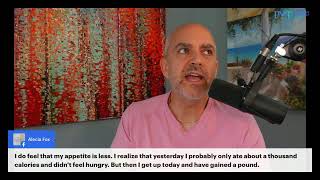
Jim Katsoulis argues that self-kindness, not self-criticism, is the key to sustainable weight loss. He explains how the brain's negativity bias sabotages effort and offers concrete tactics: appreciate your body's functional abilities, cut 10-15% of calories, weigh yourself daily to understand your patterns, and name your negative inner voice to reduce its power.
Chapters
Hey everyone, welcome to today's Program Yourself Thin podcast. Today we are talking about being nice to your body and being nice to it right now. This is really one of the most overlooked ways to get better weight loss results, to be nice to your body now, because I think what most people do is they're going to wait to be nice to their body once they lose the weight. But if that's the case, then what state are you in right now? Are you being nice to your body right now? Do you think nice things about your body right now? If you're overweight, or are you constantly saying mean negative things to yourself? How do you feel about your body? And most likely you are not being nice to it. You are probably being mean to it. And if you're being mean to your body, constantly saying negative things, hurtful things, cutting things to yourself, about your body, what ends up happening is you start programming your mind to always think negative, hurtful things about your body. And then you try and follow this path where you're basically trying to beat yourself into submission. And when you look at it this way, you start to realize why it's so ineffective, why it's not working for you. Um, but B, even if it worked, what did you win? Is this the goal? Is this the best we can do, to just be as mean as possible to ourselves in order to get ourselves and force ourselves and fight against ourselves to lose weight? This just can't be it. This cannot be it. And before you say, no, Jim, you know, get out of here with that happy horse shit, um, that doesn't work for me. I need to be— I need to be real. I need to hold myself, be accountable. Well, how's it worked for you? How is being really mean to yourself work for you? Are you at your goal weight? Are you in control of your eating? That's my question to you. And if you're not, then how are you going to defend that being mean to yourself and hating your body is actually working for you, is actually going to help you move forward? It makes no sense. It's an argument that really doesn't hold up to scrutiny. And so when you start to look at how you are with your body, I think it becomes very evident why you're getting the results you're getting. Because if you hate something, if you're always mean to something, how far out of your way are you going to go to help that person? So what ends up happening is you create this very adversarial relationship with your very own body that you're trying to improve, but you're trying to improve it in a way that is miserable. For both of you. And you start to get this rebellion, you start to get this pushback, you start to feel your body kind of digging in its heels to some degree. Now, this is a little bit metaphorical because the effect of being mean to yourself shows up in that way. It's subtle. So what happens if you start to like your body now? Now, I know a lot of people struggle with this, and I think this is actually something to pay attention to because there is a good likelihood that you can't even get yourself to like your body right now. You might be so entrenched in the thinking of hating your body in order to get yourself to do the right stuff so that you can lose weight, so you can finally like your body. You might be so trapped in that dynamic that the idea of actually liking your body now when you try to do it feels almost impossible. So how do you get there? You know, I will give you one little trick that I find is a starting point, a good starting point, because most people are really going to struggle to feel to like their body. Never mind love their body. So how do we actually feel some sense of liking our body? Well, we look at the functional aspects of it. So this is such a great opportunity to realize just how conditioned you have been to think about your body as a visual aesthetic thing that you think about from the outside. So when you think about your body, you typically imagine looking at yourself visually. You imagine yourself a picture, seeing yourself. And most of how you think of your body is really this visual piece of looking and imagining what you believe you look like. But there's the other experience of our body we all have, which is how it feels from the inside. And so one of the easiest ways to start liking your body is to like it for the things that it does well. Being able to see, being able to speak, being able to hear if you can, being able to move your fingers and hands and move things around if you can, if you have arms and hands. Being able to walk across the room if your legs work, if you have legs, right? But to start appreciating the functional aspects of your body, what you're able to actually do with it instead of what it doesn't look like. And when you start to come at it this way, typically people are able to ground themselves in a real sense of liking, because once you appreciate what you have by comparing it to, you know, situations where people don't have arms, legs, sight, hearing, whatever else. You genuinely tend to tap into an appreciation. And that's your first step to at least start to like your body. You can still want to look different too. Okay. I'm not taking that away from you, but why not move towards looking different in a more supportive, encouraging, warm, loving way? Why not start to appreciate your body now for what it's doing and does for you each and every day? Why not feel gratitude for the body that you have? And you can still want to lose weight. You can still want to look different. That's fine. But why not start with a sense of liking and a sense of loving your body and building from there? Wouldn't that seem like a better strategy? I've seen it work a lot better in my career, and I hope you give this a shot and really consider it, because I've consistently seen that once you walk this approach, Again, not only is it more effective, but it's also a lot more enjoyable. And if you want some support walking this new path and this feeling of loving your body, go click the link in my bio or go to programyourselfthin.com and go get the free hypnosis session that I made for you. It is called The New Thin Me, and it is designed to help you kickstart your weight loss by helping you clearly kind of define and see what your goal weight is and connect to it. So it becomes more of a kind of clear sense of what you want to accomplish and connecting to it so you feel pulled towards it. That's kind of the key thing we want to achieve is creating this feeling of pull towards it instead of feeling you have to push yourself to do the right things to lose weight. And that session will help you do that. It's completely free. Go check it out. And if you are in Facebook or YouTube land, I just put that link in the comments section. But yeah, if anyone has any questions, feel free to ask them. Uh, any weight loss questions are welcome. I have worked with people in pretty much every weight loss— no, that's not true, there's too many weight loss modalities. The main ones though. So if you're struggling with keto— what's up, Karen? If you're struggling with keto, if you're struggling with intermittent fasting, I have worked with people with all of these. So any struggles you may be having in terms of your weight, feel free to share them with me. And, uh, let me see if I can help you out. You know, I tend to come at this whole thing with a different, um, from a different angle and with a different mindset. And sometimes when you do that, you can make fundamental kind of shifts in how you think about this that can really move you forward in ways that willpower, uh, is unable to do. Right. Uh, what's up, Helen? Helen says, good advice. I have great blood work results every time. I just planted 16 shrubs in Florida. I walk twice a day and can do a lot of physically at the age of 66. But I don't like the way my body looks at this age. Thank you. Um, I get it. You know what I mean? And again, I'm not saying that— that's why I say, uh, I go into this topic of loving your body, I think, with more depth than we typically get, right? Because I think typically it's kind of like, okay, uh, love— you should love your body, you should love yourself. And it sounds great. I don't think there's anyone that wouldn't agree with that. Okay. But what I want you to recognize is the difference between believing that, right? You would tell people in your life, no, love your body. You've got a beautiful body. You should appreciate it. And you would say that to them. You believe it. However, what is your ability to create that feeling for yourself? For most dieters I've seen, their ability to genuinely feel love for their body is very low. And why wouldn't it be if you spend most of your time beating yourself up, hating your body, hating how you look, hating getting older? If you, if you spend most of your time giving that messaging to yourself about your body, then how do you think you can just turn around on a dime and then just love it? You know, it doesn't make any sense. Um, for a lot of people, they've internalized very deeply at a neurological level, um, this hatred for their body. And again, just at a fundamental level, it's very difficult to treat your body nice and to get results that make you happy and to love yourself when you hate yourself. I tend to summarize this by saying it's very difficult to, uh, you know, hate yourself healthy. So I get it, Helen, and that's legit too, though. Again, we get older, we saw my skin's getting a little saggier, or I'm flabbier here, I don't like this. Listen, we're always going to feel like that because we're constantly being, um, it's non-stop in this culture that we're constantly getting messaging showing us perfection, and we're always measuring ourselves against perfection. And it's so unnatural. Never in the history of the world has this ever existed. Never, never, never. Not even close. We have gone so far behind— beyond what's normal. And so we live in this culture where we learn from the time we're born, basically, to hate our bodies. And you're constantly having that reinforced day and night. But it's a bunch of fucking bullshit. I can't put it any clearer. It's marketing bullshit, folks. It's not real. How you look matters in your life to some degree, but not to the degree you think it does, right? It just doesn't. It's a made-up bullshit thing. It's this idea that we should age without looking older. It's an impossibility. And just because it's impossible, just because it isn't logical, just because we've never done it before, doesn't mean that you don't still feel bad when it happens as well. But I do think that it, it's helpful to kind of take a step back and sit with these complicated feelings, you know, that Helen kind of articulates, that you can have a body you're happy with in a lot of ways and still be unhappy with how it looks. And even if it's as good as it can be as you get older, it's still, you know, but with that paradigm, it doesn't look as good as it did. I'm on a one-way path to looking worse. And that's really drummed into us our entire lives. So what do we do with that? I don't have a specific answer for every person, but I do think it's worth— if you feel those things, don't ignore them. Look at them. How can I resolve that? How can I resolve— I've thought a lot about this myself, but as I get older, um, things are going to change. I don't know, do I— is this the hair I want? Oh, white hair and bald and all the rest. It's not, it's not my first choice, but it seems to be what I signed up for as a human. And so how can I have some peace with that process? And one big thing for me is I think of my situation relatively. So, um, would I, would I love to be in my 25-year-old body for the rest of my life? Sure. But until that can be a real option, my next one will be to appreciate where I'm at now and to make it as good as I can possibly make it. And that's kind of where I sit with that. And in terms of, well, what about how you look? You look old now. I feel healthy though, you know what I mean? And so if I look older, I look older. Uh, I'm happy. It's better than the alternative. These are, again, those, these are my, these are what I say to myself that work for me. They may or may not work for you, but my point is that if you recognize this as kind of an issue and a challenge for you, that you're unhappy with how you look because you're getting older. Well, that's something that ain't going to change. You know, even if you lost all the weight and got right to where you want to be again, you're still going to be getting older. And society and culture tells us that's not as attractive, that's not desirable. And so we feel this, this internal sense of loss and grief and frustration. But how do you want to deal with that? You know, that's kind of my question, because we all have to deal with some to some degree. I would imagine, right? Women more than men, even to some degree. Um, Karen says, yep, I'm loving my body now as it is as I lose weight. Yes, Karen, yes. I think that's a better strategy because I promise you folks one thing, that if you are unable to love your body now, I can almost guarantee you, you will still be unable to love your body when you lose the weight. I know you don't believe me, but I've done over 6,000 private weight loss sessions. I have Literally, I've worked with hundreds of women who have lost the weight, and I talked to them at either 70 to 80% of their way to their goal weight or at their goal weight. And it is not unusual for them to still not like their body, certainly if they haven't gotten their goal weight yet. And then people that get to their goal weight, even them, there's always something wrong. And the classic example I always share, um, that of this is I remember I had a Someone I was certifying as a Program Yourself Thin coach, and she had been a competitive bodybuilder. And I said, I said, what's it like right before you go on stage? I mean, you're just this moment of perfection that you've been building up towards. What's that like? She goes, I'm just noticing little, little smaller and smaller flaws. So it's a mindset that potentially can never end. So instead of just expecting or hoping that just losing the weight will fix your mindset, why not start working on the mindset right now? And using that mindset and that love for yourself to move you towards your goal. Again, you can still hold on to a weight loss goal. You can still want to change your weight and how you look, but why not do it on a path that is more loving and, um, softer and nicer? Why would we not choose that? Now, that's an interesting question because I've asked this for many, many years to people. And what you usually get is you start to get a belief that you probably have that if I'm not mean to myself, I won't take action. And that's bullshit. That's bullshit. Um, you take action with what you're motivated to take action with, and there's no need to have to be mean to yourself. That's just something that the diet industry has taught you, and it is a bunch of bullshit. So I hope that you question it because it, um, it doesn't work and it's a miserable way to be. Is, is how I would say it. Yeah, if anyone has any questions, feel free to ask them. Karen Falls Up says, health is more important. If someone doesn't like you for the way you look, says a lot about them. Agreed, agreed. I think that's a very healthy way to look at it, right? I mean, again, what are we gonna do? Most of us we always want to look better. Everyone wants to look like someone else. I don't think there's a person alive who doesn't. And they're going to be people, no matter what you look like, no matter what you weigh, that aren't going to like how you look as well. So I have found people get more benefit out of considering some of the beliefs they have about that, because sometimes the beliefs and the goals you have to just look perfect— so what? So that everyone loves you? So that everyone thinks you look amazing? It's kind of like impossibility, and I find a lot of people with weight aiming at impossibilities. What's up, Jane? Jane says most people focus far more on the negative than the positive. The brain seems to be wired to look for the negative. The insults we had when we were kids, the perceived slights and unkind things said to us, are never forgotten. It's much easier to forget the nice things that people say. Often when I look back and see how slim I used to be, I used to see other things that bothered me about my appearance like having big feet and heavier thighs. Agreed, agreed, agreed. I, I couldn't agree more with everything Jane just said. Uh, and you know, there is a name for exactly what you're describing, Jane, in terms of the negativity, and it's called the negativity bias. And it's one of the most important cognitive biases that humans have. Uh, every human alive has a negativity bias, meaning the negative things impact us in a stronger way than the positive things. And the reason every human has this is because it's something we all evolved to have that encouraged our survival. Uh, it was a lot more important to remember where the lion was than where the beautiful flower was. One's got your survival on the line and the other one is, you know, just a little blip of dopamine and endorphins, right? So they're two total different qualities of experience, categories of experience. And you're exactly right, Jane. Um, That being said, positive stuff is powerful too. Um, but yeah, the negative stuff, if it's not managed, and let me just talk about that a little bit. Like, I have a negative voice in my head, and that negative voice I've had my whole life, and it has never gone away. And I want you all to know that if you have a negative voice in your head, and I know you do, uh, that negative voice is never going to go away. So I want to give you a clear, a crystal clear sense of what your goal is, or what I think it should be. Uh, you cannot get rid of old wiring. Neuroscience, one of the basics of neuroscience is you can't get rid of old wiring short of some trauma or something. Um, you're not going to forget how to ride a bike. You're not going to ever forget how to speak English. You're not ever going to forget how to drive your car. Okay, you've got this wiring, it's there, you'll always be able to rely on it. So it's the same thing with that negative voice. You've got the wiring there, that negative voice. You can think of it very similarly as being able to understand English. You almost think of them as, um, that's the wiring to understand English, the wiring to speak negatively. It's the same type of thing. You're never not going to understand English words, even if you tried. So that negative voice is not going anywhere. However, you can balance it out. And that usually is the thing that supports and helps people more is to, you're usually very unbalanced. You have a really loud, aggressive, negative voice, and you have a very kind of quiet, random, out of the picture most of the time, positive voice. So that if you make a mistake with your reading, you're going to come crashing in with your negative voice. And the positive voice is nowhere to be found. And so this is a dynamic that most people, um, exist within. And you know this in your own life, right? When you've tried to lose weight again, you, you feel this negative piece come in, you know, because any little mistake you make, it's blown way out of proportion. You could have 4 perfect days, um, eat a cookie on the 5th day and everything's blown right back to that negativity bias. So we have to recognize that out of the box, our brains are always going to give more weight to the negative things than to the positive things. So we go in knowing that and we intentionally start to develop this positive voice. So for me, I still have a negative voice. And not only do I have negative voice, but it's always first on the scene. So I make a mistake. Negative, negative, right there immediately. But I'm able to be at my goal weight because right a split second after that, I've trained the positive voice to come in. So I make a mistake and the negative voice says, oh, you see a piece of shit. See, look what you did. You screwed up again. You're a loser. This is why you're never going to succeed. But before that sentence is even finished, the other voice comes, whoa, calm down, relax you. Cause that, that positive voice knows the negative voice very well at this point. Calm down, relax. Just a little mistake. We can fix this. We can get right back on track. It's not a big deal. Um, mistakes happen all the time. It's not about mistakes. It's about getting back on track quickly. And you're good at that, Jim. So let's figure out what happened, why it happened, move ourselves back on track. And get going with things. So hear that voice that I just described to you. Do you have anything like that in your head? And I know you don't. Not even— I might as well be speaking, yeah, whatever languages you don't speak, Chinese, Greek, right? Doesn't matter. That encouraging, supportive voice is as unusual to you as if I just spoke words in Greek or Chinese. You make no sense to you, right? So it's like, that's what you're looking to develop. That's what in Program Yourself Then, one of the main things we're looking to develop is this ability to quickly and powerfully basically speak to yourself in a more supportive, encouraging way that helps you because that negative voice, more often than not, it's grinding you into a pulp and it's one of the main things that gets you to quit. Does it not? And it's both ways. When you're not doing anything and you want to start a plan, that negative voice is just like putting you down, putting you down, putting you down, telling you how hard it's going to be, how difficult the rest of it. And then, um, once you're on the plan, the second you make a mistake or even think about making a mistake, it's right there, negative, negative, negative. And then you make the mistake, negative, negative. How, how can you ever succeed with that voice just constantly picking at you? I don't know. You know, so yeah, we got to balance out that positive, um, the negative voice with a positive voice, in my opinion. That's what I think. And, um, just a fine point that I thought this was so interesting. I remember reading this a couple years ago, but just, just to reinforce the idea of the negative, um, negativity bias we all have, there's— it's kind of a cool way that there's no positive alternative for, or equivalence for, a trauma, right? If you think trauma, trauma happens in a moment. Right? And it's like you can have a moment, someone could say something to you, something would happen to you, something, something goes on, boom, you got that. It's like stuck in your nervous system because yes, negative things stick in our nervous system a lot deeper than positive things, right? There is no positive version of trauma. There is no amazing positive thing happens that you just, you know, have flashbacks to it or get triggered positively, right? That just doesn't work that way. So Again, it's not something you can change. You can't change your wiring. You can't just become a more positive person who positive things matter to you more than negative things. That's just never going to happen. You're a human being. So it's recognizing what is and then working around that in engineering things, knowing that in the direction that you want to go in. So hope that makes sense. Uh, Rhonda says, I've been following a healthy 3-meal-a-day plan for 6 weeks with protein, veggies, grain, and fruit. I do not snack between meals. It appears this eating plan is great for maintaining weight. However, I would like to lose 25 to 30 more pounds. Do I choose to eat less each meal or exercise to start again? How do you handle plateaus? Thank you. Um, yeah, great question. Uh, okay, 6 weeks, nice job. That's great. So 6 weeks, it sounds like you're pretty— I get the impression that you are pretty dialed in. What I mean by that is some people will, will get on here and they say, I've been, I've been eating better for 6 weeks and I haven't lost any weight, right? And that, that to me feels a little different. This Rhonda's question seems a little more specific, so I think she's probably got it down more. So great job. 6 weeks is wonderful. Um, I usually shoot for 4 weeks-ish, um, to stick with 4 weeks. If nothing's moving weight-wise, then I'll start tweaking things up. So 6 weeks, wonderful job. Great job, Rhonda. So, uh, and nice, nice job with your meal plan and all that. So what I would do— yes, you got to drop the, the calories. Um, did you say you're exercising yet? Okay, so it sounds like you're probably not exercising, or exercise to start again. Okay, so, you know, this is a good question, and there's no right or wrong answer. There's that— whatever works best for you. But In my world, I'm kind of lazy, and so I've always built my weight loss around controlling my eating. So the advantage and benefit you have now, Rhonda, is that for the last 6 weeks you have stabilized your eating. You've structured it. It sounds like you have a fairly structured 3-meal-a-day plan that you've been following and you haven't been snacking. You're just stuck, right, doing the meals. You got them kind of locked in. Everything's going pretty smooth, it sounds like. Okay. So if you— if that's the case, if you do have this structure and it feels pretty good, you're in the sweet spot. Now, this is the spot that is kind of like the first phase to get to structuring our eating, because now you can look at the typical foods you eat breakfast, lunch, dinner throughout the week. You can get a kind of a sense of what those are. And then you can strategically in your mind say, where would be the easiest calories to cut out of that? And I would be looking to cut 10 to 15% of your calories is where I would look. That's what I would aim at. I would look at my eating across the board that I typically have for the week, and I would say, where would be the easiest place to slice 10 to 15% of my overall calories over the week out? And then I would look at like what, what I was eating. And so the first thing I would do is I hear you saying protein, veggies, grain, and fruit. Which makes it sound, you know, to, to the untrained ear, that sounds like, you know, you're eating absolutely perfect. Uh, maybe you are. Okay. Uh, and even if you were eating perfect, eating perfect health-wise is different than eating perfect weight-loss-wise, because weight loss is more about the calorie content of the food you're eating. That's the most important thing. Now, the healthy foods that you're eating support being able to manage your calories more effectively most of the time. Because the healthy foods help you manage your hunger, your cravings, your mood, your energy levels, all this stuff here. But ultimately, still, at the end of the day, whether you're eating healthy, whether you're eating junk, it comes down to the amount of calories you're consuming. So I would take a look at the meals that you've been eating, and I would look for the most calorie-dense foods, the healthy ones. I would look for the most calorie-dense ones. Um, The classics, cheese, oil, um, proteins, perhaps butter. Uh, these are some of the obvious ones, but then start going in and looking at which foods do I eat have the highest, um, calorie density, right? So you should know the concept of calorie density. If you don't, look it up. Um, it's basically just the amount of calories within a volume of food. Okay. So a cookie's a lot more calorie dense than an apple. Right. We could say the apple and the cookie are, you know, ballpark similar volume. Uh, the cookie's got way more calories in it than the apple of a similar size, right? That's what calorie density means. So you want to look at your eating, Rhonda, what you typically eat and look for the foods that have the highest calorie density. And then, um, again, shave off some of those and that, that would be the next step I would do. For the next 2 to 4 weeks and see what happens. But again, just relax. It— we don't have to lose weight right away. This is what dieting really screws you up with, is you're just trying to do everything all at once. And dieting, again, is not your friend. Dieting is there to condition you and train you to be an overweight dieter. Dieting is not there to help you master your weight and live at your goal weight. Dieting is there to really fill your head with bad ideas and strategies. And beliefs and the mindset. So a lot of people try and dive right into their diets, okay? Yeah, you haven't eaten well in 2 years and now you're gonna eat perfectly. It's stupid, but that's the world we live in. But so what I would say to you, Rhonda, is that you got the advantage now that you have a stabilized— because 6 weeks, pretty good, good amount of time— you have a stabilized eating plan. Look for the most high calorie density foods in it and start to systematically Slice those down. Jane says, my positive voice says to me, good job, Janie girl. I try to use it as often as I can. That's perfect, Jane. And that's a good one too. A lot of times, you know, our voices are really inspired a lot of times by who we grew up with. And so if, you know, your parents called you a nice nickname when they were happy with you, that's a great idea to put into the positive voices, um, you know, kind of bank what it says to you. So I think that's wonderful, Jane. And what I would love for you to do, Jane, is to keep an eye out for when you screw up. So I don't know, you go and you get a bag of Cadbury eggs and eat the whole thing or whatever the chocolate eggs you eat are, and, um, and you start beating yourself up and let that positive voice come saying, Janie girl, it's okay. It's all right. Everyone makes mistakes. The real secret is how quickly can we get ourselves back on track and what can we learn from this as well, right? Um, so that would be a fun little exercise for you to, Jane, to do. See if you see if you can do that. It takes a little bit of work, I will admit that, but it's well worth it, I would say. And TikTok, I am live. I don't know if people are asking questions, it's so hard to find them. Oh, there's Kalango. Yeah, you can ask the questions right here. So, oh, that's another thing too. I know, um, one of the things I want to be doing is having like almost like a call-in show. I'll be just doing this on TikTok because that's the only way I can do it, but Basically, if you want to talk to me, you'll be able to just join a live here and we can, um, record it. So that's something that's coming down the pike quick— quickly here. I've been meaning to do that the last 2 weeks, but it has been all of a sudden extra busy time, so haven't gotten to it. Uh, Cindy says, I was into competitive bodybuilding for 5 years. Even though I always won first place, I would find something wrong with my, my body. Um, imagine you were so great for my healthy reprogramming. Um, there's a Bible verse that goes along with what you're saying. Think about what is good, right, and true. Um, and you are so incredible, incredibly helpful. Thank you, Cindy, I appreciate that. Um, and I appreciate sharing that with me because I think, again, I, I, one of my goals here— I'm here every day Monday through Friday, and one of my goals is to really help all you dieters out. I know I've been doing this for a long time, that my clients are hard-working people, that, that if you just tell them the right stuff to do, they'll, they'll do the work. The problem is they've never been told the right things to do, and it's that way with weight in this culture. Again, the diet industry has really done a number on all of us, um, and it's just bad, bad messaging that doesn't work. And, uh, so I try and give you a perspective on things you may never consider because most, most of you are trapped in this diet prison. It's a mental prison that we're trapped in, and you need to get out of it. And the way we get out of it is kind of break the We kind of bend the bars every time we bend a limiting belief or break a limiting belief. And this idea that you're going to— because the diet industry, what they really do is they set up a fairy tale for you. Dieting is a fairy tale. And part of the fairy tale is that you're going to lose the weight and then everything in your life is going to be fixed. You're never going to feel bad about yourself again. You're never going to feel you know, embarrassed. You're never gonna feel uncertain. You're never gonna lack confidence again. You know, everything's gonna be amazing and perfect when you lose the weight. And that's such a bunch of bullshit. And I don't say that to be negative. I say that to be honest and truthful with you because I care about you living at your goal weight. I'm not just here to sell you bullshit. Again, I think that's one of the things that separates me from a lot of weight loss industry. Now, I sell stuff, right? I have a program, but Um, I'm here every day for free, you know, because this really is my mission and I serve it every day by coming here and talking about some of the limiting beliefs we all have. And again, one of the big ones is this idea that you're going to lose the weight and then everything's going to be magically better, but that's bullshit because you've already been at your goal weight. You've been at your goal weight. Was everything magically better that you got to your goal weight? Was everything so magically better that you wouldn't put the weight on? Nope. You put the weight on. So how'd that happen? How are you at your goal weight and then put the weight on? I say this to you because again, you can't just assume that getting to your goal weight fixes everything. It doesn't. It's great. So hey, listen, being at your goal weight's amazing, but being at your goal weight in a congruent way, a way where again, program yourself in— it's an inside-out approach. We follow the goal weight pyramid. I'm gonna bring it out right now. The goal weight pyramid: mindset, lifestyle, and eating. So we have a holistic strategic plan to kind of transform yourself from the inside out into the person you want to be so that you can be the person you want to be. And one piece of that's the weight you want to live at. But it's a much more robust, comprehensive approach to mastering your weight than just, just diet. Oh, just start eating better. Oh my fucking God. If it was that easy, none of us would be here. 75% of the adult Americans wouldn't be overweight or obese if all you had to do is just eat better. Oh, just do it. No pain, no gain. Oh my God. The dumbest shit ever. It's so stupid. I say this every day, but it's like, because this is what I think, it's like Just Say No to Drugs back in the '80s with Nancy Reagan. I mean, she really thought she was doing something there, but obviously we understand that that's a much more complex, complicated issue than Just Say No is going to fix. You know, Just Say No is, is a screwdriver in a world of— it's like trying to fix your car with a screwdriver. That's what— that's a good one, actually. That's what dieting's like. Dieting is kind of like trying to fix your car with a screwdriver. You got one tool, right? In the dieting world, you have willpower, right? You get this, this stupid plan and willpower. There's willpower for everything. I'm just going to use my willpower to get me to eat right. Oh my God, I never thought of that before, folks. How many times have you tried to use your willpower to get yourself to eat better, and how many times has it worked long term? Zero. You ain't built that way. Just like I was talking about the negativity bias a moment ago, you're not built to have positive things impact you more than negative things. You could wish that was true. I wish it was true, but it's not. And so what do you do? Spend your whole life just wishing it was different than what it is? That's what I think dieters do. Just wishing you had more willpower, just waiting and hoping someday you'll magically be hit with the willpower wand. I don't know. It doesn't work for you. It hasn't worked for anyone you know. And the only escape from the diet prison is to wake up, wake up and realize it doesn't work. Dieting doesn't work. It's not a long-term strategy, folks. Dieting is just a marketing plan put there by the food processing companies to keep you trapped being overweight and out of control with your eating because it makes them more money. Oh, what's up, Audrey? Audrey says, should we name the negative voice and tell her to shut up? And who gives a shit if I messed up? I'm getting back in the next meal. Then the scale the next morning doesn't change that much by the one overindulge. Well, Audrey, yes, yes, that's exactly right. Um, what we often— I often with my clients will name the negative voice, right? Shout out to Scarlett. She's listening, she'll know who I'm talking about. But yeah, I think naming, it's wonderful because it just brings more awareness to it. And again, In Program Yourself Thin, awareness is almost always the first step. We need to become aware. That's what this is, by the way. This podcast is really about helping you all create the awareness that dieting doesn't work. It's not because you're broken. It's not because you don't have willpower. It's because dieting doesn't work. Dieting is a broken strategy. I mean, I guess I shouldn't say that dieting is not a broken strategy. Dieting is a strategy that works absolutely perfect 95% of the time. For the food processing companies, because dieting fails 95% of the time. 85 to 95% of dieters that have lost weight fail to keep it off, put it back on. So dieting is working 95% of the time for the food companies and the diet companies to get you back eating the food and come back to the diet at some point in the future. But yes, you should name the negative voice and bring awareness to it. And yes, you can tell it to shut up, but I will tell you this, telling it to shut up feels good at first. Okay. And that's fine. But what really, I think, resolves the negative voice or helps you deal with it most effectively is to listen to it. What happens with that negative voice is a lot of times it's kind of in the background of your mind and you're not really paying attention to it. That little negative voice will say certain things. It knows the things to say to kind of push your butt and make you feel bad. And that negative voice is almost like a bully that just has to give you a look and you shrink. And that's the relationship you probably have with your negative voice. Yeah. When you become aware of it, sometimes you get all upset. You say, fuck you, you know, but that doesn't last. And that's not how it, that's not how you really resolve it. How you resolve it is you listen, you become aware and you listen to that negative voice because that negative voice is a big old loser. What do I mean by that? That voice never stops. It's only negative. Its whole identity and personality is negative. So no matter how great things get, that voice is still going to be negative. That's what you have to realize. You could imagine being at your goal weight, everything exactly the way you want it to. That negative voice is still going to be saying negative things to you. So you can't out-negative the voice by trying to create perfection because it doesn't exist. It doesn't work that way. The only way I've ever found to deal with that negative voice is to listen to it and realize what a clown it is most of the time. Because most of the time it is constantly being so negative that— let me, let me put it a different way. If that negative voice in your head was actually a person, you would never hang out with them. They would be the person you would stay the farthest away from. But if you had to hang out with them, you would very clearly look at them and say, oh my goodness, you got a problem. Oh, you, you are ridiculous. You, all you do is say negative stuff. It's out of control. And you would look at them that way. You would know that and you would reorganize and you would not listen to what they said as deeply as you currently are. Because most of you are not even realizing what that negative voice is saying to you. And so you're not realizing the effect it has on you. So it quietly whispers, this is why you'll never lose the weight. This is— see, you can never do this. See, mom was right. You have no control. You have no control. You never have. It just fades away and you just feel deflated and defeated. But if you hear that voice and you start to question it and you start to ask it questions and say, okay, we made a mistake, but I've continued with lots of things. Got a degree, got a family, got a job, show up to her every day. I make mistakes in those things and I don't just quit. Yeah, but this is different. You always quit with weight. Well, what if I didn't? You will. You always do. What if I didn't this time? What if I go and eat an apple? I know I just ate a bag of cookies, but what if the next thing I eat is an apple? Just to remind myself that I'm going to get right back on track. Go ahead, eat, eat your apple. It's not going to matter. It's not going to do anything. Well, if I start eating apples and I start eating healthier and I start making better choices and I start recognizing your impact and minimizing it by becoming aware of it and talking myself back on track, I think maybe I'll get somewhere. Yeah, you think that, but it's never going to work, right? I'm kind of going into it a little bit deep, but what I'm trying to say is that negative voice is kind of like an idiot. It's not very logical most of the time. Usually what it's doing is it's kind of throwing bombs at you that create a stress response— fight, flight, or freeze, typically. And once you start to engage with that voice a little bit in a lighthearted way, right, as if you're, you know, Eeyore, right? You know, like Winnie the Pooh and Eeyore, how negative Eeyore is, right? When you start to see that negative voice as Eeyore, you go, here we go. If you have it, and I know you've got your characters in your life now, you may not like what they say, fair enough, but you don't internalize it so deeply, right? If you got, I don't know, everyone's got an aunt or an uncle who's just like the most negative person on the planet. And at this point, when you talk to them, you probably like want to get the negative stuff so you can go and make fun of them with your family or something, right? But the point is that there's some people in your life probably that are so negative that you're just like They can say what they say, but you're almost like, it almost makes you laugh because it's so ridiculous. That's what this voice in your head's like. And it doesn't— it's not well thought out. It's not very logical. So when you engage it, a lot of times it just kind of folds. Kind of the classic bully story in a movie, right? The classic story of like being scared of the bully the whole time. You finally stand up to it and the bully, you know, backs down. It's very much like that. Your logical, supportive, encouraging coach voice, if you develop that, is way better at debating and arguing and being logical than that negative voice. So I will leave it with that. Um, Pat says, uh, replying to Rhonda, when I'm at a plateau, I reduce my daily calories by 100 a day or I walk 1,000 steps. Um, yeah, and again, you know, I didn't mention the exercise thing in that equation there, Rhonda, because, um, I think exercising is fine and you're— you seem like you're pretty grounded in what you're doing. So exercising could be another step as well. Um, just be careful. Typically when we exercise more, our hunger goes up and we tend to eat more. So, um, that's a very common effect of that. So you just be careful of that and be careful licensing effect if you don't know about that. Uh, Jackie says, I have to leave because of your nasty language. Well, it does happen, does happen. I don't like using nasty language, but I just have to. It's in my soul. Unfortunately, I was raised by blue-collar people, I'll say. And I like swearing. That's the other part. But sometimes nothing really gets the work done like a big old swear word. So you got to make choices in life. But if you have any questions, feel free to ask them. Chris says the negative voice feeds on the external negative opinions of others. Um, yeah, I would agree with that. Um, the negative voice, again, and it's different for each person, right? Everyone's got a different kind of story, but we all have a negative voice. Okay. We all have a negative voice. What it says, how it talks, where it came from, how it affects us. That's all our own personal journey, right? Is figuring that out. Um, but yeah, absolutely. That negative voice is typically— I will let you know that negative voice is typically a parent voice, but like when your parent was mad at you or negative. That, that's typical. Not always, but, but if you're looking to kind of track down your negative voice, I, I can almost guarantee you I would start with your mom. It's probably your mom's voice when she said something to you. If not your mom, might be your dad. Um, just be, just be— that's usually the first two I stop at, right? Again, it could be other people in different situations, but That negative voice is a voice you internalized, and now that's how you talk to yourself. And you never did it intentionally. That's the point. Um, you never did it intentionally. So again, what I'm saying is that you intentionally, uh, recognize— do you really, really want to— is that how you want to talk to yourself, you know, so negatively? And I hope not. Um, Gugu says, I lose weight and I sabotage and gain again. Um, no, you do not sabotage, folks. You don't sabotage your weight loss. You don't know how to live at your goal weight. There's two totally different things, by the way, just so you know. I push back on this all the time. I do not believe that you are sabotaging yourself. If you've never played the piano and you sit at the piano and I say, I'll play me a song, and you go, I don't know how. I said, no, no, you're just sabotaging yourself. I'm not sabotaging myself. I don't know how. That's a more accurate description in that situation, right? Well, it's the same thing with your weight. Just because you know how to drastically restrict your calories or cut whole macronutrients out or not eat for 16 hours for a little while, that is not the same as what I'm talking about. What I'm talking about is that how do you, how do you think, how do you live and how do you eat like a naturally thin and healthy version of you? And I say version of you because it's about figuring out what works for you. So again, you all, every one of you has restricted your eating for a little while, lost some weight and been able to, but unable to keep it up. But you're unable to keep it up because you don't know how to be a thin, healthy, happy person long-term. You don't know how to think, live, and eat like a thin, healthy person long-term. Dieting is not that, folks. Please understand, dieting is not living like a thin, healthy, happy person. Dieting is an overweight person's attempt to drastically restrict their behaviors for a short period of time so the scale will go down quickly. That's a completely different goal than living at your goal weight for the rest of your life on your autopilot in the most easy, enjoyable, comfortable way possible. They're two worlds apart. In your entire life, all you've ever learned is how to drastically change your behavior so you can lose weight quickly. And that is a short-term process. And so it's not that you're sabotaging yourself, it's that you're reaching the end of that process. Dieting starts— it's always the same story. You start off with a painful thing. You see a picture of yourself, you step on the scale, you see your reflection, the fat clothes don't fit anymore, and you get really upset and you say, that's it, I got to change this. You jump into a really strict plan and do it perfectly for a couple of days or a couple of weeks. Once in a blue moon, a couple of months. You do that as long as you can until you make a mistake, get bored, get sick, just get tired, and then you go back to normal. And doing what you always do. And that is the core problem. And so you're not sabotaging yourself, you're getting to the end of that process. And it's the same thing every single time, but it's not sabotaging. Sabotaging is when you know how to do something and you stop it. You all don't know how to think, live, and eat like a thin, healthy person. If you did, you would do it because you want to be thin, healthy, and happy, but you don't know how to do it. All you know how to do is to drastically shift your behaviors for a little while so that you can lose weight for a little while. I hope that makes sense. Yeah, Google says, yeah, true. Yeah, exactly right. But it's a better way to look at it because again, I want to take the blame off of you folks. You're, you're responsible for your weight, but you're not to blame for it. That's what I think. What does that mean? It means to me that you're responsible for your weight. But I don't blame you because you've never learned how to actually live at your goal weight. You've learned how to diet. You've learned how to be an overweight person, but you've never learned how to think, live, and eat like a thin, healthy person ever in your life. And you deserve to learn that. A, but let's say you never learn it. Then how are you going to beat yourself up? If you've never learned to play the piano, why would you beat yourself up for not being able to play it? You've never learned. You've never even been anywhere near the idea of living at your goal weight. You've been fixated on how to lose weight as fast as possible, and they're just two totally different things. Lisa says, swear words are some of my favorite words, and you're right, sometimes you just don't get the same release from saying darn. Agreed, agreed. Uh, Alicia follows up and says, I do feel that my appetite is less. I realized that yesterday I probably only ate about 1,000 calories and didn't feel hungry. But then I get up today and have gained a pound. Yeah, but, but Alicia, let that, let that be evidence that your weight moves differently than how you think it does. And this is my point, folks, in favor of why you should be weighing yourself every day, because you have no fucking clue how your weight moves. If you have not weighed yourself every day for months, then you have no idea how your weight moves. You have ideas how it should move. You think you should. Not eat much today, so you should be less weight tomorrow. You think that? I don't know why. I guess intuitively it makes sense because you think of your body like a bank account. Well, if I only put this much in, there's only that much left, right? But that's not how your body works. Not in the short term. I always say weight loss is very inconsistent, unpredictable in the short term, and very consistent and predictable in the long term. So again, you know, a lot of people think of their weight as like debits and credits of a bank account. but it's much more like the stock market with lots of moving parts and lots of different factors. And so Alicia, you could have eaten 1,000 calories yesterday, but you might have, who knows, maybe yesterday or the day before you might have had a little bit of extra salt and your body might have held onto a little extra weight today. And if you weighed yourself tomorrow, you might find yourself 2 pounds down. So again, if you don't weigh yourself every day, you really have no idea how weight works on your body. And don't tell me you do, because you don't. Because A, everyone I've ever talked to, their weight is counterintuitive. So again, oh, I'm— I weigh good today, I hardly ate anything today, I should weigh less tomorrow. Okay, that's not how it works. But, um, that's number one. Number two is your body's different than everyone else's. So, you know, your sister could weigh every day, and who gives a shit? That ain't your body. So everybody's different. And weighing myself every day was so helpful because it let me understand how my body responded to shifts in calories, shifts in nutrition, um, shifts in behavior, shifts in lifestyle, shifts in mindset, all the rest of it. I weigh myself every day. I start to put the pieces together. I start to notice the patterns. And one of the biggest patterns I learned is my body takes about 2 weeks to reflect consistently my behaviors. So if I start eating better, well, if I start reducing my calories, I don't expect to see that weight loss consistently until 2 weeks out. That's the timeframe in my mind that I'm living with because I've weighed myself every day when I was losing weight. And you know how helpful that is? So I don't even consider weight loss until 2 weeks out. You know how freeing that is to know that instead of like every day or, um, every next week expecting a bunch of weight loss because I ate really well this week. Again, I don't know. I'm not going to argue it, but People, um, really, I just find it so crazy because you can be so obsessed with weight. You think about weight, your weight, all the time, but you don't know some of the most simple basics of your weight, right? Because if you're scared to step on the scale, then what do you— how do you think your weight should work? You eat well today, when should that show up on the scale? I know you're thinking tomorrow. You're overestimating. When you start thinking about your weight, you start thinking you should be able to lose it faster than you actually do. And that disconnection is causing a lot of stress for you, I promise. So just one more reason why I think weighing yourself every day is a, a smart move. But I'm going to end it on that. Thank you so much, everyone. You guys are awesome as usual. Thank you so much for getting on here, asking questions, and, um, sharing your, your comments and stuff. I really appreciate it. Uh, if you're not in my world, make sure you click the link in my bio or go to programyourselfthen, uh, go get that free hypnosis session I made for you, uh, and if you like this. I'm here every Monday through Friday, usually around noon Eastern, uh, to answer any questions you have. I talk to you all day long, um, during, during the weekdays, uh, to help you out, move you forward. If you can't make the live, you can also look at any podcast platform and search Program Yourself, then it'll pop up and you can watch it whenever you want. And, uh, what's the last thing? Yeah, finally, this book's available. I'm not gonna flip this, the thing. It's The Tao of Living at Your Goal Weight. That's available, my book. Go check it out if you're interested. Um, it's ready to go for you. So thanks so much, everyone. Have a super day, and we'll talk soon. Bye!
More from Jim



Weight Loss Visualization: Wake Up in Your Dream Size #programyourselfthin #weightlosshypnosis



What If You Pretended to Be Thin for One Hour? #programyourselfthin #weightlosshypnosis




