Program Yourself Thin Live 5-21-26
Jim Katsoulis breaks down the "diet mindset prison," the industry-crafted belief that rapid weight loss through extreme diets works. Weight is chronic, he argues, so success means adopting a forever goal-weight perspective through tiny consistent actions and mindfulness, not all-or-nothing thinking.
Chapters
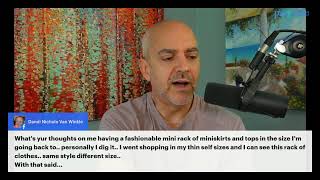
Mindset prison. Hey everyone, welcome to today's Program Yourself Thin podcast. Today we're talking about your diet mindset prison. This is an invisible prison that lives in your mind and it's keeping you trapped from finding better ways to manage your weight. This diet mindset prison has been installed in your mind since you were literally born at this point. And I mean this literally. The diet industry has really been in full force for over 60 years at this point. Okay, so all of us have been at the mercy of it to some degree. And if you don't recognize this mental prison that the diet industry has put there, you're most likely going to spend your entire life trapped in it. And what that means for you is that you're most likely going to struggle with your weight for most of your life if you remain in this prison, because it prevents you from ever truly understanding how to manage your weight long term. So dieting— this prison that you're existing in mentally really starts by realizing that the diet industry has caused you to think about your weight in a very short timeframe. So you always think about dealing with your weight in dramatic ways so that you can lose weight quickly. The diet industry is all about losing weight as fast as you can. And so in your mind, when you think about how to manage your weight, the first thing you think is, how can I lose weight as quick as possible? What's the most extreme thing I can do? Now, you may think, no, I don't do that. I just do keto, or I just do Weight Watchers. I don't do that extreme stuff. Those are extreme things. Tracking every point you eat, getting rid of every carb you eat. These are extreme things that the vast majority of people are only going to be able to do for a little bit of time. So they're extreme in the sense that they're not easy to maintain long term. But this is the core part of dieting. This, this negative mindset that they put in us is that we only think about weight in the immediate short term and how we can change it. And so usually when we think about changing our weight, we think of doing relatively extreme things. And we're going to start on a Monday and we're going to change things dramatically, completely cut out carbs, stop eating for 16 hours, count every point we're doing, over-restrict. We're going to take drastic action to get drastic results. And that is how 99% of people think about weight. That's it. And this is the core problem, because your weight is a chronic thing. It's a forever thing. You would like to live at your goal weight forever, right? So you're going to need a forever plan. Do you want to count carbs for the rest of your life? Do you want to not eat for long periods of time that are stressful for the rest of your life? Do you want to track every calorie you ever eat for the rest of your life? Most likely no. That's why you're not doing it now. You don't want to do it today, never mind in 10 years. And this reveals the big problem that you're dealing with. It's a mindset issue that's keeping you trapped. It's a literal invisible prison around your mind so that you can only think about weight loss the way that the diet industry wants you to. And the diet industry is not your friend. The diet industry is technically just a branch of the food processing industry. Weight Watchers was owned by Heinz. Jenny Craig was owned by Nestlé. Atkins Food Products owned by the same company that owns Onions Pretzels and, uh, Cinnabon. SlimFast owned by the same company owns Ben Jerry's ice cream. So these companies do not want you to master your weight long term and eat healthy. They want the exact opposite, which is what they're getting, because at this moment in time, 74% of American adults are overweight or obese. So this diet prison that almost everyone is trapped in is preventing you from getting the results that you deserve. And so the way out of this prison is to start to realize that there's a better way to accomplish your weight management goals. And it starts by extending your time frame. You don't want to lose weight. You've lost weight and then put it back on. That's not what you want. You're focusing on the wrong part. You don't want to lose weight. You want to live at your goal weight. They're not the same. One's a short-term thing that, you know, isn't going to last. The other one is a forever plan to stay at your goal weight and live the life you want to live. What diet have you ever done or heard of that sets you up to live at your goal weight for the rest of your life? There's no answer there because that's not what diets are meant to do. So start thinking bigger. You have to actively step outside of this diet box if you ever have a chance of really living at your goal weight long term. And I think one of the most powerful ways to do that would be to click the link in my bio or go to my programyourselfthin.com website and go get the free hypnosis session I made for you. I give you a bunch of free stuff. That's just the first thing, but it's all things to help you recognize the mental prison that you're probably in and give you ways to get the hell out of it so that you can genuinely start to manage your weight in a more effective way. All right, so again, go click the link in my bio or go to programyourselfthen.com and go get that free hypnosis session. Uh, if you are over in Facebook, I will put the link in the chat. It's not like to do, so you can go click it because in just a couple minutes you can sign up for that session and see what another way would be like. But if you have any questions, feel free to ask them. Any questions are welcome. Oops. Hope you're all having a nice— what the hell day is it? Thursday. Lose track of my days. Weird day. Recording the audio version of the book, so that is happening. It started taking a little bit, but we got there. We got there. The book I'm talking about is this one, The Tao of Living at Your Goal Weight. Speaking of living at your goal weight, so yes. First, uh, I don't know, about quarter of it, quarter of it knocked out. So yeah, it's looking good. Things going right according to schedule, pretty much. But I hope you're all having a nice day. Um, I know people tend to, right, because I— there's patterns in the year. I've been doing this for a long time, and, uh, sometimes there's kind of patterns with the year that show up, and this is one of them. That Memorial Day is coming, it's kind of kickoff of the summer. and, uh, sometimes people kind of check out this week. Uh, Chell Yip says, I love that book. I read it every day. Well, thank you, Chell. Yeah, this book is, is really good. I, I, it's really, it's been fun kind of rereading it because I took a step away from it for the last month or two, um, after, after having written it. And, um, it's awesome coming back to it. It really is. So yes, this book is available. Um, go check it out. Yeah, a lot of people that got it love it and are reading it regularly. Um, and it's helping them. And so yes, like I said, the audio version will be coming. Um, I'm not sure exactly. I mean, if you're in the program, it'll be in the members area, so you'll have access to it first there. Um, and then I will kind of look into and figure out what I got to do to put it on Audible. That's probably where it'll be. Is that what— yeah, right? Is that— I don't even know. I got— I gotta— I'm not a big audiobook person. Um, I'm not a digital book person. I'm kind of a real book person. That's kind of my my preference, I would say. Uh, what's up, Pat? Pat says, can you talk about mindfulness, please? Yeah, sure. Um, the first thing, I love mindfulness. You know, I, I meditate every day. I've been practicing yoga for over 30 years. So I find mindfulness to be, I would say, essential. I think it's a grounding force. It's a foundational piece of the puzzle, I would say. Um, but what is mindfulness, right? And I think that's where things get a little confusing. Um, I suppose let's— I wonder what the definition of mindfulness is before I start yammering on about what mindfulness is. I'm curious. I love definitions. Let's see. The practice of anchoring. Well, this is the AI overview. I kind of just want like a definition. Let's see. It's the awareness of one's internal states and surroundings. I like that. Now that's from the American Psychological Association. I like that term very much. Um, no, I don't know what greater good is. Let's, let's go to Merriam-Webster. We'll go to that kind of the classic. Okay. The quality or state of being mindful. The practice of maintaining a non-judgmental state of heightened or complete awareness of one's thoughts, emotions, or experiences. On a moment-to-moment basis. I like that. Yeah, the practice of maintaining a nonjudgmental state of complete awareness of one's thoughts, emotions, or experiences on a moment-to-moment basis. So yeah, I like that. Um, but here's where things get a little tricky. You're not going to be able to do that all day long. So you're not going to become this mindful person who's consciously totally aware of everything they're doing at any moment in time. It takes very, very specific, focused work just to do it in meditation. So I think mindfulness is a wonderful piece of life to focus on. And at the same time, I think sometimes people over— they lean on it too much. Like the concept of mindful eating. I think it's a good strategy to work on. I don't think it's enough personally. So again, I like to use it. I think it has a lot of value to it. I don't think that in and of itself is going to fix everything. Okay, because we're not mindful people. Our brains are not designed to be mindful. In other words, we're meant to be— we live most of our lives on autopilot. Most of our lives are subconsciously driven. Think about all the things you've learned in your life and now you just do on autopilot. Reading, writing, driving a bike, riding in a car. Flip that, reverse it. Riding a bike, driving a car. Um, playing a sport, you know, playing a musical instrument, drawing. These are things like once you learn it, you just do it on autopilot. And that's how our brains are developed. We have this subconscious part of our mind and then we have the conscious part of our mind. And that's the part that's being mindful. It's the newest part of our brain though. So I think that with mindfulness, sometimes people, I think, start to over-rely on it in ways that it's not going to serve them. But as a concept, I think it's wonderful. And I think the more mindfulness work you do, the more grounded you just become in general. And your ability to become aware of things, patterns, thoughts, um, habits and routines goes way up. And that awareness sets you up to be able to kind of optimize your strategies moving forward. Um, it tends to optimize your ability to behave the way you want to. So I, I. I fundamentally practice mindfulness in my life, um, directly through meditation, yoga, hypnosis, um, kind of how I like to move through the day, you know, as well. And I find that all that awareness connects you to what's going on inside your body in a more sensitive way. And I think the more connection you have, the more awareness and sensitivity you have to what's going on inside of you. Physically, mentally, emotionally, I think the easier time you're going to have moving forward. Because the more kind of connections you can make, the more sensitivity and awareness you have of what's going on under the surface, the more problems you can recognize and the more problems you can resolve, you know. And I think that's the path forward. So to me, mindfulness is kind of a foundational piece of the whole process. And you can really develop mindfulness in a number of ways, not just meditation. Meditation is kind of an acute way to do it, but I also, to me, it's like a spectrum. I think of a mindfulness spectrum. That's why I was looking up a definition because to me, mindfulness is almost like religion. It's, it's, it's just, it's embedded in my whole life. So there's the acute ways to develop mindfulness through meditation or breathwork or yoga. And then there's kind of the general ways to develop mindfulness through how you structure your life. So a lot of my— I take mindfulness so seriously that I really kind of rely on my subconscious mind and my routines a lot. So I like to routinize things that I do regularly. I like to make a lot of my life kind of be structured. So I'm doing similar things and that frees up a lot of cognitive load so that I can become aware of what's going on, what's working, what's not, and enacting changes that are going to support me. So probably a bigger answer than you probably wanted. I hope it helped a little bit, but I think mindfulness is definitely one of those things that the more you dive into it, the more benefit you get. And at the same time, I also think sometimes it's kind of over— the idea of mindful eating, for example, I think is overpromised as a solution a little bit. I don't think it's the cure-all that it seems. I think it's a good piece of the puzzle, but I don't think it's the whole puzzle. So those are my thoughts on it, but I definitely find it very, very valuable. They have anything, questions, feel free to ask them. Any questions are welcome. If you're struggling to wait, if you're not even thinking about it, right, you're just waiting to get through next weekend and then start next Tuesday, you know, wherever you're at, um, if you feel like you can't do it— I had someone talk to me yesterday, this is, they just, I don't think I can do it, you know. And a lot of people feel that way, but you got to realize that if you're feeling defeated or you're feeling discouraged or you're feeling like you can't, um, if you're feeling like you can't lose weight, break that idea down, you know. Sometimes when we start getting emotional, we start to generalize, we kind of zoom out, and all of a sudden we start these ideas, I can't, I can't lose weight. But when you start to feel that big kind of feeling like I can't do it, the secret is kind of break it down. What can't you do, you know? And what you're going to say, I can't stick to my keto plan, I can't stick to my Weight Watchers plan. Okay, well, let's go down even deeper, you know? And what we're looking to do is we're looking to get to something you can do, you know? It might be drinking some more water, it might be eating an apple in the afternoon, might be doing some stretching in the evening, whatever. It almost— it almost doesn't matter what it is It's just the fact that we're going to switch that global belief that I can't do it, I can't do this too. Well, I can do that. That's where we want to be. You know, if you're feeling, you know, completely defeated or dejected, you know, what most dieters are going to do is they're feeling that way. Nothing's going to work. This doesn't work. I can't do this. This is never going to happen for me. And if you're thinking that way and feeling that way, you're generating that feeling by thinking about your weight loss in a really big, overwhelming way, and it's feeling like, I'm never gonna be— oh my God, because you're making— you're thinking about all the things you got to do and how big and overwhelming it's going to be, and you're kind of feeling overwhelmed. Um, that's why if you break it down into smaller pieces, you know, until you finally get to the point, oh, I could do that, okay, I could do that. Now then you got to deal with your mind saying, oh well, that little thing's not going to make any difference, so what's the point? You know, um, the point is that you're doing something good. It doesn't matter how small it is. People overlook this all the time. I can tell you, as a professional coach, I've done over 6,000 private weight loss sessions. I would say one of the biggest patterns I notice now— I work with very smart, overthinking, action-oriented, perfectionist-type people. Okay. But a lot of them, you know, really when they, when they're thinking about this, And we break it down into smaller pieces. They'll say, what's the point? You know, because they're used to taking on a lot. They're used to taking big swings at things. And the idea of doing something small feels pointless. Like, what was the point of it? But the point of it is not so much physical, right? And/or you can also think the point isn't to just fix everything all at once. It's to do something that moves us in the right direction. And this kind of comes down to the idea of all-or-nothing thinking. Most diets are all or nothing. You're either doing it 100% or you're not doing it at all. In Program Yourself Thin, we're never getting 100% better. Okay? We're never gonna just get 100% better because that's too much. You can't just all of a sudden become a whole different person starting tomorrow because it's Monday. Um, so, so again, when you break things down, um, the idea is to get you to feel like you can do it, right? And so, uh, it's not just that it's going to change you instantly into this other version of you. but it's one step in the right direction. And that one step in the right direction, whether it be a little more water, a little bit of stretching, an apple in the afternoon, it's that, yeah, that's gonna benefit you in physically in some ways, but the bigger benefit is mentally because now all of a sudden you feel the benefit of doing something right, even if it's little. And that's what I was saying. That's one of the biggest things my clients overlook is that doing something little has a lot of side benefits that they're not considering. And one of the biggest ones of all is that belief-wise in your mind, when you do something, even if it's small, it's something in the right direction that feels manageable. That's the key. Because usually when dieters do something, yeah, it's big. They do a lot of big stuff and they may get some quick results, but it's also very scary. It's kind of like walking the tightrope. It's okay when you're able to do it, but you're always terrified of when you're gonna fall. And when you start doing something small, not only does it feel better than you think it's going to, But the other thing that's at play there is that you're not so worried about not doing it because it's small. So you're like, oh, I can do that. And then when it's small and you're like, oh, I can do that. What that also does subconsciously is it removes a lot of the fear that you're going to make a mistake. It takes a lot of subconscious pressure off of the behavior. And that is what most of my clients have never experienced in their lives. And most of you haven't either because you've never really focused on small, consistent improvements over time. When it comes to your weight. You have just taken giant swings at it. That's what the diet is. And so you have never experienced the calm, grounded approach to managing your weight that is possible, and it makes all the difference in the world. Uh, Pat says mindfulness helps me be consistent in my eating. Yeah, I, I would agree. I think mindfulness helps you in so many different ways. And you know, I didn't mention this other part, but not only is there kind of like ability to be more aware of what's going inside of you, you know, to help you make the right choices. Um, but the biggest thing I think of mindfulness, and whether it's acute meditation practices or whether it becomes a lifestyle that you start to live, the beauty of mindfulness is that it, it creates more energy. It frees up more energy. Okay. And so, um, that, that helps you make better choices as well. So yeah, agreed, Pat. I think mindfulness is is really a secret weapon. I think it's very important. What's up, Jane? Jane says it was an ice cream kind of day, but it was because I was happy and tired and had done an extra dance class. So on the way home, I got a milkshake. It was delicious, but I didn't sleep well. Um, Jay says, haha, two steps forward, one step back. Yeah, but Jane, okay, that— I think that's all great. Um, and I would say it's three steps forward, one step back because of the benefit of you just being relaxed about it. That's the most kind of like neutral I've seen you explain something like that. And that's not something to just be overlooked. Okay. Um, that, that's real life, Jane. Okay. Not the end of the world. So, you know, here's, here's something. Okay. Let me, let me kind of talk about this. Cause I think this is fascinating. So a lot of times people have a tendency to kind of look at like, well, I keep getting ice cream at night. I keep eating ice cream every night. Let's just say. And so they get fixated on like the ice cream or the milkshake or the cookies or the chocolates or whatever the thing may be, okay? They get fixated on that one thing. But what I look at is the residual collateral damage too, okay? So at 9 o'clock might be the ice cream, but I'm looking at what's happening before that that's leading to that, or a consequence of the previous night's ice cream. And what's going on after that? So a lot of times, especially with binge-y type behavior, um, someone's, you know, go and get ice cream and now they're, oh, I blew it. And now they had the ice cream, but now the next day, off track. The day after that, off track. The day after that, off track. They gotta wait till Monday. Okay. So to me, it's like, I like to look at the, a bigger circle than just where the thing happens. And so for Jane here, yeah, there was a milkshake, but Jane's mood, not even 24 hours later, is so much brighter and grounded and calmer than in the past. Your mindset still sounds grounded, Jane. You sound like you absorbed that behavior and just moved on and are okay with it. And it just, it seems a lot healthier and grounded and calmer and more balanced. Than a month ago. And that's the biggest difference, I think, because that's what leads to less calories. Not with the milkshake, but the circle around it, the radius around it, you know. And so yeah, you had a milkshake last night, but I'm just getting this feeling that today you seem calm. You didn't sleep great last night, so there's that. And that's great to realize that too, by the way, because Jane This is another piece of what we do here. When you're more calm and grounded, when you have the milkshake, now you can put together that milkshake equals bad sleep. That's a much different connection than milkshake equals me be bad person. Does that make sense? Most people have the milkshake and they associate that with I'm a bad person, but you had a milkshake and you're associating it with I got a shitty night of sleep. The associating it with, with a shitty night of sleep, that's the one that gets you to drink less milkshakes over time because it's true and your body and brain don't like that consistently. But that's not what you normally looked at. What most people do is they'll drink the milkshake and then they spend the time beating themselves up, feeling like a bad person. So you're, you're processing things, Jane, in a much, much clearer way. Than you were a month ago. And that clarity of processing is really going to serve you. It's, it's very difficult to be out of control with your weight when you're calm and grounded. When you drink a milkshake and you just, you just kind of decode it in your mind for what it was and where you're going now and what it did to you. So that to me, Jane, that to me is like gold star, right? So, so what I'm saying is, and program yourself then The gold star isn't necessarily from eating perfectly. You know, we celebrate making good food choices, obviously, but to me, it's not just about how you're eating. This is how Jane can go eat a milkshake or drink a milkshake and still come out a better version of herself. That, and still come out a version of herself that's going to weigh less, maybe not for a day or two. That might be a little bit of residual impact from the milkshake, perhaps, but Who gives a shit? Because I'll take the learnings, I'll take the groundedness, I'll take the association that milkshakes at that point give me a shitty night of sleep. I will take that all day long. Because as you keep doing that in that clear-headed way, eventually what's going to happen is you're going to dial down how many milkshakes you drink. So wonderful work, Jane. Super proud of you. Um, let's see. Questions, feel free to ask them. Um, Alenia, how you doing, Alenia? Uh, I know this is totally mental, but hear me out. Last time I shared with you in the community positive vibes that I've been on, my eating was all over the place. I made bad decisions that I used to make in the past. Snacking constantly. Why does that happen? I was on such a high, I shared, and it went to shit. Ugh. Um, that's okay. I mean, that happens, but you're asking the right question, you know, um, kind of, uh, as you're looking into it, you know, so you're not just, um, you're not just in total reactivity mode. You're recognizing a pattern again and program yourself. Then this is, this is the preliminary step of everything we do is we need to become aware of the patterns we run. And so I can imagine a lot of you can recognize the pattern of kind of celebrating something or acknowledging how good something's been going, and then all of a sudden everything falls apart. Who doesn't have that feeling, right? Dieters are the most superstitious people on the planet. And so that doesn't just go away, but it might also be part of a pattern. So no big deal. We don't, um, we don't worry about it. We just get excited because you get to learn something new about yourself. Elena. And the big question is this, not why did I start eating worse? That's the wrong question. That's what I was saying to you. Um, the wrong question is why does that happen? And more the better question is how do I get myself back where I was? What was different when I was right on track and I was really just killing it and I was in the flow and everything was going smooth? What was going on there versus what's going on now? So it's a similar question, but it's a much better question. Does that make sense, Elenia? So instead of focusing on why did I get off track, and again, that's a fine question. You can ask it and give it 5, 10 minutes to think about it, but then all of your energy goes back to how do I get myself back to where I was? What's the best way to get myself back to where I was? What was I doing then that I'm not doing now? What was I eating then that I'm not eating now? What was I thinking then that I'm not thinking now? And you'll start to notice the patterns and they'll be crystal clear to you. Oh, I started going to bed later. Oh, I stopped drinking my water in the morning. Oh, I stopped listening to my hypnosis sessions. Oh, I stopped going to the classes. Oh, you know, I stopped eating my apple. Oh, I started having, you know, the cupcake after dinner every night. You're going to start to notice patterns, um, Alania. And then what we want to do is how do I get myself back to where I was? Okay, how do I get myself back to where I was? That's the question. So great job. What's up, Darlene? How's it going? Amy says, all or something is sinking in my brain. I finished a workout that wasn't what I first perceived as good enough, and then another voice piped up, it was something. Whoop! Nice job, Amy, I'm proud of you. Yes, that's such a wonderful feeling, you know, because again, dieting teaches us to only celebrate perfection. And you're a human being. You can't just be perfect. You can strive for it. You can shoot for it, fine. But you, you, you— there's no option where you can just be perfect all the time. So again, we can't build our success around the fairy tale that we need to be perfect. That's a recipe for failure. We instead need to understand how to celebrate the whole spectrum of action. Again, program yourself. Then we pin it at 1%. If you do something 1% better, thumbs up. Okay, we're happy with it. So we celebrate the gray area. When you do 80% of a workout, holy shit, great job. 60% of a workout, wonderful. 40% of a workout, super. 10% of a workout, it's better than doing nothing. What do you think happens from that? Do you think you get complacent? I think dieters think if you approach it that way, you're not holding yourself to high enough account and you're going to be complacent. You're not going to get the results. What results, folks? What results is anyone getting consistently from any diet that you want to emulate long term? So again, celebrating the, the all the space in the middle, I think, is a really good thing, right? The idea that, again, this is zero, this is 100%, anything between here and here is deleted unless, you know, it's 100%. Right there, that's the only thing. And that seems like a silly way to go through life. So I'm proud of you, Amy, and I know it's not easy, you know. So I'm proud that you were able to recognize that and, uh, you know, kind of realize that you said that, because that's a big change. It said, I'll take the golden star. Yeah, good job, Jade. I am proud of you. Your mindset is changing dramatically here, so keep it up. Which doesn't mean you're not gonna have mistakes and challenges and pissed off times and frustrations. You will. Those are— you're always going to have those. The point is that we want to make them less intense, um, less long-lasting, and we want to be able to get back on track quickly. That's the difference. Um, what's up, Dandy? Dandy says, what's your thoughts on me having a fashionable mini rack of mini skirts and tops in the size I'm going back to? Personally, I dig it. I went shopping in my thin self sizes and I can see this rack of clothes Same style, different size. With that said, have you ever heard that saying, you can't change your shape, but you can change your size? Oh yeah, I like that. Um, I think it's a fine idea. You know, I think that, uh, you know, ultimate rule is there's no right or wrong. There's only what works for you. So if doing that motivates you to stay on track and get the results you want, then I'm great. Okay. Um, I would definitely supplement it. I think that's fine. I think having the rack of clothes and the size you want to wear, the exact clothes you want to wear. I think that can be a powerful visual kinesthetic reality, um, shift that, that's going to support moving in that direction. So I'm all for it, but I would absolutely add to it motivation that is different than just how you're going to look. So I would also focus on your energy levels, your clarity of thought, your moods, and how much more balanced they will be. Um, how much more comfortable your body will be, how much more mobile you'll be, how much more independent. How much more stamina you'll have, how much clearer you'll think, and what you'll be able to do with that, right? How will other areas of your life improve as well? So I would add that too. And again, I know you're in the program now, so go, um, go to the weight— the Goal Weight Blueprint. And what I would suggest is go to the first section, which is about motivation. Go through those questions because they'll help you clarify motivation beyond just what you're going to look like. And again, I think wanting to look better is great. I rarely feel like it's enough motivation for people. So we keep wanting to look better, but we add a lot more underneath it as well. And I would suggest that for sure. All right, I think we got everyone's questions. I'm gonna get out here. I got a lot, a lot of stuff I'm working on, so I'm gonna get skadoodling. So all right everyone, thank you so much. Um, you're all awesome. Thank you, uh, for, for getting on here. Uh, if you are not in world, please go click the link in my bio or go to programyourselfthin.com and go get the free hypnosis session that I made for you. Again, I give you a bunch of free stuff. That's just one of them. Um, you can go get that if you're in Facebook or YouTube and click the link I just posted in the chat. Go get that. Takes a minute, if that, um, to fill out the form, and then you're there and you have it. Uh, if you like this, I'm here every Monday through Friday, usually around noon Eastern, uh, to answer any questions you have. If you can't make the live, it's also a podcast. Um, so you can listen to it anytime you want. And, um, yeah, what's the other one? Oh, this book's available. Boop, there we go. The Tao of Living at Your Goal Weight. So that book's available, go check it out. Um, before I get out here, I see Alaina wrote back, so let me, let me do that. Back then I just went on my feelings. Happy equals 8, sad equals 8, so I was happy, proud, so I ate. Ugh. Difference now? Yes, I realized it trying to balance out and get back to basics. I'll re-listen to the motivation part, I need it. Thanks. Yeah, there you go, Lenya. So that's like, again, this is how you make lemons out of lemonade, right? We make mistakes, we get off track. That's going to happen forever. The point is we want to see it quickly, understand what's going on, and most importantly, know how to get ourselves back on track. Okay, um, so that is, uh, that's the path forward. So all right, everyone have a super duper day and we'll talk soon. Bye.
More from Jim



Weight Loss Visualization: Wake Up in Your Dream Size #programyourselfthin #weightlosshypnosis



What If You Pretended to Be Thin for One Hour? #programyourselfthin #weightlosshypnosis




