Program Yourself Thin Live 5-26-26
Jim Katsoulis argues that feeling thin comes from moment-to-moment choices like drinking water or taking a walk, not the scale. Small healthy actions create a feedback loop that supports long-term weight loss and shift your mindset away from the diet industry's perfection model.
Chapters
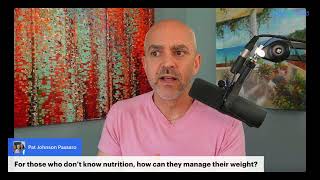
Hey everyone, welcome to today's Program Yourself Thin podcast. Today we're talking about how to feel thin in the moment. This is really important because before I tell you how to do it, I just want to explain how important this is because A lot of people think they're going to get to their goal weight and then they're going to feel amazing. But this isn't necessarily true. I hate to tell you, it's not so much our weight that is dictating how we feel about ourselves, about our body, about our weight. It's really what we're doing moment to moment that has the bigger impact. And to prove that point to you, imagine if you were at your goal weight. Just imagine, right, you're at your goal weight. But now let's imagine that the last 3 days you've been overeating, eating the wrong things, whatever you consider to be the wrong things. You've been overeating, eating the wrong things, not doing your normal stuff. You feel off track. Even if the scale shows that you're at your goal weight, you're not going to feel thin. You're going to feel your goal weight. You're going to feel overweight. This is really important to understand because what it means is that how we primarily feel about our body is usually dictated more by the behaviors that are in close proximity to us than by what the number on the scale says more. And in a weird way, this has actually been working against you because when you start making better food choices, you start feeling thinner, you start feeling healthier, you start feeling lighter. Immediately. And sometimes that feeling is strong and it starts to impact what we thought we've lost on the scale. You've all had this experience where you thought you've been doing really well. You feel lighter. You feel better about yourself. You feel slimmer, but you step on the scale and it says, no, it's exactly the same, but you're letting the disappointment of that moment blind you from a very important truth. That what is primarily impacting how you feel about your body is your moment-to-moment behaviors that are most recent. And what this means is that if you want to feel thin right now, in a moment, in an instant, all you need to do— I should say, to feel thinner in a moment— all you need to do is something that you consider to be healthier, um, that's going to lead you to weigh your goal weight. So it could be as simple as eating a piece of fruit. It could be drinking some water. It could be going for a walk. It could be eating a salad. It could be saying no to seconds. It could be choosing the healthier option at the restaurant. Any one of these things that you do right now, you're going to get a little bit of a buzz from it. You're going to feel a little bit better. This is really important because then you start focusing on the moment-to-moment decisions you're making as the main factor that's going to allow you to feel good about yourself. We take the focus off of the scale and we put it where it belongs, which is our moment-to-moment behaviors. And this really frees us in so many ways because we can make some bad choices that make us feel overweight, and then we can follow it up immediately and make a choice that makes us feel thinner, healthier, happier, whatever it may be. And we can change in a moment. So if you can get your focus on this moment-to-moment piece of the puzzle, it's so empowering because this allows you, or at least contributes to you being able to make a mistake and then get back on track quickly. If you think the only thing that matters is a scale, that weakens this ability because you make a mistake and now you think it's going to show up on the scale and now it's going to take you another week, another couple of weeks to get the weight back down. Or to make up for the mistake. But when you start to live in this mindset that really what is dictating how you feel about your body and your weight is primarily moment-to-moment decisions you're making, once you realize that, then you free yourself to be able to adjust on the fly, to feel thin in a moment, the moment you decide to, by doing something healthier next. And what do you think would happen if you strung together good, healthy decisions all day. What do you think would happen if you strung that into a couple days in a row? What would happen if that became a week? If those became a couple weeks? Even before the scale goes down, you are feeling thinner, healthier, happier. And this is the feeling you want to ride to your goal weight, not the feeling of the only thing that dictates my confidence or my happiness, my body, my weight is the scale. Instead, start looking at and realizing that it's the next behavior. It was the last behavior. It's the behaviors you're kind of sandwiched between the one you just did and the one you're expecting to do and potentially the one you're doing at the moment as well. But these are the 3 most important behaviors dictating how you feel about your weight regardless of your weight, because again, you could be at your goal weight and if you just overate, You're overeating now and you're planning on overeating in the next meal. You're going to feel overweight regardless of what the scale says. But the opposite is just as true. If you just made a great decision, you're making a great decision now, and you plan on making a great decision next, then you feel lighter and healthier regardless of the scale. And this is one important way to take back control of your mindset, um, to take back control of it from the scale. And once you have this in your mind, it frees you up to be much more responsive to mistakes you make and to want to get back on track quickly, not just because the scale is going to go down, but more importantly, because you know it's going to make you feel on track. It's going to make you feel better immediately. And it's very addicting to feel good immediately, to feel happy with yourself, to be proud of yourself, to feel like you got some momentum. So give this some thought, and I think you're going to find that it's very true. You could test it out today by doing a few healthy things, whatever you consider to be healthy, and notice the impact it has on you. Notice the impact it has on you today, and then notice the impact it has on you tomorrow when you wake up, and you'll see this is true. And if you want some support in thinking this way and approaching your weight this way, click the link in my bio or go to programyourselfthin.com and go get the free, uh, hypnosis session I made for you. It's called The New Thin Me. It's designed to help clarify your goal weight, connect you to it. And increase the motivation you have to achieve it. And it's completely free. And I give you a bunch of free stuff, but you can get that right now. Real simple. Again, just go to programyourselfthin.com or click the link in my bio. If you are at Facebook or YouTube, I will put the link in the chat window. You can click that. And if you have any questions, feel free to ask them. Any weight loss questions are welcome. I am usually here Monday through Friday. To answer any questions that I can about weight. I have been doing this for over 20 years professionally, and I can often give you a different insight than you normally get from the dieting world. And, uh, happy to do that. This is a mission in life for me, so if you have any questions, feel free to ask them. And I hope you're all having a nice day. I know that it's, uh, I don't know, I'm kind of feeling a little more normal here, but boy, yesterday was kind of a tough one. I don't know, Tuesday The first Tuesday after Memorial Day, uh, sometimes could get you. So yes, and it's kind of kicking off this summer. So, you know, a lot of people, um, you know, summertime challenges are coming. And, um, I think the answer to summertime, you know, again, everyone's got different summertime, everyone's got different challenges and strengths and all the rest of it. But, um, if you are planning on traveling much or going away, um, you know, understand that, that success with your weight doesn't have to be based on perfection. You know, you can go away, you can get off track a little bit and still manage your weight. And so I urge you, if you are someone who has a lot of plans now or in general, to remember that you do not need to be perfect. I, I will not be perfect this weekend, most likely, and yet I will still be able to manage my weight. So Again, so much of weight management is really a mindset. And I think one of the main mindsets is the ability to— I don't want to say minimize mistakes because you have to be aware of them, but kind of acknowledging them, understanding them. And the most important piece, getting back on track as quickly as you can. And to do that and program yourself thin, one of the things we use is the goal weight pyramid. So again, you'll see right there— focusing— there it is. You'll see that goal weight pyramid, mindset on the bottom, lifestyle, and then eating. So we kind of approach this in a kind of comprehensive, holistic way. So it's not just like a meal plan that you're trying to force yourself to follow. Um, it's really much more of a personal development approach. I always think of Program Yourself Thin as kind of an inside-out, uh, approach to mastering your weight, so that you're going to change how you think how you live and how you eat. Uh, it's holistic, right? There, there's a number of changes we're gonna make in order to get the results you want. And I think, you know, once you consider that and think about it, I think that, um, it's a considerably better approach than just thinking, you know, you're gonna be the same person you've been your whole life who struggled with weight, but now, you know, because you have a new eating philosophy or meal plan or whatever, that now you're— those days are behind you. You know, I think that it's important to recognize that mindset is really grounding your weight to where you're at now. You literally have whatever your weight is, you have the mindset of a that weight person, unless you just put that weight on last month. But most people have been at a similar weight for a long time. That's because you have a, you know, whatever your weight is, you have a that weight mindset. And I think that's a much more effective way to look at it than to think that you're just going to follow some plan. I, I don't think it works that way. And, uh, it's not because you're broken, it's not because you have no willpower, it's because just all of a sudden forcing yourself to do something different doesn't make a lot of sense. So, uh, what's up, Jane? Jane says, I'll try this today. I'm trying to focus more on my health than the weight on the scales. I like the idea of immediately eating something good for me right after eating something I might later regret. Uh, yeah, I think that's one of the best strategies there is for me personally. I use that all the time, uh, because I make mistakes all the time, you know, so I need to have a strategy to get me back on track quickly. And I have a number of them, but before the specific strategies, it's really about the overall philosophy that in my mind, when I kind of get off track a little bit, my goal is just get back on track. In any way possible. And I don't think most dieters look at it this way because I think most dieters think in terms of all or nothing. It's either perfect or nothing. And so they do this drastic, extreme thing to lose weight. This all thing, this perfection-based model, and then they fall off of that. But now the idea is that they get back to being perfect, and that's a huge step forward. If you could do it, do it. But if you can't do it, That's why I'm talking to you is have an alternative, you know, realize there's an alternative that instead of having, you know, keto is a perfect example. This keto is the most ridiculous extreme ones because you have to get into ketosis, right? And then you blow it and it's, oh, now I gotta get back into ketosis. And it's like, boy, talk about like, you know, kind of the mountain metaphor, right? That you're pushing this big boulder up a hill and, uh, then you get almost to the top and then all of a sudden it rolls all the way back down. You start all over again. That feeling of starting all over again is very difficult to overcome. And so in Programming Yourself Thin, we don't do that at all. We don't think that way. If you make a mistake, any little thing can really dramatically help you feel better. So you could have overeaten a bunch of fast food. Okay, go drink some water. Right? I just picked out a bunch of ice cream. Go for a 5-minute walk around the block. The littlest things can really signal to your mind and body, okay, that was that, and now we're back on track. Uh, and it, it has an impact that I think is, is almost counterintuitive. It's hard to believe, like, how impactful it can be to do something little. Um, you know, that, that really— it makes you— it can make you feel so much better. It's almost, almost counterintuitive. But a lot of that has to do with dieting mindset as well. You know, diet or mindset really is just so screwball. No offense to you dieters, but the mindset that you've been— I always say this to the diet industry— is really installed a broken mindset into your brains. And most dieters live in an invisible mental prison, a diet prison that's really a mental prison. And the way you think about weight is so constrained and so broken Uh, but it's very intentional as well. The diet industry is, you know, put it there very, very intentionally and specifically. But the good news— I don't mean to just be the bearer of bad news because in my opinion that's good news because it frees you of this approach. This weight loss approach of dieting is so stupid. I mean, again, when you take a step back and think about it, this idea that the only way to get the result you want is to be absolutely perfect. And if you're not perfect, then forget it. Um, this doesn't really match up with how life goes for humans because it's not easy to be perfect. As a matter of fact, I don't know if it's possible to be perfect, certainly not forever, not long term. So, uh, but yeah, if you have any questions, feel free to ask them. Any weight loss questions are welcome. I'm here to take a swing at them, see if I can help you out. A lot of times when you look at your weight loss um, outside of the diet mindset, it can be very enlightening, um, because you start to realize that the main problems you're dealing with are not so much you and your willpower, but it's more the lack of strategy, the lack of understanding. You know, when you think about your weight, are you thinking about it in this holistic, comprehensive way? When you think about your weight, do you have a strategic strategy to deal with your mindset, to shift up your lifestyle, to optimize your eating? And I know you don't, right? I know, I know what, what you've been given is just a meal plan, and then you try to follow it. You try and force yourself to do it, and you can do it for a little while, and then you can't do it any longer, and you quit. And you've repeated that process probably hundreds of times in your life. So what is the alternative? Well, the alternative is stop dieting. Stop dieting. It's not working and it's not going to work. It's not built to work. Dieting is there for you to struggle and to ultimately fail and to remain an overweight, high consumer of processed foods because all the big diets are literally just a branch of the food processing industry. Weight Watchers was owned by Heinz. Jenny Craig was owned by Nestlé. Uh, Atkins Food Products, owned by the same company that owns Onions Pretzels and Cinnabon. SlimFast, owned by the same company that owns Ben Jerry's Ice Cream. These companies' goals are not for you to manage your weight and to eat healthy and, you know, live a healthy, happy, you know, slim life. Their goal is to get you back to the food. And, uh, it's very effective. They're very effective with it because, again, we've never had more diets in the history of the world, uh, and we've also never had a higher percentage of overweight and obese people, which currently in America, the, the statistic is 75%, so 74% of adult Americans are overweight or obese. And that number is just estimated to keep going up. I don't know what that estimate— that, that I remember reading an article probably 3 years ago about how it was estimated to go up to 90%. I don't know what GLP-1s may do to that number, but Um, it really is kind of irrelevant too, because again, to get obesity numbers that high and overweight numbers that high, um, that's kind of a systematic play on you. Uh, Jane Falls Up says, spoke to Jim Katsoulis last night quite late about feeling stressed because I have a large dental bill coming up which I can't really afford. It is going to be double what I had planned, so I ate a whole bunch of mini eggs. Um, Yeah, I— again, like I say, Jane, you know, there's really no judgment about eating the eggs. The— what I recommended to you yesterday is to think today, right? You've eaten the eggs, okay? Um, you still have the dental bill, and you're gonna do whatever you do with that. Did the eggs help you overall, or did they add to the stress? That'd be the big thing I would pay attention to. No judgment. There's no judgment. We don't really change our behavior based on judgment, typically, certainly not from ourselves. Um, so the big question is, did the eggs help today or did they add to the problems? You know, and we just honestly answer that question. Yeah, if anyone's got any questions, feel free to ask them. Any weight loss questions are welcome. If you're struggling with your plan, don't know how to lose the last 5 pounds You've been doing everything right and none of the weights fall off, anything like that, feel free to share it. Common, common things. You're not alone. Judy says, I've been hearing these nutritionist doctors on Facebook and Reels saying we all have natural GLP-1 in our system and by eating whole natural foods we can get the natural GLP-1 activated again. You think this is true? Yeah, I, I like that mindset. I think it sounds— it's a little overstated. Okay. Yes. GLP-1 is, it's a real, it's a natural hormone, but with the injections, it's just cranked up. So, you know what I mean? Like, yeah, we have natural GLP-1s and you, there are ways to increase natural GLP-1s. I'll give you a kind of a basic one and dieters love hacks. So you probably love this, but chewing your food more tends to create more GLP-1. Um, so yeah, that's true, but it's overstated because you're never going to be able to eat enough natural food to, to mimic the levels of GLP-1 that people are injecting into them either, you know what I mean? So it's like, yes, it's technically true, but as usual with everything in our society at this point, there's always a bunch of bullshit, you know, right next to it too. A lot of times things are overstated and, um, to the point that it's almost not true, right? So it's definitely true that, that, um GLP-1 is a natural hormone that we produce, and that yes, natural foods, chewing more. Now, when you eat natural foods, understand you're gonna chew more anyways, you know. So there's a bunch of effects from when you eat whole natural foods. Whole natural foods come in a whole food natural matrix, and there's a whole bunch of effects that has on you, from chewing slower to more saliva to digesting differently to slower absorption to going through the gut slower. To increasing a healthier microbiome, which affects things. There's a lot of factors and we have to go through all of them. But yes, the more whole natural foods you eat, yes, you'll get some more GLP-1. But more importantly, you're getting other benefits as well that contribute to your weight management. And I think the biggest piece of natural foods beyond just GLP-1s, because by the way, understand they don't even understand all the hormones and things that are going on in our body. Please understand this. They just discovered GLP-1s, you know, 20, 30 years ago. They discovered it by— it was from a Gila monster, like a lizard. They know the lizard, that thing. I, I forget all the story now, but it was originally from the Gila monster. They found this, this chemical and had this effect, and they started— I don't know, I, I can't remember all the details now, but it started with the Gila monster. My point being that science doesn't know everything. And so when all of a sudden they discovered these hormones and how they affect hunger and appetite and all the rest of it, it was a huge breakthrough. But we have to understand that you can wait for science to identify specific things and/or you can just go and start eating whole natural foods and living like we've lived for millions of years on Earth and just expect that things are going to work out better. And so, yes, the hormones of GLP-1 being increased is one thing that can— it is true. And you can do that. Uh, it won't be the levels that are gonna make a huge difference like the injections, but the whole natural foods, they're giving you the micronutrients your body needs. You're chewing more completely. You're creating more saliva. You're developing a healthier microbiome. You're getting a slower absorption of food. It's moving through your digestive tract slower. Uh, it's activating the ileal break. It, it just goes on and on, all the benefits of whole natural foods. Um, beyond even just the fact that you're gonna boost GLP-1 probably a little bit naturally as well. So those are my thoughts on that. Uh, what's up, Dandy? Dandy says, I'm not a doc, but I'll highly recommend vitamin D3 and MK-7 together daily. This actually rebuilds bones. Our teeth are bones. Also floss every day and brush, but not necessarily right after the eating because then you're just brushing the food you just ate into your teeth. Okay, I have nothing more. You can YouTube info to help yourself. Yeah, um, I'm not a big supplement person. I don't really know a lot about supplements, so I kind of, you know, if people say it works for them, great, you know, and if you're all into supplements, go test it out and see if it works for you. Um, I, that is not my specialty though, so I'll have to leave you all to research that yourself. Um, Jane says, I love that you and Jim don't judge. I have actually felt embarrassed to tell Jim AI the things I'm stressing about. Yeah, Jane. Well, that's why Jim AI is so powerful. Uh, Jim AI is a part of the program, um, that, that comes with it. Where you, uh, it's literally an AI version of me. It's trained on 10 million words that I've spoken in my coaching calls and all the rest of it. So it is quite amazing. I got to say, it's about as close to talking to me as possible. And it's literally, this is a version you can chat with it. You can also literally talk to her on the phone. It sounds just like me. It's, it's a little eerie, but it's so helpful. I, I, I use it. Uh, but Jane, yeah, that's one of the benefits is that it helps you free yourself of that guilt and shame embarrassment. You know, because that's a level— I will tell you this all, folks, that the shame you feel, the guilt, the embarrassment is like shackles. They're handcuffs keeping you trapped. And the quicker you can minimize those and break through those, the faster you have the chance to change. Because when we feel shame and guilt and embarrassment about things, we keep it on the inside. We keep it hidden. And when we keep it hidden, it's hard to find solutions. It's hard to resolve things that we're not able to look at clearly in a focused way. And when we try and deny them and hide them and ignore them, that it's hard to ignore and deny and push something away and resolve it. How does that work? Right? So again, Jane, that's exactly part of what Gym AI is meant to do. Um, in addition to giving you great coaching and advice and guidance moving forward, uh, another piece of Gym AI is to literally help you overcome the shame and guilt and embarrassment you may feel about what you've done, um, because it's unnecessary and not needed. And again, I mean, diet's built around that, so it's not, it's not unusual that you would do that, folks. I mean, if you've been dieting your whole life, it's really a model built around intense emotions of pain, so that if you do the diet and then if you break it, you're supposed to feel guilt and shame and embarrassment, because that guilt and shame and embarrassment is supposed to be the thing that makes you do the right thing. So again, I don't believe that. I don't feel guilt and shame and embarrassment about what I eat. Um, when I make mistakes or whatever, I'm— I can acknowledge it, look at it, understand it, hopefully move better, move forward in a better way, you know. Hey, Pat says, just finished reading your DAO book and found it very helpful. Would you like to read another book? Would like to read another book by you? Do you have others? Uh, not yet. I mean, I do technically. This is another book, but it's really— it's part of my program, so it's not for sale outside of the program. This is the Goal Weight Blueprint. Um, but yes, I do have books. That is one of the next— I've got two big projects I'm wrapping up. Um, I do believe they should be wrapped up by next week. And then, um, I'm going to be going into the program again, iterating it some more, optimizing a few things. Jim AI is one of them that's going to get optimized. A few other things in the program get optimized, and then it's, it's going to work on the book, uh, the next book. And I do actually have 3 books planned. Um, maybe— is it 3 books? Yeah, 3 books. 3 books, maybe 4 books. It is 4 books potentially. Um, I just had an idea for another one which I might do first. Again, that's how I did the DAO book. I was planning on writing my my main book about this approach. And then I had this idea to do this book, um, which was really kind of, um, a simple way to enjoy the program. So this book is, is 40 chapters. Each chapter is a page or two, uh, but each chapter is a hypnotic story. And what's going on here is that you can just open up any chapter and read it and you'll get some benefit out of it. It was designed that way. But simultaneously, if you go from start to finish, what it's doing is it's actually taking you through the entire Program Yourself Then approach as well. And I say that to you all because if, uh, if you, um, just lost my train of thought there. If you're in the program, uh, realize that, you know, again, if you're in the program, I hope you have this book, uh, because this is just one more way. The program is kind of in-depth, you know, knowledge, understanding of that stuff. And this book here kind of floats above it, um, and it's built to be kind of just an easy, accessible overview of the program. And though you don't have to be in the program to get value out of it because each chapter kind of has its own story that's going to help you. And so this book is written to help you change the way that you think so that you change the way that you behave so that you can change your weight, your health, your happiness, all those things as well. And so, yes, this book is available now and there will be more coming. Yeah. So like I said, I'm really, I cannot wait. I'm so excited. I kind of got the first, like, this is the first official book I can go buy on Amazon and things, you know, but, um, getting the first one done, you know, it doesn't seem so daunting now. That was, I swear. And then there was a good example that like writing the first book, I think is the hardest. Cause I had to, I've never done that before. Again, I did my workbook, but that was a little different. So this one here, I finished the complete process. So now I understand it. And yeah, I will be going to work on the next, the next few books. So I will let you— of course, I will let you all know about them, but I can't wait for you all to see them. So, but in the meantime, before the next book comes out, is I do have a training that I'm putting together that I'm super excited for you all to see. That's the big project, one of the big projects I'm working on. The other project I am working on, the big one, is the audio version of this. So I've got it about a third of the way done right now. Um, I'm looking to get it finished, completed by next— the end of next week. And, uh, yeah, those will be two big projects that you all get benefit out of too, because, um, the presentation will be free. The audiobook, I don't know how that's gonna work. I don't even know. I gotta look into that. Oops. Yeah, but yeah, if you have any questions, feel free to ask them. It's funny, TikTok's so quiet these days. I always wonder what's going on. TikTok used to be the, the big yappers and the big question askers. Now TikTok people never ask anything. It's so funny. Um, Dandy says, I especially liked your most recent reel about overeating and leaving us in the woods. I love it. Oh yes, yes, yes, yes. I don't mean to be a jerk sometimes, you know. Listen, folks, you know, like, the social media game is a game, and, uh, you know, listen, when you're making a 10 to 30 second video, you know, it's not a complete Philosophy. But anyways, I know the video Dandy is referring to is the one that if you're overweight, it's because you're overeating calories. And this is an important point because a lot of people walk around thinking they're doing everything right but not losing weight. Um, and, uh, that's not true, you know what I mean? If you dial— that was my question. If I dropped you off in the woods for a month, you think you'd lose weight when I picked you up a month later? And I'm not trying to be a jerk, I'm trying to get us to a ground core level that yes, if you lower your calorie consumption over time, you're gonna— your weight's gonna go down. And I think that some people say, no shit, Jim, you know. I know, I know, no shit. But a lot of people subconsciously are telling themselves a message: I'm doing everything right, my body's not, not losing weight, my body's broken, no matter what I do I can't lose weight. There's a lot of people— oh, there we go. Oh yeah, TikTok just restricted me because I was talking about Amazon. TikTok loves restricting stuff now. I don't even know, I see a lot of lives and I'm like, man, unless you're selling shit on their platform, they're pretty, they're pretty strict. Maybe I should sell something on their platform. I think of some sort of product I could sell on TikTok's platform so they stop restricting me. Uh, Jane says, and if I speak to friends or family about my issues, they just want to give me their advice, which is usually what I already know. Oh, so true. So true. Right. I definitely think that that is, um, that, that is so true. You know, talking to people in your life about your weight or your struggles usually is, has the opposite effect of helping you. Um, so yeah, Gym AI is really meant to be that. Again, I get to coach people and I love being able to do it, but you know, obviously have, I can only coach so many people. So Gym AI is, is really amazing, I think, in terms of giving you an opportunity to discuss what's going on with you in an open, honest way where you're also getting good feedback and advice as well that you're asking for. People in your life typically are not good sources of that because they're not experts. I've done over 6,000 private weight loss sessions, so, you know, in coaching sessions. So, you know, the way that I speak to someone about weight is completely different than how, you know, your family or your friends or, you know, your partner is going to talk to you about it. Because they don't know shit about it. They know as little about it as you do, you know? And you're right, what people tend to do is give you advice that you already knew anyways. And to be honest, though, that's the entire weight loss industry, in my opinion, is the entire weight loss industry is really about giving you advice, uh, telling you what to do and then leaving you to do it on your own. So, I mean, how many times you've been given a diet or a meal plan and then it's like, okay, here you go, see you later, go, go follow it. Well, knowing what to do really isn't the core problem. Again, like you said, someone— you could have a friend, Jane, you could have a friend that has the same issues you have, and you could just be like, oh no, you got to do this and you got to do this and you got to do this and you got to do this. So we can— anyone can give advice. Telling someone what to do is practically useless because the problem is how do we get ourselves to do it? And I think that's the key phase of weight loss that no one ever talks about. Every plan is telling you what to do and no plan is telling you how to get yourself to do it consistently. And I think that's the huge missing piece of most weight loss approaches. And it's the one that I really work to resolve. I mean, you can program yourself then, you know, if you look at this goal weight pyramid again. Yeah, we certainly talk about eating, but even the eating piece is really figuring out what works for you. But again, a lot of times we're spending talking about lifestyle and a lot of time talking about mindset. I always say, you know, dieting is about that much of the goal weight pyramid. You know, there's a lot more, though. And yeah, those are the parts of how you actually get yourself to do it, because being told what to do and being able to do it are two totally different things. So I get that, Jane. It's frustrating. So, Kent, can you say, Jim, from TikTok land, listening while on a daily walk autopilot. Nice job, Kent. Yeah, smart, right? and Ken's a superstar in the program— building his habits, you know, building his success around his habits. And that's what I was kind of getting at today when I was talking about how to feel thin in a moment, in the moment. It's really about the little things you do consistently. That's the most important, in my opinion. That's the most important piece of living at your goal weight is to create a way of being that is relatively comfortable for you, that keeps you at your goal weight. And I think a lot of people stress themselves out and overdo it, um, pile too much on their plate basically, uh, and are unable to sustain it, you know. So yeah, completely different approach. Uh, Danny says it's been delivered. I wonder this is so— thanks for addressing it. I'm excited for more knowledge and self-growth. Yeah, um, nice job, Danny. And that's what we're doing here, right? More knowledge and self-growth. That's kind of the key of this whole approach. Uh, Jane says, the thing that is so annoying with two of my friends trying to help and give me advice is that they are both thin and just say that I should eat less because they do, and so I should be able to do it. Yeah, that's a classic move. Um, understand that's kind of the curse of knowledge. Like, if you think about things that you're good at and you know how to do, like reading and writing, right now it just seems so easy. Driving a car, using a computer mouse, using your phone— these are all things that felt awkward and weird at first. And, you know, in some cases you had to spend a lot of time learning how to do them. Reading and writing but now you do them automatically. And so now to you, it just seems simple. The things we do automatically, we do without thinking about it. Like if you, if I said, okay, how do you walk from this side of the room to that side of the room? Tell me everything you're doing to walk from here to there. You're not going to be able to tell me. You're going to tell me which muscles, you know, contract, which muscles relax, what you do next, what you, you can just do it. You know, that's the fascinating thing. It's called unconscious competence. And once we truly learn something, it's like we can just do it. We don't have to explain it. How to explain to me how you ride a bike? You can't explain it with words. You just know how to do it now. And so this is one of the core reasons why it's not, it's not great to learn from people that have always been thin because they just, they don't give it any thought. They just do it and they do it for a number of reasons. You know, some of it's genetic, some of it's environmental. So they have their history, but now they do what they do naturally. And so most likely they're not going to be able to give you any valuable information on how you can get to do it. This is why neurolinguistic programming is so important, in my opinion. Neurolinguistic programming, or NLP, is really the science of role modeling. So it's basically the idea if someone can do something, another human can do it. What's the process? How we take the programming and knowledge from the person who knows how to do it and put it into the person who doesn't. And I think that's why NLP is so unique and powerful. Because it's asking the question and focusing on things in a way that very few things do. But it's the most important piece. This is why weight loss is so hard for people, because you're always being told just what to do, the top-level things, but you're never told the subtleties of how to get yourself to do it. And I think that's been my whole goal, because Program Yourself is built on the back of people who have been overweight, lost the weight, and kept it off for at least 2 years. That's Program Yourself. Then in a nutshell, I began myself speaking to those people using NLP. So I didn't just say, hey, what did you do to lose weight? I didn't just— I didn't do that. I did ask what you did. So I did ask that question. But more importantly, I said, what did you think? What was the moment that changed your mind? How do you think about food now? How do you think about exercise now? How do you approach when you make a mistake? What do you say to yourself? What do you think? What do you focus on? What do you remember? I asked them very, very specific, detailed questions to basically reveal their subtle subconscious programming, because that's what's truly making the difference. And you can learn that stuff, but it's, it's, it's not things you're learning in a diet, because dieting doesn't talk about that level. Dieting just believes that if I tell you what to do, you'll just get yourself to do it. And I don't know why people would believe that, because that's never been the case. You know what to do. The whole time you've known what to do. To a pretty high degree. You'll be— you have a pretty good sense of what to eat, what not to eat. The problem is you have no real ability to get yourself to follow that guidance consistently. Because why? Because your mood gets off, right? And you get in a bad mood, your mindset shifts, you don't give a shit anymore. You can't tap into that motivation. So again, it's not a knowledge problem. If you were a robot and just typed in what you're going to eat all day and then ate it, no one would have a problem with their weight. The problem is you're not a robot. And so I can tell you what to do, but whether you do it or not, it's going to depend on a lot of other things. And dieting never talks about those other things. Those other things basically are your mindset, your lifestyle, and your eating structure, philosophy, approach. So yeah, so it's very common, Jane. Uh, Julie says, thank you for being you and helping me find myself. I'm in my first week of the PYT program, a little overwhelming, but I'm hanging in there. At 65, it's a little hard to envision the ideal me because I need to be realistic. But thank you for what you're doing for all of us. You're welcome, Julian. I applaud you taking action. And yeah, just relax first week, right? The main thing is just relax. That's the main thing, because in Program Yourself Thin, we— everything's kind of built on a foundation of calm. So the first week, I know that you're getting used to it. It's kind of a, you know, it's a lot of new stuff going on. Just relax. There's no rush. The main thing, listening to the morning sessions, right? Ideally you want to take that 5 minutes in the morning, listen to that session, make sure you're doing the reader rehearsal at night, practicing that for 60 seconds. And then ideally you can listen to the evening hypnosis session as well. But the main goal is relaxing and calming down. The sense of what the ideal you is, how you're going to live, how you're going to eat, all the rest of that stuff that comes afterwards. And there's no rush. The main thing right off the bat is just relax yourself. Ground yourself in calm, peaceful energy and physiology. Because from that place, that alone is gonna be the biggest lever you can pull to make better food choices. And then we build on top of that. Okay. So a lot of the things you're talking about, Julie, they're gonna come in time. Okay. So just have some patience, just relax and realize that that relaxation. And again, every hypnosis session, remember this, it's not hypnosis sessions are not just about the mental programming piece. They're equal parts, the mental programming piece, but also the physical programming piece of going into a calm, relaxed, um, state where you relax your body, relax your muscles, breathe more fully, turn your attention inwards to become more sensitive to what's going on inside of you physically, mentally, and emotionally. That's the key thing in the beginning, Julie. So great job taking action and, uh, yeah, keep it up. And no, you can get on here and ask questions. You can obviously get on the Tuesday calls and ask questions. That as well. Pat says, for those who don't know nutrition, how can they manage their weight? You know, that's a relatively fair question. You know what I mean? Like, there's a whole spectrum of nutrition knowledge, right? If you know absolutely nothing about nutrition, yeah, you're going to have a hard time because you're going to be misled and misinformed and tricked by the food industry. So yeah, if you don't know anything about nutrition, yeah, you're going to have a harder time, probably. That being said, you don't need to learn a lot about nutrition, in my opinion, to be able to dramatically change your weight. The main things about nutrition you need to know to start off with— start reading the nutrition labels, understand what nutrition labels, what they are, how they operate, what they're saying. Start to understand nutrition labels and that alone is a big step forward. And then the second big distinction I make, as much nutrition knowledge as you really need to make dramatic differences, is the difference between whole natural food and food stuff. And if you live in that dynamic, it can be very clarifying. So there's either food that is natural, comes from the ground, we can eat, you look at it, you know you can eat it, it's food, it nourishes you. We've been eating it for thousands of years. And/or it's something that's been processed, put in a bag, put in a package, a bunch of different ingredients there, right? That simple distinction is really all you need to know. And so less of those foods, more of the whole natural foods. Start reading nutritional labels and understanding what they're saying and what the pieces of the nutritional labels are. The calories, the micronutrient pieces of it, the macronutrient pieces of it. Serving sizes, understand that. And as you understand just those two things alone, I think you can make a huge impact on your weight. Obviously, you can go much deeper into it, and more knowledge, I think, is helpful, but it's not absolutely necessary, you know. So again, I do think, you know, you kind of got one hand tied behind your back if you don't know anything about nutrition, and you're gonna have to learn at least a little bit in terms of nutrition labels and, you know, food versus food stuff. Um, but you can still do it, you know, don't let that be a stopping point. You know, I've never met anyone who doesn't have an intuitive sense, um, of what they should do to lose weight, you know, at least to get you started, right? Uh, you have to learn more and optimize it more as you move forward to really hone in your results though. Okay. Uh, all right. When we get out of here, uh, if, um, you're not in my world yet, please go get in it. Click the link in my bio or go to programyourselfthin.com. Uh, again, if you're over here, I'll put in the chat window. Go get this free hypnosis session. Uh, it is not only a session that I give you, but I give you a bunch of free stuff. Okay, so if you would like to change your weight, uh, I don't think anyone gives you more free things than I do. So go, go get them. Um, you know, you got nothing to lose here, right? This could really transform your life. I'm really— I, I do this and this is life-changing for a lot of people. So go give yourself the opportunity to have your life changed in a positive direction. And if you like this, I'm here every Monday through Friday, usually around noon Eastern, to answer your questions, talk to you all. And if you can't make the live, it's also a podcast. So you can search any podcast platform, search Program Yourself Then, and, you know, it's— you can listen whenever you want. And this book's available too, right? There you go. So go check that out if you're serious about that. Sylvia says, I'm over 48 days into your program, but I've missed so many sessions, I feel like a loser. Oh, don't feel like a loser, Sylvia. Um, listen, you're not getting graded on how many sessions you do. Obviously, the more sessions you do, the better, okay? But if you, um, if you miss a couple sessions or you miss half the sessions, it's no big deal, Sylvia, because this isn't— this isn't an 8-week race, all right? So the way I look at it, Sylvia, is that you've listened to more hypnosis sessions, you've relaxed more in the last 40 days, you've heard more good messages in the last 40 days than you have probably in the previous 40 years. So I look at it as the last 40 days, you've had so much more good stuff go into your mind. You've relaxed so much more. You've done so much more in terms of that than you ever have in your life. That's how I look at it. And so you just keep going forward. Now you can restart if you want. If you want, you can go back to number 1. I don't really recommend that though. I say just, just finish out this first go round. And then when you get to the end of it, restart it with the goal of, I'm going to listen to more sessions this time than I did the last time. And then do that. And then when you get to that one, say, Jim, support, start me up again. Okay, so, so it's not— it depends how we look at it, Sylvia. If you're measuring yourself against perfection and you listen to every single session every single day every perfect way, then maybe you'll feel like a loser. But if you look at how many more hypnosis sessions you listen to, how How many good messages you got, how much more relaxed and calm you've been over the last 40 days compared to the previous 40 days, then I hope you feel like a winner. Okay. Because you are, Sylvia. And just the fact that you're taking action, the fact you're in the program, um, and this might be one of the most important lessons you're learning that you don't have to be perfect. This is what All or Something's all about. So I'm super proud of you, Sylvia, for taking action, getting in the program and listening to all the sessions that you have listened to. And being, you know, kind of interfacing and getting okay comfortable with not having to be perfect. You don't have to be perfect, Sylvia. You're better than you were, and that's great. And you're going to continue to keep getting better. And better typically happens a little bit at a time, not in one big swipe where all of a sudden we just become a perfect person. Um, we become a better person, 1% better each and every day, 1% better each and every time we go through the program. So good job, Sylvia. And you're welcome. I see saying thank you. You're welcome. And Sherry, I see you. Glad I found you. I'm glad you found me too. And, uh, yeah, we're here every day, Monday through Friday, usually around noon. Um, check it out, watch the videos, always posting new videos. Um, go sign up for my email list, and I will talk to you all soon. Have a super day.
More from Jim



Weight Loss Visualization: Wake Up in Your Dream Size #programyourselfthin #weightlosshypnosis



What If You Pretended to Be Thin for One Hour? #programyourselfthin #weightlosshypnosis




