Program Yourself Thin Live 5-28-26
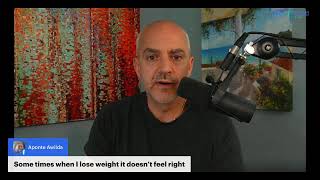
Jim Katsoulis explains why diets fail and introduces the "all-or-something" mindset to replace perfectionism. He teaches the Reader Rehearsal technique for managing your internal negative voice, which he says can't be eliminated but must be managed, and answers questions about cravings, setbacks, and ADHD medication crashes.
Chapters
Hi everyone, welcome to today's Program Yourself Thin podcast. Today we're talking about dealing with the negative voice in your head, uh, this has to be done because that negative voice is going to sabotage you more than anything else along this path. And if you don't manage it and deal with it, um, it's almost guaranteed you're going to quit because that negative voice is going to get you. So let's talk about your negative voice, right? What's really going on? Um, just to start off with, we all talk to ourselves. Constantly. That's called our internal dialogue. And most of us have a negative voice. And it's important to understand that this negative voice is part of who you are and it's never going anywhere. Just want you to know that. So dealing with your negative voice, you didn't hear me say get rid of your negative voice because that's never going to happen. Never for the rest of your life is there going to be a time where you don't have a negative voice in your mind saying negative things. Not even a possibility. Okay. So that is why I call dealing with your negative voice, managing your negative voice, not getting rid of it. Okay. So I want to be very clear about the specificity about those words. So this negative voice you have dealt with your whole life. Um, if you have been around negative people, you've probably internalized an even more negative voice than the average person. Uh, but at the end of the day, it doesn't really matter because we have to manage it and deal with it. Regardless. Uh, and as I said, it's never going anywhere. Okay. So let's talk a little bit more about this negative voice. The first thing you need to understand is this negative voice is never going to not be negative. It's not going anywhere, but on top of that, it's never going to not be negative. Meaning you could never, never create results in your life at a high enough level where you wouldn't have this negative voice chirping in. You can imagine being at your goal weight, which is the goal, but even at your goal weight, that negative voice is still going. And now it's almost more terrifying, that negative voice, because what it's saying is, you're going to put the weight back on. You're just, you're going to put the weight back on. You're not going to be able to keep this up. You're never able to maintain it. You're good at losing. You can't keep it off though. And so this negative voice cannot be appeased by what you do externally. This is really important, okay? Because what a lot of dieters are trying to do is ignore that negative voice just to get to their goal weight so that that negative voice— what goes away? Why? Because you're at your goal weight. You think you're not gonna have negative thoughts? You are, okay? You're always going to never get negative thoughts. Not necessarily a bad thing, by the way. Real quick, negative thoughts aren't a bad thing because a lot of times they help you see reality more accurately. They help you see different perspectives. They get your mind thinking about ways to protect you. So the negative voice is valuable, crucial, but it cannot run amok. It can't run unmanaged, unrestrained, because it just never stops. The nature of that negative voice is to be negative. That's what it does. And so you have to start looking at it as if it were a negative person in your life probably who is like part of your family, that type of relationship. Um, so it's not so much that you're never going to be able to see them, right? If it was a person, you maybe you cut them out of your life. Um, I suppose you could do it with family too, but you probably have some family members or some close friends that might be really negative. And so in that situation, it's not about cutting them out or ignoring them or getting rid of them. It's about managing your response to their negativity. All right. And it's the same thing with the voice in your head. And so what I would suggest is that A, you start becoming aware of this negative voice. B, become aware that it's never going to not be negative. All it does is say negative stuff and start to balance that voice out with a more optimistic, hopeful, encouraging, uh, accurate sometimes voice. Okay. Because the negative is never going to stop. And so once you realize the negative is not going to stop. The way I like to think about it is I want to debate that negative voice. I want to put a new voice in charge, knowing the negative voice is going to be there. I want to develop another voice that's encouraging, supportive, more accurate the way it sees things, and it's going to help me get to my goal. And I want to put a lot of energy and time into that, knowing that I'm always running a little bit at a deficit because that negative voice has been there your whole life. It's always going to be there. It's wired in to some degree. So it's not going anywhere and it's been there the whole time. So it's this big, strong, powerful muscle, whereas your warm, supportive, encouraging voice may be kind of a weak muscle. All right. But a lot of my energy is developing that voice. And one of my favorite ways to do it is to kind of combine some of the things I was talking about, start to become aware of what this negative voice says to you. Now, a lot of times you're not gonna be able to realize what the voice is saying to you until you realize you don't feel that good, right? So start to notice your moods first, and when you start to feel negative, when you start to feel hopeless, frustrated, annoyed, ask yourself, what am I thinking? And that's how you really put a spotlight on that negative voice, because a lot of times it's that negative voice, what it's saying to you, that's causing the feelings that you're having. So again, we almost have to reverse engineer it in reality and practicality. When we use this, we start to recognize that kind of feel down, I feel kind of feel frustrated, I kind of feel hopeless. And then we say, where is this coming from? What am I thinking about? Boom, negative voice. You're going to start to notice what it's saying to you. And when you start to pay attention to what it's saying to you, what I want you to appreciate is just the intense quality of negativity. There's no hope there. There's no— it's literally just focusing on the worst-case scenario, which again is valuable when it's balanced. So we hear what the negative voice says to us and we start debating it. That's the secret, because I will tell you one thing, the negative voice will say negative things to you, but it does not give you a way out. It basically just keeps generating negative stuff. So you can't rely on it to help you out or to take care of itself. It's just going to keep doing that. So what we want to do again is start to develop this other response to it. And so this voice says, um, oh, you're never going to lose the weight. You, you're never able to maintain this. And you can come back to it and say, that has been true. I haven't been able to maintain it. But that's because I've been doing it in ways that were unsustainable for me. And this time I'm going to do it differently. I'm going to approach my weight in a more grounded, calm way that I'm able to sustain and keep going forward. Well, now all of a sudden that feels a lot better and the negative part kind of fades away. Or throw something else at you. Oh yeah, you, you always say that. Nope, I've never said this. I've never, never approached it the program yourself thin way. I've never really considered it that. And this is the first time ever. And so let's see how this goes, because this is different than anything I've ever done before. This isn't a diet. Okay. And so on and on and on is where you go with this. But I will let you know, when you first start doing this, it's like a full-time job, right? Because you're gonna realize just how negative you are. But it's a necessary job because this negative part of your brain will just grind you into a pulp and never stop. It never, ever stops. Okay. So again, it's not about getting rid of it. It's not about trying to hide from it. It's about looking for it. And engaging with it with your more positive, supportive voice so that that's the voice you start to follow. That's the voice that starts to be the boss of your brain. All right. And if you want some support in creating that voice, click the link in my bio or go to programyourselfthin.com and go get the free hypnosis session that I give you. Uh, it's called The New Thin Me, and it's literally designed to help you start speaking to yourself in this more encouraging, supportive way. So that you can not only get better results, but do it in a way that feels better as well. So go check that out again. Go to programyourselfthin.com or go to program your— I just said that— or click the link in my bio. Yes. And if you're in Facebook or YouTube, I just put the link in the chat. And if you're on TikTok, you just click my picture. But yeah, if you have any questions, feel free to ask them. Oh, fans. They got a fan club now on TikTok. I don't know what that's all about. But yeah, if anyone's got questions, feel free to ask them on this beautiful summer day. Is it summer yet? I don't think it's summer yet. Was that June 21st? I think it's a little bit longer, but it is gorgeous, gorgeous out. I can't wait. I'm going away this weekend. I'm going to the Cape, so I'm hoping that that's going to be nice weather. I haven't even looked. I never look at the weather when I travel because I never trust it. Let's see. Of course I never hit the button. Uh, yeah, I forgot to hit that. What's up, Jackie? Jackie says, I have completely went off track this past week and was overeating a lot of sweets. What do you recommend to get back on track and stay there? Um, yeah, okay, man, it happens, right? Not a big deal. Uh, so that's the first thing, right? First part of getting back on track, folks, is to relax. Calm down. Okay, so Jackie, relax. Ground yourself in calm relaxation. Um, it's not— it's not what happened really so much as it is— it's not what happens up till now, it's what we're gonna do next, in a way, right? And I think it's a good mindset to have because we're gonna make mistakes sometimes. We're gonna have off— off times and get caught up in sweets, right? It happens. So the first thing is just relax. It's not the end of the world. You know, we're looking at improving things statistically. This is, again, just real quick. This is why I always say the all-or-something mindset is so important, because if you screw up with an all-or-nothing mindset, it feels like the end of the world. You know, if you go into your weight loss thinking, okay, here goes, here it's Monday, time to, you know, string together a perfect, perfect eating, then as soon as you make a mistake, you're going to be in big trouble. Okay, so again, program yourself then with all-or-something. You know, we're looking to statistically improve our eating, and that means that, you know, sometimes we're going to screw up, sometimes we're going to overeat. No big deal. Um, you're always going to do that. You're always going to screw up and overeat sometimes. You could still lose weight, okay? Because it's not about being perfect, it's about being better. So, um, that's the first thing, Jackie. And so right now where you're at is, okay, so you screwed up. And so you— so here's another way to put it. Let me put this way. With your weight loss, if you're going to stay engaged anyways, right, is that, oh, let's just put it this way. You can be nothing, you can be something, or you can be all. Let's just keep it real simple. Okay. And so in that process of losing weight, there's different phases. So a lot of dieters tend to think of, I'm either doing it perfect or I'm not doing it at all. Okay. But that's not really true because really what happens is we're not perfect. And so now there's more phases to focus on. Okay, and this work gets into the something piece, is that you can be perfect with your reading, then all of a sudden you make a mistake. Okay, so we have the perfect mode, all. We have the mistake mode. Well, I'm gonna say it's nothing, but it's a mistake mode. You might still be doing stuff, but now it's getting back on track mode. And so there's a very good chance, Jackie, that you're really bad at getting back on track after you make a mistake. Most dieters are— most dieters are very bad at getting back on track. For most dieters, a mistake is catastrophic, right? Because it just destroys your, your motivation, destroys your mindset, destroys your mood, everything. How can I go on? Okay. But getting back on track is really one of the most crucial pieces of the process because how long it takes you to get it back on track, to me, is really the main thing that's going to define your weight because you're going to make mistakes. So this is where we get into more complex thinking than what a diet offers you. A diet is black or white, all or nothing. You're either on or off. It's binary. Okay, what we're talking about here is more gradiented. And, um, for a lot of people, you know, they'll make a mistake, they'll get caught up in the sweets. It's the beginning of summer. Fuck it, I'm out of here. Call me in September. I don't even want to think about this during the summer. You know, and next thing you know, 3 months have gone by. And that's the difference. You know, it's the difference of 3 months go by where you're out of control with your eating and 3 days. That's the difference. And I think a lot of people don't look at it this way because they're so caught up in the diet all-or-nothing mindset that they don't realize that the most important phase of the whole process is being able to get back on track after you made a mistake. I make mistakes every single week. But I've gotten really good at getting back on track. So for you, Jackie, getting back on track, what I recommend to get back on track is not to just stop eating sweets either. By the way, if it were me, if you were in the program, I would tell you to start focusing on your core habits that you've already been working on. So I don't know what you've been working on exactly. I don't know exactly what your approach is. I don't think you're in the program. Um, so assuming you had been on track, Right? Because you meant— you started to say, I've completely went off track. So assuming that, that kind of implies that you were on track. So what was on track mean for you? I hope on track wasn't just that I wasn't eating sweets, because there's the big problem for you dieters. If you're on track is, oh, I'm not eating carbs, oh, I'm counting every calorie, oh, I'm not eating for 16 hours, I'm not eating sweets, I'm not eating sugar. If you're doing— if one thing is defining whether you're on track or off track, you're straight fucked. Like, you're— I can't say it any other way. If you're a Dieter and there's one thing between you being on or off track, you're in big, big pile of shit. I don't know how to put it. I don't want to swear, but I can't think of any other words. Like, like, you're, you're up a creek without a paddle. Okay, so I hope being on track was I was drinking more water. I was eating, you know, I started eating apples in the afternoon. Uh, I started having a salad Monday and Tuesday for lunch. Right. So I hope there was more to being on track than just not eating sweets. Okay. So assuming there was refocus on those, right? Have you completely let go of those or are they still kind of lingering there and they just kind of dipped a little bit or have they stayed the same? Okay. And I would start to focus on those things. You know, and hopefully those kind of sustain through the sweets because that's what we really ultimately want to get. Um, for me, there's times I get caught up in the sweets or carbs or whatever it may be. I get caught up in whatever it may be, but my core foundational habits stay the same regardless. You know, whether I ate like shit that day, I'm still getting my sleep. I'm still drinking my water. I'm still doing my stretching. I'm still doing my meditating. I'm still eating my salads, eating my fruit, whatever. Okay. So I may get off track with, I may eat more sweets lately. I ain't off track though, you know what I mean? Like, my eating got a little wobbly, but I'm still firmly on track, okay? I got caught up in bread. I ate a whole pizza. I made a pizza and ate the whole goddamn thing. What am I doing? Okay, but I still got my— all my stuff that's on track. And so it's easy for me to just dial that little piece back in. I hope this is making sense. This is— I want to be humble, but what I'm saying here right now, this is like, just such profound stuff when it comes to your weight. I don't mean to— maybe I'm crazy, maybe I'm delusional, it's not profound, but I think it is. And I think it really gives away why most of you are struggling so hard with your weight, because your weight loss is one thing that you do 100% for a little while until you make a mistake, and then you quit 100% until you start the whole process over again. So when I talk about this, you're probably noticing that it doesn't sound like anything you normally hear. It almost doesn't make sense. Again, it goes back to the, the goal weight pyramid, you know, if you want a little more context what I'm talking about. And Program Yourself Thin, we really build the what to do around this goal weight pyramid— mindset, lifestyle, and eating. So, you know, to me, sweets— I've eaten more sweets— is about that much of the pyramid, you see what I'm saying? So that's why when you say on track, off track, if your whole on track was just not eating sweets, that's That's a tiny little part of the map for me. So yeah, certainly I get caught up with sweets sometimes. I get caught up with sugar, ice cream, or pizza or whatever, beer, wine. There's things I get caught up with. Okay. But it's just a tiny little bit that gets a little wobbly and I got to dial it in. I got all this under me. And don't get me wrong, I get more dialed in with these things and less dialed in as well. Um, but I, I can't even resonate with the idea that I would just get off track. Like, like, you know what I mean? Like, I haven't gotten off track in 30 years. I put 25 pounds on, uh, you know, 15 years ago, so my eating got wobbly. Kind of got— my eating got, got, um, increased. But other things wonder me still. I hope that makes sense. Yeah, Jane says the same. Tough week. Uh, what's up? Oh, you know what, actually, before I get to that, I'm going to say Laura says, how do we support ourselves if we take stimulants for ADHD? Uh, the afternoon crash. Um, I think, you know, okay, so if you have an afternoon crash, I'm just going to stick with that, okay? Because I don't know specifically a lot about stimulants for ADHD. Um, but since you write an afternoon crash, maybe one way to support yourself— now again, I don't know what your situation is, so these may or may not be you know, um, applicable suggestions. But if there's an afternoon crash, the first thing I'm looking for is a place where I can take a 5-10 minute nap if I can. Okay, um, and if you're working and you got ADHD and, you know, medicine you're taking for it and that's one of the effects of it, I would hope you'd be able to get a 10-minute break in the afternoon to be able to, you know, take a quick nap or you just really actually rest. Okay, beyond that afternoon crash You know, what's your hydration level? Did you nourish yourself during the day? Did you eat a lot of sugar in the morning or during lunch? Right? What did you eat for lunch? What'd you eat for breakfast? So there's a lot of things that can also contribute to the afternoon crash as well. So, uh, yeah, I would absolutely, if I was on medication, I'd really wanna dial in my hydration, my nutrition. I'd wanna give myself really solid nutrition and a steady source of energy. I don't want, peaks and crashes. Uh, I would really dial in my sleep as best I could, you know, make sure I was getting enough sleep, high-quality sleep. I would work on that. Uh, I would absolutely, if I had ADHD, I would work on kind of quieting my mind down as best I could, um, through real basic, simple meditations, you know, whether just following my breath for a minute, um, doing some breathwork, doing some relaxation. So those are the things I would focus on, you know, on them. Don't know if they're helpful for you in your situation or not, but that's probably where I'd start. But yeah, if anyone has any questions, feel free to ask them. Yeah, Judith says wobbly is always going to happen at some point. You can't let it put you off. Yeah, I agree, Judith. I think that's absolutely true. Um, we're gonna get wobbly sometimes. I mean, we're human beings, folks. Again, dieting sets you up for failure right off the bat because it really, it puts this weird idea in your mind that you're going to be perfect. You know what I mean? Dieting sets you— dieting is not your friend, by the way. Dieting is a literal psychological operation, um, that was created by the food processing industry. The food processing industry controls the diet industry. The dieting is just a branch of that, okay? All the big food— all the big diets are owned by big food companies. Weight Watchers was owned by Heinz. Jenny Craig was owned by Nestlé. Uh, SlimFast, owned by the same company owns Ben Jerry's ice cream. So these companies don't want you to lose weight. They just give you bad information so you stay stuck. And one of the biggest things they do is give you this concept of being perfect with your reading. You're never going to be perfect with it. You know, you can certainly improve it. You can really clean it up. You can make it a lot better, but it's never going to be perfect. And so in Program Yourself Thin, we recognize this as a core factor. We know we're going to make mistakes. We're not trying to not make any mistakes. We're, we're working to make less mistakes. Okay. But we, we start with the belief we know we're gonna make mistakes. And so the whole program, the, the core of it, the Program Yourself Thin technique is built around how to recover quickly from mistakes. I think that's the number one skill that you dieters do not have. You have almost no ability to recover from a mistake and a slip up. And so in Program Yourself Thin, that's the fundamental thing. We do the reader rehearsal technique. Every night. And so with the Rita rehearsal technique, honestly, it really doesn't matter if you had a good day or a bad day, honestly, right? Now, it may affect your weight in the very short term, okay, I'll give you that, but it doesn't really matter. And program yourself then because you're going to learn— if you had a good day, you're going to learn and build on it. If you had an off day, you're going to learn and get back on track quickly. So there's no losing. And one of the mantras we have in the program is you're winning or learning. And it's a lot of because of this program yourself and technique, and that reduces a lot of stress about making mistakes. Um, it way reduces the impact mistakes have because we recover so much quicker, and a lot of times the mistakes don't have the intensity. Um, so, you know, I, I think that's, that's an important piece. Um, yeah, Liza says, do you have a 10-minute meditation hypnosis session that one can use every morning or when you feel like binging? Um, I do have certain ones of those. Um, I, I gotta be honest, at this point I can't remember like, um, all the sessions. There's so many sessions I've made. I was just talking about this. I was just talking with a client, um, who's been with me for a long time, and they reminded me that I had a, I had a program that was, it was, yeah, it was 8 weeks. It was an 8-week program where every day there was like a 5-minute coaching audio. And I totally forgot about, but it's like, you know, that alone is like 60 sessions of coaching. But anyways, I forgot about that. I'm gonna make that available though. I mean, I'll put that in the program for people. There's some people in the program that go through everything, you know, and they love that. So you might love that. That was a great program. That was a fun one. Was it 60? I don't remember, but it was, it was coaching. Each one was a coaching one. It was really cool. I totally forgot about it, but yeah, I'll do something with that. But anyways, yeah, 10-minute one. I mean, for right now, I would suggest, if you haven't yet, is go get the free hypnosis session that I give you. Um, I put in the comments there, you can just click that link. Um, and that's a good one to start with, okay? Because that'll, that'll support you typically when you start feeling that way. Um, Jane says, it's weird how after I work out and do exercise, I then go for ice cream, or last night a burger and then candy. So after pickleball, ice cream, then after dance, a burger and candy. I was feeling good until I ate. Yeah, I was feeling good until I ate. I mean, so what do you do in that situation? In my opinion, I want to— I want to dive into that. I don't want to beat myself up. I would not beat myself up because I would think to myself, if I was consistently going and working out and then eating bullshit, I wouldn't beat myself up about it because I would say, okay, my current programming is telling me to work out and then go and eat some bullshit. That's my current programming. So I want to change my current programming, and there's two ways to do that. One is you can associate pain or negative stuff to the current behavior, the current programming, and/or you can also create new programming for what you'd like to do after you work out or play pickleball. That's it. Okay, so nowhere in there is beating yourself up, because beating yourself up doesn't work at all. It doesn't work at all, folks, not in the long term. Okay, maybe you can use it to, you know, for a little bit, you know, juice yourself to do the right stuff, but doesn't work long term. So for me, um, what I want to do and what I've done— I've done this, I've done this so many times— this is the program yourself then, is that when I go to work out and then I go and get burgers or whatever, and then I feel crappy, I want to associate to that. I want to steep in that. I want to remind myself. I might have to do it 50 more times. To really dial it in, but I wanna feel the negative consequences of that decision. And I'm gonna notice those consequences as soon as I finish eating, usually. Now the disappointment starts setting in, right? So there's a mental, emotional, I start being negative, I start thinking negative things, I start saying negative stuff to myself. Oh, you blew it again. Jesus, you did it again. What are you doing? What's wrong with you? Right? That's what kicks off. Then there's the emotions of feeling frustrated, ashamed, guilty. Stressed, whatever. And then there's the physical stuff of feeling more lethargic, of trying to digest all that, of having, you know, your sleep is crappier, you wake up more tired, you know. So all these things are true. So I want to steep in that truthness, I want to steep in the consequences, A. And then B, what do I want to do? And this is what I think you're not doing, Jane, because I think what you're doing is you're doing the classic mistake of I either go and get ice cream or I don't get ice cream. I either go get a burger, I don't get a burger. I don't want to get a burger. Today's gonna be better. I'm not gonna get a burger. I'm not gonna get ice cream. I'm not gonna get ice cream after I go play pickleball. I'm not gonna get ice cream after I go play pickleball. I hope you can see what the problem may be there. If you don't know, it's your subconscious mind doesn't understand negatives. I tell you don't think about a banana, well, what fruit are you thinking about? You weren't. I told you not to think about it, and yet there you go thinking about it. Because your subconscious mind is not logical, it's associative. And so when I say the sound— when you hear the sound banana hit your eardrums, your visual cortex lights up and you imagine a yellow fruit. Can't stop that process. So if you define your whole process around, I just don't want to eat ice cream tonight, I just don't need ice cream tonight, yeah, guess what you're probably going to do? Because you're building up the momentum for it. Another way to put it, Jane, is this is a rehearsal technique. You're rehearsing getting this after, after dinner. Now I know there's probably a time or two where you have left the gym or pickleball and not gone and got ice cream or burgers or whatever. So what'd you do? And I think you'd probably better served having some sort of treat that was healthier than a burger or ice cream. Maybe I'll have an apple, I'll do whatever. I don't, I don't know what the answer would be for you, but I think you need to come up with better strategies. It does imply to me, Jane, that you may not be doing the redo technique on your after Jim Katsoulis pickleball behavior. I'm getting that feeling from the question. Uh, Diane says, I love your approach, including a periodic swear word emphasizing the importance. Yes, yes, thank you, Diane. I know, I know, people— some people don't like the swearing, but I just can't help it. I don't know, I, I do, I do actually try and calm it down because who wants the people just use cuss words all day long? No one wants that, but thank you. Uh, Ken says, this will sound odd, when I have cravings I visualize the last thing I ate in my stomach. Oh nice, reminds me I'm okay. Tell myself if I'm still hungry in 30 minutes I'll eat, it always goes away. I can't agree more. I, I think that's a wonderful, um, way to deal with that, Ken. Now again, Ken's in the program and has a lot of stuff underneath that, so I just want to make that clear. It's not like you you know, just the average person could hear that and then just, you know, do that. You know, Kent's done a lot of extraneous work as well, but that's an indicator of what ends up happening is that you're able to understand, you're able to be much more sensitive to what's going on in your body in terms of feelings, in terms of the thoughts you have that create the feelings, um, the behaviors that flow out of it. And I think that's a wonderful strategy, Kent. So I use something similar. It's a little different, but it's very similar. And, um, I think that's an important piece too, because a lot of times you know, you have to understand that we've evolved as humans to always want to eat more. And for all of history, that's been the right decision. Real simple. For a million years on Earth, the more you ate, the higher likely your survival rate was. So literally, we've evolved more importantly to eat than almost anything else. Our bodies are more programmed and designed to eat than anything else. We have to do every day, you know. So again, our psychology, our biochemistry, um, our nervous systems, uh, all of this stuff is really built around eating. And so it's weird to have access to food and say no to it. It sets off weird alarm bells in your body. Your amygdala gets fired off. Now you may say, well, that's irrational, there's plenty of food around me. Yeah, I know logically you know that, but subconsciously, nervous system-wise You're fighting a million years of programming and evolution that has trained you to eat everything in sight because we all evolved in a food-scarce environment. Now we find ourselves in a food-abundant environment, luckily. But yeah, we've got to figure out how to manage that, that urge to just keep eating even when we know we've had enough. So that's a wonderful way to do it. And, um, I'm not surprised that that's working for you. It's a nice job. And thanks for sharing that too. It helps for people to hear different ways that this works. Jane follows up by saying, I'm so tired of telling myself that today will be better and then not doing what I had intended and ending each day promising myself to do better tomorrow. Um, well, Jane, yeah. And then, then Jane says, I think I'm one big wobble. Yeah, but again take this as a coaching suggestion, um, promising myself to do better tomorrow. Come on, Jane, you know that's bull— who gives a shit what you promise to yourself? Well, that's not what we're doing in Program Yourself then, right? You've never seen a lesson I've taught that said how to promise yourself to do better tomorrow. Promising yourself to do better tomorrow means absolutely nothing. Programming yourself to do better tomorrow is a whole nother story. So there's a little advice for you. Uh, Lyselle says, what would be the examples of psychological reasons why you would not lose weight? Could it be something like that you subconsciously want to stay big because you think that if you're small, people would walk over you? Uh, yeah, that's a, that's a perfect example. Perfect example. And there's a lot of them, okay? I can tell you this, and it's Again, very illogical. I can tell you a lot of my clients have been very, very successful, um, people. It costs a lot to work with me privately. And so they're very successful professionally, personally, a lot of areas of their lives, very confident, very intelligent, very action-oriented, all of these things. Okay. And so, um, it's, it's not a logical intelligence thing. A lot of times that sabotages our weight. A lot of times it's the beliefs we have about ourselves and what the weight means to us. Okay. So yeah, if you're overweight and have been overweight for a while, folks, I can promise you subconsciously to some degree, you want to be overweight because being overweight is meeting your needs. I know that's a hard pill to swallow. I know people don't want to believe that, but I'm telling you, acknowledging that and kind of at least entertaining it and exploring it. Is almost always going to benefit you. Okay, because yeah, there's one, right? And I've heard that a lot of times, that if I'm— if I lose weight, I'll be smaller and people will walk over me. Um, a lot of women, you know, if— especially if you've had some— any level of assault or abuse in the past, um, from men especially, is that you may think having the extra weight will keep you safer, keep more secure, protected. Um, there's a lot of reasons. I, I, I, again, I can't even begin to tell you all the reasons I've explored. I've done over 6,000 private weight loss sessions with very intelligent, successful people. And every single time there's some deep belief of why they want— it's not that they want to be overweight, but the being overweight in their subconscious mind is associated with a benefit. So like you said, people aren't going to walk all over me. I'm going to be more secure. Uh, people aren't going to expect as much out of me. I'm going to stay hidden. No one will see me. So I'll be safer over here. I mean, there's a lot of reasons, you know, but I think that's the right line of thought. I think that's what you want to start thinking. I know it sounds odd. The question is, why do I want to be overweight? That's a question that can really be very interesting because it's a question you never ask. And I promise you all, you weigh what you want. Subconsciously. I promise you, you're in complete control of your weight. And if you're not losing weight, I can almost guarantee there's subconscious mis— miswiring where on a subconscious level you're associating the weight with comfort, security, um, success, status quo, getting by. You know what I mean? Like, there's— that's, that's my wheelhouse. That's the world I live in. I've never not seen that the case to some degree. It's not the whole thing, but that's a huge part of the puzzle as well. So yeah, agreed. I agree with that, Lizelle. What's up, Hillary? Hillary says, okay, so the change one thing at a time idea, I get the logic of figuring out which thing is the worst and fixing it for the life habits— water, sleep. How to pick the next one, um, is there a rank? Uh, yeah, there's a rank, but I mean, ultimately how to pick the next one is the one that you want to work on next. Now I know that's not satisfying. Um, I don't know. Again, if you're like a lot of my clients, you're an overthinker and you're like, okay, give me the logic and the reason. Tell me, tell me why. But, um, my first kind of swing at it is that, oh yes, there is a list of importance, right? And I'll give it to you. It's, it's in my, my feeling of list of importance. Um, sleeping, hydration, relaxation, breathing, nourishment, movement, meditation, gratitude. I think that's a general list of importance that you could go by. Okay. That being said, I think humans are funny. And so you may work on water. You may say, I need to drink more water. And then that's what you want to work on. Because again, being able to work on them, it's contextual too, right? Let's just say, I don't know, your partner is working the late shift and they're going to be home 2 hours later than they normally come home and you want to wait up for them. Okay. Well, then it's not time to work on sleeping, even though it's number 1, perhaps. Okay, so there's life situations that really are the most important piece and just your general sense of which one you want to work on. So you can either go by the list of importance that I just listed for you and/or you can just kind of go after the one that seems most appealing to you at the moment. And it really doesn't matter because whether you go importance, level of importance first, or whether you go by one that just kind of grabs your attention and, you know, excitement most, It doesn't matter because getting better is getting better. And so at the end of the day, um, you might get slightly quicker results going in order, but, uh, following your own curiosity and kind of excitement, you know, I, I think is ultimately the best thing. I hope that makes sense. Karen says, tips for how to relax your torso, head, neck area. I just realized I'm not great at it. I do not have any medical condition to prevent me from it. Um, that's a great question, Karen, and it's a question everyone should be asking because I will tell you, you know, you can get so much benefit off of doing simple, easy things, quick, simple, easy things. So, um, how to relax your torso, neck, and head area. Let's just talk about that. So the first thing about relaxing, and I am a yoga instructor, so I, I, I am a certified yoga instructor as well. So to relax this whole area, and this is one One of the main things we relax and program yourself, then it's just really important to get waist up, being able to relax it. That is going to shift your state and ultimately your behaviors and ultimately your weight, probably more than anything. Okay. So in order to relax all this, the first thing we got to do is create alignment, right? We can't be, you know, oh, let me relax my head. And you know what I mean? We can't, we can't be out of alignment because that'll cause issues as we start to relax. So first thing we had to do is kind of get ourselves centered, straight, aligned. Okay, now I don't have to be ramrod straight. I'm like, I'm not making it stressful, but I don't want to be— I'm not going to go like this and do it, right? So it's like, again, I want to align myself so that everything kind of relax appropriately. Then I'm kind of like— and again, I'm looking for— in yoga we talk about micro movements, and I think that concept is so profound because even going into this, okay, I want to relax waist up, first thing I'm doing is an alignment. Great, I think I picked a— I think I'm aligned, but I don't know that for sure. And so I'm looking for little micro movements. The first thing I'm doing is kind of thinking of my torso, and I'm kind of moving this way, right? So I'm, um, that's too forward, that's too back, that feels like centered. I feel— it feels like it's right balanced. Okay, so that's the first thing. Once I get that kind of alignment and that balance right, Now I start to relax my shoulders. So I kind of imagine from the shoulders down, I relax the shoulders. And again, I'm looking for these micro movements. So at first, a lot of times your shoulders will be up here and just relax. I'm like, oh my God, that feels nice. But don't stop there. You know, now you can— I'm kind of rolling my shoulders forward and backwards a little bit. I can over-exaggerate it a little bit just to kind of play around with it and notice where I like to feel it. I'm kind of moving around. Now I just notice where's my arms, right? I'm gonna relax my shoulders, hold my arms up. I can't really relax them all the way. So now I gotta kind of let my, my hands and my arms go somewhere too where I can relax. So, so again, it's a process. Everything's kind of connected to everything else. So we're looking at this kind of section by section, but we're also keeping in mind the systemic nature of our body, right? So I'm not just gonna, you know, sit like this here and relax, try and relax my shoulders, right? I align myself first, then relax the shoulders, kind of play around that little space. Now I go into my chest, relax my chest, relax my stomach, relax my face. And I want my neck and my head to be comfortable. I'm doing the same thing. I don't want my head to be over here. I don't want it to be way back here. I'm looking for that, that kind of balance. Okay. So that's the initial piece, right? I've created some alignment. Um, and even just now, I just kind of sat up more. That felt better. I like that. Okay. So this is a living, breathing exercise. It's not like, okay, relax your shoulders now. Now. Sit up straight, and then that's it, you know. Yeah, we're cycling through those. We're going to cycle through them again. So it's a cycle process is how I think of it, of relaxation of the torso. So I've aligned myself, I've relaxed my shoulders, I can put my arms down and truly relax them. I've relaxed my chest, my stomach, my face, my neck, my head's kind of okay. I feel pretty good right now physically. Now what I'm doing is I'm going into my breath because my breath is the main guide I'm looking at. The breath is the speedometer. It's the main gauge I'm looking at to see where I'm at. So I've just aligned and relaxed my body, and now I'm going to go into my breath. And all I'm looking to do is take deeper breaths, that's all. Um, because if you're slouched, if you're tense, if you're tight, you're not going to be able to breathe comfortably. So now I'm going into my breath. I'm just trying to relax everything. Now what I'm doing is I'm cycling through what I just did. So as I breathe now, I'm doing two things. I got part of my attention breathing deeper in a more relaxed way, and then I got the other part of my attention is kind of going through relaxing my shoulders, relaxing my chest, relaxing my stomach, relaxing my eyes, my face, my neck, going into my breath. Relax my shoulders, my chest, my stomach. Relax my face. Let my eyes relax completely. Face relax. Head relax. Back into my breath. Now as I exhale, I imagine any extra tension releasing. My My muscles even more relaxed, my shoulders relaxing. I just relaxed them a little bit more, they let go a little bit more, moved them a little. Chest relaxing. So now what I'm doing is I'm going slower. So now I'm having— I'm taking a breath in, I'm inhaling and exhaling, I'm doing a cycle of breathing, and I'm staying— paying attention to my shoulders. So I'm paying attention to my shoulders, my mind. I'm moving them a little bit while I breathe. Now I go to my chest and I'm going to breathe. Now I'm going to go into my stomach while I breathe. Now I'm gonna go into my face while I breathe. Now I'm going to go into my eyes while I breathe. All right, I could do that all day. So if you did that, right, it feels really good. I mean, I feel so much more relaxed now than I did. So you kind of get a sense of how to do it. There's a lot of ways to relax, but that's my main way that I do it. Is, um, I really connect the, the relaxation in my body and I connect it with my breathing, you know? So again, I just start out with the body alignment, relaxation, relaxing stuff. Then I go into the breathing, do a couple breaths that way. Then I start combining 'em shoulders and I might, it might be a couple breaths while I focus on my shoulders and I move 'em around a little bit. What feels good? Um, notice how my shoulders feel while I inhale. Notice how my shoulders feel when I exhale. Cool. Um, then I'll do the same thing in my chest for as long as I want to. Many breaths. Again, a breath is an inhale, exhale. Um, stomach, I might do a couple breaths there. Okay. So, so on and so forth. But I promise you, if you do that for a minute, 2 minutes, 3 minutes a day, you'll get way better at relaxing. All right. And so again, you can be good at it, bad at it, issues, whatever. You'll get way better at it. I promise, you know, anything you work at consistently, you tend to get better at. Okay. And this is no different. So I hope that helps you. But yeah, if anyone has any questions, feel free to ask them. Yeah, Judah says, I think it's all about the self-awareness when it comes to movement. Oh, so I guess— I'm not sure Princess is, but yeah, self-awareness is, is crucial for everything, um, for sure. So I might have missed a couple questions. I'm sorry if on TikTok and I missed any comments, I apologize. It's kind of hard to get to them, like it just shows you everything that's going on here. Um, yep, Jane followed up, you're right, I forget to do the reader rehearsal technique. Yeah, well, Jane, well, there's a— there you go, there's your simple answer. I mean, the reader rehearsal technique would really dramatically— I'm not saying would fix your behavior right away, but it would give you a completely different mindset about it almost right away. Because you'd be focused on the solution. Right now you're commiserating with the problem, right? You're beating yourself up and you're ruminating on what you did wrong and why you did something wrong instead of asking yourself, what do you want to do after working out? What would be better than that? What would be better than ice cream and burgers? I already, I can hear nothing's better than ice cream and burgers, Jim. Yes. Something absolutely is better than ice cream and burgers. Okay. Remember, nothing feels, nothing tastes as good as thin and healthy feels. I can be triggering for some of you, but please let me just mention this real quick because this really grinds my gears when people get mad at me for saying that phrase. I know Kate Moss used to say that. I know she said it in a toxic way. She said nothing tastes as good as skinny feels. And I know that that was a phrase used by a lot of people have eating issues. I know this. I'm not saying that. And we have to be adults. I can say something that kind of sounds like it. But isn't that okay? It's an evolved version of it in my mind. And it's a very valuable phrase because in my world, nothing tastes as good as thin and healthy feels. Thin and healthy to me is the ultimate peak of pleasure. I love food too, and I eat foods I love, but I don't eat them to the point that it sacrifices my health and my weight and my happiness. So I love that phrase, you know, so. Anyways, but that's what you want to start thinking about, Jane. Be more solution-oriented. Karen, you're welcome. Um, D. Jackson says, can nerves stop weight loss? Can nerves— um, I don't know what nerve means, but I would say nerves, like if you mean like can nerves— being nervous, anxious, worried about something, uh, it doesn't necessarily stop weight loss, but it tends to cause you to eat more food, which obviously will stop weight loss and potentially um, increase cortisol levels, which doesn't support weight loss typically. So, um, if that's what you mean, then I definitely think being nervous or nerves can, can work against weight loss. So, um, what's up, Rhonda? Rhonda says, when you reach your goal range, how do you get rid of the fear of gaining the weight back? How you enjoy being at peace with the new you and maintaining this for the first time? Um, yeah, that's a great question, Rhonda, and that's what we do in Program Yourself Thin. The entire process is about how to master your mindset. Program Yourself Thin is like a college course, right? So you're learning how to do things. You're learning how to have the mindset of a thin, healthy person, how to live the lifestyle of a thin, healthy person, and how to eat like a thin, healthy person in a way that works for you. Okay, so you're learning skills. This isn't dieting. Dieting, you're not learning any skills. Dieting, you're, you're given a plan and you try and force yourself to do it. Dieting, you still have the same mindset, the same lifestyle, and you just try and change your eating differently. Okay. So with dieting, you're not learning skills. In Program Yourself, then you're learning skills. You're mastering your mindset. You're learning how to run your mind. You're learning how to shift your lifestyle. You're learning how to eat in a way that really works for you. So you're building on skills. That's the difference. So, for example, if you learn to play the piano, okay, let's just say you started playing the piano and you practiced every day. for, for a half hour. Well, after a year, you're not going to be worried that I'm going to, oh my God, what am I going to do if I forget the piano? What am I going to do if I forget the piano? You're not going to forget it. It's in you now. You've, you've learned these songs. You've learned where to put your fingers. You've learned how to hit the notes. It's part of you. It's in you. You're not worried that you're going to forget how to drive. You're not worried you're going to forget how to use your computer mouse. You're not worried you're going to forget how to read. Because you know how to do those things. You've developed skills. Again, dieting is an anti-mindset. Dieting is not a mindset itself because dieting is just something you do until you get to your goal weight. Then what? See, the problem most of you have is that you all have an overweight mindset. What you do naturally, what you think, how you behave, all of these things that you do automatically make you overweight. So dieting is just an anti-that. So dieting is just saying, don't do that. I want to eat ice cream. No, don't do that. I want to do this normal thing. No, don't do that. I want to have my snack after dinner. No, don't don't do that, don't do that, don't do that, don't do that. And you end up at your goal weight with the same problem you started with, that you still got an overweight mindset. And so in Program Yourself Thin, we're creating a thin, healthy, happy mindset. It's a skill though. It's, it's a, it's a way of being because we, we don't want to ever have that feel, oh my God, what do I do? Again, Program Yourself Thin, we start with maintenance on day 1. That's why you see in the mindset section right here is maintenance. We start day one with maintenance. The whole process is about thinking, learning how to think, live, and eat like a thin, healthy person. So we're, we're practicing and getting good at maintenance, right? Starting from day one. Hope that makes sense. You know, and that really just proves my point that that's why— that's one of the big reasons why dieting fails you is it doesn't give you what you truly need. It's just a, it's a negative response to what you typically do. So it's you using willpower to say, no, no, no, don't do that. Don't do that. Don't do that. Don't do that. Don't do that. But you're not programming in what to do, what to think, how to live, how to eat to be at your goal weight. And so you always feel this anxiety that as soon as you stop dieting, you're just going to go back to where you were. And why wouldn't you? You haven't created a new mindset with your diet. You've done something temporarily to lose weight, but it's not really you. It doesn't feel really like you. I know this is a lot of these conversations. Judas says, I make time and space to eat the food that I love. Yeah, great, that's the point. We want to eat the foods we love. Thoughts on morning fasting? Um, I, I don't have a lot of thoughts on it. I mean, if it works for you and you love it, then great, right? There's no right or wrong, there's only what works for you. I do find a lot of people that try fasting struggle because not eating all morning is really stressful for them, and So by the time the afternoon rolls around, they're starving. By the time their eating window starts up, they're really, really hungry. And I think that's the worst strategy ever. I, I, Program Yourself, then, is really built around the idea that we're not gonna get ourselves really hungry. When you get really hungry, once you're really hungry, forget about it. Everything just became multitudes harder. Everything's way harder. So in program— I'm, I'm not saying fasting in the morning is right or wrong. I'm saying notice what the effect is on you. If 12 o'clock rolls around and you're just calm and relaxed and you calmly eat something healthy and you're losing weight and you love it and you can't wait to not eat tomorrow morning, um, then great, stick with it. But if you are struggling, um, to not eat all morning, if you're ending up with the window, uh, eating window opening up and you're ready to eat everything and you're overeating, you're not losing weight. Um, it's not the only answer, you know. It really is relative to how you experience it. And most people I know— now again, I get a biased view because I have people it didn't work for— but most people I see, morning fasting is a great way to train yourself to be a binge eater, because by the time the gate goes up, you're ready, you're ravenous, and you can't, you can't feel satisfied no matter how much you eat. And so I think that part's not good. So yeah, Super Baby says thank you, great show. Well, thank you. Yeah, I appreciate you saying that. I am here every Monday through Friday, so if you ever have any questions or want some advice or, uh, yeah, looking for some— a different perspective on things, pop in here and ask me. And that goes for all of you. Judas says it's not a good idea to get yourself so hungry because then it leads to overeating. Yeah, of course. Course. And I don't think people really think that, because again, dieting has taught you to make yourself as hungry as you can, because you associate the hungrier you are, the faster you're going to lose weight. And it's so short-sighted and ineffective. So again, you want to manage your hunger. You got to respect your hunger. You got to work with your hunger. And if you do, the whole process becomes way easier. Way, way, way easier. I'm telling you, dieting makes— I, I would, I would say dieting is the hardest way to lose weight, but dieting doesn't work for weight loss long term. It's a literal broken, broken, uh, strategy that does not work. I guess it works for what they want. They— it works to keep you overweight. Um, yeah, Judas says, yeah, some people don't even like breakfast in the morning or they're not hungry, so then it's okay. Yeah, exactly. If that's just like— like, I, I tested that out. I, I had experimented with not eating till noon. I didn't like it. I like eating when I first wake up. I eat within an hour of waking up. And I— that's what works best for me. I feel better. So is it right or wrong? It's right because that's what makes me feel better, you know. So if you all start to build around yourself, I think that's a smart thing to do. Um, Ponte says, love this, thank you. You're welcome, thanks for listening. Uh, Lizelle says, any tips for how to explore those psychological subconscious reasons for not losing weight? Um, Trying to think. I mean, we do it in Program Yourself Thin all the time. We actually— that's one of the first things we do in the program with the motivation section is what are your motivations, you know, and what are your motivations to be overweight as part of that. Um, but what could you do on your own to explore that? I guess you could ask yourself the question. You got to get yourself relaxed and calm because your brain's going to fight this and resist it. But you get yourself relaxed and calm and then you start to reflect on the question, why do I want to be overweight? And/or let me frame it a different way. What positive things do I get out of being overweight? That's a good way to think about it. We only do things for a positive intention. Okay. Now, you know, listen, it may not be that you want to be overweight, by the way. Okay, you may be at the point where you're just kind of neutral. I know you don't like it. I know you say you don't like it. I'm talking about nervous system-wise. I'm talking about subconsciously, because if you're overweight, it's because you're okay with it. I, I know, I know this is upsetting people, but I don't know what to tell you. You know, this is my experience. I've done this, I've been doing this for over 20 years, so it's like I'm not just making this up. So you don't have to agree with me, but what I've seen more often than not is that people weigh what they want. You know, if you're overweight, there's some deeper reason why you're overweight than I just want to lose the weight. Well, yeah, you say you want to lose the weight, but most of you just aren't really motivated to lose the weight, you know. Yeah, Judas says, what about people that don't want to be overweight but are emotional eaters? Yeah, agreed. And that's what— that's kind of what I was getting at. I'm not saying you want to be overweight. No one wants to be overweight. Again, consciously. And a lot of people don't want to be overweight subconsciously, but the thing that makes them overweight, they want. So yeah, to your point, and I think all weight issues really come down to emotional eating, right? Because if you only ate what your body needed, if you only needed to nourish yourself and stopped, then you'd be at your natural weight. But we live in the age of emotional eating. And yeah, so, so you could, you could want the relief that the food gives you. You could want the the feeling of companionship or relaxation that the food gives you, the feeling of excitement and energy you get eating the food. And you could want that more than you want the weight that you want to live at. So that's another way to look at it. Does that make sense? So it's not that you want to be overweight. Some people literally want to be overweight. Again, they think if I'm overweight, it becomes an excuse. I'm going to be safer and secure. People are going to expect less out of me. They're going to— I'm going to become invisible. They're not going to, you know, I'm going to have less attention. That's what I want. Okay, so that's one level of it. But another version is that you want, you want the excitement of the food, you want the fun of the food, you want whatever the emotional benefit of the food more than you want the weight to be where you want it to be. So I hope that makes sense. Um, so it's usually one of those two things, you know. You said, yeah, also, and some women who have been sexually abused as well, they want to detract away. Yeah, exactly. That's very common, unfortunately. It's a crazy society we live in, and unfortunately that's, that's true. A lot of women have negative experiences with men and they will use the weight as a protection from them. You know, that, that's unfortunately very common. I've seen that very many times. Um, so you get— that's one of the more obvious ones, I think, you know what I mean? It's pretty common. But there's also a lot of unique ones too. That could be specific to your situation. However, and both of them can exist at the same time too, you can want the protection of the weight and you could want the emotional benefit of the food, you know, more than you want to be at your goal weight. But I can pretty much guarantee all of you that if you're overweight, it's because you're not really motivated, you're not properly motivated. I don't say that to attack you. I say it because that's what I've seen in my career. That's what I've seen doing 6,000 private weight loss sessions. And that's why, by the way, that in Program Yourself Thin, when you start the program, you start with mindset. And the very first thing you start with, you can see it there, is motivation. First thing you're starting with is motivation. Because I don't think if you're a dieter, I don't think you know how to motivate yourself. I think you think about losing weight 24 hours a day and aren't doing things to make that happen. So just because you think about something all the time doesn't mean you're motivated. Your motivation is dictated by your action. What are you doing consistently? Whatever you're doing consistently is the thing you're motivated for. You don't decide. You don't convince me about what you're most motivated for. You display it with your behavior. It's not a, it's not a logical question. It's, it's, it's data that you gather by looking. So don't get upset with me if I say that you are not motivated to lose weight. And don't, don't tell me, no, Jim, I really want to lose weight. You can really, really, really, really want to lose weight. I still don't believe it. I'll look at your behaviors. That will tell me what you're motivated to do. And I think that's a clean, clear way to look at it. Personally, I think a lot of dieters confuse themselves because they think, because I think about losing weight 24 hours a day, because I really, really want to lose weight, I think that I'm really motivated. But look at your behaviors. Is that the— are those the behaviors of a motivated person? I know they're not. If I said I'll give you $1 million to lose weight this month, would you be able to behave a little differently? Would you behave a little differently than you did last month? So, you know, I mean, like, you, you have higher gears of motivation available to you, but you have no idea how to reach them. And this is very intentional. Dieting really sets you in first gear. Dieting is first gear of motivation because it's only based on looking better. And now if, you know, again, diet industry conditions you to want to look better as your main motivation to lose weight. But now we go back to the conversation we were just having. What if you had some trauma from the past and you don't want to look better because you don't want attention from men? So if your motivation, you're always thinks, I want to look better, but then you have this subconscious fear of looking better is going to put you in danger. What do you think is going to happen? What do you think is going to happen to your weight in that situation? I think you're not going to lose any weight in that situation, personally. And I see this all the time. I think we've got to deal with these deeper levels, um, to really get the results you want. You know, Rhonda says, thank you for that question, Lizelle. We enjoy eating whatever we want whenever we want, but that does not end in place we want to be. There are consequences to unbridled desires with health issues. Yeah, exactly, Rhonda. Um, that's very true, you know. So, um, again, it's a tangled way. Again, I'm not saying the answers are simple. Please understand that. I know you probably don't think that. Um, but this is— this to me is what's required for the work, you know, that if you really want to live at your goal weight, you're almost certainly going to have to do a little bit of deep exploration and what you believe and think about yourself and based on your experiences, your history, you know, people you've known, all the rest of it. Jane says, that's true, Jim. I want the emotional benefit of the food over the weight loss. I want to change this. Great, Jane. So the first— congratulations. See, that's a big move for Jane to even see. That is really big. And I appreciate all you sticking around. The digs— I know that's a— it's an unpleasant thing to hear that you weigh what you want. I know, I know that hits you in the gut. I know it probably triggers you, makes you upset. I'm not doing it for that reason. I'm doing it because I think it's true. You don't have to agree with me. You don't have to believe me. But I think it's true. And I don't think you hear that message enough because I always hear people be like, no, I'm ready. I'm really going to lose weight this time. And I was like, you, you go, girl, you can do it. No, no, you can't. I'm not trying to be the negative guy. I was like, no, why, why would you do it now? You, you've been trying to lose weight for 20 years and now here comes another Monday and now you're going to just try and do another plan. Why would it be any different this next time? It's the classic of like insanity, you know, doing the same thing, expecting a different result. And that's how it is with the weight. If you're just going to keep trying another diet, trying some plan you've tried 50 times before that hasn't worked, why do you think you'd get a different result? And I know the one thing you all haven't done is you haven't done mindset work. I already know that because there's no program out there. I can't even think of a program that's very in-depth about mindset work for weight, and that's the craziest thing in the world to me. I mean, the weight loss industry is like Multi— I think it's $65 billion a year, and it's probably way more than that now. So all this money on weight loss, and there's not one single program you all can name to me that deals with weight loss mindset. Do you know any program? Let me know. I'd love to check it out. Do you know a program that helps you deal with your mindset? Do you know any program you've ever even heard of? I don't care if you've done it, just name a program that you think is going to help you think like a thin, healthy person. What program is going to show you how to get your mindset right? I bet you can't even name a program. I bet you've never even heard of a program that helps you deal with your mindset when it comes to weight. That's crazy to me. I don't know. So we all got that, you know. Again, I had to change my mindset tremendously. My father died of a heart attack at 54. He was overweight. He was an eater. People affectionately referred to him as an eater. He loved food. Well, what do you think I wanted to do when I was a kid? I want— I ate everything. I was like— people always joke because I was eating lobsters and clams when I was a little kid. Why? Because I want— oh, look, Dad, look, Dad, look, I'm just like you. I'm just like you. The hardest part of losing the weight wasn't losing the weight. The hardest part was to be like, I'm not gonna be like my dad. I'm not gonna eat like my dad. I'm not gonna have that person. I'm gonna let that go. I'm not gonna be like Dad and eat the way he did. That was the hardest part. It was a— and I didn't get into that part of it until I was at my goal weight for like 5, 6 years. And I was like, oh, am I going to be able to keep this up? Because as I start getting older, I said, well, I'm going to be like my dad. Well, I'll be like my dad in other ways, and in that way I'm not going to be. But I had to do some work on that, you know. But I share this with you just to point out that I think the, the real, the real key to managing your weight is really in your mindset, um, and then having a more strategic, comprehensive approach moving forward. And I don't think dieting gives you that at all. At all. Yeah, Judas says, for me, I had health reasons, being a diabetic, remission, joint pain, high cholesterol. Yep, well, that's great that you were able to internalize it, you know, and utilize that. And just the same here, my mom loved food, cooked every single day, was a good cook, and would eat any Yeah, I mean, again, that's what I mean. Like, we're all products of our environment, folks, you know. So, you know, you learn a lot of stuff from where you were raised and who you were around. Not all of it was helpful or good, you know. You've learned from your experiences, not all of it was the right lesson. So in my opinion, I think, you know, we got to kind of rewrite some of that, you know, not fight against it. That's the big difference. What's up, Vicki? How's it going? Vicki says, hi Jim, working on self-care during challenging times with partner. Listen to you give me the moral, morale, morale boost I need and crave. Good, Vicki, I'm proud of you. Um, and again, Vicki handles this stuff head on. You know, of course they're gonna be difficult, challenging times of life. Even being when you're at your goal weight, life's still challenging and hard, okay, sometimes. Um, so that's great, great job, Vicki. Um, Ponte says, sometimes when I lose weight it doesn't feel right. Yes, yes, there we go, there we go. I want everyone to hear that. You know, I appreciate you being honest with that. Ponte. Um, yes, sometimes when people lose weight, it doesn't feel right because, listen folks, if you've been overweight for a long time, you may hate the weight, you may want to lose weight more than anything in the world, but one thing you can't argue with is that you're familiar with being overweight. You're familiar with being the overweight person. And so you may not like it, but it may be familiar, comfortable. You know how to operate in the world as this version of you. And people don't really look into this because, again, in Program Yourself Thin, once we get past the motivation, then we go on to self-image. How do you see yourself? You can't just see yourself as not an overweight person anymore, you know. You got to redefine yourself. So again, losing weight, while on a conscious level, oh, this is great, I'm losing weight, on a subconscious level, it's terrifying because all of a sudden it's like Who the hell am I? Oh, I'm just a thin, healthy person now, huh? Ah, it's unknown. The unknown is disorienting, even if it's like what you want. Unknown, different is disorienting to your nervous system. And so that's why it feels weird. And I think most dieters just overlook this and try and fight against it. But again, you have to kind of create who you want to be. That's why Program Yourself Thin takes the weight loss, wraps it in personal development. And really, Program Yourself Then is more about becoming the person you want to be, becoming the best version of you. And your weight is just one piece of that. We're not defining you by your fucking weight in this program. You're more than your weight. Whether you're 500 pounds overweight or whether you're right at your goal weight, you're still more than your weight no matter what. And so this is a process about becoming the best version of you. And again, your weight is just one piece of that. Your weight is the weight that allows you to be the best version of you. I know it's a little vague, right? It's not just look at a BMI chart to figure it out, but I think it's more real too. What's up, Joan? Joan said, without looking at the emotional component, there's no chance in my opinion. Yeah, I agree, Joan. Yeah, I agree 1,000%. The emotional piece is just so huge, folks. And that's what the problem is with the food, is that we've been conditioned to be emotional leaders since we were born. And we live in an alien environment now with all this hyperpalatable addictive food that we're constantly being commercial about and promoted. You've been trained our whole lives to use food as our main emotional management strategy. So yeah, I mean, I, I don't see— and that's why, going back to the pyramid, and that's why we have a section on emotions. How are you going to manage your weight if you can't manage your emotions? Again, I, I've never had anyone answer that, but I don't know. Uh, she just said, also, I heard that if you weren't breastfed, you can be more of an eater. Yeah, maybe. I mean, that stuff may be true. I choose not to really, like, give that stuff too much credence because whether it happened or not, you know, whatever, we all got our strengths and our weaknesses. And no matter what the situation is, you can do better than you think you can, you know. So whether that was true or not, I, I wouldn't, I wouldn't even want to accept that as a, as a belief. You know, because it may or may not be true too. And again, it may be true, may not be true, but regardless, you know, if you, if you weren't breastfed and now you're an eater, you can still change your eating. Again, we all have challenges and strengths. All right, I gotta get out here, everyone. Thank you so much. Great questions, great comments. I appreciate it as usual. Um, if you're enjoying this, again, please click the link in my bio and go get the program yourself. Then, um, or go to programyourselfthin.com, go get the free hypnosis session I made for you. I just put in the comments over there. You can click my link up top, um, if you want to get it over on TikTok. But that's a free hypnosis session. It's called The New Thin Me, and it's designed to kind of kickstart your weight loss. I give you a bunch of other free stuff as well. Um, if you all are not in Program Yourself Thin Daily yet, uh, that is coming around the pike. I'm kind of tweaking a couple things so you'll get it consistently, but that's actually current right now. So maybe I'll send an email out. So if you're on my email list already Keep an eye out for your inbox this weekend. I'll send an email out if you want to get my PYT Daily program. It's completely free. It's an email coaching lesson each day. Um, you can get that, but again, first you got to kind of click in there and get the free hypnosis session. If, uh, you like this here, I'm here every Monday through Friday, usually around noon Eastern, um, to take your questions. If you can't make the live, it's also a podcast. Search Program Yourself on any podcast platform. It'll show up. And this book's available. So if you're looking for an awesome read that will help you change the way you think about your weight, food, your lifestyle, you yourself, go check this out. Available on Amazon. So, all right, everyone, have a super duper day and we'll talk soon. Bye.
More from Jim



Weight Loss Visualization: Wake Up in Your Dream Size #programyourselfthin #weightlosshypnosis



What If You Pretended to Be Thin for One Hour? #programyourselfthin #weightlosshypnosis




