Program Yourself Thin Live 5-29-26
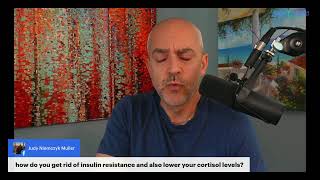
Jim Katsoulis teaches how to reprogram your inner voice around eating. Instead of self-criticism when you overeat, he suggests curiosity: ask what actually triggered it, then plan differently next time. Food choices drive roughly 90% of weight outcomes; he lost 54 pounds without formal exercise by changing what he ate.
Chapters
Hey everyone, welcome to today's Program Yourself Thin podcast. Today we're talking about beating yourself up beats you down. Just really think about this for a second because most likely the way you're trying to get yourself to lose weight, to motivate yourself to stay on track, to do the right stuff is by beating yourself up, by saying mean things to yourself, by pointing out your mistakes, your setbacks, your screw-ups, and harping on them. And the idea is that you're going to beat yourself up so much that you're going to finally do it. You're going to create so much pain and make yourself feel so bad that you're finally going to just take all perfect action. But is that what happens? May sound good logically. I'm not going to debate you on that. You can believe it or not. Um, but what I want you to start with is just looking at what results does it produce for you when you beat yourself up after you make a mistake? Do you tend to get re-motivated, refocused, and back on track? Or when you beat yourself up after making a mistake, do you tend to make more mistakes and get discouraged and frustrated and despondent? Take a look at the results you get, right? And I think the answer is right there in front of you that it doesn't work. And why would it? If we put it in a different context, I think I think it's a bit more obvious because diet— the diet industry has kind of manipulated the way we kind of think about it in terms of weight loss. But let's just put it in a different context. Let's assume you were in school, or let's just say there was a kid in school who was struggling with the work, and they were trying to a certain degree— not maybe not even trying their hardest, but they were trying, and they were just struggling to understand it. In that situation, would they be better served by having a teacher who berates them and puts them down and Tells them how much they're not trying and how they're always screwing up and how they never give it enough effort and they're never going to get it. Or would they be better served by someone who sought to connect with them, understand what was going on, and encourage and support them in the right direction to take the next step, to understand the next little thing that'll move them in the right direction? Which one do you think would be more effective for that student? And so if you think that would work for the student, why wouldn't the same thing be true for you? How in your mind can the idea of having a berating teacher, a berating guide, help you get to your goal? Now, I think logically the reason you may think this is because you conflate berating yourself with having high standards, holding yourself to a high standard of activity, of behavior. And they're not the same. Excuse me. They're totally different. You can hold yourself to a high standard. and you can be encouraging, supportive with yourself. And when you compare holding yourself to a high standard and being encouraging and supportive of yourself to holding yourself to a high standard and berating yourself anytime you fall below it, which do you think is going to serve you better? And again, I hope that the answer seems obvious to you, uh, because this is really ground zero of changing your weight is changing the way you talk to yourself. And the first change you really need to work on is being more supportive and encouraging to yourself, especially after you've made a mistake. So it looks like this. You swore you were going to eat great today, and next thing you know, you're eating a bag of cookies or eating the chips or eating whatever kind of your challenge food is. You said you were going to do great today, and here it is, 3:00 in the afternoon, and now you're into the chips, the cookies, whatever it is. What do you do? Well, we know how to beat yourself up and we know what that feels like. Okay, so let me give you an alternative. This is the voice in your head. Hey, this isn't how we want to eat. This isn't what we want to do. We were going to eat well today. What happened? What was— what's going on here? We start that way. I don't know. I was hungry. I just got frustrated. I don't know. I just— next thing I was eating the chip. Okay, well, how hungry were you? I was pretty hungry. I didn't eat breakfast and I skipped lunch. Okay, so you were really hungry. How are you emotionally? Well, my boss was busting my chops early in the morning, and then I was getting more and more grumpy during the day because I was getting hangry. I was hungry and I was getting irritated, and I didn't know if I was able to keep on eating. Okay, so you got emotionally, you know, kind of worked up and stressed. Those are the types of things that are going to lead you to choose the wrong foods. So it's understandable why you did it. So if you go back in time, what could you have done differently? I guess I could have had a better breakfast. I could have had something for lunch, and I could have just taken a moment to just kind of relax and let go of you know, the, the altercation with my boss. That probably would have helped me. I also, I probably could have planned better. I didn't really have anything here. I was just going to not eat bad food, but it turns out I didn't have any good food that I brought with me. So I didn't really have any options once I got hungry and I got to the afternoon. So if I had an apple or something, or I had some other healthy snack, I think that would have helped as well. Okay, great. So tomorrow, let's work on that. What can we do today to set us up for tomorrow to have success? That's how the encouraging voice sounds. How can that not be better than beating yourself up? And if you start to do this day after day after day after day, what happens is you consistently start to illuminate better strategy. You start to keep yourself in a better mood. You start to feel more optimistic and hopeful, and things start to change in a very fundamental way when you become more encouraging and supportive to yourself rather than kind of punitive and beating yourself up for every little thing. So I hope you give this some thought, and I hope you begin to make this shift because it's one of the most important ones you can make, and it's one of the ones that most dieters really overlook because you've been conditioned your whole life to really be very kind of punitive with yourself. So if you make a mistake, you need to be punished, but that's not true. When you make a mistake, you need to learn what caused the mistake and how can you avoid it next time. And if you start approaching it that way, you're gonna be amazed at where you end up a month from now, a year from now, 5 years from now. It is a completely different place. And so if you want some support in making that happen, go click the link in my bio or go to programyourselfthin.com. Uh, go get the free hypnosis session that I made for you. It is just sitting there waiting for you. I've got a bunch of free stuff that I give you, um, but once you get opt-in there, you will get that— those things. Um, but that's your first step, okay? Go check it out. Go see what another way feels like. And again, it's completely free. Go check that out. And if you have any questions, feel free to ask them on this beautiful Friday day. I hope it's nice where you are. It is, it is perfect, although I will say it was kind of cold, and now I am— I put my heater on, but then it got to be like 80 degrees, and now I'm cooking myself. What's up, Dandy? How's it going? Happy Friday, everyone. Yes, yes, Friday, Friday, can't wait. I'm going away this weekend. I'm going right into the rain, so the rain and the wind, 45-mile-an-hour gusts, and I'm going to the Cape. So that's how it is, but still gonna be fun, gonna be an adventure. Uh, Dandy says, do you think diet or exercise matters more? Oh, I absolutely think diet matters more, without, without any hesitation or, or any, um, any ambiguity. I, I think diet is infinitely more important to your weight than exercising. You can absolutely lose weight without any exercising. I'm proof of that. I dropped over 54 pounds and I did no exercising. I did some real gentle yoga, which I don't think anyone would consider that exercising. Um, and I've maintained my weight with not doing any consistent sort of exercising. I am active, you know, and all the rest of it, but no exercising. And I've watched many of my clients lose weight and master it without really adding much exercise to their day. Your weight is dictated by what you eat. Okay. I like to say that your eating controls your weight, your exercising controls your shape. But when it comes to your actual weight, the eating is the number one factor controlling that. And there's, there's really no gray area here. Okay. Certainly exercising can support, potentially not guaranteed, by the way, Exercising certainly does not mean you're going to lose weight. Reducing your calorie consumption absolutely does. So again, I think that focusing on diet first is the right strategy. And I think it sets you up when you can control your eating. I think you're set up long term to have success because when you build your weight management around exercising, that's a very dangerous game to play because as you get older, there are almost guaranteed to be times of injury, times of, you know, you just get older and you can't keep that up, times of getting sick, times of vacation. There are things with exercising. Boy, exercising long-term is a complicated thing. Okay. And I'm not saying you can't do it. I'm trying to be negative here. I'm saying that there are a lot of challenges awaiting you in life. That are going to make it difficult to work out to the level you want to consistently. It's our— it's eating similar to, right? I'm not saying eating is not— doesn't have landmines as well. But I think eating, changing your eating is a lot easier and a lot more impactful than changing the exercising. I'm not saying don't exercise, but I'm saying if you had to choose between the two, without question, eating is the more impactful one. And, uh, I will always say that. So I hope that helps you out because I know sometimes people get confused by that and they try and start exercising more, but they use up all their energy and willpower trying to get themselves to exercise and, uh, don't have any left to control their eating, you know. And there's a licensing effect, that's another piece. Excuse me. Uh, what's up, Julia? Or Julie? Julie? Yes, Julie says part of the relaxation process is to relax your chest. Exactly how does one do that? Great question. So this kind of starts with the concept— I'm a yoga instructor, so one of the concepts we use a lot in yoga is the concept of micro movements. Okay. And so, you know, we know big macro movements, right? Micro movements are almost invisible. If you, if you were looking at me, you wouldn't notice that right now I'm, I'm making micro movements, right? Little tiny little shifts. I'm gonna roll my shoulders a little bit, back them up a little bit, whatever. So that's the beginning of this, right? The beginning of being able to truly relax your body is to understand micro movements. Okay. To understand, um, to understand kind of like how your body works together as a system. Okay. So to me, it's like, I like to stack together alignment, right? There's an alignment here. If I'm slouched over like this, I'm never going to be able to truly relax because I'm out of alignment. And so because I'm not resting kind of in an aligned stack. I create imbalances and some, some muscles are harder, some muscles are tighter or looser, and it's about— so I go for alignment. And then to find that alignment, I'm really playing with micro movements. Obviously, the first alignment is kind of this. So if I'm starting like this, you know, I'm going to start a big macro alignment like that. But then the rest of the time, I'm basically in my head, micro movement, micro alignments, and then I'm judging everything really based on my breathing. My breathing's really dictating it. So that's the beginning of it. And I like to start with my shoulders, right? So again, you can't really relax your chest if your shoulders are tight. You know what I mean? So this is the systemic part. And I think a lot of times people try and focus on one area. I'm gonna relax my chest. Well, you ain't gonna relax your chest if your stomach's in a knot and your shoulders are up here. Yeah, you're not gonna relax your chest, right? So we need to kind of build the relaxation and it works systemically. It's a systems process. So, you know, for me, again, like macro alignment, generally align myself up. I start with my shoulders because my shoulders control so much of the alignment and how much my stomach's gonna be able to relax, my chest can be relaxed, even my face and neck are gonna be able to relax. So I get this macro alignment. Now I go to my shoulders and kind of playing with them a little bit, and I will continue to do this, right? This is a living, breathing process. I don't say, okay, now I'm relaxed, now I don't have to think about my body. I'm consistently in here. I'm playing with my breath, I'm playing with my micro alignments, and I'm just kind of playing with those the whole time. That's what I'm using to relax. Start with the shoulders, relax the shoulders, align them. And I gotta relax my arms. I'm not able— if I hold my arms up here, I can't really relax my shoulders. Again, system. So let me relax my arms. Now as I relax my shoulders, I feel almost naturally that I want to relax here. In order to relax my shoulders more. So again, as I relax my shoulders, that relaxation tends to go into my chest. It tends to go in my back too, okay, the upper back. So everything's starting to relax. I'm feeling that relaxation start going to my chest. Now when I breathe, I'm feeling right here, this area right here. I'm feeling there's more movement here now, okay. A lot of people breathe like this. I'm exaggerating a little bit, but a lot of people breathe with the upper part of their lungs. Big problem, right? Because your lungs are bigger down here. So we want to breathe with this part of the lungs, but a lot of people have so much tension all here that the only breathing they're doing really is they move their shoulders, right? Your shoulders really shouldn't be moving when you're breathing that much. So I'm aligned, I'm relaxing my shoulders, I'm letting that relaxation begin to move into my chest as I connect to my breathing. I'm feeling my breathing kind of expand a bit here. So I'm relaxing these chest muscles now. Now I'm feeling that relaxation. We kind of move down and I can't really feel it. I don't feel a lot. Like, I felt this relaxation happen in my body down here though. I'm not really feeling a lot of relaxation. Okay, I'm just kind of feeling I'm relaxing it, but I'm not feeling like here to here. I felt a lot of relaxation. Here to here, I kind of felt more muscles relaxing. Here to here, I don't really feel a lot of it, but I know I'm relaxing. And this is where I kind of use visualization. I feel— I want to imagine my chest kind of opening up. Now, again, my chest isn't actually moving like this, but in my mind, I'm imagining the muscles relaxing enough to allow my chest to expand and move. Right. So I'm looking for relaxation so that I can begin to have movement, because when I can have movement, I can begin to breathe more deeply. Now I'm feeling that relaxation begin to move down here. And again, I don't really feel it so much here. I'm just kind of imagining that relaxation moving into these muscles, moving these muscles. Now I'm moving my stomach, and I do feel the relaxation here. And now I look to kind of combine all of this. I want all this to relax. And so that is kind of the way that I go about, um, you know, about relaxing my chest is seeing it within a system and then systematically relaxing the whole system in order. So I hope that helps out. Um, Cindy says, yes, 90% food, 10% exercise, coming from an ex-bodybuilder. Yes, exactly, Cindy. So I appreciate you validating that. Um, yes, and I, I remember I did a training— an interview series years ago with, with some of the top fitness and, um, nutrition experts on the planet And that was a consistent method. And it's kind of summarized in the saying that you can't out-train a bad diet. Okay. So even when you're looking at bodybuilders, you know, they say that abs are made in the kitchen and shown off in the gym. Wait, no, that's not right. What flips that around, right? Abs are made in the gym and shown off in the kitchen. Yeah. So a lot of what you see really comes down to diet more than the exercising. You know, uh, what's up, Andrea? How's it going? Uh, Mama Cat says, tell me about manifesting weight loss with my thoughts. Yeah, I mean, every— your weight is completely controlled by the thoughts that you have. So whether you're overweight or whether you're at your goal weight, the same process is going on. You're like a computer that's running programs. So the process of running programs is the same. Which program you're running creates— it's a different experience. Okay. So it's important to understand that when I talk about how your thoughts impact your weight or your weight loss specifically, this isn't some new idea. This isn't something new that you're going to do. You're already doing it. The way that you think is creating your weight. What we're doing is recognizing that process that's already going on, always has been going on, always is going to go on. and we're looking to optimize it so you get the better results that you want. But please understand that the, the process is the same. You're programming yourself. I'm programming myself. The difference is that I'm probably doing it more intentionally. I'm doing it very systematically, uh, and comprehensively to get the result I want. And you're probably doing it without realizing you're doing it. So what we think about ourselves, um, Again, in Program Yourself Thin, we use the goal weight pyramid. I know you can't see that TikTok, it's reversed, but, um, we use the goal weight pyramid, right? So mindset is really what you're talking about in more detail. It would be really specifically— so when you say tell me about how to manifest weight loss with thoughts, really what we're talking about though is understanding how to motivate yourself, how to shift your self-image so that you think of yourself as a thin, healthy person. How to take control of your habits so they start to run on autopilot so that you don't have to struggle to lose the weight and be there, how to manage your emotions genuinely, how to think right, the literal nuts and bolts. How do you think like a thin, healthy person? You probably don't know that, so you need to learn it. And then how to maintain. And again, maintenance isn't something we— in Program Yourself Thin— save for when you lose the weight. We start right from the beginning focusing on maintenance because again, you need to know how to maintain from week 1 to week 2. So maintenance is a skill, and it's one we want to start developing right from the beginning because we want to maintain our behavior to get the results we want. So, um, that's kind of an overview of what that would be. What's up, Casey? Casey, it's been a while. I am now somehow— hold on. Oh, been a while. I'm now somehow— I'm not going to say that word because I don't want to get, uh, restricted. So yeah, um, but I've been eating less crap. Was 85— 185 January, now down to 163. Um, yeah, I'm not gonna read that. I'm not gonna engage with that one because, uh, that's not my specialty. But that's— I'm sorry to hear that because that is usually not a good path for people to be on. So I hope you can get some help with that while it's still a new behavior and turn that around. Uh, Dandy says, is listening to sessions aloud or by earphones a significant difference? Um, considering the subconscious, if so, any particular earplugs recommended while asleep? Otherwise, my kitty, and when I babysit our family's Siberian Husky, is enjoying you. On that mention, what's with, uh, a pet's brain when it comes to this? Seems to relax my kitty, but kitties relax continuously. Yeah, yeah. Um, I don't think it really matters. I think, you know, uh, headphones probably— I think headphones are better, um, just because they're just more immersive in a sense. You know, um, but, but I, I don't, I don't think they're necessarily that much more powerful. I, I would say that would be my suggestion if it was easy for you to get, you know. I think it's a valuable, you know, get some headphones, use those ideally, you know, block out the world a little bit. I think that's better. But, um, I don't think it makes much of a difference, you know. Listening to him is the main thing. Um, but yeah, when you have pets and stuff, if they're distracting you, that can be kind of an issue because you're not focusing on what's being said, you're not focusing on your body, you're breathing, all the things that were focusing on. So I would say that part there would probably— I don't think it would hurt your results, but I don't think it would lead to the best results either. So I would probably, you know, use earphones. That would be my suggestion. And then if you have cats, you know, if the cat's purring and the dog's howling, you know, noise-canceling headphones could be a little extra boost for you as well. Marta says, I do believe that all habits come from mindset. How many people have you worked with How many people you have worked with actually found lasting success using hypnosis to manage food issues? This is such a chronic illness and it always resurfaces when least expected. Um, well, okay, so yeah, I, I agree with everything you just said, Marta. Um, how many people you have worked with actually found lasting success using hypnosis to manage food issues? Um, the way you ask that question, I'm going to imply that you mean how many people just used hypnosis. If you're asking like how many people used hypnosis to manage their weight long-term alone, I would say very few. I don't think hypnosis alone is going to be enough for you all to manage your weight. And I wish that wasn't true because I literally have the number one hypnosis program on the planet for weight loss. There's no program like mine. So I speak from experience here. That being said, I don't sell it on its own simply because I don't believe it's enough to manage your weight long-term. You've gotta be engaged. You've gotta be part of the process exactly for the reason you said, Marta. It's a chronic situation. Managing your weight is a chronic situation, folks. It, you never get to a point where you just do it. Like, I want to make that clear too, because as I sit in front of you, someone who's been at their goal weight for over 30 years, it's a constant focus for me. It's my lifestyle. It's how I live. I mean, it's, it's a, it's a fundamental focus for me in my life. So I make that crystal clear. That being said, I haven't dieted in 35 years. I don't really exercise very much. I don't do things that are miserable. I love what I'm doing. I'm very passionate about it. It's like a religion to me. You know, in a religion that you go to church every day, sort of thing. I'm like, I'm obsessed with— I love it because I keep feeling better and better and better physically, mentally, and emotionally. But at the same time, it's because we don't live in a vacuum. So you can't just listen to hypnosis and it's going to magically make changes and I just be a different person. That's just not how it's going to work. The hypnosis in the program is a support mechanism. It supports you running your own mind, using the program yourself, then technique, and following your blueprint that you keep optimizing. And so here I am, 30 years into it, and I am still consistently optimizing my blueprint. I'm constantly updating and optimizing my strategies, my mindset, lifestyle, and eating strategies constantly because I love it and I just keep getting better and better results. And I'm actively in my mind programming my mind constantly. And I expect to do this for the rest of my life. So I think people got to get it in their mind that, that you want to live at your goal weight for the rest of your life. This ha— this is going to have to be a focus. But it's not like dieting. Dieting is miserable. This is different, I hope. But I think it's very important to realize that the hypnosis by itself, I don't think it can certainly without question, and I know this for a fact, I've tested it. I know for a fact people will lose weight listening to my hypnosis program. I know it for a fact. Most people are going to lose weight just listening to it, nothing else. I've tested it. Problem is, what happens when you get done with the 8 weeks? Oh, you listen to it again. Okay, what happens when you get done with those 8 weeks? Those hypnosis sessions, again, are a support mechanism, a very, very powerful one. They do a lot of powerful work. I want to be crystal clear about that. but ultimately you're in your head 24 hours a day talking to yourself. If you do not know how to manage your own mindset, your own internal dialogue, what happens when you get off track? You know, I don't wanna listen to hypnosis session. What are you gonna do then? Strategically, you can be as motivated and you can be the perfect mindset. Everything's great, but if you don't have the right plan, where are you gonna end up? You know? So to me, you need to know what to do and you need to know how to get yourself to do it. And we just keep optimizing, refining that forever. So yeah, yeah, Marta says thank you, it's very clarifying. We need to approach this illness from many angles. Yeah, and I, I don't know, I, I don't like— I'm just gonna say I don't like the illness. I don't like that framing, not one bit. Don't like it one bit. There's other ways to say that this is a chronic forever thing, right? Okay, for example, you're all gonna brush your teeth. You're all gonna brush your teeth for the rest of your life, right? Because you want to have good teeth for the rest of your life. You don't call it, you know, I got this tooth illness that my teeth keep getting dirty and I'm gonna get cavities if I don't clean them, you know. So I don't like to start with the illness piece of it. I know, I get it, I get it. It kind of feels that way sometimes, and there's some benefits to it, you know. I think the biggest benefit of framing weight as an illness is that you bring more resources to it. I think you take it more seriously because I think a lot of times weight is really almost minimized, that all you need is a plan and some willpower and you change it all up. I think that's woefully inadequate. Okay. Um, so I do— the one thing I like about the illness framing is that you take it more seriously typically, um, and you start to look for more levels of it and understanding. I think that's great. The idea of framing it initially as an illness, I just don't like because I would frame it more as a lack of knowledge that you don't know how to run your mind. You don't know how to think, live, and eat like a thin, healthy person at this point. Well, what if you did? What if you— what if you, Marta, dedicated the next year of your life to really focusing in on the blueprint and optimizing it, thinking like a thin, healthy person, uh, living like a thin, healthy person, eating like a thin, healthy person in a way that really resonated with you? And you worked on programming your mind, thinking more solution-oriented thoughts, being more supportive and encouraging to yourself, learning how to get yourself back on track when you made mistakes, learning how to install habits more effectively. Right. So let's just say, Marty, you really dedicated yourself to that for a year. So next year, all of a sudden your skill set's way up here because you've been practicing something. It's like piano. You start practicing the piano strategically, consistently, systematically for a year. Next year, you're going to be in a much different place than where you're at now in ways you couldn't even imagine. So let's just imagine it's a year from now. Now you have all these skill sets where you start to naturally, you know, you start to work on your habits and your routines. You have your breakfast kind of figured out, um, you know what you're gonna eat for lunch, you know you're gonna have for dinner, um, you're able to stay calm and relaxed, you're grounded, um, you're hydrated, you're sleeping well, uh, you know, you're happy with your life, you're doing things that you enjoy, and all of a sudden you're just consistently making better food choices. Well, where's the illness piece fall into that metaphor, that paradigm? You know, so I don't know. It says, so it's type 2 diabetes, it's reversible, but patients are not aware of— yeah, I mean, now listen, yeah, if we're talking about type 2 diabetes, and that's a different thing, that's an illness, okay, so that's a little different. Um, in obesity, again, I, I, there are illness components to it, you know, if you're obese and have certain characteristics of it. So I guess I was referring more to just you know, being overweight, um, obesity. Okay, fine, illness, but I just don't love that framing. So I don't know, I could do both things. I can see on one hand how it's an illness, and I can understand that paradigm and value some of the pieces of that, but I think overall I don't really love it. But that's me, you know what I mean? So you can choose to think about it however you like, but, um, just a little bit of thought on that. What's up, Jane? Jane said, hi Jim, I finally had a really good day yesterday and had my— and my stomach is reacting in a negative way, but I will continue to do well today. Um, I had a really good day, but my stomach's reacting in a negative way. I wonder what that means. I don't know what that means. Um, you ate well and now your stomach is really upset. Okay, I'm guessing that's what that means. Okay, but, uh, are you making some connection there? Like, oh, because I had some salad, now, you know, I got diarrhea. I, I don't know, like, what connection you're making there. Um, maybe it's deserved, maybe it's not. I, I've been in that situation when I start eating a lot more fiber. Um, my stomach felt like I poured concrete in it for about a month until it kind of normalized and I felt great again, you know. But so I'm not sure exactly what that means, but question that relationship, you know. We don't want to associate, oh, hey, well, now my stomach's a mess. You gotta watch out for that one. People convince themselves that a lot because they'll eat a salad and then, you know, their stomach will be upset and, oh, I can't eat salad, see. But sometimes we have to get used to things too, and sometimes salad doesn't agree with people. So, um, yeah, I'll give you a little more detail on that, Jay. But, but good, good. I'm glad you had a good day, but don't, don't negate it by the stomach thing today. Again, frame it a bit differently, potentially. Then he says, on the topic of realizing foods that cause pains, is there a time frame of when pain begins from the time you ate to pinpoint the food? For example, I just wondered, considering redos and rehearsals to be more effective and true, is it a day, an hour, or could it be longer? Um, great question, Dandy. I think it's all of those things, uh, meaning that, you know, when you— it's both ways too, right? You make a healthy food choice, an unhealthy food choice, it's the same thing. So let's just— we'll get on the unhealthy food choice where you go get a bag of cookies. Uh, so there's multiple time frames we're going to pay attention to. One of them is instantly, instantly. So the second you stop eating, as soon as you finish, take the last bite, the first time frame starts. And now you're in your head thinking negative things about yourself. You're beating yourself. Ah, what'd you do? Why'd you do that? You said you're gonna eat well today and now look what you did, right? So that's like the instant consequence. The second we finish the bag of cookies, the last bite happens. Now we usually start beating ourselves up about it. Okay. Then maybe an hour goes by and now an hour later, now your energy's kind of low and you feel kind of lethargic and you're feeling kind of heavy. Right. Then, um, there's the, depending what time you are, let's just say you ate at, you ate the bag of cookies at 3 in the afternoon. Okay, so now 7 hours later, um, you're getting ready to go to bed, and now you sleep kind of crappy because all the sugar in your system, you know. And now again, maybe that— maybe that happens to you, maybe it doesn't, okay? But what I'm saying is there's multiple time frames, okay? Then there's tomorrow. You wake up tomorrow morning, um, which is, you know, 16, 17 hours later from eating the cookies. But now you know you ate the cookies yesterday, so you feel a little discouraged and frustrated. You didn't sleep great, so you're kind of tired. You got low blood sugar, you know, because of the way you handled it. And so now you're hungrier. And so there are short, medium, and long-term consequences to good and unhealthy eating behaviors. And it's important to recognize all of them because the flip side, you make good, healthy— you have the salad instead of, you know, the burgers and fries. And so instantly, the second you take the last bite, now you're proud of yourself. You're happy you made a good decision. An hour later, you feel lighter and healthier. As you go to bed tonight, you, you go to sleep being proud of yourself and your body feels light and ready to go and rest. You wake up the next morning, you're more energized because you had a good day before. So, you know what I mean? Like, like there's multiple time frames with all of it. So I don't know if that answered your question. Let me know, Dandy. Um, Tanuha says, I've listened to your free session and don't feel like it's effective for me. Not sure how do I know it worked for me? Um, yeah, I mean, when you listen to that first, uh, hypnosis session The New Thin Me, you know, I give it a couple listens because, you know, what's going on is that first, let me, let me explain. I'm not putting you in some weird trance where I'm just taking control of your mind. What's going on is you're relaxing yourself physically, mentally, and emotionally, and sometimes that takes some practice. You're hearing these positive messages, and for a lot of people, that's the first time they've heard them. And so they're just like, I don't know, it's not normally how you think, so it kind of just hits some resistance. So I'd listen to the session a couple more times, and to know if it's working or not, what you're looking for first off is at the end of it, do you feel any more relaxed? Do you feel more relaxed than when you began? Um, the next 3, 4 hours, the next 24 hours, the next day or whatever, do you find yourself being more calm and grounded, having healthier, uh, able to make healthier choices moving forward? Uh, are you thinking a little more optimistically? And so kind of look for some of the subtle things in the beginning. Um, you know, some people, again, they have— hypnosis is funny. I mean, it just impacts people differently. You just never know. But if, if you were feeling it wasn't working, go back and give it another shot and realize— lower your expectations. That's what I would say, because sometimes lowering our expectations allows us to experience it a more powerful way. Because sometimes we think we're listening to a hypnosis session about losing weight for 10 minutes and we're gonna come out of it a completely different person who just magically makes all great decisions from that point forward. That, that's just not how it works. You know, everything's hypnosis, folks. And so this is why I say hypnosis by itself usually doesn't work because we don't live in a vacuum. So you could condition your mind and feel positive and optimistic and make all the right choices, but then you go and sit and watch TV for 3 hours and you watch, you know, an accumulated hour of hypnosis getting you to overeat. So, you know, there's always hypnosis coming at us, and so listening to it once or twice isn't really— sometimes it does a lot and sometimes it doesn't, but that really is not reflective of how effective it is. Hope that makes sense. Yeah, if anyone has any questions, feel free to ask them. I am here. TikTok, if I missed your questions, I apologize. It's harder than you think to find these questions on TikTok. I'm looking now. Uh, what's up, Cindy? Cindy says, really love all the encouragement, especially on healthy mindset. Are you familiar with any combination of foods that are great for living at your goal weight? Um, yeah, that's a— it's a great question. Thank you. I'm glad you are appreciating this. That's what I'm here for. Um, combinations of food. So, you know, there, there's a science of food combining that I think has some merit. You know, I've played around with it and I have found some of it to be pretty accurate for me. But I like to— before I even say any of that, I think ultimately the golden rule is what works for you. So I think everyone's body is just so unique that they're really— we always have to reference ourselves ultimately to know if something's the right fit or not. So I can sit here and talk about the science of food combining, but that doesn't guarantee that that close combination is going to work for you. So that being said, yeah, I think there are a combination of foods that are great for living at your goal weight. What are they? Well, I hesitate because everyone's got kind of a different nutritional philosophy as well, you know. So I'm a vegetarian. So if I sit here and talk about my food combinations, you know, you're not a vegetarian, that's going to be a waste of time. Right. So, yeah. But what I would say more, I'll kind of answer this in a more general way. Yes, I think combinations of foods absolutely make a difference, and I think that it's up to you to experiment with different combinations and notice how you feel. And I'll kind of leave on your own with that one instead of telling you which combinations I, you know, are suggested. I mean, you just Google it, you know, you'll, you'll see what kind of the general wisdom on that is, but then you got to test and see if it works well. Um, Jane says, yeah, I ate well and now I have to run to the bathroom. Um, yeah, Jane, and again, that, that may or may not because of the food Do you know what I mean? Like, are we 100% sure it's the food? Maybe, you know, just could be coincidence too. And that's always interesting. So again, maybe it's the food, you know, maybe it's not. But I would come up with a narrative, you know. I remember when my stomach was feeling like cement, when I really boosted up the fiber, I felt that discomfort and my brain started saying, see, stop doing this. And I said, no, wait a second, your body just needs to get used to it. Okay, now again, when I say it wasn't pain, I wasn't like, you know what I mean, like, uh fight not going to the hospital. It was a slight discomfort. And in my mind, I've done this enough that I know my body needs to acclimate to changes in my diet, even if it's healthy. Healthy changes sometimes still need acclimation occasionally. Again, everyone's different. But so yeah, so I wouldn't, um, I'd just be careful that, Jane, because I wouldn't want to— I think sometimes, Jane, you might be someone who creates— when you, uh, you had a good day, but oh, now there's this. I had a good day, but then I did this. Oh, I did great. But then, but then this happened. I think, Jane, a lot of times you're associating when you do something good, you always associate with something bad following it. I think there's a potential that you might do that sometimes. So just be careful. That's all I'm pushing back on. Uh, Daddy says, exactly. This is self-growth and you must apply oneself. I realized this and I enjoy the studies and I expect to do this the rest of my life too, along with walking, surfing, and exercise, just because I enjoy it so much. I'll enjoy it more weighing less. Yes, you're so right. I'm thinking if I continue doing these habits without reflecting and going against my emotional eating, for example, there's so many aspects that is a common one. I say to myself, it's challenging, but it's closer to my subconscious unlearning the habits that do not support good health, particularly eating more than my thin self. Yeah. Um, I typically talk to Jim AI. Yes, yes. Well, that's awesome, Danny. Yeah, super happy for you. And you're right, you're totally on the right path. And that's the right mindset you got too. That this is something we're gonna do forever. And I, you know, dieting has conditioned you to be so terrified of that idea, you know, the idea that you're gonna be managing your weight forever. You're just like, oh my God, oh, oh, can't I just free myself of this weight? Yeah, you can free yourself of the weight by living a lifestyle that really jazzes you up and makes you feel amazing, you know. And if you felt amazing, if all of a sudden, if all of a sudden you were thinking, living, and eating in a way that you felt just absolutely amazing, You felt energized, you were sleeping better, um, you were thinking more clearly, your emotions more balanced, um, you had more energy, more stamina, uh, you just were more of the person you wanted to be. Why wouldn't you want to continue that for the rest of your life? And that's a good sign that dieting is so negative in your mind, because the idea of dieting long-term to you is just like, oh God, no way. That, that's a weird thing to say, right? Because if like If dieting was going to get you something great, why wouldn't you want to do it forever? But dieting is so miserable that even the idea that you'd still be at your goal weight, you're still like, oh God, no way, I could never do that forever. Big red flags, big red flags. But again, program yourself. Then when you learn how to run your mind, why would you ever want to stop running your mind? At what point would you be like, okay, I got enough success and happiness, I'm going to stop running my mind so I can be miserable again? Huh? It just makes no sense. You know, and again, this is how indoctrinated dieters get by just thinking in that very short time frame that dieting imposes on you, because all you can think about with your weight is how much weight you can lose this week, this month. You're so short-sighted because of all the diet conditioning that, you know, that's the thing that traps you more than anything. So I'm happy to hear, Dandy, your mindset. I appreciate sharing that so that people kind of hear what a, what a healthier mindset is when it comes to your weight. About this. It doesn't matter how much weight you lose this month. It matters how much weight you lose this year. This year. And the only way you can lose a lot of weight this year is if you stay consistent with something over the year. So, you know, that's the shift we got to make when it comes to our weight, is to expand our time frame. And I get it's not the easiest thing because, again, your whole lives, all of our lives, folks, at this point, we have been raised in a um, a culture that's constantly conditioned us to think like dieters, so we tend to do this. Okay, um, Danny says— and what's up, Cindy? I see. Thank you. You're welcome, Cindy. Thanks for sharing that. Danny says, I didn't realize you were vegetarian. This is what I was referring to about foods, not processed or bad food stuff, because I'm fighting and resisting that. It's definitely different. I was actually referring to lamb, beef I eat, for example, and how long it takes, like pain, physical pain. No. Um, also, are you vegetarian for pain from meats reason? Um, my vegetarian journey— I always say this, and it's honestly, it's the best way I can feel like I can explain it— but to me, and I was a huge meat eater, please understand this, for the first 25 years of my life— well, I'll say 20 for sure— I was just— I, I ate meat every single day, multiple times a day. I was a huge meat eater. Um, and as I got exposed to the idea of vegetarianism, it just felt natural to me. So I never imposed it on me. I really felt like a natural thing. And I would say a lot of times just felt like my sexuality, just felt like recognizing what was there. And so all of a sudden when vegetarian was really like an option for me, like, like I understood it, it just felt like the natural thing for me. And the primary reason I will say is I felt like it would make it a lot easier in my life to control my weight and ultimately my health. Because you got to remember, this was 30— not 30 years ago, 25 years I've been a vegetarian. I'm a pescatarian technically, by the way. I do eat a little bit of fish here and there. But, um, when, uh, 25 years ago I was like, well, if I stop eating meat, that is going to eliminate like 85% of all the most tempting foods, you know, fast food, you know, meatball grinders, you know, just a lot of that type of stuff. And so I was like, wow, that, that alone would be really helpful. I just whack all that out completely. So that was part of it. Part of it was, you know, I don't— it wasn't even so much— listen, I feel bad for animals and stuff, but that really, if I'm being honest, it wasn't really my main motivation. Um, it's certainly something I'm happy not to be part of. Okay. But I wouldn't say it was a big motivator for me, but what was a big motivator for me, um, A, you know, again, my weight was going to be a lot easier to control and that turned out to be very true. Another piece was that I didn't want to put that shit in my body. Farmed animals are kind of gross. I mean, you can look at a farmed salmon compared to an actual live, you know, in the ocean salmon. They look totally different colors. You know, farming food, you know, meat, it's, it's again, it's not the healthiest, best meat you're going to get, you know. And that I think is very true, too. So, you know, I think of all the antibiotics I've avoided by not eating meat. Over the last 25 years. I'm pretty happy about that. All the stress chemicals, I, I don't know. So again, I'm not— I'm gonna make this a vegetarian-only show, so, so you all do what you want to do. And I'm not— I work with all people, you know. There's most people in my program are not vegetarian. So, um, program yourself then is diet agnostic. But I just share that with you, that, that just some of my reasons, you know. And I just felt better. I just felt a lot better without it. Um, Jane says, so are you suggesting that I cannot run my mind? I would agree. Um, no, I wasn't suggesting that, Jane. I'm saying that you can run your mind, but in order to run it, you have to recognize what it's currently doing. And one of the things it might currently do is it might associate— a lot of times when you do something good, you kind of follow it up with something not good, and you kind of connect those, whether they're real or not. And again, I get it, you ate something healthy and now, you know, you had to go to the bathroom a lot. So I'm not, I'm not saying you're making that up, and I'm not saying that's not real. I'm saying that is real, but I'm saying I wouldn't want to just— oh, see, there's one more example. See, I try to do something good and then this bad happens. I'd make sure that's not part of the narrative. I'm saying it is, maybe it isn't, okay? But I just want to be— I would want to run that if my— if that has happened to me, and I very intentionally want to say, okay, yeah, that happened, and maybe it had to do with that, maybe there was another reason. Maybe it was exactly because I ate that. Now my stomach is upset, but it's going to normalize to it. This is my microbiome changing. This is healthier food. You know, this is going to normalize. And I would talk myself through it to some degree. So no, definitely not suggesting that you cannot run your mind. I've never met someone who cannot run their mind. Certainly there are people, I'm sure, you know, obviously I don't tend to work with them, you know. So no, definitely not suggesting that. Um, at all. Yeah. And he says, interesting mindset, my goodness. Thank you. You're welcome. Yeah. Um, Jane says, no, not part of the narrative, not sure why it happened. Oh, great then. Yeah, that's great. Um, I only say that because, again, you just kind of led with that a little bit. I'm just, just pointing it out. Okay, it could be true or not true, you know, that's for you to decide. My job is to kind of point potential things out and for you to agree with it or disagree with it. Yeah, what's up, Asha? Asha, I'm gonna say Asha. Asha says, I don't know if it's a weight loss question. After reaching my goal, even being lean, I look bigger than I thought. Um, yeah, yeah, unfortunately that's, that's what's going to happen for most people is, you know, this idea that you're going to get to your goal weight and everything's going to be amazing. I wish, you know, and I, I don't say this to be negative. I say it because it's a reality for most people that, you know, you spent your whole life looking at these dramatic before and after pictures, and you start to just imagine that you're going to be like this, you know, superhero version of yourself once you lose the weight. And, um, most people are disappointed when they get to their goal weight. Your brain never stops. That negative part of your brain never stops, even if you're at your goal weight. I, I say the classic example, we're talking about bodybuilders. I, I used to have a bodybuilder, so that I knew, and I said, hey, you know, when you right in front of that mirror, you're training for, for years, but you've been getting ready for a month for this show. It's the second before you're about to go on stage. Like, what's it feel like to look in the mirror? And she goes, I just noticed some more flaws. So, you know, there's a part of our brain— I talked about this yesterday, uh, Asha, Asha, um, if you go look at— this is also a podcast, but if you go to yesterday's podcast, it was all about, um The hell was it all about? I think I just blanked on what it was about, but let me, let me look it up real quick. Uh, dealing with your negative voice. I just blanked there. Um, yeah, so dealing with your negative voice. So that's part of it, Asha, is, uh, this negative voice, that's just what it does. It's always negative. You can be at your goal weight and it's still negative. So, um, we've got to learn how to manage that negative voice. And one of the ways to deal with it— you never get rid of the negative voice. It's managing it. And one way to manage it is by focusing all the things that are better. What's better now at your goal weight than where you started? Start focusing on that because nothing's ever going to be perfect. You're always going to have some issue with your body, with your weight, with how you feel. It's just always going to be there, folks. Don't mean to be negative, but I've been doing this for over 20 years professionally. I've done over 6,000 private weight loss sessions. I'm not just making this up. I've worked with a lot of people. Smart, successful people. And I'm telling you, you get to your goal weight and you're, you're basically the same person. You're a bit happier in certain ways, but fundamentally, you know, you're still kind of you. You're still going to have that negative part of your brain. And so you got to learn how to manage that. It doesn't just go away. And I think a lot of dieters are shocked when they get to their goal weight and they still are negative to themselves. There's still things they don't like. I genuinely think that. I think because dieting is always sold as this fairy tale, you know, where you're going to get to your goal and then everything's going to be perfect, you know, and it's not. So, um, Sister Tay Tay says, can we go— excuse me, uh, can we be healthy not eating meat? Some vegans look wrinkles and pale. I'd like to be a vegan. Um, well, I, I'm not a vegan. I want to be crystal clear. I'm not a vegan, and I'm not a vegan for the same reason that I'm not a carnivore, uh, because I've never seen a large modern society that is carnivore, and I've never seen a large modern society that's vegan. And so I make my diet decisions based on evidence. And so if you look at the Blue Zones, that kind of summarizes it for me, that I believe the healthiest populations on Earth are the ones that consume high-carb, low-protein, natural food diets. And so I, uh, am not a vegan. And, uh, yeah, I think there's unhealthy-looking vegans, but I certainly think there's a lot more unhealthy-looking meat eaters. So I'll give you that there are absolutely unhealthy-looking vegans. But there's way more unhealthy-looking meat eaters. It's just a statistical thing, okay? But I get what you're saying. But no, I'm not a vegan, and, um, I, I, I— it would— it wouldn't be a right fit for me, you know? So there's a difference though, you know what I mean? Vegetarian's way easier than vegan. And I think vegetarian— pesc— I'm technically a pescatarian, by the way, so I just want to be crystal clear. But, um, I think vegetarian is a much more proven healthy way to live your life. I think it's the most proven healthiest way to live your life is vegetarian-esque. I don't think you have to be meat-free in any way, but I think you have to be vegetarian-esque, whole natural food-esque-ish to, to really have the highest level of health. So that's what I think. So you can absolutely be healthy not eating meat though. That, that is without question certified. Certified, yes. Okay, absolutely. Um, oh, Jane says I have IBS, so it comes up often. Okay, very good, very good. Yeah, so there you go, Jane. So just make sure you make that crystal clear that my stomach's upset today, it probably has nothing to do with eating healthy yesterday. Maybe it does, maybe it kind of triggered it, and so I want to keep eating healthy so I don't Maybe it's the back and forth, you know. But anyways, um, Danny says, you know, when you had that question about hypnosis not feeling impactful when just starting, do you mean that the conscious part of us is not used to it, so keep going, listen more and more? However, um, this hypnosis is still entering our subconscious, correct? Yeah, absolutely, the hypnosis is still entering your subconscious mind. Um, but listen, hypnosis is basically the bypassing of the critical faculty. So a lot of times people start and they listen to the first hypnosis session And they're so in their head wondering if it's going to work. Is this going to work? And they're like, oh, is it going to put me in a weird trance? And is this going to control me? Is it going to change everything? And so they're kind of like tense physically, mentally, and emotionally. And so that doesn't allow the hypnosis to really work. That's the number one thing I see for new people. And so if they keep listening to it in that state, it's probably not going to do much. Potentially, if you keep listening to it, maybe you'll start to relax. But if you intentionally go into it knowing, don't worry about what it's going to do to you. Just relax. You're going to hear everything. You're not— hypnosis is not some weird unknowable state. You all go into hypnosis every single day of your lives. You're completely familiar with what hypnosis feels like. It's not some state where I'm gonna— you're gonna listen to this session, I'm gonna put you on a trance, and you're gonna go and wire me all your money and you have no idea what you're doing. You mean like you're aware the whole time? You're in hypnosis every time you watch a movie or every time you watch a show you like, you know? Like, you know how you're kind of going along with your living vicariously, kind of imagining you're in that scenario. That's what the hypnosis should feel like, like that kind of this— you're just kind of going along with it. It's fun to think about and it feels good, you know. And the more you do that in an intentional way, the more results you tend to get. So I hope that helps answer it. Um, Jane says, body dysmorphia is very interesting. I took a course in kinesiology, um, and one thing we did was to all dress in the same shorts and t-shirt, and this was guys and girls. Then you had to pick out your own body as seen from the back. I picked out a small Chinese guy that I thought was me. Um, yeah, it is, it is. Most people have a very poor ability to understand what they look like. And the big reason for that, folks, is because we never evolved with that ability. That makes sense. Never in history, never throughout history until fairly recently, did you ever really consider what you look like as much as you do now. Why? Because A, there weren't mirrors, there weren't pictures. Um, everyone kind of looked the same as you for most of history. You lived around people that looked a lot like you. Uh, knowing what you look like, there's no sort of evolutionary benefit to it, so it's nothing you developed. And so now we live in the modern world where trying to understand what we look like and, you know, is so important to us. But again, there's no evolutionary reason why you would be any good at having a sense of what you look like visually. Does that make sense, right? So it's just that that wiring is not really there. So it's something we got to manage. Again, everyone's got different ways they respond to that, but we got to manage it. Uh, Judy says, how do you get rid of insulin resistance and also lower your cortisol levels? Um, I mean, I, I would never— I, I don't know how you get rid of insulin resistance, but I certainly know theoretically the way that you would manage your insulin more effectively is a two-parter. You would eat more healthy, whole natural foods. Now, now again, everyone, everyone's body is different. So you, you know, if you're insulin resistant and it's an issue for you, you do well served to go get a glycemic monitor, you know, a glucose monitor for yourself, and start to pay attention to what foods do what to you, right? Start to build a data bank of which foods spike your glucose and which foods, you know, it's a slow absorption, keep it level. And, um, then build your diet around the foods that are slow absorption, keep it level and avoid the foods that spike it and crash it. So that's theoretically how you would approach, um, you're, you know, managing your insulin. Okay. And of course everyone's going to be able, you know, everyone's at different spots and all the rest of it. So I'm not gonna say you can get rid of it, but the theory of managing it's pretty black and white, you know, that that'd be a good way to do it. Um, and cortisol levels, you know, that's really more of a lifestyle piece. Where you start to get proper sleep, you start to hydrate yourself, you do nourish yourself at a higher level, um, you know, you move more, you know, you feel more grounded, more calm, you know, all these types of things. Asha says, I feel like vegans still get protein from plant sources, but carnivores get so little fiber and vitamin. Um, yeah, I agree, I agree with that. I would absolutely I would absolutely— well, I'm a vegetarian, so of course I choose to be a vegan over a carnivore. But, um, I think the carnivore diet's silly. I, I don't know how you're gonna be a human being thinking you're gonna eat just meat for the rest of your life. You ain't a carnivore. It's black and white, you know. Go look at a carnivore's intestines and stomach and then look at yours, you know. Look at a carnivore's, you know, nails, claws, and teeth and then look at yours. You're not a carnivore. You can certainly eat meat. We're very adaptable. Um, but, but it's not a digestive tract that is that of a carnivore's. And I don't know how we're going to argue that. So very odd to me, um, this, this— but again, we live in such a crazy time. People do anything. People convinced of anything. So, you know, the carnivore thing, you know, that doesn't even surprise me anymore, you know, as silly as it may be. But vegan to me, again, is another, just another one that is fairly unusual in my, my book. Again, I If I'm going to base my diet, what's probably the most important decision of my life, probably. I think the most important decisions we make as humans is what our diet's going to be. What your diet's going to be is probably going to be the number one indicator of how long you live. Probably, right? Doesn't guarantee it. We understand this, but the one that most probably important anyways, my opinion, diet's the most important thing. So what am I going to base the most important decision I'm going to make in my life? What am I going to base that on? A fucking influencer, some jerk who's making money selling protein and meat supplements and all the rest of it. No way. No way. Based on what? What, what, what population are we looking at that's all carnivores that has great health numbers that we want to model? And the same goes for the vegan. What, what society, what, what population is vegan that has health numbers we want to I want to track. I ain't seen it, and I'm not gonna— I'm not gonna take— I'm not gonna take a chance. It's too important. So I'm gonna go— it's pretty clear-cut. This is not a complicated— this is not very controversial, folks. It's pretty clear-cut. Go look at the Blue Zones and look at the Blue Zones as a specific— they pick 5 countries where they had the highest number of people living to 100 years old. Um, all 5 of them had very similar diets— high-carb, low-protein diets. They ate whole natural foods, and it was primarily vegetables, grains, fruits, a little bit of protein and meat, all of them. And I think that that makes sense. It's, it's obvious to me. It's validated and verified by these studies. Again, show me 5 countries that eat primarily high protein, that have high protein diets. What country are we talking about? What population are we talking about that has a high protein diet that we want to emulate their health numbers? The Inuit, the, the Maasai tribe out in Africa, is that the health you want to model? So I don't know, these are, these are questions that we all get to answer ourselves, but that's how I think of it. All right, I gotta get out of here. So, uh, yes, thank you so much everyone, great comments. I really appreciate the questions, you all are awesome and I appreciate it. Uh, if you're not in my world, please click the link in my bio or go to programyourselfin.com. Go get the free hypnosis session that I made for you. I just put in the chat window as well. If you like this, I'm here every Monday through Friday, usually around noon Eastern, to talk to you and help you in any way I possibly can. And if you like this and can't make the live, it is also a podcast. So you can go to any podcast platform, search Program Yourself, then it'll pop up. You listen whenever you want. And this book is available if you're looking for a great book about how to manage your weight long-term. The Tao of Living at Your Goal Weight is my book. And, uh, it is available and ready for you to get it over at Amazon. So thank you so much, everyone. Have a super weekend, and we'll talk soon. Bye, everyone.
More from Jim



Weight Loss Visualization: Wake Up in Your Dream Size #programyourselfthin #weightlosshypnosis



What If You Pretended to Be Thin for One Hour? #programyourselfthin #weightlosshypnosis




