Program Yourself Thin Live 5-4-26
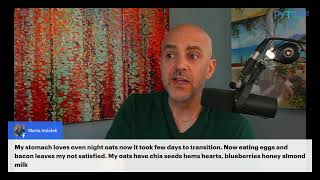
Jim Katsoulis argues that high protein intake won't fix weight loss on its own, calling it the Protein Paradox. Real change requires rewiring your mindset and subconscious habits, not willpower or restrictive diets. Weight loss is a side effect of personal development.
Chapters
Oh, hey everyone, welcome to today's Program Yourself Thin podcast. Today we're talking about the fact that protein is not a magic formula. Protein is not magically going to help you lose weight. The reason why is that protein is just one piece of the puzzle. So yes, it can be helpful in terms of making you feel a bit more satisfied with what you ate, but it's not some magic bullet that all you need to do is just start eating more protein, the weight's going to fall off of you. That makes no sense. And I just throw it to you right away with the Protein Paradox, that protein is what bodybuilders use to bulk up and put weight on. And now it's magically this thing that's going to make you lose weight. It's not. Again, as part of a holistic system to take control of your weight, sure, it's an important piece. Protein is important. But we're in this moment now where protein is really being marketed as this weight loss miracle. And we're putting protein in everything with the assumption that when there's more protein in it, it's just going to make me feel fuller and I'm not going to eat as much. But let's just take a step back and consider if that's true or not. When you are consuming your protein bars, when you're consuming your protein shakes, have you found that you're eating way less? Have you lost a bunch of weight because you're now eating a lot more protein? Or do you find yourself as hungry as you've ever found yourself and eating just as much and your weight staying where it's always been? That's probably what you're experiencing. So again, we have to use this moment in time where protein's kind of having its moment as an opportunity to see through the food industry and diet industry's bullshit, to pick one thing to focus on and pour all their energy into it. And we've gone through this so many times now. We've had low carb, we've had low fat, low sugar, low salt, low calorie. You know, it just keeps going on and on. There's never just one thing you need to do to master your weight. There's never just one shift that's keeping you from losing your weight. It's always got to be this comprehensive, holistic approach and system to really approaching it in a strategic, complete way. And just increasing protein is the opposite of that. Again, it's this belief in this one magical fix, which is what the diet industry is constantly doing. If you look at every single diet, it's always built around the one thing— every diet. Weight Watchers, just count your points. Intermittent fasting, just don't eat for 16 hours. Keto, just don't eat carbs. I guess the general rule now is just eat more protein. It's always one thing, and we focus on that and expect that if we get this one thing down, then the rest of my weight will take care of itself. Well, it won't. And the sooner you realize that, the better for you, because then you'll stop falling prey to this bullshit, which really is torturing your mindset. Okay? Because again, you're constantly given this message that you just need to change one thing to change your weight. And then when you can't do that or it doesn't work for you, you start to blame yourself for the reason why it didn't work. But the reason almost always that people struggle to change their weight is they do not have a comprehensive, holistic approach to doing it. They're always trying to change one thing, and one thing is never going to change your weight long term, uh, protein included. So I hope this makes sense to you. I hope this allows you to see things more clearly and in a bigger way. And if you want to go deeper into this approach, click the link in my bio or go to programyourselfthin.com and go get the free hypnosis session that I made for you. It is specially designed to help kickstart your weight loss by getting you clear and connected to whatever your goal weight may be, help you step into that version of yourself so you can embody it and begin to live your life and operate out of that version of you. And once you start doing this, it's a completely different approach. So go check that session out. It's waiting for you over at programyourselfthin.com or through my bio. Uh, if you are over in Facebook land or YouTube land, here is the link. I will put it in the chat window. Boop, there it is. You just click that link and go right there. Oh, hey Annette! And it says, hi from Ireland, I love your content. Thank you so much, I appreciate that. And, uh, yeah, a lot of Ireland. Yeah, we get a lot of people from Ireland. I feel like this thing is up in the ceiling. There we go. Uh, yeah. So, so I'm a big fan, um, all my Ireland peeps listening. I get a lot of Ireland and, uh, UK. I always say that— Tony UK— I always say like kind of most my people are in America, but then after that it's kind of a three-way tie between Canada, UK, and Australia. And I put, put Ireland in there as well. But yeah, I hope you're all a nice day, had a nice weekend. Oh man, does feel— what a Monday. I hope, I hope it's as nice where you all are as it is here because it is It is literally perfection. It is a perfect day. Kind of warm, a little windy. Took the dog for a walk. It's so nice out. And so it's nice to hear— be here joining you all. But yeah, if you have any questions, feel free to ask any weight loss questions. I am usually here Monday through Friday, uh, right around this time. I usually get here about noon Eastern, give or so, 10-15 minutes. And we made it here today on that time. So, yeah, any questions, feel free to ask them. I help people with all different weight loss plans. I don't care what plan you're doing. I usually have a way to help you because the way that I approach weight is much more about mindset than it is specific meal plans or nutritional philosophies. It's much more about kind of the mindset piece of it, the strategy you're bringing to the process. and, uh, those things there. Uh, Dolores says, you were so right, I quit listening to you and I've gained 20 pounds back. Uh-oh. That's all right, Dolores. It's an opportunity to reinforce what you've learned and strengthen the plan that works best for you. All right. That's how we've got to look at mistakes, folks. That's, I think, one of the core pieces of Program Yourself Thin is that the whole program really is built around your mistakes simply because I know you're going to make them. And I think when it comes to dieting, the message is that you can't make mistakes, that you have to be perfect. And in Program Yourself Thin, there's none of that. We are meeting you where you're at, which is being an imperfect human being. And that's okay. You can continue to be an imperfect human being and manage your weight. You know, did you know that both of those things can happen? A lot of people didn't know that you can actually be imperfect and still lose weight. What a breakthrough, you know. So again, this is your opportunity, Dolores, to again reinforce what worked for you, recognize what pulled you off track, how it happened, and, uh, get back on track. And if part of it is, uh, listening to me more often, um, then let it be, you know. Put this on your schedule, show up here more, show up for the podcast. I'm here every Monday through Friday to help you all out. Um, again, I do have a program, but I'm here to help you regardless, in the program or not. So Um, yeah, feel free to ask that. Dolores follows up. I said— says, I thought I was healed, I could eat whatever I wanted to, but I found out different. Oh yeah, Dolores, we all got to learn that one. Everyone goes through that, and that's okay. Again, I went through that 15 years ago in kind of a big way. 14 years ago, I put, uh, 25 pounds on by like 3, 4 months, you know. And so I literally thought the same thing. I remember for the first month or two, I was kind of like, I'm eating more, I've been eating more. And I looked at the scale and it didn't really go up much, and I was like, oh Oh, I guess, I guess all this work has allowed me to like, I could never gain weight now. I can eat whatever I want. I really did believe that. I swear to you, I'm being honest, folks. Our brains are funny things. And I said, ah, you know what? I've done so much work. I don't know. I guess I can just eat anything. My microbiome will protect me and my physiology, whatever. I don't know what I was thinking. And, uh, yeah, then I went to the doctor's a few months after that. I knew I'd put some weight on too, but, uh, yeah, I was shocked to find 25 pounds. So again, no big, no big deal, Dolores. Just relax, calm down. You know, that's my big message to all of you, because you've got so many mistakes in front of you. You've got so many depressing moments in front of you, folks. Not to sound depressing, not to make you sad, but we've got to— we've got to have a challenge mindset. We've got to take on the challenges of life. We have to be ready for them and prepared and have a strategy and do it. We can't pretend they're not going to happen. And that's what I think dieting is trying to train us, is to think that you know, our success revolves around that one time we do it and everything's just perfect and we're perfect and we never make a mistake. And I think that's one of the most toxic messages that dieting gives you. So again, Dolores, use this as an opportunity to elevate yourself. Um, the weight really is secondary to your mindset. So allow this to be a learning experience. Diagnose when what happened. Do what you're doing at even higher level now. And very soon you'll be 20 pounds down and further if you choose to be. I'm glad you're back, right? I'm here every day, so pop in here whenever you want some help or support. Um, yeah, okay. Dolores says, I'm glad I realized it before I gained back all 60. Yeah, great job, Dolores. And that's a big deal because for a lot of dieters, uh, and this is most dieters because it's estimated 85 to 95% of dieters that lose weight, the successful ones, end up putting it back on. So we need to recognize that for most people that lose the weight, the successful people, most of the time they kind of just backslide right back up to the goal weight or back, back up to their original weight. And so, yeah, be careful. And it's not any small thing, Dolores, to catch it now, 20 pounds in. Okay, now just relax. Don't get caught up in the regret and the frustration and the upset about putting 20 pounds on. Course correct. Calm down, relax, ground yourself. Okay, what's going on here? What happened? What can I do to change this? Let me get back on track. And before you know it, you'll be right back where you started and beyond if you choose to. But again, a very important point for everyone, because I would assume every single person here has lost weight and then started to put weight back on and you had no way to kind of halt that or deal with that. Uh, what's up, Jane? Jane says it is quite hot here today. It is supposed to get to 76. All right, yeah, and heat is a relative thing. Jane is up in Canada, so yeah, 76 probably feels, uh, really hot. It does for me too. We had a day last month, I don't know, it was weird. A couple days were like in the 80s and it was— I was like freaking out. And I love the heat, but it was, it was too quick, almost of like a switch because it's been such a cold winter. Um, Sima says, how do I have a strong willpower? Um, try my best to lose 20 kilograms. Please give me some tips and clues. Um, yeah, okay. I mean, but I, I don't think you're doing what a lot of dieters do, which was they associate their weight loss with how strong their willpower is. And I think that's the first mistake. I don't think, folks, that any of you are going to be able to change your weight long term just relying on willpower. I think you can follow a strict diet for a little while using your willpower. I don't disagree with that, but I don't think you're going to be able to maintain long-term for the rest of your life your goal weight if you're relying on willpower, because willpower is a finite resource and we only have so much of it. And when everything's going great for us, yeah, sure, take your willpower and dedicate it to every single— count every calorie you eat or micromanaging your eating, whatever you want to do. But if you're like most humans, you're going to have times in your life coming up where you got to deal with big shit. Might lose a job. Someone you know might get sick that you care about. Relationships might end or begin. Big things are awaiting you all, folks. And when those things happen, that's your willpower to deal with those. And now your willpower to deal with your reading disappears. You got to notice this pattern. This is one of the main patterns that knocks people off their weight loss plans, is that some other big event happens and it sucks up all their attention and willpower, and then they have none left for the eating anymore. And this is one of the core reasons people can't maintain their weight or the path to their goal weight, is because they can't stick with it when life starts getting hard. You only got so much energy. So this is why in Program Yourself, then we use our willpower to install and program our subconscious mind so that even when those times come up and we have to focus on those, we're able to rely on our automated behaviors. So, for example, you used your willpower at one point to install a toothbrushing habit. And now, for all of these decades since, you are able to just rely on some part of your brain reminding you or making you brush your teeth when you wake up in the morning. Right before you go to bed, whatever your routine is, you do it pretty much on autopilot. You don't have to think about it. You're having a stressful day, you still brush your teeth. You're having a great day, you still brush your teeth. It's just a routine you do. That's an example of subconscious programming that runs pretty much on autopilot. Now again, you still— you have some sense of it, you know what I mean? Like, you're— you have a sense that you're brushing your teeth, sort of, but it's 90% automatic. That's what we're looking to do, because most of you You're— you have overweight programming already. So what you automatically do makes you overweight. How fast you eat, what you eat, what you crave, all your eating kind of habits and routines are making you overweight. All of your eating programming, if you will, right, that you've learned and adopted and now run automatically is making you overweight. And so every time you try and lose weight, you try and use your willpower to fight against this programming, but it doesn't work because the programming runs basically on autopilot. Think how powerful your subconscious mind is, folks. Think about all the things you've learned how to do in your life. Things you've forgotten about and you don't even appreciate anymore, but remember how hard it was to learn how to read and write? Remember how many years it took of practicing reading and writing? How hard that was? But now look at you. You couldn't not read if I put words up in front of you. You do it so easily and so automatically. You don't have to think about it. You just do it naturally. But think about how hard that was. Riding a bike, driving a car, using a computer mouse. All of these things were difficult, but now you just do them on complete autopilot. And on top of that, I could take you off a bike for 30 years, bring the bike back, and you get on and just ride it. That's amazing. This is the part of your brain you want to be building your weight around. It's the part that's in control of your weight now anyways. But what you're trying to do is you're trying to micromanage your weight with your subconscious, with your conscious mind, which is where your willpower is. And anatomically that's called your prefrontal cortex. It's the newest part of your brain and it ain't up for the challenge. You're not built to micromanage every little decision and behavior. You're built to run on autopilot and you always will. There's no changing it. Yes, you can do it for a little while, but you won't do it for long. I mean, it's like, it's like imagining you had to breathe intentionally. We'd all be dead within the hour, probably. Right. So again, we don't want to build around our willpower. We want to build around our subconscious mind, because at the end of the day, it's always going to be your subconscious mind that's in control of your weight. Put another way, your weight is a reflection of your subconscious programming. That helps. But what I would suggest, Seema, anyways, is make sure that you go get this hypnosis session I made for you, because it's the first kind of chance you can have sometimes if you've never experienced any hypnosis, especially the way I do it. That's why I give this away for free. It's really going to help you and it's going to get rid of a lot of the misconceptions. I can almost guarantee you have about hypnosis. And so instead of trying to force yourself to make the right choices and lose weight, I would much rather you start to change how you think so that the weight loss happened comfortably and easily, so that you wanted to eat the right foods, so that you didn't want to eat the wrong foods. That's the levels I'm interested in because those are the levels that lead to much longer lasting results and much better results in the first place anyways. Uh, Jane says yes, it's definitely— oh, what's up, Sanjita too? I saw you, I saw you over there. Um, yeah, Jane says it, yes, it's definitely about thinking about your mistakes last night and the night before. I drank wine and realized that I lose my inhibitions and I want to eat more in the wrong things. Yeah, great job, Jane. And I know people might say, oh well, no shit, you Yeah, well, there's a difference between knowing something and really knowing it. And that's a big— I'm not just talking shit over here. This is really important. A lot of us, again, a lot of my clients are very smart. They're very smart people. They're successful professionally. They're successful personally. Whatever they've chosen to do in life, they're usually pretty successful with it. But then there's this area with their weight and they struggle with it. And so I want you to understand that your struggles with weight have absolutely nothing to do with your intelligence. At all. I have worked with the smarter people. One of the smartest people I worked with was a Harvard PhD. A Harvard PhD, uh, a— oh, of psychology, by the way. Um, and they struggle with their weight. So it had nothing to do with intelligence, folks. It has to do with subconscious programming. And you can be the smartest person in the world and have overweight subconscious programming. So I just want you all to know that. And yes, it's about, it's about recognizing the mistakes and learning from them. And so that's a big, that's a big realization, Jane, because again, that, that kind of stuck with you as something kind of new. So kind of hit you in a new way. And that's what we're looking to do, Jane, is those types of moments day after day after day after day after day after day. That's what transforms you. So the next year at this time, you're like a completely different version of you. You know, that, that's, that's how it works. So nice job. Um, oh yeah, that's right. Sanjita says, love the, the May hypnosis session of yours. Yes, thank you. I did put that up there. So for any of you, I never talk about that. I put so much stuff out, I get con— I forget to talk about things. Um, but one of the things I put out on TikTok, Facebook, maybe just TikTok and Facebook, uh, is a May lose weight in May hypnosis session. So if you are on TikTok or Facebook and you follow me, go check that out. I just put it up a couple days ago. So if you'd like to lose weight in May, go listen to that. It's completely free and, uh, a way— just another way to kind of experience what hypnosis can be. Yeah, Dolores says, I love that saying that you— that's— I love that saying that you say, if you could wake up in your dream weight, just think about how you would act. Yeah, exactly. And that, that really sums up a lot of Program Yourself Thin's approach, is that instead of waiting until we lose the weight to kind of become the thin, healthy person we want to be, we become the thin, healthy person we want to be now in our own mind. We start thinking like a thin, healthy person on day one, and then we work to become more and more and more and more of that version. But the whole process of Program Yourself Thin is being fixated and obsessed with the best version of us. And that, that includes being at your goal weight, but it also means showing up for your life the way you truly want to. I always say, Program Yourself Thin, we take the weight loss and we wrap it in personal development. So it's really, it's really not a weight loss program primarily. It's primarily a personal development program to help you become the best version of you. So you think, live, and eat like the best version of you. Now, one aspect of that is that, yes, your weight will be where you want it to be too, but it almost becomes a side effect in that context. And that is very important. I'm telling you, it's very important. This is a much more effective psychology to create your goal weight than what you've been doing. It's way more effective than dieting. I hope that comes through with what I'm saying. I know this. I've been doing this for over 3 years on social media. I've been doing this over 20 years professionally. So I've done over 6,000 private weight loss sessions. I, like, I, I know what I'm talking about here. And to be honest, there's not a lot of me because there's not a lot of experts in weight loss, weight loss psychology. I feel like I have studied this shit obsessively for over 30 years. And I got to say, the psychology of weight loss is one of the most understudied things in our culture. As, as important as weight is to the culture, and as much money is spent on trying to lose it, it is absolutely gobsmacking shocking how little money is spent and how much focus is spent on creating a thin, healthy mindset. It's just— I can't explain it. I don't understand it. I can't even point you to one psychological guru that I could even recommend you to. I can point you to lots of psychological gurus that aren't talking about weight, But I cannot think of a single person that I know of that I think is an expert in the psychology of being a thin, healthy person. I can't even think of a bad expert, honestly. And I say this to you because this defines my path for the last 30 years. I feel like I've had to create it. So I study all these different context. I study, you know, I got a— I'm a master hypnotist, NLP trainer, yoga instructor, strategic coach. So I've done all this training, um, and I read neuroscience books, I read all the coaching books, I read psychology, I read all this stuff, but I never seen anyone put it all together. I've seen people diagnose why people struggle with obesity. There's plenty of that, um, the abnormal, you know, diagnoses of obsessive eating and eating disorders and things like that. But I have never seen anyone put together a clear-cut plan for how to think, live, and eat like a thin, healthy person. I've never seen it. And that, that is what Program Yourself Thin is. It's my attempt to do exactly that. But I'll tell you, this is what we follow: the goal weight pyramid, right? So mindset, lifestyle, eating. But it ain't just one thing, right? You're not gonna— I would never, never in a million years will you hear me saying, well, the only thing you need to do to lose weight is stop eating for 16 hours. You'd never— I would never say that. Is it— can it be helpful? Sure. Is that the whole story? Not in a million years. That's so ridiculous. That's so ridiculous. It's just unbelievable. So again, when you start realizing this, I hope it illuminates the missing piece of your weight puzzle. I know it for a fact. I don't have to know you, and I know 100% without exception that your core issue with your weight is your mindset. I, I know that for an absolute fact. How could it not be? You're programmed. First of all, you live in America, so you're constantly programmed by the food industry to just want to eat all day long. So not only do they create the most addictive products possible, but they also are marketing to you 28 hours a day. It is just nonstop. But then on top of that, they own the diet industry, too. And so when you go and try and lose weight, that's when they're doing the most damage to you because they're making you think like a dieter. So here you sit in front of me, sitting, thinking like an overweight dieter. And it is a trap. You are imprisoned. You're on Alcatraz Island. With your weight because you think like an overweight dieter. And there's no escape from that mindset. You're never going to get to your goal weight and stay there with that mindset. I hate to tell you, you already know this. You can feel it. This is why every diet always ends the same. Every diet's the same experience. It doesn't matter if you do vegan, carnivore, Mediterranean, intermittent fasting, Weight Watchers, count points, count calories. Count Macros. It doesn't matter what you do or what you've done. It always follows the exact same arc that you jump into it 100%, do it perfectly for a little bit of time, and then go back to what you always do until you get upset enough again. Then you do it for a little while, stop doing it, go back to what you always do, and your weight is just a reflection of that. But the problem is not your willpower. The problem is not your nutritional philosophy that you're trying to use. The problem is not your metabolism. It's not your menopause. Your core problem is your mindset. You think like an overweight dieter and you have no idea how to think like a thin, healthy, happy person. It's— it doesn't even exist in your mind. Let me give you an example how little it exists in your mind. If I sit here and ask you, what is the Chinese word for bucket. Notice how nothing even— there's not even a shred of recognition there. Your brain not— there wasn't even a neuron firing to find another one to get the answer to that. You have no clue. You have no idea what the Chinese word for bucket is. It doesn't exist in your nervous system. Now, when I ask you, how do you think like a thin, healthy, happy person? Notice that same exact experience. It doesn't exist anywhere in you. You could tell me all the reasons you're broken. You could tell me all the reasons you're overweight and what's wrong with you and how long it's been there and where it came from and how long you try to change it and everything you've tried. You could tell me that all day long. But I ask you, how do you think like a thin, healthy, happy person? And your brain goes blank because you have no idea, because you've never learned this, because the diet industry doesn't want you to know this, because the diet industry is just a branch of the food processing industry. Weight Watchers was owned by Heinz. Jenny Craig was owned by Nestlé. Atkins Food Products is owned by the same company that owns Cinnabon, Auntie Anne's pretzels, and Carvel ice cream. SlimFast is owned by the same company owns Ben Jerry's ice cream. So do you really think these companies want to show you how to think like a thin, healthy, happy person for the rest of your life so you don't eat all their bullshit foods? That makes no business sense. Again, the diet industry is just a branch of the food processing industry and they have imprisoned you mentally to think like an overweight dieter. And it's a trapped place to be. It's Alcatraz Island. There's no way off it to your goal weight. So the answer is to change up how you think about this. It's not to diet harder. It's not to find another diet. It's not to beat yourself up some more. It's to learn how to think differently. It's to learn how to change your thinking, to find better ways to think, and to be able to put those into your mind so that you start to live by them. And once you start walking that approach, I'm not saying it's the fastest weight loss in the next month or two, but I am saying it's the best chance you have at finishing your weight loss struggles forever. I think, uh, what's up, Marta? Marta says, my Friday night planned didn't turn out so well. Drinks were awful, food was just as bad. DJ there, but no place to dance. I was very disappointed. It had no issues with food because it was so bad. That disappointing feeling continued for days. I ended up eating junk food over the weekend, uh, not too much, but had a hard time snapping out of this mood until I just had a great lunch in the small authentic Mexican restaurant. I love good food. Oh, that's fine, Marta. So what? Again, it's no rush, Marta. Please, Marta joined the program last week. What you invested in is calming down. So, you know, we know everyone struggles with patience. But how about you don't have to rush? Okay. So again, Marty, you realized a lot of stuff and this is normal. This is not an unusual thing. If we have some big event we're going to go to and we're kind of building up our mind, we're real excited about it. And it turns out to be a disappointment. What that is on a neuroscientific level is that your dopamine levels got calibrated to having this experience you were expecting. And that's how, what would have felt good. And if it was better than that, then it would have felt even better. Great. But what happened instead, it was a way disappointment. And so the dopamine levels dropped in your mind and you felt discouraged and kind of disappointed since that moment. And so in that situation, it's not a normal situation necessarily. And so in those situations, you're probably going to be more susceptible to junk food, to whatever, because you're looking to kind of get that dopamine hit that you missed out on on Friday night. So again, once you understand it that way, Marta, it's no big deal. You know, great job. Um, you know, you manage the weekend pretty well. Um, Friday didn't work out the way you wanted it to. You know, that's disappointing. So I would say from what you said, you kind of manage the disappointment better than you have in the past. And so again, we're not looking for perfection here, folks. We're looking for improvement and progress. All right. And once you do that, I think, um, I just think that that's a much better approach. I hope you all think that. But again, I know everyone wants fast results. I mean, everyone wants fast results. We all get this, but you know, we also have to become adults. I talked about— I was telling us last week, especially like Programming Yourself, then an aspect of it is, um, it certainly kind of borrows from Transactional Analysis, which if you don't know, um, uh, let me see in here. Transaktional analysis, uh, it was kind of a '70s kind of psychological philosophy. But long story short, it's basically the idea that we have a child in us, a parent in us, and an adult in us. Um, but the problem is that we've all been children, we've all had a parent figure growing up, um, but not all of us had adult figures around. So for most of us, especially if you're a Dieter, you're kind of trapped in this parent-child dynamic, right? That said, I'm gonna do everything perfect. And then as soon as you make a mistake, the parent starts beating you up about it. But never do you have this like calm, supportive adult voice guiding you through the process. And so part of that adult voice is also recognizing that the best things in life that are most worthwhile usually take a little more time, and there are no shortcuts, you know, for things that really matter, right? Um, Sunny B says menopause is definitely a contributor. Yes, absolutely, menopause is a contributor, um, but menopause is not the, the main factor of your weight, ladies. No, it's not. No, it's not. I, I don't get mad at me. Don't get mad at me. Because if that was— if menopause was the cause of it, how come in Jap— Japan the women maintain the same BMI their whole lives? Don't get mad at me about this. But at the same time, don't let menopause be this limiting belief that's going to prevent you from being the weight you want to be because you think it's changed your metabolism completely, because that's almost never the case. Listen, how many women have lost weight taking GLP-1s? That didn't fix their menopause physiology. It just made them less hungry, so they ate less, and then they lost weight with their menopause metabolisms. So again, yes, absolutely, menopause is a factor, but it's not the deciding factor of your weight. No, it's not. It's just not. No science proves that, that I've seen. If you got better science, send it over. I'm always happy to learn more. But I find that the menopause— and listen, my entire career which has been over 20 years doing this work, the majority of my clients have been women in some phase of menopause. So please understand, I'm not just saying this as some, you know, some dipshit guy on the internet, you know, who has no idea. I, I lived in over 6,000 private weight loss sessions. Almost all of them have been with women in some phase of menopause, and I've consistently watched them change their weight. So that's true too. And you don't really hear that message a lot, you know, and just cuz you've struggled, it, it really has a lot less to do with your menopause and a whole lot more to do with your mindset. And yes, your menopause, it is a factor, but it's not the deciding factor. Your mindset is. What's up, Nina? Yes, the last night I enjoyed a delicious Thai dinner with my family. Great food, lots of laughs. I didn't see carbs as the enemy, just part of the experience. Your words stayed with me. It's okay to enjoy what I want. This is about care, balance, and a healthy relationship with food. Today I feel grounded again, making choices the healthy, strong version of me would make. Nina, that's exactly what I'm talking about. Again, in Program Yourself Thin, we're not wiping out whole categories of food forever. That, that usually leads to an underwhelming quality of life. So again, what we're looking to do is say, how can I have the highest quality of life? And usually that involves having the foods we enjoy most but eating them in a more moderated way, you know. Um, Patsy says, no, it's not, but I— but a big transition, learn, learn our body to change. I have to It has a lot of factors. I'm assuming you're referring to the metabol— the menopause. And agreed, I, I, again, I just want to say this one more time. Menopause is absolutely a factor. It changes your body, obviously. Okay, I just want to— I know that it may slow down your weight loss, it may make it harder for you to deal with cravings and do the right things. I acknowledge all those things, but all those things, um, do not prevent you from still being able to deal with them effectively and move your weight where you want to go as well. Both things can be true, and I've seen that over and over and over and over again with my clients. So that part's true too. And I think that— I don't know, like, again, like, I know it's real, but I think sometimes it's overstated. And, um, you know, because what— because, because what are most women in menopause doing to lose weight? Let's talk about that part. They're dieting. They're dieting. They're doing extreme shit. To try and lose weight. And when you hit menopause, a lot of times that extreme shit stresses your body out more than it used to. And I think it slows down the weight loss a lot more, not just in terms of cortisol and reducing the burning of fat, but also in terms of your attitude, your mood, your hunger, and your satiety. So I think that, you know, all you menopausal women who feel like nothing works anymore, I think it makes a lot more sense to explain it in terms of what you're doing to try and lose weight doesn't work anymore. The dieting doesn't work anymore because, hey, your body doesn't respond to the stress the same way it did when you were younger. And psychologically, you failed with the diet so many times, and now you're menopausal on top of it, that it feels hopeless. But I think it's way more the mindset and your strategies of how to lose weight than it is the actual menopause. I don't know, don't think that way, that's fine too. I mean, we don't have to think the same. On my way to library says, I feel like I need to give up obvious forms of sugar to maintain my weight loss, but when I try, all I think about is Reese's Peanut Butter Cups. Well, you made the main point exactly. That's why it doesn't work. It doesn't work to completely give up sugar because that makes your brain obsess on it. The food companies know this. This is why most diets preach abstinence, because they know abstinence is the fastest way to come back harder and stronger. Folks, what happens when you try and give up carbs? What happens a couple weeks after you try and give up carbs completely? I'll give you an example. I was just talking about the other day with someone. Um, most of you dieters, what ends up happening is you bookend your diets with binges, do you not? You usually start your diet on a Monday, and before the Monday comes, you usually binge out on whatever you're about to give up— calories, carbs, sugar, whatever. Then you give up whatever you're going to give up for a little while, and then what do you do? You go back into it with, with force, gusto. It's called the what the hell effect. So now not only are you eating sugar, but you're obsessing on it because it's exactly that. That's it, no more sugar, no more sugar. Well, first of all, we don't think in terms of sugar. Our subconscious mind doesn't think no more sugar. We don't think about sugar, a pile of white, you know, refined sugar. We think our favorite forms of sugar. We think Reese's Peanut Butter Cups. We think brownies. We think the candy out of the candy bowl. We think peanut M&M's. You know what I mean? Like, that's what we're thinking. And we think that stuff. And, you know, when we try and give it up completely, our brain starts obsessing on it and it starts building up this desire and this momentum for it. And we try and stop it as long as we can, but it has the effect of holding like an inflated ball under the water as deeply as you can. The more it goes under, the more unbalanced it gets, unstable it gets. Eventually it pops up and it's like the further down you hold it, the further up it pops up. Is that not what it feels like when you try and restrict your, your favorite foods? Have any of you ever restricted your favorite foods forever, or have most of you restricted your favorite foods only to feel them come back twice as hard? For every action, there's an equal opposite reaction sort of thing. So yeah, I mean, but, but I hope you recognize that and you start to explore and consider the concept of moderation. Moderation is the most effective weight-changing strategy I've ever seen, almost exclusively for this reason. Because we stop— as soon as you say, oh, no more peanut butter cups, and you love peanut butter cups, your brain starts to obsess on them. A much more effective, scientifically proven strategy to say, I will have some peanut butter cups later, I'm gonna, I'm gonna compress my peanut butter cup eating till the weekends, let's say. Or every other day, whatever. It almost doesn't matter. But there are so many more effective psychological ways to deal with peanut butter cups than to say, I'm going to get rid of them completely. And you all know this. You've all tried the abstinence model. And what's happened? Am I, am I wrong? I don't think I am, because I've— I, I almost never meet anyone who's abstained from sugar forever. So I don't know. I mean, look at your own experience. If you have, great. But if you have, then you wouldn't need to abstain from it anymore. So again, I don't know, like abstinence, it sounds easy conceptually. It's the simplest thing in the world. And I think that's its appeal. But in reality, abstinence is really, it just lights a fuse, does it not, folks? It just cranks up your craving and desire, does it not? So yeah, what's up Sylvia? You ever get that book? I was thinking about it. I was just thinking, I was literally thinking about you. I was driving back from the coffee shop today. I hope you got that book if you wanted to get it. Sylvia says, so much to learn, or should I say return, uh, relearn. Yes, this takes time. I'm not very patient. That's okay, Sylvia, but you're still here, okay? So I'm proud of you. And I get it, yeah, it's frustrating. It's frustrating, but We all want instant results, folks. I get it. I'll tell you one thing though, Sylvia, to help with your patience is to reflect on how long you've been dealing with your weight for. You know, I think that's, that's a balancing kind of concept. All right, so you got the book. Very good. All right, I'm glad we got that figured out. It is weird. I know, like, like, I don't, I don't, I wouldn't have thought that. I don't think I ever considered that Amazon has like different websites for different countries. I just never thought that. So glad you found that. But yeah, again, Sylvia, think about how long you've been at this for, you know what I mean? How long have you actually been trying to change your weight in your life? And then, and then compare, like, you know, this approach. And I think, you know, when you compare those two, this is actually way shorter. In, in music, like with guitar, there's kind of a saying, and really with all instruments, that you have to go slow to go fast. Meaning that if I'm going to learn something new, if I try and play it fast, I'm going to play— make more mistakes. And those mistakes are me. I'm wiring those into my body. Every, every time I make a mistake, I'm wiring that mistake in to some degree. And so going slow is to go slow. And it's like your brain, you want to go fast, you want to sound like the song, but if you go slower, you don't make any mistakes. So you're not wiring the mistakes in, you're just wiring them what you want to do. And again, if you go slower, it's easier not to make a bunch of mistakes. Okay. So it's kind of the same thing with the weight. That if we go slower, it sets us up to go faster, if that makes sense, because we're not going to rely on willpower. So yes, right out the gate, willpower seems like the best thing because if you want to lose weight this week, yeah, using willpower to do some drastic change is probably going to allow you to lose weight the fastest this week. But also the fastest way to lose weight is typically the least sustainable. So you can do the most extreme thing possible and lose the most amount of weight. But that also simultaneously means it's the least lasting. I've never seen an exception to this rule. Challenge me if you, if you have one. Okay. But I have always seen that the fastest weight loss is the shortest weight loss, and consequently the slowest weight loss sets you up for it to be the longest weight loss. Because again, if you can deal with the patience, if you can relax, if you can change your timescale and you can start to do things slow, bite-sized pieces where it doesn't overwhelm you and cause you to make a lot of mistakes, What happens is, yeah, maybe you won't get the same results in the first month. They may seem a little slower there, but the real magic starts to show up 6 months from now, 12 months from now, 2 years from now. That's how you have to start thinking. Because if you start walking a consistent, predictable, strategic path forward and you are able to do it because it's not overwhelming and you feel good and you feel like you're improving and you're, you're making forward progress. The real magic shows up 1 year from now, 2 years from now, 5 years from now, when you've been following the same plan, getting better and better and better and better and better at it. Because again, where you get to is you get to a place where most of your thoughts, feelings, and behaviors that you do automatically keep you at your goal weight. So that's what we're looking to do. So, so maybe that takes a little longer. So what? You know what I mean? Like, how has the other way been working for you? That's what we have to look at, you know. The stuff that we think is fast is really not fast when it comes to weight. Um, says, seems like good food gives me such dopamine hit, hard to have same feeling with other things. That's the problem, I think. Um, yeah, no, that's fair, Marta. But that's not a problem though, Marta, because you're not looking to give up food for a dopamine hit. Do you understand? Does everyone hear what Marta said? Marta said, seems like good food gives me such a dopamine hit. It's hard to have the same feeling with other things. I agree with that, but I don't want you to give up the good food. I want you to focus on the good food. I want— I don't want you to give up all your dopamine hits from good food. That's an all-or-nothing way that we all think typically. What I want you to do, Marta, is I want you to take the 25% of your good food dopamine hits that aren't the best. They can't all be the same. So I want you to keep the 25% of your good food dopamine hits that are the best. I want you to keep those and build around those. You've always got those, keep them. Then I want you to focus on the 25% of the good food dopamine hits that are the lowest, the least, the least powerful. Then I want you to look at those and I want you to find alternatives for that. Alternative foods, alternative behaviors that can meet that level of dopamine hit. Okay? So not all of those good food dopamine hits are all like peak experiences. Everything is a statistical. Does that make sense, Marta? So you're not, you're not getting rid of all your good food dopamine hits. You're keeping the best ones. First of all, you're holding on to the top 25% of your good food dopamine hits, and you're protecting as much as anything else in the world. But what I'd love you to do is protect them and then get as much enjoyment out of it as you can. If that's the Friday night dinners, cool. It can't be all the time, right? So we're going to trade again. We're going to find the 25% of the good food dopamine hits that we can start to work on. But if we can do just that, that's a substantial shift in the calories in a way that feels comfortable. Oh, that makes sense. Jane says, after watching you here, I definitely find myself getting back on track faster. It used to be one bad meal or one day, and I would wait until the next Monday to start. And now I start right in the same day. I want everyone to hear that. I'm actually— I'm going to screenshot that because that is I know I always say like, I always feel like everything's the most important, but that, that is in a nutshell why program yourself then is so powerful right there. What Jane just said, after watching you, I definitely find myself getting back on track faster. That's the, that's the number one skill to getting to your goal weight and staying there is the ability to get back on track because you're going to make mistakes, folks. You're going to make lots of mistakes. That's why Program Yourself Thin is built around your mistakes. It acknowledges and accepts you're going to make mistakes. It doesn't judge you for them. It doesn't beat you up for them. It doesn't get you paranoid that you have to avoid them. You're going to make mistakes and it's okay. We make the mistakes, but we learn from them and we get right back on track. That is, I think, the most important piece of Program Yourself Thin, which is why the redo technique, the whole program is built around the Program Yourself Thin technique, the redo rehearsal technique. But the Redo Technique specifically is about learning from our mistakes fast and getting right back on track. And that's why it's so important, because we're all going to make mistakes, folks. What stopped you from your weight loss in the past? What's, what's allowed you to lose all the weight and then put it all back on was a mistake you made or mistakes you were making. You didn't know how to get back on track. You've never learned how to strategically, systematically, predictably confidently get back on track when you make a mistake. And so subconsciously, you're terror— you're, you're absolutely petrified that you're gonna make a mistake. And this is why when you make a mistake, it feels catastrophic, because you put so much pressure on yourself if you make a mistake. Program Yourself Then wipes all that away. Make a mistake, go ahead, make one tonight. Go ahead and eat a bucket of ice cream. I don't give a shit because we're going to learn from it. That's the attitude. And when you have that attitude, it's not a big deal to get back on track. It's not a big deal when you make a mistake because you don't have the big berating coming. You don't have the big punishment coming because that's what you all are doing. Remember, I just told you, most you dieters, you're stuck in a mindset. This is a transactional analysis frame. You're stuck in a child-parent dynamic. So the child wants to go into a diet, of course goes in like a child. I'm going to be perfect starting tomorrow. Okay, that's childlike thinking, but okay. And then as soon as you make a mistake though, then you have the mean version of the parent come in and start beating you up for why you're a bad person because you screwed up your diet. And you basically just keep going back and forth between these two. You know the tug of war you feel inside of yourself with weight loss? Now it feels like one party wants to, one part doesn't. This is— these are the parts, your parent and your child. So what— and your, your parent and child aren't bad, okay? Please understand there's different versions of the parent and child. And so the child's not bad. The child is just ineffective, right? Again, we're not gonna have a child, um, do our taxes. We're not gonna have a child do, do logical strategic things like manage our weight. But that's who's been put in charge of your weight loss because you've been trained by the diets. And that's how you approach your weight loss. Could you approach your weight loss like a child? Is it not? Is it? It's estimated you make over 200 food decisions a day. Does it make any sense in the world that tomorrow— or well, here we are today, today's Monday. Does it make any sense in the world that just because today's Monday, you're all of a sudden gonna be able to totally act different than you have your whole life? What, what sense does it make that you'll just all of a sudden be able to act totally different because tomorrow's Monday? If that's not childlike thinking, I don't know what is. And then we have the parent voice again, and we have a good parent voice in our head, but we also have a bad parent voice It's the overbearing, um, over-punitive, mean, you know, kind of may have good intentions in the background, but the way it presents them is unpleasant. And so you get this child-parent back and forth, and that's what you feel. You know, the rebellious part of you, you feel when it blows your diet, that's the child getting pissed off. Because what's happening now, the child starts the diet off because it has this childlike belief that I'm just going to change everything and probably lose 10 pounds a week until I get my goal weight. Okay. And then you start getting into it and it's a lot harder. And what happens is then the child flips and it says, I don't have anything I like anymore. You took all my toys away, right? And it's like, oh, fuck this. I want my chocolate back. Oh, my ice cream back. So you're stuck in this parent-child dynamic when it comes to your weight and it doesn't work, you know. So again, in Program Yourself, then we're looking to create this calm, supportive, encouraging, intelligent, wise adult voice in your head. That's managing your weight so that when you make a mistake, what would it— what would an adult— what would an adult wise, intelligent, supportive voice say when you made a mistake and ate a bunch of ice cream? No, that's the parent voice you just thought of. The calm, relaxed, supportive, encouraging, wise adult voice would say, it's okay, relax, it's okay. What was going on there? I know you didn't want to eat ice cream, so what happened? Oh, you got really hungry. Oh, you weren't planning ice cream, but then someone brought your favorite ice cream over out of nowhere and you end up eating it. Okay, well, it's understandable. That's fine. Relax. Take a deep breath. You still want to lose weight? Yeah. Okay, great. Just dust yourself off. You know, is that something we have to kind of prepare for in the future? Is that going to happen again? No, it was my friend. They never stop over. Okay, fine. Let's just let it go. Let's move forward. What can you do right now to kind of feel back on track? I could drink some water. Great. Do that. What else? Anything else? I can go to bed a little earlier tonight. Great. Do that. Holy shit, folks. You ever heard that voice in your head? Have you ever heard that voice in your head when you want to lose weight? You ever heard that voice when you made a mistake? Even one time? That's how crazy it is, folks. This is what I'm trying to say. It's your mindset. You've never once thought that. Not even thought it. Never mind not be able to do it. You've never even thought of being able to respond to a mistake that way. Because what do you do? Ah, you fucking piece of shit. No wonder you're fat. See, that's why you get it. That's what you deserve. You don't deserve to lose weight. You're not even serious. You've always done this. There you go again, saying you want to do it and then you do that. See, that's why you're a loser. And then you say the meanest shit to yourself possible. Isn't that the voice you have in your head? Well, what do you think that voice is going to lead you to? You think it's going to lead you to being at your goal weight, being healthy and happy? How does that work? It doesn't. And it's not. So you've got to change your mindset. You've got to change your mindset. And that's not a bad thing. I don't want you to feel like you got to go to school, like it's some miserable thing. It's so nice. It's like letting yourself out of jail. And in a way it is. It's letting yourself out of diet jail. So you stop thinking like an overweight dieter and you start thinking like a thin, healthy, happy person. Thin, healthy, happy person. So that you're nice to yourself and encouraging and supportive and you make mistakes and it's not a big deal. Jesus Christ. You're human. You can make mistakes and succeed. But dieting has trained you to beat the shit out of yourself, and you've been trained to do that because it doesn't work. Dieting doesn't want you to lose weight. Dieting is not there to help you manage your weight. Dieting is there to make you out of control with your eating. Um, Lou says, I'm eating a lot of gum lately. Do you think it's useful or not for weight loss? Um, I'm assuming you're not actually eating it, you're chewing it. I'm kind of joking, but maybe I'm not. Um, I, I certainly, I wouldn't recommend eating gum. I don't know why though. God, as a kid, I was like, oh, it's gonna just stay in your stomach. Why'd I believe that? I believed it for a long time, I'm embarrassed to say. Um, yeah, but chewing gum can be helpful. I think that, um, it's not my first— it's not the first thing I'd want to use, but again, the golden rule of Program Yourself Thin is there's no right or wrong, there's only what works for you. So, you know, if chewing gum is helping you succeed, then I would say keep doing it. That being said, it wouldn't be my first thing I like to do, uh, typically because it is still, it is still creating kind of like this eating phase, you know what I mean? Like you're chewing, so signaling your body, we're going to eat. You're creating saliva, you're consuming that. So it's like, you know, that part I don't love, but you know, if you try other things, they don't work, I think gum can be effective. And then ultimately at the end of the day, if it's working for you, just keep doing it. Because I have seen that work for a lot of people too, so that— I think that's a legitimate strategy and technique, um, if it's working for you. Um, Apple User says, what about fasting and working out? Um, I think fasting and working out, the way you're phrasing it, I think I would never do. I think it's a short-term approach. I think fasting to lose weight is silly. Um, intermittent fasting, I think, has got some good things to it, you know. Um, But I think it's kind of extreme for most people to jump into. It's unnecessary. There's nothing magical about 16 hours versus 12 hours. No, no, there's no magic happening. So, you know, I think fasting and working out is basically like saying I'm going to eat better and exercise and it just doesn't really mean much to us and it's not very effective very often. So, yeah, I— and again, now I'm not saying that they aren't valuable. I think working out is great, has a lot of benefits to it. I think fasting can be something useful for other reasons other than weight loss, um, but it can be, it can be a component of weight management, you know, if it works for you. I think it doesn't work for most people. I think the fasting they're thinking is too extreme most the time and they don't stick with it. So, you know, it's just, it's a bigger question and I think it's important to see that strategy within context. Oh, all right. Jody said, Jim, did you see the GLP-1 is causing osteoporosis due to malnutrition? Um, no, I didn't even see that one. But yeah, the nutrition question is really a big one for me as well. I've got all sorts of questions about GLP-1s. I'm not against them, you know. I, I think for the right people, they are like a miracle. Okay. What I don't like about GLP-1s is the marketing behind it that the only way to manage your weight is GLP-1s. I think that's bullshit. I think the way we think about GLP-1s at this very moment is as good as we're ever going to think about them, because I do think there are a lot of unanswered questions about GLP-1s that we're going to start to kind of have bubble up to the surface. Remember, we've been living in a 2-year GLP-1 honeymoon. You know, GLP-1s were never studied on big-scale populations for just weight loss. They were studied for years, 20 years over on diabetics, but not just for weight loss. So there's a lot of weight loss specific things that I think aren't going to show up until starting right about now, I think. So that's one of them. That's the type of thing I think people's quality of life, I think that's another big one because the weight loss typically stops after 13, 16 months and then you're just at whatever weight you're going to be at. That's it. But I think that You know, people really have to understand that when you're losing weight, you're not really living in reality. Losing weight is its own high. And so, you know, you watch that scale go down and it's like, talk about hits of dopamine. And those hits of dopamine can make up for a lot of issues in other areas. And one of the big issues is that when you're on a GLP-1, you don't enjoy food as much. Food just becomes less important. And I know when all you care about is weight loss, that's the most important thing in the world. You don't give a shit. But once you get to your goal weight, or once you are— the weight loss stops, Now you're living a normal life and now you start to realize, oh, I'm never going to look forward to, you know, Aunt Edna's special lasagna that I love so much. Oh, it's my birthday coming up. I don't give a shit where we go because I don't, I don't really care about the food that much anymore. And that's a reality too, you know. And so we'll see. We'll see what happens. But again, I'm not, I'm not thinking anything against GLP-1s, but at the same time, I will— I say this every day. I will put the Program Yourself Thin success stories against the GLP-1 success stories all day long. And there's no question that Program Yourself Thin success stories just thump them. Why? Well, you're not injecting yourself with anything else. It doesn't cost nearly as much. And on top of that, Program Yourself Thin is about becoming the best version of you possible. So it's not just about losing weight. Weight loss is almost like a side effect of the whole process. And so you learn how to run your mind. You start to change your reading so that you're nourishing yourself on a higher level most of the time. Is the path people go. So again, with GLP-1, you're just eating less because you're not hungry. And so if you don't change your diet, yeah, you're— a lot of people already kind of, you know, undernourished. You know, you can consume— America is the home of, you know, too many calories, too few nutrients. So yeah, if all of a sudden you got a not very healthy diet to begin with and now you're just eating less of that not healthy diet, yeah, you lose weight, but there's other health implications. So again, This is why I think having a holistic approach to managing your weight is the way to go. So I'll have to look that up. I haven't seen that. Yeah, right. Remember the cabbage soup diet, right? Exactly. Or the grapefruit. I mean, just those are just the extra dumb ones, but they're all dumb. All the diets are dumb because they're not built for the long term, you know. Um, so Cindy, Cindy says, can't thank you very much. I I need to be into bodybuilding and got down to 2% body fat. It was a positive way to cope with some serious grief, but definitely not sustainable. Um, love my happy, healthy, and living at my goal weight. Hey, I'm perfection, healthy and living. Nice job, Cindy. Nice job. Yep, used to be into bodybuilding. Yeah, 2%. Oh my God, that is crazy. Yeah, but I think you're right, right? I mean, I'm glad you recognize things that, that again— and that's how it is sometimes with the dieting, even if you're not going to competitive bodybuild But even that the dieting can start to feel, you know, sometimes I think people do use that. It's like they'll use it as a replacement, so it's not necessarily like healthy and congruent. It's like we might be doing something good in a not healthy way, like a compulsive way, right? So it sounds a little bit like that, but it sounds like you learned from that, Cindy, too. You know, you had that experience and realized that wasn't a sustainable way that you wanted to live, you know. So it was probably a good experience to have in your back pocket and probably interesting things you learned from that. But, um, now you've kind of normalized to a weight you want to be at in a way that feels good. So nice job, Cindy. Uh, Marta says, I'm not so devastated when I eat not according to my plan and struggle. Thanks to this program, I have such a great day. It's mostly linked to emotions, and then something switches. I'm learning to live with those highs and lows. That's great, Marta. Yeah, and again, please understand, that's exactly right. I am learning. I am learning. That's the most important thing you wrote in that whole statement. I am learning to live with the highs and lows. That's great, you know, because you just started— the, the starting, beginning point of learning is awareness, you know, just recognizing what part your emotions play, how the food affects that, how other things impact that. And the more you understand about that, I think the easier time you're going to have managing it all. So great job, Marta. Funny Girl Yaya says, I did the same as Jane the other day. I told myself, no worries, moving right along, and I'm going to stop my project half hour earlier so I could take my time and focus even more preparing. My next wholesome meal and move right along. Yay! Yeah, again, that's, uh, that's what we want, right? Again, funny girls in the program. Um, she continues, I'm starting to hear that voice, Jim. It's amazing. I've accepted how I look and my mindset is all about being the healthiest for my later years. I love it. Thanks. That's awesome. This is what I mean. Again, program yourself. Then it's not just about weight loss. A way we put it a lot of times is it's an inside-out approach to managing your weight. Inside out. But we start on the inside with your thoughts. We start with your thoughts, your feelings, and that leads to your behaviors, and that leads to your results. So again, we're not just gonna like white-knuckle ourselves to act different. We're gonna transform ourselves into a person who naturally acts different, so we don't need to white-knuckle it. And that's a perfect example of that, Funny Girl. Thank you. Um, Sanjita said, I agree with you, Jim. I eat out occasionally, look forward to that, but eat in moderation. Yeah, that's the secret. Again, moderation is the secret. And, uh, you know, those of you that think you're bad at moderation let's be honest, you didn't really learn how to moderate, probably. Okay, dieting is not moderation. So just because you try to wing it and try and moderate one time, it didn't work, doesn't mean you can't do it. Just means you haven't learned how to do it yet. So, uh, what's up, Lois? Lois said having the adult supportive voice is so freeing, so much easier to get back on track. Yeah, of course, of course, right? We're all going to make mistakes sometimes, so we need to prepare ahead of time for how you're going to talk to yourself when you do make a mistake. You know, if your kid makes a mistake, you can go screaming in their face, or are you going to talk to them calmly in a way that helps them avoid it next time? Melissa says, I'm hungry all the time. Okay, well, when someone's hungry all the time, the first thing I'm looking at is what are you consuming usually? What's your— what are you typically eating? What percentage of your food is whole natural foods and what percentage processed? That's my first question. Because most of the time when someone's hungry all the time, they're usually eating a high-processed diet right now. The second question, though, because sometimes people are eating healthy food and they're still hungry all the time, and then in that situation, uh, I am looking at sticking with the hunger piece for people that are eating healthy but are still hungry all the time. Are you over-restricting? Are there periods in your week when you're over-restricting? And then I move into emotions. How are you doing emotionally? Because you can be nourished to the gills, you can eat 100% whole foods and still be starving all the time if emotionally you're just unbalanced or unable to deal with the intense emotions you're feeling. So that is how I would go about approaching that. Colongo says, what's a big mistake people do during weight loss? Oh yeah, that's easy. I think the biggest mistake people do is they think in short-term time frames and they do too much all at once. So pretty much everyone with weight loss— and it's not your fault, you've been conditioned by the diets your entire life— but you think about the diets as this extreme thing you're going to do to lose weight quickly. So you think about weight loss as a temporary thing. I'm going to do this diet until I lose the weight. And that sets you up to do extreme, unsustainable things. And, uh, if you look back over your weight loss, you'll notice just the history of that. Whether it's keto, intermittent fasting, counting your points, restricting, whatever it is you've tried, it's almost always you jump into it 100% on Monday and you try and do it perfectly, and the second you make a mistake, you quit. So that, that I think is the biggest mistake, is to think in the short-term time frame. There's a great quote that most people, uh, overestimate how much weight they can lose in a month and underestimate how much weight they can lose in a year. So I think extending your time frame is one of the most important things, because the biggest mistake people make is they think in really short time frames. So if you think in longer-term time frames, I think that's a way to start to fix that. And again, I ask you, how long do you want to live at your goal weight? So it's not just about losing weight. How long do you want to live at your goal weight? I can hear you saying forever. So what's your rush? What are you impatient about? It just is what it is, you know. And TikTok, as usual, I'm sorry if I miss your questions. I, I— the way they do it, it's just annoying. It's annoying. Melissa says, hmm, yeah, well, take a look because I, I will tell you, yeah, hungry people, if you eat a high-processed diet— I mean, a high-processed diet is meant to be overeaten. It's meant to get you to eat a lot of food. So is very few people that are gonna eat a high-processed diet that aren't hungry all the time. They go hand in hand, you know. Uh, what's up, Paula? Paula says, thanks for all you do, it really helps. I gained weight after dealing with my mom's death, getting back to managing my health. I'm sorry to hear about your mom. Um, yeah, and that's normal though too, Paula, okay? It's like, again, when we have periods and times of stress in our life, it's okay if we put some weight on. Jesus Christ, it's this idea— I, I— this makes me so nuts, and it's such a diet-y thing. But it's like, if you really are honest with yourself, like, you expect that when everything's going great in your life, like your job's going well, money's okay, relationships are going well, you're feeling good, that you should eat exactly the same way and live the same way as when, you know, you get fired, you're under tremendous financial stress, someone you love is really sick, or you're having relationship issues. And it's like, regardless, you should be the same person. And I just don't see what sense that makes. You know, and I know you might believe you should be able to, but what— why debate me? Why, why should you be able to just be exactly the same version of yourself every single day no matter what? I, I don't know. So, Polly, you're allowed to, you know, get off track a little bit, especially, you know, with your mom passing. And again, it's normal to— now, now you get back on track. It's okay. It's no big deal if we put a little bit of weight on, you know. It's not the end of the world, folks. And I think relaxing is the first way we kind of— the first step we take towards getting ourselves back in the direction we want to go. You know, um, says, I'm doing so much better since I dropped my Manjaro to 5 milligrams weekly. No more high doses. It just takes the edge away from head hunger. Yeah, great. My stomach loves oven night oats. Um, it took a few days to transition. Now eating eggs, bacon leaves me not satisfied. My oats have chia seeds, hemp hearts, blueberries, honey, almond milk. Yeah, Marta, exactly. And I'm glad you said that. Again, for those of you that are really on the high protein kick Um, you know, just because it has a lot of protein, a lot of calories doesn't mean it has all the micronutrients to satisfy you. Calories are not the only thing that affect your eating, your hunger, you know. So if you don't eat enough calories or as many calories you normally eat, you're going to feel hungry. Your brain's going to send you— your body's going to send you a hunger signal. But if you're not getting the micronutrients your body needs, your body's going to send you a hunger signal. So if you're getting hunger signals all the time, you know, again, first thing I'm looking at is what's your diet? you know, how much of it's whole natural foods, how much nutrient variety are you getting, how much nutrient density are you getting. And, you know, if you're a keto paleo person, you know, just 'cause you're pounding 800 calories of bacon and eggs, that's not a full nutrient, uh, palette. So you need other stuff too. And, and again, I, I hear that all the time. People that can consume less calories and feel more full because they're more strategically satisfying their micronutrient necessities and requirements. What's up, Lynn? Lynn said, totally bummed out that I had to put off purchasing your program because of unforeseen expenses. I'm reading your book one chapter a day and it's definitely helping me change my ways. That's awesome, Lynn. Yeah, well, we'll still be here, you know, we'll be here for you when you're ready. Um, and yeah, the book is a great, great, great way to, um, get involved with the program right away anyways. Okay, so this is the book that Lynn's referring to, The Tao of Living at Your Goal Weight. It's pretty much everything that I've been talking about in a simple-to-understand easy-to-read book form. So you can check that out if you're interested. That is available now, my first, uh, kind of published book for the masses. Um, yeah, but all right, I'm gonna get out of here. Thank you so much, everyone. You're all awesome as usual. I, I just appreciate it. I've been thankful every day when I get to, uh, spend my time talking to you good people, and, uh, today's no different. So thank you so much. Uh, if you're not in my world, please click the link in my bio or go to Program Yourself Then. If you're on Facebook or YouTube, I just put the link in the comments. Go get that hypnosis session, all right? Check it out, it's completely free. It's called The New Thin Me. It's designed to help kickstart your weight loss in a way that feels comfortable, enjoyable, um, and you'll be able to sustain for the rest of your life. So go check that out, it's completely free. I also have a training for you, a bunch of the free stuff I give you as well. Uh, if you like this, I'm here every Monday through Friday, usually around noon Eastern. Um, so pop on here anytime you want. If you have any questions, I am happy to help you out. This is a mission for me. I do this every day, so pop on here and let me take a swing at any challenge you're having. Maybe I can help you out. Um, that, that's what I want to do. If you can't make the live and you like listening to this, it is a podcast, so you can go to any podcast platform, search Program Yourself Thin, um, have it show up, and then you can listen to it anytime you want. And again, this book is available, um, The Tao of Living at Your Goal Weight. Again, something else, something else. Um, it's really— this is the way to go. People have said this is the best book they've ever read in terms of their weight and, uh, Who might disagree with them? So yeah, go check that book out. Um, Lynn says, tried ordering your hypnosis session and not getting the email for download. Um, all right, Lynn, we'll check your spam folder, promotions folder. That happens a lot. And if you can't find it, um, email support@programyourselfthin.com and we will get it, um, all straightened out for you. Okay, that does happen sometimes. Sometimes a little email issues, whatever. Um, it is there, it is working, I promise you. We might just have to fix the whole thing in the background. Um, Karen asks, is your book on Audible? Not yet, but listen to the voice. Voice is sounding good, so I'm gonna start working on recording this this week, and hopefully this week, next week, we should have it ready to go. Um, that is next thing on the checklist almost. So yes, that is coming. So all right, everyone, have a super day, and we'll talk soon. Bye, everyone.
More from Jim



Weight Loss Visualization: Wake Up in Your Dream Size #programyourselfthin #weightlosshypnosis



What If You Pretended to Be Thin for One Hour? #programyourselfthin #weightlosshypnosis




