Program Yourself Thin Live 5-5-26
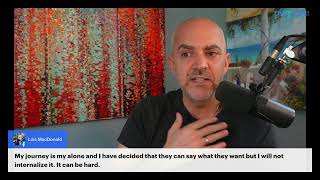
Jim Katsoulis argues that weight loss comes from cutting your highest-calorie habits, not drastic dieting. He uses the Pareto principle to identify the 20% of behaviors like nighttime snacking that drive most excess calories, then targets them one at a time with an "all-or-something" approach focused on consistency over perfection.
Chapters
Hey everyone, welcome to today's Program Yourself Thin podcast. Today we're talking about removing weight loss Confusion, because a lot of people that want to lose weight today are extremely confused on how to do it. One week you hear one thing, the next week you hear something else, the following week you hear the same thing you heard the first week, and it goes on and on and on and on and on, and you sit there unsure of what to do. And the technical term for this, I guess, is called analysis paralysis. Um, at least part of it is that you have so many different ideas of what to do, you're not sure where to start, and you're not sure which ones are real and which which ones aren't. And you sit there wondering. Meanwhile, your behaviors continue the same and your weight stays the same or keeps going up. And a lot of people can relate to this because this is intentionally— excuse me— this is intentionally part of what the diet industry is doing to you, is that they are confusing you. The food industry as well. All of these companies are confusing you because they understand that a confused mind is a stuck mind. So if you want to get control of your weight, you need clarity first, I believe. Not another complicated plan or something that you're not really sure of. You need to have clarity, something simple to kind of build on top of. And so we start with the most basic of facts of how you're going to manage your weight is that your weight right now is a reflection of your average calorie consumption. Right. That's how we want to think about it. So we want to move from what your weight is to your behavior because it is your habitual pattern-oriented behavior that is responsible for your weight. So reality is you're not really losing weight as much as it is training yourself to consume less calories. That's really what we're after. And once you start looking at it this way, you start thinking about it differently. Than most dieters. Excuse me. Because most dieters are going to go into it and say, okay, I'm going to restrict as many calories as possible because they want to lose weight as quick as they can. But what you're looking to do is to reduce your average calorie consumption in the most comfortable way possible. And when you begin to approach it this way, it starts to make a different kind of sense because there's the concept of cause and effect, and your weight is actually an effect. The cause is your habitual eating behaviors, right? This is why you can't gain or lose weight. You can consume more or less calories. And thinking about this way is clarifying to your mind because it's more literal. It's more specific to the actual process going on. A lot of times we get caught up in the weight piece of it. But the weight piece is the reflection, the aftereffect, the lagging indicator. And what it really— it's reflecting and what's causing it is your average eating patterns, what you consistently eat and the amounts. And so once we look at it this way, we can start to ground ourself not in some crazy diet where we dramatically change our eating for a little while but instead start to ask the question, how can I, in the most comfortable way possible, begin to reduce my average calorie consumption? So once we look at it that way, the next step we go to is we say, okay, what are my average eating patterns? What is my average calorie consumption? Now, we don't have to know every single thing you eat on average. We're not looking for that. That's too overwhelming. That's too much work. What we're looking for is to notice the highest calorie habits that you have. So everyone has a certain number of habits that are causing the most damage. It's the Pareto principle that 80% of your weight is dependent on 20% of your habits. The 20% of your habits may be snacking at night, overeating at dinner, grazing in the afternoon. Overeating at lunch. These are the things, and we don't want to look at each one of them as its own unique thing. We want to step back and recognize it's a habitual pattern. So instead of saying, oh my God, every night I have to deal with my nighttime eating, instead we zoom out and say, okay, I have a nighttime snacking habit and I want to get a handle on that. So instead of feeling like 7 days of the week we have to deal with, we break it down into one pattern that repeats over the week. And it may not seem like anything different, but to your subconscious mind, it's very different because it's a lot more literal. And again, literal explanations of things cause you to experience a sense of clarity, which is the opposite of confusion. And this is what you need because at this point, if you're a dieter, You are confused. You're unsure exactly what to do. Some things have worked for you, then they haven't worked for long. You're not sure why. You're just not sure what's going on where. Once we start to realize that your weight is a reflection of your average calorie consumption and your average calorie consumption can most effectively be minimized by fixating on your highest calorie habits. And honestly, you really only have to get a handle on the top 2 to make a dramatic impact on your weight, usually. So again, what are the habits, the calorie habits of consumption where the most calories are coming in? And you were looking for habits that show up daily or multiple times a week. That's where you're starting. And so again, it may be nighttime snacking, it may be afternoon grazing. And what happens is we put our energy into those things, not changing everything all at once because that's overwhelming. And we can't stick with. Instead, we start to strategically choose to focus on the habits that we know if we can get a handle on, we're going to make the biggest impact on our weight ultimately. So again, for me, nighttime snacking was my first habit I focused on. I was easily consuming 500 to 1,200 calories every night of the week. I'd wait an after, after hour after dinner, and then I'd start snacking. And I would do this every single night. So it took me months and months and months to get a handle on this habit. But then once I got a handle on it, 30 years have passed and I haven't snacked at night. You see what I'm saying? So this is what I'm talking about. Part of the reason you feel confused is you're trying to take everything on all at once, and that's confusing. On top of it, you're always looking for this instant answer. There is no instant answer. What all of your weight comes down to ultimately is your habitual behaviors, specifically your eating behaviors. And so if you start to strategically focus on the eating behaviors and habits where the most calories are coming into your body over a day or over a week, that is the one that's going to help you take the weight off of your body by removing the calories most effectively. So I hope this helps you out. Again, I can talk about this for, for days here about how to kind of stabilize yourself on a ground, on a firm ground where you feel like you know what you're doing and you're working the plan. That's how you should feel when you're approaching your weight. It shouldn't feel like, I hope this works this time. Let's do— let's hope that this is the time it actually magically works. If you're feeling that way, I can almost guarantee you it's not going to work. We need to stand on solid ground and understand that we're working on something specifically and we're working on in a way that's not overwhelming. Because when we don't feel overwhelmed, we feel grounded. As soon as we feel overwhelmed, we get caught up, we get swept up in the whole emotions and mood and behaviors and on-track, off-trackness of things. When we start to strategically approach our highest calorie habit consistently in a focused way that's not overwhelming, that's how you make dramatic improvements with it. You dial it down. And before you know, you look back and you say, wow, I've made a huge shift in my weight because I made a huge shift in my eating behaviors that were bringing the most calories in. So I hope you feel grounded by this approach. And if you want to go deeper into it, click the link in my bio and go get the free hypnosis session I made. It supports this way of thinking. It's called The New Thin Me, and it's literally designed to help you kickstart your weight loss by clarifying your goal weight. And what that's going to feel like, and connecting you to it so you feel this forward momentum, this pull towards your goal, instead of always trying to have to push yourself towards your goal. So again, all you need to do is click the link in my bio, um, and go check that out. Um, yeah, just got restricted on TikTok there. I was just reading that. Um, yeah, and if you're over in Facebook land, you can go and Click this link I'm about to put in here. Go check it out. And if you have any questions, feel free to ask them. Any weight loss questions you may have, um, let me take a swing at them. Maybe I can help you with it. I've been doing this for over 20 years professionally, and I usually am able to bring at least some, uh, different perspective to your weight loss struggles that can be really helpful. So Again, feel free to ask any questions that you'd like. I guess I can say anything I want over here on TikTok land since I've already been restricted. Uh, Desiree says, what about the hunger pains? So far I've lost, uh, 50 pounds, but I stalled. Um, yeah, I mean, if you're feeling intense pangs of hunger, I don't think that's a good strategy. Now you've lost 50 pounds, so something you're doing is working, at least temporarily so far. But yeah, to live a life where you're feeling pain and the pangs of hunger is usually not going to work. It's very difficult to fight against your body. It's very difficult to fight against your hunger long term because our brain is a pleasure-seeking mechanism. And the idea that we're going to live in this deprived, miserable, painful state usually is not a very successful one long term. So again, my suggestion, if you have hunger pains, my suggestion is to eat more, honestly. And a lot of times hunger pains are completely unnecessary, in my opinion. And I just think that they're foreshadowing of what's to come. I don't think experiencing hunger pains to manage your weight is a good long-term strategy. So I would work on satisfying my hunger rather than fighting against it. Managing it rather than fighting against it. Uh, is it Victoria and Andrea? Victoria says she has a sweet tooth. A lot of people say they have a sweet tooth, you know. Victoria says sometimes I'm not hungry but thinking of food. Yeah, of course, folks, we live in an environment where you're constantly being triggered to think about food. You are being triggered to think about food through advertising in some form or another tens of thousands of times every single day. Isn't that a crazy number? It's not a hard number to get to. I mean, when you walk in the supermarket, there's 1,000 right there. Every package you see is marketing specially designed to trigger your hunger and your craving in your consumption. So yeah, it's not unusual that people cannot feel hungry and still want to eat something. It's the difference between appetite and hunger. So your appetite is insatiable, limitless. Uh, your hunger isn't. Your hunger is has, you know, again, be starving, full, and anywhere in between. Appetite can just be forever. So that's not unusual. Um, Andrea says, how much weight did you lose? Um, I lost over 50 pounds over 30 years ago, and I've maintained it. Um, one little blip there where I put 25 pounds on, but yeah, I've maintained that weight, um, through all the things that I'm, I'm talking about with you all. Well, says, makes sense. Thank you. Savage Sobs says, I have no in-between. I am super strict or either binge the whole day, overeat all day. Any tips? Um, yeah, I mean, again, another super common thing. Dieting has programmed you all to be all or nothing with how you think about weight loss. So you usually oscillate between being super strict or super binging and not even thinking about it. And most dieters kind of exist in that flip-floppy state where it's all or nothing, and usually it's nothing. And so in Program Yourself, then we're all or something. That's the secret. So you can still be all right when everything's going great and you're motivated. You got the time, the energy, and the focus and motivation. Knock yourself out. Go all. But the big difference is that we never go to nothing. Never go to nothing. Always have one foot in the game. And that's the big difference. And you dieters would be well served to start practicing being all or something as opposed to all or nothing, because all or nothing is a trap. And it's very difficult to move forward with your weight when you're thinking that way. What's up, Jane? Jane says, I want to work on after-dinner snacking. Most days I'm okay, but last night was crazy. I couldn't stop grazing. Weight did not go up like I expected. It always happens when I am at home watching TV instead of dancing. Well, there you go, Jane. Yeah, that's the thing, right? We're putting the pieces together. You know, it's a puzzle. You have to think your weight is a puzzle, and, um, that's what you're doing, Jane. But yeah, notice that when you're dancing, you kind of flow through the day, and you know, the eating's a lot better naturally. Okay, so it doesn't mean you have to go dancing every day either, necessarily. But the dancing is doing something for you that is allowing you to, um, you know, go, go forward, um, in a way that's really working for you. And then the days you're not dancing, something's going on emotionally or physically that's causing you to, you know, struggle with the food. So that's great awareness, you know, and now look to learn from that, you know, and, and, um, implement that. Desiree says some people with eating disorders have to do all or nothing. Um, some people with eating disorders have to do all or nothing. I don't know what that means exactly. Um, because if you're talking about Bright Line sort of thinking, I, I love Susan so much. I think she's so smart and I'm a big fan of hers, but at the same time I don't agree a lot of the time. Now listen, there's people with addictions that, um, with food. So, but, but I find them to be like, like real addictions. I, and we, we are all addicted to food to some degree. Um, but, uh, I think most people, and this is, comes from direct experience. I've worked with a lot of people that have been in Bright Lines, have taken that, uh, addiction test she gives and scored a 10 out of 10. and, uh, think they're totally food addicts. And then I've worked with them and it turns out, no, they're not. They have control over food. I've worked with people— again, Bright Lines is just a version of, uh, FA, Food Anonymous. Um, so even FA people I've worked with, and it's the same thing, most of the time they're not addicted to food and they can have a healthy relationship with food. And so I like to push back on that concept of food addiction. Not that it can't exist. It can. But I think it's a lot more rare than we think. And I think most people have never even practiced or learned how to moderate their food. And so I think they take their inability to do it naturally as, uh, you know, uh, you know, verification that they can't do it and they're addicted. And I, I just haven't seen that most of the time. Can it happen? Yeah, sure. Of course. Right. Um, Desiree says, like alcoholics. What's that mean though? Like, again, what— the only way that I understand what that means, because you got to eat food, right? So everyone's addicted, everyone's a food addict. I'm not being a wise guy, I know what you mean. But yeah, like the Bright Lines concept and FA concept is that you can't touch flour, you can't touch sugar, um, because it's going to throw you in your addiction spiral. And, uh, I don't know. Again, I don't know. It's not, it's not alcohol. So again, if you feel like you're addicted to it and you can't touch it, then that's, that's the choice you make, you know, and program yourself. Then we always say there's no right or wrong, there's only what works for you. So if that's how you're succeeding and thriving, then, then that's the path you should take. But again, I'd be lying if I said that I haven't worked with a lot of people that have thought they were food addicts and it turned out they weren't. So there is that side of it too. Um, Savage says, I've been trying to be 80/20. Yesterday I had some sweet treats but also ate my healthy meals and preps. Hey, that's great, Savage. I think that's a great practice. Um, I think that's wonderful because I think that sets you up for long-term success. You know, I think dieters— one of the things that really traps dieters is that they, they think about weight in a very short-term time frame. So if you think about how much weight can I lose this week, you're going to have to be really strict because you're measuring in such a short time frame. So you're going to have to do extreme drastic things to lose weight this week. But if you start thinking about how can I manage my weight this year, now all of a sudden doesn't have to be so strict. And I think that Savage working on being 80/20, having some sweet treats and eating healthy food, That's very much like what we do in Program Yourself Thin, is that we're looking to manage our eating. And honestly, in Program Yourself Thin, we make the treats, we make the pleasure meals, the bullseye, the center of the entire program, the center of your entire meal plan, so that over a typical week, you know that you can have your favorite food. That's the, that's the main focus I want you to focus on. And then we build the healthy stuff around it. It's the opposite of dieting. And I— so in that sense, Savage, I am a big fan of that approach. And I think you're going to find that it serves you really well. Again, because you could go 100% in, no sweets, and you might lose more weight this week or this month, but then you're going to quit, put all that weight back on. And then 2 months from now, you might do it again, lose some weight, get sick of it, put it back on. Then 4 months later, you might do the same thing. So over the year, you might lose 5, 10 pounds over a month and then put it all back on because you can't maintain it. And you might do that 3, 4, 5 times. But what you're doing now is much less that approach. And while you may not lose as much weight this month, you'll lose some weight. But the big— the real value of that starts to show up the second month. You're still going on, you lose a little bit more. The third month, you're still going, you lose a little bit more. So we get rid of that lose-gain cycle and we start to just consistently move forward. That, that's a much better path in my opinion, um, than the diet one. Um, what's up, Sherry? Sherry said, hi Jim, I'm at home with a wicked spring cold and pink eye, all or something for sure. Giving myself some grace this week. I'm sorry to hear that, Sherry. That sucks. That's a That's a bad combo. Both of those things are bad on their own, right? Spring colds— I had one, it was miserable. Um, Jesus, I think I have it now, this voice. Um, but yeah, and then the pink eye, oh, that's a nightmare too. So yes, all or something. I was all or something with myself when I wasn't feeling well. Again, folks, I don't think it's waving the white flag to say you might eat a little worse when you're really sick or tired or not feeling well, and I don't think it's the end of the world. Again, dieting is built around this all-or-nothing idea, um, that I think is unrealistic. I'll be the first to say it. I hate dieting mentality so much because it's a bunch of bullshit, and it's not there for you to help you manage your weight. It's there to help you fail and be overweight. Dieting is not your friend, folks. So good for you, Sherry. Jane says, I know that when I spend a lot of money, which I did yesterday, it triggers me to overeat. Great job, Jane. Super. Okay. So, um, yeah, Desiree says that's awesome. Then you should be able to apply the same concepts to alcoholics and drug addicts. That's not what I said. I didn't say— I literally said food's not alcohol and drugs. So I would not apply— I would not apply, um, I don't think abstinence is a good model for food and drug or for, for alcohol and drugs if there's an issue. But food is not alcohol and drugs. It's not the same thing. It doesn't have the same physiological effect on you. Doesn't have the same psychological, neurological, biochemical effect on you. So they're not the same and they require different solutions, in my opinion. And the other side is— and people always say this, right? But they never follow it through to its logical conclusion. They'll say, well, the problem with food is you got to eat. Yeah, I know. So an abstinence model with something that you have to do is not a great strategy, in my opinion. So FA and Bright Lines try and sidestep that by saying, no, no, it's just the sugar in the flour. That's the only thing you're not going to eat. Okay, let me know how that goes. And again, some people thrive with it. Most won't because it's too overrestrictive and it lowers their quality of life. So food and alcohol and drugs are fundamentally different things in your body and in your mind. And so I think the solutions ought to be different. So I think abstinence, again, is great for alcohol and drugs potentially, but I don't find abstinence to be the first, uh, stop on the solution train that I would make, uh, not at all. So Paul says, I have a friend on GLP-1 that has lost a significant amount of weight. I'd considered but am uneasy with side effects that are known and unknown. I keep telling myself that slow and steady weight loss is better, um, and to do it by developing good habits. But dang, it's hard to watch all these GLP-1 advertisements. Oh, Paula, I'm glad you said that. And it's true. It's true. I mean, these are multi-kabillion-dollar companies that have all the money in the world to make the best ads possible. And on top of that, we are absolutely in the honeymoon phase of GLP-1s, meaning that we have all the positives of them and none of the negatives so far, because even the side effects we know about are not the big ones that are going to come down the pike. Um, and these are guaranteed side effects. The big one being that, yeah, you don't give a shit if you think about food or care about food when you're losing weight, but once you get to your goal weight and you live a year where you never look forward to food, I'm curious to see how people live with that. So that, that's a real thing to me. But I get it, I get it, Paula. Um, again, in Program Yourself Thin, you know, the way we deal with that is we have a holistic system we're using. And most importantly is that in Program Yourself Thin, we take the weight loss and we wrap it in personal development. Okay. So with Program Yourself Thin, it's not just about the weight going down. It's about really becoming the best version of you, living as the best version of you. And so, you know, that, that's another way that I, I don't think GLP-1s hold a candle to Program Yourself Thin because the results for Program Yourself Thin are so much more robust. It's bigger than just your weight going down, you know. So I hear you though, those commercials. God, I, I don't know. I, I am a big believer that, that pharmaceutical commercials should not be allowed. They are just next level. I don't even know what the hell they're doing. I don't know why they show the stuff they have. It's, it's deep, deep, uh, you know, psychological symbolism stuff they're doing that I don't have any clue what they're doing. But It makes me uneasy, and I don't know how it's legal to just pop this stuff on TV all day long, but there's the world we live in. So my suggestion to you, Paul, would be to avoid those commercials as much as humanly possible, um, because I hear you. I never watch commercials. I have commercial— I've had commercial-free, um, entertainment for the last 20 years, but occasionally if I watch sports, I start seeing them and I'm like, oh my God, I can't believe people watch this all day. Because the number one hypnotic tool, if you want to put it that way, is repetition. Repetition is one of the most hypnotic, uh, you know, powerfully hypnotic tools that exists. And so notice how many times you see these commercials, you know, notice how many GLP-1 ads you see a day. It's, you know, it's hard to fight that all the time. So just keep going, Paula, you're gonna end up in a better spot potentially. And Sherry says, oh, and my husband is replacing our kitchen sink and faucet, so the kitchen is torn up. I'm just putting all the curveballs out of the way at once. Yeah, but you recognize it, Sherry. That's the big difference. I mean, life's always thrown us curveballs, you know, that's not new. I think the secret with program yourself in is we start to become aware of those curveballs and how they affect us, because I think in dieting it, it trains you to develop this denial piece, right? Because in dieting, no matter what happens in your life, whether you get sick, um, financial calamity, you lose your job, someone you love gets really sick and you're worried for them, you have to take care of them. No matter what happens in your life, when you're a dieter, you should just eat the perfect anyways. There's never an excuse. That's— there's never a reason why your eating would get a little wobbly when you're a dieter, because when you're a dieter, the answer is always the same. You should always eat perfect. You should always follow the plan. And there's no, there's no reason why you wouldn't. And I think that's such bullshit because it really, it's like trying to train us to deny our humanity. Of course you're gonna have ups and downs, folks. How could you live a life where you don't have ups and downs? And of course those ups and downs are going to impact your reading. I'm not saying that you have no control over your reading. I'm not saying that, but I am saying that your life and what happens in it is going to have an impact on your reading. That's not the end of the world. You can still control your weight. But I think dieting tries to make it seem, um, that, you know, you just have to be perfect no matter what. And there's just, I don't know what dieting, again, dieting is not your friend. Dieting is literally put there by the food companies. So it's not there to help you. Um, but they filled our heads with rocks. We've got no good strategies and we've got wrong strategies on top of it. It's just brutal. Um, yeah, Desiree says, I know people in your life try and sabotage your road to healthy eating. Well, that is true, that is true. But I'll say one thing, Desiree, you know, and I know this is, this is one of the hardest things of weight loss, is that you're putting all this energy into trying to make better choices and live healthier and make the right stuff. So you put all this effort in, and then on top of it, people around you aren't really giving you the support that you want, or they're actually literally actively trying to sabotage you. Um, when that happens, what I would suggest is that you don't internalize that as them wanting you to fail so much as it is that they're uncomfortable and awkward in the new reality, you know, and they don't know how to handle that. They don't know how to handle this new version of you. It makes them feel uncomfortable about their own situation. And then they kind of, you know, may again not support you or sabotage you actively. And so that can be a reality, but how you interpret where it's coming from can make a big difference. Because if you think they're actively intentionally trying to sabotage you, you get really mad and upset about it. But if you start to realize that a lot of times it's just them kind of responding to the new situation, it can help you have a little bit more understanding, um, all in service of getting to the point where regardless of what people in my life do, I'm going to walk this path. So again, the, the, the goal is the same, that regardless of whether people are sabotaging or not supporting us, because they want us to fail, or whether they just are getting in their own way and don't even realize they're doing it. Either way, we want to get to the point where regardless of what they're doing, we're walking our path, um, head held high, moving in the direction we want to go in. All right. But that's a real thing. And if that is your situation, by the way, you know, I always say to people, um, you know, in Program Yourself Thin, it is It's about becoming aware really of the strengths and the challenges in your life. We all have strengths and we all have challenges and weaknesses, and it's about kind of recognizing what those are and strategically using them most effectively moving forward. So yes, if you have people actively working against you, you've got to acknowledge and identify that, and then you've got to come up with a strategy to deal with it. And you can do it. I've seen a lot of people make great strategies, but you've got to see it that way first. Okay. Just getting mad about it, not going to help you. It's going to drive you right to overeating. Ignoring it, drive you right to overeating. So again, we got to recognize it and then again, kind of break it down and come up with a strategy that works because it's always different too. I can't just give you a blanket statement, say, oh, when someone sabotages, you just do this. It doesn't work that way because sabotage comes in a million different forms from a different million different angles. So we need to recognize, oh, my, um, my partner— oh my God, I noticed they started buying more candy lately. Okay, well, let's figure that out, you know what I mean? Let's talk about the specifics of that and how you want to deal with it. And so again, get it— get specific and then strategize the best way possible to move forward. Um, what's up, Marta? Marta says, a lot of mental work, um, when that's in order, food is not a problem. Wait, a lot of mental work when that's in order? Food is not a problem. Oh, I got it. Yeah, yeah, yeah, yeah. A lot of mental work. Yeah. When, um, when your mindset's in place, the food's not so much a problem. That's so true, folks. And all of you know this because everyone in their life has had moments when they've just been so congruent and locked in. What was going on there, right? Maybe you had a wedding coming up. Maybe you had something coming up where you knew you were gonna get your picture taken. Maybe you're going on a vacation. You're going on the beach. But notice times in your life when you were locked in, when it was relatively easy for you to make the right choices, because a lot of times there's a lot of wisdom there, a lot you can learn about. All right. Um, what's up, Sherry? Sherry says, it doesn't help when the people around you do not support your decision and they nag you over and when you're trying to work on your reading. Um, agreed. I agree, Sherry. I went through that myself. I mean, I'm very lucky I had my wife, who was my girlfriend at the time. I'm thankful for that. But there was not any other support for changing my eating. And so I get that part of it. And it was hard and I used to get frustrated and annoyed and all the rest of it, but I got through it and I worked through it. So again, I want you to recognize things can be hard, things can be unfair, things cannot be right. Okay? All these things can be true and you can get through it. But what's going to help you get through it faster is not to just steep yourself in the anger and the frustration and the unfairness of it. But to recognize what's going on and then ask the magical question, how can I best handle this? What's the best way for me to handle these people who try and sabotage me? What would be the best response to that? And the more you start thinking from that place, the more solutions you start discovering and developing. And so now I, I have the same people around me. And I wouldn't say they're, they're supportive. I would say it doesn't matter at all to me anymore. At all. Genuinely. I don't give a shit. So I don't care. They can go, I can go over there at house for desserts. They could buy a bunch of fried for dinner. They could come out with all these crazy desserts. If I want to eat them, I'll eat them. If I don't want to eat them, I won't eat them. So again, you, you have more power in you than you realize, folks. If you focus on solutions, it's amazing what solutions you can come up with. The problem is, and I just saw Desiree write that, rumination. Yes, we tend to ruminate on problems though. We tend to ruminate on things that make us feel powerless and weak and out of control. And it starts to become our whole reality because not only are we experiencing it sometimes, but then even when those people aren't around, we're constantly thinking about them in our head, triggering that same exact emotion and feeling that we feel when they're around sabotaging us. And that's how you steep yourself in problems. And, you know, you can imagine where that brings you. Um, Desiree says, what about emotional eating? How to deal with it? All right. Um, we don't really deal with emotional eating because emotional eating is a symptom of a deeper problem. Let me give you an example. Let's just say you tell me, well, I'm a stress eater. Okay. So the average dieter is going to say, okay, the answer to that is stop stress eating, stop emotional eating. But I don't think the stress eating is the core problem. The stress is— that makes sense, right? The emotional eating is a symptom of the deeper problem, which is that whatever emotion it is for you is so overwhelming. And the bigger issue is that you don't know how to deal with it genuinely. You don't know how to deal with it without food. And so what's happening subconsciously, you're using the best strategy you have to deal with that overwhelming emotion. And for most people, it's food. And it's food because we live in a culture that has trained us to use food as our main emotional management strategy. We're feeling down, go to food. Celebrating, go to food. Food's always the answer in this culture, but it's not dealing with the core issue. And you know this because, oh, I'm a stress eater. Okay, stop stress eating. Great. Now I'm a thin stress person. Is that what you wanted? You may think it's better, but it's not really the goal. I'm a depressed— when I get depressed, I eat. Oh, just stop eating when you're depressed. Okay, great. Now I'm a thin depressed person. Is that what you wanted? No, it's not. You want to deal with that deeper emotional issue. And what the food's doing in a positive sense is that you start to feel that sadness and you distract yourself with the food. And the there's also a physiological boost. Um, food is literally a pain reliever. So if you're feeling, um, sad and all of a sudden you start eating, yeah, you're going to feel better for a few minutes while the food's there. But the second you finish eating the food, you go right back to feeling sad, if not more sad, because now I did it again on top of the sad I was feeling. Now I feel even sadder because I let myself down again. So again, with emotional eating, it's not the emotional eating we have to stop. It's— we— it's an opportunity to go deeper and say, Okay, the last time I emotionally ate, what emotion triggered it? Because that's what you got to know. You got to ask, okay, what's the emotion that triggered the emotional eating? Oh, it was anger. Okay. So the answer is not, what are you going to do? Be a thin, angry person? Is that the goal? It can't be. So the better question is say, oh, when I get angry, I tend to start overeating. When I get angry, how do I want to feel? What are some other ways I could handle this that don't involve food? What are some other things I could do? Now that's a question most people don't ask because they're only fixated on the eating piece of it. I just got to stop emotional eating. No, the emotional eating is a symptom of something deeper, typically. So that's how I would approach it. Lois says, my journey is mine alone, and I have decided that they can say what they want, but I will not internalize it. It can't be heard— oh, it can't be hard. It can be hard. Yes, it's absolutely hard. People in your life Um, learning to navigate this, losing weight with people in your life is a challenge. I mean, I'll give you a classic example, your partner. Okay. If all of a sudden you start living healthier, losing weight, that affects them in a lot of ways. And I think, I know it feels like you're doing so much work, they should just be there to support you. But unfortunately, you just gotta, you gotta take that on too. Why would it be affecting them? Because now all of a sudden the foods you typically just ate and built rapport over and maintain rapport with. Now you're getting rid of those. So maybe you used to go out and get ice cream and now you're not going to do that. And that rocks the boat. Maybe you start to lose weight. Now they get insecure. That can rock the boat. So I'm telling you, you get further by being sensitive to what they may be feeling. And if all of a sudden you're like, I don't want to get ice cream anymore because I'm looking to manage my weight, but why don't we go for a walk? I'd still like to spend time with you and talk to you. I don't want to go, um, you know, to the taco stand and get tacos because I'm looking to make healthier choices most of the time. But why don't we go to the park? Why don't we play a game? Why don't we watch a show? Why don't we do something? You see? So it's like, if we're angry, we're not going to do that. If we're angry, we just get mad, we get upset with them, and it leads us right back to the food. But if we can ground ourselves in calm peacefulness we can understand why they might be a little upset, and it's okay. And then we can say, okay, how can I make you feel better? I'm doing this for me. I really want to make some changes in my body, my weight, my health, all this. But I know this can be a little disorienting for you, so I want— I'm here for you as well. I want you to feel comfortable while I do this, right? That's gonna be a much better approach typically moving forward. I know you can't have that conversation with everyone, but when you can have it, it can be really, really helpful. So All right, I want to get out of here though. Again, if you're not in my world, please click the link in my bio or go to programyourselfthen.com and go get that free hypnosis session that I give you. Um, if you're over in Facebook, YouTube land, I just put a link in the comments. Um, go get that session. It's completely free. Uh, and not only do I give you a hypnosis session, I give you a bunch of other stuff too to help you, uh, get control of your weight. So go check that out. Um, if you like this, I'm here every Monday through Friday, usually around noon Eastern, uh, to answer your questions, talk to you about your weight. Hopefully help you move forward in a more effective way. And if you can't make the lives, it's also a podcast. Okay, so you can search any podcast platform, search Program Yourself Then, and you will find it. All right, so everyone have a super duper day and we'll talk soon. Bye.
More from Jim



Weight Loss Visualization: Wake Up in Your Dream Size #programyourselfthin #weightlosshypnosis



What If You Pretended to Be Thin for One Hour? #programyourselfthin #weightlosshypnosis




