Program Yourself Thin Live 5-7-26
Jim Katsoulis redefines thin as the weight where you feel healthy and happy, not a BMI number. He argues chronic stress drives overeating and that reprogramming your subconscious through daily habits matters more than willpower or restrictive diets.
Chapters
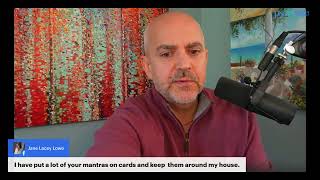
Everyone, welcome to today's Program Yourself Thin podcast. Today we're talking about the definition of thin. I had one of my clients write in and said that the word thin was kind of triggering, right? They'd had some experience in the past where thin was associated with negative stuff, someone who wasn't doing well, and they want to make sure they didn't get too thin, too frail, too weak. And I think this is a legit question and it's something that I've wrestled with for over 30 years. In defining and using the word thin. It's sometimes I'm like, I don't like that word. And I've thought so much about other words to replace it, and I've never really found one that really did it for me. And so what I've gone about now instead is reclaiming the word thin in the image that I see it in so that I do not accept— or I should not say that my version of thin is not thin and weak because someone's sick. It's not thin and weak because someone is undernourished and not eating enough. Or is over-restricting, making themselves miserable. That is absolutely not what I mean. What I mean is thin, healthy, and happy. And really, I use thin as a code word or kind of a catch-all term for your goal weight. So to me, thin is not a number you figure out by looking at a BMI chart. It's a number you figure out by saying, am I at my goal weight or not? That's it. And so if you're at your goal weight, you can consider yourself thin in this world. If you're not, then you maybe don't, right? Thin-ish or getting there or whatever. That's how I describe it. So thin to me is not a, a spot on a BMI chart. It's not telling you what you should weigh. It's just saying, are you at your goal weight or not? That's kind of how I think about it. Now, to really understand this, we also have to understand, well, what's my goal weight? You said it wasn't a number on a BMI chart. Well, I don't think that a BMI chart number is how you should be solely deciding your goal weight either. Because I think your goal weight should be the weight that gives you the best quality of life. And a BMI chart number cannot tell you that. It can tell you a range where you statistically will have the highest chance of being healthy, but it doesn't tell you what weight will give you the best quality of life. Only you can decide that. And so once you're in kind of the healthiest range on the BMI chart, which can be anywhere typically from slightly underweight all the way to pretty well into the overweight category, typically, statistically, you're going to be the same relative level of health. And so anywhere within that range, now it's up to you what weight gives you the best quality of life. And in order to truly figure that out, we can't just look at the number and the size and the clothes size you're going to wear. We've got to look at the other side of that equation as well, which is how does it feel to live that way? How does it feel to eat that way in your life? Because if you're consuming carrots and water and miserable, but your goal weight's where you thought you, you were going to be the happiest, no, that's not, that's not the best quality of life. If you're constantly hungry, if you're constantly thinking about food, if you're feeling miserable, if you're stressed out, that cannot be the best quality of life for you. That is such an impoverished definition. So what I'm talking about is being at the weight where you feel good physically, you like how you look, you like how the clothes look on you, but most importantly, you love how you're living. You like how you're eating. You feel balanced. You enjoy food, but you enjoy it in a way that feels right and balanced and good. Your body feels light and strong and energized. You feel happy about yourself. You feel healthier. You feel better about who you are and where you're going in your life. This is what I'm talking about. So this to me is what being thin is, because being thin is simply being at your goal weight. That's it. And what your goal weight is, is the journey you get to go on. You get to decide because getting to that goal weight on the BMI chart is clearly not enough motivation because 85 to 95% of dieters that get to their goal weight put the weight back on. So if that weight was filling them up with the highest quality of life, if they were feeling absolutely amazing at that weight, Why would they ever put the weight back on? Because that's not what I've seen. What I've seen is when someone really embodies their goal weight self and they become their goal weight self in a way that really resonates with who they are as a person, they stay there for the rest of their lives because it feels so good. So I hope this means something to you, and I hope you give this some thought, because I think a lot of people out there are chasing a number that they haven't really truly internalized. Or they're chasing a number that they've been at before, and when they were there, they were miserable. So what's the point of that? So give this some thought, and if you want to go deeper into this way of thinking, click the link in my bio or go to programyourselfthin.com. Go get the free hypnosis session I made for you. It is called The New Thin Me. It is a kickstart session, so it's specifically designed to help you gain clarity of what your goal weight is and how it's going to feel. So it's a nice way to kind of tap into how you want to feel so you can kind of feel pulled towards your goal rather than always trying to push yourself towards it. And again, you can go get that at programyourselfthen.com or click the link in my bio. If you're on TikTok, you can click my picture there. If you're on Facebook or YouTube, you can click the link I just put in the comments and go check that out. It takes about 2 seconds to go and get that session and you'll have it forever. And yeah, if you have any questions, feel free to ask them. Any questions are welcome, and I hope you're all having a nice day. God, it's beautiful where I'm at, I'll tell you that. Sunny and nice. Favorite said, I thought you were AI when I first saw your videos. Oh my goodness, imagine that. No, the real deal, real deal, homegrown, born and raised. That's funny. Nope, nope, real, real. So Renee says, I weighed 199 and now 203. It's been 7 days since I weighed and I've been staying on track. Um, great job. I mean, 4 pounds, again, we can't let 4 pounds freak us out, you know. 7 days since you weighed though. I don't like playing that game though. Not a big fan of that game, the waiting a week so you can be really fired, blown away by the numbers, the weight you lost. You know, I just think that's such a dangerous game. I say this all the time. I'm a big believer— now, use the scale or don't, that's whatever you choose to do, fine, walk that path. But if you are going to use the scale at all, uh, I don't understand the mindset of weighing yourself once a week. I think it sets you up for failure. And I know you all say, oh my God, if I weigh myself every day, I'd go insane. Why would you say that? You know, maybe you've tried it in the past, but you probably did it with this dieter mindset which gets you like just obsessed with the scale, the numbers, and you're just caught in your emotions. But if you start to use the scale like a tool— I was saying this yesterday, you know, it's like being someone who wants to manage their weight and being scared of the scale is like a chef who's scared of a knife. I, I find it— it's the tool of your trade. It's one of the main tools of your trade. If you want to lose weight, how, how do you want to do it without measuring? Again, people do it, so I'm not saying it's impossible. Most people I've seen, the vast majority, are using the scale. Um, I mean, you got to manage your mindset and your moods as well while you do that. But, but anyways, yeah, great job, Ine. You're keeping on track, and that's the key thing. A little bit of weight fluctuation, um, we don't want that to be, um, the end of the world, you know. There's going to be lots of fluctuations. That's what you learn if you weigh yourself every day. You very quickly realize, uh, how your weight fluctuates day to day, and I think it's very eye-opening and very important because I think if you're weighing yourself once a week, you have no idea how weight works on your body, right? I mean, yes, no. Do you think you know how weight works because you weigh yourself once a week? You're really missing a lot of information, in my opinion. And I think it's really healthy and helpful to watch your weight, kind of how it fluctuates. And I know people freak out about it, but to me it was very calming because I started to not freak out when it went up a little bit because I started to notice a pattern. It'll go up a pound, back down to my normal weight. It'll go down a pound and then back up. Go up 2 pounds, stay there for a day or two, and then go back down to zero. Then I lose a pound, then lose 2 pounds. Now I'm staying down here, and I keep going. I don't know, like, how do you all think your weight comes off? What do you think, you just start your diet and, oh, it just comes off like a straight line and never goes up, never stabilizes, just is down, down, down, down, down, down, down? You know, that's what most dieters do, and it sets them up for failure because it's not accurate. It's not accurate. So if you're— but what's up, Amy? Amy says, hi Jim, thanks for being here for us. You're welcome, you're welcome. Yes, this is my mission in life. So my goal here is to be here for you all, and, uh, I'm going to be here in a big way for you. I got a big presentation coming. I cannot wait for you all to have it. Again, if you want to make sure that you don't miss it, go click the link in my bio and get on my email list because I'll be sending it out, I'm hoping, next week. Uh, but, but very, very soon here. It's, it's so good. So if you're interested in any of this stuff, it's a free presentation, free training. Uh, I think it's gonna knock your socks off. And so make sure you sign up for that. But I'm real excited because it's definitely a way for me to kind of help people some more. Uh, Manny says, I am 5'5", weight 145. Good. Um, I don't know, sure. Uh, it's not for me to decide. You know, folks, listen, your weight is one of the most, you know, purest freedoms you have in life. You get to decide what your weight's going to be. It's, it's one of the the most profound kind of decisions we get to make in life. So it's not for me to say if your weight's good or not. It's up for you to say if it's good or not. I can't tell you that, you know, no one can. Not even a BMI chart. Again, what's the BMI chart, folks? If you think about it again, it's a general statistical analysis for, you know, a range to live in that may be healthier. But if you really look at the numbers, that healthy range is a lot bigger than the normal category, just so you know. There's a lot of really interesting information. Again, as you start to move into the obese category, now you're going to start to— statistically, there's going to be a lot more health issues. Okay. But when we're talking about the overweight category, through most of that, health numbers maintain and some situations are better than the normal weight range. So again, that normal range, you can really double it And now you pick whatever weight you want in there. There is no number that you can just point to a chart, that's the weight I should be. I understand that because I think it's important. But yeah, if you have any questions, feel free to ask them. I see some questions, TikTok. I'm getting to them because I— it's hard. Questions on TikTok are hard because it just shows you like every single thing that's happened. It's hard to pinpoint the question sometimes. I'm just kidding. All right. Favoured said, I just realized I tend to overeat when I'm stressed. Like I can't stop thinking of food, but I'm learning to pause now. Yeah, that's great, Favoured. Again, in Program Yourself Thin, you learn how to use your superpower. Folks, your superpower is your ability to feel calm. You've never learned how to utilize your calm effectively, especially with your weight. And so yes, you have been programmed to be super stressed because when you're stressed, you tend to eat more and you eat more because you're hungrier and you have less willpower available to you when you're stressed. Just so you know. So it's very, very— it's, it's logical. It's, uh, intentional. It makes a lot of sense that stress leads to overeating. So again, I want to go right to the core. And I don't want to just change your eating. I want to go to the core of the problem, which is that most of you are super stressed. You're chronically stressed. When you get chronically— when you're chronically stressed, you tend to eat more. So how do we deal with that? More willpower to stop yourself when you want to eat all the time? Stop yourself from eating when you still want to eat and you don't feel full? That seems silly to me. And that's the diet approach. So I would rather go to the source of the problem. Which is that you all are chronically stressed. You don't think that's a core part of the problem? You say, well, I got a busy life. How am I not going to be stressed? Uh, you can do it. You can learn to manage your stress by becoming more calm. You can absolutely develop your calm. You can literally turn it into a super weapon for yourself to use. And guess what? It's not just going to help your weight. It's going to help your entire quality of life. Every area of your life improves, the more calm you feel and the less stress you experience because you're a different version of yourself. I mean, everything changes when you're calm. Your biochemistry changes, your hunger tends to change, your ability to influence your food choices changes, your thinking changes, you're opti— optim— um, optimistically— optim— optimist All right, I don't know what the word would be, but your ability to be more optimistic goes up. So yeah, being calm is really the superpower I think most people overlook. I think it's your most powerful tool fundamentally, because I could take you right now without teaching you anything else about how to program your mind, if I just could increase your sense of calm by 25%, let's say, If I just made you 25% more calm, didn't teach you anything else, don't you think you would make better food choices over the next month? Historically, have you not made better food choices when you're more calm and relaxed? I mean, this isn't rocket science, folks, but you're just never told about this because the diets— by the way, just to show you the diets are not on your side. The diets just, just condition you and train you to be overweight and out of control. Um, but you know that because every diet you think of or try to do creates more stress in you. What do you associate to weight loss? Do you associate stress to weight loss, or do you associate calm, peaceful, grounded, relaxed? Which one do you associate? And I think the answer is obvious. It's one more example of why dieting is there to sabotage you. What's up, Cindy? Cindy says, I love weigh every day just to be aware of how food, healthy food, helps me feel lean. That's good accountability. Thank you so much, Jim. You're such an encouragement. Thank you, Cindy. I appreciate that. Yes, a lot of my clients weigh every day. Now, you don't have to. Again, the golden rule of Program Yourself Thin is there's no right or wrong. There's only what works for you. So I also have clients that succeed without weighing at all. Okay. So ultimately, you got to figure out what works for you, but you got to figure out what works for you. So if you're weighing once a week and you've been doing so for the last 10 years and you're overweight, Don't tell me what works for you. Do you understand? I don't know. Don't be a jerk here, but, you know, I'm going to help you wake up. If you've been weighing yourself once a week for the last 20 years and you're going to get on here and tell me, no, Jim, what works best for me is weighing myself once a week. What? Yeah. What? What are we doing? You know, so if what you're doing is not working, don't, don't tell me it's working. Again, you're going to notice a pattern that people get on here, usually the most successful ones, at least when they're losing weight. I don't even weigh myself very often anymore because I'm at my goal weight, but when I was losing weight, I weighed myself every day. I was committed and focused. I was obsessed on my weight. I wanted to get it to where I wanted to go. I wanted to feel as good and as happy and as healthy as I could possibly feel. So it was a focus of mine, and the scale is just one piece of that. You know, but nice job, Cindy. I appreciate you sharing that. Jackie says, hi, so I've been weighing every day like you said for like 10 weeks now, and the number has been the same, um, plus or minus 1 to 2 pounds. How do I get it to go down and not just stay in what seems like maintenance? Trying to lose 5 to 10 pounds, but the number on the scale only shifts my few ounces or a pound. Um, Jackie, the answer is always the same. The way that we move our weight is we consume more or less calories. It's always the same answer. You don't lose weight or gain weight, folks. You eat more calories or consume less calories. Does that make sense? Stop focusing on what your weight's doing and start focusing on what you're doing behaviorally. And the good thing you got now, Jackie, is that your status quo, your way of eating and living that you do on autopilot gives you the weight that you're at. So the good news is you're starting with a really solid maintenance plan. So that's super. You've got a lot of good information now. Now what you want to do is look at your typical eating patterns of a week, say, and look for the place that would be the easiest place for you to cut some calories from. So again, remember, in business terms, your weight is the lagging indicator. Your behaviors are the leading indicator. So how you eat is going to impact what your weight shows up at. So don't ask me how to lose weight. Ask me how to consume less calories comfortably. So that makes sense. It's very clarifying to your subconscious mind to think that way, because when we talk about changing our weight, it's a level removed. Let me put it in a slightly different way. There's cause and effect. Right? So the cause creates the effect. Your eating and behavior is the cause. Your weight is the effect. Your weight is a reflection of your eating. So you can notice where your weight's at. That's fine. But don't ask how to lose weight. You already know the answer to that. I hope. Ask the question, how can I consume less calories comfortably? That's the real question to ask, Jackie. And again, you're starting from a great place. Great job weighing yourself for 10 weeks. You have a much better idea now of how your weight moves, right? Because again, even though it stayed relatively the same number, it's moved a bit within there. And what you've really validated because you've done this for 10 weeks is how you typically eat gives you this weight. So now look at how you typically eat and look for the behavior, the habit that shows up daily or multiple times a week where you're consuming the highest calorie contents, and then start to cut 10, 15, 20% of the calories out of that and see what happens to your weight over the next 4 weeks. That's how we approach this strategically, logically. What's up, RLT? RLT says it could be water weight, muscles, fat. So it fluctuates. Sometimes you look better in clothes, but your weight didn't change much. Yeah, absolutely. Um, again, the, the the scale and the weight as well is just one measurement, you know, and there's— it's well known at this point that you could look different and your weight could be the same. You could build muscle and lose fat and, you know, you would look visually different, which is what most people are looking for. And the weight, the scale on the— the weight on the scale may not reflect that. So it's not always a bad idea to take some measurements of your body. There's other ways to measure your results as well. The most important way to measure results though is really like how you're feeling. That's the best way, but a lot of people don't want to hear that. Um, RLT says, you always motivate me. You are so supportive and make things sound approachable with all your smiles. Make me feel relaxed and less stressed about struggles to lose weight. Thanks so much, Jim. You're welcome, RLT. I appreciate you saying that. And that's very intentional on my part. I absolutely, um, part of my coaching, I guess, that I've developed over the years is to alleviate the pressure as much as possible. People put so much pressure on themselves to lose weight, and it becomes this very unpleasant, tiring, stressful, miserable process. And I have found that the best way to manage your weight is to start to develop a warm, encouraging, supportive voice inside your mind guiding you along the path. And I attempt to be that voice initially for you. Until you create your own. But I want you to enjoy this process. I want you to approach your weight as a challenge and something that you're taking on and you're going to learn and you're going to figure out and you're going to master and you're going to give yourself the time, the space to do it right. And I think when you approach it that way, it just feels different, you know. And again, the results are just superior to that with that approach. But yeah, if you have any questions, feel free to ask them. I am live here, TikTok. I am not a— I'm not an AI. I am live taking your questions right now on May 7th at almost 1 o'clock Eastern time. So, hello, I'm from the Philippines. I've always been listening to your tips, but at some point— oh, I don't know what they end up saying, but oh, welcome from the Philippines. Yes, it's awesome. Oh, but sometimes I'm tempted every, every time there's a sweet food. Yeah. Okay, great. Yeah. You can listen to what I'm saying and still be tempted and give in to sweet foods. Right. Both things can be true. The process, though, I'm talking about is starting to say, okay, which sweets foods specifically? Right. We don't want to keep it general, like, oh, I listen to you, but then I eat sweet foods. What does that mean? You don't just eat sweet foods. You eat specific sweet foods at specific times in specific situations. So I'd much rather hear, yeah, you know, I listen to you all the time and it's really inspiring, but then at night, 9 o'clock, I start feeling a pull towards the refrigerator and I can't stop myself from eating, uh, the pudding in there. Now we're getting somewhere, right? Because now we're getting very specific. And the more specific we get with the problem and understanding it and being able to define it, the more specific and definable and strategic and effective our solution can become. But we've got to get specific. All right. So get specific about what sweet foods exactly are you having challenges with that will help me give you a better strategy. I saw some questions. I'm trying not to skip any of those questions, so bear with me as I scroll up. All right, here we go. I think I caught up. And they says, thank you, I'll try weighing every day and continue my lifestyle change. Yeah, again, let's give it a shot. And when you weigh yourself, relax, okay? We're not just weighing ourselves to get ourselves all upset. And that may be how it is initially, but if you get on the scale, say, okay, all right. See what the scale says. I'm going to face the truth. Let me see where we're at. I'm going to get that number to go down over time. So I don't care what the number says today. I don't care what it says tomorrow. I care what it says next year. And weighing every day, calmly, relaxed, recommitting to my focus on making my weight exactly what I want it to be so I have the best quality of life. That's what I want to do, right? That's the energy we want to step on the scale with. And it takes a little bit. You have to develop it, right? Because right out the box, that's not how you're thinking or responding. But so what? You could stay— you could change it, you know. Just because you respond a certain way today doesn't mean you can't respond a different way tomorrow, you know. So yeah, give that a shot. Yeah, favorite says facts. Says today was literally my first day exercising the superpower, and it's because I literally had to— had to— something. The superpower, yes, is calm, right? Again, folks, all of you, your superpower is calm. You're not using it. You're certainly not using it with weight loss, are you? Do you feel calm anytime you've ever attempted losing weight? Have you ever felt calm when you've attempted losing weight? They, they nothing to do with each other. Calm— I got these little magnet balls, right? So these parts pull together, this part pushes. I can't get them to stay. This is like diets and calm. They don't want nothing to do with each other. Diets and calm do not go together. They repel each other like these poles, these magnetic poles repelling, repelling, repelling. This is dieting and calm right there in a nutshell. Focus says, name my problem, I'm feeling stressed right now and I just had to calm down and before I knew it— yeah, that's another thing too, you start to get, um, yeah, yeah, there you go. So Favorite says, yeah, once I calm down, everything I was craving I didn't even want. In fact, I wanted to just drink something warm and light. Yes, that's what happens, folks. You're all in a never-ending eating trance. You know, it's not your fault. You didn't put it there. You have been conditioned by the food industry. The hell? You have been conditioned by the food industry being a never-ending eating trance, and part of it is your physical tension levels. So yeah, feeling calm is a superpower when it comes to weight loss, and none of you've ever used it. Unfortunately, you're using your most powerful ability— you're, you're leaving your most powerful ability at the door. You're never using it. Isn't that weird? Isn't it weird to think you've been trying to lose weight for decades and you've never really learned about your most powerful superpower and you've never used it to lose weight? Yeah, yep, yep. But that's the good news because again, you haven't learned ever how to manage your weight effectively, folks. So, you know, you can't really blame yourself because I know a lot of you will say things like I know what to do, I just need to get myself to do it, Jim. And I say to you, no, you don't know what to do. We do what we know how to do. You know how to drive a car, you know how to brush your teeth, you know how to read and write, you do those things. If you're overweight, you know you don't know how to be thin and healthy. No, you don't. You have a sense of what you're supposed to do, but you don't know how to do it. No. Uh, what's up, Vicki? Vicki says, monitoring, managing my weight and using the scale as a tool daily keeps me connected to consumption changes so I can make adjustments within my 5-pound goal range and live at my goal weight. Well, Vicki, I agree 1,000%. That's exactly what I do. Exactly. My weight fluctuates. It's fluctuating right now, but I'm catching it at 5 pounds rather than 25 pounds. Folks, how many times have you started to put a little bit of weight on and then you just— I can't even pay attention— and you don't step on the scale again until you're 25 pounds up? That you've got— that's why weighing yourself once a week doesn't work, right there in a nutshell. You weigh yourself every day. It's a lot harder to get 25 pounds up. It just is. So what do you think about that? I always— people want to argue with me about weighing every day and how freaked out they get weighing themselves every day and the idea that— okay, fine. Well, I, I hear that, but how do you respond? What are you going to do? Let's just assume you even get to your goal weight. You think weighing yourself once a week is a great strategy then? Has that worked out for you in the past ever, even once? And I know it hasn't. So what are you arguing with me about? What are you thinking that weighing yourself once a week is going to do? How can that be better? Especially when you first get to your goal weight. Holy shit. Cause you know what happens. It's easy to put off not weighing for a week. And then once you start getting a little off track, you know, easiest to not weigh yourself again until you're 20 pounds up. And then how do you feel? Devastated. Yeah, Sue says, I do great in the morning walking and good choices for lunch. After lunch, motivation, good choices, and everything goes wrong. Um, yeah, classic case, classic case of a dieter. And my first question to you, Sue, would be, I do great in the morning, what is great in the morning? And I'm already hearing good choices for lunch, after lunch motivation, good choices, and everything goes wrong. Uh, so I'm getting the feeling I'm getting the feeling we're intermittent fasting and that our goal is to not eat until lunch. Maybe I'm right, maybe I'm wrong. But intermittent fasting for a lot of people is really a recipe for binge eating because you get yourself so hungry during that not eating window that by the time lunch starts, you can make one good choice and then you're so hungry you can't stop eating the rest of the day. Can any of you intermittent fasters relate to that? You know, you ain't alone. And so what may be a better plan, Sue, ironically, is to eat breakfast. Now I'm just making this up. I don't know what your, your plan is. I'm just, I'm kind of assuming I'm making assumptions here because I've been doing this for a long time and I start to notice patterns and I could be right. I could be wrong. But when I hear, and I hear this all the time, the most common thing I hear is people telling me, oh, I do great for breakfast and lunch is amazing. And then everything falls apart in the afternoon. And I say, well, what's great for breakfast and lunch? And more often than not, I'll hear, I don't need anything. Well, that's not great. That's setting you up for failure in the second act. Okay. So that's not great. And a lot of times where the problem shows up is not where the problem was created. So if we don't eat breakfast, we don't eat lunch, and the afternoon we end up starving and weak. Yeah, that's not great. That's setting us up to overeat. That's almost exactly a recipe to overeat in the afternoon is to not eat anything all day. So again, I would get kind of strategic about it and play around with different things. So again, I don't know if this is what you're doing, Sue, but it's a common pattern I've seen a lot of people when they're really trying to follow the intermittent fasting protocols, you know. And so I've seen more often than not, people have struggled with that. The answer is to start eating breakfast, a really super duper healthy nourishing breakfast. And for a lot of people, that completely changes the daily equation. How they're feeling and ultimately how they're eating. So, um, Judy says, I binge when I'm tired, sad, happy, angry, bored, which is at least one of those every day. How do I break this cycle? Um, yeah, well, I mean, you just use— okay, that may be true, Judy, but it's not like, oh, Monday I, I'm tired, so I do it. Tuesday I'm sad. Uh, Wednesday I'm happy. Thursday I'm angry. Friday I'm bored. It's not like that. I promise you, out of tired, sad, happy, angry, bored Which one's the most predominant emotion you eat out of? You know, they're not each, you know, 15% or 22% or whatever the numbers would be, right? It's not like you experience them evenly. It's the Pareto principle, you know. And so I know 20— I know like one of those emotions is responsible for 80% of the overeating is what I would guess. So you tell me, Judy, which one out of tired— most of your overeating, is it happening because you're tired, you're sad, you're happy, you're angry, or you're bored primarily? That's what I'd want to know. And then whatever that answer is, that's the one I'd start working on. Hope that makes sense. Uh, Wendy says, love that. How do I consume less calories comfortably? New mantra. Yeah, that's a great mantra, right? That's what we do in Program Yourself Thin. Our goal is really around the question How can I live at my goal weight in the most comfortable, enjoyable way possible? That's the main goal we're always looking to answer. And each and every day we get a little closer and a little more refined, but we're obsessed with that question. So each and every day we just get better and better and better at making it a reality. Yeah, but that's a different question than how can I lose weight as fast as possible. Star says, I've been losing weight, but all the things I do to achieve it, it is kind of time-consuming. Worth it, though. Yeah, great. Again, time-consuming is a relative term. You know, anything we do new is going to feel more energy and time-consuming because it just takes more effort and energy to do something new. So it's up to you to all kind of recognize, is this because it's kind of new and I'm kind of adapting to it and I'm normalizing to it, or is this so overwhelming I don't think I'll ever normalize to this? You know, keto is a good example of something you'll probably never normalize to. You never— it's never going to be normal and natural for you to never eat a carb. Okay. Um, and things like that, counting calories, you know, again, that's probably not something you're going to do for the rest of your life. Very few people do. Right. Learning how to, you know, eating an apple in the afternoon. That's something that you can normalize and ritualize and then move on to the next thing. So again, in Program Yourself Thin, we build a whole program around your automatic behaviors. We're looking to program your subconscious mind so that you naturally and automatically do the things that keep you at your goal weight. So just like you programmed in brushing your teeth and now you just do it on virtually autopilot, we want to do the same things with healthy and the eating behaviors that get you and then ultimately keep you at your goal weight. What's up, Jane? Jane says, my weight also stays about the same because my clean days are balanced out by my binge days. It is all on me, but I will not ever give up. Um, yeah, Jane, but again, even that, like, even when you weigh yourself regularly and you start to notice the clean, um, binge days and how they affect your weight, that information is really valuable. And sometimes that information is valuable because it starts to build up your frustration level and you start to say, geez, I'm doing all this good work, but then I'm having these and it's kind of ruined my— you do that long enough and you stay in that place, a lot of times gonna have to say, this binge ain't worth it. The binge is not worth it. I really— I want my weight to go down. I want to live over here. I feel a lot better. So, you know, sometimes we got to go through the bullshit to kind of activate our next— kind of shift us in the next gear. That, that's— that happens too, you know. Yeah, I love that. But I'll never give up. I love that attitude. Um, Paul says portion control is huge. Yes, portion control is enormous. Um, it's just— it's one of the main things. Um, but I don't think for most people, I don't think portion control is like the first thing to focus on. Because portion control can seem overwhelming, you know, because people say, oh, portion control, it's every meal. I just had a conversation with this. It's someone I've worked with for a couple years, and we really just got into talking about portion control, like, like at a deep level. Now, that might be a little bit longer path than some people, but, um, I do believe in portion control, but I also believe that's a kind of an advanced thing to all of a sudden just consume less on average every time you eat. That's a big ask. So that's why typically we in Program Yourself then will start with kind of like the highest calorie habit, you know. Um, Jane says, last night I binged on brie cheese and bread, and after all I could think about was my arteries filling with plaque. Yikes. That's all right, Jane. Again, that's doing powerful work because you did the behavior, and instead of beating yourself up, you associated that behavior with a physiological effect in the real moment. You attached them close together, and so that creates a stronger neural association that starts to redefine how you think of brie cheese and will probably show up the next time you consider it. And whether it stops you or doesn't, it's part of the process of redefining how you think of brie in an internalized way. So great work. User 411 says, hi, I'm new to your platform and listening to How I Should Lose Weight. Can, uh, you explain the process? Um, yeah, I mean, the simplest way to explain it is that, uh, your weight is really controlled by your subconscious mind, your automatic programming. Uh, when you aren't dieting or trying to control your eating and you're just living your life doing what you do, you're overweight because you've been programmed to be overweight. The things you naturally eat, how much you eat, when you eat, uh, how you eat, like how quickly you eat perhaps. Um, all of these things are programmed in and you just do them on autopilot now and they're keeping you overweight. So what you've done your whole life as a dieter is you try and use your conscious mind, your prefrontal cortex, And you try and restrict all those behaviors. You try and fight against yourself. You try and control yourself. And it always feels like a battle, right? It feels like your willpower and your conscious mind are trying to fight against these deeper brain structures and your automatic habits, behaviors, and thoughts. And so you try and fight, fight, fight, fight, fight, and you can do it for a little while until you get distracted, bored, sick. Um, and then you go back to what you always do. And this is the pattern you've all been following for decades. So program yourself. Then what we're looking to do is looking to reprogram our mind so that the things we naturally and automatically do are the things that get us to our goal weight and then keep us there. And so ultimately, it's a much more comfortable process because, A, we're building around how your brain is structured and built, but we're building it in a way so that you don't have to consciously micromanage every little decision you make. You can start to trust yourself, if you can believe that. You can start to trust that you'll make the right food choices. Eat the right amounts, um, and choose the right foods that get you to your goal weight and keep you there. So that's kind of the, the most simple, uh, explanation I could probably give you of it. But if you want to go deeper into it, please again click the link in my bio. If you're on TikTok, click my picture and you'll, you'll see it there. Uh, if you are on Facebook or YouTube, I'll put the link in the chat. Uh, go get my hypnosis session. I give you— again, not only do I give you a hypnosis session, I give you a training, I give you a bunch of other stuff. I got a new training coming next week, so you're gonna want to be on my email list for that. So, um, yeah, check that out. RLT says processed foods are the tool for making you keep eating even when not hungry. Yes, absolutely. Processed foods are designed to get you to never feel satisfied so you just keep eating. Uh, Crystal says last night I went to bed hungry, woke up feeling proud. It's hard not to consume after the sun goes down. Um, yeah, okay, but you know, again, this is a delicate topic because we don't want to go to bed too hungry right? Again, in Program Yourself Thin, we really live in the space of mild hunger. That's, that's, that's where we're looking to stay. Um, we start getting into intense hunger, extreme hunger, forget it. You're gonna lose that battle. You're never gonna win that battle long-term. You do have a chance of being able to master the mild hunger phase. That's a phase that's right on that edge where you can, when you're mildly hungry, yeah, you can be thinking about food and you can be hungry, but it's, it's not so intense. That you can also feel like when I feel mildly hungry, I also feel lighter and I feel more energized. And that hunger almost can be a good thing, right? Because you just feel lighter, more energized, able to take things on in your life more effectively. You're thinking more clearly a lot of times. So, so mild hunger and program yourself in is kind of the sweet spot we're aiming for. So that's the big question I would say to you, Crystal. If you went to bed starving and you forced yourself to do it, I wouldn't congratulate that at all. I don't think that's a smart plan. If you went to bed mildly hungry, because again, hunger is a relative thing and it's not just physiological. Your hunger is also psychological. So any time you start consuming less than you have in the past, as soon as you dial down your consumption, your brain knows it and it's going to make you feel hungry to some degree. We're looking to exist in the mild hunger range because we can, we can deal with that. We can master that level. You're never going to master the extreme hunger phase. No, you're not, you know. And if you do, it's a miserable quality of life. So I don't even know what the purpose of that would be. Um, Lois says, your PYT Daily yesterday, You Deserve More, was so insightful. For many years I was told that I was worthless. I do deserve more. That's great, Lois. Yeah, as an example of things I just give away for free, I did a training a couple weeks ago on my PYT Thrive program, which is my kind of continuation program for people. Um, and we did a whole lesson on You Deserve More. Um, because especially women in this, this culture, you really been conditioned to put yourself second place, to always take care of other people first. And that tends to lead you to have the belief that I don't deserve as much as that person, or I don't deserve everything I want. And so, um, that lesson was so powerful, I just gave it away for free. So yeah, that's the type of stuff that when you're on my email list, um, and even PYT Daily, I didn't even mention that, but that's a new program I just started a couple weeks ago. Where I'll send you a really compelling email. I mean, this is shit you never hear about. I just give it to you. It's all free. I gave you that for free. The notes I just gave for free. And it's really a powerful lesson. So I hope you all saw that, those of you that are on my list. And if you're not on my list, go get on it, because that's the type of stuff I give you. Angie says, I bought your book. I recently lost 50 pounds and I've spent the last 5 months trying to get lower. Can you talk about goal weight setting? I feel like I'm struggling so much to get lower. Um, but sabotaging. Um, well, first of all, congratulations on the 50 pounds lost. And I don't know you, Angie, but again, great job. Or is it Angle? No, it's Angie. Angie. Um, I don't know you, uh, but I'm gonna— 50 pounds is quite an accomplishment. Okay. So I don't know how much lower you want to get, but please take a little bit of time and really enjoy where you're at. Because I will tell you a real common pattern I notice is people that lose a significant amount of weight, and 50 pounds is significant. Is that they never really allow themselves to internalize that success. And so they always are whipping themselves because they're not where they think they have to be. They're not at that goal weight yet. And so they won't allow themselves to feel good because if they feel good, then they're worried they're going to overeat everything and they're not going to be motivated anymore. And so, you know, again, there's a lot of different ways we could come at this, Angie. Um, goal weight setting, again, it's really a relative thing. And so I don't know, why do you want to lose more weight? That would be my first question. What's your motivation? You've already lost 50 pounds. What's the benefit of that 50-pound weight loss on you? And why— what would you get out of dropping more weight? And how much weight do you want to lose? And what is the reason for it? So these are the questions I would ask you if I was working with you to help kind of move you through this challenge. All right, so think about those, and if you're here, answer them, and I will come back. Hey, and thanks for buying my book. The, the name of the book is this book here. Let me flip this around so I'm not mirrored. There we go. Uh, this is my book, The Tao of Living at Your Goal Weight. Just released this, uh, 5 months ago. So this book's amazing. It is 40 chapters. Each chapter is a page or two. Each chapter is a hypnotic story designed to change your brain as you read it. So it's probably the easiest weight loss approach that exists on the planet. It's really enjoyable. There's stories that just kind of stick in your mind because that's what your brain is really best at remembering is stories. And so all the lessons are delivered in story form, which kind of just is like the Trojan horse that slides the important messages into your mind. So Uh, thank you for getting that book. And yes, for any of you that are interested, this is available over at the place people buy books online. Um, yeah, let's go check that out. Um, yep. Sue says, fact, I haven't ate breakfast forever, but afternoons are no movement and food choices are not healthy. I will start eating breakfast. Thank you. Yeah, you're welcome, Sue. Sue says, it's true, I don't eat until lunch, but that lunch choice is clean and calm. After lunch, I don't choose any movement and I don't overeat. But food choices are not clean. Um, yeah, again, I would try, I would try breakfast, um, and just see what it does to you, Sue. It works or it doesn't. Again, I'm not, I'm never, I'm never giving you all like telling you what to do. I'll give you ideas so that you can do it and then see how you feel about it. That's, that to me is the key thing. That's one of the things I despise about dieting so much, this idea that you're, I'm just going to give you a plan, then you got to follow it no matter what. And I think that you're not just going to follow any plan, folks. People always tell me, they said, Jim, just tell me what to do and I'll do it. What? Why would you say that to me? Don't ever say that, dieters. You're lying to yourself. That's a, that's like a bald-faced lie. Nobody's telling me what to do and I'll do it. What? Well, let's look at the last 20 years. That doesn't seem to be true. You've been told what to do multiple times. You haven't been able to get yourself to do it, which is not a problem in the sense that you think it is. It's not a reflection of what a bad person you are. It's a reflection of what a shitty plan that is. And that it's missing the most important information of all, which is how to change your mindset. The number one thing missing from all diets is that there's no mindset piece. In Program Yourself Thin, we, we follow the goal weight pyramid. You see it here, and you see that the biggest, most important part of the pyramid is the bottom. It's the mindset, then lifestyle, then eating. What diet have you done that's shown you how to change your mindset? What diet have you ever done that's shown you how to think like a thin, healthy person? I'm not waiting for answers because I've asked this for over 3 years and I've never got an answer. I've never— I dare any of you, what diet have you done that has taught you how to think like a thin, healthy person? What diet have you done that has shown you how to shift your mindset from that of an overweight dieter to that of a thin, healthy, happy person? Again, I do not expect an answer. I've never gotten an answer. If you know that diet, please share it with us. I'm happy. I will say it to everyone, go get that stuff, stop listening to me and go do that diet if it works. I don't care. I just want you to get results. I don't care how you get them, but I don't expect to see anything. Crystal says, my counselor told me when I know I've eaten enough but still want to eat, don't eat. I'm winning. Um, yep. So that hunger last night was a winning feeling. I ate enough yesterday for sure, including 2 pieces of dark chocolate dipped in peanut butter. I think if it's extreme hunger until you cannot sleep, maybe you're undereating. Yeah, that's great. Yeah, okay. Um, I would agree with that, Crystal. So it sounds like you're, you're doing it well. Okay, just pay attention to that. And so you're already— it sounds like you're on a good path, so keep it up. Sounds like you're doing great. Um, yeah, Sherry says, I love the PYT Daily. Yeah, and Sherry's in the program. So again, even, even my clients love PYT Daily. It's really high-value emails. And again, it's completely free. It's just another gift I give you to help you manage your weight. Just one more thing I do to try and help you all. Again, for me, this is a mission in life. That's why I'm here every day, Monday through Friday, usually around noon Eastern, to talk to you all, help you all out any way I can. Because for me, weight's life and death. Dad died of a heart attack at 54, directly related to his weight and his health. So for me, this is really important, and that's why I'm here every day to help you all out. So again, I don't think anyone gives you more free stuff than me, and I'm just going to continue to keep giving you more and more things to help you get control of your weight, right? Because I think you deserve it. I think you deserve to live as long as you possibly can and to have the best quality of life while you're here. That's what I want for you, and I don't think dieting is giving that to you, unfortunately. Dana says, what's your advice on pushing through cravings and the mundane tasks before seeing progress? Um, yeah, I mean, I don't want to do mundane tasks, you know. I, I want to make the tasks interesting and kind of exciting for me, and I want to be passionate about them, and I want to be excited about them. So I think, again, dieting has conditioned us all to say, okay, how long can I do this miserable, boring shit for? And I think that's the problem right there. You're never going to do miserable, boring shit for very long. And while you do do it, it's always going to feel like a fight. So I would much rather do comfortable, enjoyable, exciting things to manage my weight. I'm not being a wise guy. I genuinely— this is how I think about it. But again, you know, Program Yourself Thin, we're working through a whole process here. We've got a whole strategy to do that. I'm not just making it up. We're absolutely, you know, going into the subcategories of mindset and getting those dialed in. The lifestyle piece, I don't think any of this stuff's mundane necessarily because it's so exciting and it's so amazing how I feel when I do it. And then obviously it's the same with the eating. You know, it's not just that I'm not just here. I'll give you an example. I'm not living. I'm not thinking, living, and eating to lose weight as much as I am thinking, living, and eating in order to feel like the best version of me possible. And the weight loss is just one side benefit I get from that. So I'm not— my main motivation is not to weigh X amount of pounds. My main motivation is to be the best version of myself I can imagine. And that version of me is at this amount of weight. So it's, it's that, that's, that's my answer to your question too. My advice on pushing through cravings is to have a much bigger motivator, um, pushing me through them. Okay. So yeah, sure. I get cravings for bullshit all the time. Okay. But, um, on the other side of those cravings is me thinking about who I want to be. So if I get a craving for ice cream, I'm not sitting there saying, oh no, you only can't have the ice cream. Don't have the ice cream. Don't have the ice cream. I'm thinking, how do I want to feel half an hour from now? And I've got lots of fun things I love doing all day long. So it's like, if I think about eating ice cream in the morning, I don't want to do that because I can't wait to work. I want to work. I want to create and I want to be vibrant and alive. Um, I want to eat ice cream right in the middle of breakfast, right in the middle of the morning. I don't want to do that because I'm getting my live and I want to be alive and I want to be energized. I'll be doing what I'm doing. Um, I start thinking about craving eating ice cream in the afternoon. I don't want to eat in the afternoon because I'm about to go hang out with my family and I want to— I don't want to be in a like a food hangover. I don't be tired. I want to be depleted, um, any more than I already am because I'm always a little dipped in the afternoon anyways. I don't want to add to that eating more sugar. Um, I start thinking about eating sugar, uh, at 8 o'clock at night. I I don't want to eat that because I want to have a good night's sleep tonight so I can wake up tomorrow and have a great day. So you see what I'm saying? Like, my motivation is way higher than the average dieter's. If you're a dieter, your motivation probably sucks. Just so you know, folks, no, you're not motivated. You weigh what you want to weigh. Just if I could be as blunt as I possibly can, um, you weigh what you want to weigh subconsciously, just so you know. And you know this is true because if I said I'll give you a million dollars if you lose weight over the next month, you'd all lose weight because you'd all be super motivated because you want the million dollars, but that's not the level of motivation you feel right now. So that's not the highest level of motivation you can be, and you do not need a million dollars to feel that level of motivation, by the way. I just use as an example. I feel that level of motivation because my weight means way more to me than just how I look in a picture or what size clothes I can wear, how I look in the mirror. That's a component. I mean, don't get me wrong, I've got those goals too, But my primary big goals are that I want to be a certain version of myself, right? That I want to have a certain quality relationship, that I want to do certain things in my life, that I want to create this kind of business, that I want to achieve these kinds of things that I have, you know, for goals in my life. So that I think is the most important piece of moving through cravings is what's motivating you, you know, and most dieters have pretty shitty motivation, unfortunately. Angie says, I'm 5'5", 146, wedding weight was 135, but I'm 49, so trying to decide. Feel incredible in 130s. Um, yeah, exactly, Angie. So this is exactly what I'm talking about. You're the 50-pound person, right? I'm pretty sure you were the 50 pounds, Angie. Okay, and this is what I mean. This is so what I mean. So I'm glad you, you said you responded to that. Let me get back to what you're talking about. Um, yeah, okay. Yeah, so Angie lost 50 pounds Let me get this straight. Okay, so Angie has lost 50 pounds, and I bet Angie— Angie feels stuck. Jesus Christ, I keep trying, I can't lose my weight. So Angie doesn't feel amazing even though Angie is Angie is 80% of her way to her goal. 80%. She wants to lose 60 pounds total. She's lost 50 pounds so far. But when Angie talks about her situation, you would think she wants to lose another 100 pounds. She feels so far away from her goal weight. She's 80% of the way to her stated goal weight, which, by the way, was, was her wedding weight. This, I think, is almost always a trap for people when they choose the weight they were when they got married, when they choose the weight they were when they were 18. You're 49 now. I'm not saying don't weigh that. Okay? Please understand. Please. But what I am saying is that you are 80% of the way to your goal, do you feel 80% better or do you still feel like you're struggling? Do you still feel not much different than you felt 50 pounds ago? This is a very interesting phenomenon. I see it over and over and over again, and it's one of the core reasons why 85 to 95% of dieters that lose the weight put the weight back on. So Angie's goal weight, in my opinion, is not well formed. I think Angie's chasing a number from her past, and it's not relevant because I'm going to tell you something. When we get older, we still look older. So, you know, we could be the wedding weight we were when we were 25, and now we're 50, and we get to the same weight, and now we're upset that, oh, but now I'm bald. Oh no, but now my hair is white. Oh no, but now I got wrinkles. Oh no, but now there's this. Oh, but now I'm a little saggier. And there's always something to feel bad about, you know, and especially if our goal is to go back in time to our wedding weight, because subconsciously we're going back to being our younger self. And a lot of times that sets us up for failure. And so here Angie is now 50 pounds lighter than she was walking around at 146, which is only 11 pounds higher than her goal weight. How much difference will that 10 pounds make in reality? Not in your own head, because you keep thinking of wedding weight. To anyone else even seeing you, will they even notice the difference? It'll make a little bit of difference. So it won't make that much difference. I know, don't tell me, women. I know, I know, 10 pounds, I know it, but stop. She's lost 50 pounds. She has not internalized that, I bet. And this is part of the problem. You're 80% of the way to the goal, Angie, and you feel like you're 10% of the way there. That mismatch has to be corrected. Because I saw that you followed it up by saying— Angie says, you're so right that I'm terrified of going back, been well over 200. Yeah, because again, Angie, you're caught in the same problem that everyone's caught in that wants to lose weight, is that you— what you've done is you have replaced— you know how to think like an overweight person. That's your natural way of thinking. Angie know how to think like a dieter. And so what you've done, Angie, is you've dieted yourself down through beating yourself up, through feeling, I feel bad being over 200. I felt so bad about my weight. I feel bad. I gotta, I gotta do this. I gotta do this. You're getting closer and closer and you're wondering why you don't feel better. But what's going on is what's really driving you is the weight loss. You've given up the pleasure and excitement for the food and you've tapped into the pleasure and excitement of the scale going down. And now you're kind of scared that you're going to reach that goal weight and the excitement's going to fade. And you're gonna put all the weight back on. So Angie, this is— you are the exact person I am speaking to more than anyone. The person who has taken the effort and put the time in to get the results, but now does not know how to live as a thin, healthy person. Because at the core of the problem is that you know how to naturally automatically think like an overweight person, and you know how to diet, and you have dieted yourself down to your goal weight. But the same problem exists that you don't know how to think like a thin, healthy person. And you can't keep dieting, so you're kind of stuck in this pickle. So again, Angie, you above everyone else on this call right now, please go get that hypnosis session I made for you and watch the training I made for you, especially for you. You're going to get more out of it than the average person because it's going to directly speak to the things that you're experiencing now. And you're freaking out now because you know how to diet, but you have no idea how to live at your goal weight. You've never learned how to do it. And you, you're getting— even if you can't understand exactly what I'm saying, you know for a fact that you're not feeling 80% of the way towards your goal. You feel about 10% of the way there. That needs to be addressed and fixed because that next 10 pounds isn't going to give you the feeling you want either. I'm just telling you that, that's what I think. Maybe I'm right, maybe I'm wrong, but we can't have this feeling of being terrified that you're going to gain your weight back because that's how the weight comes back on. Because that's one of the main mantras for you, Angie, now, right? For so long, I just want to lose weight, I just want to lose weight, I just want to lose weight. Then you start losing, losing, and you get to 50 pounds, and all of a sudden it shifts into, I just don't want to gain the weight, I hope I don't gain the weight, I hope I don't gain the weight. Well, that's a big problem because your subconscious mind does not understand negatives. I sit here and tell you, don't think about a banana. What you thinking about? So what's happening to you, Angie, is you've started to now fixate on gaining weight. You got to be careful of that too. Okay, so keep all these things in mind. And again, the best thing I would suggest, go get that hypnosis session, check it out. Uh, Amy says Angie's only looking at the gap and not her gains, the progress she made. Yes, absolutely. And this is what most dieters do. They're so fixated on losing weight and they're so scared to feel good about where they're at. I bet this is part of it, Angie. I bet you're terrified to feel proud of yourself, feel good, to feel successful, because you're scared that the second you feel that, you're going to put all the weight back on. So you're trying to keep yourself in the suspended animation of being in a diet, um, so you don't put the weight back on because you do not know how to think like a thin, healthy person. You only know how to think like an overweight person and a dieter. Is that accurate? Is that close to what you're feeling? You can let me know. Angie says yes. Yeah, so again, you're in the right spot, Angie, okay? Because I'm really happy you found this. Please go watch that training. It's going to answer a lot of questions for you. And you're in a great position, by the way. You're in the position most people would want to be in, but you've got to do the inner work. Now you need to do this. You did, you did the eating stuff. I always say when it comes to this goal weight pyramid, diets give you about this much of it. That's the eating plan. So you forced yourself to eat a certain way, but you haven't done really this work and especially the mindset work. And one of the biggest pieces of mindset, by the way, I'm pointing at it, is self-image. Angie, self-image. Okay, let's talk about that just real quick. This is one of the missing pieces from diets, one of the biggest ones too. We always live up or down to our self-image. If you, Angie, have been overweight for a long time, you probably have the self-image— how you imagine yourself— you imagine yourself as an overweight person. Even now, you sit here 50 pounds lighter, but you still think of yourself at 200 pounds. This needs to change if you're going to maintain your success. All right, and so I show you how to do that in the training. Go check that out. Um, that's probably one of the most important things you can do for your weight at this point. All right, we've got to get— got to get the mindset right, right? Um, because that, that'll fix you. Uh, Angie says, you're so right. Well, thank you, Angie. Yes, uh, this is what I do. I've done over 6,000 private weight loss sessions. I've been doing this professionally for over 20 years. Um, yeah, this is what I do. You start to notice patterns when you do— when you focus on an area for a long time, you know, things start to become evident. Um, and I cannot tell you the number of people I've worked with, um, you know, who again are right in your position. They're again 80% of the way to their goal weight and do not feel it, you know. And again, they're scared to feel it because they're scared if they feel it, everything's going to fall apart. And they're not wrong about that, unfortunately. So the answer is to start to think about yourself differently. To again start to create the mindset, the identity of a thin, healthy, happy person. And in order to do that, we can't just force ourselves to eat differently. We have to make this eating differently part of who we are. So it's a different focus. Um, yeah, Jane says, I put a lot of your mantras on cards and keep them around my house. That's brilliant, Jane. Again, that's just a brilliant move. I can't wait. Jane's exciting for me. I'm so excited to, to be on this path with her and just watch um, how this unfolds for you. Because, Jane, you're such a hard worker, and it really— I just want to honor that. I'm very impressed by your effort, resilience, focus. And, um, yeah, I mean, I've never seen anyone that consistently puts the time and effort into the program who doesn't get results. I've never seen it. So I'm very excited for, for your future, Jane. Um, Crystal said, I realized I was sad when I was restrictive, um, so I flipped the sadness to victory. Feeling cravings and not giving in is a victory after a lifetime of gluttony. I want to be a muscle mama. Goal weight may be around 180, but it will be a feel, not a number that I'm striving for. I love that, Crystal. I love that. Have you hypnotized people for weight loss and cannabis use at the same time? Um, no, I, I really— my— I mean, I used to be a generalist, um, and I worked with everything, but really the last, uh, you know, certainly 10 years especially, I really have been primarily weight-related. I have some other programs that are kind of adjacent to what we're doing, though. You know, like they're more health-related. I've never really dealt with the other— the cannabis thing specifically. I used to work a lot with smokers, but no. So I'll give you that one. I know. Words Under My Feet says, how does one think like a thin person? What are some typical thoughts? Um, okay, well, you know, it's different for each person, but some general thoughts of how to think like a thin, healthy person. One of my favorites— I just got an argument with this with someone— um, uh, nothing tastes as good as thin and healthy feels. I know that's an old, um, you know, diet-y phrase that triggers a lot of people, but please understand I'm not saying the same thing that phrase is saying. It is slightly different, which makes it completely different, which is that nothing tastes as good as thin, healthy feels. And we say this a lot of times because It reminds us that feeling alive, feeling healthy, feeling happy, feeling nourished, feeling good is always better than the momentary pleasure of the food. And momentary pleasure of food has a place too, but ultimately we live in the consequences of our decisions. And so as we start to focus on the overall consequences of our decisions and the life we want to lead, um, that's where we get our pleasure from primarily. Um, other, other ways of thinking like a thin, healthy person. Is that we can live at our goal weight in a way that really feels good, um, that flows out of us, that allows us to be the best version of ourselves. Uh, we can think about our weight as a secondary factor, that my main reason for thinking, living, and eating in a healthy, happy way isn't even just to have a weight that I want to have, it's to be the person I want to be. So this is really— in Program Yourself Then, we wrap the weight loss and personal development And so this is really about being the best version of ourselves we can be, and our weight is one component of that. Okay? So that if you look at your life and think about the best version of you, that version of you is, is energized, is strong, is healthy, um, has stamina, feels good about yourself. That's the best version of you. And so we think from that perspective first. Um, that's the main goal, more important than just losing weight. So again, there's a lot more to it, but, but that'd be a good start. And if you're really serious about it, again, go click the link and get the hypnosis session I give you. Um, that'll take you a lot deeper into the thinking. Okay. Because it is all those things that I just mentioned, but it's also those things thought on a more calm, grounded physiology as well. Sorry, everyone. I'm gonna get out of here. If you're not in my world, please click the link in my bio and go get the free hypnosis session I give you. Again, if you're on Facebook or, uh, YouTube, you can find it in the comments. If you're on TikTok, just click the link, little picture of me. If you like this, I'm here every Monday through Friday, usually around noon Eastern, to speak with you, help you any way that I can. And if you can't make the live, it's also a podcast, so you can go search Program Yourself on any of the podcast platforms. It'll pop up and you can listen anytime you want. And this book is available. This is my book. It is out for purchase, published out on Amazon. You can get the Kindle version for $2.99. This version is less than $10. Uh, so go check that out and, um, you can have it in your house by tomorrow. So, all right everyone, have a super duper day and we'll talk soon. Bye!
More from Jim



Weight Loss Visualization: Wake Up in Your Dream Size #programyourselfthin #weightlosshypnosis



What If You Pretended to Be Thin for One Hour? #programyourselfthin #weightlosshypnosis




