Program Yourself Thin Live 6-1-26
Jim Katsoulis breaks down how food corporations own diet brands and use marketing cycles to confuse you. Most Americans already get enough protein; the obsession with extra protein is a sales pitch. Real weight loss means learning to live at your goal weight through small daily improvements, not short-term diets.
Chapters
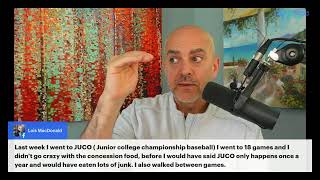
Sometimes stuff is working and it doesn't look like it's working though. So what's up, Jackie? How's it going? If you're still here, I cut the stream off as I saw that come in because it was showing no people here, but I think it's a— I guess it's a reporting error more than an actual error. So yeah, so anyways, anyone that wants to ask the questions, feel free to ask them. Um, let me talk about— yeah, the time of year is funny. I, I do find that a lot, that this is a— this is kind of a limbo zone for a lot of people. I, I— everyone's in their own spot, you know what I mean? So, so it is what it is. But, um, I have been doing this for a long time. I've been doing this over 20 years professionally, and there are annual kind of like ebbs and flows to people's interest in weight. And, uh, I'm always fascinated by that. It changes, you know, year to year based on, you know, whatever may specifically be going on that year. But there's also kind of general trends. And, um, yeah, that happens too. Oh, I'm fired up. I'm feeling good. Went away this weekend. I gotta say, I went away this weekend. It was kind of a crash course— not a crash course, but a crash vacation, if you want to even call it that. Very quick one, but, uh, very fun. Had a good time. I've never done that before. We did— we covered a lot of terrain and a lot of ground in 2 days, but it was kind of fun. So that was kind of nice. But I hope you're all having a nice, uh, nice weekend. Ready for the summer? I guess it's officially kind of summer. Memorial day passing and all. So I know we get into cookout season for a lot of people. Um, that's right, Joe. Yeah, not for the PYT peeps. We're all ready for summer. Yes, in Program Yourself Thin's world, we are absolutely ready for summer. And, um, there's not— you know, we don't really make much of a difference. I think we ride the wave. I think there's ebbs and flows to kind of energy yearly. And if you're in kind of New England, for example, um, you know, the weather kind of goes up and down depending on the year. Sometimes it can kind of be like You know, the winter can be a little bit of an ebb, right? Um, you just kind of feel, you know, it's just harder, right? You're dealing with the cold, you're dealing with the ice and snow, perhaps driving in it, dealing with it. It's harder to walk, you know, just all these different things. And it— you may find that sometimes in the winter it's a little harder than the summer. But yeah, in Program Yourself Thin, we recognize those ebbs and flows, you know, manage them and deal with them. But yeah, we look to be consistent, I would say, you know, and, uh, I definitely— that for me really does show up. I would say right around this time of year it always shows up because right around June I'm kind of— I've got this kind of momentum. I'm kind of rising, right? I kind of go into a little bit of an ebb from January to March-ish. I would say I've noticed as a pattern generally. And then I start kind of, you know, kind of coming out of that a bit and I start to hit back up to where I really want to be, usually in June. June's kind of a big month where I kind of start shifting gears. And I feel that coming now. I feel, I feel very good. Um, it's been kind of a tough winter too. That's been 2 tough winters in a row, I would say. Has it been 5 tough winters in a row? Maybe not 5, but maybe 3, I would say. No, my bad, 2. 2. Oh, it doesn't matter. Anyways, Diane Mo says there is so much out there, you don't know which, uh, route to really go. Do you suggest more protein? Um, yeah, I know, I hear you with that. They're constantly confusing us because a confused mind is a stuck mind. Um, and the diet industry is just a branch of the food processing industry, so the diet industry is not your friend, okay? Not your friend. Uh, the diet industry is just a branch of the food processing industry. Uh, Weight Watchers was owned by Heinz, Jenny Craig was owned by Nestlé, uh, Atkins Food Products owned by the same company owns Annie Ann's Pretzels and Cinnabon, SlimFast owned by the same company owns Ben Jerry's ice cream. These companies don't give a shit about your weight, your health, your happiness. They're just looking to confuse you and get you to continue doing the same shit you always do. So yeah, there's a lot of confusion. You have to learn how to see through that confusion or you'll get trapped. That'll absolutely become a trap because you'll be unclear what to do. And if you're unclear what to do, you know what you're gonna do? You're gonna keep doing the same thing you always do. So you're asking specifically about more protein. I think protein— the moment we're living in now is a bunch of bullshit, in my opinion. This focus on more protein is just the newest thing. It's always something, folks. It's— it has been a focus on low fat, a focus on no carbs, a focus on more protein, a focus on no sugar, a focus on gluten. I mean, it's just always something. And so they always hype one thing up. Okay, first of all, your weight answer is never going to be just one thing. You're not one thing away from living at your goal weight. You're not 50 grams of protein a day away from being at your goal weight, folks. Can it help and support you? Sure. But is it the one answer that's going to fix everything? Absolutely not. You're not going to— you're not a carb away from your goal weight. It's bullshit. You need a holistic, comprehensive approach to managing your weight. I don't mean to confuse you with more information here, Diane, but it is my job to kind of speak my truth anyways. And in Program Yourself Thin, I will give you a sense of how we approach managing living at your goal weight. And we follow the goal weight pyramid: mindset, lifestyle, eating. And so it's not just about— to me, how much protein you're eating is about that much of the pyramid. Again, it plays a part. I think protein is important. Please understand, protein is very important, but it's the it girl right now. It's having a moment. So everything is about protein at this point. And you'll know this because you see all the commercials. There's protein everything. Everything's protein, as if protein— just pumping more protein into your body is going to make you lose weight. It's not. Okay, you need to reduce your average calorie consumption. Can it help with your satiety? Sure. But for the average American, I always say you are going to be way better served by increasing your fiber content than your protein content. So I can almost guarantee you, you are lacking more fiber in your diet, way more then you are lacking protein. I guarantee you are not lacking protein because it's impossible not to get enough protein if you are consuming enough calories. So this worry about protein is so misguided and I can prove it with one simple, you know, idea that in your life, have you ever been given a protein deficiency quiz or test? Have you ever been tested for protein deficiency? And if you have, it is because you had an outlier situation going on. You're not going to be protein deficient if you're consuming enough calories. Okay. And so this idea that pumping up your protein levels is going to make you lose weight is bullshit. It's just one more, you know, it's just one more thing. And by the way, let me just take it one step further just to make crystal clear what I mean to say here. The healthiest diet on the planet is a high-carb, low-protein diet. And that's that. Go read the Blue Zones. They picked the 5 countries with the highest number of octa— or people living to 100 years old. And every country, or every population they studied, was a high-carb, low-protein diet. Now, the carbs were not refined carbs, they were whole natural carbs. But, uh, the healthiest modern populations on Earth are consuming high-carb diets, lots of whole foods— fruits, vegetables, and grains, greens. So that's the healthiest diet, okay? And, uh, the protein thing is just one more thing that they can market to you and sell and profit off of. And, uh, again, protein's important, but it's not the thing they're making it out to be as usual. And 2 years from now or a year from now, it'll be something else they'll be harping on. So that's what I think about that. Um, but yeah, if anyone has questions, feel free to ask them. What's up, Julie? Julie says, it seems like forever I've been able to join. Yep, I hope you're doing well. And I'm glad you're here. Pat says your email today said double down if you're already started. Explain please. Um, my email today said double down. I gotta be honest, I sent so many emails I don't remember what that was referring to. So, and I, I forget, Pat, if you're in the program or not. Are you in the program? I, I can't remember. So give me a little bit of context and I'll speak specifically to that. But Um, so I don't even know what I meant. Uh, Donna said, and it's not good protein companies are pushing, it's the cheapest garbage they're selling. Thank you. Yes, absolutely, absolutely. You know, um, Diane says, I've always thought plant-based is the best way to go. Uh, yeah, I mean, that's my belief. You know, I, I can't see how you're going to go wrong with a plant-based diet. And I'm not saying don't eat meat. I am a vegetarian. I'm a pescatarian technically. I don't think you have to give up meat, but I do think that you're probably— if you're a typical American, you're way unbalanced. You're consuming way too much meat and not enough whole fresh plant-based foods. And plant-based foods are what we've been eating the majority of our entire history on Earth. We know we weren't eating animals all the time. We were scavenging for food, you know, foraging. You know, this is what we were doing and eating. We're not— we're not carnivores, folks. You can want to convince yourself and believe that we're carnivores as much as you want, but, but the intestines tell their own story. Your teeth tell their own story. Your lack of claws tell their own story. You're not a carnivore. Can you eat a meat-based diet? Absolutely. Will you thrive off it? Well, I don't know. I've never seen any proof of that. I've never seen a big population of people that live off of a high protein diet that have health markers that I want to emulate. I've never seen that. The Inuit Eskimo? No, no thank you. Um, the, the Masai tribe out in Africa? I don't think I want their health numbers. So you tell me the population that exists in the modern world that is consuming a high protein diet and has wonderful health numbers. That's all I'm asking. I don't think that's too much to ask. I don't know why I ask this every day. I've been doing this for over 3 years. Every day I'm here, I ask this question all the time. I never get an answer. I never get an answer. And people are so committed and so obsessed with protein and meat and carnivore. I don't know how I can never get an answer. I don't know why. To me, I think that I said— I was saying this the other day, that I think your diet ultimately is going to be the number one factor that influences how long you're going to live and how good your quality of life is going to be while you're alive. That's what I think. And so I think for the most important decision of your life, you might want to make that with some good evidence. And I don't see the evidence of a population that is thriving consuming a high protein diet. And the protein that they're really pumping into us is the shittiest protein. So I tell you, I say this all the time. Protein is the it girl right now of the nutritionist, of the influencer world of— I don't know how you even describe it— the diet influencer world, whatever you want to call it. I get— I get emails all the time for people ask me to promote protein products because it's the big thing right now. I'm not doing it, you know. So what I'm trying to say is there's a lot of money behind protein right now. It's what they put a lot of money behind. That's why you're going to see protein lattes, protein water, protein chips, added extra protein to your chips. They're just going to— it's the halo effect of one thing. They always do this. These food companies hype up one thing. It might say gluten-free in big letters. It might say extra protein, might say low fat. It's going to pick one thing and that's supposed to grab your attention and you're supposed to think, oh, that's going to help me get to my goal weight. It's not. I mean, shit, folks, how much more protein can we eat? Is everyone losing weight out there? All the protein you've been stuffing down your throats. Have you been losing weight like crazy or what? No, you haven't. That whole protein thing, I think, for dieters is really built really just around the Atkins thing. And I just, I don't know how the fuck this can have been let— I don't know how we can still be dealing with this in 2026. You all have tried the keto, paleo, Atkins, carnivorous diets at this point. You've all, you've all tried them at this point. And what happens? You You may lose some weight initially, but you never stick to it. Why? Because you feel weird. It's a strange way to live. It's not normal. The keto diet was created for epileptics. So, you know, this again, I'm not blaming anyone because we're all at the mercy of this nonstop advertising and culture that's bullshitting us constantly. Which is one of the main reasons I get on here every day, trying to just, you know, please, I just want to show you another way. You don't have to believe me. I don't care. I just want you to at least hear it for once in your life. God damn it. It's like the weight thing. You are— we are trapped in a fucking diet bubble from the moment we're born. Your whole life, from the moment you were born, your mom was putting the dumb diet shit into your head, and then it's all reinforced by the culture. And so your whole life you're living in this little diet bubble, thinking like a dieter. And you never truly get a chance to see what it's like to actually manage your weight genuinely. And you just bop one from one dumb idea from another. Next thing you know, 30 years have gone past. You're trying to do the same shit your mom was doing, basically. You're just trying to spice it up a little bit. So I don't know. Dan says, I've always thought plant-based is the best way to go. Yes, agreed, agreed. Um, Sas Scuba says, 313 pounds to 191 in 16 months doing calorie deficit. I eat 60 to 130 grams of protein a day. Um, congrats, that's quite an accomplishment, Sas Scuba. Nice job, nice job. That takes a lot of action. Okay, I'm proud of you. 16 months, that's a lot of weight. That's a lot of weight. Um, that, that's quite a journey you're on. Okay. And again, doing calorie deficits, great for the weight loss, but, but Saskooba, please listen to me, please, because I, I applaud you. I applaud you so much for taking all the action, but you're, you're— I don't know what your final goal weight you want to get to is, but now is where the work really starts in a sense, because losing the weight is a lot easier than living at the goal weight, because most dieters trade the excitement and pleasure of the food for the excitement, pleasure of the scale going down. So it's, it's relatively easier to stay in a calorie deficit when you're actually losing weight and you see it on the scale. It becomes a bit more difficult once the weight loss stops. All right, so what I'm talking about here is crucial to you, and you are exactly the type of person who I am here for, because more than anyone else, I'm here for the people that have lost a lot of weight and put it on, or have lost a lot of weight and there, you're hovering around there because you're willing to do the work. And so I believe you deserve to have a better strategy for how to live it that way, because I know you're willing to do the work. And so again, if everything's going great for you and everything's fine, you can ignore me. But at some point, if you start to feel a little wobbly mindset-wise, please make sure you show up here so that you can turn your, your transformation into something that you can live with permanently. But great job. Donna says there's so many plant-based proteins that have all the amino acids, many same as meat. Good point. Yeah. Oh, you get plenty of protein. Protein really is not a problem, um, without meat. Donna says when it was low fat, people ate an entire box of Snackwells and thought it was okay. That's exactly what I'm talking about. Exactly. And they're doing the exact same thing with protein now. You know, they're putting protein in bullshit. I call them milkshakes, right? You can get like a latte, a latte drink. It's a milkshake. That's all it is. Um, but it's a milkshake with protein now, so now the protein is actually healthy. It's happening right before our eyes. We've got to— they use the same tricks over and over and over again. Once you understand the tricks, you don't fall for them as much. You know what I mean? You can see— I promise you folks, eat— drinking more— eating more protein bars and drinking more lattes with protein in is not going to help you lose weight. I'll just keep it simple. But I think you're exactly right, Don, just like the snack wall. Yeah, Sherry says they want to keep us sick. They do want to keep us sick. Again, folks, this is not a— this is not a hot take, okay? We live in a culture with a medical establishment that makes money off of treating disease and illness. We live in a country that rewards, you know, sales of product, and so we have a food processing industry that will do anything. And by the way, the food processing industry You may not know this, but the food processing industry is the cigarette industry. I know this is hard to believe, isn't it? But the Nabisco company that makes your favorite snacks is merged together with R.J.R. Reynolds. They're merged together, the same company. You're never gonna believe the parent company of General Foods and Kraft. You're never gonna believe this. Guess General Foods and Kraft, two of the biggest food companies in the world, Guess who owns them? Yeah, Philip Morris. Who knew, right? So yeah, the cigarette companies literally bought the food companies, and now they just make food cigarettes basically. And the medical establishment doesn't have any answers for any of it because they make tons of money off of treating, uh, the diseases and the problems that are caused by this eating. I don't mean to sound like a paranoid person here, but I mean, I don't feel like this is Is this a crazy thing to— is this weird to think? Do people not think this? I don't know what people think, but to me it seems pretty obvious the way my mind looks at it. But we all get to choose how we want to think about things. But yes, I agree that they do want to keep us sick. There's a lot of money being made off of you being overweight, unhealthy, and unhappy. I would say a lot of money. Think about how much money in the economy is generated by food sales, shitty food sales, the medical issues caused by those food sales over time. It's a huge amount of money, no? And then the diet industry, if I put it on there, it's $65 billion. It's a drop in the bucket compared to the other two, but part of the problem. And so you're on your own, folks. What do you want? You're on your own. Tough shit. There's no diet that's going to help you. No doctor is going to help you. Has a doctor ever helped you lose weight, folks? A doctor ever help you lose weight? You ever go to your doctor and you're overweight and they say, oh, you know, you should lose some weight, you should do this, and then it actually helped you and you did it? Have you ever once gotten an actual helpful plan from your doctor that helped you lose weight? And I already know the answer is absolutely no, because doctors don't know about weight loss. Even the ones that do bariatric surgery professionally don't really understand weight loss, in my opinion. Um, they can do the surgery, but then you're kind of left to your own and it's brutal. Now, that's the most effective weight loss— what's the word? I'm blanking on it. That's the most intervention. Bariatric surgery is the most effective at this point. GLP-1 is hot on their case. But again, the medical establishment treats the symptoms. It doesn't explain the cure to you. So they love making GLP-1s because you got to take it forever. So they'll profit off you forever. So that's right in line with what they want. They do not want to show you how to live as a thin, healthy, happy person. You're not going to get that information. I don't know if I sound like I'm paranoid. Fine. But you prove me wrong though, too. I just don't see any evidence that anyone is out there helping us on a big level. I know I'm out here trying, doing what I can, but I do not see any evidence that any big companies, big governmental organizations are helping you manage your weight effectively. I see no evidence of that. And so it's up to you. And to me, this is real important shit, because if you don't know my story, it all started when I was 9 years old, because that's when my father died of a heart attack. Overweight, out of control with the food. And so weight to me is not just, you know, putting your bathing suit on and your skinny jeans. It's literally how long you're going to live. And we have no backup on this. It's just, it's up to you, and it's do or die. Like, again, I don't mean it sounds so drastic, but this is how I see it, you know. Um, Diane says, not sure what's up, I can't get Kartra to open up for me, the download. Oh, that's interesting, Diane. I'm sorry about that, I have no clue. Um, but if you make a support ticket right to support@programyourselfthen.com. We'll get that fixed today for you. But there's a couple things that can happen, and, um, we can get that fixed. Sorry about that. That does happen sometimes. It's probably a browser issue, I had to guess, but we'll get that hooked up for you. It's annoying though. Yeah, Jody says email was time machine going back. What would do different? Would be the same? If you started, then double down. Oh, okay. Thank you, Jody. Um, yeah. Oh, the time machine going back. What would you do different? What would you do the same? Yeah, if you started, then double down. Yeah. So doubling down basically is the idea. Oh yeah. So this is the email I sent out. Okay. If you could go back 5 months to the start of knowing what you know now, what's the one thing you would have changed? What would be different now? Use that inspiration to make changes now or to double down if you already started. So yeah, if you started 5 months ago making some changes, double down on them, right? So again, here's June 1st, right? Okay. So basically to me, I always look at this kind of like that halfway point of the year. I know it's not technically the halfway point, but I think of it as the halfway point. And so it's a great opportunity to reflect. And so if you're, if you're happy with the last 5 months, if you start taking some action, double down on those things. You've been drinking more water, stay focused on that. You've been walking more, stay focused on walking, keep it up, expand it. Eat more fruit, great. Double down on it. Optimize what you've been doing, make it easier, more enjoyable, or consume more fruit. You know, so doubling down is really a concept of the idea you either have started or you haven't started. Okay, if you haven't started, just do anything. That's what I'm saying. Oh my God, folks, Dieters, please. You spend most of your time waiting to take action, waiting to start, and before you know it, all the time's gone. So you'd be better off, cut that shit out, stop waiting to start the perfect plan and just start taking action today. Something small and little. And then if you start doing that, it may not change everything. But it changes some things. And once you've started doing for a little bit, you can look back and say, okay, let me, let me double down on that. Let me put some more energy into that thing, or let me add something to it. And this is the mindset we want to be in because it's always moving forward. That's what we want, folks, is we want something that's always moving forward. We're still going to have setbacks. We're still going to have challenges. We're still going to have problems. Those are always going to happen in life, but we want to set it up in our mind and in our lifestyle so it's always easy to kind of do better. A little bit better each and every day. And program yourself. Then we follow the 1% better philosophy. So each and every day, we want to get at least 1% better. That's the goal. Small, manageable. Let's just keep going, keep going, keep going, keep going. And so that's kind of the idea, just applied to last 5 months. Tree says, I lost 30% toward my goal weight, then have hovered around there for about a month, trying these past few days to make small changes to get going again. Yeah, great job, Therese. Again, 30% towards your goal weight is not nothing, folks. Right? Again, we've got to extend the time frame. I hate to tell you this, but it's my duty that weight— the weight loss is going to take you longer than you want it to. It's going to take longer than you think it should. It's going to take longer than you're planning for. That's just the way it goes. It's called the planning fallacy. It's a cognitive bias we all have. And when we think about some journey we're going to go on about losing weight, We just subconsciously automatically think the best case scenario. We just do. And on top of that, we have the diet industry constantly, you know, telling us that we can change our, our weight in a week, in a couple days, in a month. Okay. And so we've had a lifetime of the diet industry bullshitting us and thinking we gotta get results in this amount of time, but it's prevented us from looking at the big picture. There's no rush here. If every year you move 30% towards your goal weight, Well, in 3 years you're there. And it's not just about losing the weight, folks. It's about living there. You've got to stop thinking that if you lose the weight, you're going to keep it off. Living at your goal weight requires skill. Again, in Program Yourself Thin, we believe that it's these skills, the ability to think, live, and eat like a thin, healthy person. These are fucking skills. It's like, it's like basketball. You need to know how to play offense, defense, you know what I mean? And, uh, and be in good shape. I don't mean like, you know, to dribble and shoot and play defense. It's like we break down the skills. See, you dieters don't have any skills. You just keep saying no, no, no, I'm not gonna do that, I'm not gonna do that, I'm not gonna do that, I'm not gonna do that, I'm not— no, no, no, no, no, no, no, no. You dieters know yourself down to your goal weight at best, but you're still thinking like an overweight person. You just are. You're not thinking— because at what point in the diet do you start to think like a thin, healthy person? This is— I don't think people really Think about this. I do, because I talk to a lot of people that have dieted down to their goal weight or close to it. And this is what you need to understand. And you know what? This is what you need to remember, because I know you've experienced this yourself. I know for a fact you've experienced what I'm about to tell you, that if you have ever lost a significant amount of weight, if you've ever gotten to your goal weight or close to it, if you really think back to it, yes, it was exciting. There was exciting parts of it. But it was also very, very stressful because you were obsessed with the fear that you were going to put the weight back on. Right. Let's be honest. If you've ever lost weight, as exciting as it was in the ways that it's exciting, the day-to-day reality was that you were terrified that you were going to put the weight back on. And that was your primary mindset, that you were scared to death that you were going to put the weight back on. That is not thinking like a thin, healthy person. Can I please— can I let you know that when you are terrified of putting the weight back on, that's not how a thin, healthy person is thinking. That's how a dieter is thinking. That's how an overweight person who's lost some weight on a diet thinks. That's not how a thin, healthy person thinks. And that's one of the primary things that you have been misled on. This idea that when you get to your goal weight, you're just going to stay there as if the, the, the real problem to figure out is how to lose the weight. You're focusing on the wrong thing. It's like college. I mean, college, yes, for 4 years, the goal is to get the degree, but we get the degree so that we can have a career or do something in our lives. It's not about the 4 years. It's about the rest of the life that follows. It's not about the weight loss. It's about living at your goal weight. This is why I wrote a book called The Tao of Living, Living at Your Goal Weight, Living at It, Living, Living Your Life at Your Goal Weight. You've never even considered that concept because you're only obsessed with thinking about losing it. But you lose it, and then what? You've already been at your goal weight before. What happened when you were there? How did you get to where you are now? If being at your goal weight was so incredible and held all the answers, what happened? Well, you've been at your goal weight, so why are you overweight now? If being at your goal weight holds all the answers to staying there? And of course, the answer is it doesn't. It didn't. It doesn't. It's not going to. You have got to transform your mindset. What other way would there be? I don't, don't understand. Uh, what's up, Sue? Sue says you don't sound paranoid, you have to— you just have passion to get your point across. Thank you, Sue. Yes, speaking of the world we live in, yes, what do you want? It's just, let's be honest, folks. I mean, 2026, one thing we know is that to some degree we're on our own. I don't know, am I saying something correct? Who the fuck doesn't agree with that. You're on your own. No one's helping you manage your weight. As a matter of fact, it's the exact opposite. It's the exact opposite if you live in America. No one's helping you. Sounds negative. I don't know. I don't want it to be this way. I don't want to sound negative. I wish we lived in a place where they taught us how to eat right and taught us about health and nutrition, taught us how to manage our physical, mental, and emotional well-being. That's what I would love. Is that been your experience? And I say all this to you because your struggles with your weight are not because you're lazy or you have no willpower. It's because the strategy you've been given is inadequate, and it's as simple as that. I think it's as simple as that. Funny. Instagram is— does not work well with this. Instagram freezing up. It's been a funny day of actually streaming. Uh, Pat says, where were you 40 years ago when I needed you? Glad I found you in last year. I've tried many diet programs and always lose weight but gained it back because I never learned how to maintain the loss. Now with your podcasts and emails, my mindset has changed and lifestyle is healthier. Nice job, Pat. Yeah. Where was I 40 years ago? Well, I'll tell you, I mean, 30 years, over 30 years ago, I was figuring this out. And then over 20 years, I've been here over 20 years doing this exact same thing. I keep looking. I got to, I got to spend a day like looking for this thing. But I, um, it's so funny because I remember I made a, um, flyer for Program Yourself Thin. It's from like 20, over 20 years ago. And it looks it, but it's cool. I got to show it to you all. But yeah, that's what I've been doing, you know. And you're right, you're never— you're never taught how to live at your goal weight, folks. And you all know this, I don't have to convince you of this. Um, you all know that you're taught about how to drastically change your behavior to lose weight, and that drastic shift in behavior is almost impossible to maintain. Not because it's impossible to do, but because it's impossible to have the motivation to do it. And the focus to do it long term. So that's what I think. Better late than never, I suppose, right? What's up, Lois? Lois says, last week I went to JUCO, Junior College Championship Baseball. I went to 18 games and I didn't go crazy with the concession food. Before, I would have said JUCO only happens once a year and would have eaten lots of junk. I also walked between games. Nice job, Lois. Again, Lois in the program And, um, I just love that attitude. You know, that's what we're talking about. It's not— it's— speaking of baseball, stick with baseball metaphors. Uh, dieting has taught you to kind of rely on grand slams, right? Every diet you start, it's like a grand— it's like trying to hit a grand slam. You put all your energy in this swing, 100% at these pitches to knock it out of the park. But, um, what Program Yourself does, like in baseball, they call it small ball, right? There's big ball and small ball. Big ball is when you're, you're trying to build your, your scoring around home runs and grand slams, big hits, big plays. And then there's small ball, which is really just hitting singles consistently. Singles, doubles, singles, doubles, singles consistently though. Right? And I think when it comes to weight loss, I think without question, the small ball is the way to go. Because again, we're looking not just over a week or a month or a couple months, we're looking over a lifetime. And over a lifetime, it's really difficult to be perfect with your eating, perfect with your exercising. Very difficult. So we want to figure out a plan that's really built for the long term and doesn't feel overwhelming. We want to play small ball. We want to do a lot of good things consistently that are relatively comfortable and easy for us to do. That's the path forward, you know. But great job, Lois. Proud of you. Again, that's, that's exactly what we're talking about. So it's little shifts, little changes consistently. So nice job. All right, now we get out of here. I got a lot of stuff I got to do today, so I'm going to scooty-doot. Um, all right everyone, so thank you so much. I do appreciate it. And we had a little bit of weird stuff with, um, with some of the things here. Um, well, like saying, Jenny just read something. What's up, Jenny? Jenny says, I thought your line about put hot fudge on your salad if it helps you eat more salad got my attention. Then your point later that after you're in a pattern of eating the healthier food, then you can start finding the lower calorie draft. Dressing and toppings. Um, thanks, Jenny. Yeah, I, I love that. I think that's— I think that's a funny thing to say, to be honest. Um, I'm just joking. Yeah, that I use hot fudge for, for salad dressing if it would get me to eat more salads right now. But the idea, right, it's a funny way to say that I think, again, with dieting, it's like if you're gonna do something, you've got to do it 100%. So not only do you all now all of a sudden, you know, you usually eat a burger and fries for lunch, but now you gotta get a salad. But on top of that you have to use this much dressing. Do you know what I mean? Like, it's the classic diet thing. It's the all or nothing, you know? So again, if we can cut this shit with the all or nothing and do all or something and start to do small, consistent things in the right direction, that's what makes the changes. So yeah, okay, and I joke with the hot fudge because that blue cheese— oh, I hate salads, I only like blue cheese dressing and that's fattening. Well, whatever. If you're putting all those greens and vegetables into your body, and so what, you're having blue cheese with it? And your calories— again, your calories typically are still going to be less than like a cheeseburger and fry plate, you know. But, um, again, the point is to not judge everything as a binary all-or-nothing situation. Start thinking more gradients because that's how you're able to make more changes quicker. Okay, so instead of thinking I needed a salad with no dressing— who the hell wants to do that? You know what I mean? That's how you avoid eating salad. So again, There's eating salad with dressing that might have a lot of calories in it, but it's, it's the, it's the looking at the full picture of the benefits you're going to get that really drives that, that idea forward. Yeah. Lois likes the comparison of small ball. Yeah. Small balls again are a super— I've used that before. Again, the concept of big ball versus small ball, and small ball is just a lot easier, you know, because you got to think, okay, because here's the example. This would be— I'll only expand on that just a hair. Let's— because, um, small ball versus big ball for baseball, right? So whether you have a team that's built around home runs and grand slams or versus playing small ball. But what we have to do to make it more applicable to life is you've got to imagine a 400-inning game, right? So to make it a more— even more relevant metaphor is that imagine it was going to play a 400-inning game. Now which team do you think's got a better chance of winning, the small ball or the big ball, right? Well, now the small ball's chances go way up. Right? Because as the game goes on, it gets harder and harder to hit those home runs and grand slams. You get tired, you know. So I think that's just to drive that point home. Um, I think that that's a very relevant point. Uh, Diane said, I finally got the download. Very good, very good. I'm glad. Yes. So again, like I said, sometimes there's little issues with the cache and browsers and stuff like that, but that session should work. And, um, if you have any issues, like I said, um, send a ticket into Support@ProgramYourself then, and we'll get it all set up for you. So, all right everyone, thank you so much. I really appreciate it. Um, if you are new here and you're not in my world, click the link in my bio, uh, go get the free hypnosis session I made for you. Uh, if you are in Facebook or YouTube, I'll put the link right in the chat. You can go there, go get that, get on my email list. I got a bunch of cool stuff for you. It's completely free. Um, go check it out. If, uh, you like this, I'm here every Monday through Friday, usually around noon Eastern. Um, so get on here, ask any questions you may have. I'm happy to help you. That's what I'm here to do. Uh, if you can't make the live, it's also a podcast. You can search Program Yourself on any podcast platform. It should pop up. And this book is available over on Amazon, The Tao of Living at Your Goal Weight. So yes, this is my book, um, a brand new approach to living at your goal weight that you've probably never heard before. So go check that out. Uh, have a super day and we'll talk soon. Bye.
More from Jim



Weight Loss Visualization: Wake Up in Your Dream Size #programyourselfthin #weightlosshypnosis



What If You Pretended to Be Thin for One Hour? #programyourselfthin #weightlosshypnosis




