Program Yourself Thin Live 6-16-26
Jim Katsoulis explains why cravings follow a predictable curve that peaks then falls naturally, and why dieting fails long-term. Real weight loss requires reprogramming your self-image through daily mantras and hypnosis, not willpower or restriction.
Chapters
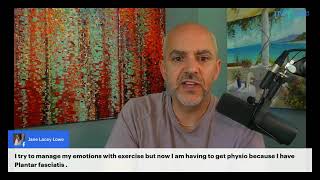
Check, check, check. What the hell? Come on. There we go. Hey everyone, welcome to today's Program Yourself Thin podcast. Today we're talking about why every craving passes and every craving does pass. And it's important for you to remember that and to understand the experience of a craving so that the next time you get one, you're prepared for it. Because a lot of times, ironically, people get attacked by a craving and it's as if it's the first time it's ever happened to them. And they tend to just, ah, what am I gonna do? I want a cookie. Oh God, I want a cookie. I want ice cream. What am I going to do? Okay. But the truth of cravings is that they follow a U-shaped pattern. And this is because your nervous system has an upper limit. Your craving can't just keep going up and up and up and up and up and up and up and up and up. That's not how cravings work because that's not how your nervous system works. So the experience of a craving, if you let it play out, is an upside down U. And so, yes, as it goes up, it feels like it's going to go up forever. But at some point it loses some steam and it starts to flatten out, and then it continues to flatten out, and then at some point it starts to fall. And then the craving disappears. Your nervous system can't just keep cranking up cravings forever. Now, you may go through multiple U's. I'm not going to argue that, but it's important for you to internalize the concept of the upside-down U. Because that's the experience of cravings if you let them play out. And while I'm not a huge fan of trying to struggle your way through cravings, I think if you use this concept of cravings along with a strategy of not getting yourself too hungry, that this is one of the most powerful practical ways that you can really, really change your eating in a very, very profound way. Because a lot of people, as I said, you get hit with a craving. And while it's going up the one side of the U, it starts to feel like it's just going to go to the moon and you're going to go out, you're going to go insane if you don't give in to this craving. But again, if you can calm yourself down and relax and be present with the craving, become curious about the craving. experience the craving in real time from a calm, grounded perspective. If you're able to do that, you're going to find that it flattens out and then it declines back down to zero and goes away. That's what's going to happen if you pay attention to your craving. And we know this because we can look at people who have the strongest cravings on earth. People that have addictions to substances go through this in a much more intense way. And millions of them leave that behind for good by being able to stay calm and grounded during this Upside Down U experience. And I want to point out that the upside is intense. It can feel intense. But what I want you to do the next time you feel a craving is to relax your body. Pay attention to how this craving feels. What are you thinking? What are you focusing on? What are you expecting? What are you feeling? And as you ground yourself in your breath and your calm, in your relaxation, experience this sense of it moving up and know in your mind that there is a limit to it. There is a cap. And that once you hit that cap, then there is a decline and it's going to go down. And a lot of people don't believe this, which really reveals that you've never truly kind of paid attention to what the craving actually is. Because the diet industry is always training you to just fight the craving, and most people can't fight the craving very long. But a big part of why they can't fight the craving is because they don't have a concept in their mind of what it actually is going to do. Every time we get this upswing, it just feels like it could go forever. It won't. It's gonna flatten out and decline. So play around with this next time you have a craving. Start to get curious. Instead of fighting against your craving, seek to understand them. Notice which things trigger cravings. Notice which cravings have the highest upside, and then get to their downside so you can prepare for it, right? But again, get curious, get interested, pay attention, um, be present the next time you have a craving, and you might be surprised at what you learn from that experience. , and it may help you tremendously to manage your weight. And if you want some support being able to be present during the craving, click the link in my bio or go get the free hypnosis session that I made for you. Uh, it is called the New Thin Me and it is completely free and it's going to help you calm down, relax, and think about your weight from a totally different perspective. All right. So let me, uh, if you're in TikTok, you can get that, that session right by clicking the link in my bio. And if you're in Facebook or YouTube, you can click the link that I just put in the comments section. Yeah, if anyone has any questions, feel free to ask them. I apologize, yesterday I got on here and I had technical issues and had to bail on the whole thing, but we're back again today. So if you have any weight questions, eating questions, feel free to ask them. I'm here to help out as best I can. I can usually help out pretty good, to be honest. Not to, you know, sound egotistical, but I might be able to help you out. What's up, Jody? Jody said, I enjoyed listening to the audiobook. That's awesome, Jody. I'm really glad you're able to listen to it. Um, and I'm— I gotta look into whether it was, uh, a membership site page issue, an embedded issue, uh, Jody's got 45 tabs open issue. I'll look into that today and I'll find out what other people say. But, um, and then I see Vicki saying, hi Jim, I was having trouble locating the audiobook in the members section. Uh, Vicki, it's in the— it's in the book section itself. So if you scroll to the bottom, if you go into bonuses, so you go to the members area, go to bonuses, you'll see the Tao of Living at Your Goal Weight, um, which for all of you that may not know, this book is It's my first kind of official book that I'm selling on, uh, that place that we all know about. Don't, don't restrict me, TikTok. I'm gonna stop. I'm not trying to promote it, not trying to send anybody from TikTok. Wouldn't want to do that. That looks like it's backwards. Can you read that, TikTok? I feel like that's showing up backwards. Oh, I knew it didn't even work. Okay, there we go. Yes, so this book is available. But yes, the audio version is available, um, for members at this point. I'm going to be uploading it to Audible this week, and I will let you all you all know when that's available. I know some of you enjoy audiobooks more than the, uh, than the reading part of it. So, so that's fine. That's available now, um, in the members area. If you're in the program, you go to members area, bonuses, Tao of Living at Your Goal Weight, click on that, and then scroll to the bottom. It's at the bottom. I embedded a player in there. Uh, it is a SoundCloud player. And so Jody was having some issues with, uh, Jody's having some issues with playback in the members area where it wouldn't play past chapter 5. Um, that could be an everyone issue, or it could just be a Jody-only issue because of, you know, who knows what, browser memory, who knows, who knows. So anyway, she was able to listen to the full thing on SoundCloud. It's all there. Uh, but for the rest of you that are in the program, you can now listen to the audio version in the members area bonus section, the book section. And it's right on the bottom there. Uh, what's up, Julie? Julie says it's right. Yeah, I know it. I never have to turn the screen around for YouTube or, um, Facebook, but TikTok, uh, whatever they call it, mirrors it. I don't know what. So I always have to fix that before I show anything that has to be read. Um, but yeah, let's see. Siobhan says me too, it's great. All right. I'm gonna assume that's the book, probably the book. Um, a lot of people got in this book. Yeah, people loving it, so it's really good. Um, I'm a big fan. I just kind of did the audio version of it, so again, I went through it. I'm really, uh, happy with it. Although I will say, I was saying this last week, I think it's impossible to not go through some of your work and want to change some of it now. So that was put on the docket. I decided that— I was driving somewhere today, I'm like, you know what, I'm gonna do another edition. I'm gonna update this. So that's on the docket for the next, uh, month or two here. Um, closing out some big projects, but that was one of the big ones. Yeah. Julie said, I got the book, but would rather have you read it to me. Yes. I mean, listen, hey, I am a hypnotist and I'm not going to pretend that when I was writing this particular book, I was absolutely thinking of it hypnotically. I was thinking of it as like hypnosis scripts in a way, because what makes that book unique is that it is 40 chapters, but each chapter is like a page or two. But I think of each chapter as basically like a hypnotic story. And, um, you know, as a hypnotist, I think facts and information are great, but I think stories that kind of embed deep in your subconscious mind are better. And, uh, that was the purpose of that. So yes, reading it, um, for a lot of you that may— and again, I know a lot of you listen to my hypnosis sessions, so you're already kind of conditioned to relax, uh, with my voice. And so, uh, I was happy to finally be able to get that done. It is officially done. Oh, okay, Vicki. No, no, not in the members area in Circle. No. You have to go, you have to go to the members area. I'll show you. So if you're in Circle, go to PYT System, PYT Program link. Okay. And then go look at all the links that are there. Yeah. See, I'm going to, I'm going to update that anyways, but what you could do is go to the PYT Program under PYT System. And then click on any link that's in there, and that'll bring you to the members area. The members area is actually, uh, different than the circle area. So yeah, Vicki, if you click— if you click any of those links in PYT program under PYT system, you'll go to the members area and then go look for bonus, the book, and whatever. And I will put— I see right now that I got bonuses, but I don't have the book on there. So I will end up putting that link as well in there, and I guess send an email out, but that should fix it for you. Yeah, but yeah, for those of you like audiobooks, and like I said, I'm going to be putting it up on Audible, uh, this week, this week. So that'll be available, um, if you haven't gotten the book yet, or if you just want to get the audio version, you're not in the program, uh, that'll be available. And I've really made more information. I've never done an Audible book, and I have no idea what the process is. Um, I do know that I've tested the file, so I know everything's fine and set to go, but I'm not sure how, uh, I, I don't know how much it'll be, and I don't know when it'll be ready. So I will, I'll keep you all up to date with that. Um, User 746 says you're awesome in delivering knowledge and experience. Well, thank you, I appreciate that. Um, that's my goal. I mean, that's what I do. That's my whole life, really, professionally, is dedicated, to helping people live at their goal weight. And I have been doing this personally for over 30 years. I've been doing it now professionally for over 20 years. Uh, and yeah, in that time I've done over 6,000 private weight loss sessions. I have been literally teaching Program Yourself Thin for over 20 years. It was the very first program I ever created. And, um, it's funny, I always say this and I, I always forget once I stop the live. I got my— gotta find my, my first ever flyer I made to promote Program Yourself. Then this was way back in the day with my hypnosis office and all that, but it's pretty cool. So I've been doing this for a really, really long time. I'm obsessed with it, for real. Um, so that's why I get here every Monday through Friday. I'm here at noon Eastern, uh, to talk to you all about your weight. And I don't care, you can ask questions about keto, Weight Watchers, cravings, overeating, binging, anything you want that's related to food, weight, and mindset, I'm happy to see if I can help you, you know, because I believe personally that most people's weight issues, eating issues, almost always come down to a mindset issue. And I think that trying to fix these issues without fixing your mindset is, is, um, the wrong approach. And, uh, I don't think it works, and I, I think it's frustrating. So I like to get out of here and just show you a better way, you know. And again, I do this for free because I know that most people have never exposed to any of this kind of way of thinking about your weight, you know. And it's so important. Your weight is so important, folks. It really is. Not because of what you look like, but because literally, I think, I think your weight and what you eat consistently in your life is probably going to be the number one factor, um, that dictates how long you're alive and certainly the quality of life while you're here. Siobhan says it's short little chapters and moves fast. I use it before sleeping or for meditation. Yeah, that's perfect. I love to hear that. That's what it was written for. I very specifically wrote it so that you could literally— I'm at— because, you know, this book here was inspired by two books that were very impactful for me in my life. One was the Tao Te Ching. It's kind of the main text of Taoism, and it's mapped out very much like this. And the version I had was— Hold on one second. The version I had was actually by Janet English, and she had kind of a pictures with it as well. Uh, and I used to read that all the time, and I would read it— same thing, meditation— I would read it and I'd meditate. Um, so I wrote this book, and then the other book was the 101 series. It used to be— I don't know if that guy's still around writing books or not, but, um, he would write books and, uh, they were just— you could just open up and just read anything, and they were short and easy to read. And the reason I did that is because I wanted this book to be the type of book that you put next to your bed, put on the coffee table, put in the bathroom, and just any moment in time, open any chapter up at all, boop, read it, get something out of it. And I think that's the secret. Um, again, reading from start to back and learning a body of information and knowledge, I think that's got its place, obviously. Um, but I think that this is, in a practical sense, more valuable because you can pick it up any moment in time and get some value. to it. Uh, every time you read one of these chapters, you've programmed yourself a little bit more. So everything kind of helps you, uh, in my opinion, when you read this book. And it's very accessible, and that was a key part of it as well. But yeah, if you have any questions, feel free to ask them. That's not a question here. Um, Ames— Ames says, what do I tell myself at 5 AM when I need to get up work out before the kids wake up, please. Who? I don't know. I don't know what you tell yourself, because first off, um, I don't know. Are we— are you better served working out at that time? Are you better served sleeping an extra hour? I don't know. So that's the first thing we got to honestly take a look at. And I don't know what the answer is, um, but let's at least start on solid ground, because if you're conflicted, if the sleep's actually going to be more valuable to you, your subconscious mind is going to fight that. You see, so one of the first things I like to do is get congruent subconsciously. So for example, I would think that, do I really want to work out at 5 in the morning? What are the benefits I get out of that? What are the costs? Right? Cost-benefit analysis. What's the cost-benefit analysis of getting up early and working out? What's the cost-benefit analysis of staying in and sleeping? I would look at those two things. Then I would start to say, what am I getting out of working out? What do I expect to get out of it? Is this something that seems realistic or something I want to do right now in my life? That's the first part. And then if you decide, oh, I want to work out because my whole day goes better, I have more energy, I feel stronger, I'm proud of myself, I sleep better, I'm a better mom or parent, I'm a better partner, everything in my life gets better. Okay, well, now let's, let's figure out What do I say to myself at 5 in the morning? There you go. You figured it out. Does that make sense? Because what you don't want to be saying at 5 in the morning is, I got to work out. Oh, come on. Come on, Ames. Get up. Get up. You got to go. You got to go work out. Come on, Ames. You said you're going to work out. You got to get up and work out. You see what I mean? Like, what we're going to do ultimately, folks, is really a function of how much pleasure we're going to get from it, how much pain we're going to avoid. So, for example, if I said to Ames, I'll give you $1 million Um, at the end of the month, if you get up and work out every day at 5:00 AM, well, what would you say to yourself at 5:00 AM to get yourself up? You'd say, I want to— I want that million bucks, right? And you'd get up and you'd do it. So you need a stronger reason, most likely, than what you're telling yourself right now. And whatever that stronger reasons or reason that— that reason or reasons you come up with are, those are the things you say to yourself at 5:00. But not just at 5:00. Those are the things you say to yourself at night before you go to bed. I want to get up tomorrow at 5 so that I can go to the gym tomorrow. Because when I go to the gym and work out, um, or work out— maybe I put the gym in there, um, but you go to bed saying, I want to get up at 5 and work out because when I get up at 5 and work out, everything's amazing in my life. I have more energy, you know. And yeah, I'm a little bit tired when I do it, but that's okay. It passes quickly. I get right into the flow of it once I start moving. Everything's great. Okay. But again, you may think about working out. You may find that working out is actually detracting more than it's giving you too. So, that's the first part of it and then, hopefully, that helps you out. What's up, Lorena? How's it going? Long time no see. Lorena says, "What do you think about blood sugar-friendly eating? Is it necessary for fat loss?" I think blood sugar-friendly eating is a wonderful way to set up your eating. And is it necessary for fat loss? No. No, you could eat candy bars and lose weight, technically. Okay. But I think that blood sugar friendly eating is a very, very intelligent strategy to eat in a way that's going to help you manage your weight. Because when blood sugar friendly— I'm going to assume are foods that are lower on the glycemic index, meaning that when you eat them, they don't spike your blood sugar. It's a slower, steadier. , you know, increase and you absorb them slower. We don't want spikes and crashes with our blood sugar. Spikes and crashes of blood sugar has all kinds of negatives to it. I know. So, um, so in that sense, I absolutely— part of my eating philosophy and how I've set it up is to eat foods that are blood sugar friendly, that don't spike my blood sugar. I eat foods that spike my blood sugar sometimes too. You know, I had ice cream and hot fudge last night. So, you know what I mean? I will eat those sometimes, but it's really— those are extras. Like, the core of my eating is very, very blood sugar friendly because blood sugar friendly to me means I'm going to get a sustained, sustained energy. It's going to ramp up slowly, kind of just stay sustained. And if I can keep my energy sustained, my hunger stays sustained, my mindset, my focus, my concentration stays sustained, my ability, my willpower stays sustained. sustain more. Um, so it's, it's not absolutely necessary. Like, technically, again, you could just eat candy bars and lose weight, but it would make it a lot harder for most people. So I think that's a great way to kind of structure your eating, to do that. Yeah, it falls over. Yeah. Do you need to avoid big blood sugar spikes? Again, you don't need to avoid them. I mean, if you had the most extreme— well, if I put you in jail, I call Jim right? If I throw you in gym jail and all I do is feed you candy bars, but I'm in control how many candy bars I give you, then, um, yeah, you can still lose weight because I'm in control of the calories. I'm gonna— but, but if you're in the real world and you start eating things that spike your blood sugar, um, you're gonna spike your blood sugar. That part's not the problem. The problem is when you crash down, and now that urge, that craving, that desire to want to spike it again goes way up. and it's way harder to resist it. So again, I think fundamentally blood sugar management is, is a very important part of managing your eating. Uh, using 746 says, are there situations where hypnosis may not be effective? Oh yeah, yeah, yeah, there's a lot of situations where hypnosis wouldn't be effective. Um, like in life, I suppose, you know. Although I do believe, I mean, hypnosis Now, again, you have to understand this. I always think of hypnosis as two ways. I think if there's like, there's like hypnosis sessions or a hypnotist, even someone outside of you who's hypnotizing you in some capacity. And then I think of self-hypnosis, which is something that you're running yourself. And I can't think of anything in life that self-hypnosis and what you're thinking and how you're running your own mind. I can't think of any situation in life where self-hypnosis isn't helpful and valuable. The hypnosis, on the other hand, coming from the outside, I think there's plenty of situations where it's not going to do anything. Honestly, so I think of hypnosis as kind of a supplement to self-hypnosis. And Program Yourself, then, technically, in my mind, is really teaching you how to do self-hypnosis to yourself. And there is hypnosis too that I give you, but it's really meant to supplement the hypnosis you're doing to yourself, the change in thinking you're doing to yourself, the change in how you think, what you say to yourself, and basically how you hypnotize yourself. I think the idea that you hypnotize yourself each and every day, I think, is a very, very relevant, valuable concept to have, because in the hypnosis world we always say you are your own best or worst hypnotist. You know, because you're in your head talking to yourself 24 hours a day, and what you're saying is really, in my opinion, the number one thing that's controlling your weight. And I can make hypnosis sessions that you listen to, and again, they're valuable in their own way, but the most valuable thing you can do is start to talk to yourself differently. And so I think in that sense hypnosis is really, really the, the ultimate answer, you know, so much to the point that I don't even sell— I have the number one hypnosis program on the planet for weight loss. It's not even close. It's an 8-week program unlike any you've ever seen. It's, it's 8 weeks. Every day you get in the morning a 5-minute hypnosis session. Each week you get a 10-minute session. And all of these sessions have different mantras. They're all built around different weight loss mantras because I'm looking to install goal weight mantras into your mind so you start saying things to yourself that support your ability to eat in a way that keeps you at your goal weight, gets you there, and then keeps you there. And so, um, I have sold this program on its own and it's been effective without question, but I believe that ultimately if you're going to be able to live at your goal weight, you're going to have to learn how to run your own mind. And that's why I don't sell that program on its own anymore. Aime says, thank you, very helpful. Good, good, I'm glad. That's my goal here, is, is I am literally here to, to serve you all, folks. I mean that genuinely. Um, this is a mission for me, uh, and I'm here to help you out as best I can. Uh, Lorena says, oh, I lost 16 kilograms, but I am honest, now I am back on my record number, so I started lately again. Uh, thanks for answering. Yeah. Um, Yeah, well, keep it up, Lorena. Again, I mean, that's just— this is a never-ending process, folks. I was thinking like managing your weight is like managing your teeth, you know. You don't, you don't clean your teeth so good that at some point you don't have to brush them anymore, right? It's an ongoing process, and managing your weight's the same thing. You can have it dialed in, mastered, everything going perfect this month and then next month things can change and everything falls apart. That's just— I'm not going to bullshit you. You get enough of that. I take the no bullshit oath when I get on here. And I think that, you know, the diet industry has kind of conditioned you low-key to think, oh, once I get to my goal weight, then I'll have to think about it. Like, I know when you logically think it, you know, that's not true. But the emotional kind of like implication, a lot of times you're going to get to your goal weight and, oh, I did it. You didn't do shit. I'm sorry to tell you, you know what I mean? Congratulations. Don't get me wrong, it's a huge accomplishment, no doubt about it. But the first day you get to your goal weight, you want to keep it going, right? The goal isn't just get there and then go back. The goal is to live there and to live at your goal weight. You really have to learn how to manage the ups and downs of life. I had to, you know, and it's not a big deal once you realize that's, that's the process. There is no magical fairy tale land where you get to and you never have to think about your weight or your eating or any of that stuff anymore. That never happens. Um, you always have to manage yourself because things are always changing. It's an ever-evolving landscape. So you're fine, Lorena. So again, yeah, get yourself focused and get yourself back to the weight that makes you happiest, right? And realize that's just the pattern, you know, it's the pattern of it. I'm a stress eater like many of us. Yeah, well, just a little quick one for you, you know, don't define yourself as a stress eater, right? You're a person who eats when they're feeling stressed sometimes. I would much rather— I don't want to define myself, you know, I don't define myself by something I do, you know, occasionally. I'm not going to do that. And it helps psychologically. Uh, what's up, Judy? Judy says, I just joined hearing you talking about blood sugar. What do you think of a, uh, CGM monitor? I'm not diabetic but thought it might be a good idea to keep an eye on what spikes my blood sugar and what doesn't. And also, does that help in weight loss by keeping your glucose at a good level? Um, yeah, I think so. I think it's a great idea. I think, um, wearing a glucose monitor for a little while— now again, if you're not diabetic I think it's wonderful because it's just going to give you another, another stream of data, another way to see things. And I think it's very valuable because, again, just real simple. Let me put it this way, just to kind of reframe things. The ability to spike your glucose is really unusual. Like if I, if I dropped you off in the woods, Judy, and I said, go spike your glucose, let me know when you do, I'll pick you up. I ain't picking you up for a while because short of running into, you know, a beehive and eating all the honey, how are you going to spike your glucose in the natural world? What are you going to eat? What are you going to eat in the natural world that's going to spike your glucose? Nothing. Virtually nothing. So how we spike our glucose now is with sugar. Flour, hyperpalatable processed foods that are already basically predigested. Yes, yes, sir. Processed foods— the number one thing processed foods take out of them is fiber. You take the fiber out of the food, you absorb it way faster. So, so I— again, I don't know, I don't want to go through the whole thing today. I'm just not in the mood. But I talk about this a lot where, again, understanding blood sugar in general, I think, is valuable, like, as a concept. Because if you start making food choices, at least partly on the idea that I want to spike my blood sugar, because I, I a lot of times will not choose certain foods that will spike my blood sugar because I don't want to get on that roller coaster. Right. If I go eat a candy bar, I'm getting on the roller coaster. That candy bar is going to spike my blood sugar and then I'm going to crash. We eat the cookie, spike, crash. Have a soda, spike crash. Um, baked goods, spike crash. And it goes on and on. Again, I'm naming the obvious things, but a lot of things can spike blood sugar, and different bodies are different on top of that. Okay. But yeah, if you spike blood sugar regularly— so look back to my original idea that if I drop you off in the natural world, you can't even spike your blood sugar. But here we are in the modern world, and it is normal to spike and crash your blood sugar 4, 5, 6, 7 times a day. And so that is really putting you at a disadvantage in so many ways if you're, if you're eating that way. And so, yeah, I think that having a clear concept of what you're eating is doing to your blood sugar, I think is a wonderful idea. So. What's up, Jane? How's it going? Jane says, I still manage the ups and downs of life poorly most of the time. Um, yeah, well, there you go, Jane. But that becomes the goal beyond just weight though. And I say this all the time, that to me, your weight is not enough of a motivator. Like, and what I— let me be more specific. 99% of people in America, at least, when they think about losing weight, their main motivation is that they want to look better. Okay. That's just the default setting most people have because of years of dieting conditioning. We've been exposed to literally tens of millions of diet ads in our lives from the time we were born till now. And every single diet ad you've ever seen is a before and after picture, which subconsciously tells you to value weight loss because you're going to look different. You're gonna look better. But what most people don't realize is that that's not enough motivation for most people. And do not argue with me. I can already hear— I can hear you arguing. My ears start tingling. No, Jim, you don't know me. I really want to lose weight. I really want to look better. No, you don't. If you haven't lost the weight, no, you don't, because your weight really is reflective of your motivation. And if you really, really want to look better, you would lose weight. But most likely you'd like to look better. But who gives a shit? And so, you know, it's really important that we find better motivation. Oh yeah, well, definitely better motivation and more motivation. So, by the way, please understand, I'm not saying get rid of wanting to look better. Please make— I want to be crystal clear. I want you to want to look better. That's fine to have that motivation. It's not fine to have that be your only motivation. It ain't going to be enough, most likely. So a lot of this process— and Jane's in the program— a lot of this process is literally figuring out what motivates me. This is why in, in Program Yourself Thin, we're basically following the goal weight pyramid. And as you can see, it starts with mindset on the bottom. And the very first thing we do in mindset is motivation. What's your motivation? I wanna look better. Yeah, I know you wanna look better. What else? And if you can't come up with anything else, then I can almost guarantee you'll— you will not succeed. Okay. And so I think it's really important that, um, you start to think about this in a bigger way. And so for you, Jane, managing the ups and downs of life is a bigger thing than your weight, I hope. So, you know, now— oh, there you go. And Jane says, I know I need to focus on my health and not on my looks. But Jane, you can focus on both. That's what I'm trying to say. This isn't an either-or, it's an all— all are invited. Anything that's even Slightly motivating is welcome to the party. You can't have enough motivation. Do you know what I mean? And so we want to— this is a, a bottomless cup of motivation. Put everything in there. I want better, better health, better relationships. I want to look better. I want to wear a size this. I want to wear that outfit. I want to live longer. I want to have more energy. I want to be more productive. Anything goes in here. We use all of it. Okay. But a big thing for you, Jane, again, is, yeah, your health and managing the ups and downs of life poorly, because I bet that that actually has a bigger impact on your quality of life than anything, because you're just at the mercy of anything that happens. And this is a lot of people, you know, it's that you're just so reactive. You know, something good happens, it's a great day. Something bad happens, it's a terrible day. We want to build up some resiliency, some ability to kind of be— have some equanimity in the face of adversity and bad things. But that, that, again, bring that in as being a big motivator for you because that is going to improve your life more than almost anything. Jane says, I have a good list of health reasons to lose weight, but most of the time it doesn't seem to make enough of a difference. Yeah, health reasons don't seem to do it. I don't know why. I would agree with that. Health re— I, I've never really been able to understand why this is, but I see it as a pattern constantly. That when people list health reasons to live healthier, it just is not motivating. I don't know why. I don't know why. To the point, I remember reading a study they did. It was on men over 50 for sure. I forget the specific details, but basically these were all men that had had open heart surgery. And after the open heart surgery, they were— they were monitoring and testing them to see like how much their lifestyle changed. 20% changed their lifestyle to be healthier. I said, holy shit, imagine that. Imagine you get your chest cracked open, heart, you know, I mean, open heart surgery, and only 20%, um, changed it, you know. So for whatever reason, I don't— I've never been able to understand this, but health usually is not a big enough motivator. Um, again, we want to include it. But I don't know. I don't think it would. It doesn't really do the work we want it to. So again, what I'm looking for is the day-to-day quality of life things. So I would say, Jane, if you take a step back and look at your life from a slight distance, you'll probably notice this, this roller— the emotional roller coaster you're on, that if things don't go well, all of a sudden, you know, you're 1,000 miles an hour going downhill. And things go well, and then you feel like you're back up and feeling better. That up and down is probably something that is decreasing the quality of your life more than anything, or as much as anything, day to day, moment to moment. Great. Because you're at the mercy of whatever happens, and that's terrifying, right? It makes you really paranoid and kind of nervous when you're just always at the mercy of every little thing that happens is in control of your moods. So by framing it that way, you might make this a process of, I want to be able to manage the ups and downs of life more effectively. Because if you can do that, let's just imagine some future Jane where you're able to manage the ups and downs. Right? Yeah. And Jane says, you're right, my emotions get the best of me. Yeah, I would make your emotions the bullseye of your process here. Because if you could manage— again, let's go into this future. Imagine you're able to manage your emotional ups and downs more effectively, so you start to feel a bit more stable. Bad things, unpleasant things happen, and you're okay with it. You're more grounded and calm. You don't like it, you're upset, but you're not as upset. Okay? And then good things happen and you enjoy it and you appreciate it, but you don't get wrapped up in it. And, you know, you keep a much more kind of grounded base for yourself, how would your life look different in all the areas? Relationships, work, health, weight, you know, personal development. And I think you'll realize that if you can get your emotional responses and reactivity in a better place, that it almost guarantees that you're going to be able to get your weight in a better place as well. But on top of that, you're also gonna get all the other benefits of being more emotionally kind of grounded. So that's part of the process of reframing this to— that's not just wanting to look better. Wanting to look better is not enough, folks. What do you want? Like, you think you're broken because you think it should be enough, but it's not enough. So you're not broken. Wanting to look better is just not enough motivation for most people to lose weight. So yeah. That's what I think. That's why I always say Program Yourself Thin, it's really— we wrap the weight loss in personal development. What's up, Karen? Um, yeah, we, we wrap, wrap the weight loss in personal development. So Program Yourself Thin really isn't about weight loss necessarily, it's really about personal development, becoming the person you want to be. Who do you want to be in life, right? We focus on that because One aspect of you being the person you want to be is your weight that you want to be at. Okay, but it's just one piece of it. It's not enough. So we want to hit the big picture because we can hit the big picture. You're going to hit the small picture of weight as well. Hope it makes sense. Embar says, what is your take on using GLP-1 for a weight loss tool, then tapering off? It's not my favorite approach because I think I mean, I have people in the program that do it. I have worked with people that are on it and they're going to use it as a supplement and they're going to deal with their mindset while they use it. So I've seen it work. It's an approach I support. It's better than not dealing with your mindset at all. But I don't love it because you're kind of creating two processes now, in my opinion, because you're going to take the GLP-1 and it's going to do what it does. And then you're going to work on your mindset. Now, now, again, by the way, hold on, let me, let me back it up because you're not even saying anything about mindset. What's your take on using GLP-1 for a weight loss tool and tapering off? That's a fucking terrible idea. And that their own studies have proven that if all you do is start taking GLP-1, okay, and then you come off it, you're going to put weight on. Statistically, you're right back to where you were. Why? Because nothing changed. You know, you, you, you injected yourself with something that makes you feel full all the time, and so you eat less. And now we take the injection away, your hunger goes back up to normal. Now you eat the way you did when you were overweight. So nothing changed there. So you're on a GLP-1, you weren't hungry, you ate less, you lost weight. You come off the GLP-1, your hunger comes back, you eat normal, and you go back to being overweight. So that I don't think makes any sense. If you're going to take a GLP-1 while you, you know, for example, go through like Program Yourself Thin and you're working on, you know, if you're using a GLP-1 while you're going through a comprehensive and holistic system to manage your weight that takes you through your mindset, lifestyle, and eating, and you create strategies and plans to deal with all of these things while you're on a GLP-1 and then you taper off, well, I think that that's a legitimate option. That's a real plan. I think the idea that you're magically going to use a GLP-1 and just taper off Well, where did the learning happen? Where did the change happen that's outside of the GLP-1 in that situation? And I think a lot of people really trick themselves by thinking that's going to happen. But why would it? It's the same thing with a diet. You know, it's like if you diet to lose weight and then you get to your goal weight, well, what are you going to do for the rest of your life? Are you going to keep dieting? No. Are you going to go back to how— what you used to do? No. Well, what are you going to do exactly? And I think a lot of people, the idea of like tapering off is a funny one to me. It's kind of like, it's, it's dieters say bringing myself back up to maintenance level. Right. So, so most dieters, their average calorie consumption's up here. They start a diet and cut 40 to 70% of their calories out. So they lose weight quickly and then they get to their goal weight and they say, okay, now I gotta bring my calories up to my maintenance level. Who the fuck's ever brought their calories up to their maintenance level and had it succeed? I know it's almost no one because I know that out of, um, all the dieters that get to their goal weight, uh, only 5 to 15% of them are able to maintain the goal weight, maintain the weight loss. So the idea of tapering off in general is really, I think, kind of an illusion. Um, yeah, Lois says, I agree, motivation needs to be deeper than just losing weight. It does, it just does. And I know people argue with me all the time because dieters always confuse thinking about weight loss all the time with actually being motivated. Just because you think about your weight all the time doesn't mean shit. That has nothing to do with your motivation. I would say most dieters I meet think about their weight 24 hours a day and aren't doing anything to actually get to that weight. So please don't confuse thinking about something with being motivated. They're two totally different things. So. Yeah, that's why, again, I always think— me personally, I think most of you, your first hurdle that you've got to get over is your motivation hurdle. You're not motivated. To put it a different way, you weigh what you want to weigh subconsciously. So I believe to really take control of your weight, you've got to deal with the motivation question. You're not motivated enough. It's not a judgment. It's just an identification of fact. Um, and until you get properly motivated, you don't really have a chance in hell of getting your goal weight. That's what I think. Yeah, well, it says, I like the idea of the empty cup and filling it with lots of motivating reasons. Yeah, and you can't have too many of them, right? Jane says, I try to manage my emotions with exercise, but now I'm having to get physio because I had plantar fasciitis. Yeah, plantar fasciitis is a tough one, right? Because it totally just sucks the wind out of it. But Jane, I promise you, this could potentially be a real big gift for you. And what I mean by that is that you want to get to the point of— you want to get to the point where you don't need the exercise to manage your emotions, okay? Because the exercising is come and go. You know, we can't have something like exercise. This is why even when I want to manage my weight, I was not going to manage it through exercising because I knew even at 20 years old that there were going to be times when I got injured. There's times I got older, I couldn't work out as hard. So I manage my weight primarily through my eating, and I manage my eating primarily through my mindset. And so for you, Jane, I'd say the same thing, that, um, you could think of Program Yourself Thin as two parallel paths. One's about your weight, the other one's about managing your emotions more effectively. And again, good, good news for you, Jane, there's a whole section on emotions in the mindset— emotions. You should really ought to watch that. Okay. Because, um, we can manage our emotions at a much higher level than most of us have ever imagined. Um, it's really amazing. Yeah, then we've got any questions, feel free to ask them. Karen says, I can't thank you enough for how you helped me change my mindset. You're welcome. Encourage more viewers to share. Yep. So go away. What? When? Always. So yeah, I appreciate that, Karen. Thank you. I thought you wrote another question, but it's just a little message they put under you. Um, says Scuba says, so goal weight, what then if you say maintenance didn't work? So goal weight, what then if you say maintenance didn't work? Yeah, I'm not sure exactly what that's asking. Um, what's up Christina? Christina says, walking while listening, notice I'm walking taller, more confident, and feel proud. Thank you, Jim. Yeah, super awesome. Yeah, Christina's in the program, and again, it's the little things, you know. We can't just make— this, it's a trap too, and dieting does this intentionally to you because it wants you to fail. But it makes everything about the scale and the weight and, you know, I mean, those numbers. But there's so many other things that improve when you start living healthier, eating better, you know, losing the weight and feeling stronger and healthier. There's so many other benefits, and most people just ignore those, you know. But even the idea of like walking taller, feeling lighter, feeling more energized. These are huge, you know. We really want to blow them up and recognize them. Um, says— says, so, goal weight, what then if you say maintenance doesn't work? I've lost 125 pounds almost at goal weight. Um, yeah, okay. Yeah, okay. So I'm really glad you're here, Saskuba. I say this all the time, that you are exactly the type of person that I'm here for more than anyone else, because you have done the work. I know you're willing to put the work in. Okay. Now, I don't know what you've done. I've never talked to you before. I've never met you. So I don't know what you've done to drop 125 pounds. Let me start there. Okay. But I'm going to assume, because most people are dieters, that if you have dieted to lose 125 pounds, I'm really glad you're here because it's important to understand that most people, if you're overweight, your mindset is an overweight mindset. Yeah. Meaning if you weren't dieting, if you weren't paying attention to things, you weren't counting calories, tracking, exercising, if you were just living your life, doing what you do, you're overweight. And that's where most people find themselves. When I'm just doing— when I'm just doing normal, when I'm just being normal, when I'm just kind of doing what I do, I'm overweight. That is because you have an overweight mindset. You've been programmed to be overweight in your natural— your normal is overweight now. Now, what most people do is they'll diet to lose weight, but dieting is not a mindset. Dieting is an anti-mindset. So what it does is it says, here's my overweight mindset, here's dieting, and basically dieting is just going to keep saying no to everything I naturally think. Let's eat cookies. No, let's have extra pizza. No, let's have some soda. No, no, no, no, no, no, no. And so, you know, your overweight mindset to your goal weight, you get to your goal weight. But now we got a real unique problem. Number 1 is you can't keep dieting. Number 2 is we don't want to go back to your normal mindset because you don't want to put the weight back on. So herein lies the core problem most people that want to lose weight face, that you don't know how to think like a thin, healthy, happy person. You know how to diet, you know how to fight against your overweight mindset at this point, but you can't keep that going forever. Because we can't diet our way through life. And there's a lot more I could talk about with this, but basically in Program Yourself Thin, this is one of the core reasons why we work on self-image right from the beginning. Come on, focus. Um, self-image right there. So if you are 125 pounds heavier, you probably think of yourself as an overweight person still. And so one of the things we wanna do is start to work on thinking of yourself at your goal weight, whatever that may be. I am this X amount of pounds person now. This is who I am. These are the decisions I make. This is how I live. This is what I do. And again, in Program Yourself, then we work through that very systematically through the pyramid here, mindset, lifestyle, and eating. How do I, in my thin, healthy, happy body, think, live, and eat? And this is a plan that's built for the long term, built to be automatic, natural, our natural mindset that all the things flow out of. So it's a much more robust process than dieting, because dieting— someone told you what to do and you force yourself to do it, and you've done that 125 pounds down. But what do you do once you get to your goal weight? Because now you have to understand that once you get to your actual goal weight, your motivation is going to lessen. Sorry to say, your motivation's highest when you're looking to get to the goal weight. It's a dopamine thing. You can look it up if you want. Um, but the anticipation of the excitement is more exciting than the actual being there. There's a thing called hedonic adaptation. Once you get to your goal weight, you're going to normalize to it. You know, if you've ever done this, you ever got a new car, uh, the first couple months it was your new car. You couldn't believe it was amazing. Eventually it just turned into your car, you know? So again, at first, your new body— oh my God, everyone's talking about it, you love it, everything— eventually just comes your body, and now you're just dealing with the bullshit of life. Okay, so again, we need, I think, a more robust system to live at your goal weight. That's why everything I'm saying is about living at your goal weight. Dieting is about getting to your goal weight, and they're two totally different things. So if you haven't, um, Stas Kuba, please Click the link in my bio and go get the free hypnosis session I give you. Get into my world. I made a training, 3 Steps to Live at Your Goal Weight, that I'm— I just am about to do a new one. It's called Reprogrammed: How to Live at Your Goal Weight Without the Fight. That is— I should have it this week, I believe. It's free too. I'm going to give it to you. It's some of my best stuff and I'm just giving it to you, but it'll help you internalize and conceptualize how to live at your goal weight long term. Which is a big blank spot for you, right? You know that you've lost 125 pounds. I bet you're scared as shit to get to your goal weight. You're not alone. You're not weird. It's not a strange thing. Please understand. Okay. It's a normal response when you're terrified because you know how to be overweight. You know how to diet. You don't know how to live at your goal weight. And that's the problem for most of you. Unfortunately, the good news is you can learn, you can learn how to live at your goal weight, but dieting never really brings that up. It really never focuses you on that. It just assumes that if you can get down to your goal weight, that what, that you'll just be able to stay there, huh? Why? You never learned how to. So there's that piece. Ah, calorie deficit. Yeah, yeah. 1,500 calories a day for 17 months, 313 pounds to 188. Congratulations. I mean, what an accomplishment. Okay, so Super proud of you. I mean, that's a lot of work, right? And you deserve to really internalize that and feel that. Okay. That's part of the process too, is letting feelings in and really feeling them. Okay. But I'm here to tell you, says Scoob, and I say this with all the love in my heart, I'm not saying this to be a negative asshole. I'm saying, though, that you have almost no ability. Probably. Let me ask you, let me reframe it. What? So you followed a calorie deficit, 1,500 calories a day. To lose weight, what do you plan to do to stay at your goal weight? How are you going to deal with the motivation? How are you going to deal with the stresses of life? How are you going to deal with managing a 1,500-calorie-a-day lifestyle when you're no longer losing weight anymore? These are the questions, you know. And, um, I'm not saying I have the answers for you, but I'm saying for you, these are the questions that need to be answered if you're going to live at your goal weight. You know, do you know how to live at your goal weight? Do you have a plan for figuring it out? And I would suggest that you don't know a lot of the questions to even ask, because if you're a dieter, again, you've just been focused and fixated on cutting your calories down to 1,500, just living that way. But you have to understand, that mindset of cutting your calories down to 1,500 while you lose weight for 17 months even is different than the experience of living at your goal weight? Of what are you looking forward to once you're at your goal weight? Because what you've been looking forward to this whole time is this motivation of getting to your goal weight, how amazing that's going to be. What do you do when you actually get to your goal weight? What are you looking forward to then? I know that may sound strange, but a lot of people don't think this. But again, how do you explain that 85 to 95% of dieters that lose weight put the weight back on? You know, so again, start thinking about these things now, SaaS Kuba, because most people treat maintenance as an afterthought. That's why in Program Yourself Then we treat maintenance as a core thing. That's why it starts right from the very beginning. Um, I don't know why this doesn't focus anymore. Uh, it says maintenance anyways. I'm pointing to maintenance. Come on. It's so Oh, there we go. So that's maintenance. And we start— program yourself. Then we start day 1 with maintenance because the entire program is about maintenance. So maintenance is a skill, folks, and dieting never prepares you to develop that skill. So keep that in mind. And I'm here for you, Sasquatch. Okay, remember that. I want you to remember that too. I'm here every Monday through Friday at noon Eastern. So, um, I hope you don't need me at all and you just keep thriving and killing it. That's what I want for you. If you find yourself struggling at all, I'm here to— and I'm happy to help you. Okay, I'm super proud of you. Anyone that's put as much work and effort into what you've done, you're literally the person that really motivates me the most because you deserve to get— you deserve to be able to live it that way for the rest of your life. I know you're a hard worker and you're willing to put the work in, so I know it's a knowledge issue. Okay, and I can help you with that piece of it. Thank you. V says, if family and friends try to step in to stop me, how do I deal with that? Um, that's kind of interesting framing, you know what I mean? Like, because I usually— oh, family and friends are going to step in and stop you from eating better and losing weight? The only time I ever hear that is if it's a problem, you know. Now there's people sabotaging, but sabotaging is a little different than stepping in and stopping. That seems like an intervention, and that makes me think that you're getting you know, they think you're too thin. So that's a different conversation and one that I'm not— that's not really my, um, my expertise. Says exercising and upping valleys until maintenance. Um, yeah, upping calories until maintenance. Gotcha. Exercising and upping calories until maintenance. Again, I, I think that, that, that has its place, no question about it. But you're gonna find, Sasquatch, I think that what happens as you start to get to your goal weight and you start to think about your situation from your goal weight instead of thinking about it as losing and getting to your goal weight, but you start internalizing, accepting that you're at your goal weight now, it starts to become more of a mindset game than it is the specifics of calories or, you know, tracking things and all that. I think you'll find, you know, again, I'd strongly recommend that training I have up there now is like 20 minutes. I would strongly recommend watching it. You've put so much time and effort into this. I think you really deserve to see a different perspective on this. You know, it might be the one that really, you know, makes all the difference for you. All right. Yeah. Jane says, time to go back and review my blueprint. Yes, absolutely, Jane. Again, that's what we're doing too. You just keep going back to it. There's no time limit with it. Go back to the emotion piece. Even just skimming through it, I think you'll get a lot of value out of it. All right, everyone, I got to get out of here. Thanks so much. I really appreciate this as usual. I love talking to you all, and I really appreciate the questions you ask, the feedback, um, and the comments. It makes me— it makes me happy, and I'm happy to be able to spend this time with you. So again, if you are not in my world though, please click the link in my bio and go get the free hypnosis session I give you. I give you a bunch of free stuff, more free stuff coming, but get your name in there and you'll hear about it. Uh, if you like this, I'm here every Monday through Friday, usually around noon Eastern, answer any questions you have, help you in any way I can. If you can't make the live, it's also a podcast. Search on any podcast platform, program yourself, then it'll pop up. You can listen anytime you want. And this book is available and ready for you to go get it and read it. You're going to love it. The Tao of Living at Your Goal Weight, over on Amazon. It is, uh, geez, it's not even $10, you know. And this book is— I think it's got over 90 reviews right now. People loving this book. So yes, if you're interested in getting your weight under control, this is a very unique take on it that I think is going to help you a lot. So go check it out. All right, everyone, have a super duper day and we'll talk soon. Bye.
More from Jim



Weight Loss Visualization: Wake Up in Your Dream Size #programyourselfthin #weightlosshypnosis



What If You Pretended to Be Thin for One Hour? #programyourselfthin #weightlosshypnosis




