Program Yourself Thin Live 6-16-26
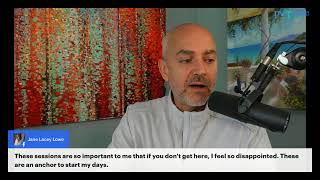
Jim Katsoulis explains why we overeat: evolution wired us to eat whenever food appears. The fix isn't willpower. It's a mindset shift from feeling full to feeling nourished, built through small daily practices that rewire how you think about food.
Chapters
Everyone, welcome to today's program, Your Self Thin Podcast. Today we're talking about Feeling nourished is better than feeling full. This is something you've got to train into yourself. It's not natural, okay? Because, um, you have to understand that we've evolved in a food-scarce environment. So we evolved to overeat when there's food in front of us, because we don't know where to get more food again. But now we live in a completely different reality. You could say we live in an alien environment that we're not prepared for, uh, evolutionarily. Physiologically, psychologically, biochemically, hormonally. And so when food all of a sudden is put in front of us, our old ancient kind of mindset in biology kicks in and we want to eat all of it. There's literally a thing called spontaneous voracity. So fighting against this is not easy. I'm not saying it is, but what I'm saying is we want to train ourselves to aim for a different goal, not to feel full. but nourished. And there's a huge difference between the two. And it takes a little bit of time. I'm not going to sugarcoat it. It takes a little bit of time to train yourself to aim towards that goal. But once you do, it takes care of a lot of problems because not only do we have our biology and our evolutionary factors driving us to overeat, but on top of it, we are conditioned to overeat constantly through all the advertisement we've seen and the foods that we're surrounded by are hyperpalatable and made to be overeaten. So again, this is a challenge that is multilayered. Again, no question about it, but the solution is not to try and fight against it. It is to aim at a different goal, a more evolved goal, if you will. Um, because we live in a different time and place and we need to upgrade our software So the goal is not just to get calories in our body, so I don't know where to get the next ones, but instead to evolve that idea and aim at nourishing ourselves so that we're getting the proper, perfect amount of nourishment, or as close to it as we can get. And that endpoint feels a lot different. And to some degree, it's a bit unnatural. I won't argue that. It's strange, um, to tell an ancestor from 1,000 years ago, if you have a bunch of food in front of you, not to finish all of it. Okay. But we live in a different reality now. So we want to train into ourselves is be able to eat the amount that's needed or necessary for us and then be able to say, I'm good, I'm good, I'm nourished, I have enough, I'm good. And that is one of the big things that we're upgrading here. Again, it's a software upgrade. You can't upgrade the hardware, right? We, we are born with the evolved hardware over millions of years that gets us to overeat the second we see food in front of us. So this is a software upgrade where instead of aiming at filling ourselves up as full as we can possibly be, because we don't know where the next meal is coming from, we now say, I know where the next meal comes from. Fortunately, thankfully, most of us are surrounded by food. And so now we need to change the goal, not from being full, but to being nourished. And what ends up happening when you aim at this is you start feeling different because, A, when you start to focus on nourishment, first of all, you tend to choose healthier foods, right? It's not just about calories. It's about nourishment, right? So you kind of upgrade your criteria. That's the first thing. The second, and this is, I think, the big one, is that you start to get used to feeling fundamentally different because never mind the weight loss piece of it. But I want you to imagine, um, 6 months or a year. where you eat moderately, where you don't stuff yourself. Maybe do it once in a while, but, but most of the time you eat, you eat just the right amount. Just think about this for a second, because that's a reality. That's a lifestyle where you feel satisfied, you feel comfortable, you feel nourished, you feel energized, you feel good. It's the sweet spot. See, nature used to handle the sweet spot for us because there wasn't enough food to stuff ourselves all the time. But now we live in an environment where we're surrounded by it. So we've got to take control of this. Now we have to create this ability. But what happens is it becomes a completely different way of living fundamentally, because now you're not going between being stuffed and then starving, stuffed and starving. You're starting to feel nourished. You're starting to have this more even middle ground. And what happens is you free up a lot of energy. because you're no longer stuffing yourself full of food and overwhelming the system that you live in with calories. And you start to get comfortable living with this slight hunger even. But when you're slightly hungry, you're energized, you're clear-headed, you're focused, you're motivated. This is where all the best things of you live, in the well-nourished part, the slightly hungry part, not the stuffed part. Are you at your best when you're totally stuffed full of food? No, of course not. Now, how many times are you stuffing yourself full of food every day? And so I back it up and I say, never mind the weight piece. You're not living the best way you can. You're not, um, living up to your potential because you're stuffing yourself full of food consistently and you're weighing yourself down with it beyond just what your weight is. It's weighing you down mentally, emotionally, physically. And when you start to live this more balanced life, it feels fundamentally different. And that's what I want for you. So again, if you want to go deeper into this way of thinking, click the link in my bio or go to programyourself. Then go get the free hypnosis session, um, that I made for you and go listen to it. It's going to help you out. Uh, if you have any questions, feel free to ask them. And if you are on Facebook or YouTube, I will put that link in the— There. Into the chat window. But if you have any questions, feel free to ask them. That's what I'm really here for. I like to kind of start off a little lesson, something to think about, um, but ultimately I'm here to help you out as best I can. I'm here every Monday through Friday, usually around noon Eastern, uh, to answer any weight loss questions you may have. My goal is to give you a different way to help you see things a bit differently, um, than you've been kind of conditioned to see them. That's my goal, uh, and I'd like to do it through answering questions. So if you have any questions, feel free to ask them. I will let you know anyone that's in the program already. I know that the audiobook that I put up is being weird. I figured out what it is and that will be fixed today. So I just want to let everyone know that that'll be fixed in the members area. That should be— I think it'll be ready today. Christina says, every time I weigh a little less, I eat more. What is my problem? Yeah, what your problem is, is your motivation. Most dieters rely on pain-based motivation. Okay, think about yourself and think about any time you've actually kind of started or stuck to any kind of plan. It probably was kicked off by some painful moment. You stepped on the scale, you saw a picture of yourself, the big clothes don't fit anymore. Someone said something rude to you. You gotta go to the doctor's and you're freaking out, you're upset, you're feeling a lot of pain about your weight. And then in that moment, that's it, I'm gonna change this. And you jump into your plan, you start doing something. But then you start getting results, and this is where the problem starts, because you were relying on pain to motivate yourself. But as soon as you start losing a little bit of weight, that pain goes down, but so does your motivation. That's one of the biggest reasons I see it. There's other reasons as well— self-image reasons, mindset issues, other things that, that do factor in. But that's the big one that I see, is that most dieters rely on pain to get themselves to do the things that will cause their weight to go down. And that's a very dangerous way to do it because, A, your mind hates pain. It loves pleasure. And number 2 is that as you start getting better and better results, your pain goes down, which again, if your motivation is based on the pain and your pain starts going down, that's not good. Right. So again, when you look at it that way, I think it's pretty obvious and evident why that happens. It's not because you're a bad person, Christina. It's not because you're broken. It's not because, you know, you're lazy. It's not because you can't stick to things. It's most likely because your motivation isn't proper. This is why in Program Yourself Thin, you know, we, we follow the goal weight blueprint— the goal weight pyramid. I can't— you know what, I'm gonna do this. I'm freaking at it. Every time I show this, this thing, it stops focusing. It's making me nuts. TikTok, you may get it focused, but I also stream over to other places, and every time I show this, it doesn't focus, and I get all annoyed when I'm on the live, and then I totally forget about it until the next day when it happens again. I'm writing myself a note. Camera focus, please fix this thing. It's driving me nuts. Anyways, back to motivation. This is why in Program Yourself Thin we follow the goal weight pyramid. All right. Mindset on the bottom, lifestyle and eating. And if you notice mindset, the very first thing we work on is motivation. Why? Because most dieters have no idea how to create motivation. Most dieters, it's kind of like the moon and the stars, like astrology, right? They say, uh, the stars are aligned and now I'm motivated. Oh shit, I woke up today and now I'm not motivated. I guess the stars, the planets must have moved. I don't know. So it's important that you learn how to crank up your motivation. Motivation's a skill. There's a literal science of motivation. A lot of people don't know that. Motivation doesn't have to just be this, this wishy-washy thing that sometimes visits you and sometimes goes away. That's, that's awful. How are you going to succeed with something big in life if you're not truly motivated? And most dieters aren't properly motivated. It's as simple as that. Good news is you can get motivated, right? But I would say that's probably a big part of the issue, Christina, if I had to guess. But yeah, if anyone's got any questions, feel free to ask them. I know we're talking about today, and you know that I didn't really dwell on this, but I am a big believer, uh— what's up, Chell? Um, am I saying that right? Is it, is it Chell? It's got to be Chell. It's not Chell. Is it Chell? Chell or Chell? I don't know. Please let me know. I always— that's another thing, I always, I say your name and I wonder, is that right? Is that right? I don't know. Carolyn says, that's right, motivation is tough. Um, motivation is really not tough. It's really not. I swear to you, I promise you, I don't say that lightly. Motivation is really not tough necessarily when you know how it works, when you understand intrinsic and extrinsic motivation, when you understand pain and pleasure-based motivation. Like, when you understand motivation— does anyone here understand motivation? I'm going to assume not, unless you just have a personal interest and you have studied it. It's not in the, the conventional wisdom in our, in our collective consciousness. How to motivate yourself? No, dieting doesn't show you how to motivate yourself. It gets you all hyped up and emotional so that you, you know, do something for a little while. It's not real motivation, though. Real motivation is what you feel for things that you are consistent with— your work, taking care of your kids, showing up for your partner, you know. I mean, these sorts of things that you consistently show up for, whether you feel good or bad. And it's not as tricky as people think it is. I don't think, you know, again, um, but again, I mean, like in, in Program Yourself Thin, for example, um, this book here, again, when I say motivation— oh, this friggin focus— Motivations First. What does that mean? Well, it means that there's questions we go through. You know, so it's like when we get to the first motivation part, there's, there's pages of questions, you know, because again, when you understand how to motivate yourself, that's the first step. I mean, without proper motivation, what are you going to do? What are you going to do with anything in life if you can't be properly motivated? Now, again, most people just think motivation is just like something that visits you and then goes away. That's just not true. You can develop motivation. Yeah. Carolyn says, I don't. Yeah, exactly. And there's nothing wrong with it. It's not judgment, Carolyn. It's just identifying, acknowledging, and diagnosing what the problem is. You know, the problem isn't that you don't have motivation as much as it is that you don't know how to have motivation. You don't know how to create motivation. That's the bigger issue than not having motivation. You know what I mean? The not having motivation is a, is a symptom of a deeper problem. And the deeper problem for most of you is that you don't know how to create motivation. You don't know how to use your mind and think about things in a way that generates motivation. And I'll give you a specific example to wait. If you are overweight and want to lose weight and have not been losing weight. So if you've been overweight and struggling with it for a long time, I bet— I don't know you, but I bet your main motivation is that you want to look better. Right? You want to look better. And I know that's 99% of you, that's your main motivation, is that you want to look better. And guess what? That ain't enough motivation. Again, if we go into the science of motivation, there's intrinsic, extrinsic motivation. Extrinsic motivation is the weakest form of motivation scientifically, and looking better is an extrinsic motivator that is really dependent on other people. And so you're not going to be as motivated by an extrinsic motivator as you are an intrinsic one. That's just the science of motivation. Now you can continue to keep the goal of wanting to look better because we're not in the business of choosing one motivator over the other. We're in the business of choosing all of the motivation. We want the extrinsic motivation of looking better and we want the intrinsic, more powerful version of motivation too. And that's the beginning secret of really getting control of your motivation. But if you don't even know those words, intrinsic and extrinsic, you're just fumbling around in a dark room trying to figure it out. And that's what most dieters are doing, unfortunately. And unfortunately, that's just one category out of all these, right? Honestly, that's just one. The motivation is just one piece out of this whole puzzle. You don't know how to motivate yourself. You don't know how to change your self-image. You don't know how to install and change habits. You don't know how to deal with your emotions genuinely. You don't know how to change your thinking so that you think like a thin, healthy, happy person. You have no idea how to maintain your mindset and your behaviors so that you get to the results and are able to keep them. You don't know any of those things. So again, it comes back to, if you don't think your weight is primarily driven by your mindset, that's why we put mindset on the bottom. But if you do believe mindset matters, do you know any of those things? And if you don't know those things, I hope you get excited because you can learn those things. Mm-hmm. Again, a big mistake a lot of dieters make is that Well, I'm not motivated, so there's something wrong with me. Oh well, I can't get motivated. We don't look at it like that in Program Yourself, Tim. You know, we figure out how to get motivated. Shell. Okay, I knew, of course it's shell. Um, yeah, if anyone's got any questions, feel free to ask them. Um, Skater says, Jim, how do I deal with being more disciplined with my diet? Um, I'm going to imagine that that question means, how do I be more disciplined with my diet? Right? Because how do I deal with it is almost like you're being disciplined, but you don't know how to deal with it. And I don't know, I'm not sure what that would mean. So I'm going to assume your question is, how do I be more disciplined with my diet? And I'm going to tell you something that you don't normally get it framed this way. I think the way that you get more disciplined with your diet is that you practice being disciplined in a way that's not overwhelming to you so that you get good at it. The way dieters start, it's like you don't give yourself a chance to practice and get better at it. It's kind of like, you know, you want to lift weights, so you go straight to bench pressing 250 pounds, and you can't do it because you're not strong enough yet for that. And you sound like, I can't lift weights. Well, you can lift weights. You can't lift 250 pounds. Okay, so you can lift 150 pounds maybe. And if you lift 150 pounds for a while, then you'll be able to lift 200 pounds. £200 for a while, then you'll be able to lift £250. Okay. But dieters just go straight to £250. Right. What do I mean? We're going to change all of your eating all at once. Why? Because Monday is tomorrow. And so now I'm going to change my eating 100%. And then when you're not able to keep it up for after 3 or 4 days, you wonder what's wrong with you. Let me frame it differently. It would be like if you want to learn the piano and you say, well, the only way you can play the piano is if you're serious, is, is play 8 hours a day. Right? And then you say, I gotta play 8 hours a day. And then you do it the first day and you get through it. And then the next day, wake up, your hands are cramped, your back's killing you, hate the piano. And you say to yourself, oh my God, what's wrong with me? How come I can't get myself to play the piano? Well, you can get yourself to play the piano. You can't play it 80 fucking hours a day. It's too much. It's overwhelming. And that's what you're doing to yourself with the eating. You're going to change all your eating in one moment. I mean, what, what? Especially when you've been trying this for 20 years and it hasn't worked. Why do you think that Monday you're going to be able to completely change your eating all at once? I don't understand it. So to me, the best way to get disciplined is to break it down a little bit. Stop trying to change everything and work on changing one thing consistently. Change that thing, get better at discipline, get better at doing that thing, then move on to the next thing. But again, dieters can't think in phases because it's got to be all or nothing. If it's not all or nothing, a dieter isn't interested usually. So again, I think the best way to develop discipline is to develop it. You're not just going to, you're just going to have more discipline. How would that work? How does that work? That you just all of a sudden have more discipline? I don't know how that works. I've seen people develop discipline. And to be honest, even if we went into it deeper, it's even more, a little more, uh, interesting than that even. But that would be my, my initial suggestion. Uh, what's up, Jane? Jane says, I'm trying to have more intrinsic motivation, but have to admit my main motivation is extrinsic. It's about wanting to look better, and that isn't and hasn't worked so far. Yeah, but I get that, Jane. But again, the first step is always awareness. So you're in that phase still, Jane, I got to tell you. And so you're realizing that wanting to look better is not enough motivation. That's what every dieter has to come to terms with at some point. And I know it's hard to believe because you want to look better so badly, you think, but it's not working for you and it just— it's confusing to you. It doesn't make logical sense, but you're not a logical being. So that's why. But you're all in the same boat, right? You all think about and want to look better 24 hours a day and it's not happening. So that by definition means it's not motivating enough. This is not a complicated issue. You can't just tell me— and I've had people tell me this is why I'm saying it— you say, oh no, Jim, I really want to lose weight. Okay, well, how much weight have you lost this month? None. Well, then you don't really want to lose weight. I'm not judging anyone, but come on. Motivation is a real clear thing. You're either doing the things to get the results you want or you're not. And if you're not doing the things, it's because you're not motivated. Let's just make this real simple. If you're not losing weight, it's because you're not motivated. Anyone want to argue that? I know that goes against what we're supposed to say, but let's be honest, if you're not losing weight, it is because you're not motivated. And the question to flesh that out is, if I said, I'll give you a million bucks if you lose weight this month, do you think you would do more to lose weight? Do you have higher gears that you have not accessed yet? And obviously you do. And so again, dieters are— and I'm not judging you all. Again, I'm here to support you all because I think it's unfair that dieters have been sold a bullshit bill of goods in a way. You know, dieting is complete bullshit, folks. It's not there to help you. It is there to hurt you and keep you trapped. Okay. So it's really important. I think that you understand that a lot of the things you think about managing your weight are completely fucking wrong. And I can't put it any other way. I don't even want to swear, but there's just no other way to put it. What you think about managing your weight is completely wrong, but most dieters think they're completely right and they just need to get themselves to do it. And you could spend 40 years trying to get yourself to do something, and if it doesn't work, it's not the right thing. That's how I think of it. Uh, hey, what's up, Angie? Great topic, thanks, Jim. Yeah, sorry, Angie. I, I know Angie, and you went through some stuff, so we got that all fixed out. So I can't wait to get you on the call next week, Angie. Um, Jane says, struggling to manage my emotions. Ideas? Um, yeah, I got a great idea, Jane. Jane, I got a really good idea for you. Are you ready? It— Jane, it's— go, go open this thing up. Here's my idea for you. Go to page 29. Your emotions fuel for your success. I'll go right through the questions, right through the questions. Okay. You're not struggling to manage your emotions. You're— you don't have good strategies to manage your emotions. And that's an important distinction to make because the struggle is a The struggle is an outcome of not having the right strategies. Okay. Blanket on how to say this the way I always say it a million times. The symptom— yes, the struggle is a symptom of a deeper problem. Deeper problem is you don't have the strategies to feel the emotions you want to feel. And that, that section will, will walk you through it so that you can get on the call on Tuesday or get on the podcast and ask a more specific question. Than the general one, struggling to manage my emotions. That's so vague, it's practically meaningless. So again, just going into that section is going to help you get more defined and you will come back and say, I'm not— I'm struggling to feel more confident or I'm having issues relaxing, you know, and then we can go into it more specific. That in general, I think, is one of the biggest— I've been doing this for over 20 years and I would say professionally, And, um, I would say the biggest thing I offer people is that I— they come to me with very big, vague problems and I bring them deeper into more specifics. Oh my God. How do I handle emotional eating? Well, emotional eating is a giant concept. You can't just fix emotional eating, right? It's, that's a big description of something. So we gotta drill down. Well, what, what emotional eating specifically? You probably have a couple different patterns and, and versions of emotional eating, which is the biggest one. Let's go to work on that. You know, we get specific, specific, drill down, down, down, down, down, and then it's a lot easier to manage it. To try and figure giant things out is practically impossible, and it feels that way, and it's frustrating, it's overwhelming, and we get discouraged quickly. Uh, Marston says, any help against food noise? Um, yeah, I mean, food noise, you know, there's a lot of ways to deal with food noise. There's, again, in Program Yourself Thin, we usually take a three-staged approach to every— oh, that ain't it, sorry. Let me, uh, go back to the pyramid. So with Program Yourself Thin, we tend to approach problems kind of this 3-step solution. Okay. So with food noise, um, we have a mindset component to deal with food noise, kind of how you talk to yourself, how you think about food, you know, what you say to yourself. Um, all of these types of things and questions you're asking, all of that. Um, that's part of dealing with food noise. The, the huge part, I think the biggest part of actually dealing with food noise is the lifestyle piece. Okay, eating's really important too. They're all important, but I think lifestyle is the biggest factor in your— I think it nudges out eating by, by a hair. And when I talk about lifestyle specifically, I'm talking about the 8 lifestyle habits that we talk about: sleeping, hydration, relaxation, breathing, nourishment, movement, meditation, gratitude. If you get those things into your life, you're going to feel your food noise going down. And then finally, eating, um, what you're eating. So the easiest way to start dialing down the food noise is to stop eating so much processed junk food, fast food, and start eating more whole natural foods. So again, it's a, it's a comprehensive holistic strategy we take to dealing with food noise. There is just no one solution to it, um, other than the GLP-1s, I suppose, if you wanna consider that a solution. Um, I kind of consider that a temporary bandaid on a gunshot wound, but hey, we all have you know, the choice to define it how we want. But that's how I would approach food noise. And I'm obsessed with food noise. I've been obsessed with food noise for 30 years. Uh, Marston says, I'm in a deficit and always eat OMAD at 6 PM, but sometimes I'm just too weak and go for something. Um, yeah, again, I think, uh, you know, running in a huge caloric deficit and eating one meal a day for most people is going to be the way to crank up food noise as high as it can possibly go. So again, in Program Yourself Thin, we manage our hunger, we don't fight against it. And what you're doing, Marston, is you're trying to fight against your hunger directly. And, uh, good luck. You know, it's a battle very few people win. You know, it's very difficult to fight against your hunger. I mean, when you really— I, I got to do a lesson on that because, you know, hunger is really understated. Because when you get hungry, folks, you know, you want to know what you are? You wanna know what we all are? We're eating machines. We're eating machines. That's pretty much what, what most of this whole thing— I'm pointing to my brain, my nervous system, my body. Everything here is primarily built to eat. It's the number one thing, right? I know, I know procreating is the number one ultimate thing, you know, technically in a sense, but eating is moment to moment the most important thing. And I know beyond breathing— breathing is kind of automatic though. Okay. And so eating is the thing that has been the biggest challenge for humans for a million years. So when you get hungry, you don't just get a little rumbly in your tumbly. Okay. When you get hungry, it affects your entire system. Your hormones change, your biochemistry changes, your sensory sensory— what's the word— your senses. Let's just go— your senses change, right? Um, when you're really, really hungry, uh, you know, you can see food, you know, across the street. You can hear people opening up chip bags on the other side of town. You can smell, uh, you know, someone cooking something delicious, you know, two towns over. So being hungry is far beyond just a little rumbling in your stomach. It, it becomes all-encompassing. I regularly say it's like holding your breath. If you ever hold your breath, you'll really find that the first part of it, you're irrationally confident, and it becomes an exponentially accelerating experience of panic the closer and longer you go, until eventually your entire body is screaming out for stuff. So same thing, you, you, you restrict over restrict. All of your cells start screaming out for nutrition. It's a battle you're not going to win, folks. No one wins it. You know, there's always one or two people that win it. You know, there's always an outlier, but the vast majority of people are going to lose when they battle their hunger. And, uh, I don't know, I didn't make that up. I— if that wasn't true, I wouldn't say it. But isn't that been your experience, folks? Have you all been able to win against your hunger? Do you know anyone who's been able to win against their hunger long-term? I'm not saying, you You can fight your hunger for a little while and win and drop some weight. I'm not arguing that. I'm talking about long term. Do you know many people that have been able to fight their hunger for years, decades? I don't. I don't. And I study people that have lost weight and kept it off. I've been doing that for over 30 years. I, I can't think of one of them that is fighting their hunger. Every single one of them has learned how to manage it. Strategically. So, you know, I, I don't know, Marston, keep walking your path as long as you want it, but, but if it doesn't work for you at some point because it's kind of overwhelming for you, um, and it's not working, please come back. I'll offer you a different way. And I would suggest that you go get the free hypnosis session I made for you, um, because it's not just the hypnosis session. I made a whole training for you. I got a bunch of stuff I give you for free. Um, and next week I'm really going to highlight that because I got, I got a lot of cool stuff coming your way, folks. And I'm finally going to get to it. I'm wrapping up a project, um, probably tomorrow, a week later than normal. That's okay. Um, and then I'm going to move into that. So keep an eye on that. Make sure you pop in there. Um, Marston says, yep, um, 76 kilograms now. I want to get to 70 so bad. Yeah. Okay. Again, you can do it. It's just how can you do it? You know what I mean? So, uh, one other thing I'll say, Marston, and it's a big distinction is that most people, when they're dieting, you yourself, right? Everything's about getting to 70 kilograms. What I'm more concerned about is living at 70 kilograms, if that's the goal. Okay. And truthfully, I don't even know if that's really what you even want yet, because no one really knows what their ideal goal weight is until they kind of get close to it or to it and then live there for a bit, see if it actually meets the hype and is worth it. Right. So again, and this is my book here. Notice it's about living, la la la la la, living at your goal weight. And not to bum you out, but most likely you can't imagine yourself restricting and doing OMAD for the rest of your life, right? That probably terrifies you, that idea. But that response really is pretty, pretty illuminating, you know, because it reveals that the idea of staying there and doing that is you can't even imagine it. And that's a big problem. And that's what most dieters kind of experience, that they think about— they think about weight loss all day long, but the idea of like living at your, um, living at your goal weight feels terrifying because it's miserable, right? Most of your dieting experience is miserable. So to think about doing that forever is just terrifying and awful. But that's an interesting point anyways. And he says, thanks for the honesty. Yes, that's what I'm here for. I am here to be honest because I think that I literally think the entire, entire diet industry is bullshit, you know, because most of the diet industry is just the food processing companies. So they really set the whole frame for dieting and it's completely wrong. Weight Watchers is owned by Heinz. Jenny Craig was owned by Nestlé. Uh, Atkins Food Products, owned by the same company owns Auntie Anne's Pretzels and Cinnabon. SlimFast, owned by the same company owns Ben Jerry's ice cream. You have been indoctrinated by food companies about how to manage your weight. I don't think they got your best interest at heart, personally. I do. I'm here every day for free. I'm here to help you out for free. Um, so, you know, I think that what I'm saying a lot of times, it sounds weird because it's— you never hear this side of things. Am I right about everything? Absolutely not. But am I right about a lot of things? Absolutely yes. Absolutely yes. Uh, and you'll see it again. I'm not— I'm not here to convince you of anything. I'm here to point out things that, once they're pointed out, are self-evident. Um, that's my goal. But yes, it has to happen through, through honesty. Jane says, is your big project associated with PYT? Yes, yes. Um, the big project is actually a training I'm doing. It's called Reprogrammed: How to Live at Your Goal Weight Without about the fight. Um, so that should be available. I should have that ready to go next week. And that, that is— I've been working on this for a long time, so I'm so excited to have this done. I'm so excited. Um, I can't wait. And I'm so excited. I mean, boy, it's been over my head. I can't wait because I got so many other things I can't wait to work on. And, um, oh yeah, it's gonna be super exciting. Yeah, if anyone's got any questions, feel free to ask them. Marston says I might check it out. Thank you, man. You're welcome, you're welcome. Yeah, check it out. Again, if you get on my email list— and I say this to everyone— if you get on my email list, um, one of the things— it's kind of there, but it's not really front and center. It's going to be more front and center probably next week or the week after— is a thing I do called PYT Daily. And that's going to be my main free thing to you all. Now, I still got the training I'm gonna give you for free, the hypnosis session for free, my goal weight quiz. I give you all that for free. Okay. But the core of it is PYT Daily. And what that is, every day I just send you a quick email. And this is actually from a program I used to charge for. So it's like a coaching email. It's not just bullshit. It's, it's like a, it's valuable. I think, you know what I mean? If you don't think it's valuable, you just unsubscribe. But, um, a lot of people really, really like it. It's really valuable because it supports you every day. It teaches something new every day. That's what you need to create change, folks. You need consistency. The most important thing, and I'm going to give it to you for free. Okay, so again, I— it's in there if you kind of get in here today. I send emails out where you can get it right away, but, um, I will be sending— I will be promoting that way more after, um, the next couple weeks here. I'm kind of redoing my free thing so that it's easier to get access to all that. So yeah, so go sign up for that hypnosis session. Kim says, is this a new book that will be done next week? No, not yet. I, I got to finish up. I'm finishing this training up. Just recorded this, so I got this. The audiobook is ready to— well, the audiobook's recorded. If you're in the program, it's in the members area, but it's not working yet. There was a technical weird glitch. I'm going to fix that today, tomorrow, one of these days. But the audiobook's done and recorded. I just got to put it up in Audible now. So if you Um, like audiobooks and want to get that, I will have that information for you. I'll probably have it up next week. I think I should be able to do that. Um, and then I'll have that, my training done, uh, maybe this week. I might have it done this week. I might not. I don't know if I had to put money, if I was a bet man, probably next week. Um, and then, and then though, I'll be kind of re-optimizing the program and do a quick loop through the program, fix a couple things, and, uh, then it's going to work on the next book. And, um, and a few other things in the short term. So, and I'll keep you all up to date on that, obviously. Oops. Uh, Maureen says, is the book The Goal yours? How do I get a copy? Thanks. Um, The Goal is— it's part of the program, so I'm not trying to tease you all. I just kind of show it to you. Um, CH Flay wanted to When on the audiobook? Um, where and when on the audiobook? It'll be Audible, um, and, uh, probably next week. I think I should have next week. It's all recorded. I just have to upload it and do whatever you got to do to put a book on Audible, which I don't know, so I'm kind of learning that. But it'll be this book here, all right? And, um, people really like in the audio version. Again, I am a hypnotist, you know. I, I, one of my main, um, I don't know, values, I suppose, is, is my voice, uh, you know. You like it or you don't. But, uh, if you do, yeah, I read the book and, um, I think it's pretty cool. I, I've actually listened. I like it, you know. So whatever. Yeah, if you like audiobooks, this book's great, and I think it's a great thing to listen to regularly. Uh, and I think of it as basically hypnotic sessions. I, I think there's 40 chapters in here, each one's a page or two. Um, so they're short. I mean, each chapter is a minute, 2 minutes or something, the audio version. Um, each physical book page is a page or two. Um, but the idea is that you can The book, you can just open up to any chapter at any time, read a chapter, and it's valuable. Um, same thing with the audiobook, you know, and it's meant to— I like the audio more because again, for those of you that are in the program and listen to my voice a lot, listen to all my hypnosis sessions, um, it's going to have a deeper impact on you because you associate my voice with relaxation and calm now. Um, so that's, I think, the extra benefit there. And I'm gonna have a lot more hypnosis sessions coming out. That's another thing. The next couple of weeks, I'm going to start consistently putting out brand new free hypnosis sessions. They will be more varied. They won't all be weight. You know, I'm going to do kind of a wide variety of them just because I like doing them. I love doing them. You know, if you go to my YouTube channel, it's probably where I have most of my hypnosis sessions. I just upgraded my SoundCloud account so I can just put unlimited up there now too. So I'll put them up there as well. But I will give these away for free. These will be free hypnosis sessions. I'll probably create a page where you can, if you want a session on something, you can put an idea in. And I'm going to start consistently making more hypnosis sessions as well. So that's just— that's a non-Program Yourself thing. Some will be about weight, some of them will be about other things. So that's coming too. Uh, what's up, Hillary? Hillary says, at goal weight, how do you know you need to adjust? Uh, do you try to stay in a band number of pounds or, uh, body feeling? Maybe have redo permanently. Thanks especially for daily, love it. Um, yeah, and Hillary, I don't know if I mentioned this the other day, but thank you. Um, I'm pretty sure it was you. You sent me the thing about, uh, Kessler there and the drugs. Was it Dice, Drugs, and Dopamine? I forget the name of the book. Um, thanks, Minnesota. Um, and I was kind of down on that book a bit, and I was saying, oh, there's no mindset stuff in there. And I think it was you, Hillary, that wrote that some of the later chapters do go into that. So I mean, I'm gonna go get that book again and read those chapters because I do like him. I think he's very smart. I just get so annoyed with that book. I don't like the subconscious messages in it, you know, but I'll read those chapters. I think he's super smart, so I will read those. Okay. But yeah, at goal weight, how do you know you need to adjust? Okay, so here's a secret, folks. Your goal weight is not just a number on a scale. That's part of your goal weight. But the other part of your goal weight is what's it doing to your quality of life? So this is why someone like Marston, who is just here, who's doing— sounding like severe restriction. If you're doing severe restriction and OMAD and you're stressing out about it constantly, Yeah, you're losing weight, so you're getting close to that number, but your quality of life's going down. And if your quality of life is going down while you lose weight, you're not going to stick with it. And this really, to me, explains why most dieters, 85 to 95% of them, can't stick with— at their goal weight. Okay. So, um, figuring out your goal weight is not just about the number you get to. It's really about what's your quality of life going— if you have to struggle and strain and fixate on food and exercise and calories and micromanage everything, and everything's about weight to be at your goal weight, that's not a great quality of life. And so maybe that's not the right goal weight. You know, I always say, um, 15 years ago I put 25 pounds on and I took 15 pounds of it off because it was affecting me in ways I didn't like. But I also raised my goal weight 10 pounds. Your goal weight, folks, you get to choose your weight. It's one of the real true freedoms we have in life is you get to weigh what you want to weigh. And so you can raise your goal weight a bit if it's going to make you happier. And I know that may sound like a strange concept. I don't know why. I don't know why almost all of you have lost weight at some point and gotten close to your goal weight and you didn't stick to it because doing it got tedious and miserable and boring and frustrating. And so you went back to what you always did. So again, um, that's kind of my big thing with figuring out the goal weight. Um, Jane says, yes, I like the daily messages. My friends know not to call me when I'm on here with you. That's awesome, that's great, Jane. Again, it's smart, right? Because this becomes part of your routine and it's just smart. And, um, you know, Jane, I, I know I want— I know you know this anyways, but it's like, you know, I don't know, it's anything I do that's like a skill set. Um, if I'm playing guitar and I'm learning a new song, or, uh, basketball, I'm practicing a new shot I haven't been able to do. It's a hook shot, right? And I've been able to do it in years because my shoulder was was screwy. Um, so when I first go to do it, or I first go to do it, it's annoying. It's annoying that I'm not just better at it, you know? And so I get it. I get when we first start doing something we're not great at, it's annoying, especially when you're an adult. So I, I have so much respect for you, Jinx. You keep showing up. But again, we have to look what's going to happen next year at this time if you consistently show up for these podcasts, if you go through the whole blueprint completely, um, if you keep doing the redo rehearsal technique. Where do you think you're gonna be a year from now? You know what I mean? You're gonna be exponentially better off, you know, and more skilled and talented. That's why, you know. Um, Jackie says, I fell— I fell off track last few days and can't seem to get back on. Been overeating sweets lately, especially in the evenings. How do I make myself stay on healthy eating and stop bad habits like constantly grabbing junk food? And even when I'm full, um, there's so much embedded in your question, Jackie. Um, and it's not really good. There's a lot of like the languaging really reveals a lot. How do I make myself stay unhealthy? You don't make yourself, you know what I mean, folks? This isn't really— ultimately, it's not a willpower game. I know you've been led to believe that you're managing your weight as a willpower thing. It's not. You can't willpower. You can't override your programming with willpower long term, you know? So my question would be more How can I easily get myself to eat healthy foods? I wanna be thin, healthy, and happy. I wanna eat clean. I love eating the way I've been eating. And all of a sudden, I start getting into the sweets and I don't like it. I start to— I'm not sleeping as well. I'm frustrated with myself. My weight's going up. I don't like it. I wanna get back to eating healthier and I want it to be as easy and enjoyable as I possibly can make it. How can I make it easier to eat healthy? How can I make it more enjoyable? Those are the questions I'd be asking, Jackie. And that's the answer, by the way, is to reframe the questions you're asking, right? The idea of how do I make myself be healthy? How do I make myself eat healthy food? Your subconscious mind rebels against that because it sounds like you're being forced to do something you don't want to do. And that's how most dieters kind of internalize it anyways. Um, yeah, Carolyn says, great, I'll be grabbing the Audible. Yes, the Audible should be ready by next week. It'll be ready to go. Um, sugar is a roller coaster in a sugar-free June challenge and shocked how much better I feel. Yeah, sugar is absolutely a roller coaster. Absolutely. Absolutely. And that's exactly how I think of it. I eat sugar, but times when I'm deciding whether I want to eat something with sugar or not, a lot of times I'll say to myself, I don't want to get on the roller coaster. I think of myself— sugar is cravings on layaway. I know if I eat this sugar thing now, I'm going to want more sugar in the near future, and I'm gonna have to fight against that. So, you know, sometimes I eat the sugar and I'm ready to do that. But a lot of times I say, I don't want to even get on that roller coaster. I don't want the roller coaster. I don't want the ups and downs of sugar. You know. So I agree, Carolyn, you know. Um, yep, Vicki says, looking forward to being able to access the audiobook. Yes, Vicki, it's gonna be fixed and ready today or tomorrow, and it's just really a question of how long it takes to upload it. But, um, that'll be right where it is now, right? So you found it, Vicki, I'm gonna assume, but it's not playing past chapter 5. I figured out what that is, um, and I'm gonna fix that. And so that, that the new player should be up and ready to go, today or tomorrow. And, uh, I will send a message out when it's ready. I was gonna send a message out, but I was getting a feeling that it was screwy and I didn't want to do it until I fixed it. And so now I know how to fix it and, uh, that should be all set soon. Uh, Vicky says, what will be some of the weight— non-weight related topics for the hypnosis in the future you'll be recording? Um, you know, technically in my mind everything's weight related basically. Um, but it might be things about emotions like feeling confident or relaxed. I have a bunch of these already up there, folks. If you like hypnosis sessions, my YouTube channel has tons of them. They're all free. Some of them do put ads in it. It's so annoying. That's why I get the SoundCloud thing. I am going to put my long hypnosis sessions on SoundCloud because you'll be able to listen to them uninterrupted. Okay. But YouTube, I have tried to stop the ads and they just, they just put them anyways. So that's so annoying to me. But that's why I upgraded the SoundCloud account so that I can get you those sessions for free without having ads in them. But yeah, the, the different topics, like literally anything you can think, performance topics, emotional management topics, thinking topics, anything. I just love making hypnosis sessions. So I kind of miss it. I haven't really been doing it. I've been focused on other things, but I'm making it a point to get back and record at least one a week, you know, and hopefully more. And then I will have some way to get people's feedback. So whatever sessions people may want, Dealing with alcohol, that's one I wanted to put on for sure. Things like that. Carolyn says, "If messing with stress cortisol makes it harder to lose weight—" Yeah, I mean, I think the science is pretty clear that cortisol certainly doesn't help weight loss. And I think in a lot of ways it— it prevents it, slows it down, you know, makes it harder. Uh, so yeah, I think managing cortisol should be a fundamental part of everyone's strategy for managing their weight. Yeah. Um, Jen says, I was doing really well a few months ago. I had some things happen that were so good, and now I'm struggling to get back on track. Any suggestions? I'm not hungry during the day, but then I snack all night. Um, yeah, okay. So, so again, good job, Jen. You know that you, you did well, then you got off track. Great. You're in a better spot than you were. Um, the goal is now is go back in your mind to when you were doing really well. What was going on? Success leaves clues. So go into the details of what you were doing. What was a typical day? What was a typical week when you were doing well? And start to notice what you were doing then with what you're doing now. And a lot of times you're going to notice a lot of differences. Maybe you were going to bed earlier, maybe you're drinking more water, maybe going for walks, maybe you're eating fruit in the afternoon, whatever. Compare what you were doing when you were doing well with what you're doing now and zoom out a little bit. Don't just look at the eating. Look at the lifestyle and how you are approaching things. Look at the eating too. Okay. But also look at the lifestyle and how you're approaching things. And I think you'll start to notice that there is a lot of— there's a lot of differences and there's, there's more. Most people do this, right? Because they say, oh, so on track and now I'm way off track. But what they're saying is only the food. I wasn't eating ice cream at night. Now I'm eating ice cream at night. Okay, but usually that's a symptom of something deeper. You know, a lot of times when people say that when they weren't eating ice cream, they were doing other stuff and that supported them not eating ice cream. So again, don't just zoom in on the behavior, zoom out a bit and see the context within which the behaviors live. And that might be really illuminating for you. Um, Vicki says, actually, I haven't been able to locate it. Okay, Vicki, I am going to send a direct link out. I, again, I may get it done today. If not, I will get it done tomorrow. Um, and I will make sure that I get that going. Um, yes, and you'll be able to access it from the Circle app. It won't actually be in the Circle app, but there will be a link in the Circle app that goes to the members area where you can listen to it. Okay. Um, yeah, Jackie says, oh my God. Yeah, you're right. Thanks. Uh, I'm right a lot, you know, not because I'm a genius, just because again, honestly, folks, when you look at this weight issue from a slightly different angle, it looks a lot different and it's amazing. It's like all of a sudden things that were so confusing to you and so stressful and frustrating. Become crystal clear. And I think that's important. Jane says, will money be a topic? Money management? Yeah, I'll do some money ones. I love doing money ones. That's a, you know, again, I— weight has always been my main focus, but I used to be a bit more of a generalist. And for a lot of years, I really did. I kind of had two paths. I mean, it was always mostly weight, but for a while I was doing executive coaching, you know, so I would— or especially entrepreneurial coaching. So I shouldn't say executive. It was more entrepreneurial, um, coaching, uh, and there was money management with that, you know. So I actually have other programs. I never even sell them. I've got programs, um, you know, Instant Confidence, um, Sleep at Will. I, I had Solopreneur Success. That, that was a great program. I got a bunch of other programs. I just never even promote them. And then that's something I want to kind of at least put, you know, if y'all are interested in them, you can get them. But I have a bunch of different programs. So. And I like doing that. So again, as I really— I want to go through Program Yourself, then I want to give it another, you know, kind of tune-up a little bit. And then, um, I, I believe I'm gonna be able to compartmentalize my time and be able to do some other types of, uh, sessions. And then probably not too far in the distance, you know, a few other programs I would like to do. Um, Connie says, hi Jim, you always answer all my questions before I ask, so best lesson from you is being calm, gratitude. And to enjoy whatever you are eating, to living at my goal weight. Thank you. Yeah, nice job, Connie. Exactly. That's my goal, right? Is that so much of the answers that I give you really are on top of the foundation. Exactly what you just said of being calm and expressing gratitude, you know what I mean? And enjoying what you're eating, you know, genuinely. So that's awesome. I'm glad you got that out of what I'm saying, because that's 100% what I want to convey. And there's more to it than just that, but I think that's the core of it. It, you know. And if you can get that down, um, it's good. Minnesota Girl says, nice to see you live, love your content. Thank you, thank you, I appreciate that, appreciate it. Uh, Shell says, so true, it affects my mentality, I'm more anxious with sugar. Yeah, exactly, that's what I mean. And that— and, and noticing that is really important because that's what allows you to make this about more than just the number on the scale. And more about the quality of your life, you know. So again, I would hope— and you may find— you may not believe me, but a lot of times when you really internalize and get and see clearly just how much a negative impact the sugar has on you beyond just the weight, what it does to your emotions, what it does to you energetically, what it does to your ability to focus and your cognitive, you know, executive functioning. There's so many factors in your life where the sugar is really, really destructive, literally destructive beyond just the weight. And so when we bring all those things in, we tend to feel a lot more motivation, you know. Now, again, I want to make clear, my endpoint with sugar is not to eliminate it. I like having some sugar. I treat sugar like alcohol. So I like sugar a little bit. Too much sugar, I don't feel good. It's got too many negative impacts. No sugar at all. Well, I don't like that either. I wouldn't like that. So the sweet spot is kind of moderating it, you know, and I think, um, by recognizing those bigger factors, that's what helps us get there. So agreed, agreed. Um, yeah, Eileen says, I love that sugar— sugar is cravings on layaway, right? Yeah, I absolutely— I love that. I think that all the time. Um, I think that with a lot of foods, you know, I think processed foods are like that. Uh, now again, it's different for different people too, you know, but if you start looking at certain foods in your life that when you eat them you— your cravings are cranked way up, you know. It's very illuminating, and then you can strategize more effectively. I'm glad you like that. Says, I love your take on drinking alcohol. Good, good. And I had a real alcohol issue, folks. So, so again, the alcohol thing is another thing I'm intimately familiar with. I had a real issue for a number of years with binge drinking, and I used all the techniques that I use in Program Yourself then to help manage that. And, um, uh, exactly the same techniques, you know, and it's worked for me. And I still drink alcohol, please understand, um, but I was able to dial the alcohol down to a moderate level that I'm, that I'm comfortable with. Am I saying that anyone can do that? You know, I don't want to get into the alcoholic debate. Um, I'm not expert on that, okay? But people were putting that label on me. I just never— it just never felt right for me. And so I was able to walk this path and get control of the alcohol. And so, yeah, I have a lot of insights on that too. And that's another program at some point in the future I would love to create. I think it would help a lot of people, but I appreciate you saying that. Vicky says, I find when I'm juggling all the balls in the air and then overload strikes, that's when my eating goes off track. Yeah, of course. Right. Same here. Same with me. I think most people would fall into that category. You know, but it's not that you're a bad person that you start overeating. It's usually that what's underneath you, kind of the life underneath you, is just, you know, driving you towards that. It's very stressful and you're having to struggle to deal with it. Follows up, I says, yeah, listening to you and PYT keeps me in the game of long-term weight management. And again, Vicki, you should all listen to Vicki. Vicki is a pro. I mean, she's a Weight Watchers lifetime member. She's been in Program Yourself Thin for a while and she actively is working this. You know, so again, yeah, it takes, it takes effort, it takes focus. Um, so it's not, it's not that you can just not ever think about your weight again, just live at your goal weight. What I'm saying is that you can master it in a way where it doesn't feel like a diet, where it doesn't feel overwhelming. It's just part of your life, you know. And I think, um, what you're saying, Vicki, I agree 1,000%. Um, Jane says, these sessions are so important to me that if you don't get here, I feel so disappointed. These are an anchor to start my day. I appreciate that, Jane, and I, and I take that seriously. I want you to know that days that I miss, there's almost always a very good reason because this is very important to me as well to be here. I've said this a million times, but this is my mission in life. My mission is literally to help as many people as possible live at their goal weight. And it goes far beyond this being my job and my work. This, this is, again, it's a mission beyond that. That's why I'm on here every day for free. You know, I say this all the time, not to impress you, but to just let you know that I know what I'm talking about. But, you know, it's $25 grand to work with me privately. Like, I work with, with very, very successful people, and it costs a lot of money. But I'm here for free, and I've been doing this for over 3 years because this is so personal to me. And it's personal to me because my father died of a heart attack when he was 54 years old. So to me, weight is way more than just how you look, just fitting in the skinny jeans, just wearing the bathing suit to the beach. It's literally life and death. And that's why I give you all so much free stuff and get on here every day for free, um, because I want to help you regardless you get in the program or not. And, um, I'm obsessed with it. And that's why I say get in my— get on my email list because I got that. That's one of the things I'm gonna be doing over the next month in July for sure is the free thing I offer you is going to have a huge upgrade. And, um, because I take this seriously. So again, I know I wasn't here yesterday. Um, but, but again, there was, there was a good reason for it. So, you know, I don't miss these unless there's a real good reason. So I, I appreciate you saying that, Jane, and if I miss it, um, yeah, it's only because there's a good reason. Yeah. Uh, says, I'm glad, I'm so glad I'm here. Well, I'm glad you're here too. And again, make sure you go get the hypnosis session because then you're, you're here all the time, right? Even if you miss this or not, um, you know, I'm still in your world because like I said, that PYT Daily, people love it. It's really good. I mean, That's toot my own horn, but it's so good. The PYT Daily I love. Um, I think it's such great stuff, you know, it's 365 days of— I mean, I remember I created all over a year, like, like it's— I think it's really valuable stuff and it's just little bite-sized pieces. So it's good and it's a nice way to just kind of engage with this without overwhelming yourself. So anyways, that's coming down the pike. Yeah. Um, Carolyn says, yes, this value is incredible. Appreciate you. Thank you, Carolyn. I appreciate you saying that. Um, all right, with that, I'm gonna get out of here. I do have a lot of stuff I gotta get done here. So, um, if you're not in my world, click the link in my bio or go to programyourselfthin.com. Go get the free hypnosis session. Um, listen to it. Get all the other stuff that I give you for free. Uh, if you like this, I'm here every Monday through Friday, usually around noon Eastern. Um, so hop on and ask any questions you have. I'm happy to answer them, help you out in any way I can. And if, um, you miss the live and like listening to it, it's also a podcast. So you can search Program Yourself Thin on any podcast platform. Up at POP, so you can listen anytime you want. And, uh, this book's available. The Tao of Living at Your Goal Weight is available all over at Amazon. Uh, the audiobook will be available probably next week. So thanks everyone, have a super duper day, and we'll talk soon. Bye.
More from Jim



Weight Loss Visualization: Wake Up in Your Dream Size #programyourselfthin #weightlosshypnosis



What If You Pretended to Be Thin for One Hour? #programyourselfthin #weightlosshypnosis




