Program Yourself Thin Live 6-21-26
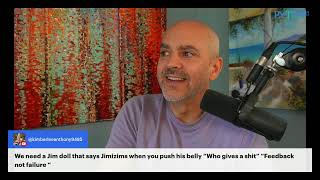
Jim Katsoulis explains how to build a "goal-weight machine" that runs automatically instead of fighting cravings through dieting. He covers the Goal-Weight Pyramid (mindset, lifestyle, eating), the redo-rehearsal technique for recovering from slip-ups, and why managing emotions like comparison matters more than visualizing a thinner self.
Chapters
Everyone, welcome to today's program, Yourself Thin podcast. Today we're talking about your goal weight machine. And this is, I'm going to give you some specifics about how to build it. But before we get to that, I want you to understand kind of the conception of this idea, right? Conceptually, uh, is that most of the time what people are doing is they're fighting against their overweight machine, right? So what I mean by machine is basically the way that you're programmed, what you do naturally, the way you think, the way you feel, the way you behave. That leads to your weight. We can think of that as a machine. And you have had an overweight machine installed into you through the environment you live in, through all the commercials, literally tens of millions of food ads in your life, the hyperpalatable foods that are put in front of you, uh, the constantly being surrounded by them. It is a machine that operates in the back of your mind now. So that if you're not thinking about actually controlling your weight, if you're just living your life, eating the way you normally do, you're overweight. Okay. So we can think of that whole thing as a machine. And what you have been doing the entire time is you have been trying to fight against that machine. You've been trying to fight against your overweight machine. And the main way you've been trying to do that is by dieting. Right. Dieting basically tells you fight against everything you're thinking and want to do. Fight against your cravings, fight against your hunger, uh, fighting against your behaviors. And that is most likely what you've been doing the entire time that you've wanted to lose weight is you're fighting against yourself. You're fighting against your natural impulses, your desire to want to do these things. And it's a nonstop battle. The reason why is that the machine runs on near autopilot. The machine does not take very much energy to run. You, your ability to fight against it takes lots of energy. So there's a huge imbalance there, which leads to us doing the wrong thing on autopilot, fighting against it for a little while, then going back to the norm. So what I want to do conceptually is change in your mind the idea that you're fighting against yourself. And transform it into you creating a new machine for yourself with the goal being that this machine is going to run on its own eventually. The difference being that this machine is going to bring you to your goal weight and keep you there so that you don't need to fight against it anymore. You're building a new machine so that the thoughts you naturally have, the feelings you have, the behaviors you naturally do keep you at your goal weight. This is generative. This generates your goal weight, as opposed to the method being that you're going to fight against the overweight machine to lower your weight. Do you see the difference? When we fight against the machine, the whole concept is that we need to fight against this thing, and the only way we can succeed is when we're 100% focused on it and fighting it. That's the only way to win. The other way says that when we create this goal weight machine, when we automate it, when we get it all set up, it's going to run and keep us at our goal weight naturally and automatically. That's the goal. Now, right off the bat, it's a completely different conceptual idea of how you're going to influence your weight. It's fundamentally different because on one side, you forever have to fight against your machine. And on the other side, you do not. You can live your life. You can do the things you want to do, trusting in yourself to do the things that keep you at your goal weight. Now, I want to be crystal clear. I'm not just spinning fairy tales. It takes a while. It takes focus, effort, concentration to create this machine. There's no question about it. But what I want you to recognize is that it's a completely different approach that at least gives you hope that at some point you can naturally and comfortably live at your goal weight, that it does not need to be this white-knuckle battle forever. Because you thinking that it needs to be a white-knuckle battle for the rest of your life is one of the main reasons that you're struggling because you're avoiding it. You don't want to do that work. You don't want to fight. You get tired. You've done it long enough. So the alternative again is putting all that energy into creating a machine that runs automatically, that gets you to your goal weight and then keeps you there. So if you want to go deeper into this approach and take the first step with it, click the link in my bio or go to programyourselfthin.com and go get the free hypnosis session that I made for you. It's called The New Thin Me, and it is literally designed to start you thinking about how you want to live, who you want to be, the machine you want to have running in your mind that keeps you at your goal weight. And it's completely free. Go check that out again. It's at program yourself thin or click the link in my bio. And if you are— let's see if you're on Facebook or YouTube, I'll put the link in the chat. If you are on TikTok, you will see my picture in the top left there. You can click that. And go get it. It's there waiting for you. And if you have any questions, feel free to ask them. Any weight loss questions are welcome. Usually here, usually around noon Eastern. I'm usually here at noon Eastern or so. Um, see, Shved says, do you work other than this? Um, do I work other than this? Uh, this is my work. This is my work. Uh, I coach and teach programs to master your weight pretty much every day. So yes, this is part of it, although this is kind of the fun part. I like this part a lot. For me, I think of, uh, this part right here where I get on the lives and, um, do whatever I can to help you all out for free, right? Do this every single weekday. I've been doing this for over 3 years now. I do this because I consider it part of my mission, and part of my mission is to help I— as many people as possible live at their goal weight. And, uh, so yeah, that's why I'm here every day doing this. And this is also a podcast too, so if you can't make the lives and you like listening to them, you can go, uh, search any podcast platform, search Program Yourself Thin, and, uh, it'll pop up. You can listen anywhere anytime you want. We've had some pretty good lessons lately, I would say. There was last week, there was a couple good ones. I was recommending one of them last week, and I forget the day now, but Two of them I thought that were really good. Number one was aiming at feeling nourished as opposed to feeling full. And then the other one was focusing on one meal at a time. And I think both of those are kind of profound kind of approaches, in my opinion, because they're not what you normally hear, right? Weight loss really is— geez Louise— weight loss in this world at this point in time is really a one-note song. Uh, boy, you know, weight loss, if you're gonna do it on your own, right? I mean, obviously we know now you can get injections, you can get stomach surgery, uh, but if you're going to manage your weight on your own, uh, you're basically left with one option, and that's dieting. And dieting is not up to the task because dieting is about losing weight. And the truth is that your goal is not to lose weight. That's just the first step of your goal. Your real goal is to live at your goal weight. And huge, huge distinction because losing weight is just the first phase. The real goal you have where you want to really put your attention is where you're going to be for most of your life, ideally, right? Because it's going to take you a couple of months, a couple of years to get to your goal weight. Okay. But then I hope you're expecting to live a long time after that at your goal weight. And this is why I think it's so important, you know, in Program Yourself Thin, we really make that distinction between getting to your goal weight and living there, right? To the point that I wrote a book, and the book is literally about living— living at your goal weight. Living in and getting there are two different things, as you probably have already discovered. Um, so yeah, uh, what's up, Digital Encore? Encore says, I'm quite large, doing well, losing weight, but have been so large my whole life, hard to visualize the goal. Yeah, I think that's a fair, fair thing for sure. And I think the answer to that is to not focus on visualizing. I think visualizing really— it's beneficial. Creative visualization was a whole thing at one point. And I think visualizing is valuable, but I think it's detrimental too, because most people are not very good at visualizing the way they think they should. So they think if I'm visualizing properly, I'll see things crystal clear in my mind. Like I'm looking at a TV. Well, not necessarily. You don't even need to visualize to succeed. And then there's this issue, right? That if you are aiming at a goal you've never been at, or it's been so long that you don't remember, then visually in your mind, seeing yourself as the person you want to be, you find it really hard, right? That it's just, you try and see yourself at your goal weight and you just can't picture it. There's just no pictures popping up. So what do you do? What you do is you go into the feelings. Okay. And so that's what I'd suggest to you, Digital Encore. And so you're saying, but I'm ha— I'm, I'm doing well losing weight. So what I would do is I go into the feelings that you want to feel at your goal weight, because you've already felt a lot of them. Those things you're much more familiar with. So at your goal weight, what feelings are you going to have more of? I don't know, right? Everyone's got different things, but, um, that's what I would start to focus in on because I think you're going to find imagining the feelings you're going to feel are going to be a lot easier than visually visualizing what you're going to look like. A lot of people run into that wall, so I'd start to focus instead on the feelings of being calm, relaxed, um, feeling successful, feeling happy, feeling at peace, um, feeling sexy, feeling Um, you know, passionate. I don't know, whatever. Everyone's different, you know what I mean? So I'm just naming off words here, but what emotions do you believe you're going to feel at your goal weight? And start tapping into those now. You can feel whatever you want to feel at any moment in time. We've felt pretty much all the feelings there are to feel, folks. Okay. So, you know what they feel like, but that'd be my big question to you, Digital, is what feelings do you expect to feel at your goal weight? Which feelings are you most looking forward to? And I would tap into those feelings more than I would even tap into the visual piece of what I'm going to look like. Um, humans are not very good at visually imagining what they're going to look like, folks, because we didn't evolve with that ability. There was no need for it. We evolved in an environment where there were no mirrors, no pictures, very few reflections, and no sense of really what we were supposed to look like because we look like everyone around us because we lived in small groups of people where we all look like each other. You know, so this idea of what you look like is really not a well-developed ability in us. So a lot of people run into that problem that they can't visualize in their mind what they want to look like ultimately. And that's fine. Again, what I would— I would take the path of what you want to feel like, and I think you might find a much easier time with that. But again, I'd strongly suggest you especially go get the hypnosis session I made and watch the training I made. Digital says, I'm 57, so many years being so large. Yeah, yeah, I get that. So again, follow the feelings. That's going to be an easier path for you to tap into than trying to imagine what you're going to look like. It doesn't matter anyways, because looking what you're going to look like isn't even motivating anyways, just so you know. Wanting to look better, I know everyone thinks that's the biggest motivator on the planet. You've been tricked into that. It's not. It's not. If wanting to look better was as motivating as you think it is, then you would be at your goal weight already. It's not actually that motivating. So being able to see yourself, um, at your goal weight, even if you could, it's not really that motivating. I know a lot of people don't believe me with that, right? Because you all think, no, no, I really want to look good. No, I really want to look good. No, you don't. If you haven't been losing weight, no, you don't. It's not a judgment, it's just let's, let's, you know Let's ground ourselves in reality. If you've been struggling with weight for 20 years and haven't been losing weight, you're not motivated. So don't tell me that, no, I really— no, I really want to look good. You don't know, Jim. You don't know. I know. So anyways, yeah, go follow The Feelings Digital, and nice job with the work. Um, Sherry says, I try to picture a— find a picture close to that goal weight. Um, yeah, it's fine. I mean, again, You know, at the end of the day, the pictures are fine, but it's really the feelings you want more. The feelings are way more powerful. You know, I mean, okay, let me put it this way. You all have not imagined and visualized yourself overweight, and yet you're overweight. It has nothing to do with what you visualize your size being in your mind. It has to do with how you think about the food and the pleasure you get out of it. That's what's driving your weight. If you're overweight, it's not because you've been visualizing yourself being bigger. You don't— most people have a very, very limited ability to see in their mind real clearly, especially themselves. And even the ones that can see themselves being thinner, it's not that motivating. Yeah, there we go. Sherry followed up on how good I felt then. Yes, exactly. It's the feelings. The feelings are the better thing to follow. Yeah, diddle says it makes sense. Thank you. Yeah, you're welcome. Karen. Yeah, feeling healthy and less pain. Yes, absolutely. That, that's, that's what I would follow, you know. And I will tell you, so, okay, so you start following your feelings in order to stay motivated, and really that's a process of getting more and more present. So here's what I mean. A lot of times my food choices are really based in the very short term. Okay, so we talk about this. There's 3 phases of eating. There's anticipation, consumption, consequence. Most people ignore the consequence phase, but the consequence phase is always there and it starts instantly. It starts seconds after you take your last bite. So I'm really fixated on the consequence phase. So if I'm about to make a food choice, a lot of times what I'm thinking is not what I'm going to look like in a month. I'm thinking, how am I going to feel in 20 minutes? If I make this food choice, how will I feel in 20 minutes? If I make that food choice, how will I feel in 20 minutes? That's a huge part of my thinking and why I make good decisions. I still think big picture. Yes, I want to, but, but I don't even think visually. I have a general sense. I want to look a certain way, but it's a very tiny piece of the puzzle. Mostly what I'm thinking about long-term is I want to feel successful. I want to feel I'm happy with my body. I feel good. I feel grounded. I feel good moving forward. So for me personally, I— and this is based on over 20 years experience doing this professionally, over 6,000 private weight loss sessions. I'm one of the highest paid hypnotists on the planet. It's $25,000 to work with me privately. So again, I'm not just some stranger off the street saying things. I believe that following your feelings is infinitely more powerful than following some visual idea image in your mind of you being thin. And, uh, that's what I think. So yes, um, feeling healthy and less pain is a great thing to follow and aim at. Much more motivating. Again, folks, what do you think is driving your weight? It's the eating. What's driving your eating? It's real simple. It's the anticipation of pleasure that you think you're going to get out of it or the pain you're going to experience from not eating it. Right. So it's either pleasure or deprivation, basically, with the food. But it's just feelings. It's feelings and emotions that are driving us most of the time. So you should use this again when it comes to motivation for weight loss. Most people have no idea how to motivate themselves. Uh, which is why in Program Yourself Thin, again, we, we follow the goal weight pyramid. Come on, focus, focus, you camera. All right, there we go. Uh, so yeah, mindset's on the bottom. It's the most important piece, then lifestyle, then eating. Uh, and that's what creates your weight. But when it comes to mindset, the very first thing we focus on is motivation, uh, simply because most people have never learned how to motivate themselves. Motivation is not some external thing that visits you randomly. It's something you generate with how you think. And most people have never learned how to think in a way that motivates them. And you can check yourself if you— and the big mistake a lot of people make is they think, because I think about how much I want to lose weight all the time, that I'm motivated. But motivation is a real easy thing to see. It's a very easy test. You're either consistently doing the things to get the results you want or you're not. And if you're not, by definition, you're not motivated. So I think that's a very important distinction to make, because if you're not motivated and you think you are, that's a kiss of death. And a lot of people are there. A lot of people think they're really motivated and, um, they're not getting results. And so then they start saying things like, well, no matter what I do, I can't lose weight. Well, that's not true. So again, we need to recognize that the first hurdle most people have to, um, kind of jump over is motivation. Can you get yourself truly motivated? And most people, unfortunately, the answer is no. But again, there is a science of motivation. We've, we've kind of cracked the code a bit on motivation. So if you don't know intrinsic and extrinsic motivation, then you're, you're, again, you, you're just fumbling around in the dark. So what's up, Jane? Jane said, I feel like weight loss is often quite slow, particularly in programs like this, which can get discouraging on a day-to-day basis. I will look at myself and feel like it is just hopeless, and that will motivate me to grab a quick fix for my feelings, uh, food. Um, yeah, Jane, well, I got news for you. It's the same thing at your goal weight. So you're gonna have good and bad days. There's days that are discouraging and you just feel like shit and you want to go to eat food to fix it. So unfortunately, I never, never passes because being your goal weight doesn't just fix everything. I don't mean to bum you all out, but I think you already know this on some level. So, you know, again, at the end of the day, Jane, for you, your journey is dealing with your emotions more effectively. And so that's what I mean, because you know what, Jane, take the weight loss and flick it away. You got the same issue regardless. It's, it's dealing with emotions. That issue showing up in your life in a bunch of different ways. I'm going to assume weight's just one of them. So, you know, whether you focus on your weight or not is almost irrelevant because there's still this core issue. How do I more effectively deal with my emotions? How can I manage my emotions more effectively? And that ain't never going away. But if you start looking at it that way, you might find that your motivation's a lot deeper and a lot more sustainable. Because you, you know, you again, you've been kind of trained. Most dieters have been trained. I'm gonna do my weight, I'm gonna lose weight, I'm gonna lose weight, I'm discouraged, ah, fuck it, I can't do it anymore, I don't care anymore. Yeah, Jane says, I know, Jim, I need to focus on my emotions. You don't need to focus on your emotions, Jane. If you want to have a better quality of life, you need to learn how to manage your emotions more effectively, you know. There's a difference there. That's what I'm saying. You don't, you don't need to, um, if you want to have a better quality of life. Yeah, I want to. There you go. I want to focus on my emotions, but then add a why too. You see that? So it wasn't just the need word, although that's— yes, want is better, a lot better. Um, but also add to it. I want to focus on my emotions so, so that— then you fill in the blank. Right? But if you focused on your emotions and you got better at managing them genuinely, how would your life improve? What would improve in your life if you were able to handle your emotions 20% better? 20%. You see, and this is how we make it bigger than weight loss. Weight loss— notice weight loss, you can go 100% and then just completely forget about it. But if you start zooming in on the emotion, you realize, holy shit, This emotional center, this emotional bullseye is affecting literally every— it's affecting my work, my finances, my relationships, my health, my weight, uh, my happiness, everything. And so by looking at it that way and realizing that, we make it more important. Again, it's no different than me saying, if I'll give you a million bucks if you lose weight this month, you know, all of a sudden you kick it into a whole nother gear because it's more important to you. And that's a, that's a test all of you can kind of, um, use, you know, with the motivation. It's like I always say that, I say like, you know, if you're not losing weight, it's, it's the very first reason I'm going to land on, you're not really motivated. And that's going to be true for 99% of you. You're not truly motivated. And you can tell if you're motivated or not because you can do the million-dollar test. If I put a million dollars on the line, I said, listen, if you lose weight in July, I'll give you a million bucks. Would you shift into another gear? Would you be able to hit another level in order to make yourself— your weight go down? And for most people, they say yes. So again, there's a big difference between won't and can't. And a lot of dieters unfortunately use the phrase, I can't lose weight. I've never seen that. I've seen people that won't or don't want to enough, and I think that's a big distinction. Jane says, one issue is comparison. I always compare myself to my friends and others, and I know it is the thief of joy, but I catch myself all the time doing it. But again, Jane, that, that's, that's an emotion because it creates jealousy and discouragement in you, right? When you compare yourself to others, what do you feel? That's an emotion. So again, managing your emotions is starting to take control of the processes that you're running in your mind. Um, so I would go to work on— again, the issue isn't comparison so much. You know, you can work on comparing less, sure, but the first thing I'd want to do is, what do I do when my brain compares itself to someone else without me even realizing it, and now I feel discouraged? What do I say in a situation where I compare myself to other people, right? This happens all the time with weight loss. So it's like, especially in Program Yourself Thin, it's a slower weight loss program. I'm not trying to hide that from anyone. Okay, you want fast weight loss, go do keto or, you know, super restriction, do something else. But Program Yourself Thin is about living at your goal weight, so it's really not about how fast you can lose the weight. But so a lot of people in Program Yourself Thin deal with that, right? Because they'll hear you, oh, you know, your friend just went on a GLP-1 and they've lost, you know, 10 pounds a month for the last 5 months, or, um, your friend's doing keto and they're losing 20 pounds a week, you know, whatever. And, um, your mind says, oh my God, and I'm all, I lost a pound last week. This isn't even working. Nothing. And so you have to say to yourself, this is a process. Okay. You're going to do this regularly. You're going to come across people that are getting faster results from you. What are you going to do? What are you going to do when you get, when you bump into someone who you haven't seen in a couple months and now they've lost 30 pounds doing their diet and you've only lost 4 pounds? What are you going to do? Now, what most people are going to say, I have a real problem. I compare myself to other people and then I just get off track. Okay. That's a problem-oriented mindset though. I understand your brain does that and you do that when you compare. I understand that. But is that what you want to continue doing as you move forward? Well, I don't know how to stop it. Okay. Fair enough. So what happens if you do that and you're sitting there thinking with your friend, Jeez, they've lost 40 pounds and I've lost 5 pounds. What the shit? This isn't working. I got to do what they're doing. What do you do in that situation? I don't know. I'll tell you what I would do. I'll tell you what I did. I went through this. Okay. I take a step back and I say, yeah, they're losing a lot of weight quickly. I've lost a lot of weight quickly. I don't think it's going to last. I think what they're doing is unsustainable. Statistics say that what they're doing has a 5 to 15% chance of success. Fast weight loss is almost always short weight loss, temporary weight loss. Me, I'm on a different path, and I love this path. Yeah, it's a little slower, but I don't give a shit because I'm doing it one time. I'm gonna do it one more time in my life, and that's it. And my path is that I am learning to manage my emotions too. So not only am I figuring out how to live at my goal weight for the rest of my life, but along the way there, I'm getting better at managing my emotions. As a matter of fact, I feel better right now managing my jealousy, my fear of missing out. I already feel better because what they're getting for weight loss, to me, I genuinely believe that's an illusion. That's why I'm not doing what they're doing. I've already done it a number of times. I've done what they've done a number of times. Maybe I didn't do keto, I did something different, but it's the same shit. I drastically changed everything for a little while to get dramatic results that I couldn't keep up. That I've done so many times. I'm not doing that anymore. I know that doesn't work for me. I don't think it's going to work for them either. And I think this path I'm on is the right path. I think this is the path where I really show up as a winner next year, the year after, 5 years from now. And that's what I'm focused on. I'm focused on the bigger picture. So yes, temporary, um, them losing all that weight right away. Kind of triggers this thing in me, but it's not real because as I come back to my grounded reality, I am not going to do that path. I don't think that's going to work for them. I know it doesn't work for me. I'm on my own path and I'm moving forward with it. So again, that's just an example, Jane, but you see, like, I'm not just— you're just saying that and just leaving in the air. Well, I compare myself to other people, then I get all jealous and upset and I get discouraged. What? I understand that, but that doesn't mean that's how it has to end. That's not the end of the story. Right? Again, the continuation of the story could be exactly what I just said. Yeah, I get real upset. I get discouraged. I get jealous of them. And then I remember that that's not the path I want to go down because I've tried that path already. It doesn't work for me. So there's another option for how to deal with that if it works for you. So the Intelligent Gut says, when the body isn't compensating, it's much easier to manage those emotions, regulate it. Oh, so true. So true. Yeah, folks, you all don't even know that. I'll tell you, as someone who used to have issues with alcohol, I see very little difference between my issues with alcohol and the ups and downs that they— the ups and down roller coaster the alcohol put me on physiologically, emotionally, to the way I was eating. You know, I mean, if you look at how you're eating, you know, you're spiking your glucose 6, 7 times a day. Uh, you're, you're starving for nutrients. You're, you're overwhelming your system because you're just shoving so many calories down into it. That shit throws you off so fundamentally as a human being. Your whole system is just on this roller coaster constantly, you know? So yeah, absolutely. You know, when you're on a roller coaster, it's hard to manage your emotions, you know? So yes, a lot of you unfortunately are on like this. This food roller coaster. Um, you're having food hangovers half your life. You're in a food hangover. So yes, absolutely, uh, the way you're eating directly impacts your ability to manage your emotions and your emotional state. Fundamental. What's up, Kimberly? Kimberly says, I danced between 176 to 174 for 3 weeks. Finally, boom, down to 171. Took 3 weeks of being consistent, remembering how I feel weighing less, abs, proud of my food, um, and proud of my food choices. Great job, Kimberly, super proud of you. And that's just so common, what Kimberly just said, um, the, the weight fluctuating from 174 to 176 for a couple weeks, then boom, down to 171. Explain that to me logically. This is what I'm trying to say— weight is inconsistent and unpredictable in the short term. Very consistent and predictable in the long term. But you make yourself crazy if you're thinking you understand how your weight works. If you think your weight just keeps going down and that's the only way it goes, then you don't know shit about your weight. This is why I recommend people weigh themselves every day so you can start to understand how weight works in your body. I can almost guarantee you it works different than you think it does. And the less accurate your thinking is, I think the worse, the harder the whole process is. So great job, Kimberly. Way to stick with it. Remember that lesson, Kimberly. Remember that lesson for the next time you might bing bong between 171 and 173 for a couple weeks, then go down to 167. You know, remember this lesson, Kimberly, because you're going to go through that. I don't know where your goal weight is, you know, but, um, remember this on your way to your goal weight, unless you're there, and then congratulations. But, um, everyone remember this, that we get stuck in these weird plateaus that don't make any sense to us The secret is just stay consistent, just keep moving through it to the other side. Um, Jane says, I don't compare how much weight other people lose, it's more about their looks. I went away this last weekend with a tall, slim friend who looks amazing in everything she wears, so I end up feeling self-conscious. Yeah, okay, Jane, but again, same thing, you know what I mean? Okay, so, so you're generating self-consciousness. I'm a big believer that we generate our emotions. So we can hang out with a beautiful friend and we can feel self-conscious, or we can feel, um, confident depending on what we think about the friend. So again, reality really exists in our mind more than out in the world, and that's a perfect example of it. But it's the same thing, Jane. So okay, so it's not the weight loss, it's, oh my God, this person's so beautiful and I look like shit, and I'm a piece of shit, I'm never gonna look good. And then, and you're just gonna beating yourself up. And so again, the magical question is, how do you want to feel around your friend? I know you feel self-conscious, but I'm asking you, how do you want to feel around your friend, your tall, slim, beautiful friend who looks amazing and everything? How do you want to feel around them? I don't know what the answer is, you know, but it's a nice starting point as opposed to just living in the reflexive responses that, you know, fire off in you. You know, you get around a beautiful friend, oh my God, I look like shit and everyone's looking at me and everyone's making fun of me and everyone says I look terrible. And I look, you know, maybe, maybe not, I don't know, you know. But is that how you want to feel, you know? And if you can't control it, then stop hanging out with that friend. Never see them again. Or say, you know what, I want to be able to be with my beautiful friend who's way better looking than I am, looks amazing and everything, and I just want to feel fine. I'm happy I'm alive. I'm happy I get to spend time with them. I'm happy I'm feeling better each and every day, doing better and learning and growing and evolving. And, uh, what's up, Dandy? Danny says, yeah, definitely a mindset. Just be happy for her, and more importantly, believe in yourself even when you're next to her. Everyone's different, but that also means everyone is special in their own way. You're more than your appearance. Keep belief in yourself above all else. You got this, Dandy. Again, I agree that that's a wonderful response, and it's just one of many. The point being that you have options for what you're going to think when you're around this beautiful friend. You know, again, just because reflexively initially it's just like, ah, I look like shit next to him, okay, but that doesn't have to be how you continue forward. And I think Dandy just wrote out a perfect kind of alternative to that. And you know, you can read that stuff and say it at first and say, well, I don't feel that, I don't believe that, fine, but you practice feeling it. You practice thinking that way. You double down in, um, you know, believing in yourself. You double down on not— I don't know, I mean, listen, life's relative, you know what I mean? Like, there's always someone better looking and there's always someone worse looking. There you go. And so you're better looking than other people. People look at you and would feel the same way. And, you know, it's just— it's never-ending. So what I like what Danny said the most— I know most you aren't gonna like this, but this is what I think I like the most of what you said. Is that you're more than your appearance. And I know that's a harder pill for women to swallow. The society is— treats you like shit. It sets you up for failure with how you feel about yourself. I understand that. Okay. Um, but if you work on really believing that you're more than your appearance, if you can really internalize that and start living from that space, boy, there is a lot of a lot of peace in that, I would say, you know. So thank you, Danny. I think that's a great one. Um, Jane says, when I read this, I feel shallow, but that's how I grew up. My family valued beauty a lot. Yeah, fair enough, Jane. I get that. I totally get that. I totally understand that. I went through that. I went through a little bit of that myself. I remember a very specific moment, and it was just— it's so funny looking back. I was like 19, but It was basically just talking about appearance and, um, you know, everyone's beautiful in their own way. And I remember like people in my family saying that's bullshit, you know, but I, I worked on believing that. And it, you're right, Jane, things don't just flip like that because someone says, oh, you're more than your appearance. You're like, oh, oh, okay, now you just believe that. Okay, that's not how it goes. But what it does is it opens the door for you to start questioning that, Jane. You know, fine, okay, you came from that. You understand, you don't have to beat yourself up about it. You don't have to feel shallow. You start articulating how you want to feel. And, um, I think that's a better way. I remember that with my hair. I remember my hair at one point, you know, when I was younger and I start going bald. What am I gonna— oh no, oh no, I'm bald. I don't like how I look, you know. And at one point I said, I don't give a fuck. And I'm genuinely— that's what I said. I don't give a shit. You know, and it's like, we said, well, you're— some people will be like, oh, you're the definition of beauty, huh? I don't feel that way. I don't think I'm the greatest thing. I don't think I'm ugly. I don't give a shit though, because I want to be more than just what I look like. I know it's easier for a man to say that than a woman, and I think that's true. Okay. However, I do think that you can start to root yourself in that belief more. And I think that is, again, managing your emotions is really managing your thinking. And start to really reflect, meditate a bit on what you think about beauty. I think the beauty trap is exactly that, a trap, because no matter how great you look, we're all getting older. And so by the conventional definitions of beauty that are just dumped in our face constantly our whole lives, especially women, it's just a losing battle. And I think that that's— it's not real in a way. It's real in a way because we make it real by believing in it, but It's not real because you're a human being who deserves to be valued as a human being, not just on what you look like. And again, I know that's easy for a man to say to women. I understand that dynamic and I respect it, but at the same time, I do think it's worth putting some energy into moving past just appearance. And I don't think you have to like ever give up on wanting to appear the way you want to appear. Okay. But I do think that you start to balance it out a little bit more. And I will take it one step further, that I believe appearance— I think of appearance in a different way than I used to. I used to think of appearance as really primarily this conventional kind of beauty thing, like what we consider beauty. And I have really since come to understand or believe, and I genuinely believe this, that beauty is a much deeper thing that is not just what you look like facially or whatever, or bodily, but it's also the energy that you're exuding, the, the happiness, the smile that you have, you know, the, the person you are. You know, I, I think all that stuff matters too. And does it or doesn't? Well, it depends on what reality you want to live in. If you choose to value yourself beyond just your appearance, then you'll start to value yourself beyond your appearance, and it will change your reality. By changing what we think, we change the world we live in. I know I sound kind of, you know, woohoo, you know, a little weird now saying that, but it's very true. It's very neuroscientific. There's a part of your brain called the reticular activation system, which filters out the things you don't value and brings into your awareness the things you do. So in essence, all of us are constantly literally managing our reality. And you know this in one small example, anytime you got a new car, that car you see all over the place now. Like, the second you get that car, all of a sudden it comes into your awareness. Well, the car was there the whole time, it just didn't matter to you, so you didn't see it. But now it becomes important when you buy it. Now you see it. So again, to some degree, we do, um, you know, control the reality we live in. And I think most women would do well to balance that thing, that, that appearance piece out, because it's completely been made up. You know, makeup, women, it's like you've gotten the shit end of the stick um, for a long time. And, uh, so it's not fair. I, I'll be the first to say it's not fair. But what do you do now? What do you do with this thing that's not fair, this indoctrination that you didn't sign up for? Now that you see it, what do you do with it? And, um, I think a good thing to do is to put some work into seeing yourself as more than just an aesthetic creature. Even if it's not easy, I think it's valuable. So Fixie Flixie Flix says, I've decided that I eat twice a day, no snacking, and it is terrific and it is working. Um, great. Yeah, twice a day, if that works for you, great. But, but listen, please understand, I know you're not going to want to hear this. Dieters don't want to hear any flexibility or any Plan B because they just want to go all in on Plan A. And when it's working, it's like, yes, Um, but great if that continues to be the case, stick with it twice a day. But if you find yourself getting really hungry, recognize that you can add 3 times a day and just make the third thing super nourishing. That's another option you have as well. But, but keep up whatever you're doing, um, you know, while you're, uh, while it's working for you. Uh, what's up, Chell? Chell says you're really cheering me up. Good, good, good, good. Yeah, Flixie Flick says 6 weeks and no slip up. So that's what I mean, when we're riding the no slip up train, it's just It's just a— it's, it's just, um, it's an endurance test, right? So you know you're gonna slip up eventually. There's literally— there's zero, zero idea in your mind of what it'd be like to go the rest of your life without slipping up. That's not how you're thinking about it. You're just kind of thinking of, oh, I can't believe it, it's been 6 weeks and no slip-ups, no slip-ups, I can't believe it. But what's going to happen when there's a slip-up? See, that's programming yourself thin, is we really build the whole program about being able to get back on track quickly. Most dieters build their weight loss around, I'm never going to make a mistake again. Hey, it's Monday. I'm waking up and now I'm perfect from now until I get to my goal weight. And as soon as a slip-up comes up, it feels catastrophic because in your mind you're like, my success depends on me being perfect. It doesn't. You do not need to be perfect to lose weight. And as a matter of fact, I think you're gonna find you have way more success if you're able to absorb mistakes and slip-ups and then get right back on track. So great job, 6 weeks with no slip-up. But also in your mind, please prepare a plan B if you do slip up. How can you get back on track quick too? You know, and/or a plan B, like I said, you know, potentially just an example, but, you know, adding a third meal that's super duper nourishing but also makes you feel a lot more satisfied so you can stick with it longer. So again, I hope what I'm saying is coming through. Apple User says, I do really well and then spiral by having a really bad day. Why do we do this? Yeah, exactly. It's the same thing I was just talking about, because dieting has set you up to think of your weight loss as like an endurance test. It's like, again, you start Monday and it's like the clock's set and it's like, how long can I be perfect for? And again, dieting— you think of dieting like it's a sprint. Think about this. I haven't talked about this in a little while, but dieting has trained you to think about your weight loss like a sprint. And if you think of the sprint as a race, It requires perfection to run it, right? If you're going to run a sprint against other people and you trip a little bit on your shoe, you've lost, right? Because the only thing that wins a sprint is perfection. So that's how a lot of you have internalized weight loss, that you start and you're going to be perfect. And the second you make a little slip, you're like, what's the point now? It's literally got a name. They call it the what the hell effect, and it's specific to dieters. So, um, the reason you do that, Apple user, is a lot of that has to do with how you think about weight loss in general, the mindset you have for weight loss. You think you got to be perfect till you get to your goal weight, and any slip-up feels catastrophic. So in Program Yourself, then we build the whole program around the redo rehearsal technique. The redo technique is primarily, primarily there to help you recover from mistakes, because we know you're going to make them. I know you're going to make mistakes, and it's not a big deal. Notice as a dieter, you're terrified of mistakes. Right? Even if you have a bad day, who gives a shit? See that? Here's the thing. Let's zoom out a little bit, Apple user. Let's just say you have 5 days, right? That's not an unusual number. 4 or 5 days is about the average people can put together. 4 or 5 days. Usually it's Monday to Thursday, right? And then it's Friday and Saturday roll around. It's like, I can't keep this up on the weekend. I don't want to keep this up on the weekend. Right? So what if— now you're never going to believe this. What we do in Program Yourself, then we have clean and pleasure days. So you might have 3 clean days, Monday, Wednesday, Monday, Tuesday, Wednesday, and then the rest of the week are kind of pleasure days. And you say, oh, how am I going to lose weight that way? Well, if 3 days a week you cut your calories by 40%, you're going to lose weight overall. You know, so there's a lot of ways to go about this, but dieting makes you think very rigidly. So, you know, again, say you put 4 days together and then you have a really bad day. Okay, well, that's 5 days now and 4 days you were doing amazing and 1 day you screwed up. So 20% of the time you were like you normally were, and the 80% of the time you were doing amazing. But that's not how your brain thinks about it because it thinks about it as an all-or-nothing thing. Again, dieters are all-or-nothing. Program Yourself, then we're all-or-something. We're always doing something. Um, we love to do all, right? We love to do all as much as everyone else. We love being in the flow, being perfect. We love that stuff. But we're also prepared for when we make mistakes or when we get off track or we have a really bad day. That's the difference. Can you all absorb a really bad day, a really bad week, and get yourself back on track quickly? No, because you've never learned how to do that. Your pattern, what you've learned, is to get on your diet, do it perfect, make a mistake, quit for weeks, months, or years, get really upset, get on your plan, do it perfect, make a mistake, quit for weeks, months, or years, get on your plan. You know what I mean? That's what you're doing over and over again. So I would suggest the real path forward is to be able to get back on track quickly so that you're not scared of making mistakes, you're not scared of a really bad day, not scared of a really bad week. You, you have a plan for how to get back on track, you know. So Christina says, how much time we waste trying to avoid the inevitable. Time is the most valuable thing we have. Yeah, spend it wisely. Agreed, agreed. I agree 1,000% with that. 1,000. Um, yeah, Digital Encore says, I'm gonna make a sticky that says, who gives a shit? Yes, that's so funny you say that. That was— someone did that to me. What are they? Um, it was a badger. It was some badger. He's like, what was it? It was, it was, was it a badger? The honey badger. Honey badger, right? I don't know if you all seen this. This was one of the funniest things. Then she's like, yeah, she reminded me of the honey badger because they showed like Honey Badger doesn't give a shit. He doesn't give a shit. And it's like, not giving a shit is, oh, the most glorious. That's my favorite phrase in the world. I swear to you, I don't give a shit. I don't give a shit because so much of what I've learned and been taught to think is bullshit. You know, so many responses that we kind of just fall into in life are bullshit. And I've really enjoyed in my life questioning a lot of things that I thought were facts. And saying, you know what, that fucking bullshit. And that has been— I swear, that's the foundational piece of so much of the joy I experience in my life, is really just saying I don't give a shit. Because I really don't. A lot of things people believe and say are, you know, absolutely— I just don't give a shit what they think. Which isn't to say I don't respect them. It's not to say I don't listen to them. It's to say, at the end of the day, I get to make the choices I want to make. So if I'm with someone who says, oh, you look like shit, you know, And I've had that. I've had that, you know what I mean? Like, like, I've had people attack me or criticize me or comment on things, you know, that I'm doing or how I look or whatever. And, uh, I say thank you for sharing, and I don't give a shit. This is— I'm doing what I want to do, and great. And when you do that, it's like stepping into a whole different reality. So that's funny you say that. I'm glad. What's up, Lois? Lois says, I want to be more than what I look like too. I will never be 5 feet. My 5'8" is beautiful. I always tell people dynamite comes in small packages. That's what I mean. Who out there doesn't have— I don't like my legs, they're too skinny. I got chicken legs. Okay, so what's someone gonna say? Oh my God, look at your legs, they're chicken legs. I don't give a shit. Who cares? They ain't your legs. What do you care? I don't care. You're bald. I don't give a shit. So what? So what? You don't think I Folks, I've been on social media for over 3 years. You don't think every single day someone's saying something about how I'm bald? And it wasn't always this way. I remember back when I was first happening, it was like, oh no, but here's the one. And I was upset. I was upset. I'm not gonna say I wasn't always this aloof, but I really spent time with the pain. I was like, why am I feeling this? I said, I don't give a shit if you're a person who only wants to be around people with hair and you only value people with hair. I don't give a shit. Don't hang out with me because I don't like you. How about that? No. And this is what I mean. It's like, okay, well, guys won't like me if I don't look a certain way. Okay. Do you really want to be with those guys? There's a lot of guys in the world. Maybe you should use this as a litmus test that if they only want a woman who looks a certain way, then— and you don't look that way, then you let them go. Find the person who likes you. Find the person that values you, values you as a person. You know, that is an option. I'm not saying it's easy. Please understand, because I know, I know. Listen, I've been doing this for over 20 years. You know, 99% of my clients are women. So, so I'm not, I'm not ignorant. I'm not just saying something like a stupid ignorant guy. I, I know. I've been raised by women. I'm surrounded by women. I'm not saying this lightly, but I am saying that, you know, do you have any— do you have any choice over it? You know, do you have any control over who you value their opinion of? Well, I have a friend and she only, only, you know, likes beautiful people. Well, fuck her. If you don't feel beautiful and you feel judged by them, then fuck it. You don't have to be around that. You don't have to believe that. And I've changed a lot of this shit, so I'm not just saying this. I'm not saying it's easy either, but it feels true, so we'll give you that. Jane says the part I have to consider is that she is also envious of me because I'm so outgoing and meet a lot of people because of that. There you go, Jane. There you go. There you go. And that's what I mean. I, I did nothing any different when— listen, folks, when I was 20 years old, let's say, and I was starting to— I was going bald, okay? And I say, oh shit, back then, oh my God, I need hair. There was no bald guys. I will tell you, it was, it was valuable. Right around that time, there was Bruce Willis, and he was the first bald guy I knew. I know there was Telly Savalas, but he was before my, my time, really. So I had Bruce Willis, and I said, oh look, he's bald, and he's a cool guy, you know? And so I started to say, okay, There's going to be— there's going to be people that don't like me specifically. Now there's gonna be girls that don't like me, they don't have nice hair. What am I gonna do? Not everyone in the world is gonna like you, you know. So this is a great opportunity to weed out the people that are shallow and you don't really appreciate or share their beliefs and values, right? And that's the other piece, is that there's always give and take. The most beautiful person in the world might look at you and say, oh, I wish I had their personality or their intelligence or their sense of humor or something else. All of us, all of us are better off than other people and worse off than other people. It's never going to be different. And again, that's why, like, steep yourself in comparison, meditate on it, you know, and value your strengths. I was talking about this yesterday, building on your strengths rather than trying to fix your weaknesses. I certainly leaned on the strength. I felt like my personality— I felt my personality was, was a higher strength than my looks, to be honest. That's what I thought, you know. And again, you think about— or you want about my looks, I don't care. I'm just telling you my experiences that I felt that way. And so I organized around that. I organized myself around my personality because I felt like that was a stronger thing that I was in control of, that was going to have for the rest of my life. Whereas I said, oh, my hair is already gone, I'm 20, oh shit. And I said, you know what, this is just the first of many things to come. Because as we get older, we get less conventionally attractive, I guess, according to some people. So great. Barb says, why must you swear? I don't know. I don't know. I don't know why I must swear. I get all excited and I start swearing. I just swear a lot. What's up, Danny? Danny says, mandatory OT. Have a really sweet day. I love you. Um, yeah. Be good to you. Nice. Uh, Twyla says bariatric surgery. Um, yeah, I mean, it's an option, you know. Bariatric surgery is some real serious shit though, you know. Let it be known, I, I've worked with a number of people have gotten bariatric surgery, and, um, you know, let it be known, it is not an easy path, okay? So please understand that, uh, it's all— it's intense, intense. All right, so I'll just leave it at that. Uh, Kimberly says we need a Jim doll that says gymisms when you push his belly. Who gives a shit? Feedback, not failure. That's so funny. That is a funny one. I should do do that. I would love to. That would be like a dream of mine, to have like a little doll of me that you could push. It's like, who gives a shit, you know? Fuck them. New dream unlocked. Uh, what's up, Living My Best Now? This is so good. The part I can't figure out is that being thin and fit is such a high priority for me, but why am I not? Um, yeah, great, great. That's a perfect question, I think, because it really reveals that one of the paradoxes for most dieters is that you think about weight loss 24 hours a day but you're not doing the things to make it happen. And the way I look at that is that it's because you're not truly motivated. Wanting something versus being motivated are two different things. So you can want to lose weight and think about it and imagine it all day long. That's different than motivation. And again, the question I always ask, just to kind of clarify that difference, is that living my best now— if I said, no, get this, may or may not motivate you, but I'll give you two versions of it, the pain and the pleasure side of it. But if I said to you, I'll give you $1 million if you lose weight in July, would you kick it into a higher gear? Would it become more of a priority for you? Okay. And consequently, pain-wise, and this is just a thought experiment, but if I said, um, you know, I've kidnapped the person you love the most in life and you will not see them unless you lose weight in July, do you— would it, would it crank up to a higher priority? And do you believe you'd make it happen?? And if you answer yes to either of those, then that is the evidence you need to know that you're not truly motivated. You're not really motivated. And that is why, again, in the program, the very first thing we do is to go through motivation. You can't read that because it's freaking blurry and the camera doesn't focus anymore. What is up? I've got my note to fix this and everything, but it hasn't fixed yet. Anyways, there it is. Motivation. Whole section on motivation, because when you truly know how to motivate yourself, you just— you're able to shift into that other gear, you know. And a lot of dieters feel that because they, they know they're, they're operating under their best. So yeah, but I think it's just a reflection of not being truly, um, motivated. Digital Anchor says, you're speaking my language. Yes, I don't know, I just— what do you want? You know, my father was a mechanic. I grew up around, you know, blue-collar immigrants. I mean, it was that way we talked. What do you want, you know? And, uh, I'm not gonna try it. I don't try and swear as much as I can, but yeah, get all fired up and just start it. Karen says she likes it. What's up, Karen? I'm coming down to your parts pretty soon. What do they got? Another month or so, a little over a month, coming down to Delaware. Can't wait, one of my faves. Uh, Christina says, oh, look at that. Yeah, whoops. You have to value yourself first. That was my first step. Yeah, absolutely. Christine's a perfect example of that. Definitely value yourself first. And that's another piece. Boy, the weight thing, that's a huge piece of it. If you don't value yourself, it's hard to lose weight, you know. Um, Jennifer says, eating clean, everyone wants to connect via getting lunch or getting drinks if it can get lonely. Um, yeah, I get that, Jennifer, but again, it becomes let me work on going out socially and staying on plan. I'm not saying it's easy, okay, but it's a combo. It's a balancing effect. So you say no sometimes, and sometimes you go to the easier things to handle and/or find other alternative things to do that aren't revolving around alcohol and food. Um, and you go and work on them, you know, and you increase your skill set, your ability to go into social situations and minimize the damage, you know. So again, in Program Yourself Then, we learn how to create skills for the realities that you're dealing with, you know. And that's one of them. Again, I, I'm not disagreeing that that's a challenge, you know. How do I socialize and still stay on plan? That's an answer a lot of people don't have. However though, a lot of people's idea of being on plan is extremely, uh, strict, you know. So again, we want to change that up and, um, make it more more open. Um, yeah, okay. Digital Encore says, yeah, I'm sober and vegan, no one wants to hang out with me. Yeah, but no one— no one— your old friends want to hang out. Listen, I went through the same thing. I completely changed my friend group, and I don't really hang out with a lot of people I used to. And so that's a path I, I chose, you know. So again, but if I want to hang out with people, they either would accept me for those things, and/or I would find people that did those things, you know. But again, there's always solutions available as well, you know, and I think that's important to remember. Um, yep, Kathy Bowman says, yeah, comparison's the thief of joy. So true, so true, you know. Yeah, okay, Susan Cohn says, I'm able to control my, my mind, so now I'm starting to lose the weight. Yeah, and then Fawzi says, uh, you're the OG of weight loss and health. Yes, thank you, thank you. I appreciate that. I really am. I'm the OG of living at your goal weight. That's what I'm gonna go down in history as, I think. I really do. And it's a complete distinction from dieting and losing weight. It's really about living at your goal weight. And I don't really see a lot of people talking about that. I see everyone talking about how to lose weight, and, uh, they're two totally separate different things. Um, Patricia says, at 72, I no longer want to lose weight to look good. I'm doing it to live longer. Your talks are a great help. I'm finding it easier Super job. And I think that's true. Again, I don't know. I thought this when I was younger and now I'm in my 50s and I don't know how once you get to 40, at least I was thinking this at 19, but it's like, I don't know how you get to 40 and you're still obsessed with how you look as opposed to how you feel. I don't know how the goal doesn't shift from aesthetic to functional because as you get older, I mean, the knees, the hips, the energy, the flexibility, the strength, the balance. The stamina. This is the shit that really is going to dictate the quality of your life. Not how many fucking wrinkles you got. By the time you get in your 40s, 50s, 60s, 70s, I hope that what you look like visually is way less important than who you are, you know? So I'm going to end it on that. I absolutely agree. So if you're not in my world, click the link in my bio and go get the free hypnosis session that I give you. And if you like this, I'm here every Monday through Friday, usually around noon Eastern. So check it out, ask your questions. Let me help you as best I can. And if you like this and can't make it, it's also a podcast. Go search Program Yourself Then and you'll find the podcast. Go listen to it anytime you want and it's there waiting for you. So thanks so much, everyone. Have a super day and we'll talk soon. Bye.
More from Jim



Weight Loss Visualization: Wake Up in Your Dream Size #programyourselfthin #weightlosshypnosis



What If You Pretended to Be Thin for One Hour? #programyourselfthin #weightlosshypnosis




