Program Yourself Thin Live 6-21-26
Jim Katsoulis teaches weight loss built on your existing strengths, not fixing weaknesses. If you're early-rising, use it for the gym. If you're lazy, choose simple foods. He reframes hunger and self-doubt as chances to apply what you're already good at.
Chapters
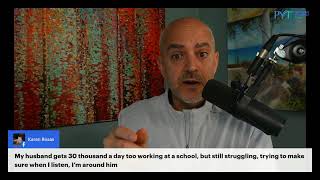
Everyone, welcome to today's program, Yourself Thin podcast. Today we're talking about using your greatest strength to lose weight. This is really, in my opinion, a very profound concept. And it's profound because it's the opposite of what most people will do, because most people, when they approach their weight loss, are focusing in on their greatest weaknesses. Right? So you may say, well, I'm a sugar addict, so I gotta stop eating sugar. Uh, I'm a carb addict, I gotta stop eating carbs. I'm a calorie addict, I gotta stop eating calories. Right? And so they go to work on trying to fix their greatest weakness. But they've done plenty of studies on this to find that mathematically, it makes a lot more sense to double down on your greatest strengths rather than trying to fix all of your weaknesses. On your way to succeeding. And so what it looks like to rely on your strengths is to first kind of do a personal assessment. What are your greatest strengths? What do you know and believe deep, deep within yourself is one of your greatest strengths? Maybe you're loyal, maybe you're patient, uh, maybe you're resilient, maybe you're smart. Again, everyone's got different strengths. What are your What are your top strengths that you've had your whole life? What naturally are you good at? What is a strength of yours in life? And regardless of what it is, literally no matter what it is, you can start to build your weight loss around that. And it's a fundamentally different experience to approach your weight and changing it by relying on your greatest strengths as opposed to trying to fix all your worst weaknesses. And if you can really open your mind up to doing this, because it's hard, right? Again, our whole lives we've really been trying to fix our weaknesses in order to succeed. But again, usually the solution is the complete opposite, that you build around your best strengths. And And so, you know, obviously if you're resilient, you start to define this process of one of resilience, that no matter what happens, I keep moving forward. That's what I've done my whole life. No matter what happens in my life, I always move forward. This is no different. I'm going to organize around that. No, I'm going to have good and bad days, but I have an ability to put one foot in front of the other, even when things are difficult. Uh, maybe you're good with numbers, right? So if you're really good with numbers, you love numbers, you love the nuts and bolts of it. Then maybe you go into a more mathematical, um, approach to dealing with your weight. You step on the scale every day, get those numbers, um, maybe track calories for a little bit, see what happens, right? Start to use the numbers. Okay. But the secret is to figure out what your strengths are and build around those. It is a fundamentally different experience. That's so much more grounded because when we try to fix a weakness, not only are we not good at it by definition, but it's very, very easy to get frustrated with that because it feels like we're getting no forward momentum with it. It just feels like no matter what we do, this is always there. And that's true. If you have a weakness over, you know, if you're 40 years old and you have 40 years of experience knowing this is my strength and this is my weakness, if you're going to pin all your weight success to magically being able to fix some fundamental weakness that you have as a person, that's really setting yourself up for failure. So if you start to organize around your successes, it changes the whole process because, A, you're good at this thing typically, right? It's one of your strengths and there's a momentum to it. There's a confidence to it. There's a belief in it because, you know, you're building around something that you're good at, so you're better at it. That makes sense. I hope it does, because again, if you look at it, you're probably going to notice that with your weight loss, your entire life, you have tried to fix your weaknesses in order to get results. And it just doesn't work that way. Not long-term. So start to identify what your strengths are and then start to build around those strengths to get to the results you want and see how it feels. And if you want some support doing that, click the link in my bio or go to programyourselfthin.com. Um, go get the free hypnosis session I made for you. I give you a bunch of free stuff, but the hypnosis session is the first thing I give you. And, um, yeah, it's completely free. If you are, um, if you're on TikTok, you just click the picture of me on the top left. If you're in Facebook or YouTube, you can click this link that I'm about to put in the chat window. A couple seconds to find it. There we go. Yeah, there it is if you want to use that. And yeah, if you have any questions, feel free to ask them. I'm usually here Mondays through Fridays, usually around noon Eastern. Talk about weight, talk about different approaches to handling this that are not diet-based. Not a big fan of diets. I think diets are kind of the enemy. I don't think diets are your friend. I don't think diets are a path that really make much sense when it comes to managing your weight. What's up, Lizzie? Lizzie says she loves that. Nice. Yeah, um, building around your strengths, again, just a profound paradigm shift. I will tell you that in my life and in my clients, when we start building around their strengths, it's, it's one of those things that changes it instantly. There aren't too many things like that, okay? But when you start to organize around your strengths, you just fundamentally see things differently. Um, and again, I, you know, I mentioned it just kind of in passing, but I think you just have more confidence. I think when you're building around your strengths, there's a sense of kind of swagger and confidence you bring into the process that you probably have never felt, right? Think about it. Because if you go into it thinking— focusing too, right? Thinking about it, right? Because you think about dieting, it's really like you're focusing on all your weaknesses. And not only are those the things you're the worst at, but it all starts to feel overwhelming. And again, it's just— it sets you up right from the beginning to, you know, basically quit. And that's the problem. Most people, uh, I think when it comes to dieting, the real thing we're looking at is why does everyone quit? And I think when you start to really reflect on that, um, it's very insightful, and I think it makes sense. I think the way that most of us have been taught to try and focus or to lose weight, um, doesn't work well, you know. But most people try and do that. Jane says, what kind of strengths are you thinking of? Not sure how this works. Um, whatever you consider to be a personal strength. I mean, what are strengths of your personality, Jane? When you reflect on your life, what are some strengths that have kind of presented themselves in your life? Again, I give examples of resilience, loyalty, passion, you know, fun, hardworking, you know, focused, committed. What, what are some strengths in your life that you've noticed in your life, things you've been successful with? This, this is so interesting too. I didn't even go into this part, but this, I should have spent a little more time with this, that, that initially most people, when they first ask the question, what are my strengths? They start to stutter a bit because they're not used to thinking about their strengths. Most people, and again, this is, we have a negativity bias that's hardwired into us. We notice the negative stuff. The negative things are more impactful to us than the positive things. So even when it comes to ourselves, when it comes to thinking about, um, what our strengths are versus our weaknesses, most of you are going to be able to write a really long weaknesses list. And when it comes to the, um, when it comes to the strength side, you might struggle a little bit, you know. Um, Jane says outgoing, friendly extrovert. Great. Um, so outgoing, friendly extrovert, and I feel like you're trying to trick me because that makes you go to social occasions. But yeah, and I wouldn't say those are really the strengths that I would really necessarily organize around. I mean, you know, you may have the strength that you, um, I don't know, you like to read books. Well, that could help too, actually. Um, okay, but anyways, let's— outgoing, friendly extrovert. Okay, so when you go to social things, focus more on being outgoing and communicating more than the food. I'm not saying that fixes everything. I'm saying that's one more thing you weave through there. Because if you start focusing on communicating more, um, potentially there's less energy and time to focus on the food, you know. But I'm talking about a bigger list than that, Jane. I mean, you cannot think how that— when you reflect on yourself in your life, I, I hope those aren't the only two strengths you, you, uh, recognize. Um, any relation to Mark Katsoulis? Um, oh boy, where are you from though? I don't know, maybe, maybe. I, I have, I have relatives I don't even know. That side of the family, but I have heard of a Mark Katsoulis. But boy, where would you be from to be able to answer that? Um, Lizzie says, I'm successful cooking veggies for lunch. Can that be a strength? Oh, absolutely, Lizzie, absolutely. No, New York, not— I don't know, I don't know that, um, that Mark Katsoulis. But yeah, if you're, if you're successful cooking veggies for lunch, that's a wonderful strength to build on. That, that to me is perfect, because if I'm good at cooking vegetables for lunch, my goal first off is let me cook them for a couple more lunches a week Okay, and then slowly start to let me cook some vegetables for dinner. Yeah, but absolutely, to me that's a strength that you can build around, you know. Uh, Carolyn says, we are not our strengths, um, but others could point them out. Um, yeah, I mean, if you need other people to help you with that, that's fine too. That's fine. I think it's a good— I— listen, folks, you're all— you all got more strengths than you realize. I'll let you know that. This I know for a fact. I've done over 6,000 private weight loss sessions. Um, and I work with very successful people and even them sometimes have a very difficult time identifying their strengths. So it's a muscle you build. And if you need to speak with other people in your life to find those strengths, then that's fine too. You know, that's another path for sure. But I think most people, if you take a few moments and take a step back and reflect on your life, things that you consider successes, right? Everyone in their life has things they consider themselves, they consider a success that they've done. It could be graduating high school or college. It could be raising kids. It could be keeping your car clean. It literally— it doesn't matter. Obviously, some things are going to be bigger and more important than others. I respect that. But there's no limit here. There's no success too small to celebrate, in my opinion. So the idea of like recognizing our strengths, again, I think most of you are going to feel like when you first ask that question, it's like running into a brick wall. And you don't have a lot of things that you can just— you're not gonna be like, oh, this, and I can do this, and I did that, and I have this strength and this strength and this strength. You're probably not going to do that, you know, unless you've done strength work. But, um, that's the benefit of it, is to start organizing around your strengths. And, you know, I'm talking about weight loss, but really this is just in life in general. The more you organize around your strengths, the better. I mean, again, I— they've done studies on this because, again, our tendency is to want to fix our problems because we're very aware of what our problems are, what our weaknesses are. We're usually much more aware of those, and so our focus becomes on fixing those. And we think, if I fix those weaknesses, then everything's going to be great. But that's not really how it works. It's much more about leaning into the strengths we have, the advantages we have. And the more we start to organize around those— again, it's fundamental, it's transformational, if I put it that way. And even to the point, um, well, I'm good at cooking veggies and I cook them 3 days a week. Right, it's just great. Now let's make it 4 days a week. What other vegetables do you have? How can you make it easier? How can you enjoy it more? As we keep optimizing around your strengths and we start to frame it that way, yeah, it's just— it feels a lot different. It doesn't feel so daunting. It doesn't feel so overwhelming. When you organize around your weaknesses, you just feel like you're at the bottom of a pit, and it's very difficult. Yeah, Carolyn likes that. It's great. Thanks. You're welcome. You're welcome. Jane says, when I have been very focused on achieving something like doing well at university, getting my teaching job, and getting my job teaching dance, um, but when it comes to weight loss, it seems like a different thing. Um, that's fair, Jane. That's totally fair. Um, what I would say is that you really lean into that focus, right? Because I would reframe this, Jane. I would say when I'm really focused on achieving something that I'm motivated to, to make happen, um, I really do well with it. And so, see, this is what I mean, Jane. You're shutting it down before you even give yourself a chance because you're saying, oh my God, look how, how focused I am over here. But when it comes to weight, I don't have any of that. That's it. Shut down. And so now your question is, how come I don't have any focus here? That's what you're organized around. This is a— thank you for saying this because this is a perfect example of how you all experience it. You're not saying, um, let me organize around my weaknesses. Uh, you know, what are they? This is, this is what I mean. There's another version of it that you have a strength over here. You can be really focused and motivated in one area of your life. Then it feels like when it comes to weight, you don't have that ability, but that's not how you're asking it. You're asking the question, why can't I be motivated here? My shift is this, Jane. When you are focused and motivated in your life genuinely, and I mean when there's genuine evidence of it, so to do well at university, let's just stick with that. Your ability to focus and do well at university, I would want to dive into that. I would want to dive into that period of time, and I would want you to kind of dive into your mindset. What were you thinking about things? How were you focusing? What were you saying to yourself? There is clues there for how you focus so well. And then you ask the magical question. Once you kind of steep yourself in the focus of how you were at university, Now you start to say, how can I feel more focused like that with my weight? And that's a question you have not been asking. You haven't been asking, how can I be focused like I was here with my weight? You haven't been asking that question. You've been asking, how come I can't be focused over here with— how come I can't be focused on my weight the way that I am over here? I hope that makes sense. Those are two totally different questions. I hope you recognize that the difference in those questions we can ask. What's wrong with me? And we can answer what's wrong with me. How come I can't focus over with weight? And you come up with a whole story. Or you can start asking, how can I be more focused like I was at university with my weight? And that creates a new mindset, that creates new thoughts and ideas, you know. Uh, Lizzie says, I'm good at waking up before the rest of the family is awake so I can go to the gym and no one will slow me down to get out of the house. I only go to the gym after waking up, otherwise I'm going to tell myself reasons not to go. Lizzy, that, that's exactly what I'm talking about. That's exactly it. And it can be something like waking up early. That's perfect, right? So I'm, I'm good at getting up early. Great. Let's utilize that, right? Let's build around that. Exactly the way you were just saying. So this is what I mean. That's a perfect example of it, Lizzy. You know, that doesn't have to be some big, you know, highfalutin strength, you know. Now that waking up early is a great one. Okay. But it can be waking up early. That's a strength of mine. I find it really easy. I always woke up early. I've always been an early riser. Great. Let's figure out how we can use that strength to succeed. I'll go to the gym in the morning before everyone's up. I'll just go. I'll do a workout routine as soon as I get up. I'll, you know, meal plan for the day or get my food ready, whatever it may be. You can optimize that time. You can optimize around that strength. That, that's the point. Um, Emma says the link to your website and free hypnosis doesn't work. Um, you know, I think I saw you wrote that. I'm going to guess, Emma, that it's probably more of a browser issue for you, if I'm guessing. So my first thing, and I think you might have written to me, um, which I forwarded off to the support group so that they should be writing back to you today. But, um, even before that, if you try a different browser, clear your cache and try that link, if that doesn't work, again, let me know. Um, I'm gonna have support will be looking into you anyways as well. But I haven't heard that from anyone else. Um, so I don't know if it's a just kind of a you thing or if it's an everything thing. It could be a broken link too, you know, things change and sometimes things get missed. But, um, yeah, check that out and see if that fixes it. Uh, Louis says, looking at life for my strengths is eye-opening. I'm very resilient and a lot of times go with the flow. Yeah, great, Louis. Same with me. I'm a go-with-the-flow guy. One of the things I realized about myself is I, um, take the path of least resistance. That, that, that's really just kind of how I am. And so I've organized my weight maintaining my weight around the path of least resistance. I really rely on habits and routine to just do the right things without having to think about it. And I make it very, very easy for me to do that. So that's kind of an example of what I'm talking about as well, you know. And then resilience is obvious, I think. But again, resilience, you know, you could consider yourself resilient but then not resilient with weight loss. You know, it's like if you can do it over here, you've got that quality in you. It's not a matter of having it or not. It's a matter of mapping your ability to have the quality here over to your weight so you can use it there too. And you start asking questions like, um, if I was more resilient, if I was more resilient with my weight, how would that look? How would I respond? What would I say? What would I do? What would I feel if I was resilient like I am here with my weight? How would I do that? And that can be so eye-opening because all of a sudden you're opening yourself up to skills and strengths and abilities that you have already within you. You've just kind of walled them off from your weight loss. And that happens a lot, a lot. All right, yeah, Lizzie says the link works, so yeah, go check that out. Um, yeah, Jane says, funny because I feel totally focused on my weight. Yeah, Jane, that's great though, because I— what I would do, and, and here's just a question, maybe you are, okay, but I want you to go back and think about how you were focused in those areas you said, right? So when you were doing well in uni— when you were in university, when you're getting your teaching job, um, when you're teaching dance, think about those 3 things one at a time, sort of, and step into what real focus felt like, right? Because you define that as successful focus. You focused and you got the result you wanted, so it's successful. Okay, so I want you to go back into those times and think about how you're actually focusing, what it felt like, how you approached it, how you, you lived it, you know, just all the little details of what it was like when you were in university and what that focus felt like. Now compare it to the focus you feel for weight and see if they're similar. See if you can kind of tweak them at all, match them up better, because I'm going to guess that they're a little bit different. I'm going to guess that the way you think about focus with weight is different than how you actually think about focus with university. That's what I think. I could be wrong, but I think you're going to realize you think of them differently.. And I think that could be very eye-opening for you. All right. Yeah. Kimberly says, good stuff. Never thought about the focus on my strength. Light bulb. Yeah. Yeah. Good, good, good. That's kind of the idea, right? It's a, it's a light bulb idea. It's a paradigm shifter because we, it's like so subtle, you know, it's such a subtle thing that almost all of us organize around our strength, our weaknesses, because again, our weaknesses impact us more. We're more aware of them. We're more focused on them. And we tell ourselves this, the fairy tale, that if I just get rid of my weaknesses, um, I'll succeed, you know. But, but there is no getting rid of weaknesses. You're always going to have weaknesses. And so it's really about building on top of your strengths. That's how you go farther faster, um, without question, because you're building on your strengths. I mean, literally every single diet is built around your weakness because you're going to stop doing the thing that you're weakest at. I mean, it's so ridiculous when you really look at it this way. Think about just a diet in general, and it doesn't even matter what the diet is. Let's just boil a diet down to its most basic parts, that you are going to take control of your eating. And it doesn't matter whether that means I'm going to go into ketosis, whether it means I'm not going to eat for 16 hours, whether it means I'm going to count every point, I'm going to track every calorie. The specifics of it don't matter. Every single dieter has the approach, I'm going to wake up on Monday and now I'm going to do the thing that I've been weak at my whole life. Controlling my food intake. And, uh, you know, it's, it's so fundamentally set up for failure that it's almost hard to even see it. So yeah, we want to, we want to build around our strengths instead. It's a much, much more effective strategy. Uh, Y2K says, I'll be done eating for the day at night thinking I'm full, then a wave of intense hunger will wake me up. Yeah. Okay. So again, I mean, the way you write that, it sounds like that's a pattern, you know? So again, first thing I'd say is that maybe you ain't done, you know what I mean? Like, maybe you're really hungry because I've had people tell me that. And what they really mean is I really restricted today, you know? Okay, I got to— I got to whatever time I'm done eating now. I'm done. I'm done. I'm done for the day, you know? And then they either get into the night or they literally go to sleep and wake up and then they eat. Because, you know, they can finally— their mind's gone to rest and now they can go do their thing. So to me, you know, again, I'm not saying that's what you're doing, but I've seen that a lot. That's a pattern that's pretty common with dieters. So again, if it's a pattern, Y2K, I would definitely, um, seek to understand it. Are you going to bed really hungry? You know, if you're doing that regularly, there's a good chance. Um, what are you eating at night? You know, intense wave of hunger. You know, I'd want to dive into that. What's causing that intense wave of hunger? Are you eating enough during the day? Because yeah, if you starve yourself all day long and then go to sleep, there's a great chance you're going to wake up and eat in the middle of the night. So you're not a bad person for that. It's probably just a bad strategy heading into bedtime is how I look at it initially, you know. And again, there's a lot of different ways that can go, but that's my initial kind of take on it. What's up, Marston? How's it going? Marston's restricting and losing. You intermittent fasting? I forget if you're intermittent fasting. Um, Cindy says, I've been beating myself up without even realizing it. I'm so positive with others and hyper tough on myself. Yes, Cindy. Yes, yes, yes. That is, that is pretty much the avatar of my my clients right there in a nutshell. I would say the vast majority of my clients, myself included, by the way, um, is that we're overthinkers, we're perfectionists, um, we're super positive with other people and super critical of ourselves. Uh, usually we've internalized, you know, some parent voice in our head and cranked up the intensity of it. So, uh, yeah, Cindy, yes, that's very common. And once you realize that though, again, let that be a real profound insight, you know, to realize that and see it for what it is is really so powerful, um, because it could be the start of you changing it. You know, I talk about this all the time because the beating ourselves up, we think is gonna do something good. We beat ourselves up because we think it's gonna whip us into shape, it's gonna, it's gonna force us to take action, you know. But what it really does, it grinds us down to a pulp, and that's usually what ends up happening more. And so yes, Um, it's almost like switching the golden rule. What's the golden rule, right? You know, talk to others the way you want to be talked to. Um, it's almost like flipping that around for ourselves. You know, we could have a golden rule of internal dialogue is speak to ourselves the way we would speak to people we love. You know, that might be a better way to say it, but it's very true. You know, again, the overthinking perfectionist, um, type of person, you know, they usually grind themselves down. Into a pulp with that criticism, that nonstop criticism, because the criticism never ends, right? I mean, I know I'm going to bet Cindy and I bet a lot of you, you know, it's like even when you get results, you know, the crazy thing is because a lot of my clients, you know, I'm talking to a lot of them as they get to their goal weight. It's like they're on their own getting to their goal weight and their maximum anxiety, maximum negative internal dialogue as they approach their goal weight. Like, within 5 pounds, they're freaking out the most. So that, that internal dialogue never changes, Cindy. Like you could wake up tomorrow at your goal weight and that negative dialogue is still wicked negative. It's just pick something else. So there's no, there's no getting rid of that voice in our head, that negative voice in our head. There's no getting rid of it by fixing everything out here. You have to fix it in there because no matter what your reality is out here, that voice can be negative. You know, Y2K says, I never know when I'm truly full. I either overdo it or underdo it. Yeah, exactly, Y2K. But now you've just really put a spotlight on the real issue, right, in a nutshell. And I would reference you back to, I believe it was last Friday. So if you— and by the way, everyone, this is actually like a podcast. So I do this live every day, but I also, um, uh, put it up on the podcast. So you can go to any podcast platform, search Program Yourself Then.. And, um, I put up two versions. I put like just the lesson. I do like a 5-minute lesson in the beginning and I do like just answering questions going back and forth the rest of the time. But last, I'm pretty sure it was last Friday, it was a whole lesson on, um, feeling nourished is better than feeling full. So go listen to that, Y2K. I think that's right up your alley. But that's your big issue. The issue to me is not waking up in the middle of the night and eating. The bigger issue is, to me, that's a symptom. The waking up in the middle of the night and eating is a symptom of the deeper problem, and the deeper problem being that I don't know, I don't know when to stop. I either overeat or undereat. Okay, great, we've pinpointed the problem. So if you got better at knowing the perfect amount when you're truly nourished and feel good, once you figure that out, there's a good chance that that might eliminate the wake-up-eat routine, or at least, you know, drastically, um, you know, make it easier to deal with. That's how I'd approach it. Um, Lois says, some of the best things I learned from you is the all-or-something approach and being my own supporter. Yeah, for sure, for sure. Being our own supporter, I think, is the biggest, because, you know, as a hypnotist, we always say, um, that everyone is their own best or worst hypnotist. You're all your own best or worst hypnotist because you're in your head talking to yourself 24 hours a day. And what you say probably has the biggest impact on your results out of anything. So yes, supporting yourself. And I always say in this way here, just to kind of really make it clear. But well, first off, the question: do you have a warm, encouraging, supportive voice guiding you through your weight loss? Is that how you talk to yourself when you're losing weight? Warmly, encouragingly, supportively? Or you always try and put the screws to yourself. You always be mean to yourself, always, you know, criticizing yourself. And we all know the answer, okay? And so in Program Yourself, then one big part of what we're doing is creating that encouraging, supportive voice to coach us and guide us through the process. So Lois says, I'm 80% to my goal weight. Nice job, Lois! 8% is wonderful. It's great. Lizzy says, it's so cool to have this new mindset to focus on the positive. Lately I've been focusing on the negative. Every time I've been successful in weight loss and yoga strength I was focusing on the positive. There you go, Lizzie. That's exactly what I'm talking about. And, you know, that's just another kind of way to utilize what I'm talking about here in a very practical way, is to think back to the times in your life when you were able to influence your reading successfully, even if it only lasted for a week or two. Success leaves clues. When you're doing well with your reading choices, when you do other things that are kind of directly adjacent to it, like doing yoga or working out or being more active or, you know, whatever it may be that you consider to be healthier. Keep it simple. Anytime that you've done better with your eating or doing healthier things, go back in your mind into that. How were you thinking? How you were approaching it? What were you doing? What I see a lot of times is that people will make a shift and they'll start doing the right stuff and they'll be doing great, flowing with it, everything, everything's just kind of going well. And then something happens and they get knocked off track and that kind of falls away. And then what people do, though, this is the big mistake they make, is that instead of getting back on track quickly, they start trying to diagnose and they start wondering why they always screw up, why they always quit, why they always stop, why they can't stick to anything. They start trying to figure out the problem, which gives you more of the problem. There's a time and a place for problem solving, but there's also a time and a place for solution solving, finding solutions. And most people spend way more time focusing on the problems than they do the solutions. It's just the way our brain's wired. So we have to resist that because otherwise we just get obsessed with the problems, get obsessed with our weaknesses. And we, if we do that, we subconsciously start to define ourselves by them. That starts to become the, the literal components of our reality. Uh, so that's what makes it so. Um, such a powerful thing. Cool. All right, I'm gonna get out of here. I got a lot of stuff to do. Um, cool things are happening. The audiobook is out. If you're, if you're in the program, the audiobook is actually out. I sent a link out for it this, uh, weekend. Um, and, uh, oh, hold on a second actually, because I just saw Jane what she had written. Jane said, I think I was more focused on a single event, like getting hired, getting into university, getting a scholarship, but for things that take continued focus Therein lies the difference. Um, yeah, but you guys got to break down— see, because you're not breaking down, you're thinking of weight loss as one long continued focus. It's not, you know. So you need to break down the continued focus. If you really look into getting into university, getting a scholarship, actually getting your— the biggest thing that I would reference, Jane, is actually getting your university degree, because getting your university degree required a sustained focus, did it not? Was getting your, was getting your, uh, university degree, did that not require continued focus? So there you go. See, in your mind, you, you think you just, you think that's true, right? But if you got your degree, didn't that take continued focus? So learn from that. There's a lot of lessons to learn from the continued focus you showed that you actually are able to generate when you got your college degree. And that continued focus is the continued focus that'd be extremely relevant to your weight. Um, let's see. Brenda writes, I feel like I'm mentally consumed with losing weight every single day with no action actually losing weight. Will being on your program help me with real results and less consumption of thinking about it? Just listening to you right now, I know the answer. By the way, I love your book, Dau of Living at Your Goal Weight. Well, thank you, Brenda. Um, yes, that, that is the book. I was just talking about that. This, this audiobook is out. Um, if you're, if you're in the program right now, it's in the members area. It's ready to go. Um, and I uploaded it to Audible. Uh, it, it could take 10 days for them to review it and whatever. So, uh, I'll let you all know when that happens, but probably another week or two. Um, anyways, but yeah, yeah, Brenda, obviously, um, you know, your situation is very common because what happens is you're stuck in what a lot of people get stuck in where you're constantly thinking about losing weight but not taking any action to make it happen. And that's really just a, that's a perfect example of wrong thinking. It's wrong thinking because you're thinking about losing weight constantly, but you're not actually in the game. And so what I would say, Brendan, this is going to sting a little probably, but I got to just be honest as far as I see it, that what happens is you're not really motivated. That's what I would say. I would say you're not really motivated because people that think about losing weight all the time that aren't losing weight, to me, that's the, that's the literal definition of not being motivated. Motivation's real simple. You're either doing the thing or you're not doing the thing. Thinking about it all the time can become an illusion. And you say, oh, I wanna, I wanna lose weight. I think about it 24 hours a day. Well, no, thinking about losing weight 24 hours a day is not motivated. That, that, that's not necessarily motivated. You know, so again, what I say, Brenda, you know, I mean, obviously, like you said, you know the answer, and at the very least, you know the answer I'm going to give you. Um, but yes, I think Program Yourself Thin directly helps with that because the very first thing we do, right, the goal weight pyramid, the very first thing we focus on is motivation. You know, and I would say right now, Brenda, and I know this is— I know this hurts, but I'm just going to say it, but I would say you're not really motivated. I— you thinking about all the time has tricked your brain into thinking that you are motivated, but you're not. And I will drive that point home with an example. If I said to you, Brenda, that if in July you lose weight, I got a check for you for $1 million, and I already paid the taxes on it, it's just a straight million to you, million bucks if you lose weight in July, do you think you'd take action? I'm going to guess you would. So that's what I'm trying to say, Brenda. You're mentally consumed with losing weight, but no action is evidence of broken programming in my world. You know? Um, so your programming is not motivating you. If I gave you a million dollars, you'd probably be a lot more motivated. So that's just, I just use that example to show you there's a whole nother gear above where you've been at. You know, to be honest, you're kind of in neutral. You're not really in a gear right now, you know. So we got to get you in gear, and then it's amazing what can happen. But, um, yeah, in the program, we absolutely deal with that right off the beginning because that's a common thing for people. Most people, I would say, dieting-wise, think about weight loss 24 hours a day, and most of them aren't really doing anything to make it happen. So again, super common and, um, needs to be dealt with. But I think the way you deal with it is you get, you get genuinely motivated. And, uh, it's not that hard to get genuinely motivated. You just never learned how. Y'all, y'all don't even know how to motivate yourselves. I show you that pyramid, you know, but that's the very first thing I say. Motivation. Just, ah, motivation. You can't just add motivation. There's a science of motivation. Do you know that? You know, there's a literal science of motivation. And so we use a lot of that intrinsic, extrinsic motivation, break down motivation so that you're genuinely motivated. You ain't motivated right now, folks. I'll bring it to another point. I know people get mad about this, but I don't know the way to put it. You weigh what you want to weigh in pretty much every situation. You weigh what you want to weigh, genuinely. Subconsciously though, you know, so you may not realize it. Um, but again, if I put a million bucks on the line and all of a sudden you can shift into a higher gear, now you're confident you can lose weight, that means that you weren't in that higher gear before. So, oh, that makes sense. Y2K says, subconsciously I think I want to feel the hunger because I associate it with weight loss. Thank you, thank you for saying that, Y2K. I agree. And again, all I can tell you folks is that— and I mean this literally— almost everything you know about weight loss is wrong because almost everything you've learned about weight loss comes from the diet industry. And the diet industry is just a branch of the food processing industry. It's not your friend. It's wolves in sheep's clothing. Weight Watchers was owned by Heinz. Jenny Craig was owned by Nestlé. Atkins Food Products, owned by the same company that owns Onions, Pretzels, and Cinnabon. SlimFast, owned by the same company that owns Ben Jerry's ice cream. These, these companies are not giving you the best information to manage your weight and eat less of their products. That's not how business works. And so, um, one of the main things that they've trained into dieters is that the hungrier you are, the better, because that's how you're going to lose the weight. When in reality, the hungrier you are, uh, the faster you're going to, uh, overeat. You can't fight your hunger. You know, you crazy? You can't, you can't fight your hunger for long. Your hunger, your body and nervous system and brain are primarily there to get you to eat regularly. Think about it. You got to think about yourself in a natural environment. And most of what you're going to focus on each and every day is just eating enough. You know, the shelter you're going to figure out and you got it. Okay. Making, you know, babies that, that happens a little bit of the time. You know, most of the time, day in and day out, you're, you're focusing. Breathing just handles itself. You're focusing on eating. And so this idea that you're going to get hungry and just, you know, fight against that for good is so silly to me. And program yourself. Then we manage our hunger. We get comfortable living at a mildly, slightly hungry place. Slightly hungry you can deal with. And eventually, I think you'll come to love it. I love feeling slightly hungry. That's my— I would say that's my default setting most of the time. Is I'm slightly hungry to nourished. I overeat too sometimes. I want to be crystal clear, I overeat every single week. Um, there are times when I eat too much, but where I really feel most alive, the best as I can possibly feel honestly, is slightly hungry. I love it. But being really hungry, that's not— because once I'm really hungry, all everything I'm thinking, everything's obsessed with food. I can't concentrate on work. I can't concentrate on relationships. I can't concentrate on personal development when all I'm thinking about is food., and it takes over your senses. You know, again, you get really, really hungry. You can hear people opening up bags of chips across the town. You can smell someone cooking things, you know, 5 streets over. So it becomes, it becomes, everything begins to organize around food. So I don't understand the idea that you're gonna fight against that forever to live at your goal weight. It makes no sense to me. So there you go, Y2K. I hope you feel better about today because You're solving the mystery. It's not, it's not that you just randomly get up in the middle of the night and eat. It's that you don't know how to eat to nourishment. That you, and not only did not know how to eat to nourishment, but subconsciously you have this association and belief that being really hungry is the goal. So you're trying to get yourself really hungry and then waking up in the middle of the night and eating and wondering what's wrong with you. I would say you're getting yourself too hungry to succeed. And I think most dieters do that. I think most dieters are aiming themselves at, say, how hungry can I actually get myself? Dieting teaches you to maximize everything. So it's like, because you have to lose weight as fast as possible, you got to cut as many calories as you could possibly cut. So you all do that. You've all done this. We've all done this one. You try not eat breakfast, try not eat lunch, try not anything in the afternoon, try not eat dinner, you know. And usually, where does most people's day fall apart? Right in the afternoon. Right? You can get through breakfast, you can get through lunch fairly easily, and then the afternoon comes and you're starving, and that's when you start eating. And a lot of people eat for the next 8 hours, you know, just again. But if you take a step back strategically, it's a bad strategy. So again, so much— in my opinion, managing your weight really is a combination of two things: fixing your mindset and fixing your strategies. That's kind of the two sides I think about it. Um, PBX says walk 20 minutes after each meal as a start. I get 30,000 steps in a day. I lift weights and eat clean. Wow, 30,000 steps in a day. Holy shit. So yeah, I like the first one. I'm happy for 30,000 steps. That's like a full-time job. That's a lot of walking. Good for you. Um, but yeah, but I do like to walk 20 minutes after each meal as a start. Um, but I even like walk 5 minutes after a meal, you know what I mean? Like literally anything is better than nothing. So, but I agree, you know, starting to walk after meals, that's a great habit. To work on, as long as it's nothing that's overwhelming. I think that's kind of the secret, in my opinion, is not overwhelming yourself. Um, and I think dieters always overwhelm themselves. Dieters just— that's the setting you've been conditioned into, is when you think about weight loss, you usually— you don't think of it this way, but you're really looking for the, how can I, how can I overwhelm myself? How can I cut as many calories as possible? You know. Heidi says, how can I convert evening emotional eating? It's a lifetime struggle. Um, yeah, okay, Heidi. So, you know, you focus on that though. So, you know, it's funny, I was talking about this, um, you know, I was just— I know I was talking about the podcast Friday, but I might have the wrong day, but it might have been Thursday or Wednesday, one of the days I talked about Nourished Over Full. Go check it out. But then the other one's really good anyways too, it's about One Meal at a Time. So to you, Heidi, I would make my whole focus for the next couple months just about Evening emotional eating. Okay, so I wouldn't try and change all of my eating— my breakfast, lunch, dinner, every day of the week, I'm gonna count every calorie. I would focus on understanding what's going on in the evening with the emotional eating. And you've got the 3 Rs of weight loss: replace, reduce, remove. You have probably focused on remove, right? You either emotionally eat at night or you don't emotionally eat at night. So I would let you know that there's a lot of options in between there, you know? And so what do you typically eat at night? What are some alternatives to that that might be lower calorie, a bit healthier, but you're still eating something? Um, what are you eating? What if you ate 20% less of it? But if you really fix it, and this is my wheelhouse, cause this was the first thing I changed to get control of my weight. I lost over 50 pounds and it all started with my evening eating. Cause I would eat every single night, easily 500 to over 1,000 calories every night. And so I really fixated on what I was doing in the evenings and mastering that. And it took me— I mean, it took me a lot of months. It wasn't even just a month or two. It was many, many, many months to really get a handle on that. But here I am over 30 years later, and I don't eat at night. So to me, it was totally worth that time and effort to really get a handle on what I was doing at night. And I will let you know that the strategies I used, you know, some of them were, you know, reduce, replace, remove. Um, but ultimately what I did is I found, uh, more enjoyable, relaxing, um, interesting, stimulating ways to, uh, to live my evenings. So at the end of the day, it had less to do with, uh, with the food and a lot more to do with managing my emotions genuinely. So there's a start for it. Um, Karen says, my husband gets $30,000 a day too, working at a school, but still struggling trying to make sure when I listen I'm around him. Um, still struggle. I'm not sure what you're struggling with, but, but yeah, 30,000 steps, that's a lot. Yeah, I guess if you work at the school, um, you'd be walking a lot. I know I never tracked my— I used to wait tables and, uh, manage restaurants, and I, I don't— I didn't have a tracker back then. I would have loved to have seen my steps I was getting then. Good old days. Physically, that was kind of nice. Um, Sue says, after listening to you, I stopped focusing on the mirror and started thinking more about my organ function and how healthy whole foods are the best for my entire internal body. That has helped a lot to lose over 10 pounds in 4 months and keep it off. No struggle, just enjoying better real food. Thanks, Jim. Sue, screenshot that. That's exactly what I'm talking about. You just hear it, right? That, that's the mindset. That's what I'm talking about, that mindset. When you reframe things, reality can change. That's what I'm trying to say to you. That's so perfect because now Sue's looking at it not just as a scale number on a scale or reflection in a mirror. She's thinking about from the inside. That's part of what I've done as well. I've reframed food, so I'm making food choices not just based— and honestly, at this point, the food decisions I make have less to do with what I'm going to look like and more to do with what I'm going to feel like. But again, that was a process, was a mindset shift. But when that mindset shift happens, a lot of times you're bringing more motivation in, because a lot of times when you really— again, you got to fundamentally kind of change your mindset a bit, but when you start to really think of food as fuel, when you start to really think of the food that I'm putting in my mouth is the primary fuel for my body. See, we don't think of it that way because we're literally— our entire lives have been conditioned by the food industry to think about food in terms of fun. So we think of food as entertainment and fun, primarily not as fuel. And I'm not saying that you don't think about it as fun. Okay. Clearly we want to think about it as fun sometimes. But I don't know what kind of quality of life, longevity, or health you're going to have if you're only going to think of food as fun and not consider its fuel aspects. Because fuel has one primary job in this life of ours. It's to fuel your body. And that's what it's been for millions of years. And now we've kind of overlaid it with all this fun and entertainment. I love fun and entertainment. So I'm not saying get rid of that. But I'm saying for most people you got to balance it out a bit. And if you start looking at your food choices in terms of a fuel, um, kind of lens, it really— again, it fundamentally changes how you're evaluating and thinking about it. And it's very true. I mean, clearly the food you're eating is the primary food you have in your body, you know. And Heidi says, yes, thank you so much. You're welcome, Heidi. Thanks for that question. And now I go back, okay, and fix that. My husband gets 30,000 a day too, working at a school, but still struggling with his weight, trying to make sure when I listen I'm around him. Um, yeah, yeah, I got you. Uh, yeah, that's, that's annoying. And let it be known, yeah, that— and that is just another example that you can't out-train a bad diet. You know, I, I've seen mailmen that walk 30,000 steps a day struggle with their weight. So again, at the end of the day, in my opinion, really your weight is primarily created by what you're eating. And the exercise activity piece is secondary. So, um, Y2K says, sometimes I also get sick of feeding myself. Um, my body requires so much food to be satisfied, I get lazy. Yeah, no, I get it, I get it, Y2K. I'm as lazy as anyone with the eating. I'm so lazy with it. Um, super duper lazy. So lazy that I'll eat the same thing every day for breakfast or lunch, Monday through Friday anyways. Um, but it's primarily because I'm lazy. I don't want to think about getting food, making food, eating different food, deciding on different— I don't want to do that. So I've just kind of normalized it to be as simple as possible. So again, Y2K, I'm not going to say— see, and there's another example of weaknesses versus strengths, okay? So sometimes I get sick of feeding myself, right? We all know that feeling, okay? Um, fair enough. So we acknowledge that I get sick of it, um, and I get lazy. So I would look at lazy as a strength. In this case, I'm lazy and I organized around that. It's very easy for me to be lazy with food, meaning I know in my life if there's a food in front of me that I kind of like, um, versus a food that I could make that I really like, most of the time I'm just going to take the food I kind of like because I don't want to make the other food. So that's become a lot of my eating. So again, Y2K, it's honoring yourself. It's building around who you are, not trying to change yourself. But instead trying to build the plan around who you already are. So the question becomes, how can I nourish myself effectively even when I'm lazy and don't want to make food? What are some healthy options I could have when I'm really tired and I want to eat but I don't want to make anything? That, that's the question I would begin asking. Who knows where that might bring you? Might be really valuable. Carla says, what is something good to do to stop hunger in the evening? Again, I'm just going to say a lot of times where the problem shows up is not where the problem was created. So if you're trying to eat as little as possible during the day, I don't know what you would do at night to deal with hunger. If you're really, really, really hungry, if you're getting yourself really hungry, I don't know how you deal with that. I don't know. I don't think any— I'm sure that there's always a few people, but I think the vast majority of people are going to fail if they take on their hunger. Head on. I know I would. I know when I'm really hungry, I eat more. So what I would say, Carla.com, most likely is I'd zoom out on the day and say, what are you doing for breakfast, lunch, and dinner? And what I would say is I'd say, how can I add more nourishment in there? How can I eat more whole natural foods? How can I get some more fiber? How can I get some more micronutrients into my body during breakfast, lunch, and dinner so that after dinner, I feel comfortable? That's the question I'd be asking. So it's focused on the same time and the same situation, it's just framed differently. And I think that framing is more effective in getting you to a solution, a real strategy that's going to work for you, right? All right, everyone, I gotta get out of here. Um, thanks so much for listening. If you're not in my world, please go click the link in my bio and go get the free hypnosis session that I made for you. Um, it is, uh, Ready to go. As soon as you sign up, you get it almost immediately. And, um, I, I don't just give you that, I give you a bunch of free stuff. And again, I've got a new training getting ready to come out. I should have it done this week, although I'm going away at the end of the week, so maybe it won't. But I think— I'm hoping, I'm hoping we'll get it done this week and it'll be ready to go. Um, so go check that out. If you like this, I'm here every Monday through Friday, uh, usually around noon Eastern. Um, and I'm here to answer your questions as best I can. And if you like this, you can make the live— it's also a podcast. You can do any podcast platform, search Program Yourself, then and up it pops, and you can listen anytime you want. And finally, this book's available. So it's over on Amazon. Go get your copy. Go check this book out. Audiobook is recorded and done. It's up on Audible now, so it should be ready in a couple weeks. I'll let you know about that as well. But the physical version is ready to go, so go check that out. And if you're in the program, it is in, um, it is in the, the bonus section. And, uh, I just sent a link out to that on Friday. So thanks everyone, have a super duper day, and we'll talk soon. Bye!
More from Jim



Weight Loss Visualization: Wake Up in Your Dream Size #programyourselfthin #weightlosshypnosis



What If You Pretended to Be Thin for One Hour? #programyourselfthin #weightlosshypnosis




