Program Yourself Thin Live 6-21-26
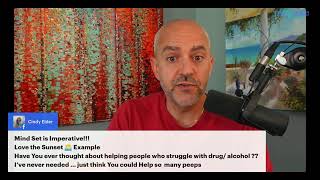
Jim Katsoulis argues that wanting to look better isn't enough for lasting weight loss. Instead, reframe it as becoming your best self across relationships, work, and health. His system trains your subconscious to automatically live at goal weight rather than chase temporary loss.
Chapters
Everyone, welcome to today's Program Yourself Thin podcast. Today we're talking about the best version of you. And I say this because I would suggest that you make your weight loss goal bigger. I don't think wanting to lose weight, wanting to look better is enough motivation. You may argue with me and think, no, I really want to look better. But if you have not been losing weight, if you have not been doing the things that cause you to lose weight, it's most likely starting with the problem that you're not truly motivated. And for most people, wanting to look better is not enough motivation. So I would suggest that you take your weight loss goal and wrap it in personal development. And the personal development question you want to ask yourself is, who is the best version of me? And so now what happens in such a fundamental way is that this weight loss process becomes one that's less about trying to get yourself to take your weight more seriously. And instead, it weaves and wraps your weight loss around what is already something you take more seriously. So when we ask, what's the best version of me? Well, it's a different answer for different people. Okay. Different things are different answers for different people because different people value different things. Okay, so you, in your life, what are the most important things? Relationships, your work, your personal development, your health. What are the most important things in your life? And now ask yourself the question, who do I need to be to do the best in those areas? What's the best version of me in my life in those areas? And by asking this question, you start to think bigger. You start to bring in more motivation because when you start to focus on who the best version of you is, oddly, you're simultaneously thinking about your weight. Because when you think about the best version of you who's firing on all cylinders, who's most productive, most successful, most emotionally balanced, you probably already are thinking about yourself at your goal weight too. So instead of just thinking about this as a process that's only about weight, we start thinking about this as a process that's everything that's important to you in your life. Because eating better, living healthier, getting your weight to where you want it to be, the benefits you get out of it are so much greater than just what you're going to look like. What strangers are going to say when they see you. And it has a lot more to do with the energy you bring into your life, the clarity, the confidence, the emotional balance, the stamina, uh, the, the feelings of success. These are the things that are really going to make your life a lot better. And so if we start focusing on those right from the beginning, we tend to bring a lot more motivation into this process than just wanting to look better. You can still want to look better, but why not bring in all the other things that are going to most likely improve as well? And so instead of thinking of yourself only losing weight, think of yourself becoming the best version of you. What is that? I don't know. I don't know you. So take some time and think when you're at your best, when you're eating right, living right, when you feel good in your body, when you feel good about yourself, how are you different? What's different? Do you take more action? Are you more productive? Are you more efficient? Are you more confident? Are you more assertive? I don't know. Are you nicer? Are you more patient? Are you a better friend, parent, partner? Who are you when you're at your best? This is such a bigger question than who are you when you lose some weight. I hope that is clear to you. And this is so important because when you start to bring in a lot more motivation into this process, it is just like mind-blowing how much easier it can be, because so much of what you find easy or difficult comes down to what your motivation is. And when you're properly motivated, it is amazing what you're able to do and how normal and natural it can feel to do it. So, the real secret to mastering your weight starts by asking a different question, not how can I lose weight as fast as possible, but who is the best version of me?, and then fixating on that and committing to making that version a reality one step at a time, one day at a time. And that is a path that also brings you to your goal weight, but also gives you all these other benefits as well. So I hope you give this some thought. If you want some help imagining yourself at your best as the person you want to be, click the link in my bio or go to programyourselfthin.com and go get the free hypnosis session that I made for you. It's called The New Thin Me, and it is literally designed to help you kickstart your weight loss by imagining yourself as the person you want to be, you know? And I think that's the first key step. So go check that out. If you have any questions, feel free to ask them. Uh, if you're over in Facebook or YouTube land, I just pasted the link into the chat. And if you're on TikTok, all you do is hit the little image of me up on the top left there. And, um, then do it. Takes 2 seconds. But yeah, if you have any questions, feel free to ask them. We're here on a— oh my gosh, a Wednesday. My week's all screwed up. My kid's home from school and it's thrown everything off in a good way actually, because now instead of having to drive him to school, I can start working earlier and finish earlier. So that's been kind of nice, but it has thrown off my sense of what day is what. Um, yeah, but yeah, I hope you're all having a nice day. Wait, questions are welcome. I, uh work with people in all kinds of programs too. So I want to make that clear. You know, I know I talk a lot about, uh, Mindset and Program Yourself Thin, but it's important to understand that Program Yourself Thin— I always think it's like kind of like diet agnostic, meaning that I have people in the program that are doing everything. I'm keto people, carnivore people, vegan people, uh, Weight Watchers people, right? It's everyone. So, um, everything I'm sharing about Program Yourself Thin really is relevant to pretty much any weight loss approach. Uh, because at the end of the day, uh, your weight really is, um, I just lost my train of thought. Uh, the hell was I saying? I don't remember what I was saying. Just went, went out of my head. I was grabbing my workbook and the thought went right out of my head, but that's okay. So yes, and, and program yourself then. Oh yeah, I was, I was saying it's, it's relevant to everything because at the end of the day, every single diet is going to be dependent on your mindset, you know. So yes, at the end of the day, I am talking a lot about mindset, but mindset, in my opinion, you know, we follow the goal weight pyramid and program yourself. Then in my opinion, mindset's really the base level of all of it. And so I think of dieting and specifically what you're going to eat is about that much of the pyramid. But even that little tiny piece ultimately rests upon mindset. And I think for everyone, I think mindset is really the most important factor, but at the same time, it's also the most under— um, under what? I don't know what would be under. It's not, it's not focused on, right? People never really focus on their mindset when it comes to weight loss in any kind of systematic way. Um, you know, just to prove the point, I mean, if you had to think about one weight loss program, one diet that's really built around mindset, you'll probably be hard-pressed to answer that. Right. So Carolyn, Carolyn says mindset's my toughest. Yes, it all starts there. Yeah. And mindset, I would say, is the toughest for sure. I think mindset's the toughest, um, because it's the most— it's, it's sneaky. It's, it's, uh, you can't see it. It is, it's a challenge, I think. Um, however, I would say that it's work that's well worth it because when you do get your mindset right it makes everything else a lot easier, you know? So I look at it like, you know, once you— yeah, the mindset work, it takes some work for sure, but once you get it solid, like, everything that's built on top of it is supported more effectively now. And, uh, I will tell you that when the mindset is, um, when mindset's proper, um, everything else becomes a lot easier. And I really mean that, you You know, I see Nicole says diet's the hardest, not mindset. Yeah, but diet is directly related to your mindset, Nicole. So agreed that you experience diet as the hardest because you don't really have any mindset work to compare it to, you know what I mean? So it's not really a fair comparison in the sense because you've done lots of dieting and you know that's hard. You probably have not done much mindset work. So it's not really a fair comparison in that sense, but, um, you— how hard you find your diet is directly related to your mindset. And, uh, if you change your mindset, eating differently can be way different, way easier. Now again, mindset's a number of things. Now most people don't even know what mindset is. It's just kind of a buzzword that when they really try and define it, they can't. They have a general idea what it means, but not really a literal specific idea. So how we define mindset and program yourself then is with these 6 categories: motivation, your self-image, your habits, your emotions, your thinking, and your maintenance— your ability to maintain— and your strategies. So we break it down to those things. And as you start to understand what your motivation truly is and you develop really good motivation, you start to define the self-image that you want to live by, you start to take control of your habits, and you have the ability to influence them. Um, you have an ability to influence your emotions genuinely, change your thinking so to that of a thin, healthy, happy person, and then maintain, you know. And once you have those 6 things, it's a lot easier, you know. No one ever considers that, you know. But again, if you think about it all, your entire lives— and most of you have been trying to lose weight or manage your weight your entire lives and you don't— you don't really have, you know, much ability to think about your weight and how you're going to live at your goal weight in a comfortable way. You know, if you think about dieting, by definition, in a sense, it's kind of like fighting against yourself. I mean, right? Any diet you're going to do or have done in your whole life, it's really a process of fighting against yourself. Now, you know, you want to do this do this thing, but you're gonna stop yourself. You know, the dieting is the stopping. Then there's what you naturally automatically do, right? That just does automatically. You think what you think, you feel what you feel, you want to eat what you want to eat. But then dieting is saying, no, no more of that, you know? So dieting by nature is really this very confrontational, fighting kind of concept. So with Program Yourself Thin, we're really looking to avoid that by not focusing on this kind of action, but more by focusing on reprogramming this part so that what we naturally and automatically do brings us towards our goal weight in an easy and comfortable way. And most dieters have never spent very much time crafting a strategy and a plan to live by to get to their goal weight and stay there comfortably. Dieting almost subconsciously, you're conditioned to choose the most extreme diet because you believe that's going to give you the fastest results. So a lot of dieters may not even realize it, but they're really conditioned to focus on the extreme plan, and the more extreme the better, even though it's hard. The harder the better, a lot of dieters think. Digital says, will you repeat what you said, um, yesterday about motivation? Would you do it if they offered you a million dollars? Um, yeah, I mean, the motivation question I always like to use, because again, a big mistake a lot of dieters make is that they think they're really motivated, um, when they're not. A lot of dieters think that, oh my God, I did everything, I've done everything I can to lose weight, everything, and I really, I want to lose weight more than anything and I can't make it happen. That's bullshit. That's bullshit 99% of the time. You want to lose weight, so it's like this, and it's not that you don't want to lose weight, please understand, you want to lose weight, but the problem is that you want to keep eating and living the way you're living more. Do you understand? So there's always a hierarchy of wants in life. So, um, again, most of you dieters think you're motivated way up here when in reality you're motivated down here, and that is a fatal flaw, critical problem, because that mindset of, I want to lose weight more than anything, I'm not— it's not happening— that's going to bring you to the belief that no matter what I do, I can't lose weight. When the reality is that, that it had nothing to do, um, with your ability to lose weight. It had to do with your ability to stay consistent and to stay motivated and to move in the right direction, you know. So again, the million-dollar question is, if I offered you a million dollars, if I said I'll give you a million bucks if you lose weight in July, I bet most of you would absolutely lose weight in July. So again, I can't lose weight is almost never true. I won't lose weight is usually more the case. And the million dollars is just a way to get to that point. Because if I said, I'll give you a million bucks to lose weight, if your motivation jumps up to here, well, that reveals that it was down here. Almost all of you have a higher gear that you can get into in terms of motivation, and getting into that gear is really important. You know, if you see, again, a lot of the mindset stuff, and you kind of look at this kind of the downstream upstream concept, right? If you all know about that. So let's just assume there's a river. There's a guy walking by a river. All of a sudden, you know, he sees someone floating down by the river screaming for help. He jumps in, runs in, pulls him to the side, gives him, you know, CPR, mouth-to-mouth, everything, resuscitates him. He's tired, he's breathing like this. Another person comes down, runs in, jumps in, pulls him out, does the whole thing. He's like, another one comes down, okay? And finally he finishes that. When he runs upstream and he finds out that people are getting in the river because they don't realize it's dangerous. So he goes, makes a sign, says, don't jump in here, the current's too strong. And now that upstream solution prevents all that downstream, you know, action that he has had to do. So what ends up happening is becomes a preventative approach. It's way more efficient to make the sign and stop people from getting in the river than individually pull them all out upstream, downstream. So when it comes to your weight, A upstream process is your mindset. This is an upstream thing, right? Specifically, your motivation, self-image, habits, emotions, thinking, and maintenance. But your motivation, for example, most of you are not really motivated. You'd like to lose weight, but you don't really want to lose weight. You're not really committed to it. And that needs to be addressed and resolved if you're going to succeed, in my opinion. Because otherwise you're going to do it for a little bit, quit, and go back to what you always do. And that's what most dieters find themselves in the cycle of. They will get really motivated, do everything perfect for a little while, make a mistake, quit, go back to what they always do for a long time, get re-motivated, do everything perfect for a little while, on and on. Okay, so again, I believe the first step to resolving that is getting your motivation proper. Uh, Digital says, I tried to relate to someone and botched it. Oh, that's okay. Yes, that happens. But good for you, Digital, because again, uh, Teaching is one of the best ways to actually learn something. When I— so I think anytime you try and explain some of these concepts to other people, um, even if you botch it, it's still— you're better off, okay? Because now you understand it more, and now you— maybe I cleared it up for you a little bit more, then you can move forward. Um, Tammy says, is drinking water a major key? Uh, yeah, I believe so. Um, but more specific than drinking water is hydration, okay? So it's just— it's a, a higher level way of thinking about it because hydration is not just drinking water. Hydration is consuming more whole natural foods, which tend to have higher water content in them. Potato has more water content in it than potato chips. Okay, so I would uplevel that just a bit to hydration. Yes, hydration is extremely important for a lot of reasons. It affects how comfortable your body is, right? When you're dehydrated, your body's sore. That tends to nudge you to eat more. When you're dehydrated, you don't think as clearly. That nudges you to make worse food decisions. When you're dehydrated, you can confuse that for hunger because, again, remember, through most of history, we ate a lot of our hydration. So sometimes our body confuses dehydration with hunger. Okay. So and there's a lot more reasons than that. So, yes, in my world, again, going back to this goal weight pyramid, we got the mindset piece, but then we got the lifestyle piece. And these are the 8 habits where you really work on installing into our lives not all at once, but ultimately in order of importance: sleeping, hydration, relaxation, breathing, nourishment, movement, meditation, and gratitude. So if you can start to weave those into your life, again, it lifts you up, it supports you. That's why I do the— my— the pyramid shape here. You know, most people, they just focus on eating, and they really focus on about that much. That's what a diet is. You see that top part that I'm not covering, a tiny little piece? That's a diet. The rest of this you've never probably done. And when you do this again, it just feels— I use the pyramid shape because you're grounded, you're solidly grounded underneath properly. And most of you, when you've approached your weight loss, have not been supported properly at all. It's the exact opposite, right? Because you go into your— you start your diet, your mindset's trash, you know, because at this point you've already tried losing weight for decades. So you start your diet, you already don't believe it's going to work. You know, your mindset's just real negative. Your lifestyle, you may not even focus on that. So you try and eat better when you're exhausted, stressed, not breathing right, malnourished or undernourished, not moving much. You know, your mind's all over the place. Good luck. Good luck. My mind, my mindset is strong as shit. If all of a sudden you take away all my lifestyle habits, my eating will reflect that. So I think lifestyle is just so crucial and just so overlooked. You know, oh, what? Body exposure and sexualized behaviors. All right, TikTok, I don't know, you restricted me and I don't know why there, but there it is. Um, Sammy says no more, it's just convenient to eat. I'm not sure what that was referenced to. I drink alcohol. Yeah, you can drink alcohol and lose weight. I drink alcohol and lose weight. So it makes it a little harder, you know, it's definitely— it doesn't support, it doesn't help a lot, but you can absolutely, um, I mean, it depends on what you're drinking, is, I suppose, but, you know, assuming your drinking is not a huge issue, um, you know, overdoing it, you know, you can absolutely lose weight with that. Um, yeah, Carolyn, watermelon. Yes, watermelon, ton of water in it, right? So that's a great way to hydrate yourself. Lois says the harder the diet, the harder it is to stick to it long term. The motivation of a million dollars in July works probably for July, but August, September, October, you are going to go back to normal patterns and game. Absolutely, Lois. Agreed, agreed, agreed. Um, and by the way, I want to be clear, you know, I use that million dollars a lot of times, but I want to be clear. I, I was just literally doing a coaching call, and, uh, I'll talk about how I, how I think about this. So I brought up the million dollars And what I always do is I just use the million dollars just to reveal that you're not as motivated as you can be. There's a lot higher levels of motivation, and getting a million dollars is just one way to activate that. Okay. Um, but yeah, no one's giving you a million bucks to lose weight. But that leads us to the next question. What's more valuable than a million dollars? And now I know a lot of people say, well, no, no, no, no, no, nothing's going to be more valuable than that. That's not true. Okay. Because when you start to look at what's most important to you in your life, and everyone's got a different answer for this, right? Um, maybe it's your kids, maybe it's your partner, maybe it's your work, maybe it's your personal development, maybe it's your friendships, whatever, whatever is most important to you in your life. I'm going to guess that that thing is being negatively impacted by your weight. Your eating and your lifestyle. So you have to understand, I'm not talking about your weight in terms of how you look. I'm talking about your weight in terms of who you are. And if you're eating a bunch of bullshit, if you're consistently eating junk food, processed food, um, just bullshit, it's going to negatively impact everything in your life. Because if you eat a lot of bullshit, you're more tired. You're more emotional, you're more stressed, you're not thinking as clearly, you're not as likely to be as productive. Right? I mean, does anyone perform better after they've eaten bullshit than when they've eaten healthy, nourishing food? Does anyone perform better for long when you're living an unhealthy lifestyle versus living a healthier one? So again, the diet industry has They've done a lot of tricks to us, but one of the biggest tricks they've done is they've really wrapped your weight loss motivation around looking better, and that's it. And that is why you obsess about looking better, losing weight to look better. But it's not enough motivation. If wanting to look better was enough motivation, you would be losing weight right now. This is such a— this is such a paradox for a lot of dieters. And it's like, because I'll say this all the time, I say, no, Jim, you don't know. I really want to lose weight. No, you don't. If you, if you've really wanted to lose weight for 20 years, you know what I mean? Like, that's not motivation. It's just not. There's a different— you can't, you can't just, you can't theorize motivation. You can't convince me that you're motivated if you're not doing the things that you say you want to do. Motivation is a very black or white thing. Right. You tell me you're motivated to eat better. Okay. I don't give a shit what your reasons are. Take those and get out of here. I'll just look at what you do and you either eat healthier food or you don't. And that tells me everything I need to know. A lot of dieters confuse things because, oh no, I don't think about losing weight all the time. And I got a wedding coming up and I really, really, really want to look good in the pictures. No, Jim, you don't understand. I really want to. Okay. How was your eating this past week? Well, not too good. Then you don't really, really, really want to lose weight. Stop saying that. Stop saying that. You're confusing yourself. Dieters are bullshit. Everyone bullshits themselves. Dieters aren't unique in this, but the way dieters do it a lot of times is they really convince themselves that they're, they're so motivated. I'm so motivated. Stop saying that. You're not motivated. And if you keep thinking you're up here and you're motivated, you can't see what the problem is, and that means you can't correct it. If you think you're motivated up here, but you're really motivated down here, but you won't see that, then you can't get your motivation up here. And that's where most of you find yourself. And that's why I put motivation first in the mindset section. That's why it's the first thing we go into. You ain't motivated if you're not losing weight. It's black and white, black and white. You're going to tell me you're motivated at a level 10 and not losing weight? I've never seen it. I've never seen that in my life. So you're going to tell me the first one in my life I've seen that you're motivated at a level 10 and you're not losing weight? Tell me that. Tell me that. And you know what I'm going to hear? No, I am, Jim. I've been, I've been eating 500 calories for the last week. That's not what I mean. I'm not talking about this fucking week, this month. I'm talking about this year. And, uh, yeah, your motivation just ain't, ain't there. I'm not trying to attack you. I'm not judging you, but we've got to, if we're going to fix the problem, we've got to be able to diagnose it accurately. Right. And so again, I don't want you to take this as a confrontational thing. I'm not trying to get you riled up or triggered. I'm trying to help you see things clearly. You ain't motivated. And until you're properly motivated, you know, uh, yeah, Lois is in the program doing the Pyramid Mindset lifestyle, and eating works. It does work, right? Because it's just, it's a comprehensive, holistic strategy that makes sense, and we break it down into pieces so you don't have to overwhelm yourself. Notice the big problem with diets, mindset-wise, is they're all or nothing. Everything's all or nothing with a diet. You're either doing this extreme do extreme shit perfectly or you're not doing it at all. No middle ground. And that strategy is terrible. That's a terrible strategy for success in life, I'll let you know, because you can't be perfect all the time. And dieting convinces you that that's what you have to do. You have to be perfect all the time. Well, you can't be perfect all the time. So what do you say to that? So again, in Program Yourself Then, we don't— we don't even— we're not starting perfect. We're never going to be perfect. We know we're going to make mistakes. So we have— Program Yourself Thin is really built around the redo rehearsal technique, and the redo technique specifically is about looking back at mistakes we made, learning and growing from them, correcting it so we do better next time, then moving on. I believe the number one skill for mastering your weight is the ability to get back on track quickly. Dieting tells you you're going to just get into this diet mode and just— what, just that's going to take care of your weight, huh? What's your experience been? I bet your experience has been that you diet for a little while, then you stop doing it. And that's probably been your experience repeated over decades. Why would it be any different the next, the next decade? That's my question to all you dieters. What changes between the last diet and the next one you start that you're going to get way better results? And think about what you're expecting anyways. You're expecting that you're going to start your diet on a Monday. And what, from that point forward, just going to make perfect decisions until you get to your goal weight? And then let's reality test it. In the past, when you've started a diet on a Monday, what typically happens? Okay, what happens every single time? Ultimately, you quit, you stop, you don't do it. So, you know, I mean, the problem is right there. But the reason I'm here every day for free is because most of us have been conditioned to think like dieters our entire lives. I mean, we have literally been exposed to millions and millions and millions and millions of diet ads in our lives, and those diet ads are really conditioning us to think wrong about weight, to the point that we don't even— we haven't even given an alternative. You know, if you ask 1,000 people how to lose weight in America, you're going to hear diet, injection, surgery. You're gonna hear anything about mindset. You're not gonna hear anything about the distinction between losing weight and getting to your goal weight and living at your goal weight for the rest of your life. You're never going to hear that distinction. Dieting is not there to support you. Dieting is a, um, dieting is just a strategy of the food companies to sabotage us because all the big diets are owned by food companies anyways. Just so you all know, Weight Watchers was owned by Heinz. Jenny Craig was owned by Nestlé. Uh, Atkins Food Products owned by the same company on Cinnabon and Annie Anne's pretzels. SlimFast owned by the same company owns Ben Jerry's ice cream. You really think these companies want you to— want to give you a way to eat less of their food? I don't. So dieting is just a broken strategy. And again, I say this every day. I've been here, I've been doing this for over 3 years. It's almost like 3 and a half years I'm going on doing this. I do this every day. Okay, and before that, I've done this for 30 years personally, over 20 years professionally. I've done over 6,000 private weight loss sessions. I'm one of the highest paid hypnotists on the planet. It's $25 grand to work with me privately. Okay, so I'm not just some, some person just got up here and just started saying things. This comes from experiences, but this is my life. It's my whole life. And, um, you know, you need another approach. It's that simple. And yeah, I've been doing this for so long, just this, this live, and I, I regularly urge people to argue with me, defend your diet. I have asked for over 3 years for people to defend their diet. I, I literally, I've never had it. I've had people say, oh, diets work, and then we go at it, but it's like, I've never had anyone defend their diet. What, your keto diet? You're gonna defend your keto diet that you did last year and lost 20 pounds on for 3 months? You're gonna defend that for real? You're gonna defend Weight Watchers because you lost, uh, you know, you lost a bunch of weight 20 years ago? I mean, was it what I'm saying not true? I think it is. Dieting doesn't work. Okay, let me, let me just be supportive though. Let me flip it around. Dieting doesn't work. You work. See, that's the trick of the diets too, that they put all the blame on you. So if you can't follow the diet, it's because you're not trying hard enough. But it's estimated that even people that lose the weight, so the successful dieters, it's estimated that 85 to 95% of them put the weight back on. Which is another way to look at that is that dieting has a 5 to 15% success rate. When something has a 5 to 15% success rate, it's not really on you if it doesn't work. It's on the strategy. And this is what I— if nothing else gets through to you, please let this get through, because I find a lot of dieters getting into the self-blame, shame, beating themselves up mode, which again is part of the whole thing. But I hope you can kind of let that go because it, uh, it blocks your success. No, for sure. That's not true. Um, what's up, Melania? How's it going? Junk food is abuse for your body, just like negative talk is abuse for your mind. True, true, true, true. Yeah, and I eat junk food sometimes, you know. I mean, I think there's a time and a place for it. I think moderating it is, for me anyways, the sweet spot. Everyone gets to make their own choice, but, um, but agreed, you know. If you're consuming lots and lots of junk food, fast food, processed food, um, you know, there's a— one of the mantras in the— one of the hypnosis sessions in the program is that, uh, my body is my baby. Um, you know, and if you start to think about it, your body is like a baby because it's completely dependent on the choices you make for it. So your body is completely dependent on the choices of what you put in your mouth and has to deal with that. And I think for a lot of people's bodies, their bodies are crying and screaming out, please stop, stop, give me some good nourishing food. You know, so it's a different way to kind of internalize it. Yeah, Carolyn says, yeah, no, after eating garbage food, it just makes you want to have more of it. Yeah, exactly. Again, it's engineered that way. It's not just a surprise. Um, Lois says, I love gardening, and because of my past health and weight, I wasn't able to really enjoy it. This year I'm in my flower beds almost every morning and loving it. Then I sit back and enjoy my handiwork. Yeah, that's great, Lois. And again, that's a great example. Again, Lois in the program, so that's part of what we talk about is hobbies. You know, hobbies a lot of times can fill up the void that the food was trying to fill up ineffectively. So that's wonderful, Lois. Great job. Um, Susan says, how can I maintain my weight, uh, once I've lost everything I need to lose? Um, yeah, falls of having great, great luck on your program. Well, it's not luck, Susan, because I'm going to assume you're doing the work. So I would say you're having great success on the program because you're doing the work. Right? And remember that it ain't luck, it's just basic cause effect. You do the work, you're gonna get the results. You stop doing the work, you stop getting the results. Realize that, start doing the work again, start getting the results. Okay, but great job. Um, yeah, Susan says, I'm super stoked, but how can I maintain my weight once I've lost everything I need to? Susan, we want to flip this around, okay? We want to flip this around because how can I maintain my weight assumes that it's going to be hard because you're assuming that you're always going to want to eat and live and act in a way that's going to make you overweight. Remember what we're doing in this program? Oh, listen to yesterday's podcast if you didn't listen to it, because that, that's kind of it, right? What we're talking about, um, the goal weight machine was— that was the name of yesterday's podcast, was it? Yeah, yeah, it was. Um, and so the idea, Susan, isn't that you're losing weight, it's that you're building a machine inside of yourself. You're building inside yourself a machine that thinks, lives, and eats in a way that keeps you at your goal weight. So you're looking to create a machine that naturally, automatically, in the most enjoyable way possible, keeps you at your goal weight. So for me, I've been at my goal weight for over 30 years now. One little blip, you know, a couple of years ago and blips that happen regularly too along the way. You know, I don't really count anything under 10 pounds really much of a blip. But, you know, I put 25 pounds on. I consider that a blip. But I've been able to stay at my goal weight because I've created the mindset, the lifestyle, and the eating that maintain this. And I've worked on making it automatic because if you all look at your weight, it is actually pretty stable. You know, your weight doesn't keep going up and up and up and up and up and up. It might go up, you know, a few pounds every year, but your weight's not going up 10 pounds a month unless there's some outlier thing going on. Which is to say that basically the way our mind works is it kind of keeps doing what it's done. And that applies to weight too. So if you start thinking, living, and eating like an overweight person, what you naturally do keeps you overweight. But if you train your brain to think, eat, and, um, think, live, and eat like a thin, healthy person, then what you naturally do keeps you thin and healthy. So I am absolutely— I'm overseeing and managing my mindset, lifestyle, and eating to maintain my weight. So it's not complete autopilot. To make that crystal clear, but it, um, it's closer to autopilot than it is to willpower. So I put it in the ballpark of like brushing your teeth, right? Is I think a great example of how you want it to feel. Um, you brush your teeth pretty much on autopilot, but you're also somewhat aware of if you brushed your teeth, but it's mostly on autopilot. And that's what we're looking to do in Program Yourself Thin is to program your subconscious mind to think, live, and eat like a thin, healthy, happy person in a way that's customized to you. That's what this book is. This book I'm holding up is the, the Goal Weight Blueprint. Okay, so this is part of the program, 144 pages. This is a meaty book, I'm not gonna lie. This is your customized roadmap though for how to think, live, and eat like a thin, healthy person. We go through it in detail. So in essence, this is the what to do customized to you, your life, your personality, or lifestyle. And then we use the program yourself technique to program it in so that we start to do it automatically. So, um, that's the way to think about that, Susan. But great job, keep it up, because that's what's going to happen for you too. Okay, um, yeah, if anyone's got any questions, feel free to ask them. Tammy Jones says, I needed this pep talk. Nice, good, good. And remember, I'm here all the time. I'm here every day, so I give this pep talk to you every day, folks. This is a mission for me. I want you to know that my mission in life is to help as many people as possible live at their goal weight. And the reason it's a mission for me is because it directly impacted my life. My father died of a heart attack at 54. I was 9 years old. Okay. So for me, weight is life and death. It's much more than just, you know, skinny jeans and you go wear your bathing suit this year. I want you to do those things too, but primarily I want you to live as long as you can and have the best quality of life while you're here. That's my goal in life. And that's why I'm here every single day, Monday through Friday, noon Eastern, to give you all pep talks, to help you see things differently, um, to help you find a better way. I mean, this, this is what I do, and I will do this forever. So, um, I'm here every day, pop in. And again, if you're, if you're new here, make sure you click the link in my bio and go get the free hypnosis session. I give you a bunch of free stuff. Um, so go check that out too. Um, I have free on— oh, there you go. I think I got gout. How much country fried steak to cure it? Um, I, you know, yeah, you got me last time. Hi, Africa. It's a good one though. Uh, okay, this guy says this guy has to be related to Matt Katsoulis. I don't know Matt Katsoulis. Someone— it's so funny. I mean, literally no one ever asked me this stuff. Yesterday someone asked me if I was related to Mark Katsoulis in New York. I'm not that I know of. And I don't know any Matt Katsoulises. But yeah, it is true. At the end of the day, it does seem like it's not— you don't have to go too far down backwards to all the Katsoulises. Kind of are related, I would imagine. Uh, what's up, High Sea Girl? Uh, Jim, I have to prep for one of those routine tests tomorrow. I have to starve for a day, so I'm stocking up on teas and different broths instead of a bunch of sugary stuff like Jell-O. Nice job, good job. Do you have any suggestions for getting through a clear liquids day? Yeah, that's a challenge for sure. I personally, I would use it as an opportunity to— I would have it be a down day and I would— I don't know what your background is or what your— what motivates you in life. But if you're the type that might like to use it as like a retreat sort of thing, a down day, a calm day, a relaxing day, if you can, you know, again, I know we all have responsibilities. Maybe that's possible. Maybe it's not.. But if you're able to let it be a day, like a retreat, you know, where you wake up, you know, sleep as much as you can, get some rest, um, enjoy your water, drink it, maybe do a little bit of meditation, maybe a little bit of stretching, maybe a little walking, a little bit of reading, maybe a little bit of journaling, whatever, you know, fill the day up with things that are kind of quiet and, you know, introspective perhaps. Um, that's one way to go about it. And if that doesn't resonate, then go the opposite and watch TV, go to a music show, um, go do a bunch of stuff, you know. But, um, either way, think about what the best way you kind of spend that with and give it more meaning, you know. Utilize it. It's, um, yeah, to just drink liquids all day is a challenge for sure, obviously, right? You're doing it for a big reason, so you'll do it. You're already motivated enough, but see how you can get extra value out of it. And again, if you're kind of you know, spiritually oriented, you know, you can use it as kind of this retreat introspective sort of day. Um, if you're not, you can, you know, go to the movies, go, go fill your day up with things that are kind of interesting to you and in line with that kind of day. No, kind of my initial idea. Um, Susan says, this works better for me than Weight Watchers. The mind work is so important. Weight Watchers didn't work on your mind. Um, exactly, you know, and I like Weight Watchers. To me, Weight Watchers is, is the the best out of the worst options, you know. And, uh, and I think only, only saving grace for Weight Watchers is their social component. So, you know, you take Weight Watchers and get rid of the group meetings, what do we got? You know, some gamified calorie counting, you know what I mean? Like, there's not a lot there really, you know. The main value— Weight Watchers was started by a housewife in New Jersey and she just got together with her friends and they talked about weight. Turned out it helped, and next thing you know, uh, Heinz is buying them for, you know, $100 million, you know, and then doing the meetings in the back of grocery store freezers because they bought them so they could sell their shitty food to people. So, you know, that's the problem, you know, with the diet industry is everything revolves around money instead of intention. And, um, yeah, so I appreciate you saying that, Susan, though. I say it all the time. But it's good to see, you know, somebody who has experience with both do this because, again, I, I don't know if she's here. She's here a lot. Vicki. Vicki is a lifetime Weight Watchers success story. So she's got like lifetime, you know, access to it. But she's been in the program for a couple of years because, again, you know, she really represents that kind of mindset that's always getting better, always getting better. And I think if you approach managing your weight as a skill set that you can learn and improve and get better and practice, I think, wow, that right off the bat sets you off on such a better path because most dieters just— they're just like, can I do it? Can I do it? What, what can you do when you first start something? You know what I mean? Like, it's so weird with dieting. And the reason why is this, right? Because if I, if I sit you down at a piano, show you a song, okay, go do it. I mean, you are going to be able to. But in your mind you know, well, I can't do it because I haven't learned how to do it yet, right? But the confusion about dieting is that they make it seem like if I tell you what to do, you should just be able to do it. But knowledge is not behavior, okay? So knowing what you should do and being able to do it are two totally different things. You could read a book about how to swing a golf club properly. That doesn't mean I can give you a golf club and you're going to swing it properly. So a diet can tell you what you're supposed to do,. But being able to actually get yourself to do it's a completely different thing, and you've never learned that. The diets never teach you that piece. They just tell you what you're supposed to do, and then what? You're supposed to use your willpower to force yourself to do it. How's that working out for you? You know, probably not well. Now, is this— is this Tanya or Tania? I don't know, but she says, wow, thank you. You're welcome, you're welcome. Because again, you know what, I get on here every day because I want you— I know a lot of people, certainly my clients, most of my clients are 45 to 70-year-old women, and most of my clients have gotten to a point where they're just apathetic. They, they want to lose weight, they think about it all day long, but deep down they just don't believe they can do it. They've tried 100 times, hasn't worked. And so my goal is to get out here and just explain there's another way so that you can start to feel hopeful again. Because a lot of people have low-key kind of just given up. And I want you to realize that if you use a different strategy, you absolutely can get better results, but you've got to use a different strategy. You know, you, you can't run east looking for a sunset. No matter how fast you run, no matter how hard you run, if you're fundamentally going in the wrong direction, you're never going to get the results you want. And dieting is fundamentally the wrong direction because dieting is all about losing weight. And the truth is that your goal is not losing weight. If that shocks you, then this is really important. Your goal is not losing weight. You've lost weight before. You happy you lost weight and put it back on? No. Your real goal is living at your goal weight. Living at your goal weight. There's a huge difference between losing weight and living at your goal weight for the rest of your life on your autopilot. They're two Completely different things. In your entire life, you have been conditioned and fixated and focused on losing weight, and you need to shift that focus over to living at your goal weight. That's the big shift. That's the big difference. And once you start to realize certain things— because again, we've all been conditioned completely wrong— and, uh, once you realize things, a lot of times it starts to feel a lot more, um Doable. Um, what's up, Elaine? Elaine says, need some mindful control over food. Um, yeah, mindful control over food. I don't really like, like, control over food. I wouldn't want to frame it that way because it just— it's just— it's just sparking this, this, this rebellion. It's just sparking this, this, this feeling, you know? So, um, But again, it's just a word, but, but it's like, yeah, I would describe that more. What do you mean? What do you mean by that? What's mindful control over food mean like? Um, and as you start to define that, you're going to get more specific about what that means to you, and that's probably more valuable to you than just mindful control over food. But yeah, any questions, feel free to ask them. Any questions are welcome. Sorry if I missed them. You know, sometimes TikTok, I can't see these questions right, just won't show them because it lists everything. TikTok shows everything. Um, Love says, I'm just hoping, hoping joining. What's the theme? Just joining. What's the theme? How to manage your weight without diets. I'd say that's kind of the theme. A better way to manage your weight. It's not a diet, not a GLP, and not surgery. Not surgery. Don't love any of those. Yeah, Michelle says, I've never thought about what I really want in that way. Living in my goal weight is what I really want. Yeah, of course, of course, I get it. But again, you know, my background is a hypnotist, you know, I'm a neuro-linguistic programming trainer, so I'm really, really into words. You know, and the enemy of mine is a person who says, oh, it's just semantics. You know, I think semantics is everything. So even the way we frame weight, because just let me go a little bit deeper in the diet mindset, because what goes on as a dieter is you've been conditioned to think about your— when you think about dieting, it's like you're running a race, but it's a sprint. It's a sprint. That's how you think of dieting. It's a sprint that you do for a little while to get to the goal. But if you think about a sprint, an actual sprint, it requires perfection to win, right? If you're running a sprint and you trip a little bit out the blocks, you lost, right? Because only perfection wins the sprint. So the big part of this is you have to realize this isn't a sprint, it's a never-ending marathon. Because I ask you the question, how long would you like to live at your goal weight? Well, everyone's going to say forever. Okay, so we need a forever plan then. Because as soon as we say, oh my God, forever I want to live there, people freak out. That's what they do. Why? Because I think I'm gonna have to diet forever. So no, we're not going to diet forever because dieting is miserable. We're going to figure out a way. We're going to figure out the most comfortable, enjoyable way that we can live at our goal weight. And that's another question no one ever asks. Again, dieting has conditioned you not to even ask that question. And it's done the opposite. Most dieters, again, are looking for the hardest, most extreme diet that's around because they want the fastest results. So most of you dieters have never even asked the question, how can I live at my goal weight in the easiest, most enjoyable, comfortable way possible? That's crazy, right? Because I know if you're listening to— I know you're an overthinker. I know you're pretty smart. You know, So I think that, um, it's utilizing that intelligence between your ears more effectively, you know. And unfortunately, dieting's kind of hijacked that. They've created kind of a mental prison for you. Ocean Moon says your volume is less than half of other videos. Weird. It looks fine to me, but I, I trust you. I don't know why. Um, Carl says Susan Cohn, to maintain weight loss is easy, just don't eat the types of food that raise your insulin levels too high, and therefore your body won't want to store excess fat. Um, I mean, I, I agree watching your insulin levels is important, but, but I don't think it's that easy. And I don't know, I think that's a problem with dieting. Dieting really is built— or every single diet's built around the concept of the one thing. It's a marketing concept because diets are appealing to overwhelmed populations, so they need to make it sound as simple as possible. They do that by focusing on one thing. Um, you could take the most ridiculous thing, but if it's only one thing, it seems doable. So I'm just going to stop eating carbs. I'm going to just stop eating for 16 hours. I'm going to cut my calories down to 1,000, right? So it's so easy to say that, but to actually do it's another story. And there's really no simple answers. So yeah, I would say to Carl, I appreciate that. Yes, focusing on insulin levels and glucose levels is important. I wouldn't say maintaining weight loss is easy. I wouldn't say living at your goal weight is easy. I think it takes quite a bit of work because, uh, it's not just about that even. It's about your mindset, it's about your lifestyle, and it's about the eating strategies you have beyond just your insulin, um, and glycemic index of the foods you're eating. So I, I agree that that one thing is important, and I also agree that there's a lot more things that you need as well. That's what I would say. Uh, Carolyn says, the unconditioned think about diet food as yuck, but it can be so good and tasty, enjoyable. Yeah, exactly. Um, and again, even diet— diet as a verb is, is really a toxic word, toxic idea in most people's minds. So, um, reframing all that is, is usually a good, a good decision. Uh, Tammy says, the nervous system— I saw you have a video on weight loss. Um, yeah, I mean, the nervous system video I made, it's really— it's just one more kind of way to look at this process. And as I always say, I believe you need a comprehensive, holistic, layered approach to managing your weight. I think it's a, a complex thing, no different than learning music or learning a craft or learning a sport. You know, it's just there's a lot of layers to things. And so looking at this process through your nervous system, I think is valuable because you have a sympathetic nervous system, which is your fight, flight, or freeze stress response nervous system, and you have your parasympathetic nervous system, your rest and digest one. And we live in an environment that is always triggering our sympathetic nervous system. And so if we're in a chronic state of fight or flight, if we're in a chronic stress state, it makes it a lot harder to make good food choices and it makes it harder for your body to release the extra weight. So I think focusing on, you know, activating your parasympathetic nervous system, easing your sympathetic nervous system is as important as what Carl was just saying about focusing on the glycemic um, you know, effects of the food you eat, you know. Uh, Cindy says, mindset's imperative. Love the sunset example. Have you ever thought about helping people who struggle with drug, alcohol? Um, I've never needed, just think you could help so many peeps. Um, I really appreciate you saying that, Cindy. Yes, absolutely. Um, when I first started my, my kind of official career as a hypnotist, I, um, I did work in a more general capacity. I was always— Program Yourself has been there from the very beginning. Um, as my main thing, but I did work with other things. And yes, at some point, uh, I do believe that I will make some programs and, um, some information to help people with other areas of their lives. Uh, the redo rehearsal technique we use, the program yourself in technique is what I call that, um, really is applicable to any area of life. And, um, it works very, very well, uh, in multiple areas. So yes, agreed, it could help a lot of people. I made a decision a long time ago that if I fixate on, on weight, I'm gonna be able to help more people ultimately than if I'm kind of a generalist. And I find myself 20 years later really hitting my stride with the one thing. But I do anticipate that at some point in the future I'll free up some capacity and I will put a few other programs out to help people. So yes, appreciate that question. What's up, Jackie? Baked by Jackie. Nice. All right, very good everyone. Thank you so much. I really appreciate it. Your comments are great. I appreciate you listening and asking questions, and I hope this has been helpful to you. If you're new in my world, please click the link in my bio and go get the free hypnosis session. I give you a bunch of free stuff and got a bunch of free stuff planned. Um, if you're in the program, I did fix the chapter 19, uh, the audiobook for this book here, The Tao of Living at Your Goal Weight, right? This is my book. I just created the audiobook version of it for members in the program, but somehow chapter 19 was a version to me that sounded like 10 times deeper voice. I don't— I have no idea what happened. 40 chapters, one chapter got weird, but it's fixed now, so go check that out. And I fixed the titling of it all, so it all says what the chapter name is and everything else. So go check that out in the members area, it's in the bonus section. But again, anyone else, I'm here every Monday through Friday. Pop on, ask questions. I'm here to help you out. I'm here Monday through Fridays around noon Eastern. And if you can't make the live, it's also a podcast that you can listen to anytime you choose to. So go check that out. Have a super day, and we'll all talk soon. Bye, everyone.
More from Jim



Weight Loss Visualization: Wake Up in Your Dream Size #programyourselfthin #weightlosshypnosis



What If You Pretended to Be Thin for One Hour? #programyourselfthin #weightlosshypnosis




