Program Yourself Thin Live 6-25-26
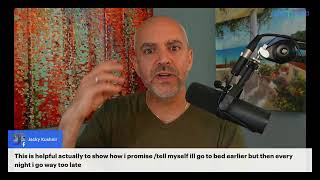
Jim Katsoulis argues that goal weight alone doesn't motivate lasting change because it's visual and external. Real weight loss requires reframing your goal to include how you'll feel: more energy, mental clarity, emotional resilience. His Program Yourself Thin system uses daily hypnosis, meal planning tricks, and subconscious cues to rewire emotional eating habits.
Chapters
Everyone, welcome to today's Program Yourself Thin podcast. Today we're talking about why your goal weight is not motivating you. A big problem a lot of people have. You think about your goal weight constantly, and yet it's not enough to get you to take action. Why is this? How can it be? It makes no sense. People drive themselves crazy trying to figure this out. I'm here to tell you why. It is because the diet industry has conditioned you to think about your goal weight as a visual thing. You think about it, I want to look better. That's the primary reason you want to lose weight. You want to look better in some form or another. And again, this is just literally a lifetime of dieting conditioning's effects on you that you primarily think about it as I want to look better. For other people. And unfortunately, this is what we refer to as extrinsic motivation. And scientifically, it's the weakest form of motivation. So if you're struggling getting motivated, I'm letting you know that the core issue is just focusing on your goal weight and what that's really meaning subconsciously. When you're thinking about your goal weight, you have some idea of how you're going to look different. And that's about it. And so we need to make this deeper. We need to give your goal weight more meaning than just what you look like, because what you look like is not what we make decisions based on. And to just come at it from a slightly different angle, most likely the reason you're struggling with weight currently is because you have other things going on. And I'm going to simplify this and generalize this. Please understand, this isn't every single person, but it's most people. That the main reason you're struggling with your weight is emotional eating. And what that means in another way, to kind of frame that a little differently, is that you're using food to manage your emotions. And so that is a core problem. So the emotional eating is not the problem. It's a symptom of a deeper problem that you don't know how to manage your emotions without food. And that problem is still going to be there even when you diet yourself down to your goal weight. You'll just be thinner, but you still won't know how to deal with your anger, your stress, your depression, your sadness, your loneliness, whatever you're dealing with. Okay. And so subconsciously, you know this. And so for a lot of people, when they think about their goal weight, subconsciously what they're thinking is, I'm not going to have the food to rely on. Again, very little of this is conscious that you're aware of. Most of it's kind of subconscious programming, but your subconscious mind knows that you use the food to deal with your loneliness, your stress, your anger, your whatever. And so, yes, you can restrict the food for a while and get your weight down, but you know subconsciously that at the end of that process, you're still going to have the same emotional issue of not knowing how to run your emotions. So that's one big example. So what we want to look for as a goal, when we talk about goal weight is not just what we're going to look like, but what we're going to feel like. Start to articulate and define and think of your goal weight as something that's going to feel fundamentally better, something that's going to allow you to be a better version of yourself. This is the key thing, because most people think of their goal weight and they think, I'm going to be the same person, I'm just going to be smaller. Again, they think of it visually. And the biggest benefits you get from losing weight are not visual. They are internal. The biggest benefits you get from losing weight are how you feel physically, mentally, emotionally, day in and day out. The ability to be fully the person who you want to be because you're not using food as a crutch anymore and you freed yourself of the weight. And so now you can move more comfortably. You are living a congruent life with how you want to be, so you feel better about yourself. This are the— these are the benefits that we want to focus on, and it's the benefits that very few people do. So if you've been struggling to get motivated by your goal weight, I'm letting you know right now it's because you think of your goal weight only as how you look and not enough for how it's going to feel to be that version of you. How being that version of you who's not only thin but able to manage their emotions genuinely, able to able to move more comfortably, able to have more energy, able to think more clearly. That version of you is going to live a different quality of life. And you want to bring that into your mind as you focus on your goal weight and don't just let it be how you're going to look. Now, let me just say this in closing. You can still think about how you want to look. Okay. So I'm not saying you have to get rid of thinking about how you want to look. I'm saying you need to add to it, focusing on how you're going to feel and who you're going to be at your goal weight. Make it a more vivid, bigger picture than just what you're going to look like. Expand it to all the other benefits you're going to get as well. And you may find that you feel a lot more motivated than you have when you just thought about how you're going to look. Now, if you want to go deeper into this process, I made a hypnosis session that will help you do exactly what I just been talking about.. It's called The New Thin Me, completely free. Um, click the link in my bio or go to programyourselfthin.com and go get that session. Uh, it's just waiting for you. And again, what it's gonna do, it's gonna help you clarify your goal weight, but to internalize it in a deeper way, uh, beyond just what you're going to look like, and you can experience it firsthand. So go check that session out. Uh, if you are over in, uh, If you're over in Facebook land, I'll put this link in the old messages. Where is it? Boop, there it is. All right, you can just click that link. If you're on TikTok, you just click my picture over there and it'll bring you right to it. But takes 2 seconds to sign up, go check it out. Uh, what's up, Fran? Fran says, so true, that is my problem. Yeah, Fran, again, but Fran, you're in the program now, so you, Fran, you've got the path and the plan right in front of you to fix this. All right, in a very specific way. So Fran, you specifically, boom, right? We, we— Goal Weight Blueprint here, right, right in the program. Hopefully you got a chance to kind of open this up and look through it. Um, you don't have to do the whole thing all at once, okay? But where I, I'd steer you to is right here, this section, motivation, the motivation section. Go check that out. Let me flip this over for TikTok so you can all read it. Um, go check that out, Fran, okay? Because this is the motivation section, is exactly designed to do that in detail, to bring you into the the deeper details of what it's going to be like to live at your goal weight beyond just what you're going to look like. And so whatever is important to you in your life, right? Um, whether it's being, you know, the parent you want to be, the partner you want to be, the person you want to be, whatever areas are most important to your life, how is being in control of your weight, having your health and your eating and your lifestyle all in alignment, how is that going to benefit the people that are most important to you in your life?. And if you start thinking through that lens, that's your first step to starting to unleash a lot more motivation, um, than you probably have felt in the past. So it's great to recognize that though, Fran, as a, um, kind of issue, you know, so nice job with the awareness and now go through that motivation section and start to kind of generate, start to generate, um, the solution, which is again, the motivation piece. Of thinking about this a little differently. Oh, there we go. Yeah. Um, Lorianne says, can I order that off your website? Uh, no, this, this I actually— this is actually part of the program, so I don't sell this separately. I, I don't— like, it'd be valuable. I don't know, I'm always— I, I know you always go through this because I got— there's 3 components to Program Yourself Then System. Um, this is one part, the goal weight blueprint. Okay, there's the Program Yourself Then technique, which is the reader rehearsal technique, which we use every night, which is really the core of the program, um, to program your own mind. And then there's the Goal Weight Hypnosis System, which is an 8-week hypnosis system. It's really amazing. So I sell that all together, um, and so I don't really sell things separately. You know, I have sold the hypnosis on its own sometimes. Uh, I don't do it anymore just because I don't want to sell half-assed measures. Um, even though it helps, I don't know, I'm always on the fence with the hypnosis piece, but the blueprint I wouldn't do because To me, managing your weight, the two big components of it is knowing what to do and being able to get yourself to do it. And I think knowing what to do is not enough. Uh, so that's why I say the Program Yourself Thin technique is the core of the program, because that's how to get yourself to do the things you want to do. So most people have at least enough of an idea what to do to even just the Program Yourself Thin technique is going to be really helpful to them. Um, but then there's knowing what to do.. And that's what this blueprint's for. But again, it's part of an entire system. So I don't think if I, if I sold this book, which again, it's an amazing book. I don't, I don't know, like I'm just not going to do, I don't want to split it up, but yeah, this book's amazing, but it comes with the program and I just don't know. I just don't know how valuable it'd be if it was just the book. Cause I think that's dieting in a nutshell to me, dieting in a nutshell is people telling you what to do and no one ever shows you how to get yourself to do it.. And so I feel like in Program Yourself Thin, it's a real clear point that, that it's not only knowing what to do, but also how to get yourself to do it is really the key missing piece for most of you. Um, every diet tells you what to do, you know, but I can't think of any diet that shows you how to get yourself to do it consistently. Oh, oh, oh, sorry, Laurie Ann. Yeah, you got the program. Yes. Okay. Sorry. Yeah, you can order this, um, and still do it. I know I keep saying this because the price is going up, it's literally doubling, um, but go get this today. You can go, go into the Circle app. You're in the Circle app, go in the Circle app. If you just search, um, Blueprint, it'll pop up. But if you— other way you can go is you can go to PYT Discussion and just scroll down and you'll see it. I put a couple posts for this, um, I know I should just promote this more. Um, because I am getting kind of down on them, so, um, I gotta order some more. But I'm actually making a couple corrections in this. There were a couple little mistakes in this that I'm gonna fix. But anyways, yes, you can go to the Circle app and get it. It's like $40 or something, which is literally my cost now. Shipping's crazy, production's crazy. So, uh, but it's still— you can get that. So go order that, Laurianne. And if you can't find it, Laurianne, if for whatever reason you can't find it in Circle Um, just, uh, open up a support ticket or email, uh, support@programyourself then, and we'll get you the— we'll get you the direct link to it. Okay, but yeah, we can get that for you. Trying to get this little— because the spiral bound's nice, I'm not gonna lie. Like, it's, uh, where is this? I'm trying to get these— the spirals come out a little bit. Try to push it back in. Yeah, it's nice having the physical one, right? A lot of people like that. You're right, right in it, and it's just different experience, right? Um, Penny says, I've lost 10 pounds so far since listening to you. I have much more energy. Looking forward to the rest of retirement and more weight loss. Thank you, Penny. Nice job. Proud of you. Great job, great job. Yeah, and that's the key thing here. Again, I just want to point this out, that, um, it's not it's not just about the weight loss, right? It's— here's what I always say, and I think this is a good litmus test to see if you're on a good plan or a bad plan. It's that whatever you're doing to lose weight should be something that energizes you and fills you with good emotions as well. And I know for a lot of people that feels like you're just running into a wall because you just assume and expect and define— thanks, Digital— you define weight loss and trying to lose weight as difficult, miserable, depriving, boring, hard, right? All the negative stuff. It does not need to be. It doesn't need to be. I promise you. And I'm not, I'm not selling snake oil here. I, there's work to be done. Okay. It's not a magic pill, but it's really pretty simple to lose weight without it being the most miserable thing in the world. I know that sounds crazy to you because you think like a dieter and dieters are all or nothing. Right. And so when we look at things in an all-or-nothing mindset, yeah, it's real intense. It's stressful. It's hard. So the solution to that and program yourself then is that we're all or something. We don't have to dive into a weight loss plan 100% and overwhelm and stress ourselves out. We can take it on strategically and take it on, especially with a mindset of I don't want to overwhelm myself. I don't want to feel miserable. I don't want to be dreading the next day to lose weight. I want the opposite. I want to feel better. I want to lose weight and feel more relaxed. I want to lose weight and feel happier. I want to lose weight and feel more excited about the next day. That, that's the secret to not only losing weight, but to living at it. And so it sounds like Penny, it sounds like that's the path you're on. Focus on that energy, right? Because again, the more energy you have, the easier it is to make better food choices too. So again, I will tell you, Program Yourself Thin is a strategic approach to living at your goal weight. And I would say dieting is absolutely not strategic. Dieting is not strategic, it's tactical. Dieting is built around one tactic, right? Have you noticed that every single diet's built around one tactic? Whether you're gonna count your points, you're not gonna eat till noon, you're not gonna eat carbs, you're only gonna eat meat, you're only gonna eat vegetables. It doesn't matter. Every single diet is really about one thing, and that is the dumbest shit ever because, you know, it's like your weight— metaphorically, I think people think of their weight like a bank account, debits and credits, but really your weight is much more like the stock market. There's a lot of different moving pieces. It's more complex than than I think we generally think of it. And that means, in my opinion, that you're going to need a holistic, comprehensive approach to manage your weight long-term. And I have never seen any diet— I can't even think of one diet that really is a comprehensive approach to managing your weight. I can't even tell you a name. I've never seen a program that— tell me if there is one. I might be missing it. I've been doing this for a while, but I also kind of get tunnel vision on what I'm doing. But is there any program out there that is kind of a holistic, comprehensive approach to managing your weight? You know, like, I mean, to be specific, um, you know, this is what we follow in the program itself. Then we follow the goal weight, uh, pyramid. And so we got mindset, lifestyle, and eating. And then we obviously break those down into their components. But, um, mindset, lifestyle, and eating— is there any diet out there that does that? I don't know. If there is, tell me, because I would like to learn from it, you know. But I just never seen it. And, uh, I think you need all those things, you know. So nice job, Penny. Lorianne says, I agree, it's mental, not just food. I had to do some work just to open myself up to dedicating myself to the program. I have a lot of resistance and had to dive into why do I resist. I am dedicated to living, uh, now how I want to live the rest of my life. That's great, Lorianne. Yeah, and that's again, that's the process. And program yourself then, right? We take the weight loss, we wrap it in personal development. And so this is a process of discovery first and foremost. That's why we say like awareness is the first step. And I think that's wonderful, Laurie. And I think being able to explore the resistance, you know, not, not just fight against it, right? That's what most dieters are going to do. They're going to feel resistance and then at some point they get so fired up they're going to fight against the resistance. I don't think that's the best path. I think the best path is to sit with the resistance, reflect on it, think about it, come at it from— think about it from a few different angles, understand the resistance. And once we do that, now we have a lot more information, and that sets us up to move past the resistance much more effectively than just fighting against it. Uh, that doesn't last long, you know. So great work, Laurianne. And please remember, Laurianne, there is no— with Program Yourself Thin We're not— the goal is not to lose weight as fast as possible. It's the anti-diet in that way. It's the anti-diet in many ways, but that's one of the biggest is that it's not just about the fastest weight loss, folks. At some point, I hope you let that go. It's a trap. Wanting to lose weight as fast as possible is the biggest trap for not losing weight at all, ever. And when I say not at all, ever, I mean, yeah, you might lose some weight for a little while, then you put it back on. So I'm talking about the average. You know, over, over years. Um, dieting is the best way to not lose weight long-term. And so a lot of that is based around the idea that you're trying to get instant results. And the only way to get instant results is to do really extreme things. And, um, yeah, so, so that is part of it, Lorianne, right? So part of the resistance is probably that all-or-nothing thing that you feel like you gotta, because you said something made me think that. Oh, dedicating myself to the program. Um, but, but sometimes dedicating yourself to the program is just listening to the 5-minute sessions, or sometimes just dedicating yourself to the program is, um, you know, just listening to one training a week. That's what I'm trying to say. Everyone's timeline's a little different because everyone's a little different. So I want you to take the pressure of, I got this program and I got to dive into it and lose all the weight in 8 weeks, right? It's not that. You can dive into it for 8 weeks and you know, really internalize it. But regardless of whether you dive into it deeply for the first 8 weeks or you hardly touch it the first 8 weeks, at the end of 8 weeks, we're— you're both in the same spot in the sense that what are you going to do now? Right? That's always the question. What are you going to do now? What are you gonna do when you lose the weight? So there is no end to this point. And so because there's no end, in a weird way, there's like no beginning in a sense in that you don't need to do it perfectly out the gate. You just want to keep interacting with it, which by the way, that's why I do— I've set everything up the way I do it. It's very, very strategic from my point of view. I do these live podcasts every day in part for my clients because I know it's just one more way. You might just hear one podcast during the week and that kind of brings you back in, you know, because, because no program is like 100% you're going to start it and then just be done with it. Like, like, you know what I mean? Like, that's just not how it works. This is a program we're looking to internalize. Um, and everyone's path is a little different. So I'm glad you're interacting with it again, Laurieann. And I think now interacting with it after you've done some of the resistance work, I think you're better off than when you first started, you know? And so again, that— I know I set the program up for 8 weeks, um, the hypnosis piece, because that, you know, listen, sometimes we like to have a sense of where we are and there's value to that too. Um, but don't let that be the main thing. Whether you go through the first 8 weeks exactly the way you wanted to, perfectly, or whether you don't, doesn't matter. I'm always here. The program is always there, always ready for you to tap back into it. You can restart the sessions anytime you want, as often as you want, for the rest of your life. Okay, you can pop on these podcasts whenever. You still have access to the Tuesday live Q&As where you can literally get on and ask me questions. Um, and so I think this is an important piece to how the program's set up, because I understand real life. Again, I could sit here— I, I— what I don't like about the diet industry as well is that it's really built around this idea that you're gonna do it perfectly, you know? So, okay, so you start your diet, and depending on how motivated and, you know, how much energy and time you got, um, you're gonna do it perfectly. But at some point, you're not gonna do it perfectly. That's what I'm interested in. I'm interested in reality. Not just you're perfect, because who gives a shit? Think about how many times you've lost weight. You know, there's probably been a couple times in your life when you really lost a significant amount of weight. You really got focused, really got fixated on it. Everything was about your weight loss and you were successful. But then life happened and then you got off track and then you put all the weight back on. Okay, so that's what we got to deal with is how do I do things when I can't be 100%? And Program Yourself Thin is built that way. That's why Program Yourself Thin, you can really engage with it on multiple levels, which again, I go back to the mindset, not all or nothing. All or something. Listen, and program yourself then. If you want to be all and do everything absolutely perfect every day, knock yourself out. That's available to you for sure. But if you're doing everything perfect in the program and 3 weeks later, um, you lose your job or someone you love gets really sick or you have a financial catastrophe, well, it might knock you off. You might not be able to do everything perfect anymore. But program yourself into design so at least you can listen to 5-minute sessions still. At least you can still have a, some simple, comfortable connection to it that actually helps you through the stressful time. And I don't think diets can say that, you know. Um, Digital Encore says, I've been trying to say I get to do this, grateful my body is still serving me in spite of obesity. Yeah, I love that. I love that framing, Digital Encore. Absolutely. I, you know, and that's a huge part of Program Yourself. Then I will let you know, if you look at the lifestyle section here, is the last one that's right there is gratitude. And I think gratitude, I think for me personally, it's my weakest one. I'm still working on it and I'm still got so much to explore with it. But I do think intentionally living out of a state of gratitude is essential. And I think you've just defined that, Digital, by again, I get to do this. You know, I'm, I'm, I'm in a tough situation here. I let myself get way off track and I'm not happy with it. And I'm excited that I get to go through this process now where I get to come back to where I want to be. And it's so important. I'm so excited about it that I'm really going to dedicate myself to it. You know? Um, and, uh, I think that that just changes the whole kind of feeling of it. You know what I mean? It changes the whole feel of it. So that's a great attitude. But yeah, if you guys got any questions, feel free to ask them. Um, TikTok, your questions are crazy because I can't ever follow them. Uh, since Penny says, not only— I not only have more energy, I feel better. I love when you remind me to imagine waking up the next day at my ideal weight. It works for me. Yeah, that's a powerful, powerful strategy, right? That's part of Program Yourself Then, the Program Yourself Then technique. That's, that's kind of baked in there. We have the redo and the rehearsal technique. The rehearsal technique is really that, that when I do, I make a lot of videos, um, based on that idea that you wake up tomorrow at your goal weight. And, um, that's what the rehearsal technique is, you know, in essence, right? It's a little more to it, but, um, it's basically the idea of thinking of yourself as the person you want to be. It's that simple. Uh, it's acting as if. Uh, so, because again, a lot of dieters, another mistake they make is that a lot of them are thinking, once I lose the weight, then I'll be a thin person, then I'll think of myself as a thin person. And I think that's a big mistake because you got to practice thinking like a thin, healthy, happy person. And I think the best time to start practicing that is now, right before you've lost the weight. Start thinking of yourself as the person you want to be right now, because that supports and helps you become that person. You know, so great job, Penny, keep it up. Um, okay, someone said— Amy Went says Nick Giappo, he believes in mindset first too. He could be your friend. You guys have the same philosophy, but you're better in my opinion. Oh, thank you. Um, Nick, I've never heard of him. That's exciting. I will go check him out. Um, yeah, it's cool. I mean, I will tell you, yeah, again, like, to get to this point, it's really— it's just such an odd It's been such an odd road for me to walk, I will tell you. It's just, I look back and I don't know how this has happened. I talk about this regularly, even from the, the first time I kind of discovered a lot of this stuff. It's just like, like, for me, it was like a miracle. I don't know. I've just, I, I say this regularly, I'm one of the luckiest people on the planet. I really am just very, very lucky person. And part of that luck is directly, um, from from what I've been exposed to, you know. I didn't deserve it, I just was. I'm a little like— I was out fishing this morning, but I, um, I've just been outside lately and there's— I've found a couple ticks on me. It's like every time I feel something, like, I'm just like paranoid now thinking about there's ticks crawling all over me because it's so gross. I, I did that the other night. I was like kind of my arm and I was kind of scratching. I was like— and I just pulled a tick. I didn't realize what it was. I thought it was Before I could even realize what it was, I thought it was like a— I don't know what, just some sort of plant thing or something. I pull off as a tick and start— I hate ticks so much. I hope you all don't have ticks around you. Susan says, I just discovered that cheat weekends don't work for me. After cheating, I hop on the scale and then I'll spiral. That's why this is working for me. Um, yeah, great job. Uh, I don't like the word cheat, you know. I, I don't like it at all. You know, I joke around a lot of times that You don't want to call them adultery days, adultery weekends. You know, cheating is such a— it's a big connotation to it, and it's not a positive one. So in Program Yourself Then, we talk about clean pleasure days, um, and of course we might dial that down to clean pleasure meals sometimes, you know. But, uh, I think there's a lot of value in that dynamic of clean and pleasure days. But agreed, cheat days for most people are really binge days where they're really overdoing it and they don't know how to manage, you you know, what happens afterwards. So that's not unusual, Susan. Um, and, uh, yeah, I agree, a lot of people, if they don't know how to manage that, will spiral and then they quit. So I'm glad you got a better strategy moving forward with it. Um, Carolyn says, that's great that you're doing this for all your clients. Um, yeah, absolutely. I mean, this is a huge part of why I do the podcast as well, is that I know it's just one more, one more touch point, you know, where people feel Um, where people feel like they can, um, be exposed to kind of this way of thinking, because that's so much of it. Mindset work really requires exposure. I, I, you know, that's one of the, the big things about Program Yourself Then. It kind of creates like a cocoon, sort of, you know, um, where you have a morning 5-minute session and there's a 10-minute session that you can listen to as well. There's a 60-second reprogramming technique, you know, and so you kind of— you're bookending your day with hypnosis. You get emails sent to you so you don't forget. They're automatically there. So you're, you're kind of instantly kind of supported. And obviously there's the podcast, there's live Q&A, there, there's just a lot of exposure to these ideas because when it comes to mindset work, you need a lot of exposure. It's not about the, how good the information is. That, that's a part of it. Don't get me wrong. The, the, the impact of the, the value of the information obviously plays a part, but when it comes to mindset work, the most important thing is, is exposure, consistent exposure. And again, I've set up the entire Program Yourself Thin kind of ecosystem, and this is part of it, to be focused on exposure because— and by the way, I learned this very quickly in my career because when I first started doing this work, I had an office and I would do what everyone else did. I would work with someone for a week. They would go out the door feeling amazing, come back the next week and said they felt amazing for a day or two and then went back to the normal. And what I started to realize is a week between hypnosis sessions was way too long. People needed a lot more support in between. That, that was the important part. And so that was really the first thing that started me towards creating Program Yourself Then, um, which, yeah, there's nothing like Program Yourself Then, uh, that, that's out there. And it's a real holistic, comprehensive, again, I think of it like a cocoon, you know, that really supports you in a lot of different ways. So Lori says, you really hit home today on reminding us that being at goal weight isn't just about our outward appearance at goal weight. Thank you. Yeah, you're welcome, Lori. We can't remember that enough because the diet industry is constantly conditioning us to only think about how we look, you know. So we have to balance that out by intentionally thinking about the deeper aspects of it all, you know. So yeah, I think that reminding ourselves of that regularly is really important. And, uh, I aim to do that a lot here on this podcast, I will tell you that, because I do say it a lot. Uh, Diane says, so the key is having all foods, but the awareness is getting back on track so you don't continue to eat poorly. Um, yeah, Diane, yeah, I'd agree with that. The key is having all foods, but the awareness is getting back on track so you don't continue to eat poorly. Yeah, I, I like that a lot. I mean, there's a lot more to add to that, you know, so I'll just add a little bit more. Um, I believe that So just let me take this to a whole nother level, Diane. Then program yourself, then you create like a way of eating for yourself. I hesitate to say meal plan because it has a lot of negative connotation, but program yourself. Then part of what we're doing, again, when we look at the goal weight pyramid, like we're working on mindset, lifestyle, but eating is the number one thing that's impacting your weight, you know. So we got to figure out how to eat like a thin, healthy, happy person. So we have a structured way of eating and it's different for each person. This is why I don't say, okay, here's your meal plan. I don't do that in the program because you have different preferences, different lifestyle, you know, different situation than I've got. So I have followed this plan that I kind of show people to create my own meal plan. And a general kind of distinction between the meal plan is to have clean and pleasure days. But the very bullseye of the meal plan, the way you create this kind of meal plan and program yourself in, is you start with your favorite food on the planet. So, and I want to say the favorite food on the planet as if it's like some special occasion thing. I'm talking about the food you would like to be able to eat every single week. Ice cream sundaes, cheesecake, pizza, bread, um, potato chips, bags of cookies, whatever. Okay. Whatever it is that you like to eat most in the world, that's what we put— that's what we start with. That's the very center of the eating plan you're building. Because what happens when you do that is you bring the stress way down. You know how much stress you create in yourself when you say, okay, I can never have my favorite food again, or I can never have my favorite food again for the next 6 months, year. You know how much stress that creates subconsciously? Tons. So Program Yourself, then one of the main things we're doing is managing our stress, bringing our stress levels down. And one of the easiest ways to do that is to say, okay, here's your weight loss meal plan. You get to eat whatever your favorite food in the world is every week. So you know that you can plan for it. You look forward to it. You're anticipating it. You're excited about it. And now that sets us up to say, okay, and where can we eat clean, healthy, happy foods? Where can we fit those in? See what I mean? Right off the bat, we've got some balance. It's the complete opposite of a diet where you go into it and you just completely throw yourself unbalanced and completely change your eating and, and do it by getting rid of all of your favorite foods. Doesn't make a lot of sense. So yes, we look to say, okay, how can I have the most pleasurable experience of eating my favorite foods in the world? And that's another interesting question because— and here I want to go back Um, to what you were saying, Susan, and I would say that cheat days, a lot of people internalize a cheat day as overeating. But part of why I like the word pleasure meals, pleasure days, the term pleasure is what we're really going after is the question, how can I get the most pleasure possible out of this food that I love? I love Ben Jerry's ice cream. How can I get the most pleasure possible out of it? I love cookies. I love whatever it is that you think is bad. The question becomes— you've never asked this question, by the way— how can I get the most pleasure possible out of this food? Now, I know your first response is, well, I eat— I'll eat the shit out of it. It's my cheat day. I'm just going to eat. But is that the most pleasure you can get out of that food? I don't think it is, because we have to take into account that the pleasure you get from food or the pain you get from food is not just in the eating piece of it. It also includes the consequence piece of it. Right? So if we start to look at both of those phases, things get kind of interesting. Because if I say, oh, Ben Jerry's is my favorite and it's a cheat day and I'm going to eat the whole pint. Okay. I finished that and it was enjoyable while I ate it. I'll give you that, but now I'm done. Now what's the experience? And for most people, when they overeat, you know, high calorie, high processed junk food, fast food, they feel like shit. You go and eat a pint of ice cream. You don't feel light and healthy and happy. You feel heavy. You feel tired. Your stomach kind of hurts a little bit. You don't sleep great. You're annoyed with yourself. You're frustrated. You know, it was too much. It's thrown off your blood sugar. It's thrown off your whole system. That's the experience every time. So when we start to realize that, now we go back to the question, how can I have the most pleasure? Well, I would suggest that the most pleasure you can get out of that food is to eat it moderately, because then you get the pleasure of eating it. Okay, you give up a little bit of that because you don't need as much of it. I'll give you that. But what you get on the other side is you get a feeling of being more light, right? You didn't stuff yourself. You're not overwhelming your body. You ate enough where you still feel okay. You still have energy, right? You still feel okay physically, but most important, mentally you feel amazing. You're like, okay, I had that ice cream and I ate it moderately. I ate it and I stayed in control. Holy shit, if I could eat like that, I'm gonna lose weight. Holy shit, I could eat ice cream and lose weight. Wow, this actually feels better. I got to eat my ice cream and I get to have my body too. And that's the truth, because I don't think you can get more pleasure out of food than eating it at your goal weight in a moderate way. I don't think there's any greater pleasure that you could get from food. I don't find stuffing myself full of whatever my favorite food is as being the most pleasurable thing. But a lot of people think that subconsciously, so you gotta deal with it. So again, um, how we eat these foods and balancing them, the pleasure and the clean foods balance come together is really important. And then the most important thing, Diane, that you said there is that would program yourself then We structure our reading. So for me, I have my clean days are Monday through Friday afternoon. My pleasure days are Friday afternoon through Sunday. Okay. But every single week I practice getting back on track on Monday. Now I've been doing this for over 30 years. So guess what? I'm really good at getting back on track. So I enjoy my food on the weekends. I get right back on track on Monday and it feels so good. It feels balanced. Feels right. It's not just all pleasure. It's not just all health food. It's the perfect mixture of both for me. And every one of you can figure out that perfect mixture for you too. And it's a huge part of managing your goal weight because here I am at my goal weight. But what's more important than that is that the way that I maintain my goal weight, I love, I love, I love how I eat Monday through Friday. I love how I eat on the weekends. It's the perfect balance. I wouldn't want to eat the way I eat on the weekends all week long. I've done that before. I don't want to eat the way I eat during the week all week long either. It's boring. This is the perfect spot for me. So that's the big difference. It's not just that I'm at my goal weight. It's that the way that I'm at my goal weight, I love, I love it. I don't have to think about what I'm eating most of the time. I know what I'm going to eat. I know if I eat this, I feel great. It's just that, that to me is a better process. Than what dieting does, you know, of just this— it's just so, it's just so drastic, right? I mean, you're gonna start your first day of diet, it doesn't even matter what the diet is, because again, dieting— you have to understand, dieting is not the nutritional philosophy. So how, how is a vegan diet the same as a carnivore diet is what I like to say, right? Because they seem completely opposite, but not to me. To me, they're both diets and they're both exactly the same. You said, wow, because if you're gonna go on a vegan diet or a carnivore diet, you're gonna start both 100% on Monday, right? Whether you're gonna eat 100% vegetables or 100% meat, the mindset's exactly the same. You're gonna do it 100%, which is another way to say you're gonna completely change your eating in one day. That is so stressful and hard to do. You make over 200 food decisions a day. So again, the dieting mindset is that idea that you're gonna be all or nothing. And that all phase is so overwhelming for most people. Uh, what's up, Angie? And she says, sometimes I get impatient and I remember that I need to enjoy the process and then I feel better and more calm. Yes, Angie. Yes, Angie. And again, everyone's got their strengths and weaknesses. Certainly a lot of us in the program are very impatient, right? A lot of people in the program are overthinkers, um, perfectionists, action takers, and while that works in a lot of areas of life, it's not great with weight. And so that's a wonderful thing to realize, Angie, because as you start to pinpoint the feeling, the moments, the patterns of when you get impatient, and now you introduce a great strategy of reminding yourself to enjoy the process, calm down, enjoy each step. That's a nice solution. That's an antidote to impatience. And it's one— it may— that might be the only one you ever need. But that's a great thing to realize, that you felt impatience and you came up with a nice mindset antidote for it. Nice job, Angie. Um, Tanya said, what's the offer I just got on now? Uh, what's the offer I just got on now? I don't know what that means. Um, Connie says, do you answer questions on the daily emails? Do I answer questions on the daily emails? Oh yeah, sure. Yeah. Oh, you have a question about the daily email? Yeah, yeah, for sure. You can ask any question you want. Um, but yeah, that's another thing. I, I haven't even said this. I got a lot of— I got a couple loose ends I got to finish up here. And then, um, a big focus for me is I'm kind of doing a, a quick another go-around through the program to optimize it a bit more, and through the free stuff that I give. And, um, one of the things I already give away now is it's called PYT Daily. I haven't really promoted this too much, but basically it's a daily email I send out. And, uh, excuse me, it's all, it's all content. It's just straight quality. It's literally emails I used to have as part of a paid program, and, and I just give them away for free now. Uh, but again, so if you're not in my world, please go click the link in my bio and go get on there because, um, I give you a bunch of free stuff. But yeah, if you have a question about the daily email that I sent out Uh, yeah, feel free to ask it here, you know, for sure. Yeah, and again, TikTok, I'm sorry if I miss your questions. I don't— it gets— it's just, it's hard to scroll through like 200 notifications and find the question. Uh, Jay says, how many calories to eat a day for muscle gain? I'm 111 pounds. And I have no idea. I don't— I don't deal with muscle gain. I'm really more um, how to live at your goal weight. So I don't, I don't really know a ton about, you know, protein, muscles, calories. That's not really my, my wheelhouse. I did do a whole interview series with over 30 of the top fitness trainers and nutritionists in the world, um, so I do have a bit of an understanding of it, but not an expertise that I would answer those questions. Uh, Diane says, excellent, appreciate you. Thank you, Diane. I'm glad that helped. Um, Amy says, I loved your session about using your greatest strength to help propel you forward. What a beautiful way to move through your journey. I saved it and shared it. Mind blown. That's awesome, Amy. Yeah, I really— I'm glad that that kind of resonated with you, and it's so true. Um, yeah, yeah, I think that was the pot— I will say, um, one kind of like— I don't want to say the downside, but one side effect of— good lord, I, I mean, it's been a long time. I mean, oh my god. I have been doing this professionally for over 20 years, and when I say that, I mean like, I have— originally I was just doing so many sessions, and then I started doing groups, and then I started doing so many groups, and then, uh, I started doing the social media stuff, and then I started— I do this podcast every single day, every weekday, and, um, it's funny, and I, I just, I talk about weight so much I forget where the hell I said what and what I said. But anyways, what I was getting to is that I, I recently— I'm pretty sure this was a podcast Because I make so many videos, podcasts, I have coaching calls, um, I do trainings that I'm making. It's just, it's funny. I'm writing emails, uh, so I lose track sometimes where I said what. But you might be talking about, um, I don't even remember what it was called. I want to look because I, I forget even the names of my podcast episodes, to be honest. And I just wanted to send it to you. If you're not talking about that, that's why I'm taking a big deal here. You might even be talking about this one. Um, yeah, Use Your Greatest Strength to Lose Weight. That's probably what you're talking about. Um, and that is a podcast episode. This is a podcast too. So I do this live, um, but then I take the audio, um, and upload it, uh, as a podcast so that you can listen to it whenever you want. But yeah, using your greatest strength is one of the biggest kind of strategic decisions you can make because what most dieters do is that they try and fix all their weaknesses. You know, and mathematically that, that's not as effective as really building on top of your strengths, you know. So I'm glad that resonated with you, Amy, because, um, that I think is just one of those fundamental ideas that's almost like counterintuitive. Like a lot of times we don't think it— again, diet industry is kind of conditioned to us, and it's not just the diet industry on this one. We all have a negativity bias and it's easier to notice our weaknesses as well. Um, but You're always going to be better off by focusing on your strengths and building on your strengths than you are trying to eliminate your weaknesses. Just, it's a mathematical sort of thing. So I'm glad that that resonated with you. That's a good path forward. Um, Jackie says, that sounds good. I'm gonna— I'm assuming you're gonna— you're, you're, uh, talking about when I was talking about my eating plan. Yeah, it's amazing. My eating plan's amazing. I love my eating plan. If I— if all of a sudden my eating was devoid of my weight, it and they weren't connected, I would still eat the way I eat. I love eating the way I eat because I feel great. That's my main goal. Each and every day I feel great. Um, 90% of the time during the week, I'm like almost— I'm just, I'm always feeling great because I'm very stick to my plan because I like it. Um, then sometimes I get off it more on the weekends. I'll eat different stuff. And man, I don't know, it's like a lot of times people don't realize just how much of a negative impact the food's having on them. You know, it's just, it's no difference than, uh, you know, substance abuse sometimes in whatever form it can come in. There's a, the thing of tolerance, right? You build up a tolerance to it. And so with the food, a lot of people in America and around the world really, but they, um, they built up a tolerance to what the food's doing to them. And part of that is a lack of awareness. You don't realize just how deeply, uh, that food and weight is really impacting you. And, uh, Once you do, again, I think it makes it easier to make better food choices. Uh, Lois says, my daughter buys me a gluten-free cherry pie for Thanksgiving every year. I used to eat 2 or 3 pieces. Now I cut the pie into 10 pieces and eat one for Thanksgiving, freeze the rest, and eat one on a pleasure days. I get to enjoy the pie longer. Well, there we go. That's just brilliant. See, that's what I mean. I don't know, like, again, dieting doesn't really train us to kind of take a step back and reflect on things and look for more creative, better strategies. And, uh, I think once you start doing that, it's not that hard to find way better strategies a lot of times. So that's great. Um, yeah, Lois says love the dailies. Yeah, the daily emails I think are great. I think they're so good. Uh, Jane says, did you just come on? No, I've been here. I'm about to get off actually. Um, Jane said I've been watching for you and just right now finally see you. What the hell? Yeah, that's weird. I, I You know, I looked into this not too long ago, and I don't know, it— there is a way to send out reminders. Um, I think what I may do— and again, I've been putting this off because it's just, it's one more thing, and I know it would have got lost in the shuffle— but sometimes I think if I could send like a notification on Circle, you know, now it would be its own section. I think what I may do at some point— I'm just, I'm just spitballing here, so don't hold me to this yet, okay? But One of the things I consider is in the Circle app is making like a section just for the podcast. And what that would do is that I would go in there and just be like, I'm going live now. Right. And, um, it would just let people know that we're in that part that wanted to know. Cause again, this could get annoying, you know, every day to get notified. But, um, if you wanted that, it could send out a reminder. So I may, I may do that at some point. And then I may, I don't know. I'm not going to put the podcast in there. It just, it's. There's no point in doing that really, my opinion. But, um, I could put the reminder on there anyways. I'll think about that. Um, yeah, Jackie says, yeah, that's what I was talking about. I figured, I figured. Yeah, it sounds great, right? Yeah, the way I eat is amazing. That's what I'm trying to say. And I'm not, I'm not just some crazy health nut. I just want to make that clear. My goal really is that I want to eat as much as I possibly can to be at my goal weight. So I've really maximized what I eat you know, pleasure foods and how I eat. I love food. I love food. So I'm not one of these people that doesn't care about food and just whatever. I love food. I've just learned how to strategically approach it so that I get to love it and get to live at my goal weight in a way that's comfortable and enjoyable. And, uh, yeah, pretty appealing, right? I'd want to. Um, yeah, Cindy says, I love PYT Daily. Thank you. I recently recognized a pattern of negatives and stopped to think of a strength of creativity and it totally changed my life. Yeah, awesome. And I appreciate you saying that. Again, I know the PYT Daily is so good. Um, again, folks, get on my email list. You can't just get it right now, like, but I send out usually at least once a week, I'll send an email out. And if you like it, at the bottom, you just click the link and then you're put on that list, all free. Okay. Um, but that, that the PYT Daily is really good. Again, I'm going to start promoting that a lot more. I got to do a couple things to get it lined up right, but, um, it's really good, you know. And again, I got a training coming, it's going to knock your socks off. I think it's called Reprogrammed, uh, how to live at your goal weight without the fight. So that, that should be available, I'd say, next week. I think I said that last week, but, um, I'm going away tomorrow, so whatever, you know, like, life is life. And, um, yeah, and I've been a little distracted. I was thinking that too, you know, the last week or two I might have seemed a little distracted. I know yesterday I was, I was losing my train of thought a bunch of times Um, in my hometown, we actually were voting on a library, um, building a brand new library. And, uh, I've been really, really, really in that. Uh, so I've been thinking library 24 hours a day for the last couple of weeks. I'm happy to say we voted on it yesterday and it passed. I'm so excited. Um, but that's another huge thing coming off of my mind. And, uh, I'm so happy that it passed. Um, but yeah, anyways, so closing a few loops and, uh, yeah, we'll get to it. Uh, what's up, Ken? Ken says, wouldn't it be easier just to start at the same time every day? Uh, thanks. Yes. So, um, yeah, it would be easier to start every day at the same time, right? It sounds so easy. And I don't know why I have such a struggle with it. Uh, I get better and better and better, but this is what I mean. It has— I mean, I've been doing this for over 3 and a half years, and originally, like, it would be anywhere between 12 and like 4 or 5, you know? And then I remember I did it for like a year, and then I was like, you know what, I'm going to try and be here 12 to 1, 12 to 1, 12 to 1. And, um, then I finally got that kind of in between there. And now try to get 12 to 12:30 usually. And now I try to get it to 12, 12, 12, but it always feels like things come up, but I'm working on it. Yeah, you're right though. You're right, Kent. That would be easier than setting us on an open circle. It sounds like it, right? I don't know why I have so much trouble getting here every day at the right time because I get for all my other calls at the right time. See, that's a mindset thing. That's a limiting belief in my head. I could get here for 12 o'clock. If someone said, I'll give you a million dollars, Jim, to be here every day at 12, I'd be here, right? So that's a good point. I'm going to consider that. I'm going to actually internalize that. And there you just watched me go through something I think is relevant for a lot of us in different areas, certainly with weight, is that I was sitting there like, I can't— I try to get for 12 and I don't know, I'm kind of between 12 and 12:30. Well, I'll do my own bullshit on me, right? I'll say, okay, Jim, are you really motivated to get here at 12? Do you really want to get here at 12? Yeah, 12 would be awesome. Because then everyone would know I was starting. It'd be the same time every day. Uh, I'd get finished around the same time every day. It would stabilize my day. That'd be kind of nice. But you know what my mind just said? It said, yeah, but what about when certain things come up and you're late? That's okay. If I was on time at 12:00, 80% of the time, everyone would appreciate that. Everyone would know. And then the outlier days where I was a little bit late for whatever thing. Anyways, uh, thanks, Ken. You made me think, and I'm gonna, I'm gonna really consider that because that might actually be a much easier path forward for me. But you get to all see how I kind of go through the process. It's the same shit. The things you learn to program yourself, then, are the exact same things I use in every area of my life. I find them directly relatable. Um, Carolyn says you can set your notifications. The notification acts a little weird though, I will say. Um, yeah, it's so weird. So weird. Um, no, I'll be— oh. Will you be off here for the next week? I don't know if someone asked me if I'll be off for the next week. I'll be here next week. I won't be here tomorrow, but I will be here next week. Um, oh, Amy says okay. Oh yeah, yeah, got you. Yeah, Jane says yeah, that'd be great, Jim. I'd love to know the days you're not here. Yeah, you're right, you know, I'm gonna— let me consider that, you know. Again, I gotta, um, yeah, that would actually be good for everyone, I think, if I stabilize the podcast times. So I'm gonna think on that. Yes, yes, that would be good. So I appreciate this, I appreciate this conversation a lot. Uh, and again, but notice my brain— I, I want to say this because I think it's the same, it's the same thing with the weight thing, and it's really important— is that I'm like, okay, 12 o'clock. Now I know I have resistance to it, subconscious resistance. If I didn't, I would just be every day at 12 o'clock, right? So I have some weird-ass subconscious resistance to it. I don't really know why. There's no logical reason I wouldn't get on there every day at 12. Okay. But I know that's not how humans operate, you know? So, um, one thing I know for sure is that I don't want to say I gotta be here at 12 o'clock, right? As soon as I feel it as a pressure or stress, I'm more likely not to do it. So notice I'm even framing it as if I'm ever going to get here at 12 o'clock regularly in my mind, I want it to feel like ultimately it's going to make things better. Easier, more comfortable for me. So that's what I'm focusing on. If I did get every day at 12, that would stabilize the day more effectively for me. I mean, don't get me wrong, I'm always here between 12 or 12:30, but if I pinned it right to 12, that would be a fundamentally different thing, and I think it would be an improvement. Anyways, enough of that. Uh, Digital says, I don't have a million, but I send you, uh, S-Bucks gift card if you do it at least 12 Uh, every, every day next week. Um, yeah, no, you know what? I'm kind of feeling it. I'm feeling 12. And you know what? Here, I'm just going to say, this is exactly how I talk about Program Yourself Then, is that I'm not holding myself to do it every day at 12. Um, I'm going to make the intention that let's see what it's like if I do every day next week at 12. Let's see what happens. So again, I'm going into it and I'm really looking for awareness. I'm looking to understand if I do it every day at 12. What are the good parts? What are the bad parts? What are the things I didn't, you know, expect or think about? So let me gather some information. And by thinking of it that way, I don't dread next week because I'm not coming, okay, from now on, starting next week, every day's at noon. Oh, I can't do that. I'm never, I don't want to say that. Right. So it's like, again, I'm looking at it like, yeah, next week, let me, um, let me commit to noon. Now the biggest thing I know is going to happen is I'm going to completely forget this conversation as soon as I turn the record button off. So now what I'm doing is I'm going to write myself a note, and this note's going to be different than all the other notes because I'm going to write this note with a marker. And I'm going to say, podcast noon. And now I'm going to take this because I know the biggest thing between me right now in this moment, this Jim who's deeply thinking about podcast at noon, is going to go away the second I hit the record button and I go and eat my salad. It's going to go right out my mind. And what'll happen is next week Monday will show up and it'll get time. It'll get close to noon. I'll start thinking about the podcast and I'll fall into my normal routine. And that routine makes me start between 12 and 12:30. But what I'm doing to break that up and to remind myself to remember this is I set this note up. I don't trust myself in any way to next Monday remember this. If I didn't leave this note, the chances of me remembering this next Monday are very slim. Now you all can remind me and then I remember and then whatever, but this I'm doing because I am not going to remember it. I'm saying this to you because that's not, that's not a slight on me. That's not a judgment on me. People don't remember because we're all different personalities. Right now I'm Mr. Jim Thinking About Starting a Podcast at Noon guy, but in 20 minutes I won't be thinking about this at all. Okay. And then by next Monday, I will be in my normal Monday trance, which starts the podcast between 12 and 12:15. So this is the thing that is intended to break that pattern., and I'm going to take this, I'm going to put it in a conspicuous spot where I'm going to see it when I work. Now, will that be enough for me to remember even? I don't know yet, but I'm okay with that because I've got a pretty good strategy. I'm feeling pretty good about it. And we'll see what happens. If I really wanted to go one step further, I could set an alert on my phone to go off at quarter of 12 or 11:30 on Monday that says podcast noon. Will I do that? We will see. I could do it right now. All right, fine. I'll do it right now. Okay. But I want you to see this. I think this is actually very, I don't know if I'm being crazy, but I think this is practical for you all to see because I know that I'm approaching this different than most people approach something like this. Because I want to point out the subconscious nature of my focus of making this happen. So I'm literally adding this next week. Which will be the 29th. I'm going to add a new event, Podcast Noon, um, and I'm gonna set the alert to go off at 11:30 AM because I know next week at 11:30 AM I will most likely be at this desk working, completely not thinking about Podcast Noon. And, uh, now I don't have to. You see what I mean? Now, the reason I'm doing this, the reason I'm putting this in here is I want to reduce cognitive load. I do not want to expect myself to have to remember at 12 noon to start, because that's not going to happen. But don't a lot of us do that with the food, right? Okay, I'm going to eat better tomorrow. And then you completely forget. Next year, you're eating bullshit. You know, why did this happen? Okay. So again, it's not that you're broken or a bad person, have no willpower. It's that a lot of times we don't set ourselves up for success because we're not thinking strategically. All right, so here we go. 11:30. No. Okay. All right, alert. Half hour early. All right, it's official. We'll see what happens. I only set one for one day. So we'll see how it happens. This will be a fun little experiment. Y'all can kind of be part of it and see what— see what happens. Uh, it sounds like people would like that more. I'd like that more. I think it'd just be better. Um, yeah, positive humor win every time. Yes, true, true. How about 12:12? Uh, don't confuse me, don't confuse me. No more options. All right, it's done. We'll see. We'll see. Yeah. Jackie says, this is helpful to actually show how I promise, tell myself I'll go to bed earlier, but then every night I go to bed way too late. Yes, Jackie. Yes. Yes. I'm so, I'm really glad if that's the only thing anyone gets out of this, that to me is worth it. That's exactly it. That a lot of times we overestimate how much we can consciously remember and think, and that's what dieting does. Dieting sets you up to win by micromanaging and remembering, consciously making all the right choices. That's not how your brain works. Okay. So that's why there's no way in the world I would ever just expect that I was going to be able to remember this on Monday. I would never in a million years expect that that was enough. And so you saw me write a note, set an alarm, set an alert, think about my motivation, think about my commitment, think about how it's going to benefit me and make things a lot easier. So I'm reframing. I'm doing the mental programming work that we talk about in the program. You know, just with this. So, and then we'll see what happens. And that's the final piece. I will show up and start on noon Monday, or I won't. I don't give a shit. Either one of them happens is fine to me because I will utilize either one of them. If I don't get on at noon, I'll pay attention to what happens and optimize and tweak how I can remember tomorrow. Um, if I do get on noon, I'll pay attention to it. I'll say, was that better? Did it make it better? How was it? Did I remember? What can I do? So I will work to optimize whether I did the right thing, whether I do the wrong thing, I, I kind of respond the same way and I just look to get better. All right, same thing here. Um, yeah, Jane says, I'm going to set an alarm right now for going to bed earlier. Great idea. Yes, Jane. Yes, sleeping's like that too. I don't talk too much about sleeping here, but yes, sleeping is another really, really, really subconscious process. And, uh, yeah, uh, Johnny D says, Ozempic cured my IBS. Wow. Well, they got, they got GLP ones, uh, curing everything these days. Gambling, IBS— I haven't heard that one, but, but good for you. I'm happy, happy for you. All right, everyone, I gotta get out of here. If you're not in my world, please go click the link in my bio, go get the free hypnosis session I made for you, go use it, listen to it, get in my world. Uh, if you like this, I'm here every Monday through Friday, usually around noon Eastern. Um, so pop on and ask any questions you may have. I'm happy to answer them. And if you can't make the live, it's also a podcast. Go to programming or go to any podcast platform, search Program Yourself Thin, uh, this will pop up. You can listen anytime you want. And this book is my book. It's available now at Amazon. Go check it out. Um, there it is, right? And Jackie said, I've done that, set alarms for going to bed earlier, but I still ignore it. That's okay though, Jackie. Again, that's not— that's not the— you don't get one chance at this. That's what I was just trying to say, Jackie, with Monday comes, I either do the right thing or don't do the right thing. To me, I don't care. I just keep moving forward using that information. You know, so Monday is not the deciding factor whether I can do a podcast at noon or not. Monday is just one piece of the process that's either going to lead me to do it at noon consistently, decide I don't give a shit if I do it at noon and 12 to 12:30 is fine, you know, or some other thing that I haven't thought of yet. All right. Yeah. Cindy says your world rocks. We're all learning together. I appreciate that, Cindy. That's so true. And that's kind of my goal here. So I appreciate you saying that. Uh, and it's so true. So all right, everyone, have a super duper week. And, um, yeah, and weekend. I will not be here tomorrow. Um, so have a super weekend, and we'll talk, uh, soon, Monday at noon. Bye, everyone.
More from Jim



Weight Loss Visualization: Wake Up in Your Dream Size #programyourselfthin #weightlosshypnosis



What If You Pretended to Be Thin for One Hour? #programyourselfthin #weightlosshypnosis




