Program Yourself Thin Live 6-3-26
Jim Katsoulis argues chronic stress is the main barrier to weight loss, not calories. He proposes starting with stress-reduction methods like breathing exercises and sunrise walks before any diet changes, then building habits through daily 5-minute hypnosis sessions and sleep optimization.
Chapters
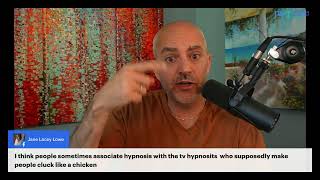
Hey everyone, welcome to today's Program Yourself Thin podcast. They were talking about how reducing stress helps your weight loss. This is really, in my opinion, one of the fundamental areas you need to focus on to get control of your weight. And unfortunately, it's the one area most people ignore. So I think it's most important and most people are ignoring it. And beyond just ignoring it, the way that they're trying to lose weight is actually increasing their stress. And I think this is a core reason why people have such challenges losing weight and why they think of it as being such a miserable thing. So if you reflect on any time you've tried to lose weight in your life, most likely what you're going to think about and remember is that you had to do really intense things, whether it was count every calorie, completely eliminate carbs, over-restrict. Not eat till noon, whatever it is that you've done to try and lose weight has been intense, right? Monday comes, it always has to start on a Monday to get yourself hyped up. Monday comes and it's like, okay, and it's stressful. It's stressful, is it not? Every time you start your weight loss plan, it's stressful. And if it's stressful, you're gonna have a really hard time managing your weight because As soon as you feel stress, it triggers all the things that make you gain weight. When you get stressed, your biochemistry changes, your cortisol levels go up. When you get stressed, you get hungrier for unhealthy food. When you get stressed, you have less willpower and executive functioning available to make good decisions. And it goes on and on and on. So the idea that you're going to start your weight loss plan being more stressed than you typically are makes no sense strategically. It makes no sense because if you're like most people, you're already stressed up to here to begin with. Are you walking around calm, relaxed, and grounded day to day? Or are you already stressed and anxious and tense? Well, if you are, the idea that you're going to add more tension, more stress, more anxiety to your life and to yourself and then successfully start eating better makes no sense in my world. So the question becomes, how can you start succeeding more effectively right from the beginning? What can you do right from the beginning to set yourself up for more success? And I think the simple, enjoyable, comfortable answer is that you start taking your relaxation more seriously. You start thinking of your relaxation as the foundation that you build all your success on. And without that solid foundation of relaxation and calm, weight loss is almost going to be impossible long term. And there's a good chance that you have never taken your relaxation seriously. You may offhandedly say, oh, I don't have time for that. I'm too busy to relax. Oh yeah, that sounds great for you. I could never relax. I could never take the time to do that. But are you not having the time or are you not taking it seriously? What if the only way to manage your weight effectively long term revolved around feeling more relaxed and calm? Would you take it more seriously then if you believed that? Because I'm telling you that it's one of the most important things. What are you thinking in your mind, that you're just going to stress yourself out for the rest of your life in order to eat perfect and stay at your goal weight? This is why you're avoiding it. And so once you start to associate weight loss with relaxation, everything starts to change. The process becomes more enjoyable, and the process has to be more enjoyable if you're going to continue doing it. So you need to take a step back, and before you jump into another meal plan, another diet, another exercise program, you start relaxing a little bit more. It does not take a lot. A minute in the morning, a couple minutes in the evening is all you need to fundamentally begin to change your stress levels. And as soon as you reduce your stress levels and feel more calm and grounded, even just a little bit, you start to unleash more ability to make right choices. You start to improve your biochemistry, so your body starts to work with you, and you start to reduce the cravings and the hunger you have for unhealthy foods that you crave when you're stressed. So And you feel better because it feels better to relax. So this is the path that I hope you consider, and it's the path you never get laid before you when it comes to the weight loss industry. They're always trying to funnel you into the stressful path, aren't they? What relaxing weight loss plan do you know about? So the diet industry is always trying to funnel you into that stressful path because the diet industry doesn't want you to lose weight long term. So if you want to lose weight long-term, you've got to do it on a foundation of relaxation. And again, you don't have to be some Buddhist monk who just entire life is about relaxation. You just need to bring more relaxation into a stressful life that you're living. It's not a complete lifestyle change. It's the addition of some small strategic targeted methods to bring your stress levels down consistently. And once you do that again, the whole process of managing your weight instantly changes. Instantly. And if you want to experience this firsthand, click the link in my bio or go to programyourselfthin.com. Go get the free hypnosis session I made for you. It's called The New Thin Me. And not only am I going to put a bunch of good ideas in your mind, but more importantly, I'm going to relax you. I'm going to guide you through a simple, fast process to relax. So that in a minute or two, you're going to feel substantially more relaxed than you do now. And you'll get to experience firsthand how this feels. Test it out. See if what I'm saying is true. You got nothing to lose. Go check that session out. Again, you can get it at programyourself.com or click the link in my bio. If you are on Facebook or YouTube, I will put it in the chat window. And if anyone has any questions, feel free to ask them. I know we get a late, late start today, but better late than never, right? Isn't that what they say? I know I've been teasing. I was saying not long ago, um, I'm gonna be doing— I guess maybe next week, maybe the week after, I don't know, we'll see— but soon I'm gonna be doing actual, like, a call-in thing. So at least on TikTok, if you're on there, you'll be able to talk to me directly if you would like to, if that would help you out.. And, um, it would help you out because this is what I do. It's what I do. I can give you perspectives on this that you're usually not going to get from the diet industry. And, uh, who knows, it may help you. But yeah, if you have any questions on your weight, um, on how you're attempting to lose weight, what your experience has been, motivation, feel free to ask it. How you doing, Jackie? How's it going, uh, Brian, Christina? How's it going? What's up, Jane? Jane said, I had a wonderful night of sleep last night after speaking to Jim AI. I had had a worrisome conversation with my sister and an annoying conversation with my former boyfriend who was complaining about his life. I was really stressed out, but Jim AI helped me to have a relaxing pre-sleep routine. So that's super. Again, Jim AI is part of the Program Yourself Thin, uh, program where it's literally an AI trained on my, uh, trainings. Oh, trained on over 10 million words. So yes, I've been at this for a long time. So yes, it put all that in there. And this is one of the craziest pieces of technology you've ever seen because it is literally like talking to me. It sounds— you can talk to it like you're on the phone and it literally sounds like you're talking to me. Um, or you can chat with it and it says all the things that I say. So that's really awesome, Jane. Great way to look for a solution. And I think that that's really important. You know, just on the back, what I was just talking about in terms of my air conditioner, it's getting hot in here. Um, on top of managing your stress levels in order to lose weight, there's just another more granular way that works, right? Because this is what I mean. I think a lot of times when people think, oh yeah, relaxation, they're thinking something huge, like what, you got to go to a retreat and relax. You've got to, you know, give up all worldly possessions and, you know, I don't know. I don't know exactly what people think because I say it all the time. I talk about relaxation with them. It's like, oh no, it's not hard. Relaxation, bringing more relaxation, managing your stress level can be as easy as this. Ah, I mean, a deep breath that took me 6 seconds, that is a stress reduction technique. It's not rocket science. It doesn't take a lifetime commitment. It is something simple and easy and quick that you can start to do. For Jane, it was having a conversation with Jim AI just to shift her mindset and focus her on solutions and a pre-sleep routine that helps her relax so that she can sleep better, so that she can wake up more energized. So that process of talking to Jim AI and reducing her stress level led to a pre-sleep routine that calmed her down. Allowed her to sleep better, allowed her to wake up today more recharged, more refreshed, able to take on the day and most likely make better food choices. This is the path of success. This is the path of mastering your weight. It's not this ridiculous, you know, try and change everything all at once idea. It's the small, little consistent things you do day after day, moment after moment that really add up to your weight. And the good news for that— well, the bad news is it might take a little bit longer than the dramatic diets. But the good news is it's way easier to keep it up. It's comfortable. It's not overwhelming. It feels doable. And that is, for most people, the missing piece of their weight loss plan is that when they think about losing weight, it doesn't feel doable because the way that you think you have to lose weight doesn't feel doable. That's the core problem. You keep blaming yourself for not having enough willpower. I blame the strategy of dieting for being fucking ridiculous. The idea that you are going to start on a Monday, a random Monday, completely changing how you eat is so silly to me. It just makes no sense that you're just going to change your eating in one day. Most of your eating is done on autopilot. You're not thinking about what— it's estimated we make over 200 food decisions a day. You're not thinking about most of those. You're just working on autopilot. So the idea that you're now going to consciously be in control and aware of every food decision you make and consciously make the right choice from now until I lose all the weight is so silly. There's few things that are as silly as this. Voice, you know, I'll tell you something. I was talking all day today and everything was fine until I start this freaking podcast. All of a sudden, I don't know, my voice gets all weird. I don't know what happens. It's something around this time of day. We'll start doing the podcast at like 11 or something. Alien Alien says, how much do you think culture affects weight? In my culture, obesity is rare. Oh, a culture is an enormous effect on weight. An enormous, because You know, here we're talking about program yourself. Then in America anyways, we live in a culture that programs us to be overweight. It's literally called an obesogenic environment. So it is literally the most obesogenic— this environment is custom made to make you overweight because the more overweight you are, the more money people are making off of you. I think nothing drives the economy more than people being overweight, unhealthy, and unhappy. And so I think the culture is huge part of people's weight issue because the culture is one of the primary programmers of most people. And so that's the bad news. The good news is you can reprogram yourself in a different way. The bad news is if you don't intentionally take control of the bus, your mind, then you are going to be driven off a ditch. The culture is going to drive you off a ditch. Because there's a lot of money to be made off of you overeating, treating your overweight symptoms, treating your unhappy symptoms. So yes, I think culture is enormously important in people's weight. Um, Jackie says, tips on breaking bad habits like staying up way too late as well as overeating late at night, daytime versus nighttime, help. Um, yeah, okay, breaking bad habits like staying up way too late as well as overeating late at night. Well, they kind of go hand in hand. Okay, that's the first thing. So my goal would be how can I get myself to go to bed earlier? The first tip I have for you is that you're not just going to change this tonight. I know you wish you could, but, you know, you didn't— you didn't develop the late night habit in one day. You're not going to break it in one day. You can force yourself to go to bed early, but that doesn't mean you're going to keep it up. So what we're really looking at is, in my opinion, one of the most important habits that you have in your life when you go to bed. And I will tell you, because I've done this really two major times in my life, I've shifted my bedtime earlier. I used to go to bed 1, 2 o'clock in the morning consistently. And then I shifted that to kind of 11, 12. And then I shift 11, 12 to 10, 10:30. And that's where I sit today. And that shift from 11 to 12 to 10, 10:30 took me 5, 6 months to make a habit. Now, again, of course I can just go to bed earlier some night. But what I want to do in Program Yourself Thin, what we're looking to do is to make the new behaviors automatic so that I naturally, the way that my kind of day evening flows, I just flow right into going to bed 10, 10:30. So it takes longer than you think. That's the first thing I'm going to say. The next thing is you focus in on it because you have to understand that when you go to bed is actually impacted by when you woke up. So one of the best things you can do to go to bed earlier is to wake up earlier, right? Wake up earlier. And if you wake up earlier, there's a good chance that you'll be tired earlier and that will support you wanting to go to bed earlier. Um, but I will tell you, and this is the thing, focus on going to bed earlier because there's a lot of sub-factors you got to deal with. One of the big ones is that nighttime feels like your time. So nighttime feels like, man, I worked hard all day and I got all these responsibilities and all these people want stuff. Oh, finally, I'm left alone and I got my time, my time with Netflix, my time with TV, my time scrolling. Right. And you value that time more than you value waking up with energy and having a day that just thrives because you're so used to kind of dragging through the day that you haven't really considered that your day can be fundamentally different if you shift your going to bed earlier. And then get up earlier because going to bed earlier is probably the number one thing you can do to feel fundamentally different. There was someone who said this, and I think this is— I don't know how proven this is, but I think, I think of it more metaphorically than actuality. Okay. Is that someone told me once I heard this, that every hour you go to bed before midnight is worth 2 hours. Now, again, I don't know if that's actually true. But in my experience, I will say that's true. The earlier I've gone to bed— and again, you got to train yourself to go to bed early. You can't just go to bed earlier tonight because you're not used to it and you run on rhythms. There's a circadian rhythm. You have really have two sleep rhythms going each day. One's a 90-minute cycle that keeps going all day, each— all day long it keeps going. So you go through these 90-minute awake-tired cycles consistently throughout the day. They're each one's about 90 minutes. But you also have kind of like a, a one loop as well that you wake up and as you stay up, you start to develop, you start to accumulate, uh, I forget how to say it, adenosine. I'm probably saying it wrong because I read instead of hear words. Um, and so you kind of build up the sleep pressure. Let's put it that way. So let's say you wake up at 8 o'clock in the morning. As you stay up, you start to develop and build up this sleep pressure so that eventually you get to a point where you want to go to sleep. Okay. So both of those exist within each other. So, you know, you're up, um, 8 o'clock, you're up, you know, maybe by 9 o'clock you're feeling kind of down and a little tired. And then 9:30 comes, then you start to feel up. And then 10:30 comes, you start to feel down a little bit, then you come up. So that's going on all day long. And then that's also within each day, you're kind of developing the sleep pressure until you get to a point where you wanna go to sleep at night. So that's why waking up earlier can dramatically change. How much easier is to go to bed earlier, but understand everything's related. So it's hard to just go to bed early one night because you're, you're not prepared for that. You're not set up for that. So this is why it takes longer than you may think. But the idea ultimately is that you dive into this habit and make it a focus for you, uh, for, you know, really until you master it. Now, again, if you're in the program, you would use the redo rehearsal technique to program your mind to go to bed earlier. So you would redo what you did, improve on it, rehearse how you wanted to go to bed tomorrow, what time, how you wanted to go, and then move forward. And that's where you would do— you would practice, you know, kind of the beliefs and the focuses that were going to support you. I'll keep it that way. So hopefully that helps you. Um, Jane says, I listen to the evening hypnosis session first and then one of your 1-hour sleep sessions. Works almost every time. Yeah, it's perfect, Jane. That's brilliant. That's just a brilliant strategy, right? And that's what I mean too. I just want to mention that, you know, again, when I was talking earlier about stress relief, stress management being a fundamental part of your weight management, um, I think there's another example of it. It doesn't have to be this huge thing. It can be a 5-minute hypnosis session. It can be obviously an hour-long one, but even a 5-minute one's going to relax you and relieve some stress. So that's a great strategy, Jane. Um, Brian Christina says, would a good relaxing method be taking a short walk during sunrise? I feel like this would benefit me more daily than trying to plan gym time twice a week. Is it following what your gut is guiding you to do? Uh, yeah, I, I think that's, that's an elegant, elegant solution, Brian Christina. So I think that's brilliant, and that's exactly the type of thing I'm talking about. I would absolutely take a morning, a short morning walk, um, during sunrise 5 days a week over 2 days at the gym. Every 100 times out of 100, a million times out of a million, I'm gonna take the short walks during sunrise 5 days a week over an hour at the gym 2 days a week. Why? Because the 5 days of walking has the, uh, the chance to become part of your routine so that Monday through Friday I get up and I go for my walk and it starts your whole day off differently. So now 5 days a week, um, you're getting the benefit of looking forward to waking up tomorrow and going for your walk, knowing that you took a walk, having the physio— the mental, emotional, physical benefits of going for the walk impacting your decisions. Um, I would take that all day long over the intensity of trying to get yourself to go to the gym, working out really hard., you know, being hungrier and tired and sore afterwards. Yeah, all day long I'm taking the short walk. And I think you're right that, you know, following your gut and what it's guiding you to do, I think is the right answer. But you have to also understand that your gut has been programmed with a lot of bullshit in this culture too. So yes, you want to listen to your gut, but also in the beginning you got to understand your intuitions. Your gut has been programmed to be wrong. Because it's been programmed by the diet industry too. So I'm kind of saying both of them, if that makes sense. But I think that's smart. Um, you know, Brian Christina says, yeah, I find this a challenge for me staying up late, and especially my hubby wants to stay up late and eat snacks. Um, yeah, again, I totally get that. I had the same situation with my wife. I had to kind of manage— how am I going to manage that? Because again, you stay up late for positive reasons. You're not staying up late to be exhausted tomorrow. You're staying up late because it's my time. Um, it's time with my, my partner. Uh, it's time to connect and bond with my partner and do something with them. You don't even finish kind of zoning out and watching TV together. So it's a positive intention in the moment, and that's why you're doing it primarily. So again, we want to acknowledge that, become aware that it's not just because you have no willpower and can't get yourself to go to bed. It's because deep down, subconsciously, you think it's a positive thing. Yeah, I know I should go to bed, but I want to watch the next show. It's entertaining and relaxing to me, and I want to spend, you know, time with my partner. Okay. And so there are positive reasons why you're doing it. So we need to deal with those, you know, and find better options. One option could be that I'll stay up and, you know, eat snacks with my hubby 3 nights a week. Thursday through Saturday night, I'll stay up with my hubby and eat snacks with them. The other nights, I'm going to go to bed earlier. You know, again, it doesn't have to be all or nothing. We can start to kind of strategically, you know, move in the direction we want in a way that's comfortable and sustainable for us. But yeah, if you got any questions, feel free to ask them. And I am here live, TikTok, just letting you know. So if you have any questions, feel free to ask them. PNA says, I can get on a good run for about 3 days, see results, and then lose momentum every time. Um, yeah, but it's the getting on a good run that's the bullshit. It's because getting on a good run, it really implies that you need to kind of have some momentum, and then you're like, okay, I'm doing it, I'm doing it, I'm doing it. But it's anxiety-induced because that good run, I bet, is— it's like walking a tightrope. See, this is what dieting's done to you all, is that you think what doing good is doing something really hard, right? Following your meal plan perfectly, not eating any carbs, not eating till 12 o'clock, whatever it is that getting on a good run means to you specifically. I bet it's difficult. And so, yeah, you're able to do it for a couple of days, a couple of weeks, and then you fall off track because it's too hard to maintain. Walking on a tightrope. Yeah, you might be able to walk on it, you know, real well when you're first fresh and, you know, your body's fine and all the rest of it. But how long you walk on a tightrope for? Even if you can do it in the beginning easily, at some point your mind starts to wander, your focus shifts, your muscles get tired, you get tired and you fall. That's a diet. A diet is a tightrope. It demands perfection and anything less feels like failure. And that sets you up for failure before you even start. It's too hard. It's too difficult to maintain it. Dieting is fucking bullshit and it's never going to work. Being on a run for 3 days means nothing. Nothing at all, because you're on a good run for 3 days and then you're off your good run for 30 days. And that really defines most dieters. It's all or nothing, but it's really nothing at all because you're usually off track and then you're on track a little bit of time, 10%, 15% of the time. That's never going to change anything. So we need to become all or something and not make it so I need to be on a good run. I really focused on, okay, I do, do, do. You don't want that energy. You want to make it so it's easy and comfortable to start doing better things and then build on that consistently so that you're on a— not a good run. So, so here's the difference. I'll reframe it in your exact language. I can get on a good run for about 3 days, see results, and then lose momentum every time. So what I would aim for, instead of aiming to get on a good run, I would aim to get on a better run that I'm doing. So your good run, I know, is up here and it's difficult to maintain. So I would way lower the bar and make my goal, let me get on a better run than I'm on, let me get on a decent run, let me get on an okay run that's easier to maintain. What's that look like? Well, maybe I was going to start drinking some more water. I'm going to eat an apple in the afternoons. I'm going to go for a walk in the morning. Something simple that you can get on a decent run, but the difference being for 30 days, 60 days, right? 360 days. That's what's going to make the difference, not stringing together 3-day runs, right? Um, Jane said, I've heard that too about sleep being more important before midnight. Yeah, okay, good. I gotta look that up. I, I don't even know the person. That was just something I literally just saw somewhere on social media. I have no idea who the person was or what their qualifications, whatever. I just got the impression they were kind of full of shit, but in my experience, I would say that's true. So again, I leave it to you to test it out. Um, for me, it's been very true that I've gone to, as I've gone to bed earlier, um, there's just a lot of improvements, I would say. And so I definitely think it's worth, um, focusing on that. If you have any questions, feel free to ask them. PNA, uh, PNA says, I really enjoy OMAD, but when cravings come, I fail. Um, you don't really enjoy OMAD. That's— you're bullshitting yourself. Again, I get it, I get it. Dieting trains you to be, um, delusional, delusional. And people, again, PNA will tell me that the comment before is I can get on a good run for 3 days and then I lose momentum every time. And then follow it right up, immediately follow it up by saying, I really enjoy OMAD. You don't really enjoy OMAD. If you really enjoyed OMAD, then you would be on it for way more than 3 days. Some people enjoy one meal a day. That some people are just built that way. Most people I've talked to do not enjoy that. Most people I've talked to find trying to just eat one meal a day very stressful, intense, which is why you can only do it for 3 days. Things you really enjoy are not things you can only do for 3 days, folks. Do not bullshit yourself. And I know dieting forces you to live in delusion because you're just trying anything you can to get yourself to do the right thing. You don't really enjoy OMAD. If you— things you really enjoy, folks, are things you do. You really enjoy ice cream. You really enjoy pizza and sweets and crackers and cookies, and that's what you really enjoy. You don't really enjoy eating one meal a day. You don't really enjoy keto. You don't really enjoy, um, you know, intermittent fasting. No, you don't. No, you don't. And you have to stop lying to yourself, you know, because it's confusing. It's confusing you, you know, because I'm one here saying, what's wrong with me? I can only get on a good run for 3 days. And then I'm off at every time. Um, but I really love it. I really love OMAD. I really love the thing I do for 3 days. I don't know why I can't keep it up. Because you don't love it. That's why. It's obvious. And none of you like your shit. You don't like counting calories. You don't like counting points. You don't like restricting. You don't love any of it. You don't really enjoy any of it. That's why you're not doing it. That's why you avoid it. And you're confused because you have to try and keep tricking yourself. It doesn't work. You can't trick yourself. You are your brain. You know you don't like OMAD. That's why you can't— you— the only time you like OMAD is when you get yourself fired up and so delusional because you're so upset, and then you do it for a couple days, then you can't do it. Talk to me on the fourth day and tell me how much you like OMAD. But I appreciate you saying that because that is— it is a very common mistake I think people say. Yeah, PNA says, I guess I can say I like how I feel doing it. Um, I don't think that's true. I just don't believe that. I, I really enjoy how I eat. Like, I love how I structure my, my eating. Um, so the basic way I structure my eating is I have clean and pleasure days. So basically Monday through Friday afternoon is clean days, and Friday afternoon to Sunday night is pleasure days. Okay, not binge days. Okay, pleasure days. So on my clean days, I'm eating more for nutrition and for fuel. And my pleasure days, I'm eating more for fun. Okay. And so I love eating this way. I love my clean foods. I feel amazing eating those. And I love my pleasure foods. I really enjoy them. And I've been eating this way now, you know, to some degree for over 30 years. I love it. I don't want to change it. I want to keep eating this way. That's what enjoyment means, folks. So again, we can enjoy, you know, you can do something difficult, really hard, and be proud of yourself for doing something hard. That is not the path to managing your weight. I mean, I'm proud of myself for doing hard things in life, but my eating is not hard. It's built around what I want to do and what's easiest for me. Program Yourself Thin is about figuring out the easiest, most enjoyable, comfortable way to live at your goal weight. So again, words have meaning and really enjoy is not really accurate and how you, how you, you like how you feel because you are proud to do something really difficult. But that's not the feeling that's going to drive you forward. You need to make eating health more in a more healthy way, in a more appropriate way for the weight you want to live at, easier. So you're not— you don't want to— again, pride is— it's a fine emotion to hook up to. I, I have no problem with pride. I have a problem with the pride that comes from dieting because it's elusive, it's short-lived, it's based on doing something really fucking hard, and then you're proud of yourself for doing something really hard for a little while. I would not be proud of that if I was myself. I'm not going to attach— I'm not going to aim at the pride of doing something really hard for a little bit. That's not the— I've done it. I'm the challenge master. I've done so many challenges for 30 days and then just never do it again. So I realized that getting proud of doing something really hard for a little while does not benefit me long term. I found what benefited me long term best was when I do things that are relatively easy, comfortable, and enjoyable for me long term. So hope that makes sense. What's up, Sylvia? Sylvia says, I don't feel satiated ever. I go straight to full. Help. Um, yeah, I get that, Sylvia. And again, that's something you're training into yourself in this program is what does satiety mean to you? And so you want to experiment with that. Okay. And the way you experiment with it is start to pay attention to how much you eat. Let me back it up. Cause the key word I'm saying to you, Sylvia, is experimenting. I don't know how much you need to eat to feel satiated. I don't think you do either. So this idea, you know, that even know what satiation feels like seems elusive to me. I don't think you know what it feels like to be nourished and not full. So one day for lunch, perhaps make yourself a big salad. Watch my salad video. Make it if you like salad. Okay. If you don't like salad, make something else that's just uber healthy, super healthy, and make it really healthy and nutritious and then eat it and then give yourself an hour and check in with how you feel. So what I'm saying to you, Sylvie, is make satiety a focus for you for the next month. Pay attention and intentionally eat a really nourishing meal, and then notice how you feel the next hour after it. And then go and eat a fast food meal or junk food or whatever, and then notice how you feel an hour after that. So you need to stop for a second because you're acting like you know What satiety feels like? You don't, right? I don't feel satiated. We need to figure that out. What does satiation feel like for you? Is full satiation? Because I think you're going to find that there's a difference between being satiated and being full. I could eat, you know, I could eat a, you know, a bag of Doritos and I could feel full. But am I satiated? I know from experience I'm not because I know I'm going to be hungry pretty quick after that compared to if I eat a really robust salad. Because I'll finish the salad and I won't feel full, but I will be satisfied for a lot longer. I won't be really hungry. So again, what you need to do, Sylvie, is kind of dive into hunger. Um, go watch the training on the hunger scale. Eating Blueprint. Go look up the hunger scale and understand that and start to get more granular understanding of the hunger scale. What is starving? What is mildly hungry? What is nourished? What is satisfied? What is overfull? What is stuffed? And start to think in that terms with all of the foods that you're eating. So whether you're eating good or bad, Notice what it feels like when you finish, and then notice what it feels like the next hour. And then notice how— when, when you start getting really hungry again. And I think you're going to start to notice that when you eat junk food, processed food, you can get full, but then you're not really satiated because you're hungry pretty quickly after. And when you eat whole natural foods, you don't really get full, but you get satiated. So I hope that helps out. Yeah, let's see. PNA says, you're so right, this makes sense. Well, I'm happy. Thank you, thank you. This is what I'm here for. I'm here to help you all out escape from the diet prison. The diet mindset is a mental prison you're all stuck in, and once you free yourself of it, the whole weight experience is different. I'm not saying it's easy, okay? It takes work, takes effort. But I'm saying it makes sense. Right now you're in the diet mental prison where nothing makes sense, and you can't make sense of your weight, yourself, your eating. You're just confused. And so what I'm talking about is things making sense. All right, Carla, Carla.com says weight management and good nutrition is so mental. Thank you for sharing important knowledge on it. You're welcome. You're welcome. It's very mental. Yes, it's also physical, right? So again, it's not just mental, um, but, but again, it's a lot of mental. Yep. Um, Brian Grizzard says thanks for the options. You're welcome. Um, Rhonda, how's it going? Rhonda, Rhonda said, how did you decide on your goal weight range? Does it change as you get older? Um, yeah, lots of things can change your goal weight. Your goal weight is a— is a— your goal weight is not set in stone, folks. You know, 15 years ago, I was at an extremely stressful time of life. I had a brand new baby who didn't sleep. We moved into a house that we completely redid everything in it. I was running a business full time and it was a high stress point for me. I put 25 pounds on during about 6 months of that year. I didn't want to be 25 pounds heavier. That was too much for me. I started to have negative effects of it that I didn't want. So I dropped my weight by 15 pounds, but I raised my goal weight by 10 pounds because in that time of life, it was a lot harder to live the way that I had been living. And I, and I sense I live the way I live now. So I adjusted my goal weight because your goal weight is the weight that gives you the best quality of life. And so if 15 years ago I demanded that same level of intensity out of myself, it would have been really difficult. And stressful. So I raised my goal weight for the weight that felt appropriate during that period. And then things kind of balanced out and I brought my goal weight back down to where, where it is now. But I would have no problem if my— again, if all of a sudden my metabolism slows down and I got to starve myself to be at the weight I'm at, I'm not going to do that. I would raise my goal weight. I guess it's about quality of life to me. I don't expect that to happen. Okay. But to me, the goal weight is not the ultimate. It's real. It is the ultimate, but it's, it's, it's again, the goal weight in the context of it giving me the best quality of life, not in the context of like a BMI chart. Like, that's the number I got to be. Why? Your goal weight is yours and yours only to choose. It's one of the, the most— it's like, it's like one of the few things in life that's yours to choose. You get to choose how much you're going to weigh. And so the problem is you've never learned even how to choose a goal weight. You know, that's another thing. So I hope, I hope, Rhonda, I'm assuming you have. I know you've been around. I hope you've taken my goal weight quiz that I give out, because I think that most people have never learned. Most people have never learned how to choose their goal weight. They've been given their goal weight, the BMI chart. You're not figuring out your goal weight when you look at your height and age and or size, you know, whatever it is, and see, see what the number says. That's not, that's not choosing a goal weight. That's, that's figuring out what goal weight was chosen for you by this chart. And I don't mind the BMI as, as kind of one data point to make your decision. But at the end of the day, I think you should choose the goal weight that gives you the best quality of life. And most people have no idea how to choose that and do that. But again, one more reason, if you're not in my world, you know, go sign up for the hypnosis session I give you. Click the link in my bio, get the free hypnosis session. Because I give you a ton of free stuff. I got my PYT Daily thing I give away for free every day. I send you like a kick-ass email. This used to be a program I charged for. I just give it away now. I got my goal weight quiz. I just give it to you. My hypnosis session, I just give it to you. The training, 3 Steps to Living at Your Goal Weight, I just give it to you. And I give you more stuff than that. I, I'm going to imagine if there's a person— I haven't seen them yet. I don't think there's a person on the planet that cares more about you living at your goal weight than I do. I, I know that sounds hyperbolic and I don't give a shit because I've just never seen it. I am so passionate about you living at your goal weight because to me this is life and death. My father died at 54 of a heart attack. So to me, your weight is probably one of the number one factors that you have control over that's going to influence how long you're alive for and your quality of life while you're alive for those years. So to me, this is just so important and Again, that's why I don't think anyone gives you more than I got. I'm here every day, Monday through Friday. I've been doing this for over 3 years. I've been doing it professionally for over 20 years, by the way. I'm talking about being on this live. Um, I've been doing it personally for over 30 years. I mean, I am obsessed with this stuff. So again, folks, if you're not in my world, please go click the link and get on my email list. You got nothing to lose. You end up— this guy's full of shit— unsubscribe. It costs you nothing. But On the other hand, it might completely transform your weight. This is what I do day in and day out. Understand, it costs $25,000 to work with me privately. Like, like, I'm one of the highest paid hypnotists on the planet. I know I'm just showing up wearing a— got a baggy shirt here, but, but I really know what I'm talking about, okay? And so go test it out, find out. Yeah, you got nothing to lose, um, but the extra weight. Um, what's up, Rainy? I'm gonna say it's Rain Ann. Rain Ann. I was gonna say Rainy, but then I saw the N, and then I'm gonna go with Rain Ann. How's it going? Um, Jane says, where's your salad recipe? Uh, the salad recipe, if you go to TikTok, uh, it's one of the pinned videos, and it just shows you how I used to make my salads for the week. Um, I used to pre-make all of them on a Monday, uh, and I show you how I did that, but I do it a little differently now, but again, the key thing— and this is something that's going to be coming up in the— I would say probably 2, 3 months away, probably. But I'm going to start doing more cooking videos because I think you all need to see simple, healthy, nutritious recipes, not complicated ones that are hard to make, simple ones. I am a lazy cooker. I am lazy, lazy, lazy when it comes to preparing food. And I've really optimized my eating. To be easy. To be easy. Yes, it keeps me at the weight I want to be at, but more importantly, it's just easy. I don't really have to think about it, and I think that's one of the secrets to it. What's up, Judy? Judy says, just curious, do you go up in your weight after your pleasure days of eating? Um, I, I don't know. I mean, like, you know, here's what I will tell you is if If you weigh yourself every day, what you'll notice is your weight fluctuates in ways that are very counterintuitive. Because as I always say, weight is extremely inconsistent and unpredictable in the short term and very consistent and predictable in the long term. So one thing I've learned from weighing myself every day, um, for years when I was losing weight is that it takes about 2 weeks for the weight gain or loss to show up consistently. So I don't really— in my mind, like, day-to-day fluctuations don't really— I don't, I don't really hold on to those, you know, because when you start weighing yourself every day, you see really weird jumps and losses. It makes— I can't explain it. I can't explain how we lose weight in the short term. I mean, it's starting to seem like, you know, I could I could eat some extra salt today for dinner and all of a sudden tomorrow, 2 pounds heavier. It's like, it's so strange. And I, I say to you, I think most people think about their weight loss almost like it's a bank account— credits, debits, real simple. But I think of weight as being much more complicated. It's much more like the stock market. There's just so many different factors that I don't think we can account for. So when you look at your weight day to day, there's just too many factors. So On average, do I— do I may show up a little bit heavier, you know, on a Monday after I've eaten a little bit more on my pleasure days? Yeah, maybe, maybe like a pound or two, but I don't think— like, I don't really— I don't really see it sticking around, so I don't really measure it, you know. And then sometimes I will have pleasure days and not be any heavier. I don't know why, but again, when you start— and I've had so many of my clients at this point, they'll start weighing themselves every day. Every single person says the same thing. They're shocked and surprised at the movement of the weight because it's not intuitive. It's not what you're expecting. And I think that's important to, um, I think that's important to recognize, you know. Uh, what's up, Lori? Lori Ann says, I do appreciate the living at my goal weight should be enjoyable for life. It's so opposite my pattern. Living thin is painful. Now, now that's not living. Exactly, Lori Ann, exactly. And I think that's what the diet industry has done to you. Again, please folks, remember The diet industry is not your friend. The diet industry is just a branch of the food processing industry. It's there to sabotage you and to give you a shitty strategy that ultimately just brings you right back to the food. Weight Watchers was owned by Heinz. Jenny Craig was owned by Nestlé. Atkins Food Products, owned by the same company that owns Onions, Pretzels, and Cinnabon. SlimFast, owned by the same company that owns Ben Jerry's Ice Cream. These companies don't give a shit about your weight. They want to put a bunch of bad ideas into your mind so that you end up ultimately being stuck, confused, and ultimately go back to the food. So you've never had the opportunity to really learn a real legitimate way to manage your weight in the modern world that I've seen. So I appreciate you recognizing that. Jane says, what do you like to eat on your pleasure days? Um, I don't really like to go into this because a lot of times the dieting has conditioned us to just be like, oh my God, you lost weight, tell me what you did, tell me what you ate, I'll do it. And it's like, that's when we lose the plot right away because I can sit here and tell you what I eat, but it's just my pleasure days don't exist in a vacuum. My pleasure days are relative to my clean days, so you have to take all of it as a whole. And all of it sits on top of my lifestyle and on top of my mindset. So I can sit and tell you what I eat for my pleasure days, but it's like, it's like looking at a painting and zooming into just looking at that much of it. Do you know what I'm saying? So it's, I know everyone wants to know like what I'll eat on a pleasure day, but what would that do for you? You know what I mean? Like in reality, it's not going to do much for you because you're only seeing this much of the picture. So I always hesitate to tell people what I eat for pleasure days. Um, not because I care about saying it, but because in your mind someone's, oh, I'm gonna eat that for— I could eat that. And it's like, well, you may not be eating the way I'm eating it, when I'm eating it, how I'm eating it, on the lifestyle I'm eating it. You didn't eat what I'm eating on the clean days. You know, you're not— you don't have the mindset to eat it. You don't have the strategy for how you deal with it afterwards. So there's just so much more to it that I kind of hesitate to do that. Um, but I will tell you this, and as a general sense, that I tend to— my clean days, I tend to have 3 meals: breakfast, lunch, dinner. And my pleasure days, I tend to have 2 meals, um, breakfast and dinner. And so I do that very strategically. Um, but I'm just gonna leave it there because I just don't like to get into the specifics of it. I mean, sometimes I go into it, but I don't really like to. See here. What's up, Diane? Diane says, I joined the program and I want to make sure I'm doing it correctly. I get several emails with links. I for sure do the morning ones that you email me. Um, yeah, great job, Diane. Welcome to the program. Nice job taking action. Yeah, so the most important thing— yeah, you're going to get emails guide you through the program. So I think that's fundamental to your success when you join program yourself, then you're not on your own, okay? You're guided through the program and you're supported through it. And one of the ways you're supported is the emails. And, um, I get it at first. It, it can, it can possibly seem a little overwhelming. So I do not want you to feel overwhelmed. The most important email of the day you're going to get is that morning one, because that morning one's going to come with a 5-minute hypnosis session. If you can commit to that morning email, opening it and listening to that session for the next 8 weeks, that alone is going to ground you in a very, very powerful way. The afternoon email that comes, um, is really just— it links to your weekly 10-minute session. That's kind of a bonus session. You can think of that as the bonus. So the first most important thing I'd say is the morning session. Well, let me, let me reframe this. I think the very most important thing is doing the read-a-rehearsal technique. So when you get your night email, it's going to remind you to do that. Okay, so that's what I would say is the number one thing, is to do the read-a-rehearsal technique at night. I think that's number one most important thing. After that is the morning 5-minute session. Okay. So if all you did was the 60-second redo rehearsal technique at night and that email reminds you to do it and the 5-minute session in the morning, that alone is going to really ground you in this process. Okay. Beyond that, if you want to listen to the 10-minute session that also is linked to in the evening session, go ahead and do that. All right. Um, and then you're gonna get some emails that kind of walk you through the blueprint. Um, kind of quick start emails just to kind of overview the program. Those are secondary. Okay. So the main thing I would focus on right starting the program, the 5-minute session in the morning, start working on getting that implemented into your routine. And then the evening email, use that as an opportunity to remember to do the redo rehearsal technique. That's the key stuff. Then on top of that. If you want to do the 10-minute session once, twice, 7 times a week, do that. And then start looking at the quick start emails, the, the emails that take you through the specific parts of the program. So hopefully that helps you. And then remember, we have calls every Tuesday, um, at 3 PM Eastern where I get on live and you can ask me whatever questions you want and whatever detail you want. And those are recorded, uh, transcribed and available in the Circle app. Right. But nice job taking the program. And again, remember you also have me here, so feel free to use this as kind of a, uh, kind of a light touch coaching as well. I, I always, um, give my clients, um, give my clients kind of, kind of first, you know, I'm always answering questions here. Um, Vein says, thing is, I've been told if I want to get pregnant, my BMI needs to be 30 and below. I'm currently 32.5. Um, I mean, I can't imagine how 2 points on a BMI chart is going to be the decision maker between getting pregnant or not, but I'm not a pregnancy doctor, so, um, yeah, but I mean, on the other hand, if you really want to have a baby, that should be good motivation too. Um, it says, I'm also pretty sure diabetic can have rheumatoid arthritis. Um, yeah, I'm sorry that those are two challenges, but again, if you walk in, get the hypnosis I give you, and you could probably do it. Um, Sherry says, I battle my religious prejudice against hypnosis. I don't understand that. I don't understand that at all. I've heard this for, you know, I've been doing hypnosis professionally for over 20 years, and I have a number of times had people tell me about their religious, um, their hesitations about hypnosis that are religious-based, and I don't understand it at all. I just don't get that. You go into hypnosis anyways. Everyone goes into hypnosis every single day. Every time you watch a movie that you like, a show that you like, you're in a state of hypnosis. Every time you drive down the highway for an extended period of time and kind of lose track of where you're at. That was a state of hypnosis. Um, this idea— I don't know what people think hypnosis is, the devil's— I don't know what that means. Um, I don't get it. So I don't know what, what religious prejudice you would even have. I, I don't understand that at all. I mean, all it is is it's a state of— when you're watching a show, what are you doing? You're awake, but you're relaxed. You're passively imagining everything you're seeing. And you're having a physiological experience from that. So if you're watching a horror scary movie, you're physiologically responding with tension. If you watch a comedy, you physiologically respond with laughter. If you watch a drama, you physiologically respond with sadness. You know, if you watch sports, you physiologically respond with adrenaline release. So I don't understand what the religious prejudice would be, but if you did have an issue with that process, then you better stop watching TV. You better stop going to the movies, you better stop driving, you better stop going to church because every church service is basically a hypnosis session where you listen to the priest hypnotist tell you stories. So I don't understand where that— what that prejudice means. And I think if you explored a little bit more, you would find there's no there there. Hey, The Intelligent Gut, what's up? My only baking is a sheet of mixed veggies— potatoes, yam, broccoli, onion, carrots, and asparagus. Yeah, that stuff's good. I have that. That's a meal I have probably once a week, my roasted vegetable dinner. I think that's a wonderful one. And I eat it with couscous, packaged couscous, you know. So again, I'm not about being perfect. I'm about strategic things that work, you know. But yeah, you can't go wrong with that recipe. Kim James says, do you still weigh yourself daily? Um, no, I don't weigh myself daily because I'm, I'm kind of in maintenance mode now, although I will say that I put like 5 pounds on, so I'm kind of in light weight loss mode, I call it. So I probably weigh myself every other day, every third day, because I just want to keep it fresh in my mind. I want to watch the scale go back down to where I want it to. Um, but when I was actively losing weight, I weighed myself every day. Um, and then eventually, you know, I lock in my routines and my eating, so there's no need to weigh myself every day. Yeah. Um, Yep, Sherry says we were taught that it leaves your mind open to demons. Um, yeah, that's what I mean, Sherry. If you— again, whoever taught you that doesn't know anything about hypnosis. And I'm gonna be honest, I don't know anything about demons. Who knows? I don't know. What do we know about demons exactly? I'm not going to get into that, but I will say that, that if hypnosis leaves your mind open to demons then you better immediately get rid of your TV, your phone, never go to the movies again. I guess church is okay because they're putting the good stuff in your head. Um, be careful driving. There's so many times you all go into hypnotic state. A hypnotic state is just a relaxed state of focused attention. So you know what I mean? Like, I don't know what demon's gonna sneak in there, um, during a hypnosis session that wouldn't sneak in during a movie, a show, driving your car on the highway. Um, so again, like I said, there's no there there. I have had this conversation many times and I've never had anyone make a very compelling point to me. So I certainly see no— I don't understand it. I just don't even get what they're saying. I don't know what demons are. I don't know why going into hypnosis, which is— I don't— what is hypnosis? It's just a state of focused attention where you're calm. So what, what demon would sneak in then? How would they sneak in? What's the process? What's the— you know what I mean? I just, I don't know what that means. Um, Jan says, I'm sorry, I just found you. How do I get signed up for your emails? Um, yeah, good question, Jan. I will, uh, put this link right in the comments so you can just go here and, um, go sign up for that because you'll get the hypnosis session, you'll be on my email list, and, and you'll be all set there. And if you're on TikTok, just click the, the link in my bio. Um, Sue, how's it going? Sue, Sue says, the first 8 weeks really taught me calm around food. No more walking in the door and grabbing food. Yes, Sue's in the program. And so, um, yeah, that's what we do. We, we create calm. The first 8 weeks is really about calming down and understanding the program. So wonderful job, Sue, keep it up. Um, Laurianne says, I was raised in a cult and hypnosis was very taboo. I had years of therapy to overcome what was implanted in my thoughts. I did not have a true understanding of what hypnosis was. Um, yeah, but I mean, like, again, by those definitions, lots of things can be considered hypnosis or occult. So I don't know. I mean, I guess, you know, nefarious hypnosis really isn't about the hypnotic state though, in my opinion. Okay. Um, the idea of messaging and conditioning, to me, that's— it's an aspect of hypnosis, but it's not the one most people, I think, think about. I think most religious people think about hypnosis are thinking about altered states, and the altered state of hypnosis and the way I'm talking about— now listen, I could, you know, if I dose someone with drugs— oh, here we go, I'm gonna get limited on TikTok now— but, um, if I, you know, if I give someone substances and then I start to use hypnotic techniques on them for nefarious reasons and I keep them in a certain environment, yeah, I, I could do all sorts of damage, but The hypnosis I'm talking about is on the level of commercials. It's— you're in a light state of relaxed, calm, you know, focus. You're not unaware. You're— if I— let me give you an example. If I created a hypnosis session and I put you in a trance and I say, okay, now you're going to send me all your money, you're going to send in— I give you my address— not one person is going to send me their money. You know what I mean? This idea of just how much control I have over a person who I've hypnotized is overstated. So again, this conversation all day long, but I'm gonna let that go because again, being raised in a cult, a little bit of an outlier experience, but I don't think that really necessarily has to do, um, with the hypnosis I'm talking about. Uh, Jane says, I think people sometimes associate hypnosis with the TV hypnotists who supposedly make people cluck like a chicken. Agreed, agreed. I think they've taken hypnosis and they've clownified it. They've made it into a big joke. Hypnosis used to be a central part of Western medicine before anesthesia, so it wasn't a joke. It was used by very serious professional people. But as soon as chemical anesthesia came along, hypnosis kind of kicked to the side. Fair enough. I like chemical anesthesia, but there is very, very powerful things you can do with hypnosis. And I think that it's been goofified in our, in our culture. But I do think it's a powerful thing. When used appropriately. Um, Lindsay says, okay, sure, I guess the weight loss encouragement is also in line with preventing diabetes. Yes, absolutely. Most of you, um, I say this all the time, you all weigh what you want to weigh. Subconsciously, you're right at the weight you want to be at. And I say that with no hint of sarcasm or, or, you know, being an asshole. I say it very literally, that I find most people are not motivated to lose weight, which is why you're not losing weight. You weigh exactly what you want to weigh. And, um, I think that's because most of you have been conditioned to connect your weight loss motivation with looking better. And for most people, that's not nearly enough motivation. Uh, so yes, preventing diabetes, um, not having a heart attack, not having cancer are very, very powerful motivators. Um, usually much more powerful than they wanted to wear your skinny jeans, you know. Um, Sherry says true. Good. Uh, Daisy says it's better to weigh morning or night. Um, I don't think it matters if you weigh yourself at morning or night. I think the secret is to be consistent with whichever one you pick. So most people are going to pick the morning because you tend to be lighter in the morning than at night. Um, but it really doesn't matter as long as you're consistent. So choose the morning or choose the night, don't mix them up. That's what I would say. Diane says, I was hypnotized 27 years ago to quit smoking and have not smoked since. Yeah, that's wonderful, Diane. Um, now again, I want to be clear that hypnosis works differently with weight loss because with, with weight and with eating, it doesn't really work. An abstinence model doesn't really work. With, um, smoking or substances, that's an abstinence model, right? You're going to stop smoking and never do it again. Um, substances, never do it again. Gambling, never do it again. Food, we have to keep eating. So that makes how hypnosis works with food different. And again, that's why I think that in order to use hypnosis to really master your weight, you need to learn how to do it. So that's what I teach you in Program Yourself Thin. In addition to giving you the most powerful hypnosis program on the planet for weight loss, I also show you more importantly how you run your own mind, because at the end of the day, every person is their own best or worst hypnotist. Because you're in your head 24 hours a day talking to yourself. So what you say to yourself consistently really is the most impactful thing on your weight. And so this is— unfortunately, your weight is not a job you can outsource to a hypnotist or hypnotist program, which is why I don't sell my hypnosis program on its own. You've got to learn how to do this as well because you've got to learn how to manage your thoughts. That's what I believe. Yeah, Diane says that makes sense with food, never thought about it. Yeah, that's a huge distinction. That's why all these weight loss programs that give you 5, 6 sessions Sessions to listen to repeatedly are bullshit. They're not going to work long term. Um, they can be helpful in the short term. Uh, again, my program is the most powerful weight loss program, hypnosis weight loss program on the planet. There's not a question about it. It is an 8-week magnum opus, um, around hypnosis and weight loss. There's no program like this. I mean, it's a 5-minute session every morning. You get a 10-minute session each week. They listen repeatedly. There's 25 sessions alone in the library. It is powerful. I have tested just giving that to people and people consistently lose weight on it. But I know that you have got to learn how to do it yourself too. And so I don't sell the program on its own because I don't want to sell you a short-term solution. I want to sell you the full solution. So that's why I choose that right now. But again, you're in the program now, so you're going to learn both and get that benefit. So, all right, everyone, thank you so much. As usual, you all are awesome. I really appreciate the questions and the comments today. Um, you know, it really makes it an enjoyable process for me, and I really love doing this every day. I am here every Monday through Friday, usually around noon Eastern. So if you like this, pop on here, um, ask any questions you got. I'm literally here to help you. So any question, let me help you. Let me take a swing at it. You know, got nothing to lose. Uh, and if you can't make the live, it's also a podcast, so you can search Program Yourself then on any podcast platform you may use. And listen to it whenever you want. Uh, if you're not on my email list, click the link in my bio or go to programyourselfthin.com, or click the link in the comments if you're on Facebook or YouTube, and, um, go get the hypnosis session and get on my email list. I give you a ton of free stuff, and I'm kind of repackaging a lot of the free stuff I'm giving you over the next month too. So get on there now and check it out. It's all free. Um, I do have a program too that costs money, but I, I give you tons and tons of free stuff as well. So I don't want to act like I'm misleading you. Um, and then finally, uh, is that my book? So if you're looking for a book about changing your weight, it's called The Tao of Living at Your Goal Weight. I know TikTok, you can't see this because it's backwards, but it's The Tao of Living at Your Goal Weight on Amazon. Go check it out, go get it and, um, read it. So thanks so much everyone, have a super day, we'll talk soon. Bye!
More from Jim



Weight Loss Visualization: Wake Up in Your Dream Size #programyourselfthin #weightlosshypnosis



What If You Pretended to Be Thin for One Hour? #programyourselfthin #weightlosshypnosis




