Program Yourself Thin Live 6-6-26
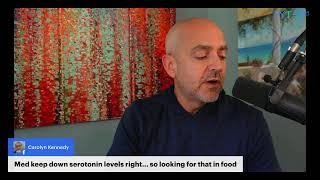
Jim Katsoulis explains how to recover from diet slip-ups by treating them as learning moments rather than failures. He identifies "food noise"—the mental preoccupation caused by processed foods and ads—and offers concrete fixes: structure meals into clean and pleasure days, eat whole foods, and limit exposure to food marketing.
Chapters
Hey everyone, welcome to today's Program Yourself Thin podcast. Today we're talking about every mistake has something to teach you. This mindset is crucial for you to succeed with your weight because when you want to lose weight, you want to eat different, right? You want to eat the ideal way to lose weight. I get that. But you ain't going to eat that way every time. You're a human being. And on top of it, if you want to lose weight, you struggle to eat well. So the idea that just because Monday rolls around on the calendar and now you're going to eat perfect, it doesn't work that way. Wish it did, but it doesn't. And so you can set out on a path to eat better. With all the intention and motivation and commitment in the world, at some point you're going to screw up. So we have to start the process recognizing that that's what awaits us. There is no single option where you just start on Monday perfect and continue to be perfect until you reach your goal weight. That doesn't exist. So we need to reframe this not as one where we need to be perfect, but one where we need to be able to get back on track quickly. And one of the key ways to get back on track quickly is to be able to learn from your mistakes. Because most people do not learn from their mistakes. They are absolutely triggered by their mistakes so that the second a mistake happens, it feels catastrophic and they quit. So what I want you to do is I want you to start thinking about mistakes as being your greatest teachers. I want you to adopt the mindset that you're winning or learning. One or the other. And if you don't eat the way that you want to, it becomes an opportunity to learn, to learn something about yourself, to learn something about your strategies, to learn something about your hunger or your willpower. It's an opportunity to learn more so that you can come up with a better, more optimized strategy plan moving forward to get towards your goal. Because just whipping yourself and getting mad at yourself and quitting and/or doubling down and being twice as strict both lead you to the same place, which is failure. So we need to be able to recognize that mistakes are part of the process, an unavoidable part of the process. No, there's no option where you cannot make any mistakes. I know I have to keep coming back to that because I know your brain just wants to believe that's possible. A lifetime of diet marketing has trained you to think that when I'm serious about my weight, that I will be perfect with it and I won't make any mistakes. But this is not true. This is a fairy tale. It's an illusion. And if you believe in this illusion, it's going to cause you a lot of problems. So we learn from our mistakes and we recognize they're part of the process. So think about the last time that you didn't eat the way you wanted to. Maybe you went and grabbed the ice cream or the chips Um, the second helping, whatever it may be, and take a step back and reflect on what happened there. You didn't want to overeat. You don't want to eat that stuff. So what happened in that moment to kind of compel it to happen? Was it your hunger? Were you too hungry and you couldn't control yourself? Was it your motivation that it just disappeared and you didn't give a shit at that point because you're in a bad mood? And so you said, I don't care. Um, was it a lack of options, right? Was it time to eat and you were hungry, but there was no good options to have? Uh, was it that you didn't get enough sleep the night before? Was it that you just got in a fight with, you know, your partner, uh, and then you got triggered and then didn't care? What happened? What happened? And most importantly, if you could go back in time knowing what you know now, what could you have done differently? The magic questions, because this allows us to absorb our mistakes, learn and grow from them so that we end up better. And I would suggest this is a much better strategy and approach than expecting you're going to be perfect until you're not and then quitting. So again, the secret to your success in a fundamental way revolves around your ability to learn from your mistakes and your slip-ups. And to improve and grow as you move forward because of those learnings. This is the path I hope you start walking because it's a path that feels much better and leads you to the place you want to go. And if you want some support walking this path, then click the link in my bio or go to programyourselfthin.com and go get the free hypnosis session that I made for you. Uh, it's completely free. I also give you a training and a bunch of other free stuff as well. Uh, but go check that out. And I see someone say, am I the only one not hearing sound? I hope not. So TikTok, if you're not hearing sound, let me know. Everything does look like it's hooked up, but you never know. But yeah, if anyone has any questions, feel free to ask them. It's funny. Yeah, TikTok's funny like that though sometimes. Uh, what's up Carolyn? Carolyn says, like that, winning or learning. Yes, winning or learning is a fundamental core mantra in Program Yourself Then. Even got a whole session dedicated to it. Carolyn follows up and says, how do we stop thinking about food and next meal all the time? That's a great question, right? So this kind of gets us to the, the kind of buzz phrase of the, of the moment, which is food noise, right? Food noise. And so food noise, how do you deal with that? There's a lot of ways, but I will tell you one of the ways we've been talking about in the Thrive group is calorie density. Okay, so what's that mean? Calorie density is the amount of calories in the foods that you're eating. And long story short, if you eat a lot of processed food, you're consuming a lot of calorie-dense foods. Now, calorie-dense foods tend to create more food noise. Processed foods tend to create more food noise. So there's kind of two ways, I think, to stop thinking about food all the time. Number one, which we do in the program, is we structure our eating. So I think if you just wake up and you just go moment to moment deciding what you're going to eat based on whatever strikes your fancy in the moment, I think you're going to eat a lot more. And I think you're going to crank up the food noise in your mind. Right. So if you have no real sense of how you're going to eat throughout the day, it's just kind of a blank canvas. Your brain is going to think a lot more about food because you've gotta make a lot of decisions along the way. For me and people in the program, we very intentionally seek to structure our eating. Now we have clean days and pleasure days. We have two core types of structures, but they're both structured. And what structuring your eating does is it reduces the food noise because now there's less choices to make. We're dialing down the cognitive load needed to get through the day eating. You had to eat every day. Okay. So we kind of pre-plan that, pre-think it out so that when we go into the day, we're not thinking about what we have to eat and we know when we're going to eat and what we're going to eat at those times. Now, it doesn't have to be as strict as it may sound like to you. It's not a strict meal plan. It's not that. There's a lot of flexibility in it, but there are general structures to it, meaning On clean days, we're going to eat breakfast at a certain timeframe, lunch, dinner at certain timeframes. When we eat breakfast, lunch, dinner, we have certain options available to us that are all very similar calorically, volume-wise. So they're going to satisfy us in a similar way. We like them, so we look forward to them. They're relatively easy to make, so we're not overwhelmed by them. So that's one big thing is structuring your eating. So that's what you're going to do. And then the other side of dialing down food noise is to dial down the processed food you're eating. The more processed food you eat, the more food you eat that comes in boxes, bags, um, the more food noise you're going to have. That food is specially designed by multi-billion dollar companies in labs to make you as hungry as possible. And a big part of being hungry is to be unsatisfied. So again, the more processed food you eat, the more junk food, the more fast food you eat, the more food noise you're going to have. All right. So dial those foods down, replace them with more whole natural foods. That's going to help you. And then finally is to dial down your exposure to advertisements. Every single commercial you see or hear is a hypnosis session. All right, so it's really important that you— whoops, hold on a second. Um, so yeah, so it's, uh, it's really important that you, as much as you can, remove the conditioning and the ads and all the rest of it, because those are like hypnosis sessions and those get in your head. And so those crank up the um, food noise as well. So yes, there's a lot of things that affect food noise, and there's ways to deal with them. Um, Bop Bop says, how many hypnosis sessions do you have to do to program yourself to eat less? Um, I just think that's the wrong question because there's no one answer to that. You know, everyone's different. Um, and beyond that, each person's different in different situations. So there's no one answer I could give you that would be legitimate or accurate. Um, I think a better question is, is how can I support myself to dial down my calories in the most comfortable way possible? And how can hypnosis support me in doing that? So again, I mean, in Program Yourself Thin, when someone goes through the program, they're exposed to over 60 hypnosis sessions. A lot of those are 5-minute ones. Some of them are longer ones. But, um, I think it's important to, uh, you know, use the hypnosis sessions as a supplement. But at the end of the day, the hypnosis sessions cannot do all the work, in my opinion, which is why I don't sell the hypnosis program, um, by itself. Uh, Carolyn Kennedy has followed it up, says, uh— oh, there's Sarah. Sarah says, I caught you live. Yes, glad you're here. Uh, Carolyn says, feeling very full. I'm pretty structured, very little processed food here, almost all homemade. Um, yep, none of that. Also great advice though, I don't do commercial. Nice. Oh, don't do commercials, great. Carolyn says, I think my food noise is wanting to go back for more later, not even that hungry, just craving, but I think I'm bored or some pain, fibromyalgia. Yeah, there you go, Carolyn. Well, you just quickly diagnosed it, didn't you? I mean, so for you particularly Um, you know, a big part of it might be the, your, the emotional eating piece, which I didn't even get into. Um, but yeah, so in your situation, if you're using the food for stimulation or pain relief, if the food is one of your primary strategies to relieve pain or entertain yourself when you're bored, then, then you have your answer. You need better strategies that don't involve food, um, for entertainment. Stimulation when you're bored. And, um, in terms of pain, come up with some other pain-relieving strategies other than just food. That's where I would kind of point you in the direction of. And once you have those, you know, it's going to be really interesting how you think and relate to food, because now you won't be relying on it so deeply, um, for the emotional benefits, right? Because you'll have other ways to do it. Uh, Molly says, what is that painting in the back? Very interesting. I'm gonna assume you mean this one. This is the one people always kind of reference, and I forget— it is— it has like a Bible verse name to it, um, which wasn't really my motivation, but it just turned out— I just like the way it looked, you know. I think it looks cool, um, but I can't remember. I feel like John something, some Bible verse, and all the rest of it, and I forget what, but we Maybe you could, uh, what do you do, Google Lens it, right? They'll probably have, have something with it. Um, I forget, I should, I should put that— I get asked that all the time, I should know it better, but that one never sticks in my head. Um, how's it going, Monto? Yep, Carolyn says yes. Awesome. Yeah, good. Again, Carolyn, if you make it about— see, because what you're doing, again, this is the classic with emotional eating, is that the The food is serving a positive intention, right? So you don't like that the food is keeping the weight on you, but in that moment when you're bored or feeling pain, you like that it's relieving the pain or that it's stimulating and you don't feel bored anymore. And in that moment, um, you're going to choose that most likely. So the answer is not to not eat food, which has been probably your focus, right? You start to get bored and you start thinking about food and you say, oh no, no, no, don't eat. Don't eat, Carolyn. Don't, don't do it. Don't do it. But again, this is the problem with dieting. It's all about what you're going to not do. And so if you, you, you know, your, your best pain relieving technique, you try and stop doing it. Um, your best boredom technique, you try and stop doing it. Your brain is going to obsess on those techniques because those are what you use to feel better and manage your emotions. All right. Um, here it says, medicine keeps down serotonin levels, right? So looking for that in food. Yeah, exactly. I would not look for that in food because it's not a great strategy for increasing serotonin. There's much better strategies for increasing serotonin than eating, much longer lasting ones, ones that are going to serve you a lot better. So, but now it's a much clearer— notice how the conversation evolves, because instead of saying, how do I stop boredom eating, how do I stop eating emotionally, Well, that ain't even the problem. That's a symptom of a deeper problem. The deeper problem is that you don't have a better way to deal with boredom, a better way to relieve pain. And once you do, well, then you have a much better solution. So it becomes not so much about, I can't eat when I'm bored. It becomes, when I'm bored, I want to go and do something genuinely interesting, whatever that may be to you. Um, and same with the pain relief. So hope that helps. But yeah, if anyone has any questions, feel free to ask them. Here to answer any questions, although I am also on a kind of tight timeline today, and I don't think there are any other questions that are here right now, so I'm gonna wrap it up. All right, we're gonna cut this a short one today. So again, if you're not in my world, please click the link in my bio, go get the free hypnosis session, watch the training, check out all the free stuff I send you. Uh, if you like this, I'm here every Monday through Friday, usually around noon Eastern. Uh, answer your questions, talk to you about weight, whatever. Way I can help you, I'm happy to do it. And if you can't make the live, it's also a podcast, so search Program Yourself Then, um, listen to the podcast whenever you want. And, uh, yeah, got a book available too, so this book's available, go check it out on Amazon, The Tao of Living at Your Goal Weight. Um, what's up, Julia, how's it going? Uh, sorry everyone, have a super day, we'll talk soon, bye!
More from Jim



Weight Loss Visualization: Wake Up in Your Dream Size #programyourselfthin #weightlosshypnosis



What If You Pretended to Be Thin for One Hour? #programyourselfthin #weightlosshypnosis




