Program Yourself Thin Live 7-23-26
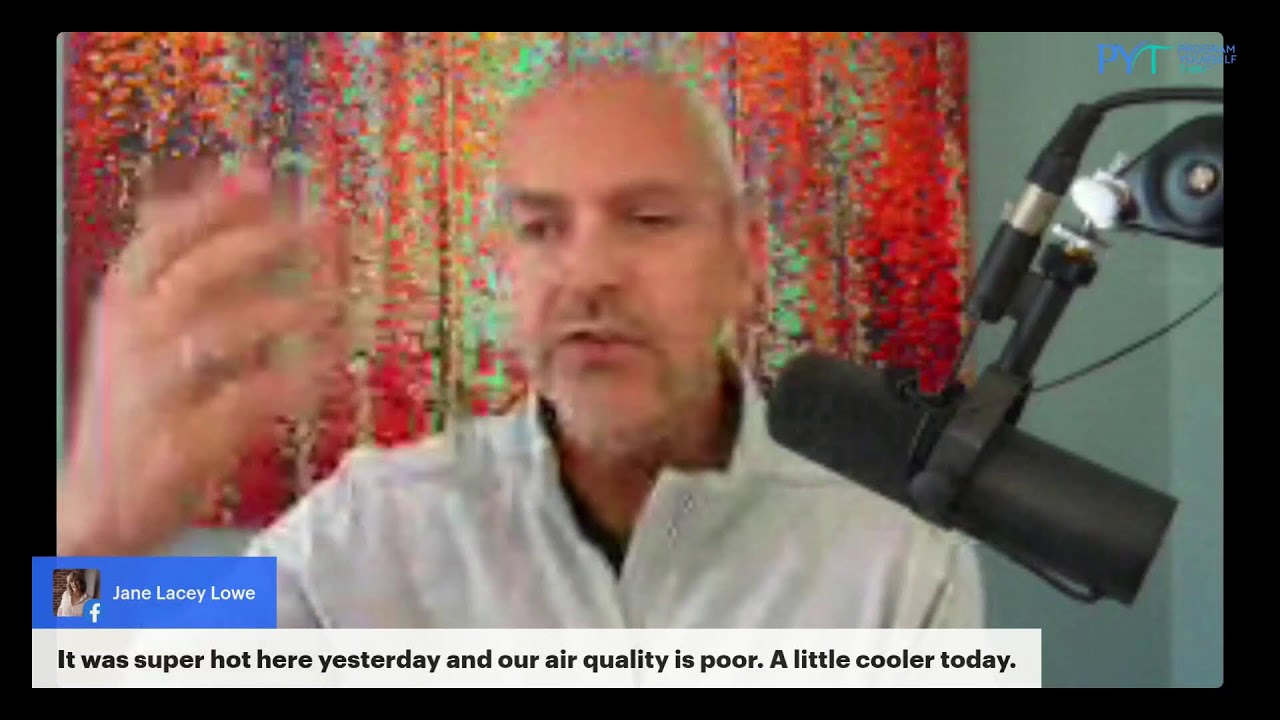
Jim Katsoulis explains why hunger is a signal worth listening to, not ignoring. Micronutrient deficiencies and dehydration often masquerade as hunger, and meeting those real needs quiets food noise in your brain. He walks through how seasonal changes, your cycle, and environment shift hunger, with audience examples of vacation eating and road-trip snacking.
Chapters
Oh, we don't talk with you, little baby. Hey everyone, welcome to today's program, Yourself Thin Podcast. Today we're talking about what your hunger is trying to tell you. Your hunger is speaking to you. You need to learn how to listen to it because it's got an important question and message for you. And that message is, are you nourishing me properly? I don't know what the answer is, right? Everyone's got a different answer, but that's usually what your hunger is telling you, is I need fuel. I need fuel, right? Your hunger and your appetite are different, by the way. Your appetite is never-ending, right? So we can always have an appetite for certain types of foods and experiences, but hunger is a physiological thing. And when you're hungry, your body needs more energy. It needs more nutrition, more nourishment, but it all comes down to energy. And so a lot of times when you're feeling hungry, it's because your body is looking for energy. And that energy actually comes in two core forms. Either comes in food through the nutrients that are going into your body, the glucose that you end up absorbing, and water hydration. They're both essential for your body to run properly. So when you feel hungry, the worst thing you can do is to ignore it, which is what dieting teaches you to do. Dieting teaches you to ignore your hunger, to fight against it. And the main way you fight against it is by trying to ignore it. This is completely wrong in my opinion, because your hunger is like the gas light of your car. When the gas light goes on, you don't want to ignore it or you're going to end up running out of gas. And so instead, we start to embrace the hunger signal. We pay attention to it. We listen to it and we respond to it more directly, more effectively, because that hunger is a much richer thing than just you getting a grumbling in your stomach and a desire to eat something. Right. Because it's what we eat in that moment is going to affect us moving forward. And when you really start to pay attention to your hunger, it becomes very interesting. Because a lot of times what you're going to realize your hunger is really telling you below just the initial pang of hunger and wanting to eat is that hunger is telling you how well you're doing nourishing your body, fueling your body, because you can eat a lot of calories. You can eat a lot of processed foods that don't have a lot of nutrients in it, and you can eat a lot of calories and still feel hungry. Soon after. How's that possible? Right? I ate 2,000 calories. How can I be hungry an hour and a half, 2 hours later? How's this possible? It's because you weren't meeting the deeper requirements of your body, the micronutrient requirements of your body. Now, just like when you don't consume enough calories, your body sends you a hunger signal. When you don't get enough micronutrients that your body needs, it sends you a hunger signal. And a lot of times we just think, oh, hungry, I need to eat. No, you need to eat the right things. You need to consume the right things because on top of needing micronutrients, another thing your body needs is hydration. And a lot of times our body confuses our hydration signal with hunger because they're very similar, because throughout history, the million years we've been on Earth evolving, We have consumed— we've eaten a lot of our hydration because a lot of the foods we've eaten historically, when you're living out in nature, a lot of those foods have a much higher water content than the processed foods that we eat today. So instead of ignoring and fighting against your hunger, you start listening to it, you honor it, you respect it, and you especially pay attention to the micronutrients that that hunger is asking for. The hydration that, that hunger is asking for, not just the calories, but go deeper into it. And when you start listening to your hunger on that deeper level, what happens? You start giving your body what it truly wants. You start putting the whole natural foods that your body thrives off of into your body. Now, all of a sudden, your micronutrient requirements are being met. And for some people, this is the first time ever in their life you may have lived a life— if you lived in America eating the standard American diet, that's a lifetime of not meeting your micronutrient requirements. That's a lifetime of being hungry because you're not meeting the deepest needs that your body has. And so when you start to meet those needs for the first time, it feels peaceful. You want to talk about quieting the food noise? Nourish your body and see what happens. It feels fundamentally different because for the first time in your life You genuinely feel nourished. Your body's got everything it needs. It has the micronutrients it needs. It has the glucose and the calories it needs. It has the hydration it needs. That's a body at peace. And that's a body with a quieter food noise brain. And that is the path to getting the weight you want as well. Ironically, it's by listening to your hunger, honoring it. When I feel hungry, Let me serve that. Let me respond to it by giving you what you want. And if I just ate a bunch of calories, you cannot just want more calories. You must want something deeper. You know, so instead of getting annoyed or frustrated with your hunger, you say, what do you— it's like Lassie. Remember Lassie back in the day, right? Lassie, you only could bark, right? Only had one mechanism, barking. But it's like they listened to it, you know? What are you trying to say? What are you trying to say, girl? You know, that's how you have to listen to your hunger. You know, oh, what are you saying? You need me to eat? No, oh, not just eat. What? Oh, you need me to eat healthy, natural food? Oh, what, what's that? Oh, what's that, girl? Oh, you need micronutrients? Oh, what's that, girl? You need, you need hydration? You need your body to run at a higher level? Oh, I got you. I hear you. Let me give you that stuff. Let me give you what you need. When's the last time you've done that? It's not a question to elicit shame. It's a question to be honest with yourself and to experiment. Experiment. See if it can feel better. This is the easy, comfortable path to managing your weight. Starts by listening to your hunger, honoring it. Not trying to run away from it, not trying to ignore it, not trying to fight it. Right? Honor it. And as you honor your body, you honor yourself, and your body responds in a way that you may have never imagined and never experienced before. So I hope you test this out because it can be one of the most profound shifts you make in your whole weight loss journey. And if you want to go deeper into that process, click the link in my bio or go to programyourselfthin.com and go get the free hypnosis session I made for you. It's called The New Thin Me. It'll help you right out the gate. 10 minutes, it'll help you relax, calm down, and put lots of good ideas in your mind. A lot of times people get amazing results just from that one listen, one session. So go check it out and, uh, see what it does to you. Uh, if you're on Facebook or YouTube, I will put the link in the chat window. And, uh, where the heck are we? And you can just click this link. If you're on TikTok, you just click the picture of me up there in the top left. Whoop. And, uh, go check that out. And if you have any questions, feel free to ask them. I hope you're having a wonderful day. There it goes. And, uh, yeah, let's see here. Got a little bit late start today, but what are you gonna do, you know? Life's life. Summertime, summertime. And we got a little, little late today. Good going, Max. I tell them. All right, what's up Claudia? How's it going? Yeah, nice to see you. I haven't seen you in a little while. Hope things are going well. Oh, here's Jane. Nice to see you. So glad to see you. I've been away for a week visiting my son and family, but when I tried to come back yesterday, I couldn't find this. By the way, I ate ice cream every single day I was away and gained 2 pounds. Back at it today though. Yeah, great. Who gives a shit? I mean, if I go away on vacation, I put 2 pounds on, that's about as good of an outcome as I could want. You know, we go away, you know, when we go on vacation, when we go on trips and we go and have fun, we're supposed to have fun. So I don't know, one of the worst things I hear is, I don't mean this because you can go on a vacation and lose weight. It's possible. But the main goal going on vacation should be to have fun. Now, it doesn't mean you're going to eat yourself silly, you know, because again, I think the most fun you can have is when you eat moderately. But again, I don't think vacation is a great time to lose weight. So put 2 pounds on to me is the sweet spot that implies to me that you enjoyed yourself, you had fun. And, um, 2 pounds is nothing. You know, that 2 pounds will come off, um, as you get back in your normal routine. So if I go on vacation and I put anything less than 5 pounds on, basically I'm fine with it because I know I'm gonna go right back into my routine and it's gonna come right off. So again, vacations are still outliers. Dieters are so crazy because you all, like, you, you, your weight goes up a little bit and you just freak out, but this is because you don't weigh yourself every day. I I say this all the time, you know, if you don't weigh yourself every day, you don't really even know what your body's doing. But, um, your weight's fluctuating constantly, so it's, it's like impossible not to have your weight fluctuate a little bit, just so you know. Uh, Michaela says, listening while standing on my vibe plate because what else can I do? Um, yeah, great, great. I like that, that way of thinking. I mean, there's probably lots of other things you could do as well. Okay, if that's a question. But I think doing something while you're listening is brilliant. A lot of people do that. I hear that all the time. People will, um, you know, ride the— ride the exercise bike or something, um, while they're listening, or walk on a treadmill or whatever else. Aphrodite says, are you crying? No, I just got watery eyes. I don't know, it's just— I don't know, it's like my grandfather had eyes like that, so I don't know. I guess that's just what happens. No, not crying. Very happy today. Feeling happy. Having a good day. Um, relaxing day. Just a beautiful day, actually. It's like a perfect day out right now. Perfect day. So yes, I hope you're all having perfect days as well. Again, summertime gets here, and, um, I hope you're enjoying yourself. You know, not that— you know, some people don't like summer, so it might be harder to enjoy yourself in summer for some people than winter. Everyone's a little different. But, um, I do hope that I think one thing about summer we got to remember is that summer— we always get an advantage with summer because usually, you know, you go to school, you get out for the summer, so you have— you usually have pretty fond memories of the summer. Typically, you know, I know everyone's a little different. Um, so, you know, hopefully if you can kind of build on that, um, you know, again, there, there is— there's seasonal— what do they call it— seasonal affect disorder. But that, that's kind of the negative version of it, but The seasons impact us, pluses and negatives, right? So some seasons are easier, some seasons are harder. And I think we need to recognize that we're not the same person all year round. We're different people, different seasons, different situations. And, um, I think it's, it's important to notice that. I'll give you another, like women, you know, if you're in your menstrual cycle, you're a different person each week of the month. To some degree. Yeah, not a totally different person, but, but it's a factor and it's a factor you ought to recognize. And it's different for each person. So I'm not saying like, oh, this week this is going to happen. I'm saying pay attention, you know, 3 weeks out. How do you feel? 2 weeks out. How do you feel? 1 week out. How do you feel during the week? How do you feel the week after? How do you feel? And it's like, start to notice patterns. Oh, this week here I tend to get hungrier. Oh, this week here I tend to get more tired, whatever. The more you understand about how you operate, how you think, feel, and behave, that's dictated by a lot of environmental cues you're not paying attention to, the more awareness you have. And the more awareness you have, I think the better, um, chance you have of finding solutions to what you want to accomplish. Yeah. Klaas says perfect weather here in Tirana, Albania too. Nice. That's so cool. It's so cool thinking like here in little old Massachusetts, the weather's perfect and there in Albania, the weather's perfect too. That's kind of cool. All right, guys, says, I'm spending some time in nature, perfect time to listen to you. Yeah, exactly. Again, I think that's the wonderful thing about whether you listen to it live or the podcast, but listening to this while you do other things, I think is just a great, great, um, combination, you know, because again, we link together what you're hearing with, um, you're linked together what you're hearing with doing something kind of active. And I think putting those two things together is a powerful combination. So I think that's a smart one. Uh-oh, Michaela says it's winter at midnight for me right now. Uh-oh, we're up in Australia. Australia is so funny. I actually— I've worked with people in Australia. It's always funny to speak to people when it's, um, you know, 100 degrees here and it's like— well, it doesn't really snow there necessarily. I mean, I'm sure some parts probably it's winter. I know, it's so funny, isn't it? Funny world. Uh, what's up, Jody? Jody says thanks for the coaching call yesterday and the reframe. I didn't have a chance to say thank you. Oh, you're welcome, Jody. Yeah, no No, I always know you appreciate that. And it was fun working on that with you. Um, I was kind of thinking about even diving deeper into that whole concept. That was such a good— that was so interesting to me, that, that conversation. And I think so relevant, so relevant that, uh, I had an idea for a couple lessons perhaps where we go deeper into that idea. So I appreciate you bringing that to the call and it was really, really interesting to work on it. And so I hope that helps., because that was kind of fun. Uh, Jane says, I wanted to get an ice cream bucket for putting my dead-headed plant cuttings in, so I went to the store and bought one. And then yesterday, I ate 2 bowls of ice cream and then threw the rest of it down the drain. LOL, wasted that food but feel better. Okay, interesting. Yeah, that's a— that's an interesting story, Jane. I didn't know where that was gonna end. Um, that's so funny. Yeah, it's like, I wanted the ice cream thing to put the flowers in. That's a funny one, right? Sometimes our brain is so tricky and so funny how it operates. So whatever, so you got it, um, you had some ice cream and then you got rid of the rest of it. I, I think that's, um, you could consider that a win, um, just purely on the reason that you changed your behavior up, you know. So congrats, you changed your behavior from what you normally do, and, um, that's cool. Internalize that, right? Nice job. You kind of, you minimize the damage. Once things got started, you, you still, you self-corrected. I think that's wonderful, you know, and that's something you're going to use a lot of times too, you know. Uh, what's up, Chris? Chris says, listening while holding infant granddaughter sleeping and did well with the 6-hour road trip to get here. I packed fruit and vegetables for the car ride snacks. 6 hours of your podcast episodes felt awesome. Good awareness and mindset while driving. Look at that, Chris. So yeah, Chris was— we were talking about that the other day, um, on the Q&A that we do with the, with the people in the program. Um, that's so awesome and so happy for you, Chris, because again, what I want to point out, what Chris just said, Chris kind of come to the call with a challenge and was able to come up with a solution that was comfortable. And that's the main thing I want you to remember. I think dieting sets us up to think every solution has to be miserable and difficult, right? Most people think about weight loss and think about how hard and difficult and boring and miserable it's going to be. It doesn't have to be that way. You can lose weight in a more comfortable, enjoyable way. And so you figure that out, Chris. So nice job. And so what you want to remember is it's not just the specifics of what you do. So now, Chris, you have like a plan for when you do that 6-hour trip. Okay. And by the way, let me just mention that holding, you know, holding a little sleeping baby granddaughter or grandchild is awesome in and of itself, but you got to be enjoying it all more now because you're at peace inside. You're happy with how you drove there. You're happy with how you behaved. You're happy with how you arrived. And so that's what I mean. Like, so often with the weight, we just look at how we're going to look visually, right? How do I look in pictures? How do I look at my dress? Whatever. But really what's driving— I hope what's got to be part of your motivation is when you're at your goal weight. And it's not even just being at your goal weight because I don't believe Chris is at our goal weight yet. I'm not sure about that. But it's the— it's the behaviors along the way. So if, you know, if Chris is going to go visit her granddaughter and it's a 6-hour ride, and in the past when she's made that ride, she's kind of eaten junk food and kind of gotten tired and has been in a bad mood when she got in there, whatever. It's like, never mind what you look like in a picture. This is your life, right? This is your experience of your grandchild, right? I'm not trying to be dramatic here. I think we just miss this all the time with weight because we just think about how we're going to look., but I'm thinking about how we're going to feel, how we're going to live, who we're going to be. And so for me, like Chris's solution that she figured out here in this specific situation, not only is it going to help her manage her weight, you know, she didn't, you know, eat a bunch of junk food and eat crap and all the rest of it. She ate better. So that puts her on a weight loss path and she'll probably lose weight because of this. And that'll set her up to do that. And that's great. But how can. Showing up, feeling good about yourself, feeling happy, feeling relaxed, feeling great, and then holding your baby grandchild. Like, how could that not be the bigger, better part? Am I crazy here? How could that not be? Again, looking better and losing weight's great too, but how could this not be the better part? Holding that kid with a clear mind, a quiet mind, a happy mind, a mind where you're happy with yourself. That's, that's the secret. So great job, Chris. I'm so proud of you. And I want you to remember that process, right? You had a challenge. You took a step back, thought about it, thought about some solutions, you implemented them, and they really worked out for you well. If they didn't work out for you well, you just would have repeated the process though. And so again, keep that, store that away as a real win. And not just the specifics of that situation, but the process you use to get to those specific solutions because you're going to repeat that. Over and over and over and over and over. All right, yeah. Chris says, yeah, yeah, thank you so much. Yeah, you're welcome. And that's awesome you did that. Said, I'm not at my goal weight yet, but, um, getting below 200 pounds was my first milestone. I feel wonderful, Jim. Thank you. I'm happy. That's awesome, Chris. Yeah, and you really deserve it. And again, this is just the very beginning of it, because again, getting to the goal weight's awesome. Learning how to manage our life so we feel better is even better than that. I promise you. I promise you. I know no one believes me, but being at your goal weight in a way that's comfortable and enjoyable, I'm telling I'm telling you, it's the best. And it's not because how you look, because how you look really rarely comes up. I'm being, I'm being honest. I know you don't believe this. You don't know shit, Jim. You're a guy. You don't know. You don't know what it's like to be a woman. It's true. That's true. But I also know how humans live, and most of your life is really— I don't say dictated necessarily, but, but most of your life is really arises out of what you're experiencing in the moment, how you feel, what you're thinking. What you're doing. These are the things that are impacting your quality of life, your happiness, your moods, uh, more than what you look like in a picture or what you look like in an outfit. Those things are less, um, frequent factors. I know, I know, I know Chris believes me because Chris just experienced it. She's experienced it right now while she holds her grandchild, and she just did it. But most people don't believe me until they get in the program. Yeah, if you have any questions, feel free to ask them. I work with everything. So again, even if you're, you're not in program yourself, then if you're in doing keto or intermittent fasting, or you're just thinking about how to, how to get your weight loss started, um, feel free to ask any questions you might have. Um, happy to take a swing at it. Jane says it was super hot here yesterday and our air quality is poor. A little cooler today. Oh yeah, Jane, right, you're up in Canada. I know my air quality was bad because of Canada last week. It was so weird. It was like yellow here. It was very, very eerie. I guess it's cleared up, at least for where I'm at. But it was crazy how far that travels. So yeah, being up in Canada, I can imagine that weather's something else. So again, in a situation like that, Jane, you know, again, well, at pickleball, you probably do inside anyways. But yeah, and this goes for anyone, you know, anytime the air quality is bad or there's any reason you can't go outside, could be wintertime, it could be snowstorm, icy, you know, hot, it might be 5,000 degrees or the air quality is bad. But that's why we're on kind of a plan A, B, and C with things, right? We don't want to just rely on walking outside because all of a sudden if it's a bad day out, we don't walk. You know, we only got one option. We can't do it, right? So we want to have multiple options kind of available to us, um, that we can use depending on the situation. All right. All right. Let me get out of here before anyone asks another question. I'm gonna go. I gotta— there's stuff I gotta take care of. Um, so we'll do another short one today. That's okay. Um, so thank you so much for being here. If you're not in my world, please click the link in my bio and go get the free hypnosis session that I made for you, or go to programyourselfthin.com. Um, get on my email list. I got a new training being released, um, this week it'll be released. So if you're on my, my list, you'll get info about it this weekend. Um, and then if you like this, I'm here every Monday through Friday, usually around noon Eastern. And, um, yeah, so, so I'm here at noon Eastern except for Tuesday at 1, and it's also a podcast. So if you, uh, search Program Yourself on any podcast platform, it'll pop up. You can listen anytime you want. And, uh, yeah, there it is. So have a great day, we'll talk soon. Bye.
More from Jim



Weight Loss Visualization: Wake Up in Your Dream Size #programyourselfthin #weightlosshypnosis



What If You Pretended to Be Thin for One Hour? #programyourselfthin #weightlosshypnosis




