Program Yourself Thin Live 7-29-26
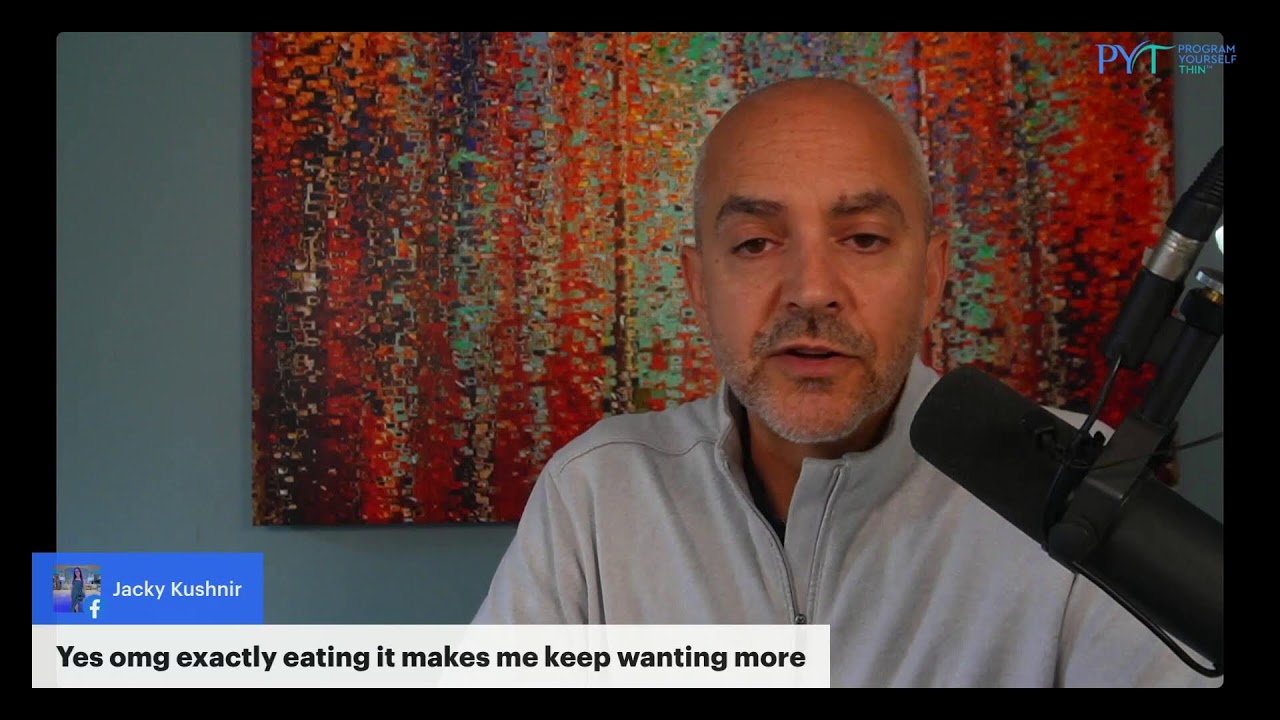
Jim Katsoulis introduces "Minimize the Damage" mode, a way to stop the "what the hell" effect where one slip leads to overeating. Instead of all-or-nothing dieting, he teaches small steps like drinking water and adjusting sleep to limit the fallout from mistakes, using a dimmer switch rather than an on/off switch for weight management.
Chapters
Everyone, welcome to today's program, Yourself Thin podcast. Today we're talking about minimizing the damage mode. This is one of the most important modes of weight loss, and it's one of the most overlooked. Naturally, when most people approach weight loss, it's an all-or-nothing mindset. And what happens there is that if they can't be perfect, they ain't doing nothing. And this is a big problem because managing your weight is a statistical issue. It's not this all-or-nothing, do it perfect forever. You live in a human life. You're going to have ups and downs. You're going to have easy and difficult situations. And so great when you can do perfect, knock yourself out, be perfect. But you have got to have a plan B, C, and D here because there are going to be times when you go on vacation or you're not feeling well or it's celebration times, whatever. There are going to be times in life that come where you're not going to be eating perfectly. And we don't need to completely give up on eating well and weight as well. That doesn't have to be the options we have. So the alternative to this is that we start to minimize the damage when we're not being perfect. All right. So I will give you an example of how I use this because the last two nights I have had to minimize the damage. I— Monday and Tuesday nights for me, they're usually very clean eating nights, but they were special occasions for various reasons. And so the difference is that I'm not just saying forget it. I'm still actively managing what I'm doing, even though I'm not perfect. Now, before I get to exactly what I did, I just want to talk about a phrase they use with dieters, and it's called the what the hell effect. And it is specific to dieters when they make a mistake with their plan that they tend to have this response where they say, what the hell, and they just eat whatever they want. So we want to handle that what the hell effect. And my solution is let's minimize the damage. So this is the mode you go into after you've made the mistake. Whatever it may be, and you all know what I mean. There's always something that may trigger you to say, ah, I made a mistake and I blew it. That's when you start to minimize the damage and minimize the damage requires you to be somewhat aware and somewhat mindful and present with what you're doing. Uh, because this is the first step, because a lot of times when people make a mistake, they just check out because realizing they made a mistake feels uncomfortable, right? They blew it. I was doing so good and now I blew it. I didn't blow anything. You're being a human. You're going to have good and bad days. You're going to have good and bad meals. That's just normal. So the real secret to success is to not anticipate that you're never going to have a bad day or meal ever again, but instead to have a plan for what to do when you do have the bad day or meal. All right. And that's why I go into minimize the damage mode and it can show up in a lot of ways. So I want you to understand, I'll give you some specifics But I want you to understand it's more of a mental concept that you start to practice and work on. And again, a lot of times we practice and work on it after the fact, after we made the mistake and just said, forget it and overate everything. We go back in our mind and say, if I could have handled that a little differently after the mistake, what could I have done to handle that, minimize the damage? And of course, you can apply this to meals. You can apply this to a day and you can apply this to a week. Or you may be on vacation or whatever. So the idea of minimizing the damage is just recognizing, ooh, you know, I've been doing keto and I just ate, you know, a bag of chips. Okay, it's all right. Let me, you know, and again, as soon as we do the thing that we recognize, what I love to do a lot of times is drink water. But what can I do to minimize the damage? Oh, I just ate— I don't know. Oh, I just ate a whole pizza. This was me the other night. I just ate a pizza and a half. What do I do here? Let's get some water in you, right? Let's notice how it feels. That's another little part of what I do, but I'll skip that for now. And then, you know, let's get to bed early. Let's tomorrow morning get up and, you know, do our normal routine, get right back on track. Last night I was out, you know, dinner. It's like I'll have a glass of wine. I don't normally have wine on Tuesday. Just one glass, though. Drink it slow. We're going to minimize the damage. We have one glass. We're not going to do any more tonight on a Tuesday. So it doesn't have to be this Herculean stuff. What we're looking for is as soon as we make a mistake, what's something I can win at? What's something I can kind of nudge myself back into being healthier and feeling better with? And I cannot tell you how important this is because again, it's hard for our brains to wrap around this with all the diet conditioning we've gotten. But you've got to stop thinking of your weight, your weight loss, and when you're actively trying to lose weight as this switch that you turn on and off. And start thinking of it as a dimmer. It's a dimmer that has lots of gradients between off and on. Okay. And when you start thinking of it that way, we give ourselves more options to do better. That's the secret, right? Once we move out of perfection zone, now we're just focused on doing better. And so for me, it wouldn't be unusual in the past, like, oh, a glass of wine on Tuesday. Well, fuck it now. You know, I'm going to have more. And I would double down on it, you know? And so being able to manage just having the one glass took effort, by the way, you know, because once I'm in that mode, it's very easy to have 2, 3 glasses of wine for me. And so I'm actively managing. I got my water there. I'm doing this. I'm talking. I'm actively taking small sips. And so I'm minimizing the damage. It's not perfection. Perfection would have been no alcohol. I'm minimizing what I'm doing so it doesn't get worse, right? One glass is better than two. Okay, fine. Zero is better than one, but I already had one. So one's better than two. One's better than three. Two's better than three. So again, if I order the second glass now, I'm working to not get a third. So I don't think we talk about this enough when it comes to managing our weight because everything's wrapped around perfection. But I think the game is truly won in your ability to manage your mistakes because you're going to make a lot of them. It's not a judgment on you. It's just the fact that you're a human.. And if you're working on changing something that you struggle with, of course there's going to be mistakes. So we need to recognize that and be able to absorb them and recover and learn from them quickly so that we can get on the path we want to get on. And so I hope that this makes sense to you, and I hope you start to work on this, because when you can practice kind of that minimize the damage mode, when you flip out of perfection, when you go on vacation, when you're in a celebration mood, when you're doing different things, it's a nice place to be because you're acknowledging that you're a human and you're going to do certain things that may not be the cleanest choice., but you can still be engaged, active in your, your weight management and the choices you're making. And a lot of times you'll find, I think the blessing here is that a lot of times the minimizing the damage is not that hard. I think we've gotten ourselves into the pattern of like, I'm either 100% on or off, all or nothing. Um, but when you start realizing that we're going to be all or something, there's a lot of room to be something. And being something is really, my opinion, the road towards mastering your weight long-term. Because again, we are humans and we are going to have good and bad days, good and bad meals. All right. So give this some thought. And if you want to go deeper into this way of thinking, click the link in my bio or go to programyourselfthin.com and go get the free hypnosis session I made for you. It's called The New Thin Me, and it's just waiting for you there. And on top of that, I got a new training available to you called Reprogrammed, and you'll get that as soon as you opt in. So go check that out. And if you're on Facebook or YouTube, I'll put the link in the chat window. And if you have any questions, feel free to ask them. I know, um, I begin to feel— I don't know, I could be projecting, but sometimes I feel like people are in kind of vacation mode. But it could be me because I'm about to go on vacation, so I'm about to, uh, about to do that. Uh, Pat says, do you mail the goal book to new members? Yes, Pat, I think I just wrote to you too. Um, that was mailed out, I believe, on Monday, so I believe, you know, you never know 100% with the mail, but you should have that by next Monday the latest, I'd expect. Okay. But yeah, if you're, um, if you ordered the program this week here, uh, you know, with the, the special, because it knows where. So, um, on that reprogram, there's a special offer. If you take that, you get the program for free. Um, you can always upgrade it as well. Um, but yeah, that, that should be sent out, Pat. So Welcome to the program. Nice, nice job taking action too, by the way. And like I would say too, you know, um, Pat, that, that, you know, when you're in the program, I, I'm here every day, obviously Monday through Friday. Uh, so feel free to ask any questions you have, but you know, even for my clients, you know, I do this in, in part to serve you as well. Um, so please, if you have any questions about the program or just, you know, whatever's going on through the program lens, I'm happy to help you out, um, on these podcasts, you know, so take advantage of that as well. Um, AK Design Studio likes that. Yeah, it makes sense, right? Yeah. Again, a lot of times I think when it comes to managing your weight that we have to make it make sense. And I don't think dieting makes sense. And I think that's why people struggle so hard with it. And dieting was never meant to make sense. Dieting is not, um, it's not a plan created by good people to help you live at your goal weight. Dieting as we know it is an industry. It's a branch of the food processing industry. It's a branch of the food industry. So they're not altruistic good motives there, unfortunately. Um, the diet industry really is there to sell you diets and at the end of the day to sell you more food. That's the crazy part of it. Heinz was on— Weight Watchers owned by Heinz. Jenny Craig was owned by Nestlé. Um, SlimFast, owned by the same company as Ben Jerry's ice cream. These companies are not there to help you not eat as much of their food. Just doesn't make any sense, right? So, you know, the truth is you've never been given a real comprehensive, logical, rational system for managing your goal weight. You've never done it. Your whole idea about weight is about losing weight as fast as you possibly can. And that's the worst way to go about it, because trying to lose weight when you're stressed, or trying to lose weight by stressing yourself out, is really a very bad strategy for a lot of reasons. Uh, yeah, Pat says, thank you, just joined on Sunday, finding your info so helpful. Well, thank you, Pat, I appreciate that feedback. Um, yeah, and super happy to have you in the program. I think you're gonna love it. I mean, it is just— it's so exciting. I will tell you, getting this reprogrammed workshop done. Uh, and, and, you know, the program's evolved a bit, you know, so again, the prices have changed a little bit. Um, that's all there, but the next thing I'm doing is kind of going through the program one more time just to optimize a little bit more. But I, I've been working on this program for over 20 years, you know, literally, I, I professionally over 20 years I've been doing Program Yourself. Then I, I say this every time I bring this up, I always want to find my first flyer I made to promote the program. I gotta find it. You'll— it's so funny to me. I love it. I don't know, it's funny. I remember making it on my little computer back then, and it's so funny. I gotta find it and show it to you. But the big point is that I've been doing this personally for over 30 years, professionally for over 20 years, Program Yourself Thin. And, um, oh my goodness, there have been so many iterations. I've done 6,000 private weight loss sessions since then. I've done innumerable group coaching sessions, uh, I've done almost 1,000 podcasts. It's a lot, you know. And so it's, it's my life's work. Program Yourself Thin is. And, um, it's just, it's about to kind of take another, another step forward. I'm so excited about it. It's just fun, you know. And I always say this, I would say the patience, um, and long-term approach I have to my weight and managing it is exactly the same approach I use for my business, you know, my program.. And so, you know, you obviously, you'd like to just hit it out of the park the first time. Get out of here, dog trying to get in the— I let her in, but I just heard her under my shed. I know she's gonna be dirty and wet. She can get in the porch. Um, yeah, so, so I would have loved the first year I did Program Yourself Then to just have the program I have now, but I didn't know what I didn't know, you know. So, um, watching Program Yourself Then evolve over 20 years You know, it's like another kid, to be honest. I've got two children, but it's like a third kid, I would say. Um, and honestly, the program itself has been around longer than my kids. But, uh, it's very exciting to see how it just keeps evolving and, um, you know, being a way to help you all manage your weight. But, but again, it's a philosophy and a context, and I share that with you freely here. Um, the program's for people that, you know, are ready and willing to make an investment, you know, in a full complete and total system, uh, to live at your goal weight once and for all. So yeah, proud of you, Pat. Pat says, listen to your podcast for months and thought it was all I needed, but you offer so much more. Hopefully others won't wait as long as I did to join. Yes. Yeah, that is all I needed, but you offer so much more. Yeah, I mean, again, that's what I try to say. Like, I understand, you know, my mission in life is to help as many people as possible with their goal weight. So I'm here every Monday through Friday for free. Um, I give you more free stuff than anyone. I give you the reprogram training, the New Thin Me self-hypnosis session. I have a program called PYT Daily where I send you an email every day, and it's a coaching, but it's just straight content. Um, it used to be a program I charged for. I just give it away now. And I have a few other things I just give away, um, to help you. You know, I do have a program too, because, you know, listen, people value what they invest in, you know, and I honor that investment with, I think, an extremely effective, one-of-a-kind system to live at your goal weight that really takes you through the whole process. And as I always say, just to give you a sense of what I'm talking about, this is the goal weight pyramid we really kind of follow in the program. Um, and you can see this is a much more holistic, comprehensive approach to managing your weight than just like a meal plan is, or just telling you not to eat a certain macro. We fundamentally and systematically work on changing your mindset, lifestyle, and eating so that you end up being able to think, live, and eat like a thin, healthy, happy person. And it's all customized around you— your personality, your lifestyle, your genetics. Everything's customized around you because ultimately that's the only path and the only plan that really matters. You need to create a one-size-fits-one plan. You're, you're one person and you need to build everything around who you are. And most people, um, have never done that. You know, they just keep trying to follow plans that people give them And metaphorically, it's kind of like trying to just fit a square peg into a round hole. You know, people just trying to force themselves to act a certain way that doesn't really resonate with them. And it's a forever fight that no one can keep up. And when you look at it that way, you start to realize it's the issues with your weight have very little to do with your willpower and a whole lot to do with your strategy. And your strategy is just not up to snuff. It's just— it's not effective because what's your strategy? Your strategy you've been given by the diet industry. Right? If you're going to think about losing weight, you're basically going to think about a diet. You're going to think about injections. You're going to think about surgery, right? If you're a typical American. And, you know, the diet is the least effective of all of them, and yet it's the most popular approach to managing weight. And so I get on here every day to— the first goal of mine is to inspire some hope in you that although you may have failed for decades Managing your weight or losing it. Um, hope is not lost because you've been using the wrong plan. Metaphorically, you've been running east looking for a sunset, running hard too. You're running hard, you're working hard. Um, but you're just running in the wrong direction. And that's kind of what dieting is like, you know? So I try to get on here every day and, and light the way a little bit, you know? And I'm happy to be able to do it. And I got a lot of cool things planned. I'm going away next week and I cannot wait. I can't wait to go away next week, and I'm going to enjoy the hell out of it. I'm already, I think, halfway in vacation mode after today. But, um, yeah, I'm also excited to get back because I got a lot of cool things planned. Um, what's up, Ken? Ken says, love the dimmer switch analogy. Yeah, the dimmer switch analogy is really a big one. Um, and I think that's what we're looking to do. I mean, I think even with the calories, I think people, they try and dim too much too quick. You know, if you start dimming 10, 20%, it ain't that hard. And then it's not— that's not it though, you know. If we dim 10%, then you acclimate to that. Then you dim another 10%, acclimate to that. Then another, however much you need to get to your goal weight. Why not go about it that way instead of the drastic stuff that the diets have taught you to do? You know, again, I— if there's one message I have for all of you, it's that your weight issue really isn't a willpower issue. It's not a willpower issue. It really is a programming issue. And again, I go through this in detail with, uh, with, uh, that training I just told you about, Reprogrammed. Uh, what's up, Christy? Christy says, PYT works, so grateful this crossed my path. Yes, Christy, that's awesome. Yeah, Christy been killing it for a couple years now, I believe. You've been doing this for a while. I was just talking about that last week. I think that's one of the differences too with Program Yourself Then is that, um, you know, we're really Program Yourself Thin, we start day one on maintenance. I'm not just making this up. I mean, when we talk about mindset even, right, you'll notice right there is maintenance. You know what I mean? It's right from the beginning of the program we're focused on maintenance because what we're focused on in Program Yourself Thin is living at your goal weight, not just getting there. And I think the diet industry has conditioned us to think about just getting there, but that's not what you want. You want to live there for the rest of your life on your autopilot, and the diets do not teach you to do that. So Um, yeah, that's a big problem. Uh, but, but once you learn how to— again, when you develop the skills, that's what I'm trying to say. Like, most people don't look at their weight loss as developing skills. They look at it as a willpower exercise to stop themselves from doing what they normally do. And with Program Yourself Thin, we're developing these specific skills, you know, these are strategies. And then also on top of that The Pyramid is what to do. The Program Yourself Thin technique is how to do it. That's how you program your mind. So you have a customized plan specifically built to you, and you learn how to run your mind. And you know, there's other— you know, the hypnosis helps reprogram it as well. But when you start to develop skills so that you can think, live, and eat like a, like a thin, healthy, happy person— when you have skills, you have skills forever. Think about this. You learn how to ride a bike, you can ride a bike forever. You know how to use a computer mouse, you're gonna be able to do that forever. You can read and write, you can do that forever. When you develop skills, they last. I'm not saying forever because you can let certain skills atrophy, okay? But my point is that with dieting, you're not developing any skills. You're just relying on willpower for a little while. With Program Yourself Thin, we're developing the mindset skills, the lifestyle habits and the eating structures and plans that you can do forever because they fit for you. They're built around you, and that's the difference. So people stay at their goal weight a lot longer because they're developing the skills to do that. And it's not rocket science, it's just that no one does it. I don't know why. Uh, wow, thanks, Jody. Jody says, I listened to an old podcast. It's amazing to see the evolution in just the last few years since I joined. Yeah, the evolution's been amazing. The last 3 years have been amazing. I mean, it's been more than 3 years, but yeah, 3 and a half years ago, I, I started doing like the, the podcast, you know, where I talk every day, just turned to the lives, started doing social media. I didn't do any social media, you know, so it's only been 3, 3 and a half years. Um, and I'm excited. I got a bunch of the social media stuff and the content I'm going to be doing is really, I think, about to hit another evolution. Um, because like I said, I'm kind of wrapping up some of the program things I wanted to get done and I So I'm really excited about the content ideas coming out. But yeah, yeah, always evolving. And that is what I try and share with you as well about your weight journey, is that it's always evolving. Because in the last 3 years, my eating, my mindset, my lifestyle has evolved too. And I think that's a key piece of what makes this all work. With a diet, the whole goal is getting to your goal weight. That's it. With Program Yourself Thin, the goal is to become the best version of you possible. In Program Yourself Thin, we take the weight loss and wrap it in personal development. And the importance of that is that the focus becomes not just on weight, it really becomes on being the best version of you you can be, and the weight's a piece of that. And that's an important distinction because it's not just about weight, it's about how relaxed can I be, how healthy can I be, how happy can I be, how calm can my mind be, um, how good can my body feel. How clean can my eating be? How much energy can I have? How productive can I be? You know what I mean? Like, how confident can I be? Whatever, whatever you matters to you. It's about those things. And the weight's a piece of that. And I think that's just so crucial because we can't just make everything be about weight. That just doesn't work. It doesn't have the pull that you think it should. Even though you think about your weight constantly, most likely it's not really motivating to you. And so thinking about your life in a bigger way, thinking about your weight in a bigger way, is really important in my opinion, you know. And so the evolution of the program really, again, reflects what's in the program that we're always looking to evolve. So Jody's been in the program for a few years. She's always evolving and growing and working on new things. She's been at her goal weight— I don't know if it's a year or 2 years now— she's been at her goal weight the whole time. There's other things to work on, you know what I mean? That there's, there's, you know, getting your body to be more comfortable, more flexible, stronger. There's dealing with stress. There's dealing with social situations. There's going on vacation. There's relationship stuff. There's, you know, improving your reading and nutrition. I mean, there's just always things to work on. And if that sounds tedious to you, then this probably isn't the approach for you. But if you're a perfectionist and an overachiever, this is like catnip because we— there's always something to work on and improve on. And that's the key, you know, in Program Yourself. Then we focus on the 1% better a day kind of philosophy. And so for me, the last 3 years, I just keep improving a little bit at a time. And I look back at 3 as a holy shit, I can't believe this and this and this. I can't believe this. And that sets me up to look at the future and say, oh my God, I can't believe how much better. It's just fun. That's what I'm trying to say. The way I manage my weight to me is really fun because it's not just about weight. It's about being the person I want to be. And so it's all weaved together, though, you know what I mean? Like, being the dad I want to be, the husband I want to be, the coach I want to be, the business owner I want to be, the brother and the son I want to be— being the person I want to be in my life is directly wrapped up and intertwined with my weight, my health, my lifestyle, my mindset. So it's all moving in the same direction, and that just unleashes a lot more motivation than just, I just want to look a certain way, I just want to fit in those pants. You know, there's a lot more to it, you know, and I think that that is, um, again, a missing piece for a lot of people's, uh, diet plans. What's up, Los Los? Love the dailies. Yeah, the dailies are really good, and, um, I haven't been too good the last few weeks about getting those out to the full list, but, um, those will be coming out again. And you'll see, like, at the bottom of those, I send them out once or twice a week. If you're not on the daily list, I'll send a daily out and you can check check it out. And if you like it, you can just click the link in the bottom of it, um, and you start getting those every day. But that's just free. I just give those to you, and, and it's really valuable, you know. That's what Pat says. Pat says, yeah, replying, yes, look forward to them. And Pat's in the program, and people— I— they're so good. A lot of people I've noticed that are in the program signed up for the dailies too, because it's just a short little email, but it's just something that helps reinforce this way of thinking, you know. And it's something I give you for free. So again, there's one more reason to go Um, go get that. Thomas says the diet industry is one of the biggest scams. Yes, agreed. The diet industry is a giant scam. It's not there to help you. It is an industry that relies on recurring revenue. Um, and on top of that, it's all run by the big food companies that are creating the problem, uh, to begin with. So yeah. Um, Foreign News says lose weight, name tongue. Okay, all right. That's, uh, I'm not sure what the hell that means. I don't think it's a real question. Uh, yeah, what's up, John? How's it going? John says, thank you for the daily podcast, it really helps to keep me staying course. It really, it helps when I slip on a vacation. Forever grateful. Yeah, you're welcome. That's another reason why I do this, because I know that the most important, or powerful, I suppose, hypnotic technique is repetition. Uh, so I get on here every Monday through Friday to again be that support system for you, um, to help push you. And, and it's not, you know, what I'm saying I think can apply to whatever you're doing. So if you're, you know, you're in the keto camp and you're, you're— that's the philosophy you're following, or you've been fasting, or Weight Watchers, whatever philosophy you've kind of been following, please understand that everything I'm saying can work with that. Now, a lot of times I say, well, diet thinking is no good, um, and I agree with that. So I think you could evolve your thinking. I think if you're thinking— if you're doing keto, intermittent fasting, whatever plan you may be doing, I think you can evolve that. You can build your plan around low carb, no carb, fine, but there's got to be a mindset component to your success. So a lot of times I like to think of Program Yourself Thin as being kind of diet agnostic. I don't tell people what to eat. I mean, I'm a pescatarian, pretty much vegetarian, um, but I don't, I don't promote that because that's what I want to eat. You know what I mean? That's what I feel best on. You may feel best eating something else. So I would never tell you what to eat, but I will help you to figure out what works best for you and then how to implement that. So it starts to run second nature. All right. And that's part of why I get on here too. Uh, Jane says, I need help with food noise. Oh, okay, look at that. Yesterday the picture was fuzzy and now it's clear. Um, yeah, I've had some weird gremlins in my computer and I think I got them fixed up, so maybe, um, maybe that fixed it, you know. Um, Jane says, yeah, I need help with food noise. Yeah, everyone needs help with food noise. But again, um, speaking about food noise, you need to look at in a more holistic way. I guess, I guess the, you know, the argument for the injections is that it quiets the food noise down. Um, with no effort. Um, but of course there's always effort, you know. Do not think that these shots are effortless, you know. Poking yourself with a needle, it takes a little bit of effort. Um, paying the money to get those needles takes effort. Um, feeling full and just below nauseous all the time takes some effort. Uh, going to a celebration dinner and not being hungry at all and managing the weird emotions of that takes effort. Wondering what you're gonna do 5 years from now, if you're still gonna be on the shot, or what are you gonna do, that takes effort. So, you know, I, I think that marketing is marketing, you know, but, but nothing's effortless that I've seen. If, if there was, I would tell it to you, I promise. Um, so I think that my approach to dealing with food noise is a more robust, comprehensive approach. I believe a lot of food noise is created by your mindset. So we go back to the, the Goldway Pyramid, and I think a lot of food noise is created by these three things working against you. And we can start right with the eating. Um, if you eat a lot of processed food, a lot of sugar, a lot, you know, I think you're gonna find that your food noise is really high. If you have a lifestyle where you're not getting enough sleep, you're tense, you're not moving enough, you're not nourished, you're gonna get a lot of food noise. You're dehydrated, you're gonna get a lot of food noise. Um, if you have a mindset that feels like a failure, like nothing works, you hate your weight, you hate your body, and you hate yourself for creating it, you're gonna have a lot of food noise. Okay. So yeah, on one hand we have an injection that quiets the food noise, and on the other hand we have a more robust holistic strategy and solution to it. Now some people again will look at this, oh, give me the shot. That's fine, this is a, a shot, um, supportive place. Okay, I want you to understand that. Um, but on the other hand, I think that this You know, anytime you can avoid— anytime you can avoid medication, and I, I think that's good. Now, I'm not anti-medication. I just got to— saw my doctor today and they want to up my statin level a little bit, so I'll be taking statins for the rest of my life. So I'm not, um, I'm not trying to judge anyone for any medicine or medical choices you make. Please understand that. But I'm also saying, you know, before I got on the statin, I literally spent years and years trying to get my cholesterol down. You know, I'm practically, you know, you I'm vegan-ish, you know what I mean? So there wasn't a whole lot to do, um, diet-wise to get my calories down. And I tried really hard. I tried lots of different things for years in a very focused way. It wasn't working. So again, I have no problem with medicines at all, but I do think that people deserve to give themselves a chance to use a more natural, holistic solution before they jump into that. You know, but that's just my opinion, you know what I mean? You're obviously free to make your own as well. Um, but yeah, the food noise, again, I think that, um, yeah, there you go, Jane. Jane says, uh, yeah, uh, oh, you nailed me, all the processed food and sugar. Uh, Jane, I'm proud of you. One thing I love about Jane, Jane's in the program and, um, she's regularly on the podcast, and what I love most about Jane is she's very honest. I, I think you're very open, Jane, and I really appreciate that. Um, and I just want to reinforce again that this is a journey of discovery. People don't get this, you know, because listen, the people that get into Program Yourself Then, almost all of them are very smart. They're, they're almost always overthinkers, perfectionists, ambitious, action-taking people. That, that's, that, that's 100% of what I've seen in Program Yourself Then. I don't know every person in it, you know what I mean? But, but it's like, that's the vast majority of people that I've had conversations. I've never seen a counterexample of that. So Jane's a smart person. I already know this. So when Jane says, oh, you nailed me, all the processed food and sugar, it's not like she doesn't know that that's a problem or something. But all of a sudden, like, maybe today I said it in a certain way and she's doing— thinking things in a certain way where all of a sudden it's like it just clicks a little differently. And I want to make the point that there's a difference between knowledge and insight. You could be told for decades how bad processed food and sugar is. But then one day you could just kind of hear it or see it or feel a little differently, like, oh, that's, that's why I can't sleep well. Oh, that's why my head's going crazy. Oh, that's why my cravings are so high. Like, like, insight is different. Insights when you internalize it and it takes on more meaning. And I need you to understand this because it doesn't matter how smart you are. I have so many smart people in the program. Just because you're smart and you understand you shouldn't eat sugar doesn't mean it's been an insight and you've internalized it to mean something to you. And there's a difference there. This is why dieting doesn't work, because dieting's told you everything you need to know. The problem is it doesn't help you create the insights to actually live it. So I'm super proud of you, Jane, to have that realization today that you're able to kind of connect in your own experience the sugar and the processed food with the food noise. It's directly related to it, you know, and this is something I learned Um, when I first started my hypnosis office, I did more general stuff too. So I worked a lot with smokers. And what was fascinating is that the cigarette smokers would stop smoking and then they had cravings for the cigarettes. They would think the cravings were because they weren't having a cigarette, but the reality is that the cravings were there because of the cigarettes. Does that make sense? Now, obviously in the initial sense, that's obvious, right? Because if you never had a cigarette, you never would have craved one. Okay, but even once you've had a cigarette and you've been a smoker for a long time, it's still having the cigarette that causes the craving. Because if you never have another cigarette, the cravings just keep going down. Now, you might have random spikes, different things trigger whatever, granted, but in general, the cravings go down. Someone who was a two-pack-a-day smoker who doesn't smoke for 20 years their cravings have gone way down from where they were. Okay. So it's not the cigarette. It's not the absence of the cigarette that causes the craving as much as the cigarette that causes the craving. And so you want to internalize that same way of thinking for the processed food. The processed food is what's creating the craving. I always say sugar and processed food, every time I eat them, it's cravings on layaway. I know if I eat this sugar, this processed thing now, I know within a couple hours I'm going to be craving more of this type of food at a higher level than if I didn't eat it. And once you put that connection together, even if you eat sugar and processed food moving forward, at least you're doing it with a higher level of awareness. And that higher level of awareness, when it's done proper, um, creates associations in your body and mind that tend to support making better choices and decisions. So I'm happy for you to realize that, Jane. And again, it's always little steps forward, but I think that's a big one for you. Yeah, yeah, yeah. Jane says, it seems like I need to discover it over and over again. Um, drats. Yeah, I get it. And that is an annoying part of, of change and learning and growth and evolution. It just is, right? That's why I try to say, um, I always say this to my son, you know, he'd say, oh, it's hard. And I say, hard, hard is good. Hard is good. That's what we want. We want to do hard things because that's how you accomplish big, exciting things. That's how you feel really proud of yourself. That's how you feel confident is taking on the hard things. The secret is to take on the hard things in a comfortable way. That's the secret to me of life in general, is that do hard things, but do them a step at a time instead of trying to do it all at once. And that's what dieters try to do. They try to do the hard thing and they try and do it all at once. So they, they try to do the hard thing and then they, they do it in the hardest way possible, which minimizes their chances of success. Uh, what's up, Jen? Yeah, from rainy Mass. I know it is rainy and it is rainy and it's supposed to be rainy for the next 3 days. And, and gosh darn it, if I didn't look at the weather for where I'm going next week at the beach and it looks like it's raining every single day. Um, but I don't even care. I don't even care. I'm still gonna have a great time, but yeah, it is raining. It's good for the plants, all that stuff. But yeah, a lot of rain. Uh, what's up, Charles? Charles says, what's your opinions on fasting? Um, I mean, my opinions always start with whatever works for you, great, right? So the golden rule is if there's no right or wrong, there's only what works for you. So if you're someone who loves fasting and is just thriving off of it, then continue to do that. The proof is in your, you know, your experience. Um, but if you're like most people then fasting is very stressful to you and unpleasant. You don't look forward to it. You don't like it. That was me. I played a lot with fasting back in the day and it was very stressful. And I think there was a lot of negative benefits, negative effects of it that far outweighed the benefits, in my opinion. And so I stopped doing multi-day fasts. I did start doing what I call nighttime fasting, which is I stopped eating before bed a bit earlier. And ultimately I've landed in a place where I stop eating 6, 7 o'clock at night and I'll eat the next day 7 or 8. So I'm somewhere around 13 hours, you know, and so intermittent fasters might say that's not enough time, um, for the magic to happen. I think that's bullshit and that time period works for me. So I think it's wonderful to give your body a break from eating. I do think that's wonderful. Um, I think you should also recognize the sweet spot for you. You know, and so for me, I figured out that sweet spot and it's very comfortable for me. I had to work up to it as well. So it took effort and work to not eat after dinner, you know, but, and I work again, I used to go to bed at, let's just say midnight. I would eat until 11:30, you know? So it was like, okay, let's stop eating at 11. Let's stop eating at 10. Let's stop eating at 9. And so I kind of worked it backwards comfortably. Um, and it took effort, you know, but I ended up in a place where I felt best. And, um, I see Molly saying fasting is a delayed binge, and I think that's very true. And I love the way you phrase that. I haven't heard that. Um, but I absolutely think that that's true for a lot of people. And again, why? You know, because I think— imagine your intermittent fasting if you, instead of the 16-hour window that everyone's just so obsessed with, what if you just shot for— let's just say on average you have a not-eating window of 10 hours. Let's just say, right, 8 of it sleeping and 2, you don't eat before you go to bed, whatever. Well, my goal would be let's, let's boost it up to 11 or 12 hours and see how that feels. Let's boost up to 13, 14 hours, see how that feels. If all that feels great, fine, go up to 16. Maybe that feels great. But I find for most people, it's very stressful waiting till noon to eat and they get themselves so worked up and they get themselves so hungry that by the time the eating window opens, they're, they're overeating. They're eating really fast. They're so hungry they can't control their eating, and they're just overeating during the 8 hours. Again, remember, there's no magic in that last 2 hours, folks. There's no magic that happens at the 16 hours. So, oh yeah, there you go. Jen says the same thing. It's just a delayed binge. Yeah, for a lot of people it's exactly a delayed binge. Yes, Jackie says it. Yes. Oh my God, exactly. Eating it makes me keep wanting it more. Yes, folks, please understand Processed food. Processed food snacks at the top of the mountain. This is food. This is food stuff. It's technically not food, honestly. Um, it's food stuff that is designed by multi-billion dollar companies to get you to eat as much as possible of it. Do you understand? Like, again, I say this all the time, you know, these snack foods are not created by some chef in a kitchen um, you know, just, just tweaking their grandma's recipe for something. This— the food now is made in labs. I say this all the time. Ben Jerry's, when they make an ice cream flavor, they put people into an fMRI machine, scan their brain in real time, and drip different solutions onto their tongue to see which ones light the pleasure centers up the most. So when you start considering what you're really up against, it's— you're gonna lose. It's— they have too many resources. They're making the literal most addictive, hyperpalatable foods on the planet that have ever existed. And, you know, I would suggest that the best path forward is to avoid them as much as you can, the processed stuff. Because if you eat more of them— I mean, it's no different than drugs. There's certain substances that have been so refined that they have their addictive qualities through the roof. So what do you do? What do you do with hyper-addictive things? You say, oh, that, that sounds good, I'm going to try it. No, you avoid it because you're worried about getting addicted to it. It's really no different with the food to some degree. Uh, Rose says, can I lose weight? Um, I don't know. I mean, anyone can lose weight. The question is, will, will they lose weight? You know, that's the big question, and that one I can't answer. But anyone can lose weight. Tick Tock, I'm sorry if I missed any of your questions. Again, as usual, the TikTok questions are hard to find, so I don't know. If you want to ask it, ask it again, I'll answer it. I don't know, I just got, got lost in the shuffle. Uh, what's up Carolyn? Carolyn said, I'm never hungry all morning, but wow, have a hard time in the evening to stop eating. Um, Oh, okay, Jennifer, that was you on the wrong account. Okay, I was like, I've never heard delayed binge. And now I mean, I kind of— maybe I have heard, I don't know, I don't really think of it that way. But, um, I was like, wow, then two people are right at the same time. Uh, yeah, yeah, Carolyn, I get it. I'm never hungry all morning, but wow, I have a hard time in the evening to stop eating. However, Carolyn, you— that reminds me that a lot of times where the problem shows up is not where the problem was created either. And so again, if you struggle with nighttime eating don't just focus on the nighttime. Zoom out and look at the whole day, because what you eat in the morning is going to impact what you're eating at night. And so what I like to do— here's what I always suggest. If you're not hungry in the morning but you're struggling with nighttime eating, you know what I suggest, right? As a first attempt is to— if you're not hungry in the morning, that makes it the absolute perfect time to just eat something for nourishment. So in Program Yourself, then we have clean and pleasure meals and days as a concept. And if you're not hungry in the morning, it's the perfect opportunity to eat clean food, as clean as you can possibly make it, because you're not eating it for fun. You're just eating it to nourish your body. You can think of it like I'm eating a vitamin. When you take vitamins or supplements, you're not doing it for the enjoyment of it. You're doing it for the health and the benefit of it. And so you can do that with food. So if you're not that hungry in the morning, that makes the perfect opportunity to, you know, eat whatever, something you consider to be really, really healthy. A piece of fruit, you know, some natural food, something like that. Eat that and then see what impact that has on you in the evening. I think that's a good strategy, works for a lot of people. So go play with that. All right, I get out of here. If you're not in my world, please click the link in my bio or go to programyourselfthin.com and go, uh, get the free hypnosis session I made for you. There's also a new training called Reprogrammed, uh, that you get access to as well, uh, if you like this. I'm here every Monday through Friday, uh, usually around noon Eastern, uh, 1 o'clock on Tuesdays. And if you can't make the live, it's also a podcast. You can search any podcast platform for Program Yourself, then it'll pop up. And finally, this book is available if you're looking for a great book to read. I'll be gone next week, so if you're looking for something to read, um, while I'm gone, make sure you get this book, The Tao of Living at Your Goal Weight. It's all about living, living at your goal weight. And, um, yeah, it's also an audiobook. So go check that out. Uh, Jane says, real enjoy and relax your holiday. Well, thank you, Jane. If I don't see you, but I will be here tomorrow and Friday as well. Um, I'm planning on it anyways. And so, uh, yeah, I'll see you then and, uh, have a super day and we'll talk soon. Bye.
More from Jim



Weight Loss Visualization: Wake Up in Your Dream Size #programyourselfthin #weightlosshypnosis



What If You Pretended to Be Thin for One Hour? #programyourselfthin #weightlosshypnosis




