Program Yourself Thin Live 8-19-26
Jim Katsoulis argues that weight loss feels hard because people demand rapid results. Real ease comes from giving yourself time and building small, sustainable habits. He walks through a step-by-step approach starting with the smallest comfortable changes, answering live questions about soda, sleep, movement, and vacation re-entry.
Chapters
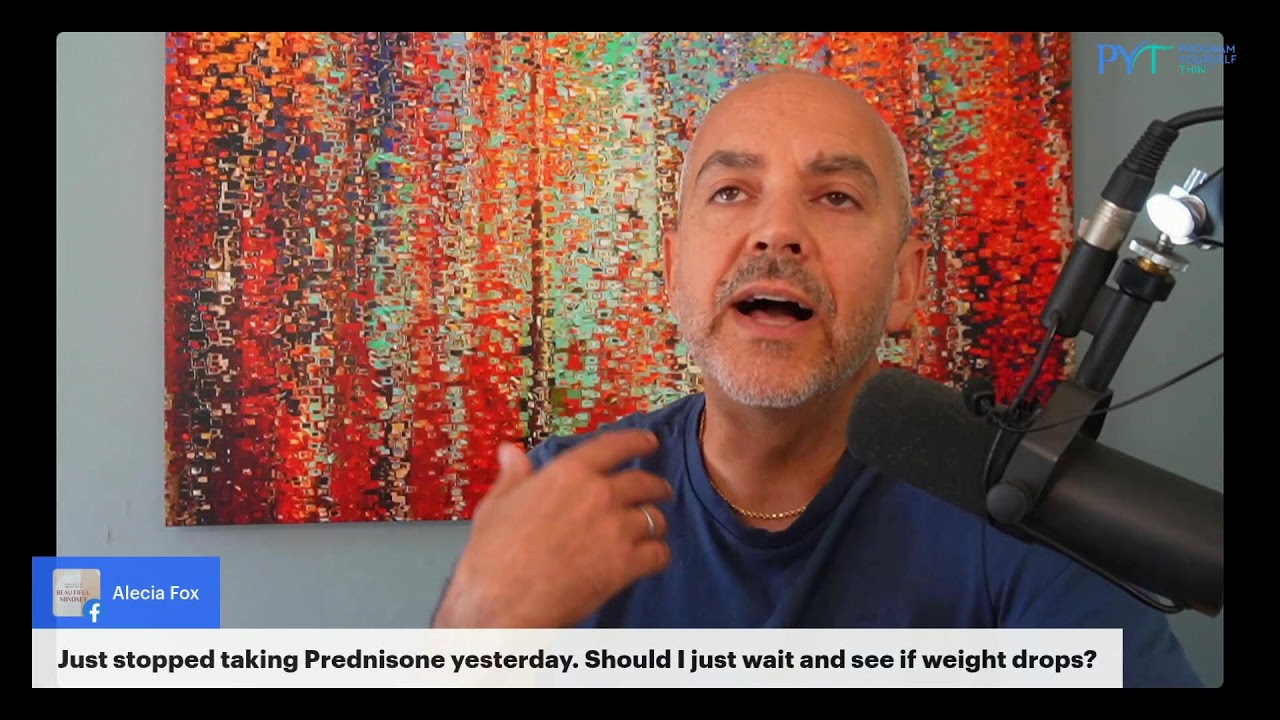
Everyone, welcome to today's program, Yourself Thin Podcast. Today we're talking about easy weight loss, which is so often promised and never delivered. So I'm going to start off by saying there really is no technically easy weight loss, but there are easier ways to lose weight. And if you start your journey by focusing on easy weight loss, genuine, real easy weight loss, not hacks, not tricks, not shortcuts, but real easy weight loss, it's the magical question because Ironically, as much as you've been promised easy weight loss your whole life from the diets, you've never been shown how to actually do it. But the good news is that you absolutely can lose weight in a much easier way. Now, I can't tell you what that way is because it's different for each person, right? Each person has different preferences, different lifestyle, different, you know, ways they got to go about their days. So I can't tell you what the easy way is, but the question is the thing that guides you because you don't choose hard ways to lose weight. I know this goes against everything you've heard your whole life about weight loss, but what I'm talking about genuinely is orienting around the idea of easy weight loss. And if it's really difficult, we say, no, thank you. I'm going to choose the easier way. Now again, I know a lot of you say, well, that's never going to work. Well, no, it works. You just need to give it a little more time. Okay. Because the reason that weight loss has been so hard for you your entire life, primarily the number one reason is that you've always made it hard. No matter what plan you follow, you make it hard. Why? Because you demand fast results. So the faster you want results, the harder you need to work. It's that simple. But the more time you give yourself, now all of a sudden you open yourself up to the beautiful world of easy weight loss. Because when you start working on things systematically, things are a lot easier. When you refuse to overwhelm yourself, things get a lot easier. Easy is not some trick. It's not some magical thing. It's not some impossibility. It's a way of going about it, and it starts by giving yourself the time needed to do this. Because again, yeah, you can restrict yourself or, you know, control macros or calories or, or do your white-knuckle difficult things that you've always done for a little while, but that's not getting you the results you want because the results you want is not just to lose weight for a little while. You want to live at your goal weight. And you're never going to continue doing something that's really hard for you. You just won't. This is why it hasn't worked so far to do what you think you need to do to lose weight. You believe is hard, and so you can only do it when the moment's perfect, when life's completely you know calm and relaxed, and you can do it. But as soon as life starts acting up, you can't keep the hard thing up, and so you quit. Nothing wrong with you. That doesn't make you a bad person. It doesn't mean that you're broken. It just means that your strategy is wrong because your strategy only applies in one situation in life when everything's going perfect. And the second things get difficult, the diet and the weight loss is the first thing to go. But what happens if you orient around easier weight loss the whole time? What if you start to manage your weight in ways that are relatively comfortable and easy for you and you take it one step at a time, optimize that step, get used to doing it, make it automatic and normal, then move on to the next thing. Because what happens is over 6 months, over a year, over 5 years, you start building on top of all your skills that you've developed, all your shifts and changes you've implemented. You keep building on top of them. And the beauty is that once you acquire a skill, once you get good at something and you automate it, you don't need to think about it all the time. You can just do it. And this is the foundation that if you build on, the entire experience of managing your weight completely changes. So I'm not going to promise you that there's some magical secret plan out there that's just easy. What I'm saying is if you orient around easier ways to lose weight, you will develop your own one-of-a-kind system that allows you to lose and ultimately manage your weight in the easiest way possible. And I can almost guarantee you have never even investigated or considered that approach. So once you start doing it is the best part because you start very quickly realizing there's a lot more easier ways to manage your weight than you've been doing if you'll give yourself the appropriate amount of time to do them in. So I hope this helps you out. And if you want some support in actually losing weight and ultimately managing it in an easier way, click the link in my bio or go to programyourselfthin.com. And go get the free hypnosis session that I made for you. It's called the new thin me, and it is just waiting there for you to use it. Completely free. Go check it out. And if you have any questions, feel free to ask them. I hope you're all having a nice day. It does feel it does feel like kind of the end of summer's coming. I don't know. I don't want to bum people out if you don't like seeing summer end, but it just feels like a shifting. You know, shifting of the seasons. I know a lot of people are kind of in that transition mode, but if you're thinking about weight, if you have questions about weight, concerns, challenges with whatever you're doing, feel free to ask them. I have been doing this for over 20 years, and a lot of times I can give you some insights that you might not otherwise get, minus the nasally voice here. Still working through something going on here. It's annoying, but we're working our way through it. But yes, any questions are welcome. Excuse me. Yeah, I don't know, are we going on a week here? I'll be honest, at least it's not— it's not the worst cold in the world, so I'll be thankful for that. But it's been a very weird one. Constant kind of sore throat, this weird little coughing thing. I don't know if it's stuffy. It's weird. I'm getting myself back to normal though. I think it's a response. Went on vacation and had a kind of a busy, difficult week myself, and I think this is the cost of it. That's what I'm thinking. But I hope you're all having a nice day. It is beautiful here in Massachusetts. It is one of those perfect days. Perfect day, I'd say. Maybe a little bit muggy, but that's okay too. Don't mind that. Um, yeah, so if anyone has any questions, feel free to ask them. Usually every day around noon Eastern. Um, not around, I usually start right at noon. I got a little late today, a little bit in summer mode, a little bit not feeling the 100% mode. Um, so getting back to normal, working on that. But, uh, again, um, I know a lot of people— it's funny, I always say like right this week here, especially like the last week of August in that ballpark, seems to be the, the week almost equivalent. It's like the week before the new year, right? Kind of that week between Christmas and New Year's. Um, sometimes this week feels like that where people are kind of transitioning from summer mode to fall mode. Even if you don't have, you know, kids in school or whatever, you know, I think it's hardwired into us from all our years of schooling where we start to, you know, get back to a more focused mindset. Which, by the way, I would tell you, in my experience, I find September is one of the best times ever to start. I personally, I'll just share that with you because January is kind of the most hyped starting point, I guess, of the year. But January is really not a great time to start for a number of reasons. Number one is, you know, you're on the tail end of the holidays, and so you're kind of depleted, and now you got all these sugar cravings and, you know, kind of bad habits you've been working on for the holidays. And then on top of that, most people, you know, again, in this hemisphere, um, less light, it's colder a lot of times, you know, it's winter, it's dark. It's hard to be— the environment's not as encouraging your success as it is in September. So I'm a big believer in September being one of the optimal times to really start focusing in. And I think, you know, as I was just mentioning a moment ago, I also think your old school programming of having, you know, starting school in the fall and kind of dialing that in is another thing. that, uh, supports you, you know, in the fall kind of hitting this. What's up, Jane? Jane says glad you were late, as I am too. Yes, I was a few minutes late, a few minutes late today, but we got here. That's the important thing. Yeah, but, um, I know it is funny. I was, yeah, a little out of the swing of things for sure. That's what happens too, you know. I've mentioned this all the time and I'll say it once more, but, um, vacations especially Are probably one of the biggest challenges there is when it comes to managing your weight. Um, you know, because you get off track with your routines, your thinking, your eating, you know, and, uh, then to get back on track— I don't know, I've always found it takes some focus. Um, talk about it as a re-entry week, and for me, I would say this particular vacation has taken 2 re-entry weeks because, again, you know, If I didn't have the week I had last week, if I didn't get sick, maybe it'd be a different story. But I did, you know. And so again, one of the things I always say with Program Yourself Then, kind of the philosophical foundation of it is that we're never going to be perfect. You know, we can't really be perfect with what we're doing. And so it's really about being perfect when we can and good when we can't be perfect. But we always want to be doing something. And so this is why in Program Yourself Thin, we're not all or nothing. We're all or something. And the something is where I find I spend most of my time. I am rarely perfect. I rarely have a perfect week. So, you know, for me, I spend most of my time in my something phase doing a lot. I don't make it sound like I'm doing nothing or just doing tiny bits. I'm doing a lot, but it's a lot of little things. And so I think that's the path forward, is to make it easier to succeed. As I was just talking a minute ago, easy weight loss I think revolves around building easier strategies for you to follow. And again, that's unique and individual to each person, but I think that's the better path forward. Yeah, Jane says, I agree, in September it's like a new start, a new grade in school or new school. It's an exciting time. I agree. I just, I think I think September is the better time to start than January. So, you know, take that for what it's worth, but I would much rather have 3, 4 months behind me of being on track. And again, September, I just think you're teed up for more success. The average person, obviously everyone's got their own unique thing going on, but for the average person, September is going to be a better time to start something, um, because again, you're more energized. You know, you didn't just have the holidays. The holidays tend to be one of the biggest kind of dips in a way, right? Because we have all our routines and all the things that go along with it. Um, so in September, we're not as depleted typically, and you have the environment to kind of support you. It's warmer, it's brighter, it's, you know, all the rest of it. And again, you're on top of that school programming where you're used to kind of focusing in in September, um, and taking on new challenges, you know. So I think You know, me personally, I'd much rather start committing in September, um, set myself up for the holidays, and then have those 4 months of start to reactivate or to build on when January comes, rather than January coming and I'm just gonna magically build, you know, everything. And so I think it's a better strategy. And then beyond that, I think it's always a better idea to start today than it is to wait. So I think that's another secret of success is to start now. They always say, what is it? Success likes speed, you know. So again, the quicker you can start, typically the quicker you're going to get better results. And, um, I think that that's obvious, right? I think that speaks for itself. Oh, okay. So Jane's a teacher. All right. So yeah, there's also a little bit of dread. I get it. I get it. Yep. I totally understand that. And, you know, and that speaks to something bigger that we all have kind of our annual routines of what's going on in our lives. And so if you're a schoolteacher, you know, you really play with these extremes where you have, you know, when you're in school, it's this extreme schedule and work and focus and all that. And then summer comes and you get 2, 3 months of, you know, kind of complete freedom. And then, then you go back into it. So that cycle can be challenging. I've worked with a number of teachers over the years, and I think the secret is to Hold yourself to two different standards. That's what I always suggest to people. I think the biggest mistake you can make if you're a teacher is to hold yourself to the standard of when you are off during the summer, to expect you're going to be the same way, you know, during the beginning or end of school year. You know, they're just two totally different situations. So I think part of managing that experience of being a teacher is to. Um, recognize there's different, uh, different situations and different expectations that probably go with them. No, uh, Shima says, how can I quit cola and Pepsi addiction? Uh, yeah, that's a big one, right? And it's a good one to take on because again, um, sugary, sugary sodas are not your friend if you want to manage your weight, not in any, any way. Um, I'm not demonizing, I'm not judging you, so again, don't— I don't want you to internalize this as You know, pressure that you you have to feel bad about yourself to do it. But if you can really look at the facts, there is not a single beneficial thing you get out of soda or cola or any of these sugar waters in terms of weight. They're they're just a real. I can't think of too much worse in a sense, you know, and and whether it's you know real sugar or diet sugars sodas, I don't think either one of them are any way helpful. So I think that's a good focus. But how can I quit the cola and Pepsi addiction? In that languaging, I'm hearing this kind of all-or-nothing approach, and I'm gonna assume that you have tried a number of times to cold turkey sodas and colas in your life. I'm gonna guess you've probably tried to stop a number of times. You've probably gotten a couple days or weeks into it, and then you went back to it full force. And this is most people's experience. So what I would do is I would look And I would shift away from the addiction language for a second. I'm not saying that you're not addicted, okay? But I think sometimes addicted is used a little too willy-nilly. Um, and before we even consider if it's an addiction, let's just consider it a pattern, a behavioral pattern. And so the first step I would take is I would say, okay, I have this soda pattern where I consume soda, and I would start to get a sense of it because I know there's a pattern to it. And so you probably consume, I bet, a fairly consistent number of sodas a week if you really measured it. And that pattern is going to break down where you're going to notice that some of those sodas are really enjoyable and some of those sodas aren't really that enjoyable, right? Some are really enjoyable, some aren't. And so what I would do, I'd start to notice the pattern and then I would say, what would be the easiest soda Habitually, so again, I'm looking at the pattern. So, for example, maybe I drink a soda, you know, every night at dinner. Let's just okay. Let's say say I drink a soda typically. I'm making this just a cliché example just to kind of put it out there. But let's just say I usually drink a soda in the morning, in the afternoon, and at night. Let's just keep it simple. And so, and I do that seven days a week. So I would look at that, and I would say, okay, that's twenty-one sodas a week you're drinking. Some of those are more enjoyable than others. So maybe like the Friday night soda is really more enjoyable than the Thursday afternoon one. I don't know, right? Again, everyone's gonna have their own opinion. But I would say, which one of these sodas would be the easiest to get rid of? And you might say, well, you know, Saturday morning, half the time, you know, I sleep in. I don't even— I don't know, that wouldn't be the easiest. Then I would work on getting rid of that one. Keep the rest of them for a week or two. Okay, normalize to that. Then I'd go the next one. Okay, that's how I would do it, because by approaching it that way, it's not overwhelming. And what happens is you start giving yourself the opportunity to kind of build on your success in a relatively comfortable way. Okay, so you get rid of the easiest one, which is still going to take effort and work. Okay, but let's just say, okay, yeah, Saturday morning, I think that'd be the easiest one to get rid of. Okay, well, what are you gonna do on Saturday morning instead? Oh, maybe that morning I'll drink Some juice, or I'll drink some water. I wouldn't necessarily advise juice either as a replace. Not much better than the cola. So I drink water. I drink a seltzer here. Okay, great. And so if you start focusing on the Saturday morning one because it's easiest to you, what's going to happen is you're going to come up with strategies for how to deal with that, and it's not going to feel overwhelming. You're not trying to change all of your behavior; you're just trying to change Saturday morning. And you get a couple weeks into Saturday morning and change it. Maybe say, "Oh yeah, I drink a seltzer water here," and I go for a walk or something. Well, now all of a sudden you say, well, maybe I'll try that on Friday and Thursday too, you see. And so what happens is you're not overwhelming yourself and you're dealing with kind of each thing in its own kind of place, because the Saturday morning soda is different than the Monday night soda, you understand. Our eating is different based on the context. Oh, what? All right, just got— you just got restricted on TikTok. I'm talking about body exposure and sexualized behaviors. Nudity and body exposure. Okay, not sure what I said there, but, um, if I said— did I say something? I just black out and say something I didn't hear. Um, so anyways, that's what I would approach. That's how I would do it. And then you're not going into this all-or-nothing mindset where you feel like you're walking a tightrope until you fall. Um, you're following a real, you know, stable plan that you can consistently move forward with. And while it may not feel as dramatic the first week or month, Um, a year from now, I can almost guarantee you you'll be 50 to 80% probably less soda, and that's really going to give you a lot of benefit. So that would be my suggestion. What's up, Pat? Pat says, going to Cheesecake Factory in the mall with friends this evening. Plan on going to mall an hour early and walk before the dinner. Menu is humongous and looking ahead of time for what to order. Pat, great, great, and great. I think those are wonderful options. I think that's— that— now Pat's in the program, and I just think that's just such an elegant solution. Everything from walking earlier to pre-planning the menu and what you're going to order. Um, what else could you do in that ballpark? Um, you know, when you get there, order a water right away and drink some water. That'll help you with the hunger and your stomach being full. Um, you know, whatever you plan to eat. You know, again, they'll put calories and everything else there so you can plan accordingly. But I think that's a wonderful plan. And then when you're done, Pat, you redo it tonight. Redo it. How did you do? Right? If everything went well, just kind of replay it. If everything kind of fell apart, how would you go back and do it again, knowing what you know now? But I think you're right on the right, right on the right path. Vicky says, "Hi, Jim. What's wrong with TikTok? I'm getting tired of them restricting you." I know. I have no idea. I I don't know, whatever. I must have said something that sounded like something else there because I'm not sure. Uh, like, I'm pretty much— I know how they are with their things, so I don't know. It was a little surprise to me, but that happens. Happens. Um, says your soda reduction strategy is exactly how I reduced wine. Now I only have a glass during food prep, not with dinner. I don't really miss it. Yeah, exactly. I've done the exact same thing with alcohol as well. Um, I used to have a real alcohol binge drinking issue And, um, I use this exact strategy with it. I never stopped drinking completely. Um, I just slowly kind of dialed it down, you know, to a level that I'm comfortable with. And I think most people don't consider that. You know, it's funny, I was talking with a friend the other day and, um, you know, he goes to the doctors and he's got this issue with his stomach. They say, well, you should cut out wheat and dairy. And it's like, okay, no. And Jen, Jen just said, I'm still listening on TikTok. You can still listen, so it won't kick you off. It just, it won't promote it to, to their general audience. So people that are in here can stay here, but that it just won't— it won't, um, it won't promote it to other people. But, um, yeah, so, so the doctor says, yeah, give up wheat and dairy. You know how hard it is to give up wheat and dairy for the average American, you know? And so now he's all stressed out, right? And it's like, no, I mean, I said, well, what if you cut it down 50%? Don't you think you'd notice if that was part of what was causing the problem? If your stomach's sensitive and you think it might be dairy, it might be wheat, if you cut them down by 50%, don't you at least get a sense? Yeah, my stomach feels better. Why's it gotta be 100%? You know, and again, we just do that as a matter of course in this society that it's always all or nothing. And even the doctors, and because doctors don't study behavior at all, you know, so it's a lot. It's easy to look in a lab and say, oh, I should do this, you know, okay. But when you're talking about human beings, you know, there's a little more nuance with it. Have you noticed that, folks? I mean, Jesus. And plus, is there anything that'll stress you out more than you gotta completely cut out dairy, completely cut out wheat? And I'm not saying you shouldn't do these things or do— I'm not telling you what to do, but I'm saying the way you go about it is gonna impact how you feel about it. And so, if you try and cut all this stuff out immediately, it's gonna be very stressful. And what's most likely gonna happen is you give up and quit 'cause you can't do it. So— There's other ways to go about it. What's up, Cherry? Cherry says, can you give a few examples of something to start first? Is it sleep or water or walking? I know it's never food. Um, yeah, I mean, it can be food, you know what I mean? Like, like in Program Yourself, then we focus on the worst habit, right? So instead of focusing on all of your eating all at once and changing all of it instantly, we'll take a, we'll take a step back and look at your kind of your typical patterns over a week. And we'll start with the highest calorie habit. Maybe it's snacking at night, overeating at dinner, grazing during the afternoon. And we pick the one that's bringing the most calories into your body over a typical week. And so you start working on that. So that is a first start stepping point, is what's your— what kind of worst calorie habit that's coming in? That's where you can start food-wise. Right? Then if you wanna go deeper into that food-wise, is you can start adding something healthy in as well. Okay. But then outside of that, yeah, a lot of times your eating is absolutely— you're right, Cherry— is absolutely impacted by these lifestyle habits. Okay? And that's why in Program Yourself Thin, we have the goal weight pyramid. Let me just show you this. We have the goal weight pyramid, which is broken down into these 3 categories: eating, lifestyle, and mindset. Okay? So Cherry, when you first start eating-wise, What I'd suggest is focusing on your highest calorie eating habit, which I see you said— you said mine's afternoon. Okay, great. So eating-wise, I'd focus on my afternoon. And the first thing I'm doing is awareness. I'm starting to pay attention to my afternoon routine. What time? How much do I eat? What triggers it? What do I eat? What are my options? What am I expecting? I want to notice all those things. The more awareness, the better. You're not as aware as you think you are. Then we start structuring it, and I'm not gonna get into all the details of that here. And then we start optimizing it. But so right off the bat, you can start paying attention, um, 40% of your energy to that afternoon eating. Okay, then I would take the other 60% of your energy, and that's again, if you're doing it on your own, this is where I'd put it into the lifestyle. And that's what you asked, right? Which one do I focus on? Now, I believe in order of importance, the lifestyle habits that are most impactful on your weight, in order of importance, sleeping. Yeah. Hydration, relaxation, breathing, nourishment, movement, meditation, gratitude. And again, they're kind of listed out here in order. You can see them there. Okay, so yeah, for me, I would put 40% of my energy into the afternoon, uh, behavior, and then I put the rest of the energy into— now again, you might be a good sleeper, so if you're a good sleeper, then I'd go to water. You might be a good water drinker, then I go to sleeping. You might be good at water and sleeping. Then I go to relaxation. Okay, typically that's how it started. Now again, there's always, you know, other factors that might change the way you approach it, but that's basically how I do it. So yeah, I would probably, you know, if you're not a great sleeper and you don't drink water, I would pick one or both of those to work on comfortably, you know, because again, if you're going to improve your sleep, folks, get ready. It's going to take you a while to improve your sleep. You're not just all of a sudden go, oh, I'm now going to bed early. From now on, I'm going to go to bed early. No, you're not. Your sleeping is a completely, virtually completely subconscious process, just like brushing your teeth. You're just gonna brush your teeth at a different time in a different place with a different hand all of a sudden tonight. You do it on autopilot, and your sleeping's the same way. So sleeping is a much bigger thing to take on than people think. So is water consumption. So is relaxation. So is nourishment. So is movement. So is meditation. So is gratitude. All of these things are They just take more than you think. Because again, dieting's trained us that like if we know something, we'll just do it. And that's completely not true. You can know all sorts of things and not be able to do it. You know everything you know— need to know how to write words, but you can only do it with one hand. So knowledge does not equal behavior necessarily. So yeah, so to me, Cherry, if I was— if I was serious and I really want to take this on, um, you know, I'm focusing 40% of my energy on the afternoon. Um, then I'm splitting up the other 60%. I'll put like 40% more into sleeping if I feel like that's the biggest thing. I'm not a good sleeper. Okay, let me work on that for a while. Um, then maybe 20% in the water, you know, and then go for walks whenever you feel like it or whenever the opportunity occurs. But that's more than enough. That is more than enough, um, for you to focus on, let me tell you that. Okay. But if you take this approach, and I know it feels uninspiring at first, you just wanna lose weight. But it's like if you did actually for the next 2 months focus on those 3 things, what would happen is you would not have overwhelmed yourself. You would have improved your sleeping, you would have improved your hydration, and you almost guaranteed you would have improved your afternoon eating. And now not only would you have improved them, but you would have improved them in a way that wasn't overwhelming and was sustainable. And now you can build on top of that. Now you can start to work on the next eating habit. The next lifestyle habit, you know, and then obviously a lot of the work as well is to get into the mindset, you know, as well. But I'm not gonna get into that because if you don't know it, it's just I don't want to just say a bunch of words that don't mean much to you. Oh well, motivation, self-image, habits, emotions, thinking, and maintenance—those are the parts we go through in the program. But again, without the guidance of the program, I think focusing on mindset on your own is going to waste too much energy. So that's why I would leave that for now. All right, um, Cherry says, thank you, I appreciate you. Uh, my sleeping is messed up. Fall asleep after snacks, um, then can't sleep until 12, 1 o'clock. I'm up at 5:30 AM. Yeah, yeah, exactly, Cherry. So interestingly, now that you tell me that, now my, my suggestion changes a bit, and I would put, yeah, 40% afternoon snacks and 50% into the sleeping, right? Because— but they're both related. So that's the perfect combo, right? And that— that's perfect. That's— that kinda just magically happened because those 2 things are directly related to each other. 'Cause if you don't snack the way you've been snacking in the afternoon, now that's most likely gonna support you getting better sleep at night. You know? So, yeah. Because you're falling asleep after the snacks, right? So if you remove that whole process, you might be, you know, more tired when you go to bed at night, fall asleep at the right time, and— Yeah, sleeping's a whole thing though. You know, again, I have a program that I give away as a bonus in the in the program, but it's called Sleep at Will. I used to be one of the worst sleepers I've ever known, and I really was able to get a handle on that. And yeah, kind of teach that now. But that's a huge part of managing your weight is managing your sleep for sure. All right. Martina says, "Hi, sorry I couldn't hear you until now. I'm in Ireland. I was going to ask if you have any more." Hypnosis free sessions. I got the gastric band one, and I'm using it. It's good. Oh, oh, great, Martina. Yeah, um, yeah, that that that lap band session's so good. I know, and I give that away for free. Um, a little bit of a bribe. I think you might. You just had to answer a question to get that right. But um, I got some big news for you, Martina. But do I have more free sessions? Yes, I do. I tend to send them out kind of randomly. Um, but I got a shift that's happening in the program. Um, it's going to affect people that are not part of the program. The biggest shift in Program Yourself Then is coming. I don't want to get into it yet because it's not quite ready, and I don't want to say it until it's absolutely ready. Um, but it may be something that might really be appealing to you. I'm so excited. It's a new dawn in Program Yourself Then. I cannot wait to talk about it either, but I just got to finish up a couple more things, and then before I can— maybe tomorrow, maybe It's not my fault. I haven't been feeling great. But anyways, yes. So yes, Martina, if you're on my email list now anyways, so I send random sessions out. My TikTok, I put hypnosis sessions. Again, they're not really very long, but they're on there. YouTube, you can go to YouTube, my YouTube channel, YouTube Jim Katsoulis. I have a bunch of hypnosis sessions there, longer ones. Go check that out. And then as I said, I've got a shift happening in the program that might be very um, appealing to you coming. So keep an eye on your inbox too. I'll be sending that out to you. Um, I can't wait. I'm so excited. I, I just am trying to contain it, and, uh, I can't wait. But I won't keep teasing you with it. Just stopped taking prednisone yesterday. Should I just wait and see if weight drops? Um, yeah, absolutely, Alicia, because you just don't know what's gonna happen, you know. Again, I mean, in, in Again, even like prednisone, right? Like they— doctor can say, okay, this is gonna happen. Maybe, you know, there's just so many bodies in the world and so many reactions that we can have to things that the gold standard is really, okay, stop taking it now. Let's just see what happens. You know, you— of course you want to know what's going to happen ahead of time. We all do. We're human. But, um, just be patient with it. See what happens now. And you don't have to wait until your weight drops though, okay? Again, we're all impatient, so we want to know ahead of time. So instead, you know, you stop taking prednisone. Now notice what happens to your hunger and your eating, because that again, there's leading indicators and lagging indicators. The weight is a lagging indicator. The behavior is the leading indicator of what's to come. So the prednisone stopped, and now start paying attention to your hunger, your behavior, your eating, and see if it's shifting and changing. Pay attention to the weight too, but but see what goes on first with the behaviors, and then. You'll be able to respond to that directly. You know, whatever is happening with you now, you can craft a response directly to what's happening to you as opposed to what you expect to happen to you, which may or may not, right? Um, Olivia says, I found you about 2 weeks ago and have loved learning a new approach to this lifelong journey. That's awesome, Olivia. Welcome, welcome. And, uh, like I said, I got— oh, I'm so excited that the timing's all perfect. Everything's great in the Program Yourself Then world. So I think you, you found the right time to kind of discover this because there's some really fundamental big changes happening to the program and, uh, you'll be here to see what they are. And yeah, I appreciate you being here. And yeah, I know it's nice learning new stuff, um, to something you've been working on so long. And then, uh, that's part of my mission in life is to help people kind of see this in a new way. All right. All right. I want to— we get out of here. Uh, if you're not in my world, click the link in my bio, go get the free hypnosis session I give you. I give you a training. I give you daily emails. I give you all sorts of stuff for free. Go check it out. If you're not in my world, yeah, do that. Get on my email list. And then if you like this, I'm here every Monday through Friday at noon Eastern. And if you can't make the live, it is also a podcast. You can search Program Yourself then on any podcast platform. It'll pop up and you can listen anytime you want. All right. And yeah, have a super day and we'll talk soon. Bye.
More from Jim



Weight Loss Visualization: Wake Up in Your Dream Size #programyourselfthin #weightlosshypnosis



What If You Pretended to Be Thin for One Hour? #programyourselfthin #weightlosshypnosis




