Reframing Weight Loss
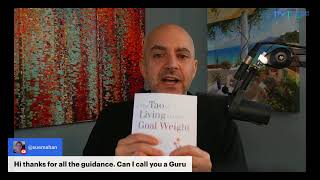
Jim Katsoulis argues that lasting weight loss requires shifting from temporary diets to living permanently at your goal weight. He breaks eating into three phases: anticipation, consumption, and consequence, and says most people ignore the consequence phase. His system uses hypnosis and reframing to build sustainable habits instead of relying on willpower or extreme diets like keto.
Chapters
Oh shit. Everyone, welcome to today's program here, Self Thin Podcast. Today we're talking about reframing weight loss, which I think ultimately is the most important thing you can do, is to change the way that you think about weight loss at a core level. I think this is more important than any diet plan, any workout plan, your metabolism, calorie counting, any of that stuff. I think the way you think about your weight is the foundation that you build upon. And if you think about weight loss like a dieter, the way you've been conditioned to think about it your whole life, you're going to be in a world of pain because weight loss and thinking about it like a dieter means you're only thinking about getting to your goal weight. Which means you're thinking about weight loss as a temporary process, something you're going to do until you get to your goal weight. And it sets you up to not really think what you're going to do beyond that. And so you start thinking about the process as being this long. And as soon as you think about it, a temporary short-term process, now your brain says, what's the fastest way I can get through it? And now your brain says, well, what's the most extreme thing I can do? And now before you know it, you have set up to think about your weight loss as something extreme and difficult that you have to force yourself to to do for a little while until you get to your goal weight. And how that presents in your life is there may be a couple times where you've gotten close to your goal weight or to it, and then you put the weight back on. And when you step back and wonder why that is, it's primarily because the entire time in your life that you've thought about weight, you've thought about it as a temporary short-term thing. And so the first shift you want to make with your weight that leads to the biggest differences positively is to start thinking about the long-term goal. And the long-term goal is not to lose weight. The long-term goal is to live at your goal weight. They're two totally different things. Losing weight is about the phase here of losing weight and getting to your goal weight. The focus on living at your goal weight is from here to the end of your life, because how long do you want to be at your goal weight for? Forever. And so the focus on living at your goal weight is completely different. A, it's long-term. It's for the rest of your life. But B, What happens when you start thinking long-term, almost naturally, you start thinking about more sustainable, manageable ways to actually achieve that. And so all of a sudden, the short-term fixes of, you know, starving yourself, of not trying to eat, of cutting out, you know, whole macronutrient groups disappears because you realize that you're not going to be able to keep that up or wouldn't want to keep that up. And so what happens is you start building your success and your goals around strategies that you're going to be able to keep up. And that is one of the biggest shifts that I could suggest you make, because if you think about how you approach weight loss, you think of it as having to do extreme, overwhelming things. And so most of the time, how that shows up is you're avoiding starting your weight loss plan, even though all you think about is losing weight. You avoid it because deep down, the way you think about losing weight is extreme and difficult and overwhelming. So you avoid it. As soon as you start thinking about it long term and you start realizing the only way I can do this long term is if I find ways to do it that are comfortable, enjoyable, sustainable. And once you start accumulating enjoyable, comfortable, sustainable strategies, you start to feel more confident. You start to actually take action. You start to take action on near autopilot and you start achieving better goals than you've ever achieved in your life. Because not only does your weight change, but you've changed from the inside out into a different version of yourself who is able to get to and live at their goal weight in what we call kind of a flow state where it doesn't feel like you're, you're forcing yourself or fighting against yourself. It feels like you're flowing out of who you truly are. And that's what I want for you more than anything else, because weight loss alone isn't enough. You've all lost weight and then put it back on. It's not enough just to lose weight. It's about how we're doing it. And when you start to focus on the long term, you're going to naturally start focusing on better strategies that fit you better. And once you have those, the entire process changes. And so if you want to go deeper into this process, click the link in my bio if you're on TikTok, um, or go to programyourselfthen.com, or click the link I'm about to put in there if you're on Facebook or Instagram, um, and go get that free hypnosis session. And if you have any questions, feel free to ask them. It is, uh, there we go. Excuse me, right on the edge of a little coldy cold. Crazy week, I will say that. I have one of the craziest weeks of my life, but it's been kind of a fun one too in a weird way. And I can say that over in Facebook land is looking dark. I feel like, I feel like I'm looking dark because it is actually a very cloudy day where I'm at. It is raining, um, it's kind of cool. But yeah, so anyways, if you have any questions, feel free to ask. I just see some questions come in. Am I Greek? Yes, I am Greek. Lisa says, I like getting notifications that you're live, thanks. Oh great, I'm glad the notification went out. Um, I kind of researched it, but I haven't really implemented the, the changes yet. So yes, I'm working on getting the notifications out better. I know Facebook notifications is a whole thing in and of itself, I guess. Um, TikTok I think is a little easier sometimes when it works. Emma says, I do calorie control, though today I've introduced a 24-hour fast once a week. Um, well again, Emma, if that works for you, great. But if you're low-key like hating it and struggling and fighting against yourself to do it, it's just a matter of time. You're just kind of prolonging it. So again, I don't know how you feel about it. And that's the, the key question I don't think anyone ever really asks, you know, when it comes to weight loss. People just want to hear what you did and they don't really ever question about how it was to do it. And it leads to this idea, the classic kind of Dieter phrase, just tell me what to do and I'll do it, you know. And it's like, Uh, more untrue words have never been uttered. So yeah, we need more than that. We can't just be told what to do. There's got to also be, you know, some, some eye on, on how it feels to do it. What's up, Jane? How's it going? Uh, Victoria says, uh, go over 8 beyond what my body was telling me to and felt too full. Um, yeah, but Victoria, again, that, that's one of the greatest gifts you can get. Uh, I am a big believer that we really learn most effectively through pain. You know, so in the program, one of our mantras is that mistakes are our greatest teachers. And I believe that so deeply because I think that it is— I think that the mistakes, you know, the biggest thing we're up against initially is our awareness. We lack awareness. We think we know everything because we're aware of what we're aware of, but we're unaware of what we're unaware of. And that's usually a lot. And so the first challenge, in my opinion, is really becoming aware of different things. So becoming aware of overeating and then stepping into that and realizing what does overeating do to me? How does it show up physically? Sure. But more importantly, mentally and emotionally, you know, and so sometimes we have to go overboard. I overeat regularly. I can't think ever of like, certainly not a month, but, but it's hard. I'm hard pressed, like a week where I don't make food decisions where I either eat too much or eat the wrong thing where I feel like shit afterwards. It's— so again, I, I think that's another piece. You're never going to get to some nirvana where you never overeat again or make a wrong food choice that I know of, you know. So you need to be able to manage your mistakes, and I think part of managing them is being able to absorb them and learn from them. The brain gives up pain for learning. And I think, uh, so realizing that, Victoria, I think is great. You know? Yes. Yes. Victoria follows it up by saying a slim friend once told me she eats little meals because she hates the feeling of feeling too full. Now, Victoria, and I don't— for those of you that can't see the comment, hates is all in capital letters. How do you think you get to that hate though? You've got to overeat, but then you got to sit in the consequence of it. That, that to me is in a nutshell, one of the most important programming techniques that exists. We're going to make mistakes, folks. There's no avoiding it. See, dieting tells you that the answer and the solution is to never make a mistake again. So you start Monday and it feels like the start of an endurance test. Okay, no mistakes. Let's see. You know, you go a couple of days, maybe a couple of weeks even. No mistakes. Oh my God. But it's the mistakes that we need to orient around. You're going to always make mistakes at some point. You might resist them for a little while, but you're always going to make that mistake. So in Program Yourself, then we start based around that, and we look for the mistakes, and we don't freak out about it. We use it to improve and to grow and to move forward. And so when we overeat or we— you choose the wrong food, we sit in that consequence, the physical, mental, emotional consequence of it, and we, we connect to it so that what happens— remember, there's three phases of eating. There's the anticipation, consumption, and consequence. Our entire lives we've been focused on trained and conditioned through— literally, you've all— all of us have seen tens of millions of food ads in our lives. Every single food ad focusing us on anticipation and consumption of food, not the consequence. Because after people overeat, they tend to go and disassociate through a screen, typically whether it's computer, iPad, phone, TV, whatever. And when you do that, you disassociate from the pain of your decision of having overate or eaten the wrong thing. That's the gold though. That's the gold nervous system-wise. That's what conditions you. So the next time you're like, oh, I think I'm gonna have— oh wait, last time I did that, oh, I felt like shit. I'm gonna say no. That's in a nutshell why I eat differently now. That in a nutshell is why I'm able to live 50 pounds lighter than I used to. In a nutshell, that, that is it. There's a lot of stuff around that. Don't get me wrong. But that to me is the most important piece. So good job, Victoria. Don't run away from that. Embrace it and utilize it. That'd be my big suggestion. Emma says, I think every— I think everything is hard, but you have to want to do it. I don't agree with that because, I mean, everything is hard, I think, in an absolute sense is kind of true. Anything new is hard, right? But there's levels to what's hard, right? Okay. So, so for example, I'll give you— I'll give you a perfect example. This is Program Yourself Thin versus a diet. So let's just take a typical diet. Let's just say you're going to go keto, keto diet. Keto is really hard. Keto is really hard. Why? Because you're making lots and lots of changes to your reality. You're basically, if you're a typical American, you're going to go keto tomorrow. You're instantly completely changing your diet, which is massively increasing the cognitive load on you. It's estimated we make over 200 food decisions a day. So the second you go on your diet, that's 200 new decisions you have to make, consider, think about. That uses energy, right? So that's a lot harder than Program Yourself Thin. The first day of Program Yourself Thin, you use all your energy to get yourself to listen to a 5-minute hypnosis session in the morning and then to do a 60-second mental rehearsal technique at night. That's it. That's, that's the starting point. So that's a lot easier than the keto thing. The keto is a lot harder. Now you're going to say, yeah, but I'm going to lose a lot more weight on the keto thing doing that than I am on Program Yourself Thin. I'll give you that. The first week, the first month, maybe that's true. The first year, though, that's where the difference really reveals itself, because a year later, you stop doing the keto thing a week after you started. So that's made no change in your, in your weight. But with Program Yourself Thin, you're still doing it and you've layered in those, those changes and shifts. And so now those things have become easier. Your behavior has changed dramatically, but now it's easier because what makes something difficult or easy, a lot of that is Is it something brand new you're doing that you have to think about every little thing, or are you operating on autopilot? When you first learn to brush your teeth, your parents had to bust your chops all the time to get yourself to do it. Now, as an adult, you kind of just do it on autopilot. So hard is a relative term as well. When we first start doing something, it's hard. Once we internalize it, it's easier. And so dieters never think to this level because they're always stuck in that first phase. So again, easy and hard is a relative term. And I think if you focus on doing hard things that don't— that have no chance of sustaining, you know, you're constantly in that phase of it. Yeah. Let's see here. What's up, Sherry? Sherry says, hi, Jim. I love the latest lesson on structured eating. Yes. Great reminders and reinforcements in that lesson. Really helpful. Helped me to make more aware of where I was straying. Yes, Sherry. Again, Sherry, I love that for you because that's, you know, it's so important that like sometimes we're always going to be on track and off track to some degree where we're living, breathing, oscillating mechanisms, organisms, whatever you want to call us. And we're always— we're not just— we're not a stable one thing, you know, we're constantly oscillating. And I think that's such an important thing to internalize because I think dieting creates this concept in this, this weird idea that you're just going to be this static thing. You're just going to eat in this static way forever. You're going to be this static person forever. And it's so not true. I mean, you know, one day you're in a good mood, one day in a bad mood, one day you got energy, one day you don't. One day you love your job, the next day, you know, you're arguing with your boss, whatever. There are constantly things going on and they're going to impact your eating and that's going to impact your weight, you know. So I think that we need to have abilities to recognize that and then manage those times when they come. And I think dieting sets you up for failure because it just assumes you're always going to be in all mode, meaning that you can always perfectly track your food, perfectly make the right decisions, perfectly show up and do the right things. And I think that's unrealistic. It's non-human, you know, and I think that it sets you up for failure because it's a, it's an illusion, a fairy tale. And when you try and build your success around illusions and fairy tales, they usually don't come true. So again, I think that for you, Sherry, I know it's been a little bit of a dip for you, but that dip is going to inform you at a much deeper level than you were before. And then you're going to come out of that dip and you're going to rise to higher levels than you've ever been to. And then you're going to dip again, but you're going to dip to lower levels than you did this time. And then you're going to rise again to higher levels. You see what I mean? So again, success is not Success is not this straight line of success typically. Now, weight loss, we would do that. It's very rarely a straight line. And I think that's what people got to get out of their heads. And it's discouraging, I guess. I don't know why it would be, because dieting has just created this bullshit narrative that you're just going to have a straight line of success down. That rarely happens. You know, again, depends how much weight you have to lose, but, but rarely, like every week it just goes down 2 pounds. Oh my God. Every week, 2 pounds right down to my goal weight. Very rarely. What usually happens is it's, it's kind of like this. It's up and down, up and down. What we're looking for is the trend line. We want the trend line to go in the direction we want to go in. And great job, Sherri. And again, I really honor you staying engaged, you know, even when things aren't going exactly the way you want them to. I think that resilience to me is really probably the most important marker of success, if I had to guess. And you, Sherri, have that in you. Jane says, you suggested that I try and eat my chocolate each day and really savor it and not beat myself up about it. I felt like this was a license to eat chocolate, so I did it. And yesterday I ate chocolate 3 different times and gave myself a horrible stomachache. Um, I didn't sleep well. Uh, tough lesson. Well, I talked to Jim AI last night, which was helpful. That's great, Jane. Again, I'm so proud of you, Jane. Jesus Christ, at least you're in it. At least you did something different, Jane. God bless you. I mean, at least it was different. And, um, the key thing, because again, I gave you instructions and this is how it is when someone tells us to do something new. We usually get about 10% of it. Is it just me? I would say I was joking the other day. My wife was trying to teach me about Yahtzee. I've never played Yahtzee in my life. Okay. And on top of not playing Yahtzee, I've never played poker. So I don't really have a program in my mind for how to organize the cards, like a full house. Like that concept doesn't exist in my mind. So she's trying to teach me about Yahtzee, but she's kind of referencing poker stuff. I'm like, I don't know that, and I don't know that. And on top of it, I think I got a game learning disability. Like, when it comes to teaching me things about games, I'm just like, I don't know what happens. And I'm a relatively smart guy, you know, but when it comes to these games, any game you try and tell me the rules, it's just like, I can't even explain it. It's just like shutdown in here or something. I don't know. But the point being that if you tell me about a game, you got to kind of teach it to me 10% at a time, you know, because I kind of just learn as we do as we go through it. But I find that interesting because I find a lot of my clients, it's the same thing in a lot of other areas of my life, the same thing too. So when I say to Jane, okay, next time I want you to give yourself permission to eat the chocolate bars, she did that. She let herself eat the chocolate. I'm proud of you. But the main thing you forgot, Jane, which I'm going to remind you of, is I said eat the chocolate bars and ask yourself, how can I get the most pleasure possible out of these chocolate bars? And that's the part you couldn't have just done in the beginning. You did the part you could do. Great job. Now we're going to layer another layer on there because I want you to do it again, but I want you to do it with the question, how can I get the most pleasure possible out of this? Because the most pleasure possible isn't when you have a horrible stomachache. That's not the right answer, right? So it's like, this is such a— I love this exercise as much as any exercise in the program. The idea of like, how do I get the most pleasure out of the bad food, you know? And I think that's the funnest game for dieters to play. Because you all been demonizing the food for so long that it's weird to think like, how can I get pleasure out of something that is bad for me? You know? And so you have this weird cognitive dissonance where like on one side you're like, I shouldn't eat chocolate, it's really bad for me. But then you flip into a mode where you'll go and eat 3 chocolate bars and then you flip back into the mode, you bad person, you did something bad and we're not going to do any more bad things. And then you do the bad thing again and you flip back into, okay, but that's it. That's the last time I ever do anything bad. And good Lord, dieters could spend their whole lives flipping back and forth with this. Okay. So what we want to do is at least anything different. I'm proud of you, Jane, for experimenting and trying something different. And now experiment again with it. But now remember the pleasure piece, because what you learned is that eating that much chocolate in the way you did it is not the most pleasure. It's not much pleasure at all. It's pain, you know, in the form of a really uncomfortable stomachache. and shitty sleep. Okay. So again, you internalize all that, but notice Jane, the big thing, you didn't go into your normal pattern of bad Jane. You went into uncomfortable Jane. This feels like shit Jane. That's a, that Jane is a different Jane in this scenario than you've been accessing. Cause you're always like, oh, it was bad. I shouldn't have done that. I'm not going to do it tomorrow now. You know, and you were in that loop every single day. So I'm so happy for you that you kind of broke out of that loop and are in a different loop now. Because I think you're going to find that that alone moves you quite a bit forward because now we just have to try some different things. But the first trying something different is always the hardest. So congratulations. I'm proud of you. I Fast says, any advice to tackle the problems of mindless binge eating? Yeah, I think the first advice I'd give you is that the mindless binge eating is not necessarily the problem. A lot of times the mindless binge eating is a symptom of the deeper problem. Let me say it a different way. A lot of times where the problem shows up is not where the problem was created. Okay. So I know a lot of people will look and say the mindless binge eating is where the problem is. And if you look at it that way, the solution would be I need to stop mindlessly binge eating. Right. But in my opinion, that's not really where the problem really is. And it's not where the solution is because Oftentimes, if you start diving into when you mindlessly binge eat, when do you do it? And you might have a couple different patterns, but if you start to notice the patterns of your mindless binge eating, you're going to start to notice that you are in a certain state when you do this. Now, you say mindless, but again, what state are you in? Are you stressed? Are you sad? Are you bored? What state is one that leads to mindless binge eating typically in your life? And I think that's the important question to ask because let's just say if I was going to pick one, you could substitute any other one, but let's say you get bored. I get bored and then I mindlessly binge eat. And so you say to yourself, the problem is the mindless binge eating. I need to stop that. But technically what that would mean is if you could stop that, that you would now be a thin bored person. And while you may think that's better, it's not the real thing you want. So this is why we want to go down to that deeper level, that typically the binge eating is a symptom of something deeper. And it's usually one of two things or a combination of them. Number one, I would say the number one cause of binge eating in general is over-restricting. You over-restrict so hard that eventually, you know, I think of it like a, like a pendulum. It's like, you know, you over-restrict, over-restrict, over-restrict, over-restrict, over-restrict. I can't hold anymore. You know what I mean? And now it goes over here. And I think That is a big part of it for a lot of people. The other part, though, is emotional. And again, we'll just stick with boredom. You can insert any, any behavior, any emotion you want, but you feel bored. And in your mind and body, you have learned that the best way to deal with boredom, or the most effective way I should say, is to eat. And eating becomes stimulation mentally, emotionally, physically, and it makes us feel less bored while we're eating. And so it's serving a positive purpose in the moment, but it's leading to an ultimate negative response with our weight. And simultaneously, it's not fixing the core problem. Again, this is back to— let's just say, well, I eat when I'm sad. Okay, don't eat when you're sad. Okay, great. I'm able to do it. Great. Now you're a thin, sad person. That's not the goal. So again, if you can recognize this dynamic, a lot of time it points out the real issue. And the magic thing, once you realize that, you can ask better questions. So instead of saying, how can I stop my mindless binge eating? You could say, what can I do to entertain and stimulate myself when I'm bored? What can I do when I feel sad? What are some things I can do genuinely to feel better, to feel happier, to feel connected, whatever it may be? And we start going at a deeper level. We find things. Does that resolve the eating completely? No, but it starts to fundamentally move in another direction in a way that feels so different than just trying to change the behavior alone. So that would be my big advice on that. And I've worked with a lot of people with that, so I have found that that approach is more important than the specifics of what I say to you. But that approach I think works a lot better. Um, Kobe says, so I train BJJ and have a tourney in 50 days, but I was mid-bulk and have to lose 7 kilograms. Should I stop taking creatine? I have no idea. I don't work with creatine or cuts or bulks and any of that stuff. That's really not my wheelhouse. I help people manage their weight and live at their goal weight by reducing their average calorie consumption. Bicker says, I'm in that loop, trying hard to break it again. I would suggest, you know, when I hear language like trying hard to break it, that to me is diet talk that's built around you're going to rely on your willpower to stop yourself, to fight against yourself. And I find that that's got a pretty short shelf life. And I think what works a lot better is to look at the loop, understand the loop. What's— where's it coming from? What are some alternatives? What are you really looking for? If it worked out well, how would it feel? I think that's a much better approach than trying to just fight against yourself. I think fighting against yourself is appealing because it's just conceptually, it's very simple. I'm just going to stop myself from doing this. And it's like you might do that for a little while, but you never fix the core thing. So I hope you look deeper into it. I think it'll be better. Yeah, for me it's a night routine. Again, the night routine, remember though, see, because you're— and even in your language, I need to stop the loop. But really what you mean is I need to stop the night routine. And I'm telling you what you're doing during the day is powering the engine of that night routine. So what I'm saying, you know, that you've heard the saying that an ounce of prevention is worth a pound of cure. So instead of focusing on this here with all the momentum built up all day long, and now you're getting ready to kick in your eating night routine and you're trying to stop it, instead you zoom out and you start making changes. Eat a healthier breakfast, a nourishing lunch, go for a walk in the afternoon, and now let the night play as it plays. And you might find there's a lot less energy to overeat or choose the wrong foods. But that's a different approach than trying to just fight yourself at night. Well, that makes sense. Anita says, with the tools you've generously given me, it's been surprisingly easy, but because of your counseling, I'm prepared for the mistakes ahead. Yes, Anita, I love that. That is like, that's the greatest feedback. I, I love that so much because that's so true. And again, you know, dieters are always in this all-or-nothing mindset, and embedded in that concept is the idea that, well, if I give you a plan for how to lose weight, it better just work. Because the second it doesn't work, I'm done. And that's how dieters are. It's all or nothing. And in Program Yourself, then we're all or something. So I love how you said that, Anita, because yes, there's tools to help you succeed and move forward and do better. But simultaneously, we start using those tools knowing that at some point we're going to make a mistake. It's a weird place to live, I guess, in the beginning, but it's so freeing and calming because you're going to make mistakes. And it's not a big deal. Again, dieting is kind of conditioning you that as soon as the mistake comes, the game's over. It's not. The game's just getting started when you make a mistake, in my opinion. Mistakes are not a problem. I make mistakes constantly. It's not a big deal. Yeah, Bicker says that. Yes, you're right, I've been a dieter. Exactly. And if you could see that— no, though, Bicker, you move forward in a new way. You know, the problem with dieting, I think more than anything else, is you just loop. It is. It's cliché, but it's so true here. The definition of insanity is doing the same thing, expecting a different result. And by that definition, dieters are without question some of the most insane people, you know, because they just— you keep trying the same thing. I don't blame you though, because I don't think you even have any context that you're doing that because it's so prevalent. Everyone's doing it that you don't even see it. And that is literally why I get on here every day to just give you a different perspective. And part of my goal initially, when you get to hear what I'm saying, is to start realizing, holy shit, Oh shit, I've been doing the wrong— I didn't realize I was doing that. And that to me is really— I was saying this the other day to Jane that like, I think so much of personal development and growth really comes through realizing how dumb you were, the dumb shit you were doing. You know, we all do a lot of dumb shit. And when all of a sudden we can see it as such, I think that's such a glorious moment because then we can choose to do something better. But we need to see it first. You can't fix something that you don't know is broken. Sort of thing. Um, what's up, Elizabeth? Elizabeth says, what are your thoughts on the keto diet? Every time I fall off a regular plan, I always think that I should go back to keto to get my cravings in check. Um, I think that the best way to get your cravings out of check is to go on a diet, a keto diet. I think nothing, nothing will throw your cravings out of whack. Nothing will give you more carb cravings than going on the keto diet. And I, I love— I'm going to reveal the biggest hunk of shit that especially keto people say, but all dieters do it in their own unique way. But I'm going to stick with keto specifically. And you probably said this, Elizabeth, so I'm, I'm joking. I'm kind of joking when I say this, but I'm also being truthful. Is keto dieters are famous for this one. Um, yeah, it's hard at first, but once I'm in it, I don't even have— I hardly even have any carb cravings. Bullshit. Then why are you— well, why are we having this conversation? You know what I mean? So, so I think that's one of the biggest lies dieters tell themselves, that, oh yeah, at first it's hard, but then the carb cravings disappear. So you're not— you haven't eaten carbs since you started? Is that— yeah, I don't know. Again, I joke because I know dieters just do whatever they can to get through the day, so whatever. But it's, it's funny. I mean, come on, how many times Again, however many times you've been on the keto diet is the number of times you probably said, oh yeah, cravings were tough in the beginning, but now that— then they were fine. Yeah. And then they weren't and you went off it, you know. So I don't think that keto gets your cravings in check. I think that keto cranks your cravings up. And again, I use the pendulum example a lot because I think dieting is an all or nothing metaphor. Right. And so it's a mindset. Dieting is an all or nothing mindset. But we can visualize what kind of a pendulum. So it's like, okay, I eat, I eat everything. I don't pay attention to my eating at all. Tomorrow I'm going to start my keto plan. So now I'm going to completely restrict and manage my eating 100%. And that's always the— that's— notice what I'm doing. I'm going from nothing to all. I'm going from— I haven't paid attention to my eating in 6 months. And now tomorrow when I wake up, I'm going to make conscious decisions about every single food I eat for until I reach my goal weight. It's, it's literally from this all the way to the polar opposite over here. And how in your life, what would have any good chance of success of that approach? You know, I always joke metaphorically, it's like if you decide, okay, I've never played the piano before, but I really want to play. So I'm going to start playing at 12 hours a day. You know what I mean? Like, it says, what, what? It was like, yeah, it sounds great on paper. Yeah. Okay. But it's like, again, in reality, your fingers kill you. Your back's killing you. You hate the piano. And it's really hard the second day to get yourself to do it. And I think that's the more the reality of keto. Keto is a bunch of bullshit. Listen, here's my thing. Is keto a bunch of bullshit? No. Because if you did keto and you loved it, like you did keto and you're like, oh my God, I feel amazing. This is awesome. I don't give a shit about carbs. I have no cravings. My appetite's nothing. My weight's falling off. This is awesome. If that's your experience with keto, then that's the path for you. Okay. But if you have tried keto, it's not like Jeff— remember that guy, the comedian? If you've done keto, if you've started a keto plan 10 times, it's probably not going to work for you. Why would it work the 10th time if it didn't work the first 9 times? What's different the 10th time? What's different? Your willpower, your motivation, your ability to force yourself to do something that's really hard and unpleasant. What's going to change the 10th time that wasn't there the 9th time? And I think that keto for most people is ridiculous. I think, A, it's silly. I think it's the silliest thing. Let me just speak to that specifically. I think keto is such an overreaction to where we're at in time. Meaning, if you look at the Blue Zones, they did— they study the populations that are healthiest. I just shortcut it. And all of those populations, without exception, were high-carb diets, low-protein, high-carb, low-protein diets. And without exception. And I can't think of a single population on Earth in the modern world who are consuming a high-protein, low-carb diet that have any kind of health markers that I would want to emulate or chase. So the keto diet, just nutritionally, to me, A, I don't understand. Uh, B, I think if you're a typical American, you're not going to want to live it because you feel like a fucking weirdo. You want to be the person who goes, never has birthday cake again, never has a piece of pizza, never has a sandwich, a regular sandwich. You know, how about some moderation? How about we learn to be moderate? But anyways, yes, I answered. What's up, Sherry? Sherry says the resilience is alive. Yes, it is. Yes, you are very resilient, and that's the most important thing. Uh, Hillary says, I'm trying to learn how to get most pleasure on all foods, all occasions. It's a great insight. Thank you, Jim. That's awesome, Hillary. Yes, I think that's a great focus. That is like the— to me, that's like the most amazing question to orient your eating around. And it's so counterintuitive for most dieters. But if I ask you, if I say to you, the secret to managing your weight and living at your goal weight is to get the most pleasure possible out of food, I know your brain just shuts down because it's like, what? How can I manage my weight eating cake and cupcakes and ice cream all day? And I say, well, that's not what I asked you. I didn't say, how can you manage your weight eating the most food possible? I said, how can you manage your weight getting the most pleasure possible out of food. And you say, but I don't understand, that means I'll eat everything. How am I— and that's how deeply embedded it is that you as a typical American, or again, we'll get people all around the world here, but if you're struggling with your weight, you associate pleasure of food primarily with quantity. Subconsciously, deep down the deep recesses of your brain and in your nervous system, you associate more pleasure of food equals more food. To get more pleasure of food means I eat more of the food. And that's that. But that's because you don't look at the full picture. If we zoom out, this goes back to the three phases of eating: anticipation, consumption, consequence. There's always three phases, always have been, always will be. There's no exception to the rule. Three phases of eating: anticipation, looking forward to it. Consumption, the eating of it, and then the consequence, the aftereffect of it, short and long term. Now, the only consequence you ever consider is the long-term one of how it affects your weight. But the truth is that that consequence phase starts 6 seconds after you finish eating. And when you start paying attention to it, you start to realize, oh, every time I make the wrong food choice, I instantly start being mean to myself. What do you say to yourself? After you finish the pint of ice cream, you say, hey, nice job, good job, you're doing it, you got it. What emotions do you feel? Do you feel, all right, hey, nice job, you did it, we're feeling good, let's take on the world, I'm ready, I'm ready to go, I'm feeling confident, successful, let's do it? Physically, you feel light, energized, ready to go? No, you don't feel any of those things. You're talking to yourself instantly, the second you're done with that ice cream or whatever it may be. Oh, why'd you do that again? God damn it. You see, you keep letting yourself down. No wonder you're not gonna lose weight. No, no, no, no. What do you feel? Discouraged, guilty, shame, frustration. And what do you feel physically? Tired, lethargic, exhausted. It's not an illusion. It's right there in front of you. The trick has been that the culture we live in has trained us to only look at the anticipation and consumption, not the consequence. So that being said, when we come back to the question I was asking, how do you get the most pleasure out of food? We've gotta look at the full picture, don't we? Because if we don't— if you're going to tell me, no, we just have to look at the anticipation consumption— well, if we talk about substance abuse, what would you say to them? You'd tell them to look at the consequence, wouldn't you? And it would be an accurate thing to say, wouldn't it? Because that's a big part of the puzzle. As a matter of fact, when you start to really consider it, you start to realize the consequence phase is the biggest phase out of all three. Your life is basically you steeped in the consequence phase. And now you start to realize, oh, Beyond just whatever shows up on the scale, eventually I am living in a perpetual hangover from the food choices I'm making. And that's a reframe. And as soon as you start to recognize that, now I come back and I say, what's the most pleasure? What's the most pleasure you can get out of a chocolate bar? Eat 3 of them. That's what you think, huh? You think eating 3 chocolate bars is the most pleasure you can get out of the chocolate bar? Is that what you think? Yeah. Do it. Oh, oh, my fucking stomach. Oh my God. And trying to sleep. Oh, it's toss, turn all night. Oh, was that pleasurable? I know that the 10 minutes of eating was pleasurable, I'll give you that. The 10 hours that followed, were they pleasurable? Are we gonna count those? Were they pleasurable? No, they weren't. They weren't pleasurable. So now when we take it all together Is eating 3 chocolate bars the height of pleasure that you can experience with chocolate bars? I would have to say no, in my estimation. So let's cut it down. What if you had 1 chocolate bar? You say, yeah, but I don't get as much out of the enjoyment of eating it. Okay, I'll give you that, that's fair. But what about the consequence? Because 1 chocolate bar— again, everyone's different, so don't get caught up on the number— 1 chocolate bar, say, now, holy shit, I feel I feel all right. My stomach's okay. I slept fine. I'm okay. Wow. Pretty good mentally. Say, hey, look at you. Good job. You cut the chocolate bar down by 60% and it felt okay. Nice job. Good job. You made a shift. Made a change emotionally. Hey, look at me. Wow. That's a huge shift. That's way better. And it was pretty easy, too. I could keep this up and I feel good now. What else can we do? How is that not more pleasure? Well, everyone's got to come to their own conclusion of that. But I'm a believer that that is a life that leads to much more pleasure And again, you, you and I think it's insightful to reflect on this, that I think that I think food is one in our culture. Food is one of the only things where we're so conditioned to just ignore the consequence. I always joke, you know, like, who wouldn't like to go on a shopping spree? Well, everyone loves to go shopping spree. The shopping part's hilarious. It's fun. We love it. It's the consequence phase is so embedded in us that we're so focused on that. I'm not going to do that. Yeah, it's fun to shop and I got to pay the bills. Right, when it comes to substance abuse, it's the same thing. We're conditioned to look at the consequence. When it comes to food though, we've had the consequence just erased from our minds, and it causes us to act kind of wild, you know. But you have the ability to see things more clearly too. Um, Bicker says, is feeding on skinny talk— is a dieter's way— is feeding on skinny talk a dieter's way? Um, skinny talk, you know, I, I don't really watch much social media other than my own. And SkinnyTok, from what I've seen, is one of the better ways because I think it's pretty honest. So, and I think SkinnyTok kind of like is more focused on longer term as well. So I think certainly there's going to be diet or stuff in there because there always is. But out of what I've seen, I'd say it's one of the better ones. And I say that very loosely. I don't follow it. And there's always going to be shitbags on skinny talk, you know what I mean? But I have— I would say that the overall tenor of it is, in my opinion, one of the better things. And I do think that there is embedded into it a better psychology in some ways. Again, I'm not speaking for it as a whole, but just in general, I would say it's a little better than dieting. Probably not much more, though, because you're going to bring your dieting mindset into that and again, and program yourself then. You know, we will follow the goal weight pyramid. Flip this around. But the goal weight pyramid— that ain't it. Let me see here. And those in the program, people in the program, I hope you got the new, the new quick start guide that I put out the other day. I think it's awesome. Okay, so that's available to you. So if you're in the program, make sure it's in the Circle app right now. Send an email about it. Um, actually, I'm going to put it in the, in the members area too. I didn't put in there yet. But it's in the Circle app right now, the, um, roadmap, uh, to Program Yourself Then. So you can go check that out. But anyways, yes, the, the Program Yourself Then, um, goal weight pyramid is this right here. And as you can see on the bottom, the whole bottom is mindset, you know, then lifestyle, then the eating. All right. Um, so yeah, not really against, uh, TikTok or SkinnyTok, but, uh, yeah, just be careful. Anita says we should take pleasure in everything we eat. It's a matter of changing what we find joy in when it concerns food. Vegetables and non-processed food become desirable. Yeah, agreed. I agree with that, Nita, so much. So true. Um, Iron Woman says, what to do instead of dieting? That's a great question, and I love that question because I think it's just very honest. I think what you do instead of dieting is you start to create— and I refer back to this— I think instead of dieting, you work to think, live, and eat like a thin, healthy person. So instead of taking it on as like a temporary thing you're going to take on to get to your goal weight, you start to internalize the idea of your weight like you do brushing your teeth, right? Because when it comes to brushing your teeth, you have no time frame. There's no temp— you're not like, I'm gonna really brush them good this month, and then they're gonna clean, and I'll be all set. Like, you know what I mean? Like, like, the idea of thinking about not brushing your teeth more is— it doesn't— it doesn't even compute. But when it comes to your weight, notice how there's this arbitrary line. Once I get to my goal weight, then there's this, this relief feeling. And that's why 85 to 95% of dieters that get to their goal weight put it back on. So again, dieting sets you up for failure because it's really focused on short-term things. You think it was temporarily. And so what I would say instead is that you approach this as like a personal development project, like playing a musical instrument or playing a sport. There's no endpoint to it. You know, there's just getting better and better and better at the things, the specifics, the mindset, the lifestyle, the eating strategies, so that you get really good at it, so that you're able to live at your goal weight in a relatively easy and natural way that feels like it's kind of on near autopilot. We don't want, like, our eating and our weight management to be the central focus of our lives. What a miserable life that would be. You know, the goal is that we want to be able to live our lives and trust ourselves to make the choices and the decisions that keep our weight where we want it to be. That's the goal. And that's completely different than dieting, because dieting is just— I'll give you one more example, is that dieting is a destination-based motivation, right? So dieting is all about getting to your goal weight. That's the motivation. Program Yourself Thin is a journey-based motivation system. So yes, we celebrate getting to our goal. Please understand, we celebrate every pound we let off of our body. But the real goal is living, living as the person we want to be, living at our goal weight. It's why I literally wrote the book on living at your goal weight, The Tao of Living at Your Goal Weight. I wrote this book and it's about living there. So that's what you do instead of dieting. So Mummy Mummy says 200 grams of rice in a day to lose weight, is it okay? Um, it's, it's okay if you want to put the weight right back on. So I'm glad you asked that because that, that's what I'm talking about. That's that short-term thinking I'm talking about. How long someone gonna live on 200 grams of rice? Yeah, but I lost 20 pounds. Who gives a shit? Who? That's That's what I'm trying to say. It doesn't matter. They— think about your own experience, folks. You've all lost weight. All of you have lost weight at some point. You can all lose weight. Why didn't you stick with it? Do you not like losing weight? Do you not like being at your goal weight? Is that, is that why you stopped? You don't like losing weight? You don't like being at your goal weight? Is that why you stopped? Is that the answer? Listen, or is it because even though you were losing weight, even though you got your goal weight, you said, I don't give a fuck. I hate living this way. I don't want to live my life on 200 grams of rice. Let me say, Jim, listen, I'm not saying I'm gonna live at 200 grams of rice, Jim, you fucking jerk. I'm not saying that. I'm saying I just want to eat 200 grams of rice until I get to my goal weight. Is that okay? That's great. It's great if you want to lose the weight and then put it back on. I think that's a perfect plan. So if that's what you want to do, I'm not telling you don't do that. Please understand, if your goal is to lose weight and then put it back on, I think one of the best strategies I've heard is to eat 200 grams of rice a day. Depending how much weight you got to lose, that's a perfect plan to lose weight and then put it back on. Because what are you going to do? Well, no, Jim, I'm going to just lose the weight with that plan. Well, what are you going to do once you get to your goal weight? I will figure it out then. No, you won't. No, you won't. No, you won't. Unfortunately, I wish it wasn't true. I wish all of you got to your goal weight eating 200 grams of rice and then figured it out. That's what I wish. And you know what? You want to know something? Because I've talked to literally hundreds of people have lost weight and kept it off. If those 200 people had told me I eat 200 grams of rice a day and I continued it, then I would be here telling you all, you know what to do to lose weight? Eat 200 grams of rice a day forever. But that's not what I've heard. I've never heard that succeed for anyone. So again, it just becomes a short-term thing. And I'll take it one step further just to reveal the, the lunacy of it all. Is dry fasting. And dry fasting is literally just close up the mouth. No water, no food, nothing going in there. That's pretty much the fastest weight loss you can achieve. Pretty much, right? I mean, I'm sure you can, you know, supplement a little more to lose more. But let's just— let's just go with the extremist of extremes. The fastest weight loss possible. Close for business. For how long, though? What's the most you're going to go? 20, 30 days. Okay. You said, oh my God, I'm gonna drop 30 pounds, Jim. Okay, I'm not gonna take that away from you, but what are you gonna do? What are you gonna do the next 30 days? What are you gonna do? You can't— you can't keep doing this, can you? Okay, so you gotta eat, right? So you've lost 30 pounds not eating anything, and now you gotta eat. What do you think is going to happen when you start eating to your weight? What do you think? You're gonna put weight on. So again, you know, what is the point of— you know, hey, if you got a photo shoot coming up, you got some real special occasion, you just— I don't give a shit about my weight long term, I just want to get to this weight for this thing— then yeah, that's a great strategy. But if you're at least even mildly interested in living at your goal weight once and for all, then I would say that's a terrible strategy because there's no party that wants to eat 200 grams of rice for the rest of your day. You're not gonna do that. You're gonna resist it, you're gonna rebel against it, and you're gonna probably way overeat, binge afterwards. Quirky Cat says, I've lost 55 pounds since December, but there— they've been ups and downs. Coping with daily fluctuations isn't easy. That's a lot of weight. That's a lot of weight, Quirky Cat. I mean, congrats, that's, that's quite an accomplishment. I, I I am— I salute, I salute your effort. That must have been— you must be— I'm gonna guess, let me guess here. 55 pounds since December. Let's just say it was December 1st. So let's say we got December, January, February and a half. So we got 3 and a half months to lose 55 pounds. Okay, so that's about what 12 pounds a month? No. Yeah, I could pull a calculator out. 12 pounds, 24— that's not even that. Yeah, 36. All right, in the ballpark of 12 pounds a month. 12 pounds a month is 3 pounds a week. To achieve 3 pounds a week, we're in the ballpark of what I was just talking about. So I'm going to guess 3 pounds a week, fasting, calorie counting, extreme calorie restriction, maybe working out. So I, again, 55 pounds in 3 and a half months is, is pretty much the about as extreme as fast weight loss you can achieve, pretty much. But remember this rule, this law of weight loss: the faster the weight loss, the more extreme thing was done to achieve it. The more extreme thing was done to achieve it, the harder it is to keep it up, especially once the weight loss finally stops. And so that's the part that's real too. So again, I, I honor your effort because it must have taken a Herculean effort to accomplish that. And I urge you so from the bottom of my heart to also think about what you're going to do long term. But yes, the, the fluctuations can be tough too, especially when you're trying so hard with it. Um, so Lisa, Lisa says, all of your logic. Thank you, thank you. I appreciate you saying that, and I Love my logic too, because my logic has come directly from a lane no one really takes. My, my logic comes from— and I think this is what makes it so different than what you typically hear— is I began by studying people that lost weight and kept it off long term. And so I think that I'm giving you different messages because I'm not sharing the strategies for the fastest weight loss. And that's what you always hear with weight loss. You're always hearing, how can I lose weight the fastest? It's always there. It's always, it's always the subtext. Always. And what I'm sharing with you is not how to lose weight the fastest, because I think you can either lose weight the fastest or the longest. I don't think you can do both, because again, the fastest requires the most extreme thing, and the most extreme thing is the hardest to maintain. So, so they become— I, I haven't seen it. Listen, if I knew the fastest, longest way, I would tell you, and that's what I'm sharing with you honestly. But fast is a relative term, you know. So if someone loses 50 pounds in 3 months and puts 50— I'm not— you know, let me change it. If someone loses 10 pounds in a month, 20 pounds in a month fasting, and puts 20 pounds on the next month because they can't keep it up, Was that fast weight loss or no weight loss? When you all look at your own weight loss history, when you zoom out, did you achieve weight loss or did you not? Well, it depends on your timing, right? If you look at the part when you're actually losing weight, yes, I lost weight. But if we had the next 3 months and I stayed the same, I didn't lose any weight. That's the more accurate thing, you know. So the logic I'm sharing with you comes from a completely different foundation because I don't give a shit about fast weight loss at all. Not in that sense, not in the typical sense. I care about getting it done once and for all so it lasts the longest. Uh, what's up, Sue? Sue says, I appreciate Jane talking about chocolate for the past week. I have issues with chocolate too. Jim, your suggestions have been very helpful. I finish eating dinner and immediately want to eat chocolate even if I'm full. Ugh. Um, don't be ugh. You know, I eat chocolate, um, after dinner too, and I have paid attention to that behavior and I've tweaked and optimized it again. You dieters, and it's not your fault because you have been trained your whole life with diets that seem so simple conceptually. I think keto to me takes the cake with this because that's not a pun, I guess, but it's funny to me that I just said take the cake to a keto in the same thing. But, um, so keto sounds so simple because what are we gonna do? We're just gonna stop eating carbs. Oh, that's it? We're just— is that all we're doing? Just gonna stop eating carbs? Just 5 little letters, right? And the carbs gone. Rolls right off the tongue. So simple until you go to do it and then you realize, oh, the flip side of, you know, stop eating carbs is completely eat differently, you know. And so, um, dieters a lot of times are under the delusion that, you know, oh, okay, I'm not going to deal with my chocolate after dinner and I should just stop eating it. Well, okay, so you had that thought. That doesn't mean, you know, again, I put it in different context, like, okay, you've never played golf before and I give you, here's a pamphlet of how to take a golf swing. Okay, go ahead, now swing it. Oh, you missed the ball. You didn't hit the ball, you know. And if you hit the ball, it's going up a foot or it's going that way, you know. So it's like there's knowing something and there's being able to do something. And then being able to do something is a slower— I can learn something lickety-split. You could explain something super hard. You'd— oh, how do you play the piano? You hit the right keys in the right order at the right time. Oh, okay, cool, simple enough. Let me— watch out, I'm gonna pull up to that piano. And I go, it's okay, right keys, right order, right time. That shit sounds easy as hell. Bring me— this doesn't sound like music, right? There's a difference. And so I think that we got to realize that you're not a bad person if you're like, oh yeah, I eat too much chocolate at night, I want to get a handle on that. And then the night comes and you're ready to get a handle on it and you're unable to. Well, I never played golf before. I want to hit the ball. I want it. I want it to go in the hole. Hey, Abby Gilmore, I want it to go in the hole. Well, of course you want to go in the hole. It's just you need to practice, you know? So, so I'm glad that you get to hear that conversation with James. The big thing I want you to notice is I'm not freaking out. I'm not saying, oh, you screwed up. Oh, you can't do it. You're a mess. Never mind. Don't eat it tonight. I'm not saying that stuff. I'm meeting her where she's at, like a normal person. And honestly, it's like what you would do in a lot of different contexts. But with food, it's like, oh, you know, this is the problem. We'll fix it. Right? Think about dieting this way, just to put it in a different context. Dieting, in essence, your entire life, by the way, dieting is basically someone telling you what to do. That's what it is. I mean, it presents differently because it's always a little different. This one says don't eat carbs. This one says don't eat fat. This one says you know, don't eat for 16 hours. This one says count every point that you eat. This one, whatever. So on the surface, it's always different in a way, but basically it's someone saying, okay, do this, see you later. Well, hey, I appreciate you telling me that, but, but I don't know how to get myself to do it. And is that not every person here's issue? If you were a robot, type in what you're going to eat and then just ate it because you're a robot. Weight issues, right? Because you just do what you knew you should do. The problem isn't knowing what to do as much as is not knowing how to get yourself to do it consistently. That, that's the main issue. And again, this is why I come back to the goal weight pyramid. The base, the bottom, the most important part is mindset. Mindset. And you all, I hope, will realize that you've never learned how to deal with your mindset at all. You know, it's the missing piece for, for pretty much any dieter. Um, Jane says, that's true. I always feel like if one was good, three would be even better. Yeah, exactly. That's the delusion dieters are under, you know. It's a— I always say, here's my take on this. I'm not an addiction, um, coach or expert, um, but, but one of the working definitions I use, and I found it to be helpful for me, my definition of addiction is when something, a thing that's causing you the most pain in life— I'm using most loosely here— but the, the thing that's causing you a lot of pain in your life, you think is causing you a lot of pleasure. That, that to me is kind of like the deeper understanding of addiction I kind of have. There's obviously a lot more to it, okay? I'm simplifying it, but you get the idea what I'm talking about. Because I think this gives you a different framework to approach what you think you're addicted with, because you're beating yourself up for not being able to stop it, okay? But I'm going a level deeper than saying the reason you're not stopping is because you think it's fucking good for you. You understand? You're not eating a chocolate bar because you want to be overweight and you want to struggle with your weight. You're eating the chocolate bars because you think in that moment, God, today sucked and this is a bright spot. Today was horrible and the chocolate bar actually is making me feel good. It's pleasurable. It makes me feel better. But that's because you're looking at it in this little tiny period of time. If you zoom out and look at it, you say Holy shit. It's like, oh, okay, the 3 chocolate bars. Yeah, that 5 minutes I was eating it was out of this world. And even that's not true, but whatever, just leave it alone. It's as great as you think it is. We'll leave it alone. But then there is the next 10 hours. You just— because you don't pay attention to it doesn't mean it's not there. And when you pay attention to it, it hits you smack dab in the face. You're like, oh my God, oh my God, I didn't realize. That was the most shocking thing for me, I will say. And I've said this story before. I'll share one more time just to highlight this point of view and to highlight that, again, so much of this work is becoming aware of things that are right in front of us that we're just not seeing. But I remember one— I'd started doing yoga, and I used to do yoga at night, like around 10 o'clock or so. And I remember one night specifically, I went to do yoga and I started doing it. I was like, oh, my fucking stomach. Oh my God, I feel terrible. My stomach's hurting. I'm like, what's going on? What's going on? And I was like, oh right, I got a— I had a big, um, meatball grinder at like 6, 6:30, 7 o'clock. I was like, oh yeah, I had that tonight. I was like, that's why. And then the next thought I had, I was like, oh my God, I've eaten these a ton of times in my life. I've never realized I felt like this. I was like, holy shit, because this is the first time I've eaten it and then just sat in a quiet room. And I didn't even realize until that point, this is what I do the previous 3 hours, I'm watching TV, I'm distracted. and it was amazing to me. And again, people won't believe me until they have their own experience of this, but it was shocking to me that I could— my stomach could hurt so much and I was completely unaware of it until I sat quietly in a room by myself. And I realized, oh my God, I feel terrible physically. That was so eye-opening to me. And so this is what I mean. You all have built up a tolerance to the pain of what the food's causing to you. Mentally, emotionally, and physically. And if you can connect to that pain, you see things more accurately and you start to make different decisions. So again, proud of you, Jane. It's not about doing the right thing in the beginning. It's about becoming aware of what you do and why. Um, yeah, Jane and Sherry got the roadmap and yeah, it's amazing. It's really good, isn't it? It really is. Again, if you're in the program, please read that. It's the, it's the, the thing I've wanted to do forever. That's all I can say. And it just, it summarizes the program. Summarizes the program so good that I'm literally going to make a brochure for Program Yourself Thin so you can really understand what the program is. And so it'll be basically a version of that roadmap, and I'm really excited to get that all out to you. So anyways, another Baker says, where do I start as a habitual dieter? I think for anyone who's a habitual dieter that's looking at someplace to start with what I'm talking about, what I would suggest is go— if you're on TikTok, click my little picture up there Go to my bio and click the link. Go get the hypnosis session. Once you're in my world, I send you a lot of stuff, and I think that's the best way to truly start to embark on a different path. I know you want me to tell you how to do it, but it would be like going up into a carpenter and saying, how do I become a carpenter? And expect them to tell you how to be a carpenter right there. They would tell you, go be an apprentice. Okay, so I am guiding you, but I'm guiding you to a long-term solution, not just to give you a couple tips to make you feel good right now. Okay. And I say that to all of you. It's a free hypnosis session. I give it to you free because I know most of you probably never even tried hypnosis. So go check it out for free. It may or may not work for you. May or may not resonate with you. Okay. So, um, but go check it out. You owe it to yourself. I also put a training together, which is again 20 minutes, but it'll change the way you think about your weight. It's a completely different approach. So that's where I would suggest if anyone's even remotely serious about doing something different, or at least exploring something different. I give you all this stuff so you can kind of explore, you know, in an easy way. Yeah, Lois. Lois says, I'm enjoying the journey. Nice. Gained and lost and gained again many times, but not this time. Yeah, good job, Lois. I appreciate that. Yeah, pound up and down is okay. I'm in for the long journey. Yeah, exactly. You hear that mindset again? Lois in the program. But that's the, that's the main thing, is internalizing a different mindset. That, that I think is the foundation of all your success or failure is your mindset. Anita says, let's learn how to keep the weight off while we're losing. Hey, there we go, Anita. Yes, yes, exactly. That's so true. Um, oh, I like that. Yeah, Bridget, Bridget said, uh, Dr. Lyle calls it the slow fast way. I, I love that. I love that, the slow fast way. That's such a good one. Um, and it's so true, right? Because what's Again, which is fast and which is slow? The person who in January committed to a plan and lost 20 pounds and then got off it in the next 2 months, put the weight back on, and then in June got refired up and lost another 20 pounds, and over the next 2 months put, put it back on. And so a year later, they're at the exact same weight versus the person who lost, um, oh, let's go to the slowest weight loss we could ever possibly imagine, folks. Let's imagine half a pound a week. Oh, Be still my heart, right? Could anything be worse than losing half a pound a week? Is there anything worse in life than losing half a pound a week? Except if we lose half a pound a week, we're doing something that's probably not that hard, right? It's not, not too extreme. And so you can keep it up. And so let's, let's imagine losing that, that horrible half pound a week, the worst thing anyone, any dieter could imagine practically. Well, let's imagine that you kept it up for a year. So here you are that first month, right? Your friend lost 20 pounds. You lost 2. And you say, oh my God, what the hell am I doing? My friend lost 20. I'm never going to— I'm never— this is never going to work. This is never going to work. Look at my friend at 20, 20 pounds down in a month. And I'm like a, like a jamoke over here losing half a pound a week, like an idiot. But let's just say they just kept it going because they're, they're funny like that. The second month, it's, oh my God, 4 pounds. Who gives a shit? Is there anything worse than losing 4 pounds over 2 months of not that hard behavior change? And then you talk to your friend, you say, oh my God, would they lose 40 pounds now? And they said, well, no, I'm kind of at the same, uh, you know, I put a little bit on, but, but I'm still, you know, I'm still down 14. I'm still down 14. So, okay, then the next month goes, you're like, all right, I'll keep it up. And God Almost nothing worse than 2 pounds. I'm gonna keep it up, you know. And you do. Now it's the third month, now you're 6 pounds down. You're like, well, at least something, something, whatever. And then you run into your friend, you say, how's it going? I'm down 6 pounds, it's so slow. What are you— where are you at, 50 pounds down? Yeah, you know, kind of, I don't know, good work, got busy and then whatever. And you know, I'm still down 5 pounds from where I was. I'm still— okay. So now you're down 6 pounds and they're down 5 pounds. Okay, then they see in the next month, now you're down 8 pounds and they put that 5 pounds on, they're the same weight. Oh, but there's what gets interesting. You get to that 6-month and you say, oh, look at me, I'm down 12 pounds. Okay, that's kind of adding up. I guess maybe Jim had a point. I'm down 12 pounds. All right, that's not bad. But then you run into your friend and you say, oh, how are you doing? You doing— you get started again, you kind of get things back on track. Oh yeah, yeah, I'm back on track. I lost 20 pounds this month. I'm down 20 pounds. He's like, goddamn it, they're down 20 pounds and I'm only down 12, and they're down 20. This shit ain't working. I don't know what— but they stick with it because they're weird like that, right? They're funny. They run into their friend the next month. What are you down now, 40 pounds? No, no, I put a couple on. Next, on and on. Okay, you get the— you get the idea, right? But, but it's like we get to the end of the year and you run into them and say, hey, how you doing? Ah, it's December. I'm gonna start December. I kind of lost track, man. The fall got carried away. I could have whatever, and I put the weight back on. But you know what? January's coming up. I'm gonna pop in. I'm gonna— and I lost 20 pounds last year, so I'm gonna kick off the year. I'm gonna stick with it. And you sit there and say, you know, how you doing? And you go, yeah, you know, it's weird. It was really slow. It's the— it's so slow, and it's so— it's almost pointless. But I guess here I am, I'm 24 pounds down. I'm 24 pounds lighter. So you're gonna— 24? Wow. You're gonna— you do anything for January? Nah, I'm just gonna keep going. I'm just gonna do what I'm doing, you know. It's kind of working, I guess. I guess 24 is nothing, right? I don't know. It felt so slow. God, it was so slow. Thanks for indulging my, my ridiculous, like, little, uh, you know, I don't know what we call that. But I, I think that I've never really put it that way before. That's so funny to me because is that not real? Like, is that not You know, have you been on one side of that or the other at some point? You know, and I just think that that summarizes so much what's wrong with how people approach weight, that they doom themselves before they even get a chance to succeed because their expectations are really off, you know? So slow-fast way I love so much because what's slow, what's fast? And if you're able to consistently, comfortably lose 2 pounds a month and a year from now you lose 24 pounds, Was that slow? Is it fast if you can keep it up? You know, and I'll leave you with a quote that I love that kind of really summarizes this in a nutshell, is that most people overestimate how much weight they can lose in a month and underestimate how much weight they can lose in a year. You know, and I think that, that summarizes that. Um, yeah, at least don't forget the 3 hours of cardio along with it. So true. Um, user827 says, I'm skinny fat, low weight, but how body fat? How to tone for summer? That's not really my specialty either. I think, you know, a lot of— I, again, I, I never thought I was really skinny fat until I started interviewing a bunch of, like, real fitness professionals. And I, I don't think I've ever felt worse about my body. Like, it's so funny. Even when I was heavier, like, I didn't feel like I did when I talked to them. It's so funny. So skinny fat, you know, that's kind of not my thing. So much. Um, and Dave says it's about 14 pounds a month. Yeah, 14 pounds a month's a lot. Um, Corgi Cat, no workout still. Yeah. Hey, what's up, Florida Kayak Fishing? Yes, I like painful slow. Yes, it's true. Or you're right. Thank you. I know. Oh, it's so funny. That's a good one. I gotta, I gotta tighten that up and make a video with that. That's, it is a good one. I just gotta tighten up a little. Um, Abby says, I'm in a cycle of losing weight and then self-sabotaging and gaining it again. Same 14 pounds on and off for years. Um, I refuse to accept that that's self-sabotage, and I always believe that that's much more that you don't know how to live that weight loss. You don't know how to live at your new— you don't know how to live at your 14-pound lighter weight. You know how to force yourself to, for a little while, drop that weight. And then when you go into normal life mode, you don't know how to live normally where your focus isn't 100% on food and maintain that. And it's because most likely what you're doing to lose the 14 pounds is overwhelming and extreme for you, and it takes all your energy to get yourself to do it. And when you are unable to do that because of life, you put the weight back on. So I don't think that's sabotage. You know, again, if I— if you've never played the piano and I sit you down at the piano and say, okay, play me a song, and then you say, well, I don't know how, and I say, that's bullshit, you're just sabotaging yourself. Well, you wouldn't say you're sabotaging yourself. You'd say, I don't know how to do it. And I would say, Abby, that you don't know how to live at your 14-pound lighter weight, uh, in a way that's relatively easy and comfortable. And so I don't accept that it's sabotage. Sabotage would imply that you do know how to live comfortably 16 pounds lighter and you're just not doing it. And I think it's more accurate to say that you don't know how to live in a relatively normal, near-autopilot way at that weight. So, and I think that's a more effective, um, articulated description of it that, you know, has a much better chance of actually being resolved. Um, J May says, hello, listening while I work. I appreciate your lives and info. Thank you, J. I appreciate you listening, and that's what I'm here for. Yes, I'm here to My mission in life is to help as many people as possible live at their goal weight, plain and simple. And, um, one of the ways that I fulfill that mission is I'm here every Monday through Friday, uh, to help any of you. And I will help any of you in any way that I can. Um, and I'm happy to do it. So I got to get out of here now, but if you're not in my world, please click the link in my bio and, um, go get the free hypnosis session. If you're over in Facebook, YouTube land, I just put the link in the comments section. Go get that free hypnosis session. It's not going to cost you anything. Go test it out. Listen to it. See how it feels. You know, watch the training I made for you. See if it resonates at all. If you're struggling with your weight, I think that the important thing is to realize that it's not because you're, you're weak-willed or there's something wrong with you. It's almost guaranteed it's because you don't have the knowledge and information for how to manage your weight more comfortably. You've never learned that. You've never learned how to deal with your mindset, your lifestyle, and your eating in a strategic, systematic way. I know you haven't. And so once you've got that information, though, you're able to accomplish and achieve much greater goals, you know, and that, that's my passion, my mission, and I'm happy to help you out every day. Um, that, that's what I want to do. So, um, yes, so I'm here every Monday through Friday, usually around noon Eastern. Um, this is also a podcast as well. So if you can't make the lives every day, I put up the recordings and you can search any podcast platform, program yourself, then it pops up and you can listen whenever you want. And a lot of people do that. And I think that's a great way too, because again, you know, it is important. I am a hypnotist by trade. So when I am doing these podcasts, I am answering questions and giving you logical knowledge, but I'm absolutely also aiming and intending to install some new thoughts and ideas into you as you listen. And a lot of people have remarked— I've been doing this for over 3 years now, so I've gotten a lot of feedback on people that have lost weight just from listening to the podcast. Okay. So please go do that. And then finally is this book here, you know. So again, if you're even remotely serious, I think you owe it to yourself to read this book. This book, a lot of people at this point have told me this is the best book they have ever read on their weight. And I think the reason why is because it's not just telling you what to eat. It's 40 chapters. Each chapter is a page or two, and each chapter is a hypnotic story designed to change the way that you think in a very fundamental way. And so it's designed to be read and to transform you while you read it. And it's a very easy, enjoyable, insightful way to go about managing your weight. And again, you can get it on Amazon. The hard copy is like $9.99, uh, Kindle copy is $2.99. All right. And you can read all the reviews, right? Um, overwhelmingly 5 stars, although one bad review really pulls that, that score down. I was able to say 82. 5-star reviews. It rolled off the tongue, it felt real good. And then I get the old 1-star review, and what does it say? It says this so-called book is just a collection of stories and poems. Well, it's not, because it's actually hypnotic stories, and they're not poems, although sometimes things rhyme. Although poetry doesn't have to rhyme. But I wouldn't say it's poetry. I would say it looks like poetry, but it's really hypnotic stories. And so that person was disappointed, but you will not be. Not if you've listened to this and liked it. You're going to be blown away. The book's amazing, so go check it out if you're interested. Um, Nina, you're welcome. Sue, yes, thank you. You're welcome for the guidance. Can I call you a guru? Um, oh boy, I don't know. I shy away from that, although technically I am a yoga instructor as well. Guru is just the bringer of light. And so I like that, um, I like that kind of concept of it, but I shy from the guru thing. Influencer, you know, these things, they make me feel a little weird. Um, Nina, you're welcome. Jane, yes, I'll see you tomorrow. Definitely my guru. All right, if that, if that fits, it fits. Okay, it's not the worst thing in the world, I suppose, to be, to be called. Yeah, Sue says that book's the best. Sherry says 100% the best book about weight. I would agree, I would agree. Um, so yes. So check that out. And then, oh, thanks, Abby. I'm glad you came up on my For You page. Yeah, your perspective is so different. I really— that means so much to me. And I really, really honor you saying that. I'm not saying my perspective is for everyone. That'd be the last thing I would say. I think this perspective really is only for a select few. Those of you that are overthinkers, overachievers, perfectionists, it seems to really resonate with you all. And I'm one myself as well. So, yeah, but I'm really glad you got to find this. And hopefully, you know, this becomes, you know, the beginning point of a new journey for you, Abby, you know, one that feels more relaxed and comfortable and stable, you know. So, yes, thank you. Thank you for saying that. And I'm glad, glad you found me. Yeah, it's going to go find the podcast. Yeah, podcast is great. Erica, hello from Indonesia. That's awesome. That's cool. Kimmy's going straight to Amazon. Yes, great. Thanks. And I only say Amazon at the very end of these podcasts because TikTok's about to— they're going to restrict me. They don't like when I say anything that's not on TikTok, you know, but at the end, it don't matter. But yeah, go check it out. This book, I got to tell you, I love this book so much. And it feels good. And it's like this book again, I designed it very specifically to have in your house. That's why you want the Kindle version. Fine. But this version I love so much because I want you to have it, you know, on your coffee table next to your bed in the bathroom. You pick it up, you just read any chapter you want. It's built to be that way. It is linear in a way. It takes you through the whole program itself, then system. But it's also mostly built to be just random. You open up one thing, read it, and it's going to impact you. And a lot of people have told me that It's, it's working exactly the way I want it to, which really makes me feel so happy. Um, oh, thank you, Sherry. That's very nice too. Yeah. Sherry says your writing reaches the soul. I really appreciate that. This book really is the culmination. I've done over 6,000 private weight loss sessions. I have talked about this for just tens of thousands of hours in my life. Um, and it was really good to be able to funnel all of that into a very accessible way. You know, I know Program Yourself Thin is a it's a meaty program. I would be the first to admit that. And so it was very exciting. You know, this just for example, to give you a little bit of context, this is the workbook in the program and, you know, the Goal Weight Blueprint. This is one component of it, but this is 144 pages. You know what I mean? There's a lot in it. You know, that's why I say it's really only for certain people. But this book, though, is really accessible to anyone. It's very, very, um, and very intentionally it's built to be easily read, easily, um, installed. So anyways, all right, thank you so much everyone. I really appreciate it. Have a super duper day and we'll talk soon. Bye everyone.
More from Jim



Weight Loss Visualization: Wake Up in Your Dream Size #programyourselfthin #weightlosshypnosis



What If You Pretended to Be Thin for One Hour? #programyourselfthin #weightlosshypnosis




