Should You Be Able To Be Perfect?
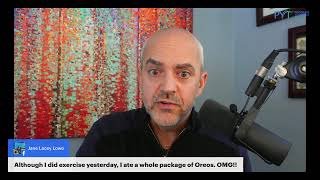
A Program Yourself Thin podcast episode (host Jim Katsoulis) discussing perfectionism in weight loss and why expecting immediate perfection dooms most diets. Jim contrasts ‘being perfect’ vs. practicing skills and habits, promotes gradual habit-building (sleep, hydration, relaxation, movement, nourishment, etc.), and critiques GLP-1 drugs (Ozempic) as a temporary ‘honeymoon’ tool with trade-offs. He describes his Program Yourself Thin system (hypnosis sessions, goal-weight blueprint, mental-rehearsal technique) and answers listener questions about consistency, sweets, exercise, and maintenance strategies.
Questions this video answers
$497 (with a limited special offer at $297 after watching the hypnosis training)
Kindle $2.99; physical $9.99 (he also mentions a $40 shipped workbook option)
About 16 months (host's assertion)
He cites 85–95% of dieters who reach goal weight ultimately regain the weight
Chapters
Foreign. Welcome to today's program yourself Thin Podcast. Today we're talking about should you be able to be perfect? This was came up in a coaching call I had yesterday, and I think it's really important conversation to have because I think most people, when they think about their weight loss journey and what they're going to do to lose weight and ultimately live at their goal weight, is they expect, okay, tomorrow's Monday or tomorrow's the first day of my plan and I'm going to jump in and I'm perfect, right? Whatever your plan may be, and it really doesn't matter whether it's keto, Weight Watchers, intermittent fasting pick, your plan does not matter. The, the basic idea is that I'm going to start tomorrow and I'm be perfect. And then when you're not perfect, and there always comes a time when you're not perfect, you say to yourself, ah, God damn it, I shouldn't have done that. I shouldn't have eaten that thing. I should have made a better food choice. I should have stopped before I ate too much. But basically what we're saying is I should have been perfect. And if you really reflect on this, you're going to see this is absolutely how you think you need to succeed. You believe you need to be perfect. And that's not the conversation we're having. The conversation is that you believe you can be perfect. This is the part I want you to really reflect on for a second because I don't think you can be perfect for long. I do believe you can be perfect for a little while. I believe you can make a decision, you can commit, you can focus, get excited and make all the right decisions for a little while. And what a little while is, is relative to the person. Okay, might be a couple hours, might be a couple days, might be a couple of weeks, maybe a couple months. Typically, and for most people, the idea to, to you is this, that why do you think you can be perfect? Because if we put this in a different context, I think it starts to make more sense. Swinging a golf club, you want to start playing golf. And so you start practicing your drives. And you practice your drives. You take lessons from an expert. They show you what to do. You read books about how to do it. You understand the movements that you understand everything. You go to drive the ball and you shank it. What happened? You should have been perfect. You should have hit that perfect. What, what's going on? You know, should you be bad, feel bad about yourself? Should you say, I should have hit it perfect and I didn't, so I screwed up. Or should you look at it and say, okay, I'm practicing, I'm not perfect yet, but I'm aiming in that direction. I want to move towards that direction. But when it comes to weight loss, you think that you have the ability, you think you have the skill sets in you, the mindset, the strategies to succeed and be perfect. And I don't understand that. Because if you think about jumping into a diet plan on day one, you don't got the mindset. You don't have the history, you don't have the strategies, you don't have the plan, you don't have the experience, you don't have the muscle memory, you don't have the beliefs, you don't have the routines. I me just go on and on. You don't have the taste buds, you don't have the biochemistry, you don't have the hormones, in my opinion, to be anywhere near perfect. Just like if you started playing basketball tomorrow, you never played basketball, you can't be perfect at basketball tomorrow. As a matter of fact, you're never going to be perfect. That's another conversation. But you certainly can't be perfect starting tomorrow. And so what is this idea that you can just be perfect, this goal we set for ourselves, which I have no problem with setting the goal of perfection, if that's what you want to aim for, more power to you. My problem is how do you get mad at yourself when you're not perfect? That's the part I don't understand. Because what other thing in your life can you just start doing on one day and then just be perfect with it? And I think to really understand this idea, you have to make the distinction between understanding how to do something and being able to do it, which is why I brought the golf club example up. You can read books on how to swing a golf club. You could take lessons, you could understand the steps and the mechanics of what to do logically. But understanding that logic and being able to do it physically are two totally different things. And the first day you start swinging a golf club, you have none of the muscle memory, you have none of the balance and the practice and all the things you need to do to actually swing a club and hit the ball consistently the way you want to, you need to practice it. And so I don't know how we separate weight loss as the one thing in life that you don't need to practice. You'll just be perfect at it. Because tomorrow's Monday and you're deciding to be perfect at it, I just don't get it. I don't think you can be perfect. I've been practicing this for over 30 years, and I can't be perfect. So I don't understand how if you've been struggling with weight for 30 years, how you expect tomorrow you could be perfect. I just don't get it. And the biggest issue of it is that you set this bar for yourself. That, in my opinion, is ridiculous. I just think you're, you're, you're expecting way too much out of yourself. And I think that expectation and belief leads very quickly to you getting discouraged and feeling like a failure and quitting. And I think you've got to recognize this because it's a fundamental shift in how you approach your weight. From thinking, I know everything I need to do and now I just need to do it perfectly to. I know a lot of things to do, but I need to practice getting myself to do them consistently at a higher level regularly so I can get the results I want. It's two completely different approaches, and I think one's more accurate and sets you up for more success than the other one. And again, you can apply the same thing to pretty much any area of your life. And I think you're going to find the same thing. You need to practice. You can't just be perfect on day one. And I think that expectation dooms more people than almost anything else when it comes to weight. So take some time and think about that, you know, and reflect on if you believe you can be perfect and then keep walking that path. But if you believe you cannot be perfect, then start walking this other path, the path of practicing, the path of getting better and consistently improving and growing and evolving and turning into the person you want to be instead of expecting, you can just be the person you want to be starting tomorrow, instantly. I don't think that's possible. And if you really want to start becoming the person you want to be, click the link in my bio or go to program yourself. Then I'll put the link in Facebook over there. But if you're in TikTok, you can click my picture up in the top left. I'll go to my bio, get the free hypnosis session and watch the training I made for you. There's a free hypnosis session. I give you a free training. I give you a goal weight quiz. I give you a report of how to use the program yourself then method, and I give you access to gym AI. So again, I don't think you'll find anyone that gives you more for free than me. If you do, let me know because I'll. I'll give you even more for free because no one's going to have to do me on that. But I think this is something I put together for you to help you start taking steps in a new direction and in a new way. So I hope you. Hope you're all set and are going to go check that out because I give you lots of cool stuff and if you have any questions, feel free to ask them. Came in. Yes. All right. Oh, I like this. Yeah, maybe. He says so true. Start slowly but believe. Yes. Agreed. I couldn't agree more with that. Chellip says it's so clear now. How wrong slimming clubs get it wrong. Yes. Well, too. Yes. And for those of you slimming, the slimming clubs is more of a UK thing. Right. But it's probably. They call it slimming world, but our. That's our weight watchers. They're very, very similar. Twice wrong. But that's what they expect from you. Too much change too fast. Yeah, absolutely. What's up, Ken? Ken says focus should be on building better habits. Positive results will follow. Absolutely. And Ken Kent in the program and just a real superstar with the whole method and the results he's gotten. And that's why, you know what I mean, it's focusing on. It's the strategic. I think one of the things that separates program yourself thin as a weight loss approach compared to diets is that it's a much more strategic approach. We recognize what we're actually dealing with here. And instead of living in fantasy land of the diets where you can just jump into a plan perfectly tomorrow, we recognize what a human being tendencies are and strengths and weaknesses, and we build around that, you know, but. But again, one part of that is building around the habits. Again, most people have the habit of brushing your teeth, probably your healthiest habit they've installed in your life. And if you think about that, well, what we're doing and program yourself then is we're creating more habits like that, drinking more water, get more sleep, relaxing more, you know, habits in terms of food and different things like that. We're looking to acquire skills that run on pretty much autopilot. And we're looking to have enough of those skills going that they. They start to anchor us to our goal weight, if that makes sense. Yeah. What's up, Lily? How's it going? Regina says, I'm really enjoying the book. All right, well, thank you yes, this is the book. Oh, let me switch everything around every day. Well, I don't know why I won't. Just remember these freaking video settings. Okay, that one's working. And tick tocks will not be. So let me fix tick tocks. There we go. Yeah, here it is. This is the book. And this book's something else, I'm telling you, right? 40 chapters of just amazing weight wisdom, I would say this is here. So, yes, this is available now. A game changer. You read this book, you will think about your weight differently. That's the goal. When Amucka Wigwam says, I love you, not ready. Please don't stop your podcast. They are very helpful. My daughter has been on oic and I started following you at the same time, and I've lost more weight and feel better mentally than she does, and I'm not sick to my stomach. Holy. That's a great. Thank you so much for. For saying that. Screenshot that. Add that to the to do list of wanting to the. The to do list of put my testimonials up. But that's awesome. Great job. Winnemucca. That. That's awesome. And, you know, yeah, again, I'm not. I'm not a hater GLP1s. I'm not here to make people feel bad. If you're on them. I'm looking to support anyone in any path they're taking. You know, I've had my questions about GLP1 since day one, and I think I've only had more and more questions, unfortunately. Again, I'd be thrilled if they came out with a medicine that was really natural and healthy and good for you and made you eat better and lose weight and live happy and healthy. I would say go get it. Go get it. I'd close up shop and do something else gladly. But I don't think that's what this medicine is. And recently, I think the big thing I said this. I've been talking about this for months now, and you're going to see it. It's going to be framed in a slightly different way, but it comes from the same place in my opinion. One thing people don't know about GLP1s is that you only lose weight for about 16 months. That's it. And this is all of them. So far, I. I have not heard of a GLP1 cocktail or concoction that. That gets past this. This seems to be a limit with these GLP1s, at least at this point in time that you get 16 months of weight loss. That's it. And then you have to be on the GLP ones forever in order to maintain that weight loss. Now, the first problem is that if you're. You're obese, depending on where you're at, you may get to 60 months later and still be obese. You may still be overweight. That's it, though. You're not going to lose any more weight. So that's the first issue. But my big question with the GLP ones has always been, how are people going to feel about this once they get to their goal weight? Because, again, remember, you can never listen to someone who's actively losing weight about what they're doing. They're never going to give you a real accurate answer, because people will do anything if they're actively losing weight. They're getting such a high off the weight loss that it really blinds them to the reality of what they're doing to make that happen. This is why 85 to 95% of dieters that get to their goal weight put the weight back on ultimately. Okay, so once we get to the goal weight, that excitement, to put it a different way, most dieters trade the excitement of the. The excitement and the pleasure of the food for the excitement and the pleasure of the scale going down. Okay. And then once the scale stops going down, where do they get their excitement and pleasure from? That's always the big question. Okay? So with GLP1s, you know, it's. It's not an enjoyable experience. Okay? What you're gonna feel when it's working and it works for about 20, 25% of people, it's not going to work for. But when it works, you're feeling mildly, just, just below mildly nauseous. You feel full, as if you'd eat a lot of food. And when you feel full, when you feel, you know, mildly nauseous, again, because it's cranks up your aversion system, that's part of how it, you know, dials down your. Your consumption. And they're looking to, you know, this is nauseous. They're looking to keep you right about here, okay? And so imagine going through your life, you're at your goal weight now, and now the excitement of the weight coming off that, that's over. You're at your goal weight, and now you're living a life where you're never going to look forward to food the way you ever did. And what we're saying here is we're taking food, which is a fundamental pleasure of being a human, and, and we've really built on that in this culture as well, which is part of the problem. I get it. But now we're talking about a life where you got a birthday coming up, you don't care where you eat. Who gives a. Your favorite Italian restaurant. I don't care where we go. You know, you go on vacation, you know, the food all of a sudden takes a back seat again when you're losing weight. You don't care. You don't care at all when you're losing weight. But this is a quality of life issue, you know, Is this the life you want to lead? Do you want to live a life where your enjoyment and pleasure of food is muted to a pretty extreme degree? Let's be honest now. People on GF ones that are losing, you know, oh, no, I feel great. I love food. Oh, no, you don't love food. If you love food as much as you always did, you'd eat more of it. You. You can't. You can't. Let me ask you, have you ever. Do you enjoy food more when you're full or when you're hungry? You know, the obvious answer. Okay, so, you know, it's. It's. It's realizing that I would never want that. You know, listen, I would choose it over. Over my health and my life. You know what I mean? Like, okay, so. So I get it. But for me personally, if I can, I always say this and program yourself. Then we say, how do you. How can you have your cake in your body, too? That's what we want. That's the ultimate goal, is to be able to manage our weight in our body, but also be able to eat the foods that we love. Now, obviously, we're gonna have to eat those foods differently, okay? But we want to have both. And so it leads you to a place where, you know, like, I just had the holidays. You know, I'm overeating. I'm enjoying food more. And that's part of the whole process. You know, that's. That's a phase of it. That's a piece of it. And I think that's an important piece, you know, and so. So I'm really just. I'm glad you. You said that. I. I wish your daughter got better results. I want everyone just to thrive and succeed however path they choose. But, you know, again, I see this all the time. I mean, in my world, the. The success stories from program yourself, then just destroy the success for us from Ozempic or GLP1s. I mean, which would you rather have? Would you rather be on an expensive medication that makes you feel full all the time for the rest of your life, knowing that the second you go off, you're going to double the weight you're going to. You put it on real quick. Or would you like to have a plan and a system, A new way of thinking where you think about yourself differently, where you have learned how to manage your mindset effectively, you live a different lifestyle and you eat differently naturally. A way that feels good for you and it's yours, so you know you have it for the rest of your life. Which would you choose? You know what I mean? Like, it's obvious. So I appreciate you sharing that and. Yeah, keep me up to date with that and keep going. Right? Nice job. Nice job. Jane says I keep trying to get on your email list and get your free hypnosis, but I never get an email. It's in a ca. Okay, Jane, you can shoot me an email at Jim, program yourself then.com and I'll get that sorted for you. It does happen sometimes. I mean, sometimes it's just weird email issues. If you're not in America, it's even more likely there could be just some weird email issue. It could go to your spam folder. There could be an issue with your email address. So if you. I gotta get my. I'm gonna start putting my help desk in areas so people not in the program get to it. But shoot me an email@gmat. Program yourself then.com for now and I'll get that checked in. All right. What's up, Lisa? Lisa says you've changed my mindset in my life. All right, well, thank you, Lisa. I appreciate that. That's what I'm here for. You know, again, this is a mission for me. I'm really committed to this now. It's funny, I had someone write a big, long thing about how I'm just like everyone else because I'm just profiting off of it, which I guess that's a fair. That's a fair comment. You know, I've had people say that to me on my whole career. So if you really cared, if you really was a mission, just give it away for free. Well, guess what? I have given away for free. I have literally given my program away for free over the years. And what I have found, every time I've tested it out, is that the people get it for free. They never use it. Almost. There's always an outlier. So I'm not saying no one has ever gotten results off my free stuff because obviously that's True, but by and large people that get it for free never really use it. And then on the opposite side, I have people that pay me $25,000 to work with me. Okay. And you're never going to imagine, but it seems that I've noticed a pattern. I've been doing this professionally for over 20 years. The people that invest get better results and I don't, I know it's not just what they have access to because I've given this away for free to people a number of times and consistently those people just never really use it. And so I think the price of the program is too low personally, but I keep it low to keep it accessible to the most amount of people. But I do believe, and this is coming from someone who spent well over a hundred thousand dollars on personal development, professional development programs. I'm a program coaching fiend. I wouldn't take that money back at all. That's been the best investment, some of the best investments in my life. And so I have seen that my own clients. So I give you a ton of stuff for free to kind of explain the whole system. But I do believe that you need to invest in yourself. You're going to invest in the food, you're going to pay money on food, you're going to invest in your diets, you know, so the people that say, oh, it should all be for free. I get how you would think that, you know, if you didn't really have much experience with it, but I'm telling you, it doesn't work that way. It does not work that way. You know, if they started selling Mercedes Benz for a hundred bucks, you wouldn't value it the same. Like, it's just. I hate to tell you this, but, you know, we live in a culture where money has meaning and when you invest in something with your cold hard cash, you tend to show up at a higher level. So I'm just gonna throw that out there. I don't know if that person's ever gonna listen or hear me again. But that's my, my response. What's up, Novi? Speaking of someone who invests themselves into the program, hopefully the Ozempic people are using those 16 months as a crutch to improve their habits. Yeah, I hope they are too, but I don't think they're going to because most people have no real strategic system or, or sense of how to manage their habits. So, you know, I hear people say, I, I find a lot of words being used that don't have a lot of meaning behind them and What I mean by that is people say, yeah, you know what? Diets don't work. I need to really change my lifestyle. What does that mean? What's that mean? Like, if you really sit down and explain to me in detail what that means, and I think you'll find you'll struggle, oh, I'll live healthier, I'll make better decisions. What does that mean? You know, and program yourself then. And I think this is important because it gets to the. When you know something or don't know something, a lot of comes down to the granular understanding of it. It's not the, the big, oh, yeah, I should improve my lifestyle. Well, no, I mean, sure, but what's that mean? It's just a vague concept. To me, lifestyle is eight specific habits, right? So we have sleep, hydration, relaxation, breathing, nourishment, movement, meditation, gratitude. And we work on those as skills. Their skills, their habits, we develop and install into our lives. But we have, for each part there's a different chapter section. So you answer questions and you come up with a real granular plan for how to actually install the habit of drinking more water, of relaxing more, of nourishing yourself better, of moving more and so on. And so what, what, what is the average person going to do to improve their habits? And that's just the, that's just the nuts and bolts of the lifestyle. The, the real core of it all is, is mindset. And in the mindset section, notice there's a specific section on habits where we go through the neuroscience of habits. We can talk about the studies they've done on habits. So that you're basing. It's really. Habits are interesting anyways, but so I, I'll frame this. We're not getting rid of old habits. You can never get rid of old habits. You can wire new habits over the old habits, if that makes sense. So you're learning how to use the effective, scientifically proven strategies to manage your habits. Now, what are most people doing to change their habits? They're trying to force themselves to act different. It's just, it's, it's a, you know, most dieters, unfortunately, are bringing a, a banana to a bazooka fight. You know, I mean, you're just not ready for it. You're just, you're not up to the task. Willpower is not up to the task of changing your habits long term. You know, so you need a more robust strategic system in order to do that, in my opinion. So, yeah, so someone could go on, on GLP1 and say, oh, you know, I'm going to use this time to, to develop my habits, and it's great if you do. But again, the core problem remains. Before Ozempic, you didn't know how to change your habits. So why can you change your habits now that you're on Ozempic, you haven't learned anything new, you know, you know, you're not as hungry anymore. Okay, great. So you'll naturally automatically eat less so you'll, you don't have to worry about that and you'll lose weight. But in terms of adding habits and working on your habits, what do you know about habits now that you didn't know before you started GLP1s? Nothing. And so why would you magically, all of a sudden now be able to influence your habits any more effectively than you've ever been able to do? Right? I mean, it's like, you know, when you get sick, you know, like when you get nauseous and you feel sick, well, guess what? You stop eating so much. But did that change your habits at all? No, you just felt sick, so you weren't hungry, so you didn't eat. That has nothing to do with habits. You know, and so that you may say, oh, my eating habits have changed now. Your eating habits haven't changed. You feel different and so you're acting different. But once you start feeling the way you normally feel, your old habit's gonna come back, right? When you feel sick, you have a certain set of habits. Oh, I feel sick and not just my stomach. I just lay on the sofa under the bed and I don't, I don't eat anything. Well, okay, but you, when all of a sudden you feel fine and you're hungry again, that habit doesn't mean shit because you're a totally different person now. You feel fine and all the rest of it. So again, that's what the GLP ones are finding. And that's the thing. Again, I said, I've been saying this for two years. The way we think of GLP1s right now is the best way you're going to think about it. It's the honeymoon period. Because they've never even studied GLP1s on a population that wasn't type 2 diabetic, they haven't studied on non diabetics. So basically, the people using GLP1s for weight loss that are not diabetic, you are the study group. You know what I mean? Like, there is no. They've been studying its effects on type 2 diabetics for 20 years. So again, there's a. There's lot of body evidence that, you know, it's not going to hurt you or, you know, the side effects. We, we know what those are to some degree. We don't really know what it's going to do for people that just want to use it for weight loss. So we're finding out now and what they're finding out now in terms of if you ever decide to go off of it. And remember, you're making a lifetime commitment here. And it's not just, you know, I'm on a statin, so I, I'm. I'm planning on taking a statin for the rest of my life, but GLP1s are not a statin. I take a stat, and I don't even know I'm on a statin. I wouldn't know if I, if all of a sudden I stopped taking our take. I don't realize anything, right? But you take a GLP1 or come off of it, there's a huge shift in you, you know, and so I think that, you know, do you want to live that way for the rest of your life? And that's. We're gonna. You're gonna find a lot of people don't. Oprah Winfrey came off and what, grained £20 in a month? Okay, so. And boy, no1 likes GLP ones more than Oprah. I mean, she did a whole special on it, right? So why would she come off of it? I don't understand. Why would she come off of it? It's so amazing. I don't know why she'd even try coming off of it. Well, she did, though, and I think she tried coming off of it. She probably misses food. Obviously, to put 20 pounds on in a month, you have to eat a lot of food. I bet. I. I got to read. I got. I want to find out about Oprah. I want to find out why she went off it for a month. Why would anyone ever come off of a GLP1 if you're losing weight and at your goal weight? A very important question. I'm going to skip that, though. So she come off it in the way, come off, come back on quick, and now here it is. You know what I mean? Because these, these pharmaceutical companies, at the end of the day, they're. They're batting a thousand for, for screwing people. And I love Medicaid. I love, I love medicine. And I just want to make that crystal clear. That being said, you know what I mean, there's always something with these people and so now it seems. And this is the first. We're just starting to hear this, aren't we? But now we're starting to hear, okay, you come off the GLP1, you're regaining weight faster than you've ever regained in your life. So, you know, once again, would. Would you have gone on a GLP1 if you'd known that? Well, there's a whole lot of people that didn't have that choice when they went on it. And this is what I mean. This is what I mean about the. The study group. You. We. The. The people that got on GLP1s are the study group. Would you have gotten on if you found out that, you know, you put weight on instantly, super fast? How do you put weight on so fast? What's it do to your body? We don't know exactly. They're figuring it out. Anyways, thanks for sharing that. Yeah. Nobody says now lifestyle change means diet forever. Yeah, yeah, yeah. Well, we take diet from a verb and turn into a noun. Right. What's up, Elise? Elise says, I just signed up last night and I listened last night and this morning. What is that book you're holding? I haven't gotten that far yet. All right, well, this book here. This book is available now, so anyone can get this, Right? And. Yeah. The dao of living at your goal weight. This is a book I wrote, and actually it takes you through the whole. The whole system. Okay, so. So you're in the program, Elise. Right, so this. This one here. Yeah, I haven't really been. I've been talking about it here, but I haven't really been promoting it to people in the program. But if you want this, this is at places where books are sold. But you. You do have the free. You know what? You don't let me write myself a note. Okay, hold on a second. I got a lot of little notes for myself. Little things going on. There have been little technical updates, too. I've been dealing with that. But. But hold on, Elise, because I'm gonna. You. You. I sent out all the workbook. Okay, yeah, gotcha. But I just. Just real quick, let me end this thought because I want to do this because. Because last month I sent this book out, the PDF to everyone in the program. Okay. But I don't think I made, like, it available to new people that are joining, so I want to make sure that I. You all have access to this for free. Two customers. So I'll get that done in the next couple days. So you can read through this one here, because I Would say, yeah, oh, yeah, yeah, the workbook. I'll. I'll talk about that one second. But this one here you'll really love too, because this is just a real simple way. It goes over the whole program in a real simple, easy accessible way. It's 40 chapters, each one's a page, page and a half. But they're all kind of hypnotic, poetic stories to kind of get inside your head and make you think different. Okay, yes, the workbook. This is the, the PYT Goal weight blueprint. Okay. So, Elise, you have access to this in the program. You got the PDF, all right? So you get the PDF and the go and the Google Doc version of this. So if you go into the members area and you go to Goal weight blueprint, it's all right there. It'll describe what it is, what it does. Basically, it's 144 pages, so there's no rush to get through this. Okay, so you're right on the right track. You listen, you're notes session in the morning, listen to session at night, watch the PYT method video so that you start doing the 60 second mental rehearsal technique at night, start practicing that, and then you start picking away at the goal weight blueprint. Okay? But if you want the physical version, it is for sale. It's 40 bucks to get this shipped to you. That covers shipping and everything, but you have the PDF and the Google version right in the members area. So you can check that out. Harriet says love your program. Thank you, Harriet. Appreciate you saying that. Yeah, the program's awesome. It really is something else. So. But again, I, I give you a bunch of free stuff. I literally give you a free program right now. PYT Spark. I give you a free hypnosis session. I give you a training three steps to living at your goal weight, Goal weight quiz to help you figure out the right goal weight for you. The program yourself, then method report which breaks down these 60 second mental rehearsal technique, how to use it. You can start using it tonight. That's all free. I give you something else too. Oh yeah, I give you access to gym AI. Just crazy. That's a crazy thing to me. So, yes, I give you all that for free. All you have to do is click the link in my bio or go to program yourself then.com and go check that out. Okay. Jane says, I tried to email you, but it came back as undeliverable. I emailed you at gym, at program yourself thing. Yeah, Jane, I'm gonna say, I think it's. It's got to be Your email at this point, you know, I don't, I don't. I think it might be your email program because that's the right email address. And if that's coming back as undeliverable, I'll give you one more. You can, you can try support program yourself then dot com. Give that a shot. So I'm not sure what system you're using for emails. All right, Tammy, what's Tammy says. Hey, Jim, I just wanted to share that I started to listen to your podcast and start to live at my goal weight. Not only have I lost 15 pounds since September, but my yearly blood work show it. My cholesterol went from 200 down to 173. Thanks for your advice, Tammy. Tammy, nice job. Proud of you. I love this. This is why I do this, you know, this is the stuff that. This is my life. I. I say this all the time. I. I swear I'm probably one of the luckiest people you'll ever see in your life. That is not lost on me. And this is part of it. So nothing makes me happier that that's the stuff. You know, I'm super proud of you, Tammy. And what I like most about what you wrote is that 15 pounds since September, a lot of people, that's not fast enough. But I know the way Tammy's doing it, if she's listening all the time, is she's doing slow and steady. She's making changes that are going to last. And I'm really, I'm happy too, that you got another measurement system. I'm a big fan of that. I don't think you should use just the pounds and the weight as the only measurement. I think you should use certainly blood work, certainly measurements, if you choose to start paying attention to your energy levels, you know, clarity of thought, just all this other stuff. I think the more you pay attention to other things and measure yourself in other ways, the more you realize how you're improving and growing. And I think it's just, it's a stronger foundation for you, you know, so, great job, Tammy. Super proud of you. Keep it up. Keep it up. Joshua says great book. Thank you. Thank you. Yes. This really is a great book. I gotta say, again, not to be, you know, not to be all conceited here, but it's really exciting for me. This book is just. This book was sprung right out of inspiration in September. I'm like. I was working on another book and I got this idea and I just dove into it and it was really fun because this is the first like real, real book. I mean, I consider this a real book, you know, in a way, but this really is only for people in the program. This one is like, you know, anyone can get it. And like I said, it's been awesome reading the comments in the reviews of this and just hearing people loving it. It's working exactly the way that I want, you know, because I know especially clients that I coach, they'll literally be thinking in the chapters in these books because that's what'll happen. This book is designed to change you as you read it. So you read it and it sticks with you. Like it changes and transforms the way you think of certain things. And so obviously everyone's different. So everyone has, takes different stuff out of it. One of the coolest things I saw, and I don't know if she's here, but Sherry actually took a quote, one of her favorite quotes out of the book and she needle pointed it, it got it framed and she has it up in her, in her office now. It's so cool. But, but that's what I was hoping for that. And that's what happened. And it's really cool. So again, this is. These chapters are really hypnotic stories, I would say. And all that means is that they're designed to impact and influence you on a deeper level. So it's not just giving you more information. It's designed to change the way you think about things on a more subtle level. That makes sense because when you change the way you think about things, you tend to behave differently, you tend to feel differently about them, and then you, you tend to behave differently about them. So anyways, thank you very much, Josh. I appreciate you saying that. Oh, there's Josh. Josh says, I've been listening to Jim for two years and recently arrived at my goal weight. Thank you. Holy, look at this. Just got a successful Thursday here. Well, nice job, Josh. I really appreciate sharing that. That's awesome. Yeah, I get this all the time. This is my life. And by the way, this is what I mean though. This is what I'm trying to say. And I know, I know my reality is very different from the average person's because I literally work with people every day that are successfully, you know, getting back to their goal weight and staying there. And I know that's an outlier concept in life, in our reality right now, so I get that. But that's what I'm trying to tell you is that this is my life. So what I'm saying is I am seeing people every day. People that have been Struggling with their weight their whole lives a lot of times. A lot of my clients are in their 60s, 70s, sometimes 80s. So I've been struggling literally their entire lives with weight. And once they start to understand how to change the way they're thinking, how to strategically shift the way they're living and eating in a way that works for them, and then they learn how to run their mind, you can achieve new results when you gain new skills and understandings and abilities. You can achieve new results. That's not a crazy idea. But when you think about weight loss, you've never gained any new abilities or skills with a diet. You've just brought the same level of skill and ability into a new plan. And that's never going to work, because the core problem is how you're thinking about things. And once you change that now, you open the door to potentially getting different results. Jane says, okay, you spelled it wrong. Yep, I tried it again. Good job. Oh, it seems to work this time. All right. Yeah, so that came through, Jane. I will. The other thing, Jane, so you're on Facebook is you can message me. You can message me in Facebook as well. Give me a little bit of time. Sometimes I get a little bit caught up with that, and I don't get those as quick, but you can send that over, too. That's right, Josh. Yeah. Josh says Jim's voice will naturally echo in your mind if you listen regularly. True. That's true. And I think that's the important thing to understand. I mean, you know, listen, like, I'm trying to think. Okay, let's just put it this way. Hypnosis is not, like, a weird thing that, like, I just do to you. Hypnosis is something you experience every single day in lots of different ways. And so one of the most powerful hypnosis that we all experience is when we watch tv. So you watch tv, and what are you doing? You're laying there on the sofa or sitting in the chair, and you're passively kind of imagining whatever you're watching on tv, you're vicariously living it's right. So if you're watching a horror movie, you're sitting there, you're nervous, you're not breathing. If you're watching a comedy, you're laughing. If you're watching a drama, you feel sad. If you're watching sports, you got adrenaline in your body. You're like. Like you're playing. Okay. What that all means is that when you're watching something and hearing the sound, you're internalizing it, and you're kind of experiencing it. And by imagining it so vividly, you're literally creating physiological responses. This is really amazing. Like, again, literally, you can sit in the sofa in the same exact room by yourself, right? So it's the exact same environment, but all of a sudden you can release adrenaline now, all of a sudden you can be scared. Now, all of a sudden you can be happy. Think about that, right? What's going on? The physical environment is exactly the same, but what you're imagining in your mind is changing what your body's doing. So this is just one example of how powerful your mind can be. So a lot of what we hear, tv, movies, radio, Internet, you know, videos, we're hearing voices and sounds and words. But a lot of times the most powerful hypnotic messages you're getting are to get you to overeat, to choose the wrong foods, to over consume, you know, to lead you in that direction. And so I like to think of Program Yourself then as being this little ecosystem where you can go in. I think it's like a little cocoon where you can hear all sorts of good messages. And those messages are delivered through my voice. And I am a hypnotist. I'm a master hypnotist. I've been doing this for over 30 years. So, yeah, when I speak, I'm speaking in a way ideally, so it sticks in your head. Just like a commercial. Actually, I just. What was I listening to today? I don't know if you all have ever seen this. I've never seen this before, but it was a. It's so random. It's like some pizza shop in Denver. It's just a little tiny pizza shop. But they hired this guy. He's just singing this pizza song. And it's so funny. It's not the best song in the world, but it's just so catchy. And I'm like. I've just been thinking about it all day. He's doing his dances and stuff too. And it's just funny, you know? But I'm like, that. That's an example of hypnosis. You know, you watch that. The best ads are hypnosis. They stick with you. That's just hypnosis. It's not a weird thing. They've made hypnosis seem really weird. But hypnosis is fundamental to being human. We all have hypnotic brains. And when you start to understand that understanding of reality, I think it's very valuable because I think it explains a lot of things that we otherwise struggle to understand. But, yeah, so through the Program. A huge part of the program is the hypnosis sessions and the trainings where I'm speaking in a very intentional way. And part of that intentional way, and I'm doing it here on the podcast as well, is I am attempting to speak in a way where these ideas and messages go deeper into your mind. So it's not just me saying words. I am saying them in a way to hopefully, you know, help them sink a little deeper in so they start to affect you at a more core level. So I appreciate you saying that, Josh. Yes, it is intentional. You know, I'm glad it's working for you. Great job. Rhonda says, can you help me understand why we. Yo. Yo. Regaining all the weight until we turn it around again? When I reach a lower weight, I think I forget how really awful it feels to gain back weight. I'm starting again. You are getting through to me. How to really change. Yeah, Rhonda, I think that's a great question. I would love to talk about that because I think this is the starting point for everyone to really start walking a different path. I think if you look at it, Rhonda, and all you dieters, what you have been focusing on your entire lives is losing weight, right? That's what you focus on. Even right now, if you're overweight, you don't give a about maintenance, that. I'll deal with that once I get there. I just want to lose the weight. And so the diet industry, everything you've ever learned about weight loss your entire life is about how to lose weight. And one of the core problems, again, ultimately, here is where we get to, Rhonda, is that most dieters will trade the excitement and the pleasure of the food for the excitement and the pleasure of the scale going down. And so tell me this isn't part of the issue, Rhonda, that as you get back to your goal weight, as you return back to it, where's your pleasure and excitement coming from? What are you looking forward to? Where? Neuro. Neuro. Scientifically, where are you getting your dopamine from? You can't go back to the food or else you're gonna gain the weight. So what do you look at in your life that's inspiring, exciting, motivating, keeps you going once the weight loss stops and you get to your goal weight. I think people really need to understand this because again, I come back to the stat that 85 to 95% of the successful dieters, the. The people that succeed to get to their goal weight, 85 to 95% of them put the weight back on. I believe at the very core of it, it's a motivation problem. I think, again, you get to your goal weight. What are you looking forward to now? What's exciting? What's more, because when you're losing weight, the weight loss becomes more exciting than the food. And so you do it. But once the weight loss is over, what's more exciting than the food? You say, well, living in my goal weight. No, because there's a thing called hedonic adaptation. We adapt to whatever our reality is. You've experienced this with your car. You got a new car. Oh, my God, it was amazing. I got my new car, but after a couple months, it just turns back into your car, Right? You move into your new home. Oh, God, I moved into a new place. Right? It's a new place for a little while, and then it becomes your place. And so the same thing happens with your body. At first, it's really exciting losing the weight. Oh, my God, look at you. Great, great, great. Then you get there and it's fun and it's exciting, but then you start to normalize to it, and humans need something to look forward to. And I think this is where diets fail you, is that they. The whole goal of a diet is to get to your goal weight. So in my opinion, and program yourself thin is set up completely different this way that what separates program yourself thin from diets is that diets are about losing weight. And program yourself thin is about living at your goal weight for the rest of your life on near autopilot. So it's a completely different goal. Weight loss is really just focused on the first phase of the program yourself thin goal of living at your goal weight. Right. But the real goal is how do you stay there? And I think the difference is this, that with a diet, you're really relying on willpower. You're going to force yourself to act differently. I think the secret with living at your goal weight is you've got to develop the habits and the skills and the mindset of a thin and healthy person. And I think, Rhonda, if you look at your life and your history with weight, never once, not even one time, not even for one second, has your focus been on living at your goal weight for the rest of your life on your autopilot. Never has your focus been, how can I think, live and eat like a thin, healthy person naturally, I know that's never been your goal, not even for a second. And so with program yourself, then it's not about like, oh, cut down to a thousand calories. I would never ever tell you that because that's a short term strategy. And program yourself, then we're building everything around the goal weight pyramid, right? This is what I've learned from studying people that have lost weight and kept it off for the last two years. I've been obsessed with this for over 30 years. And what I learned from studying them over the years and becoming one of them myself is there's basically three main categories. You gotta figure out how to think like a thin person, how to live like a thin, healthy person, and how to eat like a thin healthy person. And of course that's broken down into subcategories. But so Program Yourself then is about developing skills and abilities of how to think, live and eat. Whereas your weight loss plans in the past have been about restriction, forcing yourself not to do what you want to do. And so you always feel like you're fighting yourself. Whereas in Program Yourself then we're working with ourselves. And I'll come back to like, what's the goal? Where's the pleasure and excitement? Come and program yourself then, Jim. Well, the thing about programming yourself then is that we're really not fixated on the weight. That's a little trick of the mind, okay? The real secret is to make the weight loss secondary. So what's that mean? We need something else to be the primary goal. So I'm programming yourself, then we take the weight loss and we wrap it in personal development. So that really the goal, a little trick we do here. The goal we make is not the weight loss. That's not the main goal. The main goal we're focused on is being the best version of yourself you can be. Who is the best Rhonda that you can imagine? Not just what you look like or what you weigh on a scale, but you, Rhonda, showing up for your life at the highest level. What would that Rhonda look like, right? How, how's the best Rhonda think? How does the best Rhonda live her life? How does the best Rhonda eat? What is the best Rhonda way? But you see in that paradigm, that way of looking at it, the weight all of a sudden just becomes a smaller piece of this bigger goal. And that bigger goal of being the person you want to be is what allows us to always be motivated. I'm as motivated. I think I'm more motivated, but I'm as motivated, if not more motivated now about my eating, my lifestyle, my weight than I was 30 years ago. Why? It's not to lose weight. I've been at the same weight for 30 years, basically. Okay. It's because each and every day I learn something new. I get a little bit better. I make another little tweak, something else had. So each and every day I'm improving, growing, evolving again. That's why we take the weight loss rapid and personal development. This for me, is not about weight loss anymore. It's about thinking, living, and eating as the best version of me so that I can achieve more things in my life. I hope that makes sense, you know, But I wish you the best with it. Barbara says Jim's voice is a good voice to listen to. Sounds calm and comforting. Thank you, Barbara. Yeah, it's, you know, it's as intentional as it can be. Right. So again, not everyone likes my voice, but. But yes, it's. It's my. My tool, you know, It's. It's my main tool. What's up, Vicki? Vicky? Yeah, you know, Vic, I did see. I did see that email from him. So I will. I will reach out to him today. Yes. Yes, I like that. Joshua. Yeah. Row your boat song ends with life is but a dream. Yes, it's true that life is but a dream. Agreed. Agreed. I couldn't agree with that more. I think so much of our life is generated right from in between our ears, you know, and I. And then. Which is fine. But I think we never learn how to run our brains, you know, not effectively, you know? Yeah. Rhonda likes that, man. Wow. Thank you. You're speaking to my heart. You're welcome. You're welcome. That's what I do. And I'm happy to do it. I'm so happy to be able to share this. Mia says your content is awesome. Any advice on needing sweets after meals? Yeah, I got advice. I. I think the thing about sweets after meals and really anything with weight is that it doesn't have to be a black or white solution. So I think a lot of times people do sweets after meals and they say, that's it. No more sweets after meals. I, you know, a ton of sweets after meals now. No, no sweets after meals. Okay. That. That's obviously. That's plan A. Fine. If you can do that, great. Okay. But why not add a plan B and C, right. So that it becomes. Oh, you know, it's not so much the sweets after meals, it's the amount of sweets after meals that's the real problem. And so maybe instead of completely cutting out sweets after meals, I'm going to Work on a strategy to reduce the sweets after meals. And so that'd be my big suggestion to you, is to start looking at some, some gradient things you can do, right? Some, some steps you can take. Doesn't have to be the perfect thing, you know, maybe one day a week, maybe on Mondays you don't have any sweets after, after a meal. Maybe the other days you eat half as much sweets after meals as you typically do, you know, but that's an improvement. And then you can build on that. So again, give yourself more options to move forward than just one option. I'm going to guess that that might help you. Lily says. How much is the program? The program is $497. If you do sign up for the hypnosis. I will tell you this, this is going to go at any second. I just, I've just got behind a couple Things, but the program's 497 now. If you do sign up for the hypnosis session, there's a special offer if you watch the training of 297 still. Okay. So you can still kind of get that if you, if you watch that training. But yeah, that's going to be changed probably tomorrow. I gotta record something first. I've got backed up. I'm not gonna lie that this week a lot of things kind of, it was kind of crazy week. But yeah. So what's up, Christina? Christina says, did you see that now the GLP1 is available in a pill form. Oh, yeah, yeah, right. I did see that. Yep. But I, I, to me, it doesn't matter. I, I think again, it's not, I wouldn't want to inject myself necessarily, but whatever, I mean, people can get over or whatever. So pill, liquid injection form. To me, none of it matters because at the end of the day, you know, where you're brought to is that you're, you're basically saying, okay, I'm gonna live a life. I, to me, I think of it a lot of school. I'm not an expert in this stuff, but, but to me, it reminds me a little bit of like Prozac. I don't know if you remember Prozac back in the day, the antidepressant. And what happened is it helped people feel less depressed but also helped them feel a lot less everything. It had a general numbing mood for a lot of people. So it wasn't just they felt less depressed, they felt less everything and the good stuff too. And so that's always taught me to look at kind of the more fuller picture of things, you know, kind of zoom out and look at, like, what the potential other effects of things might be. Which is why when I think of GLP1s, one of my main concerns is, do people want to go through life feeling indifferent to food? Do they? I know you do. When you want to lose weight, you don't give a. You just want to lose weight. But once the weight's gone, I mean, what's the quality of life when you're. And maybe some people don't care. Fine. I, I, for me personally, though, that become an issue, you know. Oh, what's up? Blankets? A good question, right? How do I stay consistent? That was always my downfall. Okay. But I know you want me to give you some magical, you know, willpower trick that that's what you want, you know, I mean, like, oh, I got some magic trick. And, you know, the hypnotist. What can he do? Make me stick to everything. But. But it's actually a lot simpler than that. You know, I bet Lenka, without even knowing Lenka. I, I have never talked to Lenka before, but I bet Lenka that the main reason you've struggled to stay consistent is what you're trying to stay consistent with is extremely difficult to stay consistent with. Tell me it's not. You tell me the things you've struggled to stay consistent with, and I bet we're going to see a list of extreme things. Weight watchers, counting calories, intermittent fasting, keto. These things are all extreme, extreme plans. They're extreme ways to live. You have to really, you've got to make it a main priority in your life in order to do those things. You don't casually do those things, Right? Yolinka says so. True. Yes. So, so this is what dieters do, because dieters think all or nothing, right? So when a dieter thinks, like, oh, I'm struggling to be consistent. Yeah. What are you trying to be consistent with? Right? Think about the average dieter, right? It says, okay, they've been eating, like, for three months. It's been. It's been decades. They've been struggling with their weight, but especially last three months, just been off track. Oh, my God. Everybody. Okay? And so now tomorrow's Monday, and they say, that's it. Time to track every single calorie. Time to not eat for 16 hours. Time to give up sugar. Time to not eat in a carb ever again, whatever. And it's like, oh, so. So here it goes, right? And so Monday comes, and it's like, you're gonna completely and totally change your eating in one day. It's estimated we make over 200 food choices a day. They don't even realize because they're happening in the background. Autopilot. But all of a sudden you're gonna consciously change everything the way you eat. And not only are you gonna do it tomorrow, but you're gonna do it forever or at least until you get to your goal weight. So we're talking months of completely and totally changing the way you eat. That includes like how you're gonna eat lunch, what you're gonna eat for breakfast, what you're doing for dinner. So now all of a sudden you gotta add to your cognitive load because you're already in life up to here, you know, Unless you are one of these people in life who's just way down here, you know what I mean? You got an abundance of energy and time, right? If you're one of those people, I'm not talking to you. But if you're a person who's just holy. Every day it's full like, oh my God, I'm constantly got to do stuff. I'm always up to here, right? If you're one of those people, what's your. What are you thinking? You're just gonna, what? The next day you're just gonna jump into another major, major focus. And now, I mean, holy. Like, you know, it's so funny. This week I went through that. My, my kid had basketball games like, like three nights out of the week. And so my wife was gone and stuff. So dinner was all of a sudden like just totally blown up. Like, like our normal thing we do for dinner was totally blown up. And like, okay, we're left on your own. My daughter and I ate the same dinner twice. We went to a place they serve. It's Mexican food, you know what I mean? It's about as healthy as fast food as you're gonna get. And we got that two nights in a row because I didn't have the energy to think of something, the energy to cook it, right? And so what you do, you just got the energy to all of a sudden completely change the way you eat. You know, energy intensive, that is. I always try to, to, to convey the point by giving you an example that, that changing your eating. A better way to think of it is to say that you're going to wake up tomorrow and you're going to use your phone with your other hand, you're going to brush your teeth with your other hand, you're going to use your mouse with your other hand. And from Starting tomorrow, that, that's it. I'm going to brush my teeth. My other hand, I'm gonna do all this with my other hand. And you know what's going to happen if you try that? You will do it for a little bit and then you will get to, I don't know, you'll start to get a little tired or annoyed and then you'll go to do it with the other hand and it'll take a lot of energy. It's this. And you'll go back to what feels just normal and natural. Humans are meant human. We live our lives on near autopilot. We do the same things day after day on autopilot. Our brain's main organizing principle is to conserve as much energy as possible. And dieting is basically saying, I'm going to use as much energy as possible. It's not. Dieting is not in any way built for the brain that you've got in your head. So Link says, like it says, oh my God, that's so me. It's all or nothing for me. It's all or nothing for all of you because you've been trained to think that way by the diet industry. It's not your fault. I mean, it's a little bit your fault. Because we all think all or nothing. Because again, like I just said, our brain wants to conserve energy. So thinking black or white actually does conserve energy, but it's not the most effective way to think most of the time. Well, certainly not with new things. And so we have to get all the all or nothing mentality and program yourself. Then we're all or something. I've never heard anyone else use that phrase. Right? So program yourself then is built around the concept of being all or something. Listen, you want to be all, you want to be perfect, you want to track everything, Go ahead. That's plan A. Knock yourself out. But I don't think you're going to be able to stay at plan A all the time. So you better have a goddamn plan B and you better have a plan C. But that's the secret to success that you've never done. Your diets have always been black or white, all or nothing, off or on. That's not going to cut it for success. You need to be able to be engaged all the time. Sometimes you're engaged at a high level, sometimes you're engaged at a low level, but you're always engaged. That's the secret. That's the biggest secret I could give you. Right? And so you're not alone, Lenka. Everyone, virtually everyone, struggles with that. Josh says if you gradually add foods that you believe will help your health, plant fibers and protein, your appetite and taste buds will be very different a year from today. Again, Josh was just spitting pure pearls of wisdom here. I couldn't agree more. You know, it's, it's slowly building up the skills in the, in the, the beliefs and the taste buds and the microbiome and the biochemistry and the hormones that support you. You know, in the. At the beginning of the year, we were talking about some programming yourself then, that we're doing the little things that allow us to do the big things. And I think most dieters don't approach it that way. They just try and do the big things. Okay. But I've found pretty much in life you've got to do the little things that set you up to be able to do the big things. And that's another example of it. So I appreciate sharing that. Maggie says, I'm so annoyed. I can see a change by looking in the mirror. I am losing weight, but the scale fluctuates. I'm just going to use a tape measure from now on. Well, that's great, Maggie. You know, it's great that you recognize that annoyance and now you got to manage it, you know, again, I think most dieters, they really underestimate their capacity to influence their mind. And so they're just so reactive and it's like they, they see the scale, oh, my God, is this fluctuating? I can't deal with it. You can deal with it. Start tape measuring. That's a great thing. You know, start to work on your mindset so you can absorb the fluctuations, you know, but don't just, oh, it's fluctuating. I can't control it, you know, I gotta quit. You know, don't quit, don't quit. Keep, keep interfacing with it. That's how you stumble into the better strategies and solutions, you know, to get you to where you want to go. Maggie follows up by saying, found out I have an intolerance to eggs, so that cuts out a lot of food. Thinking of going plant based now. Slowly doing that now. I feel better already. Yeah. Well, I'm sorry to hear about the egg thing. Yeah, that can make it kind of hard. But I think moving towards plant based. Everyone should be plant based. There's not a person on the planet that shouldn't be plant based. I mean, there's no. I don't know how that's even up for debate, you know, and we live I don't know. I mean, it's happening. I don't know. It's funneled all the way up to the food pyramid. Don't get me wrong, there's plants on there. But, but it's really, let's be honest, it's a, it's a protein focused, you know, meal plan and I love protein, you know, but, but the animal based stuff, I'm not saying it's good or bad. I, I think some animal products are probably fine. But I don't think a diet that is purely animal based is going to be the right choice for most people. But a diet that's high in plant based foods is the right diet for literally everyone. Not literally because there's always some outlier, but virtually everyone is going to do better with more plant based foods in their diet. Jane says, although I did exercise yesterday, I ate a whole package of Oreos. Oh my God. Yeah, Jane, that's common. That's called the licensing effect. And that's why I often tell people, people, don't worry about working out and exercising at the beginning of your weight loss journey. If you love exercising and working out for other reasons, then knock yourself out. But if your goal is to lose weight and you're limited on time and energy, please don't waste it on exercising because this is exactly the type of thing that happens that you'll exercise and you'll use a lot of energy to exercise. Physical, mental and emotional energy. It takes a lot of energy to get yourself to exercise. Then there's a physical energy of exercising and then there's the recovery period of getting yourself back to normal. A lot of things to deal with that are going to nudge you over to overeat. And so again, I lost weight with doing no exercising and maintained it with no exercising. I like exercising. I'm not saying don't exercise. You understand what I'm saying? I'm talking about within the context of weight loss. I have found more often than not that trying to exercise in the beginning is not going to be beneficial for you. It's going to use up a lot of energy. So. Yeah, but, but again, James, so at least you know, you can understand why that happened to some degree. And you know, you don't have to stop exercising obviously, but, but maybe choose a lower impact exercise, an easier, more comfortable exercise and you may find that that, that helps with that helps deal with that. Maggie says my boyfriend needs steaks. Etc a hunter, hard to change over. But my health is more important for me. Yeah, I mean it can be tough, obviously, when you live with someone else and they eat differently than you. I. I get it, you know, but it's not too hard, you know, in this. I mean, it is, and it is. And it depends what your situation is. When you got kids and stuff, and a lot of it, it is hard to make different foods for different people. So I get that. But hopefully, in your situation, you'll figure that out. Vicki says, love your book and looking forward to the other book in the works. Hope eventually you go on a book tour and come to Southern California. Yeah, that. That is. That's definitely something. I think I'll probably have a couple more years. You know, I like to. My goal has been with my kids. I basically. I stopped traveling 100. You know, I. It's been 20 years. I kind of gave up that whole section of my business, I suppose, if you want to call it that. It's funny, too. I remember, Geez louise, it's almost 20 years ago to the day, practically. I remember I was invited to go to a conference and speak there, and I said, no, I always want to. I don't. I don't regret it at all. I mean, it's. It's just another path I could have taken, but I didn't want to do it because I wanted to be home with my kids, you know, and so, you know, I still got one in eighth grade, but once they graduate, I'm pretty much, I'm out of here. I'm out of here at least part of the time. Traveling around. I can't wait. That's gonna be super fun, too, you know, But. Yeah, someday. Yep. Biggie says all or something's transformative. Yeah, absolutely. Yeah. Impacts my mindset in all realms. I agree. Me too. I think about it all the time. All the time. All. Or something. I live my life that way, and it's been. That's my favorite thing. It's my greatest gift, you know, that I've ever learned or stumbled upon, you know, is just not being so black or white with things. And I think that's a real recipe for a better quality of life, I would have to say. Jane says, I do love to exercise, but it seems that every day I can't resist having some amount of sugar. I love ice cream, too. Yeah. Again, I mean, if you love exercising, there's other stress. So if you've been exercising for a while, that's a different story. When I speak about exercising and starting and I'm talking about people starting it, and I think if you're going to start exercising. That, that's a big, that's a big thing to take on, you know. So yeah, all right, I'm get out of here. If you're not in my world again, click the link in my bio. If you're in Tick tock, you can click the little picture of me up on the left. Go get that link. You can go get the free hypnosis session. I give you the goal weight quiz for free. Three steps to living your goal. Weight training is free. Give you the P program yourself, then method report for free. All of it. You know what I mean? And go check that out if you like this. I'm here every Monday through Friday, usually around noon Eastern. So you can get on here, ask any questions. I'm happy to help the best I can with you. And if you can't make the live and you like listening to this, it's also a podcast, so you got any podcast platform search program yourself, then it'll pop up and you can listen to anytime you want. Thanks for my little. My little heart there. And this book is available now. So this book is out. It says@Amazon.com you can get the Kindle version for 299. You can get the physical version for 9.99, which is one I'd suggest. I think it's cool just holding it in your hand. Then you kind of leave it around the house and pick it up and read it randomly. This book is designed to just, boom, open it up and just read a chapter, you know. So of course you can read through it linear, linearly, but you can also just pick it up anytime, read some of it and enjoy it. All right? And it'll help you out. So go check that out if you're interested and have a super day and we'll talk soon. Bye, everyone.
More from Jim



Weight Loss Visualization: Wake Up in Your Dream Size #programyourselfthin #weightlosshypnosis



What If You Pretended to Be Thin for One Hour? #programyourselfthin #weightlosshypnosis




