Stages of Learning For Weight Loss
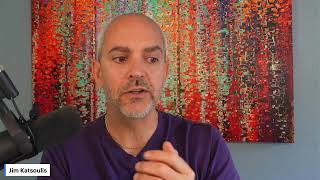
Jim Katsoulis explains the four stages of learning (conscious incompetence, conscious competence, unconscious incompetence, unconscious competence) and applies them to weight loss to argue that lasting results require developing unconscious (subconscious) competence through repeated practice and mental programming. He gives practical approaches—imagery, hypnosis, habit design and action—to automate healthy behaviors, answers live audience questions about identity and negative thinking, and promotes his Program Yourself Thin resources (including a free hypnosis session, “New Thin Me”).
Chapters
Everyone, welcome to today's program Yourself Thin Podcast. They were talking about the stages of learning with your weight loss. And I think once you understand this, it can be really transformative because I think when you understand the true stages of learning when it comes to weight, it gives you a much more refined understanding of what the process you're going through is and where you want to get to, okay? That's the key thing. So the basic idea is this, right? We start with conscious incompetence, right? This is when you have no idea what the problem is, okay? So you want to lose weight, but you're not really sure how to do it, okay? So that's conscious incompetence. Then we go to conscious competence. So you consciously, logically know how to do something. And this is where a lot of people are at, right? They. They logically know I should follow a keto diet, I should cut carbs out, I should track my calories, I just do whatever. So consciously, logically, when they think about it, they got a plan to go. The next one, though, is unconscious incompetence. Okay? So this is when you know what you should do. I know I should eat healthy. I know I should eat salads. I know I shouldn't eat the other stuff. But you can't get yourself to do it, right? So this is where most dieters find themselves. You know, consciously, competently, you know what you should do. You have a good idea that, however unconscious, your subconscious does not know how to do it right? So again, you know, you shouldn't go to Dunkin Donuts in the morning. You know, you shouldn't go to the bakery, the fast food place, eat the pizza at night. You know that. You know you should eat something healthy. But subconsciously, you don't have the programming to do that on autopilot. You've got the autopilot programming to do the wrong stuff. Which brings us to the final stage, which is unconscious competence, right? And this is when you can do something automatically without even having to think about it. And this is your writing, reading, walking, using a computer mouse, driving a car. These are things that you went through these phases with, right? At first, you didn't know how to drive a car. Then you consciously learned how to drive a car, and it was awkward and weird and you had to break it down into pieces. Then you kept practicing it at that point because you were unconsciously incompetent, right? You knew, okay, I got to check this, I got to do this. You had to remind yourself consciously of every little thing, but you Couldn't do it on autopilot, but eventually through practicing, now it's automated, and now you just do it pretty much on autopilot to the point that a lot of times, once we gain unconscious competence, we kind of start to even forget about consciously being competent about it, because we just kick it off to our unconscious mind. So again, if I ask you to describe exactly how you're walking across the room, which muscles are you engaging, which muscles are you relaxing, how are you doing this? You would have no way that you could describe how you're walking across the room. You just know how to do it. It. And that's the same with reading, writing. Where's the next word come from? How do you ride a bike? How do you throw a ball? Again, these are things that you'd have difficulty explaining to me how you're doing it, but you could just do it. All right, so when it comes to weight loss, what a lot of people are making a mistake of is thinking that conscious competence is enough, and it's not. Again, this is where you're at with your dieting. When you know what to do, but you can't get yourself to do it because you do not have the unconscious competence that you need. The unconscious competence is the smoothness, the automaticity of doing something on near autopilot. And when you make that the goal, okay, not just, okay, I got my diet plan, I know what to do. Well, that's a step in the right direction, but not the full direction, because knowing what to do and being able to do it smoothly are two totally different things. And once you realize this, you can start to set your North Star and your goal at gaining unconscious competence. And this is what Program Yourself Then is all about. It's the idea that we want to know what to do, obviously, but more importantly, we want to be able to get ourselves to do those things on near autopilot so that we don't have to think about every little thing, you know, and think about something in your life that you've gained this with. Reading and writing are such great examples, right? Because if you can remember and go back in time, you can remember how tedious that was, how difficult it was, how you didn't even believe that was ever going to work. And. And next thing you know, you know, you keep at it, you stick with it, and you gain the ability to read, write to. Now it's just completely automatic. And it's so automatic, that could literally say, you know, don't understand this word. And I could show you a Word right in front of your face, and you're just going to notice it. You're going to know what it means immediately. That's how quick you are with it. Now, that is not a conscious process, you understand? It's a subconscious process that happens at the speed of light because your subconscious mind is way more powerful than your conscious mind. So this is why it's key to focus on the subconscious mind and to gain that subconscious competence. So how do you do that? How do you gain subconscious competence? It's simple. You just practice. Literally, right? If you think about shooting a basketball, you've never shot a basketball, right? What are the phases you're going to go through? Well, first you're going to figure out what are the mechanics of shooting a ball. How do I hold it? Where do I hold it? How do I let go of it? What do I do? Right? And I could break it down for you, explain all those things to you. So now you've got conscious competence, but you're still unconsciously incompetent until you start practicing it. And you practice it, and you practice and you practice it. You refine it, practice it, refine it, practice it, refine it. And that practice installs it into your nervous system and your subconscious mind to it gets to the point where it's automated. And now it can run on autopilot. And now I don't have to think of every little thing I got to do. I just do it automatically, okay? And so when you start to think in this way with your weight, it changes everything because the focus shifts. And all of a sudden, knowing what to do takes second place to being able to get yourself to do it consistently. And so saying, well, I'm going to have salads for lunch. Okay, great. We said that we thought that. We know it's a good idea, that's fine. But now the real work is getting ourselves to eat salad consistently each and every day. How can we do that? How can we automate that? How can we make that so it's just second nature? And when you go at it with that focus, you just focus on it differently. But it's the main piece, because now you start saying, well, how can I automate it? How can I make it normal? Now, one part we use in program yourself then, is to literally use your imagination, to program your mind to imagine yourself having salads every day, to start to expect it, to normalize it, to program it into your subconscious mind and into your nervous system. That's one thing we do. The other thing you do is actual action. You go and have a salad and you start optimizing how you make it, how easy and comfortable it is for you to make the salad, eat the salad, enjoy the salad. And so when you start being strategic though, and you start focusing on the unconscious competence, everything changes. Because when you start naturally and automatically thinking, living and eating like a thin, healthy person, as you can imagine, it's a lot easier to be a thin, healthy person. So again, start focusing on the unconscious, subconscious competence piece of this equation that that's where you want to get to. Just forcing yourself to do something is not going to be enough. You need to get it to the level where it starts to feel natural and automatic. And when you focus on this, again, absolute game changer for the results that you're going to get. Now, if you want support with this process, make sure you click the link in my bio or go to program yourself then.com go get the free hypnosis session I made for you. It's called the new Thin Me. It's a kickstart session. Go listen to that. Watch the training video I made for you and read the emails I send you because they're all based in this idea of how to create this subconscious competence so that you naturally and automatically do the things that get you thin and healthy and then more importantly, keep you thin and healthy. All right? So if you have any questions, feel free to ask them. What's up, Nura? How's it going? I see you over there. How is everything going? Let's see here. Any questions on that Friday. This week has been a blur for me. I'm just been. It's been a funny week. So I hope you're all having a good week. Kind of getting back in the, the swing of things. Right. I feel like I'm actually looking forward to next week and just things kind of normalizing. I got my, my kids. One kid went back to college. One kid just started school. So it just, it feels this week here has been kind of a re entry disorienting week a little bit, I would say. So. I don't know if you all feel that, but if you do, you're not alone.
What's up, Ken? Ken says this is so true. After 11 months on PYT, I follow my strategies with ease. Yes, Ken. Yeah. Ken again is a superstar, doing great with the program. But that's the idea, you know, I think that's one of the things that makes program yourself then so unique is that again, it's not just about what to do. I Think, in the weight loss world, you're constantly being told what to do, whether it's an eating plan, exercise plan, whatever. It's someone telling you what to do, but no one's ever showing you how to get yourself to do it. And I think this concept and idea that you're going to kind of reprogram your mind to do the things you want to do is so profound because it's not rocket science. It's not like the hardest thing in the world. It's just something that you never think about. You know what I mean? And so when you start focusing on thinking about it, though, again, it starts to. It changes the approach of it. It's the difference between. Let's just say you wanted to shoot a basketball or play a guitar or swing a golf club. And you said, you know what? I'm just going to read all the books on that I can. I'm going to read all the books on playing the piano I can find. I'm going to read all the books I can on swinging a golf club. Well, great, but that's going to get you about a quarter of the way there. You need practice. And when it comes to weight loss, no one ever really thinks about the practice piece of actually thinking, living and eating like a thin, healthy person, you know, because you need to practice. If you're overweight, you've got the overweight intuitions mindset programming of an overweight person. And so the real goal here is not just to force yourself to fight against that, it's to reprogram yourself so that you have the intuitions and the programming of a thin, healthy person. And when you have that, the key thing is it's easier. That's the key thing. Again, you can think of this as anything. When you were learning to reading and write, learning to read and write, it was a lot more effort than now for you to read and write, you know what I mean? Because now you know how to do it and now you do it on autopilot. And that's the key thing to keep in your mind. Because most dieters, they presuppose that the entire process is going to be this white knuckle affair where I'm always having to force myself to act the right way. And that's not true. If you stick with this and practice it strategically, you get to a point where doing all these healthy things just feels like second nature. It's just. It's easy. And I say, again, that's what Ken's talking about. That's what I'M talking about that it's like the way that I live, eat, and think. It's pretty much automated now, so. So again, the things I naturally do keep me at my goal weight at this point now again, I still use some willpower. I'm still tracking and, you know, me monitoring some things, you know, it's not free for all. I'm not just totally relying on my intuitions, but like 80% of the work's being done under the surface and driving me in the right direction, you know, because of this approach.
Nurse says what's a path to making peace with you used to be during and after building a new identity? Yeah, okay. What's a path to making peace with who you used to be? Yeah, I think that's a great question. And, and I think that gets to the heart of what we're doing here because at the end of the day, you're not really changing. I think that's the wrong frame. You know what I mean? Like, you're not really changing as. Cause change implies you're gonna become this new thing. And I think it almost scares us a little bit. And it's a weird concept because we disassociate and we start to think of our old self and our new self as two different people. And I think that causes weird psychological and emotional kind of responses. So I prefer to think of it as like there was how you were, you're like the same person. And there's kind of like how you were and now there's who you. Who you are now. But. But it's the same you. You know what I mean? You're just expressing yourself differently, presenting differently, living your life differently. And I think in that way you're, you're always the same you at the core and the way you're living and you know, you know how you're living, thinking and eating is creating this version of you or this version of you, but it's the same you. And I think when you start to look at it that way, that is the first step to making peace with who you were. You're. You're always going to be the same person at the core. You're never going to completely. You can't change all your genetics, your neural wiring, your experiences, those things are who you are. However, you can express yourself differently. And I think that's a good way to look at it because that makes it easier to just. Because. Because that. Now, let's say, for example, more self love. Let's say you want to love yourself more. Okay? And so you start to love yourself more, right? And as you start to love yourself more one way you can look at the old you say, oh my God, I had this self loathing, self hating way I used to be, you know what I mean, this other version of me, but now I love myself more. But if you say like, okay, I'm the same person, but now I live in this space where I love myself more as opposed to, you know, hate myself. So it feels like a grow, it feels like an evolution. So for you, for example, the you that didn't know how to read and write versus the you that knows how to read and write, right? So in that sense, you think of yourself as the same person just with a new skill. So if all of a sudden you learn how to swing a golf club, there's a via me that didn't know how to do it, me that does know how to do it. So when you approach it this way, that a lot of it's learning and growth. I think that sets the stage that of course you're going to grow and evolve. And the idea is that we keep standing on the shoulders of giants, we keep standing on our own shoulders to keep improving and growing. And that version that was there, instead of demonizing or feeling bad about it, we recognize it as a necessary piece of where we started. And we realize it's a core part of our journey. But as long as we keep having again program yourself then we take weight loss, we wrap it in personal development. So a lot of program yourself then is built around this idea that we're developing ourselves, we're evolving and growing. And so I like to think almost like the Russian nesting dolls, right, if you've ever seen those. And I see like the old me who used to eat like shit, that it's still in me, it's still there. And I love that part of me. It was, it served its purpose when I did it and now I've encased it with this better version of me and then encased another better version, another better version. But they're all me. I, I am all of those. And I respect and honor every version of myself that I've been good or bad. As I move forward, though, I just enjoy the process and I want to become more and more of my potential. So I, I hope that helps, you know, because that's how I think the path to making peace with, with yourself as a new identity. It's important to realize that you, you are going to live a new identity, but you're still at the core of the same person, you know, because you could go and live the old identity again, or you could go and live as a new identity, but it's the same core, you. And I think that goes a long way to setting the stage, to be at peace with yourself, the whole process, because you're always you and you will always be you, you know, at the core. So I hope that helps. What's up, Michelle? Michelle says, though I've lost 80 pounds over 2 years slowly, and have gone from 3x to an XL. When I look in the mirror, I see the 3x person just smaller. I've had to come to terms with that. Yeah, Michelle, I. I totally get that. I was talking about that last night or yesterday when a coaching call with someone who is. I think they've. They've lost, and I'm gonna make blank the numbers. You said £80. Now I can't remember the exact numbers. I think maybe they lost 75 pounds. I want to lose another 30. I think that's what I think it was. And so I was saying, okay, you're 75 of the way to your goal, right? And one of the challenges of your mind and so much of program yourself then, is about your mindset. And, you know, listen, a lot of your mindset, you can't change. So I want to make clear that mindset work is not about changing everything, you know, and so some of mindset work is acknowledging what's going on with you that you can't change. And so, for example, there's. You have a lot of cognitive biases that you're born with, and you're going to have them forever, right? You're always going to have a negativity bias, meaning that negative stuff in your life is going to grab your attention and be a lot more impactful to you psychologically, emotionally, than the positive stuff. Just the way it is, right? And you're seeing that now, Michelle, okay, because two years ago, 80 pounds ago, you would have thought being 80 pounds lighter.
Going down in your sizes, you were thinking you would have felt a lot better than you feel now. And again, part of that is this negativity bias that we. Again, negative stuff just is more impactful to us than positive stuff. And it never changes. That never changes, folks. Okay? But what you can do is you can realize that's a factor. You can recognize that my mind is always going to notice negative stuff more than positive stuff. How do I want to deal with that? And the way I like to deal with it, one of the things I like to do is I like to reinforce in my mind all the positive changes I've gotten over these years. So what I would say, Michelle, is I would go beyond the 3x to XL the external aesthetic, visual journey you've been on. Okay? So it's like. I know, I know again, when you look in the mirror and you look at yourself visually, aesthetically, superficially, when you look at yourself, you don't feel a lot better. I get that. However, what I want you to do is I want you to go back two years ago and put yourself back into your 80 pound heavier body, the 80 pound heavier you. I want you to really think about what that was like and I want you to start noticing how you used to think about yourself, how you used to think about eating, how you used to think about your weight then versus how you think about it now. I want you to think about your day to day reality, how it was different then versus how it's different now. I want you to think emotionally what emotions you used to live in then versus the emotions you live in now. I want you to think about the health issues, right, the health impacts of being 80 pounds heavier versus being 80 pounds lighter. I want you to think about the sense of self, of how you identify as a person, how you thought about yourself 80 pounds ago versus how you think about yourself now. Having accomplished an 80 pound goal over two years and stuck with it, if you start comparing those things on those deeper levels, I think you're going to start to feel a lot better for what you've accomplished. And you need that, I think, to keep going. Again, I don't know if you're at the goal you want to be at or wherever you want to be, but we really need to intentionally focus our brain on all the positive things because in your mind, you know, you're, you're thinking visually in your mind of what you wanted to look like and you don't look exactly the way you want to look like yet. And so that diminishes and minimizes the goal you've accomplished and all the amazing things that you experience day to day that you now take for granted. That's why I want you to go back two years ago, put yourself back in the 80 pound heavier body mindset version of you and now compare it to this. And I think you're going to find a lot of things that are way better now.
And again, visually, visually may not be the main thing now. You may still be on your journey okay with that whole thing, but ultimately I think you're going to realize that you are way better off now than you were in a lot of really important ways. So that would be my suggestion to you. And that's very common, very common. That people lose weight and are shocked that they don't feel better about their weight loss than they thought they would have. That is, I would say, the norm. That that's almost always what happens for people that lose weight.
Katira says hi. Do you know how to help Sibo? Sibo? I don't know what Sibo is.
See.
Watch the talk said. I'm so stuck in a negative loop. It's exhausting. Yes, absolutely. Negative loops are really exhausting. And most of my clients are like overthinkers. And so a lot of times that that's really who I deal with primarily is overthinkers. I am an overthinker. So really, I swear, program yourself in is made for overthinkers. And yeah, overthinking is not the problem. You know what I mean? It's what you're overthinking. But when we're overthinkers and we get caught in a negative loop, oh my goodness. Right. It's just we grind ourselves down to a pulp. And I was still. I'll tell you the real simple way to get out of negative thinking. Negative loops is actually simpler than you think. And it works every single time. And what it is is that when you're in a negative loop, you're being a problem oriented thinker. You're thinking about all the problems and you're tricking yourself because you're thinking about problems, but you're. You're trying to figure out why they're happening. So I'm going to bet, watch the talk. That you spend a lot of time trying to figure out what's wrong with you. Why can't I stick to a plan? Why don't have any willpower? Why can't I make better food choices? Why can't I lose weight? Why am I emotional leader? Why do I keep getting stressed? Why do I. It's always about the problem. And it's just causing your brain to focus on the problem, just give you more and more and more of it. And so the easiest, fastest thing you can do to pop out of a negative loop is to ask a solution oriented question. And you're going to find that this is harder than you think. Okay. And what a solution oriented question would be is how can I feel better? How can I feel more relaxed right now? How can I feel more optimistic in this moment? How can I start to feel more successful? How can I comfortably and easily start to eat and make better food choices? How can I have more energy in my life in a way that feels really good and comfortable and enjoyable for me? You see, and as soon as you start asking these types of questions, your overthinking brain that was grinding you down now starts to fixate and focus on solutions. And as you start to do this and you start to acquire and generate more and more solutions, everything starts changing. Because the biggest issue you all have, you know, the mistake you're making, is that you think you know what to do and just, you just need to get yourself to do it. That is the big problem you have is that you don't have better ideas. Like you, you know, you don't want to eat the food, you know, you don't want to be emotional eater. But on the other hand, you also have no idea of how to deal with your emotions without food, you know, and so until you have a better option available, you're always going to do, you're always going to do the best option available. And for most of you, eating the food to deal with your emotions is the best strategy you have available to you. You don't know how to deal with your emotions without food. And so your subconscious mind says, well, I don't want to be overweight, but I also don't have a panic attack, so I'm just going to eat, you know, metaphorically. So, yeah, I get it, I get it. Watch the talk. And again, another thing that might help you make sure you get the hypnosis session I give you because.
It'S.
It'S for that, you know, I mean, it's, it's for two reasons, right? If you're stuck in a negative loop, you're probably kind of an overthinker. When you listen to hypnosis session, first of all, it's going to calm you down, ground you, quiet your mind a little bit and then there's all sorts of positive ideas and suggestions put in there. And so it has the double whammy effect of calming and grounding you and kind of guiding you towards more solution oriented, inspiring kind of thoughts and ideas.
And so he says, I prefer analytical thinker. I like that you can be an analytical thinker too. It's really, it's, it's more the, when I say overthinker, it's not even like the type of thinking I'm even referring to, right? Even if you're more analytical or emotional, I'm just Like, you're constantly up in your head just churning, churning, churning. Not everyone's like that. Most of the people here right now are right. I know this very well because I know on this podcast, people land on here. You know, if I'm here for an hour, you know, 500 people might pop in here, and the only people that stay are people that are overthinkers. Because I. I talk a million miles an hour. I'm bebopping all over the place. So, you know, this. This pretty much gets rid of. People aren't thinking. So pretty much everyone here. You're probably an overthinker if you're here. And again, what I mean by overthinker is that you just, you know, you have a supercomputer, you have, like, this. This sports car. You got a lot of horsepower. And they're just. And again, whether it's analytical or emotional, not everyone's like that. You know, I was shocked to learn that there's some people. It's just like, I was like, oh, that must be nice. But that's not that. Again, that's one of those things. You're always going to be an overthinker. You're never not going to be an overthinker, okay? And so. And there's nothing wrong with that. Again, the secret is you've got a real gift here. You've got a real powerful tool. The problem is you've never learned how to use it, you know, and so again, if you think of, like a supercomputer. Yeah, okay, it's a supercomputer. But if you put bad programming, it's just gonna, you know, supercompute bad programming. And if you put good programming, it'll super compute good programming, you know, so again, that's really what program yourself is kind of built around, you know, Mary Jane says, michelle, congrats for me. After weight loss is accepting, looking at my ribs, keep on concentrating on how I feel like, he says, and remember, you looking in the mirror is always different from when others look at you. Yeah, that's true, too. That's absolutely true.
Yeah, for sure. And, you know, accepting. Listen, you know, that's the other piece. I always say weight mastery involves two things, action and acceptance. So there's the action of, you know, losing the weight, you know, that you want to lose. But no matter what, there's always the other side, which is acceptance. At some point, you literally have to focus on accepting who you are, because, you know, we've had a lifetime of always having perfection or that the idea of perfection, you know, jam down our brains. And so I will guarantee Michelle here, in her mind, subconsciously, she's got some image of an after picture, something, right? Because literally your whole life with diet marketing, you've seen just. Just thousands and thousands, hundreds of thousands of before and after pictures in your life. And that's what weight loss means to you. And you have to understand that most of the time, those after pictures are real extreme outliers, you know? And the truth is, a lot of times you're not going to look like the after. You're not going to be wearing a bathing suit. You're not going to be. I'm not like. You know what I mean? Like, there's getting to your weight and there's having a body like Brad Pitt. They're two different things. And so a lot of times you get to your goal weight, and you still look at Brad Pitt, you're like, oh, I thought it was gonna. I thought it was gonna look a lot better. That happens a lot because, again, our whole life we've had this idea of perfection put down our throats. And the reality is those are two different paths a lot of times, you know. So, again, keep walking that path, Michelle, and realize that, again, like I was saying before, as you start to appreciate all the benefits you've accomplished from this journey you've been on, not just the visual aesthetic ones, but you start to look at all of them. I think it's going to start to, you know, help focus you on all the things you've gotten out of this and how great it feels, and that's going to be motivating. And hopefully it'll be juice to kind of keep you going. All right.
So, Carrie. Yes. Happy Friday. Yes. Yes. I love.
I love Fridays. I'm definitely looking forward to Friday. I will tell you, my plan this weekend is to relax. I'm going to sleep this weekend. That's my plan. And I'm glad. It's like, I got rain in the forecast. I'm just glad because I'm a project person. I will tell you, like, I love doing projects. I love it. And every time I do a project, though, it's always, like, more than I think it's gonna be. And this weekend, I'm not doing. I'm not. I might do tiny little ones, but my goal this weekend is to sleep a lot. Saturday and Sunday, I'm going to sleep a lot. I need to get myself back to kind of normal, and I'm a little bit depleted here. I felt it all week. So, yes, Happy Friday to you too. I hope you have a great, great weekend. Watch the sock says, yep, that's the exact problem. You captured that well, thank you. Yes. You're welcome. You're welcome. That's what I do. You know, it's like, again, I am the luckiest person on the planet, I swear to you. I just love my work so much. And my favorite part is I get to help, you know, smart, good, successful, you know, intelligent people succeed with their weight. And the good news is it doesn't have to be the way you thought. It doesn't have to be miserable, stressful, difficult. It can be fun. It can be enjoyable. It can be a journey, you know, that is almost life defining. And it's fun to help people walk that path. And so much of helping people walk that path is really just helping them to see things from different angles so they can understand it better. And a lot of times when you understand something better, a lot of times that in itself is. Is a big part of the cure, you know, a big part of moving forward. So, yeah, I'm glad I'm able to help you with that.
Zita says I really didn't. I didn't really didn't. Did.
I'm not sure what that wrote. Ocean Fun said. Ooh, love your podcast. Thank you. Thank you. Yeah, this is a podcast, right? So it's with this program here. It.
It'S. Wait, what am I saying? This podcast, I got another on my head. I got a meeting I got to get to in literally six minutes. But yes, this is a podcast too, right? So I do this live every day, Monday through Friday. I'm here every day, noonish eastern, noon to 12:30, pretty much. And you can get in there and ask questions. This is a mission for me. I'm here every day to help you all out. I got so much cool coming your way. It's going to be. Oh, my God, this, the next couple months especially are just going to be so incredible. I know I've shown you this. I'm gonna show you one more time. But look at this thing. This is the new book. I literally just got this Wednesday. So this comes. This is available with the program now. I see Ocean Fund. Oh, I see. Where do I get involved with your program? If you want to learn about the program again, click the link in my bio. You're on Tick tock. So just click my little picture up at the top left. There's a link on my bio. Go. Click that. Go get the free hypnosis. Session. It's completely free. It's a kickstart session. It's called the New Thin Me. And then there's a training video I made for you that's free. I give that right away. I send you emails and I got a bunch of cool stuff coming your way. And then the program itself, you can learn about it at Program Yourself. Then dot com. This is part of that, the Goal Weight blueprint. This is what you kind of go through. This lets you know what to do. It's customized to you.
You know, it's awesome. It's really cool. But yeah, this will be available. And I'm gonna have this today. I literally, I was got all set up. So if you're in the program and you want to get this, I'm gonna post the link today in the Circle app. I'm also going to send an email out. So if you do want to order one of these, it's 40 bucks and that covers shipping and everything. And I would get those out to you next week. So. And I'll give you a little signed copy. Right, that's only for people in the program though. But, but I will send that out and yeah, so anyways, I want to get hypnotized. Where do I find it? Yeah, just click the link, the top left again, depending where you're at, you can go to the My bio, click that link and. Or you can go to Program Yourself. Then dot com, look for a little, little navigation. Look for free hypnosis session. Click that and there you are. Takes 2 seconds to sign up for it and then, then you're in it. So, yeah, it's cool. Yeah. Vicki says looking forward to ordering. Yeah, it's awesome. It's really cool. Like, I gotta tell you, this has been, this has been cool. And so here's the kind of table of contents. It's all the blueprints. If you're in the program, you know already, if you're in the program, you already have the digital version of this. Now remember, I put that up in the Circle app. So it's the PDF version. You download it, just fill that out. But if you want a physical version, again, here's kind of all the table of contents and it's all right there. It's kind of fun to work your way through it, you know, if you do like physical things. I do. So, you know, it's, it's, you know, it's nice, I think. Galway Pyramid, you know, all this stuff here. So anyways, it's, it's the coolest thing I've made so it's fun to have that. So all right everyone I'm gonna get out of here. Have a super duper day again. If you want to get my world, click the link, go get the hypnosis session, watch the training, read the emails. They're all free. I'm here to help you out for free. I do have a program too if you want to sign up for you can learn about that this I'm here every Monday through Friday. Every questions pop in here ask them. I'm here to help you. And it's also a podcast so if you miss a live you want to listen to it anytime just go to any podcast platform and search program yourself then.com no program yourself then it'll pop up listen to it and then you can listen anytime you want. So all right everyone have a super duper weekend and we will talk soon. Bye.
More from Jim



Weight Loss Visualization: Wake Up in Your Dream Size #programyourselfthin #weightlosshypnosis



What If You Pretended to Be Thin for One Hour? #programyourselfthin #weightlosshypnosis




