Supporting Yourself To Lose Weight
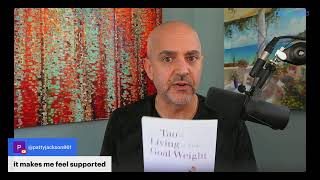
Jim Katsoulis argues that self-punishment backfires in weight loss, creating stress and emotional eating. Instead, he teaches how to rewire negative self-talk using a supportive "coach voice" and concrete practices like visualizing a friend's encouragement and using the scale as neutral feedback.
Chapters
[No speech]Hey everyone, welcome to today's program, Yourself Thin Podcast. Today we're talking about Supporting yourself to lose weight. And this stands in contrast to how most people try and lose weight because most people don't really support themselves to lose weight. They berate themselves to lose weight. They attack themselves to lose weight and they act mean to themselves to lose weight. And it doesn't really work well. And honestly, even when it works, it doesn't work because you ultimately feel bad and when you do something that makes you feel bad, you tend not to do it for long because your brain is wired to seek out pleasure and avoid pain. And so the meaner you are to yourself, the worse you treat yourself, the worse you talk to yourself in order to get yourself to lose weight, it really is kind of an illusion because again, even if you do lose weight temporarily or in the short term, it tends not to last. When you approach it that way. So supporting yourself is oddly a radically different way to approach your weight loss. And again, the diet industry really does build itself around the idea that they tell you what to do and then you have to force yourself to do it. And so it really does lend itself to this very punitive, mean, aggressive way to try and get yourself to do the things you need to do to lose weight. But the alternative is that you're kinder to yourself, that you are supportive of yourself, that you encourage yourself to do the things that are going to help you lose weight. And when you approach it this way, I think not only does it feel a lot better, right, because you're being nice to yourself and encouraging, but I think it's going to get you much better results long term without question. And that's for two reasons. One is that the nicer you are to yourself, the less stress you experience. And tends to reduce emotional eating. And the other piece, it's the most important one, I think, is that the nicer you are to yourself during this process, the longer you keep it up and the results you're really looking for, the results you imagine in your mind every time you want to lose weight are really results that you achieve after doing this for a while. It's not the results you get in a couple of months or even a year. A lot of times it's really the results you get after doing this for years and you become the person you want to be. And it's very difficult to do that if you're beating yourself up all the time because your brain just shuts down. So let's go into how to encourage and support yourself, because while it's kind of obvious on one level, you know how to be encouraging, supportive, right? Kind of. You get, you get what the idea is. You could write a paper on it, probably. But your ability to do it is probably really low. And that is because you probably have a pretty good idea how calories work and food works in your body with weight. You probably have an idea how exercising and muscle building and cardio work in your body. Understanding how those things work and being able to get yourself to do them consistently are two completely different things, though. And so it is with this as well, that you can appreciate the benefits of being nice to yourself, and it can make a lot of sense logically, and you may find that you're unable to do it to yourself. And this is because you have never built up the neural connections, the neural networks, and the muscle memory, if you will, of being kind and polite and encouraging to yourself when it comes to weight loss. And what I like to do is go right to the heart of the matter because, you know, yeah, okay, you could be encouraging and supportive maybe your first day or when you're thinking about starting a plan. But the real— the rubber hits the road, as it will, when you make a mistake. And so that's where I want to go to. And that's a good way to practice being kind to yourself and to see if you're able to do it. But the next time you make an eating mistake, whether you choose the wrong food or whether you eat too much of a food or both, what I want you to do is I want you to be kind to yourself, be encouraging, being supportive, and see if you can do it. Now, don't be surprised when you can't. My clients are usually surprised when they find that it's almost impossible for them to be nice to themselves But it shouldn't be because just like, you know, being able to speak English just flows off your tongue, being mean and cruel to yourself flows off your tongue, your mind's tongue, I suppose, because that's what you've been taught your whole life when it comes to weight loss. Just do it. No pain, no gain, right? If you're really serious, you'll just commit to it instead of having this sense of let's figure this out. You almost want to be— again, I always call it in my own mind, the voice that I've developed, the encouraging, supportive voice, I refer to as a coach voice. You could refer to it as a therapist voice. You could refer to it as a coach voice. You could refer to it as a teacher voice, a friend voice, you know, something like that. Because you do have this voice in your head, but you rarely use it for yourself. Okay, so a good way to access this voice is to imagine someone in your life who you truly care and love. Imagine they were working on eating better and wanted to get their weight under control. And imagine they made the mistake that you made. They ate the pint of ice cream, they pigged out on the pizza, whatever they may have done. And if they started to beat themselves up, what would you say to them? Now, most likely you would be much more encouraging and supportive to them. Listen, it's okay. Look, you've been tired. You've been dealing with this thing. It's all right. You know, we all screw up sometimes. So you've got that voice in you somewhere. The problem is that you only release it for other people, probably, which almost goes against the saying that, you know, the golden rule of treat people like you want to be treated, because this is kind of a flip-flop of that where we tend to treat ourselves worse than we treat other people a lot of times. Certainly when it comes to our eating and weight, we tend to pile on ourselves and be extremely aggressive and mean and punitive with ourselves. Now, we do this because we think it's going to get us to a better place. We tend to think that the meaner I am to myself, the better I'm going to perform, the more on track I'm going to be. But I have found that to be the complete opposite. And I think, you know, that deep down, which is why even though the person you love or you care about, you want them to get better results, but you don't yell at them because you know that doesn't work well. If you started yelling at them or piling on top of them or making them feel bad, you know that it's just going to increase the chances that they just quit and give up. And so it is with you. It's— so it is with you. It's the same thing that you cannot beat yourself up and put yourself down and expect that you're still going to move forward. Because if that's your way of being, if that's how you talk to yourself, you're going to find that you just fizzle out and you quit. Because what's happening is you're associating pain. When you say these mean things to yourself, when you feel the feelings that those things create in you, you're creating a state of pain. And then you're associating it to trying to eat better, trying to lose weight, trying to do better. This is a big trap for a lot of dieters that every time they try and do something good for themselves, they follow it very quickly up with feeling really bad. And this is why it doesn't work well. So again, you probably need to start small in a sense and get a program yourself. Then we either redo the— use the redo rehearsal technique in order to practice this. But the idea is that you want to start being supportive and encouraging of yourself even when you make mistakes. And one of the easiest ways for you to do that is to imagine that your friend or someone who you love made that mistake, what would you say to them? And then say that to yourself. Now you're going to hear the voice in yourself say, well, yeah, but I'm not that. That doesn't count for me. I need to do better. And maybe you do need to do better. But the only way I've ever seen us to be able to do better consistently is when we are able to practice and work on something over time. And if you're expecting that on day one, you're going to be able to be perfect, And any mistake deserves, you know, this, this drastic overreaction that makes you feel bad. You're going to find that you probably avoid trying to lose weight ultimately, which is where most of you find yourself now. If you think about losing weight constantly, but you don't actually do the things that make you lose weight, there's a good chance that this is one of those core issues that you now associate attempting to even lose weight with extreme negative reaction and response and feelings. And it's not just the mistake that happens. It's what you say to yourself and then feel after you make the mistake. And dieters are notoriously brutal to themselves with the mistakes they make. So give this some thought. And again, the first step is just realizing, becoming aware of how cruel you are to yourself. And the step after that is to start developing the ability to speak to yourself in a more encouraging and supportive way, um, especially after you've made a mistake, so that you need extra support and encouragement after you've made a mistake to guide yourself back on track. And if you spend some time focusing on that, I might think you might be surprised at how much better you feel and how much better your results become. With that approach. So if you want some support going deeper into this way of being and approaching yourself, click the link in my bio or go to programyourselfthin.com. Go get the free hypnosis session I made for you. It's called The New Thin Me, and it's literally designed to do this. It's designed to put new supportive, encouraging ideas into your mind so that you begin to speak to yourself differently. And when you speak to yourself differently, you tend to behave differently. And once you start to behave differently, you're going to get different results. Your body's going to look different, you're going to feel better. So I hope that helps you out. If you're on TikTok, you can just click the link in my bio by clicking that little picture of me up there, um, and you'll see it. And if you're on Facebook, I will put this into the chat window. I don't know, for some reason the chat window looks weird to me, so I don't know if that's set up right. Never know. I use this service called Restream. It works most of the time. Well, that showed up. So there we go. Yeah, if you have any questions, feel free to ask them. Oh man, it's like a— it's like summer visited us all in one day. It is like 80 degrees where I'm at. It is so, so crazy. Out of nowhere, uh, we finally— we finally got some warm weather. So I'm here for it, liking it, getting to wear the t-shirt. I'm wearing a t-shirt. I haven't worn a t-shirt since last September probably, so it's kind of nice. But yes, any questions, feel free to ask. I'm here every day, Monday through Friday, to help anyone and everyone who wants to lose weight and live at their goal weight how to do it. And I think I bring a different approach than you typically get, uh, so that's what I'm here for. So Lois— Lois says, the way I used to talk to myself is not the way I would ever talk to anybody else. Yeah, of course, right? And I think, um, you know, just recognizing that's the first step and not beating yourself up for doing that. But again, I work with a lot of perfectionists. I would say the majority of my clients are somewhere in the perfectionist ballpark. And, uh, you know, it can, it can work in a lot of areas of life. I found perfectionism can work well in school, uh, work, even being the parent you want to be. Uh, but I, a lot of times it doesn't work real well with the weight and the eating. And I think because for a lot of people, especially perfectionists, you know, if you're struggling with your weight, the eating becomes one of the last places that you can be imperfect and use that imperfection to manage your emotions. So, um, I have focused on this very intensely. I'm a perfectionist as well, a recovering one. I like to think of myself as— I've been focusing on myself for 30 years, more than that, and getting a handle on that negative voice in my head, I would say, is one of the main things that I have worked on and focused on in order to get my weight under control, um, in a lot of other areas of my life, but certainly my weight, my health. One of the main things is getting that voice under control, because even today— and I want to make this point as well, I didn't mention this before— but, uh, when that voice never goes away. So if you have a negative voice in your head, I'm here to tell you that voice is never going to go away. You're never going to get to a point in life where you could just screw up and then that voice doesn't show up and say anything. That voice is part of you and it's going to be part of you for the rest of your life. And I know a lot of people don't like that. They want to push back on all the rest of it. I've seen no evidence. I mean, it defies some of the basic laws of neuroscience, right? One of the basic laws is that you can't get rid of old wiring. So the idea that you're going to eliminate this well-formed neurological network you have in your mind that speaks meanly to you, I think just defies any, any sense of understanding of how our brains work. So the best alternative, in my opinion, if it's not going to go away, is to develop this other encouraging, supportive voice. So for me now, the way I experience is that negative voice is always first on the scene, but as soon as that voice kind of pops off, I've gotten used to noticing it. And I, a lot of times I don't notice what the voice says. I notice how I feel. And then as soon as I notice I'm feeling kind of down or discouraged or frustrated or anxious, I will— this is called cognitive behavioral therapy. I'll say, what did I just say to myself? And I've done this so many times now that I know it's probably that negative voice, and it usually is. And so I kind of do all that very quickly. And then as soon as I notice the negative voice firing off, I intentionally fire off the positive coach voice. So more often than not, that's what it shows up in me as now, even over 30 years into this, is that the negative voice fires off and then the coach voice comes in. But the coach voice— and here's the magical thing for you all, if you're hearing this— that negative voice gets most of its power from not being addressed or confronted. It's kind of like the cliché bully in a movie. Right, where the bully is kind of picking on everyone, then finally one of the little kids stands up to the bully, punches him in the nose, and then that's, you know, then leave him alone. And I find that negative voice is very much like that. That negative voice is almost like a parrot. It's just parroting things usually your mom or dad used to say to you, you know, you— that's the basis for the voice. But it just kind of parrots things. And once you start to debate that voice with your logical, grounded, rational, encouraging, supportive coach voice, you can mop the floor up most of the time with that negative voice. And so that's— anyways, that's my reality now in terms of the voices. And I share that with you so that you have a good sense of how that works. And because again, if you think you're just going to get rid of that negative voice, as soon as it pops up, you're going to feel like you failed and you're going to quit. So I think it's important to recognize that You're not getting rid of the negative voice, you're managing it more is a more accurate description. So all of you, yeah, Sue. Yeah, solid advice. Learn to live with it rather than push against it. Yeah, exactly. I think of— to me, it's kind of like, like if you know anything about martial arts, like Aikido, the philosophy there is that you're using your opponent's energy and redirecting it, right? So instead of getting, you know, someone comes at you like this, you know, you kind of redirect that energy. And that's kind of how I think about it. That when I hear that negative voice, I engage with it. And, but I engage with it and I've gotten better at it again, just like, like, I mean, take a keto class is, you know, the first year versus the 10th year, you're much different abilities. Right. And so it's the same thing with the voices in your head, but it does. Now, listen, I mean, if fighting against that voice worked, I'd tell you to do it, but it doesn't work because that voice never goes away and it's never satiated. Never. You know, even when you get to your goal weight— I remember, I always tell this story, but I remember I had a client who I was certifying as a coach, and she had been a competitive bodybuilder. And I remember asking her, you know, because when you're a competitive bodybuilder, you're really, you know, obviously you dedicate your life to it, but, but you really, when you have a show coming up, I mean, you're really planning sometimes months out in advance to get right to that day. And, um, I said, what's it like, that moment? Right before you're about to walk on stage and you look at that body that you've just like optimized so deeply. And she goes, I just notice other things that I don't like, you know, so that negative voice is never satisfied. It never stops. You can never get to a point where it's just like, great job. That's just not its nature. Its nature is to always pick at you. So it never ever just disappears or goes away or is satisfied. And I think once you realize that, it's very freeing because you stop trying to live up to it and you realize that it's just a— it's like a parrot that just keeps saying negative stuff. There's not a lot of meaning behind it. You know, it's kind of shit that you picked up along the way. And like I said, a lot of it you picked up before you were 13 years old from your parents saying it to you, and now you're just subconsciously repeating it. So yes, fighting against that voice, listening to it, fighting against it tends not to work well. Debating it does work well. Debating it actually is kind of fun and it's very effective. There's another story. Um, KG Tingle says, I'm on keto and I've lost 15 kilograms. It's the best. Um, yeah, I mean, it's the best now when you're losing weight, you know, but I, and I'm not here to be negative, please understand, but, but again, this really isn't a weight loss live. I really don't give a shit about people's weight loss. People lose weight all the time. And I'm way more interested in living at your goal weight. And I'm just going to push back on this case. So I'm proud you did a great job taking action. I'm happy for you. Stay on your path and you might want to leave now because I'm going to pick on keto a little bit and I'm going to pick on people that are actively losing weight because I always say the worst person to listen to about how to lose weight is someone who's actively losing weight, because when people are actively losing weight and that scale's going down, They don't give a shit what they're doing. Keto, fasting, counting every single calorie that goes in their body, measuring everything, whatever. It doesn't matter. When people are losing weight, they don't give a shit because most dieters trade the pleasure and the excitement of the food for the pleasure and the excitement of the scale going down. So you're still kind of addicted to dopamine in a sense, but now you've shifted it from focusing on the food to focusing on the scale going down. Great. But at some point, the scale stops going down. And then where do you get your pleasure and excitement from? I know you get it from being thin and healthy. But if being thin and healthy and being at your goal weight was so amazing, then why did you ever put the weight on in the first place? So again, I'm not saying this to be negative. I'm saying this for the rest of you to stop falling into this trap. When you hear one of your friends or someone online say, holy shit, I've been doing keto, it's been 3 weeks, I've lost 15 pounds. This is the most amazing thing in the world. Stop listening to that person, please. That is the type of person that's leading you astray more than anything else. They don't mean to, okay? They're probably trying to do something good. They're excited something's working for them. But is it working for them? Well, it depends on what your goal is. If your goal is to just lose weight as quick as possible, maybe that's working for you. If your goal is to live at your weight— your goal weight— as long as possible, well, we have no idea because that's not what's happening right now. So I would suggest, and this is what I think makes what I'm saying a bit different than what you typically hear. Everything I'm sharing with you is built around living at your goal weight. And in order to figure all that out, I did something a little different than what most people do. I began studying people that had lost weight and kept it off for at least 2 years. So everything that I'm sharing with you really comes from that perspective of people that have lost weight and kept it off for at least 2 years. Because they know something that most dieters don't know, which is how do I live as the person I want to be? How do I continue to eat and live at my goal weight after the excitement of the weight loss has faded? That's the secret. And once you realize that, it gets very clarifying because what dieting does is it gets you obsessed and excited about the weight loss piece. But listen, the weight loss phase is just a phase, folks. That's not the whole game. Your goal is not to lose weight. Your goal is to live at your goal weight. You've all lost weight before and then put it back on. So, you know, losing weight quickly, losing weight, that's not what you ultimately want. You've got to shift your focus or else you're going to keep repeating the same problem. And so when someone tells me, oh my God, I'm on keto, I've lost 15 pounds, I don't even care. I don't care. I'm happy for them. Happy, but I'm not even, I'm not even listening to them. I'm not trying to understand their strategies until they've been at that weight for a couple of years. And so that's why everything I'm saying to you sounds so different than what you typically hear with weight loss. Because as far as I can tell, virtually all dieting is built around getting to your goal weight. Whereas what I'm talking about is living at your goal weight. And they are two totally different things. Because the question becomes, do you want to do keto forever? Now, when you're losing 15 pounds, oh, I'm going to do this forever. I'm going to do— I'm going to keto forever. I love it. I feel amazing. Well, that's not what statistics say. 85 to 95% of dieters— and this is all the diets, I'm not just picking on keto— 85 to 95% of dieters that get to their goal weight put it back on. So again, I'm not trying to be negative. Please, please understand that I'm trying to help you all get off this fucking hamster wheel you all get on, because this is the stepping onto it. Starts more by hearing someone say, oh my God, I'm doing intermittent fasting. I've lost 20 pounds this month. A dieter hears that and it is like catnip. It's like you can't even control yourself. So I'm trying to— that's where you have to start changing is when you hear someone who's done something pretty extreme. And keto is very extreme, folks. Keto is a— keto is a diet that was made for epileptics. There's no big modern society that lives in ketosis. And the ones that do, first of all, either don't have the health that you would want, and/or if we're talking about the Inuit Eskimo, we're talking about people that have a genetic mutation where they don't even go into ketosis even though they eat so much protein. So again, to me, keto is a very extreme thing to do. Now, I know people lose weight, I lose weight, I feel great. It's so amazing. Oh, stop it. Stop that. How many of you all— it's some likes if you've ever said you feel amazing on keto or whatever diet you're doing and then you're not doing it anymore. I feel amazing on my diet. I've been following my diet for 30 years though. I don't say that to brag. I say that just to let you know that, you know, I really love what I'm doing. You know, you can't tell if someone likes what they're doing until they've stopped losing weight. You know. But anyways, not to be an asshole, KJ, I appreciate you sharing. KJ said, oh damn, my bad. I'm joking, you know, you get it, you get it. So funny. Yep, from being thin. KJ did say that. He said the motivation is gonna be one of— yeah, I'm just gonna be so fired up that I'm thin, I'm not— I'm never gonna put weight on. But folks, you've all been at your goal weight, right? Don't make it some big mysterious thing. I find that funny. I can't tell you the number of times I've said, listen, man, you've already been at your goal weight. No, I haven't. No, I haven't. How do you— how does weight work? What do you think, a weight wormhole to your weight now? No, you were at your goal weight at some point, right? People just like, oh yeah, for a day. No, it was longer than a day. You've been at your goal weight. You know, and so again, I don't say this to be negative, but we've got to deal with the core issues. I'm not going to sell you a bunch of bullshit. Dieting is built around the idea of getting you hyped up for a little while. Dieting is not on your side, and so much of it is really just so destructive. And anyways, that's why I address that, because it's common. Charlene says Weight Watchers has free lifetime where if you stay at your goal weight, you are free. Um, yeah, Charlene, I actually— I don't know if Vicki's here, but I have Vicki who is a lifetime member, uh, and she's in the program. Again, I, I like— personally, I, I like Weight Watchers probably more than all the other diets, um, simply because I like the social piece of it. I think that's the most valuable piece. Weight Watchers as a plan is silly. I mean, if, if you just, you know, if there was no social aspect to Weight Watchers, you wouldn't know about Weight Watchers. You know what I mean? Like, there's nothing about the Weight Watchers plan that's magical counting points. I mean, they just basically just, you know, cartoonified calorie counting, you know, and call it points and whatever, but gamified it a little bit. But, um, and I appreciate that they do that, but, you know, even, even Weight Watchers typically doesn't give you what you need, um, mindset-wise. Mindset-wise, Kimberly says, so what is the point of, sir? Um, I mean, I don't know. The point— the point I'm talking about is to reframe your whole weight, you know, so that it— I mean, literally becomes about living at your goal weight, not, not getting to your goal weight. Yeah, I don't know. You see that as a distinction? I think that's a huge difference. I think there's a huge difference with a mindset that's obsessed with just losing weight and getting to your goal weight and a mindset that's obsessed with living at your goal weight for the rest of your life on your autopilot. I see those as two fundamentally different goals and two totally different directions. And so my goal, though, is I think what you all really want— and I think it starts by recognizing this— is that you've been chasing the wrong goal. Literally. You don't just want to lose weight. No, you don't. You think you do, but you don't. What's up, Jane? Yep. Let's follow that up by saying, I'm so much more supportive of myself and forgive my mistakes. That's wonderful. I'm glad, because you're going to make a lot of mistakes, and that's okay. It's not, it's not the end of the world if you make a bunch of mistakes. Thank God, because you're gonna, you're all gonna make a lot of mistakes. It's food, it's eating. It's like our whole lives are built around eating. Our whole body system throughout history, everything's about eating. So, you know, when you all of a sudden live in this hyper palatable food world and you're constantly being triggered by it, constantly through advertising, uh, yeah, you're probably not going to be perfect and that's okay, but we just got to recognize that. Jane says, one of the things I say to myself when I do things well, whether it is food choices or other things like that, getting to the gym, is good job, Janie girl. I love that, Jane. That's perfect. And that's what we want to recognize. What are the nice things you say to yourself? You have to, like, just like if you're going to go to the gym, you're going to work out a muscle and you do exercise to make the muscle that's small make it bigger and stronger. It's the same thing. You have to think like mind muscles if you want. But the way you speak to yourself in a supportive, encouraging way requires Working them out, practicing speaking to yourself in encouraging and supportive way, because honestly, a lot of you probably didn't have that growing up. Even if you had encouraging, supportive family in one area, they may not have been encouraging, supportive with the food. They may have trained you right things, all the rest of it. So again, I have never met a person who didn't need more encouraging, supportive voice in their head. So I find it really helpful. So I think that's great, Jane. Yeah, you should use that phrase a lot. That's a great mantra. Every time you use something little too, that's the big thing I would suggest is allow yourself to use that phrase more, not just with the big things you do, but the smaller things you do. Start finding microscopic opportunities to say that to yourself, because I think that's a great phrase. What's up, Sangita? How's it going? Cherry says, I saw your short video on YouTube and I didn't realize how much I was saying I have to, I need to, or I should. Instead, I say I want to. Such an improvement. It feels like a choice to say I want to. Yeah, exactly. That's great, Sherry. I'm glad you recognize that. Um, Sherry's referring— I just did, just in case you all don't know, uh, I'm here every Monday through Friday live, and I'm here to help you, whatever your weight issue may be. I'm happy to help you. Um, but you should take it. I'm literally one of the highest paid hypnotists on the planet. It's $25,000 to work with me privately. So like, I— this is really what I do, but I do this Beyond that being my, my job is this is a mission for me. My mission in life is to help as many people as possible live at their goal weight. And so I get on here every day to help achieve that mission. And so whatever issue you may be having, I am happy to work with you and help you out just over this live chat. And so anyway, so I do these every Monday through Friday, and I usually do like a 5-minute lesson in the beginning, and then I do just kind of Q&A going through chats. But this is also a podcast, and so if you miss the lives and you enjoy this content, you can listen to it as a podcast. You can go to any podcast platform and search Program Yourself. Then the lesson's up there by itself, and then this whole thing's up there as well. But yesterday I did one on the 3 words that sabotage your weight loss, and it was the idea I have to, I need to, I should. And those 3 words ought to be red flags in your mind. Like, every time you say them, you should start developing awareness. Because you don't have to lose weight, you don't need to lose weight, and you shouldn't lose weight. Because all of those words imply that there's some reason outside of yourself making you do it. And we can replace all of them with, I want to, I want to. And as soon as you say, I want to, you just experience it differently because that, that comes out of a different frame that comes out of you wanting to do something. You're saying it yourself, and that's something you want. And so you experience it differently. So that's a great lesson too. I would suggest if you do like this stuff, I would listen to yesterday's. I thought it was really good. Um, Green-Eyed Blonde said, I think weighing yourself every day and being obsessed with the scale is also very bad for you. Um, well, I, I will split the difference with you, Green-Eyed Blonde. I, I don't think weighing yourself every day is a problem at all. As a matter of fact, I think weighing yourself every day is a solution. However, it requires also the second part you said, being obsessed with the scale. So I think being obsessed with the scale is where the problem shows up. And it's not even so much being obsessed with the scale, it's being at the mercy of the scale, I think. And so in Program Yourself, then I regularly suggest weighing yourself every day. However, it's also understanding that we're not just stepping on the scale the way you always have. You're stepping on the scale every day, but you're simultaneously working on your mindset. And stepping on that scale, scale, and actively working to see the number and the feedback as just that— feedback. What I want you to do, and what we work on in the program, is to turn the scale basically into the speedometer of your car. You're not terrified to look at the speedometer of your car. If you look at the speedometer, you're going too fast, you slow down. If you're going too slow, you speed up. But therein, I think, lies the real issue. Is that you're not scared to look at the speedometer because you know how to control the speed of your car. You're scared of the scale because it's not the scale, it's that deep down you have no idea how to change that weight. That to me is the real anxiety that comes from the scale, not, not what it's reflecting back, um, weight-wise. It's, it's what it's reflecting back that you don't have the ability or don't know how to change your weight. And that's what I think for most people is so triggering about the scale. Not the number itself, not the scale itself. So with program yourself thin, I think using the scale is wonderful, but you have to use it in a new way as well. You can't just do your dieting shit where you're measuring every ounce and freaking out when it doesn't go down or absolutely losing your mind when it goes up a little bit. We're not doing that. We're looking to use the scale in a much more neutral way. So, and in that case, I don't know how in the world, I don't know how in the world using the scale in a neutral way. So you step on it every day, and eventually you get to the point where it's just feedback. And by the way, when you step on the scale every day, the amount it goes up and down goes down, right? So if you step on it once a week, you can put a decent amount of weight on or off in a week. Um, day to day, there's really— the shifts aren't that big. And even when they are, and sometimes there are bigger jumps day to day, um, almost always when you put— the biggest thing I've had is almost like a 5-pound weight difference in a day. Now that's unusual, that's an outlier, but that I've had 5 pounds in a day. However, if I put 5 pounds in a day, it almost always is followed by being 3 pounds down the next day, pound down, pound down, and I kind of return back to my baseline. So again, the other alternative I want to put in your mind about the scale is that you can start to use the scale just as a feedback mechanism where it's very neutral, where you don't freak out when you see what's on there. And you would have to explain to me how using the scale in that way where you're getting daily feedback, your daily reinforcement for what you're doing, in a neutral, calm way, how could that not be better than weighing yourself once a week? Now, I know a lot of you can't even understand what I'm saying because you're so emotionally connected and tied and triggered by the scale that what I'm saying just almost doesn't seem even possible. But that's what many of my clients have said before they've, they've actually worked on this. And, and I think that's just another benefit that, you know, if you're so scared, if you have so much emotion tied up to that scale, that emotion's there. Well, you can pretend it's not there by not stepping on the scale or only stepping on the scale once a week. But that anxiety is there, that obsession's there. And so ignoring it doesn't make it go away. It just makes you not realize it's there sometimes. So to me, stepping on the scale every day is the most genuine way to really work through a lot of the emotion you got connected to the scale. Because I promise you, folks, if you step on the scale every day for the next 3 months, you will feel much different about the scale and stepping on it every day than you do now. And it will be for the better, I hope. Again, I'm not saying— I know you could step on it every day and be obsessed and be a nervous wreck about what it's going to say. But if you actively step on the scale every day in a calm, peaceful way for the next 3 months, you're going to have a completely different relationship with that scale. Does that make sense? Do you not believe that? Like, I know some people have— they'll progress more and they'll have more of a more peaceful relationship. Some have less of a peace. I get that. But everyone's going to have more of a peaceful relationship than they have now, and that's the point. So anyways, that's what I think, but we're all allowed to disagree and do what we want, you know. And Kimberly says, oh my God, for real? I'm not sure if you're agreeing or Questioning. What's up, Baja? Morning from Cali. I feel like I'm in California. It's like 80 degrees out. Oh, it's nice, it's warm. My homeland. I'm Greek, you know, I got that Greek blood in me. I need, I need the warmth. I feel that more and more every year, I swear to you. I go to Greece in the winters. I don't know what Greece does when it's winter here in Massachusetts. I don't know what the weather is in Greece. I know Australia is flip-flopped. I'm gonna go to Australia in the winters. Let's see here. Vale says, I want to live at my goal weight so badly. My biggest hurdle outside of conquering the dinnertime hustle is reducing food noise. So much of my free time is spent thinking about food, watching food videos. Oh, okay. Yeah, well, great. I really like that you said that, Vale. The, the last part, I love what you, you wrote. Watching food videos. So yeah, I mean, listen, folks, if you're struggling with food noise, I would strongly recommend that you start to intentionally kind of limit the food videos you're watching. You can still watch them, watch your favorite ones, but don't scroll food videos. Don't, you know, watch obsessively food videos. That's going to, you know, that's again, we have a thing called mirror neurons in our brains. And so this is why I like this is really obvious with like sports. If you ever watch sports and like you're just sitting on your sofa, but like you're releasing adrenaline, you're all anxious and nervous. That's because you have mirror neurons that basically allow you to imagine what it's like to be in that sporting event. And so the same thing happens with food. When you're watching food being cooked, you literally have mirror neurons in your imagination is triggering. You'll literally be salivating, right? You're sitting on the other side of the screen, you know, in the same environment you were in, but now your mouth's salivating, you're craving that food. So yes, actively kind of dialing down the food content you're watching. I think that's a smart, smart strategy, right? Um, but again, remember this too though. One of the other best ways of all that I know to reduce food noise— and I'm just reading a fascinating book on this. You probably want me to tell you the name of the book and I wouldn't be able to. I literally, I don't know. I, I don't, I don't remember anything unless I write it down. I can't remember the name of this book now. It's really good. I was kind of on the questioning, like, but it's really good. I'll get you the name of it. I can look it up. What is it? I think I want to look this up. Something about overeating. But I'll tell you, I know a lot of you like the books that I'm reading, and I'm gonna— I was kind of hesitant. I'm like, is this book good? Is this— is this— this person— because sometimes with these books, you never know if it's someone who really knows what they're talking about or someone who's just kind of bullshitting. That's how it is with weight loss, I will tell you that. But this book I've decided I do like a lot. Let's see here, it is called The End of Craving. Yes, The End of Craving by Mark Schatzker. And, uh, yeah, I'm really enjoying it. And, uh, it's taken me forever to read it. I'm not in a good space with my reading. I got to get that back, back up, uh, where it was. But anyways, it's really interesting. And so long story short, Food Noise I think the best way, or one of the best ways to deal with food noise is to eat more whole, healthy, natural foods. I think there's no— I would put that number one amongst everything else. Number two, I would put is, you know, aim to intentionally reduce food commercials and food videos. I would aim to dial those down too, but eating whole natural foods, more of those, I think is probably the best thing. And, uh, The End of Craving, um, this book. It's really— it's referencing some really interesting scientific experiments. I got to look some of them up. I don't know how— again, I don't know this person, so I'm just— it's really interesting, assuming it's all real. It's very fascinating and it is in line with a lot of things I heard. So the long story short, the top line thing I would say is eat whole natural foods. Your body processes it much differently. And that's a lot of the interesting things in the book is how the experiments they've done The way we understand satisfaction in our body and food is really, um, incorrect. Our intuitive sense— well, we don't even know intuitive anymore. We're all programmed since birth to think certain ways by mass media, so we really don't even know what intuition— we don't even have that anymore because we've never been— we've never been raised in a natural environment, so we don't have any natural intuitions practically. Um, And so anyways, though, it's fascinating to see how our body, when we eat processed foods, let's just say, what do they call it? They call it nutritional mismatch, where we're eating something. And one of the examples he's talking about is artificial sugar, for example. And they did these studies with mice where they would give them artificial sweetener so it tasted sweet, um, but then they would pump actual sugar into their body, into their stomachs, versus ones that tasted the sweet but didn't have sugar going to their bodies. And their bodies responded very differently to that. And so our bodies, obviously a lot of how we experience food starts with how we smell and taste and the flavor of it. And it's not just for enjoyment though. You have to understand throughout all of history, primarily flavor and, and, and smells and taste of food was about safety of food and nutritional understanding of what our bodies needed. And we've developed a map in the natural world of smells, taste, flavors, obviously visual cues that let us know that's what our body needs. And we developed this map over time, but now we live in a funhouse world where we don't We've been eating processed foods our whole lives. And so what we're getting on the tongue flavor-wise is not what's matching what we're getting in our body. And a big part of our body— yes, some of it is up here with the taste, the smells, flavors, but a lot of it's down here, um, keeping track, accounting for what's actually going into our body. And when there's a mismatch, it creates all sorts of weird issues. And I would have to imagine that some of those are definitely what we would call food noise. You know, um, Jane says, great idea, I'll use that phrase for smaller things. Yeah, I think you'll love it, Jane. I think because that's a great way to just practice being more supportive, encouraging to yourself. And, um, in the program, again, that would be specifically starting to shift your self-image. So as you start like giving yourself credit and encouraging yourself for little things you do too, you start to become a more positive person because you start to realize you get validation in a lot of different ways, whereas right now you might be real stingy with the validation. And again, not your fault, most people just learn this growing up, but now you have the opportunity to change it, make it better, you know. Susan says, my problem with food is I grew up with 7 brothers. All right, so probably a fast eater, I imagine, right? Got to be fast in this household. That was one of the sayings we had at my house. But yeah, but there can be a number of problems that 7 brothers could, could, you know, create. But that just goes to a bigger issue that, listen, all of us have a past, all of us have a history where we learned a lot of things that may may no longer be relevant, and we may be living out of those though still, you know, even though they're irrelevant now, and they may be affecting us negatively. So yeah, again, regardless of the specifics, whether you grew up with 7 brothers or 7 sisters or no brothers or no sisters, um, there's always something that's affecting us, you know, that we're usually well served by recognizing and then resolving, ideally. Anna says, are you Greek? Yes, I am Greek. Um, Rhonda says, there are two things I'm struggling with right now. Number one, I eat a healthy meal to fullness and satisfaction but still have urges to eat more. Number two, after eating, the old habit of wanting something sweet is strong, but I know it will not serve or satisfy me. Do I just reframe those feelings as information and say, look, this is not my pathway anymore, move on, girl? Um, well, you know, those are two huge things, first of all, so let's put them in their proper perspective. These aren't just two little things. You know what I mean? These are fundamental cornerstone challenges that you're gonna work through. You don't get a handle on. Now the beauty is you don't have to be perfect with it. If you get, you know, 40 to 60% better, that's gonna be dramatic change and shift for you. All right? So when you get out of the all or nothing mindset and realize that it's not about never eating past fullness, never eating something sweet after dinner again, cuz you will. It's about doing it less. Right. So I want to take some of the pressure off, first of all. But yeah, then you take them in order. First thing, you know, and again, there's a bunch of different options. So let's just start with the easier one, I think, because it's just easier to understand conceptually, is that eating something sweet after dinner, you know, when you say that it will not serve or satisfy me, is that true? You know, I eat something sweet after dinner 95% of the time. But I don't, I don't eat as much sweet as I used to. So again, in Program Yourself, then we have the 3 Rs of weight management: reduce, replace, remove. So we give ourselves options because sometimes removing it— but that's what dieters always think, right? So it's like, oh, well, I want to eat something sweet after, after dinner. And so they say, I got to stop that. None of that. Okay, well, that's one option. That's the all-or-nothing option, right? I'm going to completely get rid of it. Okay, great. That's one option. But another option is that you reduce or replace it or both. And that's what I've done. I have, through trial and error, I have found that eating a high quality chocolate, high quality dark chocolate for me is very satisfying. And so I can eat 2 squares of dark chocolate and be satisfied with that. Now, at first I wasn't. I've kind of practiced it, and through practice, I kind of figured out what did satisfy me. And through practice, I realized that, you know, hey, after 15 minutes, if I don't eat anything after dinner, I've realized that 15 minutes or so, I just— it kind of goes out of my mind. My craving for something sweet kind of fades because that craving for something sweet is, is partly physiological. And if you wait it out, a lot of times it goes away. So I know that now. That being said, I still like to eat something sweet, ideally. But what I like to eat is something that I can eat that I enjoy, that I don't overdo with to make me feel like shit afterwards. So the sweet spot for me is to eat like 2 squares of dark chocolate after dinner. That's ideal. Now, sometimes I will eat more than that. If all of a sudden— well, Easter, for example, my wife had gotten me this. I always call them Ferrero Rancheros, but whatever those things are called, they got like little crispy rice in them. But she got me like a big ball of that thing. It was awesome. It was so good. It was better than I think the regular chocolates. So all of a sudden I know that's there. And so I'm eating more chocolate than what I typically do. It's not the same chocolate. It's just easier for me to crave it and overeat it. So what I'm trying to tell you though, is that there's— it's a robust strategy. I'm not just eating two pieces of chocolate. It's— I understand it on a lot of levels. And most of the time I'm eating two squares of dark chocolate. But that's okay because it used to be that I would eat way more dessert than that. And now I've reduced it percentage-wise, like 80 to 90% most of the time. But there's still space that sometimes in a shitty mood, sometimes I'm tired, sometimes I'm sick, sometimes I just want to eat bullshit and I will eat more. So I have flexibility there. So I share that with you, Rhonda, because that's the more realistic approach. And I know people— that freaks people out because you've been raised your whole life in the black and white world of dieting where everything's just black and white and all or nothing and kind of obvious. But real life is not black and white. Real life is mostly lived in the gray area. And so you've got to get comfortable with living in that gradient gray area. And at first it's unsatisfying and it even goes against your basic neurology because your brain is organized to conserve energy and thinking black and white conserves energy. But that's not reality. Reality is very rarely black and white, and your eating, I promise you, is not black and white. Most of the time there will be some black and white things. You know, I became a pescatarian, so I just— that's it. I'm not eating land animals, and I haven't eaten land animals in 25 years. That's a black and white one for me. Okay. But that's one of the very few black and white things. More often than not, it's gradients that I'm playing within. So, but I love the way you're approaching it, Rhonda, even the way you describe it. I think you're on the right path. Okay, um, so nice job. But yeah, if you have any questions, feel free to ask them, and I am here. TikTok, I know I got distracted with some other questions. Um, Greta, what's up, Greta? Greta says, thank you for all your advice. Looking at things differently really helps change the mindset. Oh, thank you. Yeah. Yeah, it does, right? And it's, again, I think it's the most underrepresented aspect of weight loss, I would say, is the mindset piece. I always prove that by asking this question, that even if you thought your mindset was the most important piece of weight loss, who would you learn how to shift your mindset from? What program would you get? What person's book would you get? Who would you study? And I think that's crazy because dieting— I forget, it was a $65 billion a year industry. It's probably way more now even. But weight loss is one of the biggest industries in the country. And think about that. You can't— I bet you can't even name a mindset person in terms of weight loss, a mindset program. That's crazy. That's crazy. And that lets you know, again, dieting is not your friend. Dieting is a branch of the food processing industry that's just there to condition you to think wrong while you're trying to do right. So you're— you get screwed coming and going when it comes to the weight loss in this culture. But dieting is not your friend. And the most important thing is, in terms of your weight, is to change your mindset, change the way you think, change your beliefs, change the way you perceive food, yourself, weight loss, all that stuff. That's where you're going to get the biggest shifts and changes. It's not by trying to do the plan that you've been trying to do for 30 years one more time, more intensely. That's not where the gains are lurking. They're lurking behind your mindset. And unfortunately, most people have no idea about their mindset. And that's why I'm here every day. That's why I literally get on here every day, because I know that the biggest lever you have to pull is changing your mindset and You probably don't know that, and even if you did know it, you probably wouldn't have any idea how to do it. And that's why I get here every day and, um, try and point that out to you. Because if you don't change your mindset, you really spend a lot of time spinning your wheels, and that pretty much defines dieting. And people spend their entire lives spinning their wheels with dieting and not getting their weight under control. So again, the sooner you shift your mindset, the better, I would suggest. What's up, Queen Victoria? How's it going? So, Jim, every time I listen to you, I learn something new and I'm inspired. Time to get back on track. Yeah, great. And that's how it goes. Again, there's always ups and downs. I was just talking to a client and, um, I've been saying this to her for a couple months, but it's like, because she lives near me and so it's the same weather thing. And so I don't know, for most people, when it's like, you know, when it is 3 months in a row where the high temperature is 30 degrees and the low temperature is 0 degrees, That's a— for most people, that's a harder time to live than when all of a sudden it's nice out. And that harder time to live takes more energy. It's hard to get yourself to do the right stuff. It's just, you know, I don't know, there's, there's ups and downs to life. There's ups and downs of seasons. I'm not saying you have to be down in winter and up in summer. I mean, everyone's got their own way of going through things, but regardless, you probably have got patterns, you know, times of life when you're up, times of life when you're down. I think we should honor and acknowledge that. And so I think it's normal. I, I certainly do this. If I look at myself on a year, I'm ramping up now. I'm ramping up. I'll start being more active. I'll start eating better. I'll start eating cleaner. I'll start eating lighter. I'll start moving more, going outside, getting more sunlight, all these things. And then next December, I'll roll around and I'll kind of— I'll, I'll dip a bit. No big deal. That's normal. I think dieting sells you this bullshit that you're always going to be a straight line, always the same. Winter, summer, sickness, good work, bad work, if you're always gonna be the same. And I just don't think that's true. So there's nothing wrong with getting a little off track and then getting back on track. That's— I think that's normal. I would imagine it's normal for me. What's up, Anita? Anita said, again, your approach blows everything else out of the water, just saying. So ahead of everything that came before it. Thank you, I appreciate you saying that. I think so too. I, I think this is I think this is game-changing approach. I'm not going to sit here and be bashful about that. I, I think I'm on to something really, really important, and I spend every day of my life working to make it better and refine it. So, um, with that being said— oh, what's up, sleepyhead listening from Ireland? All right, I love my Irish people. We get a lot of Irish people here for sure. Um, we get people from all over the world. It's really cool. It's so cool. And it's fascinating too to find out that people all around the world kind of struggling with a lot of the same things. It really is fascinating. Um, but yeah, so, so I got to get out of here. But one thing I would suggest, if you're not in my world, uh, please click the link in my bio. If you're— I'll put this on— if you're on, um, Facebook or YouTube, I'll put the link in the chat and you can go there. And if you're on TikTok, you can just click the picture up there of me. You can click that and go to my bio and then click the link in my bio. Go get the free hypnosis session. Because once you do that, you get an awesome hypnosis session that I made for you. It's called The New Thin Me. But more important than that is you get on my email list. And then if you like what I'm saying, what I'm saying, I give you more free stuff than anyone. I just started a new thing called PYT Daily, where if you choose to, you can do— all you do is click a link, you'll get emails for it over the next couple days once you sign up. But, but if you, if you like the emails, You can sign up for PYT Daily, and every day you get a supportive, encouraging email. I mean, these emails, they used to be part of a program I charged for. I just give them away now. They're really good. And on top of that, I give away hypnosis sessions. I give away trainings. Yesterday, I put a link to a training I just did yesterday. I thought it was so good, I wanted to share it. Um, it was about being in a flow state and using the flow state, um, being in a flow state to achieve your weight loss results. And so I just gave the notes away for that. I sent the link out yesterday. So, um, again, I'm doing everything I can here to help you all out, and I do a lot of it for free. I do have a program, you know, for if you— it feels like the right thing, you want to commit at a higher level. But, um, even if you don't or you're brand new and just want to learn about it, I give you tons and tons of free stuff, okay? Because as I said, this really is a mission for me. So go, go sign up and get that. Um, and if you like this, I'm here every Monday through Friday, usually around noon Eastern. To answer your questions, talk to you, you know, let's just hash it out, whatever you're struggling with. Or, you know, if you want any help or support, I'm literally here to help and support you. And if you can't make the lives, it's also a podcast. You can go to any podcast platform, search Program Yourself, then it'll pop up. You can listen anytime you want. And then finally, oh, and I see Patty said, I love the daily. Yeah, the daily is really good. I, I don't know what to tell you. I think it's so good. I love it, you know what I mean? Like, it's just— they're timely messages, you know? So last week, when it was the week after Easter, we're talking about getting back on track, you know what I mean? So it's all timely stuff, and it's all there to kind of help and support your mindset and your focus, to help keep you on track. And I think it's unlike anything, and it's just free. I just give it to you. Like I said, I could literally charge for it. I don't want to. I just want you to take it and thrive with it. And then there's the book here that I wrote. The Tao of Living at Your Goal Weight. And so that's available as well. And there's my name, Katsoulis. And this book's something else, okay? So it's very unusual. 40 chapters. Each chapter is a page or two. Each chapter is a hypnotic story designed to get inside your mind and help you think differently so that you can behave differently naturally, right? So that book's available on Amazon. I think this is $9.99 for the physical version, uh, $2.97 for the digital version, but come on, spend the $6 and get the physical version. It feels awesome. And once you get this in your house, forget about it. You put this on your coffee table, in the bathroom, by your bed. You just read it randomly. You can open up any— people do this. I've been— people have been telling me, um, just you pick one thing and it's like, you're like, oh my God, it's exactly what I needed. You know, that's what it's like. It's meant to be read repeatedly. It's not— you can read it front to back, obviously, but it's really meant to be whatever kind of catches your attention at that point, you know. And what it also does, it takes you through the program yourself, then system on the sneak. So even if you know nothing about it, takes you through the whole process. So if you're in the program, you're reading this, realize that. Yeah, Patty says it makes me feel supported, and that's what it's meant to do. This is meant to support you along your journey, and I don't care what plan you're doing. You're doing any— Aikido, Weight Watchers, intermittent fasting, whatever— I think you're gonna find a lot of value in this because it's really all about the mindset. And at the end of the day, you always got to figure out what works for you anyways, you know. And so that's what I think makes this unique too, that it really honors you. And if you, you know, keto is your path, great. Read this and let it guide you and help you and support you in doing keto at the highest level you can. If your path's intermittent fasting, great. Read this book, let it help you walk your path as best you can. And that applies to any path or plan you want to follow. You know, it's very— I like to say agnostic. It's diet agnostic. Whatever it is that you want to do, it's going to help you do that. Thanks, Christina. Christina says, love your book. The chapters are so inspiring. They really are. Again, I'm not going to say, you know, I kind of felt that way at first, but I think we got like over 85 5-star reviews. I mean, people really like the book. It's unique and I think it's helpful in a big way. Oh, thanks, Greta. Greta says, I bought it. Thank you. I appreciate that. You know, every sale helps me move up the rankings, I suppose. But more importantly, every, every book out there you know, has the potential to break someone's diet mindset and help them open up to a much better way. And I think that better way is explained very well in this book, I would say. And again, it's right in the title, Living at Your Goal Weight, living, living at your goal weight, not just getting there, but living there so that you can be the thin, healthy, happy person you want to be for the rest of your life. Right. That's my goal for you. So, all right, everyone, have a super duper day. I really appreciate everything that you guys all wrote. It makes it worth doing. And, um, it means a lot to me. So thank you so much. Have a super day. We'll talk soon. Bye.
More from Jim



Weight Loss Visualization: Wake Up in Your Dream Size #programyourselfthin #weightlosshypnosis



What If You Pretended to Be Thin for One Hour? #programyourselfthin #weightlosshypnosis




