The #1 Mental Block Preventing Weight Loss
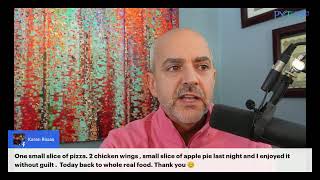
In this hour‑long live podcast, host Jim Katsoulis (Self‑Help Coach) identifies the primary psychological barrier that stops most people from losing weight: treating weight loss as a temporary diet rather than a permanent lifestyle shift. He explains that people focus on the short‑term goal of reaching a target weight, but neglect the second phase—maintaining that weight for life. This temporary mindset leads to unsustainable, extreme strategies (keto, calorie counting, fasting) that collapse once the goal is reached, causing weight‑cycling. Katsoulis proposes a mindset reversal: start with the end in mind by visualizing life at the goal weight and building habits that feel natural, enjoyable, and sustainable. He introduces the three‑phase eating model (anticipation, consumption, consequence) and urges listeners to pay attention to the "consequence" phase—how they feel physically, mentally, and emotionally minutes and hours after eating. By consciously noting the negative aftermath of unhealthy foods, the brain can re‑program its reward system without harsh self‑criticism. The host outlines his "Weight Mastery Pyramid" (mindset, lifestyle, eating) and the "Program Yourself" system, which includes: a detailed Goal‑Weight Blueprint (144‑page guide), a mindset‑training method (hypnosis sessions, daily mantras), a structured eating plan tailored to the individual. He critiques the diet industry and food‑processing industry for creating addictive, hyper‑palatable foods and for selling short‑term fixes. He also discusses GLP‑1 medications, acknowledging their benefits but warning about reliance on them without a long‑term mental framework. Throughout the session, community members ask questions and share experiences (e.g., using the program to quit alcohol, dealing with GLP‑1 cessation, tracking consequences of candy, etc.). The host repeatedly emphasizes that lasting weight loss requires learning to think, feel, and act like a "thin, healthy person" rather than relying on willpower alone. Key take‑aways: 1. The #1 mental block is viewing weight loss as temporary. 2. Shift to a maintenance‑first mindset. 3. Use the consequence‑phase awareness to re‑wire food reward. 4. Follow the three‑pillar Weight Mastery Pyramid. 5. Leverage hypnosis and daily mental rehearsal. 6. Reject diet‑industry quick fixes; build sustainable habits. 7. Community engagement reinforces the method and provides real‑world examples.
Chapters
Hey, everyone. Welcome to today's program, Yourself then podcast. Today we're talking about the number one mental block preventing your weight loss. And I find this really at the core of every overweight person's struggle. And once you see it and recognize that it's there and it's always been there, and if you don't change, it always will be there, and it's going to prevent you from losing weight, you're never going to be able to get the success you want. And what that block is is that you keep thinking about weight loss as a temporary thing. You think you're going to lose weight for a little while and then you're going to get to your goal weight. But in that is the problem. Because you're thinking you're going to diet in order to get to your goal weight, but then in your mind there's kind of this blank space. Well, what are you going to do then? Now I know you're thinking, I will figure it out then. But when you reflect back on your weight loss experience and history, have you ever figured it out? When you have lost weight, have you ever lost weight and figured out how to stay there? And I know the answer is probably no. If you're struggling with your weight right now. And so the maybe counterintuitive thing you need to do is to start with the end in mind. You have to start with your maintenance. Because you can't have this process be a two process, a two phase process. If you never, ever really reflect on the second phase, it creates a mental divide. Because subconsciously you're thinking, I'm going to diet until I'm going to diet temporarily. I'm going to temporarily do something different with my eating until I get to my goal weight. Do you see where that problem comes from? Because even if you're successful and even if you get to your goal weight, you have no plan, no idea, no sense of how to live at that goal weight for the rest of your life. When you think about weight loss, you think about it as a temporary thing subconsciously. And a temporary thing is the opposite of something that's built to last. And if I take a step back and say, how long do you want to keep the weight off for? You're going to stay forever. But when you look at the strategies you've used to lose weight, you're going to recognize that all those strategies are short term, temporary strategies that you're only going to do while you're losing weight. And once you get to your goal weight, you're going to find it hard to do those extreme plans. You're going to find it hard to be keto. You're going to find it hard to track your calories, count your points, eat for only 16 hours, because now you don't have the weight loss happening. And so now you're just existing with those behaviors, with those. Those methods and strategies which were built for the short term. They were built for, okay, I'll do this for a little while, not, I will do this forever. And so your entire life, you have been conditioned to think about weight loss as a temporary thing that you will do until you get to your goal weight. And then you're never given the real story, which is that, how can I live at my goal weight? How can I live at my goal weight for the rest of my life? On near autopilot, you have never asked that question to yourself. You always treat it as something that you will get to, but you never get to it. Even if you get to your goal weight. All you've learned is dramatic differences in how you behave in order to lose weight. And you can only do those for a little while. And then once you get to your goal weight, you're going to find that you don't have the motivation to keep it up. That's what everyone finds. And I think if you look at the beginning of the path, you're going to realize why that happens. Because the beginning of the path you get on every time is that, I just want to get to my goal weight. I just want to lose the weight. But that's not true. You don't just want to lose the weight. You want to lose the weight, and you want to keep it off for the rest of your life. You want to live at your goal weight forever. And the strategies you need to get to your goal weight and the strategies you need to live at your goal weight for the rest of your life are totally different. And in your life, you've never learned those strategies to live at your goal weight. This is the number one mental block you have that is preventing your weight loss and preventing you from living at your goal weight for the rest of your life. Stop thinking about your weight loss as a temporary thing and start to realize that, yes, weight loss is a phase of the overall goal, but it's just a phase. It is not the goal in and of itself, it's the first phase of it. And then the real goal you want is to live at your goal weight. And so you're going to need different strategies. And the beauty is when you Start with this mindset, you start to rely on strategies that are more comfortable, easier, more enjoyable for you, more sustainable. And you start to feel more grounded, more calm, more relaxed while you move towards your goal. And once you get to your goal, you realize you've done it by implementing and working on habits and routines and thought patterns that feel natural and automatic now. So that not only are you at your goal weight, but now that you're set up to live there for the rest of your life because you're training your mind how to think like a thin healthy person, you've started to work on the habits of having a lifestyle of a thin healthy person and the eating behaviors of a thin healthy person. And you've worked to automate those so they feel like second nature. They feel automatic to you. That's how you live at your goal weight for the rest of your life and not just keep cycling through weight loss, weight gain, weight loss, weight gain, weight loss, weight gain, which is where everyone's at. But it's primarily starts because you're thinking about weight loss as a temporary thing. And the second you start to think of it as a long term thing, everything shifts. And if you want some support making this shift happen, click the link in my bio or go to programyourself then.com go get the free hypnosis session I give you. It's called the New Thin Me. And even in this session we start with the mindset that you're going to live at this weight for the rest of your life. And it's an inside out transformation so that you start to clearly imagine who you want to be at your goal weight and you start to make a plan to move forward to there where you feel pulled towards it. You want to experience that body, that life, that happiness. And it feels completely different than dieting. So I hope that you're able to go check that out again. You can click the link in my bio or go to program yourself then.com go check it out completely free. And if you have any questions feel to free, feel free to ask them. I am here to help you any way that I can. So any weight loss questions are absolutely welcome and I love to take a swing at. I hope you're having a good, a good day. I know we had the super bowl here in America and I guess the rest of the world, it's pretty popular around the world, right? But that was pretty fun. I mean the commercials, I guess I would say 30 of the commercials were weight loss ads now. And it's interesting watching that thing roll out. So anyways, I see Victoria, how's it going? Victoria? Victoria says, Jim heard you in my head last night as I was eating, asking Vicki, how would you feel if you, if you ate all that was on your plate? I listened, stopped eating and felt great later, not too full like usual. Proudy Victoria, yes. In program yourself then a big part of what we do is train ourselves to focus and reflect on the consequences. Okay, there's three phases of eating. There is anticipation or expectation, consumption and consequence. Now, in our lives, we've been marketed to our entire lives and the entire time the focus is on the anticipation, expectation and the consumption. And every single ad, every single food ad just deletes the consequence piece of it. So if you certainly live in America, it pretty much, you know a lot of areas in the world at this point. You have been subconsciously programmed to fixate and focus on the phases of food that are about getting the food, expecting the food, getting excited about it, and then eating the food. And that is that. And if you start to pay attention to the consum, the consequence phase, and I'm not talking about the consequence of the weight gain, I know you all try to do that. You say, oh, I shouldn't eat that cake because I don't want to gain weight. So that doesn't work, okay? It's a thing called future discounting. Your brain discounts the future. It says, oh, just eat the cake now, we're going to diet tomorrow. Okay? So that does not work. The consequence I'm talking about is the consequence that starts six seconds after your last bite, six seconds after you take the last bite of whatever you're eating for the next six seconds to six hours, 24 hours sometimes, right? Sometimes we can eat so much, eat so shitty that we still feel bad the next day. Okay? So that consequence phase is the longest lasting phase of the eating. Again, expectation and anticipation is relatively quick, Consumption's quick and consequences the long one. And when you start paying attention to how you feel physically, mentally, emotionally after you make your food choices, and again, it's both ways you make good and bad food choices. We all do. But when you start to focus and train your mind to pay attention to the consequence phases of the good choices, of the bad choices, it starts to become a different story because you start to associate different things. Because again, is food, is processed fast food good or bad? Well, it's both. It's good because it tastes good, it's easy, it's enjoyable, it's cheap. Well, it's not cheap. Anymore, I don't think. But it's quick, it's easy, it tastes good, right? So that part's good, but it's bad because it's not a lot of nutrition. You're going to be hungry soon after. You're going to get addicted to that food. Um, it's going to crowd out healthier options. You know, you're. You're probably going to feel sluggish afterwards, depending how much you eat and how it affects you. You don't feel good about yourself if you want to lose weight and you eat like that. And so there are real consequences that are there. We've been trained to ignore them. Okay, I'll grant you that. But the consequence is always there. Whether you ignore it or not, the consequence phase happens. And so once you start to train your mind to pay attention to the consequence phase, it's exactly like Victoria says, where even when you're in the middle of making food choices, even in the middle of eating cake, eating a bag of cookies, you can have the ability to say, because you're not saying, I have to stop. Please understand, this is the big difference why this technique works so well, because most of you dieters will say, I have to stop eating this cake. Oh, I can't eat this much cake. I better stop. Come on, you bad person. You're being bad. Stop being bad. Stop eating cake. That's how you all try to stop yourself, but it doesn't work most of the time. What I'm talking about is totally different. You're in the middle of eating that cake or that bag of cookies and you say, woof. Now, again, just being able to take a step back is a challenge. But let's just say you could do that. We're not saying you have to stop. You do not have to stop. You never have to stop eating. The question you ask is, how am I going to feel if I finish the rest of this cake? If I finish the rest of these cookies, I finish the rest of this ice cream. How will I feel in 10 minutes? In an hour? Physically, mentally, emotionally, how will I feel? And all of a sudden, you're not telling yourself you can't do it. You're opening yourself up to the natural consequence that follows. And the truth is, when you choose unhealthy foods and eat too much of them, when you overeat pretty much any foods, but especially unhealthy foods, there's a real steep consequence. You feel like shit physically, mentally and emotionally. And there's no question about that. The thing is, you've been trained to literally delete it from your reality. And so now a lot of people try and stop eating food by beating themselves up. When in reality, the real shift in changing how you eat is to change the way that you think about it. And again, it's not demonizing it. Do you understand? We're always making choices. We always have this subconscious scale of pain and pleasure that we're always evaluating things on. But the problem is that scale's been wildly manipulated by all the advertising we've been exposed to. So most of the time, when we think, oh, I should stop eating this fast food, we're not really thinking about the consequences. We're just saying, we should stop doing this. But it doesn't work, you know? So again, as you start paying a consequence, and again, this is. It's a training process. So the first day you do it, you don't just eat perfect. You understand. It's a skill you develop. And it's. There's two sides to it. There's gaining awareness, right? There's. There's starting to. After you make the food choices, good or bad, you pay attention to the consequence and you say, okay, well, I made a good choice. Oh, I feel a lot better. Oh, look at me. I'm light. I'm energized. I feel motivated. I'm proud of myself. And then we make the bad choice. Oh, I feel kind of lethargic. We're not beating ourselves up, right? We're just saying, how do I feel? Oh, my God. I feel tired. I feel fatigued. I'm exhausted. I'm irritated with myself. I'm annoyed. I don't like this. Okay, so it's not, you're a good person, bad person. It's. There's a good effect, bad effect. And once you start paying attention, that bad effect, it's always the same. You, you, you. It's. It's the most stable thing in your life. You've got the truth on your side. When you overeat, you feel like every single time, you have never overeaten processed foods and felt amazing afterwards. No, you haven't. You've been excited about it, you've enjoyed eating it, and then you eat it. And the regret instantly starts. Physically, mentally, and emotionally. Every time in your life. Never once. Now, the other side is every time you make a good, healthy food choice, 6 seconds to hours afterwards, you feel better physically, mentally, and emotionally, you're proud of yourself, you're happy, you feel on track, you feel lighter, you feel more energized, your Head's clearer. So if we operate out of this place, it's fundamentally different than what most dieters are doing. And again, remember, dieters, it's not your fault that you're struggling so much with weight loss. I was reminded this watching these weight loss ads last night, the bullshit condition. And again, I don't even have anything against GLP ones. I. I think that they are a miracle for a lot of people. Let me start by saying that I hate the advertising, though. I hate it with a passion. It's. It's everything that's. I just don't like it anyways, so that's that. Jay says, I tried your idea putting the scales in front of a mirror and eating a bag of candy. It sort of worked, but I found myself getting excited about the opportunity to eat the candy. I saw a suggestion about putting the scales in front of the fridge. I will try that next again. Jane, though, what? I'm just. It's important that that technique is a little bit of an advanced one, I would say. And I think it's fine that you got excited about the candy because again, at first you're just getting. You're just experimenting, you know, and so you see. Again, that's a perfect. I'm really glad you said that, Jamie, because this is what I'm talking about. You know, you all don't have the skill. A lot of times, people don't really look at their weight. See, a lot of people think weight loss, okay, But I don't look at weight loss. I look at the other direction. Can you control what you weigh? I don't know if that makes the same sense to you folks. Does it make sense to say there's a difference between focusing on weight loss and losing weight and focusing on living at the weight you want to live at? I don't know if that sounds like the same thing to you, because it's completely not. It's completely not. It's the difference between saying, I want to get out of debt and I want to have an abundance of wealth. They're two totally different things. One comes from a scarcity mindset, one comes from abundance mindset. So when it comes to mastering your weight, it's just like mastering anything else. A musical instrument, dancing, art, literally anything. You have to get good at it. When you first start, you don't have the skill sets to be good at it. You learn and practice them and you develop them. It's the same thing with managing your weight. So, again, if you've never really paid attention to the Consequence of the food. I know you probably think you have, but if you haven't really practiced it over any period of time in a strategic, consistent, thought out way, you're not going to be good at it. Most likely. We're rarely good at things that we've never done. Rarely is someone who's never played the piano going to sit at the piano and play a beautiful song. It's not going to happen. So you people out there that want to lose weight, you got to realize that this is bas. It's a learning process. And the diet industry doesn't teach you that. The diet industry tells you it's a willpower process. You either want it or you don't. Either do the right thing or you don't. There's no learning there. But in my opinion, it's all about learning. All about learning and learning how to recognize the real consequences of the decisions you make is really important and it takes longer than you may think. So again, for you, Jane, I hope you start to reflect on the excitement of the candy. And there's nothing wrong with the excitement of the candy, Jane, because again, even putting the scale in front of there, it's really just to develop your awareness. And so if you pay attention to the excitement for the candy and you reflect on that and then eat the candy. That's what I'm trying to tell you, Jane, eat the candy. This isn't dieting where you have to be perfect in order to succeed. This is you have to pay attention to succeed. So go, Jane. Go eat the candy. But then ask yourself how you feel six seconds after you're done, an hour after you're finished, two hours later, the next morning when you wake up and you reflect on and think about it, tell me how you feel about it. Do so don't. Again, if you put the scale in front of the fridge, fine. But you're just using that as a, as a memory aid to remember. Okay, I'm going to the fridge and I'm going to pick something to eat. What am I basing this decision on? Well, a lot of people are just basing it on. There's on autopilot. They just walk over to the fridge, walk over the pantry, eat stuff, and they're not even thinking. So, Jane, that, that, that scale trick is primarily a state break. It's to snap you out of trance when you are going to the fridge. When you're about to eat a bag of candy. It's to say, wait a second, what are we doing here? Well, I'm excited Eat the candy. Great. Okay, I'm excited. Candy. Eat it, and then notice how you feel afterwards. And now you can compare them. Yeah. Jane says, I get so frustrated myself because I listen to the hypnosis sessions, always more than once or twice, but I still choose ice cream or candy every day. Don't get frustrated with yourself, Jane. That's wasted energy. Okay, What I want you to do. See, you're doing what I was just talking about, Jane. So I don't know if you're here in the beginning. You're doing what I was just talking about. You're. You're saying, I'm listening to these sessions, and. And I should. I should make better choices. I try to make better choices, and I don't make better choices. But what I would say to you is, stop trying to make better choices. Stop. Stop trying to make better choices, folks. Take that energy, eat the ice cream, eat the candy, and then as soon as you're done, notice how you feel about it. You're probably going to feel frustrated, annoyed, irritated an hour later. Notice how you feel physically, mentally, emotionally. How's your energy levels? How's your thinking? How's your emotions? Do you feel light and happy and proud and excited and motivated to do things, or you feel down? Do you feel discouraged? Do you feel frustrated? What are you thinking about yourself? Are you thinking about yourself as a powerful person who can take challenges on and succeed and be the person you want to be in life? Or do you feel like a failure who can't change anything and you just keep running around the same circles? And then when you go to bed, reflect on, are you happy that you did that or you're not happy? And then when you wake up the next morning, you think about it all. When you think about what you did the day before, you happy about it or you're not happy about it? That's all you need to do, Jane. If you do that for two weeks, I guarantee you will start making different decisions. Hope that makes sense. And that goes for all of you. That goes for all of you. You don't have to make better decisions. And you should all try. You should all stop trying to make better decisions. Because even if you make a better decision, most of the time, it's just because you're spending a bunch of willpower on it. And as soon as that willpower flags, you're going to go right back to making your same shitty decisions unless you make these shifts on a deeper level. Hope that makes sense. Yeah. Jane says, I was mad that I ate ice Cream and then made myself go to the gym. Yeah. So you were mad at yourself for eating ice cream, then you punish yourself and go to the gym. So again, it's just don't focus on the decision you made and beating yourself up for making it. Focus on the consequences. Because guess what, Jane, the next time you have an option to see, because what you're thinking is when you're making the choice to have the candy or the ice cream, your mind is obsessed on the anticipation and consumption of it. Jane, you are not thinking about the consequence when it's time to make the choice. Should I eat candy? Should I eat ice cream? Your brain is obsessed on the anticipation of looking forward to it and the eating of it. You are not thinking about how it's going to feel six seconds after you finish the ice cream, six seconds after you finish the candy. And every time, it doesn't matter whether you focus on or not, it really is irrelevant because every time you finish, you feel like about yourself, you're angry with yourself, you're mad that you did it, you feel frustrated, you feel like a step back where you feel stuck, you feel all this bad stuff. It's never going to be different. Now, this isn't to say you can never eat ice cream, folks. You understand, you can eat it. But again, it depends on where your goals are. If your goals are, you're worried about your health and your weight and you go and do things that are going to keep your weight and your health at the same level, or worse, you're going to be frustrated with yourself. Does that make sense? So again, it's not. It's not. There's a, there's a time and a place for ice cream and candy. But if you're really upset about your weight and your health, it's probably not as much as you're, you're consuming it, you know? Yeah. Jane says, I do think about the consequences, but I override the concern. Jane, I'm telling you right now, Jane, you're not thinking about the consequences. You're thinking that you're going to gain weight and you don't want to gain weight. And then you say, I forget it. But I'm telling you, Jane, you are not thinking about how mad you're going to be the second you finish the ice cream. You're not thinking about. You're going to be so mad at yourself that you're going to force yourself to go to the gym. You're, you're not going to do that, Jane, you're, you're not doing that. I promise you. You're thinking about, I don't want to gain weight. And you're still doing it and you're wondering why and you're beating yourself up about it. But it's because you're not connected to the real consequences. And the consequences go in this order. The first ones are what you think about yourself. What do you think about yourself, Jane, every time you finish the bag of candy or the ice cream? How do you feel emotionally? What emotions do you feel every single time you finish the bag of ice cream or the bag of candy or the ice cream? And then physically, what are the effects of the ice cream or the candy on your body energy levels? Meg says it makes so much sense. It does, doesn't it? I mean, I'm telling you, this is. This is really just one of the most important things you could get. What's up, Sharon? Sharon says it does work. Thinking about eating before bed within two to three hours. I've been thinking about how I feel when I go to bed and how good I will sleep. Exactly, Sharon. That's exactly right. If you start thinking, if you start living in the consequence, it's. It's so powerful. And it's one of the most clarifying things you can do. And I promise you all, you're not doing it again. You think you are because you're thinking about the consequence of being overweight. You're thinking about putting weight on. You're thinking about your clothes not fitting. You're thinking about being a failure, but you're thinking about a big generalized way that feels like it's in the future. I'm talking about the consequences that exist the second you finish eating. The consequences that you all been thinking about are too far in the future. Your brain don't give a fuck. I'm talking about the consequences that are right there on the other side of the eating. Yeah, Jane says I feel angry and disappointed in myself. Okay, Jane, so the next time. This is what I mean, and I appreciate so much. So please, you know this. Anyways, you're a regular here, but do not confuse my. My passion for. For frustration or anger or anything. But this is perfect. So when Jane says, this is so great because this comes full circle. Jane started this by saying, um, I go to get a bag of candy and I realize I'm excited to eat it. Yeah, I get that. I know you're excited to eat. That's why you eat it. But what I want you to start doing is start remembering when you're at that point and that's what the scale is, just a reminder. You say, oh, I want some. I want some ice cream. I want some candy. I'm excited to eat it. Okay, great. But start adding this little question in there based on experience. Now. It gets more and more powerful the more when you ask the question, how am I going to feel at the end of this candy? When you've been the last five days, you paid attention to it and you realize, oh, I feel angry and disappointed in myself now. Because you realize that and you know you've reinforced that the last five days. This is why beating yourself up doesn't work. This is the replacement for that. And instead of beating yourself up, you pay attention to what you feel emotionally. That's the best way to do it. How you feel emotionally. Let's just stick there. And if you'll start paying attention to that now, the question becomes, do I want to live in the excitement of looking forward to the candy and eating it, or do I want to realize and remember that the second I'm done with that, I'm going to be angry and disappointed in myself? And once you start to code it that way, you start to make different decisions. So, Jane, you're on the right path. So what I want you to do, Jane, for the next couple days, eat the fucking candy and ice cream. Please don't stop eating the candy and ice cream. Keep eating it, but pay attention. Is it true that you feel angry and frustrated and disappointed in yourself or not? Let's test it out. Test it out. Now, I promise you, you will. You will never finish the candy or the ice cream when you want to lose weight, make changes, and feel amazing. Yeah. Jane says it always starts with my emotions. I get it, Jane. You probably get in a bad mood and the candy or the ice cream feels like a bo and you go and do it. But then as soon as you're finished with it, now you're. So you start off low, right? Say this is how you want to feel. And let's say you have a bad day and now you're feeling emotionally down here. And so your brain says, oh, my God, let's have some ice cream or candy. We can get back up here. And for while you're looking forward to it, while you're reading it, you feel up here like, oh, this is nice. And then you finish it. And now you're not down here, you're down here. I hope that makes sense. And this is what most you are doing. It's no different. I'm going to just say It. I'm just going to say it because it presents very similarly. It presents. It presents very similarly to addiction, substance abuse, because it's like you look at the person who's got this issue and say, oh my God, stop doing that. It's really bad for you. But they're caught up in the little moment to moment reality of it. Well, I need it to feel better. You don't realize it's making you feel worse. Jane says it does make sense. Thanks. You're welcome. You're welcome. But again, Jane, there's no. Please don't stop yourself and just trust me. Please trust me. You've been here for a while. That's the only reason I even ask for your trust here. I'm not going to sit here and tell you just because I've done this for 25 years professionally, that you should trust me. I'm going to ask you because you're here regularly, but don't stop yourself for the next five days. It's Monday. Give yourself five days. Do not stop yourself from eating ice cream or candy, but please be aware of what the consequences. And now it's going to be easier for you because we kind of defined it a little bit more. So for you, Jane, you've made this process simpler because now, you know what you, when you're going towards it, you know, you're feeling some excitement and you know, on the other side of it, when you finish it, you tend to feel angry and disappointed in yourself. Okay? So now all you need to do is validate that. Is it true or is it not? Am I bullshitting myself? This guy full of shit or what? Is that just a weird thing? Whatever. And I think what you're going to notice very quickly is that every time you choose the unhealthy, wrong thing, you feel like you feel angry and disappointed in yourself or other. Other emotions as well. And what happens is you start changing. I always use this as an example. Let's imagine that, Jim, magically, every time you went and ate candy or ice cream, as soon as you were done, Jane, I popped out of nowhere and whack your thumb with a hammer. Okay? We don't have to discuss why or how or a possibility. Let's just imagine the scenario that every time Jane eats the thing, ice cream or candy, that she wants to, you know, stop so she can lose weight. Every time she finishes it, the second she finishes, six seconds later, I pop out, wham. Hit her thumb with a hammer. How many times would it take, Jane, for me whacking your thumb with a hammer and disappearing and he's, holy shit, what was that? And then you said forget about it and you gotta eat some more ice cream, candy, Bam. How many times would that have to happen before you said I want some candy? I don't know though. I don't want that. I don't want the, I don't want the thumb, Hammond. The thumb whamming. The thumb wapping. Not many. Jane says yes, exactly. So I am here to tell you that between getting your thumb whacked with a hammer and feeling angry and disappointed and like a failure and, and discouraged and, and let down, they, they both are super painful to me, you know, and once you start coding that this decision is literally getting your thumb left with a hammer, you would stop naturally, automatically. This is a great example of mental programming. See, you all are never mental programming yourself what you're doing. And Jane, you've been doing this is that subconsciously ice cream and candy are always amazing, exciting, fun, pick me ups, enjoyable entertainment, parties, stimulation, reward, love, connection, all this positive stuff. And the diets taught you, don't touch that. Just use your willpower to fight against it. And the idea that the diet, diets are teaching you is that for the rest of your life you're going to love these things, but you're going to have to stop yourself from eating them. I'm telling you that's because this food is the number one cause of pain in your life. For most of you, if you're obsessed with your weight and your health and you're miserable for what you weigh, it's these foods that you think are so pleasurable are literally the number one source of pain in your life. That's my definition of addiction. When the thing that's causing you the most pain in your life you think is the most pleasurable thing. And it's an illusion. It's an illusion you have to see through to get to the other side in order to have long term success. But what the diet industry's taught you, and again, remember, the diet industry is just a branch of the food processing industry. They don't want it. They do not want to change your associations. They've spent billions of dollars to create those associations. So the, the diet industry is a branch of the food processing industry. Weight Watchers was owned by Heinz. Jenny Craig was owned by Nestle Atkins Food Products, owned by the same company owns on pretzels and cinnabon. SlimFast, owned by the same company owns Ben and Jerry's ice cream. You're getting all of Your weight loss information from the wrong people. They're. They're wolves dressed. Dressed in sheep's clothing. They're not teaching you anything that's going to help you move forward long term. And what I'm telling you is you go to the core and you start seeing things more accurately. Does the food taste good? Absolutely. Is it a net positive? That's for you to decide. But do not just skip the consequence phase because it's intense and it's sucking the life out of most of your lives. It killed my father. He died at 54 of a heart attack. So for me, we're talking real serious shit here. I'm not talking about wearing a fucking your skinny jeans or your bathing suit, which I want you to wear too. But I'm talking an order of magnitude more seriously that I believe. The food choices you're making through your life are going to dictate how long you live and the quality of life while you're here. And that's how I look at these choices with that sort of intensity, that sort of severity. And I find that the choices we make are dramatically consequential. And we have been trained our whole lives to ignore that consequence. And when you start paying attention to it, the right decisions start to happen naturally. You know, change says, you're right, it's an addiction. It is an addiction, but remember, there are people that have been addicted to the most addictive substances on the planet and figured it out. So you can figure it out even if it's an addiction. Jane says eating poorly then leads to shopping. Another addiction to try to make myself feel and look better. Exactly, Jane. It's a lot of work. That candy and ice cream that you think, so exciting and so fun. When you zoom out and look at it, the big picture of what it's causing in your life, you're going to realize it's one of the biggest sources of pain in your life. Now, this creates a real sense of cognitive dissonance that feels very strange for people. I will be the first to let you know that. But it's one that we've got to deal with. Is the food really pleasurable or is it really painful? And of course, the answer is both. But I would say that the solution is to moderate the food, to get to that sweet spot where you're getting the most pleasure possible out of it, but you're also getting the consequences you want. This is why I always say, like, and program yourself. Then I want you to have your cake in your body, too. How can you have both. That's the question we're asking. You know, Vicki, how's it going? Vicki? Vicki says, is visualizing your ideal weight and buying clothes for that positive or stupid? I don't think it's positive or stupid. I think it's ineffective. I think visualizing yourself at your goal weight, how you're going to look is mildly effective at best. And I think what's a much more power. And I think the trick here is visualizing, because visualizing makes you think visual. You're going to see it in your mind. Okay? But I'm here to tell you that after doing this for over 20 years professionally, over 30 years personally, that trying to imagine what you're going to look like as a motivator is one of the weakest forms of motivation you can use. And what's going to be infinitely more powerful is to not. Let's just change the word visualize into imagine. And instead of just visualizing what you're going to look like, I want you to imagine how you're going to feel day in and day out. What emotions will you feel more of in your life if you get your weight under control? What emotions would you feel more of day in and day out? How would you think about yourself differently if you were at your goal weight? What would the benefits of that be for you in your life? How, where would those benefits show up? Would you be a better parent? Would you be a better partner? Would you be a better employee or boss? Would you be a better version of yourself in the different areas of your life that matter most? And if so, why? How would your health be? How would your energy levels be? How would your mindset be? How would your sleeping be? You see what I mean? So if you tap into those things, those are infinitely more powerful than just trying to imagine what you're going to look like. Most people have a very limited ability to imagine visually what they're going to look like anyways. But even if they could, it's usually not that motivating. What we're going to look like is one of the weakest forms of motivation, which once again, is why the diet industry is built around that. The diet industry is built around the before and after picture. And visually what you're going to look like is the weakest form of motivation. It's one of the main reasons why you start and then you quit because you're not truly motivated. It's just a visual idea, and it's an unclear one for most people on top of it. So Vicki, Vicki says Continually learning how to live at my goal weight in my goal weight range. Exactly. And again, Vicki's a pro again, Weight Watchers hall of Fame. You better program yourself then for a little while. Like, again, I think she's such a great example of how to approach this, where it's much more like if you. If you take a martial art or if you study a musical instrument or you start taking dance classes or art classes, there's no end point. There's no end point. You just keep getting better and better and better and better and better and better. And it's the same thing with mastering your weight. It does take effort, but it's an effort, you know, that serves us well, you know, and it gets easier, and we get better at it the more we move forward with it. Astrid, what's up? Astrid, as a Jim, I'm very grateful your program of support. I'm doing fine. The operation went well. That's awesome. Super, super, super astro. I'm super happy to hear that. And I'm so proud of you for getting that. I didn't realize it was coming up so quick. I'm so happy for you, Astrid. I just. I'm so excited for where you go from here. And I think. I know that was hard, and I just am so proud that you made that decision and went through with it. And I know it's probably. You're still in that part where it's. You know. But I'm telling you, I love the timing, too, because I think this is gonna be one of the most amazing springs you've ever had. I think you're really gonna feel it might be a little early. I don't know. Because sometimes it could take a couple months to kind of really recover. It's. It's major, right? But whether it's three months, six months, you're just. You're heading towards a whole new level. And I'm so happy for you. So great job, Ash. I appreciate. Let me know, too. I was thinking about you, so I'm super happy. Let's see here. What's up, Gina? Gina says, oh, my God, can you come pop me when I eat crap? I know. I should do that, right? It's like that. I should figure that out. A little electric shocker or something. I'm joking, of course. I would never do that. But you can do it to yourself, and it's very valuable. And it's. It's. And in a weird way, it's very nurturing because this replaces beating ourselves up. Beating yourself up does not work not for long anyways. And even when it works, it doesn't work. It makes you feel like there's way better ways to go about that. Crumb says, you're funny. I don't think it worked up here. Metamorphosis says associations from childhood and celebrating. Yeah, absolutely, absolutely. You know, we all have associations, you know, and from culture too, you know what I mean? Like the culture puts so much of it there. And the truth is that we, you know, what's weird for all of us right now is that we're like the first ones on the scene. You know, they always say like, like my generation, what am I? Generation X, I guess. But like I, I'm one of the last generations that was here before and after Internet, you know what I mean? And one thing none of us are here before and after of is the food industry and where they're at now. Because it's a double whammy of the most addictive foods possible, right? The most addictively engineered foods that you could possibly imagine and the most intense marketing that the world's ever known. And we are living in that right now, in real time. And so we have no perspective on it. We have no real strategies for no way to deal with it. And that's what we got to do though, you know, we have to learn how to reprogram our minds. We've got this ancient hardware, our old evolved biology, and now we live in a brand new reality where we're surrounded by hyper palatable addictive foods 24 hours a day and we're constantly being marketed to. And so we need to upgrade our thinking. The old ways of thinking don't. Remember, we learned how to think and our biology comes from a food scarce environment. Now we find ourselves, not only for a lot of us, in a food abundant environment, but it's food that's just hyper palatable and hyper engineered and we're being marketed to constantly. So we need to have new tools in order to deal with this situation we're in. And I think a lot of them come from the inside out. You know, the way you're thinking is ground zero for it all. You know. What's up, Adrian? Adrian said your passion's contagious. It helps me know I'm in the right place. Well, thank you. I appreciate you saying that. I know get worked up sometimes. I know I'm worked up from the, I'm worked up last night from the Super Bowl. Those ads piss me off. And again, I just can't stress enough that I think there's a I think GLP1s are amazing and I think they are a lifesaver for a lot of people. So. So I'm not anti GLP1 but I hate the messaging because the messaging will make you feel like it's the only way you'll ever lose weight. And you know, it's annoying, so. I know, I know. That's why I'm fired up today. Charlie IPS says I have a feeling we are slow learners. Dieters. I have made a big change because I listen to you. I watched your hypnosis post today. Brilliant. Because you said it was July, I felt as if it was. Oh, sure, sure. Yeah, that was an old video. Yeah, no, it's true though, like you know again, but here's the thing, Shell is that I. Well, you know what, we are slow learners. I think you're right that that's a good way to think because I think it's better to underestimate or overestimate how long things are going to take than underestimate it. So. But listen, a big reason why dieters are kind of slow learners, the biggest reason why is you've never, you've never gotten the information you need. You know, remember that you. The diet industry, I was just talking about the food industry. Right, and the marketing industry. Well, the other thing we've all been lived in our whole lives is the dieting industry. The diet industry is really only 50, 60 years old. I mean it's really 75. You could make arguments, it's a little older than that. But really the way we know and think of it as a mass marketed concept, we're talking, you know, 60 years. And again, we've all been raised in that. And for most people, the only way they've ever heard about losing weight is a diet surgery or injections. Now, you know, and dieting doesn't work. We all know this. There's not a single diet that rises to the. Isn't that amazing? 60 years of diets. There's not one diet that rises to the top of being most effective. That's a crazy statistic. There's not one diet that's ever been shown to be effective long term any more than any others. And the reason why they're all equally ineffective is because none of them deal with your mindset. They're all just different eating strategies, basically. And at the end of the day I believe that your. The number one thing you need to shift in order to shift your weight is, is your mindset, you know, the way you're thinking about all this stuff. So keep it up. Shell. Yes. The summer's coming. I'm looking forward to the summers here. This has been a cold ass. I was sat with my kid with this. So it's like, it's, and I don't mind it usually, but it's been freezing cold. It's been cold and snowy. I'm looking forward to the sun. I, I definitely. Yes. Peter says I learned that food preparation is 80 of good eating habits. Agreed. Agreed. I'll take that one step further that I think structuring your eating is, is 100% of good eating habits. 80%. I'll stick with that. But, but it's not just food preparation because, and, and I, you may mean this already, but it's like food preparation requires that you're going to know what you're going to eat. Do you know what I mean? So they kind of work hand in hand. So I don't want to just say food prep because a lot of people say, oh, food prep. When I know I'm going to eat, but a lot of people don't really know what they're going to eat. So again, starting to figure out your eating routines and structuring your eating in a way that works for you. Again, programming yourself in, that's a fundamental piece of the program. You're creating an eating plan for yourself and structuring your eating, I find to be essential, one of the most important pieces of the whole program. So I agree. What's up, Lisa? How's it going? Ocean Fun says, been off my GLP1 for one month. I can do this. All right. Great job. Yeah. If you made it a month without putting weight on that, that's something else again. The challenge usually though is that, you know, if we don't change our mindset, we don't change our lifestyle, we don't change our eating in a structured, systematic, comprehensive way. I don't know how anyone's going to maintain any sort of weight loss, but good luck. Yeah, but scared. See, again, the scared isn't good. Isn't good. Ocean Fun says, should I count calories or fast? No, I wouldn't do any of those things. None of those are long term plans. The main thing I would say Ocean Fun is just get in my world. I give you a bunch of free stuff. You can all just click the link in my bio or go to program yourself then dot com. I'll put the link in the comments over on Facebook. But let's see here. You can go get the free hypnosis Session here, but I strongly suggest that. Right. Again, not trying to be negative here, but yeah. Should I count calories or fast? Again? But the problem reveals itself. Ocean Fun. You know, that, that the, the lack. Let me just show you. So I like a little context. Flip this around so you can always read this. So program yourself. Then we build everything around the Weight Mastery Pyramid, okay? The goal weight pyramid. And it's mindset, lifestyle and eating. So it's a comprehensive approach. I don't, I don't believe I can just tell you how to eat and you're going to succeed. You've tried that with every diet. Okay. I don't believe I can just tell you how to live and you're going to live that way. I don't think it's how it works. So I think you need to kind of combine all these things that you need to have the right mindset, the right lifestyle, the right eating patterns for you. Because everyone's different, but there's obviously just best practices and then you tweak it to make it work for you. But what this implies, it's a whole process and plan a comprehensive, systematic approach to it. And again, unfortunately for Ocean fund, been on GLP1s and now you come off of it and it's like, you know, should I count calories, Should I fast? You know, you're in that diet freakout mode, not sure what to do. And that's the diet freakout mode, right? I mean, you're scared, right? You're scared in all caps, right? This is every dieter, right? You're freaking out and you don't know what to do. That, that pretty much summarizes 95% of dieters. They're freaking out and they don't know what to do. And that's fucking crazy because you've all been trying to lose. You've all been dieting and trying to lose weight for decades at this point. I mean, Ocean Fund literally invested a bunch of money and injected herself with, with GLP1. So the commitment is. It's not the commitment issue. It's that you haven't had access to good information. You've been trying. Just tell me what to do and I'll do it. No, you won't. You don't even know how to think like a thin, healthy person. You don't know how to motivate yourself. You know how to shift your identity and self image. You don't know how to deal with your habits in a strategic way. You, you don't know how to manage your emotions. You don't know how to think like a thin, healthy person and you have no idea how to maintain your new behaviors. I mean, that's just the mindset. What I just went through is literally just the mindset section of the program. And if you don't know how to do any of those things, how are you ever going to live at your goal weight at some point? I don't know how that happens. How can you think the same way you thought when you were overweight, but now all of a sudden you're going to magically somehow be a different weight? I mean, Einstein said it that. What is it? Oh, man, I'm gonna blank it. That the solutions require a different level of thinking than the level that created the problem. Does that make sense? I don't know. It makes sense to me. I don't know how dieters are gonna think that they could have the same mindset they've struggled with for 30 years. But then I'm gonna give you a piece of paper that tells you an eating plan on it, and that's going to be the thing that's going to change it all. Like how, huh? How does that work? You know, that's like going up to someone who's never played the piano and saying, oh, you know, here's some sheet music for my favorite song. It really great. I'm going to help me. I don't have any of that. I don't have the skills to play that song, you know, the skills to follow these eating plans. And unfortunately for Ocean Fun, I mean, there's not even a clarity of what the plan is anyways. And again, I'm not picking on you, Ocean Fun. I'm just saying, I mean, you're, you're just representing pretty much the entire diet or population. None of you dieters have a real plan. At the end of the day, none of you have a plan. Think about it. I always say it this way, that, that most of you, to put it kind of visually. So this is the goal weight pyramid we use. And program yourself then, right? Mindset, lifestyle eating is broken down in specific categories. But I believe all of you dieters, this is about as much of the pyramid as you've done. This to me, represents. There, there's your eating plan, there's your counting calories, there's your don't eat carbs. There's your just eat more protein. There's your just count your points. You're not dealing with any of this stuff here, and you're just trying to force yourself to, to do some new plan. And to be honest, your plan isn't really even well thought out to begin with. So how are you going to get yourself to do a plan that's kind of vague and unclear to begin with, but even if it was a crystal clear plan, it's not specifically built for you. You don't have the mindset to support that plan. You don't have the lifestyle support it. I mean, I'm not trying to be negative here, but wouldn't you like to have some fucking answers for why you haven't succeeded? It's not because you're broken. It's not cause you don't have willpower. That's not why. It's because you've never ever in your life learned how to think like a thin, healthy person. You've never learned how to think, live and eat like a thin, healthy person in a strategic way. And I already know that. I know it for a fact. How can I know that for a fact? Because I've been doing this for over 30 years. I have never even heard another option. I literally, I've never heard any other approach that, that does all these things in a systematic way. If you have, please let me know. I will go buy the program and learn from it. Please let me know. Anyone? Sharon says, where do you get the pyramid? The pyramid? This is part of my book. This comes with the program. So this is actually, this is for people in the program, the goal weight blueprint. This is a third of the program. There's three main parts of the program. One is the goal weight blueprint. This is knowing what to do. You need to know what to do in detail. Here it is, 144 pages. This is not for the faint of heart. This is a college course for living at your goal weight. Okay, so this comes with a program and a PDF form and it's only for clients. It wouldn't make sense. But you know, I'm not going to sell half ass solutions. So this is one third of it is knowing what to do, the goal weight blueprint. The other, another third is the program yourself. Then method is which, how to run your own mind. How to get yourself to do the things that you write in this book. And then the third piece is the hypnosis system, which is again the number one hypnosis program on the planet for weight loss. It's an eight week program. It's like a cocoon. Hypnotic cocoon. Every morning you get a five minute hypnosis session with a goal weight mantra in it. And every night you listen to your weekly session that has a core weight loss mantra in it. So you bookend your day with a 5 minute session in the morning, a 10 minute session at least a couple nights a week and you start to think like a thin healthy person. And that's kind of the whole approach to it. But yeah, that's where, that's where that comes from. And, but this book, this book you can get by the way, that one is sold where books are sold online. Let's see here. Notion Fund says thank you. You're welcome. You're welcome. I appreciate you asking that. And again, yeah, show up. I'm here every Monday through Friday, usually around noon eastern. So again, I am happy help you through this process. That's literally what I'm doing here. This is my way of giving back and I do that, do this just to help people. I do this for free. So, so I, I love helping people. And take me up on it. I want you. I want to help you. Jenny says my kids think I don't like fairground rides because I'm scared of them. Not true. I'm scared I won't fit into the seat and will have to do the walk of shame. That's my motivation, Jenny. I get it. I think that's a, that's a good part of the motivation, you know, but, but build on more than that, Jenny though, even. And I think that's a good one. That's. But that's more of a, a little bit of a pain based one and valuable. So again, and program yourself. Then we use everything, you know, I mean like we're not gonna use either or we're gonna use both, you know what I mean? So I, I think that's great, Jenny. But, but go beyond that. Okay. That's a one specific moment that's going to be amazing at your goal weight, how much better that is. But expand on that, right? So even with your kids walking around the fairground, maybe you want to go hiking, maybe you want to go traveling with them. Maybe there's other things you want to do as well. Expand on that, right? And start to think at my goal weight, how would it be? How would it feel? Okay. Serene says There was a GLP1 ad with a famous tennis player. Totally annoyed me. Agreed. Agreed. And I'm. That made me sad. You know, I, I don't like the messages. I'm just gonna be honest. I don't like the messages one bit. I, I like the drug. I, I'm a fan of it in situations. I think again, I, I don't think it's a great solution for. If it's just weight loss. I don't, I don't love it right now. I'm not loving it, and we'll see where it all ends. But again, I think for certain purposes serves. It serves an amazing purpose. It's an amazing medicines. I don't like her ads at all. They really rubbed me the wrong way. I will say so. I agree with you, Sharid. What's up, Josh? Josh says, although I really dislike Bill Maher now, I do remember something he said about the obesity crisis. Come on, people, eat a salad and take a walk. I get that, Josh, but I, I don't like that because it just. And, and I get that. But it's like, it's too simplistic and they're. I think it's a gentle balance between people having, like, holding people to account and responsibility to take action, but also realizing that most people, we've been set up to be overweight. Listen, you don't have the population. If you watch the obesity and overweight numbers of America since 1980, it's. It's ridiculous. I mean, it's unbelievable. And, you know, part of that is the foods we're surrounded by, and part of that's the marketing, and a lot of people are set up for failure with it. So. So I will be the last person in the world to, you know, to, to just blame people for being overweight or out of control with their eating. I, I think it's an un, you know, to be like, you know what it's like to me. And I got to be careful how I say this. I don't want to get restricted on, on tick tock. But it's like, you know, imagine you know, the white powder that some people use and get it in trouble with. They, they put it in their nose, right? It's like, imagine that it just showed up, right? And it was marketed to you as this amazing pick me up, completely healthy, everything's great about it. And it's a pick me up. It's awesome. And all of a sudden, like, a lot of people start doing it. And then they made it in pill form, too. So it wasn't even an unpleasant, you know, way of doing it. Well, a lot of people would do it and a lot of people get addicted to it. And so, so can they get off it? Do they have responsibility? Yes. But also, you know, were they, you know, kind of led down the path? Yes, too. So. So I think both of those are. Those are Real. What's up, Karen? Karen says one small slice of pizza, two chicken wings, small slice of apple pie last night. And I enjoyed it without guilt today. Back to whole real food. Thank you, Karen. Yes, that. That is right there. That's the program yourself then way, right there. In a nutshell. Last night I had what, five pieces? I made my own pizza. They're not that big, but, you know, I basically a mini pizza, you know, and that was my thing and I loved it. And like, I had like three bites of cake from my daughter's thing. So again, it's. It's not. Please understand this. Again, dieting. Dieting is not there to help you folks. I don't know what to tell you. You know, I can't make any more clear than that. Dieting is not there to help you. It's there to hurt you and program you to eat more food. Ultimately, it's not there to help you. Okay? So the idea of just completely restricting and giving up your favorite foods is not the right thing, Karen, is literally, in a nutshell, what we're talking about. Program yourself, then that you can engage as a normal person. In reality, you can go to a Super bowl party and have some pizza, some wings, some cake, and still be in control, and the next day just pick it right up. So I'm so proud of you, Karen. That's a wonderful thing to share and it's important for people to hear that. Shereen says the doctors just let people off GLP1s without a plan. Shereen, what plan would they have? Just anyways, and this is. I think that's a great question. But, but back to the main point, doctors don't know anything more about losing weight than you do, folks. I love doctors. They don't know anything about weight loss anything more than you do. They don't study weight loss unless it's a, you know, Unless it's a medicine or a surgery. Doctors don't know about weight loss. So what plan would they. What plan would they give you when you're going to go off GLP1. They didn't have a plan before he went on that glp. What plan would they have now? But you know, to answer your question, no, they don't have a plan. There's no plan anyways. No one has a plan, apparently, for how to live at your goal weight. Is there one? Is there one that I'm missing? Is there a great plan for living at your goal weight, folks, that addresses your mindset, your lifestyle and your reading and how to run your Mind, Is there one out there that I'm just not aware of or all those things not important? I don't know. Astrid as says great book. Please read it. It helps so much. Yes, the book Astrid's referring to is this one. And yes, this is my book available now. Again, it's 40 chapters. Each chapter is a page or two. Right. So it's built to be read repeatedly, randomly, whenever you want to just open up a chapter, read it, it'll change you because each chapter is a hypnotic story. And so each chapter is written to not just give you information, but to give you an experience. Right. And that's kind of the key, the key thing about this book. So yes, this is available and it is wonderful. It really is. It's a great book. I've had a lot of good feedback too. So thank you. Annie says, can I use your program to quit alcohol? I mean, you could absolutely, because the same, it's the same thing. I used it. I didn't quit alcohol, but I. I got a. I used to be. Have a real issue with alcohol and I got control over it using the exact same technique. So it's certainly. They're related, let's put it that way. And it is helpful in that way. Ocean Fun said I felt amazing on mine with autoimmune. Yep. Insurance pays for me. I just chose to stop. Oh, okay. Only had 25 to lose for really bad sleep apnea. I mean, but that's interesting. Why did you choose and I really mean this if you felt amazing. I'm so confused by this. I felt amazing. It was free and I chose to stop. Why? Why'd you choose to stop if you felt amazing? Curious, genuinely. Yep. Chelly IB says that. Yeah, I read, I read the book every day. A lot of people do. I mean, it's. Again, that's what it's designed for. That's why I say, you know, get the physical version because then you can leave it around. You can, you know, it's on the coffee table to the bathroom, you know, by your bedside. They just randomly read it. And it's, it's a light, gentle approach to this whole thing. So instead of having to fight with yourself all the time, restrict yourself. You know, this, this, the diet stuff, it's a completely different approach. So definitely worth it. Lysel says I've lost 132 pounds in three years. Worked with a neuro coach three years ago, almost at goal weight. That's awesome. That's awesome, Lyza. That is. That is quite an accomplishment. I'M so proud of you. And the biggest thing, I mean, 132 pounds. Wow. Great job. But the thing I'm even more proud and happy about for you is that it's been three years. I always, to me, I'm way more impressed by the time frame that you've been sticking with something than the actual weight loss result. And that's impressive too. But to me it's always secondary. So great job, Lyle. That's super. What did a neuro coach do? What exactly does that mean? Ocean Fund says not sure about the long term effects. My 25 took a year. Yeah, sure, yeah, the long term effects. Okay, Interesting. Yeah, I, I get it. That's my big, my big thing with the GLP one that I'm cons that I always think about and I won't have an answer until starting about this year. We'll start to get some information on this is that once you're at your goal weight on the GLP1, I. Listen, folks, we have been wired for millions of years to focus on food. And while. People that are losing weight on GLP1s are so excited about it, I won't really believe them until they've lost the weight and the weight loss has stopped for like a year and they're still on it. Because the other side is that no one talks about this. But living your life on the GLP1 is a life where your food noise is, is lowered. Okay, great. While I'm losing weight, but it remains lowered forever. So that when it's a special occasion, when it's a birthday, when it's whatever, a holiday and your grandma's, you know, special meal, you don't really care. You're not going to enjoy it as much, right? Because what the GLP1 does, it makes you feel kind of full. You know, it kicks your aversion system in. But they want just, just below, right? That's what they're looking to get you, right? Where you kind of feel full, like, you know, you feel at the end of a meal. They're looking at between that and feeling slightly nauseous, you know that that's what they're aiming at. And so to live a life where that's how you feel about food is a life where you don't look forward to food anymore. And I know that people don't give a when they're losing weight, they're excited about it. But to live your life the rest of that way, to not care about food when you go on vacation, when you have holidays, I Don't know if people are going to want to live that quality of life. And I'm curious about it. Yeah, never mind the long term effects. And that's another story. And I'm not getting into that because, you know, GLP1s seem relatively safe. Of course, they've never been tested on a large population for just weight loss purposes. They've been tested on diabetics for, for a long time. But you can make the assumption, I suppose, that they're probably relatively safe. But again, my, my main focus is on when, if people are going to want to live that relationship with food forever. That's what I'm kind of curious about. And we will see. We will see because we're only just getting there because, you know, you only get 16 months of weight loss with those medicines. You know, once you get to the 16 months, that's it. And now you're maintenance mode forever. And that's when you know once someone's in maintenance mode for I would say starting at two months, maybe a month even where the weight loss has stopped. So now you don't have the weight loss distracting you and you're just living your life feeling full all the time. That's where I want to start to notice it. Yeah, Ocean Fun says I always just stayed on the lower dose also. Yep. Yeah, again, ocean fun. But I mean, what I would say. I, I think it's the same for everyone. I think you've got to figure out a way to think like a thin, healthy person, how to live like a thin, healthy person, how to eat like a thin, healthy person. That's customized for you. I think that's the, the secret for someone coming off a GLP1, someone who's never been on a GLP1. To me, it's the same answer for every person you know. So I wish you the best with it. All right. And get out of here. Excuse me. If you're not my world, please get my world gang. Like the free hypnosis session I give you. You can click the link. If you're on Tick Tock, you can click, you know, the little picture of me over there and then you'll see the, the link in my bio. Go get that. It's free hypnosis session. Go check it out. 10 minute session. Who knows what it might do for you? You know, it's miraculous sometimes if you're over on Facebook land, I put the link in the comments. You can go see it. Click over on there. I see Liza says thank you is a lot like your Program working the way you think, past trauma. Oh, super, super. Yeah. And so I'm here every Monday through Friday. If you like this and you want to, you have any questions you want to pop in here, pop in and let me help you out the best I can. And if you like to listen to this, but you can't make the lives, it's also a podcast. Um, if you are the podcast listener, I know we have a lot of podcast listeners, the format of that is going to change a little bit. Where there's going to be, you know, the beginning. I do, like a five, ten minute lesson that's going to be separated. Well, there's going to be a version that's just that. And then there's gonna be a version that's that and the Q and A's and that will say PYT Live the date. That will be the same recordings you've been listening to the whole time. But there's also just gonna be short to the beginning part versions. So just so you know, when you see that it might look a little different. That's what's going on there. But PYT Live is what you want if you like listening to the whole thing. And if you like listening to this and you wanna listen to it anytime you go any podcast platform, go search that and you'll find it. And finally, this book's available now. The DAO of living at your goal Weight. That is my book. It is available now at a place where you can get Kindles. You can get the Kindle version, you can get the physical version. I strongly recommend physical version. I think it feels nice and it's good to kind of carry it around and read it. It's got a lot of energy to it and it's only 999. Okay. So for an extra six bucks, I think it's well worth getting this physical book. I believe, last I checked, 77, five star reviews. Okay. People loving it. So again, if you are interested in your weight at all, I think you really deserve to get yourself this book. It is a game changer. All right, so thanks so much everyone. Have a super day and we'll talk soon. Bye.
More from Jim



Weight Loss Visualization: Wake Up in Your Dream Size #programyourselfthin #weightlosshypnosis



What If You Pretended to Be Thin for One Hour? #programyourselfthin #weightlosshypnosis




