The Best Halloween Costume - The Best You
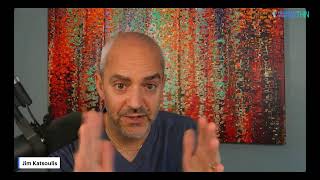
Jim Katsoulis (host of Program Yourself Thin) argues that long-term weight control depends more on reprogramming mindset and self-image than on short-term dieting. He encourages listeners to imagine and 'step into' their best version (the 'best you' Halloween costume metaphor), build strengths-based self-images, and combine mindset with a personalized eating/lifestyle blueprint; he also promotes his resources (hypnosis session, program, upcoming books). The stream includes Q&A, audience examples (fasting, diets, GLP-1s), and practitioner credentials.
Questions this video answers
"95 of people that lose weight on a diet put it back on." (spoken)
"over 20 years" (spoken)
"over 6,000 private weight loss sessions" (spoken)
"I dropped £50 and I've been at the same weight now for over 30 years." (spoken)
"I am 51." (spoken)
Chapters
It.
Foreign.
Welcome to today's Program Yourself Thin podcast. Today we're talking about the best Halloween costume, which is the best you. And the idea is really so central to program yourself thin, because one of the things we do different and program yourself thin than typical weight loss programs is that it's not just about what you're eating and how you're behaving. Obviously, those things are important, but it's more about the ability to think of yourself right from the beginning as the person who you want to be. Right. And so you can start this right now. I think the big mistake people make is they think they're going to lose weight, and then they're going to be a thin person. But the big statistic that causes us trouble there is that 95 of people that lose weight on a diet put it back on. So just losing the weight does not make you a thin, healthy person long term. You already know that. Okay, so how do we actually make that happen? Right? How do we go beyond just losing weight to living at our goal weight? How do we do that? And I believe you do that right from the very beginning by starting to imagine yourself as the person you want to be. And to be honest, this can even and probably should proceed to the actual weight loss. Right? Because a lot of times the main thing stopping us from losing weight is we're not motivated to do the things that cause us to lose weight. And so in that situation, which is pretty common, if you're like most people, a lot of your time you're thinking about losing weight, but you're not actually doing anything to make it happen. Okay? So we have to recognize that that's a big percentage of time for a lot of people where they want to lose weight, but they also don't really want to take action to do it. That makes it the perfect time to practice thinking about yourself as the person you want to be. Because to me, it's the preliminary preparatory step to taking action and doing the things that cause you to lose weight. But I think most people don't have this. They either are taking action, doing the right stuff, or they're not doing anything. And there's no middle ground. There's nothing in the middle. And so I think the sweet spot in the middle, what you want to do right there when you're not ready to take action, is to imagine yourself the way you want to be. It's so easy. You know, it takes a little bit of practice at first because you're not used to doing it, but once you get in the habit of thinking of yourself as the person you want to be, it really becomes a lot easier. And it starts to become a very important phase of your weight loss because it gives you another whole category of time to practice losing weight beyond just when you're doing the right stuff. So how do you think of yourself as the person you want to be? Again, it's way easier than you think. You just don't do this, and you don't do it because most people have a negative. Well, not most. Everyone has a negativity bias, meaning the way our brains are wired, we are more aware of the negative things. The negative things stick with us more than the positive things. And so when it comes to your weight and yourself, it's a lot easier for you to notice all the negative things than to focus on the positive things. So that's one of the big things that stops us from practicing and imagining ourselves being the person we want to be is that our brain tends to naturally move towards thinking ourselves as the person we don't want to be. So that's the first thing you to recognize. And so then it's going to. We have to realize that it's going to take us a little bit of extra energy to create this concept and idea of who we want to be. So right now I ask you, who do you want to be? Who's the best version of you? Now, the cool thing is that you're not so much creating this as you are remembering your best qualities, your strengths. See, we're going to switch from focusing on your weaknesses and thinking that you have to fix them in order to move forward. And instead, we're going to start paying attention to your strengths. What do you consider your strengths? It might be your loyalty. It might be your resilience. It might be your energy, it might be your good nature, whatever. We want to start recognizing what you consider to be your strengths, and then we want to start building around your strengths to move you in the direction you want. And so when I say your Halloween costume this year can be the best version of you, I mean it literally, right? Because how would you set up a costume? Right. If you're going to get a costume, you take a step back and you think about what you're going to do with that costume. You think about the different components of it. You put that costume together, right? It's the same thing with the best version of you. Who is the best version of you when you're at your best, when you're firing all cylinders, what are the best Qualities that you connect to. Again, is it your resilience? Is it your passion? Is it your excitement? Is it your tenacity? Is it your ability to learn? You know what I mean? Like, everyone's got different strengths. But as you start to recognize what your strengths are and how, when you're operating at a higher level, how you show up to meet life, what happens is you start aiming your mind at that version of you. You start thinking of you in terms of your strengths instead of thinking about you in terms of your weaknesses, which is what you probably do most of the time. Because again, that's what human brains tend to do is they reflect on the negatives, okay? So you gotta recognize that and encourage yourself. Nudge yourself over to thinking of your best qualities, your strengths, what are your best strengths? And then start to build around those, right? Start to think, okay, if I start to show up with more resilience when it came to my weight loss, how would that look? And all of a sudden you might think, well, it would look okay, maybe I'd have a piece of candy and then I'd get right back on track and drink some water right after that. It's not the end of the world. When I'm resilient, I realize that little mistakes I make aren't the end of the world. They don't define me. Just little mistake, I get back on track and I'm right back in the game, you see. So we start thinking of ourselves that way and that's the, to me, that's the level that precedes the behavior. So if you're someone who thinks about losing weight a lot, but it's not actually doing anything to make it happen, this is what I would suggest you do is in your mind while you're watching tv, start to think about you at your best. How would tomorrow go if you wake up with more energy, more clear headed, more focused, more connected to your goals?
How would you eat dinner tonight? If you are more relaxed, more calm, more grounded, begin to articulate who, who you want to be, what qualities you'll have, what strengths you'll build around. And the more you start to define yourself this way, the more you start to think about yourself this way, the more you start to create this new self image, this new sense of who you are. And if you start to think of yourself and believe yourself and imagine yourself in situations acting as this best version of you, what you're doing is you're training your brain to act that way in those situations. Now this isn't magical, it doesn't just happen instantly. So it's a process. It's something you do consistently. But you're already doing this. You are already doing this. You're regularly thinking about yourself and you're reflecting on the mistakes you made. You're reflecting on the failures from the past. You're thinking about times when you screw up and you're projecting those into the future and you're caught in that trap. So you need to make the decision to kind of jump the tracks over to the solution oriented side of things, where you start thinking about yourself in the best way possible. Who do you want to be? How do you want to feel? How do you want to behave? Imagine yourself thinking, feeling, behaving that way more and more and more. And what happens is each time you do that, you build up the neural connections and neural networks that cause you to be that person. This is how you transform before you even take any action. And the action follows this thinking. You see, the more you think of yourself as this person, the more you prepare yourself and train yourself to act this way in real life. And to me, this is a fundamental phase of weight loss that most people never even hear about, never think about, and obviously never even do. So start thinking about this level. Start imagining yourself as the best version of you this Halloween. And go through the day as if you were in a costume, just like Halloween. Imagine, just like in Halloween, you put a costume on, you become that being. Imagine yourself stepping into yourself as the best version of you, stepping into the best version of you and walking around in that costume throughout the day, thinking, living, behaving, acting like that version. And notice how you feel at the end of the day so you can do this instantly. You do not need to lose a pound in order to feel like a thin, healthy version of yourself. And the more you realize that, the more you start to take control of that process and become the thin, healthy, happy version of yourself right now. And becoming that way leads you to do the things that cause you to lose weight. And so this is the strategy that I would suggest for you to practice on and develop. And if you want some support in doing this, click the link in my bio or go to programyourself thin.com and go get the free hypnosis session I gave you. It's literally called the new Thin me. So what it's going to do is exactly what I just said. It's going to help you clarify and define who the best version of you is, and it's going to support you stepping into that version of you and. And imagining reality from that perspective, noticing how you think, how you feel, how you behave as that version of yourself. And so it's a very comfortable and easy way to relax and program your mind to make the choices that help weight loss feel automatic. So go check that out and if you have any questions, feel free to ask them. What's up, Darlene? How's it going? Judy, how's it going? Everyone's having an awesome day here.
Yes. If you have any questions, feel free to ask them. I'm just getting caught up on something there. Yeah, sorry, we started a little no audio issue there, so. So sorry about that. No audio in the beginning for Tick Tock, but we got it fixed fix quick. Yeah, I get started today as all of a sudden I was gonna start as an old technical issue as happens here. So anyways, that goes on. Oh, Jesus. Fell over. But yeah, any questions, feel free to ask them. I get on here every day to help you all with your weight. And so again, I am the creator of the program yourself in the system. But I'm happy to help you no matter what approach you're using, what plan you're following, or whatever you're trying to do to lose weight. I have been doing this professionally for over 20 years, and I've done over 6,000 private weight loss sessions. So at this point, I'm kind of a unique character. There's not a lot of people that have that kind of background. And what that allows me to do a lot of times is to give you new perspective on old challenges that you've been struggling with for oftentimes decades. You know, some of the most basic things that you're struggling with. Weight and food and hunger and cravings. Sometimes I'm able to kind of give you some suggestions and advice that can really help you around those things. So that's what I'm here for every day. Again, this is my mission in life, is to help as many people as possible live at their goal weight. And I get on here every day, usually around noon. I don't know why I keep saying noon. It's probably more around 12:30. But my goal is to get it on noon.
I just get caught up with work and stuff, and that's how that goes. So anyways, yeah, so here every day. What's up, Deborah? How's it going over in Facebook land? I was playing around too. I know, like.
You do cool stuff. That's why I always say, like, you know, I restream this to YouTube, Facebook, Instagram, and I Natively stream to tick tock. But if I went to TikTok through Restream, then I could do cool stuff like. Like this. You like wavy lines, folks? There you go. Wavy lines. I wonder if there's any.
I don't know. No. Halloween themes. I'm surprised. It's a Halloween font. Oh, there it is. Hello. That's spooky.
Yeah, I could put different. Different themes on this.
Let's see. Turn of a background real quick. That work? Oh, that's kind of dumb. All right. Anyways.
Yeah, it's cool. I love stuff like. It's kind of stupid, but anyways. What do we got here? Cactuses.
Sorry, Tik tok. You don't get to see any of this stuff because it's only. Oh, there's rain. All right. It's raining. How sad. Although it is raining actually where I'm at too. What's up, Sherry? Sherry says hi. Jim, I love how you help us make that so real by strengthening those neural connections. It's the furthest thing from the diet hamster wheel, and I love it. Yeah, Sherry's in the program. And again with program yourself, then there's really two main components to it. One is knowing what to do, and that's really this goal weight blueprint. You know, this is like the one half. I say a half. Half.
This kind of half of the program. The goal weight blueprint. So again, there 144 pages of just.
Gold. Because what happens is you fill this out, and again we follow the gold weight pyramid, and this becomes your roadmap for living at your goal weight. But that's half of it. Half of succeeding with your weight is knowing what to do. And when I say knowing what to do, I mean knowing what to do. That works for you. So not like a diet where they can just give you some big old vague sense of what to do. I'm talking about.
Strategies that are specifically designed and built for you. Right. And so.
That'S half of it. The other half of it is running your own mind, you know, and so that's a huge part of what we do, is really starting to train our mind to think of ourselves again as the best version of us as the person we want to be through our strengths. And when we start to do that again, we put them both together. And that, to me, is the secret sauce. And we add support as well. I think most people are gonna need support during that process as well to really accomplish the goals that they want to achieve. But that's the plan. And I don't think you get that very often with dieting. Basically, dieting in a nutshell is someone telling you what to do and you trying to force yourself to do it. And what happens is you do it as long as you can, right? As hard as you can, and until you quit, and then you don't do it at all, right? So that's kind of the norm. And so again, program yourself then I like to think of as a much more strategic approach to managing your weight. And with that is just much more strategy and much more of a focus on your mindset as well than the typical diet. The typical diet's really not focusing on mindset at all, right? It's just up to you just to force yourself to do it. So you know what dieting is doing is it's basically setting you up for a forever fight against yourself, right? Because you're starting every diet with your current subconscious programming, your neural connections, your programming that you have in your subconscious mind. You're starting with those connections. And this dictates how you think about food, what food you think about, how much food you think about eating, when you think about eating it, how much you think about eating. And so all these things are programmed into your subconscious mind and just run automatically. They run as automatically as how you read and write. Now, remember how you didn't know how to read and write? Now you just do it. So automatically, you can't not do it, right? Well, it's the same thing with all your reading behaviors and thoughts and feelings. They're all just programmed in now. And so dieters think that they're going to use their conscious mind to fight against this subconscious programming forever. You're just going to forever fight against that programming. And this is why dieting never works long term. It never goes to that deeper part of your mind that runs your habitual thoughts, feelings and behaviors. So in programming yourself, then, instead of using our conscious mind to fight against our subconscious mind, we're using our conscious mind to reprogram our subconscious mind so that eventually your subconscious mind is programmed to keep you at your goal weight on your autopilot so that it feels easy and enjoyable. And I say this all the time because for me, I dropped £50 and I've been at the same weight now for over 30 years. I mean, there have been one big blip, there's little blips here and there, but one 25 pound blip. But other than that, it's been at the same weight. And the reason I was able to do that is because I program my subconscious mind to do the things to think like a thin, healthy person, to live like a thin, healthy person, to eat like a thin, healthy person. A way that's customized to me and now to be at my goal weight, it's just what I do, you know what I mean? Like, I'm not, I'm not counting calories, I'm not dieting, I'm not working out like crazy. I'm living my life, right? And the way that I live my life, the way that I eat, my eating structures keep me on my goal weight. So. So I'm flowing with it, you know what I mean? It feels very normal and natural and automatic. And I think that that's a much better approach. Approach. So anyways, that's my thought there.
And I think when you look at it that way, I think it explains why dieting has such a failure rate and doesn't work, because it never, ever, never deals with your subconscious mind or your programming. Deborah says fasting right now 18, six, water for 18 hours and fruit, vegetable and protein during the six hours. Fasting helps to get your mind off what has been programmed and then reprogram with something better. Yeah, good for you, Deborah. Again, that's quite a ambitious.
Quite an ambitious strategy, right? To not eat for 18 hours and then during the six hours you do eat, to only eat fruit, vegetable and protein. So congratulations to take a lot of action.
That being said, that being said, you know, fasting, if it works for you, great. And when I say works for you, I don't just mean you lose weight, okay? So here, here's just something I think is really important to take into account. I think most dieters consider when they think about the weight loss diet, they're going to follow the only thing they're, the only criteria they have to follow that diet is am I going to lose weight quickly? And I think we've got to look at the other side of the equation, which is how does it feel to follow that plan? Right? And I think it's really, really, really, really important to ask that question because I think a lot of people go into a diet that is absolutely miserable for them to follow. And if that's the case, even if you're losing a significant amount of weight, who gives a shit? Because you're never going to stick with it. If what you're doing is really difficult and stressful and requires constant focus, it's almost guaranteed that you're not going to stick with it long term. And if that's the case, what's the point? What's the point of doing it short term? Who wants to lose weight for a little while just to put it back on, you know, Like, I know that's not what you want. So, you know, even to Deborah, again, Deborah might be someone who just loves fasting. Some people love fasting. Like it, it just resonates with them, their lifestyle, their schedule, all the rest of it. Deborah says, yeah, I'm sleeping eight of the, eight of the 18. To be up for 10 hours and not eat is a very, for most people, not eating for, for 18 hours, even if eight of them are sleeping is going to be very difficult. It would be for me. I, I actually, I, I get, I want to be very technical here because I know the interment faster is always busting my chops if I say it, because I guess I'm not technically an intermittent faster. I call it nighttime fasting. And I did this way before intermittent fasting. I started this over 30 years ago, before anyone said intermittent fasting. And the way I came up with it for me is I used to eat up, eat pretty much until I went to bed. And so I started to create a bigger, bigger window between when I stopped eating, when I went to sleep and from that, that kind of turned into my, like a fasting period sort of, right? But even now I usually stop eating six, seven o' clock at night. I'll start eating seven, eight o'. Clock. So it's about 13, 14 hours maybe, you know. And so I know some of them fast. Oh, you're missing the two hours. That's the most important bullshit. Because I have 10, I've tried that. And when I go to noon, I don't, I don't like how it feels. I don't like it. I get too hungry, I start thinking about food all the time. I don't like it. So for me, it's not, not a good fit. And I think for a lot of people, it's not a good fit. How about that? For all of you that have tried intermittent fasting and it's been really stressful to you, there's nothing wrong with you, okay? You don't have to intermittent fast to lose weight. You don't have to go 10 hours, 18 hours, you know what I mean? To lose weight. Now again, for, for Deborah, if it really works, well, great, two thumbs up, keep doing it. You know what I mean? Like, again, the golden rule of program yourself then is there's no right or wrong, there's only what works for you. So if it works for you, knock yourself out. Okay. But for most people, it doesn't work for them. Most people get really stressed, they're really hungry, they're thinking about food all the time. When the food window opens, they're eating overeating. And if that's the case, the answer isn't to try harder necessarily. The answer most likely is to be more flexible, to figure out what actually works for you. You know, because again, 18 hours of not eating for most people to be very stressful statistically. And again, Deborah, I don't put this negative thing statistically you're not going to be doing that long term. Maybe you will. Again, there's always outliers that do, but the vast majority of people that are doing 18 hour fasts are only doing it for a little while. It's not going to be a long term thing. So again, I just want to put that out there because I think a lot of dieters fall into this. Again, dieting has trained you to just, you get like starstruck when you hear a diet. You know, like, oh, I lost 20 pounds. What did you do? I only ate for six hours a day. I have an 18 hour no eating window. And then, and then I only eat fruits and vegetables on those days. And protein. That's it. You know, it's like, okay, I get it. Yeah, I was, you're going to lose weight that way, but is that a sustainable way to live long term? What do you do when you go to the birthday party? What do you do when you go to on vacation? What do you do when you got a stressful week of work? You know what I mean? And so for a lot of people that doesn't, that's not really a good fit for them. It's not a good fit for me. So you need to start developing the ability to hear someone, how they're losing weight. And before you just, oh, just tell me what to do and I'll do it because you won't. Okay. You got to know that now hear what they're saying and then say, wait a second, how would that feel for me? How would I feel doing that? It'd be stressful out of that. Great, I'm going to skip that or I'm going to tweak it. Okay. Yeah, give my body a break to stop eating. That sounds like a good idea. But maybe I, I'll start with 12 hours not eating. See how that feels. Get used to that. And if I want to kick it up, I can, you know. So anyways, just a little suggestion for You. I said all the time. I find dieters again. Dieters are typically walking around in trances and they just fall into that trance. I'll tell you, there's nothing, no faster way to put a dieter into a hypnotic trance than to ask them the magical question.
Want to know how to. How I lost 30 pounds this month? You know, tell me, tell me how to do it. You know what I mean? It's like. And again, you know, it's like. That's what I was saying, though. Like, even just now, I. I just say this all the time. I say, well, just tell me what to do and I'll do it. And it's like, I don't know about that, you know, I don't know why you'd believe that. Just tell me. Just tell me, I'll do it. I mean, why? Why would you believe you'll just do it? Have you not tried to just do it before? You know what I mean? Have you not just tried to stick to whatever diet you've tried. You've all tried to lose weight before, right? In different ways. Have you been able to stick to every plan you've decided to stick to? Have you been able to stick to any plan long term? I mean, I'm not trying to be a jerk here, but again, we've gotta. We've got to be more accurate in our thinking. We can't see the world for glasses, you know what I mean? And that's one of the main ways dieters themselves is this idea that, oh, just tell me what to do and I'll do it. Are you crazy? Have you not been around for the last 30 years and seen.
What happens.
Where you do it for a little while and then you get bored, tired, stressed out, overwhelmed? Did you quit it? Like, are we. Are we not in the same. We're not living the same reality here? Because that's what I see most dieters doing, you know, and again, it's not. It's not a knock on dieters. Do you understand? It's a knock on dieting. It's a knock on diets. So I. I love the dyers. That's why I'm here every day. But I'm trying to show you there's a better way. And dieting is the problem. Dieting is the problem. Dieting is not a concept that was built to help you lose weight and keep it off. Dieting was a concept that was promoted by the food industry to get you to do extreme and to think in a very limited way, so that basically you're always stuck being overweight with no real clear path of how to take it off and keep it off. And for those who don't believe me, all the big diets are owned by the big food companies. Weight Watchers was owned behind so they could sell their shitty food in the back of freezers. Jenny Craig was owned by Nestle Atkins Food Products is owned by the same company, owns onions, pretzels and Cinnabon Slim Fast owned by the same company as Ben and Jerry's Ice Cream. So do you really think these companies are promoting plans that are going to help you to long term keep the weight off and eat less of their food? You can't think that, you know, and so if someone's sitting there and buys the company and buys the diet so they can promote it. Right, right. And that's what they sell companies. Right. Are they going to do things that are hurt their self interest, like. Of course not, you know, and they promote it because they know it doesn't work. It doesn't work. It just keeps you stuck in the loop and they make money off you coming and going as well.
Sherry Sher. So thank you for your knowledge. You're welcome. Happy to share it. You know, I've been working on this, I've been obsessed with this stuff for, for well over 30 years, but, but really actively. 30 years, professionally, for over 20 years. I am obsessed. I'm obsessed with this. Again, for me, this is meaning, though. Again, it's very meaningful. Weight is very, very meaningful to me. It's way more than just the clothes you're wearing or the bathing suit you're going to wear this summer. To me, your weight is life and death. You know what I mean? It's. For me, my father died at 54 of a heart attack. So for me, when I think about weight, it's directly related to, you know, the most traumatic event that ever happened to me. So it has made way more meaning to me. It's not just this looking better thing. And it's fine to want to look better. I'm not judging that. But I'm just saying for me, it's just, it's a way deeper meaning than just how you look. It's literally how long are you going to be alive for? How long? How many moments are you gonna be able to have with the people you love in your life? And how are you going to feel during those moments? Right. What's your quality of life going to be during those times that you're alive? And to me, your eating is going to be the number one factor dictating both of those. I believe that your eating what you habitually eat is going to be the number one factor that's going to dictate how long you live and your quality of life while you're here.
So to me, it rises right to the very top of the list of what's important in life. And I treat it as such. And when I read these books like fucking diets, drugs and dopamine, I don't want to. I like him so much. This books drive me nuts, though. But, but it's like, oh, yeah, I know people struggle to lose weight. I obviously know that. But I also know that 99.9999% of people that try and lose weight either diet, use injections now, or get surgery. And that's the only three options they've ever been given. No one has been given the option of how do you actually transform your mindset? How do you actually strategically shift your weight so you can live as a thin, healthy person? Well, here's the first clue, right? We call it the goal weight pyramid. And I show it to you just to illustrate that you've never done any of these things, right? We got mindset, lifestyle and eating. You say, well, I tried my eating. Yeah, you're eating. Your eating has been as much as one little thing you've done. And what, and I don't mean to minimize it because it's a big thing, but what I mean by that, let's say this. When it comes to the eating piece of the pyramid, you've done about this much of it, right? And what this represents is, hey, stop eating carbs. Hey, hey, count your calories. Hey, stop eating fattening foods, Stop eating junk food, Stop eating sugar. Just eat Mediterranean food. Count your points. You know what I mean? Like, that's what that is. And so the rest of this stuff is developing awareness of your eating patterns, creating structure around your lifestyle and who you are, of how to eat in a way that's comfortable and enjoyable for you, and optimization, improving that over time so that you become a thin, healthy person in the easiest, most comfortable, enjoyable way possible. When is the last time you have ever approached your weight loss with those words and that focus?
I know the answer is never. So I say that to you, though, in an inspiring way, because if that's the case, if you've never focused on how to live at your goal weight in the most easy, enjoyable, comfortable way possible, if you've never focused on it that way, there are so many solutions and strategies just waiting for you to pluck them right off the tree and start using them.
Karen says, sharing with my family, it's helping me so much. I want the same for them to find their own way to health. Yes, absolutely, Karen. And I think that's a great goal. And now I would suggest the way you go about it. Let me talk about that real quick. I think when you have family or friends that you want to help get healthier, too, I think the best way to do it is to be a role model, not to be someone who tries to convince them to get healthier. And I think the way you truly, genuinely inspire people that you care about to become healthier and get better, control their weight is to be a role model of it. To be to do your own thing and don't put it in their face. You know, you do your thing and if they get curious, they'll ask and then answer them. Don't push them, don't make them feel bad. Don't make it feel like they got to do this. Relax. You talk about your experience, and if they're inspired by it, they'll come along and want to learn it. But I find a lot of people, geez, dieters are so obnoxious sometimes, you know, because it's like they'll start changing their diet and then it's like they just put a push on everyone, become evangelists, you know, I mean, that's trying to convert everyone to doing that. It's annoying, you know? So again, I think that's a great motivation, Karen, and just make sure you do it in a way that's comfortable for the people in your life. And again, you can reflect on your own experiences. You know, you've all had people, friends or family that start losing weight, and then, oh, my God, they're the last people in the world you want to talk to, right? And so when you think back on it, though, like, how could they have helped you more? Right? And how they could have helped you more is they're doing their own thing and they're getting results and they're feeling good and you see it and you're like, huh? And then you start asking them questions, hey, what happened there? Let them lead. You know what I mean? Don't. Don't overwhelm with them. It becomes stressful. Like, people get defensive. So anyways, just something to keep in mind. But I think that's a wonderful, wonderful motivation, Karen. It's certainly for me, it's very important for me to be a role model. I mean, obviously A role model for the people in my life. And I get to be, you know, hopefully a role model for my clients and just people that tune in here, because that's my goal. And again, I don't be obnoxious about it. That's why you don't hear me telling you to do what I do. Right. Again, I want to be crystal clear. When we talk about the goalway pyramid, when we talk about programming your mind, it is all tools that I give you. You know what I mean? It's like. It's like I teach you how to use the hammer and the screwdriver and the nail gun so that you can build what you want to build. I don't want you to build what I'm building. This is for me, you know, I mean, like, my goals and my desires, my values are mine, and you've got your own. And so program yourself then is really about, okay, here's the tools. How. Here's how you build what you want to build. Build the life you want to build, the body you want to build, you know, and so I think it's important to recognize that. So you don't hear me telling people what to do. You know what I mean? You tell them. You hear me telling people how to do it, how to figure out what they want to do, you know, so remember that.
He says, I was just typing what you just said. With Pyti, focus on a healthy lifestyle, functional movement, and not diet. Less is more for me now. Yeah. Great job, Darlene. Yeah. Not a die. Yeah, yeah, yeah. I think that's great. Yeah. Darlene's in the program. So again, I mean, that. That's what we do is we start shifting our focus and the beauty. I mean, there's just a lot of things that shift when you do that, obviously, but one of the big ones is that a lot of times it becomes more meaningful, you know, because it's not just about how you look. It really becomes much more deeper why you want to do this. And I think, yeah, like, even functional movement, like when all of a sudden and again, you can still want to look better, too. Please understand. We can all want to look better. Keep that goal. We want to keep everything, you know, but add to that goal that I also want to be able to move functionally as I get older. I want to be able to, you know, climb or hike or do the stairs or, again, whatever your goals are, start thinking about the person you want to be. And as you get older, how can you be that person? You know, we. We Fold that into the motivation mix, you know, not just how we look, you know.
Yeah. Deborah says my uncle died from obesity at 38 years young. Yeah, that's a, it's a killer, you know, it's just, it's just. And that's what I mean, like, like.
I was saying this yesterday. It's like if you and I don't have an answer to this, I don't know the number, but if you take a step back and think about just like the global economy, let's just say, like what percentage of it is processed food, junk food, fast food diets and medicine and medical things dedicated to weight issues. You know what I mean? When you think about it, it's like it's gotta be, I mean, I'm just, I don't know, a quarter of the economy. I mean, it just seems like it's such a huge part of the economy. And so I think there's so much money being made off of people over consuming, being overweight and then dealing with the effects of that overweightness, you know, And I think that that's why when we think about weight, we think about it oftentimes like so benignly. We're trained to think about weight primarily aesthetically. Right. How we look weight wise. But the real story is what's. What it's doing on the inside. You know, the visceral fat, the obesity, you know, correlations to disease and shorter lifespan and morbidity and, you know, I mean, like all these, the things that really are going to matter to you in your life and maybe you don't, maybe you're not in the stage where you're really in the full effects of your previous choices. But listen, as you start to get 50, 60, 70, all of those choices that you were making that led to your weight start to really show up. The consequences of them, your flexibility, your strength, your stamina, your mobility, your balance or your joints, how your blood sugar, it goes on and on. But this is literally the foundational quality of who you are as a human being is being impacted by how you eat. And we don't tend to think of it with that amount of seriousness. We tend to mostly think about weight loss as an aesthetic thing, how we look. And I think that that causes people to go into weight, in dealing with it with way less motivation than they could have. And then they're going to need. Right. That's why with Program Yourself Dim, we'll get the mindset section. The very first thing you do is go through the motivation part. It's the first part of your mindset is motivation, and that's because most dieters aren't really motivated to lose weight. Most dieters weigh what you want to weigh. You know, you're, let's be honest, your weight's a pretty good reflection of your motivation.
Come on. You know, most dieters aren't overweight because they keep doing the right things year after year after year and the weight's not coming off. They're, they're overweight because they try to lose weight. They can't stick with it, and then they go back to doing all the things that keep them overweight most of the time. That's what's going on. And even if you. Well, I ate perfect for three weeks, Jim, and I didn't lose weight. Well, three weeks doesn't mean.
You know, it's got to be longer. And, and so anyways.
Yeah, Rochelle, Rochelle says whole food plant based diet. Yes, sir. Yes, sir. I agree. I, I just, I think that's the hack of hacks, diet wise. You know what I mean? If you really the, the golden rule in my opinion of weight loss nutrition is to really base your diet around a whole food plant based diet. There's just no question about this. I was looking up the stats yesterday just to double check everything I'm saying. And you know.
The carnivore, the high protein thing we live in now, right? We live in a high protein weight loss world. That's the, that's the outside of GLP1s. That's the flavor of the day. And it's such folks. It is. The protein thing is. I can't tell you. Let me just state it clearly. The healthiest diet you can eat is a high carb diet. Let me say it one more time. The highest diet, the, the healthiest diet you can eat.
The healthiest diet you can eat is a high carb, low protein diet.
I dare you, I dare you to prove me wrong on that. What are you going to reference? What are you going to reference now? I'm not talking about the high carb American diet. Please understand. I'm not talking about a high carb, highly refined, high processed food diet. Please understand. I'm talking about a high carb, natural, whole food plant based diet. That's the healthiest diet on the planet. And there's no question about it. As a matter of fact, there's not a single population I think you'll find that eats a high protein diet that is healthier than the high carb diets that I could show you because when we look at the globe and we look at modern societies, the healthiest ones are always eating high carb diets.
Cherry says, curious how old you are. And is your book going to have the Program Yourself thin info in it? I am 51. 51 years young. I like what people say that. Whatever. Sounds nice. Yes. And is the book going to have Program Yourself thin info in it? Great question. I have a book coming out soon. I believe it will be done in another week or two and available to go week or two. Probably two. But it is. I. I've got two books planned. One is kind of an overview of the whole system. All right. And so what that means is this book is really written. It's. It's written to be very easy reading. It's hypnotic stories. It's very light reading. It's meant to speak to your subconscious mind and take you through the program Yourself then system in a very light, accessible, easy way. And it's meant to be read repetitively over and over. It's kind of fun stories and little. Little lessons and things just in a very easy, accessible way. I know it's hard to explain. You'll see what I mean when I put it out there. And so technically, it's taking you through the whole system. Okay. But not in a ton of detail. Okay. So it's going to be very valuable for you to read it anyways because it's going to lay out a whole new way to look at your weight and go about it. It's very accessible. The next book I write is going to be the deep dive into everything and program yourself then. So it is basically going to be every single. All the information and program Yourself then in that book. And that'll be coming probably in the spring. And. Yeah, that's kind of the plan right now. And you're gonna love this book. This book is good. I'm telling you, it's good. I know it's good. I can't wait for you all to read it. I'm so excited. I'm so impatient to get it out like I really am. But at the same time, I just keep making better and better. I. And so anyways, I can't wait, though. I can't wait till it's out there for you. What's up, John? John says, do your kids eat with good choices? Yes, absolutely. My kids absolutely eat with good choices. That being said, I still. I let them eat, too. And I can say one of them's 20. No, one of them is 19. One of them's 13. And.
Yeah, I'm so proud of both of them and especially the older one, you know, I think she, I let her eat bullshit junk food, snack foods. She eat some of it. Right. She always had a very strong base of solid grounded nutrition. Both of them do. But I let them, you know, eat too, because I want them to learn to manage in the world. Okay. And the older one has absolutely even cleaned that up even more, you know, and the younger one, I see such a strong foundation, really set up. Nice. So again, yes, they, they both do. They've had the advantage of, again, you know, again, we can't control our environments, you know what I mean, where we're raised. So. But, but they were very lucky, I would say, with their parents, Alan says used intermittent fasting for over 10 years to get lean and healthy. Lost 80 pounds, but now I have ulcers and can't fast anymore. Gained most of the weight back and health is horrible. I'm so sorry to hear that, Alan. Again, you're the type of person that I'm really here for because I always think of the people that have actually lost weight and then put it back on and they're, they're the. I always think of you first because you're really who I'm speaking to more than anyone because you are willing to do the, take the, do the work right, Take, take the actions to get the results you want. And unfortunately, Allan, for what happened to you is what happens to most people. Let's not get caught up on the specifics of ulcers and intermittent fasting, all that. Let's take a step back and pretty much what, what knocks everyone off of their weight loss plan is that. Well, I'm not gonna say it knocks everyone off because there's different reasons, but one of the, one of the big reasons people put weight back on is that their reality changes. And so, you know, for Alan, they get ulcers, someone else might move, someone else might start a new job, someone else might break up their relationship. Right. Again, any kind of big life thing that happens can really knock us off track because what you did. And great job. 10 years, amazing, right? So you had a long term thing, the strategy you used to do, it was no longer the right fit. Right, because now you had the ulcers. And unfortunately, what happens with diets is they're so rigid and strict that when something changes in life, dieters rarely have the ability to be flexible and adjust what they're doing to the new reality. And so Alan's got all of these wonderful Skills and motivation and focus and drive and ability. But Alan never learned how to be flexible with what he did to be able to navigate the ulcers and figure out a way to eat. Now, that would keep him at his goal weight.
Maybe using intermittent fasting, maybe tweaking the intermittent fasting, you know. So, again, Alan, I totally understand. I hope you. I'm going to put this link up in Facebook, too. But for those of you listening, if you're not in my world yet, please click the link in my bio or go to programyourself then.com and get the free hypnosis session I give you because it'll help you. And I also have a training video I put there as well. And you can watch that. It's all free. And I know I've been saying this for a while, but next week's the week. I promise you. I promise you that next week in my Circle app, I have. I use a Circle app as a community app and I use it for my clients right now. But next week I'm going to be opening it up for. I have a whole free section and I got a bunch of free stuff I'm going to give you in there. And I think you're gonna love it. Again, I'm kind of developing the whole community to it to another level. And again, if you want to lose weight, it's free. There's a whole free section there where I'm literally giving you free, more free stuff that's going to help you. So Cherry says, do we get it through you or Amazon? You'll be able to get through Amazon. I'm going to be selling this book through Amazon. So as soon as it's ready to go, I will get you the information on it and you will be able to buy that directly through Amazon. And. And I'm hoping I heard someone say that my goal is to, when I set that book up, that a portion of the price of it. And I'm going to keep it very. I'm going to keep it very, very inexpensive, this book. I want to get as many of them out there as I can. But a portion of the proceeds are going to go to the Brick House, too. So you'll be helping a good cause as well as getting a great, great, great book. What's up, Karen? How's it going?
Jared says high carb diet is the healthy way. Yes, high carb diet's the healthy way, folks. Right? So again, I mean, you can go look at the blue zones if you ever look at the blue Zones it is. They looked at the globe and they said, where are the populations that have the highest percentage of people that live to 100 years old in a healthy way? They went and studied all of them and guess what? They all had a similar diet. A high carb, low protein diet. Lots of fruits, vegetables, whole grains, a little bit of meat, all of them. And I.
Throw out this challenge to you protein aholics is you show me the society, not the person. You show me the society, the modern society.
Not paleo person. Paleo person is the dumbest concept in the planet anyways. But let's skip that for a second. You ain't paleo person anyway, anyways, that's all another story. But you show me the modern society that consumes high protein, low carb, that is healthier than my high carb, low protein societies. I got them queued up, I got five of them ready to go. So you show me the societies that you're pointing to. Please tell me it's not the Inuit. Eskimos. Please tell me it's not them.
A very popular group for carnivore and keto people to reference. But you'll be. If that's what you were gonna say, you're gonna be sad to learn that in with Eskimos actually have a genetic mutation where they don't even go into ketosis, so. And they ain't as healthy as my populations either. So. Anyways, what's up, Claudia? Hello, Jim. Hope you're doing well. The hypnosis sessions haven't started yet. What? Please have a look at it. Thank you for telling me that. I will look at that. There's been a little bit of issues with the app and I think it's kind of a echo effect of.
That thing that happened. I think it was last Monday, now that I think about it. So I will take a look at that. Claudia.
Vicki says. Hi, Jim. Will the books have audio versions you can listen to? Yes, Yep. Yes. And so that, that's kind of. That's the next thing. So actually the plan for the book, it's on its final draft and so I'm feeling good because like I said earlier in the week, I got through the entire thing without it making any corrections. So that was a big moment. And so the next, the next big phase for the book is just getting some design elements done, getting the COVID design, the layout designed, get that going. And during that time when that's happening, which will probably be next week, I will be beginning to re read the book and have an audio Version ready to go too. So, yes, it might be a little bit later than the book, but it will be. Sherry says, how can I do intermittent fasting? Being a diabetic? I don't know, probably can't. So you don't have to intermittent fast, folks. You know what I mean? Like, like there's 5 million ways to lose weight. There's no one way to lose weight. There's a million ways. And the most important thing is to figure out a way that works for you. So if you're diabetic, yeah, maybe intermittent fasting isn't the best solution. Maybe it is. You know, it's not up for me to say because I don't know your body, you probably don't know how your body respond to it. So, again, I think the key thing is the golden rule is to experiment, you know, try different things and find out what works best for you, feels best for you, and keep the stuff that works best and discard the stuff that doesn't and just keep that process up. That's how you come up with a rock solid system custom built for you. You know.
Tristan says, I'm going, I'm going to be using a tool for a few months to lose weight. Advice on maintaining after.
Like making sure I still build the right habits. Is the tool GLP1? Is that what you're saying? Because it depends, right? The tool depends.
I mean, maintaining afterwards. I, again, I'm not, I'm not saying you have to program yourself then I, I don't know any place else that has any stuff like this. So I'm not trying to make like, oh, this is the only thing you can do. I'm sure there's other stuff out there I just don't know about. But what I would say is that programmer self, then the big difference with program yourself thin and diets is that diets are about losing weight. Programming yourself thin is about living at your goal weight. So program yourself thin is all about maintenance. It's all about. From the very first day, we're focused on living at your goal weight, maintaining it forever for the rest of your life on your autopilot. That's the goal. So when you're looking at your diets and your plan, if you give a shit at all about maintaining, you might want to consider that right in the beginning because I know you think you're going to get to your goal weight and then you're going to think about maintaining. But 95 of dieters that lose weight on a diet put the weight back on So I don't think that's a good plan. I don't think that's a good strategy to wait till you lose the weight and then focus on maintaining. I think if you're serious, you want to start focusing on maintaining on day one, because you're set up better that way, obviously. But. But the other piece of maintaining too, can I just mention this, is that a lot of people just like, oh, once I get to my goal weight, then I'll maintain. And I'm like, how dare you? Because you need to be able to maintain from day one to day two, week one to week two, month one to month two. Like, maintaining is a skill. That's why I'm. Program yourself. Then in the mindset section, what do we end with? Maintenance. Maintenance. So you've got a maintenance plan right from the beginning. What are you doing? Maintenance plan. What does that mean? We go through how to deal with times of stress when you get stressed and what does the stress in your life look like? We identify it and we start coming up with plans. How. How can you deal with that better, genuinely? When you get off track and make a mistake, how do you get back on track quickly?
We go through all those questions. What's your strategy? What's your strategy to get back on track quickly?
Do you have one? You ever thought about that?
Would you do better if you did have a strategy to get back on track quickly when you made mistakes, or is your plan to never make a mistake again?
Because if that's your plan.
I could tell you I've been doing this for over 30 years, and I'm at my goal weight for over 30 years and I make mistakes every day. So I don't know who you were gonna be. And I've worked, I've over 6, 000 private weight loss sessions. I never see my clients being perfect. Not long term. You can't be perfect long term.
So who are you gonna be? You're just gonna. Have you been perfect in the past? Is that even. Is that even an option for you? You know, again, I don't try to be a jerk, but you got to look at this more honestly and accurately if you want to get better results. And I know you want better results, so.
Ah, thank you, Karen. Yes, I did do it. The book. Thank you for being proud of me. I'm proud of myself. And it's like, this was not the plan. The plan was to write the second book, which is the big book. That. That was supposed to be the thing I was going to be working on and I was getting ready to start doing that. All of a sudden out of the bolt of blue I had this idea for this preliminary book. And I'm so glad I did it because I love this book. They serve two different purposes. And the new book, the first one is really, it's inspired by and modeled on the Dao de Jing. I don't know if you have any clue about this, but it's a Taoist text, you know, that was written. And I remember for years I used to read this every night when I was doing yoga. And the Taoist philosophy was just so impactful for me in my life and certainly with my weight. And it's one of the fundamental pillars of program yourself then is Daoism. And so all of a sudden I was like, oh, I should do a Daoist version, it'd be so cool. And I was just off to the races, you know, and it just, it was all, it was all there. And so it's really cool though. I really love it because it's built to be like the, the Da. I used to read it every day. So it's, it's kind of written in like, it's kind of po. Kind of poetry format, you know what I mean? And so it's like, it's just easy, quick reading, sort of. But it. Which is what I wanted it to be. I want to be easy and quick reading, but it leaves you with something, sticks with you with it. The lesson is implanted there in your mind. Concepts and ideas, they quietly and gently kind of take root in you. And I think that it's a, it's a book that's so easy to read. I mean, shit, I've read it now 100 times this month. I still love it. So again, I can't wait to see what you all find. It is nerve wracking. I will say it is a little bit. I know it's good, so I don't care. And I know that people in the program are going to love it. So I feel so confident about it. But at the same time, you just never know until it's out there. But, but to be honest, you know, I've been doing this for so long, I have put more flops out than anyone. So to be honest, you know, if I put this book out and everyone hates it, I'm just next. So. But I, I'm really excited about it. I. I think it's wicked good. I keep reading and I just, I think it's so good. So I can't wait for y' all to have it. And so I love it because it's easy to go through it quickly. And what happens is when you go through it, you get the overview of the whole system and program in a very easy and accessible way. And then the next book is really the deep dive into it, you know, and that's going to be exciting too. And I got, I got most of that written as well. So that's why I say I'm really in the editing phase of that as well. And so. But they're related, you understand. The, the book that's coming out is kind of short, simple chapters that explain the deeper in depth chapters of the next book that's coming, you know, so one's kind of written for the right side of your mind and one's kind of written for the left side of your mind, if that makes sense. I can't wait till you all get it because it says, love being able to listen to the books. Like I listen to your podcast when I'm walking or hiking. I can't wait to make the audio version of this book. I, I wrote this book, you know, I'm a hypnotist. And so these, this, this book is again, it's influenced by the Dao de Jane and kind of daoist the format and the way it's written. It's inspired by that, but it's simultaneously the other half of that is it's inspired by hypnosis. I'm a hypnotist, and so I think of this as hypnotic suggestions. And, and it's the way I speak. I write the way I speak, you know, and so even as I'm wrote, wrote this out, I'm like, I cannot wait to make the audio version of this. Because when I look at it, you know, I'm not an author, you know, I really consider myself an author. I consider myself a hypnotist. And so when I'm, when I'm thinking about the audio version of this, I'm not thinking about reading a chapter to you. I'm thinking about making hypnosis sessions. You know, each one, to me it feels like a hypnosis session. And I think one of the values of what I'm going to bring to the audio version is that it will be delivered as a hypnotist. And on top of that, I'm one of the highest paid hypnotists on the planet. It's just so, you know, I'm literally one of the highest paid hypnos on the planet. It's Cost a lot of money to work with me. I know what I'm doing here. I've been working this very long time. So to be able to do the audio version of, especially this first book, I'm so excited. I think it's going to be. It's basically going to feel like hypnosis sessions. So I don't know how I'm going to sell that. I might sell it on my own and It'll be basically 40 hypnosis sessions, you know, in essence, anyways.
Yeah, I think he says, I'll probably. With the hard copy in the audio. Yeah. And I'll do that. Like, I'm gonna figure out how to do that because again, this book here, this is not. This really has nothing to do with money for me. This is really. I just want to get this out there into the world. I think you're all gonna love it. I. I just. I'm so excited for dieters to read this. I think it's gonna feel like such a breath of fresh air. And it's so exciting for me because I think it really puts the whole program, yourself, then philosophy and idea out there in such an easy, comfortable, easily absorbed way is what I think. And enough of that. But, yes, I will figure out a way to get you all the. The audio version, too. Tristan says, yes, GLP1 I have healthy habits as far as what I eat. Just using this as a tool. Yeah, Tristan, I get that.
You know, again, I'm not against the GLP1s. It is hard because I've had a number of people in the program that are on GLP1s through the program, and I think you get a lot of value out of it still. Because again, you know, even if you're on a GLP1, you can learn how to manage your mindset, build a strong mindset, build a strong lifestyle, and dial your eating into some degree. I would say the eating part is the most affected part by the GLP1s, obviously. Right. Because, you know, all of a sudden you're just not as hungry. And so that is the part that's a little wobblier because again, in program yourself, then what we're looking to do is we're going into the process with your normal hunger. And what we're doing is we're changing and structuring and optimizing the eating strategically in a way to begin to reduce the hunger, reduce the calories. But it's built long term. Right? So that part you're going to have to know is going to be Effective because you're not really going to be able to do this work on the GLP1 as much. You'll be able to do some of it, you know what I mean? But, but, but not all of it. Not even close to half of it really, because this is built for long term. This, this whole plan, you know, I mean, like this whole goal weight blueprint is really built to be your roadmap, like a personalized roadmap to get to your goal weight and stay there. You see what I mean? And so it's really, it's not, it's not about how can we cut as many calories out as possible to lose weight. It's about how many calories do we need to cut down to live at our goal weight to get there and then stay there. And then we're looking to create the most comfortable, easiest, most enjoyable way to, to think, live and eat. That keeps us at our goal weight. But again, for long term stuff, the eating part, you're really going to need to have your normal hunger and the GLP1s are gonna, you know, impact that. So, you know, again, I, I think it's a great idea and I've seen a lot of people have success with this where when you focus on the mindset, the lifestyle piece and some of the eating stuff as well, and certainly you, you learn how to program your mind Even beyond the GLP1s, you really build up a much more firm foundation. And then if your goal is to come off of the GLP1s, once you do now, you're much more set up to handle that, that transfer, you know, that shift in your hunger, which is what's going to happen.
But yeah, good luck with that. Yeah. Daoism. Is that how it's spelled? Yes. Tao Dao. The dow of. Well, I'll tell you a great book. I love the Dao de Jan. It's my favorite and I love the version because there's, there's a lot of different, like, versions and interpretations. The one I love so much and I read is the one. And I don't know if she translated it or made the illustrations. I always thought she was a translator, but I might be a little confused. But anyways, it's the version with Janet English. Her name's Janet English. And if you have any interest in philosophy and Eastern philosophy specifically, I, I love the book. I, I just think it's great. And I, I absolutely consider myself, I wouldn't, I don't know, like it's a philosophy. So, yeah, it's not like a religion, you know what I mean? But it's like, I definitely. The Taoist philosophy is. It's weaved right through the core of everything I am, you know. So, yeah, I, I think so. I think it's, you know, if you're interested in that sort of stuff, it's a fun thing to read and I love that version, the Janet English version. You know.
Tristan says thank you. I agree it's not the best option long term, but good to hear. You think I can do mindset? Yeah, definitely. Definitely. You can always work on it. You know what I mean? Again, and that's the thing to understand. I mean, but the GLP ones really are transformative. I mean, it's important to understand that. I mean, they, they. It's night and day. I mean, you're not going to feel like yourself. Most likely. Again, everyone responds differently, right? But if they work the way they're supposed to, when GLP1s work the way they're supposed to, you basically are this far under feeling nauseous. Do you understand that? Right? The way they work is they, they kickstart your aversion system. They do a lot of stuff, but one of the main things they do is they kickstart your aversion system. You know, like when you're so full and someone like, offers you your favorite food and you're like, I don't even want it. Right? That's kind of how you feel. And so it's, so it's such a transformational, fundamental shift in how you think and feel in your body that it's, it's hard to do like the eating work of it and even some of the mindset work when you feel that way. But, but. You know what I mean? But, but again, I think it's valuable to. I would definitely do both. If I was going to do GLP1, I would do both. But I, I would. Me personally, I would do program yourself then first and see how much I could accomplish with that. Because I wouldn't. To me, the GLP one would be a detour. That's how I think of it, you know, and again, what I always say is, you know, I'll put the program yourself thin success stories against GLP1 success stories. Program yourself didn't smoke them. Do you understand that? Right? I'm not saying program yourself then works for everyone GLP when don't work for everyone, but when they work, program yourself thin is. Is a million times more superior. You never have to inject yourself. You don't have any ongoing costs. You've transformed yourself from the inside out into a different version of yourself. You've learned how to influence your mindset, lifestyle and eating, how to run your own mind. You know, you have a plan that's built for you to follow and live with for. For life. You can adjust if you need to. You feel more confident. You know you did it. You know what I mean? Like, so, you know, again, I'm not. I'm not judging anyone's path. Everyone does what they're going to do, and I. I'll support you no matter what people do, but.
You know, I just thought I'd say that. So. Yeah, Karen says I'm gonna look it up. Janet English J Jane English yeah, my. My bad. Jane English Yes, Found her on Amazon. Yeah, I love that book. And I think. I don't know if they sell it new anymore. I don't know if. If you buy. I'm sure you can buy used copies. If they don't sell it new, maybe they do. I. I haven't. I got an old. I love my old version. I got the old version so old that it's like the whole spine, you know. I mean, the book just falls apart and everything. But I love it. It's got a lot of meaning to me and I just love reading it. Like, I said I would do yoga and then I'd read like a. It's kind of like. I love it too. It's laid out so beautiful. It's like a big book, you know, it's like an 8 by 11 book. Kind of got like this size here and it's got like pictures on it that are just kind of cool and common. It just looks cool. I like it. And then it's got the writings on it, so I used to, like read a page of it and just think about it. And I just love the lessons of it. And so anyways, yeah, if you're into philosophy and that sort of thing. But if you're. Again, Karen's in the program, so I think anyone that's in program yourself, then that's really into it, you know, if you want to just take it to a really deep level, I think studying the Dao de Jing or. Or the Daoapu, that's another great book, you know, that kind of goes over in a, you know, a more accessible way, I suppose. But anyways, yeah, I don't think you'd be worse off if you read that and studied that, you know, so. All right, I'm gonna get out of here. Yeah. Go get it, Karen. I think. I think you'll like it, you know, and if you don't, don't blame me, but I like it. But that was good. But you love my book. I know you're all gonna love my book, so I can't wait to get that. So. All right, I'm gonna get out of here. If you're not my world, make sure you click the link in my bio. Go get the free hypnosis session. I got a training for you. I got the free Circle apps going to be available next week. You'll get in there. I can't wait. We're gonna make that into a big. A whole big thing. I'm here to promote and support you as much as I can here. I. I get, I always, I pride myself on that. I don't believe anyone gives you as much free stuff as I give you. And I'm just getting started. I got so much stuff coming your way for free, you know, and. Yeah, but get on my list to get it. Okay? And then I'm here every day, Monday through Friday, usually around noon Eastern, between noon and 12:30. So if you have any questions, comments, you know, concerns about what you're doing, you want some help? I'm here to help you out. That's what I'm here for. And if you like listening to this, can't make the Lives, it's also a podcast. Go search program yourself then, and you'll see all the podcast episodes come up. And we've done over what, 650 of them somewhere around there, you know, a little bit less than that, but right in that ballpark. So there's a lot of just those alone, you know, are valuable. So go check that out and have a super day and we'll talk soon. Bye.
More from Jim



Weight Loss Visualization: Wake Up in Your Dream Size #programyourselfthin #weightlosshypnosis



What If You Pretended to Be Thin for One Hour? #programyourselfthin #weightlosshypnosis




