The Best Way To Suppress Your Appetite
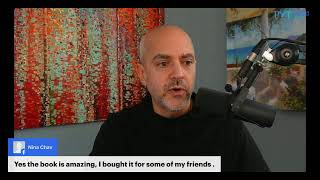
In this episode of the Program Yourself Thin podcast, host Jim Katsoulis argues that the most effective way to control appetite is not to suppress it but to treat it as a friend and provide it with what it truly needs—nutrient‑dense food, water, rest, and calm—rather than junk food. He uses analogies (holding a basketball underwater) to illustrate why fighting appetite backfires. Katsoulis critiques the traditional diet mindset of all‑or‑nothing, extreme calorie restriction, and specific trends like keto, labeling them as unsustainable, diet‑industry‑driven, and often ineffective. He proposes a sustainable, incremental approach: start by reducing calories by a modest 10‑15% in the most comfortable way, then repeat the process, likening it to a dimmer switch rather than a light switch. Motivation is examined in depth; extrinsic motives (looking better) are deemed weak, while intrinsic, deeper motivation is necessary for lasting change. He introduces the “Gold Weight Pyramid” (mindset, lifestyle, eating) and promotes his hypnosis session “The New Thin Me,” his daily live podcast, and his book The Tao of Living at Your Goal Weight as tools for mindset transformation. He also discusses GLP‑1 medications, calling them a temporary band‑aid compared to lasting behavioral change. Throughout, he engages with audience members, shares testimonials, and emphasizes that consistent small improvements beat sporadic intensive dieting.
Chapters
Everyone, welcome to today's Program Yourself Thin podcast. Today we're talking about the best way to suppress your appetite. I bet you'd love me to tell you what it is, but I'm going to tell you that the best way to suppress your appetite is to not suppress it, but to feed feed it what it wants. Your appetite is your friend. And when you stop treating it as an enemy, you start working with your body than trying to fight against it. I think of trying to suppress your appetite kind of like trying to hold a basketball underwater. And the further you try and hold it underwater, the more difficult it becomes. And I think trying to suppress your appetite is the same thing. I hate the language. And you don't want to suppress anything because ultimately your appetite is going to win. And I think the more you try to suppress it, it's like the further you push the ball underwater. When you let go and you always will let go because the ball 100% just pushes by nature, you only have so much attention and energy to hold it down. And when you do finally let go of it, the further down you pushed it, the higher up it goes. And I think the same thing is true of your appetite. So I think trying to suppress your appetite is 100% the wrong approach. And instead, you want to understand your appetite and you want to work with it. You want to feed it. You want to give it what it wants. And that's the big distinction, because you think what your appetite wants is never-ending junk food, fast food, sweets, baked goods, whatever it may be. But truly, what your appetite wants— nourishment, water, rest, relaxation. Oxygen, calm, quiet. This is what your appetite wants. And instead you're trying to fight against it and you're literally— you think you're suppressing it because you're only looking at this phase of it, but what you're actually doing is activating it and enraging it, enlarging it. And so when you stop that whole approach and you start to work with it and listen to your body, The whole vibe changes, the whole approach changes, and we start to relax and we start to move towards— say, okay, body, whoa, I'm gonna fight against you. I want to listen to you. You're my friend. I know I thought you were my enemy because I thought you were never-ending. I thought you just want to eat everything and you're never going to stop, and you're my enemy and appetite. But no, I was wrong. You're my friend. You've been trying to tell me messages and I haven't been listening because I realize how do I crank up my appetite Beyond suppressing it, what are the best ways to crank up my appetite? Eat more sugar, eat more processed food, eat more fast food, don't sleep much, don't hydrate yourself, get really stressed, don't relax, don't move much, get your mind overwhelmed with everything that's going on, right? These would be great ways to get your appetite just through the roof so that And what's that mean, by the way? What's your appetite through the roof mean? It means that no matter what you eat, you want more. That endless hunger, that nothing's ever enough. You're always hungry for more. And so instead of trying to fight that and push it down, we want to understand it and say, oh, there's been a message coming through there, and I'm going to start to give it what it wants. I'm going to listen to my appetite. I'm going to respect my appetite. I'm going to realize it's my friend. and it's telling me directly what I want and what I need. And when you start to do this, it feels fundamentally different. You start to change at a cellular level because rarely have I met a person who nourishes their body with high-quality foods, who consistently takes the time to relax and calm down whenever they can, who focuses on hydrating, and staying properly hydrated, who gets enough sleep and rest when they can, who creates a lifestyle that works with them and supports them. I've rarely met that person who has a runaway appetite. Now, is it impossible? No. There's a lot of people on the planet, but for most people, there are direct reasons why your appetite feels like it's through the roof. And the answer is not to fight against it. So if you want to go deeper into this approach, click the link in my bio and go get the free hypnosis session I give. It's called The New Thin Me, and it's literally designed to do all the things that I've been talking about— to quiet you down, to calm your body, to relax you, quiet your mind, think more clearly. And there's a good chance that after listening to the session, you'll feel your appetite reduce naturally, simply because you feel more relaxed and calm. And so if you want to go deeper into that, click the link in my bio or go to Program Yourself Then. Uh, if you're over in Facebook land, you can click the link I'm about to put in the chat window. And if you have any questions, feel free to ask them. And if you're on TikTok, you just go click my picture up there on the top left. And I hope you're all having a nice day. Well, we get close to the end of the week. Thursday, I like Thursdays. Mr. Steal Your Soul, how's it going? Am I missing questions? Christina says, yo, what do you think about keto? Um, I'm not a huge fan of keto. I don't really like any diet though, so I'm not just picking on keto specifically, although I tend to because I think keto is one of the dumber ones out of the whole bunch. Um, can you lose weight on keto? Obviously, obviously you can lose weight on any diet, but I think keto for most people is this reactionary, reflexive approach. Listen, we live in a country where the number one source of calories are baked goods. So if you're putting a diet together, I think it makes a lot of sense to put one together that's built around avoiding refined carbs. So I get, I get the idea, but the idea that you're going to live your life in ketosis, I think is silly. I don't think there's a lot of reference for that. You know, even to the point, I know a lot of times keto is my favorite stat. I learned a couple of months ago. I know a lot of keto, um, people will reference the Inuit, um, you know, indigenous people, and they will say, well, you know, because they, they don't eat— they almost have a keto-ish lifestyle, especially a lot of the year, because they're just eating whale blubber, right? There's not a lot up there. And it's interesting to find out that they actually have a genetic mutation that doesn't allow them to go into ketosis. So that's kind of interesting. Too. So the idea of going into ketosis is, is kind of odd. Um, the keto diet originally was, uh, actually had nothing to do with weight loss. It had to do with, uh, a potential helping of, uh, epileptics. So I think keto is a huge overreaction. Um, and I think that, I, I, you know, again, I think for most people, if you're, if you're living in America, I can almost guarantee you that part of your weight loss strategy is going to have to be reducing refined carbs. If you're just the average person, you're probably eating too many breads, cookies, you know, uh, you know, things with, with refined carbs in it. And so most people are gonna have to do that. But the idea that you're gonna completely cut them out is so strange because without question, there's no question about what I'm about to say here, the healthiest populations in the modern world are high-carb, low-protein diets. And there's there's no debate on this. Go read the Blue Zones, because every society virtually in history in the modern world here has been a high-carb, low-protein diet, because protein's expensive and, and takes a lot of resources. And so what people mostly consisted off of was whole grains, vegetables, beans. You— this is the majority of their food. There was meat too, but it was— again, there was— meat and protein are high-resource foods. And so most places didn't have the ability to create lots and lots of protein like we do now, you know. And so I think keto is definitely as big as it is because it's a big— it's backed by meat, the meat industry. And I don't— I personally, now I'm biased because I'm a vegetarian, technically a pescatarian. I do eat some fish here and there, but, uh, I do not believe that meat and lots of it is the best answer to be as healthy as you can be. And in terms of weight loss, I think the idea that you're going to live your life never eating cake at a birthday party, never eating pasta somewhere, never going to have pizza again, I just don't think that's true for most people. And I think a lot of people keep trying fucking keto because that's what dieters do. They just keep trying the thing that doesn't work for them. And I think the reason it doesn't work for you is because even if you lose weight, A, you feel like shit. Ultimately, most people do. And B, it's so difficult that it's virtually impossible to maintain long-term. Not because it's hard, by the way, because it's unpleasant and you don't like it. It's an unpleasant quality of life for most people. It's great in the beginning when you're losing weight, but once you— the weight loss kind of stabilizes, the keto lifestyle for most people is not that great. So that's my thoughts on keto, but I appreciate that question. I'm always shit-talking keto. Let me see. Okay, that's not the question. Where is it? Where is it? What's up, Jamie? How's it going? Ah, shit. I tell you, the question— get the questions on TikTok is annoying. All right, Mr. Stelia Soul, what do you think of cutting out meat for lowering symptoms of high estrogen in women? Cutting out meat for lowering symptoms of high estrogen in women. I couldn't speak to that. I have not really— I have not really studied that too much. I mean, again, I'm biased, so, so I acknowledge my bias. And, you know, you can, you can argue any diet, you know, at this point, but I'm not— I can't think of too many situations where I think adding more meat is a better idea. I just don't believe that. And especially, you know, maybe grass-fed meat, maybe you can make an argument for it, although I don't, I don't know. I think our bodies are, I mean, listen, we have adaptable bodies so we can, we can adapt and we can, we can eat lots of different stuff, you know. So I don't like to tell people what to eat because I think the important thing is to figure out what works for you, you know. And I think if you approach your diet with that mindset that I'm going to figure out what works for me, I think that's the way, you know, I always say, program yourself. Then there's no right or wrong. There's— this is the golden rule. There's no right or wrong. There's only what works for you. So I don't want to sit here. I don't want to eat meat, and I have my reasons, but who gives a shit, you know? Um, there's plenty of people that eat meat that are really healthy too, you know, and I acknowledge that. So I think that the key thing is to— and by the way, they did a study, a huge study, where they compared low, um, low carb versus What am I doing here? Yeah, it was, uh, low carb versus low fat. I don't know why I'm blanking on this. Anyways, it's the same thing all the time, that the diets virtually, when they put them all together and people actually follow them, it's always the same thing, that they all lose about the same amount of weight. So there's no diet that really has been proven to be the best diet long term. There's diets that'll help you lose weight the fastest. I mean, keto helps you lose weight quick, there's no doubt about it, but a big part of that is water weight. You know, in the beginning, it helps flush out more water out of your body. So to me, I don't give a shit about fast weight loss at all. So if you care about fast weight loss, you're in the wrong place because I don't give a shit about fast weight loss. I care about long-term weight loss. And the most important factor to maintaining your weight is the plan you're following resonates with you, you know. And in terms of, you know, meat and estrogen and women, I just don't know enough about that. Yeah, so funny, these AI summaries on TikTok. TikTok's always changing. Every day is another day with TikTok. Uh, what's up, Lois? Lois says, I got a notification of you going live. All right, nice. Yeah, there is a way to do it. I, I kind of actually, uh, I told you I researched it. It's a little more complex than I thought, and so I haven't really gotten it out to people, but Um, yeah, I'm glad you got that. What's up, Jane? Jane says, my laptop has survived and so have I. I'm up half a pound after stress eating yesterday, but I did think about it. One thing I have realized is that every day there will be stressors in my life and I have to come up with better strategies for dealing with life. Yeah, yeah. It follows it up by saying, I did the redo rehearsal technique last night and this morning. Today will be better. Yes, there you go, Jane. Congrats. And that's what the reading rehearsal technique is, kind of the core technique of the Program Yourself Then approach. And, uh, that's awesome, Jane. I'm really happy for you. And what a realization. I'm so happy for you. And that may not sound like much to some of you. Somebody said, well, no shit, no shit, every day's new stressors. But sometimes we just, we see things in a new way and it makes a difference. And so I know for Jane, this is a big deal for her. I know Jane, Jane's in the program. I talk to her, you know, regularly here. But I know, Jane, um, why that's such a big distinction for you is that one thing I've realized is that every day there will be stressors in my life. That's so important because if you don't realize that, what happens is you build your success on waiting for the day when there's no stress, right? And, uh, that's what most of you all are doing. That's what dieting teaches you to do because diets— and this is the thing, and I want to make this clear— This is why I don't give a shit if you say, what's better, keto, Weight Watchers, Mediterranean, vegan, carnivore? I don't give a shit what diet you ask me is better. I think they're all bad. Why? Because they all require a diet mindset. So to me, the specifics of the diet really are almost irrelevant. The problem is your mindset. And the core mindset that a dieter has is this all-or-nothing mindset. And what that does is it sets you up to Wait to start your diet till everything's perfect, or you're so upset you can't wait any longer. And what happens is this all-or-nothing thinking doesn't prepare you to live a real life. Because, yes, Jane, every day brings stressors. There is a random day where there's no stress, but that is a real random outlier, unusual day. That's the exception. The rule is that pretty much every day is going to bring some stress for you. And so most dieters in there, well, okay, well, once, well, okay, the month's over now. Now this Monday I'll start. Oh, once this clears up, then I'll do it. And most dieters, if you're really honest with yourselves, what you notice is you're always waiting to start. You're always getting ready to start. That's the diet mode that you're thinking about weight loss 24 hours a day, but you're really only taking action towards it. A few times a year, probably in a real way. And there is the problem in a nutshell. It's a mathematical problem that you can't succeed. You know, you, you know, you want to learn how to swing a golf club. And so you, you schedule 4 intensives. Each intensive is a day long. You know what? Let's make it a weekend long. You schedule 4 weekend-long golf swinging intensives over the year. Versus you practice 5 days a week for 20 minutes. Who do you think is going to get better at the end of the year? And that's a way to kind of think of your dieting, you know, is that you, you go all in a couple times a year. And what happens, you run the same cycle. You go all in, change everything, lose a little bit of weight, and then go all out and stop doing it, put the weight back on. and then time goes by and then you do the same thing over. So nothing ever changes. You dieters know this. You're probably into decades of this. So the alternative is that every day you do something to get 1% better. Good day, bad day, whatever. We can always get 1% better. You know, you realize, like, Jane, Jesus Christ, every day is got stressors. Every day is a challenge. But again, as a dieter, you have to wait till everything's perfect because what you're expecting to do is so overwhelming and it takes so much effort and energy and focus to do it. And that's what unites all dieters regardless of the strategy. That, that's what unites someone who's going to become a vegan tomorrow versus someone who's going to become a carnivore tomorrow. You say, wow, they're totally different. No, they're not. They're both going to jump into it 100% tomorrow. That's what you dieters do. Monday, 100% in, and you're 100% in until you're 100% out. They say you're kind of doing the hokey pokey when Well, the hokey pokey, even you're doing half in, right? You died doing the full pokey, whatever that would be. That's stupid, but whatever. And so it's, it's the irony is that success with your weight comes in a counterintuitive feeling package because you've been conditioned by the diet industry your entire life. Think about that. We all have. All of us at this point, if you're alive now, you literally have been steeped in diet mindset marketing your entire life. It's the only way you know how to think about weight loss and the only way you know how to think about weight loss. You go all in and you think that's the right way to do it. It feels like the right way to do it. But if you reflect on your results, it's clearly the wrong way to do it. But you don't believe it. Even when you look at your results, when you look at all the people around you do the exact same thing and are not getting results. You still cannot even believe to yourself that dieting is not the right way to do it. And that is just proof that dieting is literally the only way you have ever been trained to think about weight loss. That's how complete it is. That's how successful this psychological operation has been on all of us. It's taken me a lifetime to deprogram myself from it and reprogram myself a different way. And what's the other way? The other way is that you actually, you succeed with your weight the same way you fucking succeed with everything else you're good at, you do a little bit consistently over time and you get better. You know, and if you put it in a different context, it's so obvious. It's like, oh, you're going to play piano, right? So the diet mode of playing piano and learning the piano would be, okay, I'm going to play 8 hours a day. And that sounds so good on paper. It makes a lot of sense, right? If you want to get good at piano and you start playing 8 hours a day, you're going to be amazing quick. So it sounds good. I mean, what's the problem here? Well, the problem is the planning fallacy. Well, what about the downsides of that plan? Let's think about it. The downsides. First of all, getting through 8 hours is going to be really hard. A. B, if you get through 8 hours, you're going to wake up the next day and your fingers are going to be all cramped up and killing you. Your back's going to be so sore. You are going to hate the piano. And now you got to do it again. Maybe you get through it again. Maybe you do it for a whole week. But eventually it just becomes too much. You're living a life. And you can't do it. The other alternative is, what do you say? I'm gonna learn the piano. I'm gonna practice 15 minutes a day, 5 days a week. Oh man, it's gonna take me forever to get better. Is it? And by the way, the other way is an illusion, but it's easy for your brain to get excited and understand the idea of playing 8 hours a day. I want you to understand this. I want you to internalize this because this is what's going on with dieting, is that emotionally it feels really exciting and understandable to be like, yeah, I'll just do it 8 hours. I'll just change everything. So it feels so exciting. You get caught up in that, that momentum and that emotion. But when you take a step back and really reflect on that and reflect on your own experience, that's the craziest part is you, you've done this so many times, but you never learned from it. You never learned that every time you go 100% in, you can only do it for a little while. And you won't accept that going 100% in forever is impossible. You won't believe that. I know you won't, but it is. And I think the sooner you acknowledge that, the sooner you can start to build an actual real, real practical, realistic plan. And the realistic plan is to do small things consistently over time. It's simple. So again, 15 minutes a day on the piano seems really— it sucks. You think that, but a year later, where are you at? 2 years later, where are you at compared to the person who's doing 8 hours a day for 3 days? A week, 2 weeks. And that's dieting in a nutshell, you know. And I say that to you because you think it's yourself. You, you beat yourself over the head because you can't get yourself to be 100% perfect forever, when in reality that's never— that was never an option. It's not an option. You're always going to make mistakes. And notice how your brain can't even wrap itself around that. It can't even make sense of what I'm saying. The idea that you could live at your goal weight while you make mistakes Regularly, your brain can't even comprehend what that means. And that's how complete the programming is from the dieting in your brain. You're, you're literally— your biggest core problem with your weight is that you're trapped in a diet mindset. It's like a prison. It's like an invisible prison in your mind so that every time you think about weight loss, you think like a dieter, which is to say you've never really had a legitimate, valid strategy or plan to manage your weight. All you've had is get-rich-quick schemes, is the hacks, you know, trickery, and it don't work. So Booza says, why am I not motivated enough to get thin to finally get a boyfriend? I want it so bad to look so good and be confident to talk to guys. Um, I don't know, but I will tell you one thing: when we ask problem-oriented questions, we get more understanding of the problem. And if you ask solution-oriented questions, you get a different thing. So why am I not motivated enough to get thin to finally get a boyfriend? So we can all play along with this. I mean, you can just start answering, oh, because you're stupid, because your mom said this to you, because this happened to you then. Oh, that happened there and this happened there and that happened there. And you know, this is the curse of the overthinker, is you think that you're going to ask a question like, why am I so addicted to food? And you think you're going to come up with some answer and it's going to be this cognitive breakthrough is going to change everything. It ain't when you all of a sudden realize why you haven't been eating well or whatever, and you never realize it anyways. You all been asking that question anyways. How long have you all been asking, why can't I lose weight? Why can't I stick to a plan? You've been so obsessed with that question for decades, most likely. You've never gotten to a valuable answer. And even if you did, even if I said, oh, this is the reason, and it was the reason, I was like, oh my God, yeah. Oh, who gives a shit? You still don't have the thought patterns, the, the habits in you to actually do the things to be the weight you want to be. So, you know, we get, we get obsessed with cognitive reasoning and understanding when in reality it really plays a small part in your weight. Um, so that's the wrong question. Uh, that's a— Tanua says, I have kept my 60 pounds off for over 1 year being extremely mindful of my fullness when eating. Listening to my body is what works for me. I have finally learned how to listen to my body. Yeah, that's great. I think that's a great strategy. And again, that's the, that's an example of a strategy that's built for long term. Because I guarantee, um, that Tanuha has had stressful and difficult times during the year, but by practicing being mindful, um, you know, they have been able to consistently over a year change their reading statistically. And that's the key thing is changing your reading statistically. That is the answer. Because what you dieters are doing is you're thinking black and white. You're either 100% on or you're 100% off. You need to start thinking— instead of like a light switch, you need to think of a dimmer switch. And the other way though, so, um, we'll look at it like you're eating, right? Let's just say you're eating. Your eating is a reflection of your weight. Flip that around, strike that, reverse it. Your weight is a reflection of your eating. And so if you want to change your weight, you need to change your eating. And so let's just say your weight right now is created by 100% of how you eat right now. So you've got your eating habits that bring your average calorie consumption to right here. Let's call that 100%. So most dieters are gonna say, okay, this is my normal calories. I'm gonna cut 60% of it out starting tomorrow, and I'm gonna stay there. And you all know how that plays out. What I would suggest to you, and I know you're going to be, you're going to say, ah, fuck that, I'm going to keep dieting. But what I would suggest instead is you go starting at 100% and you dial it down to 90% or 85%. It's not as overwhelming. And you get comfortable at the 85%. You focus on doing it. And then instead of all that energy you'd use to get down to 60%, 40%, You're going to take that energy and say, okay, how can I do this 15% comfortably? How can I do this 15% so I hardly even notice it? How can I cut those 15% of calories out in the easiest, most comfortable, enjoyable way possible? And if you use part of your energy to cut the calories out and part of your energy to optimize how you're doing it, what happens is, let's say 6 months go by and maybe you haven't lost a ton of weight, but you consistently are losing weight. But the key thing is that not only have you lost weight, but you have learned how to consume less calories comfortably and easily. And once that happens, now we take that energy that we used to use to get ourselves to eat less, and now we cut 10 or 15% more out. No more than that, because then we're going to use the extra energy to say, okay, how can I do it in the easiest, most enjoyable, most comfortable way possible? And I don't know, like It bums me out that what I'm saying is like probably— I don't want to sound like I'm delusional, but it's kind of revolutionary. You've never heard anyone say that. You— I bet you've never thought of your weight that way, your weight loss that way. I bet you've never thought that. And even worse, because you're not a weight loss expert, you've probably never even heard anyone ever fucking mention that. And I'm not saying that's the right plan for you, please understand. Maybe it is, maybe it isn't. What I'm saying is you've probably never in your life considered the idea that you could cut 15% of your calories out and then do it in the most easy, comfortable way possible, normalize to that, then repeat the process down to your goal weight. Have you ever thought that? You haven't. I know you haven't, because you think like a dieter, and it's not your fault. The diet industry's conditioned all of us, you know, but the diet industry got to change everything all at once. And it's too much. It's too overwhelming. You know how you— you know how much energy it takes to change your eating? You make over 200 food decisions a day. So this idea that you're just going to change your eating, it's so— that shit triggers me so hard because it's like it just minimizes it so much. And it's an illusion, this idea, I'm just going to change my eating. No, you're not. No, you're not. It would be like waking up and say, you know what, I'm going to start using my other hand from— as my dominant hand. You could do it, but you know how much energy and focus it would take for you to do that? And it's the same thing with the dieting. It takes so much energy and focus to change up your behavior. And the diet industry's taught us to just, oh, just if you want it, you'll do it. No, you won't. You're not even set up to do that. Hmm. Uzo says, I know I have a good strong motivator, so why is it not working? Generally so stressed out. Also, what low-calorie sauces and dressings do you use? Uzi, you're kind of jumping all over the place here, you know. Um, I know I have a good strong motivator. Well, so why is it not working? Yeah, I mean, Uzi, I would suggest— I mean, never mind low-calorie sauces and dressings. Um, I think the first thing you want to do is just get clear on what your goal is and why, you know. To look so good and be confident to talk to guys. Yeah, but I mean, like, I think— I don't think that's a good motivator personally. I'm just going to say it. It's an extrinsic motivator. Technically, if you study the science of motivation, that's extrinsic motivation. It's the weakest form of motivation. I mean, that's just the science of it. So I know that again, you know, the thing with weight loss is it's like a black is white world we've been trained to live in. You know, another thing the diet industry has done is they've made everyone's motivation— primary motivation for weight loss is to look better. Right? And I'm not knocking that. I think wanting to look better is a great motivator. I'm all for it. But it ain't enough. It's not enough. Literally, technically, it's an extrinsic motivator. Depends on other people. You're doing it for other people, right? If you're the only person on the planet, would you give a shit? Probably not. I would, because my motivation is intrinsic. I have extrinsic motivation too. I want to look good. I want that. I have that too. But I know that's not enough. Most dieters don't, you know. So it's like you need the deeper motivation. And I can tell you, Uzo, your motivation's not deep enough. That's why. You know what, Uzo, what if I said I'll give you a million dollars if you get to your goal weight? Would you need to worry about low-calorie sauces and dressings then? Would you worry about your motivation then? Um, Bridget says, great truth, Jim. Well, thank you. Thank you, Bridget. Uh, what's up, Karen? Karen says, I'm 5 pounds away from my goal weight, and yesterday you talked about how it is common for people to stall and sort of sabotage their eating choices to subconsciously avoid the end of the feel-good weight loss process. I've been meditating on that idea and it makes so much sense. I think I'm falling into that trap and need to work on my mindset in this area. So thank you for helping me become more aware. Yeah, you're welcome, Karen. Now Karen's on the program, and I think that Um, yeah, that's the process. You know, as you, as you see, no one with dieting— you've been conditioned to think of dieting and weight loss, there's no learning going on, right? A diet basically is the idea that I'm going to give you a plan and you're going to follow it, end of story. That's it. And I think that's the craziest shit in the world because it's like you need to learn all sorts of stuff, you know, and program yourself in. We follow the Gold Weight Pyramid and, uh, flip the camera around. The Gold Weight Pyramid. I mean, you just see right from the beginning, it's not just eating, it's mindset, lifestyle, and eating. And we go into the details of each of them and all that. But, um, it's the idea that there's more going on here. You need more, I think, than just an eating plan. You really think— I mean, just take a second now and reflect on it. Do you think your core problem is that you don't know what to eat and what not to eat? Do you think that's your core problem? I mean, you can always learn more about nutrition, don't get me wrong, but you cannot think that's your core problem. Because if I suddenly gave you— if I tapped you on the head and gave you the ability to just do what you knew you should do— like, let me put it differently. If you were a robot and you could just type in what you're gonna eat all day, then you just did that because that's what was programmed in— you're a robot— would you have much of a problem losing weight if you could just type in what you're going to eat and then you just ate it? It's not a knowledge problem of what to eat. It's really— it's, it's an information gap that you don't know how to get yourself to do it. And as far as I can tell, I've never seen a diet that really focuses on how do you get yourself to do it. I've never seen that. So I always say, if you have, please share with me. I'd like to know about it. Shit, I'll recommend it. I don't even care. My mission is to help as many people live at their goal weight as possible. If I found some new program that worked better than Program Yourself Thin, you know what I would do? I would close Program Yourself Thin up and I'd go and teach that program and use that. I don't give a shit. I, I, I know there's people smarter than me. I wish they would do it. Make a better program, please. I'll teach it. All I care about is helping people manage their weight better, but I haven't seen it. I haven't seen it at all. I never even heard of it. So that's what I think. Yeah, say summaries are confusing. Oh, those are for people here though. That's cool. I get it. A coach discusses. It's like the AI summary, like, it, it does something so well, it's like, doesn't, doesn't know my name. Like, it's a coach. I know my name's Jim. Uh, Uzo says, I know it might not seem like a good motivator, but for a woman to be fat is like the worst thing ever. So in so many ways in this world, it's exhausting with all these beauty standards, and I see how my thin friends are treated. And I asked about dressings because most calories I consume because of the sauces. Um, Uzo, listen, I'm not telling you it's a good or bad motivator because of anything I think. Okay, this, this might be a fun conversation for people. Are you motivated or not? Have this conversation. Are you motivated or not? Don't stress yourself out. It's real easy to figure out. It's real easy. And I think dieters twist themselves into pretzels trying to figure out if they're really motivated or not. So, Uzo, I'm not telling you— because you say, I know it might not seem like a good motivator, right? Like, like, I don't, I don't understand because I'm a man, so I don't understand what it's like for a woman. And so I don't understand how good of a motivator it is for you, is what you're saying. But that's not why I say it's a bad motivator. And I say this to all of you because this is— could be really valuable for you because you're all fucking convinced that wanting to look better is— is— that's enough motivation for me. Believe me, Jim, I think about it 24 hours a day. I want to look better. I'm a woman. On top of it, so you don't even know. Believe me, I want to— I am motivated. I want to lose weight. And I don't say it because I'm a man and I'm a woman and I don't know. I'm saying it because if you're not getting the results you want when it comes to weight, 99% of the time it's because you're not properly motivated. How do I know that? Because let me look at your eating. Are you eating the way that you want to? Are you eating the way you know you should to get the results you want? That's That's the simple question of if you're motivated or not. It's a black and white question. And you know me, I love all or something, and I don't like all or nothing thinking. But your motivation is very clear, and a lot of you are jerking yourselves around. No, no, I really, really want— no, I'm really motivated. I ask people this all the time. I said, okay, on a scale of 1 to 10, how motivated are you to lose weight? 10. 10. No, I'm really— my— you know, Jim, you don't even know. I'm really motivated. Okay, so you're as motivated as you can be is what you're telling me. Yep. Yep. Oh, I think that's all I think about. It's all I want. You say you're confusing. You're confusing yourself. There's a difference between wishing and being motivated. Does that make sense? And let me prove the point because I always ask the people, I say, okay, you're a 10, right? And then you're struggling that you're overweight, you're struggling, you're not losing weight, but you're at a 10 too. That's what you believe. Yeah, I said, okay, if I said I'll give you $1 million if you lose weight this month, would you be at the same level of motivation or would you be at a higher level? Everyone says I'd be at a higher level. So then you weren't at a 10 and you're not at a 10. I have never in my life seen someone who's at a level 10 who has not lost weight. I've never seen it. Now, they may not lose weight that week or that month, so it might take longer, and that sucks. But if you're a level 10, it doesn't matter how long it takes. So I don't believe— I'm going to say this, I'm just going to say it straight up. You're telling me that it is a good motivator. You're telling me you are motivated. I'm telling you, I don't think you are motivated, not at the highest level. And I think that is a trap for a lot of people. I think a lot of you think you're motivated up here when in reality you're motivated down here. And there's nothing wrong with that, by the way. But if you don't see that, what happens is this. Tell me if this lands for any of you. You think you're motivated up here and you say, Jesus, Jim, I'm a level 10. I'm as motivated as anything could be and I can't lose weight. Now, what's that mean? It means that you've created a belief in your head that you're motivated up here doing everything possible to lose weight. But something about this system can't lose weight no matter what. No matter what I do, I can't lose weight because I'm motivated up here. I'm doing everything possible. So there's got to be something wrong here. And that creates a belief of disempowerment. You start to believe it. What's— who gives a shit? It doesn't even matter what I do. I can't lose weight no matter what I do. Well, how many times have I heard that? A lot. How many times has it been true? Zero. In my case, I've never worked with someone who's gotten more motivated and started to do things differently who has not lost weight over time. I've never seen it. Because we live in physical bodies. The GLP-1, the number one thing the GLP-1s have proven is that no, your body wasn't broken. You were eating too many fucking calories. And now people taking GLP-1s and they feel full all the time, so their calorie levels go down. And guess what happens to all of them virtually? I mean, there's other things, but if you lower your calories, whether you got insulin resistance, whether you got Hashimoto's thyroid issues, slow metabolism, All the issues that people have, because that's who the GLP-1s were tested on first, metabolic disorder people, and they're all losing weight. Why? Because when you reduce calories over time, your weight goes down. So if your weight's not going down, what's the reason for it? So I don't say this to be an asshole. Please understand, because I, again, this is my mission in life, but I find this to be one of the biggest traps that people get caught in, is they think they're motivated up here, and in reality they're motivated down here. And that wreaks havoc with our mindset. So it's got to be addressed and acknowledged if you're going to move forward. So I think, but you all have to be honest with yourself, you know, because again, and I don't, I'm not trying to be an asshole, you know, I've done this to myself. I thought I was motivated up here. Turns out I'm actually motivated down here. And to me it's like, oh, thank God. Now I understand why. Let me get my motivation up here. You all think you're, you think you're as motivated as you can be. And you're not losing— I just never— I've never seen that person. Are you that person? Are you that one person? Reach out to me, I'll interview you, and we'll find out in 2 minutes that you're not as motivated as you thought you were. That's my challenge to you. Take me up on it. Yeah, Chell says higher. Yeah, of course your motivation should be higher if you get a million bucks behind it. Why, though? We could go deeper into that. It's very insightful. I always say, okay, there's two things that motivate us: pain and pleasure, right? So whatever motivation level you think you're at— and tell me you think you're a 10— but there's two ways to test that out. Number one is I say, okay, this month here, if you lose weight, I'll give you a million bucks. And if you do not lose weight, the person who you love the most in life, you're never going to see again. Do you think you'd be more motivated? Of course. If you were more motivated that way. Now again, I'm not saying this is— these are thought experiments. Please understand I'm not being an asshole. You're not going to live at that level all the time, okay? I just use it just to clarify that for Uzo, who thinks that wanting to look better and wanting to feel more confident— how much more obsessed on that could you be, Uzo? So, so again, you're— you think you're at the highest motivation level when in reality you're not. And you've maxed out that particular form of motivation. And most of you have done the same thing. You've maxed out how much motivation you can get from wanting to look better. And I hope you can realize now that it hasn't been enough. It's not enough because for a lot of you, you want more than anything to look better. But at the same time, you've been overweight for long enough to learn how to have lived with it. You've normalized to it to some degree, so the pain's not as great as you think it is. Anyways, um, yeah, Lois likes the dimmer idea. That's a good one. I have had a worse— I've had a week of worse cravings all sudden, and I still don't know how to stop emotional eating. Um, okay, well, you know, I had a week of worse cravings. I would look at the week, you know, again I was saying this yesterday, that most the time people like have a lot of cravings and they like say, what's going on here? And they can't understand it. But we always go in and out of trance. So the good thing I would suggest is to reflect on last week. What's been going on in your life? Any big stuff? Any big changes? You're sleeping okay? Any arguments or relationship issues? Any work issues? What's going on? That's the first thing I would check. And a lot of times people, oh my God, yeah, there's this big thing happened. Well, that might be one of the factors. You know, and in terms of I still don't know how to stop emotional eating— oh, darling, Darling Wells says can't hear you. I don't know why. Um, can you all hear me on TikTok, or is that just Darling Wells? Um, yeah, I don't know how to stop emotional eating is, is really— that, that's not the proper way to think about that. I will let you know Um, because the problem isn't to stop emotional eating. Remember, emotional eating is a symptom of a deeper problem. So let's just say, for example, the particular emotional eating you suffer from is stress eating. Let's just say. And so a lot of people say, oh, the problem is emotional eating. I eat when I'm stressed. But that's not the problem, because if it was, Then the answer would be that I don't eat when I'm stressed, and then that solution would look like I'm a stressed-out thin person. Is that, is that your goal? Oh, you say I eat when I'm sad. Okay, so now you don't eat when you're sad, and now you're a sad thin person. Is that the goal? It's not. And so the issue really isn't your emotional eating, it's how do you handle— again, it's always specific— but how do you handle when you get stressed What ways do you have to deal with your stress genuinely without food? That's the bigger issue. Uh, Jackie says, wise words. P.S., I'm rereading your book and highlighting parts as I go. I love the part of being calm and changing your mindset and focusing on the positive things as opposed to focusing on the negative and what you're doing wrong. Yes, the book that Jackie's referring to is my book, The Tao of Living at Your Goal Weight. Um, this book is something else. I don't know why it's not clear. There we go. The Tao of Living at Your Goal Weight, written by yours truly. Um, yeah, and it's good to reread it. So nice job, Jackie, and I appreciate you sharing your favorite parts. I like that. Yeah, calm and focusing on the positive, that, that'll get you a long way. So that's— those are good ones to reread and, uh, to really focus on. Um, Jane says, totally makes sense, Jim. I am wishing all the time to lose weight, but my motivation is clearly lacking. Yeah, exactly. Yeah, thank you, Jane. I think it's hard to acknowledge that. I will— I'll give you props, Jane. I don't think it's easy to acknowledge that, but I'm telling all of you, if you've been struggling with your weight for years, please let me tell you that your motivation level is your number one issue that you got to deal with. And I know you don't believe me because dieters always confuse thinking about weight loss 24 hours a day with being motivated. And there's a big difference. So dieters think about losing weight 24 hours a day, but they think that's motivation. It's not. Motivation is directly measured by what you're doing. How, how close are you to living to your ideal? And if it's down here, to me, that's a motivation score. If it's up here, that's a higher motivation score. What's up, Karen? Um, so yeah, I think motivation is the first thing. And I don't know, people get very offended by that because I don't know why. I would want to know it because it reveals something really valuable that's fixable too, by the way. You can get way more motivated. The diet industry has trained you to just get motivated by looking better. If you— let me fucking put it this way, okay? If you've been overweight for 5 years, 10 years, 20 years, yeah, you want to look better. I'm not taking that away from you, but you don't care enough to lose weight to look better. How much fucking clearer could it be? I don't know much more proof you would need than your own experience. Uh, what's up, Nina? Nina said, you're so right, I've lost 12 pounds with your program. Never been this happy and free. I eat what is good for my body. I'm so full of gratitude. It works 100%. I listen to you day and night. Yes, Nina, I'll screenshot that. Uh, that's awesome. Congrats, Nina. And I want you— I can already hear you. I can already hear you. 12 pounds. 12 pounds. I got 100 pounds to lose. It doesn't matter. Do you understand? Listen, what's this say? It says living, living at your goal weight. And whether you're 50 pounds away from your goal weight, 10 pounds away from your goal weight, it's the same journey. We have to learn how to live as the person we want to be. It doesn't matter if you're 50 pounds away or 12 pounds away. And that comes from someone who's done over 6,000 private weight loss sessions. So believe it or don't. But that's awesome, Nina. I'm proud of you. And Nina goes on to say, I've never seen anyone who is wanting to help us and does so much for free. I've done the Wegovy 2 years ago. I lost 8 pounds and gained 15. This time I know I'm never going back. So thank you, thank you, Nina. I appreciate you sharing that little extra piece too. Um, that— yeah, you know, and that's— I don't shit on the GLP-1s because this is— I want this to be a safe, supportive space for people. Um, and I don't want to— I don't want to, you know, yuck people's yum what they're doing. I want to support anyone. Um, but I just want to point out that, you know, the GLP-1s— and I heard a doctor say this, so the doctor said it's like a Band-Aid. It's like, it's like you're sinking in quicksand and someone throws you a shovel, you know. So it's not the ultimate solution, and we're all going to realize that as time moves forward. Okay, we're in the honeymoon period of GLP-1s, and I think that people are going to come to see them much more accurately. And, and again, I'm not against them. I think they're a godsend for a lot of people. But I do know for a fact, and I say this every day, that I will put my program yourself thin success stories against the best GLP-1 success stories, and it's clear which one's the dominant one by a mile. Because one, you got to inject yourself forever and you didn't change your mindset at all and you didn't change your lifestyle really necessarily. And the other one, you've transformed your mindset, transformed your lifestyle, transformed your eating, and you know how to manage yourself. You know how you did it and you're confident you can keep it going for the rest of your life. So that's the— that's where Program Yourself In Superior in that method, you know, in that comparison. Well, that's awesome. Nina says, yes, the book's amazing. I bought it for some of my friends. That makes me happy too. I know a lot of people have told me that they buy them for people they love. Um, the book's something else, you know. And I always say this, that this book here is so unique when it comes to weight because it's not just telling you what to do. Uh, it is basically— it's 40 chapters. Each chapter is a page or two, but each chapter is a hypnotic story. And so it's designed to change the way you think, the way you behave while you read it. And, uh, that's what makes it unique. And I think that's why some people say it's the best book they've ever read on weight. Um, someone— I can't read their name— says, do you have any tips for long-term, uh, for long-term deficit? Uh, well, the first tip I'd give you is I'd stop calling it a deficit. I don't think there's too many people that want to live in a deficit. By nature, that, that word in that language implies a lack, less than normal. So the language I use is that we want to reduce our average calorie consumption down to our goal weight level. You know, some people like semantical stuff and some people don't. I think semantics and the specific words you use are everything, but you can decide for yourselves. I think a calorie deficit, it doesn't guarantee it, but it really does nudge you very strongly in the direction of thinking of weight loss temporarily. Because people think of a calorie deficit as something they're going to do temporarily while they're losing weight. And it sounds like a temporary thing that's going to go back up. And I think subconsciously you've been programmed through dieting to think about weight loss as a temporary thing, which is another way to say that you've been programmed to Put the weight back on after you lose it with dieting. I can't wait to write that book. That's the book I really want to write. That's, that's one or two books away. I cannot— that's the book I was meant to write. It's hard to have patience in life, but that one I gotta wait. I got the other ones I gotta get going first. But, but anyways, yeah, dieting is— dieting is a psychological operation that uses a lot of hypnosis. But so anyways, yeah, what I would do is I wouldn't think about it, uh, Long-term calorie deficit. What a great question though. Yeah, long-term calorie deficit. How's that feel for you all? You like how that sounds? That does— when you think about being in a long-term calorie deficit, does that create a positive warm feeling in your body or a negative one? You know, so yeah, I would rather learn how to reduce my average calorie consumption in the most easy, comfortable way possible. So you choose which path you want to go down. Hey, it's funny to me. I love words. All right, everyone, I gotta get out of here though. Um, thank you so much for being on here. I love your comments, I love your questions, always do, and today's no different. So thank you so much. Uh, if you are not in my world, click the link in my bio, or, um, again, you go to TikTok, you can go on my little picture up there, click the link in the bio, go get the hypnosis session, takes 5 seconds to do it. Uh, if you're in Facebook, YouTube land, I'm gonna put a link in the comments. You can go Whoops, there it is. Uh, go to that link and go get it. Again, it's quick, it's easy. Uh, you get my world, they give you all sorts of free stuff. Uh, and this is— I'm here every day, Monday through Friday. I'm here around noon Eastern. Uh, you can get on here, ask any questions you have. I literally— I'll answer them as best I can, help you do whatever I can to move you forward. This is my mission in life, and I'm happy to do it. And if you can't make the lives and like listening to this, it's also a podcast. You can go to any podcast platform, search Program Yourself Then. It'll pop up. You can listen to it whenever you want. Uh, and finally, my book's available. So if you like this content, if you like what I'm talking about and you want to kind of get a better, uh, picture of it, go grab this book. It's over at Amazon. Um, the physical book is $9.99. The Kindle version is $2.99. I'd get the physical book if I were you. It feels cool. Um, but yeah, go check it out. It's probably the most unique weight book you'll ever read, and, um, people are loving it. You can go read the reviews. All right, so thank you so much, everyone. Have a super day, and we'll talk soon. Bye.
More from Jim



Weight Loss Visualization: Wake Up in Your Dream Size #programyourselfthin #weightlosshypnosis



What If You Pretended to Be Thin for One Hour? #programyourselfthin #weightlosshypnosis




