The Least You Can Do To Lose Weight
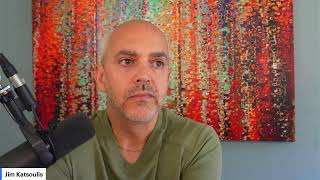
Jim Katsoulis argues against traditional dieting and pushes small, sustainable changes instead. He addresses emotional eating, brain rewiring, and why extreme approaches fail. The focus is on habits you can actually stick with.
Sam. Hey, everyone. Welcome to today's program Yourself Thin podcast. Today we're talking about the least you can do to lose weight, right? The least you can do to lose weight. Think about this. We never come at this problem from this angle because diets have trained you to think, what's the most I can do to lose weight? And every diet's built around that. Every diet, no matter what it is, doesn't matter. Keto, low fat, low carb, Weight Watchers, Mediterranean. It doesn't matter what diet you do. They all subtly ask the question, what's the most I can do to lose weight? And so the answer for most people is that they will follow whatever plan they're going to follow 100% perfectly. They're going to do everything perfect. They're going to completely change how they were yesterday to today and maintain that. So most people, when they're dieting and trying to lose weight, are going into it without even realizing it. The only option you have, the only gear you have is, Is full throttle. What's the most I can do? I got to change everything I possibly can to lose the weight as quick as I possibly can, right? So that's the question that you've been asking, what's the most that I can do to lose weight? And by asking that question, it brings you to specific strategies that are the most you can do. Right? Again, you're doing everything. You change everything all at once. And that's how you're going to lose weight as fast as possible. And if you reflect on your weight loss history, you're going to notice that it's experience after experience after experience, the same thing, doing the most, doing the most, doing the most, doing the most, doing the most, and then overwhelmed, overwhelmed, overwhelmed, overwhelmed. And then stop doing it, stop doing it, stop doing it, stop doing it. Go back to what I always did. It's the same pattern over and over and over again. And it all sits on the foundation of what's the most I can do to lose weight. So what we're doing today is we're flipping that on a tendency. What's the least you can do to lose weight? So the question you probably have never asked in your entire life, never really thought about, and I know why, because you say, well, if I do the least, even if I did lose weight, it's going to be so painfully slow that it's not even worth it. That's what you're thinking, but that's not true. Okay, if I could give you a thing to do that took you 30 seconds a day and you would lose £5amonth. Would you be interested? Right? Probably. Probably, right. Because it's something you can just do in the background, whatever. Because here's the thing. While you do that least thing, you can do the most too, if you want, sometimes. Right. Again, this falls into. In program yourself. Then we have the all or something philosophy, the all or something mindset, as opposed to the all or nothing mindset of a dieter. We have an all or something mindset. So the least we can do to lose weight becomes the something piece. The everything we can do to lose weight becomes the all piece. And there's room for both of them. Okay? But the secret to getting better results than you've gotten up until now is to go from nothing to something all the time. Because most of the time you're not doing the most. Most the time you're not doing everything perfect. And you never will. You never will. Not going to happen. You can't just all of a sudden change everything about yourself in one day just because you decided it just doesn't work that way. I wish it did. It doesn't. Diets have tricked you and made you think that that's possible, but it's not. Diets fail 95 to 98% of the time. So what we want to do is have a new way of approaching this. And this is what I'm talking about. What's the least you can do to lose weight? Now this is the question that becomes interesting. Because when you focus on the least you can do to lose weight, you focus on simple, easy things. And you're never going to believe this, but simple, easy things are way easier to maintain than. Than really hard, difficult things. I know I sound like I'm being sarcastic, but I'm not. I mean, it's just a lot easier to do simple little things than it is to do really hard, difficult things. Right? Obviously, we all know that. Yet every time you go and try and lose weight, you're making fun of your life. Oh, no, no shit, Jim. Yeah, okay. But every time you try to lose weight, you only try and do the most, so. And you can never stick with it. So doesn't it make sense at some point that you may try again? Different approach. You may try saying, hm, what's the least I could do? Well, what is the least you can do to lose weight? Let's talk about that. Because it's easier than you think. How about, I don't know, you cut down your snacking a little bit at night? How about you Go for a walk after dinner. How about you go to bed a half hour earlier? How about you trade the, you know, butter for less butter or some lower calorie spread? Right. I mean, there's a million things you do. Once you start looking at the little things you can do, you realize there's tons of little things you can do to lose weight. And again, I will be the first to admit, yes, when you do little things, you will not lose weight as quickly as when you do all the most things, obviously. Okay, but once we get past looking at the short term. Yeah, okay. In the short term, you know, for the first week, for the first month, yes, doing everything is going to get you better results than the, than the doing less. But if we start to look over six months, a year, five years, 10 years, that's where things start to change dramatically. And this is where I go come back to my, my new favorite metaphor that dieting is basically the mindset of. Dieting is having the mindset of running a marathon like a sprinter. And if you imagine being in a marathon and you're going to run it like a sprinter, you're going to lose that race. As a matter of fact, you're probably not going to finish the race. Now, you'll win the first, you'll be winning the first, you know, eighth of a mile, you'll be number one by a mile. You're gonna be number one way ahead of everyone else, right? But then you're gonna collapse and everyone's gonna pass you and you're not gonna be able to even finish the race. And this is what you do every time you try and lose weight. You run a marathon like a sprinter, and it's the wrong strategy for the situation you're in. And so starting with the least is really a magical question, because there's a lot of little, little comfortable, easy to maintain things you can do that will start reducing your weight. And if you start focusing on it this way, what happens is all of a sudden you don't feel so overwhelmed, you don't feel freaked out about doing it. And most importantly, you start doing the things quicker. You know, if you're in a position where you think about your weight loss 24 hours a day, but you never actually do anything to make it happen. Why do you think that is? I will let you know. The reason you think about weight loss all the time, but you don't actually lose weight is because you do not want to do the strict diets. You don't want to do the extreme anymore. You can't even get yourself to do it. And so this is why you want to lose weight more than anything, but you don't. Because the only way you think you can lose weight is by doing really extreme, uncomfortable, difficult things. And that's not true now. It requires a different mindset. You have to have a different time frame. You have a different idea what you're doing. We have to stop focusing on losing weight and living at your goal weight. Some other shifts we got to make. But the question of what's the least I can do to lose weight is a really magical one because it's going to reveal a bunch of simple, easy things and then you start doing them and yeah, for sure. Well, I'm not losing a lot of weight. Yeah, but then you start losing weight and you say, holy shit, I can't believe it. Lost five pounds this month. I hardly. I feel like I haven't done anything. The next month, another £5. That's the secret. It's the tortoise and the hare, right? And so the third month, now we're £15 down from doing simple, comfortable little shifts and changes. They're easily maintainable, you know. So again, it's a different paradigm, but it's a one that makes a lot more sense and I think you'll find is much more helpful and useful. So I hope you use it. And if you want support with this, go click the link in my bio or go to program yourself. Then go get the free hypnosis session I give you. Watch the video training I made for you, read the emails. And again, I've been talking about the Circle community. Oh, my God. Oh, my God. It's exciting. It's getting real exciting. And especially for the clients, people that are in the program, I got some stuff coming. It's going to knock your socks off. And I don't say that lightly. It's really cool. So I will give you more information about that I love. Ready to go this week for you all, for my clients and for people that aren't, you know. So again, it's going to be a whole free section. It's going to be awesome. I put a bunch of free stuff in there for you to help you kind of kickstart your weight loss, get you going, get to experience this different approach, and I'll help you all for free. But. But I got on my email list. Okay, so again, take two seconds, you go to program yourself, then get the free hypnosis session, or click the link in my bio, go get that and go listen to hypnosis session and read the emails I send and keep an eye out on your emails because I'm going to send you one to get into the Circle app. And it's awesome. It's really awesome. It's really exciting. A lot of cool stuff going on in there. So anyways, I have more information for you. I literally been working on it all morning and I'm so excited. So I'm in the middle of testing it. So it's a lot of the things I'm talking about are created and ready to go. I just need to test them now, make sure they're working the way I want to. But this is next level. I. I don't say that lightly. I do not say that lightly. This is a big breakthrough for program yourself then and again you clients are going to get to experience this this week. It's going to help you really get even more out of the program and I cannot wait for you to get to use this. So anyways, anyways, go check that out. Ruth Ann says, very useful. Thank you, Ruth. I appreciate that. Yeah, that's what I'm here for. I. If you don't know, I'm here every Monday through Friday. I'm usually here around noon Eastern a little bit late today and yesterday. But I am here for you all. I'm here to help you. Whatever your weight issues may be, I'm here to help you. I've been doing this for over 20 years professionally, over 30 years. Personally, I am obsessed with this stuff and I come at this whole weight thing from a completely different angle and than you're typically ever going to hear. And I don't say that lightly. Again, I choose my words carefully. But I think you'll find that the perspectives I can give you on your weight are different than what you typically hear. And sometimes that can be just what you needed. You know, to be able to see things from a different angle can sometimes be the most useful thing for you. So if you do have any questions, feel free to ask them. Scroll through. Tick tock. Because I never know if I missed any. And any questions are fine. It doesn't have to be about hypnosis or weight loss. What's up, Jim? How's it going? Happy to be here. Yep, me too. Yeah, it's nice to be here today working a lot of cool stuff. It's been a fun week. It's kind of an interesting week. I always feel like this, this week right here after 4th of July to me is the summer equivalent of like between Christmas and New Year's, it's kind of like this, this limbo, ish sort of time period. I feel like Christy says, is it possible to rewire your brain and not reach for carby crap to change your state? Yeah, absolutely. It's absolutely possible to rewire your brain. Absolutely. Neuroplasticity is a scientifically proven fact, okay? So you can absolutely rewire your brain. There's no question about that. And not reach for carby crap to change your state. You can rewire your brain to do that, but you really need two things, right? So program yourself then. In essence, everything's broken down in two components. Mindset, strategy, and really, in the program, we have kind of the goal weight blueprints, right? The broken down. We follow the goal weight pyramid, which is mindset, lifestyle eating. You go through the blueprints, you answer all these questions for yourself. So you come up with a custom plan of how to think, live and eat, but like a thin, healthy person. Exactly what to do. And the other side of the program, though, is that you are learning the program yourself then technique, the rehearsal technique of how to program your mind to do those things, right? So basically, you need to know what to do and you need to know how to get yourself to do it, okay? And so when you ask a question like, is it possible to rewire your brain and not reach for carby crap to change your state? It is. But this is the framework which, within which I help people do this exact thing is what I did. So it's not enough for me just to rewire your brain. I can't just rewire your brain. Oh, don't eat carby crap anymore, okay? I can't just do that to you because you have your own particular programming that's got you reaching for carby crap to deal with your states right now, okay? And so it's not as simple as saying, I'm going to stop myself reaching carby crap to change my state. We need to get way more specific. And so I would want to know the specific situations where you do reach for carby stuff. Are the patterns there? Because there's patterns, folks. Most people are not just eating carby all day long. It's happening, you know, in the afternoon, at night, on the weekends. You know, when you get in a fight with your partner or your boss or, you know, I mean, like, there's certain situations typically that are leading to the reaching for the Carby stuff. So it's not enough for me to say, look into my eyes. You'll no longer reach for Carby stuff that doesn't work. That does not work. Not for long, anyways. So. So we need to come up with custom strategies for our own unique challenges, and then we need to have a process to install it and rewire our brain so we follow that new process. All right, so Christy says, state of emotions. When I'm overwhelmed, I look for junk to soothe. I know what to do. I keep yo yoing. I can't keep it up. Consistently happens when I'm overwhelmed at work. Yeah. So we would start now again. Because here's the thing, Christine. When we've got to get specific, I just wish it was easier than this. I wish I could just be like, look into my eyes. No more emotional eating. You're cured. See you later. I mean, I would love. If that was the case, I would. If it was, I would do it. But that's not the case. Okay. The truth is that you need to understand your patterns, because, for example, Christie's. Give me some specifics here. Happens when I'm overwhelmed at work. Right. It happens other places, too, I'm sure. But the overwhelmed at work is probably the primary way where you're grabbing for Carby to decompress a little bit. Okay? So we would go to work on that one behavior. You see what I'm saying? We're not trying to get rid of all the carbs at once. Because, you know, when you're home at night, you know, on the sofa, watching tv, you know, wanting to reach for carbs, that's a whole different program you're running. They're not the same. Okay? And so we have to look at each kind of behavior pattern as a. As a unit. And so what I would do with Christie, I say, okay, give me one specific situation where you're reaching for Carby crap. Because again, notice how this started. Right? Christie starts with, you know, is it possible to rewire your brain, not reach for Carby crap, to change your state? That's so vague, it's almost meaningless. So we need to dive down into it, make it more specific. Now she comes back and says, okay, primarily, the main thing is when I'm at work, I get overwhelmed. Then I'm reaching for Carby crap. Now we're way more specific, you see? And now we can start to work with this because we talk about the habit Q. The habit loop. There's a Q behavior reward. So the cue is that Christy gets into work, and she's overwhelmed. Not all the time. Sometimes Chrissy's at work, and she's just relaxed and Chilling, just doing her stuff, and she's fine. Other times, boss can buy dump a bunch of stuff on her. Ah, freaks out. That's the cue. And now I'm overwhelmed. What's the behavior? I don't know how to deal with the overwhelm. So I go and I get a carby snack that makes me feel better. That's the reward. The overwhelm reduces. Okay, but why is that happening? That's a whole nother question. But again, we use. Sometimes it is the carbs, the actual physicality of the carbs and the addiction of it that is a piece of it. But more, it is a behavior. When you reach for the carby thing, you're simultaneously taking your focus off the thing that was overwhelming you. Okay? You're, you know, the boss puts a big, you know, pile of work on your desk. And when you look at and think about it, you start feeling overwhelmed. Thinking about a carb thing shifts your focus and attention, right? And so now you say, oh, I don't feel as overwhelmed anymore as I'm eating this donut or cookie or whatever, okay? Now, again, part of that is the carbs and the sugar and the bullshit. But a bigger part of it is the fact that you're not paying attention to all that work. Now. You're. You're focusing on the carby thing. You're in that experience, whatever, and that is creating relief from the overwhelm. Okay, now, we could go into this deeper. There might be more stuff to this, but that's just a general way to kind of deconstruct it. And so how do we deal with it, though? How do we fix it now? So it's not that we're going to say, how do we stop eating carbs? Because, you see, the carbs in that situation are serving a valuable purpose. They're creating relief from the overwhelm. You see, so we always do things with a positive intention. You're not eating carby stuff. You're not grabbing carby stuff to gain weight and feel bad about yourself. You're grabbing carby stuff in that moment. Because in that moment, by focusing on the carby stuff, your overwhelm goes down. That's the reward. So the secret to figuring this out isn't to say, stop eating carby stuff. Because that's what people do. They say, I get overwhelmed. I'm going to stop eating carby stuff. But now what happens is they get overwhelmed. They don't eat carby stuff, and now they stay overwhelmed. Now their subconscious mind says, holy, we're better off being overweight than being overwhelmed. So the secret is not to stop eating carby stuff. It's to find an alternative way to lower your overwhelm in that situation. And there's a million ways to do this, but you have to figure out the way that works for you. So I've done this a million times with people, and this is a very common one. Some solutions are I get up and I go for a short walk around the office for two minutes. Why? Because you're still getting up. You're taking your focus off of that overwhelm thing. You're just giving yourself a second to decompress. You're relaxing, you're breathing, you're moving. Different environment, you're not around that work, and your overwhelm may go down. Now, again, it's different for different people. Some people, I'll go grab some water. I'll go take a short walk. I'll go take a step outside the door and just get some sun on my skin. I'll going to go and eat an apple again. There's a million things that you could do, but the idea is not that we're just going to stop the bad thing, because that bad thing is serving a positive intention. And if you don't deal with that, you're never going to stick with it, because again, you're going to get to the point where, okay, it's been three days where I haven't had any carby stuff, but I'm absolutely out of my mind. I'm overwhelmed, and I have not dealt with this stress at all, and I'm about to freak out. And in that state, you're going to choose the food. I hope that makes sense, you know? Yeah. Chris says when I feel uncomfortable in my own skin, I escape with food. Avoiding the uncomfortable emotions. Yeah. Again, totally common. You're not alone, Christy. Again, in this culture, we've been conditioned to use food as our main emotional management strategy. So it is pretty much the norm for most people to use food to deal with their emotions, positive and negative. Right. You feel overwhelmed, negative, depressed, sad, lonely. Watch out, here comes the food. You know, to make you feel better for a minute, you feel happy, right? You want to celebrate? Here comes the food. So again, we've been conditioned. Literally any emotion we feel, we basically run off to food. So, again, completely normal and natural. But the way to deal with that, again, and I think in order to live as a thin, healthy person, you have got to learn how to deal with your emotions, how to feel the emotions. You want to feel genuinely regularly and how to deal with the shitty emotions. You don't want to feel genuinely without food. And once you have that ability, your. Your ability to be able to manage your weight goes way up because it's a lot easier now to eat in the right ways, you know, that bring you in the direction you want to go in. So hope that helps. Anne says, are you doing real hypnosis? I think so. I think I'm doing real hypnosis. Yeah. I use a lot of hypnosis in the program. I use a lot of hypnosis on these podcasts. I use hypnosis constantly. My main form of hypnosis that I use is called conversational hypnosis, and I use it all the time. And I use traditional, you know, regular old hypnosis, too, in the program, the sessions. But yes, I would say I'm doing real hypnosis and says, last night while watching tv, I battled my thoughts and had to fight about not eating at night. I have been eating at night for years. Yeah, okay. And I get that. Not eating at nights, I would say it's the number one challenge that I see. It certainly was for me, you know, no doubt about it. And what I did, though, and again, I just. I'll share this with you because this is probably the main strategy of programming yourself then, like, strategically, I would say the core strategy of programming yourself then is that we systematically and strategically improve our eating, our lifestyle, and our mindset. And so when it comes to eating again, where if you start a diet, you're going to completely change your diet and you're eating, you're going to stop eating at night, you're going to stop eating so much at dinner, you're not going to eat breakfast, you're going to eat something different for lunch. And it's like you completely and totally change your eating and you think you're going to keep it changed just forever until you reach your goal weight, and that's just not true. You don't have the mental power to do that. Again, if you understand your mind, you'd understand. You can't just all of a sudden micromanage and make all these conscious decisions, all these things you do automatically in the background. You can't just all of a sudden just make all these decisions consciously. It's overwhel. And so in program yourself, then what we do is we will focus on the highest calorie habit. And for a lot of people, for me, it was late night eating. Well, not even late night. It was night eating. I start pretty much an hour after dinner and just eat until I went to bed, basically. So that is a big part of program yourself then. We're not trying to change everything all at once. We kind of pick strategically, you know, where the most calories come in. What habit pattern do I have where the most calories are consistently coming in daily, weekly? And then we focus on it like a laser. We understand it, you know, we. We seek to kind of, you know, understand the habit, what triggers it, what's going on there, what are we looking for? And then we start to work on resolving it genuinely, comfortably, easily. And we sometimes. I mean, it took me months and months and months to get over the nighttime eating. And I tried different things, try different strategies. I kept improving, kept improving. But, you know, again, let's just say it took six months. This was over 30 years ago. The way I did it. After the six months, I had a plan of how to not eat at night. That was just really easy and comfortable for me, and that was built for me. And so, yeah, six months. How much weight do you lose? Who gives a shit? All of a sudden, six months later, I haven't eaten at night in 30 years, and it's easy and comfortable for me. So again, the difference with programming self den is we kind of deep dive into specific behavior patterns and work on resolving them. You know, I would use the example, like cars used to have carburetors. And it's like you would take the car, the carburetor get all gumped up, and it's just like, you take the carburetor out, take it apart, clean it up, put it back together, put it back in the car, right? And so I think of, like, habits and behaviors like this. We have you kind of habits that are gunking us up, right? I got a nighttime snacking, nighttime eating habit. So I like to take that out, kind of look at it, take it apart, really understand it, put it together, tweak it, get it back together, right? Put it back in. Now I move on. Because for me, now it's. It's natural and automatic not to eat at night. Why? Because I didn't just stop eating at night. Do you understand? Like, that. That. That diet mentality, that willpower is the answer to everything. They're just gonna stop. I'm not gonna stop. I'm gonna fight all my bad habits all at once. No, you're not. No, you're not. You know how much energy it takes to fight bad habits? It's really hard. And on top of that, as soon as you go on a diet, you're just making all these new decisions. So the cognitive load goes way up. Folks, we live our lives on autopilot. We're not these conscious creatures constantly making logical, rational food choices. We make over 200 food choices a day. The vast majority of those are subconscious, happening in the background on autopilot. So the second you go on a diet, it's like, holy, I gotta. Now I gotta make 200 more decisions a day. Consciously, like, again, are you. Is it not 20, 25, where every single person is just, like, up to here? We just got an abundance of energy and, you know, time, and it's overwhelming. So again, the strategic approach is that you systematically focus. Imagine if you imagine if you focused on your three kind of worst eating habits for the next year, like, obsessively, like, you would come up with real, genuine strategies for how to deal with them. You've never done this before. Because just stopping them is not a strategy. It's a tactic. And it doesn't work eco, because the opposite. See, it's so easy to say, oh, I just gotta stop eating at night. Oh, I gotta stop eating carbs. I gotta stop. Okay, go ahead, stop all your whatever. All the things you gotta stop doing. Put them over here. Okay. The flip side of that coin is you have to start doing something new. And that's really hard. And that's a more accurate. That gives you a much more accurate sense of what you're doing here. You like, oh, I gotta stop eating carbs. Well, that sounds so simple. That's just one thing I have to do. I just have to stop doing one little thing to stop eating carbs. But the flip side of that is that you have to completely eat differently. If you eat a lot of carbs and now you start a keto diet, you have to, like, you. Oh, what am I gonna eat now for breakfast? I can't eat my normal breakfast. I got a new breakfast. Gotta get that breakfast. I gotta make that breakfast. I gotta enjoy that breakfast. I gotta think about there. What am I gonna eat for lunch? Can't eat my normal lunch. Gotta think about lunch now to get myself to eat it. Got to get the stuff, got to prepare it, got to do that. What am I up for dinner? Oh, I can't have my normal dinner. I got to think of a new dinner. I got to prepare it. I got to get it ready. Am I going to like it? I don't know. Oh, and I get to do it all again tomorrow. Holy. Then you get to Thursday and you're ready to kill someone. You got no relief, you know, you just, you're frazzled. God, you're frazzled. That's why you stop the diet. You're always frazzled. It's, it's too much. And it's too much because you try and do it all at once. Anyways. Calm down. This will worked up. Jesus, Jim, relax. Jennifer says of all the fab mantras you've instilled in me that ideally use how will I feel when I'm finished? Probably crappy. Then follow up with how do I want to feel? Healthy snacks, sometimes don't need it at all. Then follow up with do I want a healthy snack? Sometimes don't need it at all. Yeah, absolutely. That, that Jen. I agree a thousand percent. I was literally just using that mant. Just now. This morning I was driving by the donut place and I was like, oh, donut. And I'm like, how would I feel? Like, I feel like, and especially like it's really hot and muggy where I'm at, you know what I mean? So it's like the idea of eating like a big old donut in my belly, it's like, no way. You know, I'm like a little tired. I've been, I've been. My activity level's gone way up. I got kayaks, got some river tubes. We're doing a lot of stuff, been working out a lot more. So I'm just a little bit tired. Big party, 10 hour party on Friday, you know, so I'm just a little bit depleted, you know. And so the idea of like having extra weight, you know, just that donut in me in this heat and the hot, it's like so unappealing. So yeah, how will I feel when I'm finished? That that's how you make the good choices, right? That's, that's a great question, Jen. I love that one too. And I use. That's probably one of my top three. I would say definitely. Kyle says thank you for all your work and info. You're welcome, Kyla. Thank you for saying that. Angela Rose says, I stopped dieting and started losing weight. I used to get out of bed and eat and sleep with antacids in my mouth. Oh my goodness. I get it, I get it. Oh my God. I think about that all the time and I'm just so, so lucky. I, I was able to figure this stuff out when I was 19, 20. Oh my God, I'm so grateful for that. But I remember back in the day, you know, it was regular. Oh, my God. The heartburn, just my stomach hurting all the time. The inflammation. My body was just, like, on fire. I didn't sleep well. I would sweat all the time. I was tired. Holy. Yeah. I mean, you know, good Lord, I look back at the way I ate and it's like, dude, Lord, it's just eating dynamite. It's just terrible. Keto caused a lot of binging on things that wasn't allowed. Yeah, keto's a terrible diet. I mean, keto's a goofiest diet out there. I mean, I guess carnivore came along to take the crown, but it's. Keto is a goofy diet, folks. If you're considering a keto diet, you, you almost, like, couldn't be more lost. Lost in the sauce. As my daughter likes to say. Keto is a terrible diet. Just so you know. And if you want to know why, I'll tell you why. But pretty much all the diets are bad. But keto really stands out as the worst of the worst. It was goofy. What's up, Susan? Susan says, I just had the hardest time at night. All day long I am Good night. It will hold you. I wish I could control my mind. I just had the hardest time at night. All day long I am Good night. I'm not sure what that means, but, I mean, you know, I wish I could control my mind. You never really control your mind. You know, I think that that's important to say because I think sometimes, you know, we get this idea that we can have this complete control over our mind. I, I, I don't know. Maybe it's possible. I'm nowhere close to that. And I just want to make clear you don't need to have complete control over your mind. If you can just gain more influence over your mind, you can dramatically change your, your health, your weight, your happiness, you know, a lot of stuff. So just be, always be clear. It does not take, like, control. Like, you don't have to have complete control. You don't need to be perfect. You really just need to be better. And it's not hard to be better, you know, and especially when you have a strategic plan. I can't stress enough, you know, you have to really internalize the idea that you have never had a strategic weight loss plan, you know, because diets are not strategic. Diets are very tactical and meaning, it's just they just tell you what to do, and then you're supposed to do it. But there's no strategy of how to get yourself to do it again. Most diets will give you a plan and say, here, follow this, do this. And then you're supposed to just use your willpower to force yourself to do it, you know, but you never really learn how to get yourself to do it long term, which is what the big problem of dieting is. It's not. Listen, all the diets, if you follow them, they're all going to help you lose weight. You know what I mean? In the beginning, I'm never questioning that. I'm always talking about diets not working. In terms of long term diets, there's not a single diet that stands out as being more successful than the rest. Long term. That's a crazy. That's a crazy thought if you think about it. I mean, there's been hundreds, I don't probably thousands of diets over the last hundred years, and they literally all. They're all equally ineffective long term. That's a crazy thought, you know, so, you know, at some point, you know, you just realize that dieting doesn't work and, you know, move on and do something different. So that's what I hope for you all. But all right, gotta get out of here. Thank you so much, everyone. Awesome questions, awesome comments. I appreciate them and they make these fun for me. So again, I'm here every Monday through Friday, usually around noon Eastern. I'm here to help you out, right? So if you have any questions about weight loss, I'm happy to talk to you, help you in any way I can get a different perspective on this. If you're not my world, please click the link in my bio or go to program yourself. Then go get the free hypnosis session I give you. Go, you know, watch the training I give you. I got some other cool stuff coming. Really cool stuff coming. The Circle app. So go check that out. And if you like this, I'm here every Monday through Friday. Pop on here, say hi, ask a question. And if you like this and you missed the live and you want to listen to it, it's also a podcast, so you can, you know, go to any podcast platform, search program yourself then and up it'll be. And you can go check it out. So all right, everyone have a super duper day and we'll talk soon. Bye.
More from Jim



Weight Loss Visualization: Wake Up in Your Dream Size #programyourselfthin #weightlosshypnosis



What If You Pretended to Be Thin for One Hour? #programyourselfthin #weightlosshypnosis




