The Number One Nutrient For Weight Loss
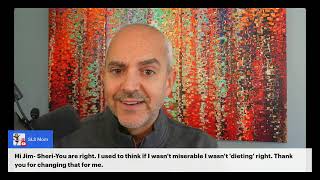
Jim Katsoulis argues fiber is the most overlooked nutrient for weight loss. Whole-food fiber from fruits, vegetables, and grains improves satiety and glucose regulation, making weight loss sustainable. He emphasizes mindset and lifestyle over extreme diets.
Questions this video answers
Approximately 75% (speaker's estimate).
About 95% of dieters who lose weight put it back on (speaker's estimate).
A "goal weight pyramid" with three layers: mindset, lifestyle, and eating.
Chapters
Hey, everyone. Welcome to today's program. Yourself then podcast. Today we're talking about the number one nutrient for weight loss. If there's one thing you want to add into your diet more than anything else that is going to help you lose weight, it's this nutrient. And it is the most overlooked one, ironically. And yet it's the main thing that we've consumed for most of our time on Earth. As humans, we're talking millions of years. This is really one of the main things we've been ingesting, no matter where we lived. And it's been stripped from our diet in such a dramatic way over the last 80 years because of processed foods. And this nutrient is fiber, right? Is the more fiber, whole natural fiber you put in your body. So I'm not talking about a musil, I'm not talking about products, right? Although those may be more helpful than not doing anything. I'm talking about whole fruits, vegetables, whole grains. When you start putting these into your body, you start putting more fiber into your body. And the fiber is about as close to kind of a natural GLP1 as you're going to get, right? And so the more fiber you consume, you know, by definition, not exactly. I mean, I'm sure there's sources of fiber that don't do this, but most the fruits, vegetables, whole grains that you're going to consume to put fiber in your body, a lot of times what's coming with them as well is micronutrients, you know, so you're really getting on this one, two punch of two main things have been stripped from your diet, most likely because, again, if you eat a lot of processed food, there's a great chance that you do not consume a lot of fiber. It is estimated that 75% of Americans are lacking fiber, the proper amount of fiber. And so, again, one of the key things to recognize is that the way your digestive system works, it's not just about what you absorb and consume. Well, consume, right? We can eat something, but do we absorb the. What we consume? Right. Bioavailability of it. So some people look at fiber and they'll say, well, what's the point? We don't even absorb it, right? Because there's soluble and insoluble fiber. But what happens is what that fiber does while it's in your body, even if you don't absorb it, and it acts as kind of a superfood for healthy gut bacteria, it helps your whole digestive system fundamentally operate differently, right? Again, when we have more fiber in our. In our Gut in our intestinal tract, things slow up, we're able to absorb things better, we slow down, our glucose spikes and crashes. Everything just gets better. We feel more satisfied. Activates the ileal break. It activates a lot of breaking mechanisms hormonally that make you feel like, I've eaten enough, makes you feel full longer. I mean, the benefits are just go on and on and on and on. And it's one of the most overlooked things, you know. So again, we will hear about carbs, we will hear about protein, we will hear about fat, we will hear about sugar, we'll hear about salt, we'll hear about everything. But the most overlooked thing I see, you know, most of the time is fiber. And again, it's not just fiber as a supplement, it's fiber as the central thing holding your food together. And again, those foods that fit that description are fruits, vegetables, whole grains. And so the more fruits, vegetables, whole grains you put into your body, what you're most likely going to find is that you fundamentally, systematically begin to transform. Your hunger begins to change dramatically. Your sense of satisfaction, feeling satisfied from what you ate, begins to change dramatically. Your cravings begin to change, your moods change, your energy levels change. Everything changes. It's one of the most fundamental shifts you can make in your diet to create the weight loss you want to achieve in a way that's comfortable, that's the key thing. Because fiber rich foods by definition are lower calorie density as well. So you're consuming a lot of food, but you've dialed down the calories. That is the ultimate secret to losing weight and then keeping it off so that you can feel full and satisfied while losing weight. That's the holy grail of weight loss. And the easiest way to accomplish that is to put more fiber into your body in the forms of fruits, vegetables, whole grains, know natural foods. It's one of the best diet hacks there is and one of the most overlooked because again, it has such a transformative effect on pretty much every aspect of your weight loss. And again, not only is it effective, the other key thing is that it makes the whole process easier. I think that's really important. It literally changes. You know, we're finding out now food has the ability to rewire our brains to transform our biochemistry. You know, we tend to look at it in the, in the effects that ultra processed foods may have on those systems. But fiber has the opposite impact on those systems. It healthifies them, it makes them feel better. And so the more you focus on fiber and it doesn't have to be instant. You have to all of a sudden, you know, start pounding fiber tomorrow. But in your mind, start looking for opportunities to start putting fiber into your diet consistently. Start creating a habit of eating an apple or a banana. Um, start having a habit of having more salad or fruits or vegetables in your diet. Figure out when you can do that and within a couple weeks you'll start to notice a big difference. And again, it just makes it easier to get the results you want. So I hope this helps you out. And if you want some support in actually getting yourself to eat more fiber, click the link in my bio. Go get the free hypnosis session I made for you. Get on my email list. I also have a training for you called the three Steps to Mastering youg Weight. And you can go check that out too. So if you have any questions, feel free to ask them. Any weight loss questions are welcome. As you get on here every day talking about weight loss.
People got different situations. Although not really.
It is funny. I mean, with dieting, it is a very.
It's. You hear the same things over and over with dieting, and a big part of that is you're giving the same message over and over. So. So again, I'm not commenting on all you wonderful people. I'm saying that the way dieting is explained in our culture, it's kind of like a. It's a one note song, let's put it that way. It's funny too because again, like the diets, a lot of people think, oh my God, there's all these different diets, I've tried them all. And it's like, well, yeah, on the surface they look different, but if you just go a little bit beyond that surface, they're all the same, you know, and.
People get caught up. Oh yeah, Are you gonna tell me a keto diet's like a vegetarian diet? You know.
So. Yeah. Well, when you look below the surface of what they tell you, though, you start to notice that similar pattern, you know, that all the diets are. I don't know. The way I always think diets are the same is it's the way that you approach weight loss. So it's the mindset piece of diets that's the same. You know, I know obviously that the nutritional.
Philosophies of each diet is a little different, you know, but you can't get caught up on that, you know, you can't just get caught up on the fact that every diet's going to come down the pike and tell you something a Little different. You've got to look past that and say, okay, but what's the approach? Because the approach is always the same. It doesn't matter. Veganism, carnivore, always the same approach, which is, you're going to start tomorrow 100 perfect.
You know, and you shouldn't. You shouldn't start 100 perfect.
Right? And that's the message I always get from dieting, is that you want to start 100 perfect. You want to remain 100 perfect. That's the goal. That's how it's going to happen. And I'm here to tell you, no, no, that's not how it's going to happen. That's how it's not going to happen. You're not going to be 100 perfect.
I don't know. Do people think they could be 100 perfect?
Give me some heart. Give me some hearts. If you think you. You're waiting for the day when you wake up and you're just gonna be 100 perfect, you're waiting for that day, right?
Is that a good plan? I don't know. I think that's the diet thing, you know, because it doesn't make any much sense to me in any other context that you're just gonna wake up tomorrow being a totally different version of yourself, acting totally different, thinking totally different, feeling totally different. Waffle says, is the blood type diet a real thing? No, I don't believe so.
So I think you're better off. Now, listen, never mind blood type, right? We're all our own type, okay? So.
You'Re on, you know, in a weird way, you're on the right track with a blood type in the sense that what are you gonna look at the blood type for, right? Is your blood type is gonna be a certain way and you're gonna follow that diet in order to what, to appease yourself, to succeed, for you to succeed, right? So I like the. We're on the right path in the sense when we say blood type diet. Like we're starting the first step in the right way. Because what do we want with blood type, right? We say, give me my specific plan. I got blood type B. Oh, whatever the hell it is. I got this type of blood type. Now tell me what I got to do, right? So again, I like the first part of that where you're saying, okay, I'm a unique person. I don't have the same blood as all these people, so I'm going to need a different plan. I like that part.
So if we just stick with that part and get rid of the stupid blood part, we're going to be all right. Okay, so if you follow that through though, waffles, and we say, okay, I'm a unique being. My blood, my mind, my environment, my history, my family, my friends, the foods I grew up around. I'm a unique person. Okay. They call the snowflake diet. Before snowflake was a bad term for someone to be growing up, snowflake was a good thing. Right. You're always taught you're kind of unique, just like a snowflake. And that was a good thing. Okay, so let's go back to those days for a second, but let's talk about the snowflake diet instead of the blood type diet. Right? And the snowflake diet would be that you're a unique, one of a kind snowflake. Isn't that what we always learn about snowflakes? Right. Is that even true? I guess it's probably true. Anyways, so we're all unique snowflakes. The good side of it. And being a unique snowflake, we're going to figure out a plan that works for us because we're unique. We got a different genetics, a different environment, different preferences, different history. All these things are different for us. We're a unique snowflake. Like, so I'm going to figure out how I can deal with all these things in the best way possible for me. And so I think if you follow that plan forward, that's a great idea. But I think the blood type, taking that first step and say I'm unique. Now tell me what to do. Yeah, it's not going to work. It waste a lot of time.
See, where's that question? Question? A bunch of Emoji says, is 500 calories a day good for a 16 year old girl who weighs 49 kg and is 140? I don't even care about any of the stuff. I, I only needed. I didn't really need to go past this. 500 calories a day. Good. I could have just stopped there. You know, 500 calories isn't going to be good for anyone for very long. So, you know.
500 calories a day is considered starving. So it's. That's not. Unless you love starving. You know, if you're one of these weird people who love starving.
I guess. But no, I wouldn't say that's good at all.
Is it good for weight loss? Sure. Is it good for living at your goal weight? No, because you can't maintain it. And if you did maintain It. You'd be miserable, so what's the point?
That's what I would say.
Yeah. Awful says, I agree. Good. Yeah, there's always. There's always dumb diets out there. Again, if I was a, you know, if I had no moral code, I would be making diets. That's what I would do. If I just wanted to make money, I would just keep making diets.
Snowflake diet sound pretty good, doesn't it? Wouldn't you want to know about the snowflake diet? I got a million of them. But I would never do that because, again, I don't want to do that. I. I think that's what. One of the things that really bothers me in life is just.
With.
With dieting, it's like, this don't work. You know what I mean? It's just marketing, and it's like people just come up with catchy dumb to sell it. But sorry about that. But it's not really effective, you know? So again, I don't want anything to do with that. But pretty much, there's no diet that is effective.
It's not a weird thing to think, right? There's not. There's no diet. We've had diets for over 100 years. There's not one diet that's effective, more effective than the rest of them. Long term. Gotcha. I know you say, well, I did keto. I lost 30 pounds. Yeah, I'm talking about long term. I'm talking about long term. There's not one diet that's risen to the top of the list in order to help you actually maintain your weight. What's up, Darlene? How's it going?
So, yeah, so you know the easiest way. What do they always say? Like.
I mean, this is a stupid one about to say, but they always say, like, how do you know when a politician's lying? Right? Their lips are moving. But it's like, how do you know when a diet's not gonna work? It's like when it's called a diet, pretty much. You know, it's kind of dumb. But it's. It's true, though, you know, because diets are. Are literally. I mean, I talk about all the time. It's just the depth of. Again, it's not the. Let me give you a little context what I'm talking about, right? So I always think of weight loss in terms of this pyramid. I call it the goal weight pyramid. And so we got mindset, lifestyle and eating. And the mindset piece is just huge. You know, there's so much to this. And with dieters, what most dieters do is you got a dieting mindset. You don't really pay attention to your lifestyle probably. You don't really customize your eating for yourself. And so what you do is you're just given rules, right? With your diet. You're just told what to do and you're told what to do and you're supposed to.
Just magically, then you're just going to start doing it. And it's funny because when you really look at it, it's like you might have tried to. You might have tried to do your plan because it doesn't matter what it is, ke, let's just pick keto. But it's like you might have tried to do the keto plan 30 times. It doesn't work. Right. But the. The weird thing about a human brain is that, like, you think the 31st time is going to be totally different, you know, and it's this stuff you got to wake up from because it keeps you trapped. So it's very important to recognize that.
There'S another Darlene 2. Darlene. Darlene says. Sorry. Cooking but listening. Yeah, there's nothing wrong with that. Yeah, I know.
People do all sorts of stuff and, you know, even you could be cooking up some super unhealthy food and doesn't matter. You know, that that's actually a powerful thing too. It's called cognitive dissonance. But it's, you know, I think people are better off. Some people may joke and be like, oh, you know, your, your video just came on. I mean, sitting here eating, you know, Twinkies and Oreos or whatever, or your live just popped on. I'm just sitting here in the ice cream, you know, But I say. So that feeling you get is cognitive dissonance. Right? It's very difficult to sit there with like a bowl of ice cream or some bad and healthy habit food, you know, eating it while you're listening and thinking about your weight. That's a very. Like again, that's called cognitive distance. That pressure you feel, it feels weird, right? And most people just kind of opt out of it. So I always say, you know, even if you're sitting here listening, you're eating a bag of potato chips or cookies, you're still better off, you know, because A, you're learning to deal with that cognitive distance and exist with it, but B, you're still getting good ideas in your head, you know, I think that's why I'm such a big fan of the all or Something philosophy that we use and program yourself, then most diets are really all about being all or nothing. And.
The problem with that is that, you know, it's just. It's a. It's a plan of extremes. And you can't have plans of extremes if you want to succeed in life. I don't think, you know, so again, small change is usually the best ones. But even listening while you're eating is better, right? Because at least you're putting good ideas in your head. And you never know. Sometimes when you're eating and thinking about weight, you can have some of the biggest breakthroughs you ever had. I. I certainly have. That's been so helpful for me. I will tell you, on a personal level, for me, one of the most helpful things has been just being more aware. And especially, like, when I'm doing the wrong thing. I think that's been one of the. The most valuable things for my weight, my health that I can think of is that I've just developed a tremendous sense of awareness where there was not awareness. So that's helpful. But I always think that's the first step for everyone. You know, I just had a. A coaching call. I was just doing. And we were going in depth on eating trances. And eating trances, you know, are basically your mindless eating, you know, but it's not just mindless eating. It's mindless choices, too. We have to recognize that. And most of your behavior is mindless. You know, we're. We're us Humans are built to be on autopilot and just kind of run on autopilot and do what we did without having to think about it. And so a lot of times.
You know, a lot of times transforming your body is a process of becoming more aware of your automated behaviors, which is to say that you don't really know even know why you're overweight. You have a vague idea like, I eat too much or I like ice cream too much. But most people don't have the real granular depth of understanding of what they're doing to remain overweight. They have a gist, vague idea of it. What's up, Darlene? Donnie says, lol, I only had three milk duds instead of the whole box. Holy. Good for you, Darlene. That does happen. I mean, when you start to pay attention to things, it becomes a lot easier to not eat the whole box. And I know a lot of people say, oh, my God, I could never do that. You know, but there's an example of an eating trance, right? You open up A bag of chips, a box of cookies, whatever, a box of Milk Duds, and it becomes a trance. You know, it's very easy to have that be a trance. And if you wake up to it and you actually enjoy the Milk Duds, you eat and kind of eat a little bit more mindfully, you. Not all the time, but. But you will tend to consume less of it. You know, a lot of your consumption is driven by the fact that you're just unaware, right, that you're. You're eating while you're watching TV or scrolling on your phone or driving or, you know, just distracted. And you're not really. It's not that you're not paying attention to it so much. It's that you're not.
Eating is a funny thing, you know, it really is, because we tend to think of eating as being such a physical thing, you know, but it's. It's such a complex process, and even your awareness impacts how hungry and satisfied you're going to feel. It's going to affect your weight because it's going to affect your eating behavior. So great job, Darlene. Yeah. When we can dial down the things instead of getting room completely, that, to me, is the. The gold standard, darling. So again, you can eat Milk Duds and lose weight how? By eating less of them. It's so obvious. I know, but a lot of people don't have the ability to eat less of them. And plus, most diets don't give you that option anyways. You know, most diets out there are very strict, and it's either, you know, you eat the whole box of Milk Duds or you don't eat any Milk Duds. Very rarely is there room for.
Kind of the middle ground, you know? But, yeah, if anyone's got any questions, feel free to ask them. Any weight loss questions are.
Fine. What are you dealing with? What are you struggling with? Or are you killing it? I can celebrate you, too. I get people here all the time celebrating their successes, but a guy here yesterday lost £100 in what, a year or two? I don't know what he was saying. I don't believe him. Really? I. That's the other side. I'll believe you if you're telling me the truth. I can kind of tell. I don't know. I feel like I got a sixth sense for bullshitters. I've been doing this for three years. I do this live all the time, so I feel like I've gotten a lot better at recognizing trolls and bullshitters, so. So don't bullshit me. I'll know. But, yeah, where people at is funny. Like, I. I think there's patterns I do notice. I will tell you a pattern I notice is that right about now, the next two weeks, three weeks, I suppose people kind of. They don't think so much about their weight because Halloween's coming and then there's a blip. You know, you don't want a busy time of year for weight that a lot of people don't think of is right after Halloween. That. That's kind of like. There's usually kind of a. An uptick, you know what I mean? In programs I sell, and I find that interesting. I'll be here for you, you know. But what y' all thinking about people dealing with Halloween candy? I've had those conversations.
Yeah. Halloween candy will get you. I think the secret with Halloween candy, if you're gonna eat it, is to delay it as long as possible. You know, I think that's. That's certainly my game plan is I keep that candy, the Halloween candy away until a couple days before Halloween, and then I'll keep it around about a week afterwards, and then I pretty much clear out, you know, get rid of it.
But, yeah, if you got Halloween candy in your house, you already know. Right. Once it's in the house, it's a lot harder to not eat it. So that's always tough. Darlene says went for my yearly doctor's appointment. He said everything was optimal. Blood work, etc. We discussed how before the program, I was all obsessed about the number on the scale. It is truly about awareness. Well, thank you, Darlene. Yes. Darlene is in the program, and that's so exciting. I'm real proud of you. Because getting that man. Getting that blood work. Right. Getting that blood work is something special. You know what I mean? Yeah, yeah, exactly. Right. Just a number. Lots of factors that impress on the scale. I don't freak if it goes up now. That's great, Darlene. Yeah. We got to stay relaxed and calm. I know a lot of people. Again, with dieting, the scale really is the. In control of how you feel about everything, typically. But if you can relax that and start to change the way you approach the scale and think about it, it's usually better off for you. But great job, Darlene. I'm proud of you. Because it's. Yeah. Once you get the blood work, that's one of those other really good feelings, you know, of getting yourself under control here with stuff is when you get to go to the doctors and the blood work's good. The Next one, Darlene, that you can wait for is when you have doctor's appointments and you just feel relaxed and calm, almost excited to see what your blood work is because you know it's going to be good. That's fun, too. So that is another little benefit outside of just the scale of the number. So that's great. Keep it up. So Biggie. Biggie says, how about boycotting Halloween candy? Oh, yeah, sure. You, obviously, you can boycott Halloween candy. That. That's obviously always an option you've got, you know, and so again, I think I don't really talk about that a lot. Maybe I should. You know, I. I try. I usually try to occupy the middle ground, you know, and I. I reflect on what I do, too. I don't boycott candy, like. Well, I do. I boycott candy pretty much all year long. And when Halloween. Halloween comes around, I will eat it for, like I said, a week, two weeks, whatever.
You know, but it's. It's a relative period of time, and it's always an interesting experience. I don't know, though, you know, I mean, that's also being said. That's me having kids. So, you know, I'm moving out of that age. My youngest is in eighth grade now, so it's. It's not, you know, he might go out, though, you know, to be with his friends and whatever. So it's just not as much of a thing now. And so now maybe. I don't know. We'll see. Yeah. Have something else instead. I get it, Vicki, again, I. I think that that's a noble goal. And I don't know, if I didn't have any kids or my kids didn't live here, maybe. Maybe I would. I don't know. I kind of like eating candy for a little bit of time. I don't know. It's fun to me. And again, yeah, like, if Mickey. Vicki's in the program, so she. She knows everything we're talking about here. But do what works for you. That. That's exactly the end of the day, the ultimate advice, I think.
And I got issues with sugar, but. But I. I treat sugar just in general. I might treat everything this way that I. I like. I treat sugar kind of like I treat alcohol. And, you know, it's a decision I make that I know is not the healthiest decision I know. But again, I don't want to be the healthiest person I can be, like, if I'm honest. And I don't think you do either. I don't think anyone. And I don't think anyone really wants to be the healthiest person they can be. Maybe that weirdo who does all that. You ever seen the guy? And of course, he's just selling now, but I don't know if you've ever seen this guy. I guess he's some. Some rich. I don't know what he. I don't know who he is or what he does, but he wants to live forever. And so he's on this just crazy regimen of stuff. It's really. It's wild what this guy does. He literally, all day and night, all he does is things dedicated to living forever. And I remember seeing, like, his. His supplement routine. It is just. I don't even know how a person can consume this many pills. But. Okay, but you know, maybe. Maybe, you know, he might be like the epitome of, you know, health. Maybe. I don't even know. Maybe he's not even health either. But for me personally, I don't want to be the healthiest person, you know what I mean? So I'm gonna balance my life. So I. I personally like. I like eating Halloween. Halloween candy around Halloween. Right. Well, it makes me think about when I was a kid and childhood and fall, whatever. I like it, but I moderate it. Same with alcohol. I know alcohol has no health benefits at all. I know that, but I like it and I. I moderate it, though. And so I'm comfortable with it, you know, And I think at the end of the day, we all got to make these choices because I think sometimes our brain just wants to go, I'm going to completely stop doing that. I'm going to stop doing that. And again, if you stop doing that, great. I stopped completely eating land animals. You know, I only ate a little bit of fish and mostly vegetables, you know, so that was a decision I made 100%. But that felt natural for me. It felt easy, comfortable, you know, and so a lot of other things that aren't as healthy, I've gone more in the moderation category. And I'll put Halloween candy in there as well, because I got all sorts of issues with sugar. I mean, you know, for sure, but. But not if sugar is dealt with moderately. You. I mean, like, again, it's the same type of thing if you do it casually, if you do it moderately, lightly, you know, what's it doing? Is. Is it helping me? I don't think so, but is it hurting me that much? I don't think so either, you know, so that's kind of the balance I look for with those. But I Know, some people kind of get lost up in the Halloween candy. I do too. I mean I, I find it very interesting. Every year I kind of add the Halloween candy in for a little time. I find it interesting how quickly it hijacks my body and mind and gets me like thinking about.
Thinking about candy and that all the time. So anyways, Dreaming a taco says I'm pre diabetic and I have been insulin resistant. Which test do I consider the A1C or fasting insulin?
I don't know. I, I, I, I, you should ask the doctor. I, I am not a doctor and I don't like to give medical advice because I'm not a doctor. So yeah, that would be better. Better to ask them about.
But pre diabetic, right? So again, pre diabetes is, Geez, I guess everyone's pre diabetic. You know, that's kind of what they make it sound like and it might be true, right? Diabetes numbers are just off the charts to the point that people I think a lot of times just assume it's just part of getting older, you know, of course it is not so pre diabetic or whatever. You know, once you figure out what test you should be taking, what you want to do, the next step I'm focused on is really changing up my diet. You know, diabetes numbers. It's very interesting that if you, you've got a certain time frame and I, I forget the exact time frame, but if you.
Kind of intervene with your diet pretty quickly when you're pre diabetic or pretty quickly.
Soon after being diagnosed as being actually diabetic, there's a window of time there where you can reverse it. You know, most the time I suppose there's situation where you can't, but, but most the time, type 2 diabetes, if you catch it in a, you know, a certain window, your chances of reversing it go way up. So that's the thing I'd be focusing on if I was even near the ballpark of being pre diabetic or, or in it.
So Carol, Carol says, I love this program. Your suggestion to eat more whole foods and more fiber rich foods has made this entire process more fun for me. I am moving in the direction of my goal weight and feeling healthier with better energy. I am prior prioritizing sleep. The other day I was hungry. I took a couple of deep breaths and told myself to calm me as thin and healthy. Then I made a good food choice and ate it slowly. Hey Carol. So proud of you. I'll screenshot that. So thank you for sharing that again. Yes, it's, it's. Boy, you just hit the nail on the head with everything. Carol, nice job. Nice job. I'm proud of you. That's so super. Yeah, you're doing all the great stuff. Right. But some key things I want to point out that Carol just said.
Eating more whole foods, more fiber rich foods has made the entire process more fun. That's one of the things I really want to highlight. And I think it really is important to understand that again, when you approach your weight strategically, you can actually make this process. It can be fun, it can be enjoyable, it can be interesting. I think a lot of people, subconsciously, I think this is the diets to understand this, the diets are not there to help you folks. The diets are there as a branch of the food processing industry. So the diets are there to confuse you more, to program you to keep on eating shitty food.
And one of the things diets have done is they've conditioned your subconscious mind to associate weight loss with pain and misery. And it's sucking. It's one of the reasons why you avoid it, right? Because subconsciously, when you think of weight loss, you think it's miserable, you think it's boring and depriving and difficult and stressful and anxiety inducing, all this stuff. And ultimately you're going to fail anyways, Right? So the big point I like to point out there is that that's just a bunch of. You've just been programmed that way. But weight loss can be really fun and enjoyable. I know that sounds strange, but it absolutely can be. You know, and again, when you hear Carol talking about, you know, like, because it's not, it will program yourself then. Anyways, it's not even just about weight loss. It's about feeling better. You can feel better so fast. Like, it's so easy to feel better. It's. It's ridiculous. I mean, that it is really easy to feel better than you feel right now. Like, one of the easiest things in the world. And I think dieters, ironically, when they approach weight loss, they make themselves feel worse. I find that so odd. Like dieters, like day number one. It's like you do everything you can to stress yourself out and make it as hard and awful as possible. It almost feels like that's your goal. It's weird why dieters always make themselves so miserable. I don't know. Anyone got any ideas on that? I'll make your weight loss as miserable and hard as it can possibly be. What is that all about? I got an idea. I think it's because you just want the fastest results possible, I'm guessing. But why is it. Why do dieters make losing weight so miserable? I don't know, but they do. And that's why dieters don't want to start their diets and can't stick to their diets. I think that's important. And I know, you know, it's like, I'm in a calm mood today, you may notice. And I'm gonna stay calm because I got worked up yesterday. I'm staying calm down. I don't want to get all mad about this stuff.
But.
Yeah, when you look at, like, you always hear, like, a weight loss, they'll be like, well, people can lose weight. We know that. But I can't figure out why they can't stick to it. Why can't they stick. Why can't they keep the weight off? What is it? Is it their dang hormones? Is it their leptin signaling? Oh, boy. It's their biology. And it just wants to keep them at the same weight. That must be it. I'm not disagreeing with those things, you know, I mean, like, those things are certainly factors. I'll be the first to agree with those. But wouldn't you also agree that a factor in why you can't stick with your plan is that it's miserable, that you hate it?
Isn't that possible, too? Isn't it possible that the way most people lose weight sucks and they don't like it at all? Is. Is it not possible that might be part of the reason why people can't maintain? Because it's estimated 95 of dieters that lose weight put it back on.
So is. Is it possible that the diets are so miserable that that's the reason why people can't keep the weight off because they can't stick with it because they hate the plan?
I don't know. Maybe. So anyways, it doesn't have to be a miserable plan. I. I love how I eat. I love how I live. Like, I. I just love it because I've customized it to me. I've done it strategically, I've done systematically. I keep improving. I don't bite off more than I can chew. I. I get to do it, get a little bit better, get good, then I get a little bit better. And I just keep repeating that process over and over so that the entire time it feels comfortable for me. I feel better, I feel good. Keep moving steps forward, and you dieters try and take 100 steps forward. The first day, you know, and you overwhelm yourself so. I don't know. It seems so obvious to me. I don't. I don't know. I suppose it would be weird. They've been just a weird person.
What's up, Sherry? Sherry? You're right. I used to think it was a miserable. If I wasn't miserable, I wasn't dieting. Right. Thank you for changing that for me. You're welcome, Sherry. Yeah. Sherry's on the program, too, you know, it's a pattern, folks. It's like when you're in the program, you start thinking differently about all this stuff. Right? It doesn't have to be a miserable thing. And I think you're right, Sherry. I definitely agree with that. I was being a little. I was joking a little bit. I know why people make the diet so miserable. Right? Because they're impatient, you know? And that's what you've been taught, that no pain, no gain. Don't. Don't tell me that's not part of your mindset, you know? I know it is. And so it becomes a. A diet or subconscious association that if I'm not miserable, right? If I'm not white knuckling it. If I'm not on the edge of my seat, I'm not doing it. Right. Right. But. But again, I want you to take a step back and reflect on that. Some dumb.
Because that's. That's a dumb idea. But again, you've been conditioned to think that that's normal and that someday you're just going to be able to do that.
I don't think so. Because it says, what happened to Mario and John? I have no idea. No idea.
Come. People go, that's my life. That's everyone's life. All right, I'm gonna get out of here. It's a little bit of a slow day. That's okay. I got a lot of stuff to do. And I got a busy afternoon coming up, actually, so I'm gonna sign off. If you're not in my world, make sure you click the link in my bio. Go get the free hypnosis session I give you. It's called the New. It's completely free once you opt in. I also give you a training called three steps to master your weight. All right? How to live at your goal weight. That's completely free, too. Got a bunch of other cool free stuff happening. Circle has been completely. Now, what would be the word has been completely.
Audited. Yeah, let's say audited. The circle's been completely audited. So that there's gonna be a lot of improvements coming through there. If there are any broken links or little goofy, glitchy things that have been happening in there, those should all be fixed by next week if you're in the program. And that does set us up to then get the free section going. So, again, there will be a free community that will be started, and you'll have access to that, too. So go check that out. And I'm here every Monday through Friday. If you have any questions about your weight, pop in here and ask them. I'm happy to help you. And if you like listening to this and can't make the live, you can go to any podcast platform, search program yourself then, and it will pop up and you can listen to it whenever you want. All right, everyone, have a super day. We'll talk soon. Bye.
More from Jim



Weight Loss Visualization: Wake Up in Your Dream Size #programyourselfthin #weightlosshypnosis



What If You Pretended to Be Thin for One Hour? #programyourselfthin #weightlosshypnosis




