The Secret To Staying Motivated
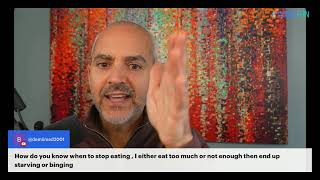
Live YouTube episode by Jim Katsoulis about 'The Secret To Staying Motivated' for weight loss. Jim argues motivation can be developed and strengthened by finding intrinsic, deeper reasons tied to meaningful life roles (parent, partner, worker), not just appearance. He explains "food noise" as multi-layered (physiological spikes from sugar, conditioned timing/cues, psychological priming) and recommends a holistic approach combining mindset, lifestyle, and eating (the "weight mastery/goal weight pyramid") rather than quick hacks. He critiques GLP‑1 usage as reducing food drive temporarily (claims ~16 months of weight-loss effect) and emphasizes long-term identity/self‑image change to sustain weight loss. The transcript also includes audience Q&A, promotion of his Program Yourself Then materials (free hypnosis session "New Thin Me", program access, upcoming book/audio), and personal background (hypnosis/NLP experience).
Questions this video answers
Over 6,000 private weight loss sessions.
About 16 months of weight loss (per his statement).
Around noon to 12:30 PM Eastern.
He states the book will cost no more than $10.
Chapters
Everyone, welcome to today's program yourself, Thin Podcast. Today we're talking about the secret to staying motivated. In my opinion, motivation is really one of those things that most dieters overlook. They just assume they're motivated, right? Because you're thinking about losing weight all the time, and then sometimes you finally get fired up, I'm gonna do it. And that's it. That's again, the motivation is just kind of there or it's not there. And we just. It's like we know it's important, but we never really focus on it. Because when you focus on it and really start to understand motivation, it becomes another piece of your weight loss puzzle that you can strengthen tremendously. And if you have more rock solid motivation throughout this process, everything else is easier. I kind of compare motivation to the engine of the car, okay? And if you get a lawnmower engine in your car, it's going to sputter and go real slow down the road. Whereas if you get a big, giant, powerful engine, it's going to go a lot faster and more powerfully and everything's going to go easier, okay? And so to me, motivation is this way, and you can develop it, right? So the secret to motivation initially is to realize that it's something that you can influence. The more you pay attention to your motivation, focus on it, tweak it, optimize it, polish it up, the more powerful it's going to carry you through the whole process. It makes everything else easier. And just to prove that point, you know, if I said to you, I will give you a million dollars if you lose weight this month, I bet you'd lose some weight this month if you think of the biggest challenge food that you have in your life. If I said, I'll give you a million bucks if you don't eat any of that for the rest of the month, would you be able to not eat it? Of course. Right. Why? Because you'd be super motivated because you'd want that money. But the only reason you'd be motivated in that situation is because you value money. And so I use that just as an example to highlight the fact that you probably are not motivated to that level to lose weight right now without the million dollars, whereas I am. Okay? And so I'm here to tell you that you can absolutely tweak and boost up your motivation without a million dollars being on their end of it. Okay? And the way you do that, right? So the first step is understand that you can tweak your motivation, turn it up and influence it. And the Other question is, how do I do it? Right. And the way you do it is you got to find deeper reasons why you want to do this. And what most dieters are walking around is with this presupposition that they want to lose weight because they want to look better. That's their main reason. They want to lose weight, they want to look better, they want to wear the clothes. They want people to say they look amazing. They will look better in pictures. Right. And a lot of the motivation that most people are going into their weight loss journey with is really based around wanting to look better. And when you study motivation, you learn that that type of motivation is what we call extrinsic motivation, and it's the weakest form of motivation. And so what we want to do is we want to find the intrinsic reasons why we want to do this in addition to the extrinsic reason. So we're not. I'm not sitting here saying, don't, don't worry about looking better. That doesn't matter. I'm not saying that. I'm saying, want to look better. Okay, keep that. What I'm saying is let's add some more depth to it. Let's ground it more. So it's a more powerful form of motivation. And the way you do that is you start to find deeper reasons why this weight loss is going to support you beyond just what you're going to look like. And this is easier than you think. You're not good at it now, most likely, because you just never think about this. But it's pretty easy to start to associate the weight loss with really important things in your life. So let's do it. So I don't know what's most important to you in your life. I'll go through some of the big ones. If you have kids, being a parent is probably one of the top roles and responsibilities that you have in your life. If you're in a relationship, being a partner is probably one of the biggest, most important things to do in your life. If you work and have to support yourself, going to work and showing up for the job and doing it at a high level is probably really important to you. Okay. And there's a lot of other things as well, but we'll just kind of build around these three, just to start, because what we want to do is the secret to motivation, in my opinion, is to find the things in your life that are already really important to you, that you are already committed to. So what areas of your life are you already committed to? And Again, I give you a couple examples. Being a parent, being a partner, being an employee, or however you earn income, right? So it might be an entrepreneur, you might be an employee. Whatever it is, you are probably committed to it. And you probably show up and do that job and do that work consistently, even when you're tired, even when you don't feel well, you still show up for these roles because you're truly committed to them, because they're truly meaningful to you, right? So if you are, you know, if you're a parent, and that's important to you, you're not just, you know, cooking the kids food and showing up for them and taking care of them when you feel good. You're also doing it when you feel bad. And you're not just showing up for when you feel bad because you care what other people are going to think. You do it because something deep inside of you values being a great parent and taking care of these kids. And so that deeper reason is what's driving you to behave the way you behave now. When it comes to weight loss, you're going to realize you don't have that deeper reason. You've got a superficial reason that pops up in importance occasionally, which, I want to look better, I got to look better. Maybe you see a picture of yourself, I got to lose weight. The clothes don't fit. I got to lose weight. The scale goes up. I got to lose weight. But that's not really enough motivation. We got to get to the deeper things. So if we start with the things in your life that you're already committed to, this is a nice, nice little shortcut, nice little hack. Because if being a parent, for example, is important to you, I want you to know that your weight is directly impacting your ability to be the parent you want to be. And it has nothing to do with how you look. It has to do with how you feel, the energy you have, how you think about yourself. That's the part that matters. Because you can't tell me that if you're eating a lot of the foods that are keeping you overweight, living that lifestyle, that you're not suffering energetically, emotionally, and mentally from that weight and from those behaviors. And if you're struggling with your weight and you're not happy with it, and you don't have the energy and the health and the happiness that you want to live with, then that's absolutely going to impact your ability to be the parent you want to be. How can it not?
And the same goes true for being the partner you want to be for being the, you know, whatever job you do, how you're going to show up for that, how you eat and how you're living consistently is directly going to impact your ability to do the things that are most important to you in your life. And so when you start to look at this process not as one of just looking better, but one of being better in the areas of your life that matter most, you start to automatically tap into a deeper level of motivation. And this is the motivation that lasts. Again, I want you to reference areas of your life when you're truly motivated, where you show up no matter what. Again, your kid needs something and you're feeling tired and sick and don't want to get out of bed, you still do it because there's a deeper meaning there. There's a deeper reason why you want to do it. And so same thing with your weight. When you take some time and really reflect on the deeper reasons you want to make this happen, you. You instantly tap into more motivation, and that makes the rest of the process go a lot smoother. So take some time and really reflect on this. What are the deeper reasons you want to make this happen? And make them so deep that you can't quit? You know it's too important for you, and that work's going to be well worth your time because it's going to set you up for success. If you want to go deeper into thinking about why you want to do this, go click the link in my bio or go to program yourself then and get the free hypnosis session I give you as well. It's. It's a kickstart session, so it's literally meant for this. It's called the New Thin Me, and it's designed to get you connected, to kind of clarify what goal you want to achieve and then help you connect to it. And it has the effect of being very, very motivating because you get to step into the reality you want to achieve. And the more you step into that reality, the more exciting it becomes. The more you start to train yourself how to be that person and the more motivated you become, because it becomes exciting that you want that life in reality and not just an imagination. So go check that hypnosis session out, and I hope that helps you out. If you have any questions, feel free to ask them. Any questions are welcome. Doesn't have to be about hypnosis or weight loss. In program yourself, then it can be about anything you're struggling with in terms of your food or your weight. I Know a lot of people struggling with candy right now, you know, myself included, I've been eating some candy during the holiday season. I am getting close to the end of that, thankfully, too. But it's funny, I know a lot of people, you know, you start eating candy for, well, geez, for some people I know they've been eating for a couple of months because they start selling that candy right around the end of summer now. I noticed. But for some people, I know they've been eating candy now for, you know, two, three months, and they're trying to wean it back out. You got to be careful. That Halloween candy, it's dangerous, you know, because it says little, little ones that get you, you know, because you can eat. I don't know, you can just keep eating them. You know, sometimes it's almost worse having the little candies because you just keep eating them. And then again, you have the licensing effect of thinking, I'm hardly eating anything. Little candies, these don't count.
But they add up, right? They add up. But, yeah, that's funny. I know people had different stuff. This time of year is fun, though. I. I like this time of year, especially with the weight piece, because I think it's the perfect time of year to kind of focus in on.
Kind of get like, like grounded a bit before the holidays come. You know, it's not so much the holidays, in my opinion, that. That are the problem. It's the time periods around those holidays that's the bigger problem. And so it's not. It's not Thanksgiving, it's not. Not Christmas Day. You know what I mean? It's. It's not even the Christmas parties, if that's an issue for you, because even those are just a couple days. It's the. All the times that aren't those days that are the problem. And, you know, that's what happens, though, again, that's why the dieting all or nothing mindset is so destructive is because life is not all or nothing. You know, life is constantly.
It's constantly shifting and changing, you know, so it's very difficult because. Because what happens when you're all or nothing is it's very easy in September to say, ah, let's. I haven't. I haven't lost weight this year. And now it's almost the end of the year. And so what's the point? I'll wait till January 1st. You know, that's a symptom of that all or nothing thinking. And so again, in program yourself, then we think about things in an all or something fashion so that we can still be 100% in the game. Just really hitting it hard, doing everything great. But even when we're not being 100%, we're still in the game, we're still doing something. And that mindset really, really shines during, like the holidays or even right about now, because you're not locked in this mindset of waiting till January because what's going to happen in January? In January, right. You're supposed to be perfect again. That's what January is supposed to represent. January 1st. Okay, time for me to start my perfect plan. You know, and it's like, you have to get out of that mindset. You can't be perfect. Jesus Christ. Especially if you've been struggling with your weight for 30 years. I don't know how you're still holding up this idea that you're going to be perfect. Like, you've proved to yourself so many times that perfection is impossible. But instead of acknowledging, accepting that, we just keep fighting against that idea. And I've seen a lot of people spend their entire lives trying to be perfect, never are perfect, and ultimately do not get the results they want, you know, because they built around that. Chill. What's up, Chell? Chill. Says dentist told me I've got beginnings of gum disease. Makes you think twice about sugar. Yeah, for sure. And I think that's a good strategy. Again, the more data you get, I think the better. Yeah, same with me. I mean, that's a big thing for me. Growing up, I used to eat so much candy and, you know, when I went to the. I would always have cavities when I went to the dentist, like, always. Multiple cavities, two to three cavities every time. My whole life when I was a kid, and I just thought that was normal, you know, and it's like when I stopped eating all the candy, I've had cavities. I've had probably two cavities last 25 years. You know, it's like that's the scariest thing to me of this society. It's literally part of the reason why I'm here every day is because we have normalized such a low level of health and such a shitty, ridiculous way of eating and living. It's just been normalized. And that's just an example. Like this is I had normalized cavities. You know, I think people normalize type 2 diabetes. That's just part of getting older. No, it's not. Not necessarily. Most of the time, no, it's not Part of getting older, it's part of continuing to eat. Like a big distinction, you know, so it's very helpful sometimes to kind of look at, you know, look at the different things that our behaviors. Cause it's scary, you know, I mean, sometimes it's scary to get a gum disease diagnosis, obviously, but sometimes it can be valuable if you can, you know, turn that into gold by turning into motivation to not want to put that in your mouth, you know, so that your teeth feel better. So I get that it can be valuable, though. That is an example of programming, too, you know, when you. When you actually get to hear something like that. Hannah says how to stop food noise. Yeah. Okay, so food noise. I. I was talking with this yesterday. I think right off the bat, we have to describe, well, what is food noise? You know, this is one of those things that. It kind of drives me crazy in society because we have this vague term, food noise. But what does that mean exactly? That you keep thinking about food, that you're hungry all the time, that you can't stop eating? Like, what exactly are we talking about? Because I've been focusing on food noise for over 30 years. I'm a hypnotist, okay? So a lot of my work with weight loss is steeped in mindset. So program yourself. Then we follow the goal. Weight pyramid, mindset, lifestyle eating. And mindset is the big fundamental base part, and that's really where I focus most of my energies on. These other ones are important, too, obviously, but I think this is the most important one. And so food noise, what exactly does that mean? Because.
I could sit here and talk about food noise, but I don't know what you mean by food noise. And I think a lot of people don't really know what they mean by food noise. Okay, so let me explain what I mean. So I never eat candy anymore except for around Halloween, okay? So all of a sudden, you know, I always let myself eat candy for a couple weeks during Halloween. And so I'm on about two, little over two weeks now. I got to be honest with myself, too. I keep minimizing it, but it's been two and a half weeks at this point that I've been eating candy every day, every day. And I never eat candy, right? So I'll come in for two and a half weeks. Well, you're never going to believe it, but now I got way more food noise for candy bars. I got way more food noise for little Snickers ghoulish green candy bars, right? So there's just. We're taking the food nose, we're dialing it down to one channel, just the candy bar. We'll talk about it that way. Because I think people are just, they don't really know what food noise means. A lot of times I think, you know, because there's different levels to it. But let's just talk about it in this. So, okay, so I've been eating candy all of a sudden. So now guess what? I got more food noise. I got more candy noise in my head. What's that mean? Well, I look at it as a couple different layers. I think one level of it is physiological, right? So I think I started putting all this sugar in my body. I started putting all this processed bullshit, whatever they make this stuff out of. I don't even know. I do know it's engineered in labs to be the most addictive thing it can possibly be. Okay? So I put this into my body. I know the sugar part of what that's doing. And then all these other ingredients are having impact on my physiology. They're spiking my blood sugar and they're making a crash. They that's leading to more food noise. It's spiking the pleasure centers of my brain when I eat it. When as soon as it hits my tongue and starts to melt down, just that feeling alone starts to spike the pleasure centers my brain that's leading to more food noise. I'm eating those candy bars. Well, so that's physiological and there's more things than that. But now let's move on to the psychological pieces. I'm eating these candy bars at specific times. That's one thing I noticed. A lot of times I'll eat them at 11 o', clock, 2 o', clock, after lunch and then after dinner. And so now what I'm doing is subconsciously I'm associating eating those candy bars to certain times of the day, to being in certain places, certain situations. And now subconsciously I'm pavlovianly conditioning myself to think about those candy bars at those specific times in those situations that's leading to food noise. I eat the candy bar and now I start thinking about, oh, that's delicious. Now I'm more primed to notice commercials and ads for candy bars that's increasing food noise.
So I could keep going on. But the point I'm making is that there's a lot of levels to this food noise thing. And it brings me back to this weight mastery pyramid because I don't think you're ever going to be able to Deal with your food noise just by dealing with mindset, lifestyle or eating. I think you got to deal with all three and, or take a GLP one which is going to make you feel half nauseous. And so that's how it gets rid of the food noise. Because you know, you know how when you're super full or kind of nauseous, you're not having thinking about food. Okay, well, that's what you're feeling like, that's why you're not hungry now you're not eating. So let it be known that, yeah, that quiets food noise down. But I would have to say that that's a fairly unpleasant way to quiet the food noise down. So the other alternative, and I've been doing this and practicing personally for over 30 years, professionally over 20 years, is to have a more holistic, comprehensive approach to food noise so that you start to transform your mindset, lifestyle and eating in a way that dials down the food noise naturally and long term and to realize that it's something you manage forever. So, you know, next week I'll get rid of the candy, my food noise for candy will start to go back down and I will be aware of that process happening and then that's where I'll live. But I've done this with all the different foods, so I have very kind of robust strategies to deal with all this. So again, even with the candy, I've got strategies for how I'm going to dial the candy down. Some of it's psychological, some of it's behavioral, and I've got a bunch of different things that change. So I know that's probably not the answer you were looking for. You probably wanted me to tell you some real quick hack or solution to quieting the food noise. But one thing you'll find here is that I don't think there are any simple answers with mastering your weight. And I think the quicker you internalize that the better. Because dieting your entire life has sold you that weight loss has really comes down to a quick hack or some new diet or some new plan. And I have not seen that. I believe you need a comprehensive holistic strategy to master your weight that has a mindset, lifestyle needing component to it. And so managing your weight, I believe needs those three things. And I think what you're doing with those three things is part of what's happening is you are dialing down the food noise, but it's a more comprehensive holistic approach. So I hope that helps. It says you give the best advice. Thank You, I appreciate you saying that. And I, that means a lot to me. And I, and I take it and I accept that. I just want you to know, people tell me this all the time and I'm, I'm not like a braggadocious person. I am not. At the same time, I'm all gonna sit here and act obtuse, like I don't realize I'm coming at this whole thing from a different angle. And I take a lot of pride when people tell me that I give them some of the best advice. And that advice is, is hard fought advice I've earned because I've done over 6,000 private weight loss sessions. I have worked with a lot of good, normal people on the ground floor of what the real issues are when it comes to weight loss. And most of the time it's not that they don't know what to do, it's that they don't know how to get themselves to do it. And so I was talking about this yesterday. I was dubbing it kind of the soft skills of weight loss. And I think again, in the weight loss industry, 99.99% of what you're going to get all the time is someone telling you what to do. And you almost never have anyone showing you how to get yourself to do it consistently. And that's what I've been focused on for over 30 years. And that's why I think my advice sounds different than what you typically hear. You know, I mean, I'm coming at it from a different angle and the goal is that that's going to help you get different results, you know, so. But I appreciate you saying that. That means a lot to me. And I was just reading through my book again. I got my book coming out. Oh, I can't wait, folks. It's getting so exciting. I'm picking the design out of.
I'm picking the design out for the COVID and it's just so exciting. So Hannah says, always thinking about food. Yeah, okay. Always thinking about food again. I'm thinking about candy bars a lot more now. You know what I mean? So again, there's not a simple solution. I can't just not think about candy bars all of a sudden. Okay. But if I go at it strategically, I can absolutely again influence my mindset, lifestyle and eating in a way where I start to dial that food noise down. Because, Hannah, you're not always thinking about food. You're always thinking about specific foods. And I was talking about that yesterday. That's a huge part of my process when I'M coaching people is that almost without question, people will come to me with some big thing. They'll say something like, how do I deal with food noise? And again, that's such a huge question. That's like someone saying, okay, Jim, how do I lose weight? You know what I mean? And that would be like if I was a carpenter and someone said, jim, tell me how to be a carpenter. Well, oh, my God. I mean, go find an apprentice and go learn. I mean, I can't sit here and tell you, you know, I mean, it gets so big and I think that needs to be internalized because dieting has conditioned us that someone lost. Tell me what you did. Why? Who gives a shit? Even if they told you what. What they did, it's not going to help you, unfortunately, because the problem is that you don't know what to do. The problem is you don't know how to get yourself to do it, you know, so it's bigger than that. So, anyways, that's another point to you.
Is Hannah always thinking about food? You're not always thinking about food, you're always thinking about specific foods. And that's a very important question because that brings it from. Thinking about food is like everything food. And that's overwhelming. And that starts to overwhelm your mind down to. It's probably 10 main foods you think about, and out of those 10, there's probably four or five that are bigger problems than the rest. And so, again, we're looking to break it down, break it down, break it down, so it's manageable. What most dieters do and what you've been trained to do is not your fault. It's not your fault that you think like a dieter. You have literally been conditioned to think like a dieter. But dieters, there's no granular understanding with dieting that it's very black and white. They're just gonna. Again, well, even the injection, I'm just got rid of food noise. Well, it got rid of food noise. It didn't get rid of food noise, it just covered it up. It covered it up by making you feel sick. That's one of the key things GLP ones do, by the way, is they turn up your aversion system and the goal is to tweak it. So, again, this is, you know, like when you're nauseous and you feel like you're gonna throw up. Right. The goal of the GLP wants to be right below that. Right, right below that, where you don't feel you're gonna throw up. But you're not hungry at all and you just feel full. It sounds great. People think that's great when you're losing weight, but do you really want to live your life feeling that way? You know? And again, we are going into that. I am fascinated. For the next year, I, I, you know, the gift, the popcorn. I'm here eating my popcorn, metaphorically watching what's going to happen with the GLP1 users. Because what a lot of people don't know about GLP1s is they work for 16 months for weight loss. So you get about 16 months of weight loss with the GLP1s, and that's it. That is it. Then you, then you stabilize and that's the weight you're going to be at. And then you have to take the GLP1s forever and feel that way forever to maintain the weight loss you achieved during the 16 months. So there's people that are obese start taking it and 16 months and they're still obese. But that's it. That's it. You ain't losing any more weight. So please understand that. And I think that that's a really fundamental point, because we're hitting a point, starting pretty much right about now, we're going to start to get huge numbers of people that have been on this for 16 months. And now is when I'm starting my clock, because now what I'm interested in seeing is where they go from here. And I know, because, hear me out, okay? This is really important, for what I'm talking about is that most dieters will trade the excitement and pleasure of food for the excitement and pleasure of watching the scale go down. You all experience this, right? You just, basically, you shift your focus from the food to the scale going down. And as long as the scale's going down, you're still engaged and you're still motivated and you're still focused and you're ready to do it, okay? But the second you hit a plateau, the second, God forbid, the scale goes up a little bit or you don't get the results you're expecting, it's really difficult for you to keep going on, right? So you have to understand that that is always waiting for you, because again, you're looking to get to the ultimate plateau, which is your goal weight, and you just stay there. But let's go back to what I just said, that most dieters trade the pleasure and excitement of the food for the pleasure and excitement of the scale going down.
And at some point, the scale stops going down, you get to your goal weight, and that's that. Now, where does your pleasure and excitement come from?
That's the big question. This is why. I believe this is fundamentally why most people cannot keep their weight down. I believe. I know there's biological reasons, too. There's. There's other reasons, many reasons. But I believe one of the biggest reasons why dieters can't maintain their weight loss is because they only think about losing weight and they do extreme things that can only be done when you're really excited and motivated. And most dieters can only be excited and motivated when they're actually losing weight. And now I ask this all the time. I said to dieters, I say, well, what. What are you gonna do when you get to your goal weight? And so I'll figure it out then. But then there's a statistic that 95% of dieters that lose weight but the weight back on. So that's a mental trap. Even though you think you're gonna figure out when you get there, no one ever does. And I think a big part of this is that you get to your goal weight and now you got nothing to look forward to. And I think the same thing's going to happen with the GLP1 people, I think they don't give a shit that they feel half nauseous and don't care about food while they're losing weight. They're just so excited they're losing weight, they don't care. But I'm looking at the part where, okay, now you've been at your goal weight for six months, there's no more weight loss happening. And now it starts dawning on you that you're never going to be able to enjoy the food the way you used to enjoy it. You're gonna have birthdays, celebrations, holidays, vacations coming up, and you'll never enjoy food the way you did again because you perpetually feel like you're full. How much do you enjoy food when you're full? How much do you enjoy food when you feel just a bit nauseous? So imagine going through life for the rest of your life that way, never enjoying food the way you used to. I'm curious to see what happens, because, again, program yourself then. Well, I enjoy food as much as I ever did, if not more. My birthday a couple weeks ago, you go to a fancy Italian restaurant. It's exciting. It was one of the main things I remember my birthday. You know something? I love food. So I am curious to see that. That, to me, with the GLP1S is one of my biggest interests is what's going to happen with people once the weight loss stops and you normalize to. This is your reality. Feeling full and half nauseous for the rest of your life. He said, I don't care. I'll be on my goal weight. Well, I hate to tell you, you normalize to being at your goal weight. Getting to your goal weight's fun because it's a change. And you, you put so much, there's so much potential on your, your goal weight. You know what I mean? It's like, oh, when I get to my goal weight, everything's gonna, my job's gonna be better, my relationship's gonna be better, this is gonna be better. You know, then you get your goal weight. You're like, oh, still the same, but I'm thinner. I like that. You know, that's cool. It's, look at all this.
You know, I don't know how to deal with my emotions and stuff, but anyways, so something I think about. What's up, Deborah? Deborah says, change my mindset finally helped me change my weight. Nice job. Yeah. Mindset's the key thing. As you can imagine, mindset is just absolutely fundamental to changing your weight. How could it not be? How can you possibly be in this world and think that what you think and say to yourself doesn't have an impact on your behavior and your weight? I, I, I don't know. I understand that people may not think about it on their own, but once you hear that, I mean, is there anyone here who thinks their mindset doesn't matter? I just find this such an odd thing because every time I ask this question, I was like, no, mindset definitely matters. It's like, okay, well, so if mindset matters, what are you doing to change your mindset, though? And that's always the question that stumps people. Like, even if, even if you wanted to change your mindset, how would you go about it? Who would you learn from? What would you do? You know? And that, that should terrify you because you, I bet you have no answers. I know you have no answers. I've been doing this for over 30 years personally, and I know, I know the players out there. I, I don't see anyone talking about mindset in any really practical, usable way for weight loss. If you know anyone, please let me know. But I bet you don't. I bet you're not gonna write anything in because I bet I asked this question every day. I've been doing this for over three years. I never get Answers for people that are like, oh, I can learn about mindset for weight loss here. And that's crazy, you know, because I think it's, it's fundamental. So this fundamental thing happening and no one's able to learn it, you know, which is important because.
If you, if you don't even know how to improve your mindset. But again, I don't mean it says to sound negative. I say it to sound inspiring. Because if you realize, oh, my God, yeah, mindset is important. Oh, my God, I have no idea how to learn how my mindset, at least you can realize what the problem is. Because I find most dieters just walk around just blaming themselves.
For not doing the right stuff. But the reality is, I think you just, you don't know how to do the right stuff. You never learned how to run your own mind. You're welcome. Hannah.
Says everything you say makes sense. Funny how you said normal people.
Well, I'm glad you like. Yeah. And again, Hannah, make sure you go and get the hypnosis session I give you again, if you go, y', all, I'll put this in Facebook. If you're all over in Facebook land, I'll put the link right in the comments. But if you haven't gotten this hypnosis session, you really oughta. I mean, it's free, and I made it special for you. It's a kickstart session.
And, and not only do I give you that right, as soon as you opt in for that, I got, I got a training I made for. You got a bunch of, bunch of free stuff I give you. So no one, no one gives you more free stuff than I do. That's what I say.
Is it true? I don't know. No one ever calls me out on it. So I don't know. If someone out there is giving more free stuff to me, tell me, because I'll go see what they're giving away and I'll give out more.
I've been doing this for so long. I always say, like, like, I know I create lots and lots and lots. And I mean, I talk about, I talk. I've talked about weight.
Six, eight hours a day, every weekday for the last 20 years.
I gotta say, I, I, There cannot be too many people have talked about weight more than me. I mean, it is just, there's a lot, you know, And I realized that because I made, I made an AI clone of myself. That's part of my program, is you get access to gym AI, which is an AI clone of me, and it's Cloned. I put like. I literally, I just put like the last two and a half years of. Of work I've put in there. It was. It was over 10 million words, you know, so it's like. I talk about stuff a lot. But yeah, Jim, AI is awesome. But anyways, yeah, Hannah says, I heard once that the people who maintain their weight had to change who they are. Yes, Hannah, yes. Yes, absolutely. And again, just to show you that I know what I'm talking about. Right. Again, we follow the goal weight, pyramid, mindset, lifestyle, eating. Well, mindset's broken down into sections because a lot of people don't even know what a mindset is. So the first thing a mindset is motivation. But the second thing, self image. Your self image, your identity, part of this process. If you want to do more than just lose weight, if you want to live at your goal weight for the rest of your life on your autopilot, you've got to transform from the inside out. You've got to change how you think about yourself, who you believe you are. So I'm really glad you said that, Hannah, because absolutely, again, you have to understand, folks, everything I'm sharing with you has been taught to me or I've learned from people who have lost weight and kept it off for at least two years. It was over. I was just at the doctors. I was thinking about this almost exactly. A little. Well, no, not exactly, actually. Holy. It's not exact. Wait a second. I'm older than I thought. Hold on a second. No. Okay, 32. So when I say a little over 30 years, I'm talking about 32 years ago. 32 years ago, I was 50 pounds heavier than I am right now. Okay? And.
I, by the luck of just pure good fortune, the universe dumped a bunch of stuff in my lap. I. All of a sudden, within a month or two, I learned about hypnosis, neuro linguistic programming, Tony Robbins, personal development, yoga, martial arts, guitar, meditation. It was crazy. And so one of the key things, though, is nlp, neuro linguistic programming and nlp. The way I look at it, it's like kind of the science of role modeling, right? You find people that get the results you're getting, and we model them. Not just what they're doing on the outside, but how they think as well on the inside. And so I wanted to lose weight. And so what I did that was different for the first time ever in my life is I began studying people that had lost weight and kept it off for at least two years. I always say a lot of them are at the Y. And that was absolutely jaw dropping because what they told me and the way they thought about it and everything they did was so different than dieters. And that was the beginning of this path that I'm still walking today talking to you about. So everything that I share with you is learned from people who have lost weight and kept it off. And yes, absolutely. The people that, who maintain their weight are the ones that change who they are. And that's what you never hear. You never hear that message. And I think it's fundamental. Is it easy? I don't think it is. I don't think my path's easy. My path's not for most people. Program yourself then is not for most people. Just, for example, this is just the goal weight blueprint, right? This is the, in the program. This is one piece of the program. And this is your roadmap, your personalized roadmap to get to your goal weight and stay there. But we're talking about 144 page thing, right? You're filling this out. It's all specific, you know, directions and instructions to come up with your blueprint. And so I know most people don't want to do that or can't do that or whatever. So I respect that. But I think it's really important to understand that there is an alternative though, you know, and if you're willing to put the time and effort and energy into it, you can absolutely transform yourself in how you think of yourself and who you are. And that's why I say and program yourself. Then we take the weight loss and we wrap it in personal development. So in reality, program yourself is technically it's about personal development. It's about becoming the best version you possible. And one piece of that is the weight that you live at. You see what I mean? So we're still focusing on the weight, but we're doing a very sneaky important piece is that we're not making the weight the primary thing. We're making you be the best version of you possible, the primary thing. And then within that context, we make the weight a piece of that. That part is very important because that sets us up for long term success. Because they go back to what I was saying. Most dieters trade the pleasure and excitement of the food for the pleasure and excitement, the scale going down. Where do you get your pleasure excitement once you're at your goal weight though? And so for dieters there's no answer to that. And they go back to the food usually and program yourself, then the Pleasure and excitement is about how we keep becoming better versions of ourselves. That's the excitement. And that's why here I am, 32 years later, as motivated, as excited about this path as I was when I was losing weight. That's the difference. That's how you get the results you dream of. Dieting's not going to do it, because dieting is only about getting to your goal weight. Programming yourself, then is about living at your goal weight. And the difference is night and day. So, yes, Hannah, I appreciate you putting it so clearly, but, yes, thank you. The people who lose, the people who maintain their weight loss, are the ones who change who they are. I think that is. I love the way you put that, and I think I could not agree more with that. But again, the question becomes, how do you do that? And that's what I. Again, this is my attempt to guide people through changing who they are in a systematic way, you know, But I think that's the goal. It's not just to lose weight. It's to transform who you are from the inside out. That's what I think. Yes. Bookworm. Mind over matter, for sure. Yeah. Mindset's important, of course. Right. Shelly up says I mentioned the dark nights affecting people at Slimming World, and everybody at the meeting just looked blank. Yeah. Now I get a child again. People don't tend to think about the more subtle, granular pieces of weight loss, the soft skills. I. I like that phrase the most. I had such a great conversation yesterday in our coaching call about that, and I think, you know, again, people come to, how do I lose weight? How do I deal with cravings? How do I deal with binges? I mean, those are huge questions. How do I make money? Like, it's such an enormous question. And because of the enormity of the question, it's overwhelming, you know? So, again, we want to go deeper into it. But again, when you talk to most people about these more deeper, granular pieces, they just look at you like you're crazy. Because we have been conditioned to talk about weight loss in these big, giant, vague terms that are meaningless, you know? Yeah. Hope that makes sense.
You know, Says you're changing so many lives, helping others. Thank you. Thank you. It does feel that way, I gotta say. Like, I can look back now, and I really. It's very inspiring. I got this book coming out, so it's. It's so exciting. Boy, I will tell you, this book is really.
I don't know, you know, because, I mean, this was like, technically, this was my first book. And I spent the first part of the year, this year, putting this, refining this and getting it together, designing it, all the rest of it. And. But this is, this only for my clients. This is for people in the program. So I don't sell it outside of. Of that. But so I'm putting this book together and this will be the first book I sell like, you know, through Amazon and all that. And it is such a cool thing. Like it's a paradigm shifter. It changes my self image. You know, it's very interesting. And I'm at the very.
I'm at the 10 yard line marker. You know, I got 10 yards to go to get this done. I get the COVID about to be done. I got to hire someone to do the designing of it, which will be pretty quick, and then we're good to go. You know, it's so crazy and I can't wait for you all to have this. And it's so exciting to know this book's going to get out in the world because I think you never know. You know what I mean? I know how it is when I think something's great and people may or may not respond to it, and I can't control that. But I think this book is wonderful and I think it's such a great.
Like, easy, accessible way to experience. Program Yourself Then. Because I know that Program Yourself Then is. Is a meaty, weighty program. I know that. I know that. And so it's very exciting for me to have this book coming out because.
And I will tell you, just pure inspiration, I was getting ready to. I got another book I'm working on. As soon as this one's wrapped up, I've already started working. I got like 80% done. But I was just struck by inspiration to write this book right in the beginning of September. And I just started and it took me a little bit longer. Two months. Pretty good, right? It's pretty good to go from idea to it's done, you know, and print it up in two months. For me, that's, that's a big deal. So. But I can't wait to get it out there in the world because again, for me, weight, your weight is life and death. And I think most people look at weight as wanting to look better. I look at your weight as being life and death. Like, I think how what you typically eat and how you live are going to be the biggest factors that dictate how long you live and your quality of life while you're here, you know, So I think that, I think it's really important that we look at it more accurately. And I think just the culture we live in, you know, through all the food ads we see, the dieting ads, are the same companies that run those, both of them.
They condition us to undervalue the importance of our weight and health. So, yeah. Appreciate you saying that. Shell says it's as if their eating isn't linked to anything besides food. Yes. Chell. Yes, yes, yes. I think that. I think that's great, Shell. Yes. Yeah. And once you realize that there's more going on, Shell, then you can start to see the deeper layers and start to change them. Hannah says you should change your name to Freebie. Yeah. For real. And I got like, you know, and I'm not even. I know I've been saying this for a little while. I will admit that I do kind of say what I'm gonna do, and I have ridiculous time frames a lot, but it kind of gets me through the process. So I always deliver. Those of you that been listening to me for a long time, I always deliver. I might be a little late, but I always get this stuff out there. But.
One of the big things, and this is really exciting for me because I really have kind of started to pull back a bit from coaching, and I've started to aim and dedicate that energy, you know, to write in the book. I got another book coming to really optimizing the program, you know, so it runs on its own. So that's what. Really what I've been working so much on. And I'm wrapping up a few things here, and then I'm going to put a lot of my energy into having a free. A whole free section, like a free program and a whole free community for you. So that is like, it's almost done. You know, I. I just have to. I probably need a week or two to just kind of roll it out completely. But again, so I've got even more free stuff coming. And it's not just free stuff. It's really useful stuff that doesn't cost anything. So I don't like the lead with free because that kind of makes it seem like it's not valuable. This is like stuff you would pay hundreds of dollars for from other people, you know, Like. Like. So I. It makes me so excited to get that those things out there. It is hard, I will say. It's funny. Like, even with the book, it. It's like I. Hey, listen, you all know what we're talking about here. Impatience, I will say that is. That's the hardest part with the book evenings, because it's that fine line between, like, wanting to just keep editing it, keep making it better, you know, and they say, okay, that's enough. I want to get it out there. And I think I've strad that line pretty well. But, yeah, I'm so impatient to get this book out there. I can't wait. But I got to take my time and I got to do in the right order, you know, So I am kind of happy with how it's going, because the book cover, I got to choose the covers. I got them down to, like, the final six covers, and then I'll get that made, and then, you know, get the book styled based on that cover, you know, and that's going to take very long. It's a relatively short book, too. I mean, we're talking about 40 chapters, but they're chapters that are a page or too long. You know, it's built to be. They're hypnotic stories, and they're just. It's kind of quick, easy reading. It's like the Dao de Jing. I don't know if you all know the Dao de Jane. Probably not. But anyways, enough about me.
But, yes, I can't wait for that book to come out.
Yeah, Chelsea, really looking forward to buying the book. Yeah, I can't wait. And again, the book's gonna be, you know, relative nickels. I mean, it's going to be, you know, I'm making the book almost as low the prices can be, but it won't. It won't be more than $10. I promise you that. I'm not sure exactly where the number is going to be, but it's going to be no more than $10, you know, for this book. And so I think you're gonna love this book. It's. I think it's great. Of course, I think it's great. I wrote it, but I just think it's fun. It's meant to be read repeatedly, you know, and it's designed that you read it. You're not just reading information. It's giving you somewhat of an experience. It's. It's meant to subtly install ideas and thoughts and beliefs into you in a way that is easy and comfortable and starts to naturally make, you know, changes and effects on you. I know Vicki was here. I don't know if Vicki's here today, but I will also be looking at. Also be looking at the. The audio version of it. I'm starting to get. Get that lined up, too, because I want to have the audio version. You know, again, I was saying this yesterday, the way the book is, because I am a hypnotist. You know, that's my main. That my. That's how I kind of define myself primarily. I think I'm a coach to certainly a weight loss expert, But I think hypnotist is my primary philosophy. And so when I wrote this book, it really is. Each chapter is kind of a hypnotic story. And I write as a hypnotist, I would say. And so I'm really, really. Oh, there's Vicki. Okay, good. So I am excited to. Like I was saying this book, you know, I know audiobooks are what they are, but I. I am a hypnotist, and I'm. I'm a. One of the highest paid hypnotists on the planet. I don't know if people know this, you know.
So when I do this audiobook, to me, it's not just like a normal audiobook. It really almost. Each chapter is kind of like a hypnosis session, you know, and so I think it's gonna be extra valuable. But, yes, I'm working on getting that lined up, too. So I do think that that will happen pretty quick, the audio version, you know, so my voice is all good.
Yeah. What's up, Patty? Patty says, I can't wait for the book. I can't wait for y' all to get the book. I really can't. I'm so excited about it, and I just can't even believe it. I will tell you, one of my biggest challenges in my career, I would say, is defining program yourself then, because it is. I. I say a lot of times it's like a college course in weight mastery. That's kind of how I think of it. And embedded in that idea is that there's a lot of information. I know that. And so it's hard sometimes to kind of boil complex things down to simple things. And that's why I was so excited about this book. And I just went with it. I literally. I took a absolute 180 degrees. I was getting ready to work on the other book. And the other book coming up is a real deep dive into program yourself then. But it's a traditional book which you read through, and there's lots of good information, all the rest of it. And I was generated to polish and finish that thing up. And all of a sudden, I'm struck with this idea of writing a kind of a easily accessible, hypnotic story version of this. And so it goes through the whole program yourself, then System, that's what the chapters are. So if you're in the program, you're going to see how it correlates to everything we're doing. So I love this so much because it's kind of like this light, easy, whimsical, accessible version of the whole program that's kind of easy to go through, but then you can go in depth with each piece, you know. So again right now you'll be able go on the program and do that, but the book's coming and you'll be able to almost a one to one. You'll be able to read this chapter and the dao of how to live your goal weight. Then you'll be able to go to the other book and read that and so, and then go to the program and you know, do the program piece of it. So it's just, it's a paradigm shifter and it's going to help all of us conceptualize the program even more effectively. Enough said. So it is exciting. I can't wait, can't wait till to get it. Bookworm says Jim, what made you decide to become a hypnotherapist? That's easy. You know, again, as I said, I was, I took a semester off from college. I was in a pretty dark spot. I was 50 pounds heavier, drinking a lot, just in a tough area. And in a month or two all these things fell in my lap and I was going to school for.
I was going to school for finance investments. That's what my degrees in. And so, so I had two more years of school and that's when I learned all this stuff. And I started going this path and this path to me was so transformative. So like all of a sudden, you know, I took the weight off, but I completely transformed. I, I, I was binge drinking, I was overeating, I was crazy, I wasn't feeling good, all this crazy shit. And so all of a sudden this other path opened up to me and it was just, it had me, you know, but at the same time, you know, you know, it was like, oh, I gotta do this finance investment, this is what I'm gonna do. And then I got the degree and I was like, oh. So I did that for a couple years. I kind of worked and that stuff time I was just obsessed with, with hypnosis and personal development, neuro linguistic programming, all of those things. And ultimately, you know, I was just so blown away at the results I got. And not just the weight loss results, but I mean it was transformative for me. I mean it became my whole life. And it was so important for me. And it was. I was so passionate about it that I did got certified, you know, as hypnotist, NLP trainer, yoga instructor. And it just went into it, you know, but, boy, those are a couple. That was. That was tough, I would say those five years, you know what I mean? I was more than that. It. But. But it was like that transition from one to the other. It's scary, you know what I mean? It's because, Jesus, I went to all this schooling and now I'm not going to do any of this, you know, but thank God, followed the heart and. And here I am today. But, yeah, so hypnosis, the reason I did that, it was just. It was so. It changed my life so much. And then on top of that, though, that was the, you know, impetus of me getting started on it. But then once I started doing professionally, I was blown away at how quickly I could help people change. Like, just shocking. And so to me, hypnosis is the most practical. I always say this, like, understanding hypnosis, like, not even going to a hypnotist. I'm not talking about that. I'm talking about. Because really program yourself then honestly, it's more about self hypnosis. There is a strong hypnosis component. Like, you listen to sessions and they support you a lot. But ultimately the most important thing is being able to run your own mind. So self hypnosis. And so I want to make that distinction because for me, it really was self hypnosis. I didn't go to see a hypnotist. I did see a stage hypnotist who made me realize I never. I couldn't believe that. That. So seeing the stage hypnotist. And they weren't just a goofy stage hypnotist, they were doing, like, demonstrations, I would say. So it wasn't like so much performance. It was educational. And that's what realized, like, holy shit, you know, I couldn't believe it. And I was even deeper into hypnosis. But then I started learning about hypnosis and nlp. Then I started to learn how to run my own mind. So technically, when I say hypnosis, I'm really referring to self hypnosis. I want to make that clear. And so I found that as I learned self hypnosis, my life absolutely transformed and has continued to transform. And knowing that information has been the most valuable thing in my life. So, you know, obviously I was so happy, I was so passionate about it that I guess it was Just almost unavoidable that I would go do this. And here I am today, you know. Yeah, most definitely scary when changing. Yes, it was scary. Yeah. Because you don't know, you know what I mean? So. And it's, you know, obviously, you know what I mean? Finance and investments is a pretty stable, you know, obvious path you walk, you know. And so to go into being a hypnotist, you know, relative to that, it seems absolutely wild, you know, And I went to a. I went to one of the top business schools in the country, so it's hard to step away from that. But, you know, again, when you. When you listen to your heart, you know, I guess. I guess, you know, set me on the right path. But that's the story.
Vicki says there'll be audio versions of both books. Yes, absolutely. There'll be audio versions of both of them. Yeah. I would never not have an audio version of my book. And obviously I'll be reading it. I mean.
That'S my skill. It was my voice. That's what I've been working on for over 20 years here professionally. So I would absolutely record the book. I cannot wait to record this next book because it's so. I just love. I love the flow of it. It's poetic. Again, I don't know. A lot of people don't know the Dao de Jing. It's kind of a Eastern philosophical book. It's Daoism. If you know it. If not, that's fine. But it's kind of written in poet sort of style, and that's kind of how it delivers the. The messaging. And I've always loved that. I remember that book's been very important in my life, and so I modeled it on that. And so I kind of modeled it over the kind of Taoist wisdom in a poetic style and kind of hypnotic stories is the main focus of this book, you know. And then we go through the program yourself in system describing it that way, so it's very easily accessible. And I can't wait to have the book because then you're in the program. I'm going to be able to reference back to some of these hypnotic stories, and it's just all going to come full circle. It's just that I will tell you, in life, like, sometimes you have no idea where the hell things are going, and it's scary, you know, if you just keep going, I can tell you, for me, program yourself thin this year especially. And I know it's just going to keep getting more and more like this. I know this. This really is no different. The way I approach my business is no different than how I approach weight loss, to be honest, is that I have always played the long game and it's just all coming true, you know, even program yourself then. This year, this has been like the most successful year I've had. I'm gonna have two books that I put out, from no books to two books. And, you know, just the way the program's rolling and it's just getting better and better and better, and it just feels like it's coming full circle and it's just exciting, you know? Yeah. Vicki. That I could take you with me everywhere. Exactly.
Demi says, how do you know when to stop eating? I either eat too much or not enough, then end up starving or binging. That's a great question. And I think it gets to a very important point that how do you know when to stop eating? Right? And so I either eat too much or I don't eat enough. Well, that. That implies to me that you're not.
You're not truly. Okay, understand what I'm saying? I'm not. I don't want to sound judgmental or rude here. What I'm saying, though, is that when you say, how do you know when to stop eating? I either eat too much or too little. What's going on is you're thinking in a problem oriented way, so you're allowing the problem to define the question. Okay, so you're saying I eat too much or too little, and I have no idea how to change it. What do I do? Okay, but what I would rather say is, how can I get better at learning when to stop eating? So it's just a slightest little change in your question, Demi. How can I figure out how to be better at figuring out when to stop eating? At the perfect time, I tend to eat too much or too little. I want to be able to eat just the right amount. And from that point there, I'm going to break it down even more. What are the typical times I eat too much? What are the typical times I eat too little. What are those times? Let me get more clear on those. Now I write out five times I eat too much. Five typical times I eat too little. And now I say, okay, out of those five times, I ate too much, which one's kind of the biggest one I want to deal with first? Oh, eating at dinner. I overeat at dinner all the time. I'm going to focus on that one. Let me get better at being able to eat just the right amount of dinner. So you said, Debbie, you're, you're. I, I appreciate that question, but you want to ask it in a more solution oriented way and then break it down the way I just described. And then you start to aim your brain at the solution. And if you follow that path, you will come up with much better strategies and awarenesses that are going to help you do exactly what you want to do. Okay, but notice how your question kind of just, it just, it's not aimed at any possible solution. It's just saying I keep screwing up. What do I do? Well, I couldn't tell you what to do because I don't know enough of your situation. You know what I mean? Like what you're saying sounds real vague. It sounds like you eat and every day you eat. You eat multiple times every single day, and every time you eat, you're either eating too much or too little, which I bet isn't true. I bet there are times you eat just the right amount anyways. You just don't think about them right now. So I hope what I'm saying makes sense. That's why I wish I could coach every person on the planet. But you got Jim AI in the program. I mean, that's about as close as you can get to that.
Jenny says, can I please ask what time your live start? Yeah, I would say, I always say like noon to 12:30 Eastern. I would say is when they start and.
Yeah, sometimes a little bit later, but, but usually I would say between noon and 12:30 eastern time is when I'm popping on here and when I'm popping off. So I'm about to pop off right now. So again, if you're not in my world, make sure you click the link in my bio or go to program yourself then go get that free hypnosis session I give you. I made a training for you, it's free and I got a bunch of cool stuff coming as well. So go, go sign up and go check that out. And yeah, I'm here every day, Monday through Friday, usually around noon Eastern. If you have any questions at all, pop on and ask them. This is what I'm here for. I'm literally here to serve you. So if I can help you in any way, that's what I want to do. So any questions, welcome. I'm happy to help you out. And if you like listening to this and you can't make it to live, you can go to any podcast platform, search program yourself then and it'll pop up and you can listen to this whenever you want. I usually put these. These are up almost within an hour or two of when they're done so you can listen to them. And a lot of people do that because obviously they have different schedules that they got to work around. Yeah, go do that. Sorry. Everyone have a super duper weekend and we will talk soon. Bye.
More from Jim



Weight Loss Visualization: Wake Up in Your Dream Size #programyourselfthin #weightlosshypnosis



What If You Pretended to Be Thin for One Hour? #programyourselfthin #weightlosshypnosis




