The Subconscious Reason You Can't Stop Eating Unhealthy Food
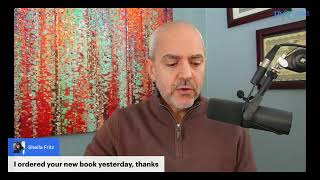
This content was created by Jim Katsoulis. This content was uploaded by Jim Katsoulis. This is a YouTube video titled "The Subconscious Reason You Can't Stop Eating Unhealthy Food" (created 2026-02-20). The content likely explores psychological and subconscious drivers behind unhealthy eating habits, habit formation, and possibly strategies to change behavior. No transcript or speaker details are provided in the excerpt.
Chapters
Everyone, welcome to today's program Yourself Thin Podcast. Today we're talking about the, the subconscious reason you can't get yourself to stop eating unhealthy foods. And I think once you understand this, it's going to change the way that you approach how you're eating. So if you're a dieter, most likely what you have done to stop yourself from eating unhealthy foods is you've tried to use your willpower, right, Your conscious willpower in order to stop yourself, right? You want to eat the thing. And then you say, no, I shouldn't do that. I'm on a diet, I want to lose weight. I, I'm not going to do that. And so what's happening is you're probably able to do that for a little while, whether it's a couple days, sometimes a couple hours, couple days, couple weeks, sometimes a couple months. But typically what happens is you're able to do it for a little while, and then you go back to what you always do. You kind of lose the ability to stop yourself. And that kind of summarizes your whole weight loss history in a nutshell. And so to understand why this happens, I want you to realize that I do not believe it's a willpower issue. So to explain this, we want to understand our mind in a real simplistic way, that we have a conscious mind and a subconscious mind anatomically. That's your prefrontal cortex, such as your conscious mind, and your subconscious mind, the rest of your brain. We'll keep it real simple. So the conscious part of your mind is the logical, rational part of your brain. This is where your executive functioning abilities are. Your ability to know which foods to eat, to stop yourself from eating them or get yourself to eat them. And this is the part of your brain that you basically have relied on your entire weight loss history. You, you learn about a diet, you learn about some philosophy, you say, okay, that's it. No more sugar, no more carbs, no more eating until noon, whatever it may be. And you believe it. You. You completely believe it. You say, that makes sense. I should do that. I'm going to get myself to do that. But then there's the subconscious part of your brain. This is the majority of your brain, and this is the part of your brain that runs on autopilot. And the really important piece of this part of our brain is that it's not logical and rational. It's associative, meaning it's very Pavlovian. It links things together. So it's not Logical, right? So you could read a diet philosophy and say, oh, refined carbs are no good for my weight. And you understand it, it makes sense. And you say, that's it, I'm not going to eat those anymore. But subconsciously, that information makes no difference, because subconsciously what's happening is you're saying unhealthy foods equal pleasure. Real simple. Subconsciously, you're thinking those unhealthy foods equal pleasure. Not having them equals pain. And this is how you're primarily operating on a subconscious level that really, again, it has its own logic, but it's not the same logic as our conscious mind. If it was, life would be really easy. You would feel like a robot. You would basically be able to say, that's not good for me, so I'm going to stop doing it, and that would be it. But that's not what you've experienced when it comes to changing your eating. What happens is you logically understand you should do it. You try to get yourself to do it, but it always feels like there's some other part of you that's kind of rebelling or sabotaging or compelling you to do the wrong thing. Well, this part of your mind is your subconscious mind, and it's not working against you. It's just somewhere along the way, it associated sugar with pleasure, you know, refined carbs with love and connection. It's very interesting. Again, remember, just like Pavlov's dogs associating the sound of a bell with food, two things that have nothing to do with each other, naturally they started to link those two things together and just the sound of the bell started to elicit the natural response of salivation of when they saw food because it was linked together. So us humans, as smart as we are in one way, we are just as kind of dumb as a dog in another way, where we just link things together. And so this has been the core issue you've had with changing your food is that you logically are always on that level realizing, learning, listening to things about what you should and shouldn't do. But subconsciously you are never creating new associations that move you forward. And so one of the best ways to change the way you're reading is to stop just learning information and work on programming yourself subconscious mind so that you have new associations. And one of the easiest ways. Now there's a lot of ways to do this, but I'm just going to go into one powerful way is the pleasure pain association that you currently have. So right now, if you're struggling, you Pick whatever your food is. I struggle with cookies subconsciously. I know you associate pleasure to having the cookies and pain to not having them, and that's what's driving your behavior naturally, automatically, day in and day out. So, so we want to change that association. And one of the easiest ways to do that is to look at the cookie experience, but just to look at more of it. Because how you typically think of the cookie or whatever the food may be, is that there are three phases of eating. Anticipation, consumption, consequence. And you are constantly focusing on just the anticipation and the consumption. And that is why you associate pleasure to these foods. The easiest way to change that association is to widen your perspective and start to look at the consequence that always follows. And if you start to pay attention to the consequence that always follows your food decisions, you're going to start to realize there's also pain. So you can eat the cookies, for example, but as soon as you finish the cookies, six seconds after you take the last bite, what do you start saying to yourself? What emotions do you feel after you're finished eating the cookies? How do you feel physically? Your energy levels, your moods, your, you know, your, your physical comfort? How are those impacted? And as you start to pay attention to that consequence phase, you start to associate a more accurate picture of what these cookies are doing. Because up until now, through all the advertising, through the culture, through your experience, you really just define the cookies by the looking forward to them and the eating them. And you've learned to kind of break off and ignore the consequence phase. You have a sense that it leads to weight gain, and I don't like that. But you're not paying attention to the consequence that starts immediately after the last bite is taken. And once you start to do that, it is transformative. Because now you're not trying to trick yourself. You're not trying to do the old thing where you have these positive associations that you're trying to fight against. What you're doing is you're literally going to the ground floor level and, and changing up the associations. And once you change the associations, weight loss becomes so much easier because you naturally make better food choices, because your associations are supporting those better food choices. So if you want to go deeper into how this works in subconscious programming, click the link in my bio or go to program yourself. Then.com go get the free hypnosis session that I made for you. It is called the New Thin Me. And it is literally designed to, to kickstart your weight loss by reprogramming your subconscious mind. It's completely free. Go check it out. And if you have any questions at all about your weight or weight loss in general, please feel free to ask them. I am here to answer your questions and help you as much as I can. Yeah. So I got to just respond to something real quick. Sorry about that. All right, so yeah, I hope everyone's having a good day. Came in here a little distracted. What's up, Victoria? Victoria says so much and long lasting negative consequences for 30 seconds takes to eat the cookie. Yeah, absolutely. You know, and that's what I mean. Like that's a truth. You know, this gets back to one of my, my definition of addiction is, and I'm using this a little more casual. I'm not talking about, you know, hardcore substance, that's not my specialty. But my sense of addiction in the food world when it comes to weight is when we associate, when we think something that is causing us pain in our lives is actually pleasurable. Right. And I think this is the perfect example that, you know, if you've been struggling with your weight for a long time. And again, there's, you know, it's a spectrum of how much you're struggling. You may just be unhappy with your weight and how you look, but it can go all the way to the point of metabolic disorder and, you know, real health issues. And so if we zoom out and look at the comparison between the pleasure we get out of those moments of eating it versus the long term effects that start instantly, I think that's what most people are missing. And you miss it because we've been conditioned by the food industry to think a certain way. But what happens is we really, we may say again, like I said, this vague connection to, well, if I eat these cookies now, maybe my weight will go up in the future. That's not strong enough. I'm talking about the consequence that starts literally six seconds after the last bite. And once you start paying attention to that, it's really eye opening. You know, again, when you realize again when the cookies are done, that that letdown, the guilt, the shame, the negative dialogue, the physical feeling tired, the, you know, there's so many negative consequences. And you start to realize potentially again, depends what your situation is. But when you start to look at it this way, all of a sudden you start to realize, geez, I'm every day I'm basically in a food hangover. And sometimes it could start right from, right from the first meal. And you're putting yourself into this, this food hangover. Again, it's not just physical, it's what you're saying to yourself, you're saying mean, negative things to yourself. You're thinking yourselves a less than version of yourself. You're feeling negative emotions physically. Again, energy, comfort, all these things are. Are taking a hit. So once you realize that, again, there's no way around this. You know, there's no way around this. I'm not telling you. Never eat cookies. I eat cookies. I eat all the. All the different stuff. I eat everything I like to eat, but I eat in a more moderated way because if I get out of control with them, it starts to become more and more very, very negative consequences. I think people miss this. And I had issues with alcohol, so. So again, that was. Actually has benefited me greatly with the food because one of the main reasons I was able to change my alcohol consumption is because I was tired of feeling like all the time. And the one thing with alcohol is it's a very dramatic negative impact relatively quick. You know, maybe the next day, maybe the next morning, but. But that's relatively quick and it's. It's very intense. But with the food, that negativity starts almost instantaneously when you finish that last bite. So, yeah, the more you pay attention to that, the more power you end up having, I believe, over your eating, you know, Jane. What's up, Jane? Jane says. What would be a quick phrase to say to ourselves as a reminder to not make that bad decision as we are standing in front of that food in the store? Yeah. Okay. Okay. So here's the thing, and I'm going to reframe it right from the beginning. It's not. It's not that we want a reminder to not make the bad food decision. We're really not forcing ourselves to. I like to take good and bad right out of it. Okay, if I said to you like, like, again, do you have to remind yourself how to make this decision? I'm going to give you. Do you want a million dollars or do you want to get a whack in the. On the thumb with a hammer? Which would you like? Right. Well, that's an obvious answer, I hope, right? You don't need to. What am I going to say? What am I going to say? What am I going to say? You know, what am I going to say when I'm giving the choice between a million dollars and a whack on the thumb of the hammer? You already know I'm going to give you that. That question a million times. A million times. You'll take the money so you don't need A phrase to not make the bad decision because it's already assuming you're going to make a bad decision. I saying, come back to it. You can make whatever decision you want. You can make whatever decision you want. What I want you to start doing is to look at this decision more accurately. So you're, You're. I don't know how we want to put it. We. We could zoom out, or I think more accurately in that moment. Let's speak to that moment. You're in front of attempting food. Let's put it that way. Right. So what I like to do is I say, how am I going to feel? So, Jane, you're in the program, and that's literally one of the core mantras. You're going to get. I. I don't think you've gotten there yet, but you're going to get to the. I forget which week it is. I Forget if it's 6 or 7, but it's going to say, how will I feel? It's one of the core mantras because we want to start when we're making a food choice again. You've been conditioned in your mind through literally tens of millions of ads in our lives to focus on the anticipation of the food and the consumption of it. And that's it. Every single food ad you've seen in your life is the food coming to you, the opening of the package and the first bites, the most exciting part of the eating. And that has conditioned us to have no energy, no awareness left to what happens when we take the last bite. So this is the practice, Jane, is when we're making a food choice, to not just say, how's it going to taste? But to ask the question, how's it going to feel? And the good news is, you do this all the time. You do this if you go to the mall and you're going to go buy some things. How often are you tempted to just go on a shopping spree and buy everything you see? Not. Not really very often. Why? Because when it comes to money, you have been conditioned to think about what the consequence is going to be. So, yeah, you could buy everything now, but you're well trained to focus on, I buy it all in credit, and then next month I'm gonna. That giant credit, that giant bill. I buy all this now, and now tomorrow, my bank account's way lower. So you're used to doing it in so many contexts. But when it comes to food, we've been conditioned to just focus on the flavor of it, the taste of it. Make the decision and then just move on the next decision. So the real goal is, when we're making a food choice, say, how am I going to feel? 6 seconds after I'm done, how will I feel? And this is a process. So at first you don't even know how you're going to feel. You have a vague sense of it, but you don't really know. So this takes. The first phase of it is awareness. How will I feel? And then paying attention to how you feel in detail. What are you saying to yourself? And that's the first step. What are you saying to yourself? What's your internal dialogue? And your internal dialogue is very, very negative. Let me give you an example. What I mean when you eat an apple versus when you eat cookies. Again, this is in the context of you want to lose weight, okay? So there's nothing intrinsically wrong with cookies, okay? But if you want to lose weight and you know one of your struggles is eating cookies, and you go and eat a bag of cookies, what are you saying to yourself after you finish the last cookie? Are you saying things like, hey, nice job. Don't worry about it. Great. That was so delicious. I'm glad we did that. That was a great choice. Nice job. Or are you saying things like, oh, you did it again. Ah, you, you piece of. This is why you don't deserve to lose anyway. This is why you get what you get. And this is you deserve every second of it. Because you can't even make Rachel. You can't stick to anything. It. Which one? How are you talking to yourself? And then what emotions are you feeling? Are you feeling proud and exciting and successful and momentum and hopeful? Or do you feel shame, guilt, frustration, hopelessness, anger, annoyance? And then physically, do you feel light, healthy, happy, energized, or do you feel heavy, tired, exhausted? Which do you feel? It's there every single time. But again, our brain deletes, distorts, and generalizes. And we've been conditioned to delete that phase of eating completely from our awareness. And once you bring it back in, you don't have to be reminded of how to not make a bad choice. We just want to train ourselves to look at both things clearly. And again, when it comes to the shopping spree, you do this automatically. You're never really tempted to spend all your money on stuff because you don't want to live in that consequence. And so you can do the exact same thing with food. It's not about getting yourself to make the right food choice. It's about seeing things Accurately. And on one hand you have momentary pleasure. On the other hand you have long term pain. Prove me wrong. Tell me it's not like this. Now, again, when you're at your goal weight, or even before then, when you eat cookies moderately, then you, you don't have that negative consequence. Okay, so I'm not. Again, I'm not saying you can never eat cookies, never eat the things you like. I'm saying it's the way you eat them. And when you overeat them, when you eat them too much, when you eat them at the wrong times, there's a very negative consequence that follows every single time. Every single time. And if you're if yourself, literally steeping yourself day in and day out, all day long in this negative consequence, you don't even realize that you've gotten used to it, you've normalized to it, you've created a tolerance to it. But the truth is that if you're eating that way, never mind the weight part of it, you're living in a mindset that is in living in steeping in negative consequences all day and night. Again, tell me that's not what's happening. Again, it's a different way to look at it. But once you hear that, you're gonna. How are you gonna tell me that it's not that way? How are you gonna tell me there's days when you eat like shit, but you feel amazing? When's that ever happened? You know it doesn't happen. What happens is those little blips of pleasure are where all your focus is and you're ignoring the consequence. Switch that around and things change real fast. Jane said, I bought ice cream again last night. And I did actually say to myself, how's it going to feel? But I overrode it, of course. After I ate it, I felt angry myself. You didn't. It's not really overriding a chain. Okay, let's look at it like a scale. And you've had a lifetime of focusing and developing neural connections and programming, of really enjoying and associating pleasure to ice cream. So if we look at the scale, it's way heavy down. There's a lot on this side of the pleasure of the ice cream. And so now you say, how am I going to feel? How many times in your life, Jane, have you asked that question? How many times have you really tapped into that? Not very many. And so for you, again, right now you're in the phase of awareness where you ask the question, how am I going to feel? Then go eat the ice cream, which is fine. This is how you get value and utilize when you make poor choices, when you make, when you make the choice. I'm saying wrong within context, right? If you want to lose weight and you go and eat a tub of ice cream, that's the wrong choice in the context of wanting to lose weight. So I'm not saying you're a good or bad person. You're a good person regardless of how you eat. Okay, please. You're not defined by your reading in terms of how good a person you are. Not in my world anyways. But in the context of wanting to achieve a certain goal, there are certain things that are going to move us towards that goal and certain things are going to move us away from that goal. Okay, so that's the context I'm talking about good or bad. And just keep it simple. And so for you, Jane, right now you're in the phase of developing awareness. So go eat the ice cream. It's going to support you long term if you will pay attention to the consequence which you did last night. So I'm really glad because now here you sit, Jane, more aware of what the consequences of eating the ice cream than you were yesterday at this time. And if you keep doing this every time you eat the ice cream, this is exactly what's going to happen when, where you're going to get to the point where eventually you realize eating the ice cream. I don't want to be angry with myself. I did this with food. What? One of the things I realized is I would eat. I would regularly make food choices where I would feel like, like, like literally physically hungry. My stomach would hurt, My stomach would hurt. I wouldn't feel good. So I wouldn't be able to move. I wouldn't be able to move. So I'd sit there and watch TV and distract myself for hours and hours and hours because I didn't want to move because I was uncomfortable. And the whole time I was feeling discouraged, I was saying negative shit to myself. Emotionally, I was feeling down and I just didn't even realize it. That's the most amazing part, I will tell you of my work is realizing how unaware we are of obvious things once you realize them. And this is one of those things, Jane. So again, great job. And again, you start to understand what is the consequence of this behavior. As you keep paying attention to it, you get better at understanding what the awareness is. So eventually, you know last night when you said, oh, it's how will I feel? You didn't really even know there was no real clear sense of what you were going to feel. But at least today you're a step closer, as a step better at it. Because now you say, when I finish this, I'm probably going to be angry at myself. There's a lot more stuff going on too. And so as you start to become aware of that and that starts to become a choice. So let's say it's a month from now and you say, okay, how will I feel? And you instantly in your mind, because you've been paying attention to say, I'm going to be angry at myself and be frustrated, be annoyed. I. I'm going to feel like I let myself down. I'm going to wake up tomorrow and feel like I got to make up for I screwed up the day yesterday. And once you realize that, before you make the food, the ice cream that says, you might say, ah, I don't want that. It tastes good. I like how it tastes, but I don't want the 24 hours of feeling frustrated with myself, being angry with myself. I don't want that. So you see what I mean? Like, it's a, it's a reframing of how we're looking at it. It's not saying ice cream's delicious and I have to stop myself from eating it. That's what dieters are trying to do. We're looking to reprogram ourselves. Yes, it's delicious. And it's also got a negative consequence. Going on a shopping spree would be really fun, but it also has a negative consequence if you care about your finances. Right. So it can be both. Again, everything's good and bad. The ice cream's good and bad. Good and bad. We're keeping both. All right? And so we want to enjoy it, but we want to enjoy it in a way where the consequence is also good. And this is why I always say, I believe the most enjoyment you can possibly get out of food is when you eat it at your goal weight, because it doesn't have those negative consequences. So, Fouseya, how's it going? But yeah, if anyone's got any questions, feel free to ask them. Any weight loss questions are welcome if you asked them on Tick Tock. I. I am live. I just sometimes get. I'm streaming to three different places, so sometimes I get caught up on one platform and forget the other ones. User212 says, how do you overcome eating the apple and then eating the cookie? Anyway? Okay, well, great. Right, so. So first off, if you get to the point where let's just Say you start and you eat cookies. You know, say I'm going to give you a scenario just to kind of dial it in. Let's say you, you got kind of an issue where you eat cookies in the afternoon. You, five days a week you're snacking on cookies in the afternoon, let's say, right? And then you say, well, you know, I heard Jim say we should an apple first, you know, and that'll replace it. And so you go, and you say, you eat an apple and then you go eat some cookies. And then you do it. Then you do that for the next five days. You say, jim, what the hell? I'm still eating the cookies. And I would say to you, great job, nice job. Okay, that's a great first phase to me is that now you have added an apple before the cookies and there is a chance. And I don't know, but you tell me if this is a true story, if you're actually, if you have actually added the apple and again, one day is not going to mean shit. Okay? So again, if you added an apple for five days, I'd be over the moon for you even if you'd eaten cookies. Because the first question I want to ask is, did you eat as many cookies? That's the first thing. Did you eat as many cookies after, eat the apple? That's my first one. Now a lot of times I say, oh, no, I ate less cookies. Great. Right off the bat, you reduced your calorie consumption. You've reduced your average calorie consumption. Because we're not looking for perfection, we're not looking for no cookies. Right off the bat, we're looking for less cookies. And so if you eat an apple and you used to eat 10 cookies and now you ate an apple and you ate five cookies, that's a pretty significant reduction in calories. So I. Great job. And we can keep working on it. Again, that's the big thing. Dieters, they want to be told what to do. Monday comes, I do it. There's no room for improvement, there's no room for growth, evolution, none of that. Tell me what to do on day one. I'll be doing the same thing the day before. I reached my goal weight. And that's bullshit. So again, we want to start thinking in phases. And so if you could remember and start eating an apple all of a sudden and you'd start doing that, that's a huge upgrade and boost. Because I believe anyways that after a week, after two weeks of that, I can almost guarantee you the cookie consumption will go down or your calorie consumption will go down anyways because you are adding more fiber, more micronutrients, a lot of good stuff in your body. All right? But it's the start of a solution. And so then what you can start doing is playing around with it. You can say, well, I have an apple, I can have cookies, but I gotta wait 15 minutes till after I eat the apple. You know, you can start playing around with more subtlety of it. But if you actually did that, where you actually started eating an apple regularly, I'd say that's a great job. And if you did do that relatively easily, that's a good sign that you're able to program a new behaviors really well and so that you got some really good skills there. Jane says, I feel discouraged because I have been doing this program for 15 days and listening to you on here and doing the daily hypnosis sessions about five times a day and still stuck. Yeah, no, I get that. But I mean, I say this all the time, Jane, that, that weight loss is inconsistent and unpredictable in the short term. I mean, 15 days is nothing. I hate to tell you. Go. Let me put in a different context because I want to just say so different. The diet industry screwed us up so much, you know, that, that the diet industry is doing really extreme things. So you get instant results. And it's such a screwy model. And you don't realize how screwy a model is until we switch the context. Like, let's say you want to learn to play the piano, and the only way there is to play the piano. The only programs out there learn how to play the piano. They all say you have to do you have to play eight hours a day. Right? Because if you're serious, if you really want to learn to play the piano, you got to play eight hours a day. That's the only thing that's acceptable. And you go and sit down for your first eight hours and you play. And the next day you wake up and your fingers are cramped, you hate the piano, you can't even sit straight. And you got to do it again, right? So this idea of dieting is so ridiculous because it's so overwhelming. And part of that overwhelm, though, is that it's supposed to give you fast results. But if we put it in the piano context, how good could you get at the piano in 15 days? How much weight should you have lost in 15 days? How what you've been doing. Right again. And I know you've been doing improving and stuff, but how Many calories have you cut? You haven't cut, I hope, a ton of calories. People overestimate how much weight they can lose in a month and way underestimate how much weight they can lose in a year. So 15 days to me doesn't even. It's again, how good would you get at golf in 15 days? How good would you get at a musical instrument in 15 days? How good would you get at speaking a language in 15 days? It's a. It's. The dieting has put the craziest timelines on what we expect. It's. It's, it's insanity. It makes no sense that you think you're gonna lose a certain amount of weight in a certain amount of time, in my opinion. Now, again, don't get me wrong. I know. I know if you stop eating, I know if you completely cut carbs out, you will lose weight quickly. But does it last? Has it ever lasted for you? So at some point. And again, the point seems to be based on my average client age, somewhere around 45, 50. Seems the point where you start to say, holy, I've been doing this now for 30, 40 years and it hasn't worked. Maybe I try a different way, and that's where people start to consider me. But what I would look at Jane is because Jane follows it up by saying, I did have a salad for lunch yesterday, which I rarely eat what I look at. And this is to understand there's cause and effect. Your weight is a reflection of your behaviors. So to me, I'm really obsessed with behaviors, not with the weight loss. I think if you get obsessed with the weight loss, you're. You're. You're almost doomed. And that dooms most of you dieters anyways. How many of you dieters have done really good for the week, stepped on the scale, lost less than you thought you were going to, and then quit because it was felt discouraging. So I don't blame you. You've been conditioned. Is they remember. Again, I can't stress this enough. The diet industry is not there to help you. The diet industry is a branch of the food processing industry. Weight Watchers was owned by Heinz. Jenny Craig was owned by Nestle Atkins Food Products, owned by the same company, owns onions, pretzels, and Cinnabon. Slim Fast, owned by the same company, owns a Ben and Jerry's ice cream. So these companies aren't there to help you learn how to think and live like a thin, healthy person for the rest of your life. So you don't eat Their food, they're there to fill your head with rocks when you want to lose weight so that you never succeed and you always eat their food. So the idea of like, again, it's like, you know, you start a second business and you say, well, 15 days, I haven't made any money yet. Well, yeah, I know it's a long term process. You go to college 15. I don't have my degree yet. Yeah, I know it's a long term process. I don't have to tell you, you know, it just is. So we got to reframe ourselves. But what I like to look at again, the cause and effect piece of it, your weight's a reflection of your behavior. So I'm obsessed with behav behaviors because I know if all of a sudden my ice cream consumption, I've learned how to chop it in half, all of a sudden I'm eating salads at lunch where I used to have hamburgers and pizza. I used to have sugar cereal for breakfast and now I'm having a healthy, solid meal. I know if I've changed those behaviors in a way that feels comfortable and sustainable, I know my weight's going to change. Like, how could it not? So I don't. To me, weight is not the primary thing I'm focusing on in the beginning. Just like, well, I run a business. But I will suggest to any of you, if any of you are going to start your own business, please don't just look at how much money you make in the first month, the first year, the first couple years, to be honest. Okay? But if you just look at the money you make, you're never going to get to where you want to go because you're never going to make as much money, you're never going to lose as much weight as you think you should in the amount of time that you're doing it. And that's just going to be a forever fact, forever fact of the thing. So Dan says, okay, I get it. Thanks. You're welcome. You're welcome. And these are the realizations we have to get. I get it. That's one of the hardest things I will say about program yourself. Then for sure is changing your time frame from that diet time frame of days, weeks and months to the living at your goal weight time frame of years, decades and forever. It's counter programming. We're deprogramming ourselves by reprogramming ourselves with a longer timeframe. And that longer timeframe sets you up for success in a million different ways. Whereas the short term timeframe sets you up for failure in a million different ways. So, Shereen. Shereen says, speaking of cookies, are we dodging the Girl Scouts so hard having boxes of those in the house combined giveaway, or may I just give the donation? I know, right? Those Girl Stout cookies are. Are something else. Although I'll tell you, I'm going to say maybe a sacrilege, but I will tell you in me, because I used to love Girl Scout cookies, and so I don't know if they change the recipe or if my taste buds have changed, but I. I don't know. I don't find them as good as they used to be. I will also say that they make, like, natural versions of them, and I've had some of those as well. But. But I get what you're saying, you know, because again, things that we're addicted to, and all of a sudden, again, you're. You're being cued in the environment to think about them all the time. So. Fair enough, Shereen. But think about what you want to do, though, right? I think you're right on the right path. What is the strategy you want to use? Do you want to give them money? You want to get the boxes? Get rid of them, Keep the box you like, eat them more moderately. Work on that. Again, you got a lot of options ahead of you, and I like the way you're thinking about it already. Yeah. Lo says. I agree. The diet industry is a joke. It's absolutely a joke. It's. The diet industry is. It's wolves and sheep's clothing. They're not there to help you. I can't stress this enough. And so if you're feeling confused or lost or like a failure when it comes to losing weight, please understand that there's a very legitimate reason for that, and it's because you have been literally conditioned by the diet industry to think in an ineffective way. User212 says, why do I feel sorry for myself when I leave food on my plate? Yeah, that's a real thing. Again, listen, that's such a great question, though. I love that you asked that, because a lot of times we judge ourselves. Oh, my God, what's wrong with me? How come I feel so bad? I'm not even hungry anymore, and I feel like I got to finish all of it. How come I feel so bad about how I feel sorry for myself? Why do I feel so weird when I'm going to. I'm done. I'm kind of had enough, but I just can't get rid of the food I Can't throw it out. Right? We think we're weird, but you're not. You have to understand, we evolved over millions of years in a food scarce environment. And so all the biology that we have, all the psychology wiring that we have, is all built to eat food whenever you see it. We're all here because our ancestors ate as much food as they could when they could. Right. Think about it. Food throughout our human history has been the number one reason we live or die. It's the main thing that attributes to our survival. And so here we show up in the modern world now with all our old evolutionary biology and now we're in a food abundant environment. And on top of that, it's super hyper palatable addictive food. And so when you feel like, oh my God, if I leave food here and I don't finish it, that feels weird. Yeah, I know. Because you've been wired and programmed to eat everything in front of you. Because in a food scarce environment, that behavior is going to keep you alive. In a food abundant, hyper palatable, addictive food environment, that behavior becomes dangerous. So, but it's not unusual, it's not abnormal. So please understand that there's nothing wrong with you about that. That again, it's something we got to work on. Okay, again, the way I always look at is that we have all this ancient biology that's really developed in a food scarce environment, but now we live in an alien environment with food abundance of hyper palatable foods. So we can't change the hardware. You can't change your neural wiring and your nervous system and your biochemistry, but you can change the software. And that's what program Yourself then is all about. It's about changing the way you think about things to more accurately deal with the world we live in now. And I believe it takes a mindset upgrade in order to succeed in the environment we live in now. Because it's an alien environment. And yes, our old biology run amok will get us in trouble because our old biology wants to eat everything in sight because we don't know if we're ever gonna get any more food again. That makes sense. And I think knowing that is helpful because again, you stop judging yourself or blaming yourself or think there's something wrong with you and realize, you know, you're a human and that's why you think and feel that way. But just because you think and feel that way doesn't mean it has to be the controlling factor either. What's up, Nora? Nora says hello from Germany. All right. Germany. Cool. I Find everything very helpful that you say you are the first one who knows exactly what my brain thinks and who can express that on point. Thank you for your daily support. My ring is getting looser. My inner battles are easier to solve now. That's awesome, Nora. I appreciate you sharing that with me and take a little screenshot of that. I like that. That's so great. But yeah, and again, you know, without sounding conceited, that's. That's what I do, you know, And I think that's what makes what I'm saying different than what you typically hear when it comes to weight. I'm not saying the same you constantly hear in the weight loss community, you know, about calories and come on, you got to do it. Let's do it. Come on, make a dream board. Imagine yourself at your goal weight. Like, well, I like that part, but. But in a different way. But, but. So, you know, at the end of the day, I think to really define what I'm saying that's different than what you're typically hearing is I believe almost all like, like 99.99% of weight loss industry is telling you what to do. Right. They're giving you a meal plan, they're telling you a nutritional philosophy to follow. They're giving you an exercise plan, they're telling you what to do, but then they never show you or help you to get you to actually do it. And I think that's the missing piece of your puzzle, is that if you were a robot, you could program in what to do and you would do it perfectly. But you're a human and you don't know how to get yourself to do the things you know you want to do and that, you know would be better for you. And I find that fascinating because that's exactly the path that led me to where we are here. And it's led me to understand my mind in a much different way than I used to. And I find it to be very practical in terms of influencing my behaviors to be able to learn something. So I should do that and then have a plan to actually implement that. So it starts to become a normal, natural way that I behave. And I think this is the missing piece. So I don't think more information of what to eat is ever going to help you lose weight. You know, I always, always joke, what. What would be more helpful to your weight loss if I gave you a book with all the nutritional information of every food on the planet in it to you or a pill that if you took it, you would Eat the way you know you should. Well, the answer's obvious, right? And so again, we've got to change our focus to stop looking for more information from diets and more plans of what to do and start to focus on how to get ourselves to do what we already know. I believe you already know enough about what you should and shouldn't eat to dramatically change your weight. You can always learn more and dial it and optimize and tweak it in, but I believe you know plenty to move you towards your goal weight. You know, the thing you don't know what you haven't learned is how do you run your mind? How do you get yourself to be able to actually do the things you already know consistently? That's the part that no one ever talks about, you know, and that's what I get on here to do. So, um, Shane says, I guess I just keep focusing on the eight weeks and I worry I won't get there. Yeah, wrong approach. I have to think more long term. Yeah, Jane, the eight weeks, you got lifetime access to the program, you know, so it's like you can think of it as eight week. I, I just break it up into eight weeks because we need that. You know what I mean? Like, we need to have some relatively short term sense of a goal. Okay, but Jane, I, I hope and I expect you to, to go through that eight weeks multiple times, right? So you get to the end, end of the eight weeks, and then you, you can write in and say, hey, restart the, the hypnosis session to restart it. You know, they get the end of that restart again, you know, and there's no rush because who gives a shit? First of all, you got to go through a year, really just even get a sense of what you're doing. I, I know no one wants to hear that, but it's just true, so. But I get it, Jane. And again, this is what we're doing, you know, so you have to realize this first before you can fix it. But that short term approach is absolutely one of the things that sabotages more than anything else. You know, Sheila, Fritz says I ordered your new book yesterday. Thanks. All right, Sheila. Nice. Yeah, I think you're gonna love it. People loving this book. I will say, here it is again. If you're gonna take that. Let me flip this around. I gotta get out of here. Anyways, so if you're not in my world, first thing, make sure you click the link in my bio or go to program yourself. Then I'm gonna put the. Excuse me. Get this, I'm really getting so organized here. Here's the link in Facebook YouTube land, I just put the link. You can click that and go get the free hypnosis session that I made for you. I give you a bunch of free stuff, but go, go get that. If you're on Tik Tok, you just click my picture on the top left. Go to my bio, there's a link there. Click that. It takes 10 seconds to fill that stuff out. You get the hypnosis session. In my world, if you like this, I'm here every Monday through Fridays around noon Eastern, answering your questions, literally, coaching. I'll do whatever I can to help you. That, that, that's my mission is to help as many people as possible with their goal weight. And I'm here live every day to help you do that. If you can't make the lives. And you like listening to this, it's also a podcast. You can go to any podcast platform, search program yourself. Then all the episodes will pop up. You can listen whenever you want. And finally, yeah, the book. So yes, this book, the the dao of living at your goal weight. There's people saying this is the best weight loss book ever written. Wow, what a. What a nice thing to say. But. But it's something else again. 40 chapters. Each chapter is about a page, two pages. Each chapter is a hypnotic story designed to transform you and change you as you read it. So again, We've got almost 85 star reviews, right? This book's something else. I can't recommend it enough. On top of that, me being the little sneaky sneak I am. Actually, what this book does is it takes you through the entire program yourself then system as well. Even if you don't know anything about the program yourself, then you don't need to because it teaches it to you in a very accessible, light way. But if you're in the program, it's just another way to really get a sense of what we're doing in there. All right, so again, you get this book at Amazon. The Kindle, I think is like 299. The physical books 999. I definitely recommend that. This book feels nice. This is a book I want you to have in your house. Read it randomly, you know, put on your coffee table by your bed, pick it up, read a chapter. You don't even have to read it literally if you don't want to. Just open up any chapter whenever you want. If you read it, I promise you, you're going to have favorite chapters. You know, you can put little bookmarks in there and reread those number of times. A lot of that's what a lot of my clients are doing. So again, they're hypnotic stories. So every time you read it, you're programming your subconscious mind and it literally changes you while you read it. So anyways, that book is available. Go check that out if you. And thanks so much for the questions. I really appreciate it in the comments. That makes me makes me happy. And then I hope it was able to help you out a bit. And have a super day and we'll talk soon. Bye.
More from Jim



Weight Loss Visualization: Wake Up in Your Dream Size #programyourselfthin #weightlosshypnosis



What If You Pretended to Be Thin for One Hour? #programyourselfthin #weightlosshypnosis




