The Subconscious Shift That Makes You Thin
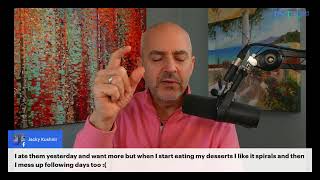
In this live podcast, Jim Katsoulis explains his core weight‑loss insight: a subconscious shift that aligns eating behavior with a thin‑body goal. He breaks eating into three phases—anticipation, consumption, and consequence—and argues that most people ignore the immediate (6‑second to 24‑hour) consequence phase, which leads to a disconnect between food choices and their emotional/mental impact. By consciously noticing the mental self‑talk and emotions that arise in the consequence window, people can re‑program their subconscious to favor healthier choices. Katsoulis stresses that mistakes are valuable data, not failures, and that learning from the pain of over‑eating is more effective than willpower‑based dieting. He critiques commercial diet programs as profit‑driven psychological operations, promotes an inside‑out approach (mindset → behavior → results), and offers free hypnosis sessions, a training program, a book, and an AI clone (Jim AI) to reinforce the new mindset. Throughout, he engages with audience comments, reinforcing the ideas with examples, and encourages daily scale checks, self‑questioning (“How will I feel?”), and incremental improvement rather than perfection.
Chapters
Hey everyone, welcome to today's program, Yourself Thin podcast. Today we're talking about the subconscious shift that makes you thin. This is probably, in my over 20 years of experience working with people to help them manage their weight, this is the biggest reason I see people succeeding. And it's a subconscious shift that happens that all of a sudden makes all, all of your eating in alignment with the goal that you want to achieve. So what does that mean? It means that instead of fighting against yourself, against food, instead of trying to stop yourself from eating the foods that you want to eat, forcing yourself to eat the foods you don't want to eat, What happens is once this shift happens is that you start to naturally, in a more congruent way, naturally choose the right foods. Avoid the ones that are the wrong ones. Choose the ones that are the right ones for the goal that you wanna achieve. So what is that shift? That shift is how you think about your food subconsciously. So to understand this, you need to understand there are 3 phases of eating: anticipation, consumption, and consequence. And in this society and environment, we have lived obsessed with the anticipation and consumption. We're through literally tens of millions of ads in our lives. We're always focused on getting the food, eating the food. That's it. End of commercial, end of thinking about it. And we're always focused on that, but it's the consequence phase that always follows that That's the first part, part to remember. Even if you pay attention to it or not, the consequence phase always follows. But when most people think about the consequence of their eating, what they're thinking about is the longer-term consequence of how it's going to affect their weight. They almost have been trained to delete the immediate to short-term, medium consequence that follows. And what I'm talking about specifically is the 6 seconds after you finish eating, the 6 seconds after the last swallow, it's gone. I'm talking about from that point to, let's just say, the next 24 hours, that kind of immediate to short, medium-term timeframe. Most people have had that consequence, that phase of eating completely erased from their mind and don't pay attention to it. The way that it's getting deleted, in addition to only focusing on the anticipation and consumption, is that typically after we've overeaten or chosen the wrong food, we distract ourselves typically with a screen, whether it's TV, computer, phone, iPad, um, could be reading, could be some other behavior as well, but it's typically those. Okay. It could be a podcast, so it could be auditory as well, but it's a distraction. It's something that disassociates us from what's going on in our body right now. And if we start to pay attention to that phase of consequence that starts 6 seconds after the last bite for the next 24 hours, what you start to notice changes everything. And when you subconsciously program yourself to focus on that phase, this is where you start to naturally make better food choices. And It's almost guaranteed, unless you have worked on this before, that you are at this very moment experiencing this deletion of this phase. And to really start to step back into it and reconnect to it, we've got to understand it. Because when I usually tell people about this, they say, well, I don't know what you're talking about. Um, if I pay attention 10 minutes after I finish eating, I feel fine. I'm fine. I feel fine. Now what they're focusing on though is they're focusing on how they feel physically, and they're saying they feel fine. But what I'm talking about— and we'll get to physical in a minute because that's something— but more importantly, what I'm talking about is mentally and emotionally. Mentally, what are you saying to yourself? What do you believe about yourself 6 seconds after the last bite? And emotionally, what are you feeling emotionally about what you just ate. And if you start to look at this piece of time, the 6 seconds after the last bite for the next 24 hours, if you start to notice how that behavior impacts what you say to yourself and what you feel emotionally, never mind how you feel physically, we're going to put that aside. If you start to pay attention to that, this becomes the most clear way that you can change your eating. And this is almost without exception. I don't say that lightly. So let's go a little bit deeper into it. What do I mean mentally? How you talk to yourself. I'm going to give you two examples and you tell me which one feels more real. Let's just say you want to lose weight. You've been wanting to lose weight for years and have been unsuccessful in maintaining it, getting there and/or maintaining it. And, you know, one of your big issues is that you love ice cream. And you eat ice cream all the time. So let's just say, you know, you want to lose weight. You know, ice cream is an issue. You're trying not to eat ice cream. And now you go and you say, you know what, forget it, who cares? And now you go and get ice cream. Okay, that's the context. You want to lose weight. You know, the ice cream is kind of an issue and why it's preventing you from doing it. Here you go. You're eating it. So first of all, you can, you can insert any food you want in there. So you might have an ice cream issue. Maybe yours is pizza. Maybe yours is bread. Maybe yours is potato chips. Doesn't matter. Okay. So the second after you finish the last bite of ice cream, in this case, 6 seconds later, what are you saying to yourself? I'm not saying anything to myself, Jim. What are you talking about? Okay. Are you saying after that, are you saying, hey, nice job. You did it again. Good job. This is what you got to do to succeed. You're really doing great. This is why you're successful. This is why you're a winner. This is why you're a good person and you deserve love and everything you ever wanted in life. Okay. Are you saying that to yourself or are you saying things that more feel like, oh, look at you, you did it again. Jesus. What, what are you doing? No wonder you can't lose weight. You don't lose weight. You don't even deserve it. You're not even trying. You don't care. You do this all the time. You say you want to lose weight, but you don't care. Which one of those things are you saying more of to yourself after you make the unhealthy food choice? Now I want you to realize that you're doing that every single time. Single time you make an unhealthy food choice. Now let's go to the emotions. Which emotions do you feel after you finish that ice cream? 6 seconds after, are you feeling the emotions of hope, of excitement, of gratitude, of success, of momentum, of passion, of, of feeling like you're thriving? Or do you feel the emotions of guilt, shame, frustration, Annoyance, depression, anger. Which one? Which one are you feeling? Now, let me make crystal clear, I'm not making this up. I'm asking you to reflect. Which one do you feel more of? And to really drive the point home, let me flip the script for you. Okay, let's say you're the same person, you want to lose weight, but instead of getting ice cream, you say, you know what, I'm just— I'm tired of this. I really want to make— I want to make a change. I'm really committed to this. I want to make this happen. This is what I want. I deserve it. And you go and eat an apple. Let's just say you go and eat an apple. Now it's 6 seconds after the apple, you finish the last bite, 6 seconds later. Now let's think, what are you saying to yourself? You just ate the apple. Which feels more real? Are you saying, I stupid shit, you know, you ate an apple, why are you doing that? You shouldn't have done that. You know, you did it again. You're always screwing up. It doesn't make sense in that context, right? So you're saying more positive things. Now, again, I know you dieters, I know you're still being negative. I know you're still— big deal. So you ate an apple. I know you're still doing that. But mentally, you start to feel more successful. You say, nice job, that wasn't that bad. Oh, look, okay, I feel pretty good about myself. Nice. Okay. And then mostly emotionally, how do you feel after you eat the apple? Do you feel, oh, why did I do that again? I feel discouraged and frustrated and annoyed with myself. I'm irritated. Or do you feel lighter, hopeful, excited? Holy shit, I can't believe I just did it. Surprised. This is what I mean. When you start paying attention to this consequence phase, It's so clear. It's so clear. It cuts through all the bullshit that you're experiencing when it comes to, well, what should I eat? I don't know what to eat. I don't know what to do. I can't control myself. All the rest— it gets rid of that real fast. Now, it doesn't happen instantly. I need to— I need to understand that it takes conditioning in both directions. When I eat the bad stuff, oh, this is really unpleasant. When I eat the good stuff, oh, this feels a lot better than I thought. Because what you've been doing up until now is you eat the bad thing, you disassociate, you say, I shouldn't eat, and I'm going to put weight on. Well, I'll put weight on is in the future somewhere, and it's a, it's a, it's not impactful enough. It's not sharp enough to really impact your behavior. Because when you eat something, oh, I finished the ice cream. You say, oh God, I shouldn't have done that. I'm gonna put weight on. You say, yeah, you know what? We just want the ice cream tomorrow and we'll be fine. Okay. So you never really get the full weight of the pain. Um, but when you eat positive too, again, you feel really good about yourself, better than you think you do. And so as you start to steep yourself in the consequence phase, What happens is almost without exception, you experience a subconscious shift so that you start to see the food more accurately. Now notice you do this with other things in your life when it comes to substances. A lot of people with alcohol, not everyone, but, but maybe with alcohol have experienced this, that, well, it's fun over here. Oh, but that consequence. And for a lot of people, it's the consequence that gets bigger and bigger and bigger and more obvious that becomes the reason they say, I don't, I don't want that. No, thank you. You look at going on a shopping spree. Well, who wouldn't want to go on a shopping spree, right? It's all fun. Yeah, if you only focus on the anticipation and consumption and the shopping spree. But if you consider the bills, the lack of money afterwards, you may have a different response emotionally to that. And so what is dictating how you feel about foods more than anything else is this process, because what you're doing— and again, it's not your fault, you've been conditioned to do this through literally tens of millions of ads in your life— is you've been conditioned to associate pleasure to eating food, then you have deleted the consequence phase, especially the immediate one. And when you start to see the whole picture, and again, we still enjoy food here, but we start to also take into account what the consequence of the next 24 hours is going to be. And we start to factor that into our decisions. And once you start to do this, it takes a little practice at first, for sure. Um, but once you do it, you start to do it automatically. You do this all the time. You do this when you're going to buy something. You do this naturally. Notice how, again, most people— there's obviously people have shopping issues, okay? But for most of you, your system's working perfectly with shopping. You want something, but then what do you do? You instantly consider what the consequence of spending that money is going to be, and you balance them. Sometimes you get it, sometimes you don't. But that system's working well for most people when it comes to buying decisions. When it comes to food decisions, though, you only have the positive side and the consequence piece has been hollowed out. And so you find yourself struggling to make the right choice, but it's because subconsciously you're only fixated on the pleasurable part of it and you have deleted from your mind and body the consequence and the negative, um, thing that follows it. Once you start to bring that back in your awareness, and I say bring it back in your awareness because it's right there. It's right there in front of you. You've just deleted it. Once you bring it back in and reconnect to it again, you start to make better choices naturally because you're seeing things more accurately. And that to me is the biggest subconscious shift you can make to really change your weight once and for all. And if you want to go deeper into this process, um, click the link in my bio if you're on, uh, TikTok. And if you are over in Facebook land, you can go and click this link here. Go get this hypnosis session. And, uh, there it is. Uh, yeah, go check it out because again, it's a free session and it'll give you a sense of what it's like to approach your weight differently. All right. And not only is there a hypnosis session, but I also give you a training to watch as well, um, that will give you some more insight into this whole approach. But yes, if you have any questions, feel free to ask them. I am here to help you in whatever way I can move forward. And understand this. Hello, Selena. I am here, TikTok. I just kind of ramble a bit in the beginning and then get in any questions you may have. So any questions are welcome. I deal with all kinds of weight issues. It's not just— it's not just, uh, you know, Program Yourself Thin is the name of my program, um, but I help people obviously with every diet as well. So, uh, I, I, you know if you're doing keto, if you're doing Weight Watchers, you're doing these things, um, bring your struggles to me. You know, I can, I can still support and help you, most likely. At the very least, I'll give you a different take on it, right? Yeah. And Kay says, hateful to myself. Yes, hateful. And this is where most dieters find themselves, is that you've got this 24-hour-a-day, you know, internal monologue or internal dialogue that is constantly beating you, you up, um, and is very hateful and punitive. Um, when people start paying attention to the voices in their head, and we all have voices in our head, it doesn't make you a crazy person. Um, we all speak to ourselves, we all have voices in our heads. And once you start paying attention to it, you know, unfortunately the first realization a lot of times, holy shit, this is a negative voice. It is. And I don't think, you know, it's one of the, one of the, the sayings I love is you can't hate yourself healthy. Um, and I think a lot of dieters, that's exactly what they're trying to do. They're trying to hate their body, hate themselves, hate their behaviors, hate certain foods. To get them to not do it. And I don't think it works, A, and B, even if it did work, it's very unpleasant, you know. So I think it's important to recognize that. What's up, Robin? Robin says, just started watching your YouTube channel and really enjoying them. Thank you. Yes, um, I got— I've got a lot of YouTube videos on the docket, so, uh, keep watching that because I'm gonna start putting more kind of, I guess you would call it, medium form content, maybe somewhere in the ballpark of 5 to 10 minute videos. And so those are coming. I know I've been saying that for a little bit here, but I've been working the system and I actually just recorded one the other day. I just got to get it going. Um, but I'm kind of working through the process. But again, there will be a lot of videos churning out on there, um, the next month or two. So keep an eye on that. Thanks for watching. I appreciate that. Um, and yeah, make sure, Robin, take it the next step and go get the hypnosis session because I think that's more experiential Um, and I think that's the best— that's certainly the best hypnosis session I have for someone who's not like in the program is the free one I give you. So go check that out. What's up, Deanna? Deanna's a great message. Jim, such important reframing and a different way to approach our relationship with food. Yes, absolutely. Um, you know, and we need this reinforced. You know, I just got in that conversation today with someone. Um, so many of my clients are very smart. You know, and I think that this is such a trap for a lot of smart people when it comes to their weight because they look at the details of how to lose weight and it's like so obvious. Do you know what I mean? Like, like, honestly, I think that's one of the, the double-edged swords of weight loss is that like conceptually weight loss is the simplest thing on the planet, right? It's just, oh, just reduce your calories and burn more calories and easy. Right. It's so simple to say, but the real work is in actually doing it. And I feel like that's the part that's always just glossed over. And we just gloss over it with one word: willpower. Willpower is, you know, you got to think of willpower as like the magic genie, you know, that's not real. It's not real in the way you think it is. But it's like we think of willpower like a magic genie, and it just— we use willpower to make up for a whole bunch of challenges we've got. Right. So it's like if you think about it, even most likely if you're a dieter, I'm going to read your mind. What you do is you anticipate that you are going to someday wake up on a Monday and start some plan you've already tried multiple times before, whether it be keto, Weight Watchers, intermittent fasting, doesn't matter. But your, your idea in the back of your mind, if you really look at it, is that you're going to wake up one Monday and just start doing that plan perfectly. Why? We don't ask that question. We just assume I'll be more motivated. I will just have more willpower all of a sudden. I will just force myself to do the right thing that I hate doing, that I've never been able to get myself to do, but it's going to be a magical Monday and then I'll be able to do it. And if you really reflect on that, it doesn't hold up very well. It doesn't make any sense that that would happen. It's never happened. You've never even gotten close to that. So the idea that magically it's going to happen is exactly what it sounds like. It's magical. Not the good magic that happens, the, the, the fake illusionary magic that never happens. And a lot of people are living in that. And, uh, once you recognize that, I think it's valuable because then you can start walking a different path. But I think a lot of dieters are walking around with this unseen assumption that one day everything's going to magically just work out and then they'll be able to follow the plan It's never worked out for them. You don't, you don't think that's going to happen. I think you'd have to do something different if you want the new results. Uh, what's up, Robin? Robin says, help me. Well, that's what I'm here for every day. I'm here to help you. Um, you got to be more specific though. And then that's the first lesson I think we all need to learn that a lot of times, and weight's a great example of this because for most people, they've been struggling with their weight their whole lives to some degree. And if it's not their whole lives, it's decades at least. And what happens is, you know, you, you've tried diets. Now again, what's a diet? A diet's just someone saying, here, eat this way. And then you try and force yourself to do it, but that's not a full strategy. You know, that's like you saying, I want to learn to play music. I want to play the piano. And I say, okay, here's some sheet music, start playing it. Well, that's not going to work well because you don't know anything about the piano. So yeah, I gave you the, I gave you the sheet. And you understand it logically, but you don't have the skill set, the knowledge, the understanding to actually play it. And it's the same thing with dieting and weight loss, is that to just give you a meal plan does not get to the deeper things you need to address in order to really change your weight long-term. And so a lot of times we get to the point where we say, with the weight, just tell me what to do. We speak in very big, vague, general terms. Help me. I just need to deal with my cravings. How do I stop binging? You know, these are huge, huge concepts, and you can't just fix a huge concept with— with— how do I play the piano? Play what? Play what on the piano? You know what I mean? How do I play the piano? Just tell me how to lose it. Just tell me, you know, maybe these are big vague descriptions and that is almost meaningless to your mind. So we've got to drill down deeper. So I'm here to help you, Robin, but you've got to ask more specific questions. What's up, Jackie? Jackie says, yeah, I definitely feel like crap the last few days. I've been overeating snacks, sweets especially, that we bought when we went food shopping. I definitely overdid it. Ugh. Um, yeah, Jackie, but again, that's the process and there's no way around it and it's not a bad thing. See, I literally just got a call where we were talking about this in depth But really what's going to drive you forward really is when you start using your mistakes. In Program Yourself, then we literally build around your mistakes. Because why, why do we, why would we do that? Right? Because I would say that concept of weight loss that we're going to build around your mistakes is the complete 180-degree opposite of what diets say, because diets say your mistakes are over. That's it, lady. Your mistakes are done. It's Monday. No more mistakes. Okay. That's dieting in a nutshell. You're going to use your willpower to not make any mistakes. That's the plan. Program Yourself Thin is the literal opposite. We're going to use our willpower to learn from our mistakes, which right off the bat assumes and expects we're going to make mistakes. And you tell me, please argue with me. Please tell me that it's possible that you are not going to make any mistakes. Please tell me. I've been getting more dipshits on here lately. I know there's got to be someone just— they just, just do it crowd. Just come on, simple. Just, just track your calories and do the right thing. Those are the people that tend to think that mistakes are unnecessary, they don't need to be made. I am not of this camp. I don't understand how you could have a history of 10 to 20 to 30 years of not being able to control your eating where you understand that you You believe that one day you can just change that. That's it. It's like waking up one day and saying, you know what, no, I'm right-handed today. That's it. I'm gonna be right-handed from now on. No, you're not. You're not. You know how much cognitive load it would take to all of a sudden just be right-handed? And that's the same thing. It's the cognitive load of trying to change all of your eating all at once in one day. It's so ridiculous. So the alternative is that we learn from our mistakes, and the most important mistakes we can learn from is when we overdid it. When we choose the wrong food and we feel like shit, that is solid gold. That is the gold that you're mining in this process more than anything else, in my opinion, because our nervous systems do learn from pain more than pleasure. And so when you make mistakes, whether you overeat or choose the wrong food or do both at the same time, that experience afterwards is the solid gold. And some days it might be multiple days, right? We've all been there, Jackie, right? Where it's like you went to the store and you're like, okay, I'll get the bag of candy, and And then we go and eat the bag of candy for the next 3 days. But it ain't just the candy, right? Because the candy veers us off and it's, oh, you know, well, yeah, I'll have a pizza. Who gives a shit? Who cares at this point? I'm into the candy already. You know, I'll get some cookies. And so it tends to snowball anyways. And so most dieters say, oh my God, what was I doing? Why did I do that? I got to stop. Oh, cut it off. I'm going to pretend that never happened. We're going to start again. It's Monday. Not me. I'm going to step into that unless I'm going to be paying attention while it's even happening now at this point. What am I doing here? Oh, how's it feeling? I'll start eating candy. I'll say, oh geez, I'm starting to think about candy all the time now. All of a sudden I want candy more. I want sugar more. Oh, now all of a sudden it's like, I want some wine more. Oh, look at me now. Hey, let's get some pizza. Okay, hey, you know, good pizza. Let's get some chips. Oh, and I start to notice it's snowballing. And then I notice how I feel. How am I sleeping tonight? Oh, I didn't sleep so good. How do I wake up tomorrow? I'm kind of tired, right? And that may go on for a couple days, might go on for a couple weeks. I said Oh God, I feel like shit. How's my work doing? I'm not doing as productive. How's this going? That's not as good. How's my relationship? That's not as good. Oh my God, I don't feel like my stomach's been hurting lately. I didn't notice that. So I'm stepping into the pain because it's stepping into the pain and associating with what caused it that is the most valuable thing you can do to yourself. That's the most real genuine programming I think you can do. Right. And so again, Jackie, that is a gift to feel like you overdid it and to really feel it. To feel that ugh. And the, and the goal now is to associate that ugh feeling with the foods that created it, the snacks, the sweets, the overdoing it. You want to associate that as directly as you can together. And you'll have to do it a number of times, I'm telling you. But eventually what's going to happen is your primary association to the snacks and to the candy and to the overdoing it starts to become one of pain. Because what most people do is they focus on the enjoyment of eating those things, and then they go into denial and they don't pay attention to what the consequence was. They put it out of their mind. Don't do that. Um, yep, Jane says she's tired of beating herself up over and over again. It's very boring. Beating yourself up over and over again is boring. And for most of you, you've done it for so long, I mean, it's just— it's such well-worn territory. There's nothing there, you know. And that's one of the biggest things that leads to boredom. That's why the food's not as great as you think, you know. If you've been struggling with candy for 30 years, you think it's so great, but if you really look at it, you're going to find that the candy is— and it's not just the candy. This is what I'm trying to tell you. It's not just the candy, um, the weight, the, the eating it, feeling bad about it. It's just— it's the whole thing. It's the whole thing. It's all of it. It's the consequences that follow. It's the way you beat yourself up. It's the way you say, oh, okay, that's it, I'm never gonna do it again. It's the way you say, ah, you know, I can't keep it up, I'm gonna eat them again, and eat the whole bag. It's just— it's so boring. And here you are thinking candy is really exciting and enjoyable, but it's because you're not seeing the whole picture of it. You're only seeing the beginning of it. It would be literally— I, I used to have an issue with alcohol, but it would be like, you know, if you only associated alcohol with the enjoyable time, and then when you woke up with a hangover, you said, oh, I must have got the flu. And you do this every time you drink, right? So it's like, oh man, drinking was fun last night, I had a really good time. Oh, I feel like shit today, I must have got the flu overnight. That, that is almost, that is such a great, I've never described it that way. That is literally what it's like for dieters and people with food. That, that's in a nutshell. Imagine, imagine if any of you ever had any alcohol experience, that's what it's like. Imagine if you drank and that part's the fun part for, for, for most people. But then when the hangover happened, you, you disconnected it from the alcohol and you said, oh my God, I got the flu again. Jesus, I've been really sick lately. Oh my God, I must be a bad bug going around. I woke up. Oh, I don't feel good. That's what it's like. And imagine that was the case. Imagine trying to stop drinking alcohol if all you associated was the positive stuff. Because me and everyone I've ever talked to who's gotten a handle or stopped alcohol completely, it is always based on the fact that they realize how painful it is in the consequence phase. I've never seen an exception from that. And I think that in a nutshell is why it's so hard for people to get control of their eating, because they only think of food on the good side of the scale. They never look at the other side. And once you do, it's a more accurate way to look at it. And then your nervous system, your decision mechanisms, naturally start to kick in. Uh, yeah, Jane says, it feels like you know me so well, but I guess I am typical of the rest of this group who are all-or-nothing types. Yeah, it's true, Jane. You know, I I've never, I've never even talked, I've never gotten to have a conversation with Jane, but I can describe her as intimately as probably people in her lives, more than she can. And, and again, it's because this is a very consistent pattern, because dieting, folks, is not your friend. Dieting is a psychological operation used against you. Dieting is just a branch of the food processing industry, and it's just a more sophisticated way to influence you to get you to eat the same bullshit foods in the same quantities you've eaten forever. Dieting doesn't work. And if you don't believe me, and I say this all the time, Weight Watchers was owned by Heinz. Jenny Craig was owned by Nestlé. Atkins Food Products, owned by the same company that owns Auntie Anne's Pretzels. SlimFast, owned by the same company that owns Ben Jerry's ice cream. If these approaches to changing your weight worked, these companies would not be promoting them out to the world because they would directly impact their bottom line. They're freaking out about GLP-1s. So they promote something that they know doesn't work. And on top of that, what they're explaining with diets is intentionally not meant to work. I'm telling you this sincerely. And if you don't believe me, let me just make it real simple. Let me turn the old camera around so I can show you. But I'm not a genius. And these companies have a lot of resources at their disposal. I will let you know that when it comes to weight loss, telling you what to eat is absolutely empirically, without question, ineffective. I give you a meal plan that's not going to work for you statistically. There's always an outlier. There's always a couple of people. It's estimated to be about 5-10% of the population that's going to work for. But for the vast majority, it's not going to work. Why? Why? I show you the goal weight pyramid in Program Yourself Thin, right? This is how we approach our weight with a holistic, comprehensive system. And there's eating, there's lifestyle, and at the bottom there's mindset. And never in your lives— and I know you've all been dealing with your weight for decades, and I know if you're listening to me, I, I know you're an overthinker, I know you're smart, I know you're constantly taking information about weight, podcasts, you're reading articles, you're watching TikToks, you're, you're a nonstop You know, just sponge. And you've been this way your whole life, probably. And you haven't gotten the results you want. It's making you crazy. But here's what I'm here to show you, that everything you've ever learned about weight has almost all been about this much of the pyramid. This is— that's what I would say is what to eat. And so you say, what's the rest of the eating? Well, it's understanding what works best for you. It's the deeper strategies of eating right for you, you know, in a way that really works for you. You've never learned that. You've never learned a systematic, comprehensive approach to changing your lifestyle. Lifestyle. So it supports your ability to eat the way that you need to eat in order to weigh what you want. And I know for a fact that you have never even remotely addressed the mindset piece of your weight. How do I know that for a fact? Because I've been doing this for a long time, and I can't even think of a program that even addresses your mindset in terms of weight loss. I bet you all can't even name a program or a person of a person that you can, or a program that you can learn about how to shift your mindset from? I bet you can't even name one. I don't even care if you've ever done it. I bet you can't even name one. And so that begs the question, is that just because mindsets just doesn't really matter? I'm just doing some woo-woo horseshit over here. Do you think your mindset doesn't matter with your weight? Do you think how you think about yourself, how you think about your habits how you think about your emotions, how you think about your strategies, how you think about maintenance, how you think about yourself, your self-image, your motivation. You don't think that that's going to affect your weight? You'd have to convince me of that because I would not understand how that could possibly be. So again, I say this to you to really highlight that if you struggle with your weight, the primary reason is You've never learned how to manage it, right? Just being given a meal plan is not a full plan. Again, it's like me giving you the sheet music and say, okay, play the song now. You got all the notes. What more do you need? Are you an idiot? You've got all the notes right there. It even shows you what tempo and where to play them. What more do you want? Play me a song. Well, turns out there's a lot more to playing piano than just having the notes in front of you. Well, it turns out there's a lot more to losing weight than just having a meal plan or counting calories in front of you. Okay, so I say that to you not to— and again, I'm not, I'm not just giving you an excuse here to feel fine about it. I'm trying to point out a direction why you've struggled. And if you want to fix it, I think you have to resolve this part at some point. I think But yeah, if you have any questions though, feel free to ask them. Oh, Robin listened to the session. All right, nice, Robin. Great job, great job taking action. Proud of you. Yeah, I loved it. Yeah, again, people love the session. Um, a lot of people have never even experienced hypnosis. Um, certainly people haven't experienced hypnosis from me. I'm one of the highest paid hypnotists on the planet. That's why I give you a session for free. Go check it out. You know, I'm gonna be a Paul McKenna where I'm gonna put a session behind, you know, $50 paywall. You know, and that ain't gonna work long term anyways. But anyways, I'm glad you used it. So yeah, everyone else, go, go get it. Watch the training too, Robin. I hope you watch that because I think the training is even more important. Carrie says, trying to lose, I'm 25 pounds. Oh, I'm 251, um, 5'3". Advice for under-eaters. Advice for under-eaters. Trying to lose. Advice for under-eaters. I'm not sure if you misspelled that. I'm not sure what, what an under— I'm not sure what that means. It's hard to be— it's hard to be overweight when you're an under-eater. It's probably not impossible. There's always— there's always outliers, but I'm not sure if that's what you meant. But usually if we're— if we're overweight, it's typically because we're overeating calories. Um, Sarah says, when I'm stressed, I eat. Nothing else works. Um, yeah, well, you know Nothing works now. And I find this, that people do say this, they'll say nothing else works. So what have you tried? And that'd be the question I would put to you. Well, I tried yoga and I was still stressed. Well, you know, I mean, just because we try something the first time doesn't mean that's— it's not set in stone. That's not how it could be, because usually we start something, we're not that good at it. So if we keep practicing, we get better. And I am— I think I'm the poster boy of this. I think I have a tweaked up nervous system. I started this whole process as stressed as you can get. I mean, I was literally a binge drinker because I did not have any idea how to manage the stress. And so I literally was a binge drinker. And thank God, you know, I had to learn a multitude of things. I learned yoga, meditation, martial arts. I started playing guitar, um, started reading a lot more. So I used up mental energy. And, you know, even still, I still don't think I'm as relaxed as I thought I would have been. It's a never-ending journey, I guess, but I'm a million times better than I was. Um, but don't, Sarah, think of it as a switch. I'm stressed. I'm not. I'm stressed. I'm not. You know what I mean? Don't think of it like so dynamic, all or nothing. Think of it as a dimmer. I'm stressed, but if I take a second and relax and take a couple deep breaths, I'm a little more relaxed. I'm less stressed. Okay, put that in your mind because right now you're saying, when I'm stressed, nothing else works. I don't think that's true. It can't be. It may not work as well as the food even. Okay, but hear my language. I'm leaving space for at least it works somewhat. And if something works somewhat, you can work on it, make it work better. And then the other piece is that the eating is not— it's not de-stressing you. It's de-stressing you in the moment. And then ultimately, I bet the food's causing you a lot more stress in your life. It's probably one of the main sources of stress in your life. And this is common for most of you. It's like not a food issue. It's not a willpower issue. A lot of times it's a, it's a thinking issue that you're thinking the food is. Um, yeah, Mimi says the same thing exactly. Right. But you think the food's relaxing, but when you zoom out and look at its effect on your weight, well, let me ask you this. Let me put it a different way. And this is just, this gets to something else I'm fascinated by. Is that we're conditioned to feel bad about ourselves anyways. But with eating and weight and food, it's so interesting because when you feel worst about your weight and yourself, you're just kind of with yourself, right? And then you go and eat the food and you feel better for a moment, and the food's gone, and now you're left with yourself again. So that when you look in the mirror, there's no food. When you step on the scale, there's no food. When you see the picture of yourself, there's no food. So what happens is you step on the scale, you look at the picture, you look in the mirror, and you feel bad. What are you looking at though when you do that? Who are you with when you do that? You. So you associate feeling bad about yourself with you, when in reality the reason you feel bad, the reason you're upset with the scale number, is because of the food. The reason you're upset with how you're looking, a lot of times the food. But the food happened over here, the scale happened over here. And so in your nervous system, they're disconnected. But if we zoom out, does, does your weight stress you out? Does your energy level stress you out? Do your moods stress you out? I bet they do. And I bet one of the main factors in all of those is the foods that you typically eat, the lifestyle you live. The way you think about yourself. Yes, Corinne Crabtree. Yes, yes, Corinne is, um, and I mean, I don't go into much. I will tell you, I think subconsciously I avoid other people because I don't want to like just be saying their stuff, but I, I like Corinne's attitude a lot. And so yes, I, I think Corinne's definitely, um, someone great. But, but to be honest You know, Corinne's kind of where I'm at, you know what I mean? Like, I'm talking like, I'm talking like big level, you know what I mean? Like, like something really promoted, get out there, you know? And it's like, that's kind of what I'm talking about because never mind even the specifics. And I think she's great. The stuff that I've read of hers, I think is excellent. Um, and I love her message and I love the way she delivers it. And so, so I respect that and I, and I honor that. I'm glad you said it. Um, and I'm glad you know about her, you know what I mean? It's the same with me. It's like people that know about me, you know, at this point here, it's kind of a, you know, it's a little club. Um, and I like it that way too, you know. So it's like, you know, one hand I wanted to blow up, and another way I'm really like where I'm at. Um, but, but again, my point is that that's about it. Because I know there's one other person— I'm never going to say him because I don't want to give it away yet— but there's one other person I usually hear from, you know. Um, Heavenly says, how do you get hyperketosis? Oh my God, why would you even want to get into hyperketosis? It's such a silly thing to me, you know. I swear, like, as soon as you start going into such, like, extreme things, you really got to take a step back and consider what's going on. Hyperketosis, I have no idea about. I'm not even a fan of keto diet or ketosis as a weight loss method for most people anyways. If there's other reasoning and factors, obviously, you know, but just for, you know, pure weight loss, I just think that that is such a short-sighted way of approaching it for most people. Again, if you got physical issues, health issues, and then that's a different conversation, but If you're just doing that to lose weight, I just find it, um, I find it so odd. One of my favorite things too, that I— this was one of the funniest things I ever read in my life. I, I— this sticks with me and I can remember like it was yesterday. But I know a lot of times in the keto world, people talk about the Inuit Eskimos, and, um, I hope I'm saying that right. I'm not even sure. Words change, and sometimes all of a sudden you say something that might be offensive. So, but the Inuit, um, people are, are usually referenced when it comes to keto because they have high protein diets, you know, based on where they live. But the funniest thing I read is that they, they also have a genetic mutation that prevents them from going into ketosis. So I just think that is the funniest thing to me, because the thing that they're always basing that on, it's not even what is happening in those people. Which again brings me back to another thing that like how you should eat really ought to be built around you, because there's a lot of factors of how food is utilized in your body, which is why I think you should figure out what to eat based on who you are, you know, not on what some person says. Um, Cassandra says, hello, obsessed with your videos, sir. Thank you, thank you. Yes, I love when people get obsessed with the videos because again, my, my mission in life is to help as many people as possible live at their goal weight. So, um, I love when— I love when people do that. Yeah, Heavenly Folk Covers says, lost 14 pounds since January but stuck now. Yeah, but again, you know, that was the person that's in hyperketosis. So again, you know, you lose 14 pounds since January and you get on that high, you know, of losing weight and you just want to go deeper and deeper into whatever the diet is, whether it's calorie restriction, fasting, ketosis. Right. Because now ketosis isn't enough right now. I need to go into hyperketosis, you know. So again, it's just such a— you're measuring your results against the time frame and you're not losing weight as quick as you did. And now you're starting to freak out. And so now you're getting more extreme. And it's like, you know, are you going to live a life in hyperketosis? Is that, is that the path? And probably not, you know. So you're only thinking about hyperketosis in a short-term time frame as a way to lose weight, but you're not thinking, what are you going to do once you get to your goal weight? You're going to live the rest of your life in hyperketosis? Probably not. Probably not, you know. Uh, yeah, Cassandra says you're not an undereater. It's just true, you know what I mean? And sometimes, you know, seeing reality is, is the first step towards getting the results we want. You know, we all tell ourselves stories that aren't true, you know what I mean? Like, like, I, I joke— I was joking with Jane about that, you know. So much of the path forward is just realizing our own ignorance, our own dumb shit that we do that we just didn't see. I, I— that is— that's so much of it, you know. Um, yeah, Carmel says, could you please tell me where to find the hypnosis you spoke about? Yeah, if you're on TikTok, just click the picture of me in the top left there. It'll bring you to my bio and there's a link there. Click that link and it takes 10 seconds to fill out the little form, and, um, then I send you the hypnosis session. I give you a training, I have a bunch of stuff, and I got a lot more stuff coming. So go check that out. Uh, what's up, Claire? Claire says, do you think it's like linked to belief? Some of my friends say to themselves, I can't eat anything, never out of— never out of weight. Um, I see them eating so much more than I do, but slim. I'm always worried about my weight and don't eat as much as my friends, but I'm heavier. Um, yeah, I think— I, I, I think it has to do with belief, but I don't think it's the belief of like the law of manifestation. I'm a big believer in Occam's razor, which says that the simplest explanation is usually the one that's right. And so when it comes to people believing things like, I don't get it, my friends eat so much more than I do, and I eat less than them, and I'm heavier. I think that the belief factors in there, but not in the way you think. I don't think the belief is that you believe you're heavier, and so that's what's making you heavier, even though you're consuming less calories. I think the belief is blinding you to the calories you're consuming. And I think your friends, you're seeing it in a way that's validating your beliefs, right? So again, I'm talking about confirmation bias, basically. But I see this a lot. A lot of people do this where they will go out with friends and they will intentionally eat less because, again, a little bit of it is they don't want to seem like the overeater in the environment, so they'll eat less. And then the other people ironically go the other way. They'll eat more. Um, but then you create the belief that validates it. Oh my God, I don't get it. We're eating the same. As a matter of fact, I'm eating less than my skinny friends and I'm overweight. I don't understand this, but that's a little tiny snapshot of a moment in time that really has nothing to do with your normal reality. So the normal reality is that over, over a day, over a week, over a month, you're most likely consuming more calories than they are. I mean, that's the simplest explanation. Are there outlier reasons why that could be happening? Sure. But I would much rather go with the most— I don't want to say obvious, but the most likely solution, which is probably the simplest one. And so, but this, Claire, what I would say the biggest issue ultimately is that you're living in a funhouse mirror. You're not seeing reality for what it is. It's confusing your mind. It's confusing your beliefs. And it's preventing you from taking steps forward. Because where that thinking pattern goes that Claire is saying leads to— because think about it, let's follow this logically because this is going to impact a lot of you. So a lot of you probably have been in that exact same spot where you say, geez, I don't get it. I just went out with my friends and I ate less. I ate less than they did and they're thinner than I am. Okay. And again, you're just missing the big picture, A. But B, what happens if you believe that is the next logical belief in some form or fashion becomes It doesn't matter what I do, I can't lose weight. My body's broken. And that to me is the core belief of the person who's— I hate the words sabotage because, but that's where the sabotage comes from. But it's not sabotage. Do you understand? It's not sabotage. If you believe that your body's broken and no matter what you do calorically, you're not going to lose weight, then what sense would it make to reduce your calories? It's in the ballpark where I say, okay, you know, if you flap your wings, if you flap your arms hard enough, you can actually fly if you also run. I just told you that. Are you going to go outside and flap your arms as hard as you can and run as far as you can so you can fly? Or are you going to not believe me and not even try it? So are you sabotaging yourself when I tell you not to do this? No, you don't believe it. And so again, a lot of times this affects a lot of people that are unhappy with their weight. Is they're living out of this belief that no matter what I do, I can't lose weight. And it's based on a lot of inaccurate evidence. Going out with your friends and seeing what they eat means nothing. I can tell you as the thin person that I go— when I go out, I eat a lot because I eat less all the time, most the time anyways, so that if I go out, I can do— I can eat whatever I want. And so a lot— I've heard that my whole life. Oh my God, where do you put it away? How are you so thin? Well, you're not watching me the other you know, 6 and a half, 6 and 3/4 days of the week where I'm eating a salad every day for lunch, every day, you know, Monday through Friday. Um, I mean, this for breakfast every day. So you're not, you're not looking at that, you know, and that's, that's way more the reason why than, than anything else. Uh, Lindsay says, I've been eating poorly for years. It's taking me a long time to learn how to cook and eat differently. I'm trying new vegetables like bok choy. Sometimes I don't have the time or energy to think of a healthy dish, so I end up eating frozen pizza. But Lindsay, yes. Okay, great job. And I think that highlights something that's so overlooked in this process is that, folks, your entire brain, the main organizing principle of your entire brain and the way it's evolved over millions of years, it's always the same thing. It's looking to conserve energy. And when you're hungry and you're You've never eaten healthy, right? So you, you've never eaten healthy. You grew up eating a lot of junk and all the rest of it. And so when I say like, oh, what's healthy food? There's just nothing there. You don't have a library of healthy foods to draw upon. Unhealthy food is right there. I could do that. I could eat that. I could go there. I could eat that. I could do that easy. Okay. So I think this is, this is, I'm glad you brought this up, Lindsay, because this is something that drives me crazy when it comes to how dieters approach weight loss, because what dieters do is they put the most cognitive heavy plan in front of them. Yeah, they're going to completely 100% change their eating. Again, I say this every day, but it's estimated we make over 200 food decisions a day. And so when you start your diet, that's basically saying, okay, that's 200 decisions I used to make on autopilot. Now I got to make consciously. And that drains your energy. And so when you're hungry and you're like, oh, am I going to eat? The idea of like having to stop, think about something, go shopping for it, prepare it, look up how to prepare it. Maybe it's good, maybe it's not. So it's not reliable. Um, all of these things are subconsciously there versus I could just get this thing that's easy. I know how to do it. I know it's enjoyable. And so you weigh those and it's not surprising that you would go that thing, right? So the new thing is more energy intensive. So again, Lindsay, there's no, to me, like everything you're saying, there's no, it's not like there's not a solution to it. You're, you're in the process. It's like I go and play basketball. I make some shots. I miss some shots. That's just how it's going to be forever. There'll never be a point where I make all the shots. Okay. It's always some combination. So what I'm looking for is in my mind, there's no— it's not even possible that there'll ever be a day where I make every single shot that I can't even imagine that happening. So in my mind, that doesn't exist as a goal. What exists as a goal is a percentage increase. So, you know, I make 40% of my shots. Okay. Keep practicing. I make 43%. Great. Hey, look, I'm doing better. 45%. So, so I have no advice for you, Lindsay, other than the fact that, yeah, you're doing what you're doing. I do the exact same thing. I don't always make perfect food decisions, and I don't care because I'm not looking to make perfect food decisions. I may— I'm looking to make better food decisions statistically. I'm looking for my food decisions to improve a couple percent this month, a couple percent next month, and so on and on forever. Right. So great job, Lindsay. Yeah, you don't have the time and you can look back at that and I guess you can learn from us. Give you one last thing. Sometimes I don't have the time or energy to think of a healthy dish, so I end up eating frozen pizza. So you're halfway there because you've recognized that time and energy are huge factors in what you're going to decide to do. But when you choose the pizza, it's not so much that you're a bad person lacking willpower, it's that you don't have the knowledge in the alternative there. What if you had an alternative that was let's just say a healthy pizza, if there was such a thing, um, which there is relatively, by the way. But let's just say you had a regular pizza with bread, cheese, and, you know, pepperoni, and you had a pizza that was a cauliflower crust with all organic good vegetables and ingredients on it. Well, so if you ate that pizza, would you feel bad, right? Probably not. So again, don't feel down on yourself that you did this. We're always going to make mistakes. The thing is to realize, oh my God, 2 things: my energy and time really matter in my food decisions, and B, I didn't really have a plan there. If I could go back in time knowing what I know now, what's an alternative I could have had there? Next time I go shopping, let me think of an alternative that's quick. Cans are super wonderful. That's a great solution. Um, you know, there's a lot of them. So, but anyways, great job paying attention and realizing that. Anita says, because of you, the scale has become my friend for the first time in many years. Look forward each day for the weight feedback. Probably because I fixed my brain to accept a long marathon. If I keep it up, I'll get there. And the scale, my friend, will reflect this. Anita, I'm going to screenshot this because this is— this is— I'm so happy to read this because I love reading non-scale victories, even though this is literally about the scale. I think that's wonderful. And I think it's very instructive to the rest of you that that's— that to me is a healthy— see, because— and I'm glad you said it so much, Anita, because a lot of people, when I say weigh yourself every day, they bring their kind of toxic diet mindset into that. And so now what they do is they project, oh, now I'm just going to beat myself up and feel like shit and be stressed out and feel like a failure every day when I step on the scale, you know, and that you just encapsulated in such a perfect way that, no, we're stepping on the scale every day, but we're simultaneously doing mindset work. In addition, I think stepping on the scale and getting feedback is its own value. But I think the biggest value you get from stepping on the scale every day is, you know, you have to do this intentionally. This is another piece of it, is that you're going to tweak your mindset. You're going to improve your mindset by doing that. And again, Anita just really pointed that out. Because of you, the scale has become my friend. Imagine if the scale was your friend, folks. I know, I know you don't believe it, but just imagine for a second. I mean, Anita just said it. I didn't make this up. I didn't. Pay her $10 to, hey, can you write this comment today? She wrote this out of her own accord. And I've heard this multiple times from a lot of people, but you don't have to believe it. But let's just imagine for one second, imagine if the scale was your friend. Imagine if you thought about it as just one more data point, one more, um, tool you were using to master your weight. Think about the difference in how that feels in your nervous system. Your belly relax a little bit, right? Again, the scale the scale isn't even the problem anyways, and that's a whole nother story. But anyways, great job, Anita. I'm proud of you, and thanks for sharing that. I really, really appreciate that. Um, yeah, Jane says, love talking to Jim AI. Yeah, I know, Jim AI is the shit. And, um, I know I keep saying it's gonna get better. It really is. Um, I got a little bit backtracked on something, but, um, this week— Tuesday already— this week or next week, Jim AI is getting enormous upgrade, and it's gonna be, um— I got to get something fixed before I can do the upgrade. But, um, it's going to be huge. So yeah, if you like it now, I think you're really going to love it once I do that. And it's awesome. Jim AI is my AI. It's a literal clone of me. And so I put over 10 million words into this thing. And, um, it's so cool because you can chat with it, like, you know, text chat, type chat, um, and, or you can just talk to it. It literally sounds like me. And it's really, I'm so glad to be able to offer that because, um, It's just, it's amazing to have someone in your corner there. And that, that tool keeps getting better and better too, as well. But yeah, I got a huge improvement coming. I'll let you all know about that when it happens. Yeah, Anita likes that. Yeah, build around your mistakes, right? Learn from our mistakes. Brilliant. Yeah, you're awesome. Well, thank you. But yeah, it's such a, it's such a game changer, right? When you stop, you know, again, dieters are absolutely panic-stricken that they're going to make a mistake. That, that's part of the scale thing too, in a way. But, um, you know, you're just so on edge. I always think of dieting metaphorically as like I don't ever watch like the tightrope walkers, you know what I mean? Like they're up way up high and then they're walking on like a cable this big, right? I always think of dieting like that. There's just like no room for error and it's just stressful in its definition, you know what I mean? Like, like just the, the concept of dieting as it's been taught to you all is so anxiety-inducing, so stressful. And what we know for a fact is The more stressed you are, the worse you eat. And so again, that's just one more evidence that dieting is not there for your benefit. Dieting is a psychological operation to get you to fail. And I think the quicker you notice that, the better. What's up, Karen? Karen says, love that you made me think of things I've never thought of in the last week. I've never thought about what it would feel like to wake up in the body I've wanted for years. Yeah, Karen, I love that you enjoy that. That's one of my favorite kind of initial exposures to people. I mean, that's the session I give you, by the way, folks, is— and I'll put it in the chat again here, but it's the New Thin Me. That's the hypnosis session, by the way. It's the New Thin Me, and it's designed to help clarify and connect you to your goal weight so you can kind of step into it. And again, it's a 180-degree opposite process than dieting, where dieting is the idea is I'm going to change what I do on the outside so that I become a thin person. Program yourself. Then we start from the— it's an inside-out process. So we start by thinking of yourself as the person you want to be and then letting that turn into your behaviors and then turning into your results. So I'm really glad you get that and enjoy that, um, Karen. Yeah. So keep listening. Um, yeah. And Lindsay followed it up. When I have more time, I feel calm. I can eat a healthy meal more easily. When I'm stressed or busy, that is when I go to the frozen pizza. Yeah. Lindsay, great job with being aware of that, but you're not just— There are a number of reasons, don't get me wrong. When we get stressed out, we tend to— our cravings change. You know, when we're stressed out, we tend to want higher calorie, more processed, sugary foods. Okay, that is a factor too. But the time one is as well. And, um, you know, so, so again, great job recognizing that. And I would do— it would be a two-pronged approach. I would say, Lindsay, number one is I would want to work on being able to relax myself more genuinely. I would work on having some alternatives that are quick and easy that are healthier than pizza, and, um, and I would really enjoy that improvement, right? Um, yeah, I need to say I never— I never addressed the mindset before. That's the switch. Yeah, and most of you all have never addressed the mindset, and it's simply because you've never learned about your mindset. No one's taught you about that when it comes to your weight. So once you learn it, it's like it reveals, you know, it starts to reveal, it becomes the source of a lot of, uh, what the problems are, you know. Uh, Cassandra says, I went from 189 to 123 in 2 years. I want to get to 108, but I can't no matter what I do. Um, Yeah, I mean, you know, that does kind of highlight something. And I'm not telling you what you should weigh. I mean, what you want to weigh, your goal weight is yours and yours alone. You know, it's one of the true freedoms you have in life. You get to choose what you want to weigh. But I will say one thing to you, because it happens to a lot of people, is that a lot of people get so fixated on this final number that they really miss the whole, the whole story in a way, you know. So it's like when you were 189, if I said, oh, 123, you want to be 120, you'd be like, oh my God, that'd be amazing. That'd be incredible. But here you probably are at 123 and you probably don't even enjoy it because you're so fixated on the fact that you're not 108, you know. And this is so common. And please don't, don't get caught up in the numbers, folks, okay? Because this pattern happens. I've worked with people, they were 500 pounds and now they're down to 350, and now that, you know, they're so upset that they can't get on 300. So it's a relative concept, but it becomes this idea that— and now again, I'm not saying you can't have a goal that you want to get to. Have it. But what I'm saying is don't keep yourself in a state of like restriction and feeling like shit because that's how you try and motivate yourself to get that final goal either, right? But Babs says, I've been asking myself a lot, how will you feel after I eat that? And thus better decisions. Babs, all right, thank you. That was actually the whole beginning kind of lesson. And, um, yeah, that's another— it's a huge mantra in the program. How will I feel? How will I feel when I'm finished? When you start doing that on autopilot, and it's just training, folks. That's what I guess, you know, that's what drives me crazy as a hypnotist, because I think hypnosis has gotten such a weird— and I don't blame people. I mean, there's a lot of goofy doofy hypnotists and saying a lot of dumb shit. So, you know, we get what we get. But, um, But understanding hypnosis is so powerful because I think it's one of the most practical ways to understand yourself. Okay. But basically the idea that you can train into yourself to do automatically when you think about what food you want to eat, to reflect on how I feel when I'm finished. And if you just started, let's just say magically started doing that, that alone, that alone is going to change your food decisions dramatically. So again, in Program Yourself, then we're looking for little levers that make big shifts and changes. And it's usually thoughts, questions that we ask ourselves that are the levers, right? So that's a great— thank you for sharing that, Babs, because that just validates and reinforces what I've been saying here. Um, uh, what's up, Vicki? Vicki says, I love the PYT roadmap. Yeah, that roadmap is something else, huh? I'm really— I was so glad to get that out. That was a big moment for me. Um, but basically the roadmap, and again, so if you're in the program, go check that out. I gotta put it in the membership area. I'll write myself a little note. I keep forgetting of this roadmap in member area. Uh, yeah, because it breaks down the core parts of the program. It shows you everything is— it's just, uh, it makes it clear to start the program effectively. So if you're in the program, go into Circle and look in Discussions and you'll see it. Um, and then I will send out an email and put it in the members area. But I'm glad you like it, Vicki. Yeah, I knew you would. I knew you'd like that. Um, Lois says, the mindset piece has been one of the biggest changes I've seen in my journey. Yeah, of course, of course, right? How could it not be? I mean, if your mindset changes, everything else changes. So, uh, Jackie says, how do you get over the constant thoughts about the dessert? Even feeling shitty from overeating, I still can't get the mini chocolate mousse cakes that are so delicious. Out of my head. So how do you prevent yourself from eating it? Um, okay, that's a great question. I'll give you, um, what I think is a great answer. Uh, I think what you're doing, Jackie, is I think you're trying to not think about those desserts. I think all day long you try and not think about those desserts. That's what I think. I think even right now you're trying not to think about those mini chocolate mousse cakes. And, um, one thing you learn when you understand hypnosis is that Your subconscious mind can't tell the difference or can't process negatives. So for example, if I tell you all, get your willpower together, do not, do not think about, don't think about, don't think about a banana, don't think about a banana. Are you not thinking about a banana or are you thinking about a banana when I say that? Right now I told you not to, but you still did it anyways, didn't you? Okay, that's because your subconscious mind can't understand negatives. If I say, don't think about a banana, literally the second I say, the second the sound waves hit your ears and you hear the word banana, your visual cortex lights up with a yellow fruit in your mind. And so you now, your auditory cortex just lit up and it said banana, the word, the sound, your visual cortex is lit up and you have an image in your mind somewhere of a banana. And you said, well, I don't visualize. Yeah, but you know, you didn't visualize a watermelon. Right? You visualize the yellow fruit in some way, and you may even also have the smell of a banana. You might have the, the motor sense of peeling a banana. Who knows, right? Depends. Everyone's different. But what dieting— again, this is one more reason why dieting is not your friend. Dieting is there to fuck with you. Dieting is your enemy. Dieting is wolves in sheep's clothing. They're fucking with you to get you addicted to food. And if I was a mean hypnotist who wanted to get people to eat more of my mousse chocolate mousse cakes. Let's just say I was Nestlé and I made chocolate mousse cakes and I want people to eat more of them, but I want to do it in a way that's kind of sneaky because I already do the advertising. That's one way to do it. But you know how I would do it if I was really serious? This is what I would do if I was the head of marketing for the mini chocolate mousse cakes. You know what I would do? Do you want to know? I'd create the mini chocolate mousse cake diet. You say, what's that? It's the diet where you don't eat mini chocolate mousse cakes. That's it. All you got to do is don't eat mini chocolate mousse cakes. That's it. Don't eat any of that delicious chocolate mousse cake and you'll be fine. Just don't eat any delicious mini chocolate mousse cakes. That's the plan. It's that simple. Just don't eat them. Don't eat them and don't enjoy them. Don't think about them. Don't imagine them. Do you see what I'm doing, right? Do you find yourself really thinking about them a lot more now that I keep talking about them, even though I keep saying don't think about them, don't imagine them, don't want them, don't crave them intensely, don't eat them every day, don't eat them after dinner, right? So I don't want to go too far into this, but you get the feeling what I'm saying? Do you see how fucking devious this is? So I think, Jackie, that you're trying not to think about them, and by trying not to think about them, you actually think about them constantly. So what's the solution? Well, the first thing I would say is that I want you to eat them, because I think one of the reasons you think about them all the time is— you know what it's like? It's like, y'all ever played with like a ball, like an inflated ball, like in the pool? You ever done that? You ever try to push a ball underwater? What happens, right? It always looks for a way out, doesn't it? And the deeper you try and push it, the more unstable it gets. That is like you trying to push a food out of your mind that you love to eat. Doesn't it feel that way, Jackie? No, I'm not. I'm not today. No, Jane, no chocolate bars today. No chocolate bars today. No chocolate bars. Ah, shit, 3 chocolate bars. No chocolate bars tomorrow. No chocolate bars tomorrow. No chocolate bars today. No chocolate bars today. No chocolate bars today. No chocolate bars tonight. No chocolates tonight. Oh, 3 chocolate bars. Right. And it's like it's the same thing every day. So again, once you take a step back and at least see it, that instantly kind of changes it. And so I would suggest, Jackie, and I know it's going to sound strange, I would give yourself a day or two and I would say— I would give yourself more, but I don't know if you're going to be able to do this. But I would say, you know what, I'm going to eat mini chocolate mousse cakes today, tonight. Okay. So we have to go crazy and get them all day long. Okay. But what I want you to do is I want to say, when is the most enjoyable time that I could eat a mini chocolate mousse cake. And I want you to go into the process thinking, how can I get the most pleasure possible out of these mini chocolate mousse cakes? And at first you're going to say, oh, fucking eat them all. I'll eat the whole box. Go ahead and eat the whole box. I'm giving you credit because we're going to do a little bit of work here. And so you might overeat for a little bit here, but it'll fix you the rest of your life. Okay. So it's a, it's a good trade to make. Go and eat all of them. Eat all of them. But then once you're finished eating, ask yourself, how do I feel? Do I feel pleasure? Is this pleasure now too? Is this the most pleasure I can get out of it? With that knowledge, I want you to make a plan for tomorrow to eat mini chocolate mousse cakes again in the way that's most pleasurable. And I don't know, when you're informed by the first experience, what could you do to make it more pleasurable? Do it and stick on that path for a couple days, all right? And then come back and let me know how it goes, all right, Jackie? But I'm happy to kind of walk you through this. Um, what's up, Deanna? Deanna says, he does so much for free, I appreciate you, Jim. Thank you, thank you. Um, yes, I do, I do a lot for free, which I don't know, I'm starting to wonder sometimes if that's helpful or hurtful. I, I think it's, I think it's helpful, and I love doing it here I have found that when I try and give programs away for free, and I've done this many, many times in my career, that doesn't help people. It— I, I literally at this point think it is worse for people, which is interesting, but that's another story. Um, yeah, Deanna likes the, the swimmers— the dimmer switch versus the on and off, right? Yeah, of course we can relate to that. And again, I mean, Deanna's kind of a perfectionist as well, um, and on top of that, uh, you know, a numbers person, right? The cold, hard clear black and whiteness of numbers. Right. And so it's like, you know, a switch on or off is that black and whiteness. Right. And so the dimmer thing can be such a free, freeing experience because it's not the extremes, the polar opposites, you know, because life's really usually not lived in extremes. It's lived in the middle. And so internalizing some concept of a dimmer switch can be so empowering and freeing because it gives us alternatives. It gives us more flexibility in how we're dealing with things rather than all or nothing, all or nothing. Molly says LaMelo Ball does all the shots though. Yeah, not anymore. LaMelo Ball's not making all the shots anymore, but that's funny. Any helpful— good, Lindsay, that helped. Good, good, good. Um, this is one of the biggest things you helped me with is my scale anxiety. Yes. Okay, there you go again. Deanna, um, did have scale anxiety and kind of worked through it. And, you know, again, to me, it's like the less anxiety in you, the better. And certainly the less emotion, negative emotion, whatever form it comes in— anxiety, stress, tension, worry, and all these things— the less of it you have in yourself when it comes to weight, how could that not help you in your results? You know, so again, another reason why I think working through, um, the scale is important. Um, Jane says, how do I chat to Jim AI? It doesn't seem to be able to do that. I just text. Um, oh yeah, Jane, you can talk to it. Yeah, yeah. Um, it'll look like a phone. It looks like a little phone. But yeah, if you click that, you have a conversation. It's crazy. I think that— I think it's crazy. That's one of the key reasons I continue using that service, um, is that the, the voice chat is like literally like talking to me. I don't think you'd even I don't know, would people know? I've never tested that out, but I don't think they'd know. Video, you knew I did try it. They have a video version of it and I tried setting that up, but it was weird. I didn't like it. It was weird. And I'm like, I don't want that out there. This is goofy looking. So anyways, uh, Vicki says, you've helped me recognize the benefits of all-or-something thinking, getting back on track when adversities strike instead of overeating ice cream and gelato. Yeah, exactly. That's what we're all working on. And again, we still might overeat ice cream and gelato sometimes, but again, it's not that It's always gonna happen sometimes. We just don't have it all the time. That's the big difference. Jack says, I ate them yesterday and want more, but when I start eating my desserts I like, it spirals and then I mess up following days too. Yeah, no, I get that, Jackie. But again, you know, I always say this, that where the problem shows up a lot of times is not where the problem is created. And so, you know, you're looking at the eating of these chocolate mousse cakes as where the problem is, and I can almost guarantee you there's things that are happening before that that are contributing a lot to it. And A lot of times dealing with this stuff over here is easier than dealing with the, the momentum of fixing this thing. So, um, Jane says, thanks for making me laugh out loud. Well, you're welcome. That's what I'm here for. Uh, Cassandra says, I used to have a binge journal and write every binge there, and it helps so much because I would read it and cringe so hard. Well, you know, I think there's a lot of value though, you know, in Program Yourself Thin. The program is really built around the Program Yourself Thin technique, which is really the redo rehearsal technique. And one thing, whether it's doing it mentally in your mind through your imagination, or whether you journal it out, um, what you're doing is you're developing awareness. You know, you're seeing things from a different perspective and a different mood than when you did the behavior. And I think that is so helpful, you know, during this process, um, whether it makes you cringe or whatever, you know, one thing that's happening though is you're gaining more awareness of what's going on and, um, that causes you to think differently about it. Sofia says, how often should one do the hypnosis? You know, listen, if you're in the program, there's a lot of hypnosis, and so you're kind of doing it every day. With the hypnosis session I give you, maybe once a day for a week or so, and then kind of dial it back a little, because if you listen to the same session too much, it kind of loses effectiveness. So understand that there's also sessions for free that I put up on YouTube, so I would kind of mix them up a bit. If you mix them up, um, you can listen to them every day. If you only have one session, I would suggest again maybe a week every day is fine, and then going to every other day, every couple days, because again, you don't want to— I don't know, you kind of burned out. Yeah, Cassandra says, now I want a mini chocolate mousse cake. I know, I'm sorry to do that to you all. I just want to move— prove the point, prove the point. So sorry about that. Um, Sophia says, how much does your program cost? Um, go check out— you can go to programyourselfin, but I would suggest Um, it's still even there. It's— if you go to— if you go to get the hypnosis session and watch the training, um, there's a special offer made. If you go to program yourself, then it's $497. Um, so you can go check that out. All right, I gotta get out of here. Um, thank you so much everyone, I really appreciate it as always. I can't make distinctions anymore. Every day I just get wonderful people on here saying really insightful things. Uh, and I, I just love this. Like, again, I think I'm one of the luckiest people on the planet. Um, but thank you so much for being part of this. Uh, uh, if you haven't got the hypnosis session, go get that. You know, it's completely free. You owe it to yourself to at least just experience it. Um, see if it's for you or not, you know, because if it is, it can be a game changer, you know. So go check that out. I'm here every Monday through Friday around noon Eastern, um, and I'm here to help you. Again, this is my mission in life. I'm happy to help you. Literally get on here, ask me stuff. I will work with you. I know I get to know you. I will help you day after day for That's what I do here. All right. And if you can't make the live, it's also a podcast, Program Yourself. Then you'll find any podcast platform. And then I also wrote a book. And if you're even remotely serious about your weight and wanting to live at your goal weight, you really ought to get this and read it. It's something else. People have told me it's the best weight book they've ever read in their lives. Who am I to question them? Right. So go check that out. That's at Amazon. You can get the physical book for $9.99. The Kindle version's $2.99. I'd suggest kicking the— yeah, kicking the extra $7 because this— I'm telling you, I designed this very intentionally. This book has got feeling, like it feels good. I, I— every day I get to pick this up, every single day I pick this up, I love how it feels. It feels different than most books. I was guided in the right direction with how I designed it. It feels different. And then that's just the COVID That's just a cover. Once you start opening it up, watch out. That's when the magic happens. It's 40 chapters. Each chapter is a page or two. Each chapter is a hypnotic story. And what you don't know while you're reading it is I'm actually taking you through the whole program yourself in system step by step. But what you're experiencing moment to moment is these stories that stick with you. You find yourself driving to work and you're thinking about one of the things. Next thing you know, you're making food decisions and choices. Whoa, wait, what did I do? Where'd that come from? Came from this, came from this. This book changes you subtly, slyly, sneakily, in a good way, to make better food choices and be the person you want to be. So go check this book out if you want to as well. Um, yeah, international shipping, Sophia, for this. Yeah, my program, I sell people all around the world too, but this book here, I guess you got to go to though— well, you must all know this. Do you all know this? I learned this when I did the book launch, but, um, Amazon they have like different websites for different countries. So if you go to your country's website and order from there, the shipping would be local, like, right? So anyways, there you go. But it's there, it's ready to go. Go grab it, and, uh, I think you're gonna love it. So thanks so much, everyone. Have a super duper day, and we'll talk soon. Bye.
More from Jim



Weight Loss Visualization: Wake Up in Your Dream Size #programyourselfthin #weightlosshypnosis



What If You Pretended to Be Thin for One Hour? #programyourselfthin #weightlosshypnosis




